 01
01
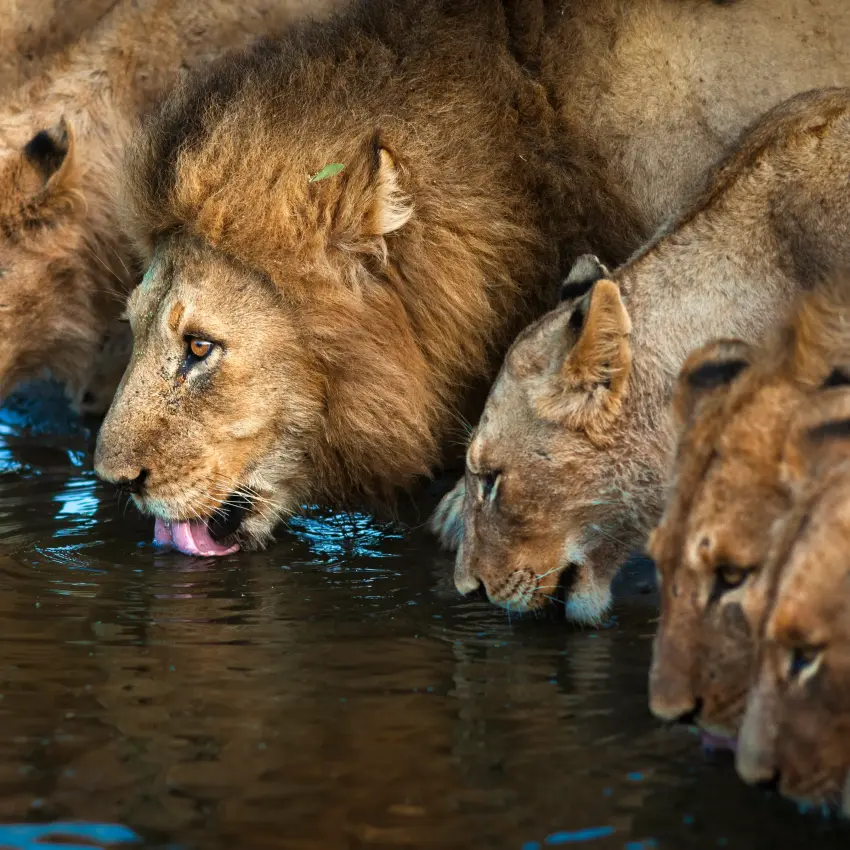
The lions of Savuti hunt elephants
Kasane sits at the point where Botswana, Namibia, Zambia and Zimbabwe nearly touch, and the Chobe River that passes below the town carries the border with Namibia’s Zambezi Region. For most of the year the interior beyond the water is dry sandveld and mopane woodland, quiet and thinly populated with game, and then the inland pans empty and everything changes.
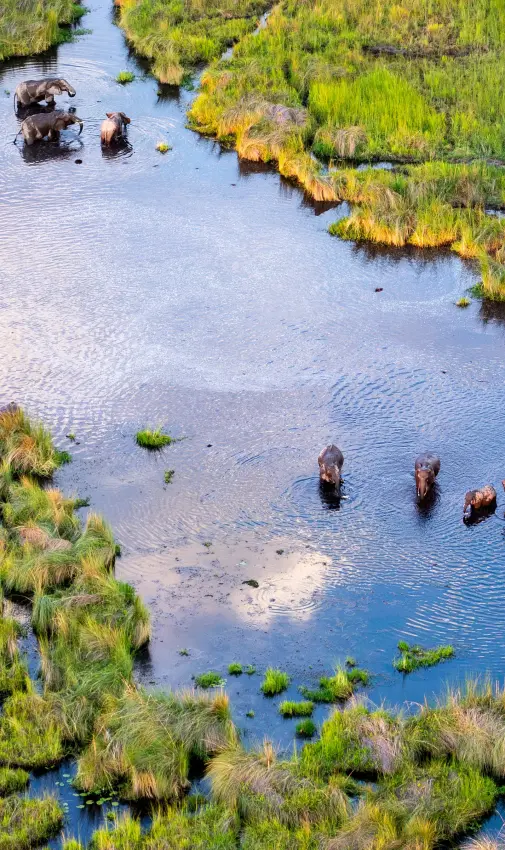
Boats drift within metres of elephants swimming the channels.
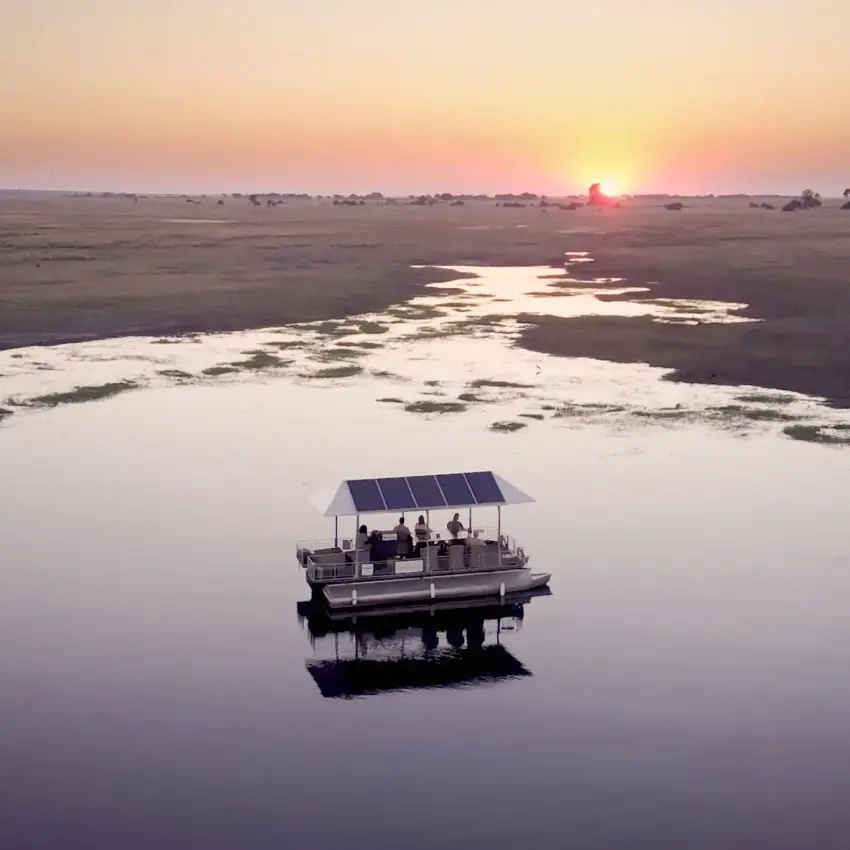
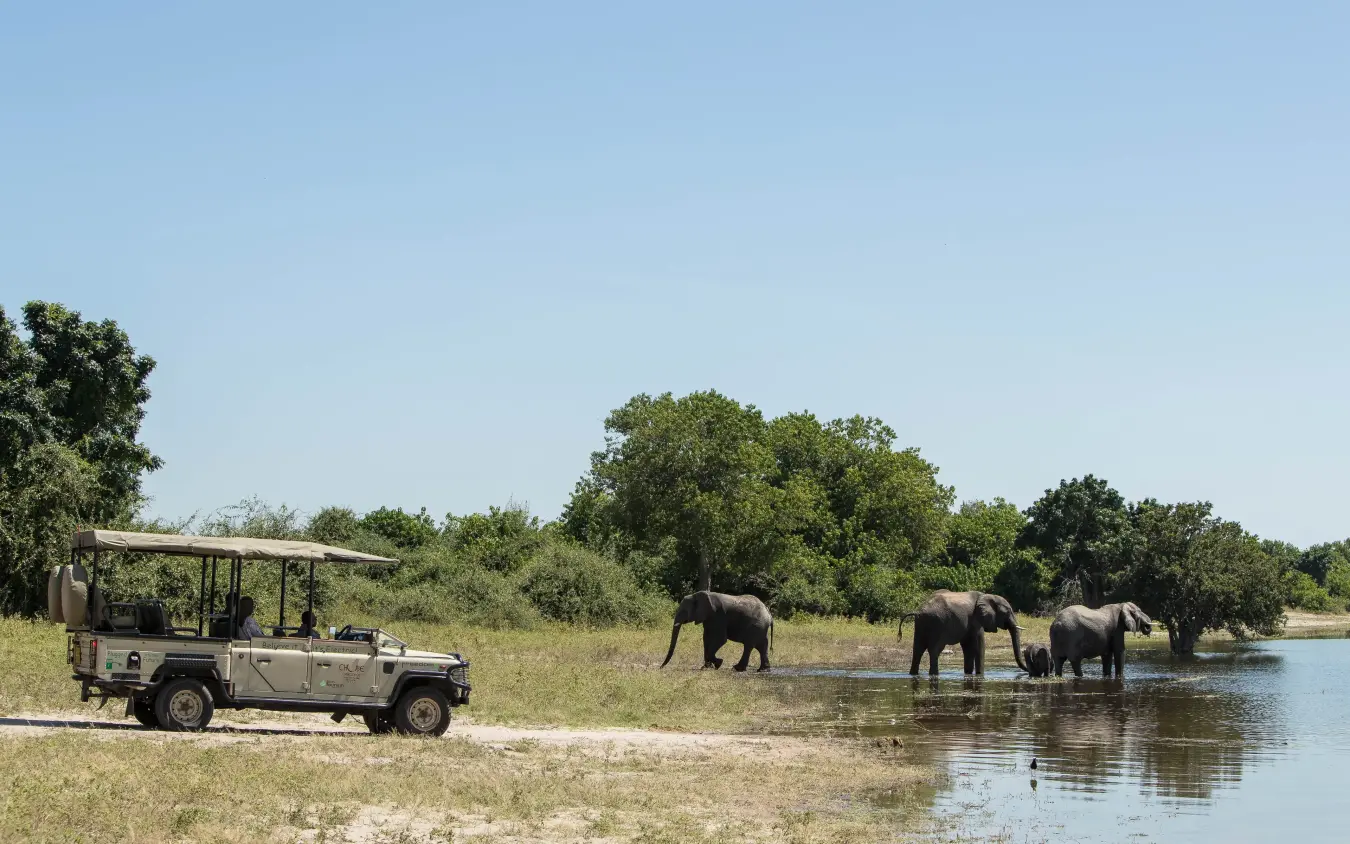
The river becomes the only way to see this properly. Boats drift within metres of elephants swimming the channels. Hippo pods surface alongside, and crocodiles hold the sandbars. They run from Kasane and from the jetties along the park’s northern edge, morning and late afternoon.
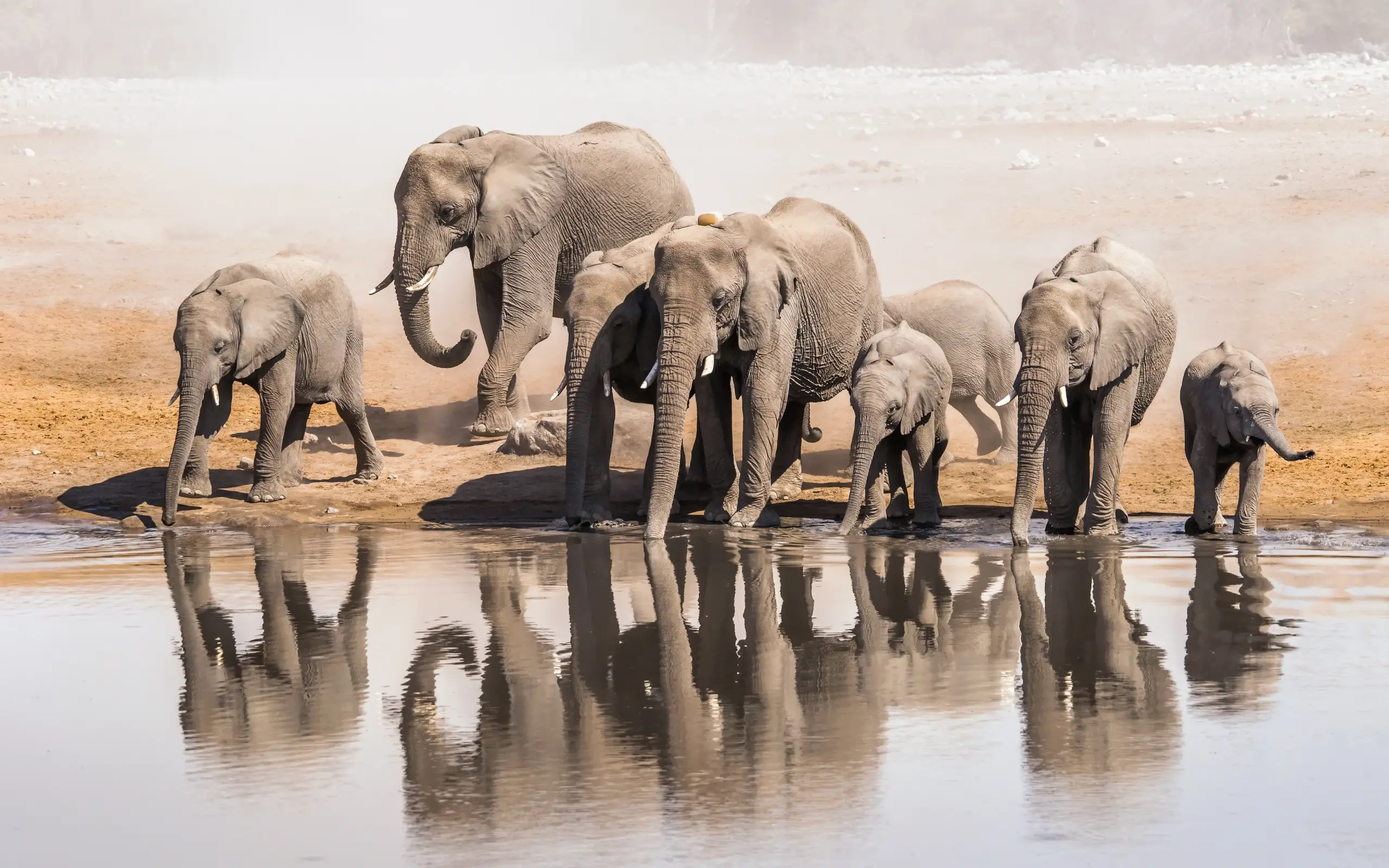
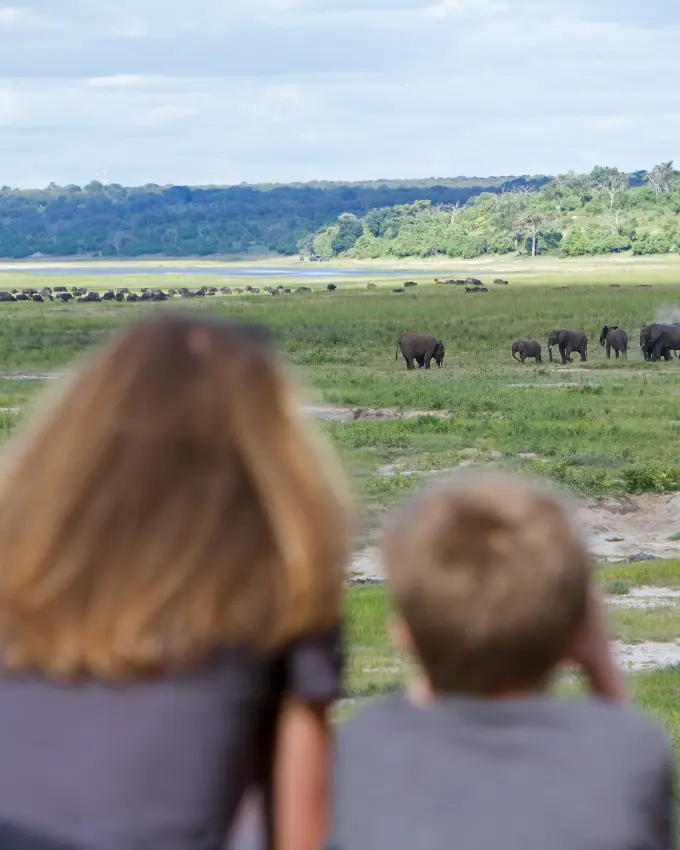
From May the pans dry out and the game funnels onto the floodplains near Kasane. Breeding herds of two or three hundred elephants arrive through the afternoon. They swim the deep channels to reach the grass on Sedudu Island. It is a pattern that repeats daily once the dry season sets in properly. Buffalo, giraffe, puku and roan crowd the same narrow strip of ground.
Buffalo, giraffe, puku and roan crowd the same narrow strip of ground
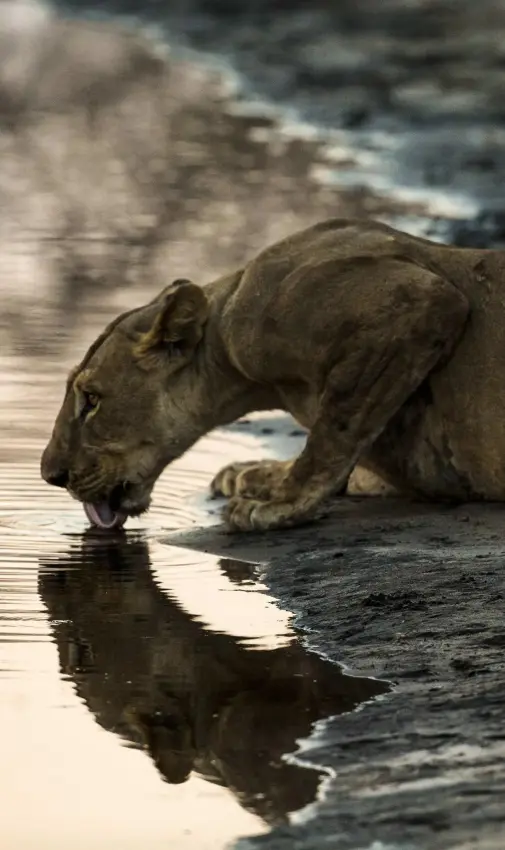
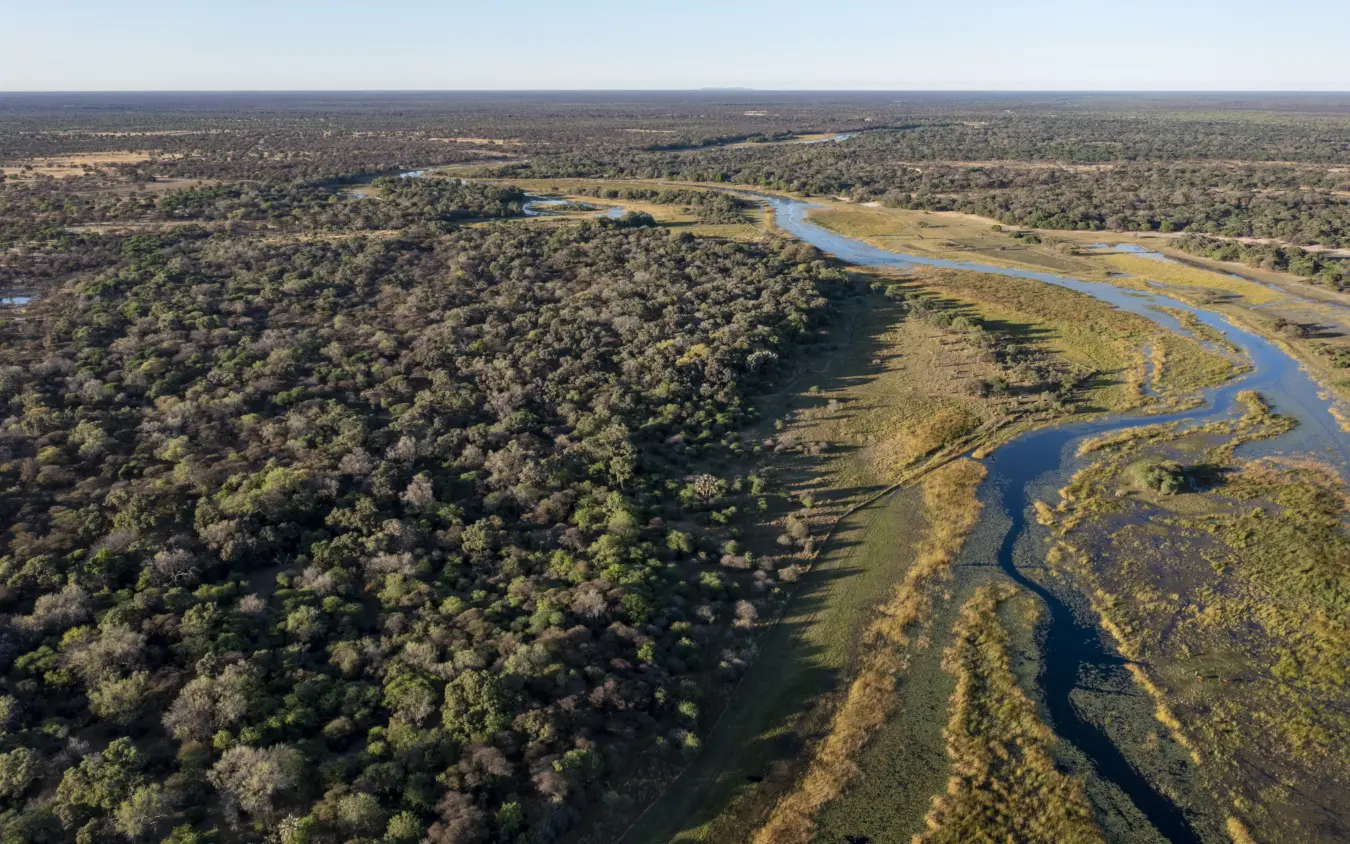
Inland, Savuti lies below the volcanic Gubatsa Hills, its channel answering to fault movement rather than rainfall, and it ran dry from 1980 to 2008. Savuti’s lion prides have learned to hunt elephants and hippos when the water is scarce. Further west the Linyanti River feeds papyrus beds and lagoons, and the Ngwezumba pans hold rainwater well into the dry months.
The San were the earliest inhabitants here, and their rock paintings survive on the Gubatsa Hills above Savuti. Along the river the Basubia settled, farmed, fished and grazed cattle, and their descendants still live in the Chobe Enclave west of the park. Protection came early by regional standards: the area was declared a non-hunting reserve in 1932 and later given national park status. Families living at Serondela were relocated as the final boundaries were drawn.
Inside the national park, vehicles keep to marked tracks in daylight hours, and no cap holds on numbers at a sighting, which tells on the riverfront in August when several gather around the same herd. West of the boundary, in the Linyanti and Selinda concessions, the rules loosen. Guides follow wild dogs off-road, and night drives run under red-filtered spotlights. Guided walks are standard, and sightings are held to two or three vehicles. The two sides complement each other, one built for volume of game, the other for uncrowded time with it.
Guides follow wild dogs off-road, and night drives run under red-filtered spotlights.
Elephants Without Borders tracks the herds across the five countries of the Kavango-Zambezi Transfrontier Conservation Area and helps farmers live with crop raiders. Chobe sits at the core of that 520,000-square-kilometre landscape, and the corridors to its neighbours carry animals across borders through the year. Removing old veterinary fences restored a zebra migration of some 480 kilometres, from the southern salt pans to the northern floodplains. The Chobe Enclave Conservation Trust leases photographic rights on behalf of local villages, so tourism income reaches households farming alongside the elephants.
Kasane lies 70 to 80 kilometres from Victoria Falls, and the Kazungula Bridge over the Zambezi has simplified the crossing since it opened in 2021. The road transfer takes an hour and a half to two hours, the flight about twenty minutes. Most itineraries treat Chobe and the falls as a single trip, pairing a few nights on the river with two or three at the falls. Helicopter charters out of Kasane fly aerial safaris over the riverfront, Sedudu Island and the swamps on the Namibian side of the border.
The best time to visit Chobe
Jan
Feb
Mar
Apr
May
Jun
Jul
Aug
Sep
Oct
Nov
Dec
Recommended
Transitional
Challenging conditions
Come in the dry season, May to October, when wildlife concentrates along the Chobe River and boat safaris are at their most dramatic. June to August is peak, cool and busy; September and October bring excellent sightings, fewer travellers and hotter days. April is the turn of the season, and the wet months are quieter and greener but game disperses.
accommodation in chobe
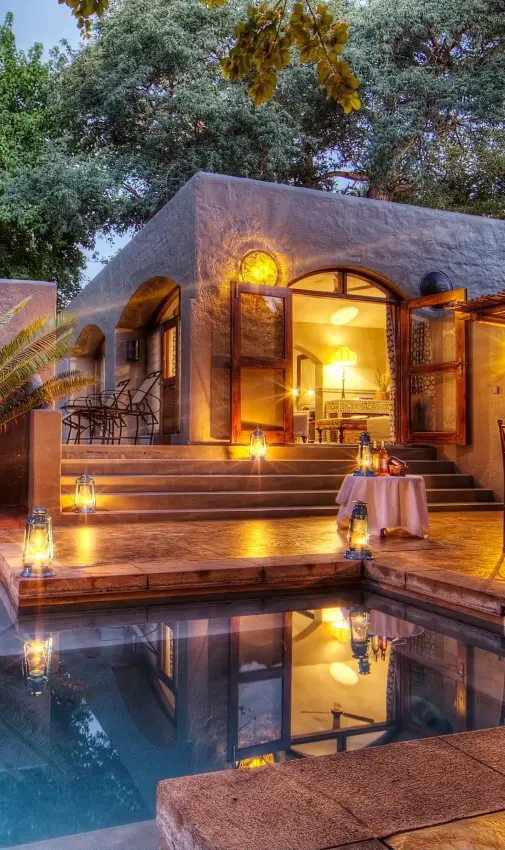
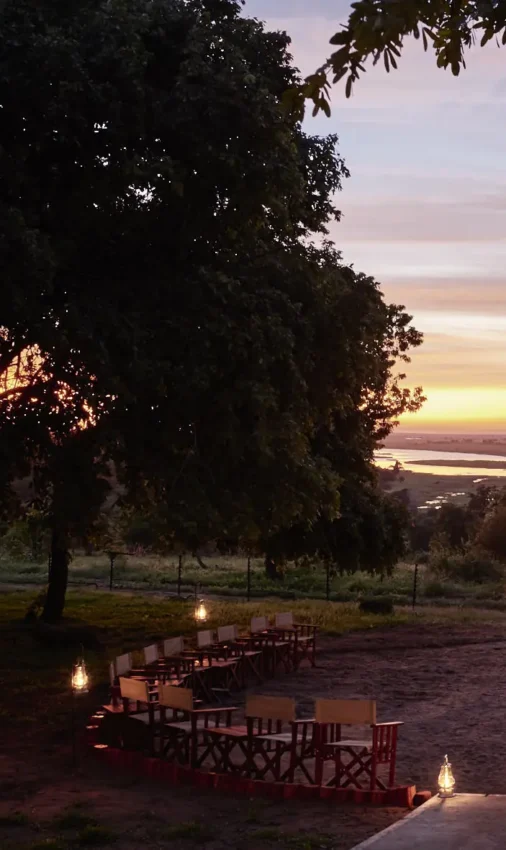
Riverfront lodges near Kasane run to full-service comfort, several set on ridges above the floodplain, with private jetties, spas and rooms turned to the water. Floating hotels cruise the river itself, elephants passing below the cabin decks at close range. Inland, small tented camps in Savuti and the Linyanti concessions keep to a handful of suites and give their days to game viewing. Exclusive-use villas on the bank and staffed mobile camps that move between private sites suit families and groups.



activities
Boat cruises and riverfront drives
Boat safaris are the defining activity, running from the Kasane jetties on tenders, pontoons and dedicated photographic boats. Game drives inside the park operate in daylight on marked tracks, while night drives, off-road tracking and guided walks belong to the private concessions west of the park, in Linyanti and Selinda. Helicopter flights depart from Kasane.

conservation
Elephant corridors and community leases
Elephants Without Borders researches elephant migration corridors and works on reducing human-elephant conflict. The Chobe Enclave Conservation Trust channels photographic lease income to member villages. Both operate within KAZA, the five-country agreement that keeps wildlife dispersal routes open between Botswana, Namibia, Zambia, Zimbabwe and Angola.

getting around
Flights into Kasane, charters onward
Kasane's airport takes daily scheduled flights from Johannesburg, with further services from Maun, Gaborone and Victoria Falls. Charter flights connect on to Savuti and the private Linyanti airstrips, and lodge-to-lodge flying links Chobe with the Okavango. Road transfers from Victoria Falls take around ninety minutes.
other areas in botswana
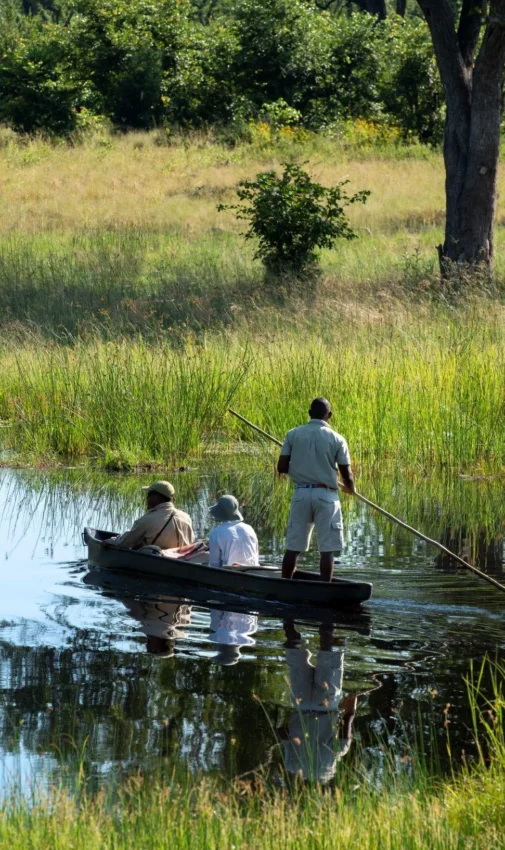
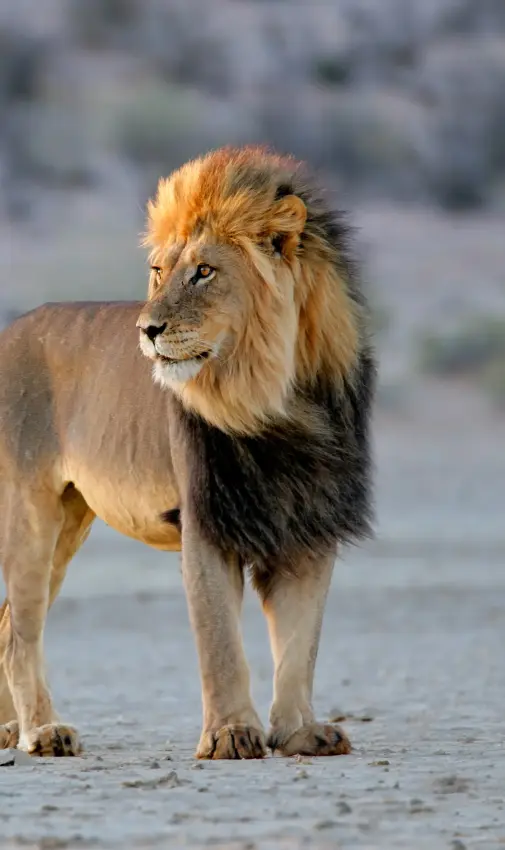
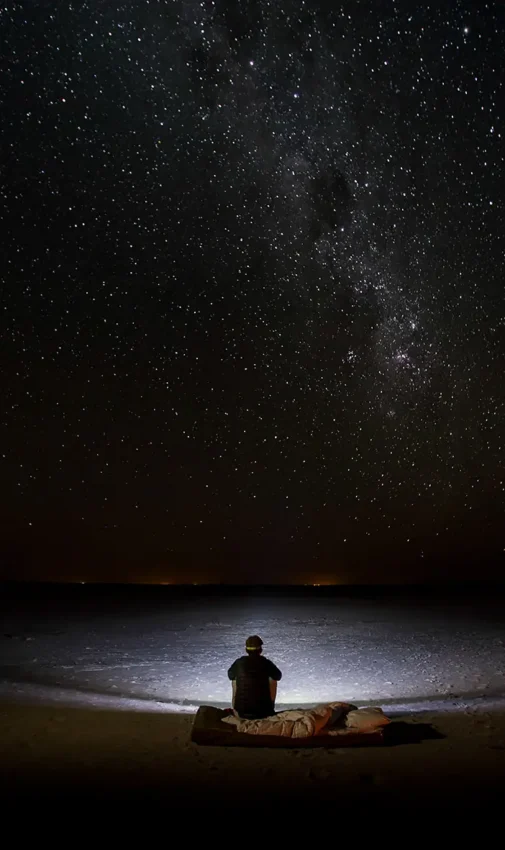
The Okavango Delta pairs naturally with the river, its channels and islands worked by mokoro and motorboat rather than vehicle. Moremi Game Reserve, on the Delta's eastern side, holds lagoons, floodplain and mopane forest with resident lions, leopards and wild dogs. Further south, the Makgadikgadi Pans and Nxai Pan offer salt flats, habituated meerkats and the Baines' Baobabs, a dry counterpoint after days on the water. The Central Kalahari, deeper south again, holds fossil river valleys and black-maned lions.
frequently asked questions
Through Kasane, and it is one of the simplest arrivals in Botswana.
Kasane International Airport is ten to twenty minutes by road from the riverfront lodges, and about forty-five minutes from the camps up on the escarpment in the Chobe Forest Reserve. A charter can cut the longer transfer to twenty or thirty minutes when one is available.
Kasane is also the road gateway to Victoria Falls, about two hours away including the Kazungula border, which is why the two pair so often.
We book the flights, the transfer and the border crossing as one arrangement so the day joins up.
June to September, in the numbers this place is famous for.
As the inland bush dries, elephant and buffalo walk down to the river because it is the only permanent water for a long way, and a boat at dusk puts you among them at eye level. May opens the season and October holds it, hot and quiet.
The green months from December to March scatter the game across a lush landscape, and the birding becomes the reason to come instead.
If elephant on the river is your reason for coming, book the dry winter and take the boat rather than the vehicle.
What you are allowed to do after dark, mostly.
Inside Chobe National Park the rules are the park's: no night drives, no walking, and no leaving the track. The riverfront there is the classic game-viewing ground and can be busy in the middle of the day.
The Chobe Forest Reserve, up on the escarpment, is not a national park, so the camps there run night drives and guided walks in any season, and see far fewer vehicles.
The pairing we book most often is a night or two on the river for the elephant, then the escarpment for the quiet and the walking.
Yes. This is northern Botswana, and both TravelHealthPro, the UK's official travel health service, and the CDC place it among the regions where antimalarial tablets are usually recommended.
The risk is highest in the warm, wet months from about October to May and eases through the dry winter, which is when most people travel, but low risk is not the same as no risk.
We do not make medical recommendations. Which tablets suit you, and what is right for a child, is a conversation with your own doctor or a travel clinic.
On the practical side, cover arms and legs from late afternoon and keep repellent to hand.
The river does, and the boats are the reason.
The small electric boats are silent and sit low, so they get close to elephant and hippo without the noise of an engine, and children who would fidget in a vehicle tend to be transfixed. Kasane's short transfer also means no long drive at the start of a trip.
Age limits vary sharply by lodge. Some of the escarpment camps set a minimum of ten, or take younger children only when a family books the whole place, while several riverfront lodges take all ages.
Tell us their ages at the enquiry and we will point you at the ones that genuinely work.
Two or three, and Chobe is usually part of a route rather than the whole of it.
Two nights give you a morning drive and two boat trips, which is the heart of the place. A third is worth it if you want the escarpment as well as the river, or a day on the water without rushing.
The classic run is Victoria Falls, Chobe, then the Okavango Delta, moving by road to Kasane and by light aircraft onward. It works in either direction.
Tell us the shape of the trip and we will say how many nights Chobe earns in it.
rated five stars by our clients

our approach
remote, exclusive
& personal
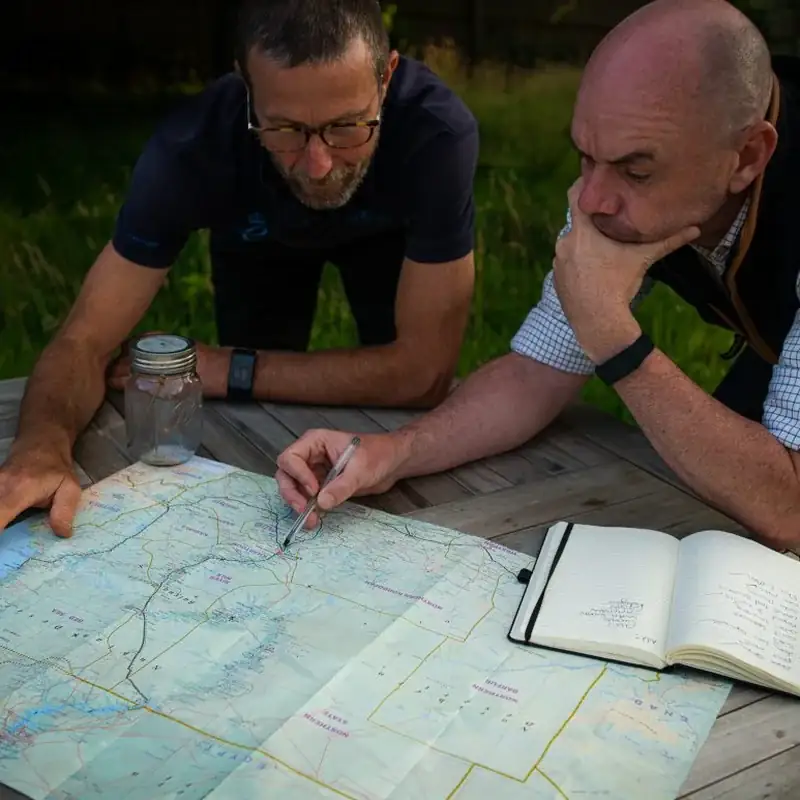
Every journey starts with a conversation. We take the time to understand your vision before we start planning.
Whether by phone or in person, we work with you directly to shape something that is considered, personal, and expertly delivered.
Every journey starts with a conversation. We favour a direct, personal approach: understanding your vision before anything else.
Whether by phone or in person, we work with you directly to shape a journey that is both thoughtfully considered and expertly delivered.
Get in touch to start planning yours.