
 01
01
Game on the green-season grass
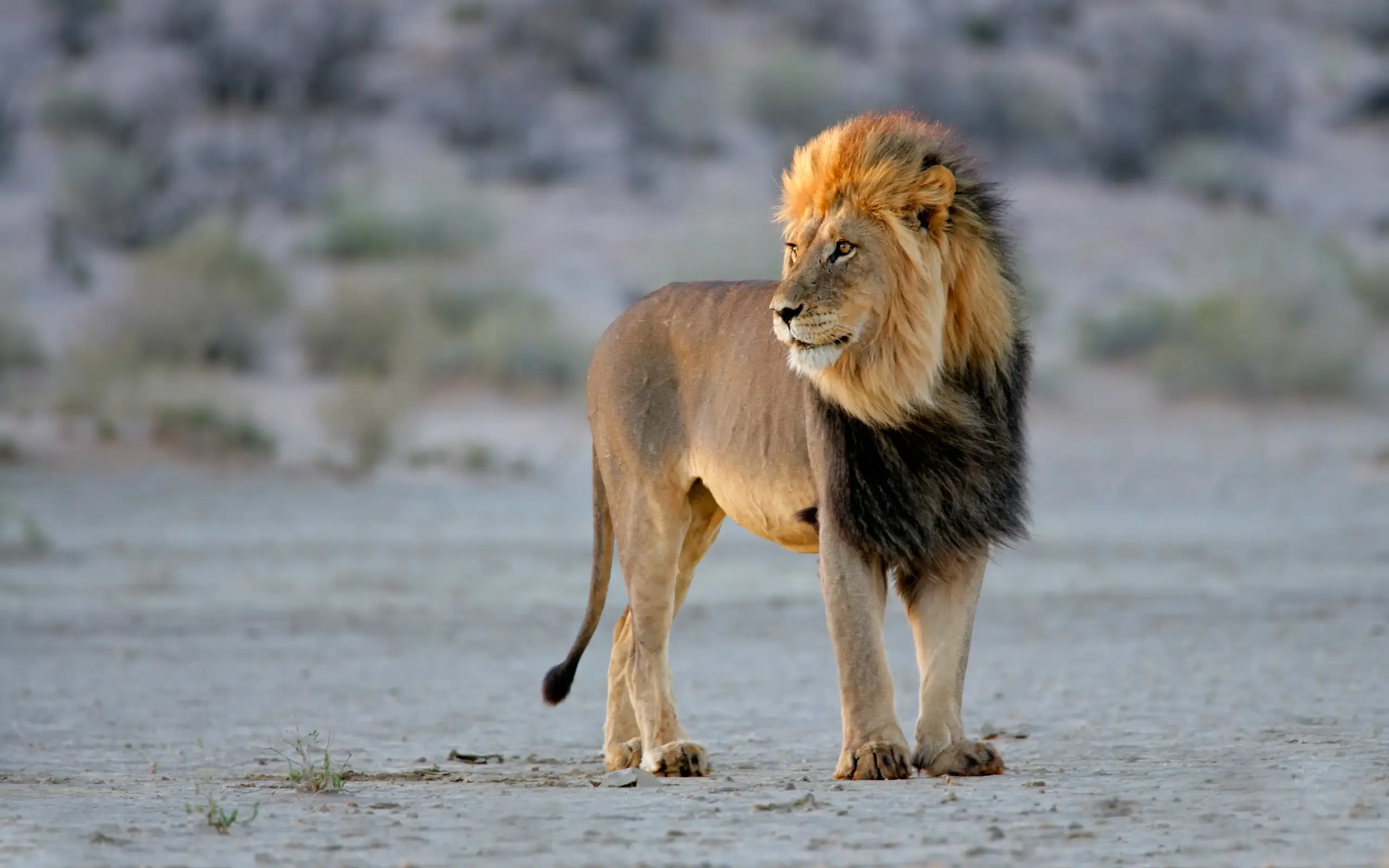
Deep in Botswana’s Ghanzi District, the Central Kalahari covers 52,800 square kilometres of desert grassland where the safari rhythm runs counter to the north. Between December and April the rains fill the pans and push fresh grass through fossil river valleys, drawing springbok and oryx onto open ground. The predators follow. For much of the rest of the year, the landscape lies still and golden.
For much of the rest of the year, the landscape lies still and golden
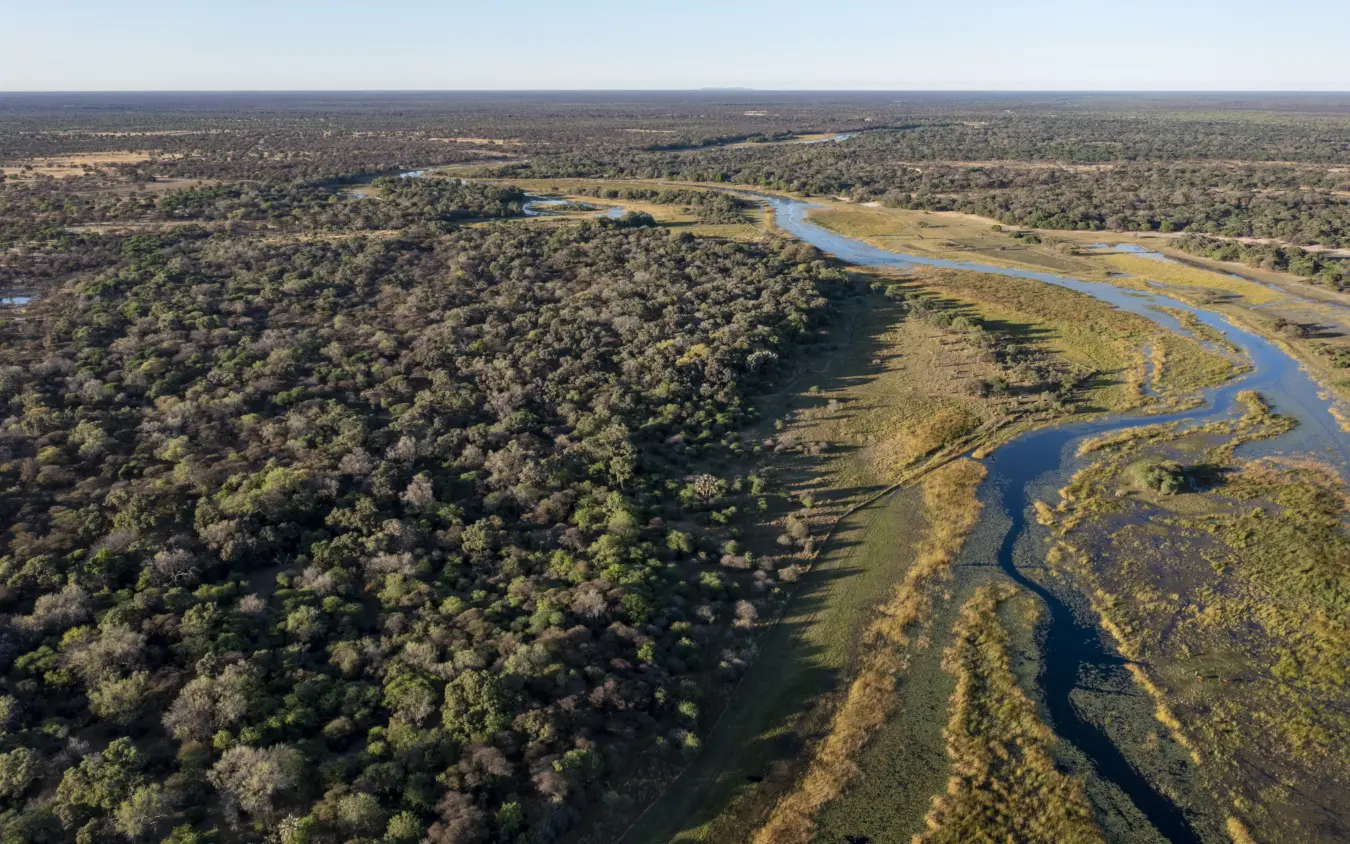
The terrain stays mostly flat. Waist-high grasses give way to scrub-covered dunes, clay pans and scattered acacia and camelthorn, all set against the broad sweep of ancient valleys such as Deception and Passarge. There is no permanent surface water here. That single absence dictates where wildlife gathers and what the desert asks of anyone travelling through it.

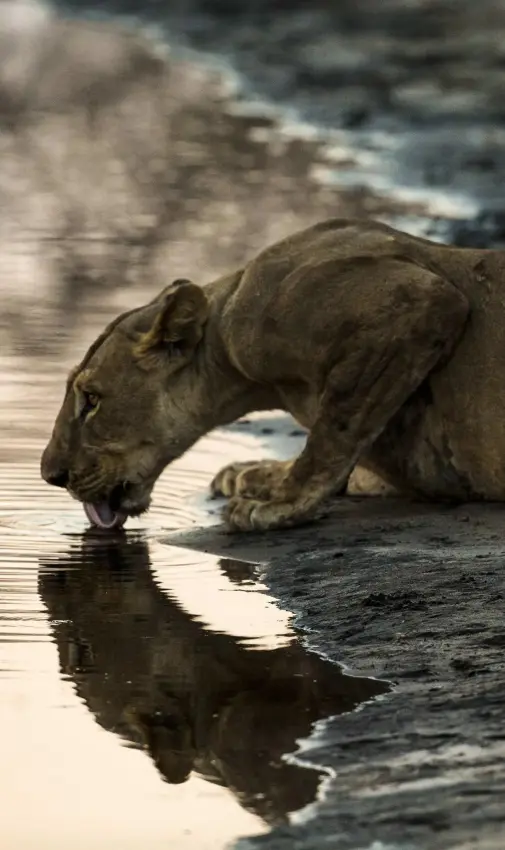
After rain, Deception Valley draws the game. Sweet grasses pull in large herds of springbok and gemsbok, and wildebeest, hartebeest, eland and giraffe move through behind them. The black-maned Kalahari lion hunts here, alongside cheetah on the open grass and the brown hyena, a scavenger built for desert distances. Aardvark and caracal appear for those who put in the hours.
The knowledge is practical, the result of lives spent in the Kalahari
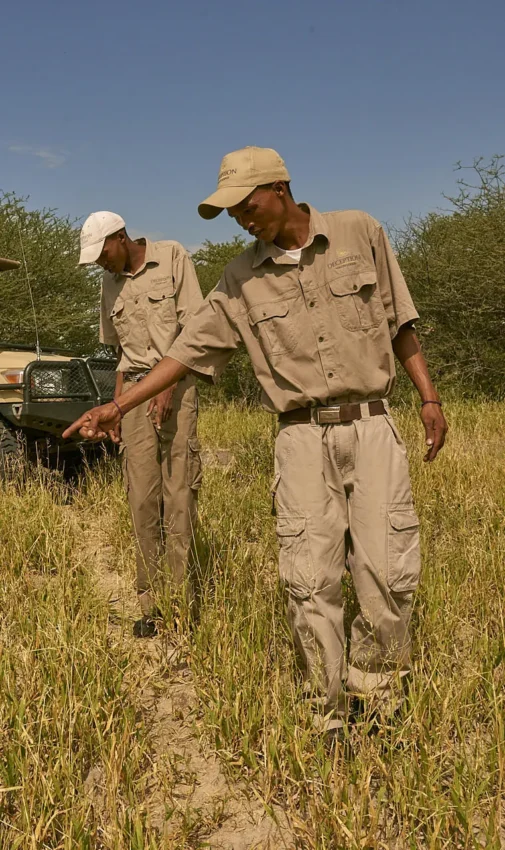
This is the ancestral land of the San, who have read this desert for thousands of years. The reserve was created in 1961 as a place where their way of life could continue. Walks led by San guides move through the art of tracking, the plants that heal and the plants that poison, and the techniques for finding water where there appears to be none. The knowledge is practical, the result of lives spent in the Kalahari.
The wildlife mechanism here is entirely seasonal. Through the dry months from May to October, game disperses across the reserve in search of grazing and the few remaining water sources, and sightings demand patience and distance. When the rains arrive, the pans and valleys flush green, herbivores concentrate on the new grass, many of them give birth, and predators gather to the abundance. December to March is the period that transforms Deception Valley and the fossil river valleys, drawing game into the open in numbers that make the long dry months feel like a different reserve entirely.
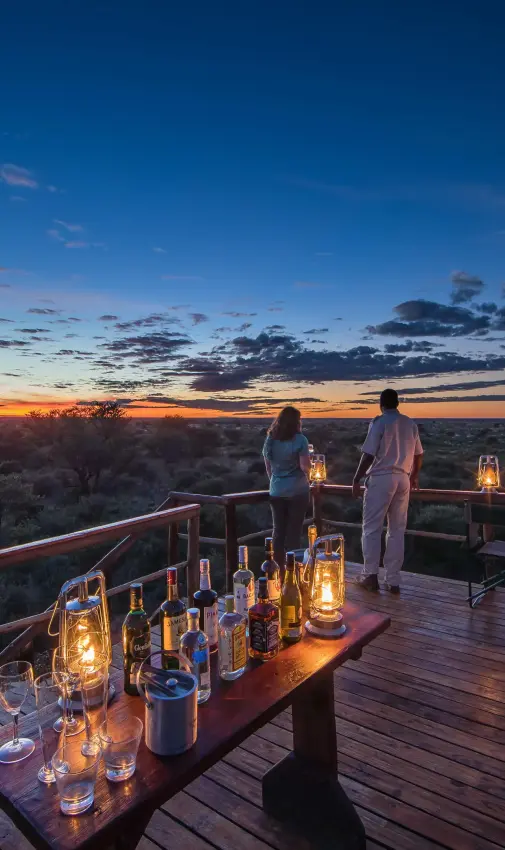
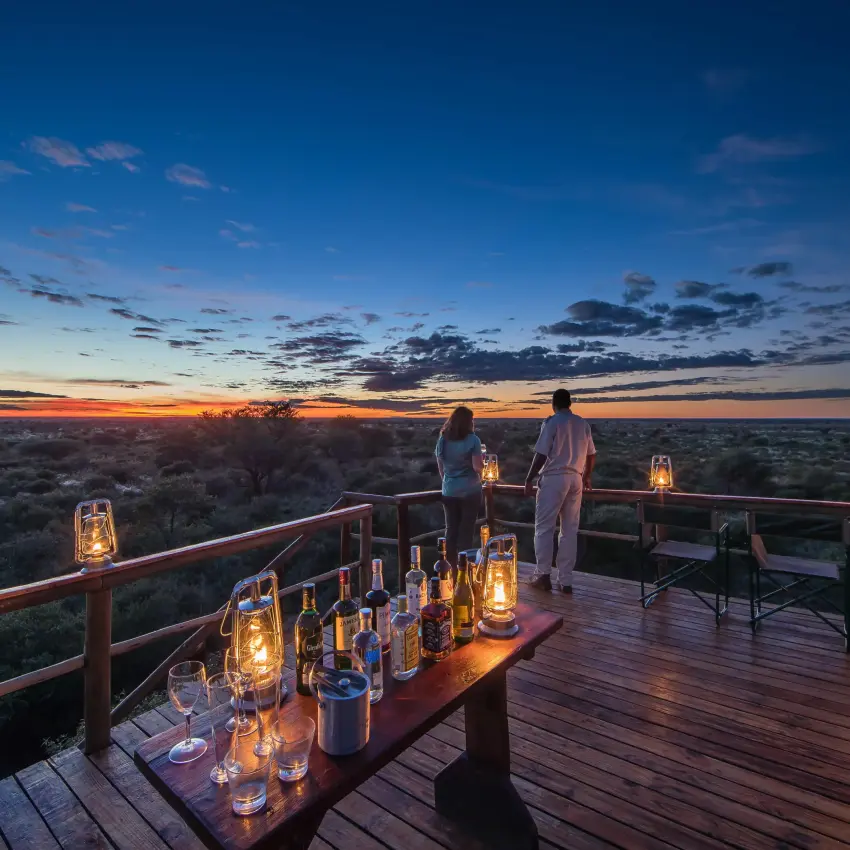
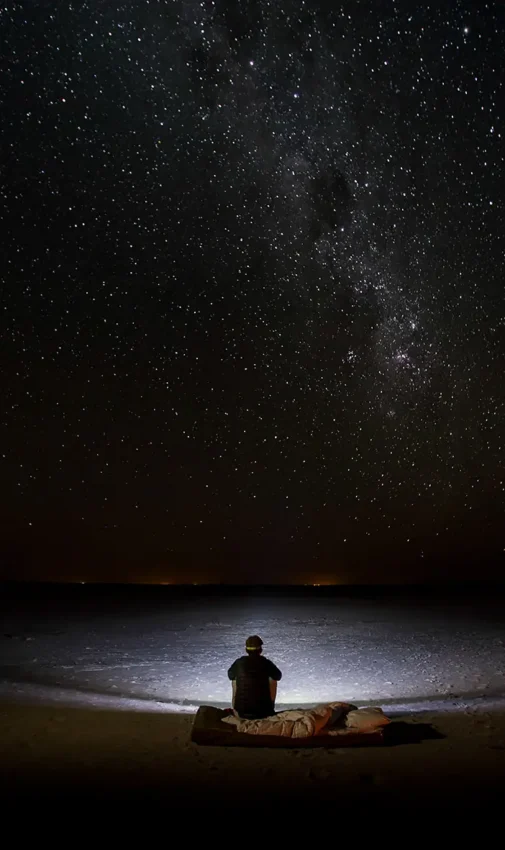
The contrast with the Okavango Delta is the point. While the north floods and fills with water-based safari, the Central Kalahari offers something quieter and starker: vast silent grassland, fossilised riverbeds, and skies left almost entirely dark by the absence of settlement. The stargazing is genuine, a function of how far this reserve lies from anything at all.
Skies left almost entirely dark by the absence of settlement
Activity range depends on where a camp sits. Inside the reserve the regulations are strict, with daytime game drives on the network of sandy tracks, no off-road driving and no night drives for the general public. Private concessions on the periphery operate differently. They run night drives that reach the nocturnal animals, guided walks accompanied by armed guides and San trackers, and cultural time with local communities. Choosing the right base matters as much as choosing the season.
Routing tends to run through Matswere Gate, the access point closest to Deception Valley. Xade and Tsau gates open further reaches of the Central Kalahari. The Central Kalahari works best as one element of a longer Botswana journey, a contemplative desert leg set against the water and game density of the Delta and the salt expanses further east. Three or four nights gives the desert its proper weight without losing the variety a full itinerary offers.


The best time to visit Central Kalahari
Jan
Feb
Mar
Apr
May
Jun
Jul
Aug
Sep
Oct
Nov
Dec
Recommended
Transitional
Challenging conditions
Unusually, the green season from December to March is prime, when rain flushes the grasses and draws springbok, gemsbok, wildebeest and zebra onto the pans with black-maned lion and cheetah following. The December calving puts young in front of the predators. The dry winter is cold and quiet with game dispersed, and September and October turn hot and parched.
accommodation in central kalahari
Tented camps and lodges operate both inside the reserve and on private concessions at its edges, most built to a high standard with en-suite bathrooms, private decks and, in some cases, plunge pools. Mobile camping safaris offer a more adventurous alternative, moving with the wildlife or a set route. Accommodation is sparse across an enormous reserve by design.



activities
Game drives and San tracking walks
Daytime game drives on sandy tracks are the core of any stay inside the reserve, alongside stargazing under exceptionally dark skies. Private concessions add night drives and guided walks with armed guides and San trackers. Green-season birdwatching rounds out the options.

conservation
Research and water for wildlife
Kalahari Research and Conservation, established in 2008, studies wild dogs, lions and wildebeest alongside the Department of Wildlife and local communities. The Kalahari Conservation Society has converted diesel boreholes to solar power for wildlife water points, while the Kalahari Wildlands Trust works on habitat and migration corridors between the reserve and neighbouring protected areas.

getting around
Charter flights from Maun
Access for most travellers is by light aircraft charter from Maun, with several lodges and concessions served by their own airstrips. There are no scheduled flights into the reserve. Road access runs to Matswere Gate, roughly 250 kilometres and five hours from Maun, on tracks that demand a fully equipped 4x4.
other areas in botswana
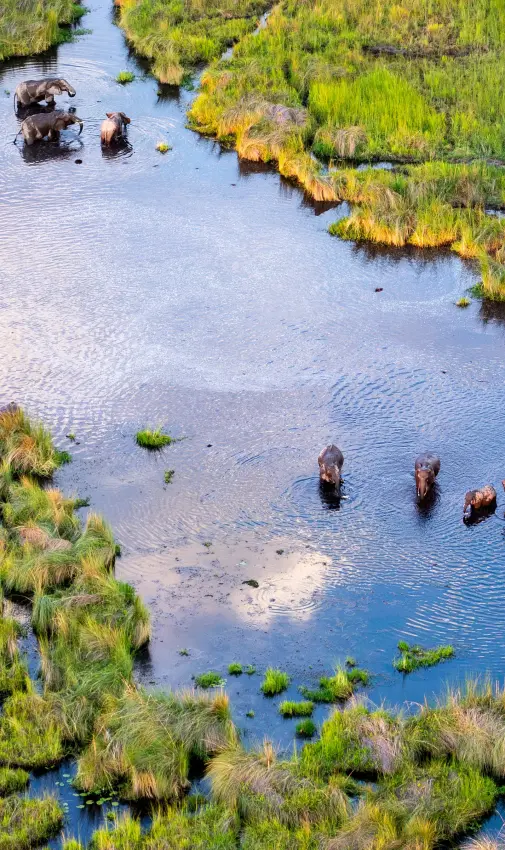
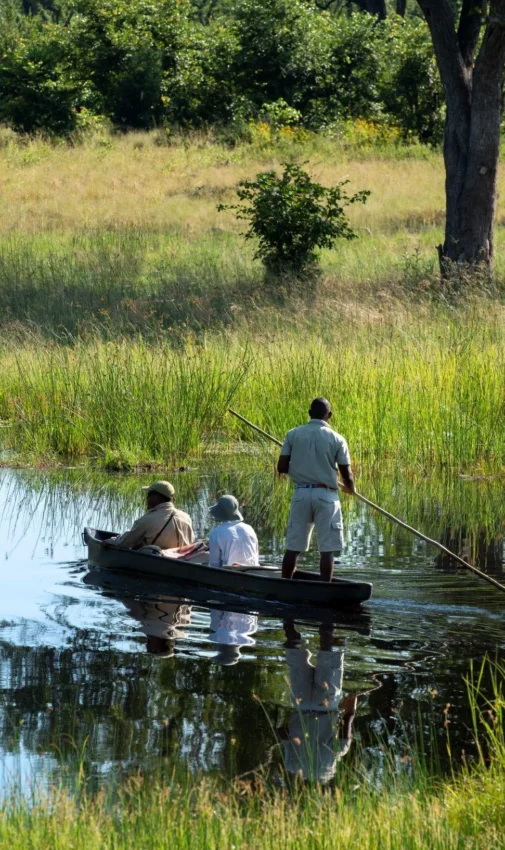
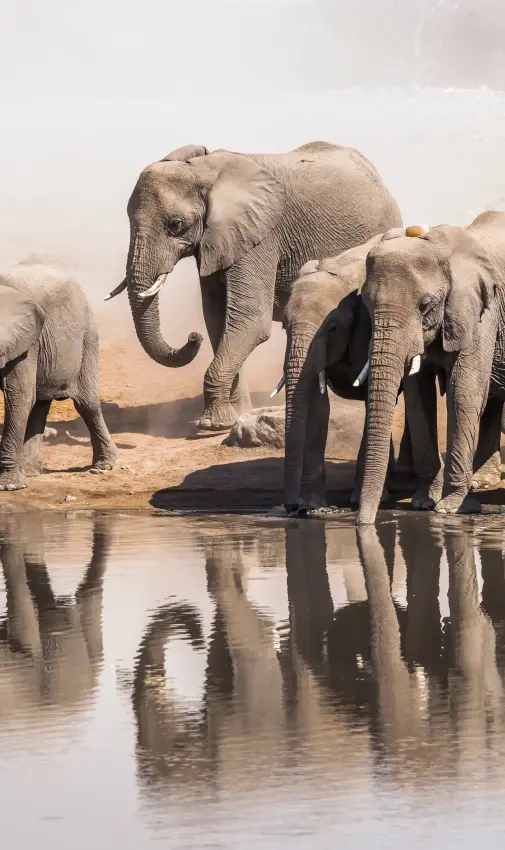
The Okavango Delta is the natural counterpoint: a water world of channels and floodplains explored by mokoro and boat. The Makgadikgadi Pans offer another vast, stark landscape with seasonal zebra movements and habituated meerkats, while neighbouring Nxai Pan adds a compact game area. Moremi Game Reserve delivers classic Delta game viewing, and Chobe in the far north brings river frontage and large elephant concentrations.
 01
01
 02
02
 03
03
 04
04
 05
05
 06
06
frequently asked questions
By light aircraft from Maun, in about an hour.
The camps have their own airstrips out on the pans, and the flight in shows you the scale of the place better than any drive could. The reserve is one of the largest protected areas in the world and there is very little in it.
Driving in is possible and long, and only makes sense for a self-drive expedition.
We book the leg with the rest of the route and say plainly whether it is worth the flying time.
For a family or a group, a private charter out of Maun is often the better answer, usually a Cessna Caravan, and we put both options on the quote.
Empty, enormous and completely unlike the delta.
This is open grassland, fossil river valleys and sand, with no permanent water at all. The wildlife here has adapted to live without it, which is the interest: black-maned Kalahari lion, gemsbok, springbok, cheetah on the open pans and brown hyena.
Deception Valley is the best known of the fossil valleys and the focus of most stays.
It is a landscape and a silence before it is a game destination, and anyone expecting the delta will be disappointed.
Lower risk than the north of Botswana rather than free of it, because the Kalahari is dry.
Both TravelHealthPro, the UK's official travel health service, and the CDC place the country's risk in the wetter north, and it rises everywhere in the summer rains. Low risk is not the same as no risk, and most routes here also take in the delta.
We do not make medical recommendations. That is a conversation between you and your own doctor or a travel clinic.
On the practical part, cover up at dusk and carry repellent.
At some camps, yes, and it is the reason many people come.
A morning walking with a San family, being shown how water, food and medicine are found in country that looks empty, is a different kind of day from a game drive. It is done on their terms and at their pace.
Not every camp offers it, and the ones that do vary in how it is run.
Tell us if this matters and we will choose the camp on that basis rather than on the tents.
Older children, and only if they like space more than action.
The drives are long, the game is thinly spread and the reward is a landscape rather than a sighting every ten minutes. Teenagers who enjoy walking, tracking and stars do very well.
The heat is a real consideration, and the flying is small.
Tell us their ages and we will say honestly whether the Kalahari belongs in this trip or a later one.
Three, and it needs them.
The distances inside the reserve are long, so two nights leaves you with one day and a great deal of driving. Three lets you take Deception Valley slowly, walk, and sit out under a sky with no light for hundreds of miles.
It works best as a contrast either side of the delta.
Tell us the whole route and we will say where it sits.
rated five stars by our clients

our approach
remote, exclusive
& personal
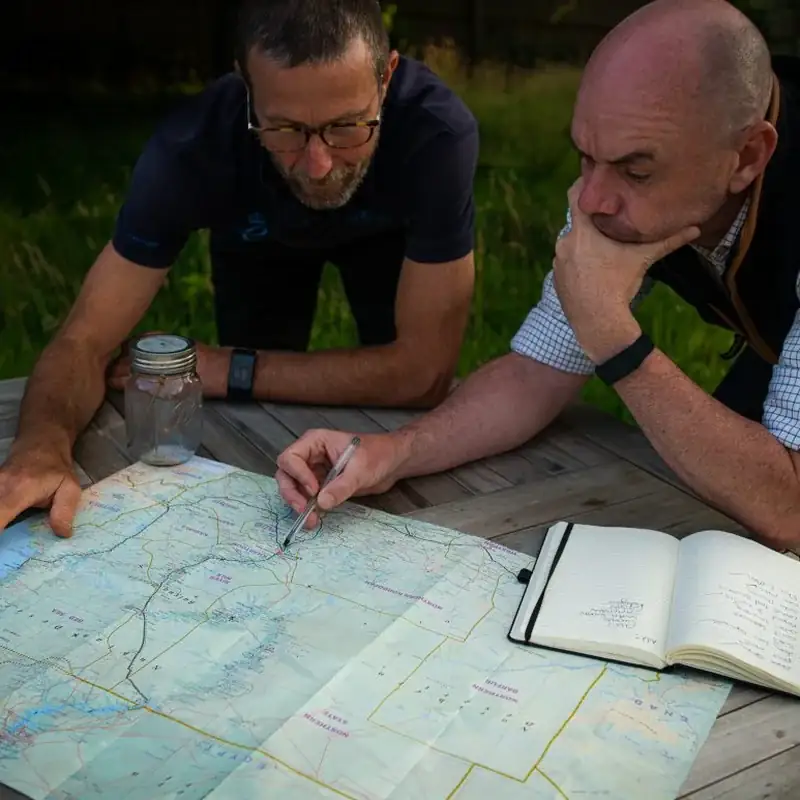
Every journey starts with a conversation. We take the time to understand your vision before we start planning.
Whether by phone or in person, we work with you directly to shape something that is considered, personal, and expertly delivered.
Every journey starts with a conversation. We favour a direct, personal approach: understanding your vision before anything else.
Whether by phone or in person, we work with you directly to shape a journey that is both thoughtfully considered and expertly delivered.
Get in touch to start planning yours.