Angolan rain arrives here in June
Sand streets, donkeys wandering the roadside, and a runway that never quite goes quiet. Maun occupies the southern rim of the Okavango Delta, on the banks of the Thamalakane River in northern Botswana. It is the administrative capital of Ngamiland and the traditional seat of the Batawana, and Delta and Kalahari fly-ins depart from its airport.
Hippos and crocodiles hold the river’s deeper pools.
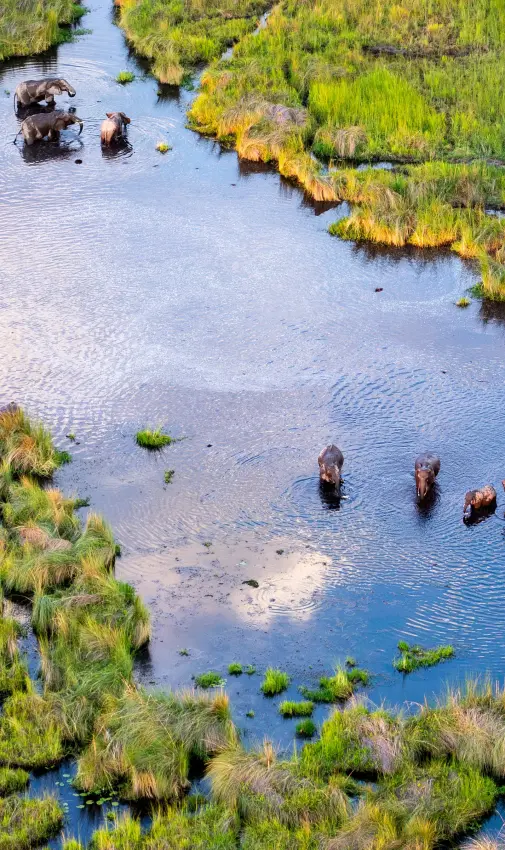
Rain that falls in Angola’s highlands takes months to work south through the Delta’s sand channels, reaching Maun’s stretch of the Thamalakane between June and August, long after it fell. Hippos and crocodiles hold the river’s deeper pools. Fish eagles and malachite kingfishers work the reedbeds along its banks, and the flood, when it arrives, is followed here more closely than the weather.

Long before the charter planes, this was a cattle post. The Batawana made it their capital in 1915, at the end of a long migration north by way of Lake Ngami and Toteng. Cattle still measure standing in Ngamiland, tourism alongside them. Herero women in long Victorian-cut dresses shop the same sand streets as pilots waiting between charters.
Cattle still measure standing in Ngamiland, tourism alongside them.
The Nhabe Museum has kept a 1939 colonial building in use, and shows Ngamiland artefacts alongside the work of local artists. Baskets are the craft that carries furthest from here. Bayei and Hambukushu women weave them from dyed palm leaf, and the finished coils are sold through co-operatives in the villages north of town, Shorobe among them.
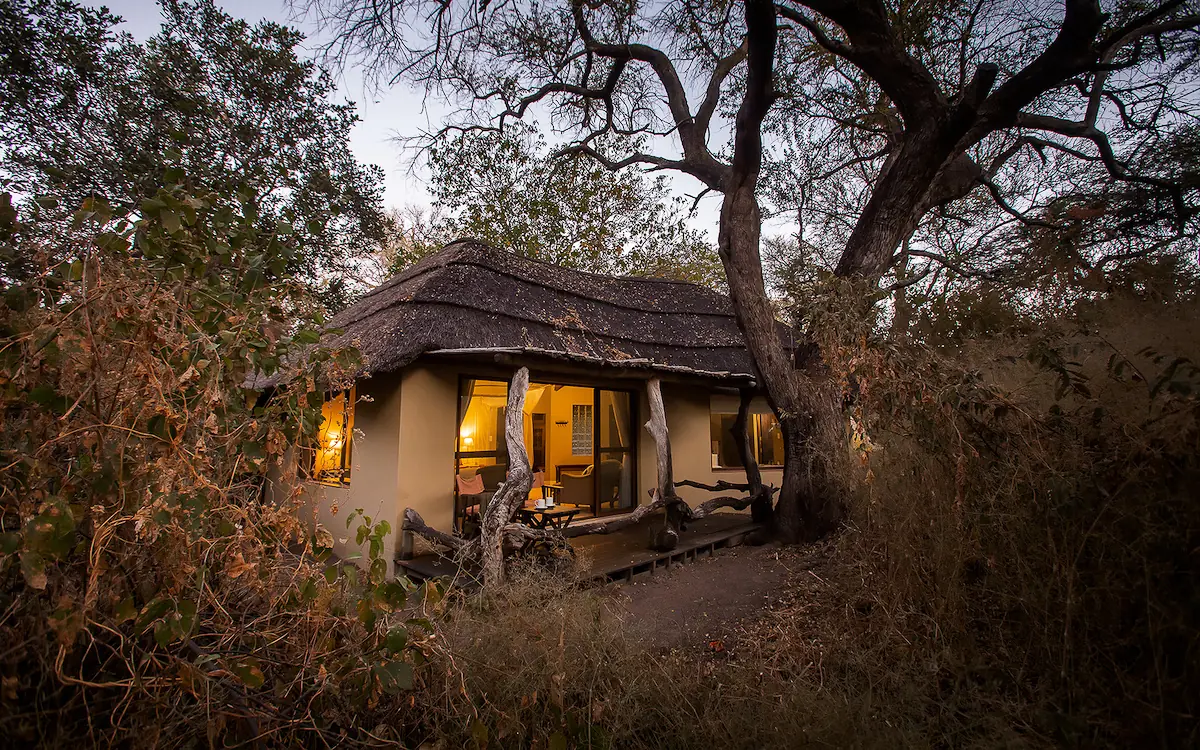
Bush airstrips cannot take aircraft after dark, so charter departures are fixed to civil twilight, and a delayed long-haul flight can cost a full day in the Delta. A night in Maun removes that risk, and reshapes the edges of a trip: an arrival evening by the river instead of a straight transfer into a light aircraft, a final morning with time for a swim and an unhurried drive to the terminal. Riverside hotels are ten to twenty minutes from the airport, and a handful of boutique properties hold the more polished end of the market, one of them with Maun’s first wine cellar.
Airlink flies daily from Johannesburg, around an hour and forty minutes, and from Cape Town in about two and a half hours. Air Botswana connects Gaborone and Kasane, and Ethiopian Airlines runs a direct service from Addis Ababa, useful for travellers routing via the Middle East rather than South Africa. From the terminal it is a short walk across the apron to a Cessna Caravan or similar light aircraft. Most Delta camps are twenty to thirty minutes by air, Moremi’s airstrips about half an hour, the Central Kalahari nearer forty-five. Soft-sided bags only, with weight limits strictly enforced on the charter legs.
Self-catering guesthouses and private villas suit families and larger groups
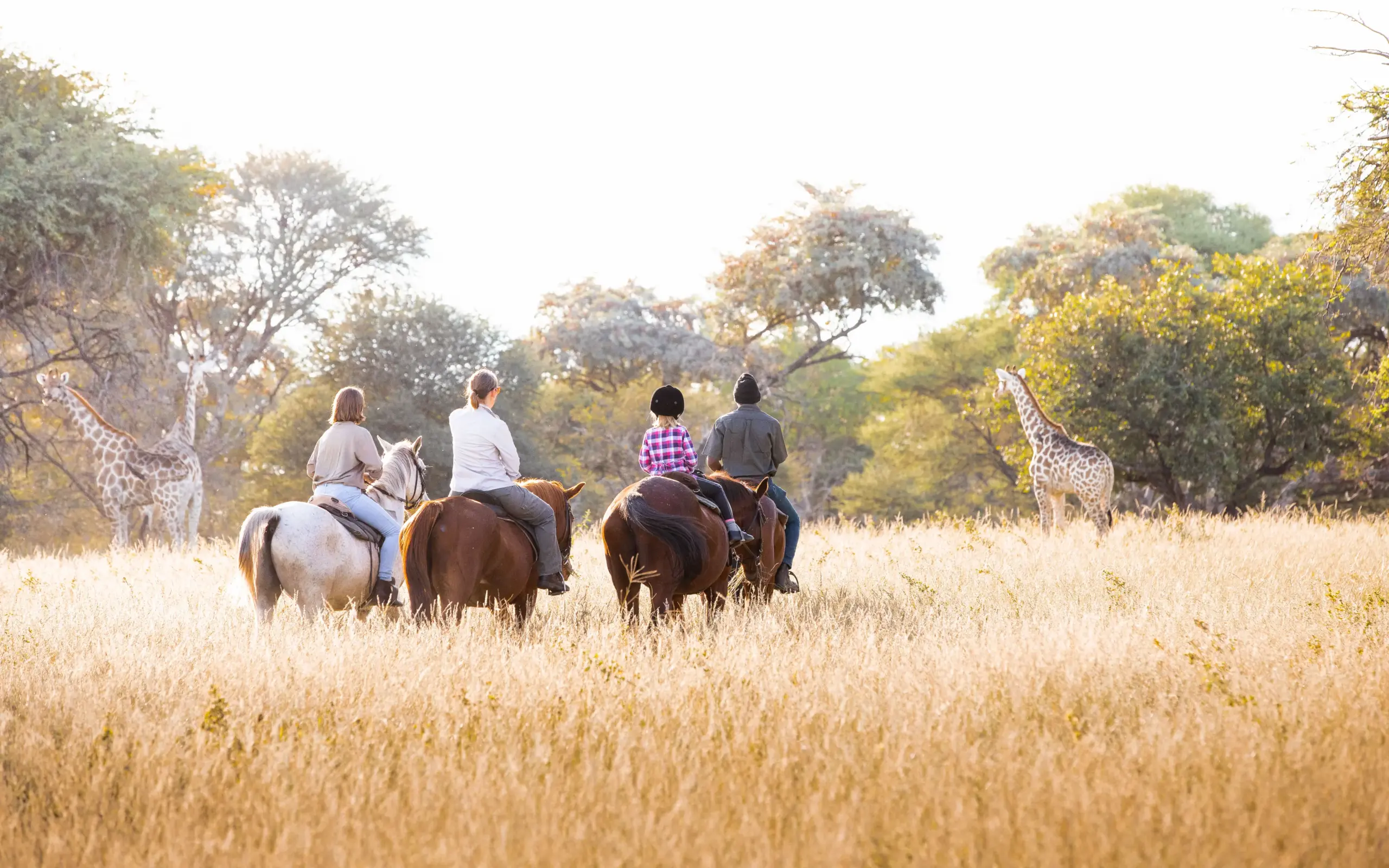
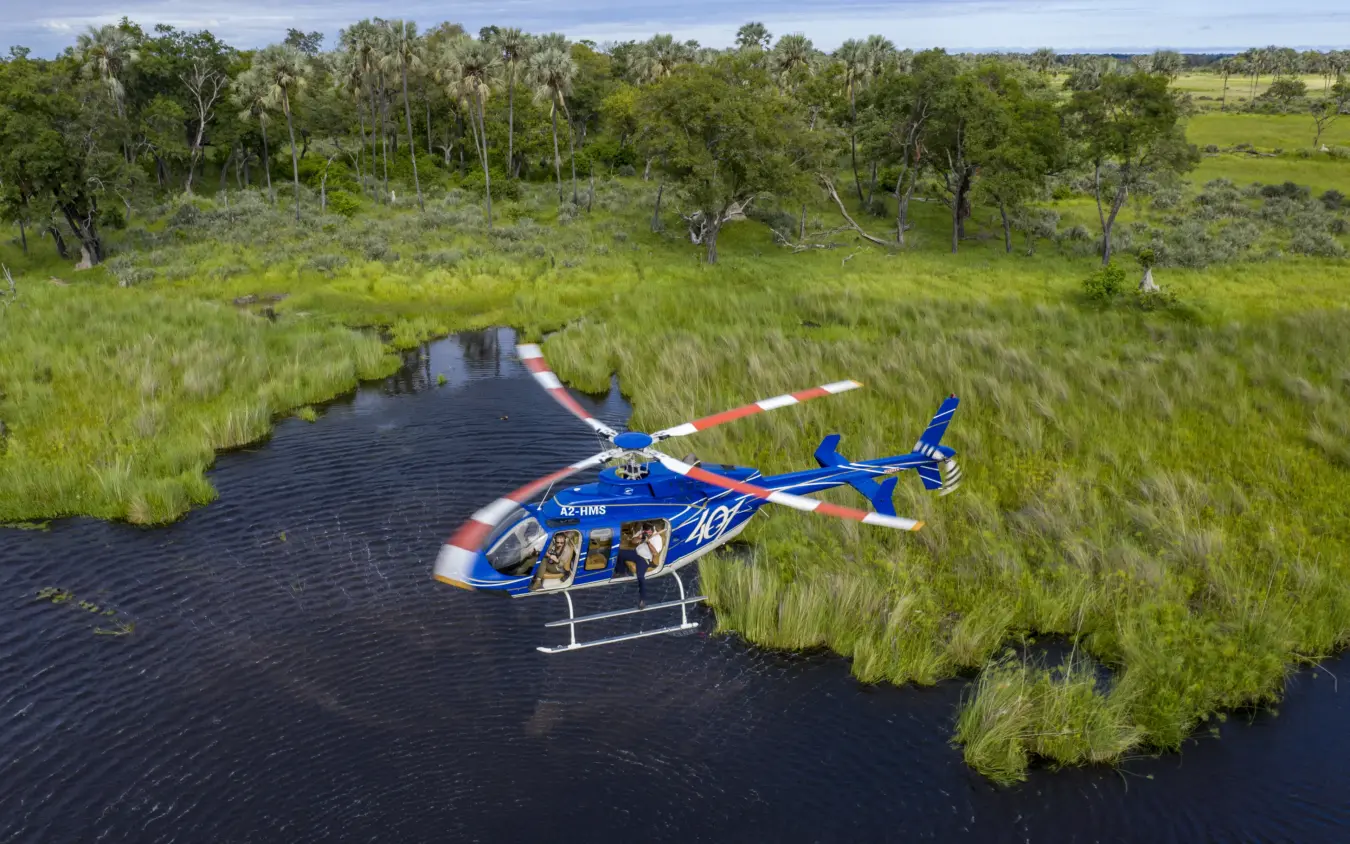
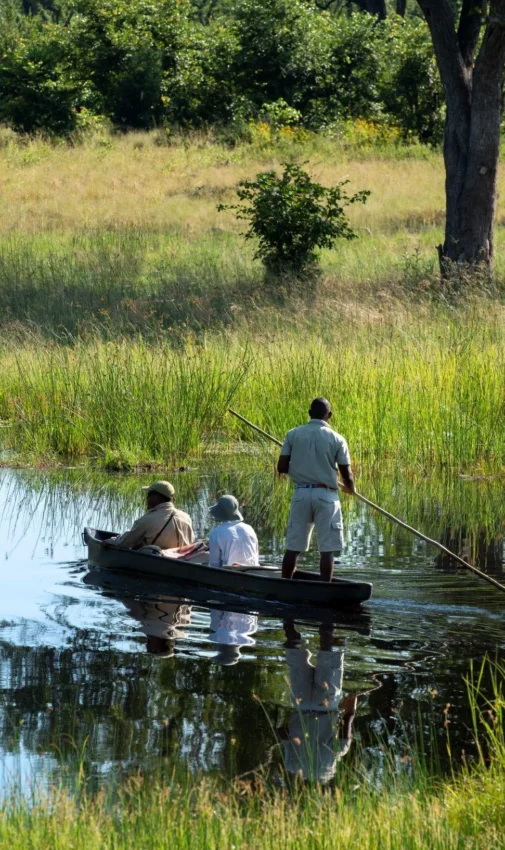
Boat cruises run on the Thamalakane when the flood is in. An hour or two toward evening carries you among hippos, jacanas and pied kingfishers. At Thamo Telele, Maun’s private game reserve, there is horse riding and walking among giraffe, eland and zebra, none of it permitted inside Moremi. Helicopters and fixed-wing aircraft fly scenic loops over the southern Delta, doors off for photography. An hour from town, Elephant Havens rehabilitates orphaned calves toward eventual release into the wild.
The Okavango Delta is a UNESCO World Heritage Site, and its condition is bound up with water: high floods make the interior hard to reach on foot, which keeps poachers out, while low-flood years open walking routes into the middle of it. In Maun the flood is followed closely. During the 2020 lockdown, a local Facebook group set up to track its progress filled within a fortnight. Farms around the town are being developed to supply more Botswana-grown produce to lodge kitchens across the north.
The best time to visit Maun
Jan
Feb
Mar
Apr
May
Jun
Jul
Aug
Sep
Oct
Nov
Dec
Recommended
Transitional
Challenging conditions
May to October is the season, when the northern Botswana camps are at their best and Maun is dry, bright and cold in the mornings. The flood is the local event: the first water usually reaches the Thamalakane in late May or early June, though it has come as late as the end of July, and in one recent year not at all.
accommodation in maun
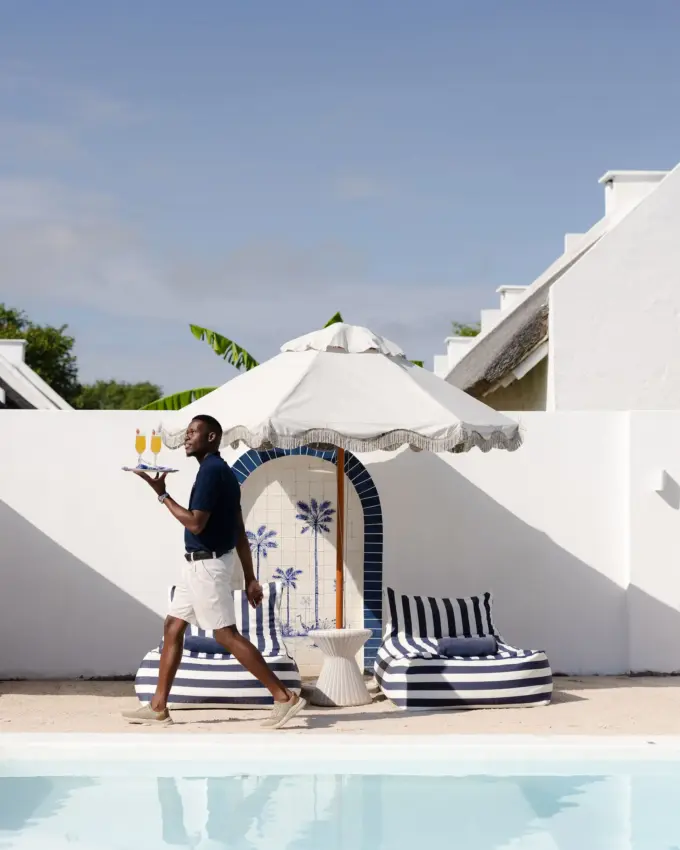
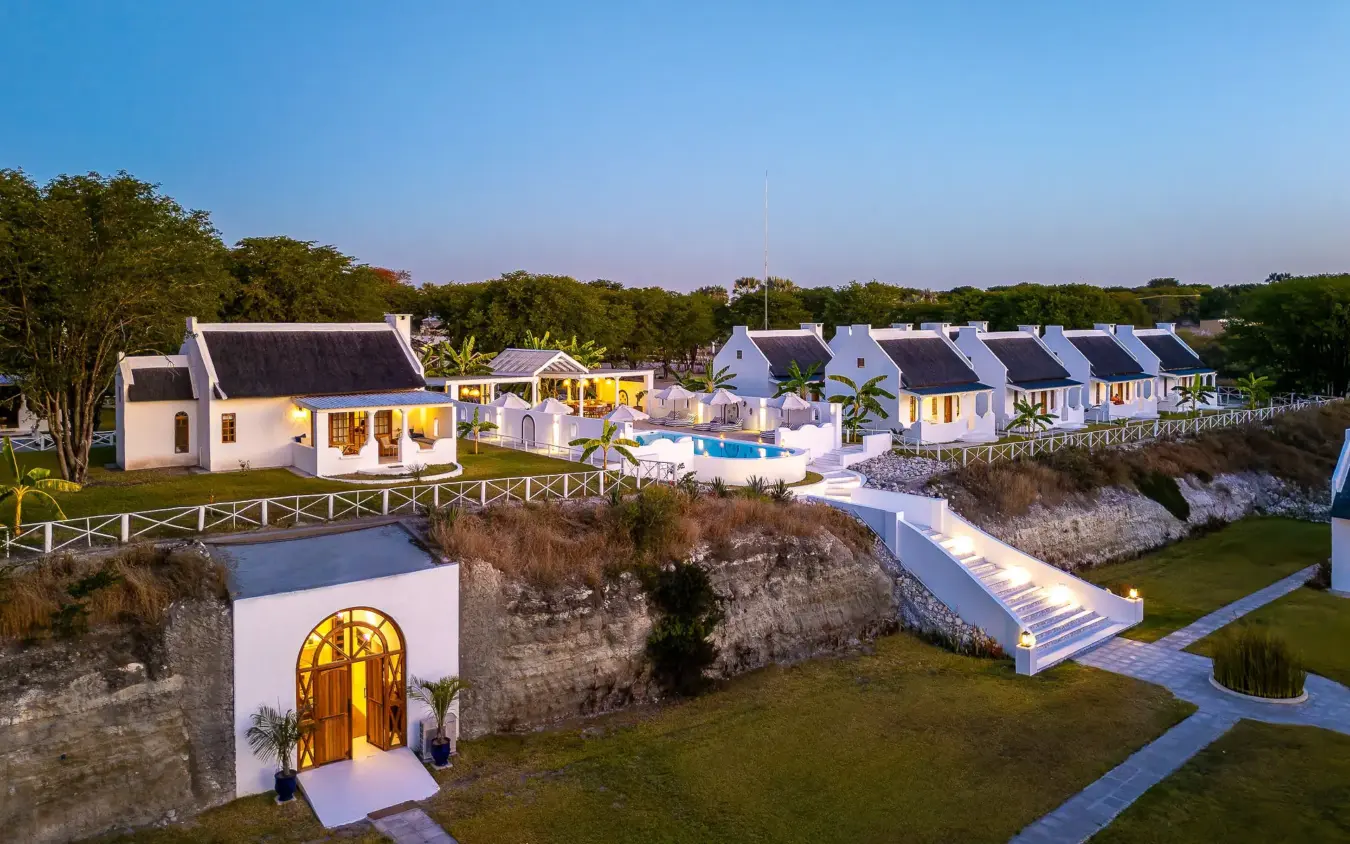
Riverside lodges along the Thamalakane make up most of Maun's better options: thatched chalets and garden rooms above the water, a few minutes to twenty minutes from the airport, with pools and riverfront dining. A small number of boutique hotels sit at the more polished end, one with a dedicated wine cellar. Self-catering guesthouses and private villas suit families and larger groups.


activities
Activities
Sunset cruises on the Thamalakane run when the flood is in, past hippos, crocodiles and kingfishers. Fixed-wing and helicopter flights cross the southern Delta. Horse riding and guided walks are available at Thamo Telele, Maun's private game reserve; day trips reach Moremi by road, departing before dawn.

conservation
Conservation Projects
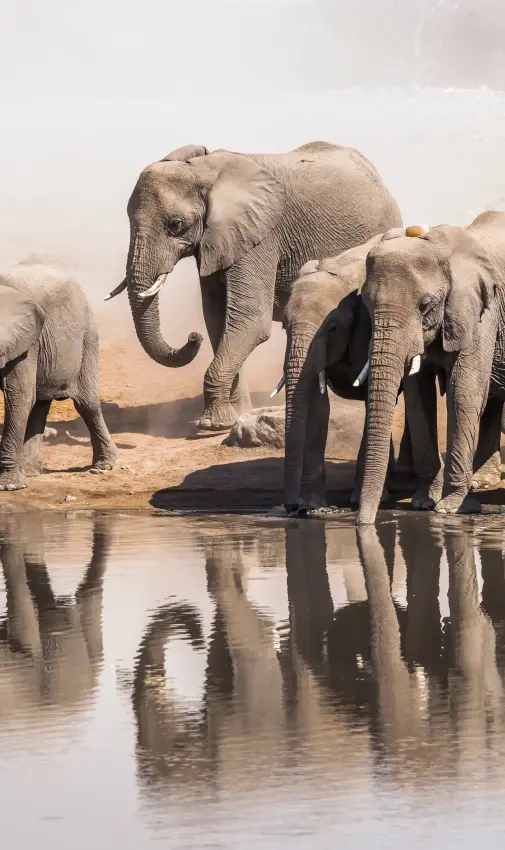
The Okavango Research Institute, part of the University of Botswana, studies wetland hydrology and community-based resource management from offices in Maun. Elephants Without Borders conducts aerial elephant surveys across the Kavango-Zambezi region. Elephant Havens rehabilitates orphaned elephants near the town, and the Maun Animal Welfare Society vaccinates village dogs against rabies.

getting around
Connectivity and Logistics
Airlink flies daily from Johannesburg and Cape Town into Maun International Airport, with Air Botswana serving Gaborone and Kasane, and Ethiopian Airlines connecting from Addis Ababa. Charter flights to Delta, Moremi and Central Kalahari airstrips depart through the day. Helicopters are available for transfers and scenic flying over the Delta.
other areas in botswana
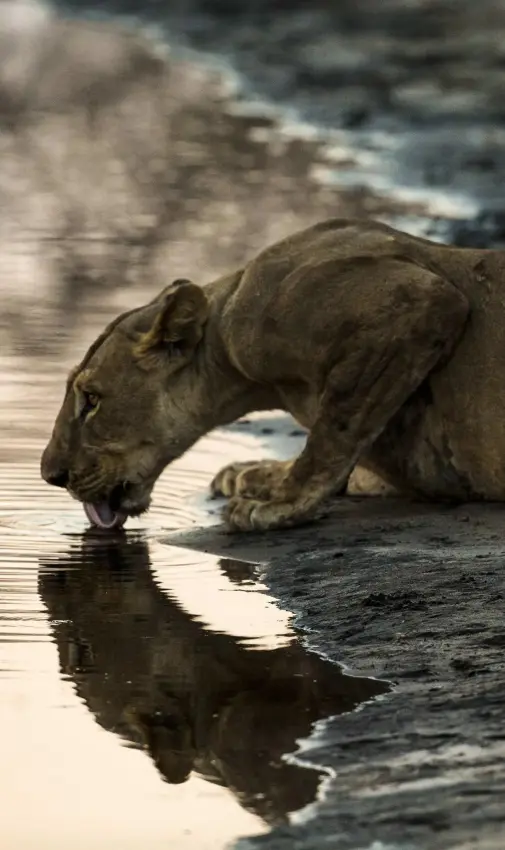
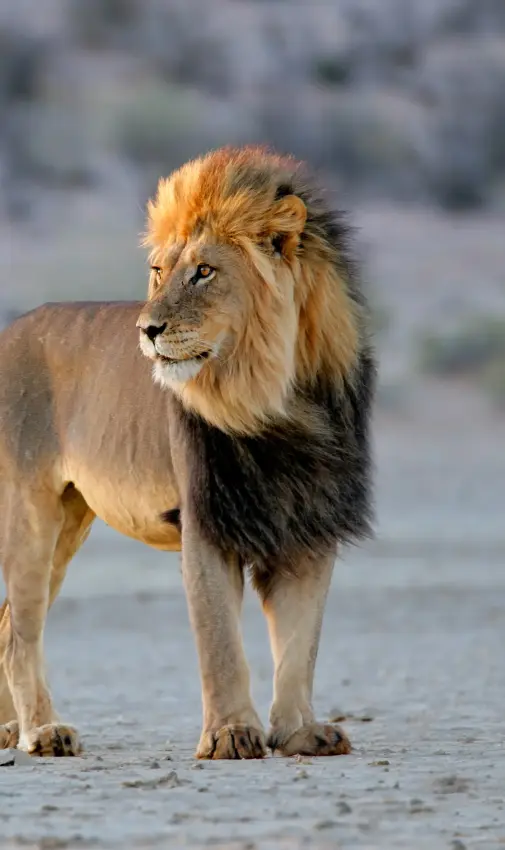
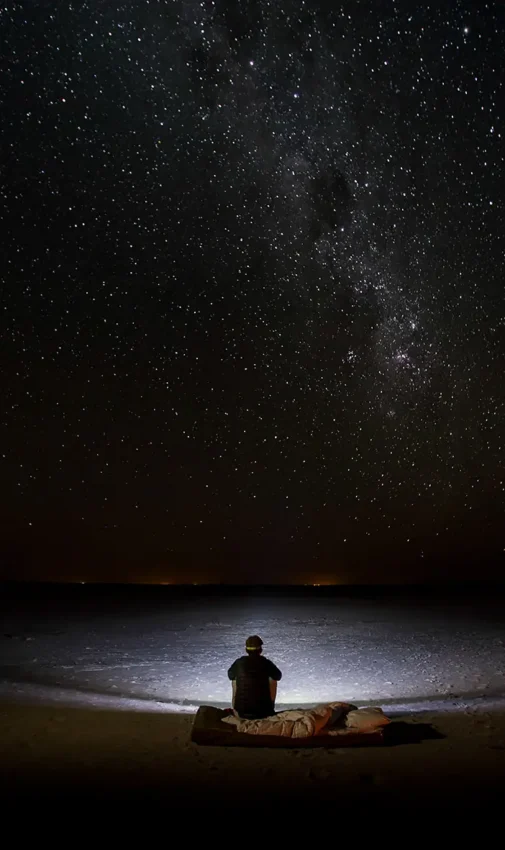
Moremi Game Reserve lies north-east, a thirty-minute flight, with floodplains, leopard and wild dog on state-protected land where drives stay on designated roads in daylight. Private concessions surrounding it allow night drives, walking and off-road tracking. The Central Kalahari lies around forty-five minutes south, with Deception Valley and desert-adapted lions. Makgadikgadi and Nxai Pan sit east, with seasonal zebra migrations. Chobe and the Linyanti hold dry-season elephant herds.
frequently asked questions
By air, usually through Johannesburg, and it is the gateway to everything in the delta.
Maun's airport takes daily regional flights, and the light aircraft to the Okavango, the Linyanti and the Makgadikgadi leave from the same apron, so most guests walk from one aircraft to the next within the hour.
Kasane in the north is the other Botswana entry point, for the Chobe side.
We book the whole chain together so the connection is not left to chance.
Usually not.
Most itineraries connect straight through to a camp the same day, which is the better use of the time. A night is only needed when the international flight lands too late for the last light aircraft, or leaves too early in the morning.
When it is needed, there are comfortable lodges along the Thamalakane River.
We will tell you plainly whether your flight times force a night or whether you can fly straight in.
Enough for an afternoon, and it is a working town rather than a destination.
- A scenic flight over the delta by light aircraft or helicopter
- A boat or a river cruise on the Thamalakane
- The crafts and the village market
- A day trip into the Moremi reserve if you have a full day
The helicopter flight is the one genuinely worth building in, because it shows you the shape of the delta you are about to land in.
Otherwise Maun is where the trip starts, not where it happens.
Yes. Northern Botswana sits in the malaria zone, and both TravelHealthPro, the UK's official travel health service, and the CDC recommend antimalarial cover for the delta and the areas around it.
The risk rises in the warm, wet summer and falls in the dry winter, but it is present across the season.
We do not make medical recommendations. That is a conversation between you and your own doctor or a travel clinic.
On the practical side, cover up at dusk and carry repellent.
Soft bags only, and the weight limit is genuinely enforced.
The light aircraft into the delta take a soft holdall of around twenty kilograms including hand luggage, with no wheels or rigid frame, because the bags go into a curved hold. A hard suitcase will not board.
Excess can usually be stored in Maun, or a seat bought for it.
We will confirm the exact allowance for your aircraft when we book, since it varies by operator and route.
At the start and the end, as the hinge rather than a stop.
The usual shape flies you in, straight out to a delta camp, then between camps by light aircraft, and back through Maun to fly home. Nothing is driven unless you want it to be.
Some routes finish at Kasane instead, for Chobe and Victoria Falls.
Tell us the whole route and we will arrange the flying so no day is lost sitting on an airstrip.
rated five stars by our clients

our approach
remote, exclusive
& personal
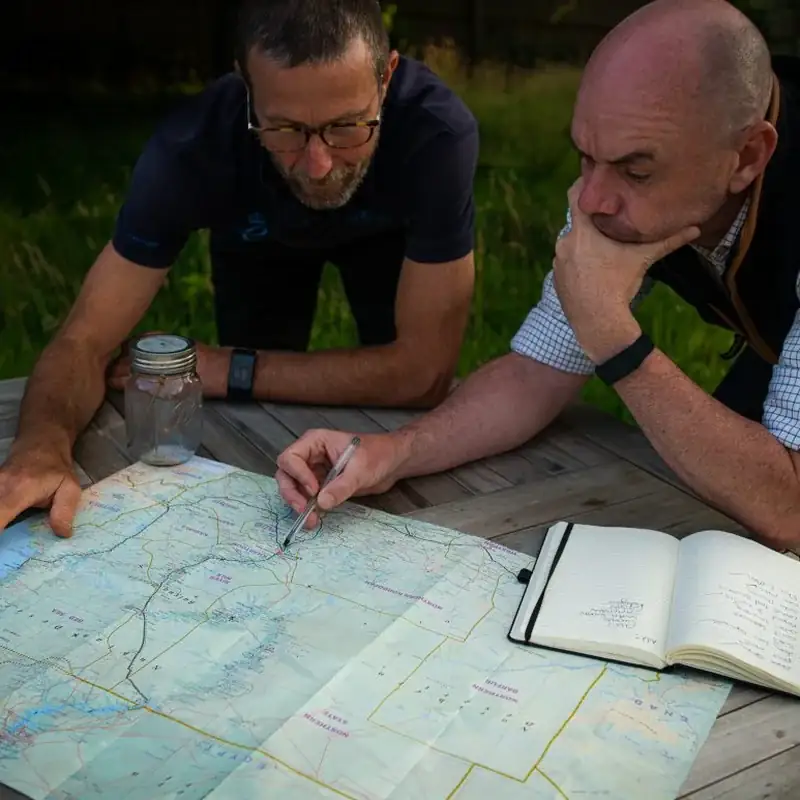
Every journey starts with a conversation. We take the time to understand your vision before we start planning.
Whether by phone or in person, we work with you directly to shape something that is considered, personal, and expertly delivered.
Every journey starts with a conversation. We favour a direct, personal approach: understanding your vision before anything else.
Whether by phone or in person, we work with you directly to shape a journey that is both thoughtfully considered and expertly delivered.
Get in touch to start planning yours.