Lodge

Thamo Telele

A 250-hectare private giraffe reserve on the Thamalakane River outside Maun, where guests walk out unaccompanied.

Country: Botswana
Location: Thamalakane River, near Maun
Number of rooms: 11

Every giraffe has a Setswana name

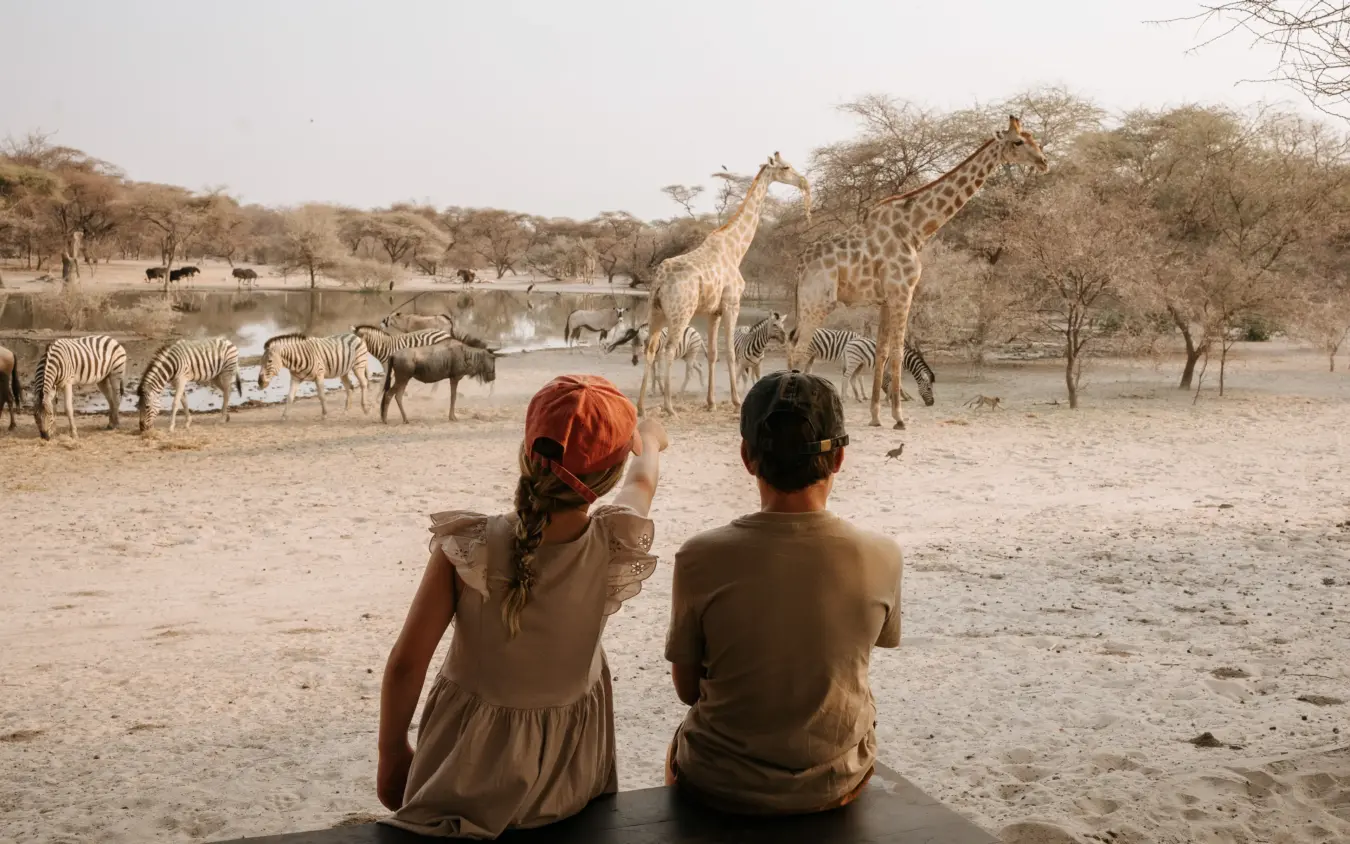
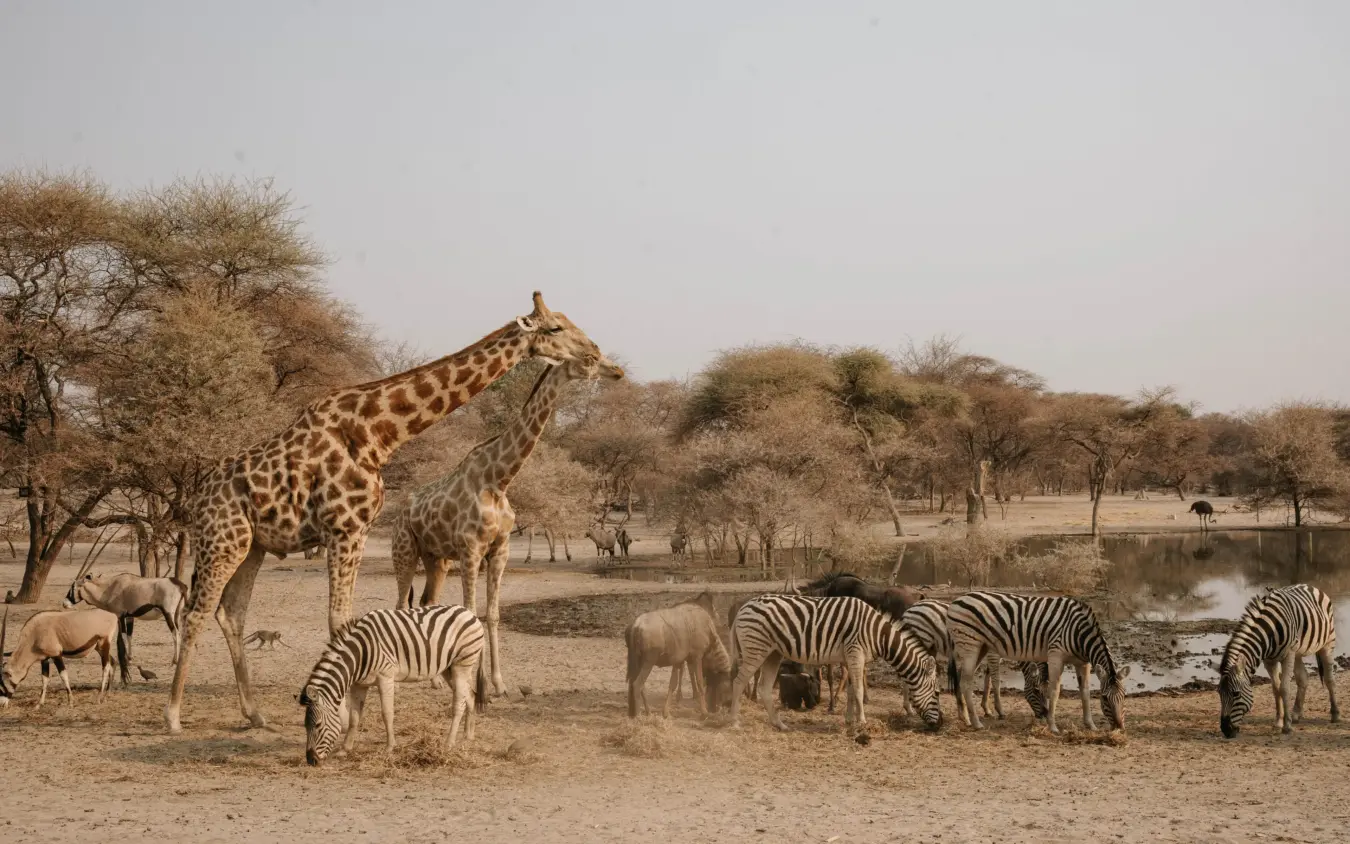
Fourteen kilometres from Maun’s airport, a gate opens onto 250 hectares of reserve on the Thamalakane River. No predators live here, no elephant and no buffalo, so the marked trails are yours to walk and cycle unaccompanied. Eleven units stand among old-growth leadwood and acacia, and a herd of about twenty giraffe moves through the trees with zebra, eland, gemsbok, springbok and kudu.
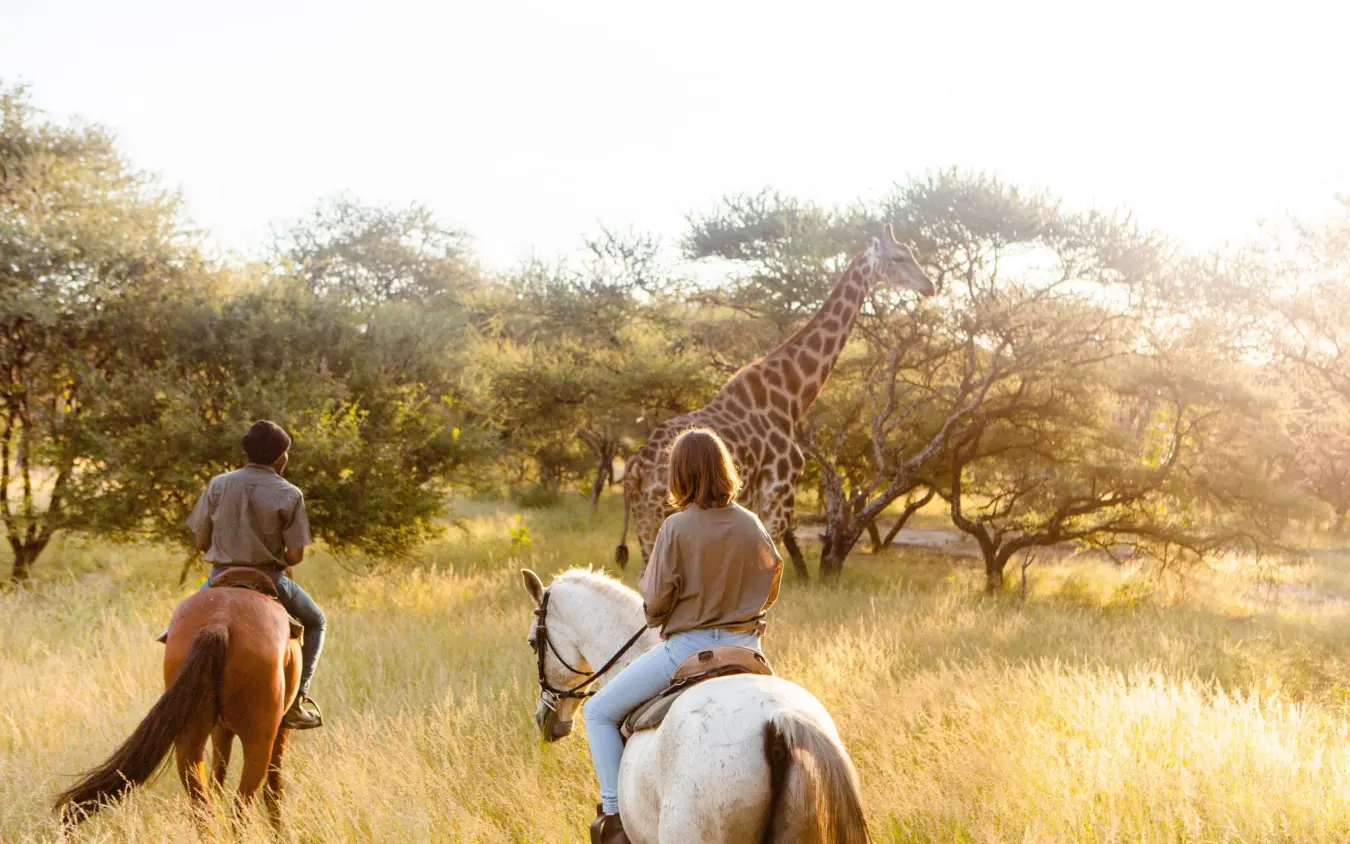
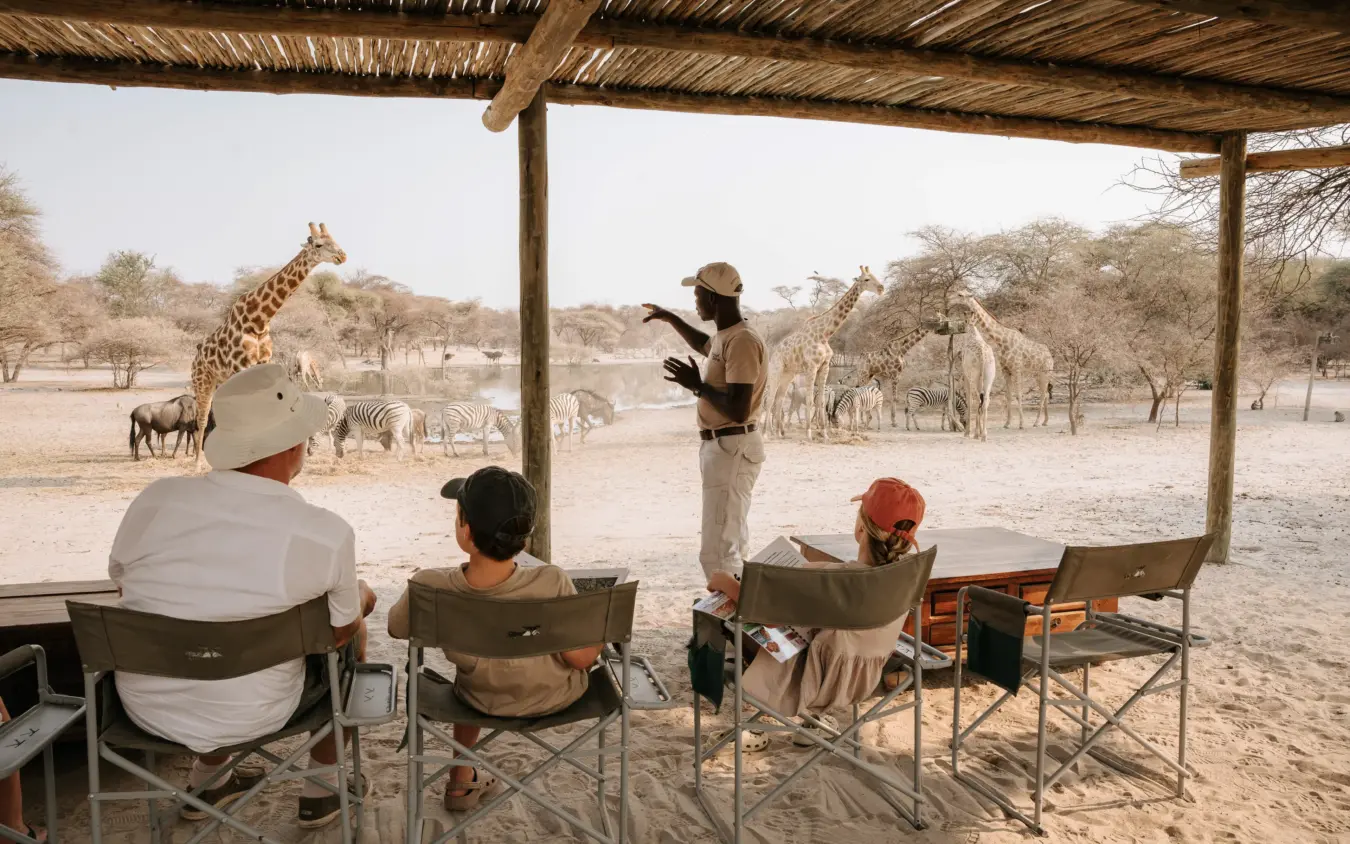
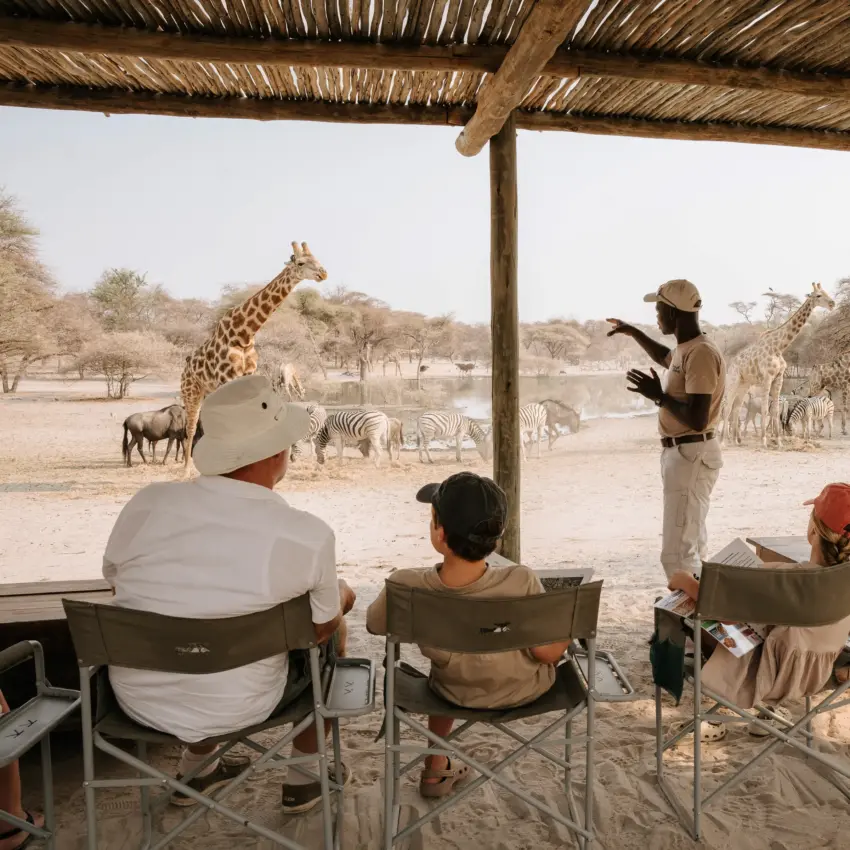
Guests approach the herd on foot, by bike or on horseback.

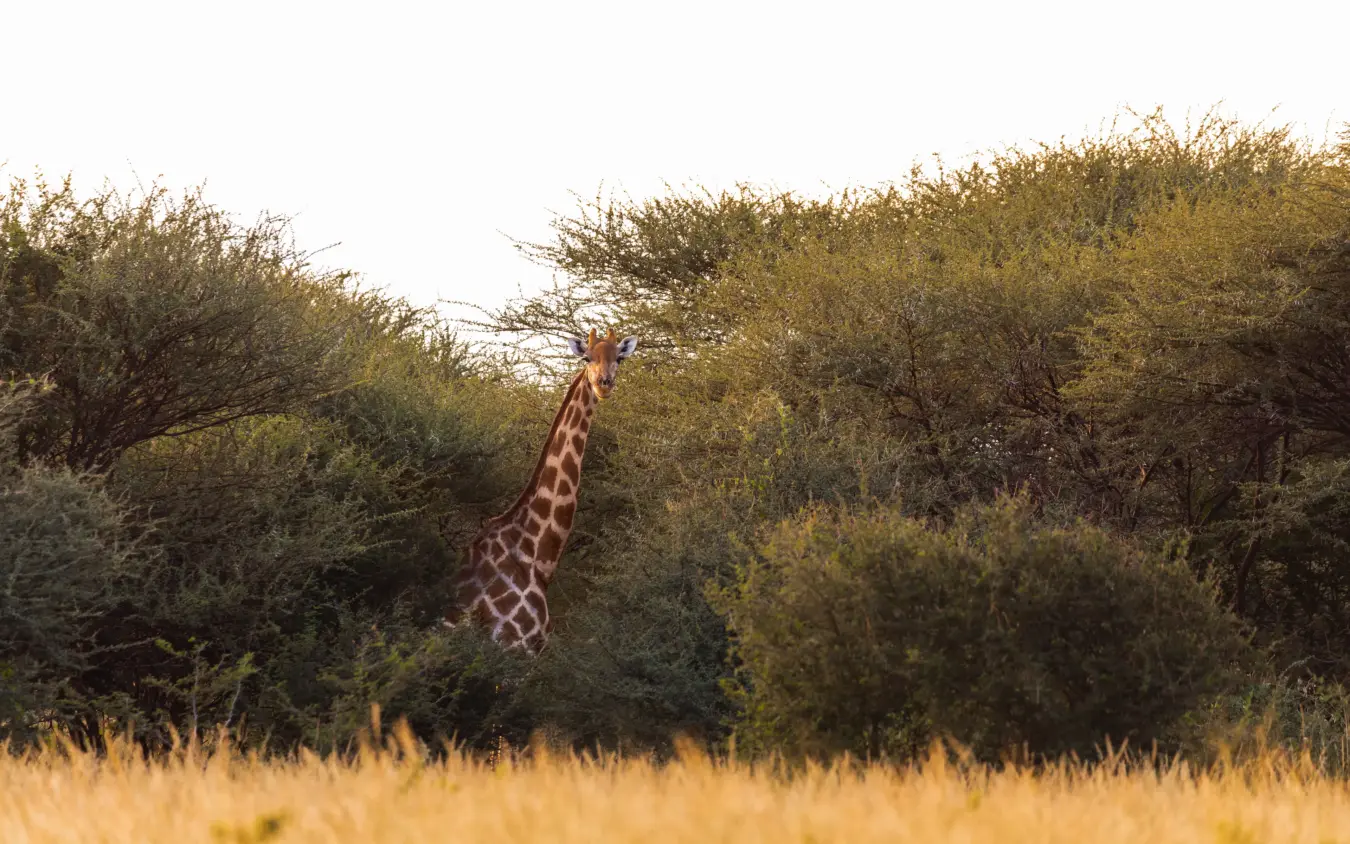
Each giraffe carries a Setswana name, and the evening gathering at the waterhole is spent learning to tell one from another by coat pattern. Guests approach the herd on foot, by bike or on horseback. Giraffe scientists based at the reserve lead the sundowner, at whatever pace guests set. The lodge takes its name from a calf born here during the 2021 rebuild: Thamo Telele means long neck.

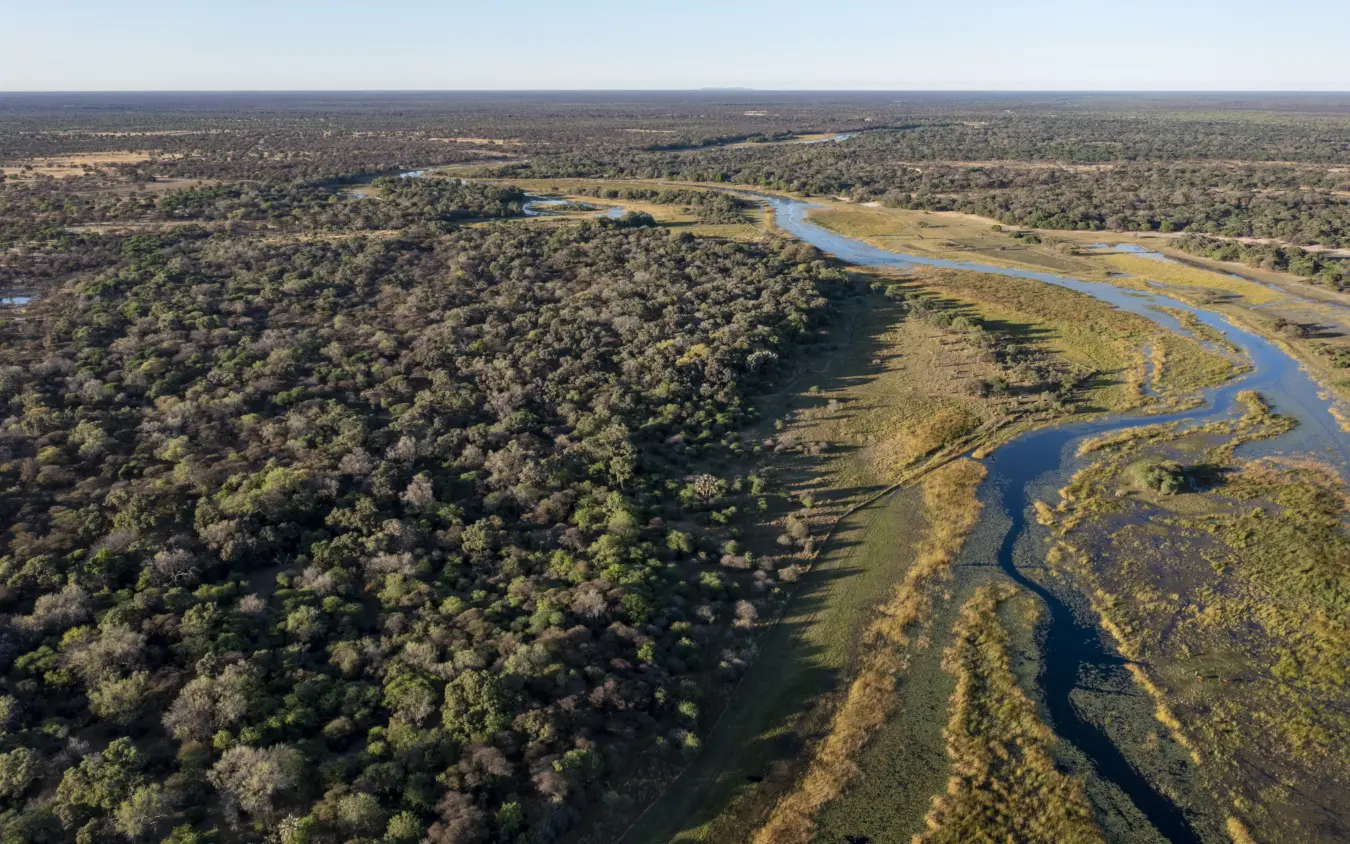
Riverine woodland gives way to dry savanna and then to open grassland, and the horses cover every part of it. Horse rides range from an hour to a full day among the plains game. Fat-bikes and marked walking trails of thirty minutes to an hour and a half follow the same ground, guided or self-directed. A lap pool has a deck of its own under a pergola, a short walk from the main area.

Riverine woodland gives way to dry savanna and then to open grassland

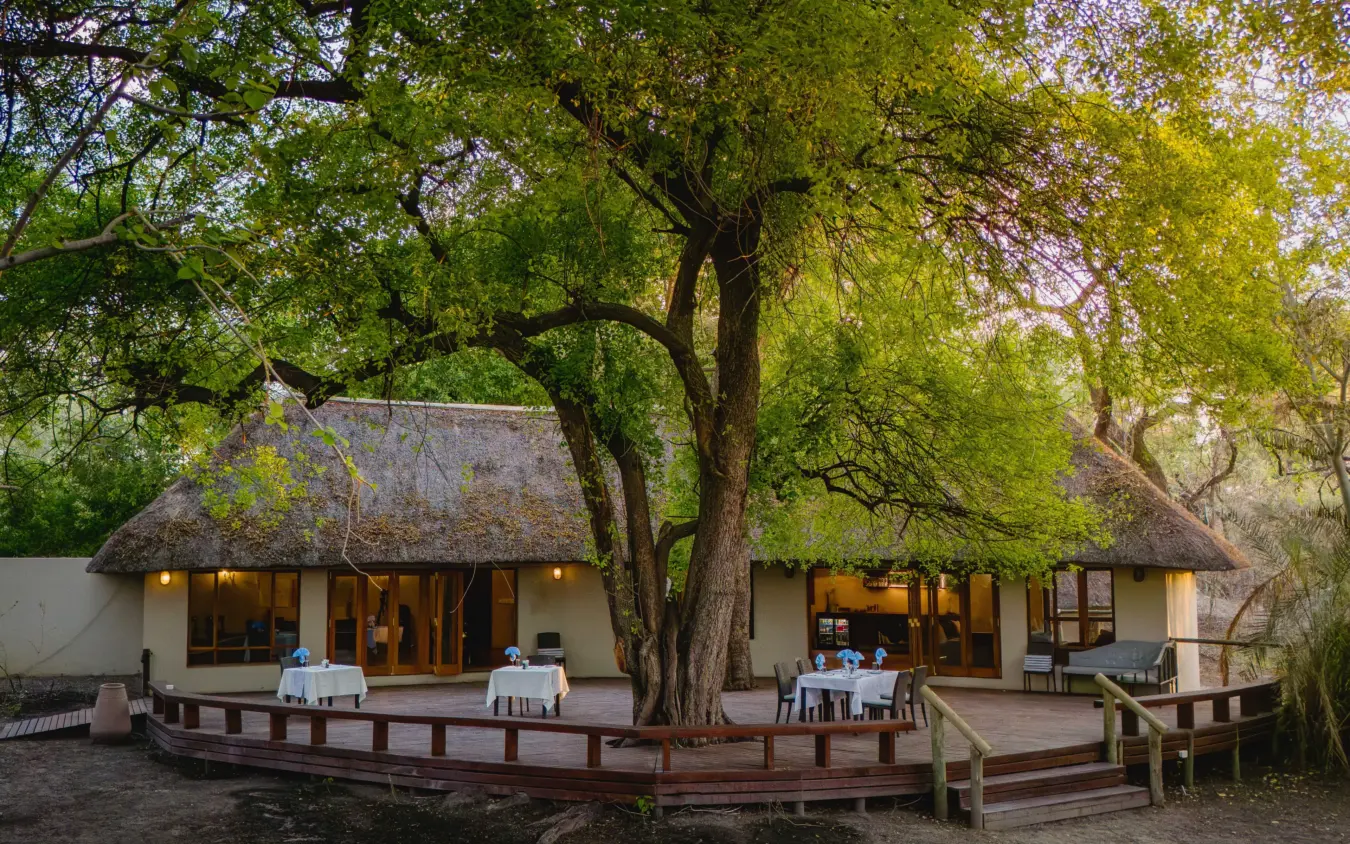
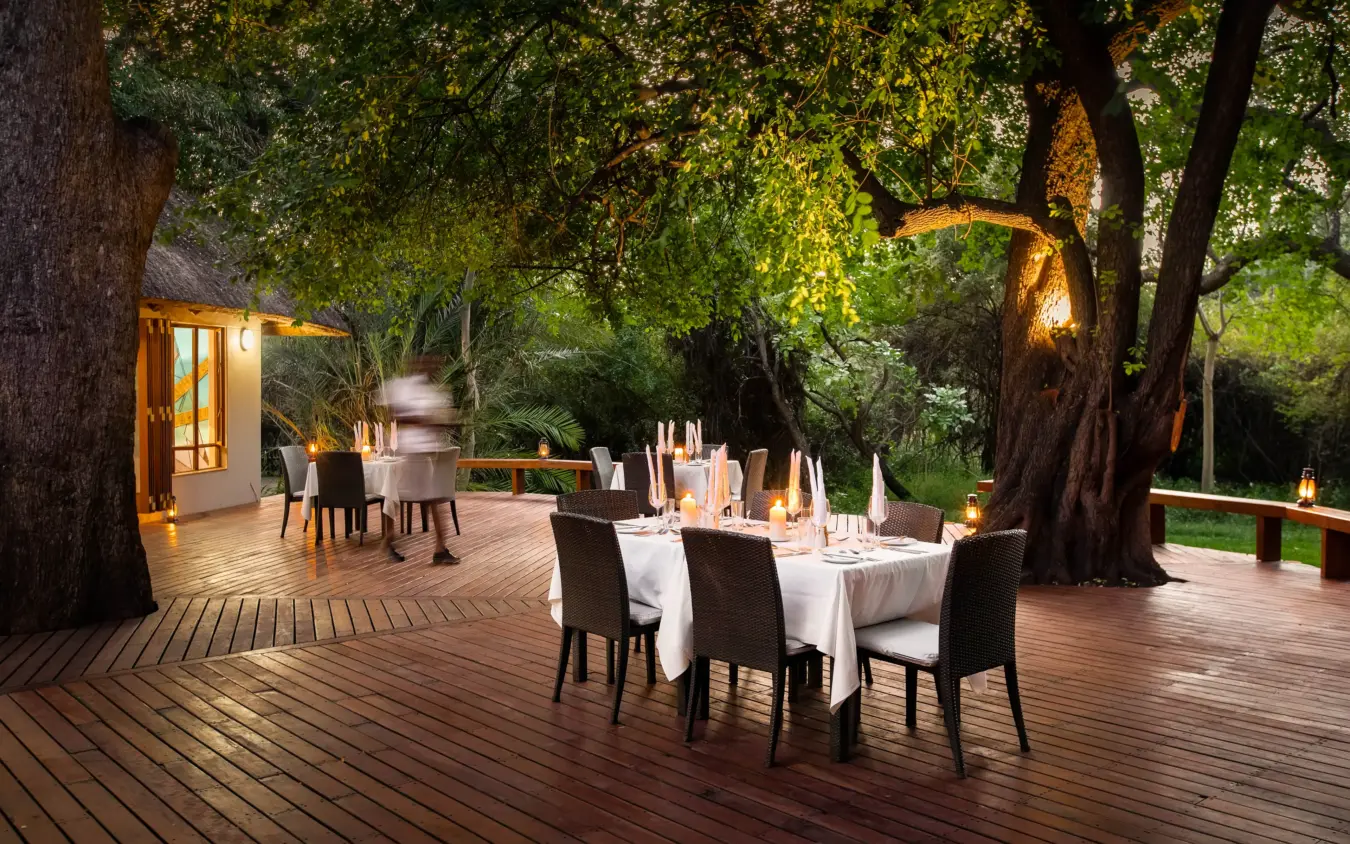
Along the river the birdlife runs to more than 300 recorded species, and fifty to seventy is a normal day’s tally. Meals are served on a teak deck built around a large leadwood tree, weather permitting. Indoors, a semi-circular thatched building on gum poles holds the dining room and a lounge with an honesty bar, rugs laid over tiled floors.

01

accommodation

Nine Meru Tents and Two Thatched Chalets

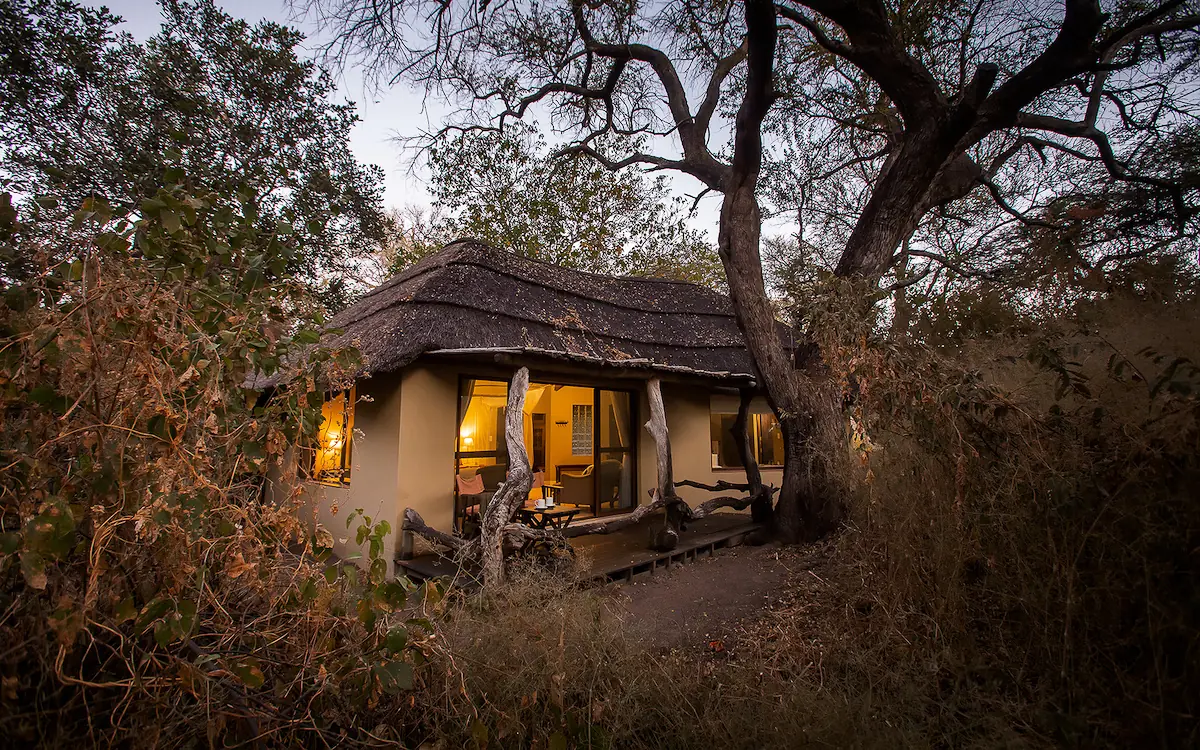
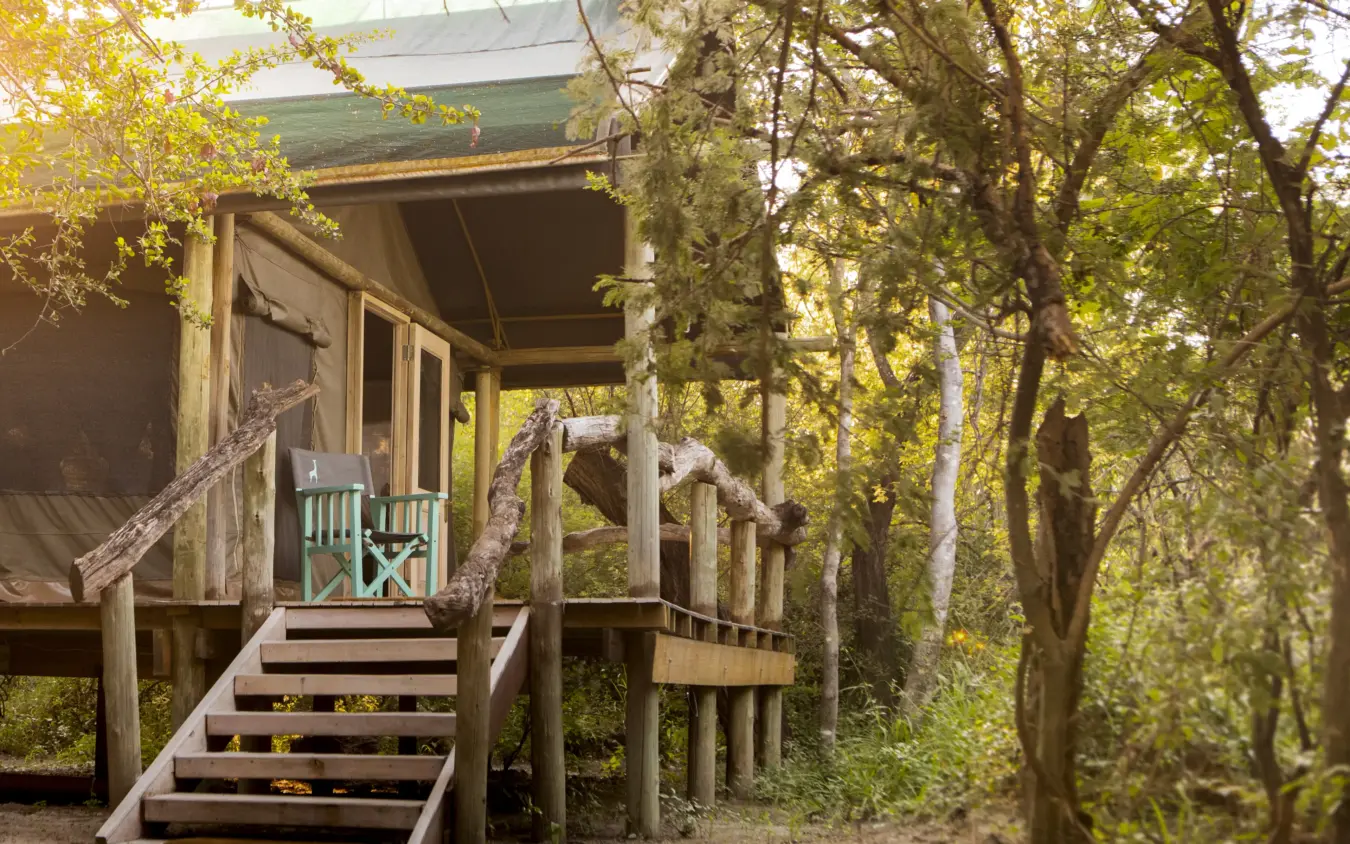
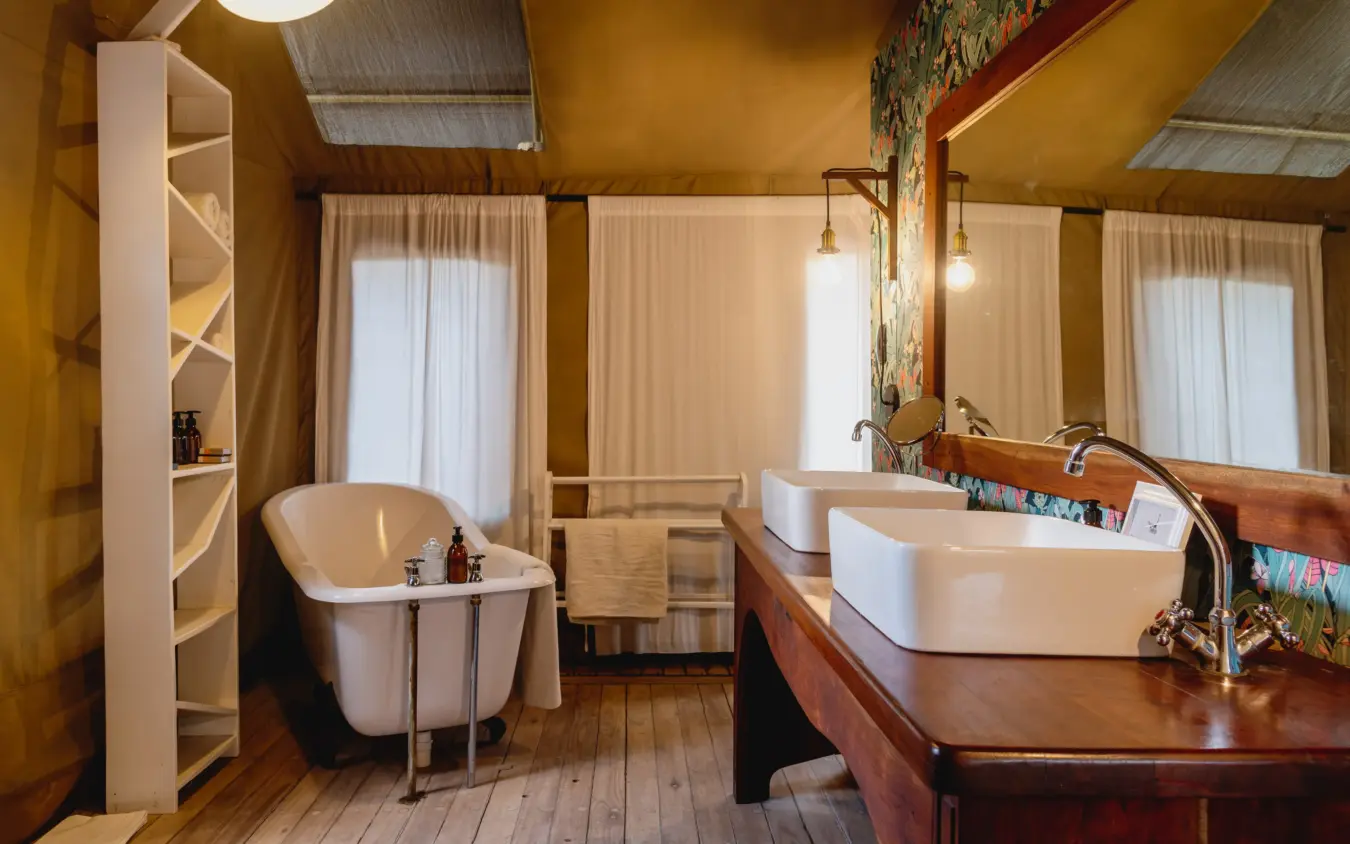
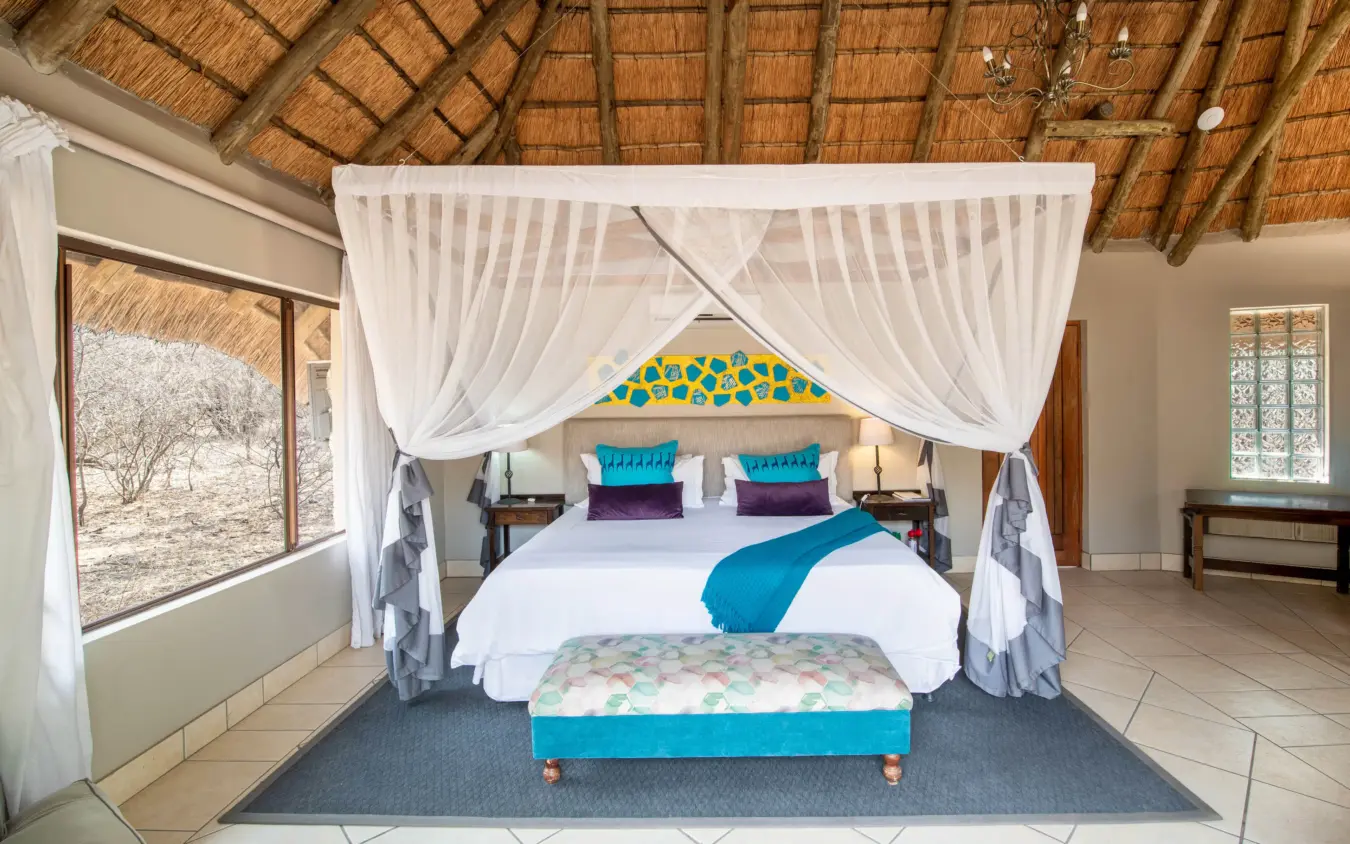
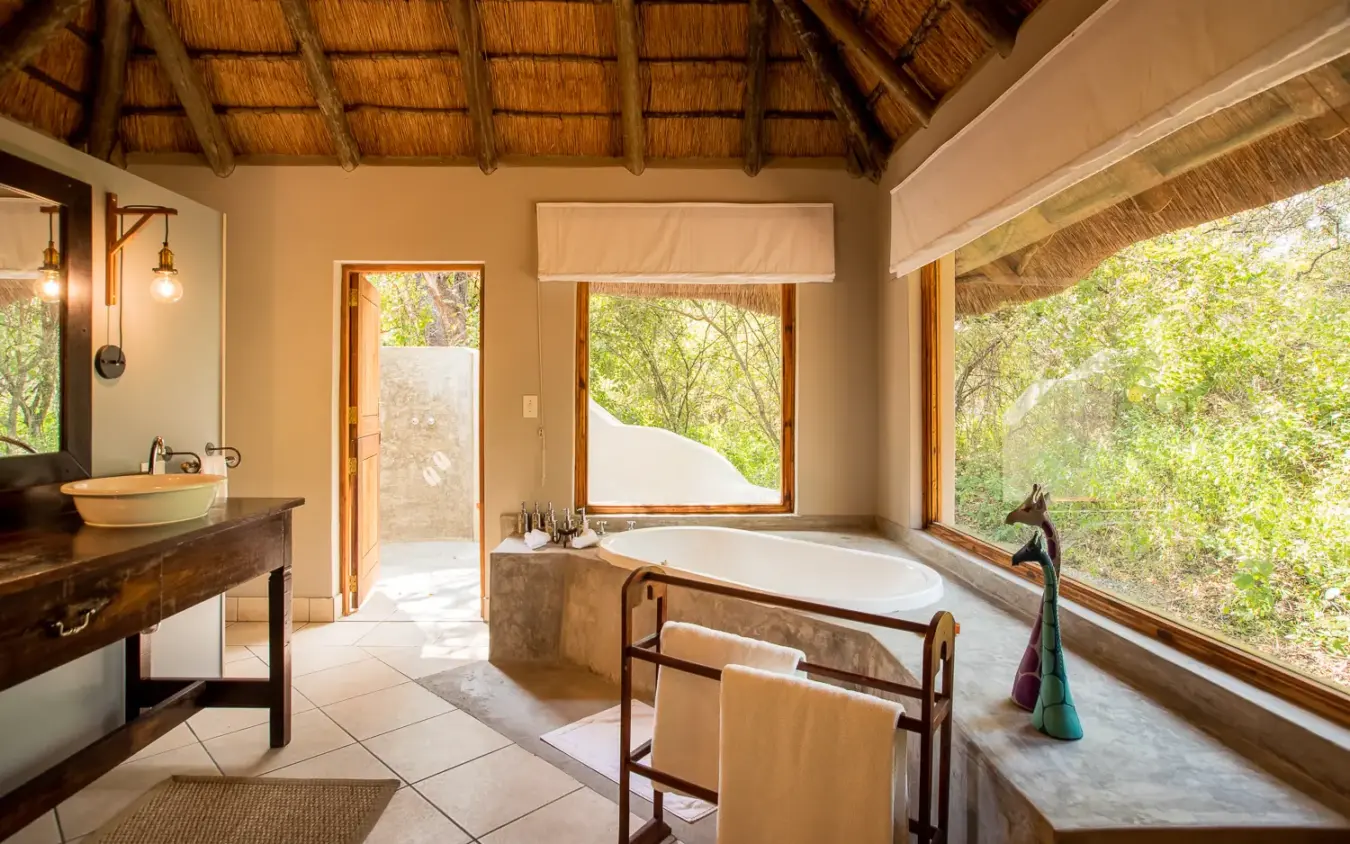
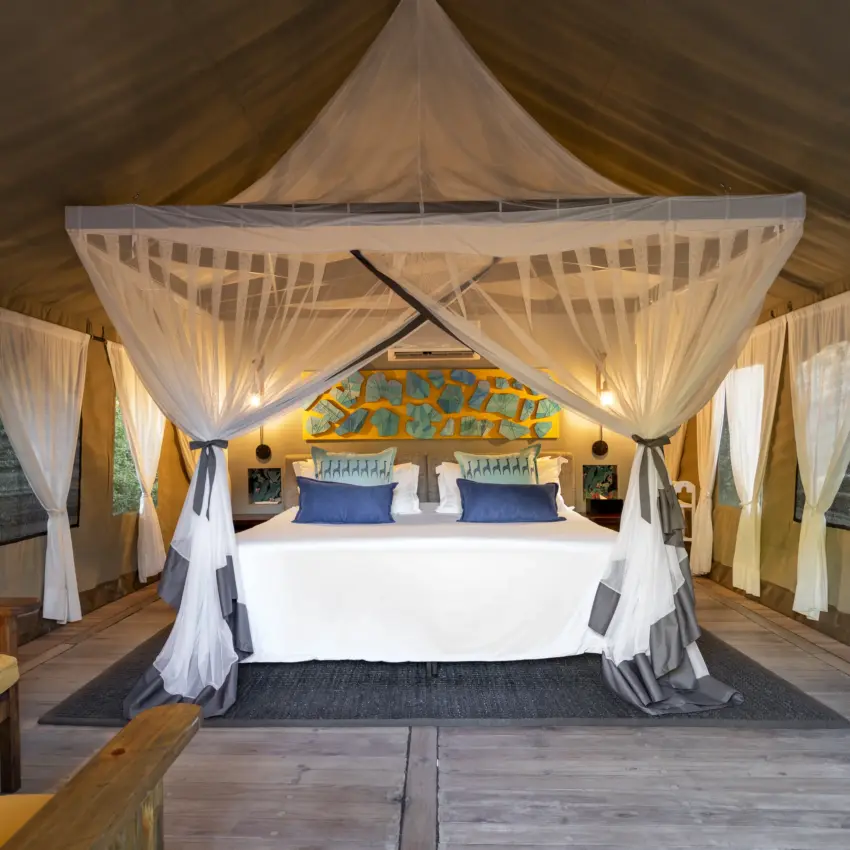
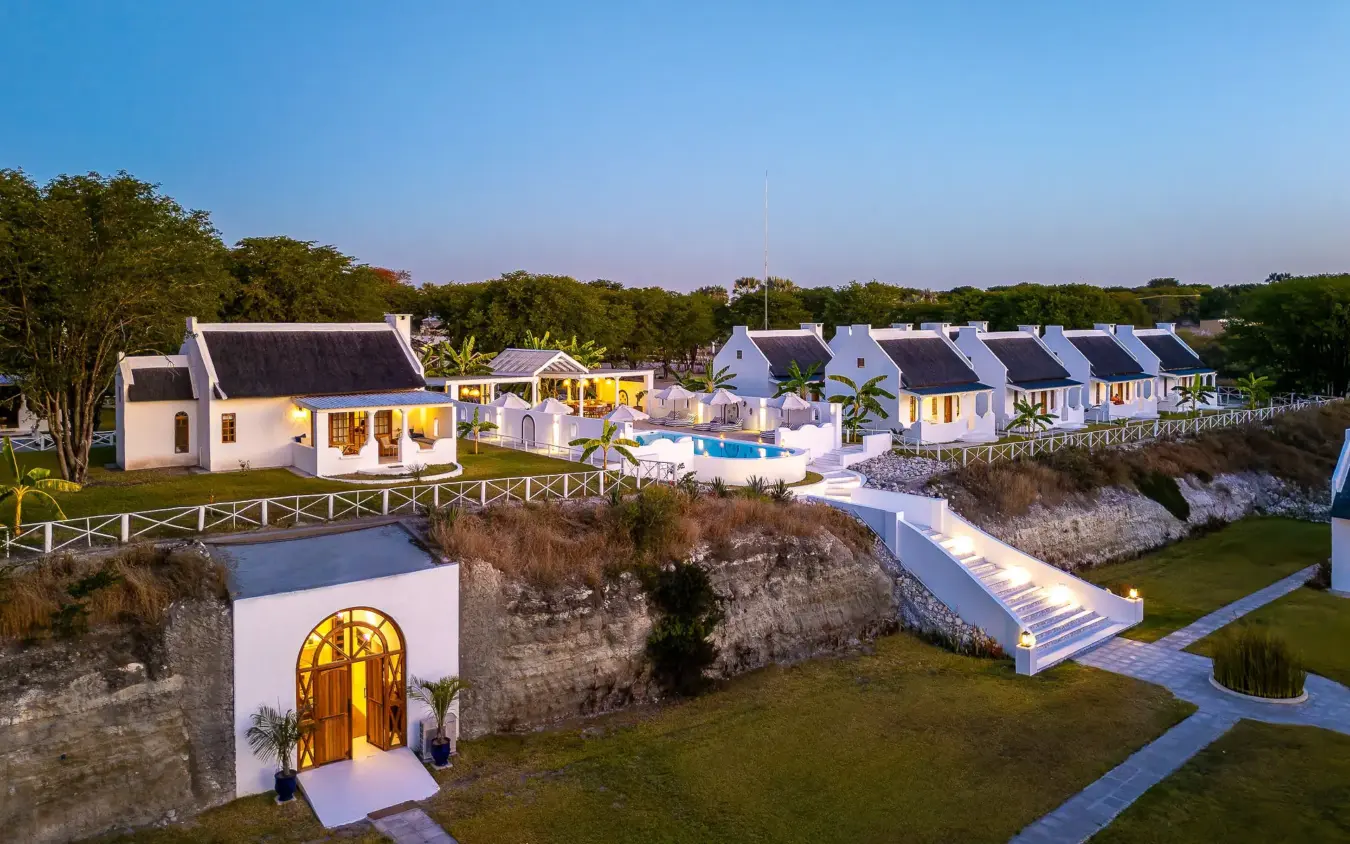
Nine Meru-style tents stand on raised hardwood decks under leadwood and acacia, with twin or double beds under netting, air conditioning, a private deck, twin basins, a slipper bath and an outdoor shower. Two thatched chalets have solid walls, king canopy beds and larger bathrooms, with room for extra beds. Eleven units in all.
02

activities

Horse Safaris Across Private Reserve Grassland

Guided or self-guided walks on marked trails, fat-bike rides, and horse safaris of an hour up to a full day, all within the private reserve. Morning and evening visits to the waterhole for the giraffe herd, birding along the river, swimming, and cultural visits with local hosts in Maun.

03

conservation

Giraffe Genetic Assessment and KAZA Regional Strategy

Giraffe Conservation Foundation-linked scientists based at the lodge lead Botswana's national giraffe genetic assessment and the regional KAZA conservation strategy, with satellite tagging ongoing. Guest stays also support Lorato House, a Maun care home for vulnerable and orphaned children.

ready to get started?

Get in touch and let’s start the conversation. An initial consultation helps us understand what you’re looking for, whether that’s specific experiences, luxury touches, or marking a special occasion, and from there we’ll guide you through what’s possible so you can decide if we’re the right fit.

Alternative accommodation in maun

frequently asked questions

By road from Maun airport, fourteen kilometres in all: four on tar to the Kwena road turning, two more, then the last eight on gravel through the villages to the reserve gate. The lodge puts the drive at about forty minutes and an independent report at twenty, and the difference is the state of the gravel, so allow the longer figure when there is a flight to catch. The lodge collects guests from the airport; whether that transfer sits inside the rate depends on which of its two rate bases you choose, and we make it plain in the quote either way. There is no air leg, so there is no flight to book here.

If you are driving yourself, a saloon car manages the gravel in the dry months, the lodge recommends a four-wheel drive during the rains between November and March and asks you to check the road with it first, and it would rather you followed its own directions than a map app. It can also hold your vehicle while you fly into the Delta, for a charge. One honest note: the reserve is close enough to town that music from Maun can carry on a Friday or Saturday night, which the same independent report mentioned without losing any sleep over it.

Yes. The reserve lies on the edge of Maun in the northern half of Botswana, which TravelHealthPro, the UK's official travel health service, classes as high risk for malaria from October to May, listing antimalarial tablets among its recommendations for those months, and as low risk from June to September, when it advises awareness and bite avoidance. The CDC names Ngamiland, the district around Maun, among the parts of the country for which it recommends prescription medicine to prevent malaria.

We are travel planners rather than medical professionals, so the decision belongs with you and your doctor or a travel clinic, and it is worth a check close to departure because the guidance is reviewed. On the ground the beds are netted and the tents air-conditioned, and the giraffe sundowner puts you beside a waterhole at exactly the hour the mosquitoes wake, so long sleeves and trousers and repellent from late afternoon are part of the routine whatever you decide.

Yes, at any age, and better than most of Botswana for the young ones, because with no predators, elephant or buffalo on the reserve a family can walk the marked trails on its own, which the Delta camps cannot offer. Cots and extra beds are available, one extra bed to a room, and the two thatched chalets are the family choice because they take one. The giraffe sundowner takes all ages at the guide's discretion, and the walks, the birding and the pool have no age limit at all.

The horses, the bikes and the helicopter flights each carry a minimum age, and the horses a rider weight limit, and we confirm the current figures for your party before we book rather than quote them here. The reserve is safe from big animals but it is still wild ground with a river through it, so younger children need a parent's eye on the trails and at the pool. Tell us the ages and we will match the rooms and the activities to them.

Wifi, yes, and it is included in the rate, but not in every room. The lodge lists wifi among its facilities, and the most recent independent report from a stay found it in the two thatched chalets and not in the nine tents. If you need to work from your room, or someone in your party has to stay reachable, tell us before we book and we will check the current reach with the lodge rather than guess, and hold a chalet if that is what it takes.

For everyone else the practical advice is the same as for the Delta: download maps, books and anything else you will want before you leave the airport, and treat a night here as the chance to send the messages that will not go from camp.

Two seasons. The rains come between November and March, heaviest in January, as short, hard storms in the evening after hot days, and the gravel road into the reserve softens with them. From April the sky clears and stays clear until October: June and July are the cold months, with a dawn ride or walk that can start close to freezing before the day warms into the mid-twenties, and October is the hottest, with afternoons around thirty-seven degrees and the first rain arriving late in the month. The tents are air-conditioned, which matters in October.

Pack closed shoes with grip for the trails and the bikes, long trousers if you mean to ride, a warm layer for winter mornings and the sundowner at the waterhole, a light rain jacket between November and March, a hat and strong sun protection all year, swimwear for the lap pool and binoculars for the birds. A soft bag of twenty kilograms, hand luggage included, is the limit on the light aircraft into the Delta, so pack to that from the start.

One night is what most guests give it, on the way in or out of the Delta, and one night is enough for the giraffe sundowner and a swim. Two lets you add a morning ride and a walk along the river without watching the clock. The lodge discounts stays of six nights or more, which suits anyone using it as a base for Maun.

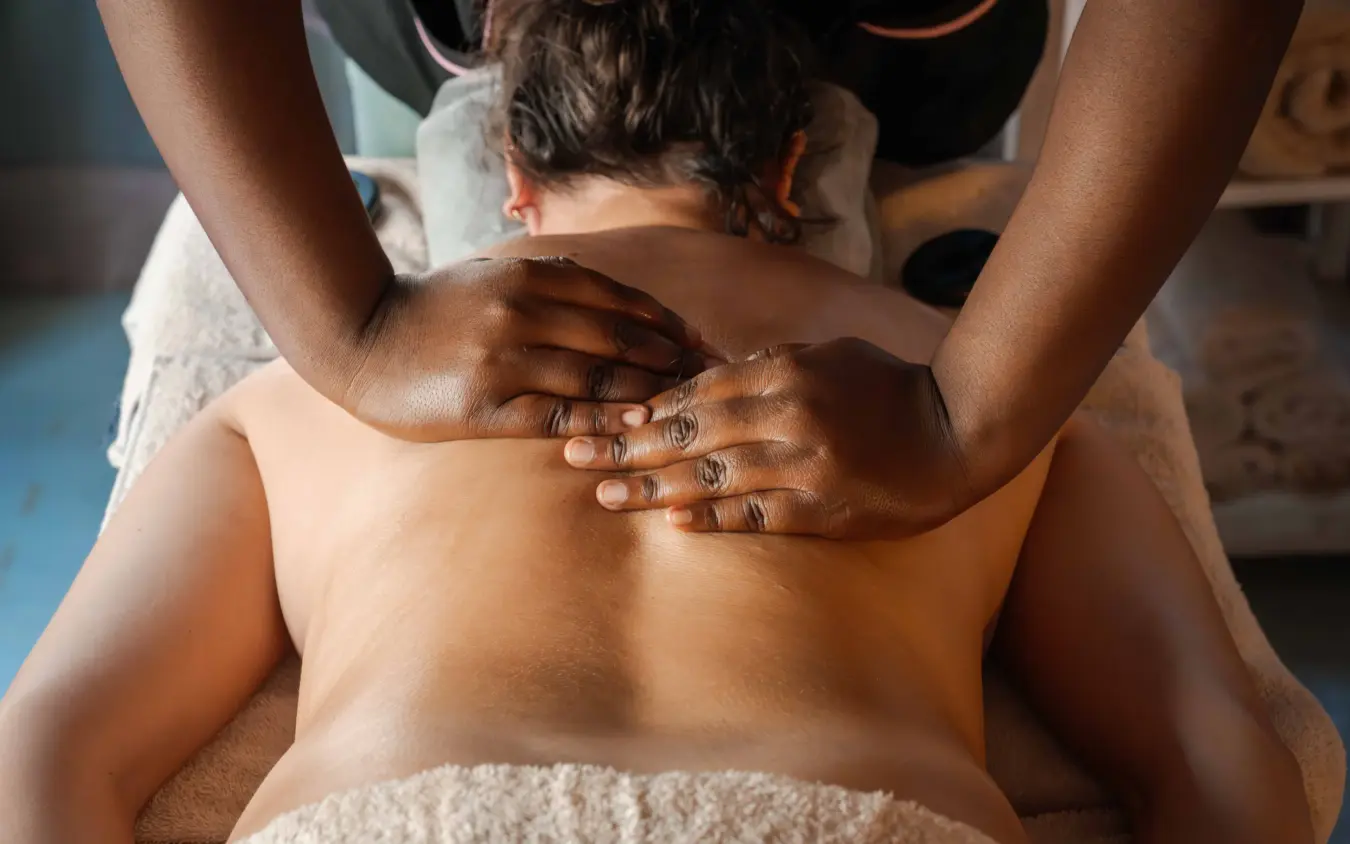
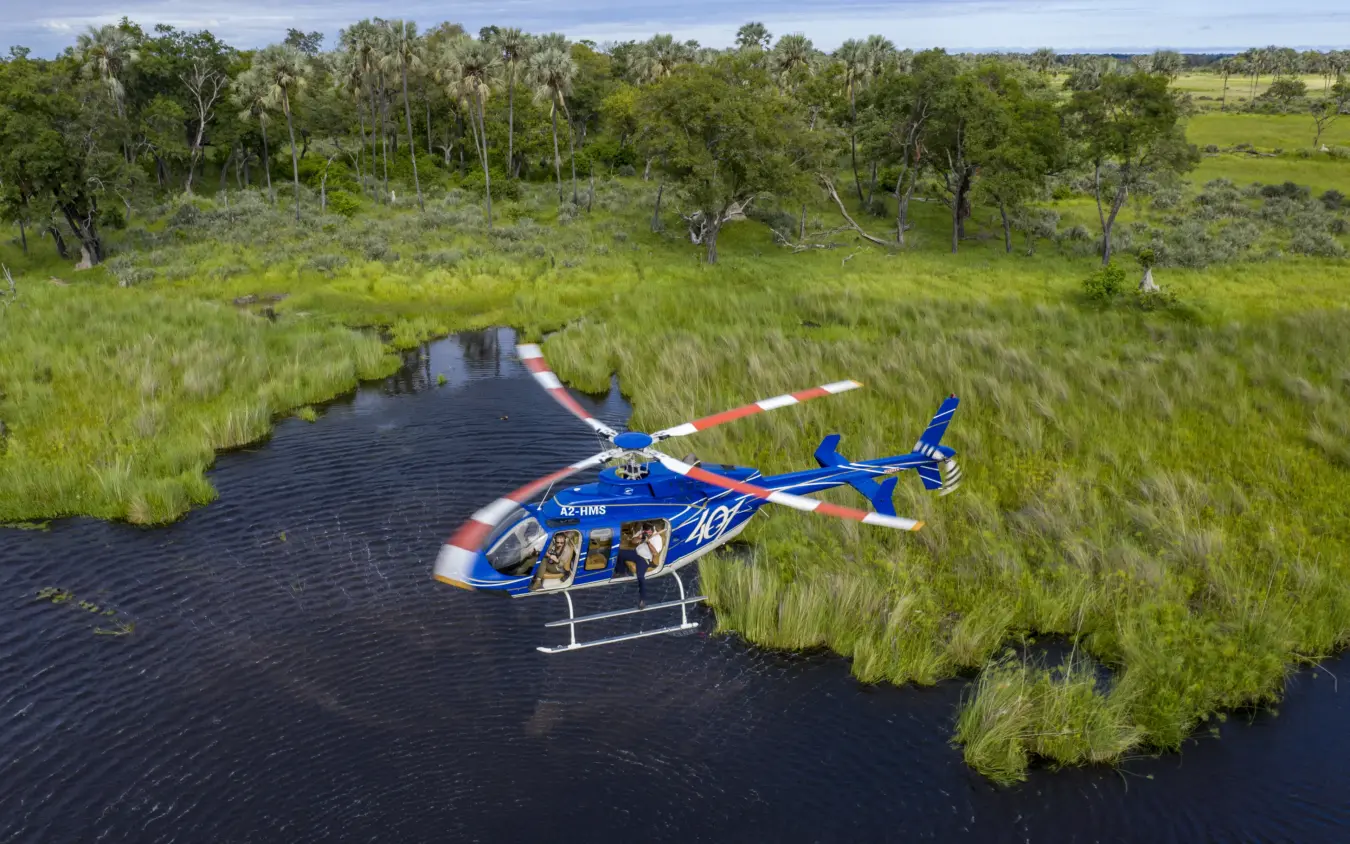
There are two rate bases. Dinner, bed and breakfast covers the room, breakfast, dinner and wifi, with lunch, drinks, laundry, the activities and the airport transfers charged separately. The fully inclusive rate covers all meals and drinks, the marked trails, the afternoon giraffe activity, a one-hour ride, a two-hour guided morning walk or both, laundry and the airport transfers, leaving only premium drinks, tips and insurance outside it. The bike rides, the helicopter flights over the Delta, the spa and the town tour are extras on either basis, and a community and reserve fee is charged per person per night on top, which we build into the quote from the start so the total you see is the total you pay.

rated five stars by our clients

other areas in botswana

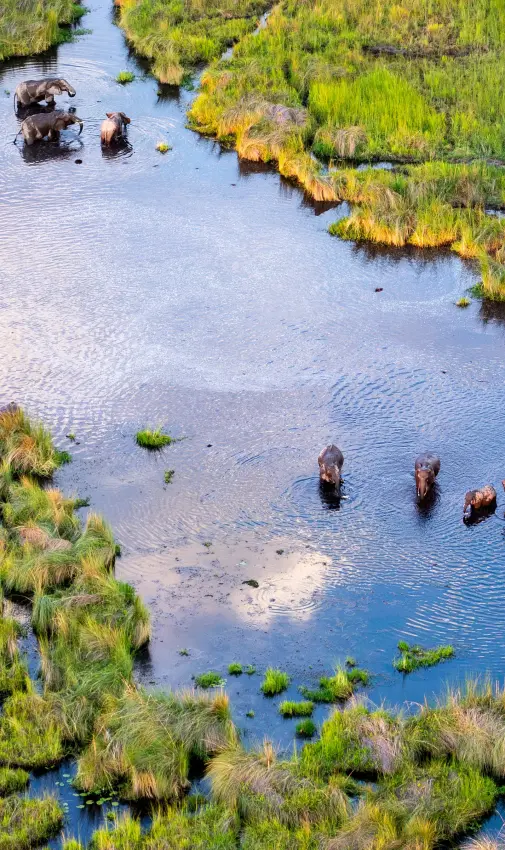
Aerial view of elephants wading in shallow water surrounded by vegetation 01

The Okavango Delta

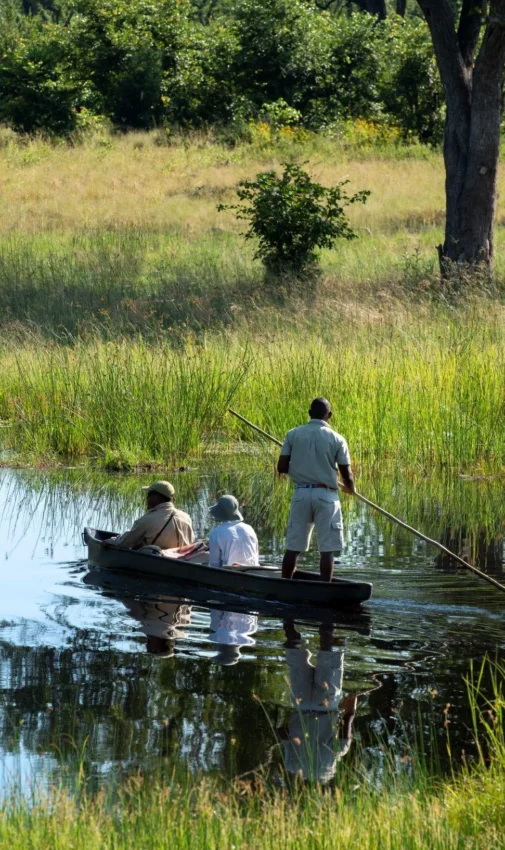
Guests poling traditional boat through wetland waterway, Linyanti Wildlife Reserve, Botswana 02

Linyanti Wildlife Reserve

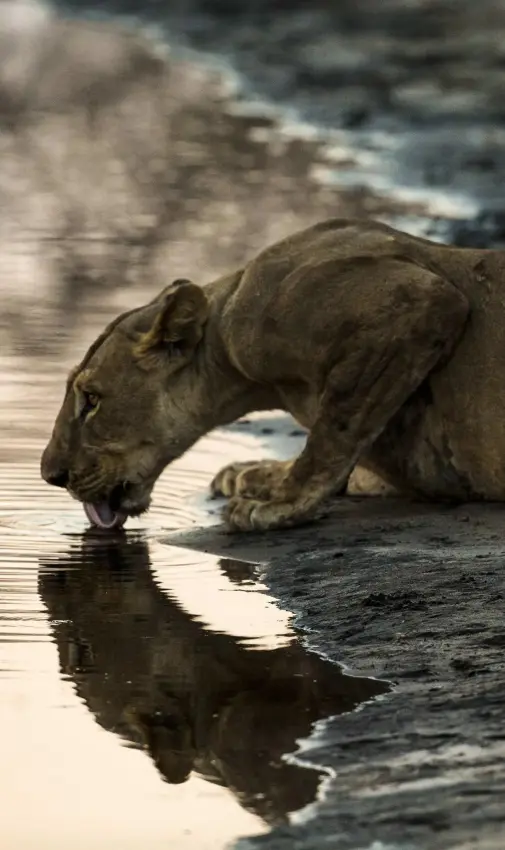
Lion drinking from water's edge at sunset, Selinda Reserve, Botswana 03

Selinda Reserve

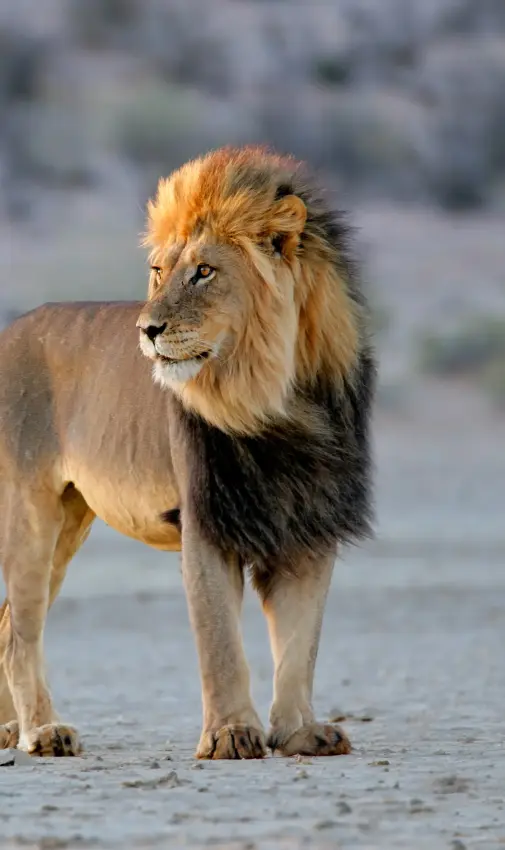
Male lion standing on sandy ground in natural habitat 04

Central Kalahari

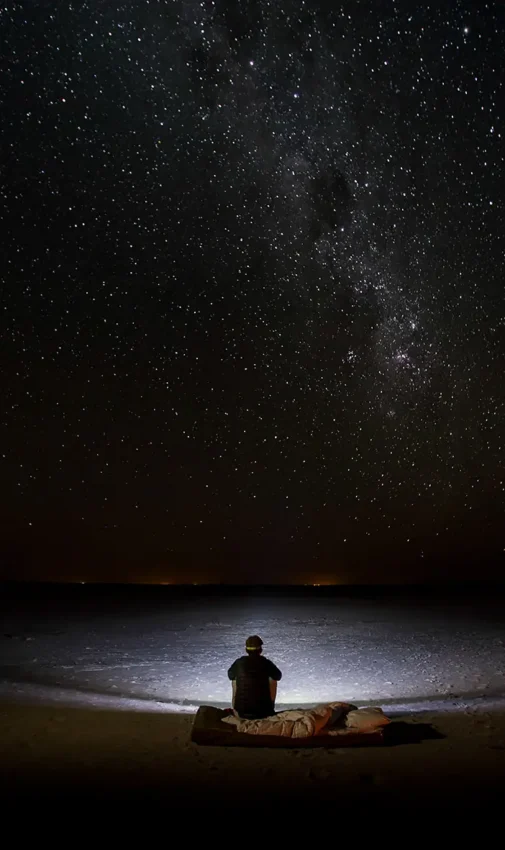
Person sitting alone under starry night sky, Makgadikgadi Pans, Botswana 05

Makgadikgadi Pans

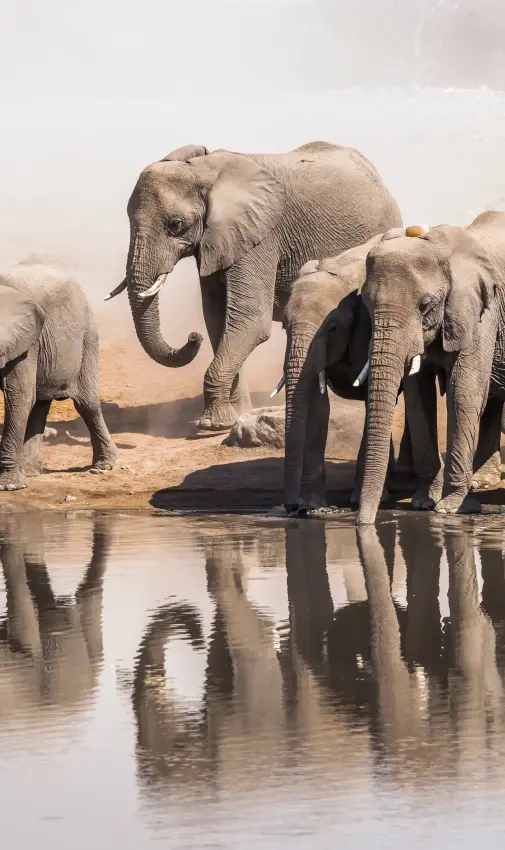
Herd of elephants drinking at waterhole with reflections 06

Chobe

Planning a journey together

our approach

remote, exclusive
& personal

Every journey starts with a conversation. We take the time to understand your vision before we start planning.

Whether by phone or in person, we work with you directly to shape something that is considered, personal, and expertly delivered.

get in touch
destinations ideas & inspiration our process about us contact us