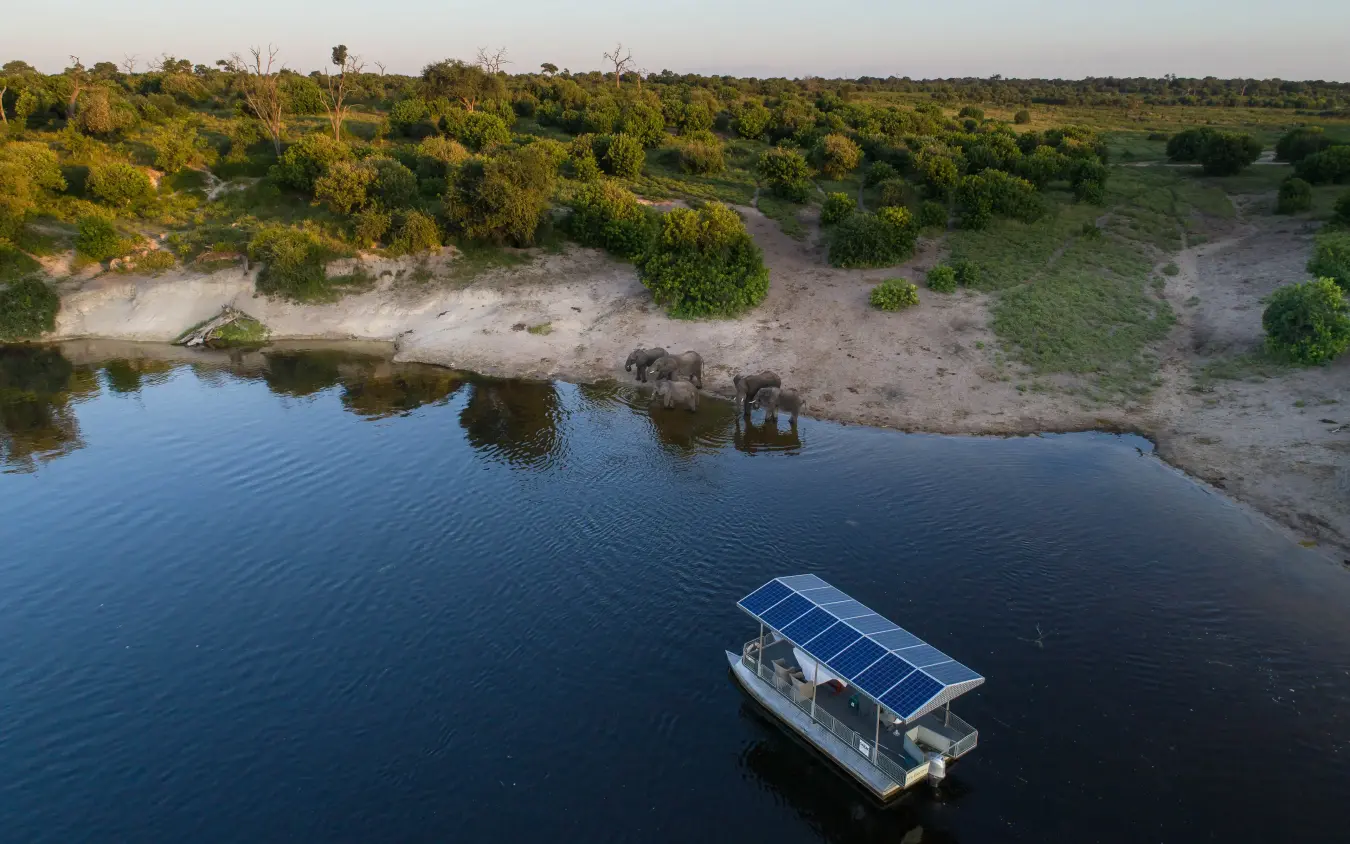
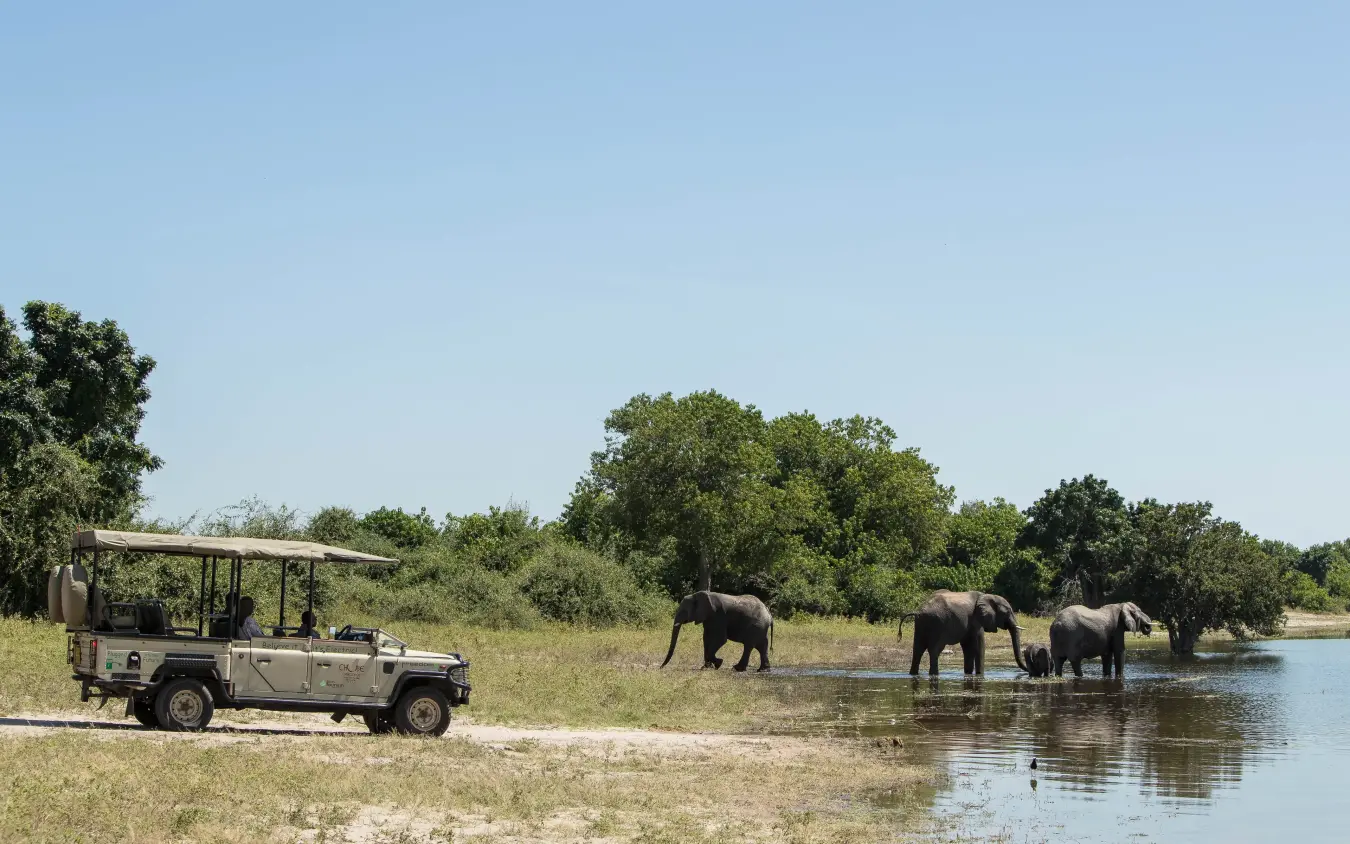
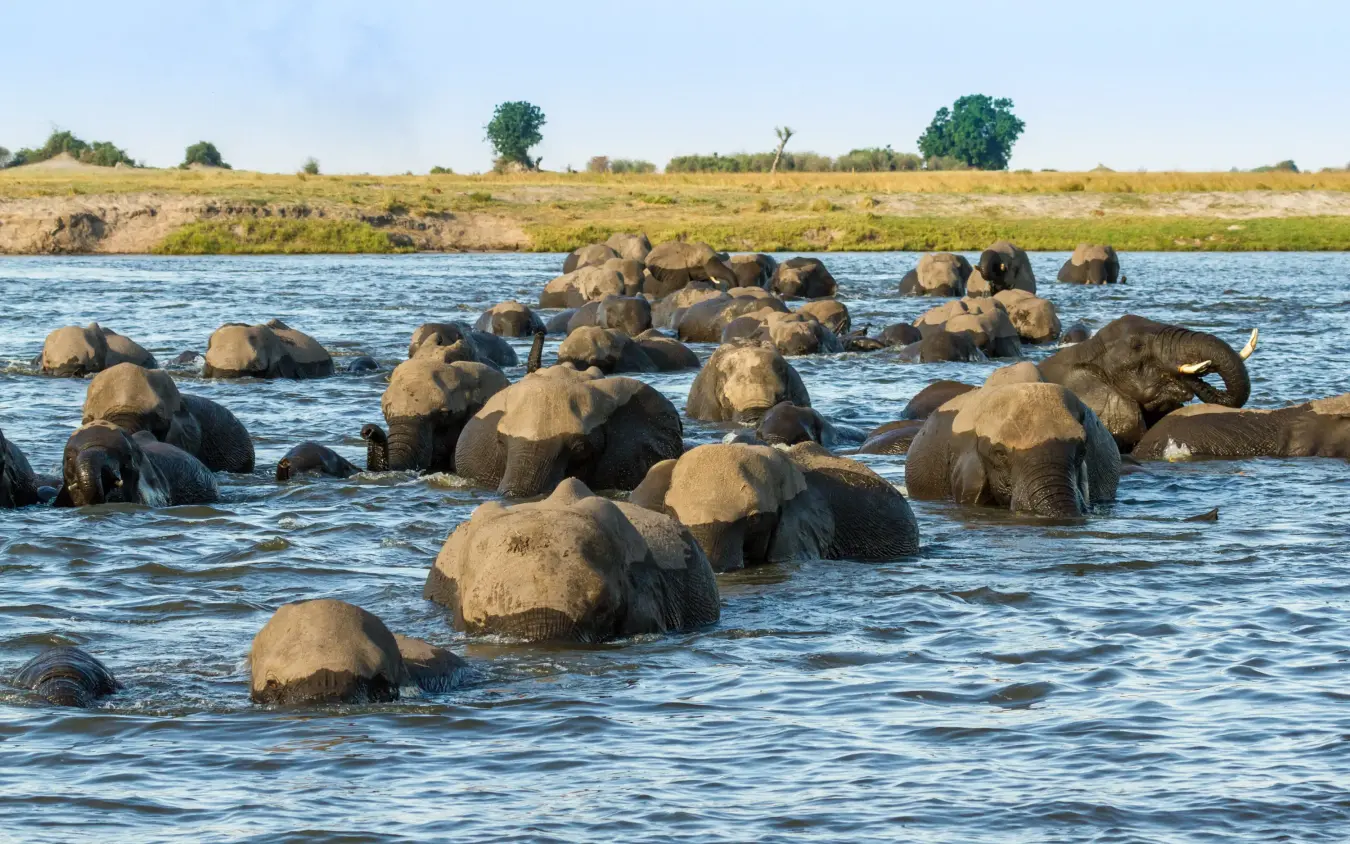
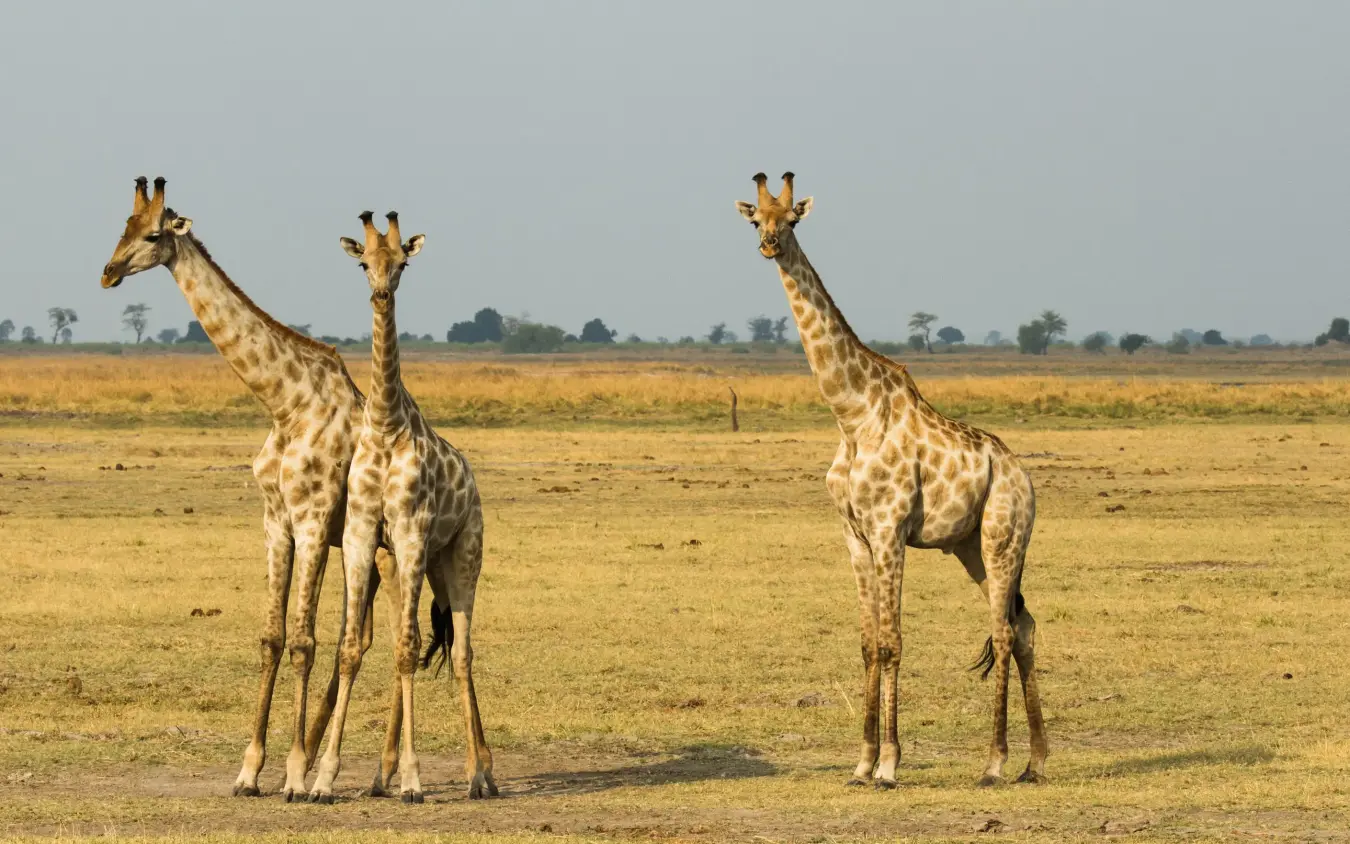
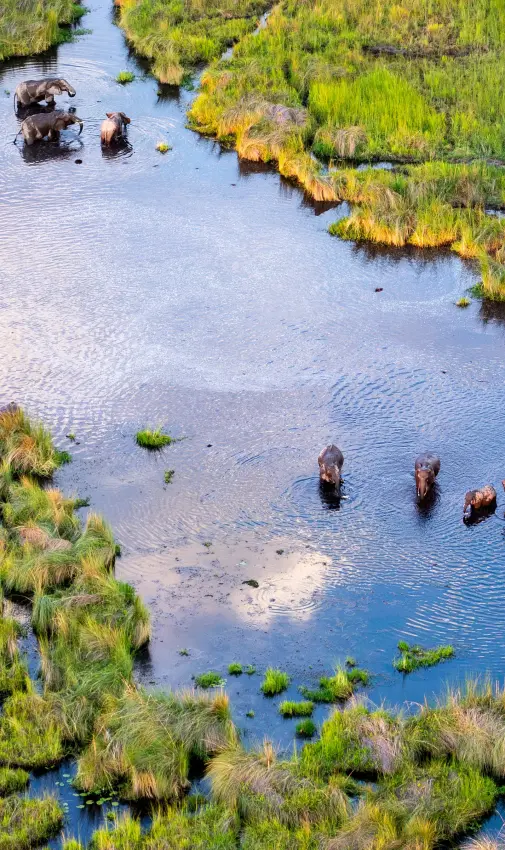
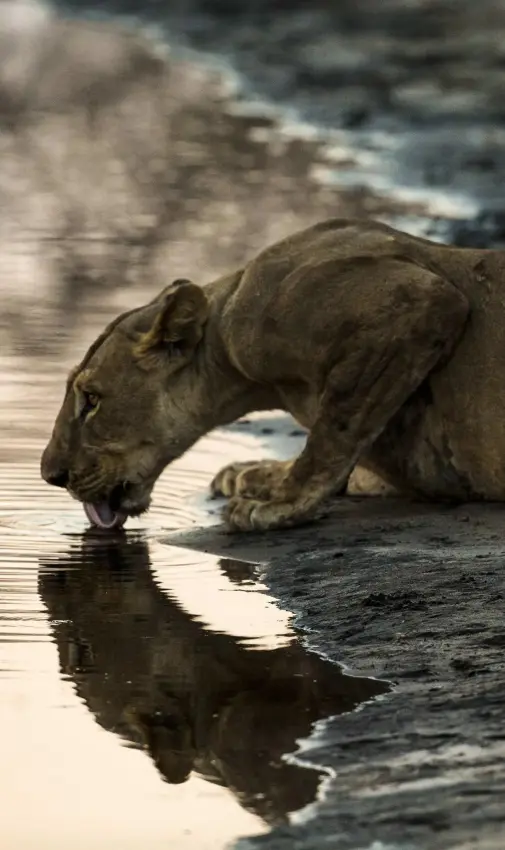
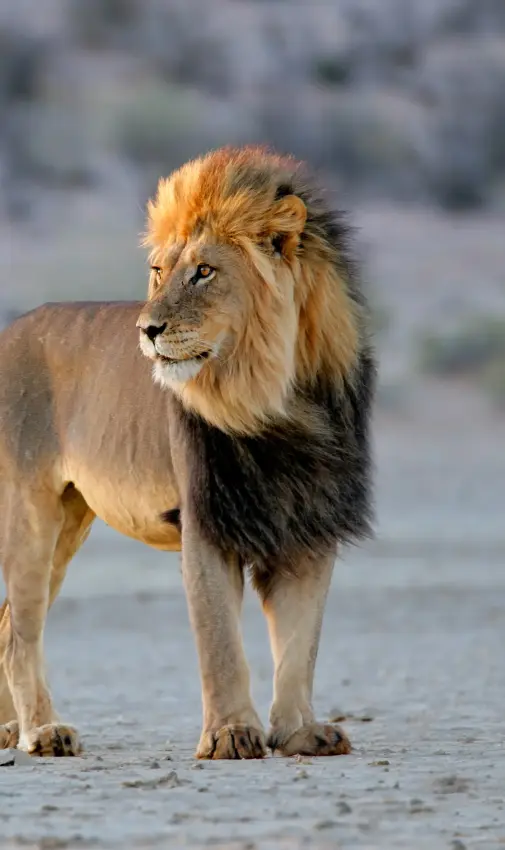
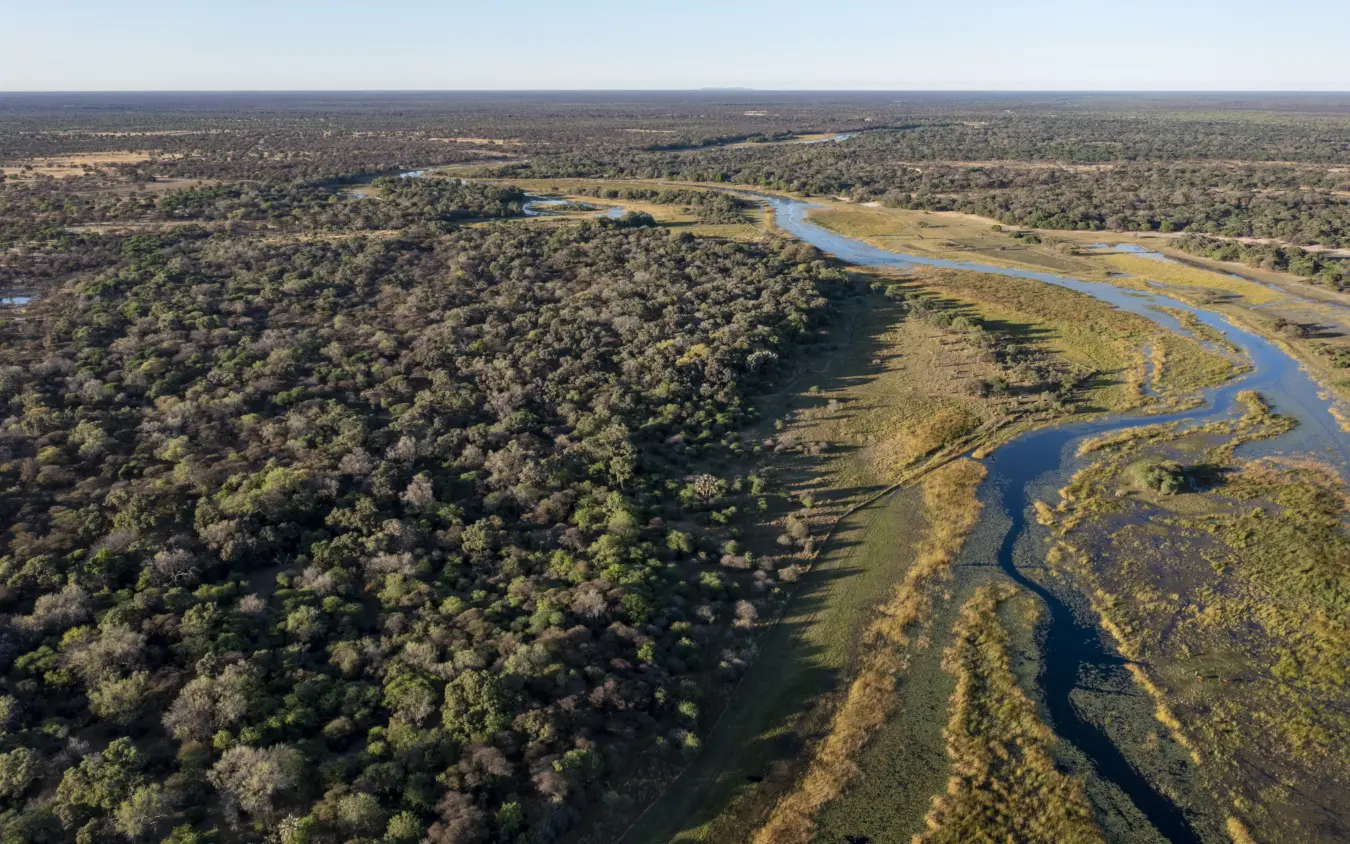
Elephants are a year-round presence on this stretch of river, and the dry season concentrates them further as the floodplain shrinks. By September the herds pack onto the last stretches of wet ground before the lodge. Buffalo, giraffe, zebra and blue wildebeest work the same open country, while puku, red lechwe and Chobe bushbuck hold to the wetter margins. Lion, leopard, spotted hyena, cheetah and wild dog follow the concentration of prey, and across the water lie Namibia’s Caprivi floodplains.
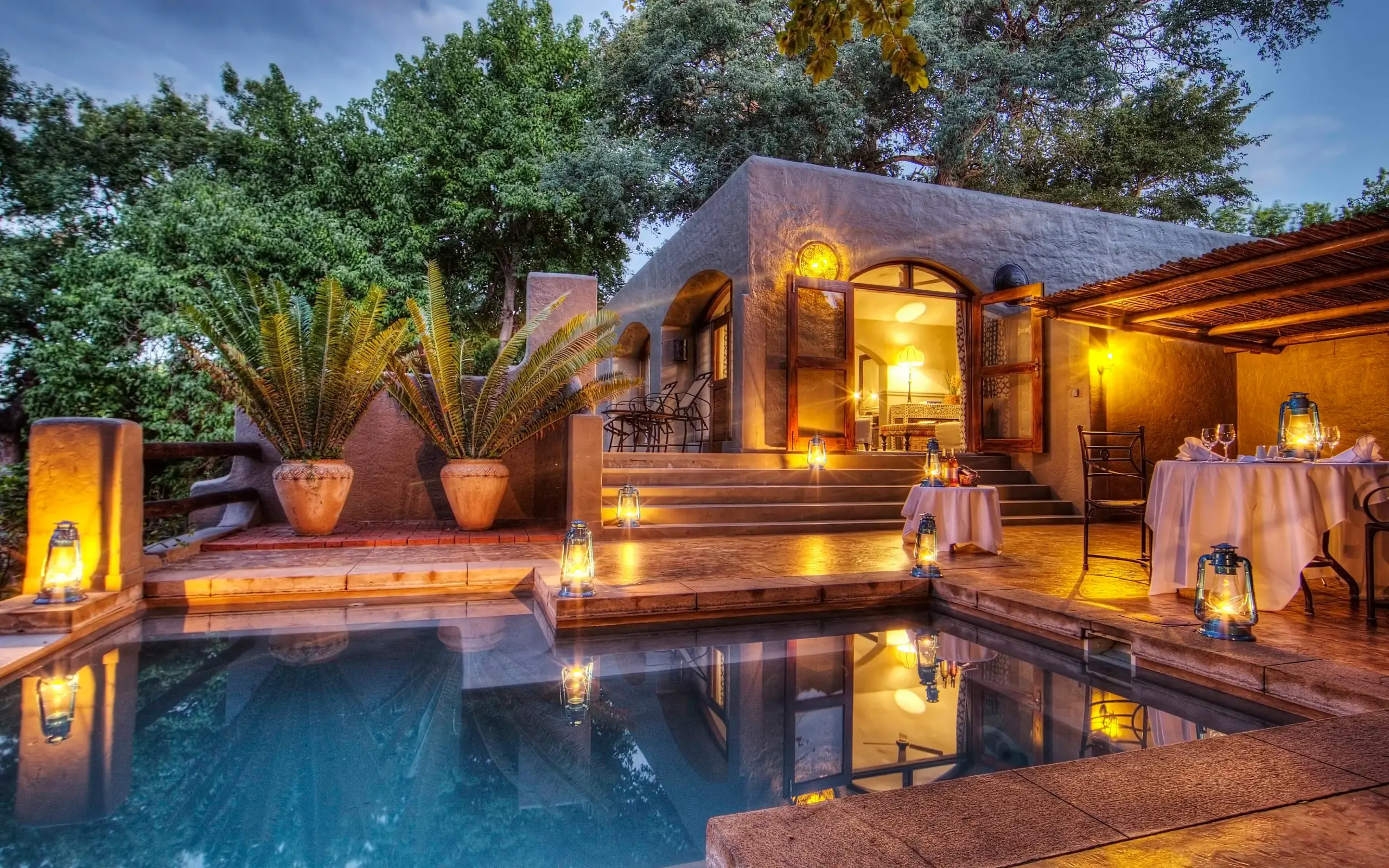
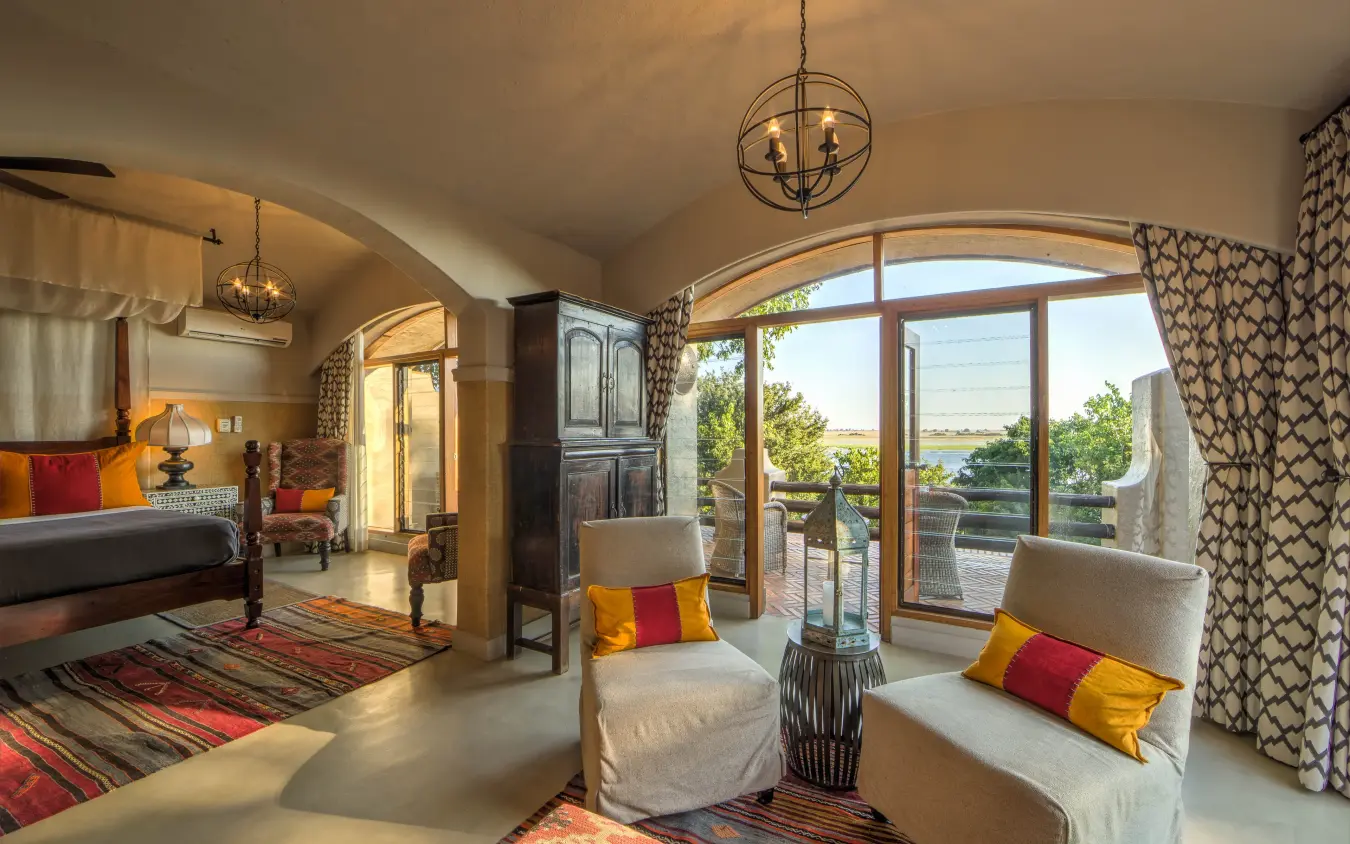
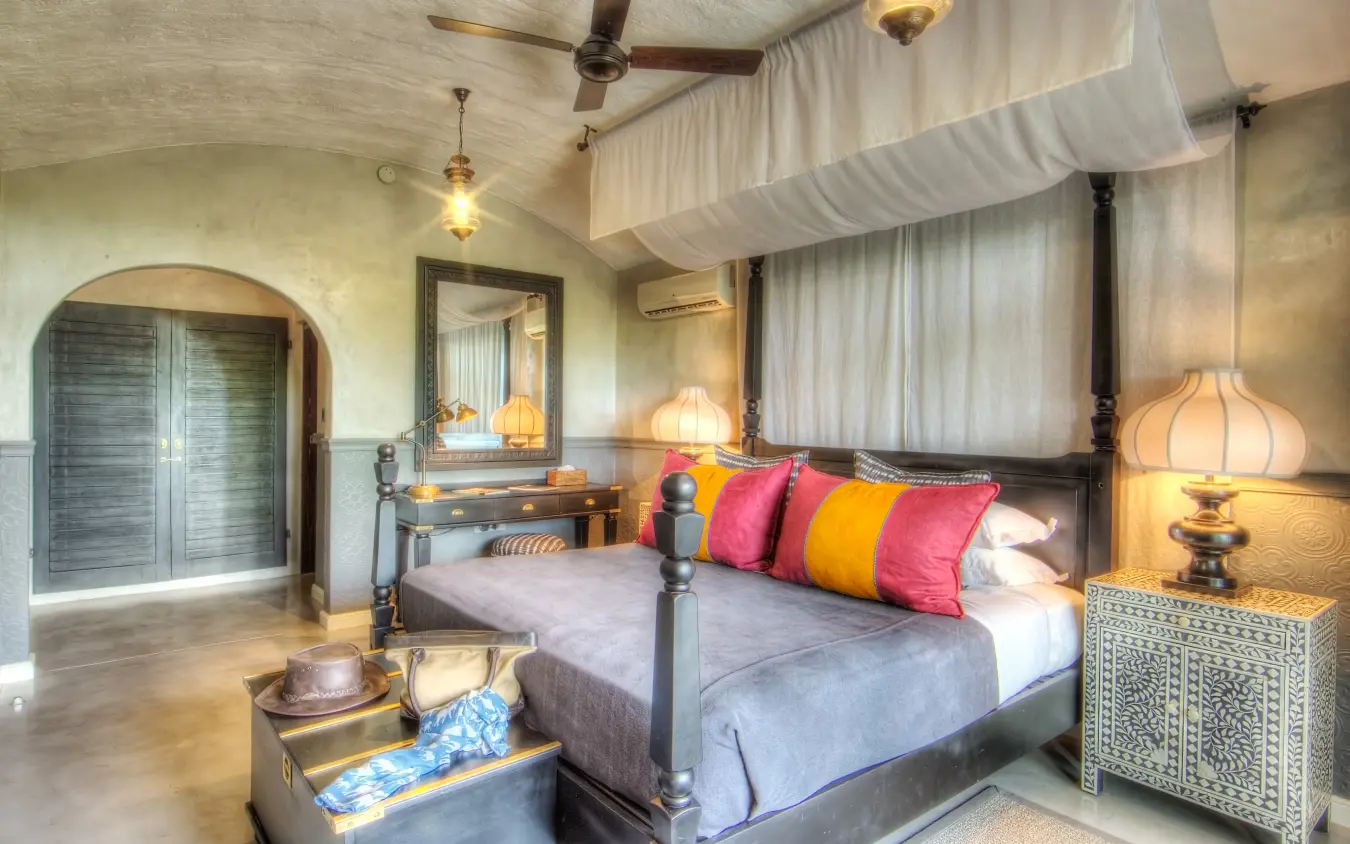
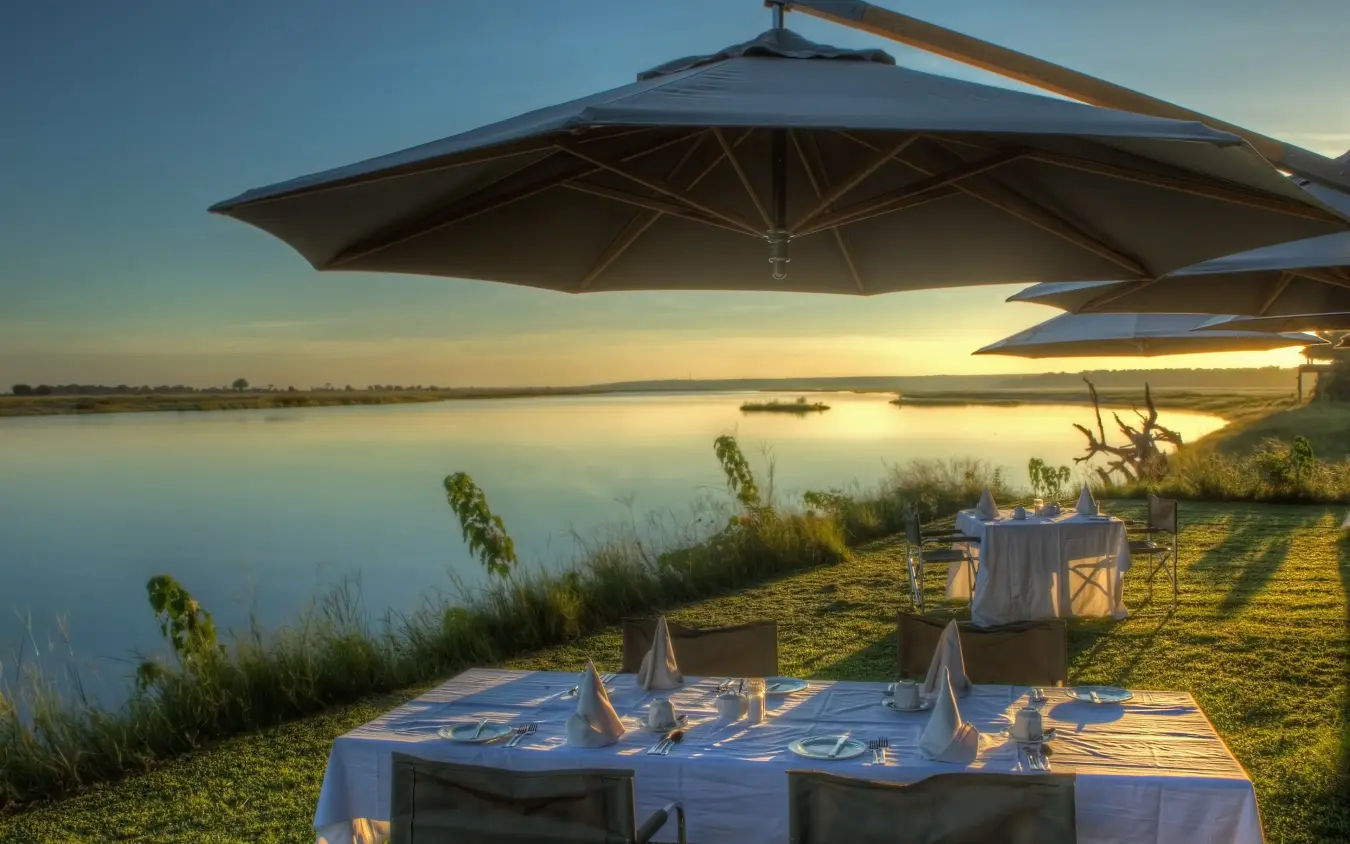
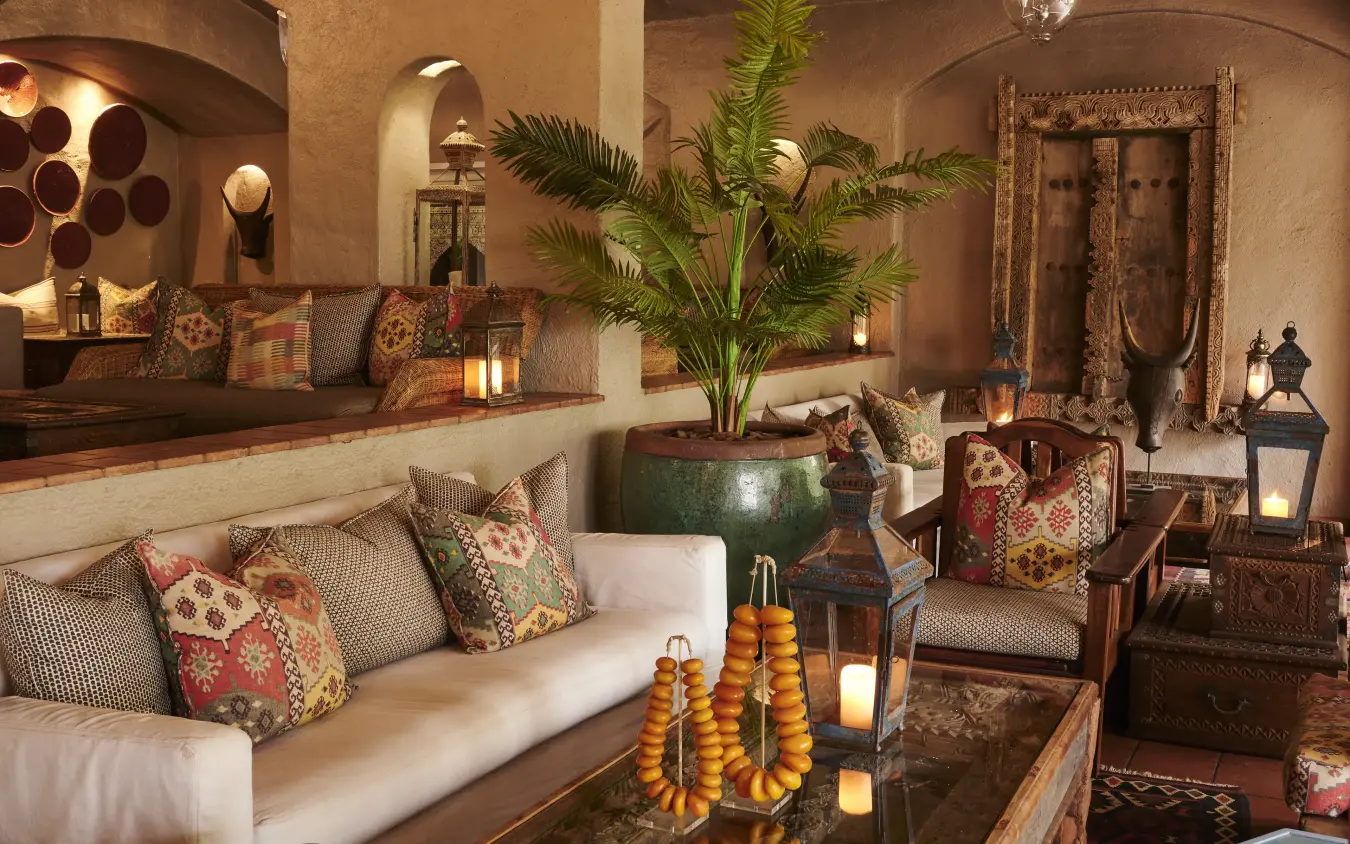
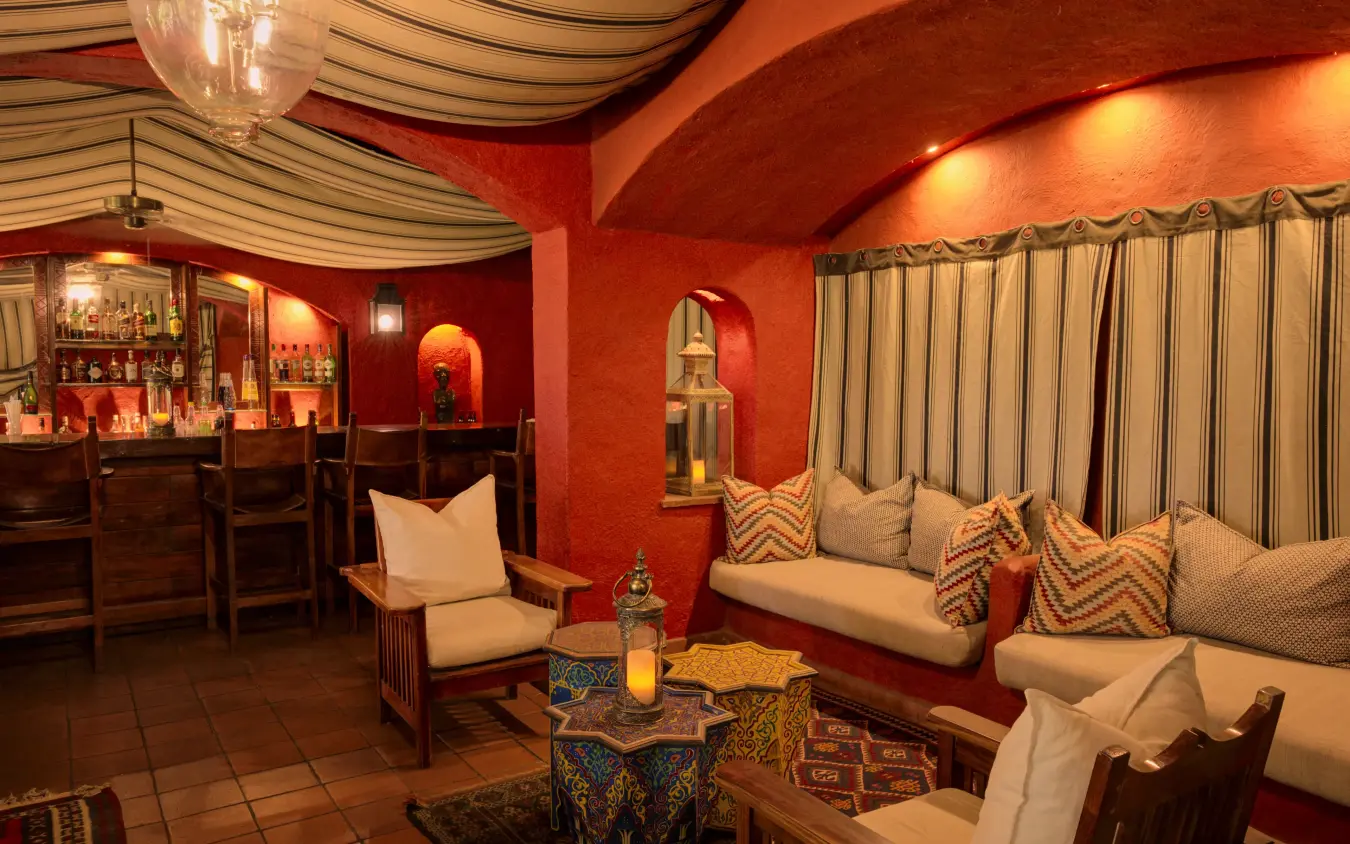
Under mahogany and sausage trees, the buildings hold to their 1970s Moorish plan: high plaster arches that catch the breeze, barrel-vaulted ceilings, quarry tiles underfoot and Rhodesian teak furniture. Breakfast and lunch are served on an open dining terrace over the water, and dinner moves to a reed-walled boma on the riverbank, cooked over open fires. Moroccan lanterns are lit along the brick paths at dusk, and a marimba band plays on the deck while buffalo graze the reeds below.
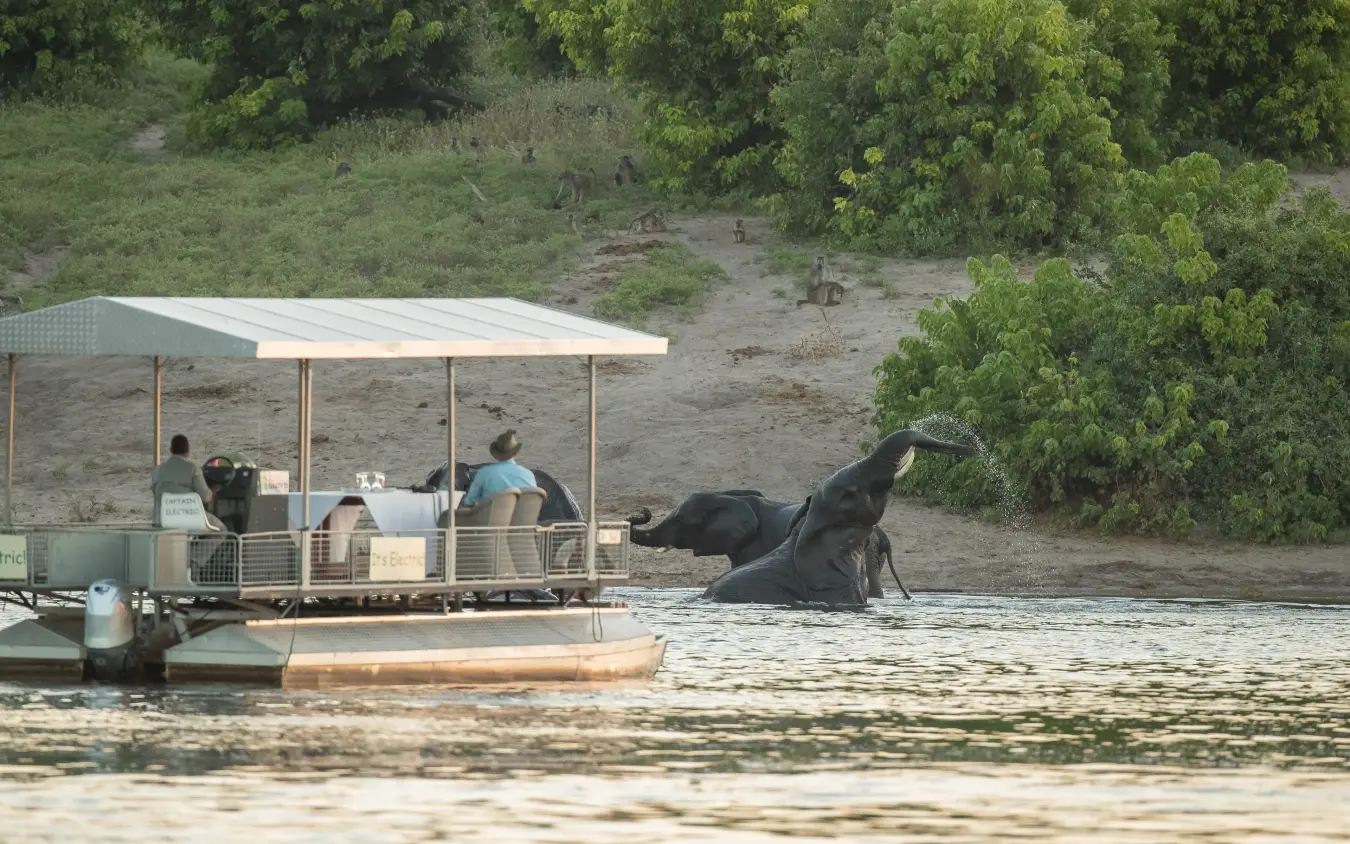
By September the herds pack onto the last stretches of wet ground before the lodge.
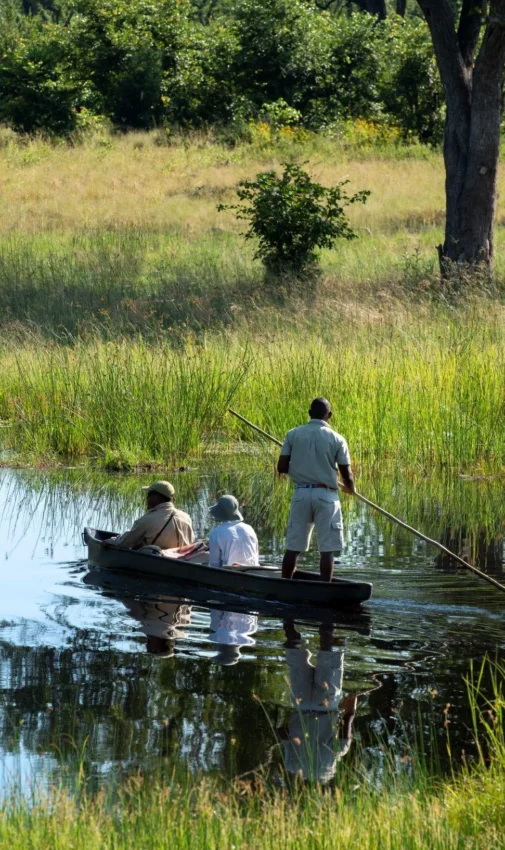
Drives run morning and afternoon inside the national park, which means no off-road driving, no night drives and no walking safaris; park rules apply here as everywhere else within the boundary. Mid-morning and sunset cruises on flat-decked solar-electric boats put guests level with hippos, crocodiles on the sandbars and fish eagles overhead, and the swivel seats matter when a herd swims past close to the hull. At midday, the ecotourism manager Albert Ndereki leads a tour of the systems that keep the lodge running, from wastewater treatment to the electric fleet.
Kasane and its airport lie a short drive east, and Victoria Falls is within driving distance, which makes the lodge a workable first or last stop on a longer Botswana route. Behind the park lie the villages: guests staying four nights or more can spend a full day at Kachikau, with the basket weavers who work there, while the lodge’s Chobe Impact programme funds buildings, boarding equipment and environmental teaching at local schools. Staff gather to sing before the first vehicles pull away each morning, and at night the hippos are audible from the rooms.