 01
01
Area
Victoria Falls
The Zambezi’s great curtain, Batoka Gorge adventure, and safari parks on the doorstep in northwest Zimbabwe.
Size: 1,708 m wide, 108 m high
Key species: Elephant, buffalo, giraffe, hippo, crocodile
Habitat: Spray rainforest, miombo and mopane woodland
Water source: Zambezi River, peak flow April–May
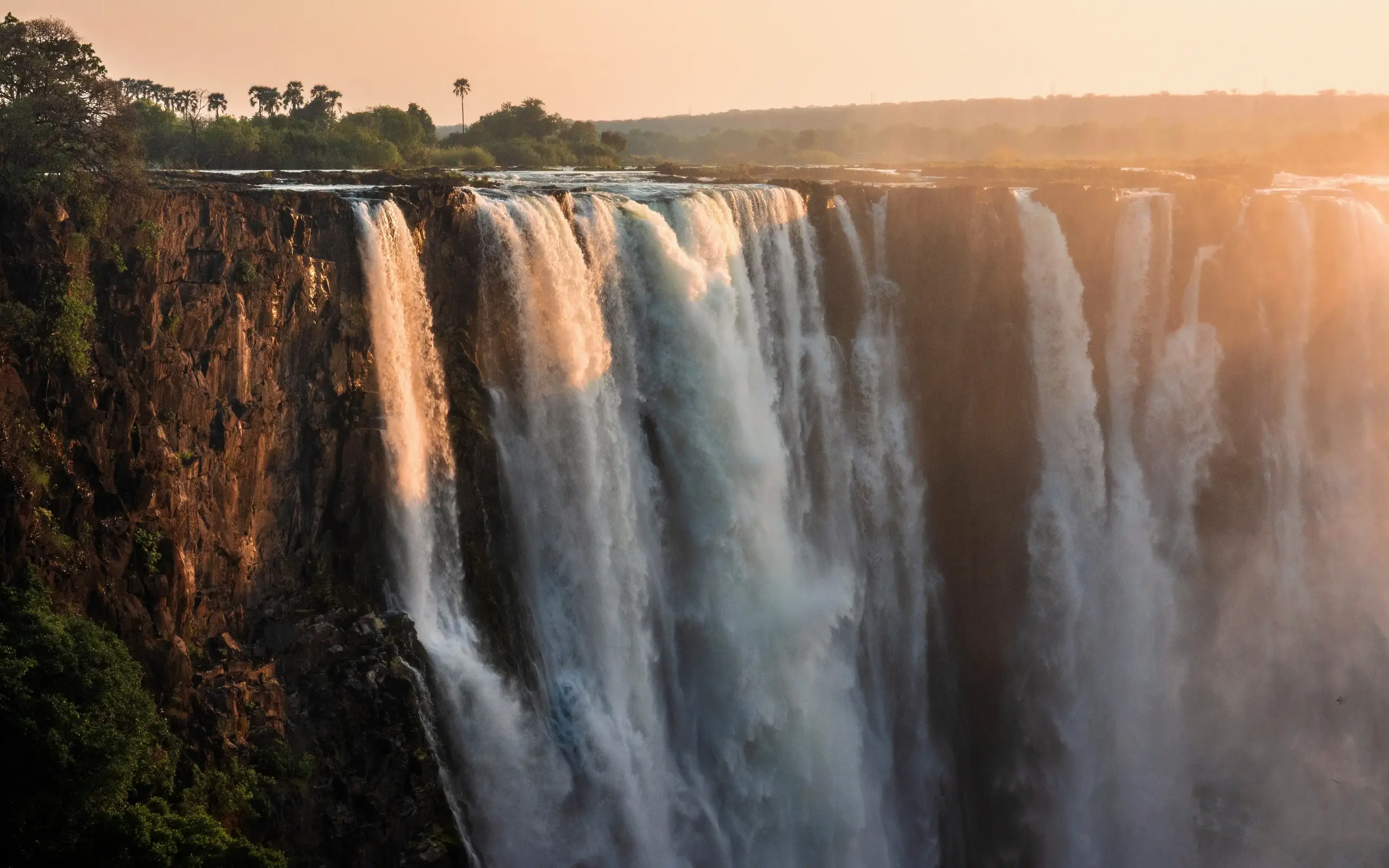
A curtain 1.7 kilometres across
The Zambezi reaches Victoria Falls as a wide, slow river, then drops into the Batoka Gorge along a curtain of falling water nearly 1.7 kilometres across. The Lozi called it Mosi-oa-Tunya, the smoke that thunders, and at high water in April and May the spray rises high enough to be seen long before the falls themselves. The Tonga knew it as Shungu Namutitima, boiling water.
The spray rises high enough to be seen long before the falls themselves.
Water volume changes the falls month to month. From March through May the river is at its most forceful and the spray densest, sometimes hiding the rock face entirely. The drier months from June bring lower flow and clearer views of the gorge and its individual cataracts, sharpest of all from August to October. The constant mist feeds a pocket of rainforest along the rim, green through the dry season while the surrounding country fades to brown.

Victoria Falls is also the busiest hub for adventure on the Zambezi. White-water rafting runs the rapids of the Batoka Gorge below the falls, best tackled at mid-water once the flood has receded. Bungee jumping and gorge swings launch from the Victoria Falls Bridge, the 1905 steel span built for Cecil Rhodes’s Cape-to-Cairo railway. It still links Zimbabwe to Zambia across the gorge.
White-water rafting runs the rapids of the Batoka Gorge below the falls.
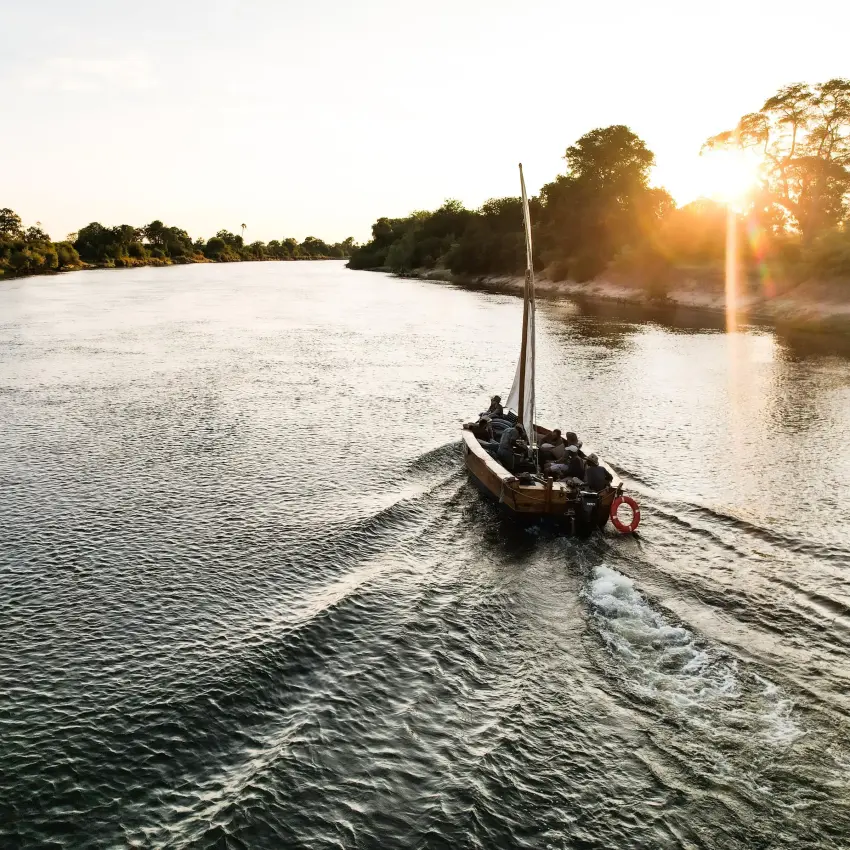
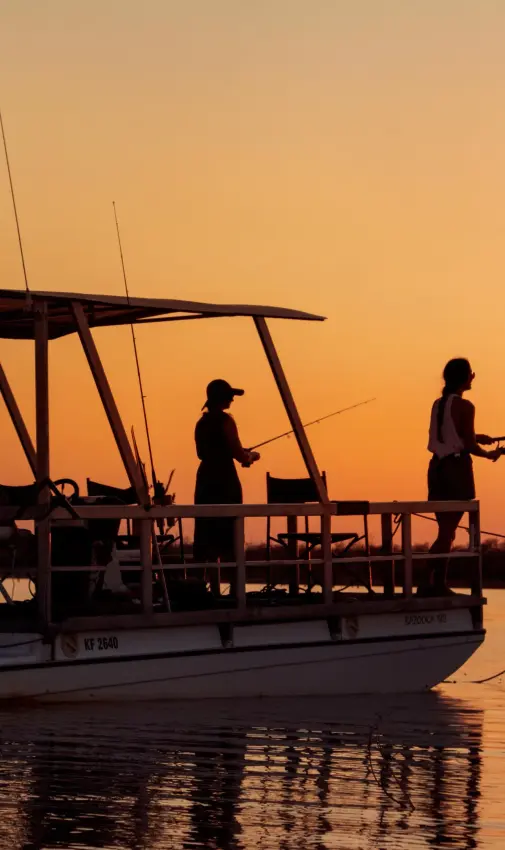
Above the falls the river runs calm. Sunset cruises drift past hippos, crocodiles and elephants coming to the water’s edge, while helicopter flights trace the curtain and the zigzag gorges below, the river snaking toward the lip of the basalt plateau. Microlights work the same airspace from the Zambian side. The town itself sits in northwest Zimbabwe, walking distance from both the rainforest and the bridge.
Victoria Falls is younger and more restless than it looks. Over many thousands of years the Zambezi has sawn back through a flat basalt plateau, and the zigzag gorges strung out below the falls each mark where the curtain once stood, an older waterfall left behind as the river cut a new line into the rock. The cataract you watch today is the latest in that sequence, and those gorges are what the rafts and helicopters now explore.
The constant spray sustains a pocket of true rainforest along the rim, ferns, palms and fig holding their leaves through the dry months while the surrounding bush fades to brown. Footpaths thread through it to a run of viewpoints, each framing a different stretch of the falling water, from the Devil’s Cataract at the western end to the Main Falls in the centre.
Each gorge below the falls is a waterfall the river has already left behind.
There is more here than the falls. Victoria Falls National Park protects the rainforest and its viewpoints, while the adjacent Zambezi National Park follows the river upstream. It puts elephant, buffalo, giraffe, zebra and antelope within minutes of town. Game drives explore the woodland and riverfront, and the Zambezi carries hippos and crocodiles year-round. In the dry season the wildlife concentrates along the river and the remaining pans, where permanent water and riverine forest hold the game.
Tonga and Lozi peoples have lived along this stretch of the Zambezi for generations, and their names for the falls carry the spiritual weight the river holds for them. Fishing, river transport and ritual all centre on the Zambezi, and the river god Nyami Nyami remains a figure in local belief. David Livingstone reached the falls in 1855 and named them for Queen Victoria, yet Mosi-oa-Tunya has long outlasted that christening in everyday use.
Most Zimbabwe trips begin or end here. Victoria Falls International Airport handles regional flights from Johannesburg, Cape Town, Nairobi and Addis Ababa, and light aircraft connect onward to Hwange, Mana Pools and Lake Kariba. That access, set against the falls and the parks on the doorstep, makes this the natural pivot point for a wider Zimbabwe safari rather than a place visited in isolation.

The best time to visit Victoria Falls
Jan
Feb
Mar
Apr
May
Jun
Jul
Aug
Sep
Oct
Nov
Dec
Recommended
Transitional
Challenging conditions
For the combination most visitors want, clear falls views, dry-season game on the Zambezi and the activities at their best, come between June and September. Devil's Pool opens around mid-August and low-water rafting builds as the river drops. September and October bring the heaviest heat. April and May deliver maximum flow, though spray hides the view; December to March is green, hot and wet.
accommodation in victoria falls
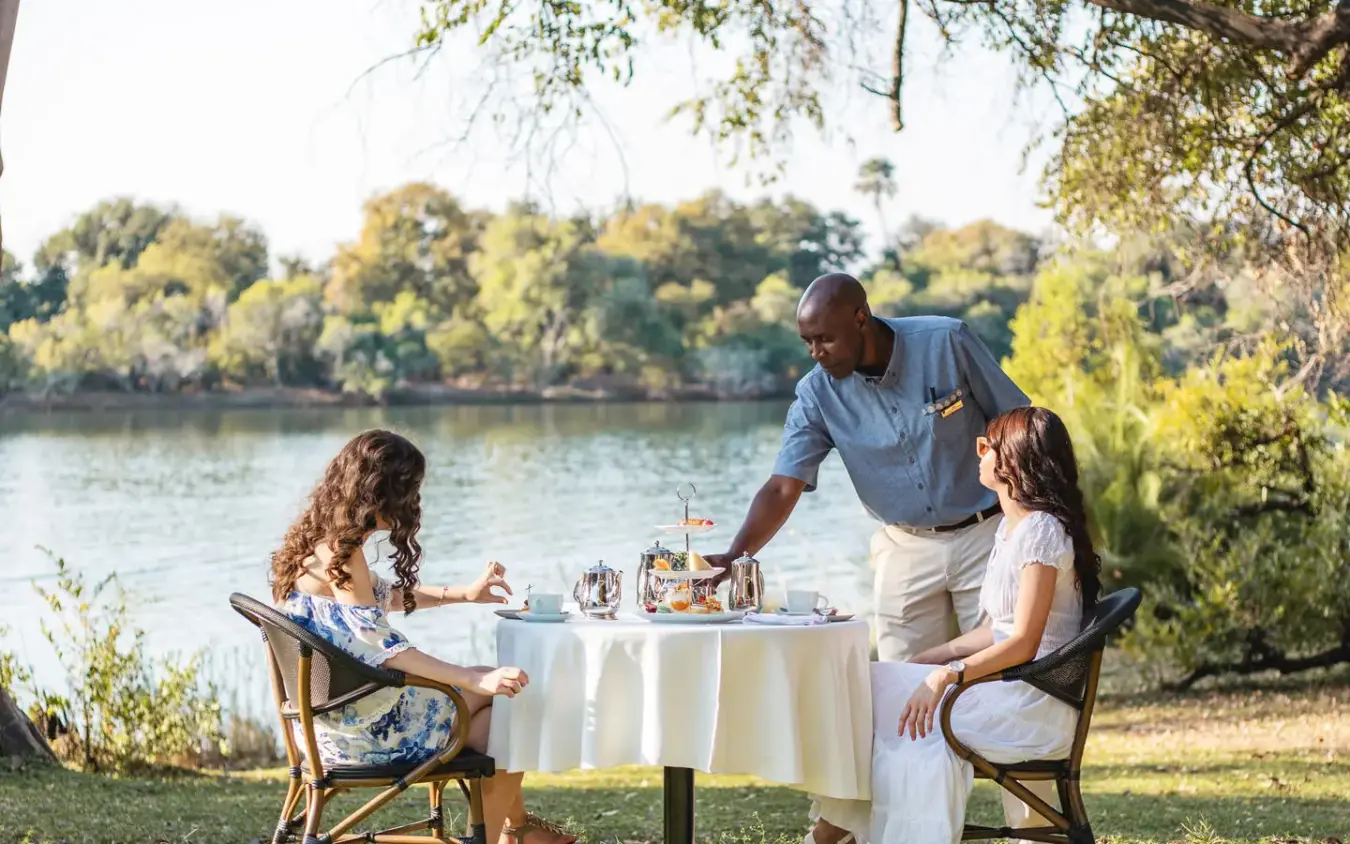
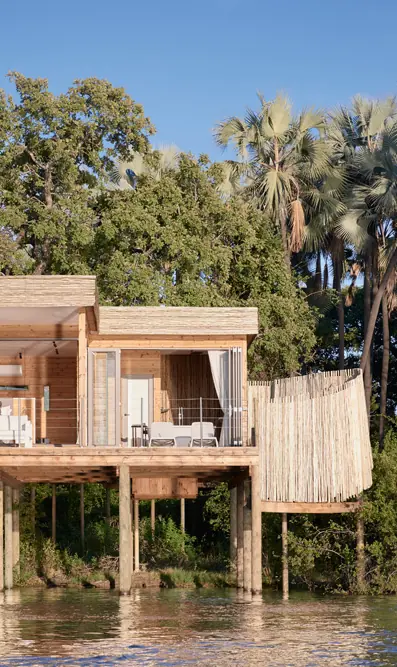
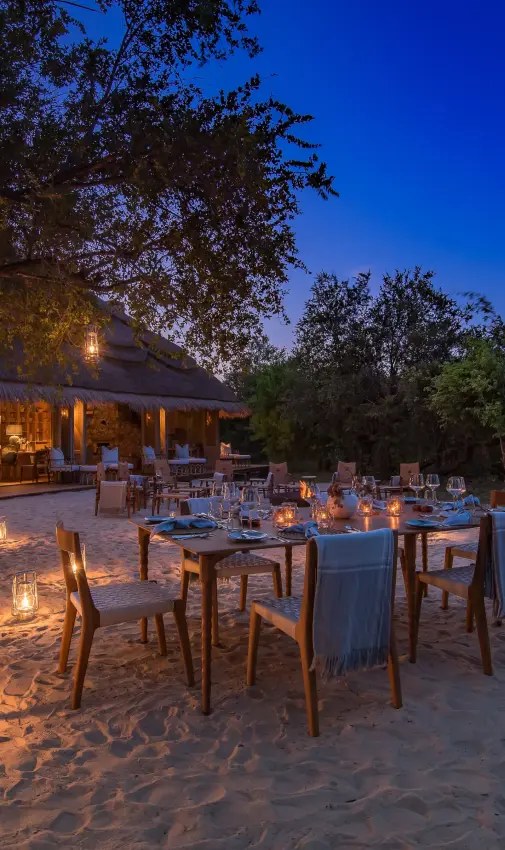
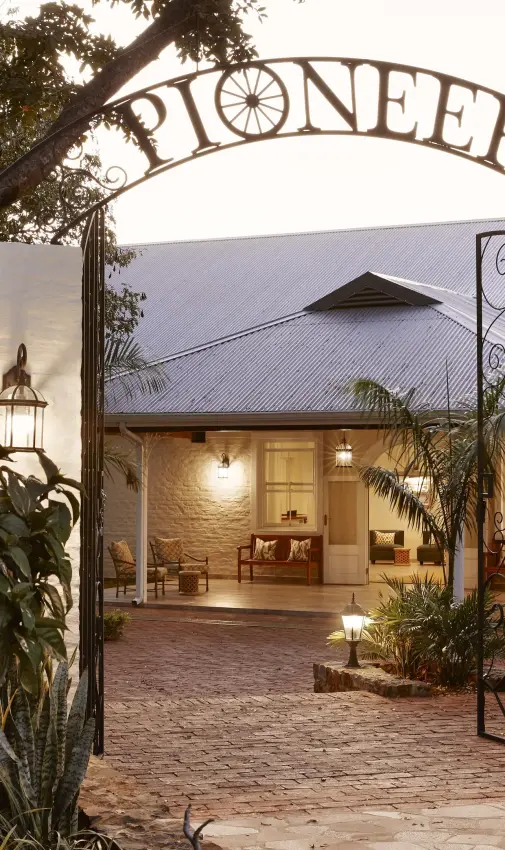
The range runs from colonial-era hotels with views over the gorge and the bridge to contemporary resort lodges and intimate boutique houses in town. Upstream along the Zambezi, river lodges and luxury tented camps offer private decks, riverfront dining and guiding into Zambezi National Park. Exclusive-use villas with dedicated staff suit families and groups. Most trade on river views and easy reach of both the falls and the surrounding parks.
01

 02
02
 03
03
 04
04
 05
05
 06
06
 07
07
 08
08
 09
09
 10
10

activities
River, gorge and aerial adventure
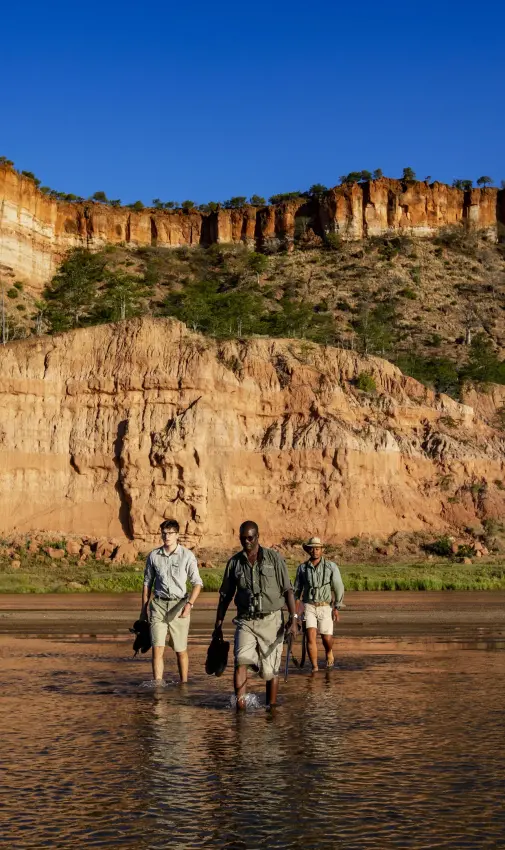
White-water rafting and bungee jumping work the Batoka Gorge and the Victoria Falls Bridge. Sunset cruises and guided walks through the spray rainforest run year-round. Game drives operate in Zambezi and Victoria Falls national parks. Helicopter and microlight flights give the full aerial view of the curtain and gorges.

conservation
Anti-poaching and wildlife rescue
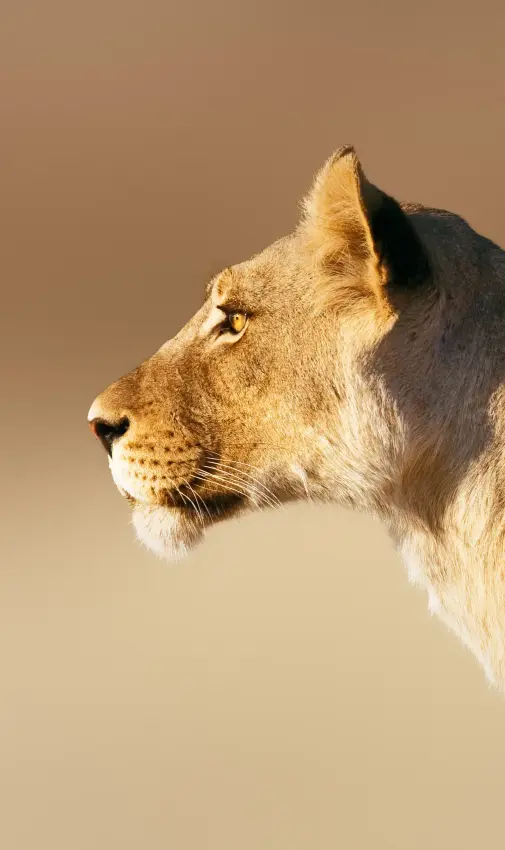
The Victoria Falls Anti-Poaching Unit works to curb wildlife poaching across the area. The Victoria Falls Wildlife Trust runs rescue, rehabilitation and research, including lion collaring, while the Wildlife Conservation Coalition unites several trusts. The falls and parks form part of the UNESCO World Heritage Site Mosi-oa-Tunya.

getting around
International airport, light-aircraft hops
Victoria Falls International Airport receives regional flights from Johannesburg, Cape Town, Nairobi, Harare and Addis Ababa. Light aircraft and charters connect onward to Hwange, Mana Pools and Lake Kariba, and helicopters handle scenic flights and lodge transfers. Tarred roads link the town to Bulawayo and across the bridge into Zambia.
other areas in zimbabwe
Hwange, Zimbabwe's largest national park, lies a short flight or two-hour drive away and holds large elephant and buffalo populations across woodland and pans. Mana Pools, a UNESCO World Heritage Site on the middle Zambezi, is known for walking and canoeing safaris. Lake Kariba offers houseboats, tigerfish and shoreline game viewing at Matusadona. Matobo Hills, near Bulawayo, combines granite kopjes, San rock art and rhino tracking on foot.


frequently asked questions
It has its own international airport, which makes it one of the easiest arrivals in Africa.
There are direct flights from Johannesburg, Cape Town, Harare and Bulawayo, and long-haul routes through Addis Ababa and Nairobi. The town is about twenty-five minutes from the airport and we have a driver waiting when you land.
There is no light-aircraft leg and no soft-bag weight limit either, so hard suitcases are no problem here whatever the rest of the safari demands.
Many guests arrive overland instead: about two hours from Kasane in Botswana including the Kazungula border, or an hour from Livingstone across the bridge in Zambia.
There are really two waterfalls, and they suit different people.
March to May is the Falls at full power, fed by rain that fell months earlier over the Angolan highlands. It throws up so much spray that the face can vanish into its own mist, everyone on the rainforest path gets soaked, and a helicopter flight becomes the reliable way to see the whole curtain.
From about August to December the river drops, the mist clears and the sheer basalt face shows itself, which is why photographers prefer it.
Low water is also what opens Devil's Pool and the classic rafting. June to August sits between the two, which is part of why it is the busiest time of year.
The ones with fixed capacity, and they go further ahead than people expect.
- Devil's Pool on Livingstone Island: small groups only, roughly mid-August to mid-January
- Helicopter flights: a twelve to thirteen minute circuit, or twenty-five minutes with the gorges, all year weather permitting
- White-water rafting: the classic low-water run from about August to December
The gentler things, the guided walks, the river cruises and the steam train, can be arranged around the mood of each day.
Tell us what you have set your heart on and we will hold the slots when we confirm the trip.
Yes, and it should be planned for. The town sits at around 900 metres, below the 1,200 metre line under which TravelHealthPro, the UK's official travel health service, rates Zimbabwe's malaria risk as high from November to June.
The risk drops through the dry months from July to October, though the CDC recommends tablets for travel anywhere in Zimbabwe at any time of year, so many visitors take them whatever the season.
We do not make medical recommendations. Which tablets suit you, and what is right for a child, are questions for your own doctor or a travel clinic.
On the practical part, dusk is the hour that matters, so cover up and carry repellent.
It is one of the easiest places in the region to bring them.
The town hotels take all ages, several have family rooms or adjoining suites, and the days are full of things that are not a game drive: the rainforest path, a river cruise, the steam train, a helicopter flight.
The limits are on the wilder activities. Guided walking safaris are usually sixteen and over, rafting has its own minimums, and some lodges outside town set a minimum age of six or seven.
Elephant and hippo move along this stretch of river, so families are escorted after dark rather than walking the grounds alone. Tell us their ages and we will match the hotel to them.
Two at a minimum, three if you want the water.
One night gives you the Falls themselves and nothing else, which is a waste of an expensive flight. Two lets you walk the rainforest path properly and take one activity. Three is what you need if Devil's Pool, rafting or a longer helicopter flight are on the list, because they run at fixed times and the river decides some of them.
Most trips we build use Victoria Falls as the start or the finish, paired with Hwange, Mana Pools or the Botswana camps across the border.
Tell us which way round your flights fall and we will place it accordingly.
rated five stars by our clients

our approach
remote, exclusive
& personal
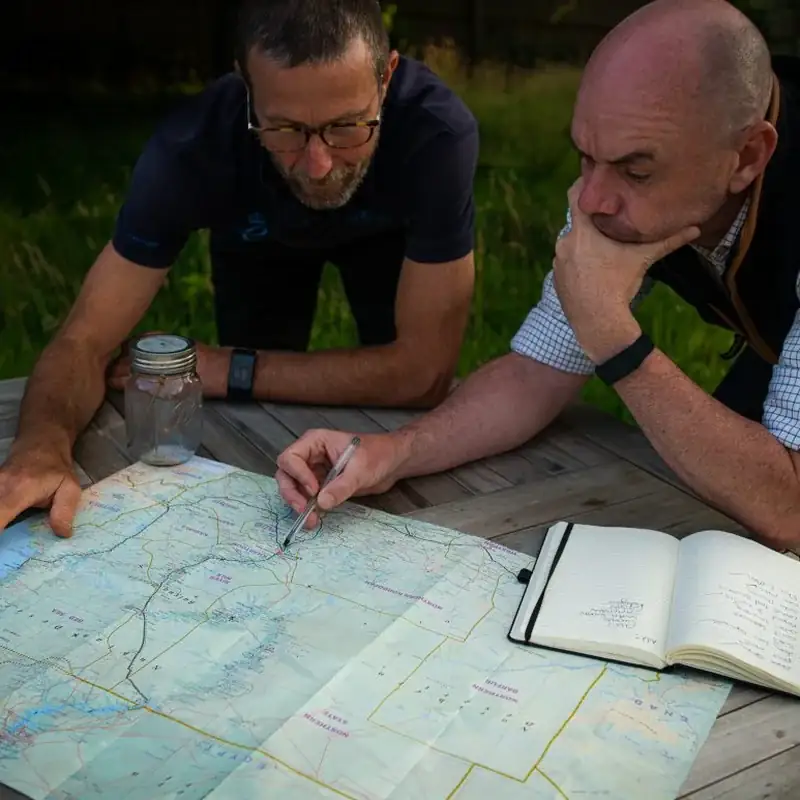
Every journey starts with a conversation. We take the time to understand your vision before we start planning.
Whether by phone or in person, we work with you directly to shape something that is considered, personal, and expertly delivered.
Every journey starts with a conversation. We favour a direct, personal approach: understanding your vision before anything else.
Whether by phone or in person, we work with you directly to shape a journey that is both thoughtfully considered and expertly delivered.
Get in touch to start planning yours.