
 01
01
Four rivers cross a narrow strip
Four permanent rivers cross this narrow strip of Namibia’s far north-east, some 450 kilometres of water country wedged between Angola, Zambia, Botswana and Zimbabwe. Elephant herds work the floodplains in numbers that ignore borders. After the dunes and gravel plains of the rest of the country, the green comes as a surprise.
Community conservancies fill the ground between them
Until 2013 this was the Caprivi Strip, and the region now takes its name from the river along its northern edge instead. Three national parks hold the core wildlife areas, strung along the Kwando and the Okavango: Bwabwata, Mudumu and Nkasa Rupara. Community conservancies fill the ground between them, and it is there, not inside the parks, that walking, night drives and off-road tracking become possible.


The Zambezi Region floods each year, fed not by local rain but by summer storms falling far upstream in the Angolan and Zambian highlands. The high water reaches the channels around June and July, in the middle of the dry season. The rivers fill just as the inland pans run dry. Buffalo, elephant and red lechwe crowd the banks and islands the water leaves behind.
The rivers fill just as the inland pans run dry.
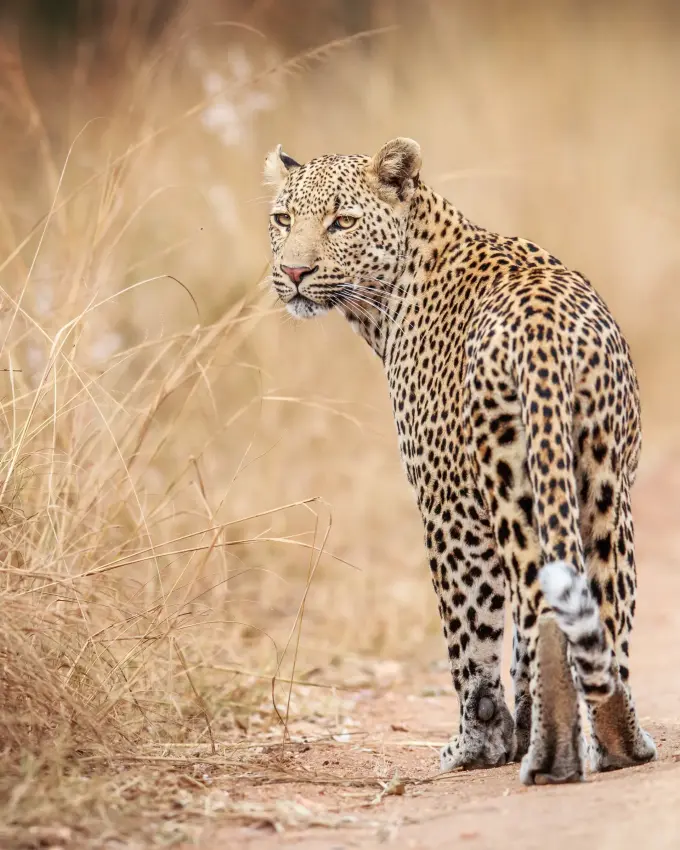
Nkasa Rupara, a maze of islands and channels in the Kwando-Linyanti system, is Namibia’s largest protected wetland. Mudumu brings dry mopane woodland down to the same river. Bwabwata sets core wildlife zones alongside an area where the Khwe San live, farm and guide. Sitatunga, sable and roan share this ground with lion, leopard and wild dog.
Count Leo von Caprivi negotiated this strip into German South West Africa under the Heligoland-Zanzibar Treaty of 1890, hunting a trade route east along the Zambezi. Victoria Falls made the river unnavigable downstream and the plan failed, but the corridor remained, and with it Namibia’s one reach to the Zambezi. The 2013 renaming dropped the chancellor’s name in favour of the river itself. The communities here are the Masubia, Mafwe, Mayeyi, Hambukushu and Khwe San, and Silozi, a language of Zambian origin, serves as the common tongue across them.
Close to 6,700 Khwe San live inside Bwabwata National Park, in villages set within its multiple-use zone, a coexistence between a resident community and a state protected area that is rare in the region. Beyond the park boundaries, conservancies including Mayuni, Mashi, Wuparo and Salambala hold the land themselves and lease sites to lodge operators, so tourism income stays with the people living alongside the wildlife. The Hambukushu weave baskets and carry a long-standing reputation as the rainmakers of the Okavango. The Mafwe and Bwabwata living museums teach the bushcraft and tracking skills passed down through these communities.
Mornings on the Kwando’s reed-lined channels turn up hippo, crocodile and Pel’s fishing owl.
Bwabwata, Mudumu and Nkasa Rupara sit at the centre of the Kavango-Zambezi Transfrontier Conservation Area, roughly 520,000 square kilometres spanning Namibia, Angola, Botswana, Zambia and Zimbabwe. Elephants use the corridor to cross four national borders without pause, part of a KAZA-wide population estimated at 227,900 animals, and the herds working the Kwando in the dry months belong to it. Crop losses to migrating elephants are a real cost for farming families along the rivers, and conservancy income from tourism is designed in part to offset it.
Boats matter as much as vehicles here. Mornings on the Kwando’s reed-lined channels turn up hippo, crocodile and Pel’s fishing owl. Reaching them is easier than colonial ambition ever managed, the same corridor now linking the Zambezi Region to Chobe, Victoria Falls and the Okavango by a run of short flights. Katima Mulilo, on the Zambezi, is the regional town and main airport, and light aircraft reach lodge airstrips at Lianshulu and Immelman.

The best time to visit Zambezi Region
Jan
Feb
Mar
Apr
May
Jun
Jul
Aug
Sep
Oct
Nov
Dec
Recommended
Transitional
Challenging conditions
Come May to October for classic big-game viewing and river safaris. May to August brings cooler, drier days; July to October concentrates wildlife at shrinking water sources, with October hot but excellent for elephants. The wet summer is superb for birding and green scenery, but flooding and mud close many areas.
accommodation in zambezi region
Camps and lodges sit in small numbers across a large area, and almost all of them face water. Tented suites stand elevated among riverine trees, thatched chalets come with private plunge pools inside the park concessions, and wetland camps are raised above the Kwando's channels. Exclusive-use safari houses, with private chefs, vehicles and guides, suit families travelling together, while seasonal mobile camps work the remote sandveld of Bwabwata's core areas under canvas.


activities
Boat channels, river drives, tracking
Daylight game drives run on designated tracks inside Bwabwata, Mudumu and Nkasa Rupara. Night drives, guided walking and off-road tracking are available in the surrounding conservancies and private concessions. Boat trips work the Kwando, Chobe and Zambezi, alongside catch-and-release tiger fishing from the river lodges. Birding holds up year-round.

conservation
KAZA corridors and community conservancies
KAZA links protected land across five countries and keeps the region's elephant corridors open. NamParks, backed by Germany's KfW Development Bank since 2006, funds park infrastructure and community land-use planning. IRDNC, the Namibia Nature Foundation and WWF support the conservancies, and transboundary forums connect them with counterparts in Zambia and Botswana.

getting around
Flights to Mpacha and lodge strips
FlyNamibia and Airlink run scheduled services into Katima Mulilo's Mpacha Airport. Private charters land at Lianshulu, Namushasha and Impalila Island.
other areas in namibia
Etosha pairs the Zambezi Region's flooded channels with a salt pan and dry-season waterholes, its private reserves home to rhino. Damaraland and the Kunene carry desert-adapted elephant and black rhino across volcanic rock and the ancient engravings at Twyfelfontein. Sossusvlei holds the red dunes and the white clay floor of Deadvlei. The Skeleton Coast, reached by light aircraft, runs dunes into cold Atlantic surf and old shipwrecks.
 01
01
 02
02
 03
03
 04
04
 05
05
 06
06
 07
07
 08
08
frequently asked questions
By light aircraft to the camp airstrips, or by road through Katima Mulilo.
Charters run from Windhoek, and scheduled flights serve Katima Mulilo in the east of the strip. Many routes arrive overland from Botswana or leave towards Victoria Falls, which is a couple of hours away by road.
It is the one part of Namibia that connects easily to its neighbours.
We book the leg with the rest of the route and say plainly which border crossing makes sense.
Green, wet and completely unlike the rest of Namibia.
This narrow strip in the far north east is defined by four rivers, the Kwando, the Linyanti, the Chobe and the Zambezi, with woodland and floodplain between them. Elephant move through it in numbers on the corridors between Botswana, Angola and Zambia.
The parks here are small, wild and lightly visited.
Anyone arriving from the desert finds it hard to believe they are in the same country.
Yes, and it is the highest-risk part of Namibia.
Both TravelHealthPro, the UK's official travel health service, and the CDC name the north east among the country's malaria areas, and the rivers and floodplains here make it the worst of them. The risk peaks in the warm, wet months.
We do not make medical recommendations. That is a conversation between you and your own doctor or a travel clinic.
On the practical side, cover up at dusk and keep repellent to hand by the water.
Water as much as land, which is the point of coming.
- Boat trips and game viewing from the water on the Kwando and Chobe
- Fishing for tigerfish and bream
- Game drives in the small parks, for elephant, buffalo and predators
- Birding, which is the best in Namibia by a distance
Walking is offered from some camps on private land.
The elephant crossings between the rivers are the sight most people remember.
At the end, as the bridge to Botswana or the Falls.
A classic route runs the desert, the coast, Damaraland and Etosha, then east along the strip, finishing at Victoria Falls or crossing into Chobe. It turns a there-and-back trip into a through route.
The flying from Etosha is straightforward.
Tell us where the trip is meant to end and we will say whether the strip earns its nights.
Three, and four if you want two different rivers.
Three nights gives you a boat day, a drive day and time on the floodplain. Two makes it a stopover on the way to somewhere else, which is a waste of the flying.
It pairs naturally with Chobe, Victoria Falls or the Okavango.
Tell us the whole route and we will place it where the border crossings are easiest.
rated five stars by our clients

our approach
remote, exclusive
& personal
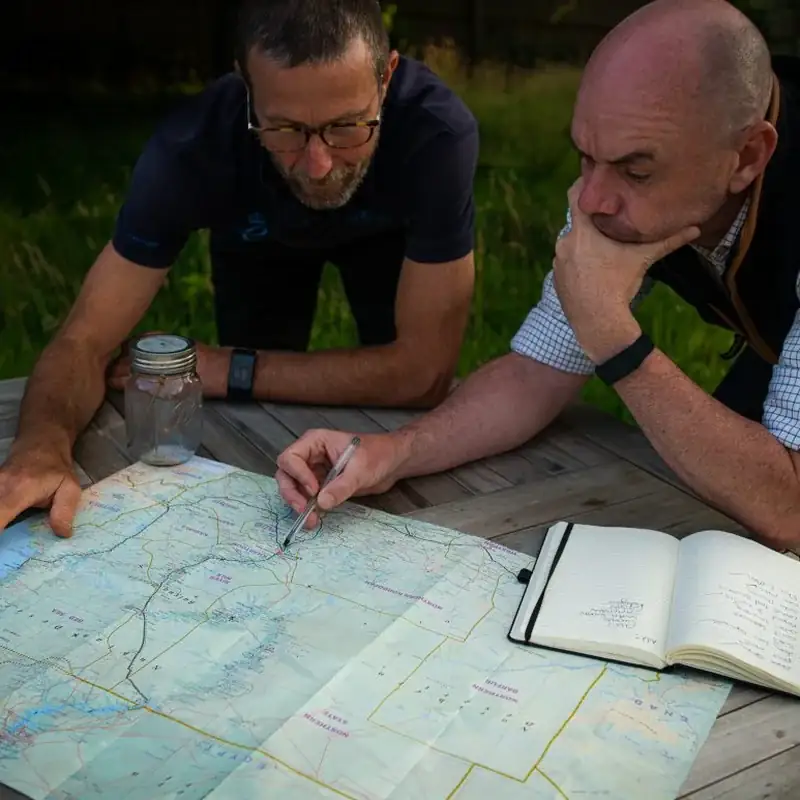
Every journey starts with a conversation. We take the time to understand your vision before we start planning.
Whether by phone or in person, we work with you directly to shape something that is considered, personal, and expertly delivered.
Every journey starts with a conversation. We favour a direct, personal approach: understanding your vision before anything else.
Whether by phone or in person, we work with you directly to shape a journey that is both thoughtfully considered and expertly delivered.
Get in touch to start planning yours.