
 01
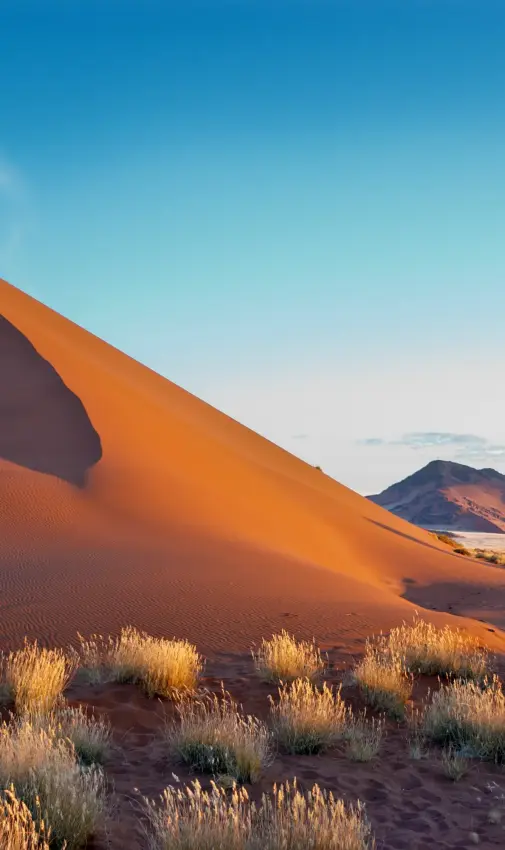
Red dunes held in place by grass
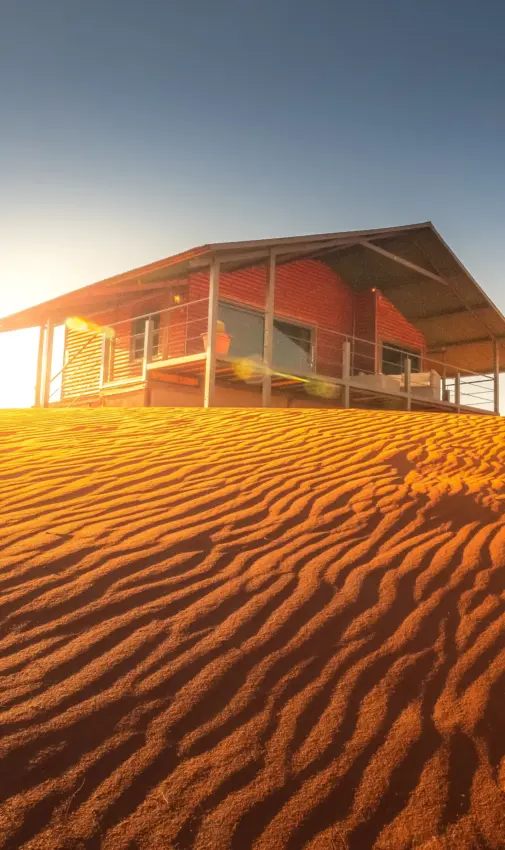
The Namibian Kalahari begins a few hours’ drive south of Windhoek, where the Hardap Region breaks into long red dunes running in parallel ranks. Between them lie pale clay valleys of golden grass and camelthorn trees. San trackers read the night’s traffic in the red sand. Out on the valley floors, meerkat sentries stand upright over their foraging family groups.
San trackers read the night’s traffic in the red sand.
Intu Afrika Kalahari Reserve covers 10,000 hectares of dune and pan, one of several private game reserves east of the B1 between Kalkrand and Mariental. Travellers come for a night or two, breaking the long road between Windhoek and Sossusvlei or the far south. What they find is a slower pace than the big parks allow, and a desert that reveals itself in small things close to the ground.
Grass and shrub roots bind these dunes in place, and the ridges stay put year after year, unlike the bare, wind-driven sand of the Namib to the west. No perennial river crosses the reserve. Its water arrives with the summer rain, filling the pans for a season, and between the rains boreholes keep the lodge waterholes full, drawing the animals in from the dunes.
At dusk, black-backed jackals trot the dune bases as the light goes.
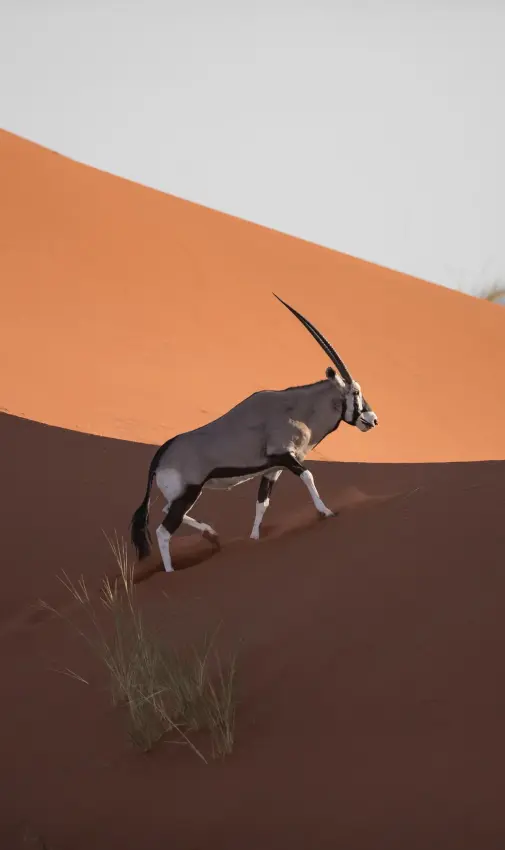
Oryx and wildebeest work between pans and waterholes alongside Burchell’s zebra, with no migration to follow, so a morning drive covers little ground and a great deal of behaviour. At dusk, black-backed jackals trot the dune bases as the light goes. Out in the clay valleys springbok graze, while giraffe stretch into the camelthorn canopies overhead.
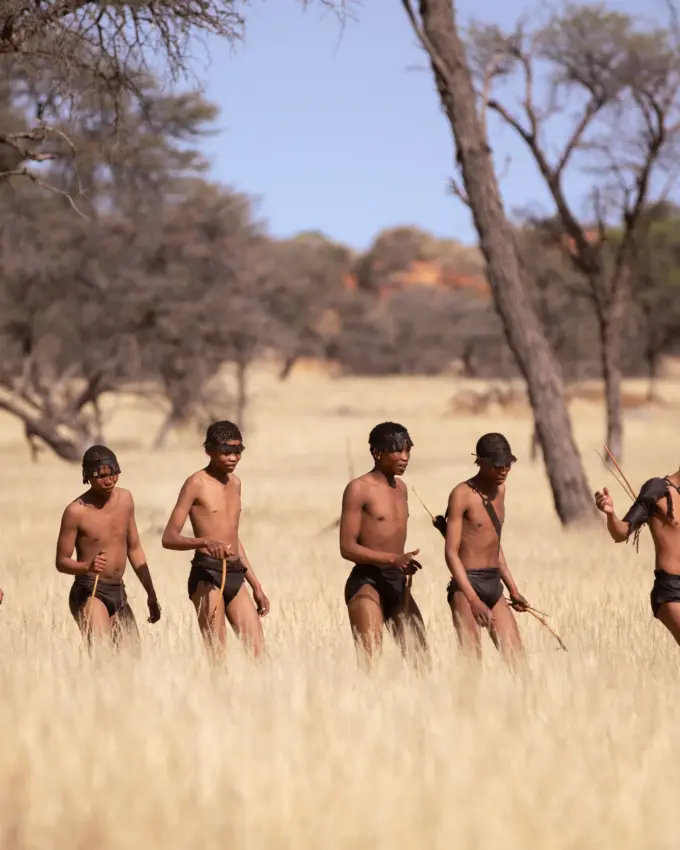
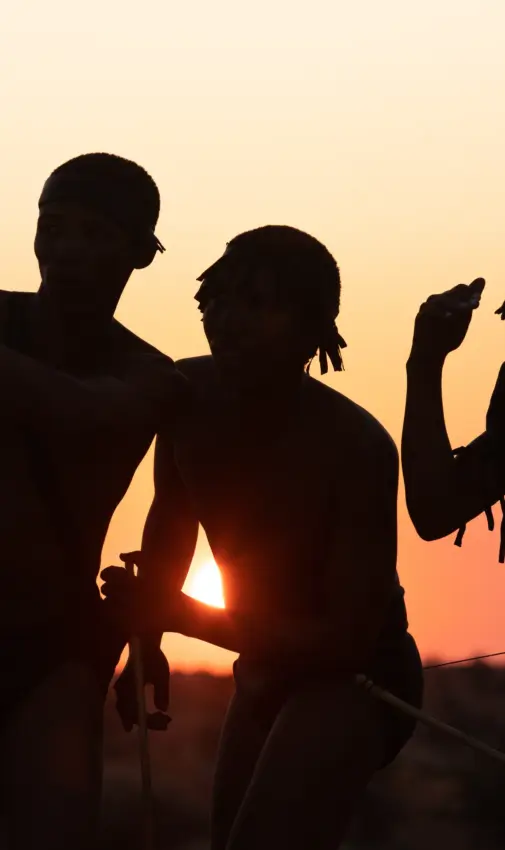
San hunter-gatherers lived across this sand country long before Bantu-speaking groups moved south and settlers moved north, and both movements cost them land. Intu Afrika’s San project began in the 1990s with two anthropologists and a group of families who moved onto the reserve. They came to work as trackers and guides, and as craftspeople whose crafts are sold at Zebra Lodge. Walking with them, guests learn how a spoor ages in wind and sun, and watch fire coaxed from friction sticks. Along the way the trackers point out which plants feed and which heal.
On winter mornings, after a cold night, a meerkat colony surfaces slowly into the first light. The meerkats stand with bellies turned to the low sun until they are warm enough to dig. Bat-eared foxes work the same ground. Jackals range over the same sand, and the birdlife around them is prolific. Much of the Kalahari’s life is this small, and it shows itself best at the pace of a San tracker on foot, close to the ground.
The meerkats stand with bellies turned to the low sun until they are warm enough to dig.
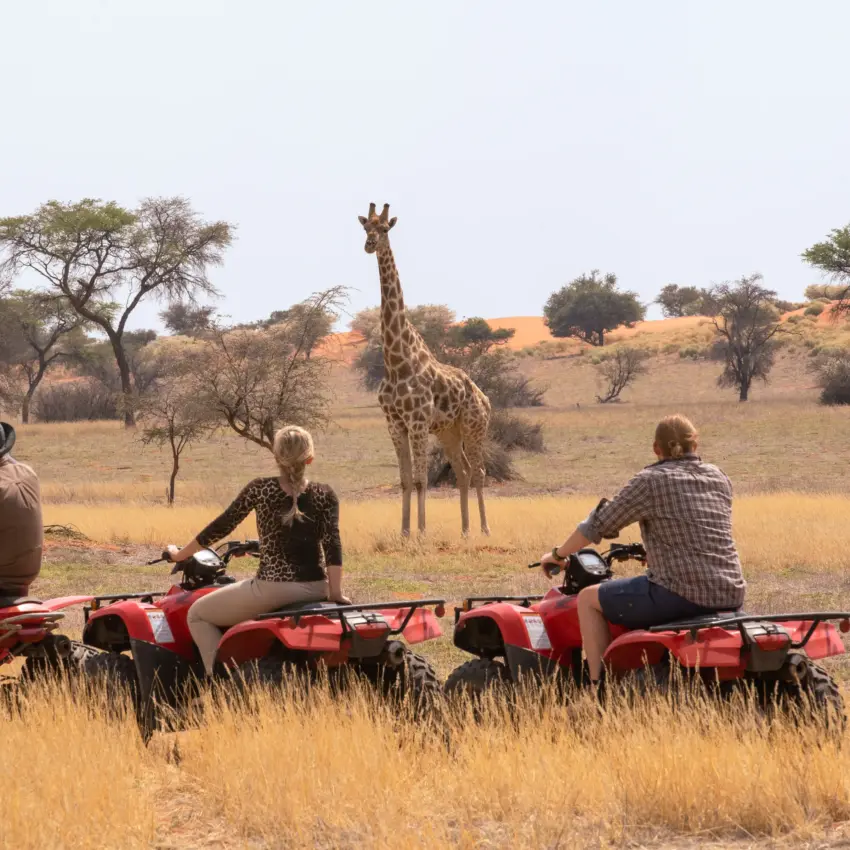
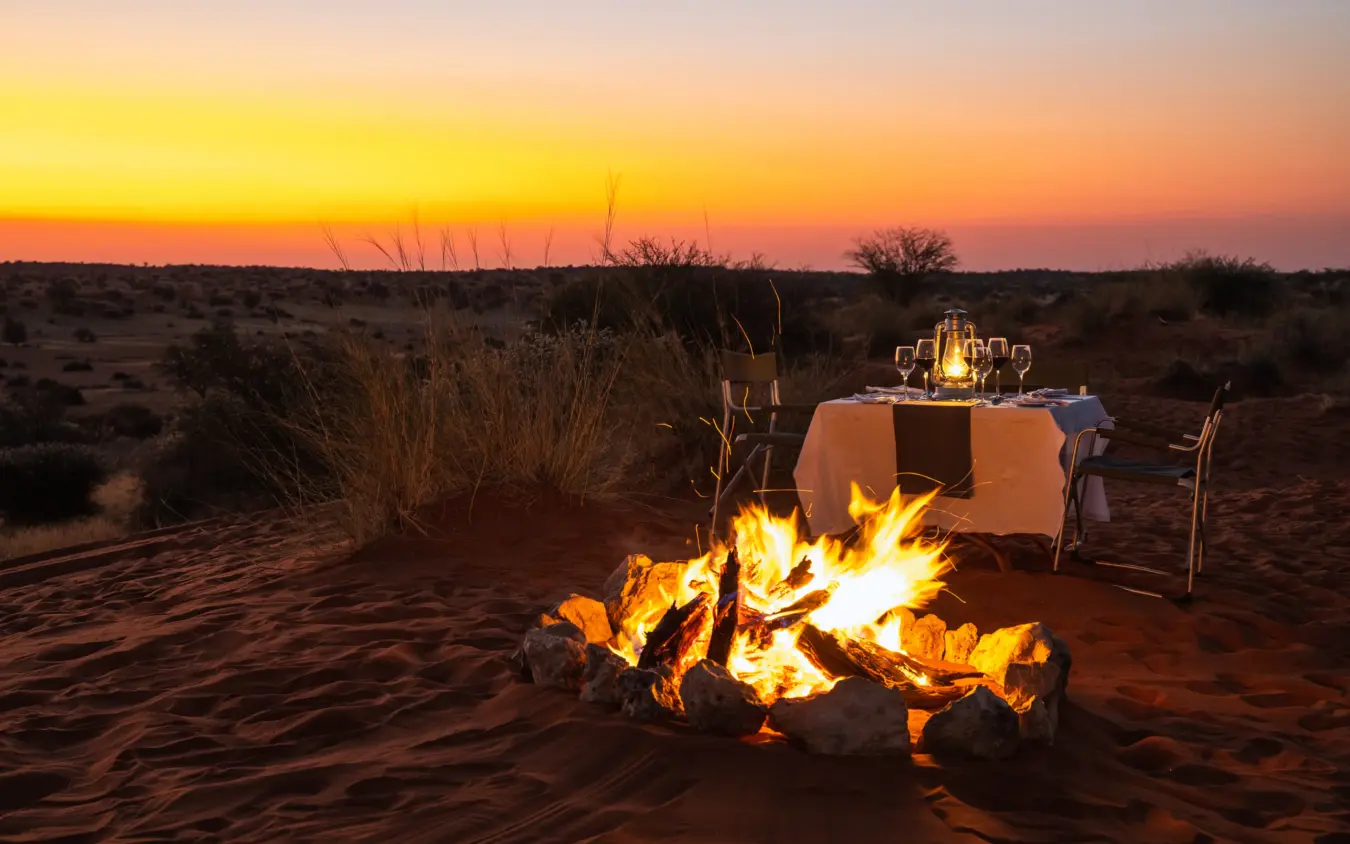
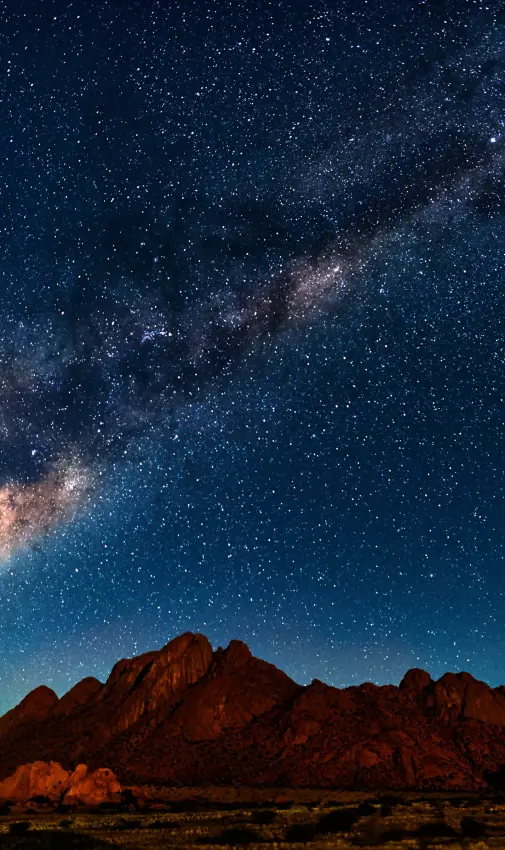
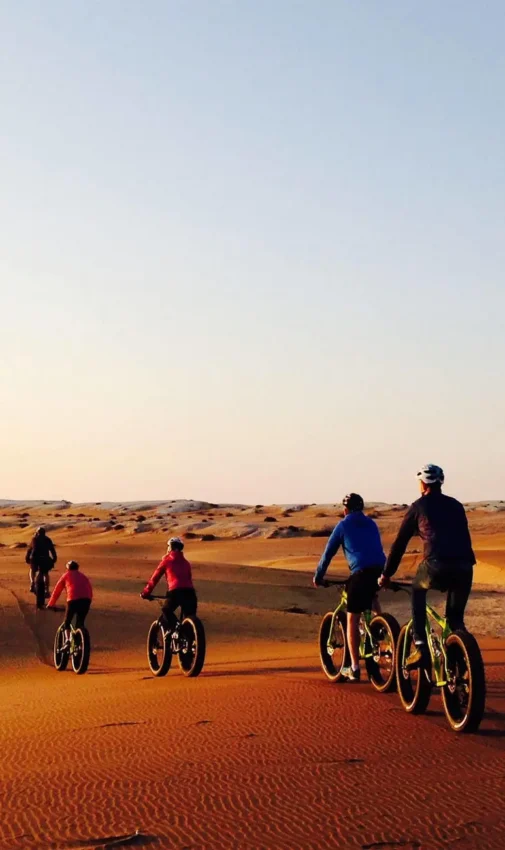
Walks and drives leave early, before the sand heats, and the middle hours pass slowly in the shade of the camelthorns. Quad bikes cover the dunes at speed, and pan drives follow the open clay floors between them. Late in the afternoon the vehicles stop for sundowners, and everyone turns to watch the sand go rust as the sun drops. In season, dinner is laid out on the dunes themselves. On winter nights the dry air leaves little between observer and sky, and the stargazing is as good as the walking.
Kalkrand and Mariental bracket the reserves along the B1. At Kalkrand, the northern turn-off, the tar gives way to gravel roads that run east into the dunes. Mariental, the regional town of the Hardap Region, lies about 70 kilometres from Intu Afrika by road. Around them, other private reserves and game ranches spread across the same red dune country. At Bitterwasser a flying centre sends gliders up over the Kalahari, a reminder of how much open sky there is above all that sand.
The best time to visit Namibian Kalahari
Jan
Feb
Mar
Apr
May
Jun
Jul
Aug
Sep
Oct
Nov
Dec
Recommended
Transitional
Challenging conditions
Come May to September for the best game viewing, when thinning vegetation draws animals to waterholes and cloudless skies deliver exceptional stargazing. Expect mild days and bitterly cold nights at the peak in June to August. The October to April green season brings dramatic colour but very hot days and the odd rain-softened runway.
accommodation in namibian kalahari
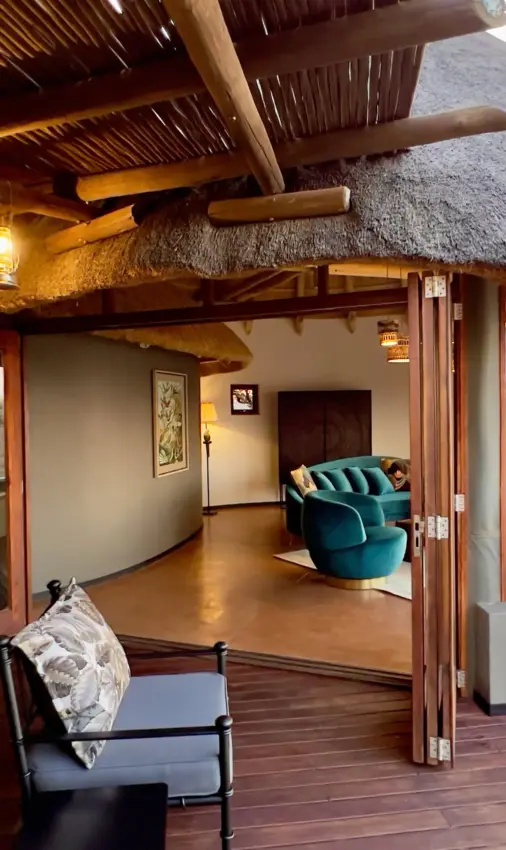
A tented lodge lines a dune crest, its canvas suites facing the pans, with an infinity pool and a honeymoon tent with its own plunge pool. In the valleys between the dunes, thatched chalets sit in camelthorn shade. Larger stone-and-thatch lodges add a spa, a pool and a waterhole, with fires lit on winter evenings.



activities
San walks, drives and sundowners
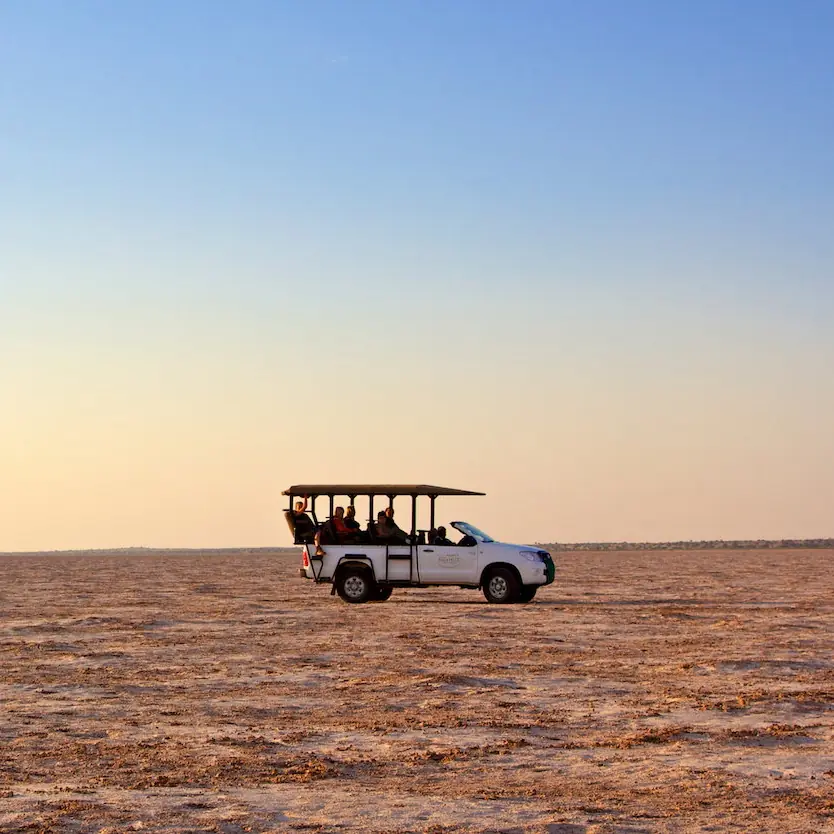
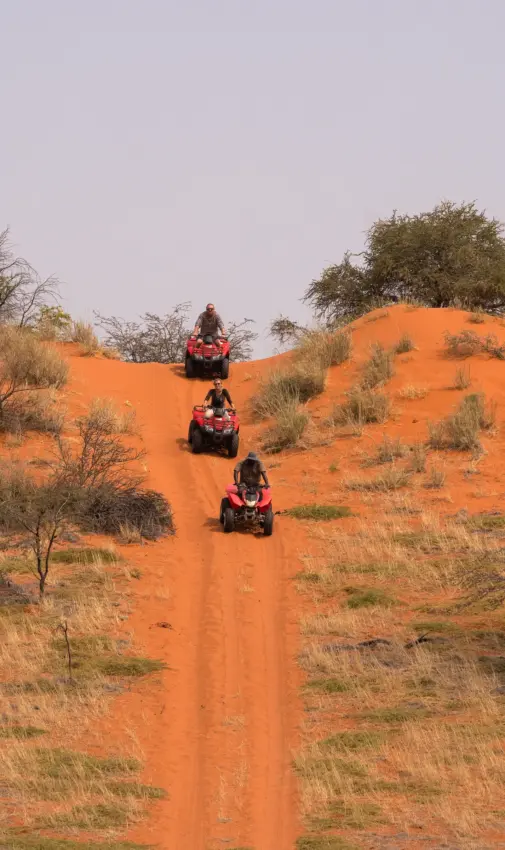
San trackers lead guided walks within the private reserve, and open 4x4s head out on morning and sunset drives and on pan drives across the clay. Quad bikes cover the dunes, with riders under 16 not allowed to ride alone. Sundowners are poured at dusk, and dune dinners and spa treatments are available in season.

conservation
San employment on Intu Afrika
Intu Afrika's San project gives San families work as trackers, guides and craft-makers, and crafts are sold at Zebra Lodge. Private reserves keep Kalahari red-dune habitat under wildlife rather than livestock, and drought is a standing pressure on the land.

getting around
Light aircraft or the B1
Light-aircraft charters fly from Windhoek's Eros Airport, with international arrivals through Hosea Kutako International Airport; airstrip details are confirmed with the operator. By road, the B1 south from Windhoek covers about 250 kilometres, finishing on gravel. Transfers from Windhoek can be arranged.
other areas in namibia
Sossusvlei and NamibRand Nature Reserve lie to the west, where the Namib's tall, bare dunes and clay pans such as Deadvlei follow on from the vegetated red ridges of the Namibian Kalahari. Fish River Canyon lies farther south, with the Quiver Tree Forest and Giant's Playground nearby. Damaraland adds desert-adapted rhinos, and Etosha National Park lies in the north.
 01
 02
 03
 04
 05
 06
 07
 08
 09
 10
rated five stars by our clients

our approach
remote, exclusive
& personal
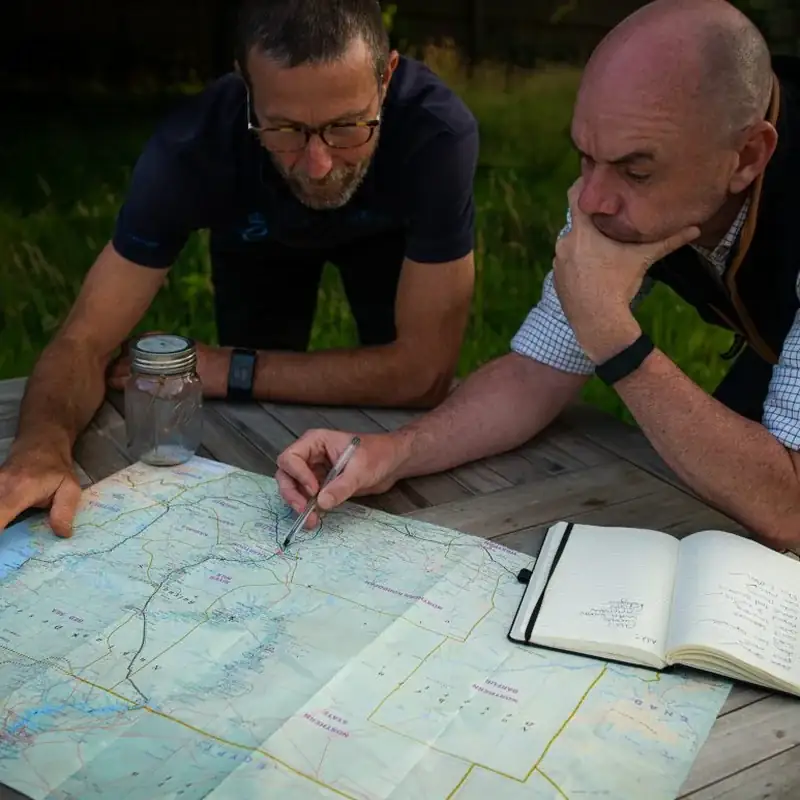
Every journey starts with a conversation. We take the time to understand your vision before we start planning.
Whether by phone or in person, we work with you directly to shape something that is considered, personal, and expertly delivered.
Every journey starts with a conversation. We favour a direct, personal approach: understanding your vision before anything else.
Whether by phone or in person, we work with you directly to shape a journey that is both thoughtfully considered and expertly delivered.
Get in touch to start planning yours.