
Timing your trip
best time to visit namibian kalahari
The Kalahari splits sharply into a cold, clear dry season built for game viewing and a hot green season that turns the dune streets to grass. Timing shapes everything here.
seasonal guide to namibian kalahari
Come May to September for the best game viewing, when thinning vegetation draws animals to waterholes and cloudless skies deliver exceptional stargazing. Expect mild days and bitterly cold nights at the peak in June to August. The October to April green season brings dramatic colour but very hot days and the odd rain-softened runway.
month by month details
January is the heart of the green season, rewarding for landscapes but demanding in the heat. Afternoon temperatures frequently exceed 36C to 40C, and brief, dramatic late-afternoon thunderstorms are a regular feature of these months.
The rain transforms the desert, turning the dune streets into carpets of bright green grasses and wildflowers. Be aware that heavy storms can soften salt-pan runways such as Intu Afrika, sometimes requiring short road transfers from higher gravel airstrips.
February brings the green Kalahari at its most vivid, paired with fierce heat. Days push well past 36C, and late-afternoon thunderstorms arrive most often between January and March.
The landscape is at its lushest, with wildflowers and grasses carrying across the dunes. Occasional heavy rain can make salt-pan runways unreliable, so build in flexibility for road transfers from gravel airstrips.
March closes the thunderstorm window with the desert still green and the heat still high. Afternoons remain very hot and dramatic late-day storms are still possible through the month.
Expect the dune streets to stay carpeted in grasses and wildflowers while the rains hold. Salt-pan runways can still be softened by heavy downpours, so factor in possible gravel-airstrip transfers.
April is a transitional month as the storm season fades and conditions begin to settle. Days remain warm but the extreme summer heat starts to ease off its January to March peak.
Some green lingers across the dunes before the landscape dries down. This is a quieter in-between period, bridging the green season and the prime dry-season game viewing to come.
May launches the dry season, and conditions turn ideal. Daytime temperatures are pleasant and mild at 20C to 25C, and the skies become cloudless and dust-free.
As vegetation dries down, animals begin to congregate around waterholes, opening the premier window for game viewing. Clear nights also make this an excellent time for stargazing and dune photography.
June offers superb game viewing with mild, comfortable days. Daytime temperatures sit around 20C to 25C, but nights turn bitterly cold, regularly dropping below freezing to 0C or even -5C.
With vegetation thinned and animals gathered at waterholes, viewing is at its best. Cloudless, dust-free skies make for outstanding stargazing, though you will want serious layers after dark.
July is peak dry season, with reliable game viewing and crystalline skies. Pleasant days around 20C to 25C give way to freezing nights that can drop to -5C between June and August.
Animals congregate at waterholes as the land dries, and the cloudless, dust-free conditions are ideal for dune photography and stargazing. Pack warm clothing for the sharp night-time cold.
August continues the premier dry-season window for wildlife and night skies. Mild daytime temperatures of 20C to 25C contrast with nights that still fall below freezing through the end of the month.
Thinning vegetation keeps game concentrated around waterholes, and the clear, dust-free air remains perfect for stargazing and dune photography. Cold nights are the only real caveat.
September rounds out the dry season with excellent game viewing and clear skies. Days stay mild at 20C to 25C, and the bitter night-time cold of midwinter begins to ease.
Animals remain gathered around waterholes amid the dried-down vegetation, and cloudless, dust-free conditions still favour stargazing and dune photography. It is a fine time to catch the dry season before the heat returns.
October marks the shift back towards summer, with rising heat but still-good viewing. Daytime temperatures climb as the dry season winds down and the first signs of the hot months appear.
Game can still be found around waterholes before the rains arrive and disperse them. This is a transitional month, trading the mild winter comfort for warmer, longer days.
November sees the heat establish itself as the green season approaches. Afternoons grow very hot, moving towards the 36C to 40C range that defines the summer months.
The desert awaits its transformation, with rain not yet consistent until the new year. Expect warm, building conditions before the dramatic late-afternoon storms set in.
December brings full summer heat as the green season takes hold. Afternoon temperatures frequently exceed 36C to 40C, making the middle of the day demanding.
Rain begins to green the dune streets ahead of the main storm window from January to March. Heavy downpours can soften salt-pan runways, so allow for possible road transfers from higher gravel airstrips.
Plan your perfect namibia safari
Tell us a little about what you have in mind and one of our specialists will be in touch.
frequently asked questions
May to September, the dry winter.
Vegetation thins and animals gather at the waterholes, days are mild at 20°C to 25°C and the skies are cloudless and free of dust. We rate all five months as recommended for game viewing.
Nights from June to August are bitterly cold, so pack serious layers for early drives. April, October and November are shoulder months either side.
For Namibia as a whole: the best time to visit Namibia
For the right traveller in the right month, though the heat is the real cost.
We rate December to March as challenging. Afternoons often pass 36°C and can reach 40°C, and short thunderstorms arrive in the late afternoon, most often between January and March. In return the dune streets turn to carpets of green grass and wildflowers, the skies are dramatic for photographers and the roads are quieter.
Plan the hot middle of the day around the pool, and keep the walks and drives for the morning and evening.
On winter mornings, after a cold night.
A colony surfaces slowly into the first light, and the meerkats stand with their bellies turned to the low sun until they are warm enough to dig. Nights are coldest from June to August, falling below freezing, so those are the mornings to be out early.
Bat-eared foxes work the same ground. Meerkats are wild animals and we cannot promise them, but the walks and drives leave early, before the sand heats up.
Mild days and freezing nights in winter, and very hot days in summer.
From May to September days sit around 20°C to 25°C. Between June and August nights regularly fall to 0°C and can reach minus 5°C, so bring a fleece and a jacket for the early drive.
From December to March afternoons frequently pass 36°C and can reach 40°C. October brings rising heat as the dry season closes, and in November afternoons move towards the same range.
From May to September, when the skies are cloudless and free of dust.
On winter nights the dry air leaves little between observer and sky, and the clear conditions suit dune photography too. At Bagatelle an observatory opens after dark, with a local astronomer at a computer-controlled telescope under very dark skies.
The nights from June to August fall below freezing, so dress for it.
Sometimes, but from December to March we plan on the road.
The reserves' airstrips lie on salt pans between the dunes, and a pan cannot take a landing when it is wet. Heavy storms from January to March can soften the runways, so a short road transfer from a higher gravel airstrip is sometimes needed.
Private charters in a light aircraft such as a Cessna Caravan fly in from Windhoek's Eros airport when the pans allow.
rated five stars by our clients

our approach
remote, exclusive
& personal
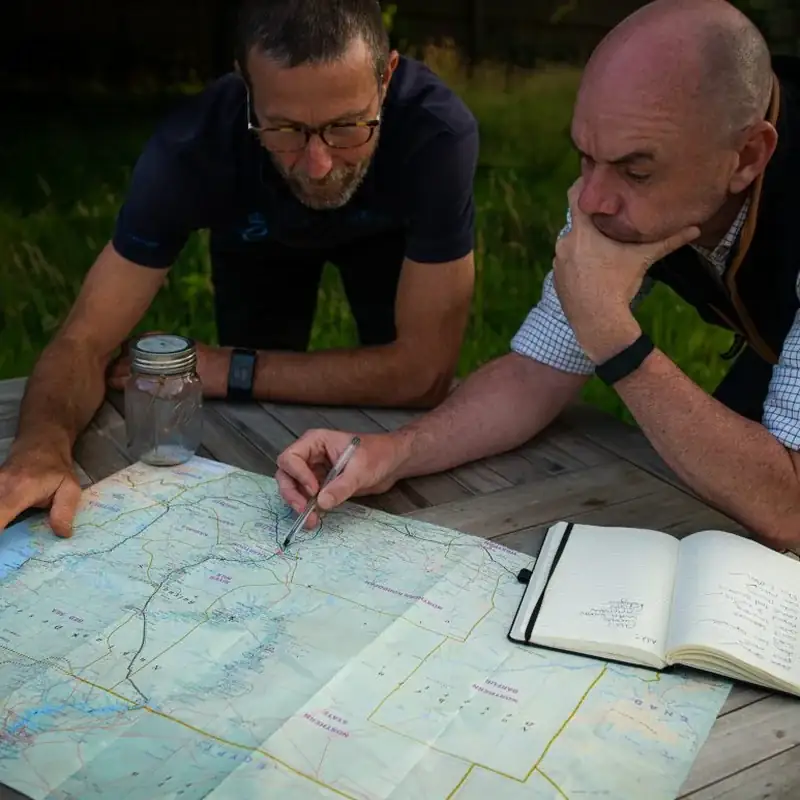
Every journey starts with a conversation. We take the time to understand your vision before we start planning.
Whether by phone or in person, we work with you directly to shape something that is considered, personal, and expertly delivered.
Every journey starts with a conversation. We favour a direct, personal approach: understanding your vision before anything else.
Whether by phone or in person, we work with you directly to shape a journey that is both thoughtfully considered and expertly delivered.
Get in touch to start planning yours.