 01
01
Dead trees on a 900-year pan
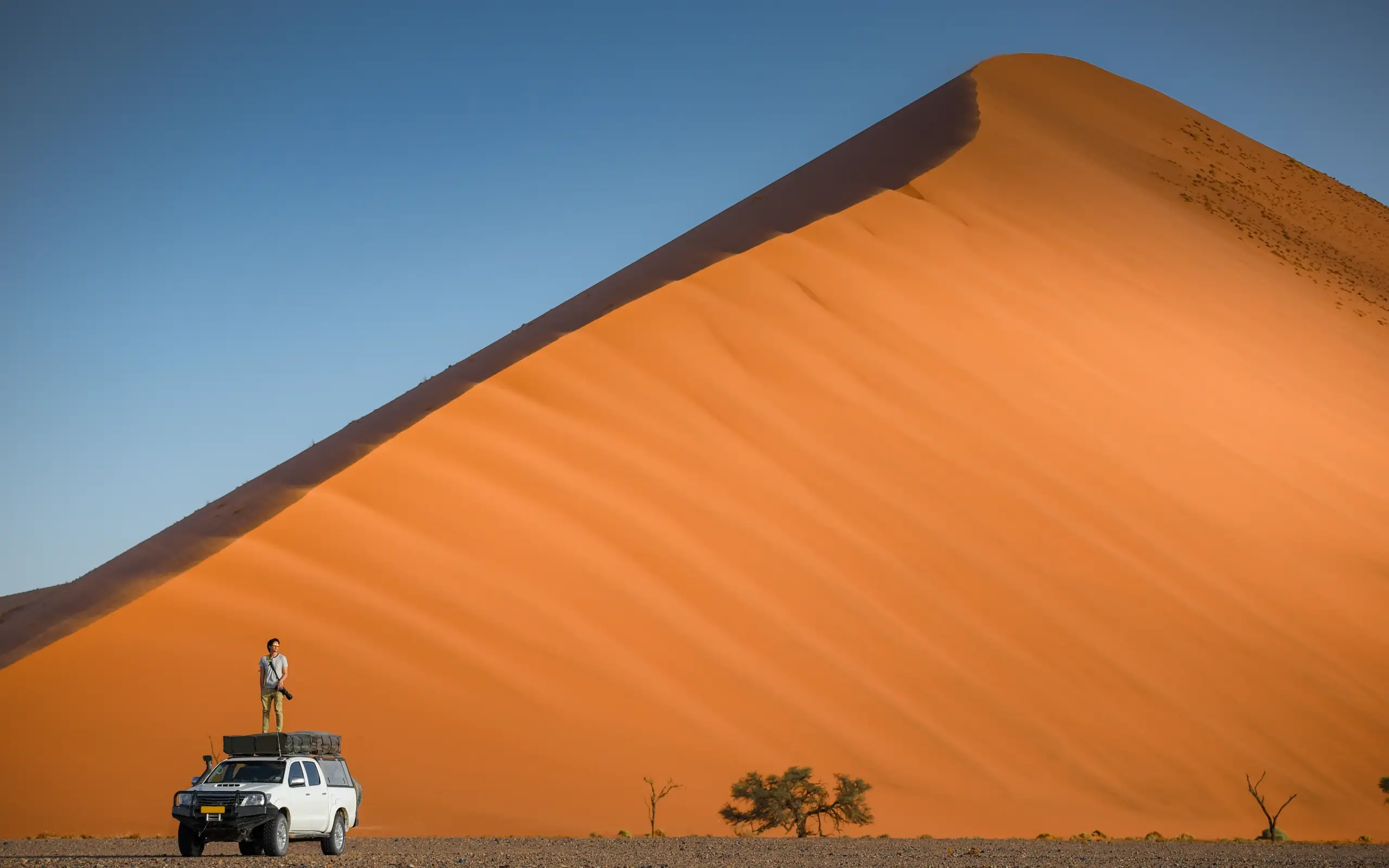
Sossusvlei is the dune landscape of the southern Namib, held within Namib-Naukluft National Park and the Namib Sand Sea, a UNESCO World Heritage site. Orange-red dunes rise from gravel plains and white clay pans, their colour drawn from iron in the sand that has slowly oxidised over millions of years. The oldest dunes carry the deepest red.
Orange-red dunes rise from gravel plains and white clay pans
At the foot of Big Daddy lies Deadvlei, a white clay pan where camel thorn trees have stood dead for some 900 years, since the Tsauchab River stopped reaching them. The dry air has kept them from rotting. Their black trunks stand against white clay and red dune, largely unchanged since the first travellers came here to photograph them.

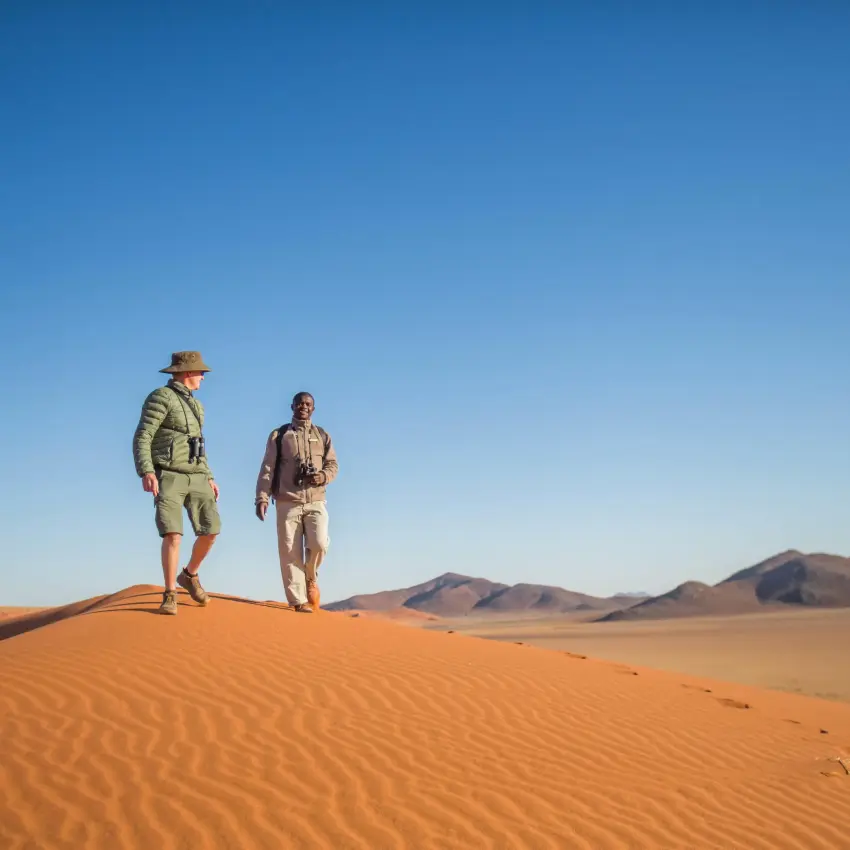
Dawn decides the day here. Low light rakes across the dunes and throws long shadows down every ridge, and the air is still cool enough for the climb. By mid-morning the heat is building fast, and colour and comfort both fade with it. What you came to see is a matter of the first hours, and nothing later in the day quite returns it.
What you came to see is a matter of the first hours
Lodges inside the Sesriem gate, or right at it, enter the park a full hour before the public gate opens, reaching Dune 45 or the base of Big Daddy while the sand is still cold underfoot. Dune 45 sits 45 kilometres along the park road, the standard sunrise climb. Big Daddy, roughly 325 metres, is the harder ascent, ending in a headlong run down its face into Deadvlei.
Sesriem Canyon, cut by the Tsauchab River and about 4.5 kilometres from the gate, offers shade and a walk between layered rock walls once the sun climbs. It is a useful counterpoint to the open dune fields: cooler, enclosed, and a chance to see the same river that so rarely reaches Sossusvlei itself carved directly into stone. Most visitors combine a dawn dune climb with a canyon walk later in the morning, before the heat closes down all activity until the late afternoon returns the light.
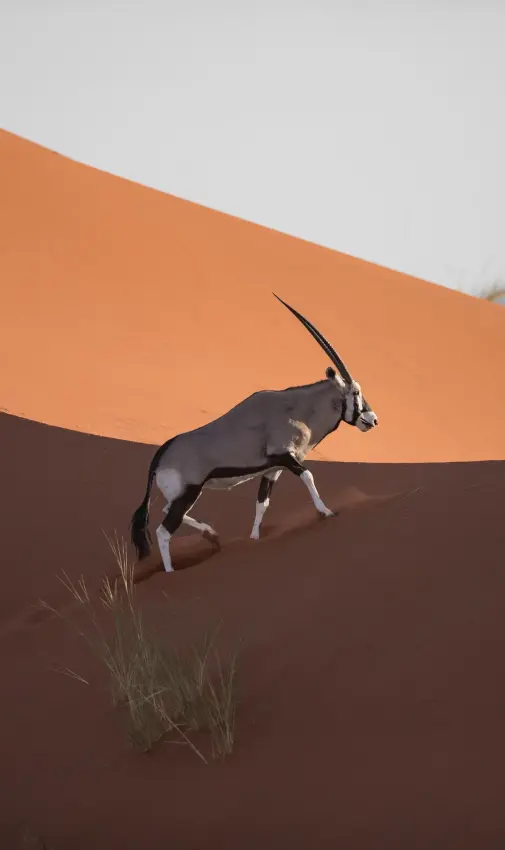
The Tsauchab reaches Sossusvlei only after exceptional rain, filling the pans for a single season before they dry out again. For most of the year this is a place of sand, stone and sky rather than dense game. What wildlife there is stands out sharply against that backdrop. An oryx picks a line across a dune crest, springbok scatter over the gravel plains, and ostrich move through the heat shimmer. The dune lark, near-endemic to this sand sea, rewards those who slow down enough to look for it.
An oryx picks a line across a dune crest, springbok scatter over the gravel plains.
What lives here works with very little water. Camel thorn trees send taproots far down to reach moisture underground, while smaller plants and insects draw what they need from the fog that rolls in off the Atlantic. The Namib Desert beetle goes further still, collecting droplets directly on its own back. None of this reveals itself at a glance, and that patience is part of the point: a landscape that looks empty is quietly full for anyone willing to wait for it.
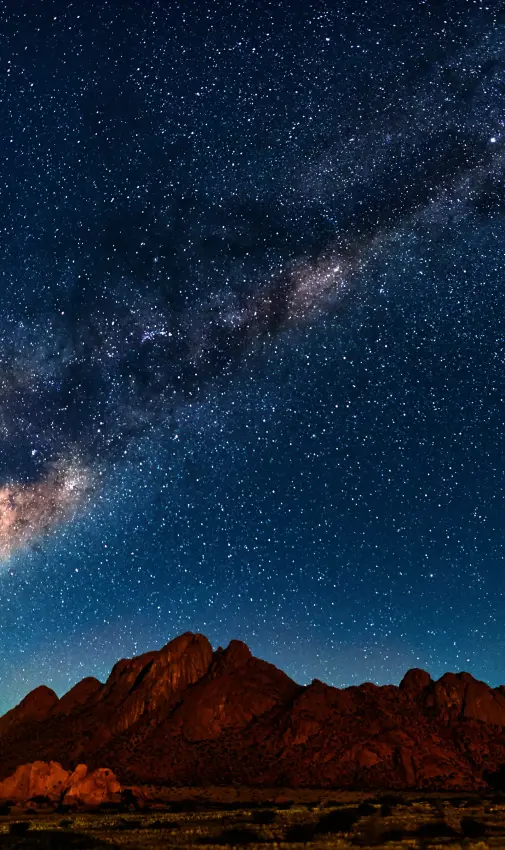
Beyond the dunes and the canyon, a hot-air balloon lifts off before sunrise and drifts over the dune sea, breakfast usually laid out on the sand where it lands. Light-aircraft and helicopter transfers cut the long overland approach to a short flight, and offer their own view of the sand from above. After dark, the skies over the Namib are among the clearest anywhere, and part of neighbouring NamibRand is a designated Dark Sky Reserve. Several lodges set up telescopes once the desert cools, closing out a day that began hours before sunrise.


The best time to visit Sossusvlei
Jan
Feb
Mar
Apr
May
Jun
Jul
Aug
Sep
Oct
Nov
Dec
Recommended
Transitional
Challenging conditions
Come May to September for warm, pleasant days, cool nights and clear skies that make dawn photography exceptional. These dry winter months are the peak and the reason most visitors plan around them. October is clear but hot, and November to April brings very high heat and thinner crowds, though the rare desert rain can be spectacular.
accommodation in sossusvlei
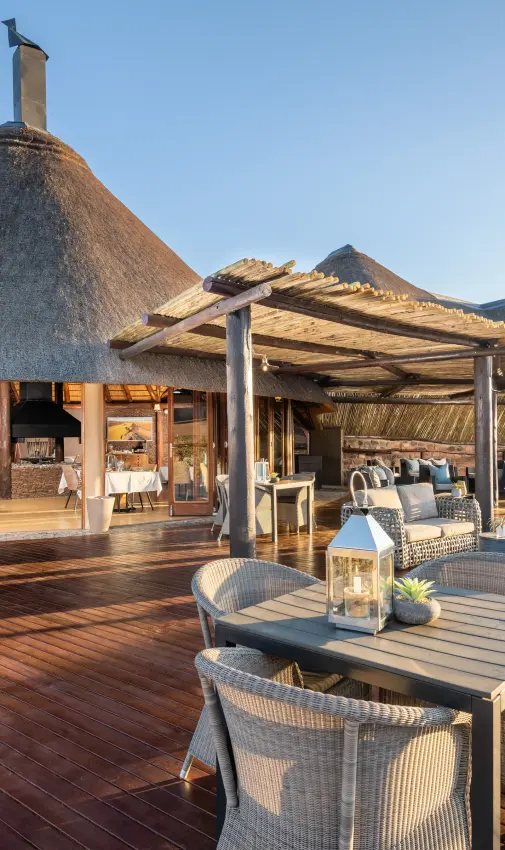
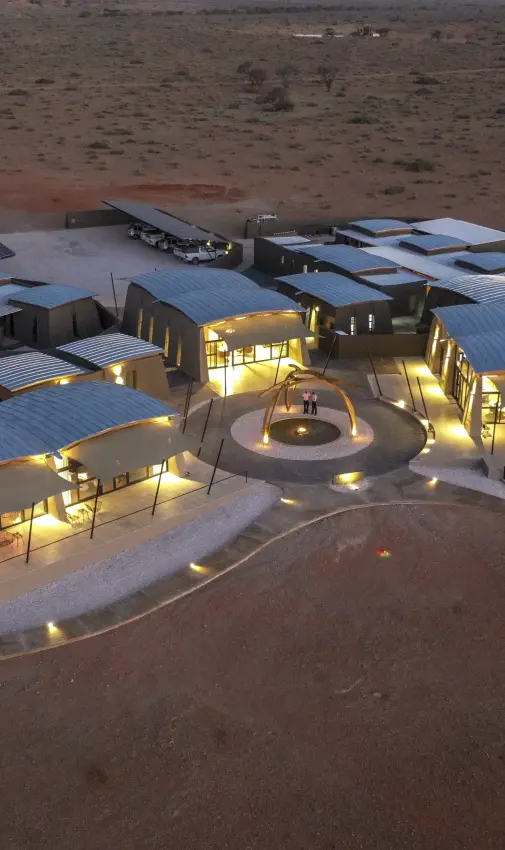
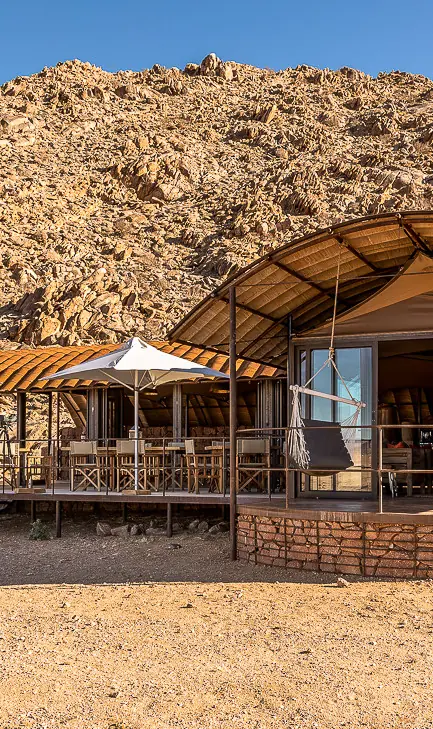
Tented camps and design-led desert lodges line the approach to Sossusvlei, many with private plunge pools and wide decks facing the dunes. A small number sit inside the Sesriem gate itself, giving the earliest access at dawn; others lie on private reserves along the park's edge, where guided walks, nature drives and exclusive-use experiences are permitted. Private houses with dedicated guides and vehicles suit those wanting full exclusivity.





activities
Activities
Climb Dune 45 at sunrise or the steeper Big Daddy for a view over Deadvlei, then walk Sesriem Canyon once the day heats up. Hot-air balloon flights and scenic light-aircraft or helicopter trips cross the dune sea from above. After dark, some of the clearest skies anywhere make for exceptional stargazing.

conservation
Conservation Projects
The Namib Sand Sea holds UNESCO World Heritage status, and the core dunes sit within Namib-Naukluft National Park under Namibia's environment ministry. The Greater Sossusvlei-Namib Landscape initiative links the park with surrounding private reserves to manage the wider desert jointly and support communities living along its edges.

getting around
Connectivity and Logistics
Most luxury lodges near Sossusvlei operate their own airstrips, reached by light-aircraft charter from Windhoek; helicopter transfers offer a more direct approach for those combining stops. The road route from Windhoek runs around five hours and suits travellers building it into a longer overland itinerary.
other areas in namibia
Etosha National Park pairs Sossusvlei's desert stillness with waterhole game viewing, including elephant, rhino and lion. Swakopmund and Walvis Bay bring the Atlantic coast into range, where dune fields meet the sea. Damaraland adds desert-adapted elephant and the Twyfelfontein rock engravings, while the Skeleton Coast offers remote, fog-bound wilderness. Kaokoland brings some of Namibia's most remote country and encounters with the Himba.
 01
01
 02
02
 03
03
 04
04
 05
05
 06
06
 07
07
 08
08
frequently asked questions
By road from Windhoek, or by light aircraft to the lodge airstrips.
The drive is a long but genuinely beautiful half-day on gravel, and many self-drive clients take it. Flying turns it into an hour, and the descent over the dune sea is worth the fare on its own.
Most lodges sit outside the park gates in their own reserves, with their own strips, so the transfer at the end is short.
We book the flights, the car or the transfer with the rest of the route, and say plainly which suits your party.
A private charter flies the same sector on your own timing, a Cessna Caravan or a Pilatus PC-12, and we price it beside the scheduled seats so you can see the difference.
At first light, and it is not a preference but the whole plan.
The gate opens at sunrise, the light on the dunes is at its best in the first hour, and the heat builds quickly. Climbing Big Daddy or Dune 45 at ten in the morning is a different and much harder activity.
The lodges inside the park boundary can be at the dunes before those outside it, which is the single practical argument for staying in.
Deadvlei, the clay pan with the dead camelthorn trees, is best in the same early window.
Enough for a second day, which is why we rarely book only one.
- Sesriem Canyon, a short walk into a narrow gorge cut by the Tsauchab
- Nature drives on the private reserves for oryx, springbok and desert specials
- Quad biking and horse riding on some reserves
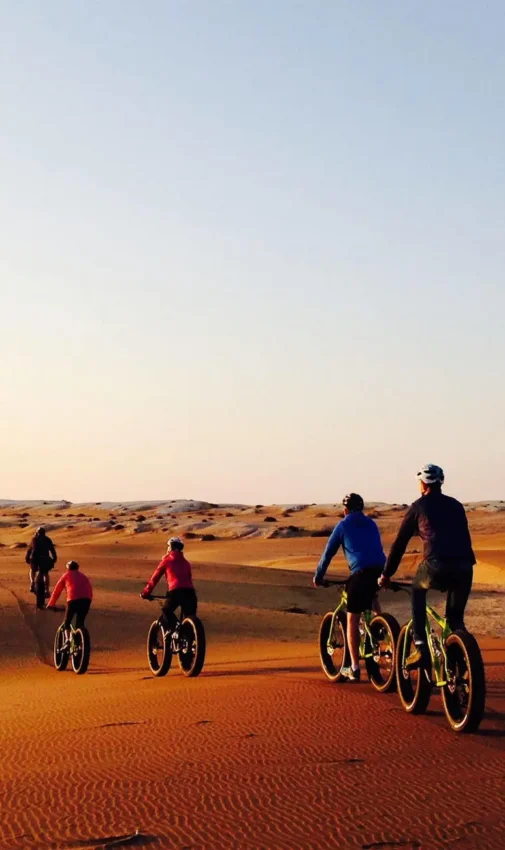
- A hot-air balloon at dawn over the dune sea, followed by breakfast
Stargazing is the other reason to stay: this is some of the darkest sky in the world, and several lodges have their own telescopes.
Very hot in summer and cold at dawn in winter, so the answer is layers.
December to February runs to the high thirties and beyond, which limits activity to the early morning and evening. Winter, May to September, is clear and comfortable by day with nights that can drop close to freezing.
Closed shoes with grip make the dune climbs far easier than sandals. Neutral colours suit the drives, and sun protection matters here more than almost anywhere else we send people.
Add swimwear: a pool in the middle of a desert afternoon is one of the stranger pleasures of a stay.
Yes, and the dunes are the sort of thing children remember for good.
Policies vary by lodge: some take children of any age with family chalets, others start at six, with reduced rates for children up to twelve or thirteen and family units that sleep four.
The practical considerations are the heat, the early starts and the driving distances. A pool matters more here than usual.
Tell us their ages and we will point you at the lodges where a family genuinely works rather than is merely permitted.
Two, and three if you want a balloon or a second dune morning.
Two nights give you one full day: the dunes at dawn, the canyon or a drive in the afternoon. That is the minimum that justifies the journey in.
A third night buys the balloon, the stars and an unhurried second morning, and it is the one people are gladdest to have added.
On a Namibian route it usually comes first or last, paired with Damaraland, the Skeleton Coast or the coast at Swakopmund.
rated five stars by our clients

our approach
remote, exclusive
& personal
Every journey starts with a conversation. We take the time to understand your vision before we start planning.
Whether by phone or in person, we work with you directly to shape something that is considered, personal, and expertly delivered.
Every journey starts with a conversation. We favour a direct, personal approach: understanding your vision before anything else.
Whether by phone or in person, we work with you directly to shape a journey that is both thoughtfully considered and expertly delivered.
Get in touch to start planning yours.