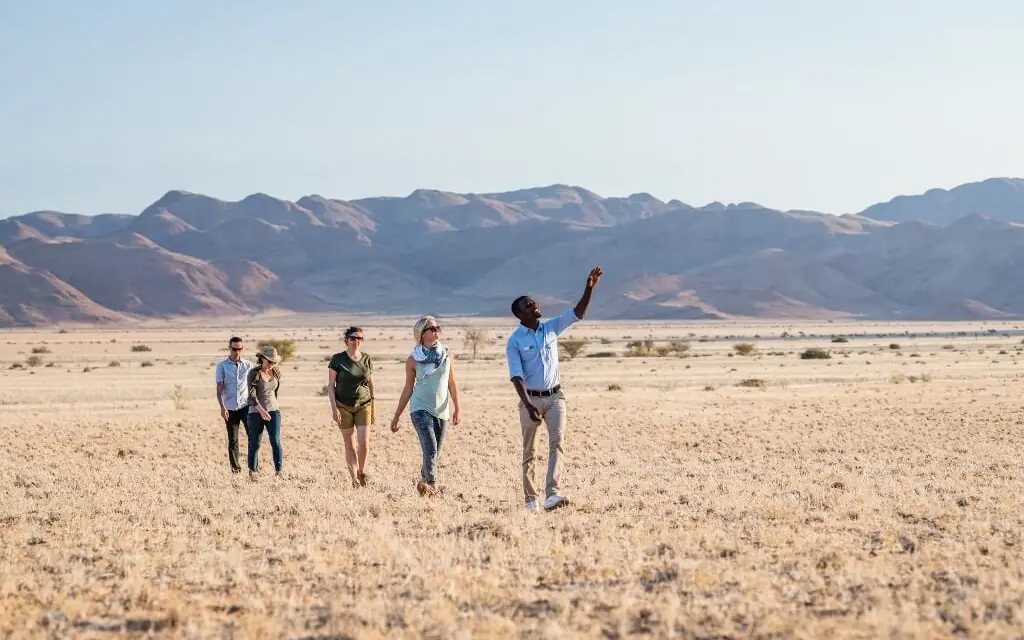
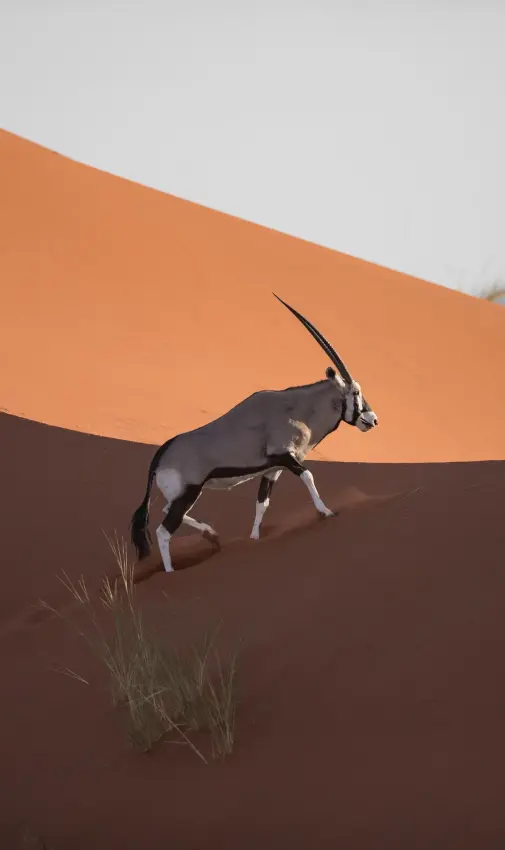
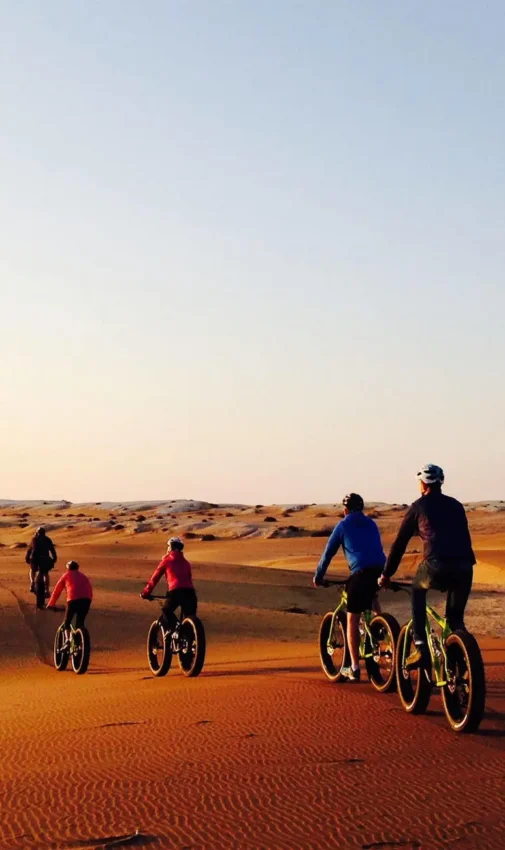
Being on private land changes what is possible. Inside the national park, activities keep to designated roads and daylight hours; on the conservancy, the desert opens up. Guides lead interpretive walks that read beetle tracks and desert flora, then take guests out on fat-tyre mountain bikes across the gravel plains. This is a refuge for leopard and cheetah, for spotted hyena, bat-eared fox and aardwolf, alongside the oryx, zebra and kudu more regularly seen from camp.
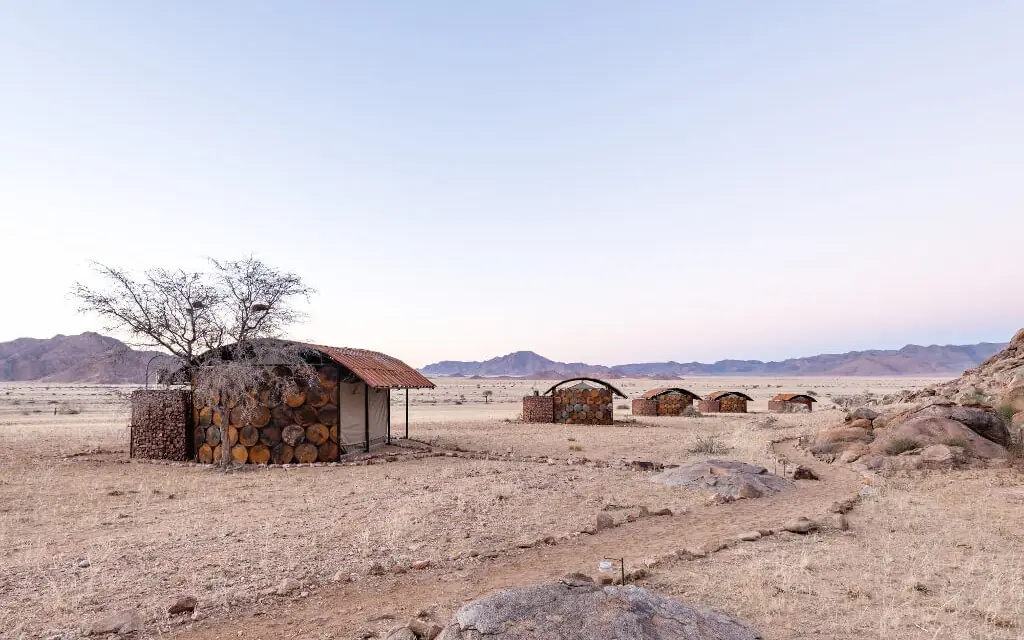
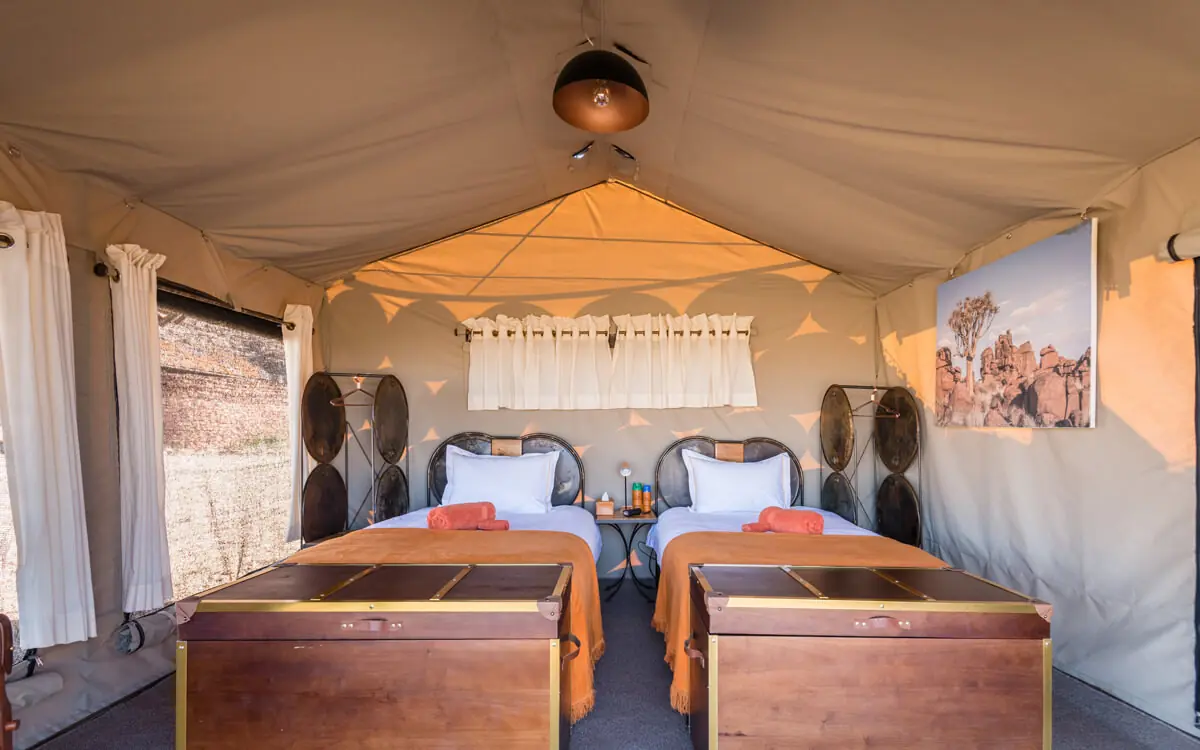
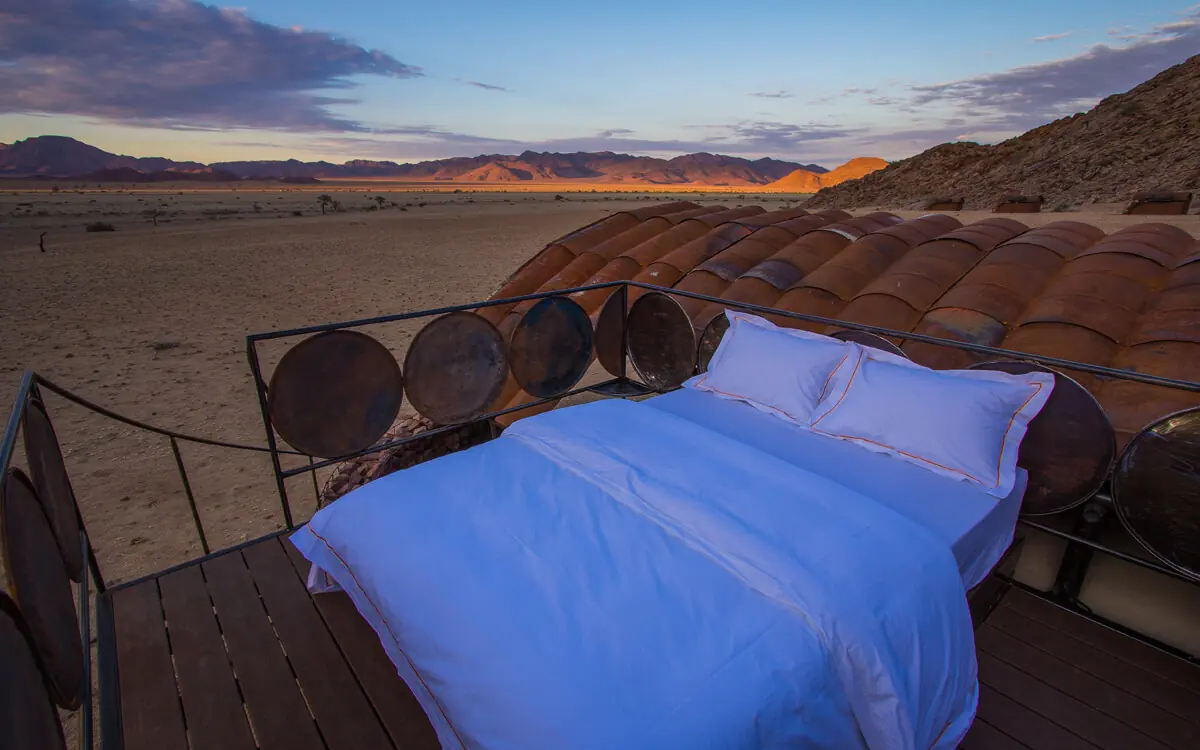
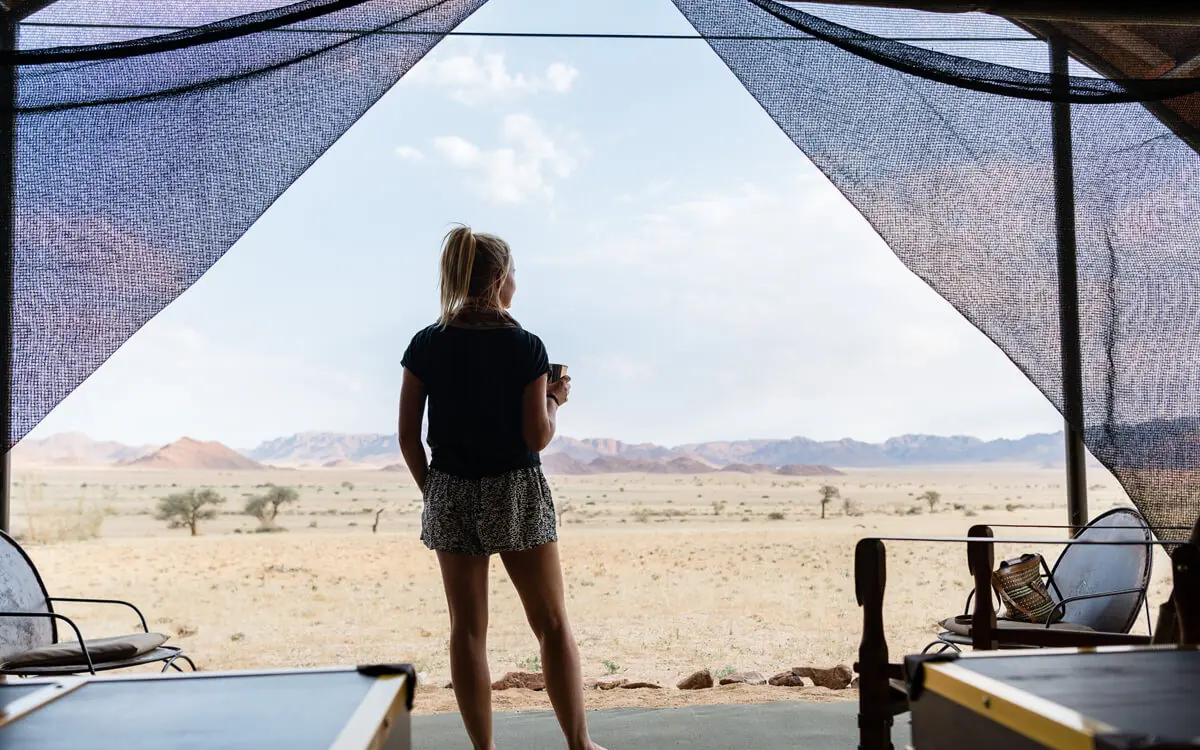
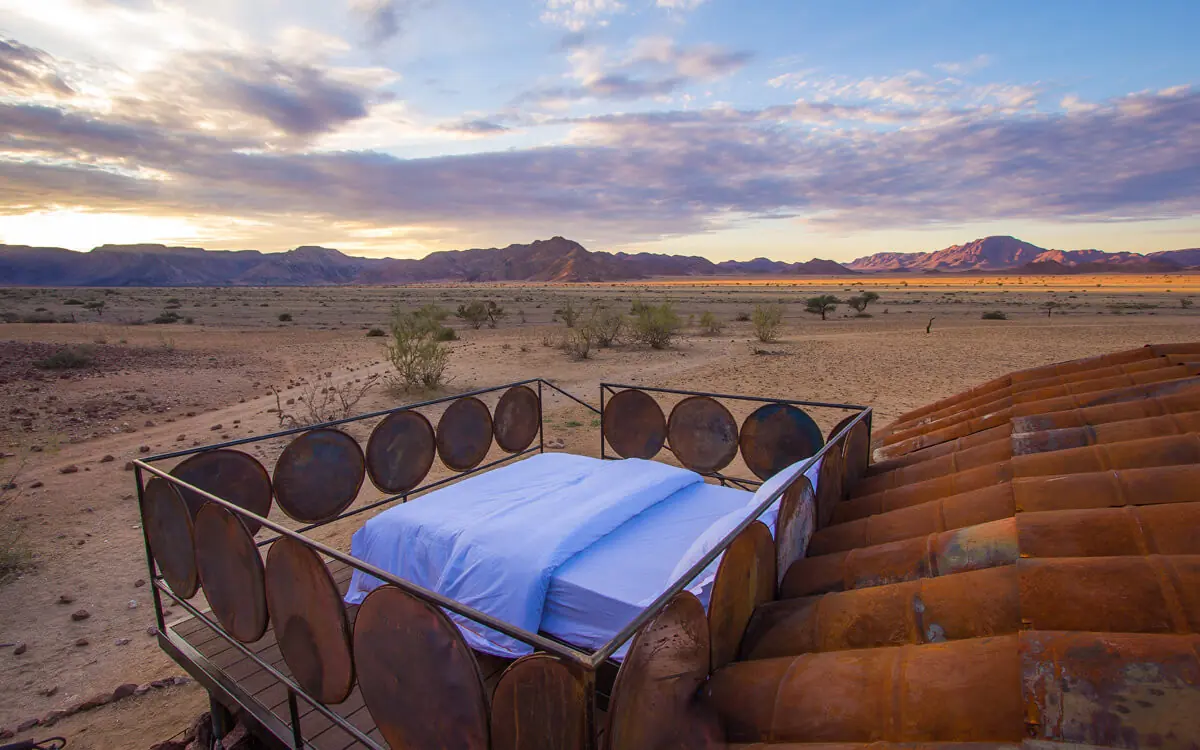
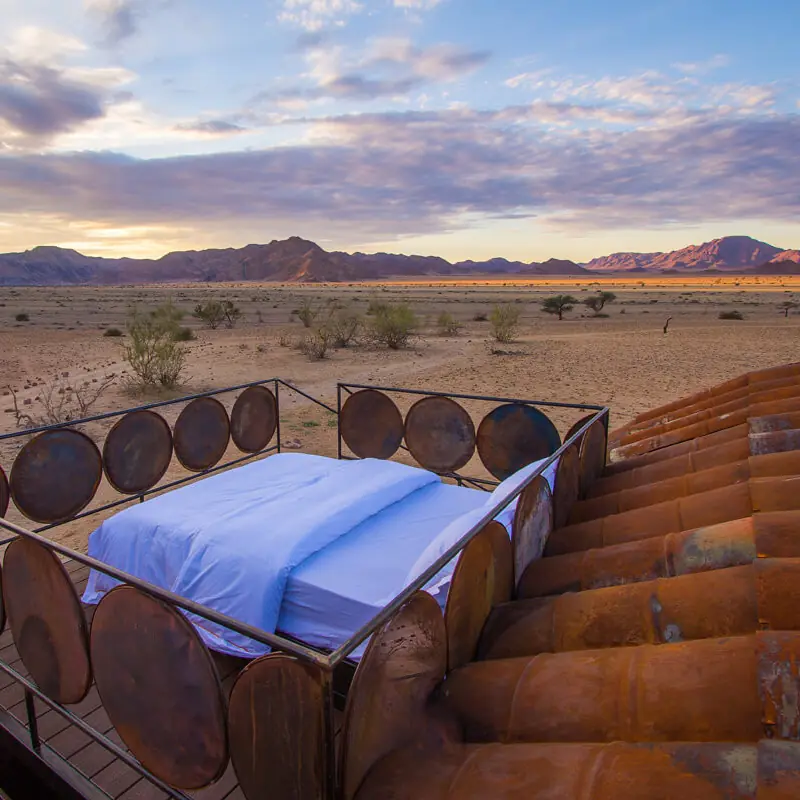
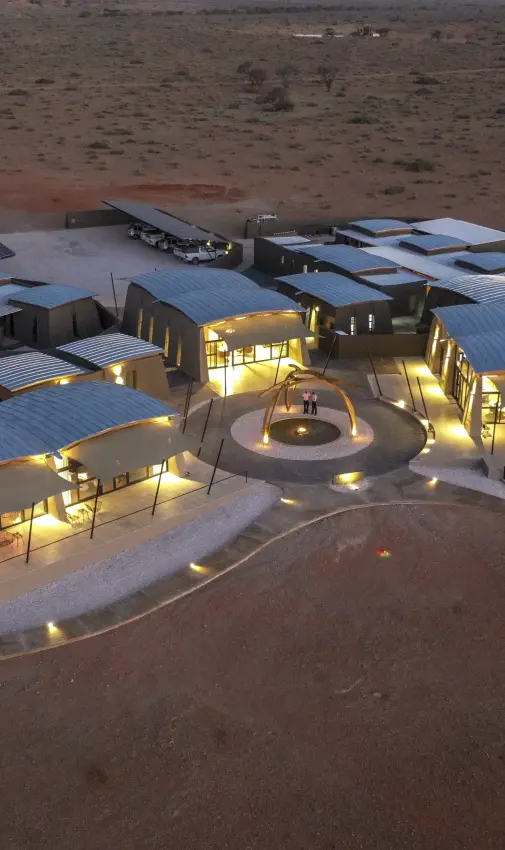
The comforts here are quiet ones. Each tented room has a shaded outdoor daybed and a semi-open-air bathroom fitted with a flush toilet and a hot-water bucket shower, and on the roof above sits a star bed carrying its own featherbed and linen. Beyond that, little else: 220V charging points, solar lighting and pedestal fans. The whole camp runs off-grid, its wastewater recycled on-site.
At night the desert silence is broken only by the wind on canvas, the crackle of the fire
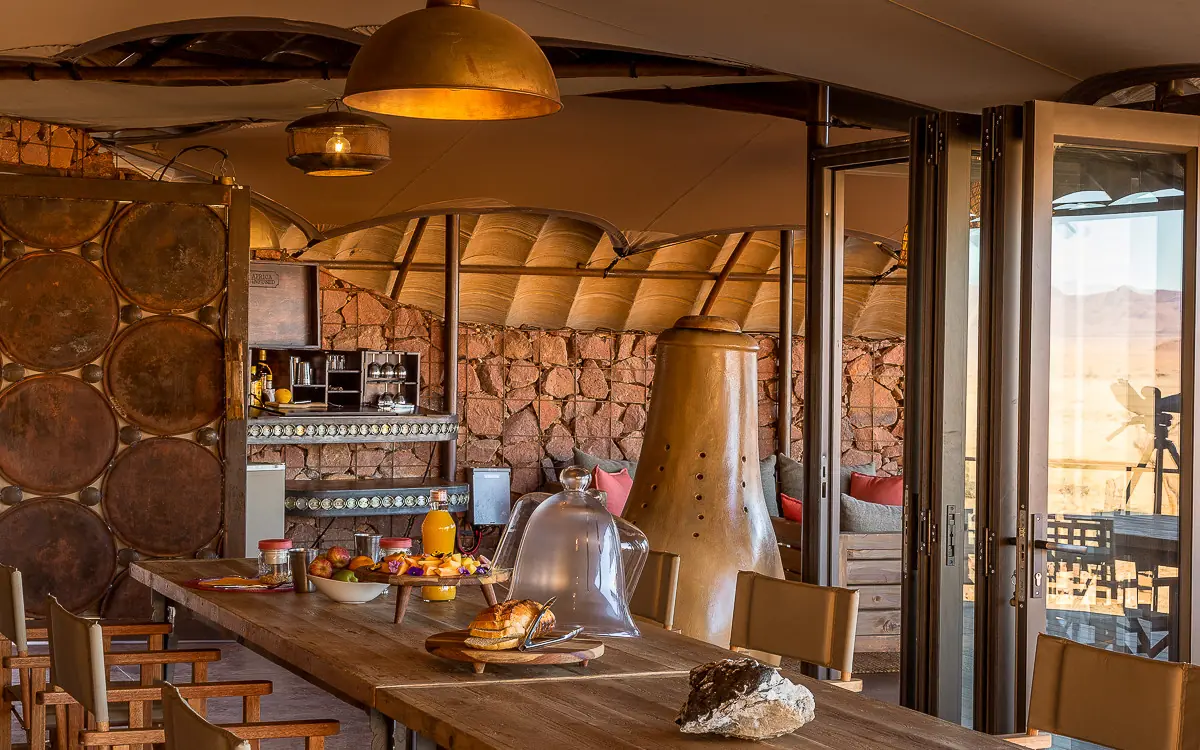
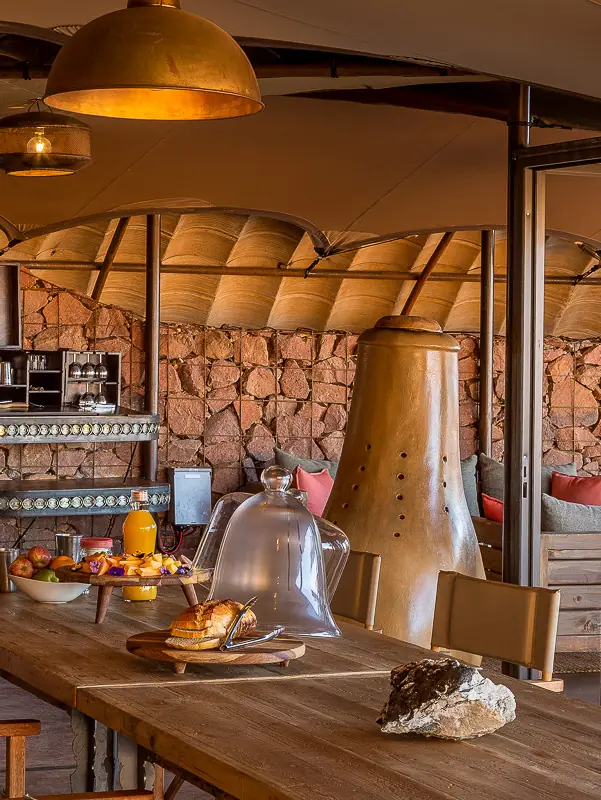
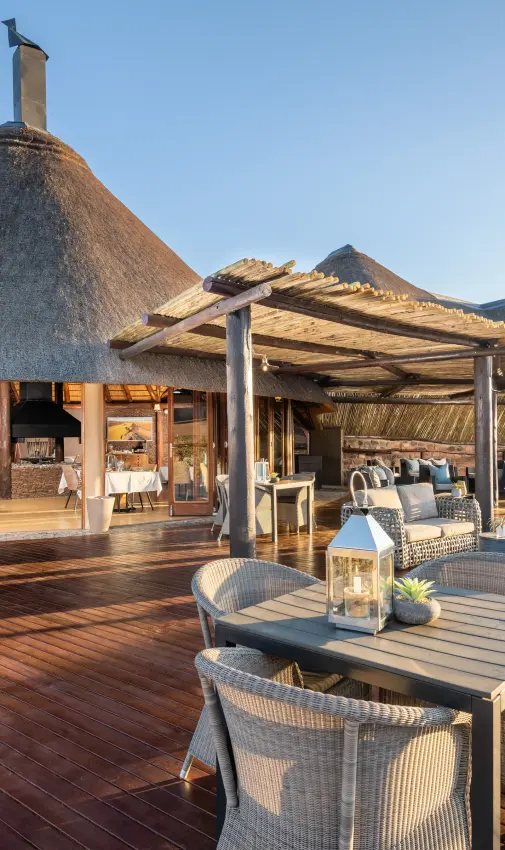
Dining follows the fresh, Namibian-influenced style of a small exploration camp, with hot breakfasts, freshly baked bread, and a house coffee blend poured at the camp’s coffee station. Meals move with the day, from the communal mess tent to the campfire circle under the stars, and trail treats appear at remote spots during excursions. At night the desert silence is broken only by the wind on canvas, the crackle of the fire, and the calls of barking geckos.
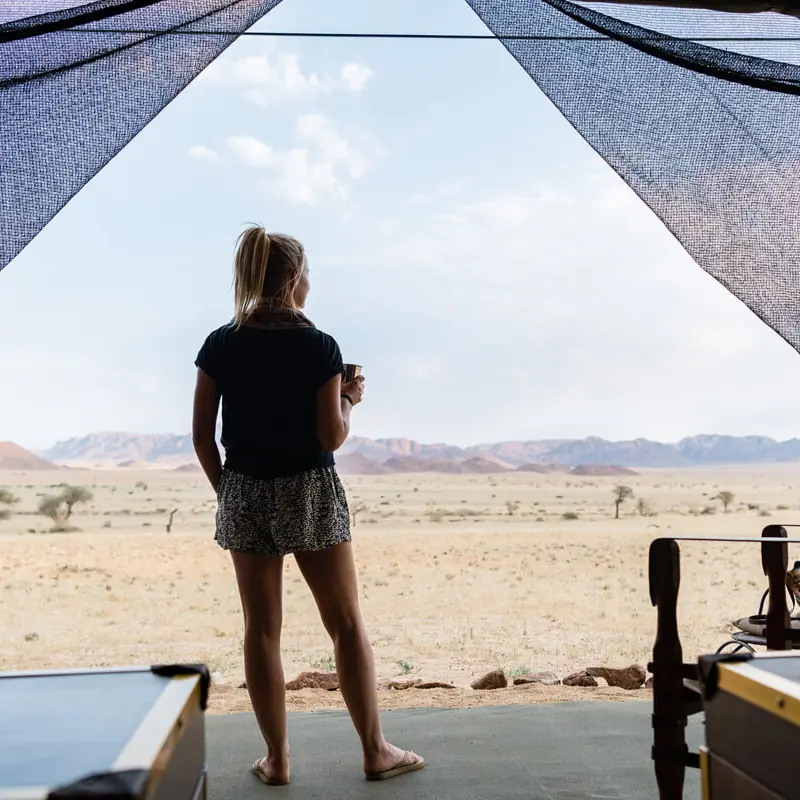
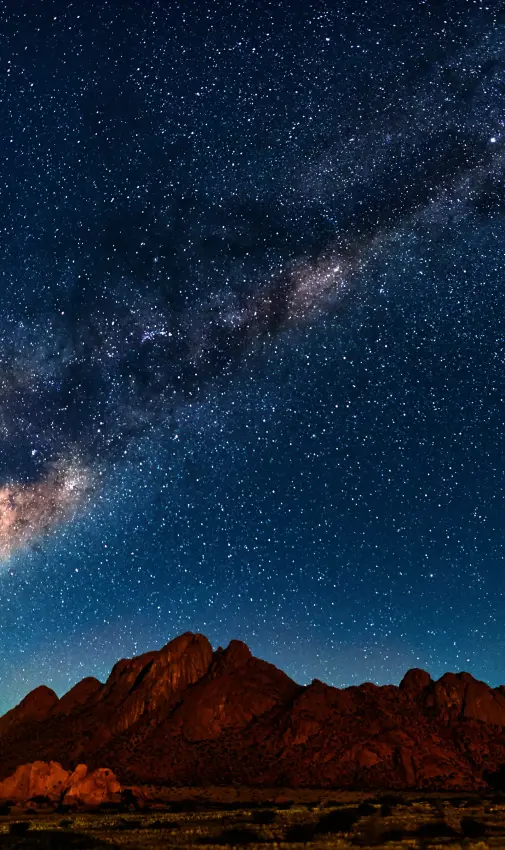
The pull of the place is visual and constant: gravel plains running out to the Zaris mountains, dunes shifting from lavender to fiery orange as the first light hits, and the Milky Way overhead after dark. Families are welcome, with a children’s menu and desert activities to match. For those who want to see the sand sea whole, hot-air ballooning, helicopter flights and scenic fixed-wing trips over the dunes can all be arranged.