 01
01
Desert elephants in red-rock country
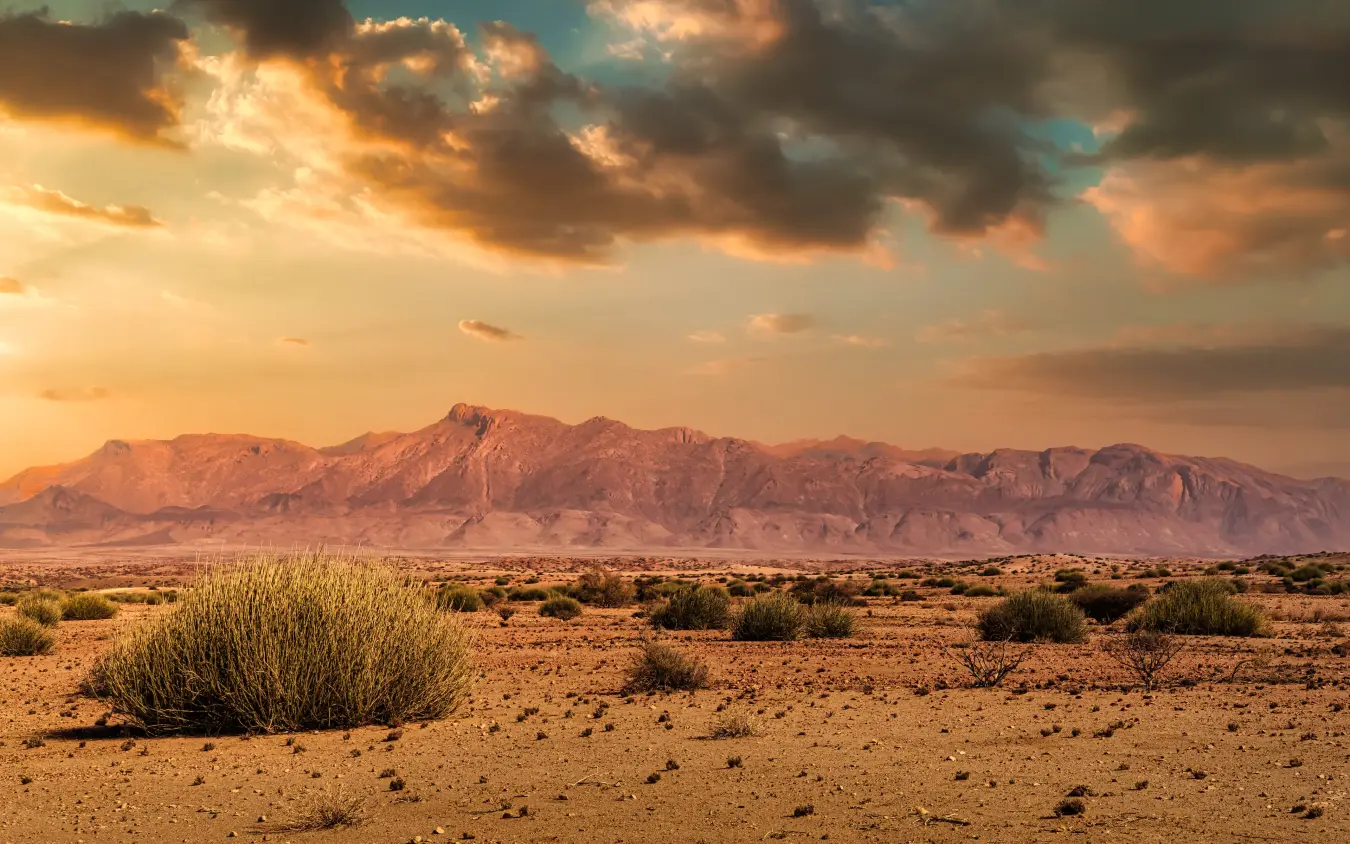
Damaraland fills the northwest of Namibia with rock and silence. Granite hills, table mountains, stony plains and the pale tracks of dry riverbeds that flow only after rare rain. The Brandberg massif rises high above the gravel flats, and herds of desert-adapted elephants move through the riverbeds in search of water and the green ribbons of vegetation it sustains.
Damaraland fills the northwest of Namibia with rock and silence
Along the Huab, Hoanib and Aba Huab rivers, water hides beneath the sand for most of the year. That subterranean supply feeds the ana trees and acacias that hold the banks together, and the wildlife gathers wherever the seepage rises to the surface. It is a landscape that asks you to read it slowly, and rewards those who do.


The desert-adapted elephants draw most travellers here. They are not a separate species but the same animal shaped by aridity, moving long distances between waterpoints through the Huab and Aba Huab riverbeds. Tracking them by vehicle through these dry valleys is a slow, deliberate business, guided by spoor and a deep knowledge of where the herds tend to walk.
The desert-adapted elephants draw most travellers here
Black rhino share this country too. Northwest Namibia holds a free-roaming population that has recovered through decades of patient protection. In the Palmwag concession, you track them on foot at walking pace across open terrain, alongside specialist trackers from the Save the Rhino Trust. Sightings are earned rather than guaranteed, which is precisely the point.
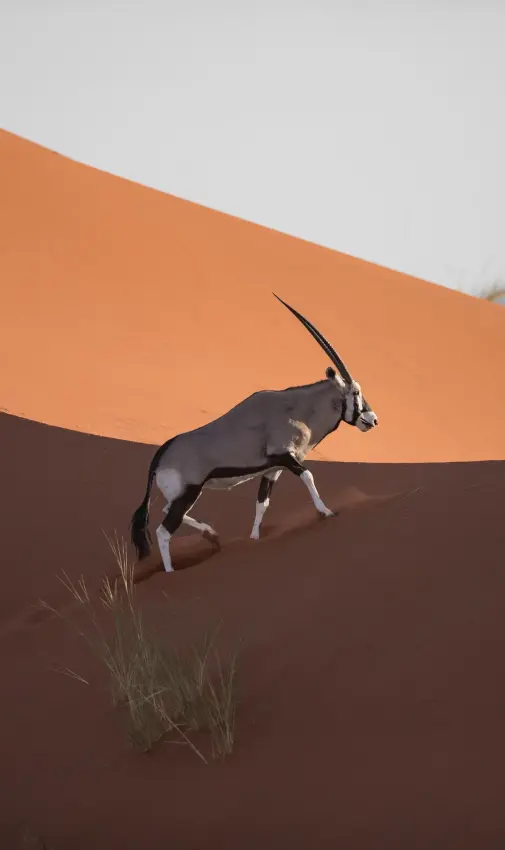
Beyond elephants and rhino, the plains hold oryx, springbok, kudu, Hartmann’s mountain zebra, giraffe and ostrich, with desert-adapted lions and brown hyena among the predators. The vegetation is sparse and built for drought, from the poisonous Euphorbia damarana to the Welwitschia mirabilis, a low, sprawling plant that can survive for more than a thousand years on almost no rainfall. Wildlife is low in density and the sightings are correspondingly deliberate, shaped by knowledge of the land rather than by the proximity of a waterhole.
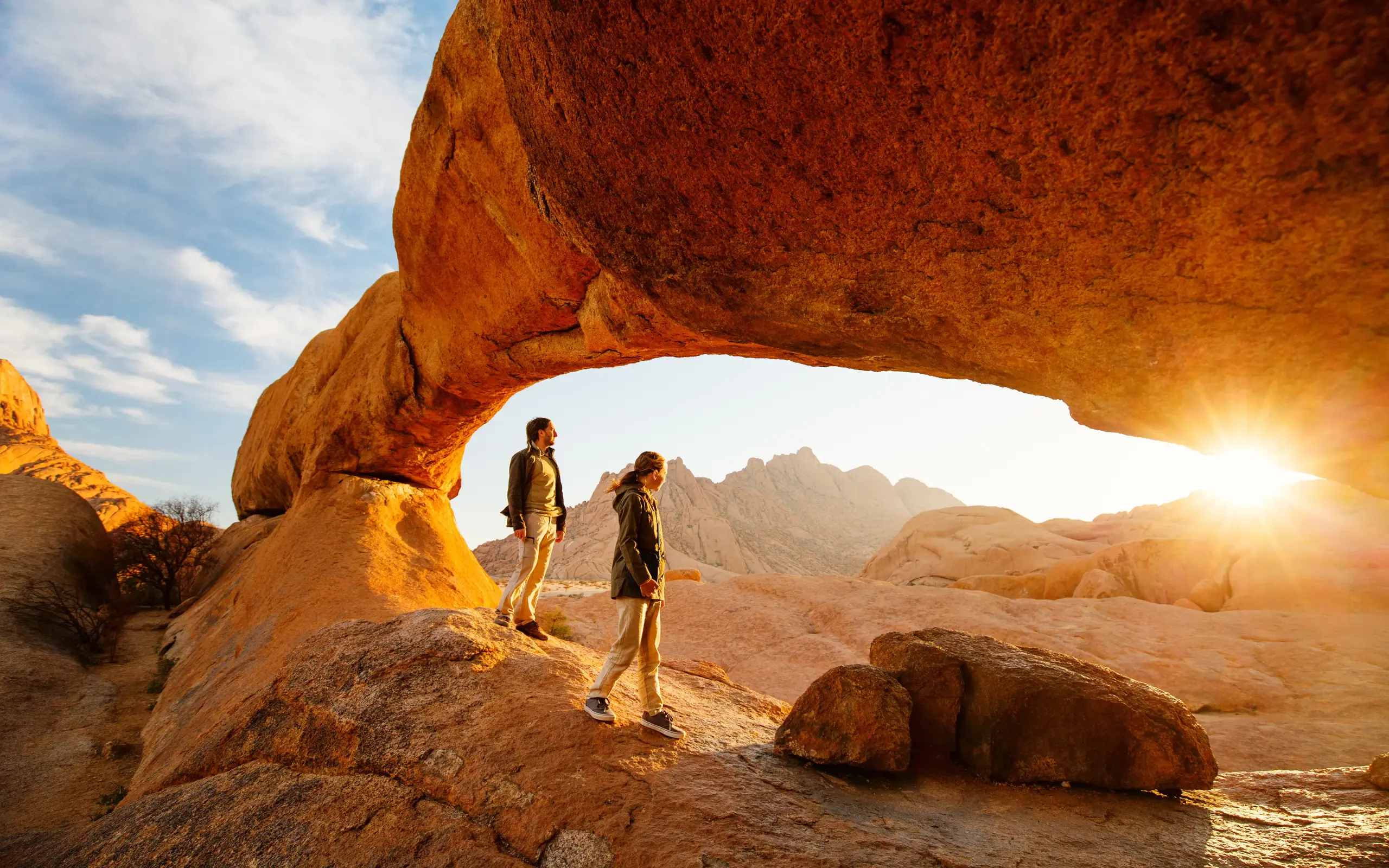
Twyfelfontein, a UNESCO World Heritage Site, holds one of the largest concentrations of prehistoric rock engravings in Africa, the work of San hunter-gatherers and a record of the animals of a wetter age. At the Brandberg, the White Lady painting marks the same long human presence in this landscape. The region is associated with the Damara people, and visits to the Damara Living Museum near Twyfelfontein cover fire-making, artisanship and the use of medicinal plants. Further north, encounters with the semi-nomadic Himba are possible.
Wildlife is low in density and the sightings are correspondingly deliberate.
Damaraland works as a mosaic of community conservancies and concessions rather than national parks. Local communities hold legal rights over wildlife and earn directly from tourism through partnerships with lodge operators. It is a model that has turned animals once seen as a problem into a resource worth protecting. The practical advantage for a traveller is range. Within the conservancies, night drives, off-road tracking and walking safaris are all permitted, none of which would be possible inside a national park.
Geological landmarks reward the curious between wildlife outings. The Petrified Forest holds fossilised tree trunks around 280 million years old. The Organ Pipes are dolerite columns laid bare by erosion, and Burnt Mountain shifts colour at sunrise and sunset. Spitzkoppe, a granite peak rising to 1,728 metres, carries its own rock art. The landscape itself, sculpted over millions of years of tectonic and volcanic activity, is reason enough to spend unhurried days here.

The best time to visit Damaraland
Jan
Feb
Mar
Apr
May
Jun
Jul
Aug
Sep
Oct
Nov
Dec
Recommended
Transitional
Challenging conditions
For desert-adapted elephant and black rhino, come between June and September, when the dry season pulls wildlife to the springs and underground water of the Huab and Aba-Huab riverbeds. July to September is coolest and best for tracking rhino on foot. October is driest but climbs into the mid-thirties. The green season suits birding, though the rains disperse the game.
accommodation in damaraland
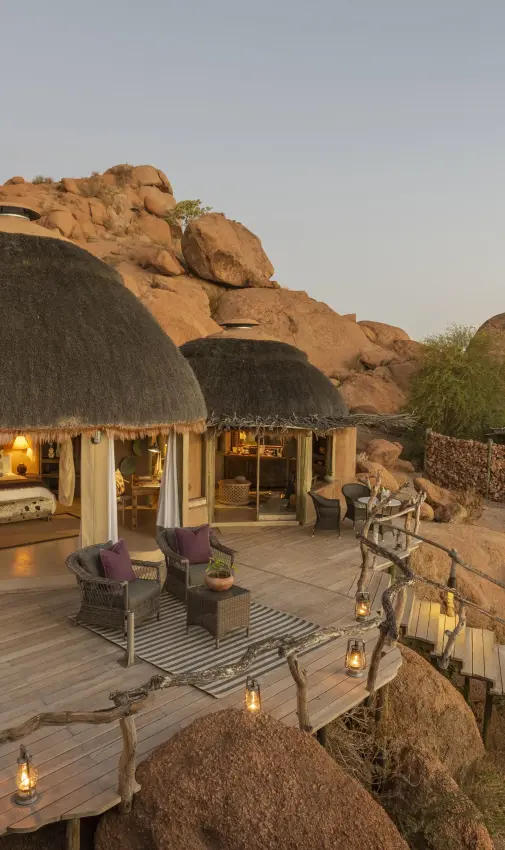
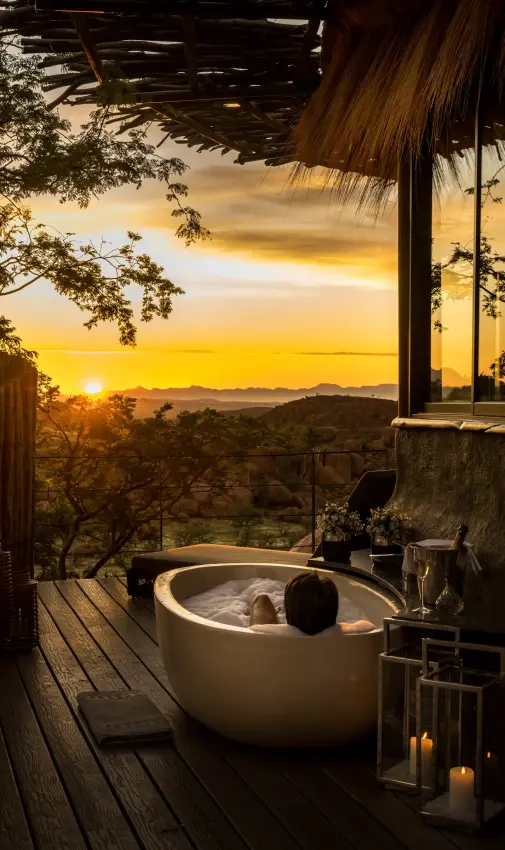
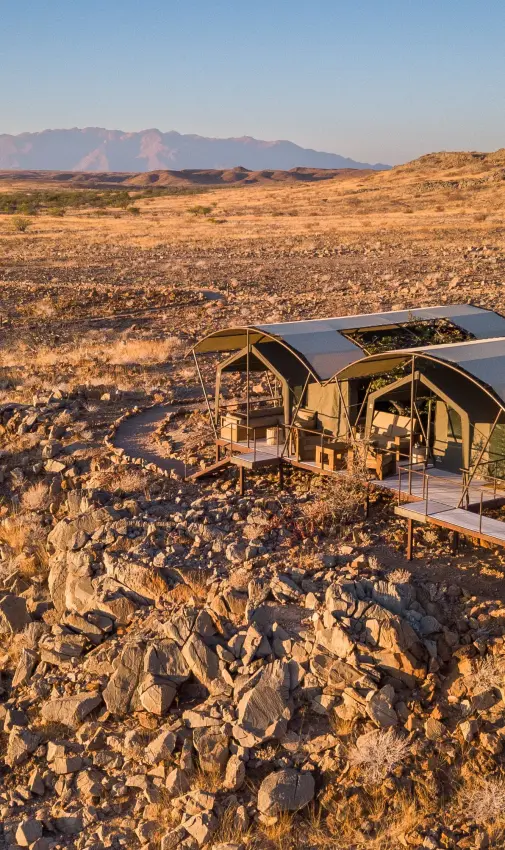
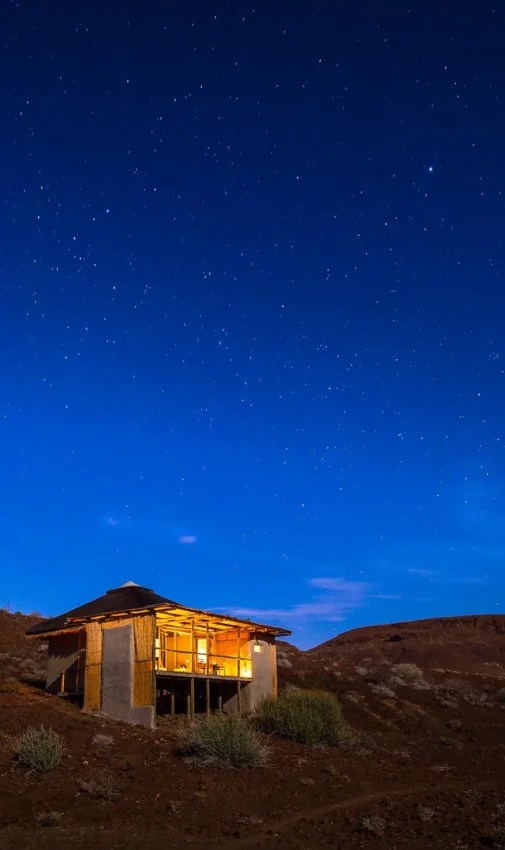
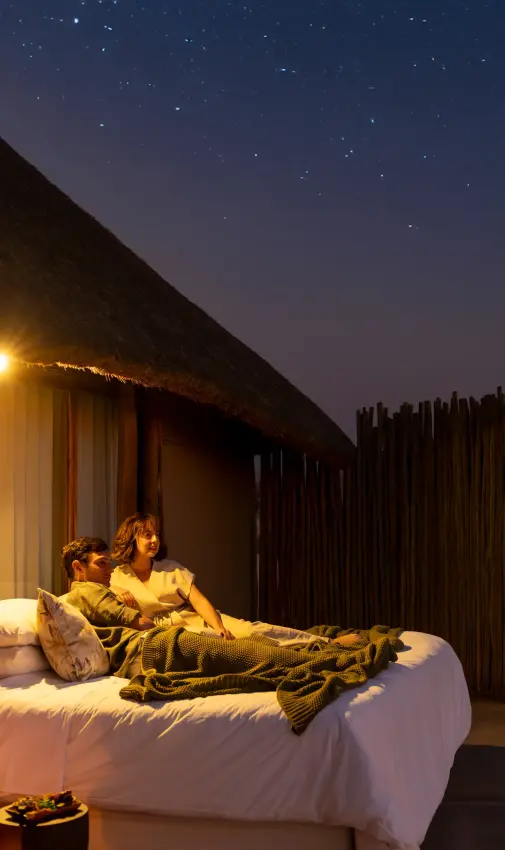
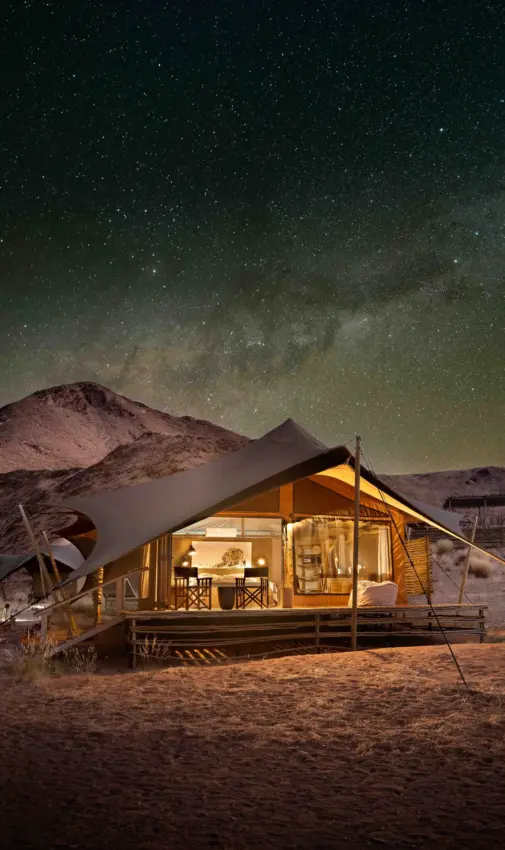
Lodges and tented camps make up the bulk of the offering, many of them built among granite boulders or raised on platforms for the long views across plains and riverbeds. The style is understated and low-impact, with spacious rooms, strong guiding and an emphasis on the landscape rather than resort scale. Some camps offer exclusive-use houses suited to families or small groups, and mobile camping safaris can be arranged for those wanting to reach the remoter conservancies on a more expeditionary footing.




activities
Tracking elephants and rhino on foot
Desert elephant tracking runs by vehicle through the Huab and Aba Huab riverbeds. Black rhino tracking on foot with Save the Rhino Trust trackers is a signature of the Palmwag concession. Within the conservancies, night drives and walking safaris are permitted. Guided visits take in Twyfelfontein, the Petrified Forest, Brandberg and Spitzkoppe.

conservation
Rhino tracking and community conservancies
The Save the Rhino Trust monitors and protects the free-roaming black rhino population, working alongside community conservancies and lodge partners. The Palmwag concession holds a significant share of these animals. The wider conservancy model has reduced poaching and supported the recovery of both rhino and desert-adapted elephant populations across the region.

getting around
Light-aircraft charters from Windhoek
Access is primarily by light aircraft, with charters arranged from Windhoek to airstrips serving the lodges, among them Doro Nawas, Palmwag and Twyfelfontein. There are no scheduled flights into the region.
other areas in namibia
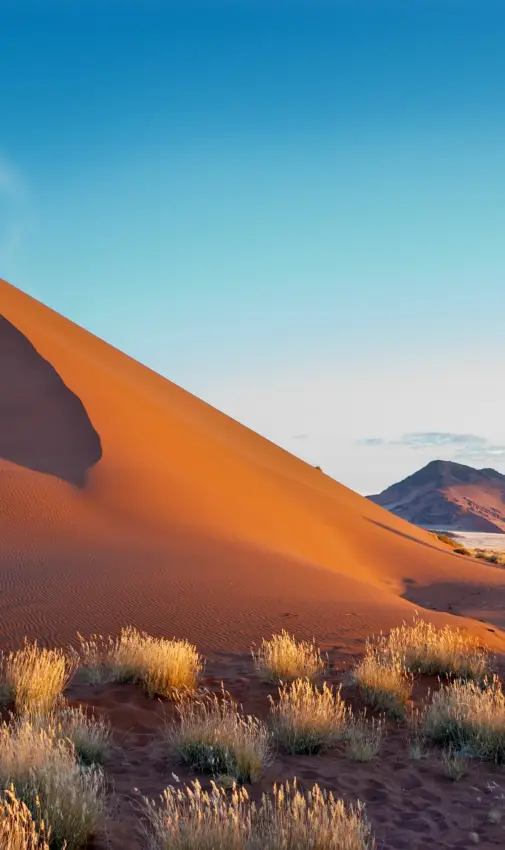
Etosha National Park pairs naturally with Damaraland, adding classic big-game viewing around its waterholes and salt pan. The Skeleton Coast extends the desert journey to a stark, shipwreck-strewn shoreline. Sossusvlei and the Namib-Naukluft offer towering red dunes and the clay pan of Deadvlei. To the north, Kaokoland holds rugged wilderness and Himba communities, while Swakopmund provides a coastal base with German colonial heritage and access to the Skeleton Coast.
 01
01
 02
02
 03
03
 04
04
 05
05
 06
06
 07
07
 08
08
frequently asked questions
By light aircraft to the camp airstrips, or by road from Swakopmund or Windhoek.
Flying takes about an hour and a half from Windhoek and the camps meet the aircraft. The drive from Swakopmund is four to five hours on gravel and is a genuinely good day for anyone self-driving.
It sits between the coast and Etosha, so most Namibian routes pass through it anyway.
We book whichever suits the wider route and say plainly which is worth the time.
If the scheduled days do not suit, a private charter from Swakopmund goes when you want, a Cessna Caravan or a Pilatus PC-12, and we quote both.
Desert-adapted wildlife and some of the oldest art in Africa.
- Desert-adapted elephant, which move through the dry riverbeds in small family groups
- Black rhino tracking on foot, with the Save the Rhino Trust teams
- The rock engravings at Twyfelfontein, thousands of years old
- The Organ Pipes, the Burnt Mountain and the Brandberg
The landscape itself is the other reason to come: red rock, open plains and almost nobody in them.
Most of this is communal conservancy land, so the conservation story here is a local one.
On foot, with trackers who know the individual animals.
You drive out at first light, pick up sign, then follow it on foot until the rhino is found, which can take an hour or most of the morning. The desert-adapted black rhino here are free ranging across an enormous area rather than in a fenced sanctuary.
The tracking teams are part of the monitoring effort, so the morning contributes to it.
It asks for reasonable fitness and patience, and it is the best thing in Damaraland.
Lower risk than Namibia's far north rather than free of it.
Both TravelHealthPro, the UK's official travel health service, and the CDC place the country's risk in the northern regions and along the rivers, and it rises everywhere in the warm, wet summer. Low risk is not the same as no risk, and most routes continue to Etosha or the Kunene.
We do not make medical recommendations. That is a conversation between you and your own doctor or a travel clinic.
On the practical part, cover up at dusk and carry repellent.
No, and anyone promising them is overselling it.
The herds move huge distances along the dry riverbeds following what little food there is, so a camp can go days without them and then have them walk past the tents. The guides know where they were yesterday, which helps.
What is certain is the landscape, the rock art and the tracking.
We would come for those and treat the elephant as the thing that makes the trip, if they turn up.
Two, and three if you want a proper rhino tracking day.
Two nights gives you a drive along the riverbeds and a morning at the rock art. Three lets you take a full tracking day, which starts early and can run until lunch.
It sits naturally between Swakopmund and Etosha on a Namibian route.
Tell us the whole route and we will say how many nights it earns.
rated five stars by our clients

our approach
remote, exclusive
& personal
Every journey starts with a conversation. We take the time to understand your vision before we start planning.
Whether by phone or in person, we work with you directly to shape something that is considered, personal, and expertly delivered.
Every journey starts with a conversation. We favour a direct, personal approach: understanding your vision before anything else.
Whether by phone or in person, we work with you directly to shape a journey that is both thoughtfully considered and expertly delivered.
Get in touch to start planning yours.