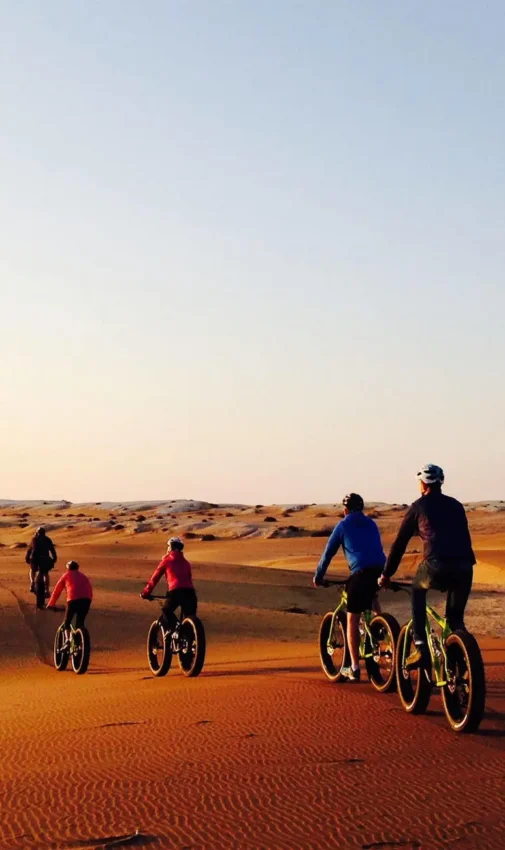
Solar-powered e-bikes stretch the range far beyond camp, pausing at rock formations and old engravings along the way, while guided walks slow everything down to spoor and the fine detail of the desert. Twyfelfontein, a UNESCO World Heritage rock-art site, lies around twenty minutes away by vehicle. The petrified forest, the Organ Pipes dolerite columns, Burnt Mountain and Doros Crater all fall within reach as day excursions, and a visit to the Damara Living Museum brings you into direct contact with the area’s cultural life.
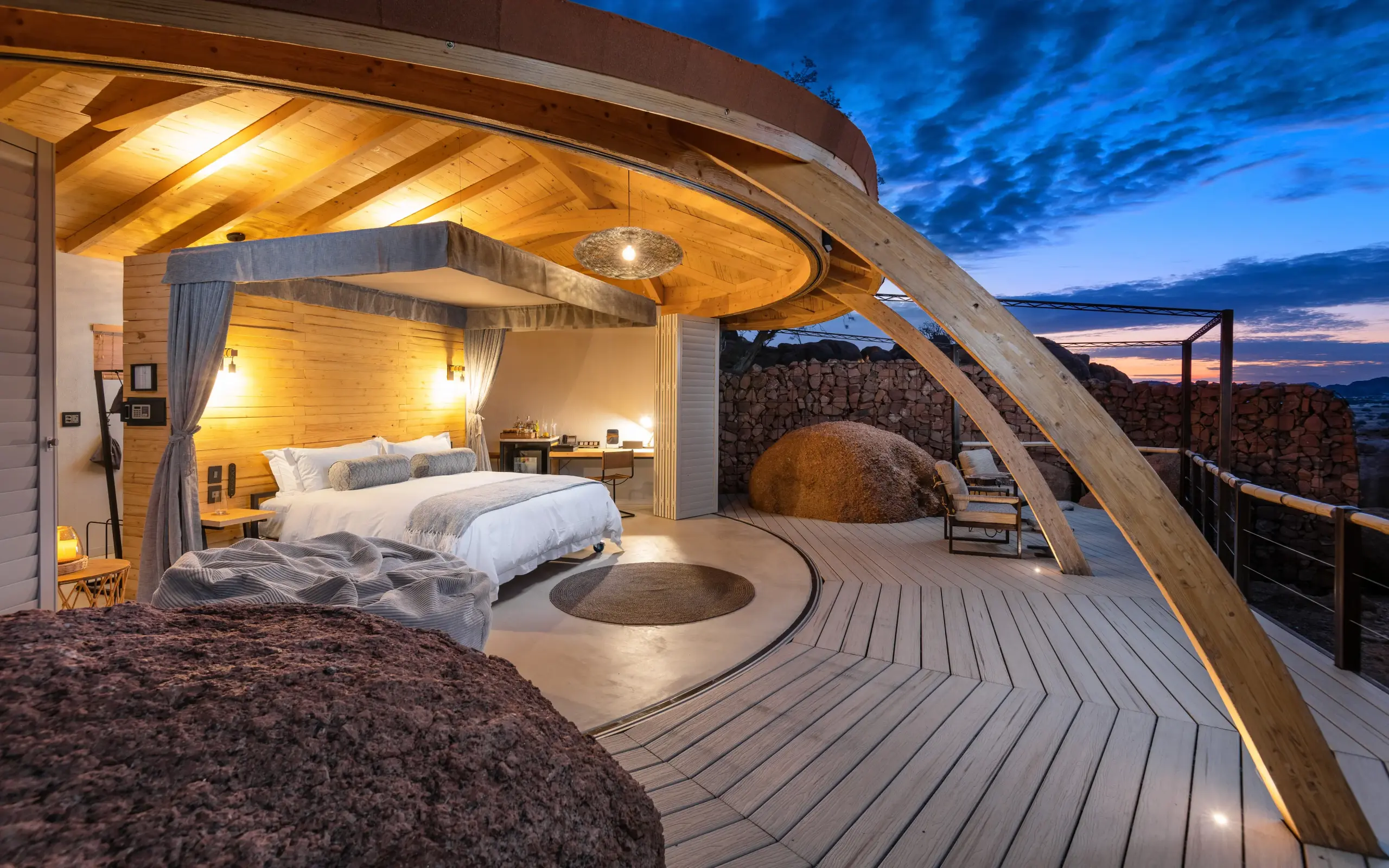
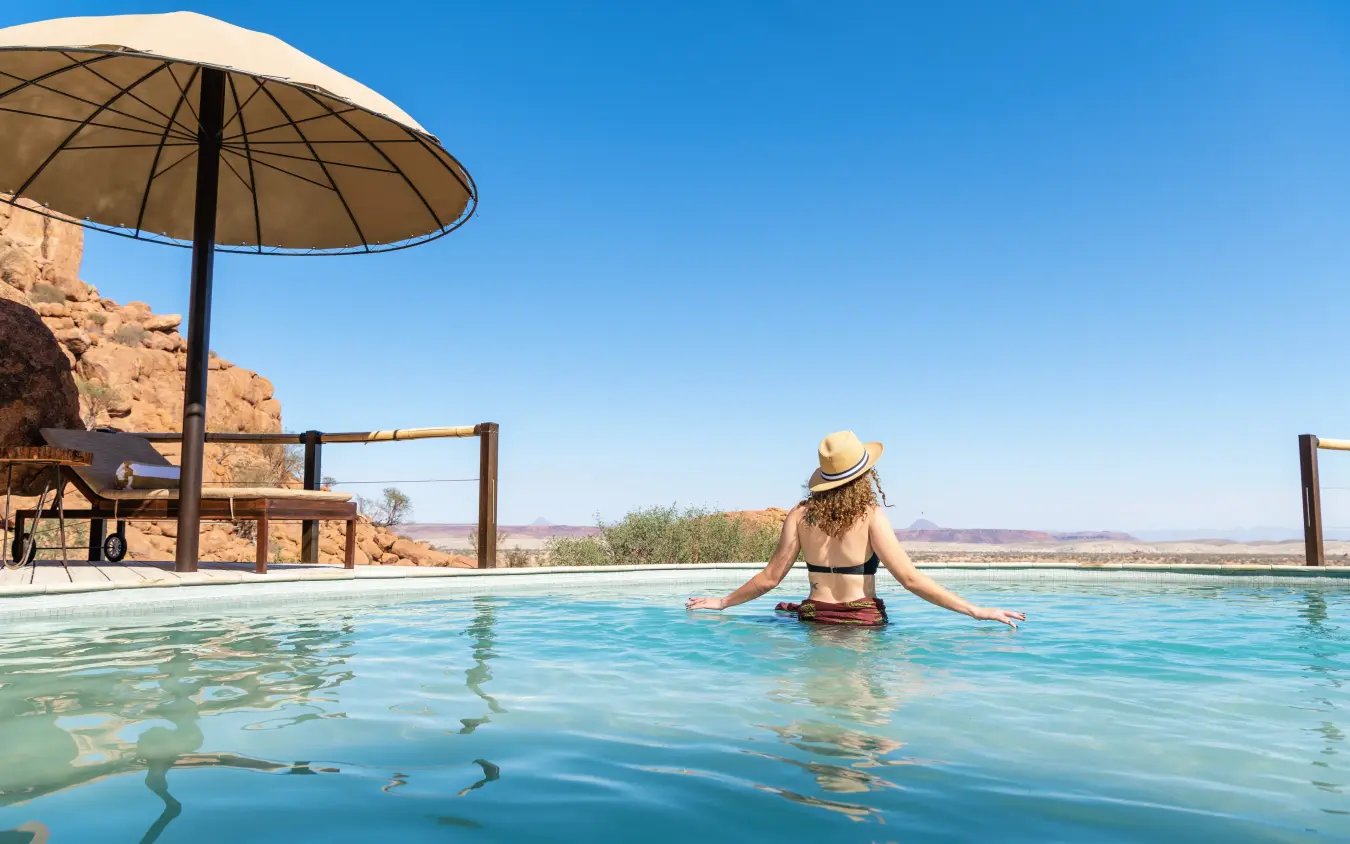
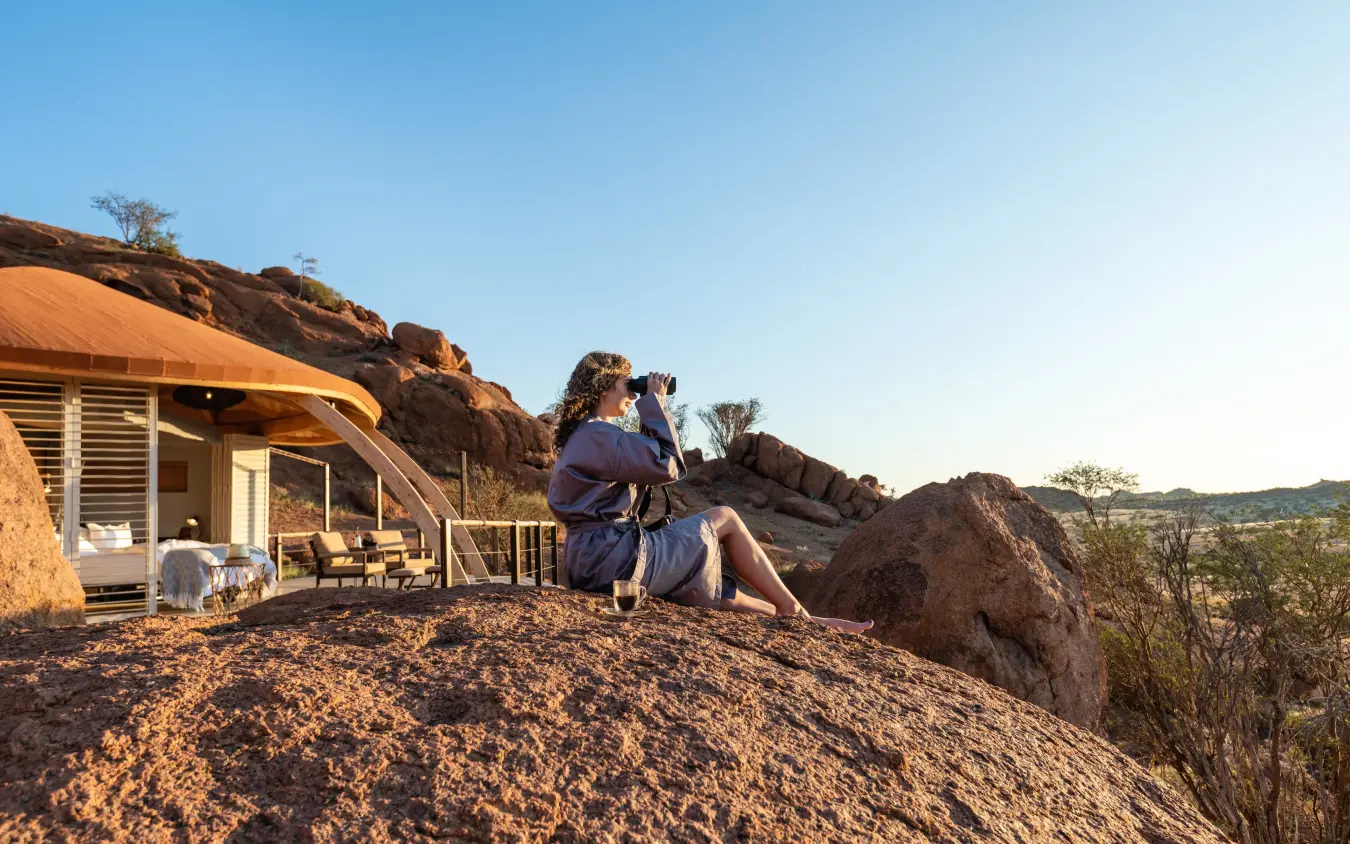
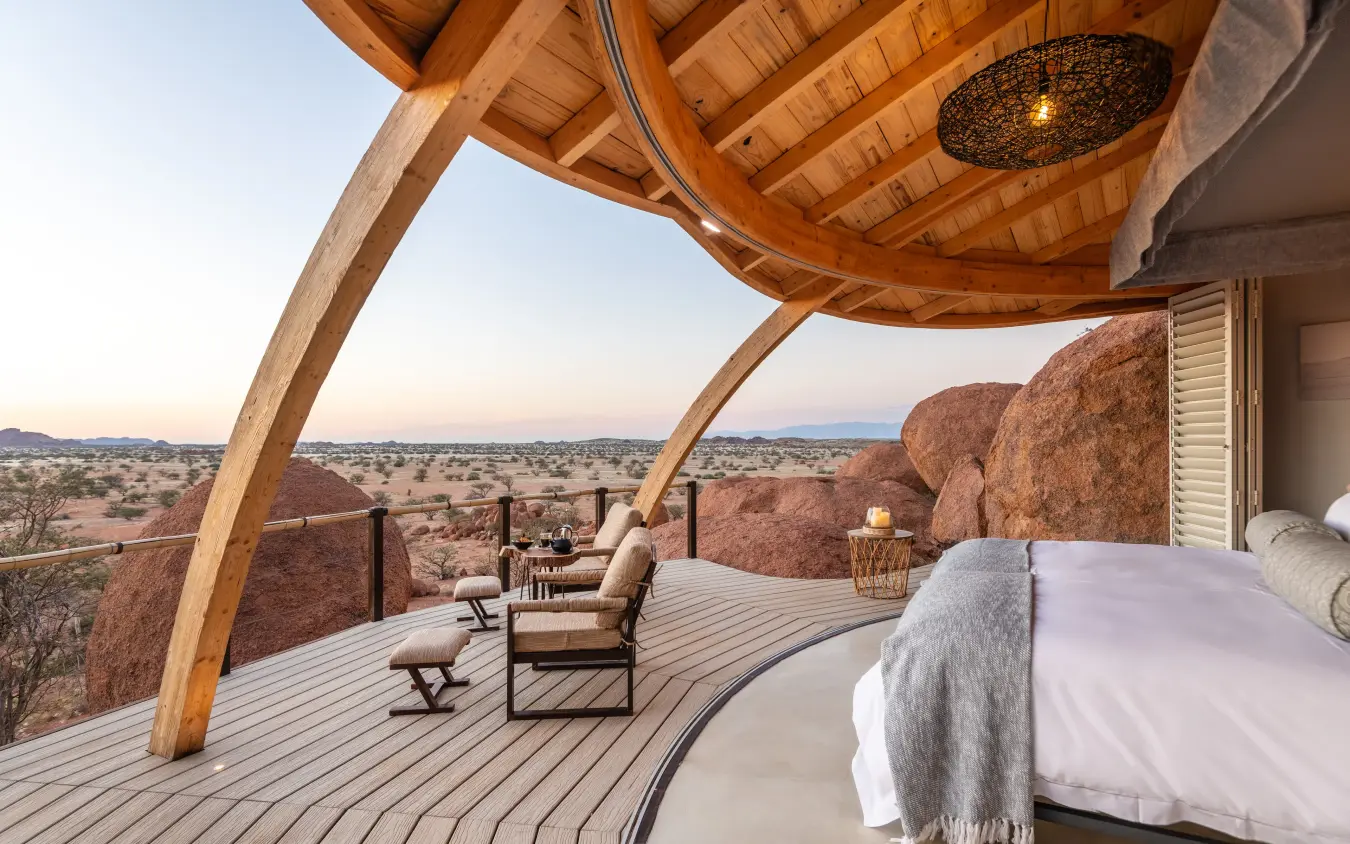
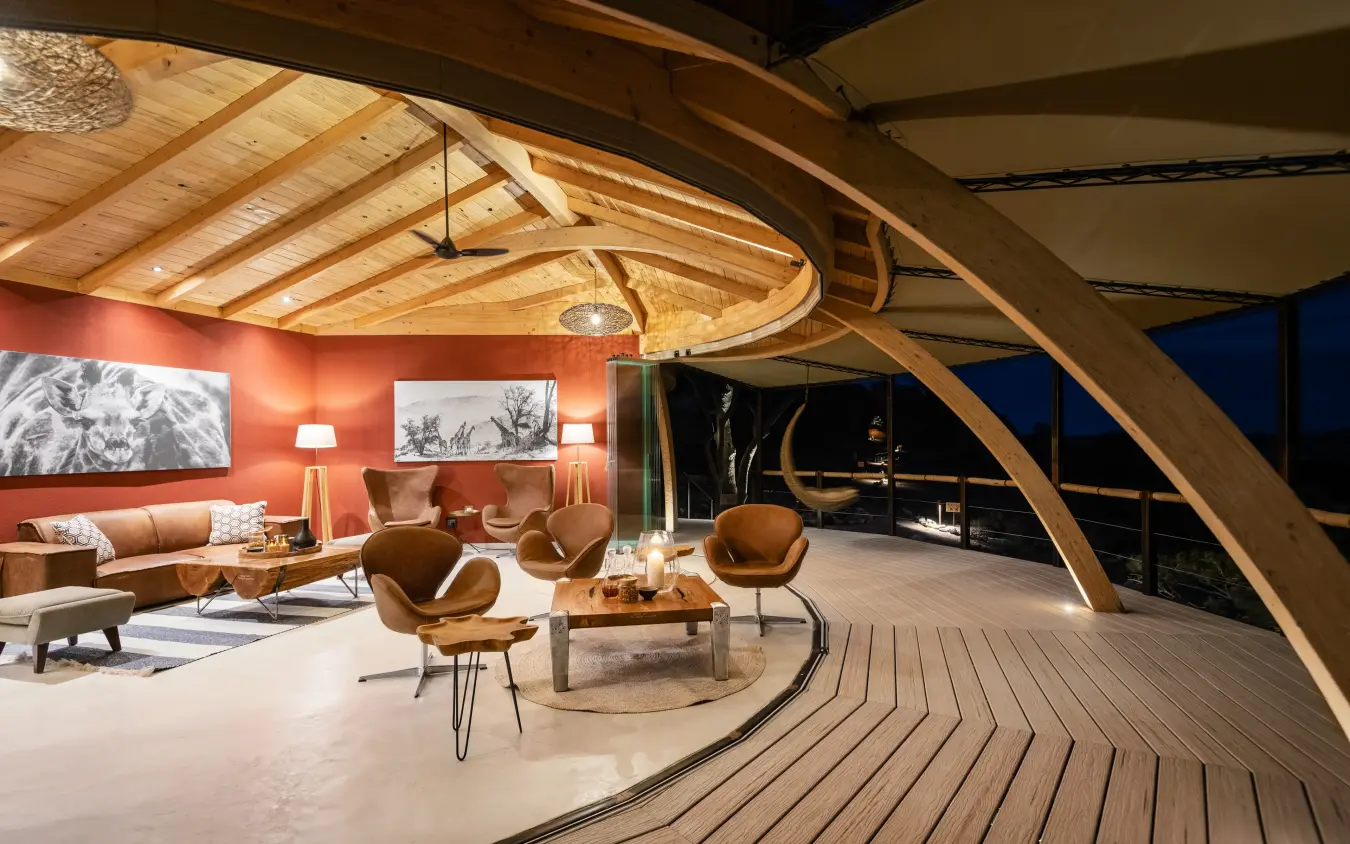
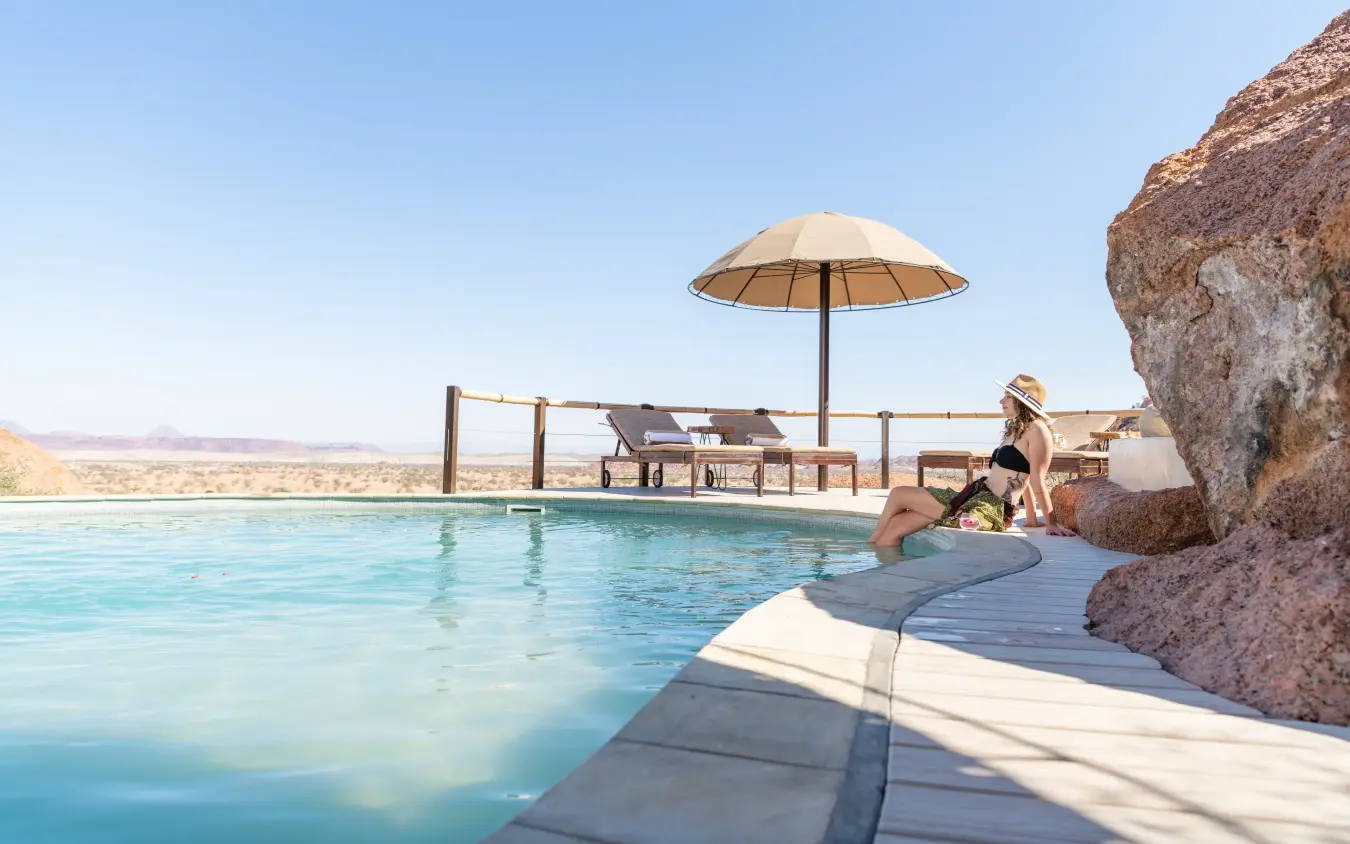
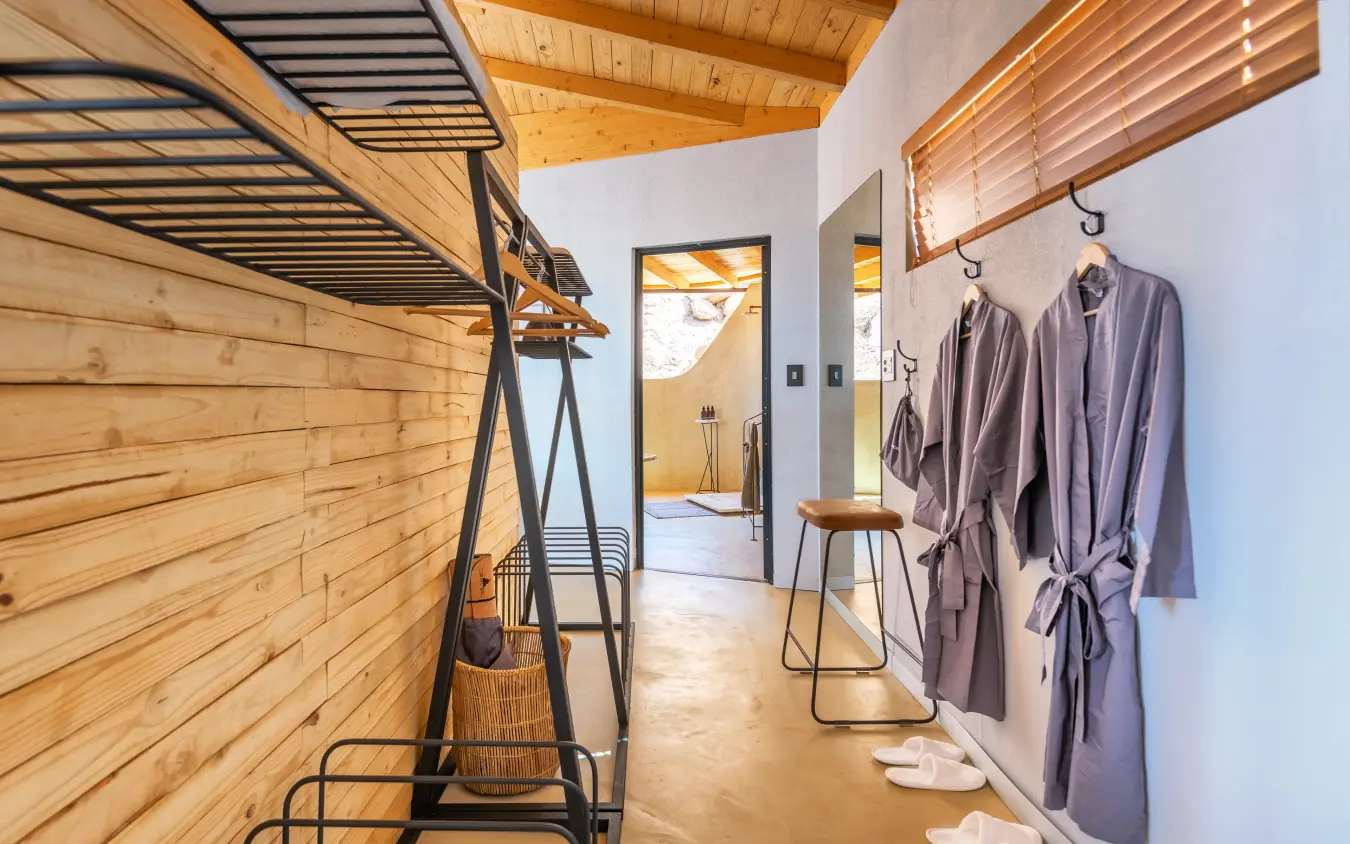
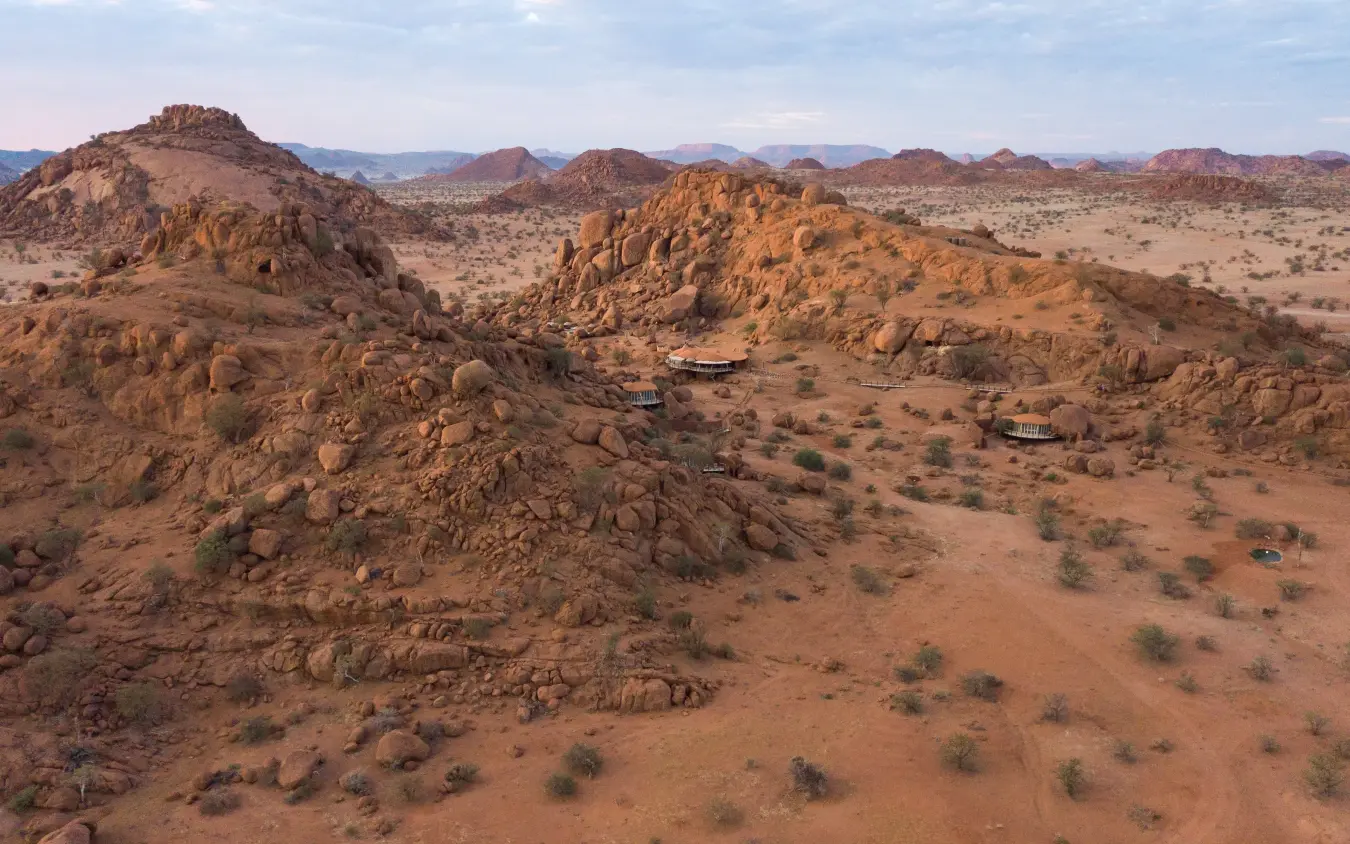
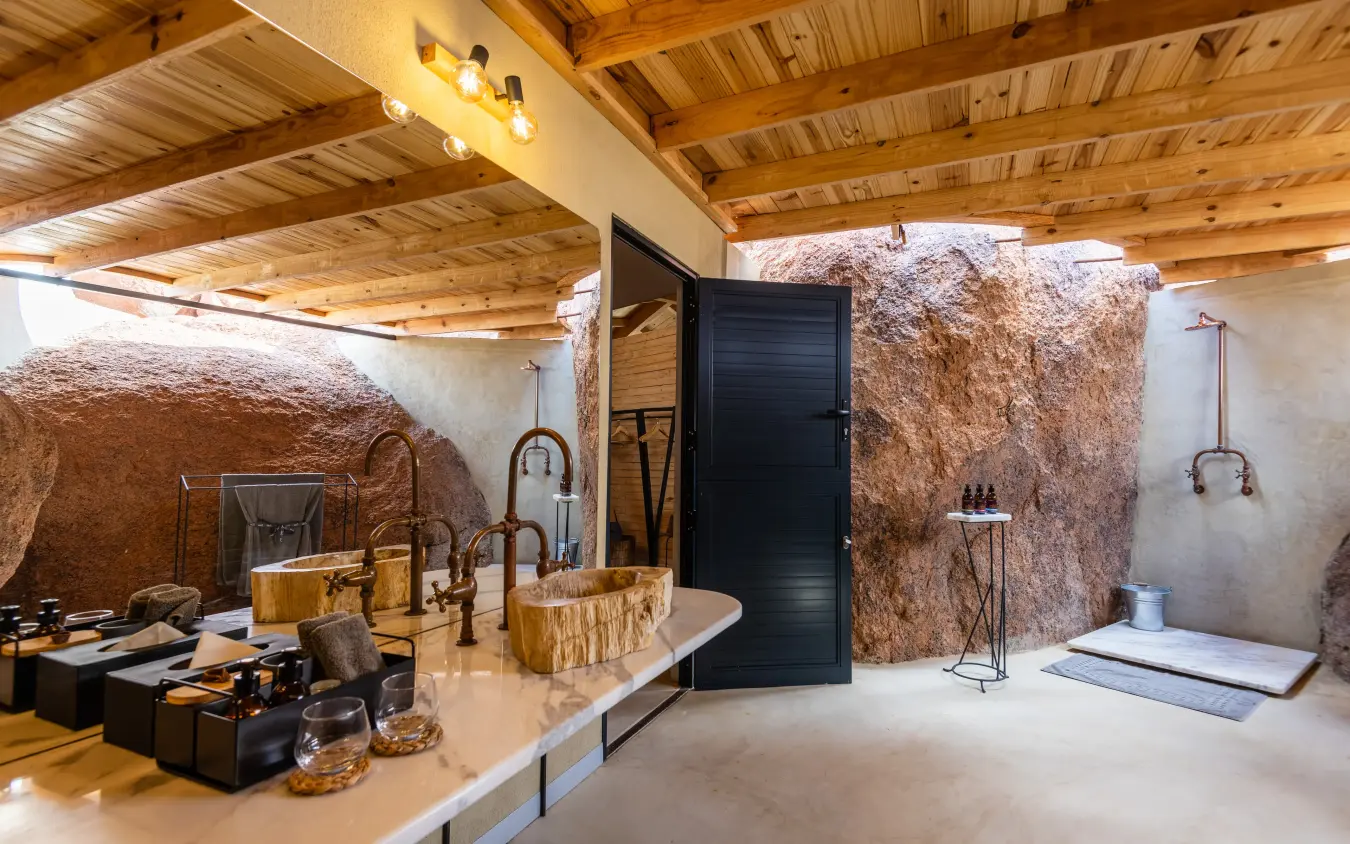
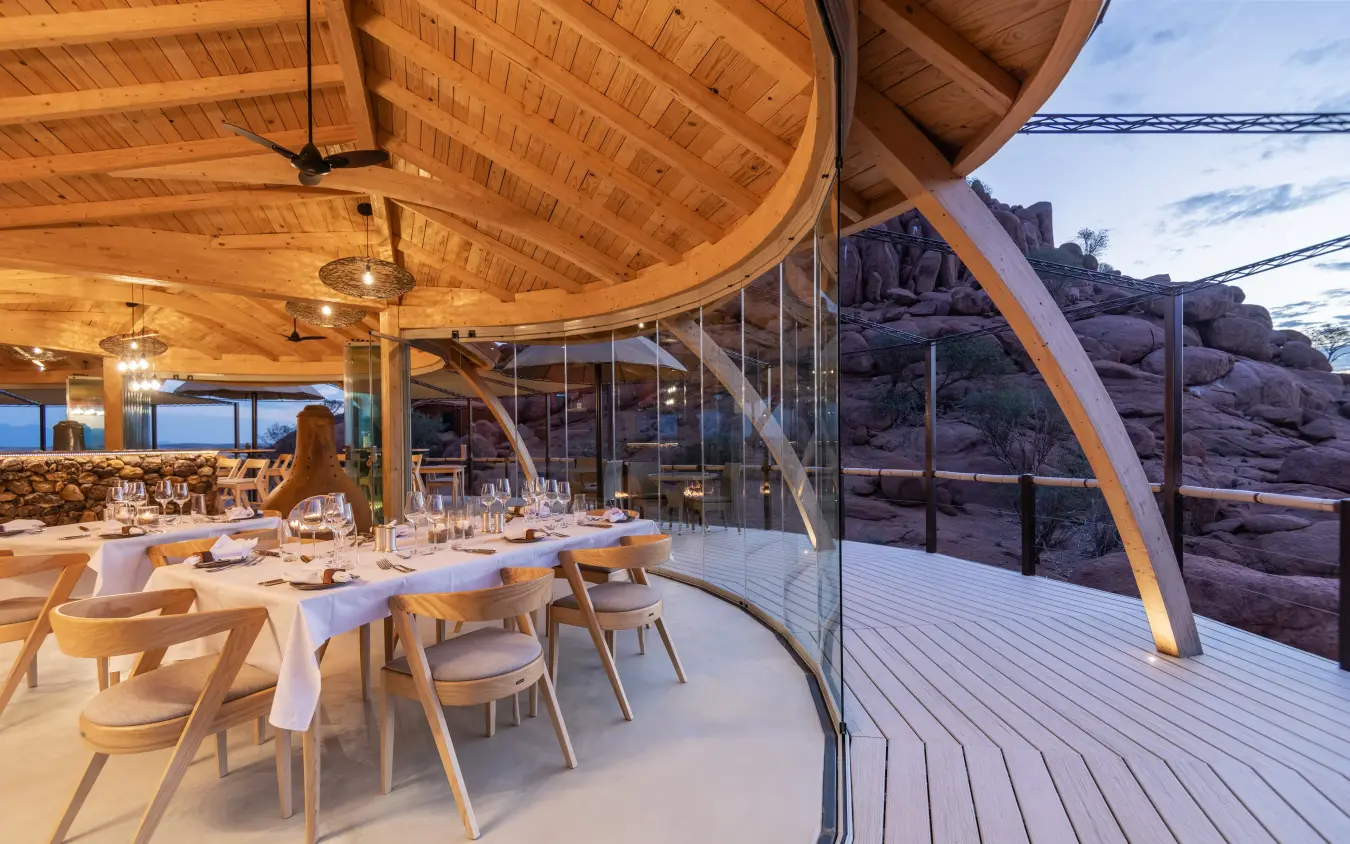
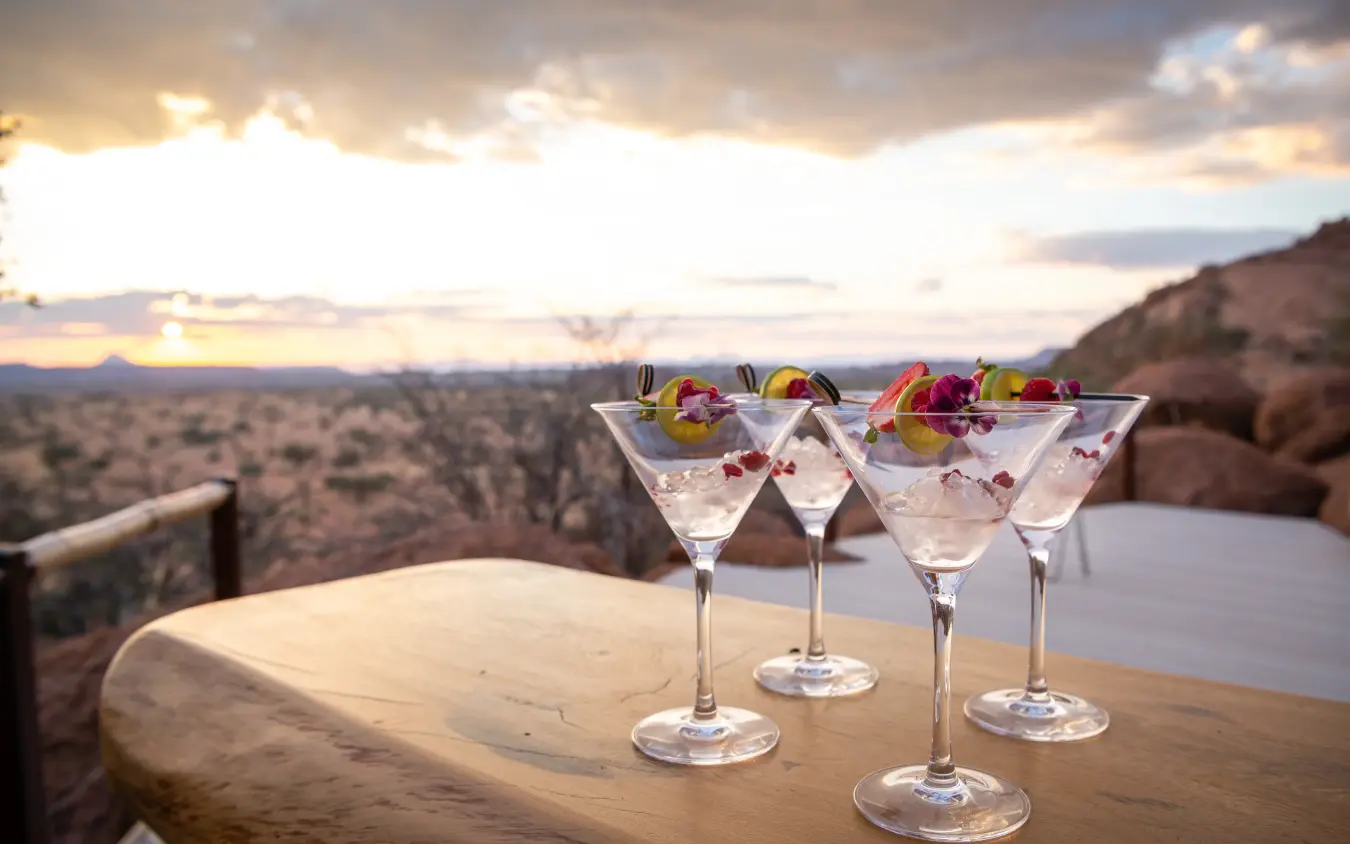
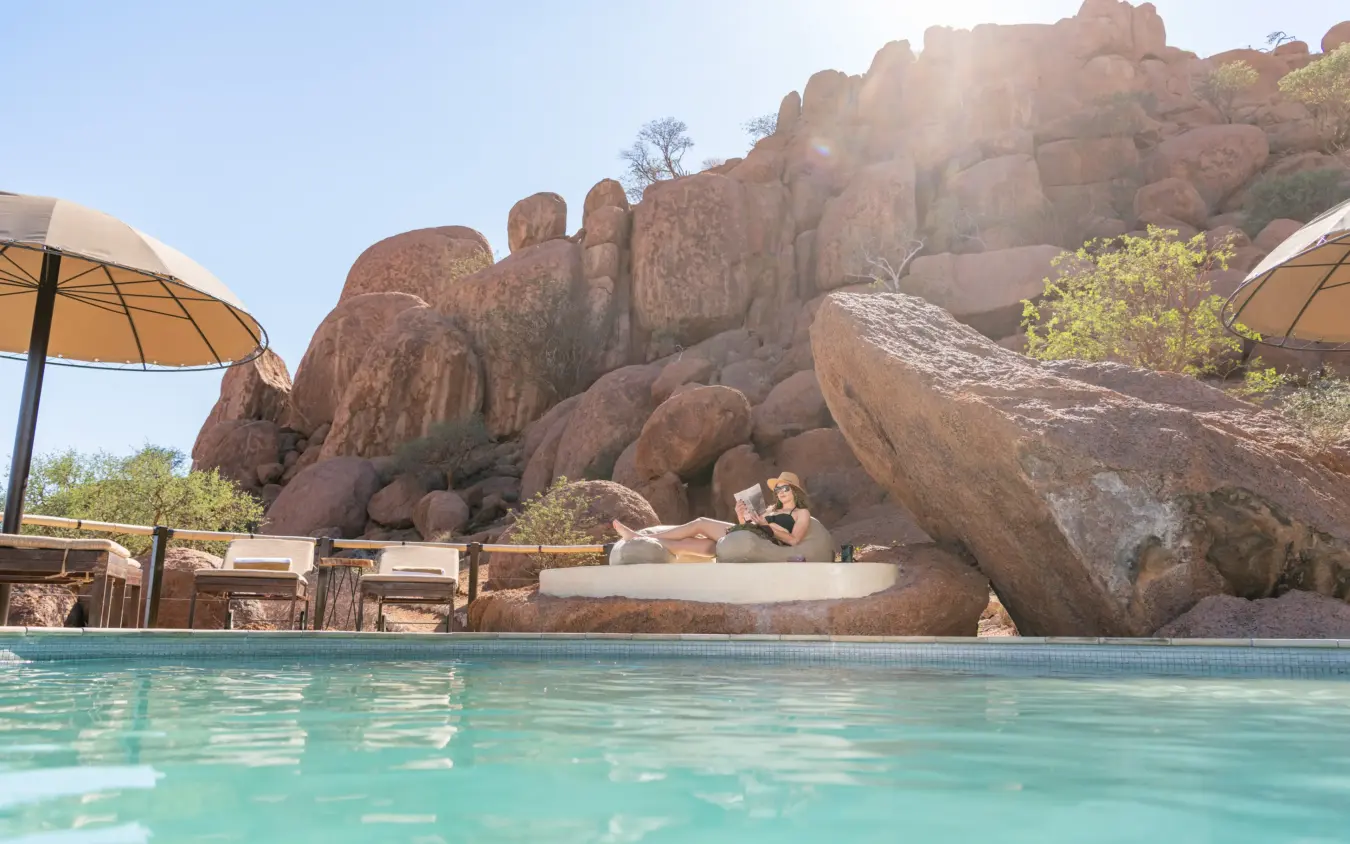
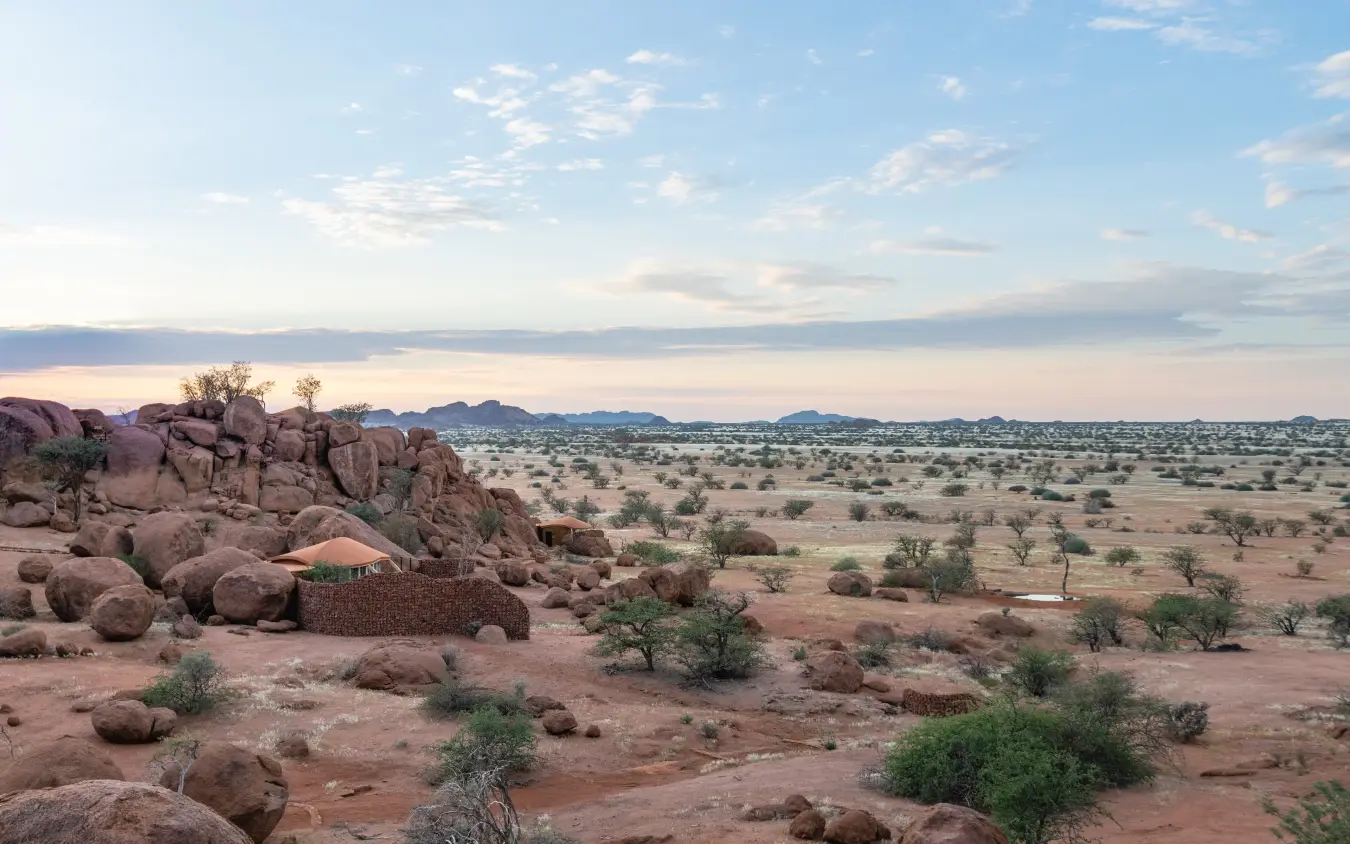
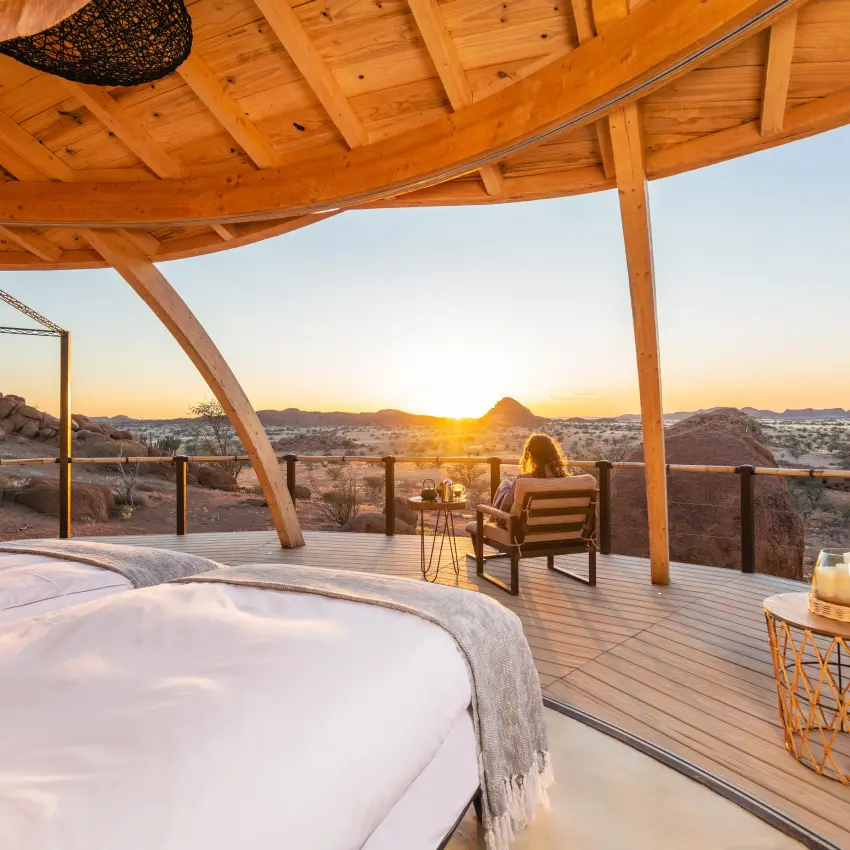
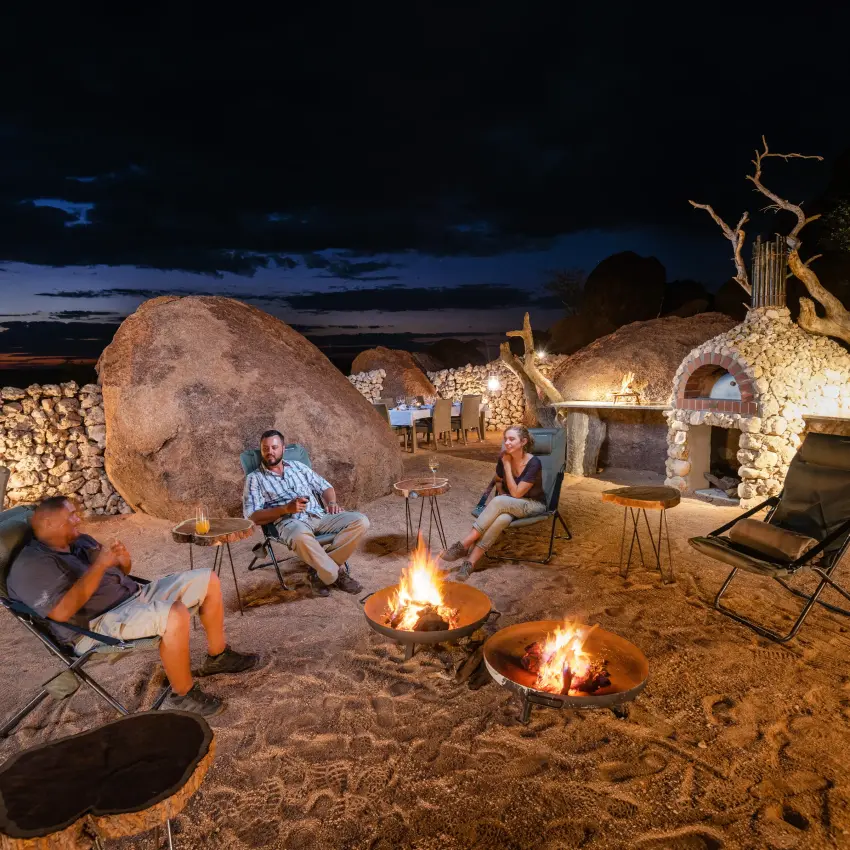
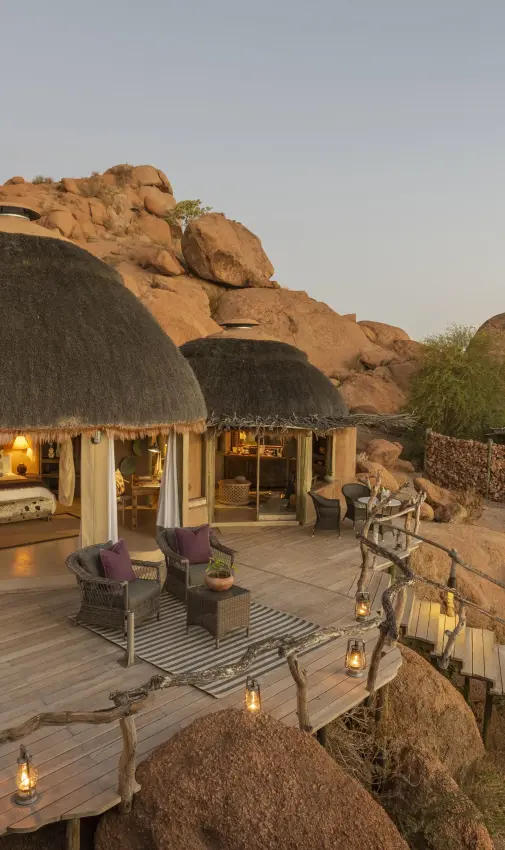
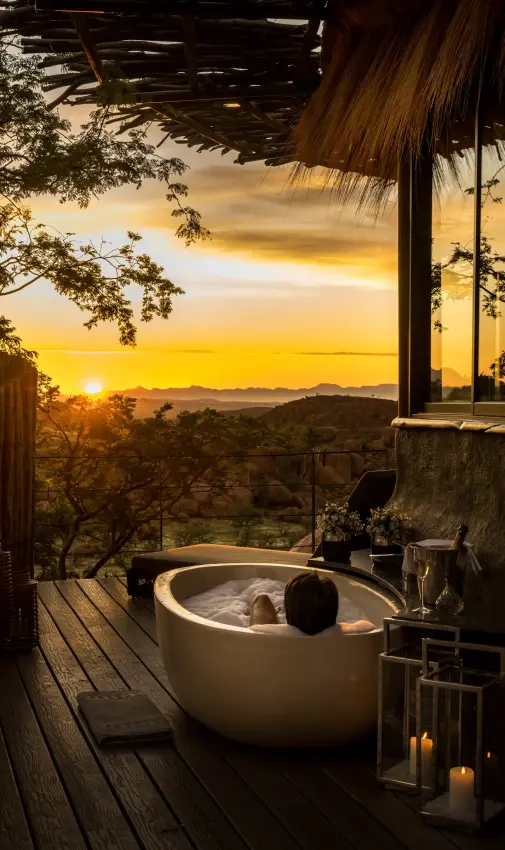
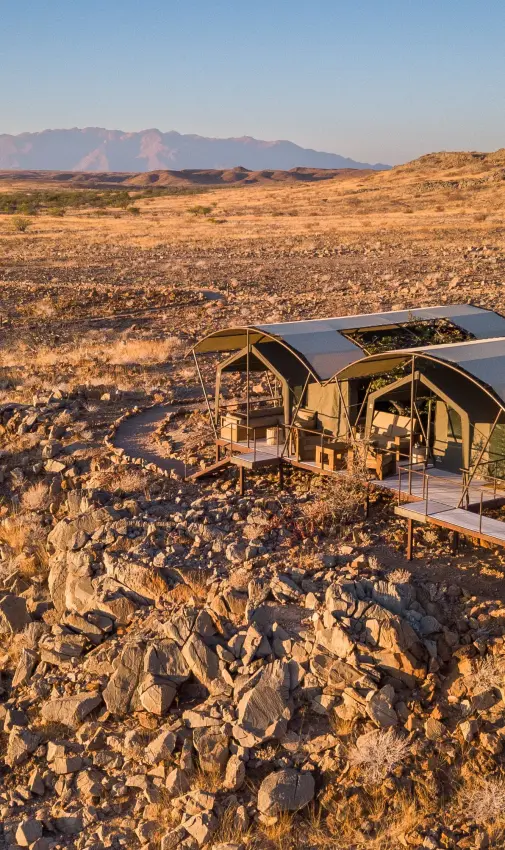
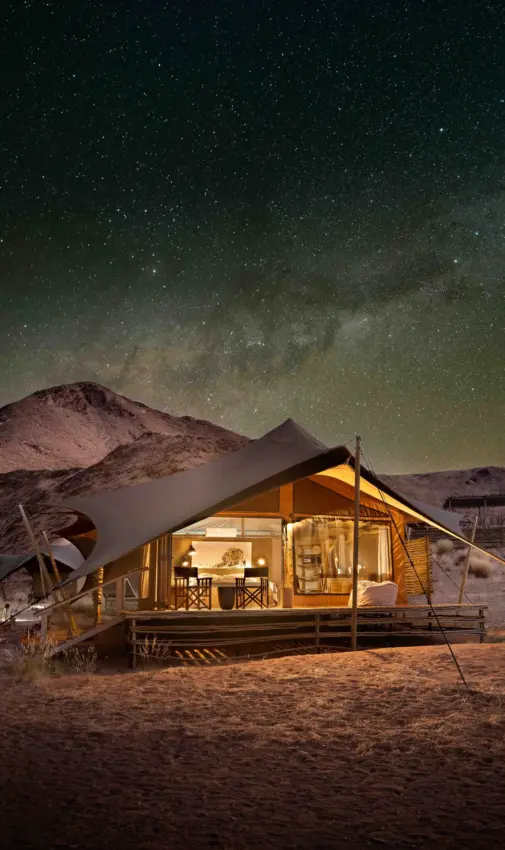
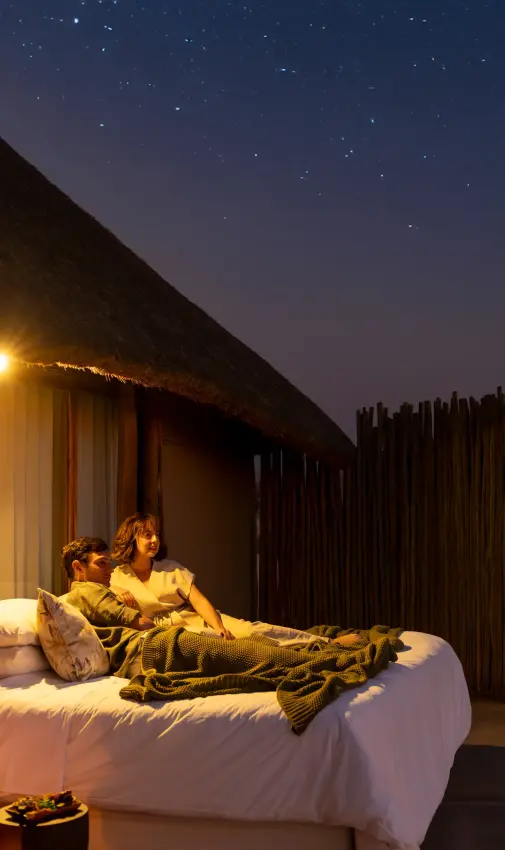
The days at camp loosen. A library and an infinity-style pool look out over the plains, and the dining room keeps a fireplace lit for cool desert evenings. Dinner moves outside to a campfire circle under the stars, where the cooking runs from tapas lunches to Namibian steaks, with pizza nights from an outdoor oven and artisan coffee through the day. Painting supplies wait in every suite. The buildings are set so discreetly into the boulders that arrival can pass almost unnoticed, until the welcome drinks appear.
This is one of only two places on earth with a population of desert-adapted elephants.
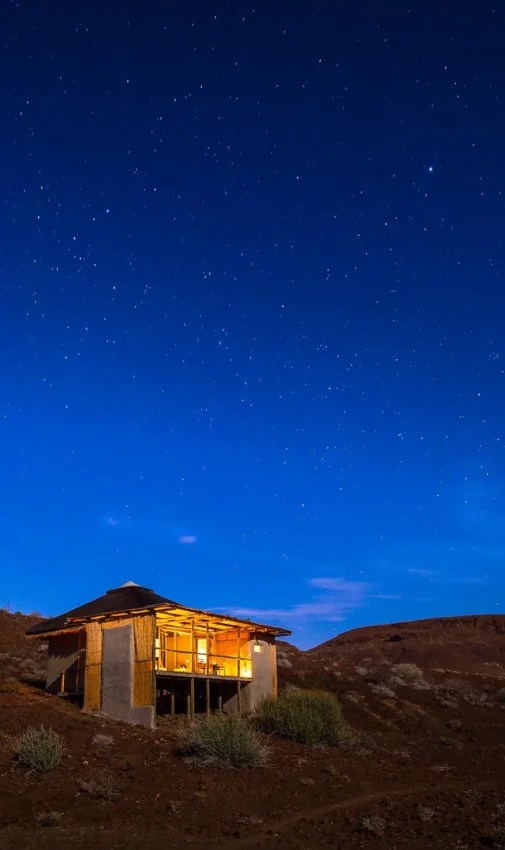
The camp runs entirely on solar power, drawing water from its own boreholes and treating wastewater on site so it can be used again at wildlife points. Martin and Tristan put their weight behind the Save the Rhino Trust and the Giraffe Conservation Foundation, as well as the Conservation Travel Foundation, and behind conservation and community work across the Doro !Nawas Conservancy. Onduli takes its name from the Oshiwambo word for giraffe, and the resident desert giraffe are seen often on drives across the conservancy.
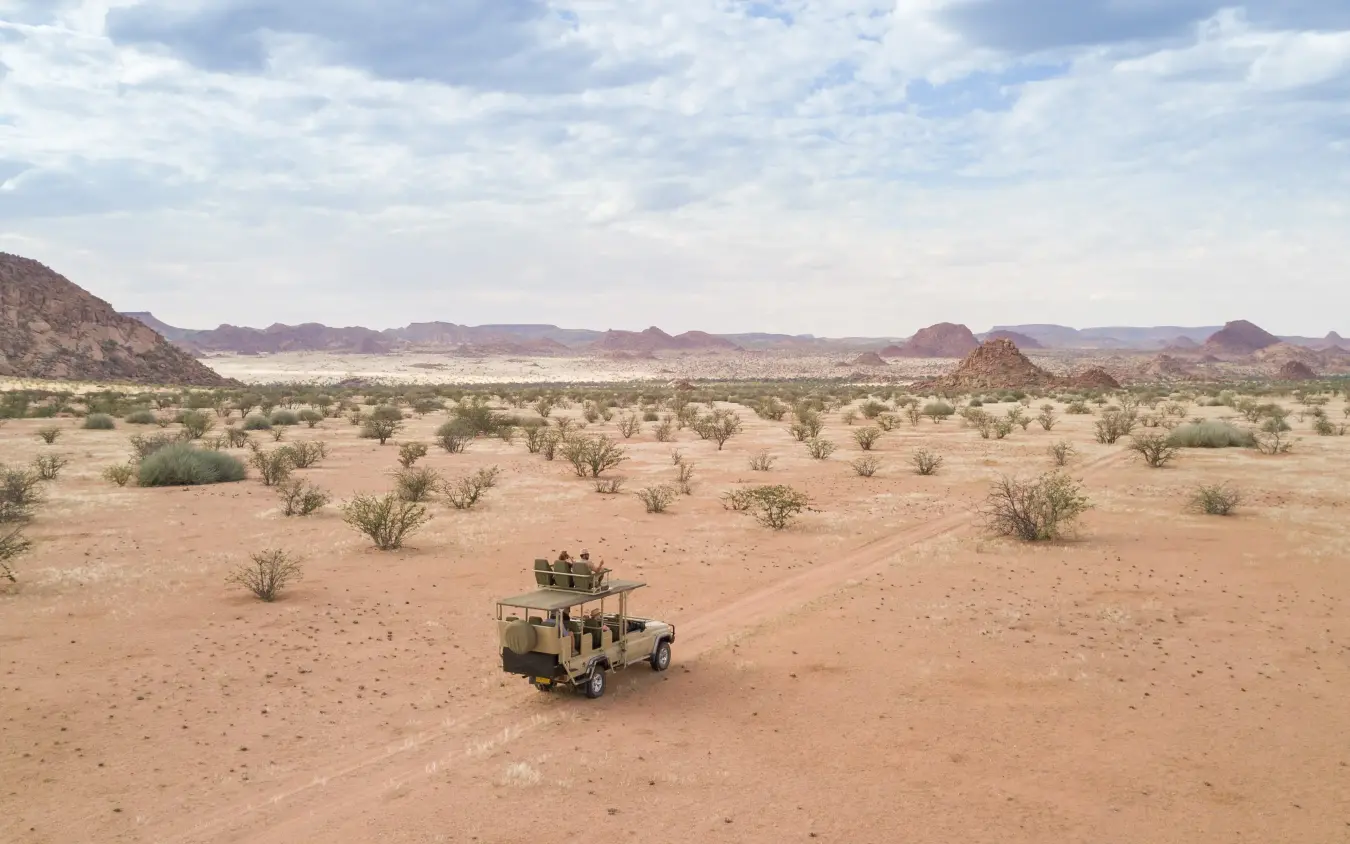
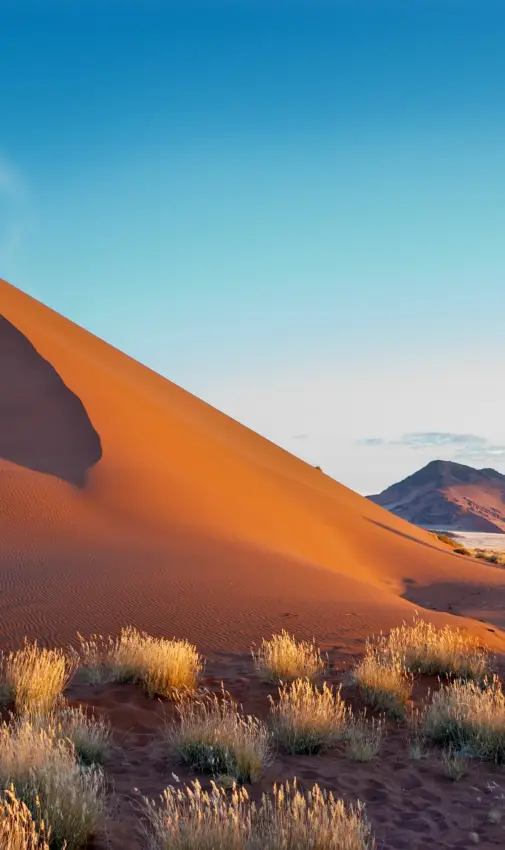
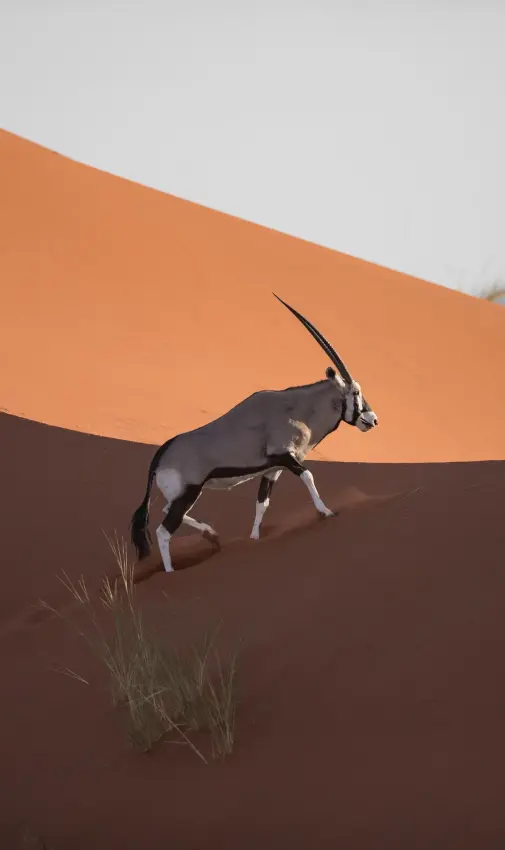
For guests on longer stays, master trackers set out on foot across the gravel plains, following free-roaming black rhino at walking pace. Desert-adapted elephants are tracked by vehicle through the conservancy’s rocky reaches. This is one of only two places on earth with a population of desert-adapted elephants. The country rewards the patience of walking it, and because the concession lies outside the national park, guides can leave the road to follow the animals and stay out long after dark, when the plains cool and the tracking begins again.