
 01
01
Dark skies over red dune country
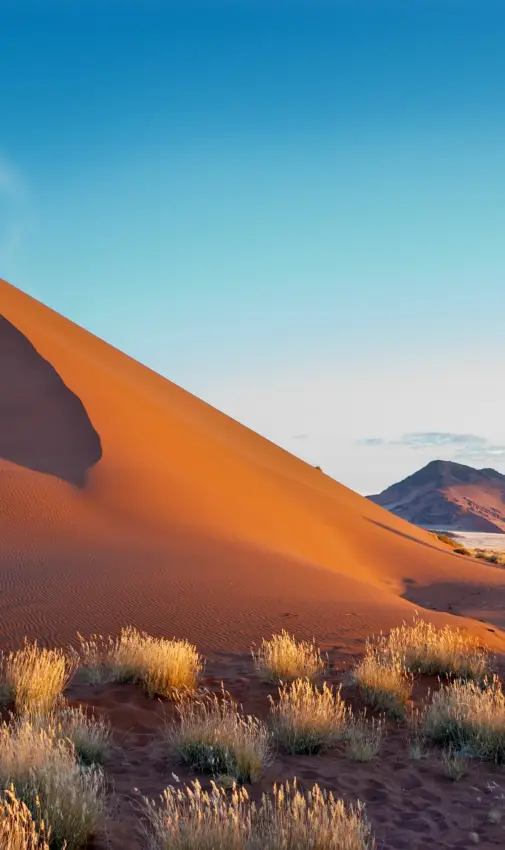
South of Sossusvlei, NamibRand Private Reserve occupies a sweep of the Pro-Namib belt where red dunes give way to golden grass plains. The Nubib Mountains rise along the eastern edge. The draw is the landscape itself, and the silence that fills it.
The draw is the landscape itself, and the silence that fills it.
Albi Brückner founded the reserve in 1984, consolidating former Karakul sheep farms into one continuous desert sanctuary. The internal fencing came down so that grazers could follow the rains again. It carries virtually every facet of the Namib in one place, from vegetated dune belts and gravel plains to savanna and rocky inselbergs, with mysterious bare fairy circles scattered across the grasslands.

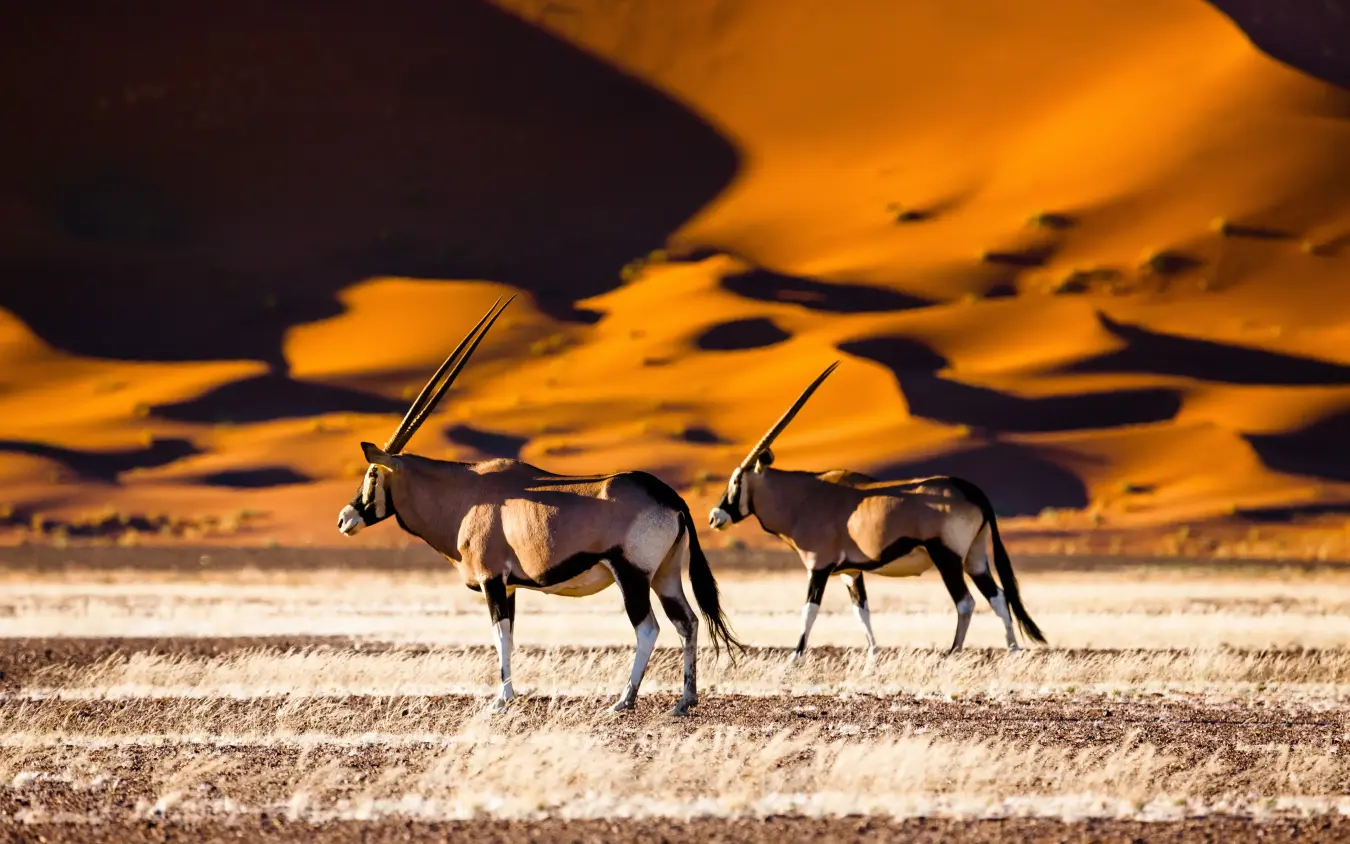
Wildlife here is desert-adapted rather than dense. Oryx and springbok range across the plains in numbers that rise and fall with the rains, and Hartmann’s mountain zebra work the rocky ground toward the Nubib foothills. Leopard, spotted hyena, aardwolf, jackal and African wildcat are present but elusive, moving freely into the adjoining Namib-Naukluft National Park.
Wildlife here is desert-adapted rather than dense.
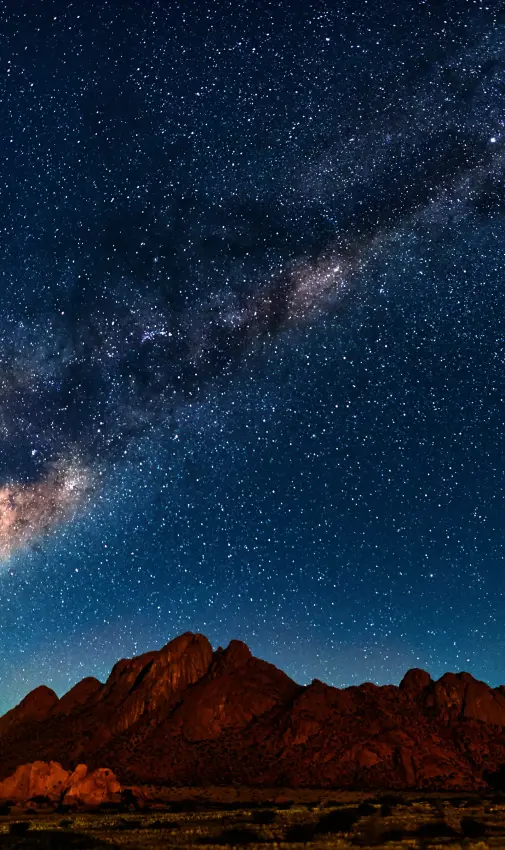
It was designated an International Dark Sky Reserve at Gold Tier in 2012, and NamibRand keeps light and infrastructure to a minimum, leaving some of the clearest night skies on earth above the dunes. In June 2024 it became Africa’s first Wilderness Quiet Park, recognised by Quiet Parks International for a natural soundscape held under strict limits on noise, building and traffic.
The reserve runs on a deliberate scarcity of footprint. A small number of concessions operate under a constitution that sets the land aside for conservation in perpetuity, funded by per-bed levies rather than charity. Guest density is capped at no more than one bed per 1,000 hectares, which means each visitor carries an extraordinary amount of wilderness around them. Camps are sited and built to disappear into the plains, and operators coordinate drives and walks so that no vehicle ever crosses paths with another.
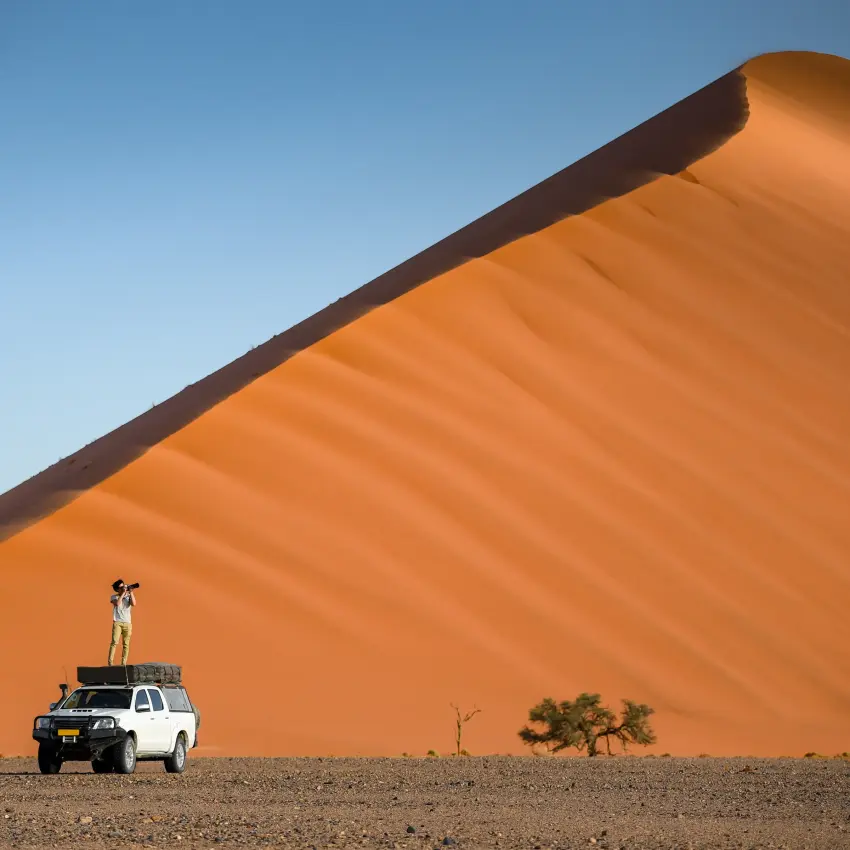
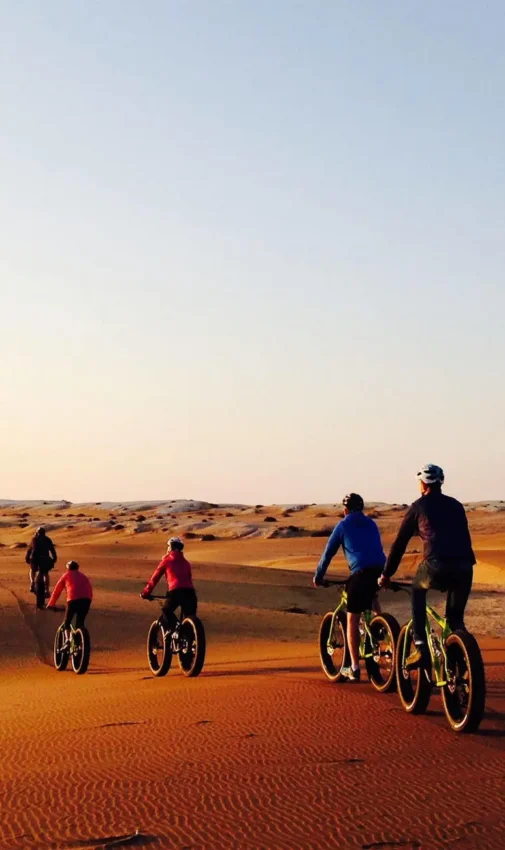
Activities here read the desert’s subtle life rather than chase spectacle. Guided nature drives interpret tracks, plants, insects and geology across the dunes and grasslands, with oryx and springbok the likely company, and walks slow the pace further still. Stargazing draws directly on the Dark Sky designation, and quieter pursuits such as e-bike excursions and sunrise meditation fit the soundscape ethos. Hot-air balloons lift off over the dunes under concession, and light-aircraft flights reach the Sossusvlei dune sea and the Diamond Coast.
Guided nature drives interpret tracks, plants, insects and geology across the dunes
The NamibRand Conservation Foundation supports research and education across the reserve. It channels funds to the Namib Desert Environmental Education Trust, which runs sustainability programmes for Namibian schoolchildren, and to a desert research centre investigating questions such as the origin of the fairy circles. Reintroductions have included giraffe, and the reserve works with the Gobabeb research centre, and belongs to the Greater Sossusvlei-Namib Landscape Association.
Water is the one constraint in a place this arid. Surface water is scarce, drawn from deep boreholes and ephemeral pans, and grazing patterns shift with localised storms rather than any reliable cycle. Drought years thin the herds. Good rains bring a green flush and a return of oryx and springbok to the plains. The reserve monitors game annually and manages water use closely, part of the same low-impact model that protects the dark skies and the silence above the dunes.

The best time to visit NamibRand Private Reserve
Jan
Feb
Mar
Apr
May
Jun
Jul
Aug
Sep
Oct
Nov
Dec
Recommended
Transitional
Challenging conditions
For NamibRand, the prime window is May to September, the dry winter of low humidity and clear skies, when retreating water brings oryx, springbok and mountain zebra onto the open plains and the cloudless nights make this Africa's first Dark Sky Reserve superb for stargazing. Nights from June to August often drop below freezing. October turns very hot; the green season brings rain and cloud.
accommodation in namibrand private reserve
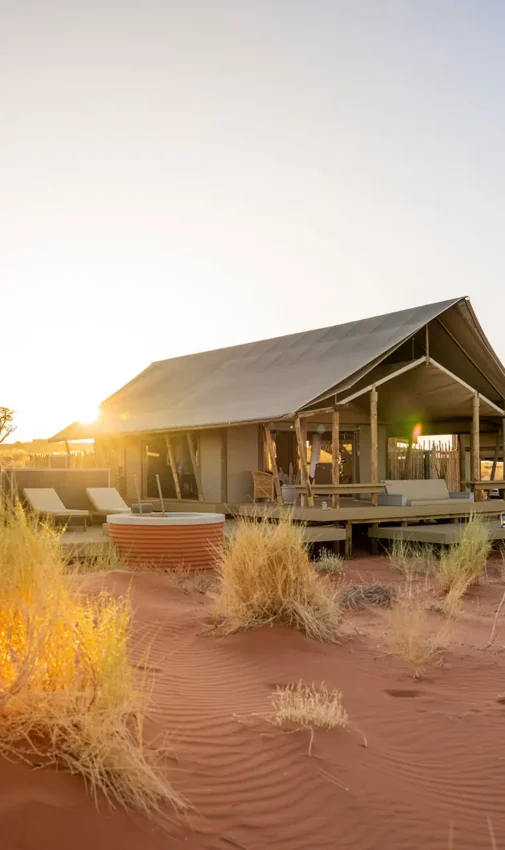
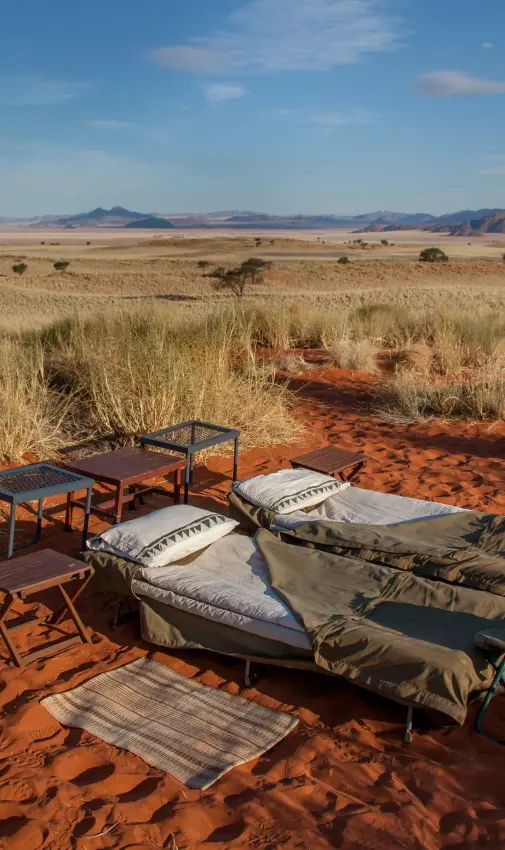
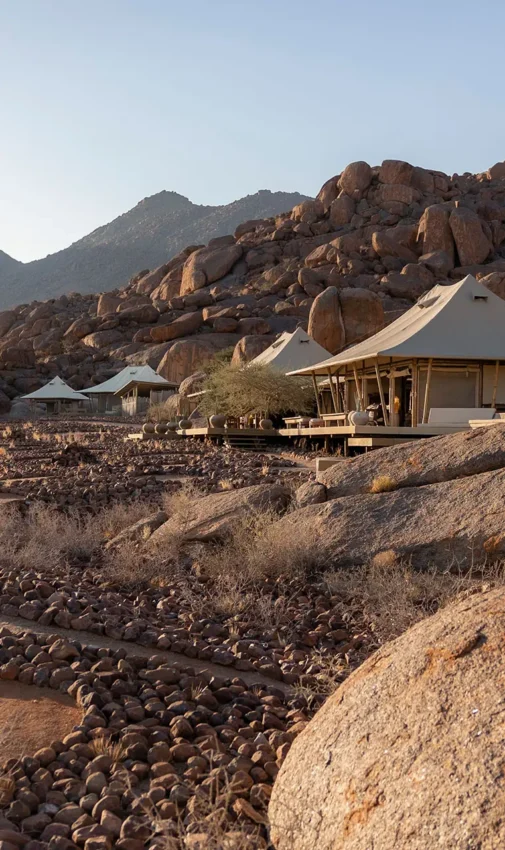
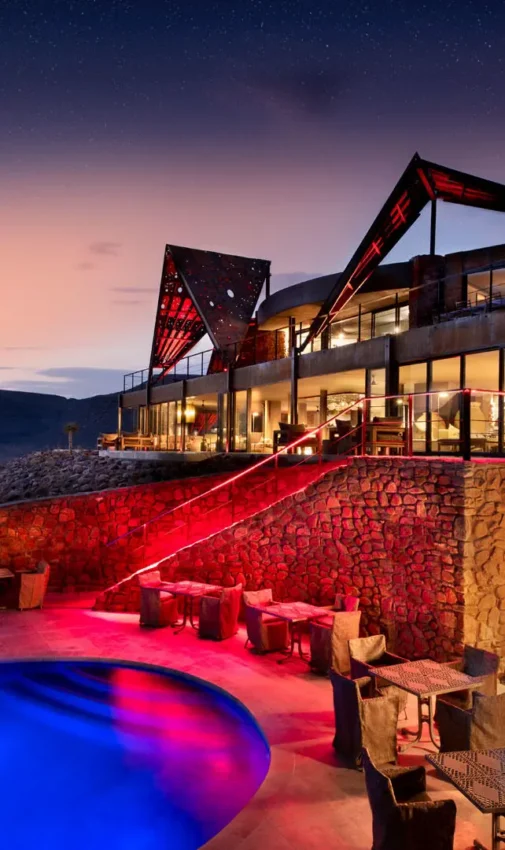
NamibRand Private Reserve carries only a handful of small camps, each held to strict bed-density rules. Styles range from architect-designed desert lodges with chalets opening to the night sky, to luxury tented camps on raised decks. Private houses suit families or small groups, and a dedicated multi-day walking operation sleeps guests under the stars. Design favours low structures, long views and minimal light.



activities
Reading the desert on foot
Guided nature drives and walks interpret tracks, plants, insects and geology across dunes and golden plains. Stargazing makes full use of the Dark Sky Reserve designation. E-bike excursions, hot-air ballooning and scenic light-aircraft flights to Sossusvlei and the Diamond Coast operate under concession.

conservation
Foundation, education and research
The NamibRand Conservation Foundation funds the Namib Desert Environmental Education Trust, which teaches sustainable living to Namibian schoolchildren, alongside a desert research centre investigating the fairy circles. Reintroductions include giraffe, and partnerships run with Gobabeb and the Greater Sossusvlei-Namib Landscape Association.

getting around
Fly-in across the Namib
Light aircraft is the natural way in. Scheduled and charter flights connect Windhoek and Swakopmund to airstrips within the reserve, linking easily with Sossusvlei, the coast and northern Namibia. Road access is possible, around five to six hours by gravel from Windhoek, but flying preserves time and the sense of remoteness.
other areas in namibia
NamibRand forms the scenic heart of a Namibia journey that pairs naturally with the dunes of Sossusvlei and Deadvlei in the adjoining Namib-Naukluft National Park to the north. Swakopmund and the Skeleton Coast bring the cool Atlantic fog desert, shifting dunes and shipwrecks. Damaraland adds desert-adapted elephant and the rock engravings of Twyfelfontein, while Etosha further north offers classic game viewing around its great salt pan.
 01
01
 02
02
 03
03
 04
04
 05
05
 06
06
 07
07
 08
08
frequently asked questions
By light aircraft to the reserve airstrips, or by road from Windhoek or Sossusvlei.
Flying from Windhoek takes about an hour, and the descent over the dunes is worth the fare. The drive is four to five hours from Windhoek and around an hour from the Sossusvlei area, on good gravel.
The reserve sits just south of the main dune country, which is why so many routes take in both.
We book whichever suits the wider route and build the leg in where it helps.
If the scheduled days do not suit, a private charter from Windhoek goes when you want, a Cessna Caravan or a Pilatus PC-12, and we quote both.
A private nature reserve on the eastern edge of the Namib, and one of the largest in southern Africa.
Farms were bought back and their fences taken down, so the land now runs unbroken from the dunes to the mountains. That is why the oryx, springbok and zebra move freely across it.
Only a handful of camps operate inside it, with strict limits on numbers.
It is quieter and emptier than the national park at Sossusvlei, and the landscape is the equal of it.
Walk, drive off the track, and stay out after dark.
- Guided walks across the dunes and grass plains
- Nature drives that can leave the road to follow something
- Night drives, for aardwolf, bat-eared fox and porcupine
- Hot-air ballooning and e-biking on the reserve
Because it is private land rather than a national park, none of it is governed by gate times.
The sleep-outs, on a platform under the sky, are the thing people remember.
Because it is one of the darkest places on earth, and it is protected as such.
The reserve is an International Dark Sky Reserve, the first in Africa, which means the camps control their own lighting to keep it that way. There is no town, no road and no light for a hundred kilometres.
Several camps have observatories and their own telescopes.
If the stars are part of why you are coming to Namibia, this is where to spend the nights.
The southern Namib is desert, and it sits well outside the regions that TravelHealthPro, the UK's official travel health service, and the CDC name as Namibia's malaria areas.
That is not the same as a malaria-free trip: a route that continues north to Etosha, the Kunene or the Zambezi region enters real seasonal risk.
We do not make medical recommendations. That is a conversation between you and your own doctor or a travel clinic.
On the practical side, the precautions matter once you are north.
Two, and three if you want a sleep-out and a balloon.
Two nights gives you a drive, a walk and a night under the stars. Three lets you take the reserve slowly, which is what it is for.
It pairs naturally with Sossusvlei, and many clients do two nights at each rather than four in one place.
Tell us the whole route and we will say how to split them.
rated five stars by our clients

our approach
remote, exclusive
& personal
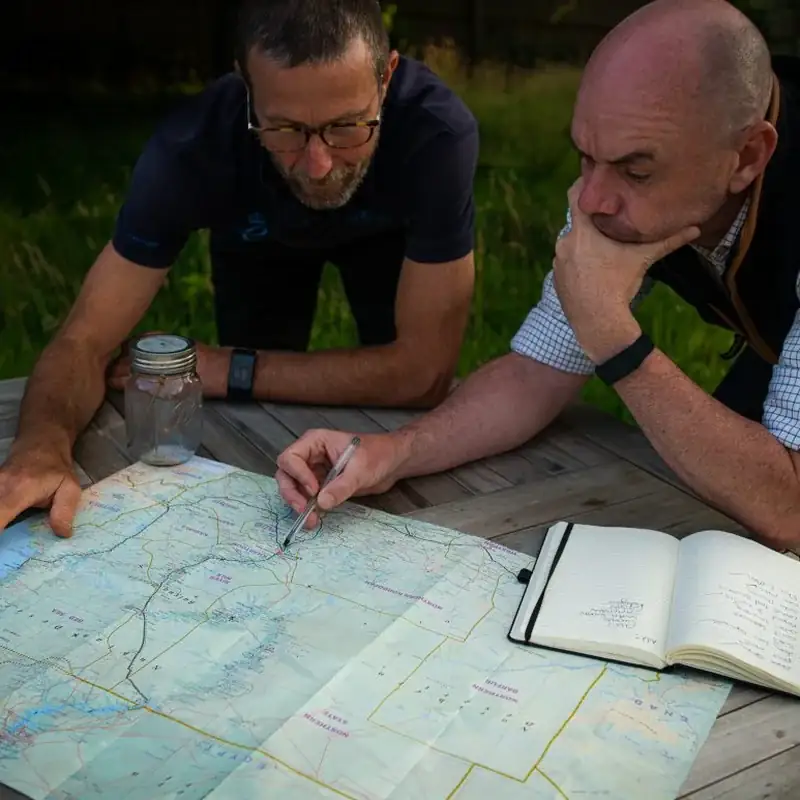
Every journey starts with a conversation. We take the time to understand your vision before we start planning.
Whether by phone or in person, we work with you directly to shape something that is considered, personal, and expertly delivered.
Every journey starts with a conversation. We favour a direct, personal approach: understanding your vision before anything else.
Whether by phone or in person, we work with you directly to shape a journey that is both thoughtfully considered and expertly delivered.
Get in touch to start planning yours.