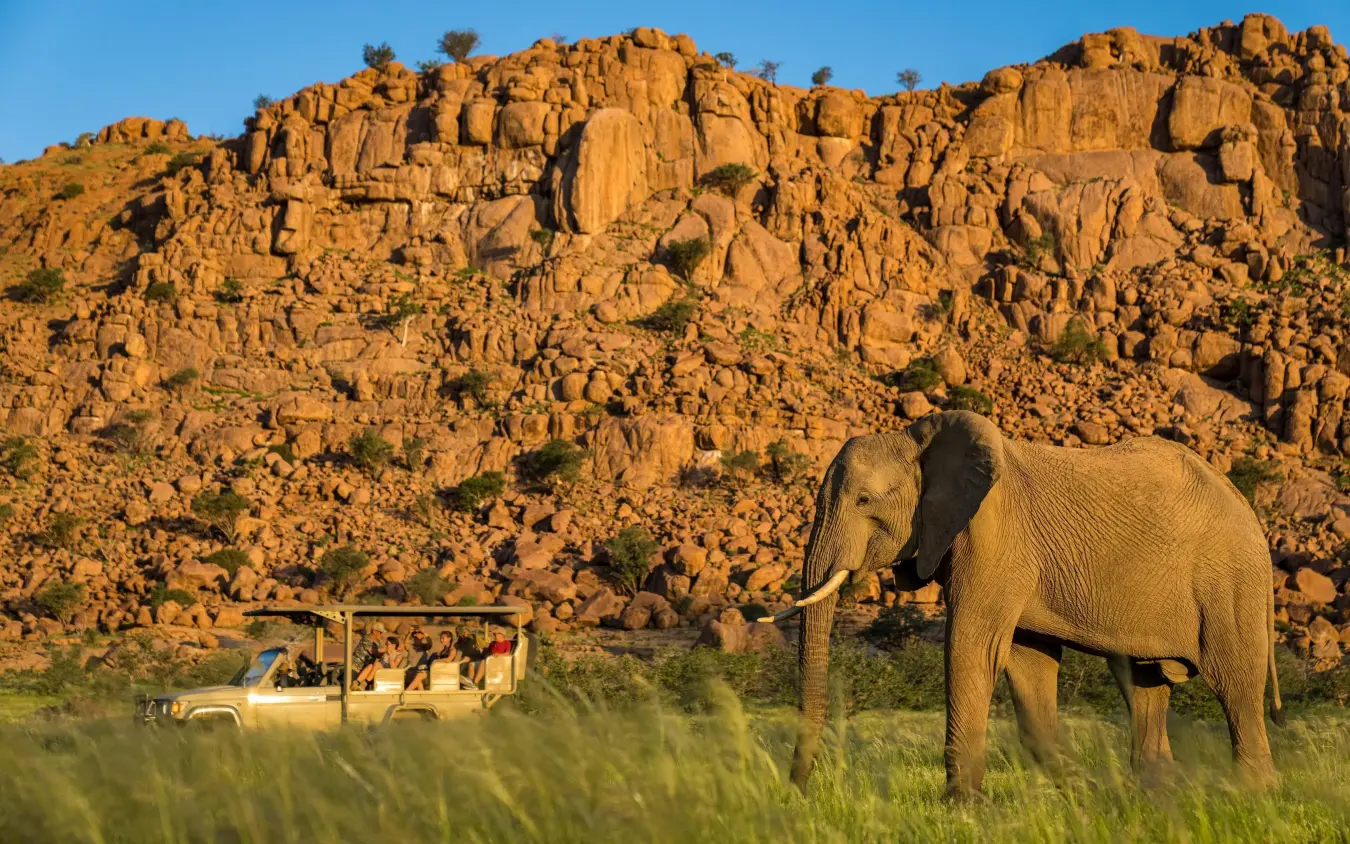
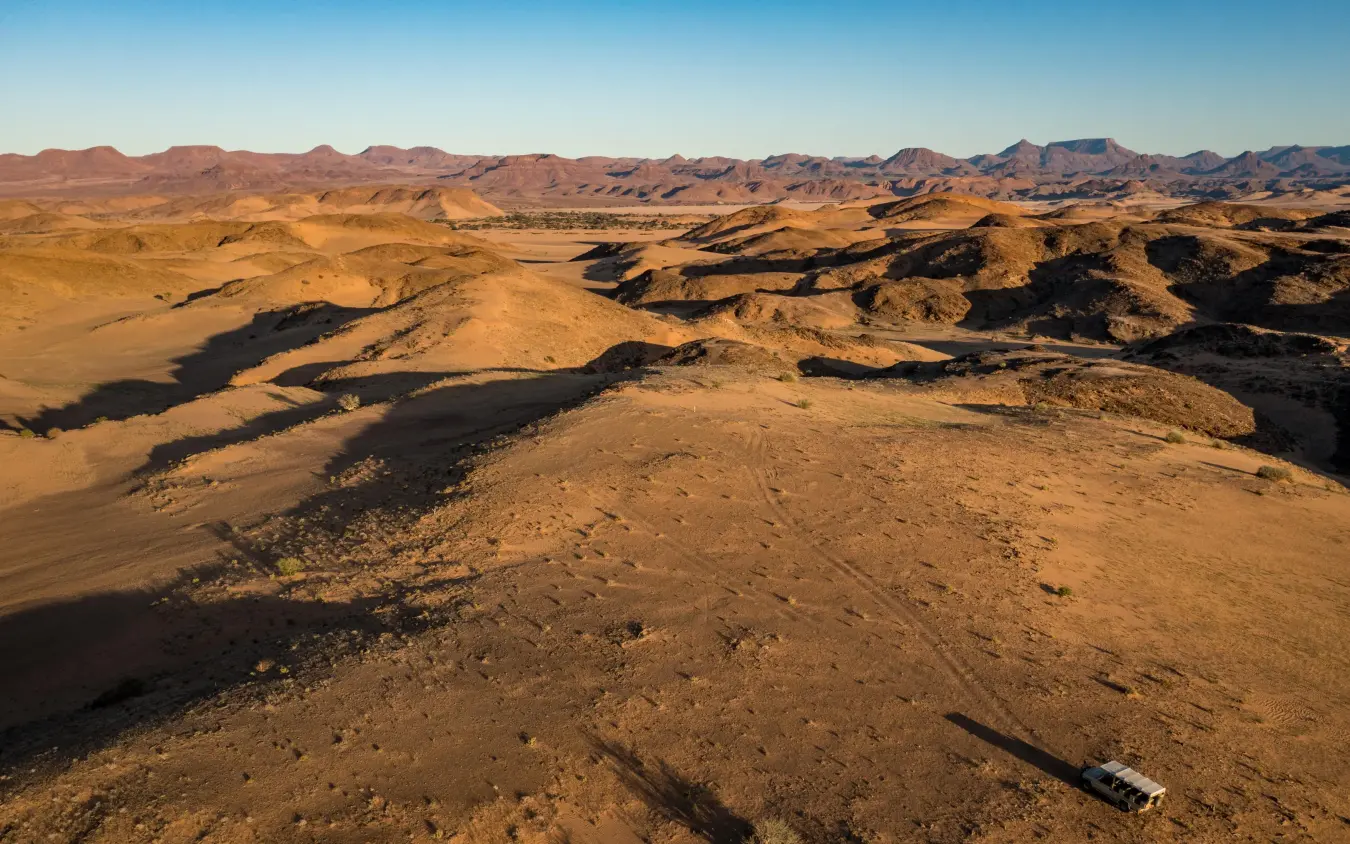
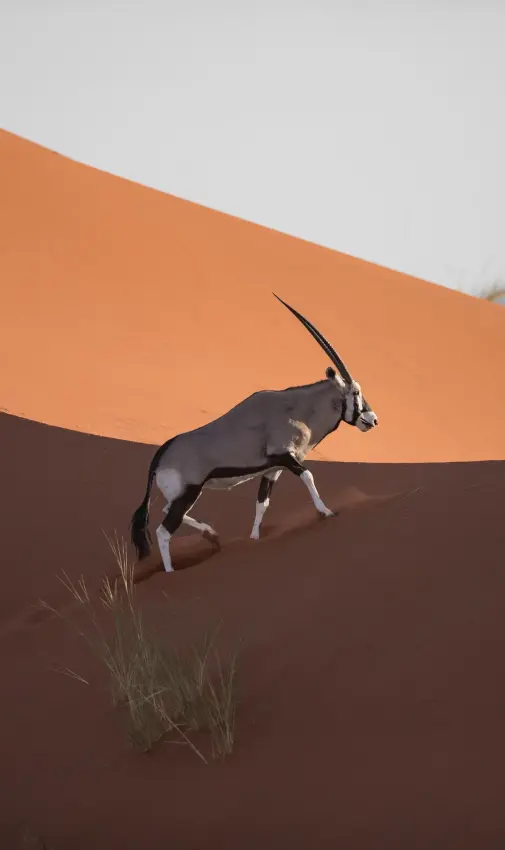
Mornings and afternoons work to different rhythms. The desert elephant drive leaves early, before the heat builds, and runs four to six hours along the Aba Huab and Huab riverbeds, drinks and snacks carried along. Guides track by dung and footprint, and explain how the elephants survive on so little water, pointing out the geology and desert flora as they go. Black rhino, gemsbok, springbok, mountain zebra and giraffe move through this ground too, yet the elephants remain the draw for most who come.
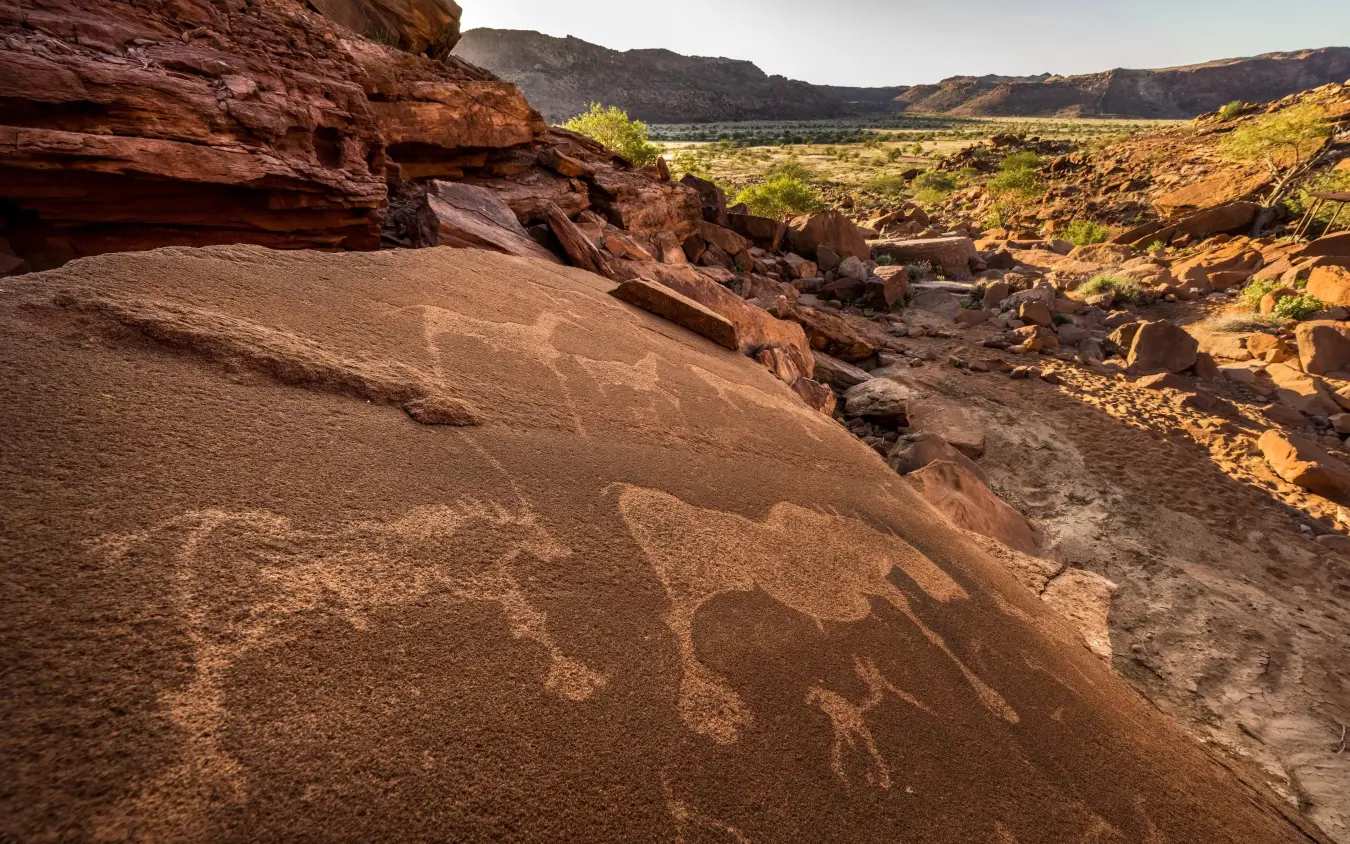
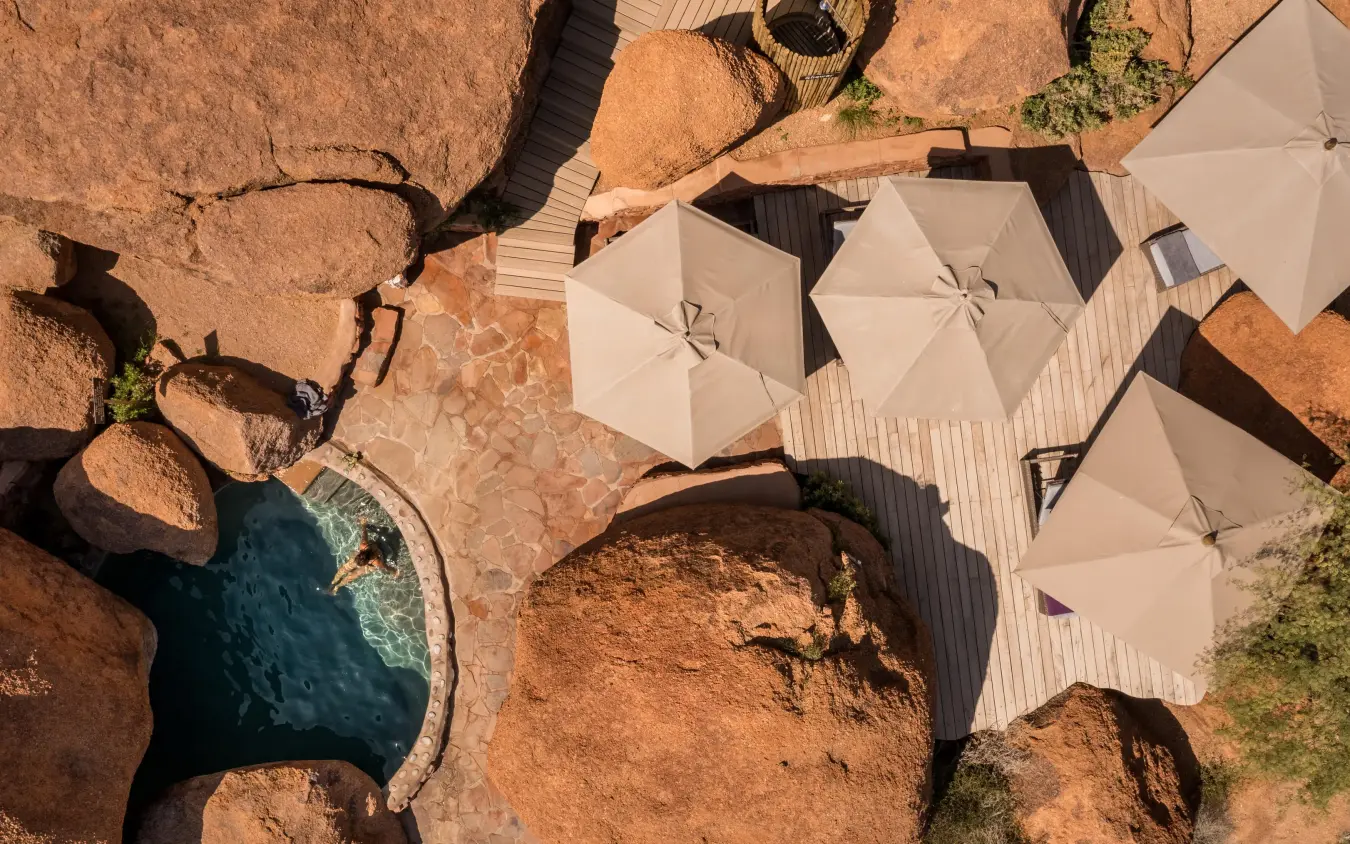
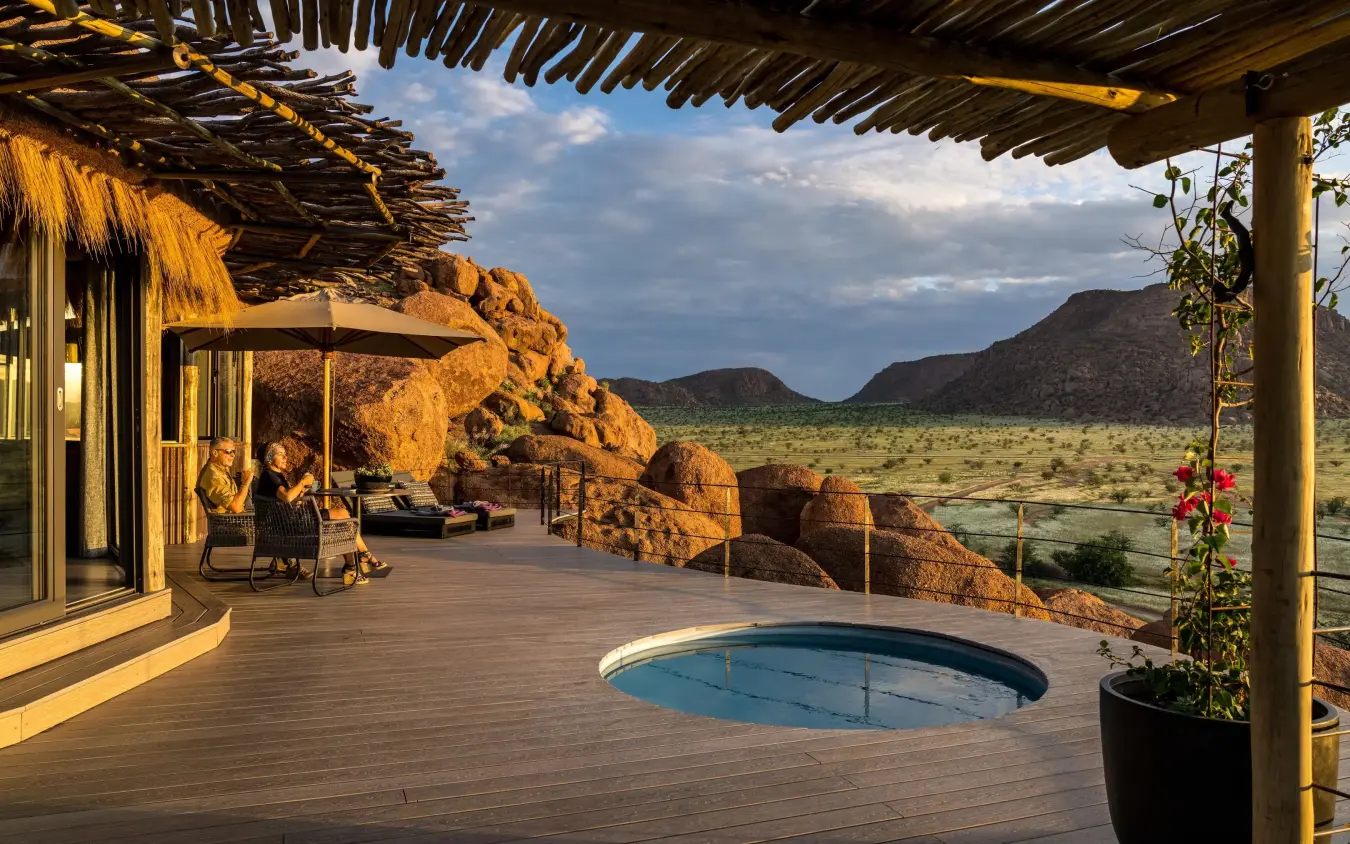
The afternoon turns to the rock art at Twyfelfontein, about two hours on marked paths through one of the region’s oldest galleries of San engravings, held under UNESCO World Heritage status. Many pair it with the dolerite columns of the Organ Pipes and the scorched slopes of Burnt Mountain, or with time at the Damara Living Museum, where Damara families demonstrate traditional skills and daily life. Back at camp, the day slows again. The rock-hewn pool stays cool between the boulders, and birds come to drink from water seeping through the rock in the main lounge.
Guides track by dung and footprint, and explain how the elephants survive on so little water.
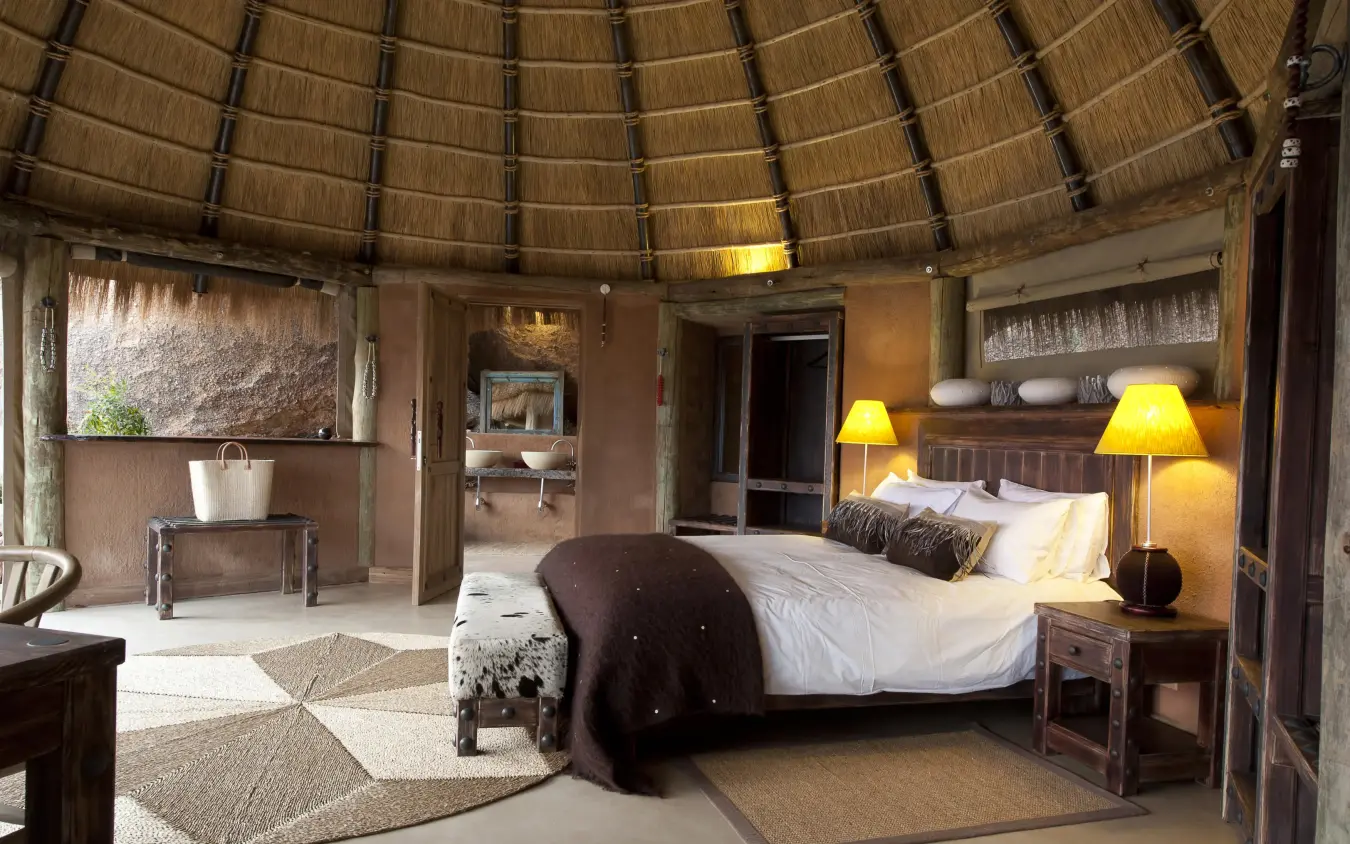
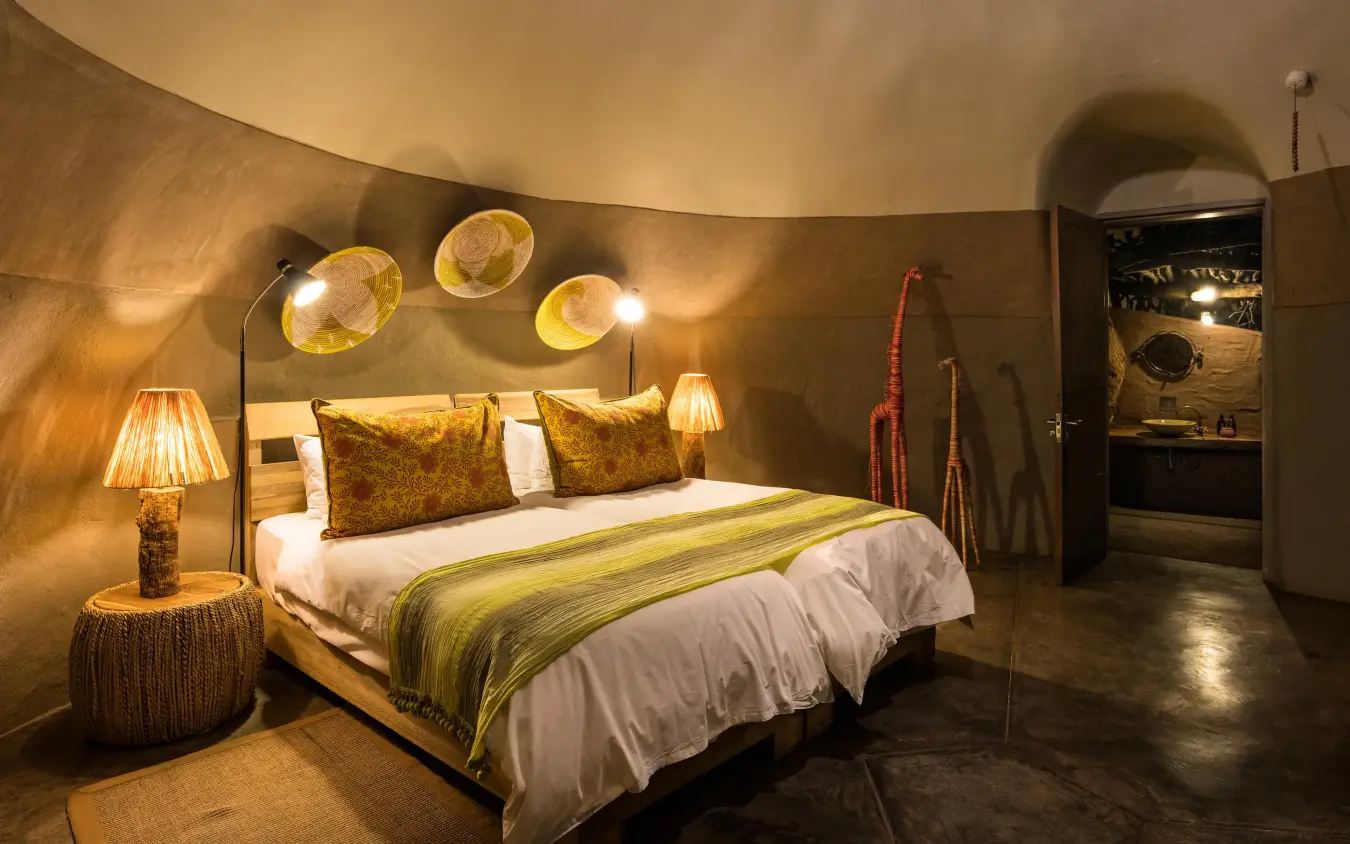
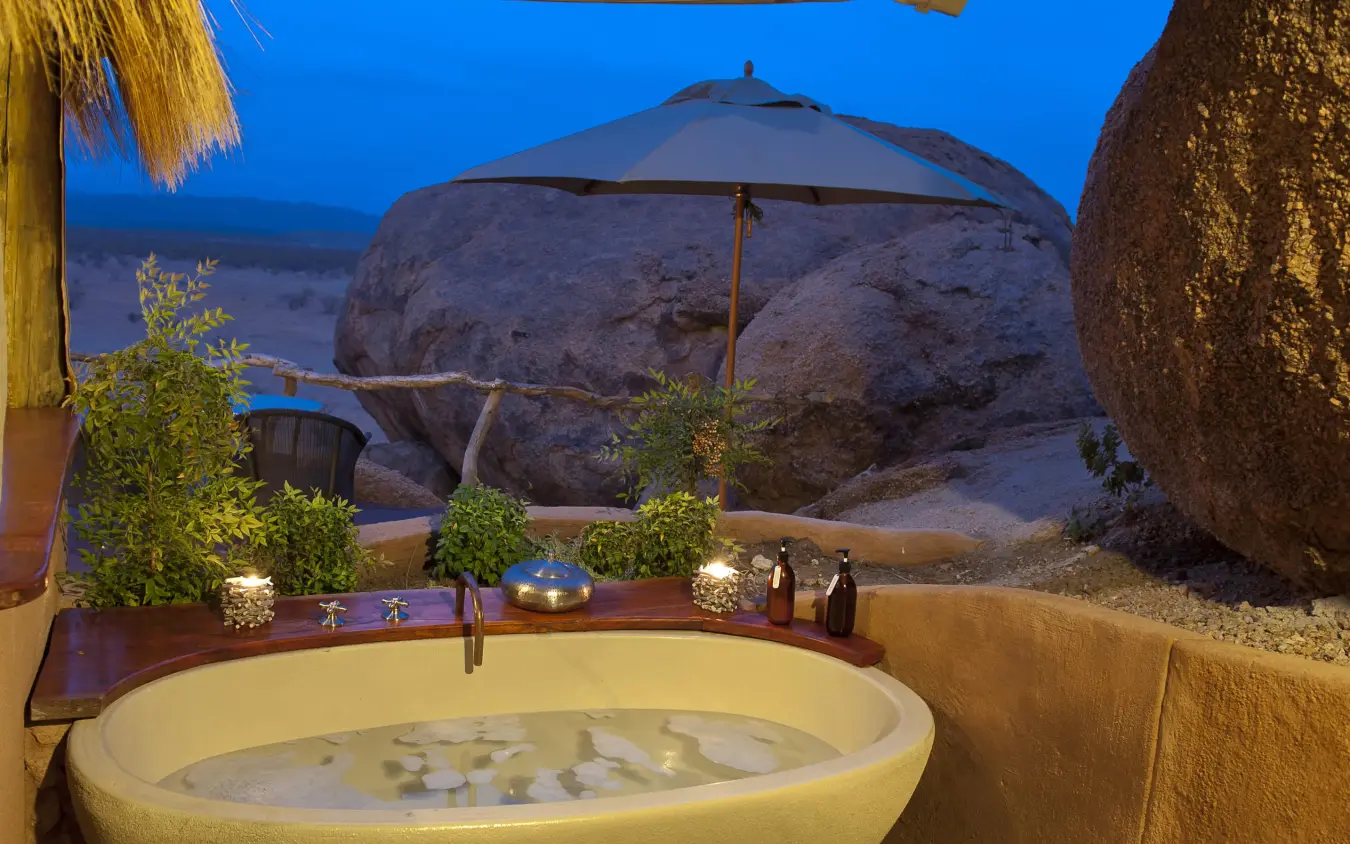
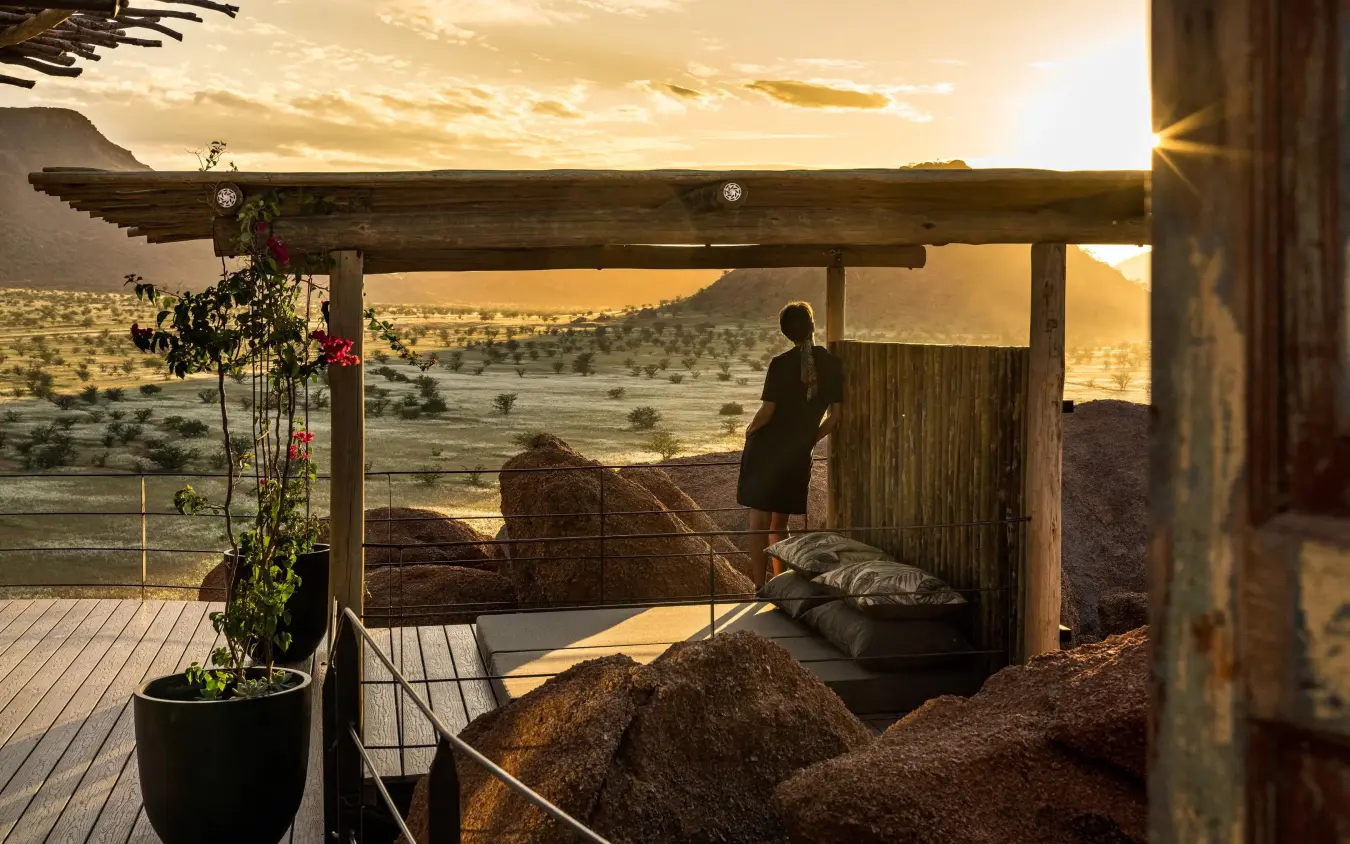
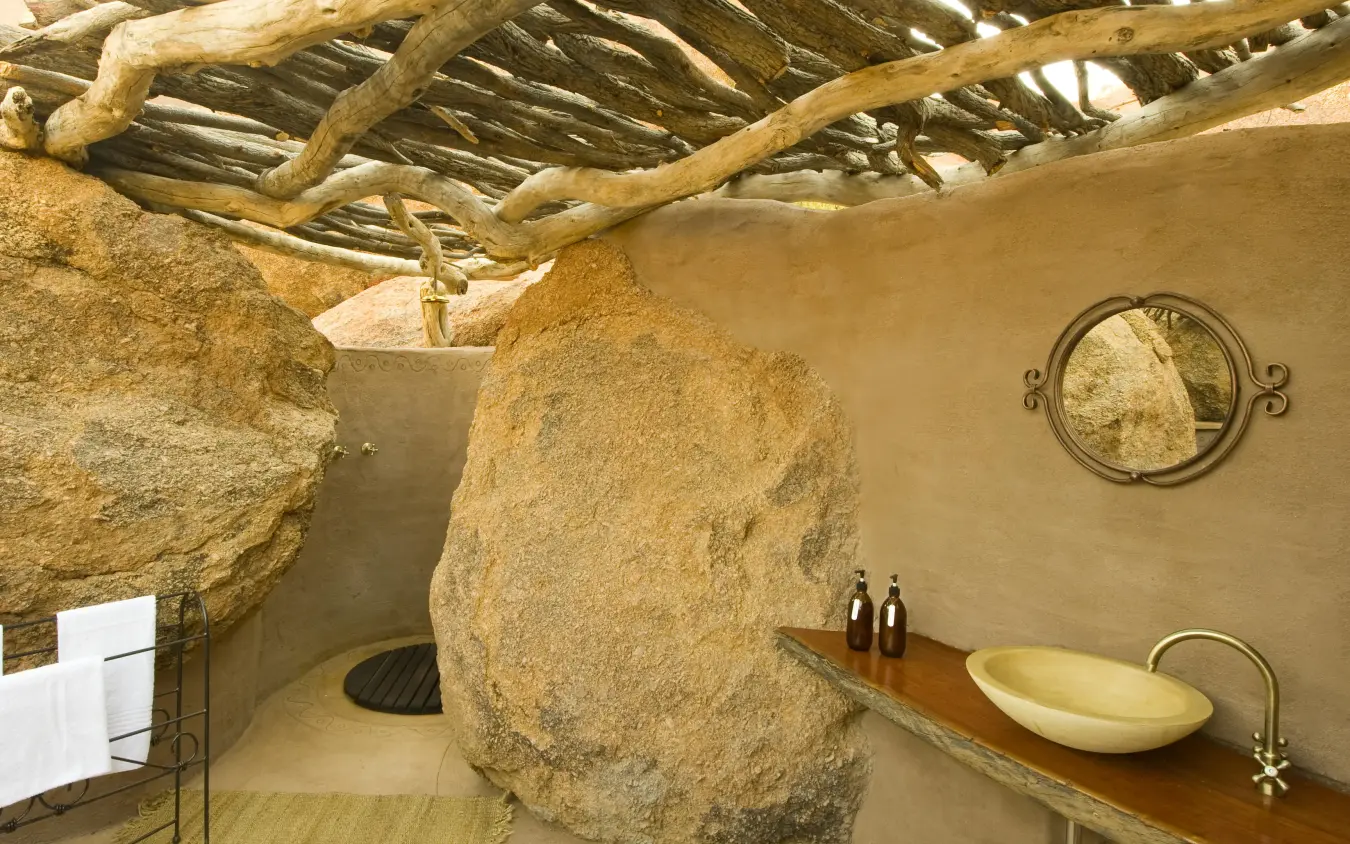
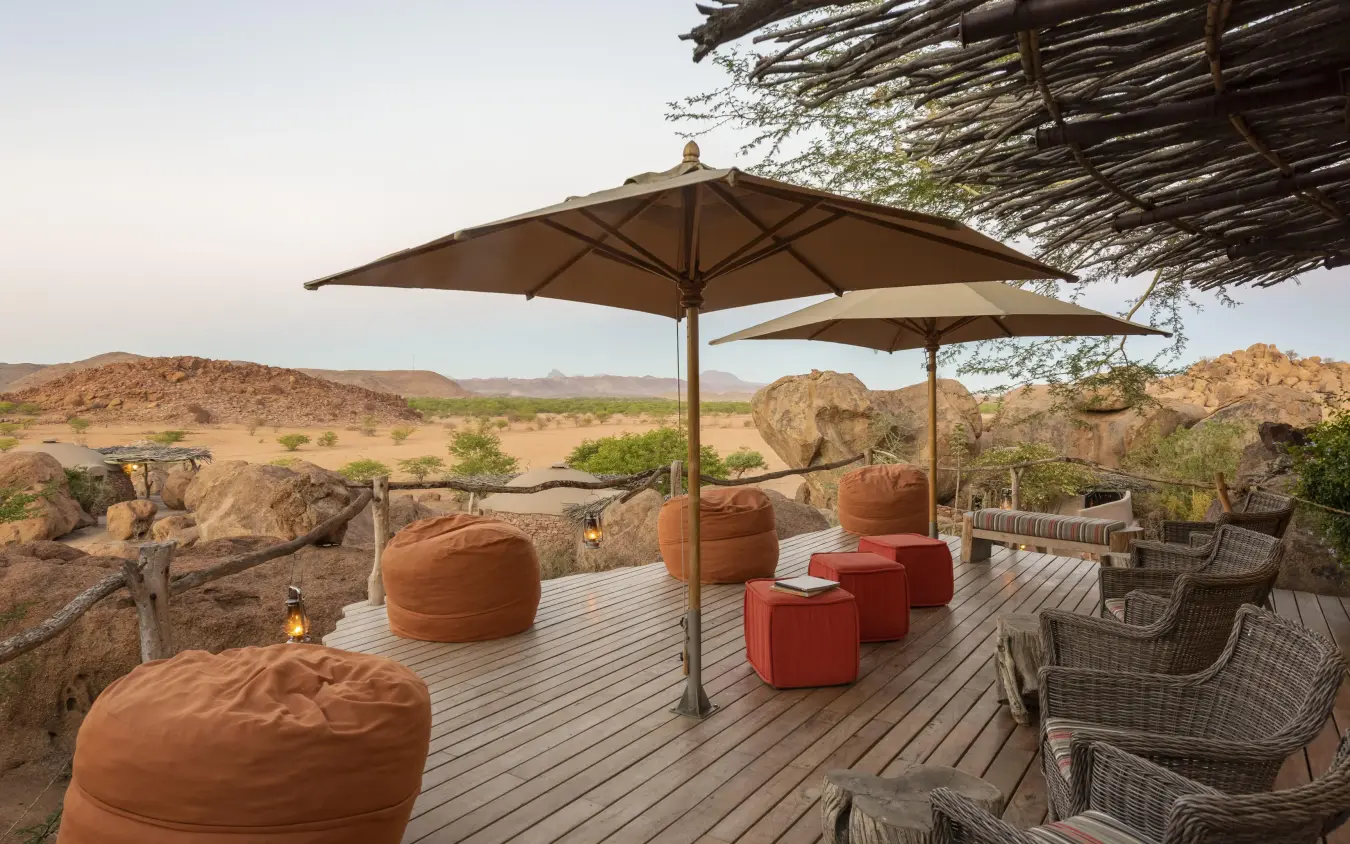
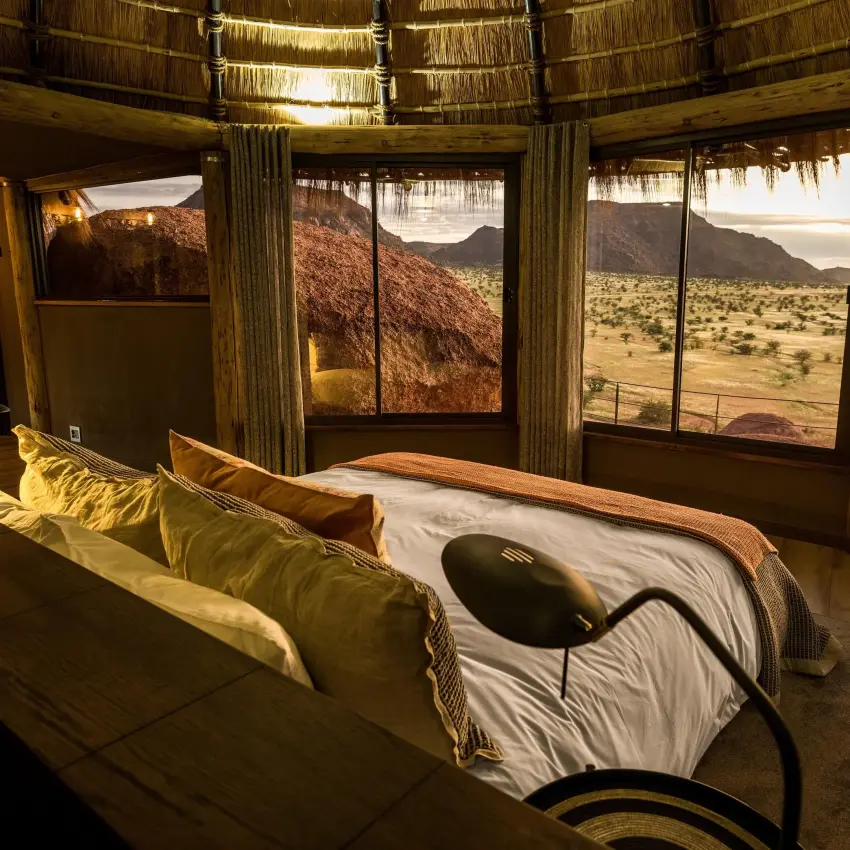
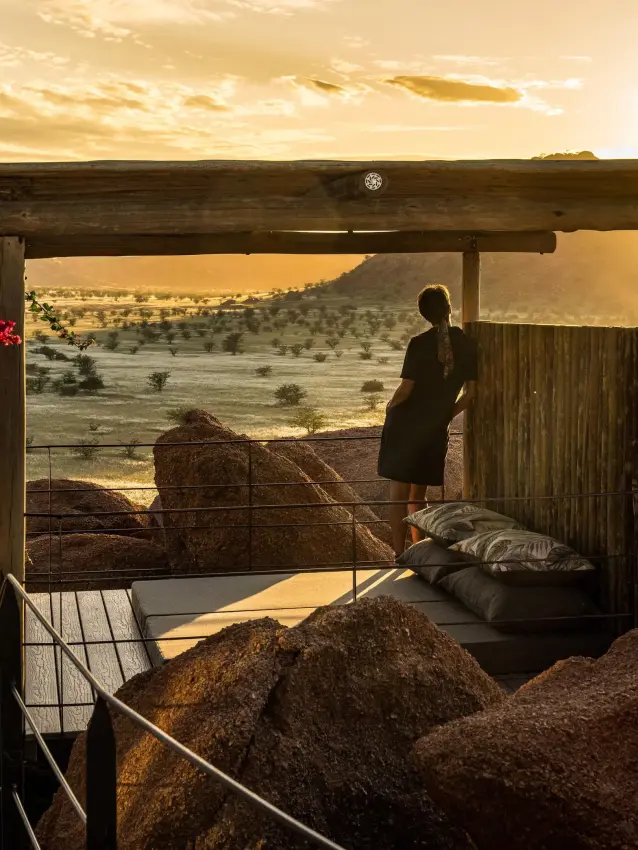
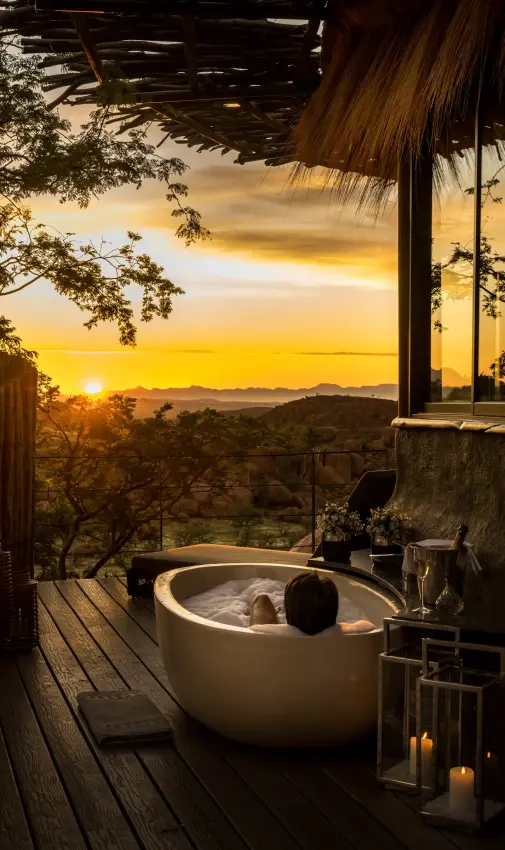
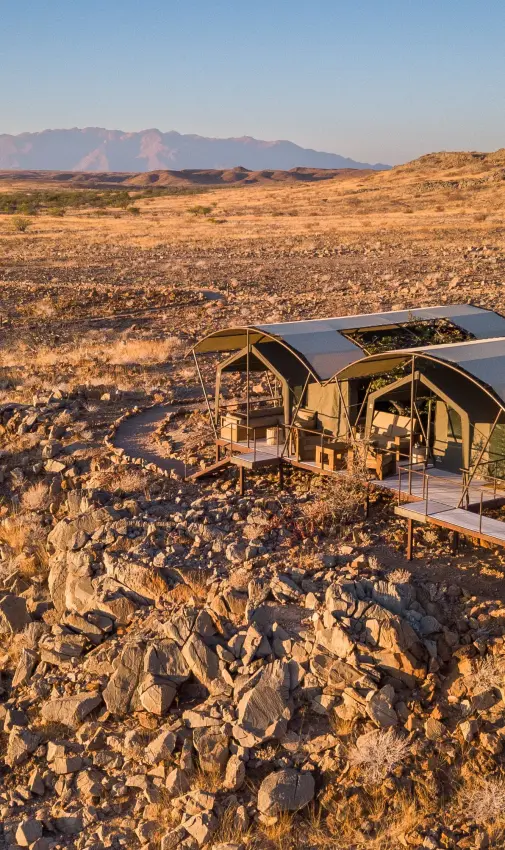
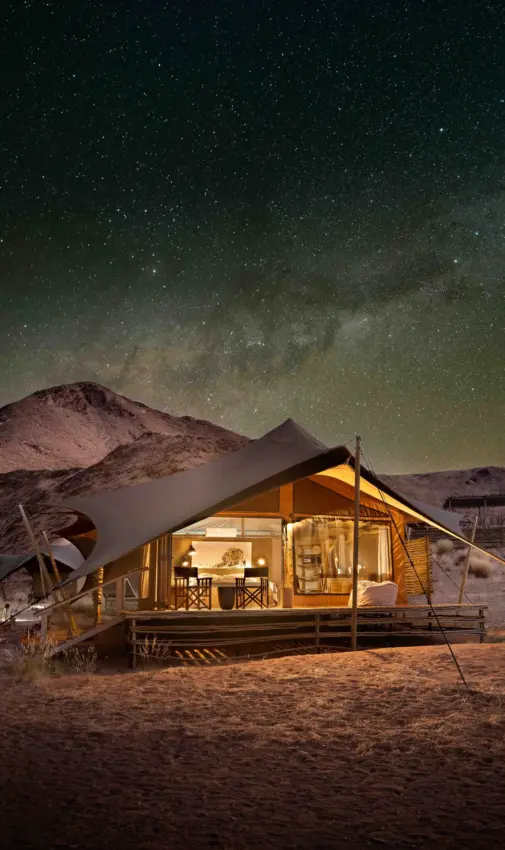
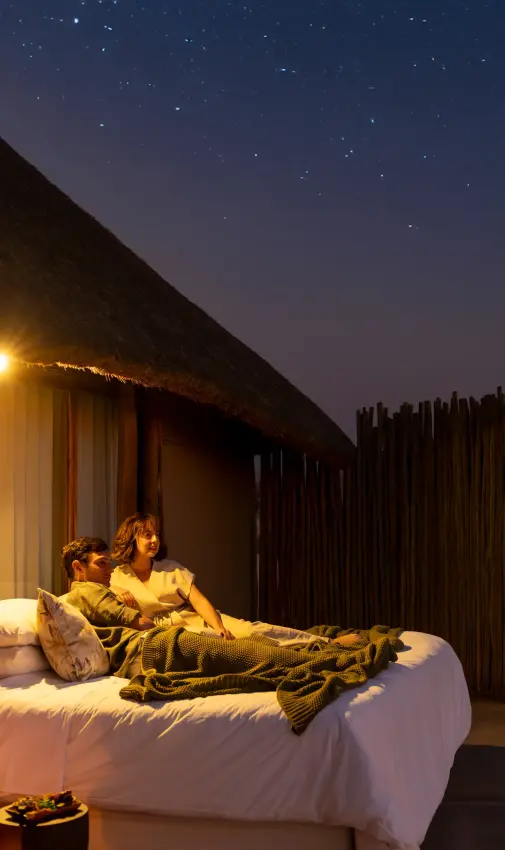
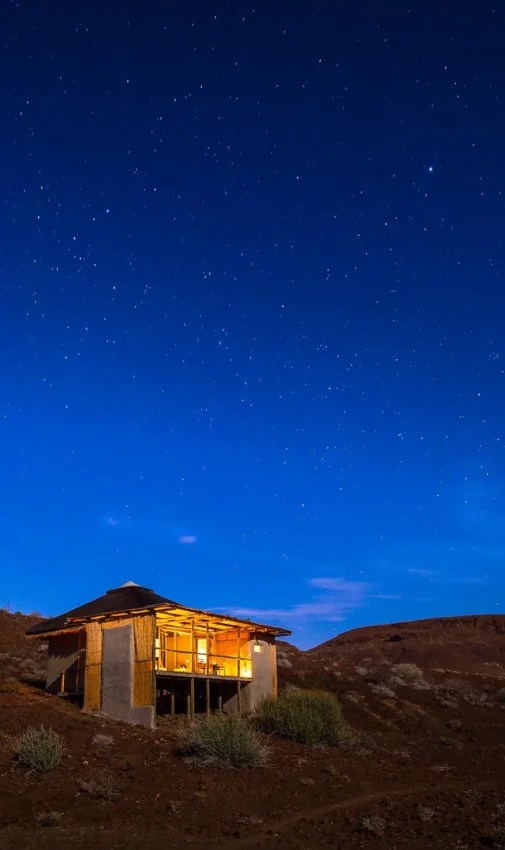
Twelve rooms make up the camp. Nine dome-shaped bungalows are built from local stone to echo the boulders around them, each with a private veranda and an open-air bathroom set into the rock. Higher up stand the thatched Kipwe Suite and two Luxury Suites, the latter with private lounges, air-conditioned bedrooms and heated splash pools. Above them all, a climb of around a hundred steps reaches a viewpoint where drinks are set out as the sun drops over the plains. Comfort here keeps its distance from the grid, hot water drawn from wood-burning donkey boilers and solar geysers, Wi-Fi and phone signal thin by design.
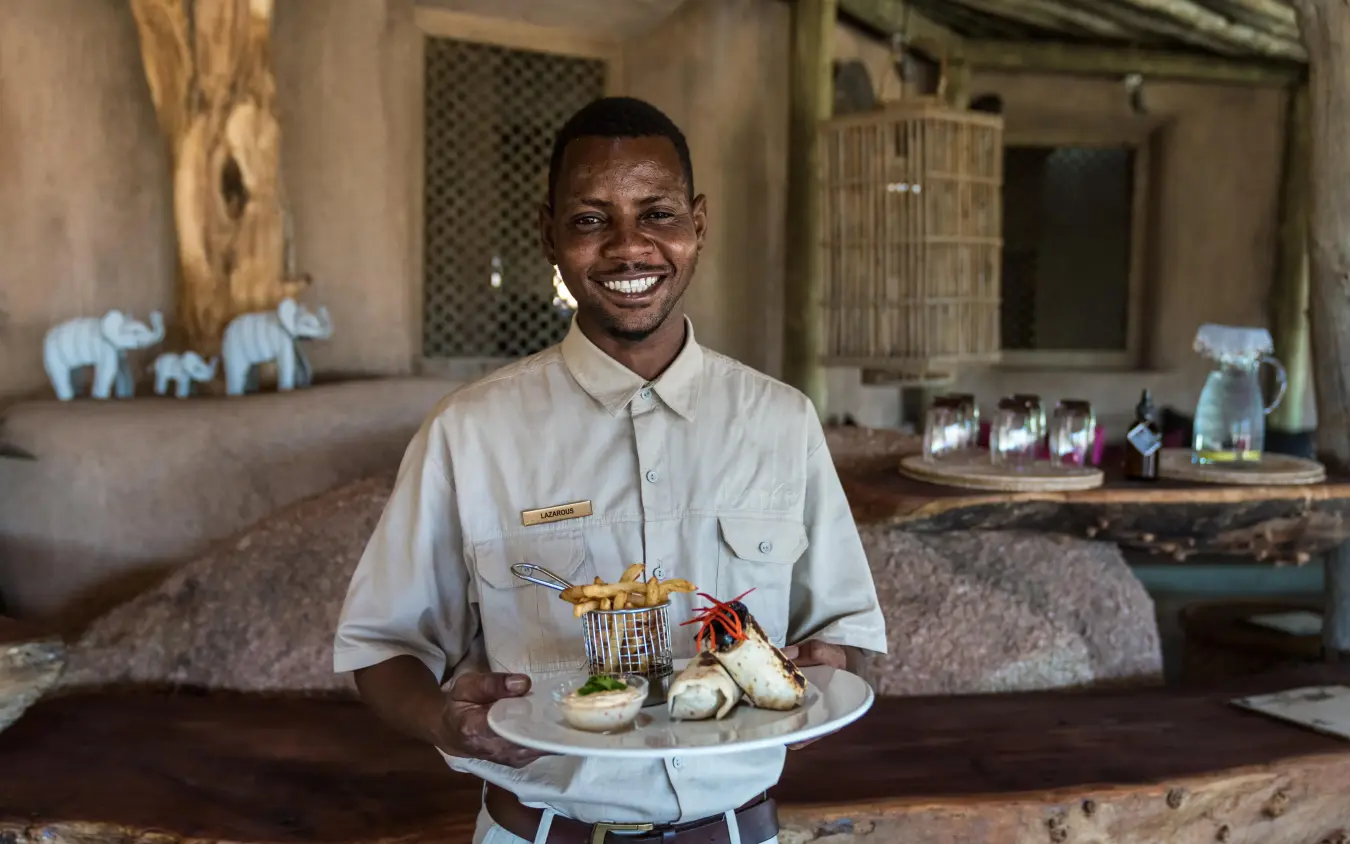
That restraint runs through the camp’s purpose too. A concession fee is paid for every guest’s stay, feeding directly into the Uibasen-Twyfelfontein Conservancy, and most of the staff are drawn from the surrounding communities. Alongside its sister camp, Camp Kipwe helps fund the Desert Lion Project, which works to conserve the desert-adapted lions of the northern Namib. Meals draw on fresh local and international cooking, served in the open thatched dining area or, some evenings, around the fire in the boma under an unlit sky, with wind, birdsong and the occasional jackal call for company.