Camp

Mowani Mountain Camp

Mowani Mountain Camp is a family-run lodge built into a granite kopje in Damaraland, Namibia.

Country: Namibia
Location: North of Twyfelfontein, Damaraland
Number of rooms: 15

A camp sunk into a granite saddle

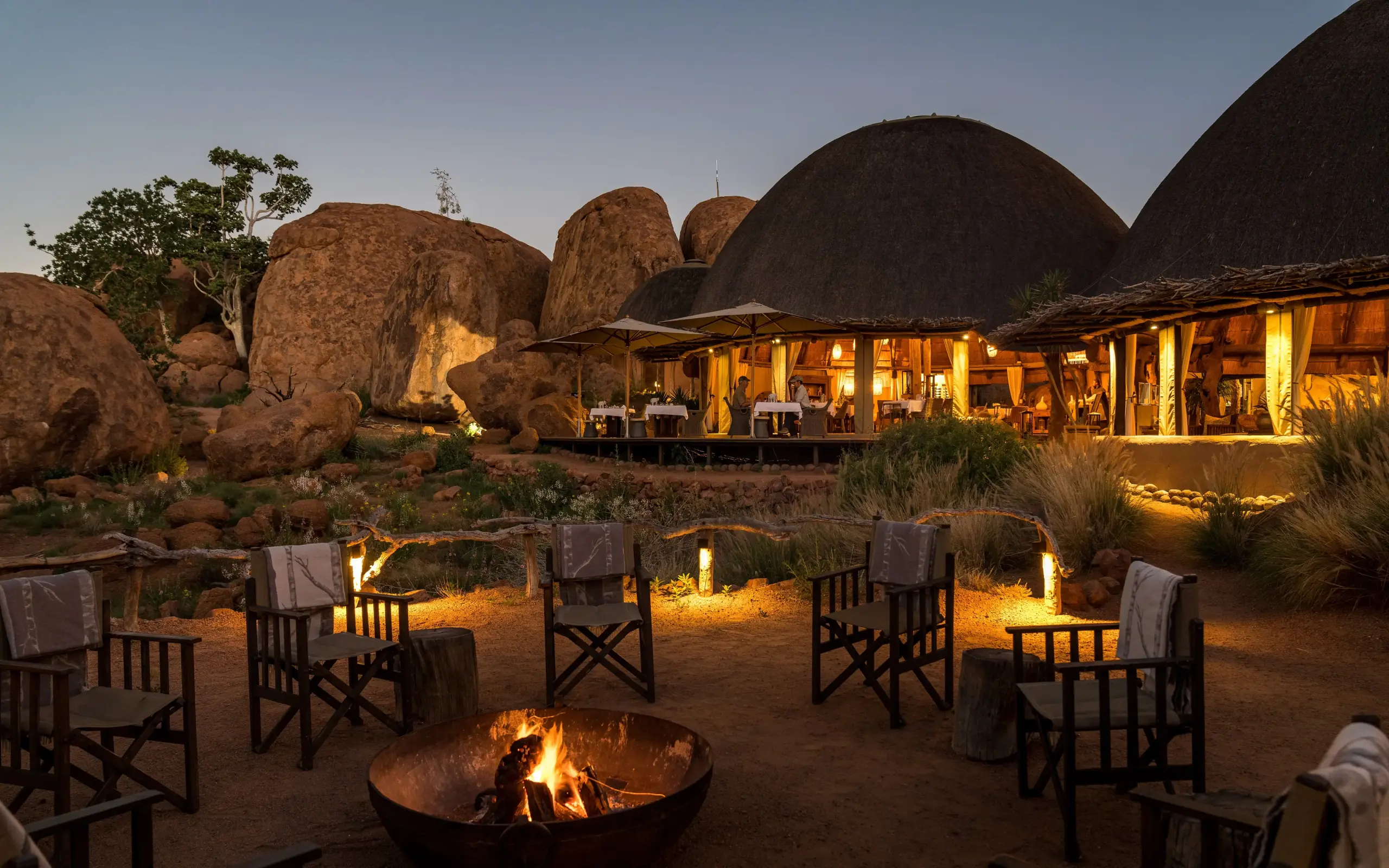
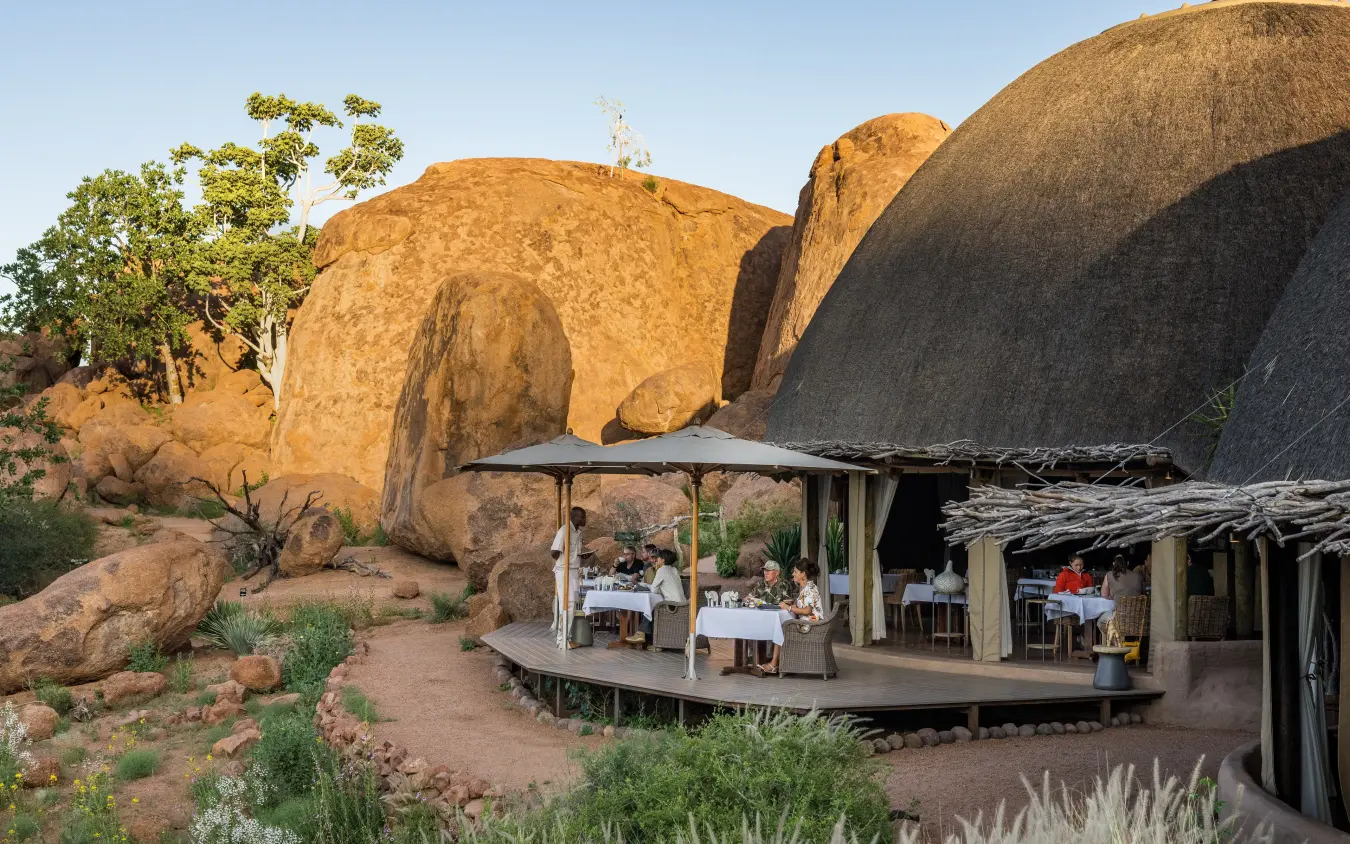
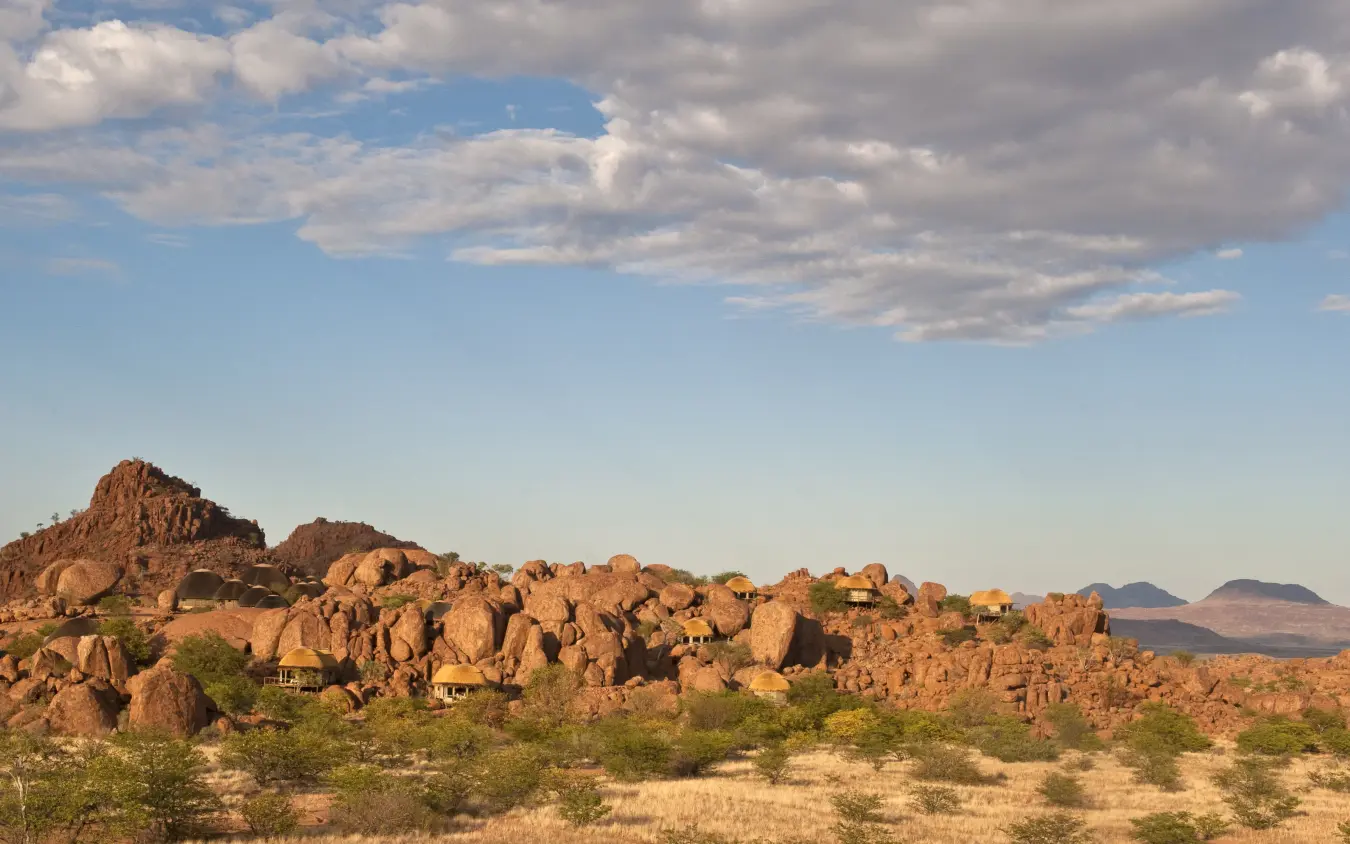
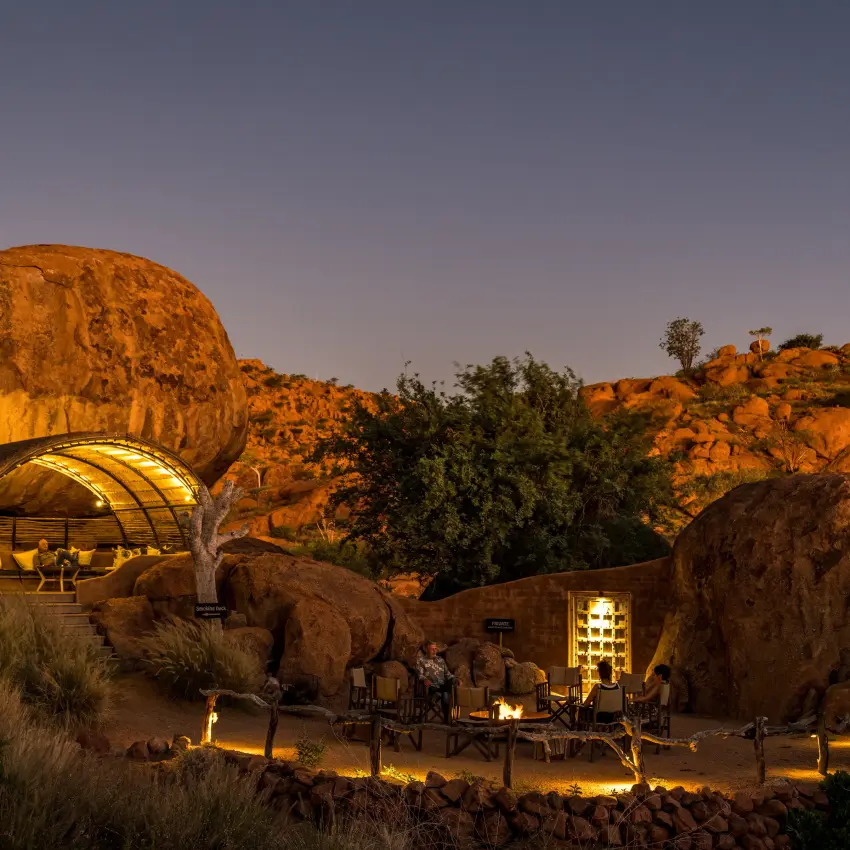
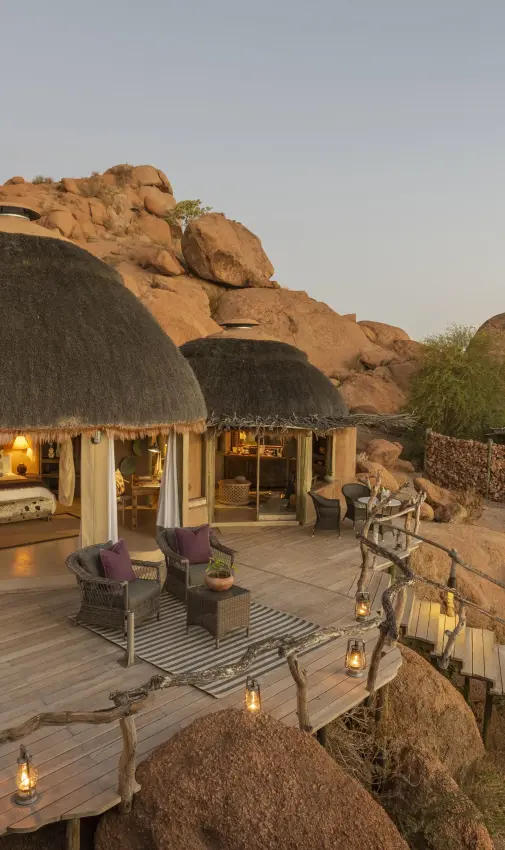
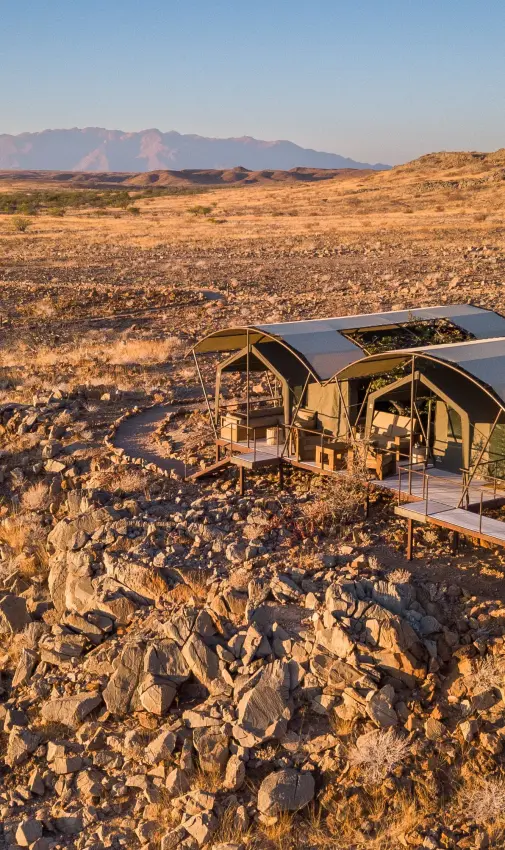
When André Louw finished Mowani Mountain Camp in 2000, he chose not to clear the ground for it. Instead he sank the camp into a saddle between two granite kopjes, its thatched, dome-topped structures raised on platforms and tucked so deeply among the rust-coloured boulders that the whole place all but disappears into the rock. Its name is said to mean place of God, and the days here follow the desert-adapted elephants moving through the dry riverbeds below.

Instead he sank the camp into a saddle between two granite kopjes

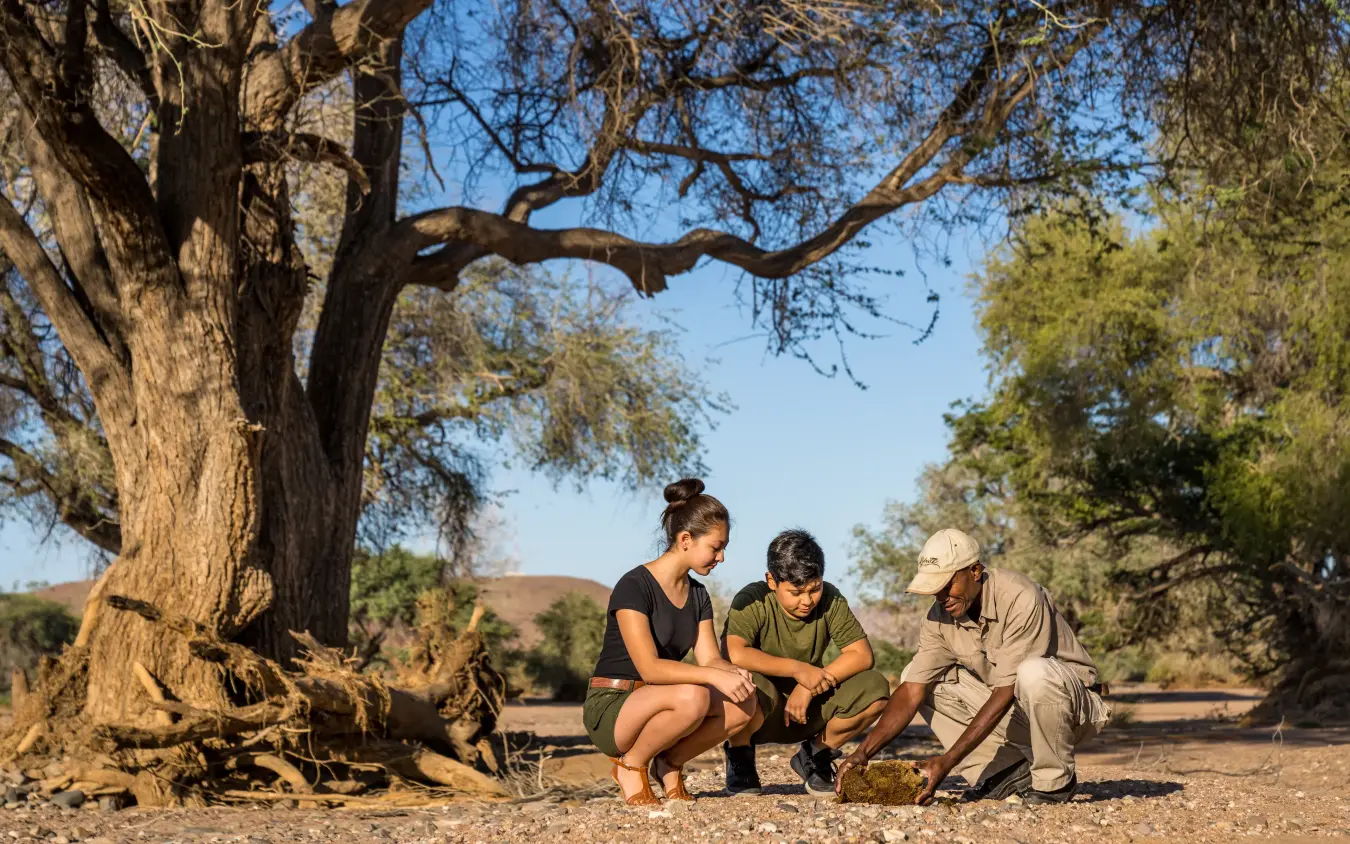
Guiding teams drawn from the local Damara community lead open-vehicle drives into the ephemeral riverbeds, reading tracks and browse lines to find elephants that have learned to live in one of the driest places on the continent. Sightings are never guaranteed. The search itself, across gravel plains and ancient watercourses framed by distant mountains, is the substance of a morning at Mowani.
Luxury lodge built into giant boulders illuminated at dusk, Mowani Mountain Camp, Damaraland, Namibia
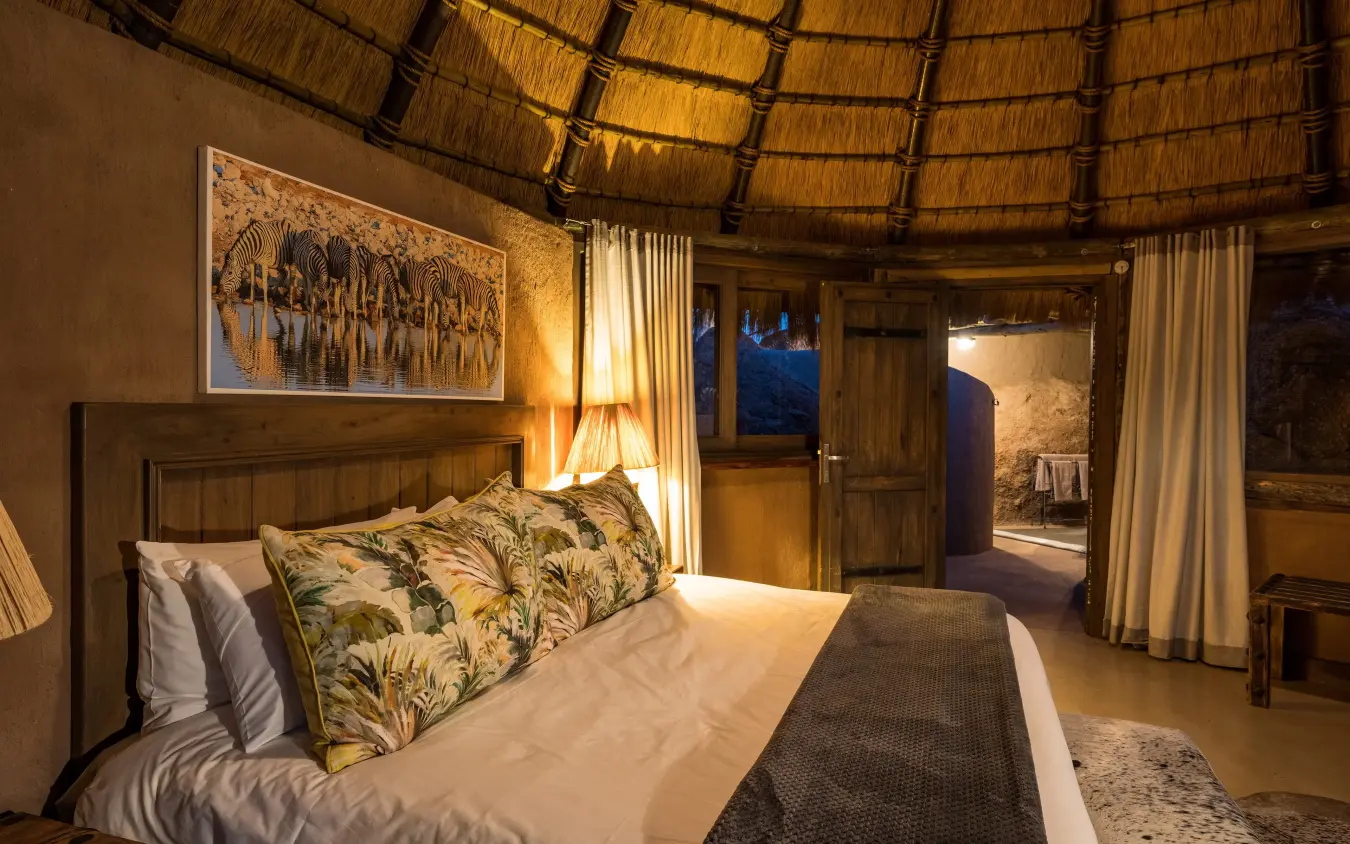
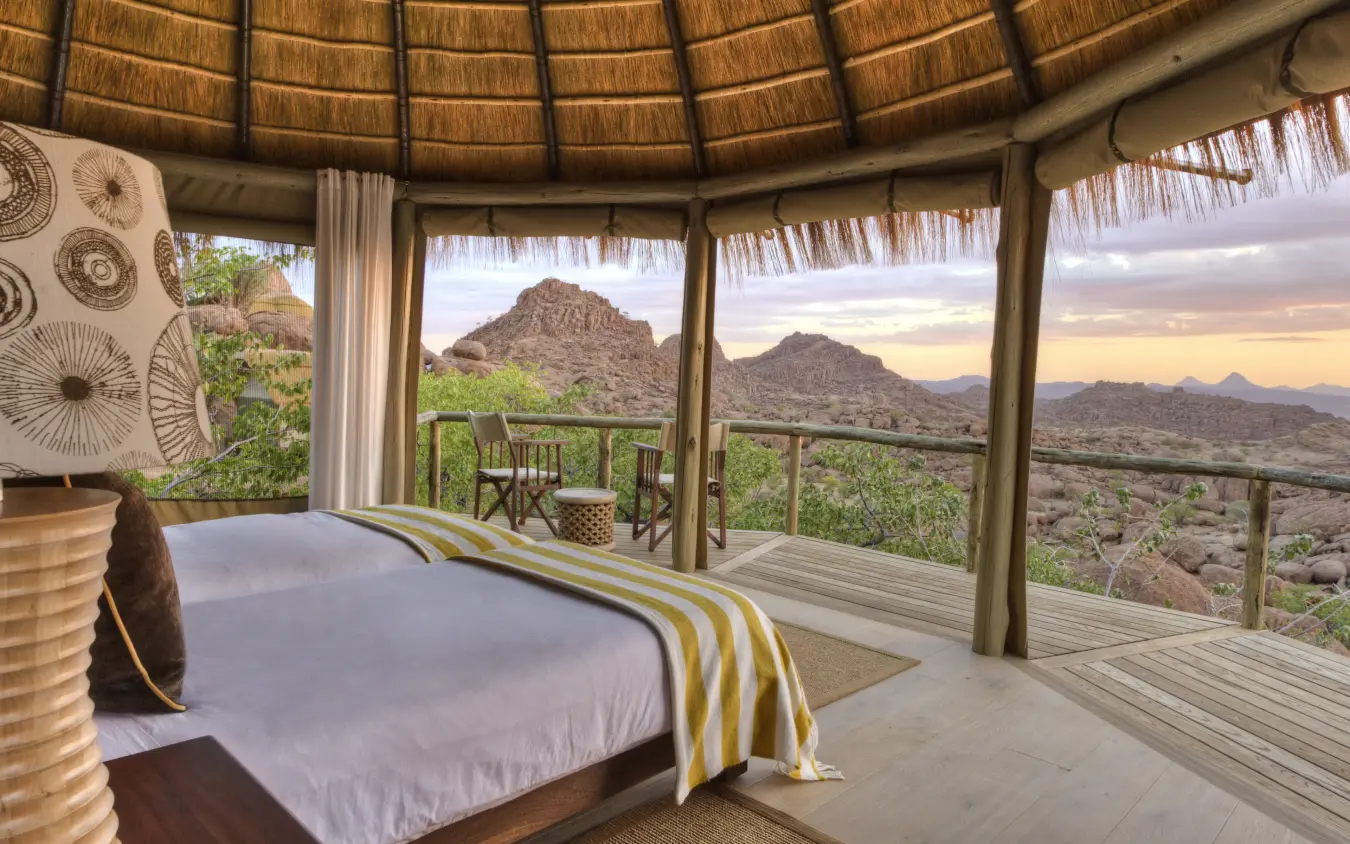
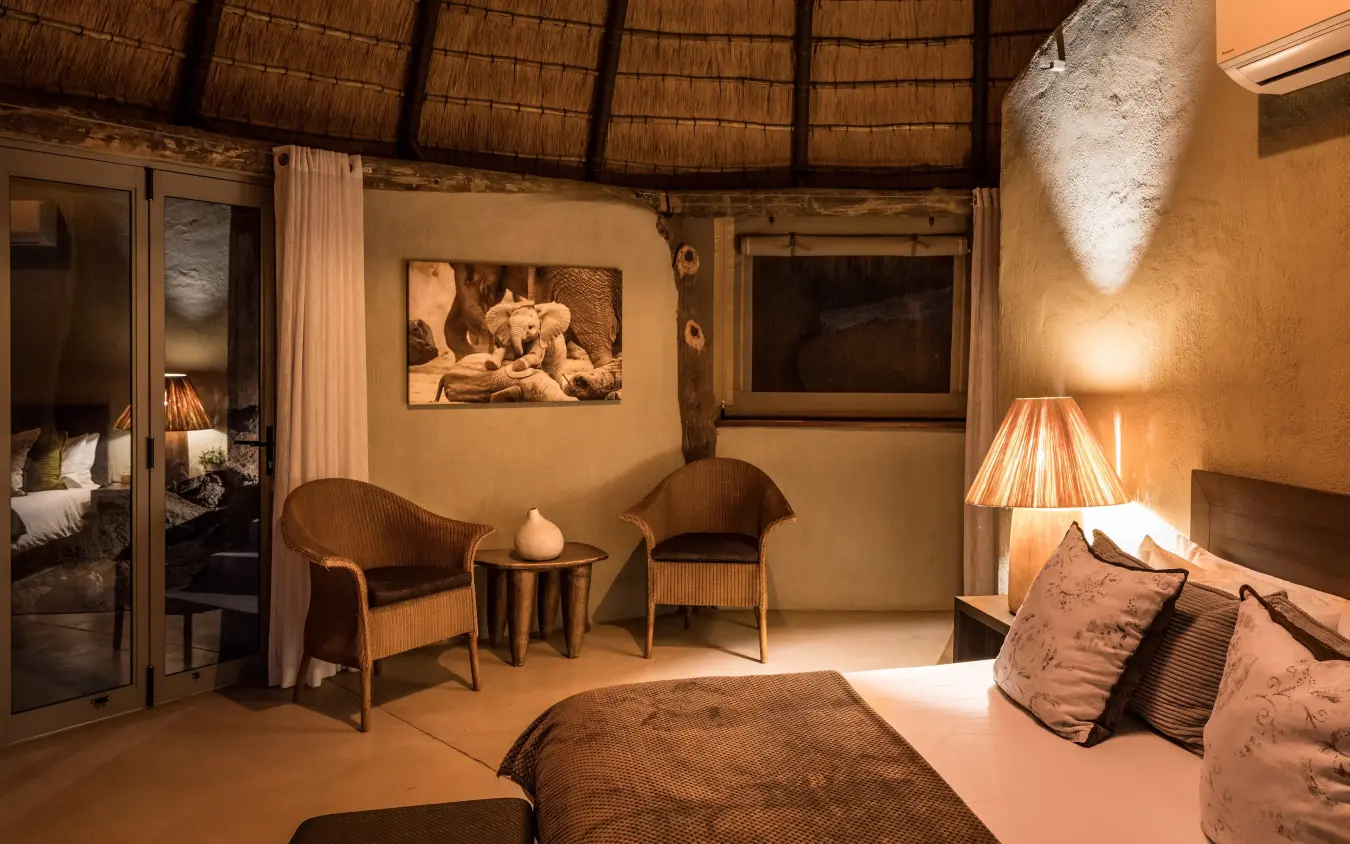
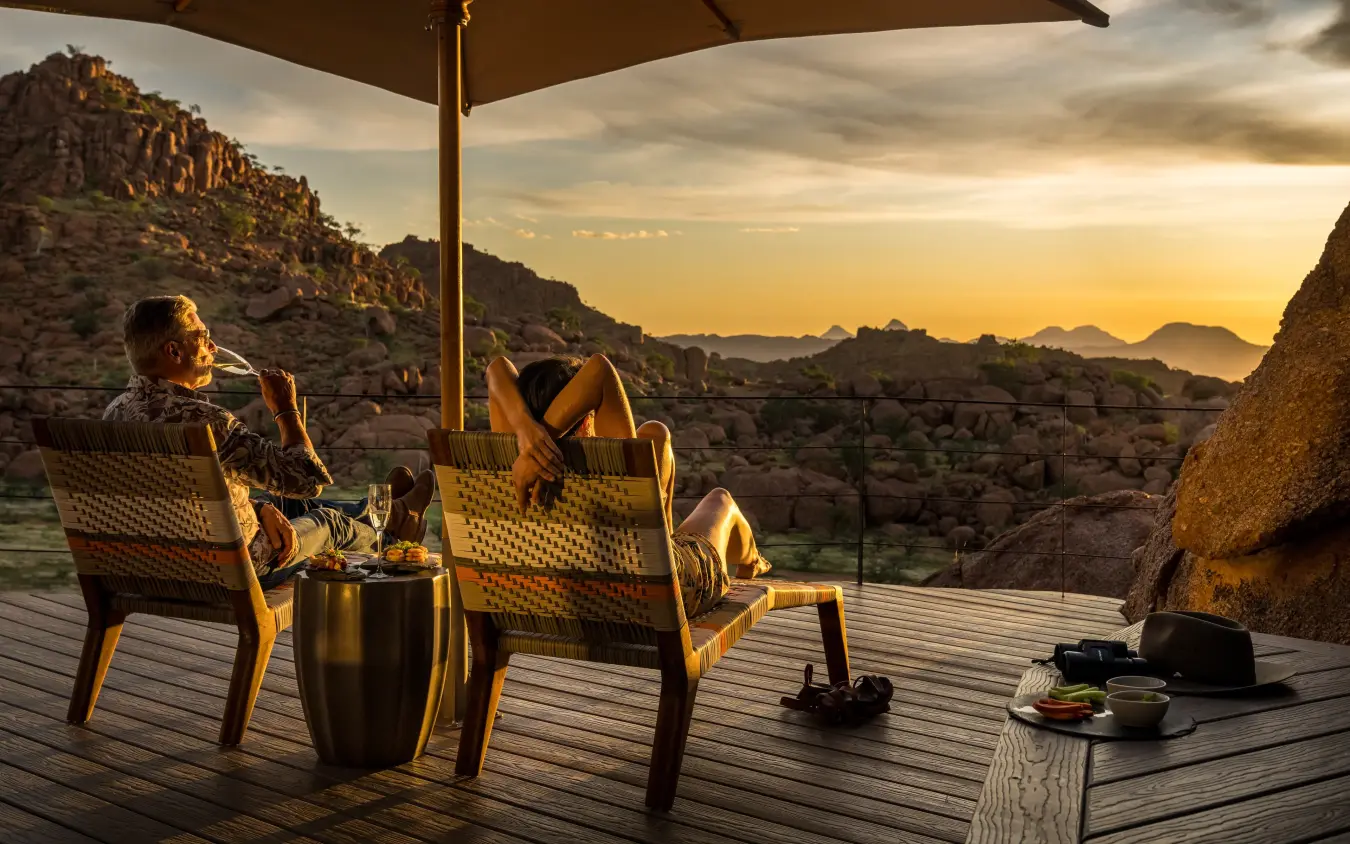
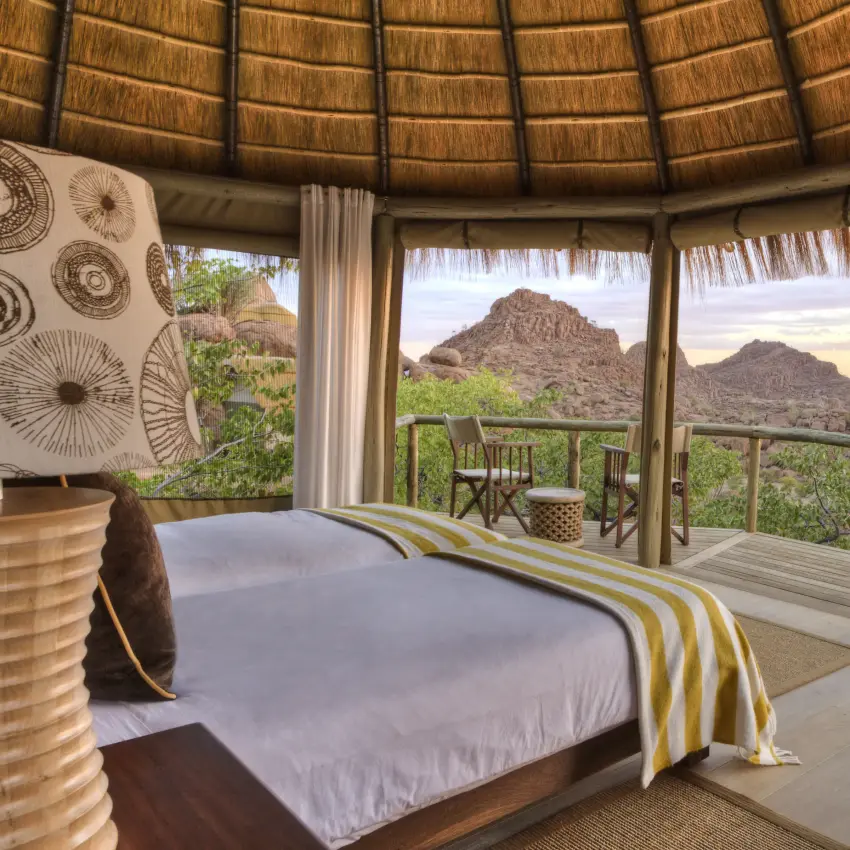
Bedroom suite with panoramic desert mountain views at sunset, Mowani Mountain Camp, Damaraland, Namibia

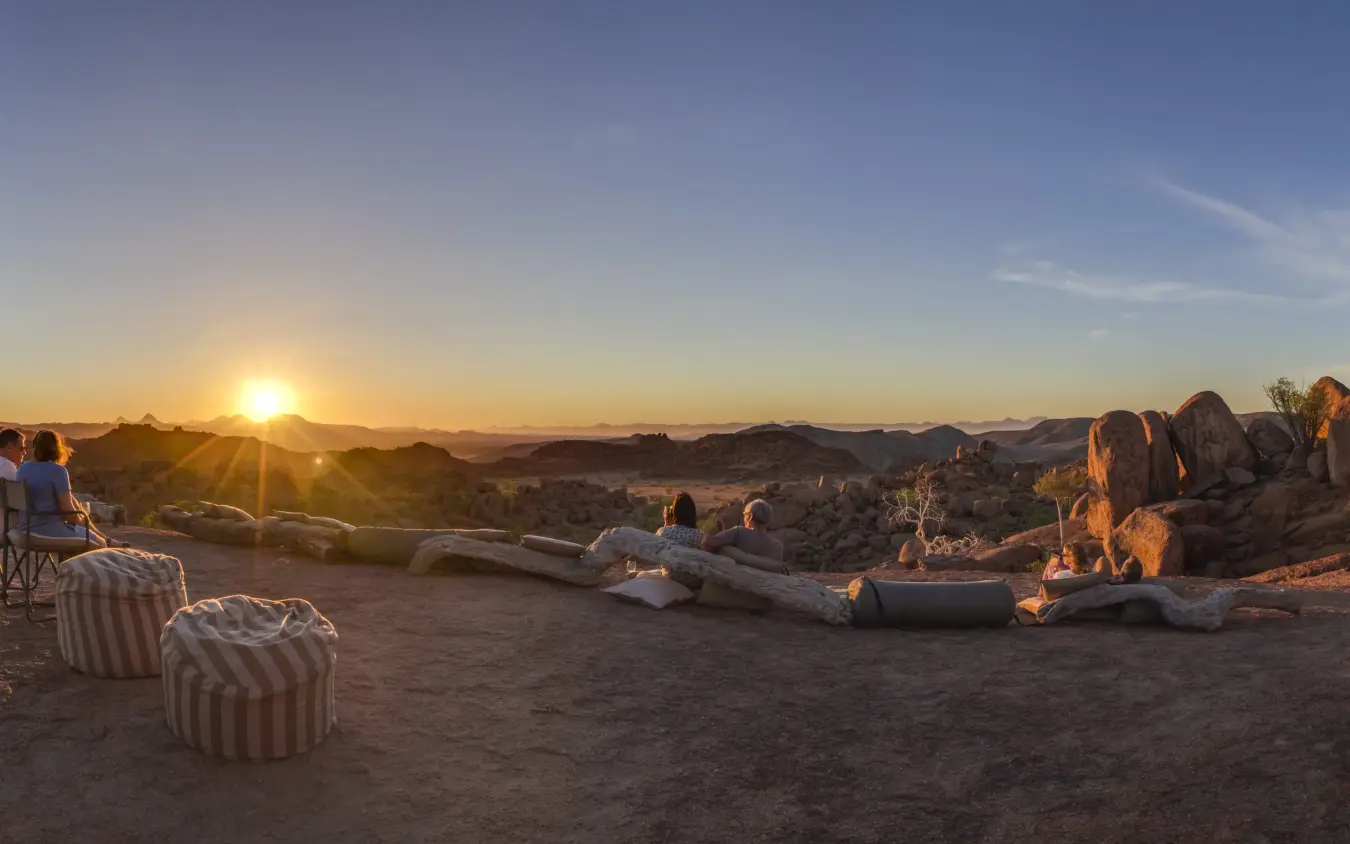
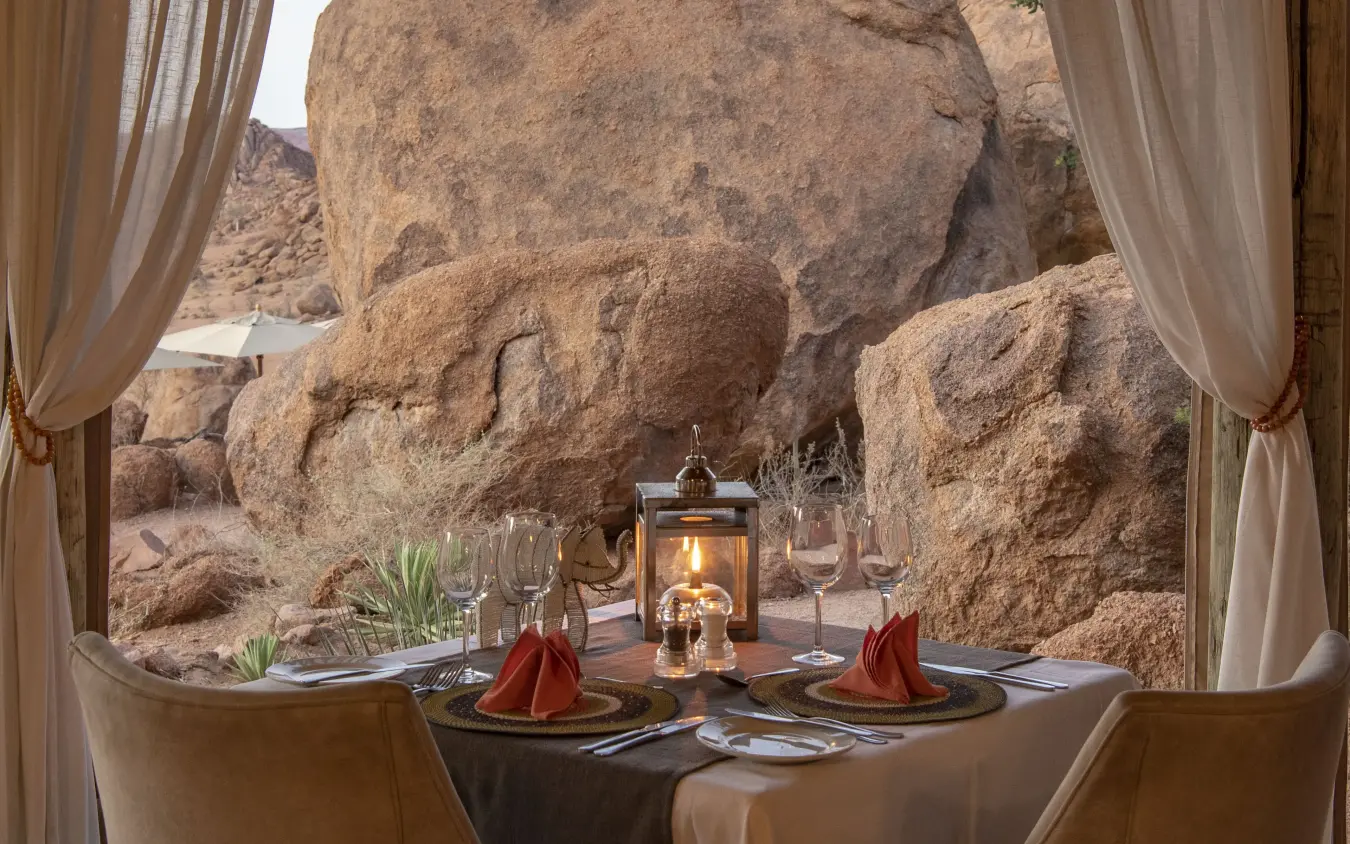
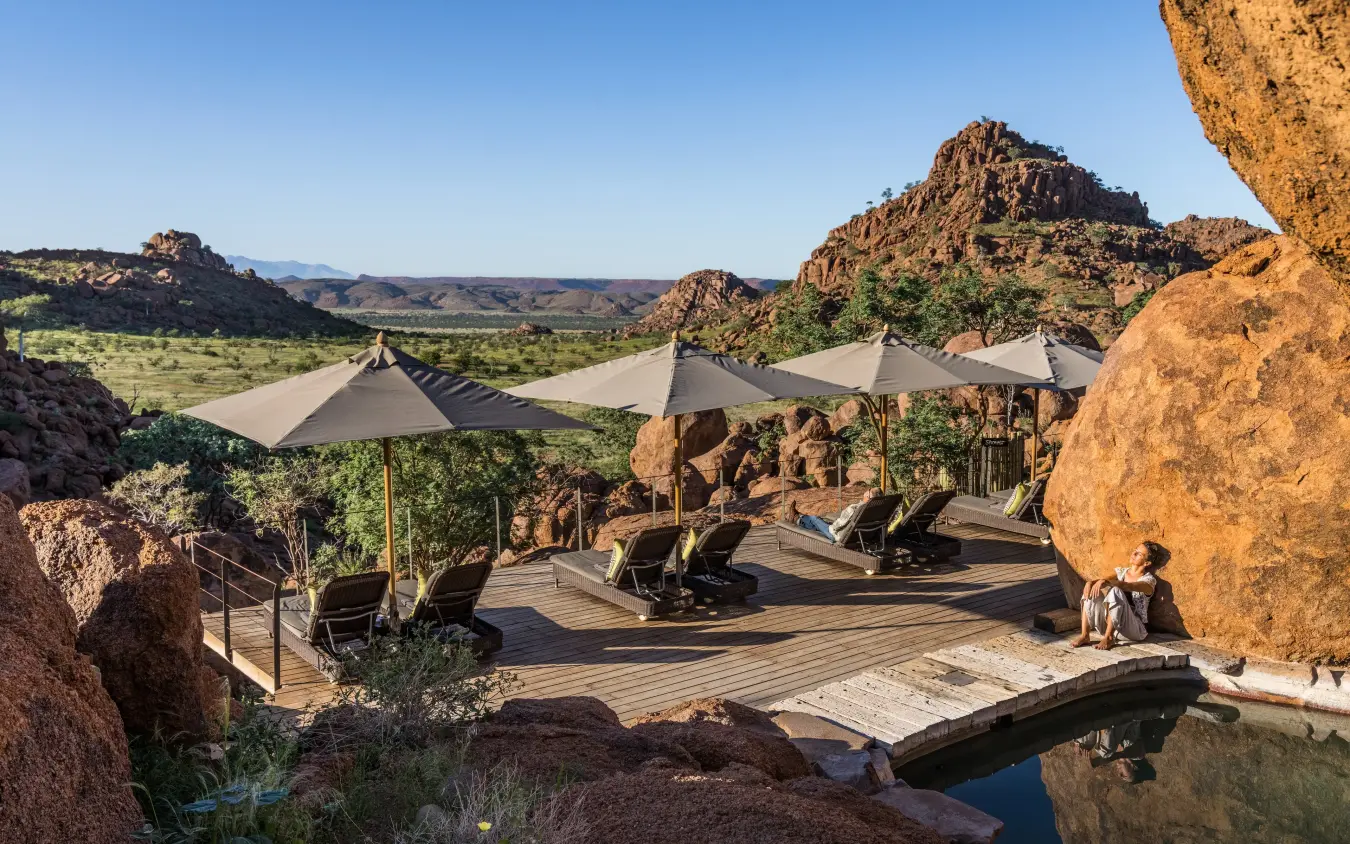
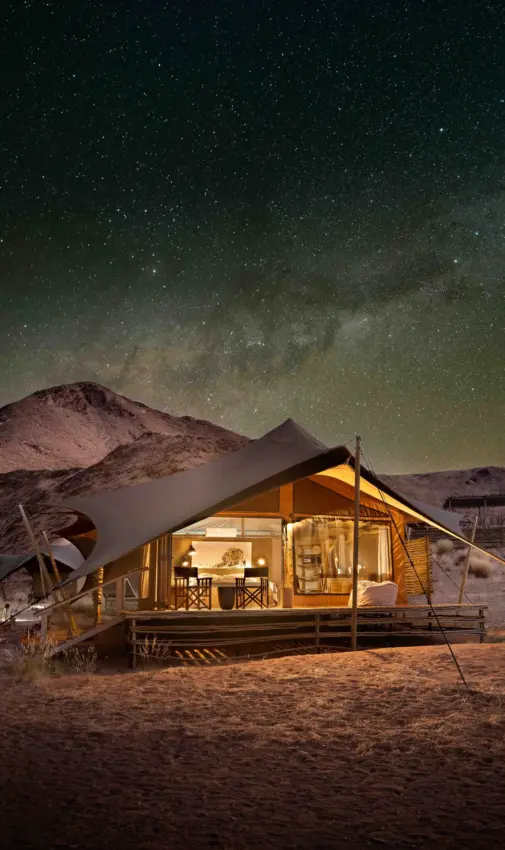
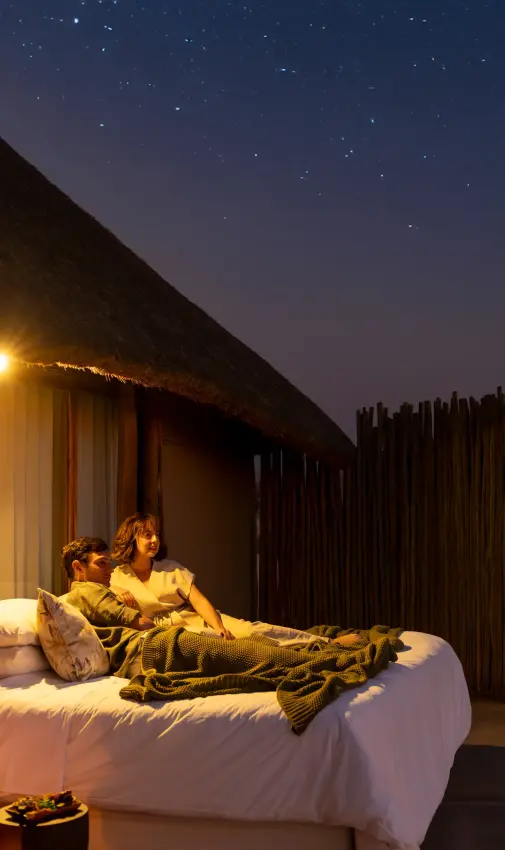
Each evening, guests climb a set of stone steps to a wooden platform perched atop a boulder. Drinks and appetisers are laid out on oversized floor cushions as the 180-degree view shifts from gold to a deep purplish-red. The granite holds the last light long after the plains have gone dark, and with almost no light pollution across Damaraland, the Milky Way then rises clear overhead.

The granite holds the last light long after the plains have gone dark

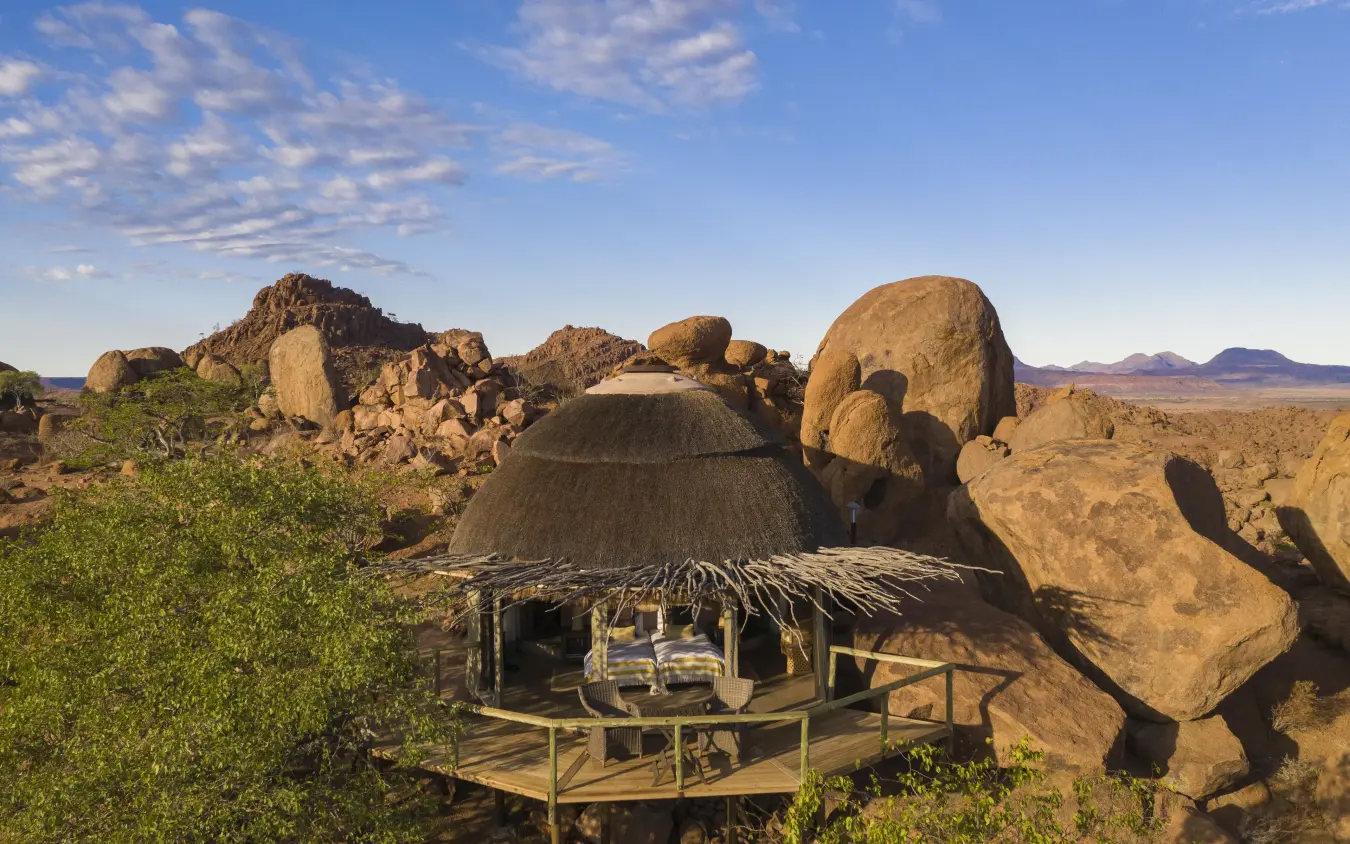
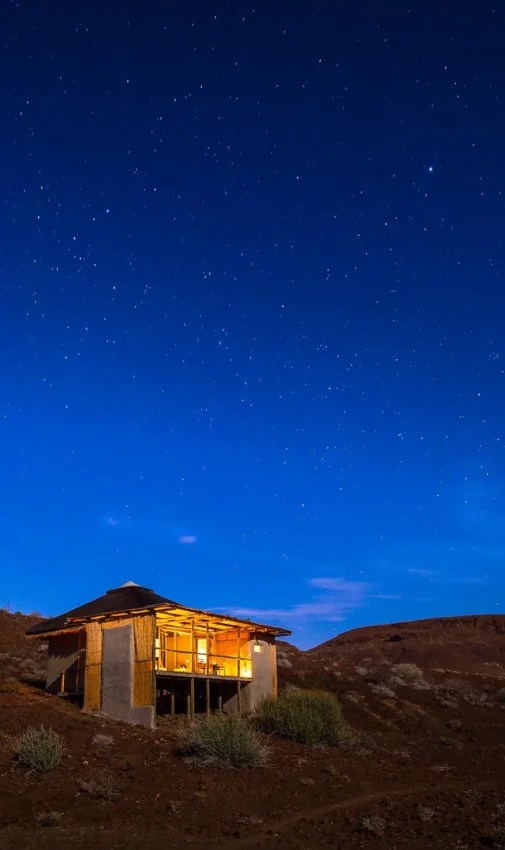
The tents stand on slender stilts so as not to scar the rock beneath them. Mowani remains in the hands of the Louw family, who run it through the Chiwani Business Trust. André’s wife, Monique Ferreira-Louw, oversees the interiors. His son-in-law, Stefan Horsthemke, helps run the camp, keeping it a family concern a quarter of a century after it was built.

Luxury lodge with thatched bungalows nestled among giant boulders in rocky landscape, Mowani Mountain Camp, Damaraland, Namibia 01

accommodation

Fifteen Rooms Among Granite Boulders

Fifteen rooms and suites are set among the granite boulders on raised platforms, reached by stone paths. Categories run from View Rooms with roll-up canvas walls to the Mountain Suite, with a private plunge pool, dining deck and an outdoor bush bath and shower.

Elephant crossing dirt road viewed from safari vehicle mirror, Mowani Mountain Camp, Damaraland, Namibia 02

activities

Desert Drives And Twyfelfontein Engravings

Morning drives of four to six hours track desert-adapted elephants through the Huab riverbed, with black rhino on wider routes. Afternoons visit the Twyfelfontein rock engravings, Organ Pipes and Burnt Mountain. Guided and self-guided walks, a Damara Living Museum visit and balloon flights on request complete the offering.

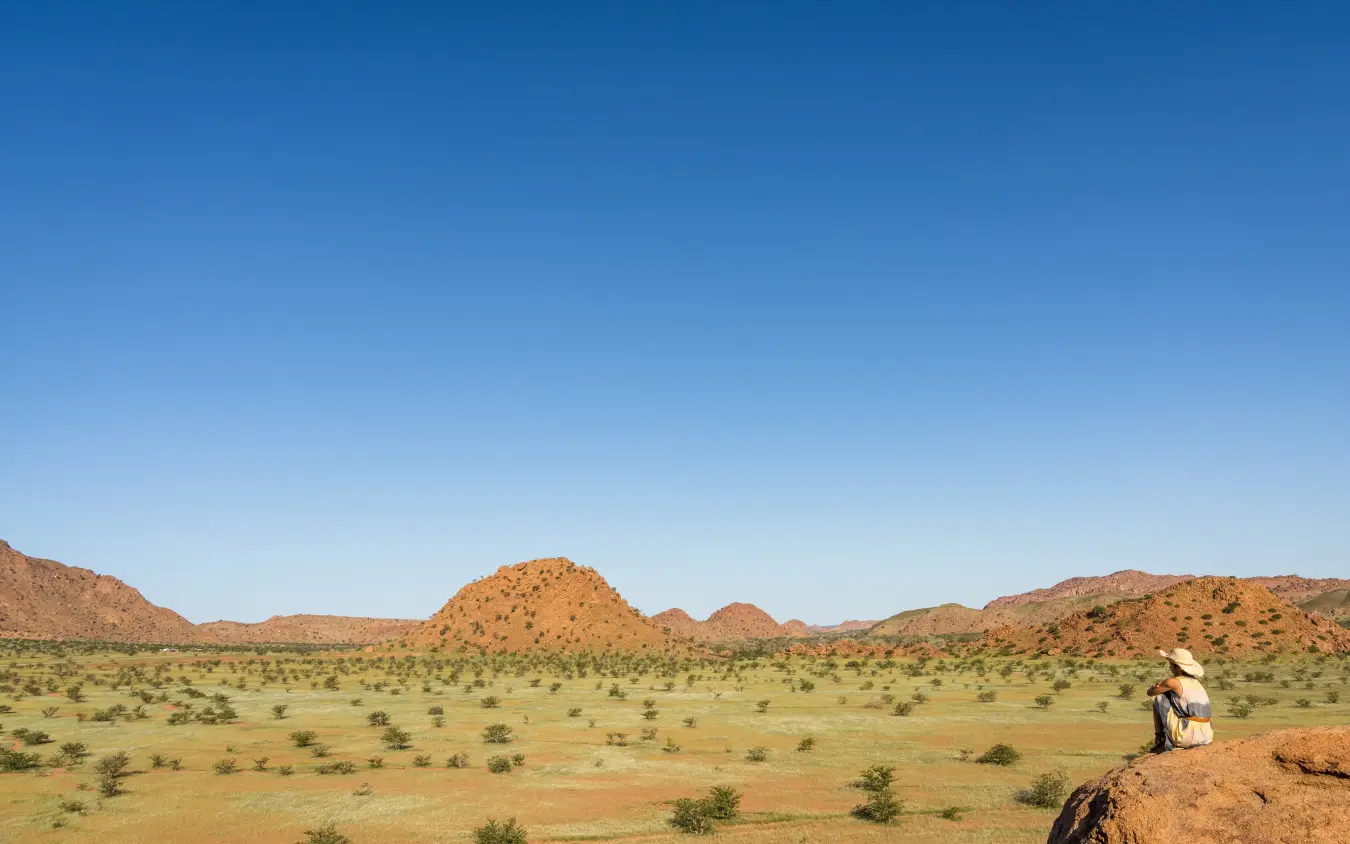
Guests standing in grassland with mountain peaks in background, Mowani Mountain Camp, Damaraland, Namibia 03

conservation

Uibasen-Twyfelfontein Community Conservancy Support

The camp operates within the Uibasen-Twyfelfontein Community Conservancy, with guest levies funding local infrastructure and schooling. Guides and staff are trained from the local Damara community. Mowani supports the Desert Lion Conservation Trust and maintains waterholes to ease human-elephant conflict.

ready to get started?

Get in touch and let’s start the conversation. An initial consultation helps us understand what you’re looking for, whether that’s specific experiences, luxury touches, or marking a special occasion, and from there we’ll guide you through what’s possible so you can decide if we’re the right fit.

Alternative accommodation in damaraland

frequently asked questions

Fly or drive; both work well. Light aircraft from Windhoek's Eros airport land at the Twyfelfontein airstrip after roughly one and a half to two hours in the air, with a road transfer of about twenty minutes to camp. We can also arrange a private charter, typically a Cessna Caravan or Pilatus PC-12, when the scheduled circuit does not fit your route. Bring soft bags for the flying, since the small holds and weight limits leave no room for hard cases.

By road it is around five and a half hours from Windhoek or four from Swakopmund, the later stretches on gravel, which places the camp naturally on a self-drive loop between the coast and Etosha.

Mowani sits in the Kunene region, which both of the main health authorities name in their Namibia malaria advice, so the honest answer is yes, with a strong seasonal pattern. The UK's official guidance recommends antimalarial tablets for the December to April months and rates May to November as low risk, with bite avoidance advised; the CDC likewise lists Kunene among the regions with transmission, while calling malaria rare in the rest of the country.

Since the classic travel season is the dry winter, most guests visit in the low-risk window. Check the current position for your own dates with a travel clinic or your doctor, and take the usual care after dark.

Desert weather with the volume turned up by rock: hot, dry days, often into the thirties, then a fast slide into cold once the sun leaves the boulders, with winter nights from June to August dipping near freezing. Summer, November to April, adds real heat and the occasional thunderstorm.

Pack loose, light layers and a hat for the day, a warm fleece or jacket for evenings and dawn drives, and closed shoes with decent grip for the stone paths and steps between the rocks. Sun protection is non-negotiable, a buff keeps the dust off on the drives, and swimwear earns its place for the pool in the afternoon heat.

Two nights is the practical minimum, because the two signature outings claim different parts of the day and a single night forces a choice between them. With two, the elephant tracking gets its unhurried morning and the rock engravings their afternoon, and neither is rushed.

A third night earns its keep if you want a guided walk, the Damara Living Museum or a balloon flight, or simply an afternoon by the pool without a vehicle in it. Beyond three, stay only if the quiet itself is what you came for.

May to October gives the classic conditions: dry air, moderate days, cold sharp nights, and wildlife easier to find because the riverbeds hold the only water for miles. That window suits a first visit best, and it is the low season for malaria in this region as well.

The green months from November to April trade certainty for drama. Storm light, warmer nights and thin crowds appeal to returning travellers and photographers, but the animals disperse and the middle of the day runs genuinely hot. Tell us what matters most and we will place the dates accordingly.

rated five stars by our clients

other areas in namibia

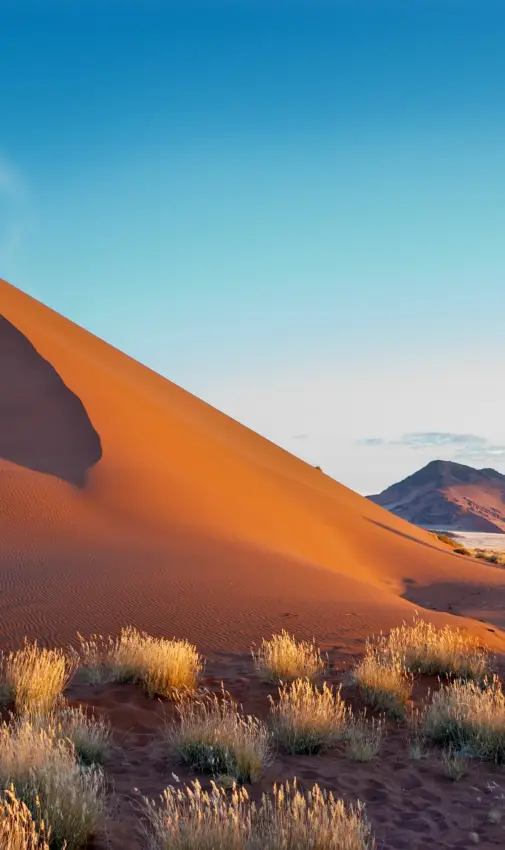
Golden sand dune at sunset with sparse desert vegetation 01

Sossusvlei

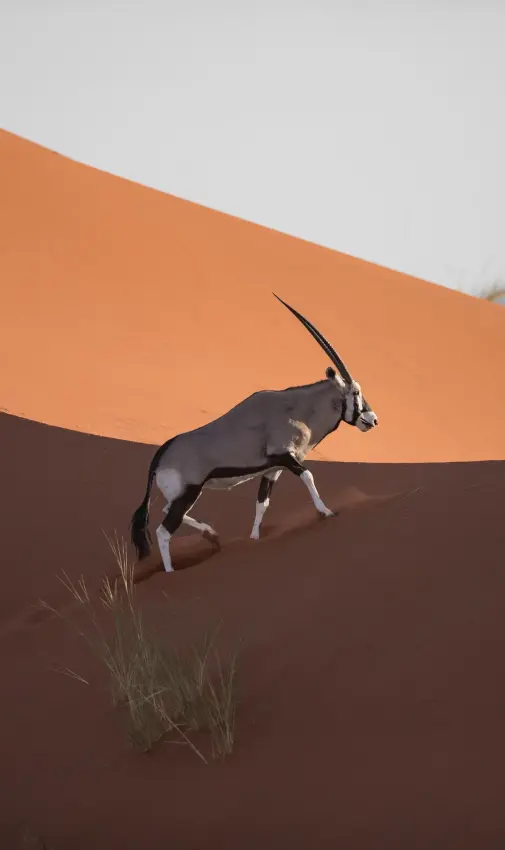
Elephant with zebras and antelopes at waterhole 02

Etosha National Park

Aerial view of desert dunes meeting coastal waves 03

Skeleton Coast

Portrait of a person wearing traditional African beaded jewelry 05

Kunene River

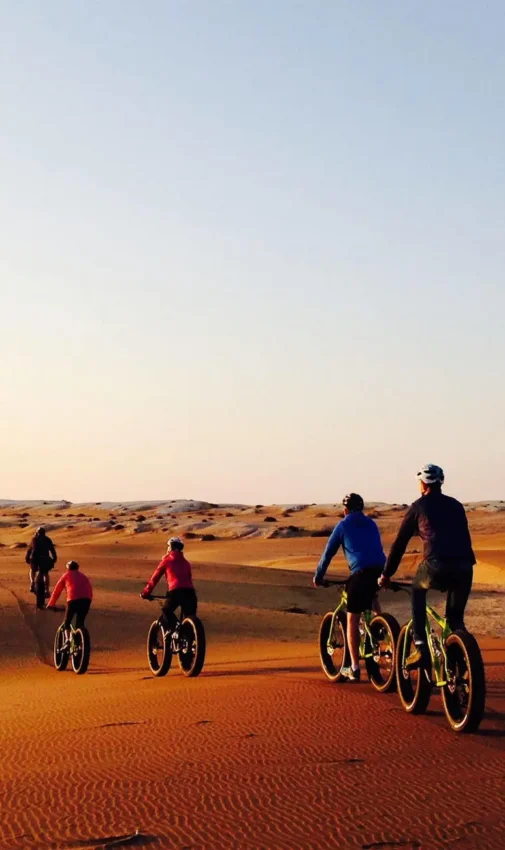
Cyclists riding across red sand dunes at sunset, Swakopmund, Namibia 06

Swakopmund

Elephant herd walking through dusty grassland with scattered trees, Zambezi Region, Namibia 07

Zambezi Region

Aerial view of church and city at sunset 08

Windhoek

Planning a journey together

our approach

remote, exclusive
& personal

Every journey starts with a conversation. We take the time to understand your vision before we start planning.

Whether by phone or in person, we work with you directly to shape something that is considered, personal, and expertly delivered.

get in touch
destinations ideas & inspiration our process about us contact us