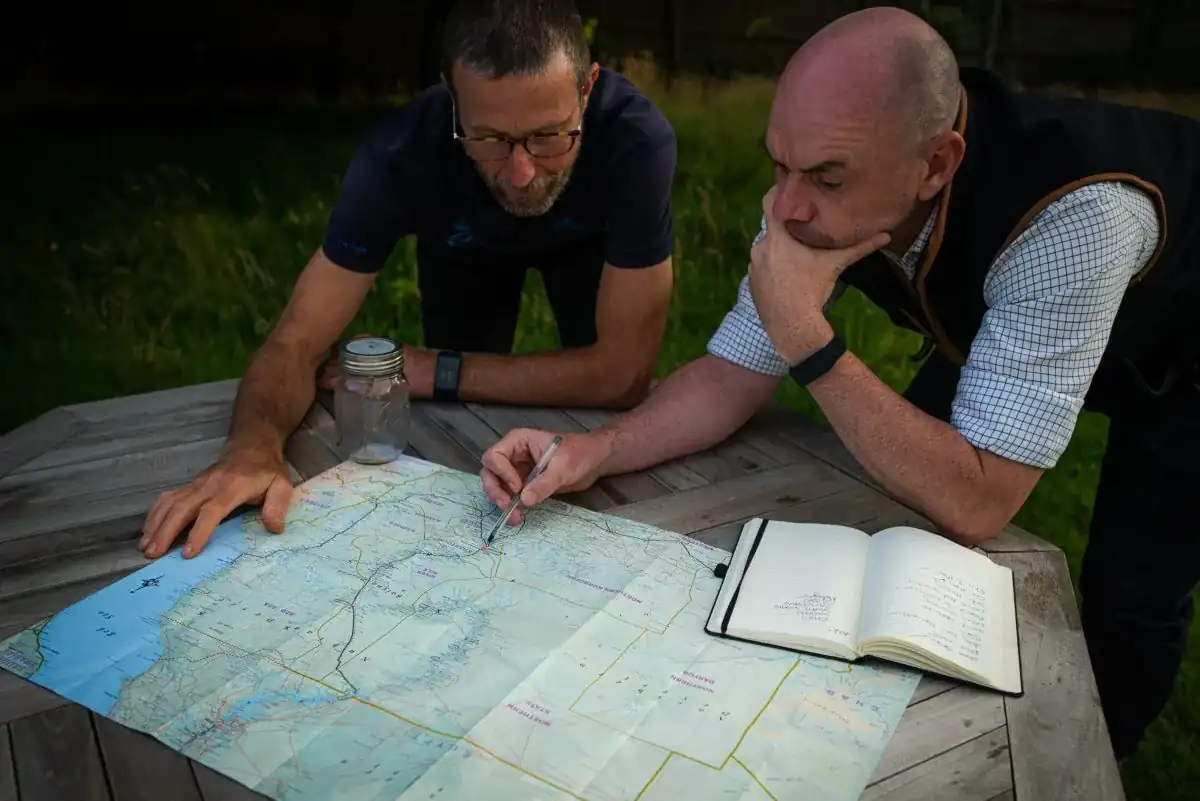
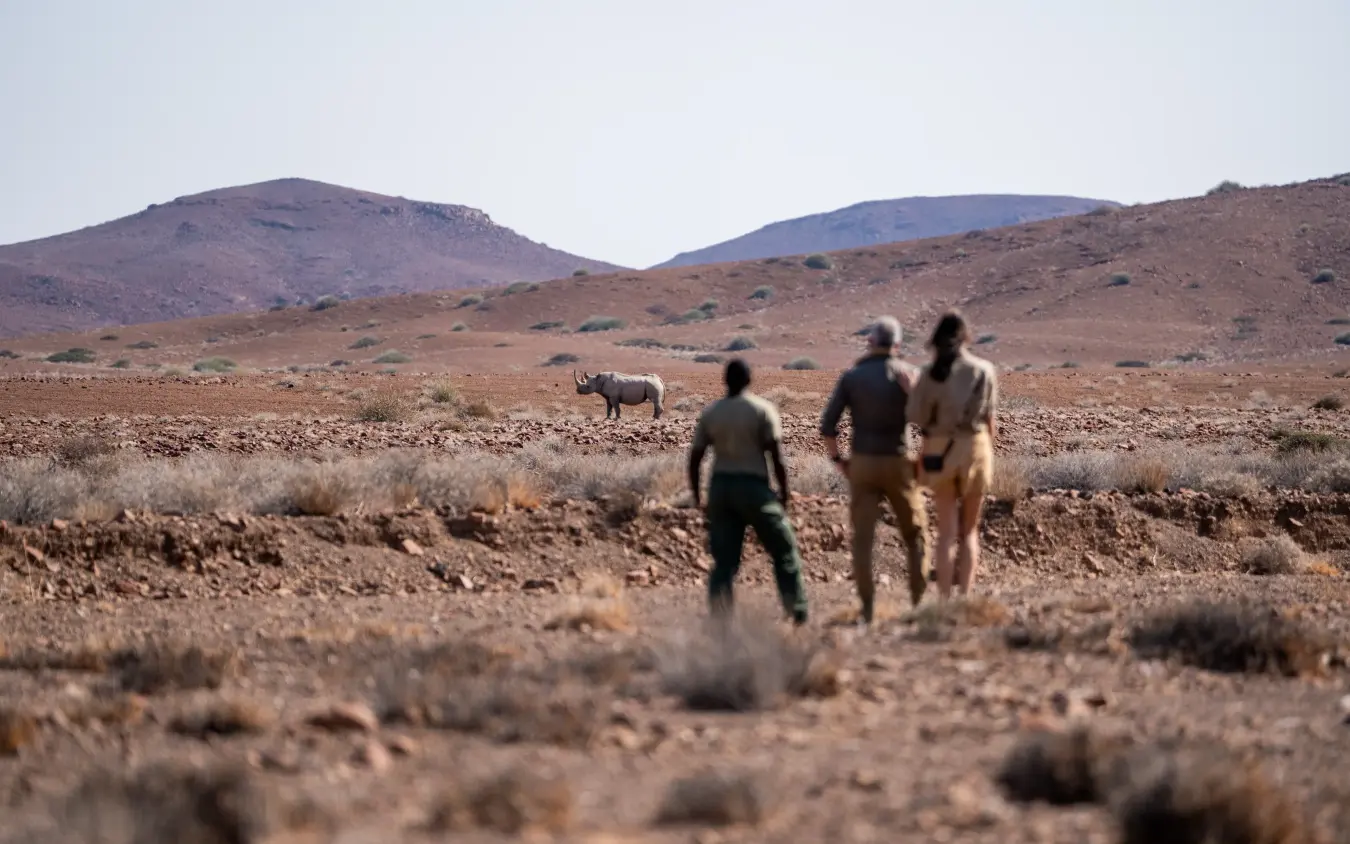
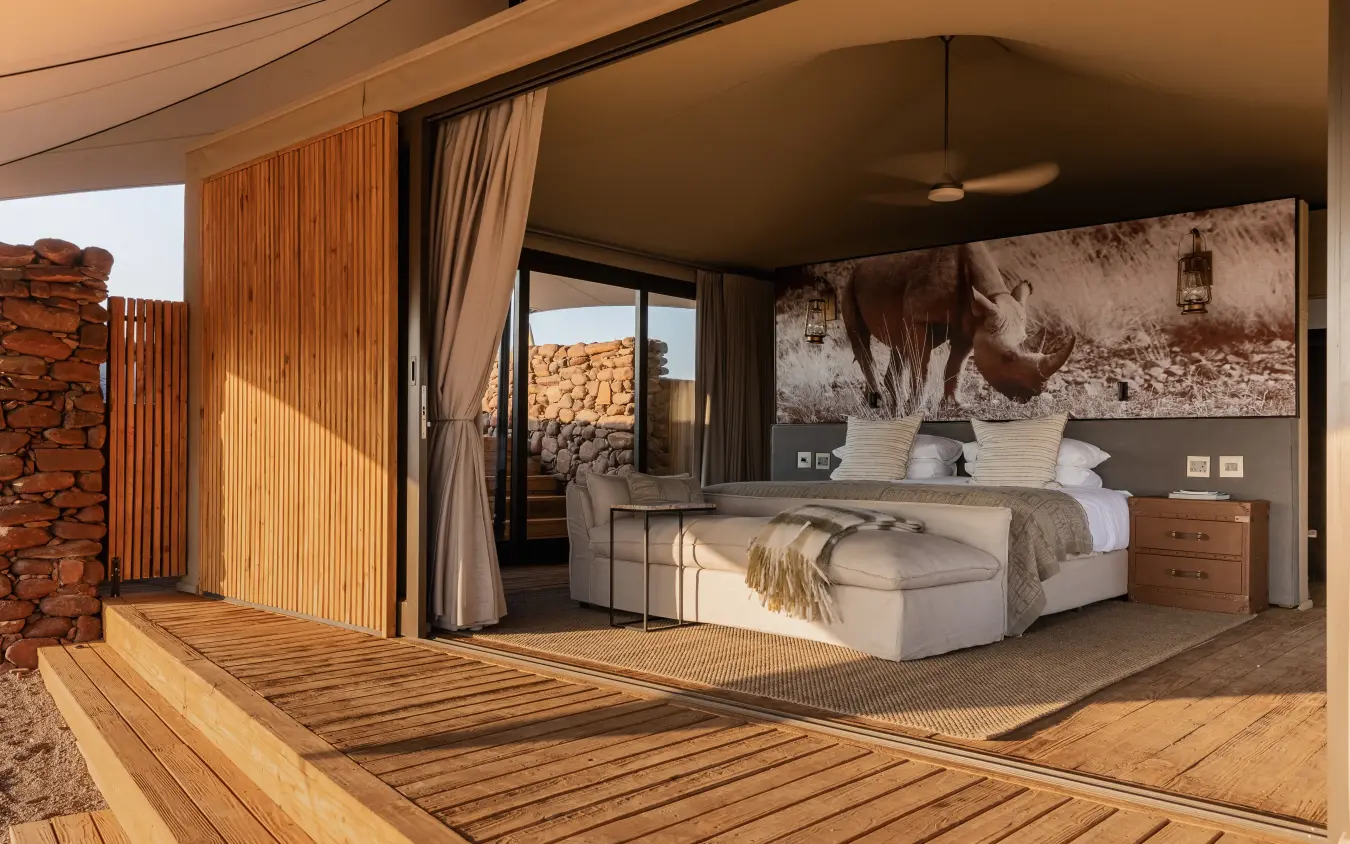
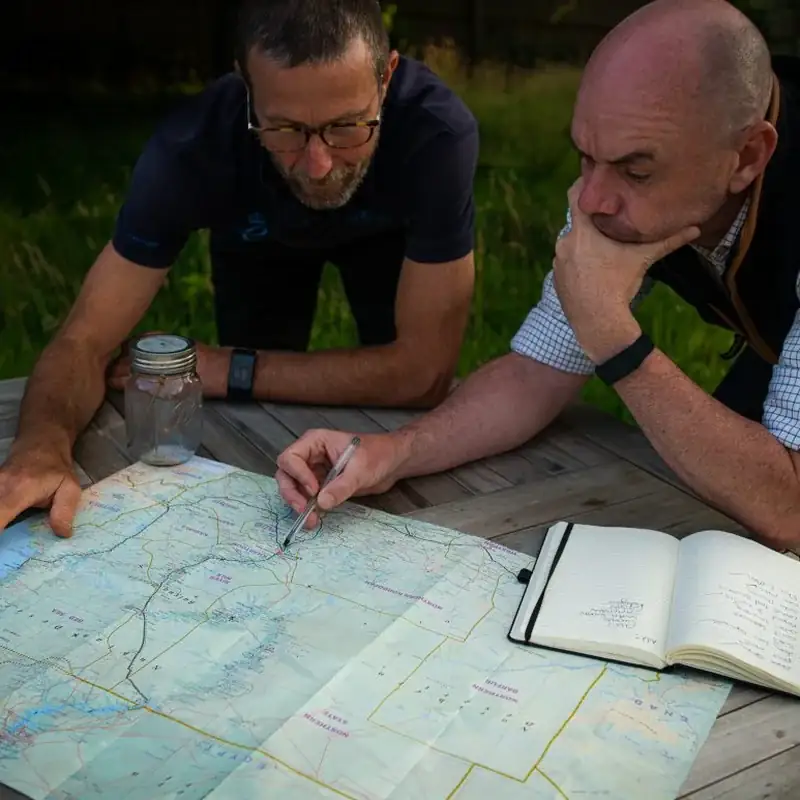
Trackers head out at dawn to locate the rhino, radioing back their position before the guests set off behind them in single file, boots crunching over volcanic gravel. It is quiet, deliberate work. Once at a careful distance, guests help gather identity and body-condition data for one of the longest-running black rhino databases in existence, contributing directly to the fieldwork that underpins the whole population’s protection. What begins as a walk ends as a genuine part of the science.
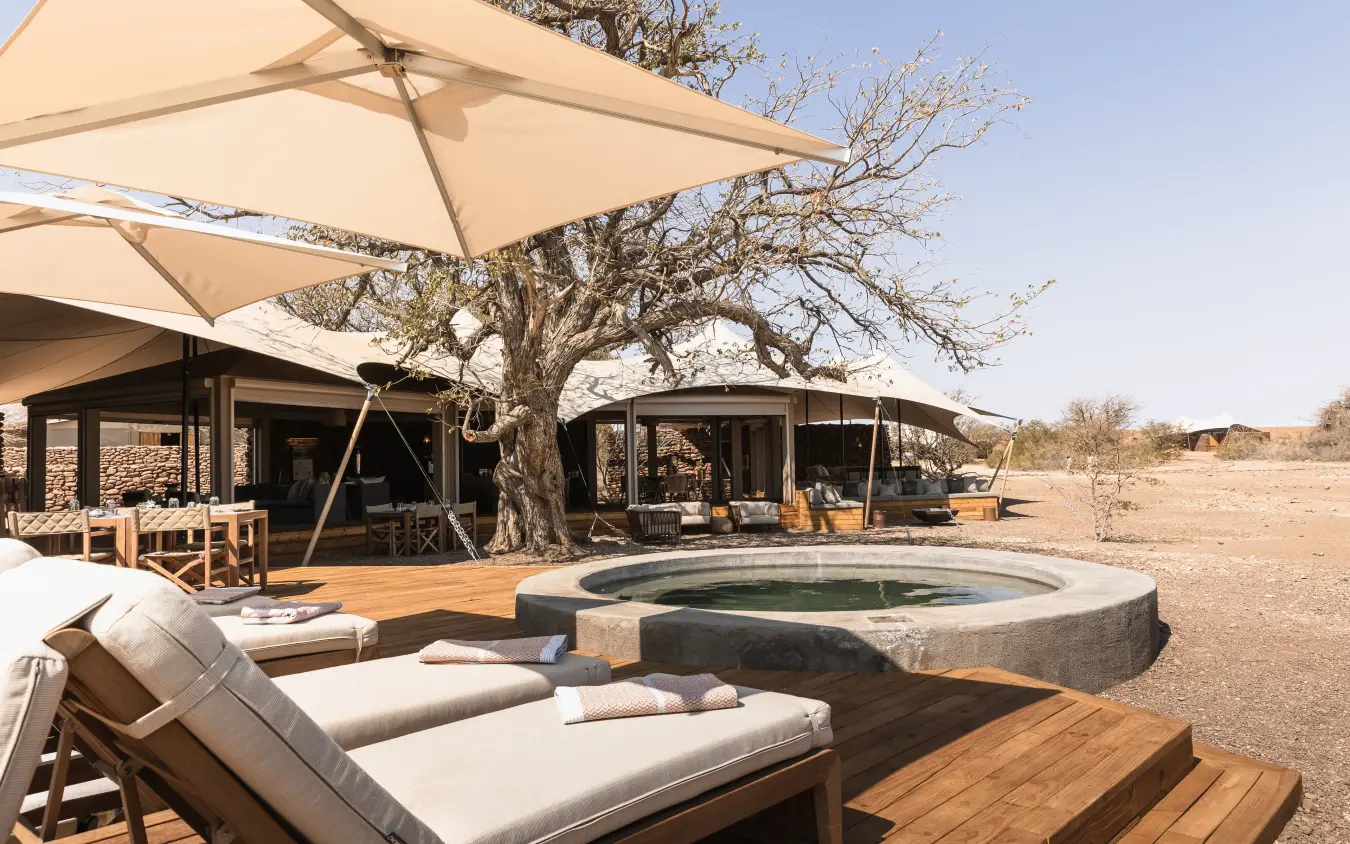
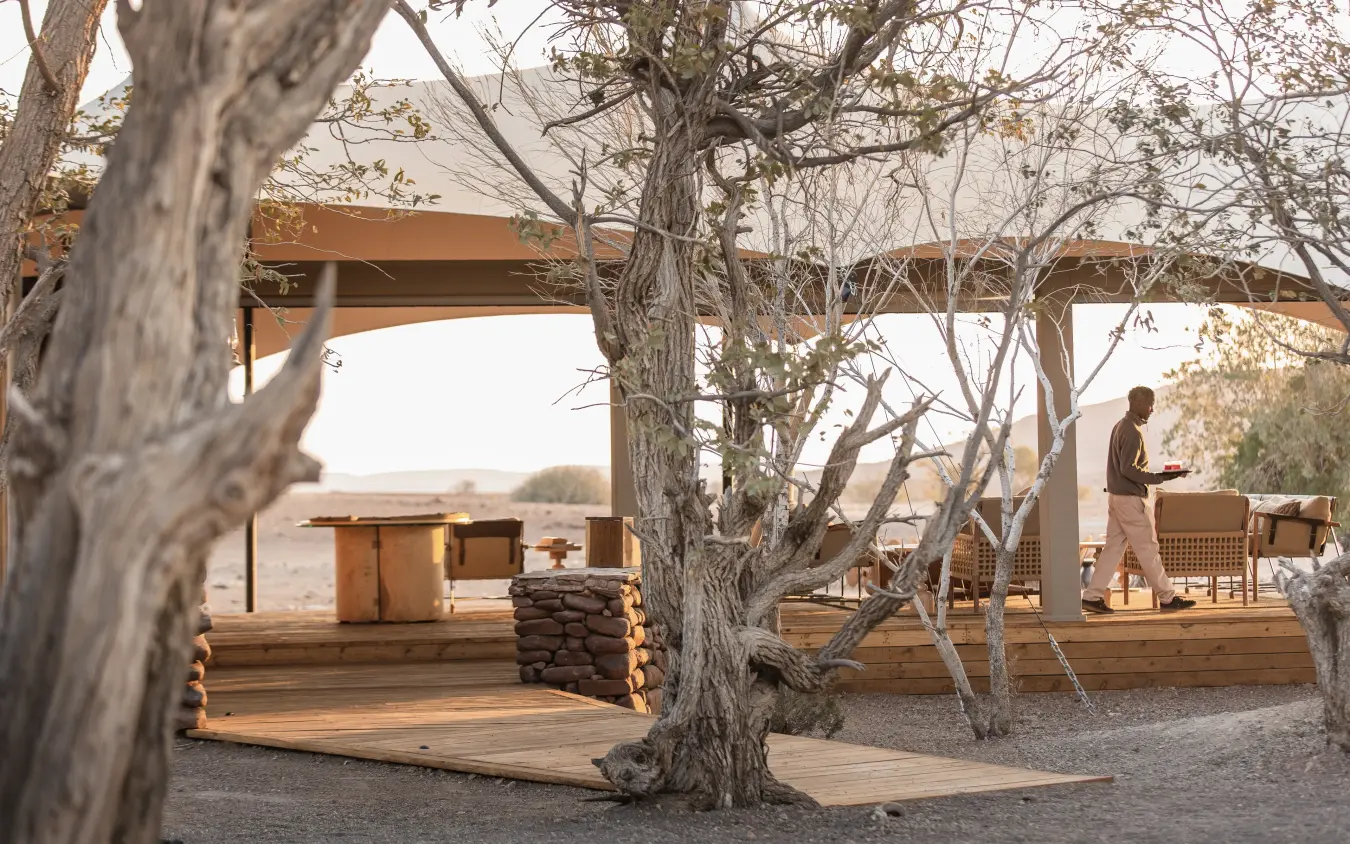
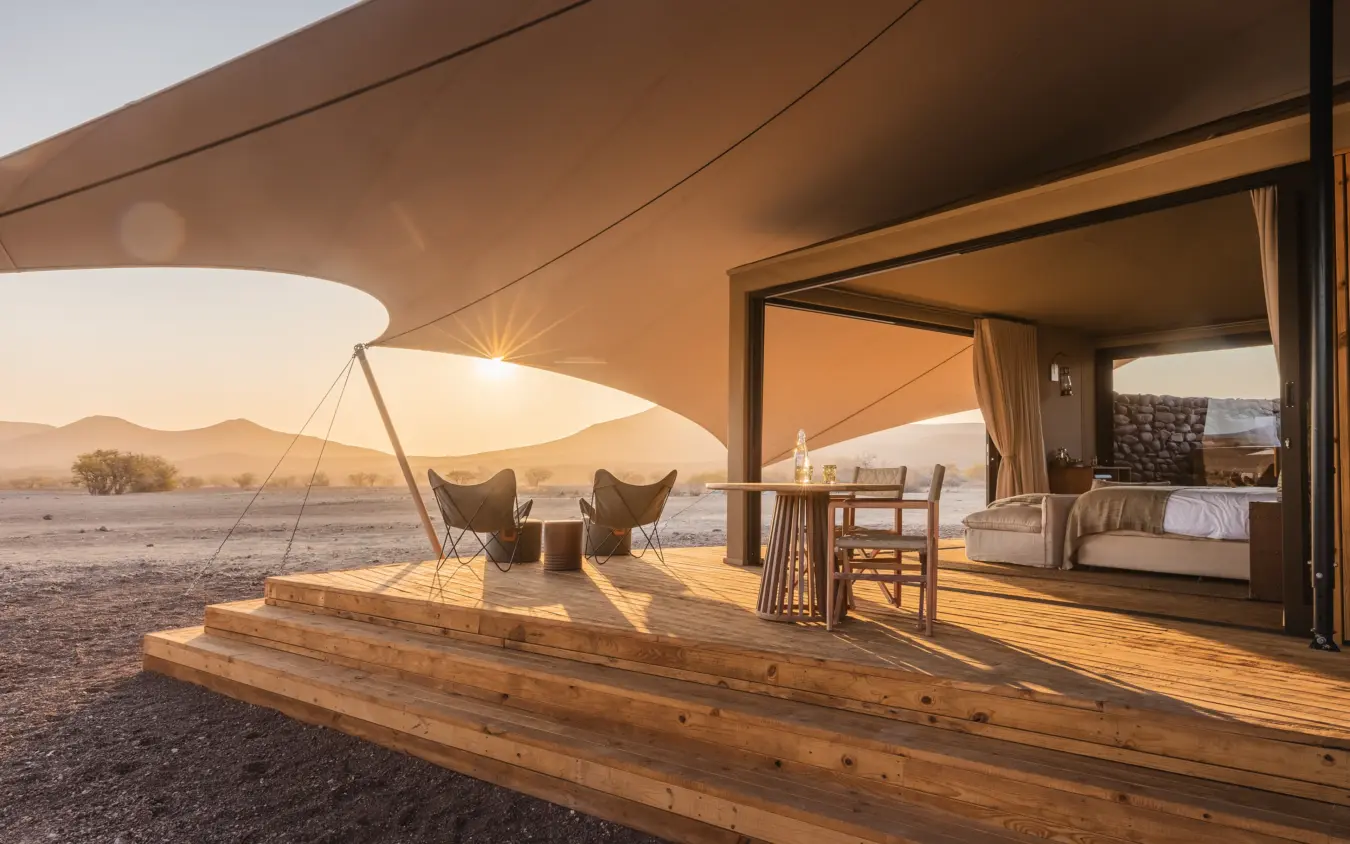
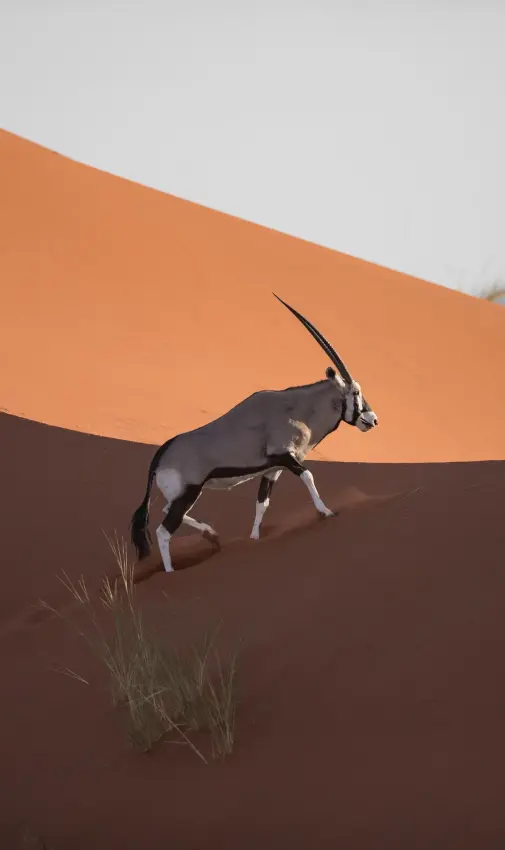
Rhino aside, the concession is far from empty. Nomadic desert-adapted elephant move through it, along with Hartmann’s mountain zebra, southern giraffe, gemsbok, springbok and kudu, all drawn to the freshwater springs threaded through the rock. The predators are here too, among them desert-adapted lion, cheetah, leopard, and both brown and spotted hyena. Birders come for Rüppell’s korhaan, Benguela long-billed lark, Herero chat and Verreaux’s eagle wheeling over the ridges, while jackal and springbok wander past the decks.
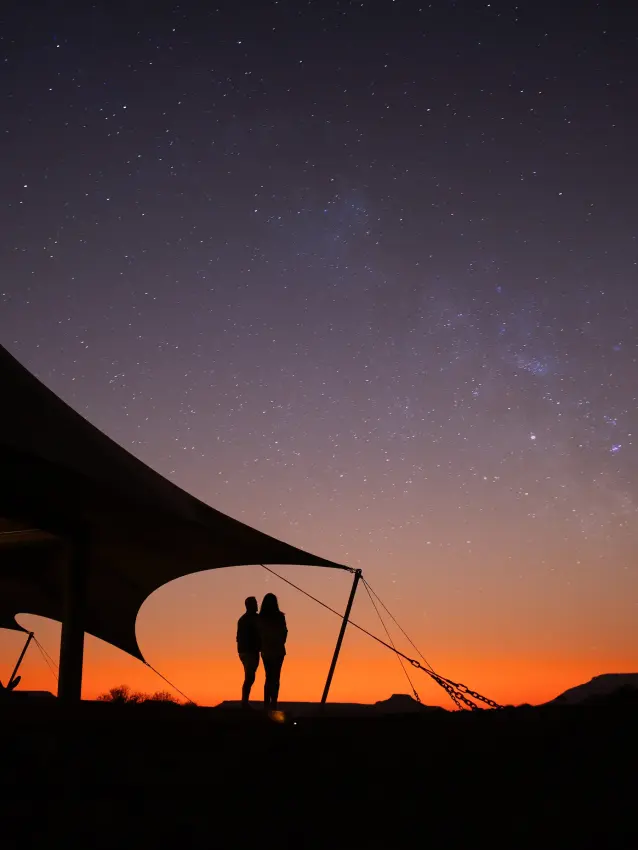
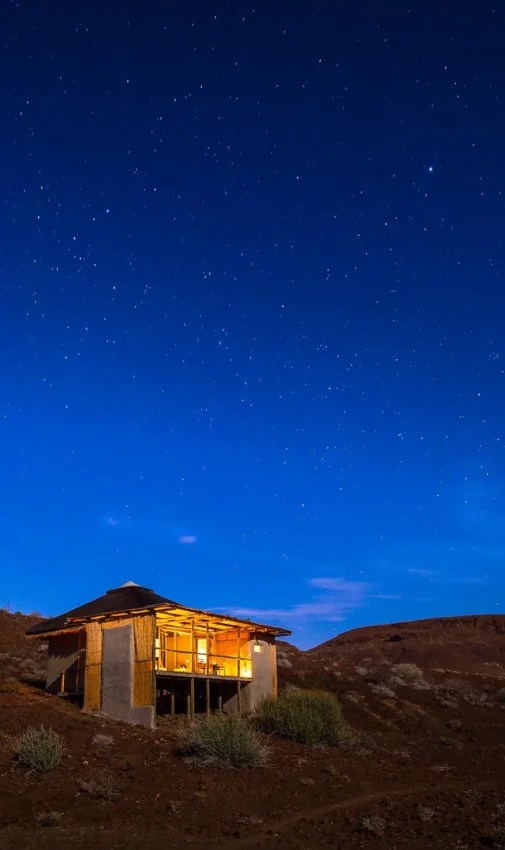
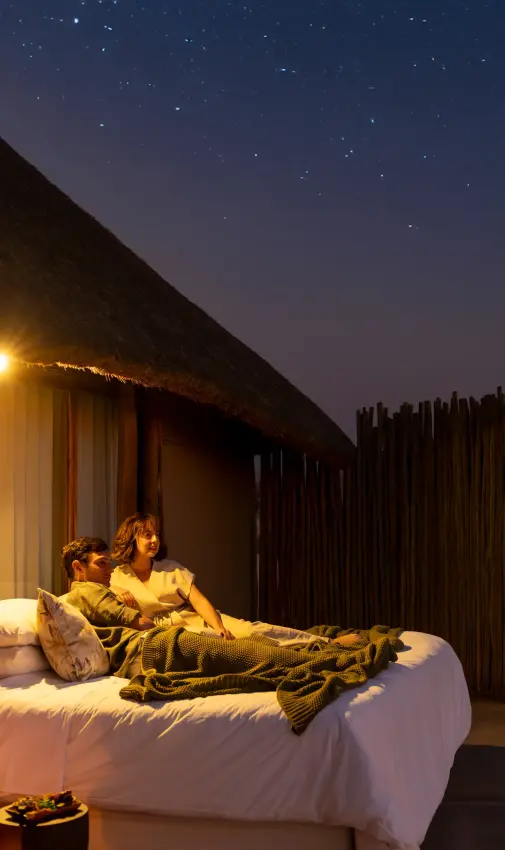
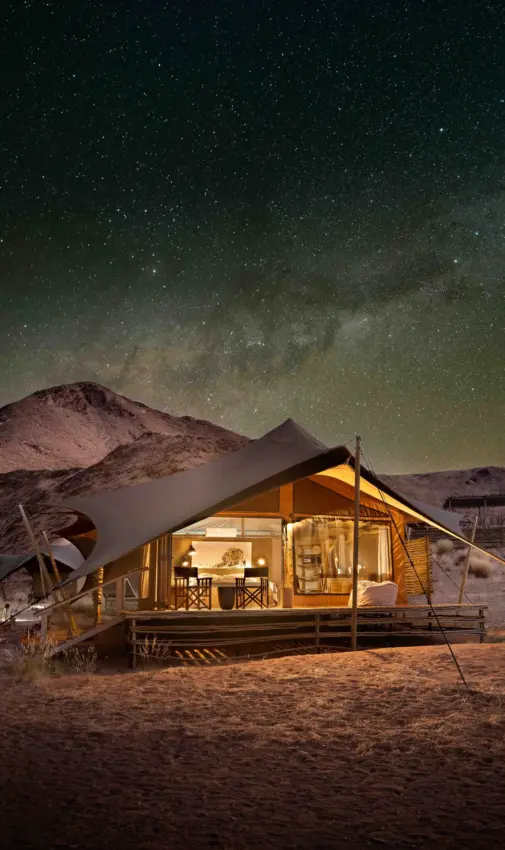
With almost no light pollution, the stargazing around the fire is exceptional
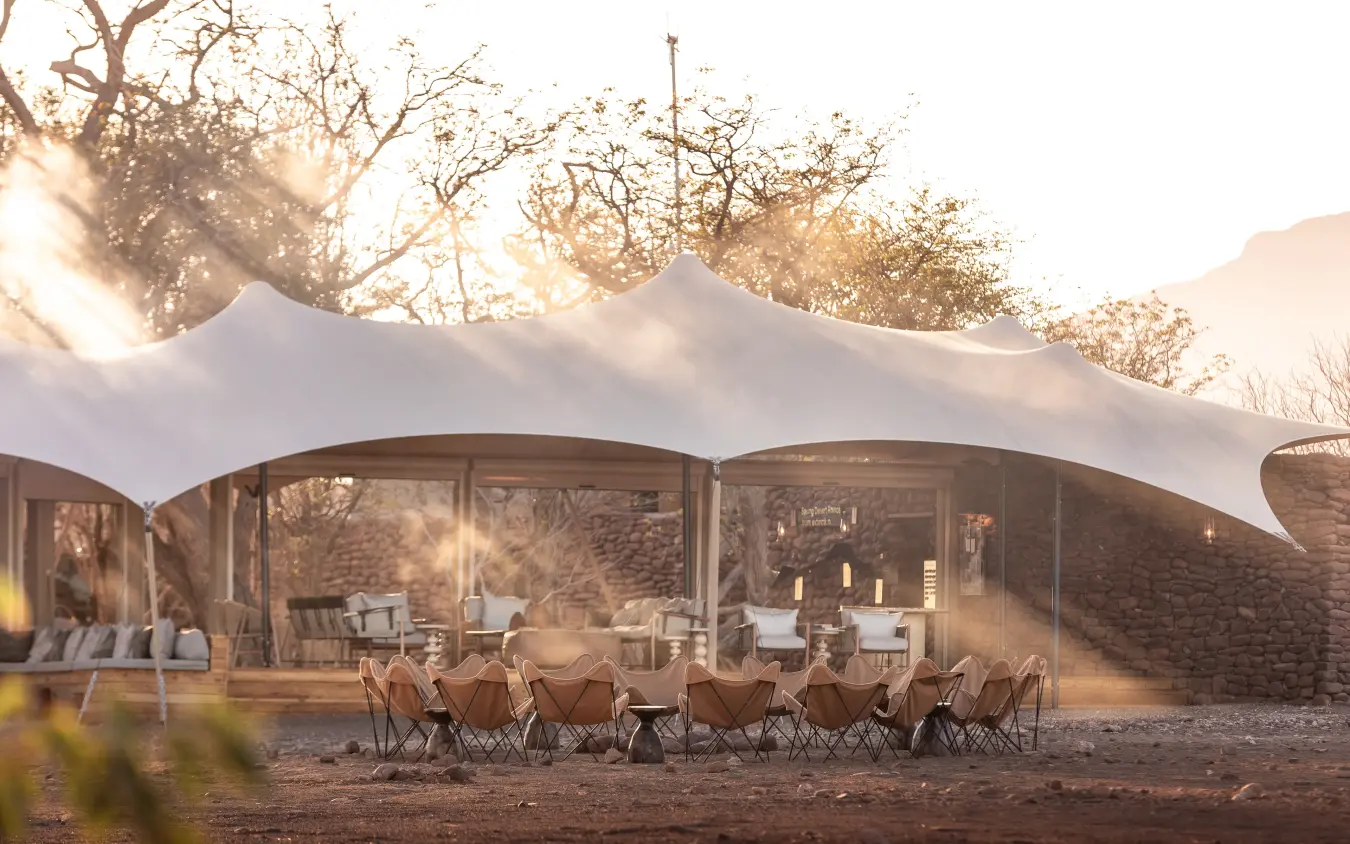
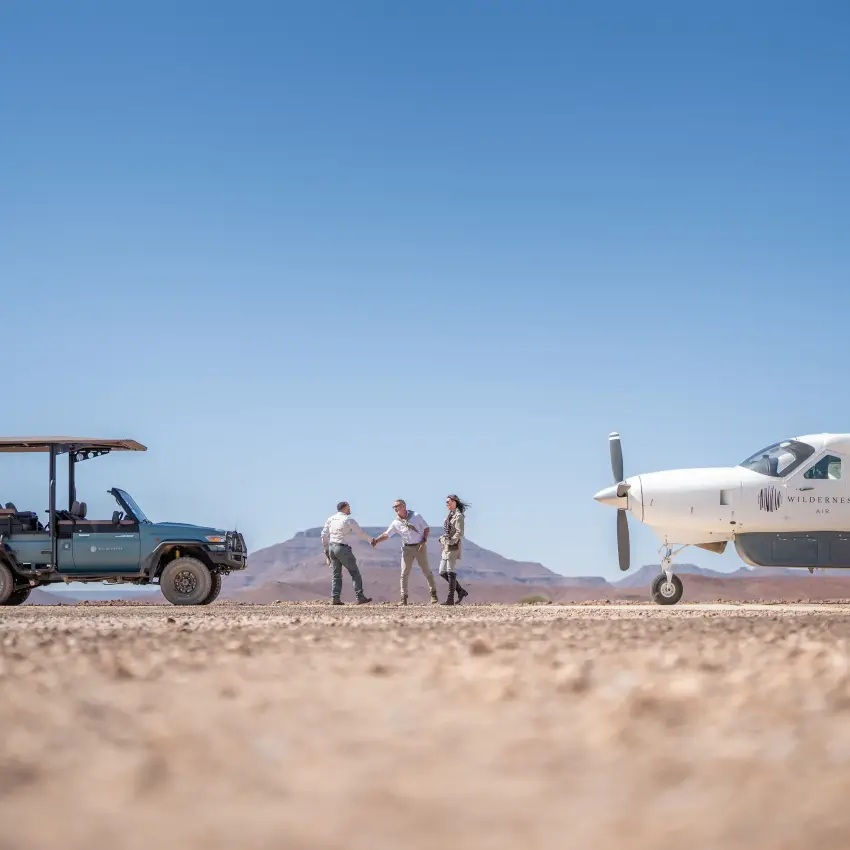
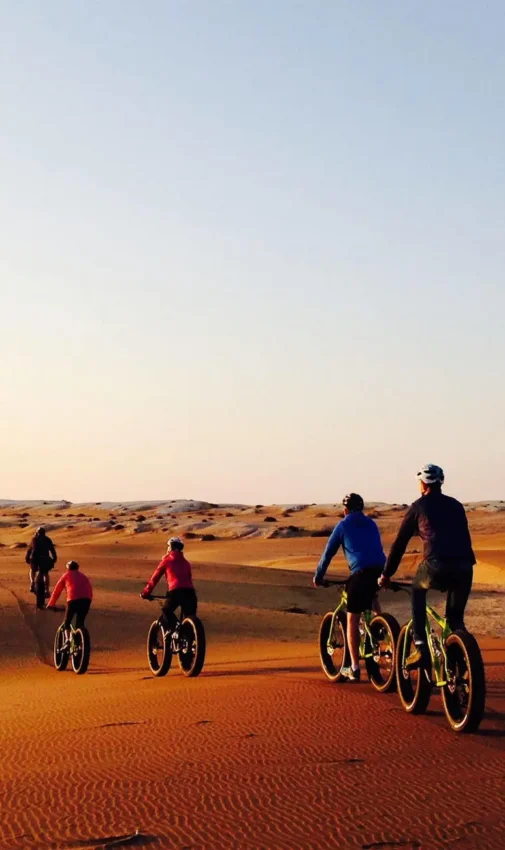
Because this is a private concession rather than a national park, the days can go where park rules forbid. Night drives and off-road tracking are both permitted. Full-day excursions end with a picnic lunch beneath a wild ebony or mopane tree, guided walks read the geology and the survival tactics of the desert flora, and after dark UV torches pick out fluorescing scorpions among the rocks. With almost no light pollution, the stargazing around the fire is exceptional.
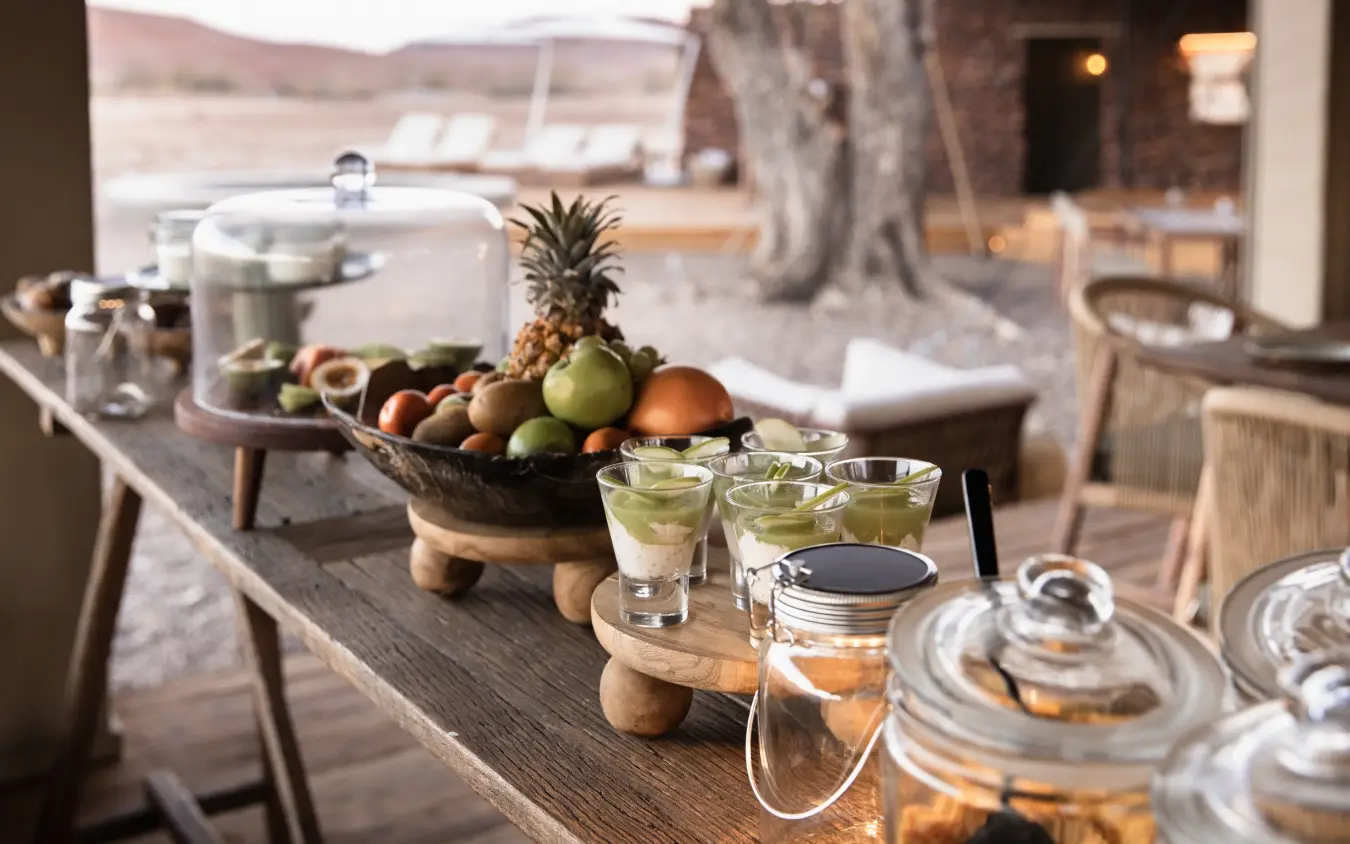
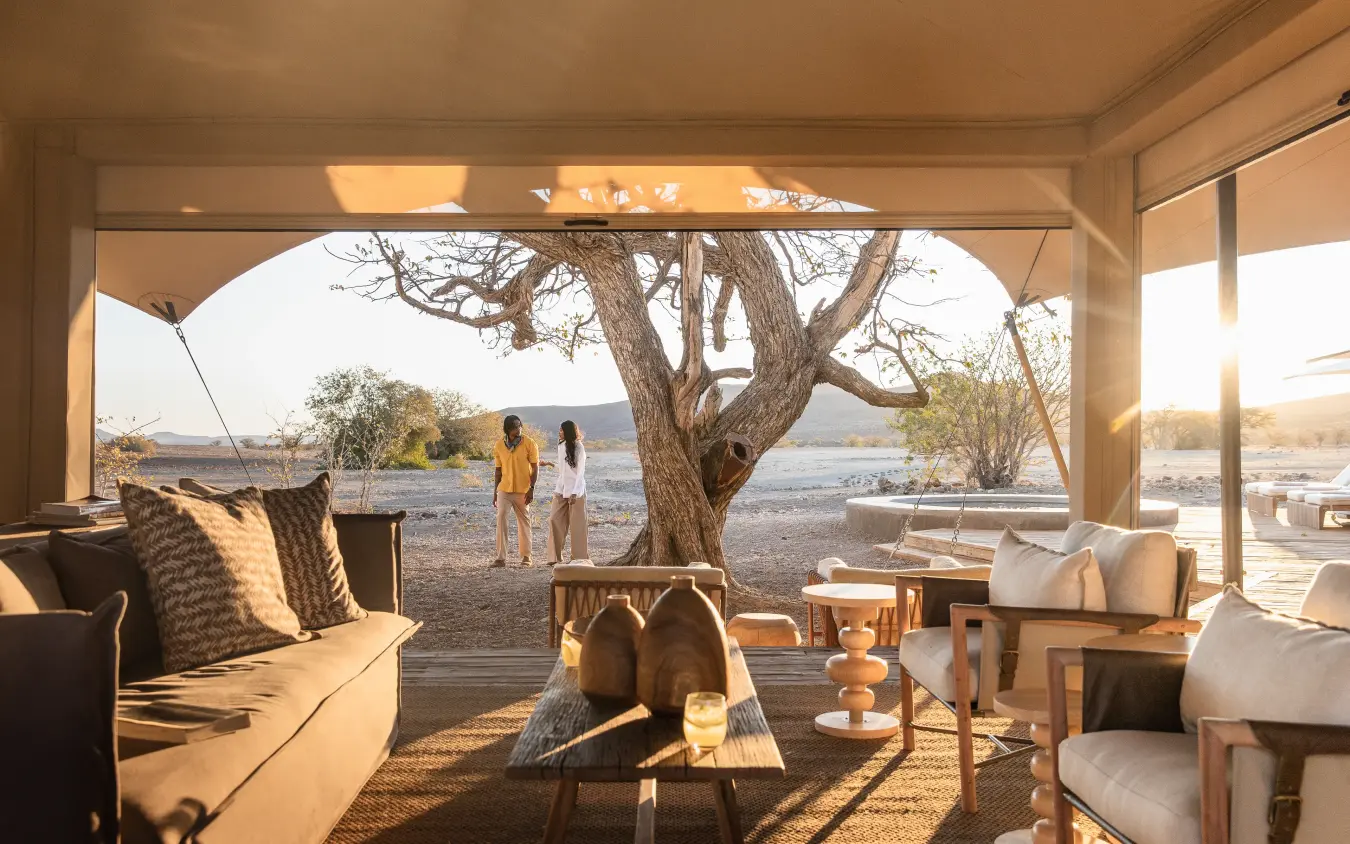
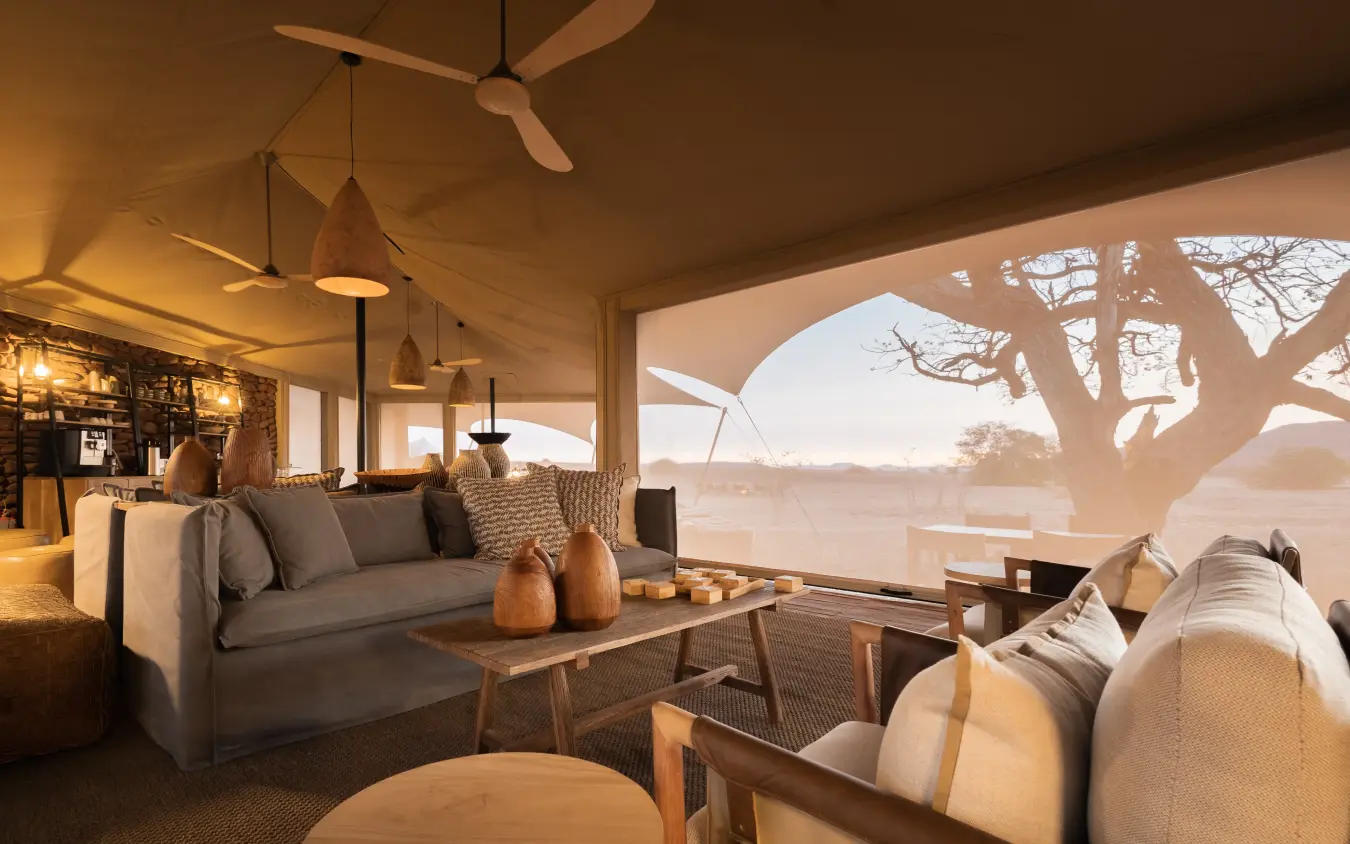
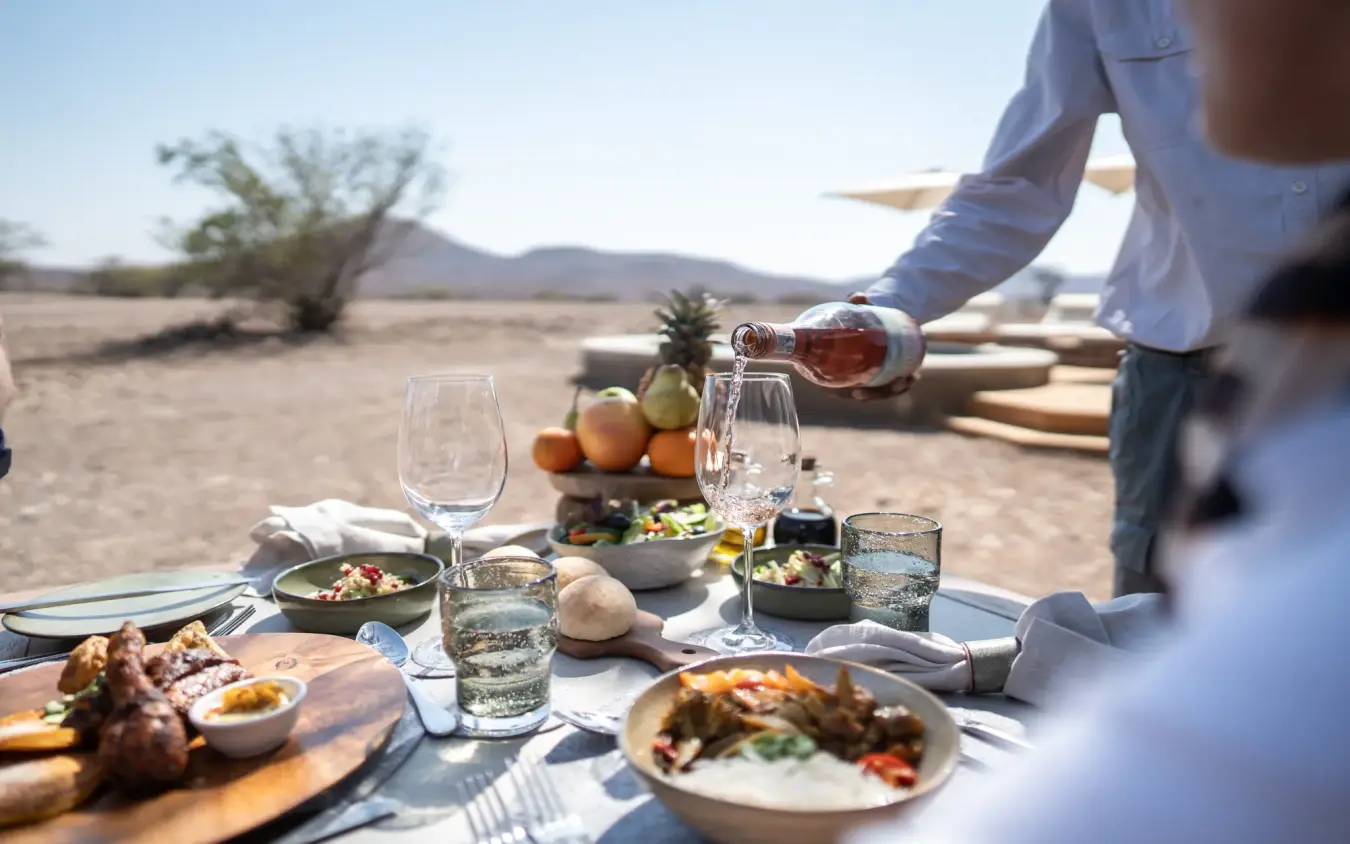
Guests return dusty and wind-blown to a single long wooden table lit by lanterns, trading stories of the day’s rhino over South African wine. Head chef Timotheus Namwandi builds his menus around Namibian ingredients. Efukwa groundnuts are served like salted edamame, alongside wild spinach, a slow-cooked lamb potjie, and prime beef over the open flames of the boma. The silence at night is broken only by the wind in the canvas and the call of a black-backed jackal.