Camp

Doro Nawas Camp

Doro Nawas Camp sits above the dry Aba-Huab River in Damaraland, Namibia, where beds roll onto the deck for sleeping beneath the Milky Way.

Country: Namibia
Location: Above the Aba-Huab River, Damaraland
Number of rooms: 16

Beds that roll out under the stars

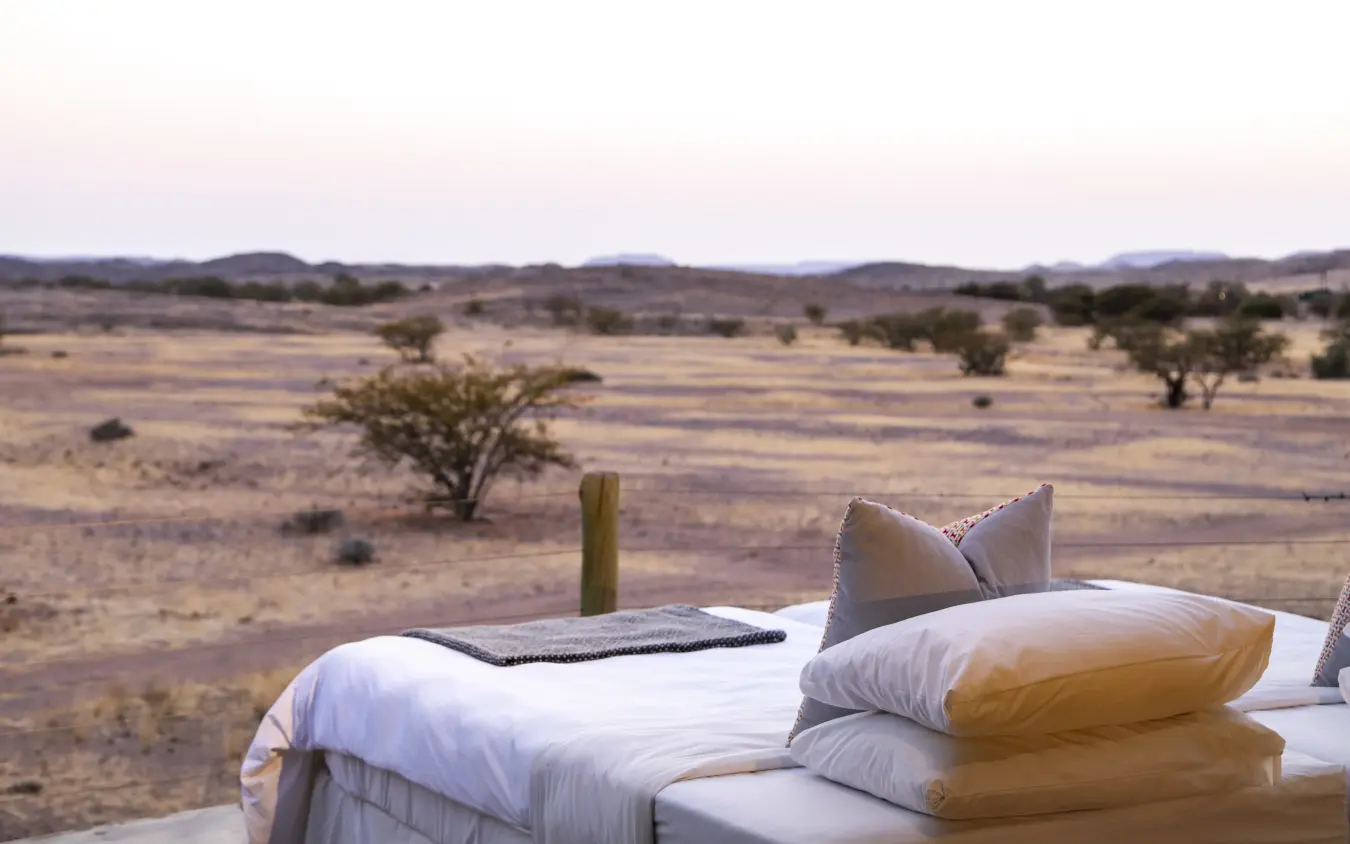
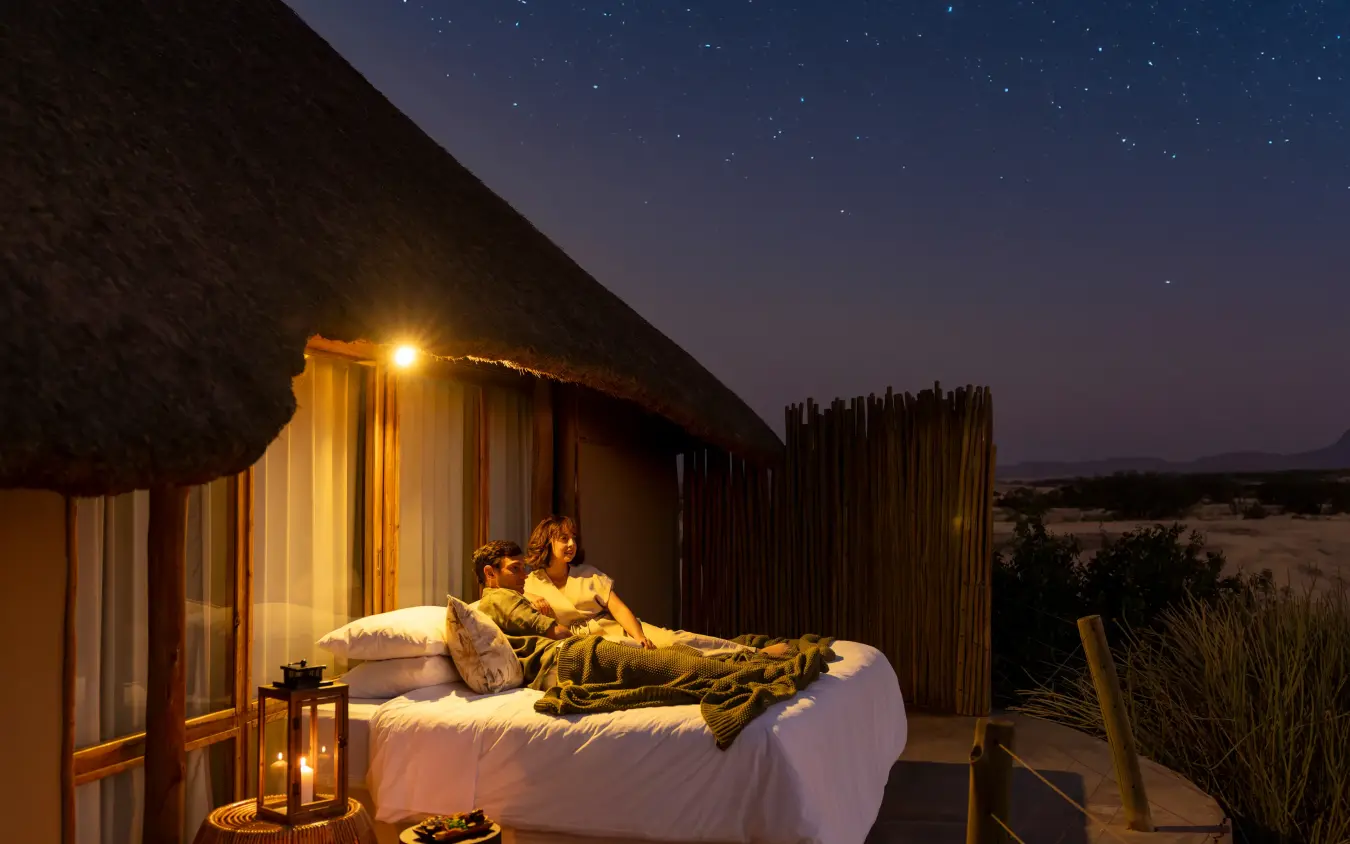
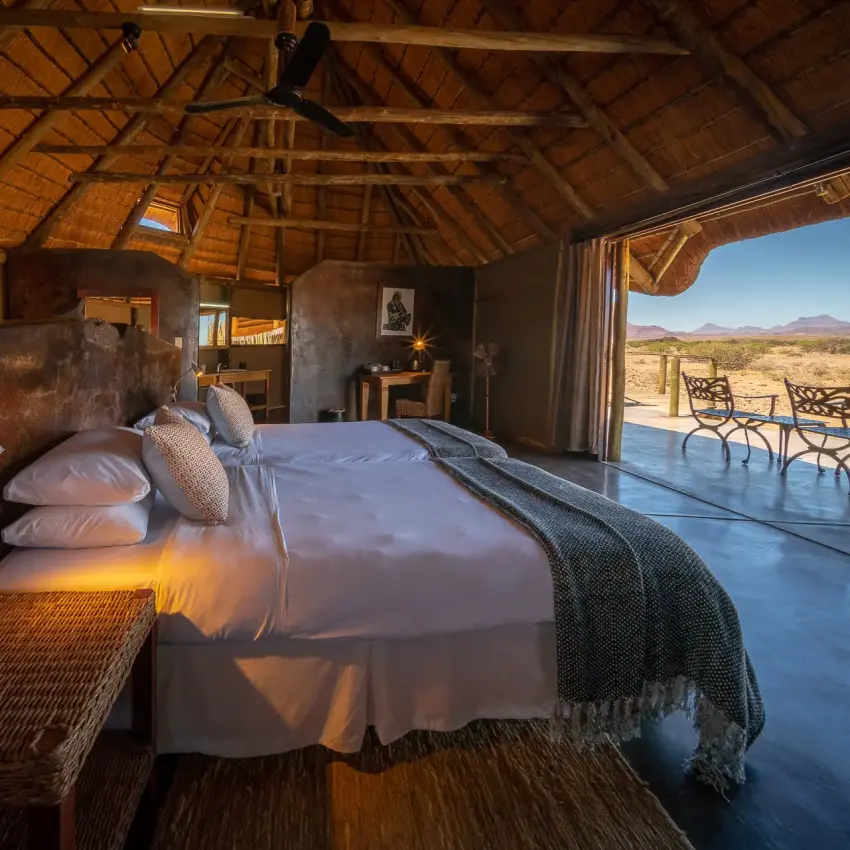
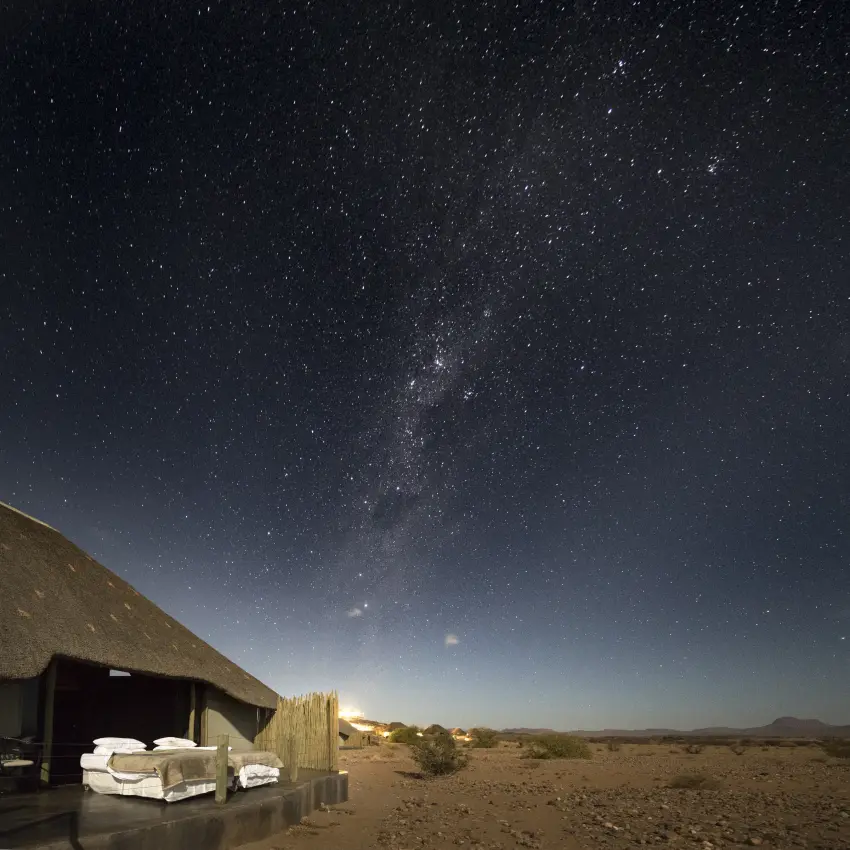
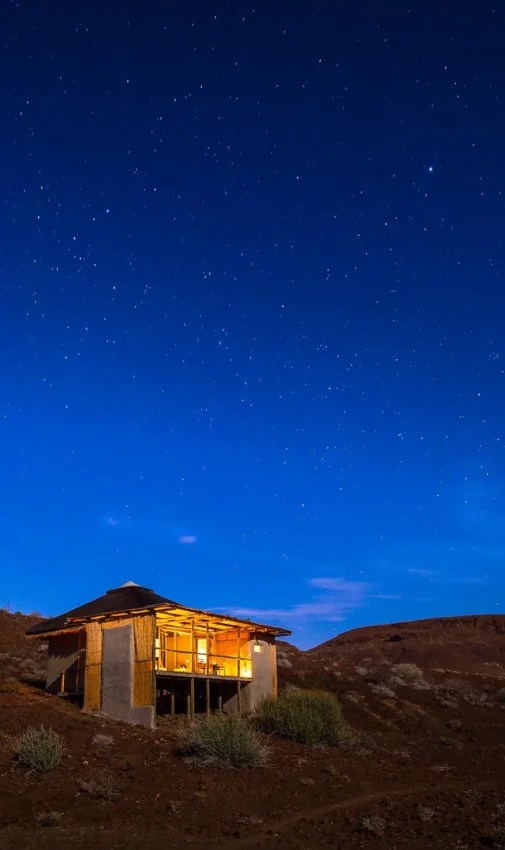
Doro Nawas Camp stands on a rocky rise above the dry Aba-Huab River in Damaraland, in the north-west of Namibia. The double beds here sit on wheels. Each evening they can be rolled out onto the private deck, so that guests sleep in the open with nothing between them and the whole of the sky, the Milky Way spread wide above the desert.

Each evening they can be rolled out onto the private deck

From the camp, gravel plains run out toward the Etendeka Mountains, a country of dry river terraces, sandstone cliffs and scattered granite outcrops. The days run hot and dry, and the nights turn crisp and cold, so that the down duvets earn their place out on the deck. Wind moves through the mopane after dark, and on some nights elephants can be heard passing through the riverbed below.

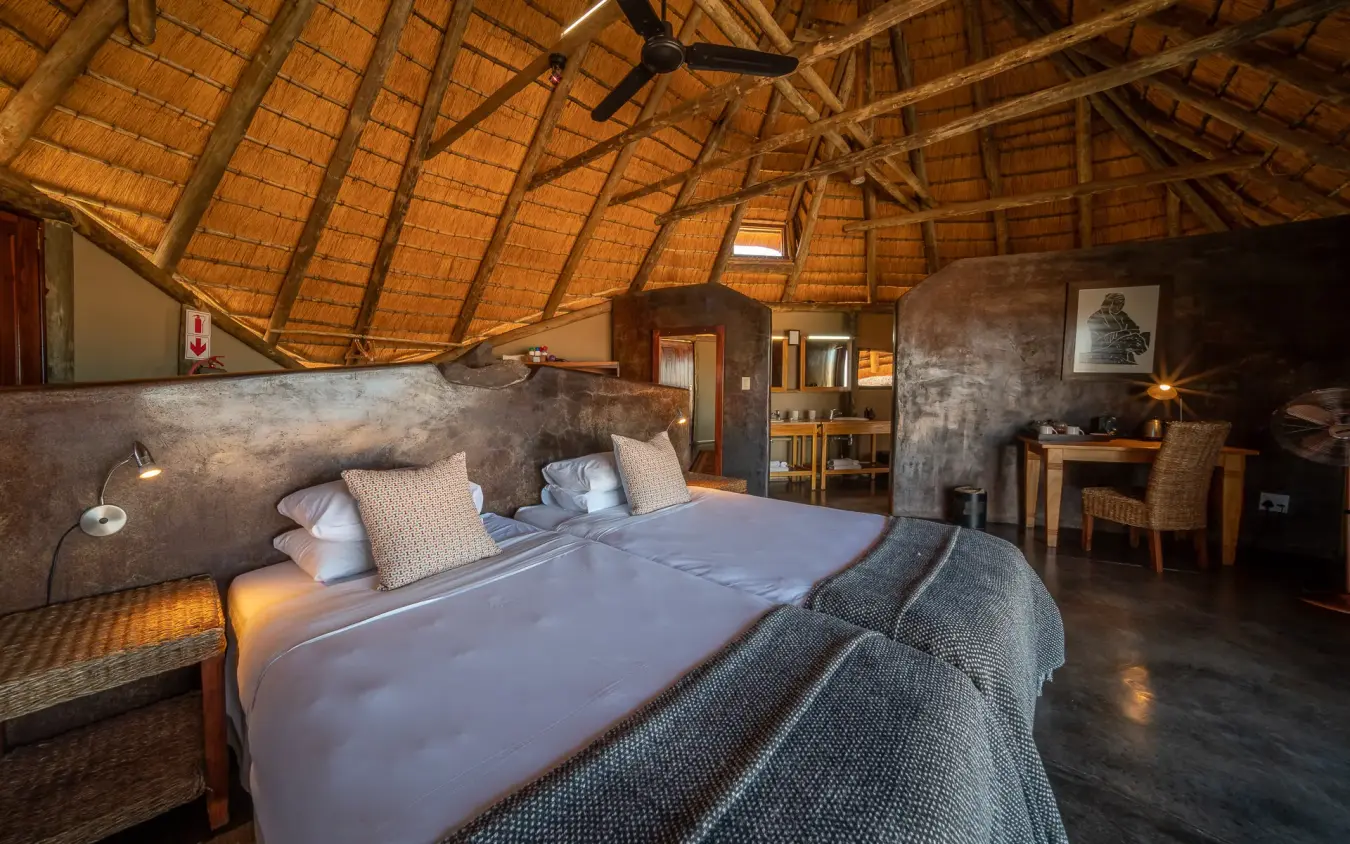
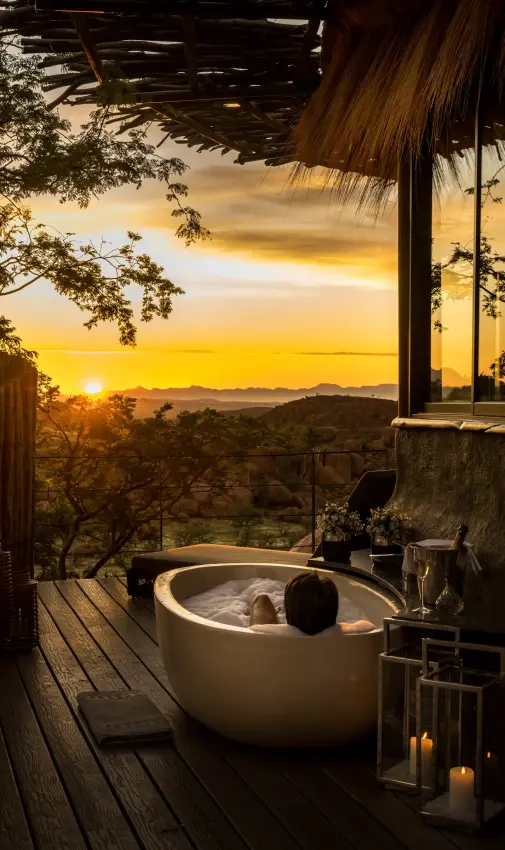
Luxury safari bedroom with open-air terrace overlooking arid landscape at dusk, Doro Nawas Camp, Damaraland, Namibia
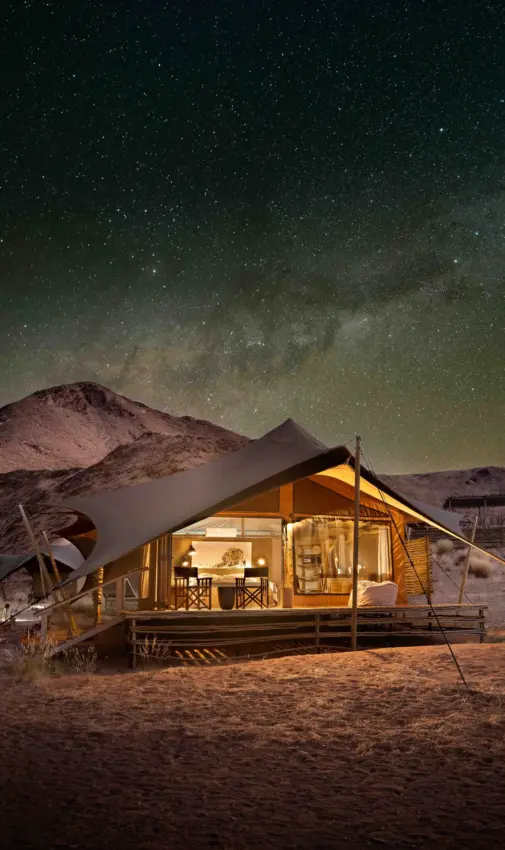
Open-air bedroom pavilion under starlit desert sky at night, Doro Nawas Camp, Damaraland, Namibia

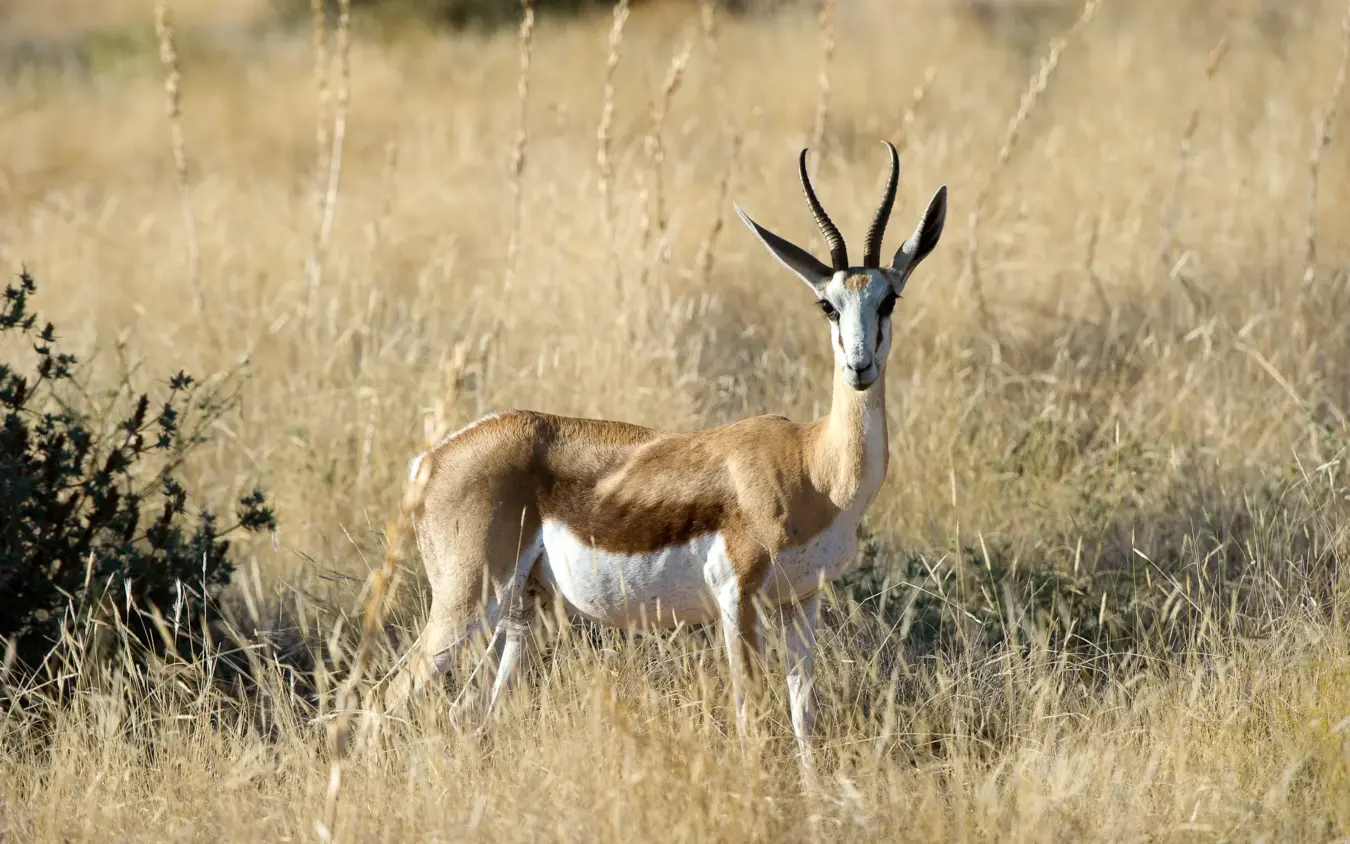
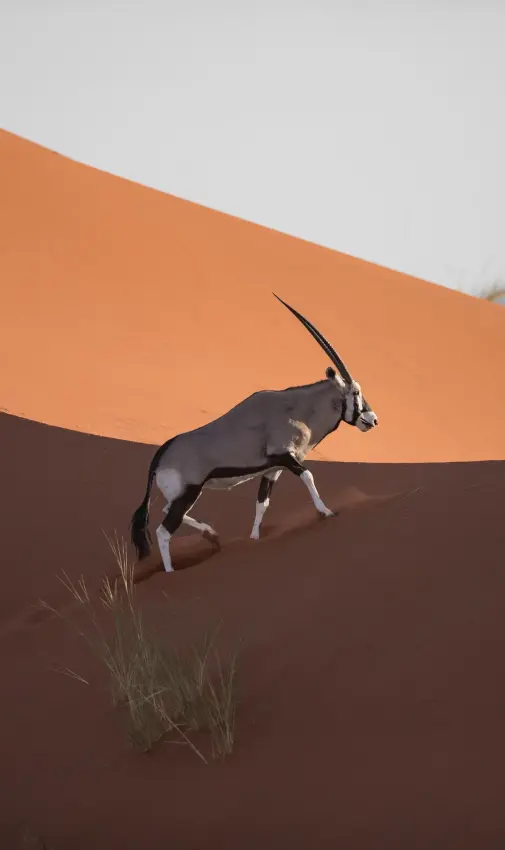
The desert-adapted elephants are what draw guests down into the Aba-Huab valley, on 4×4 drives that follow the dry riverbed to where the animals browse the sparse growth that survives here. Game is not dense in this arid country, yet gemsbok, springbok, kudu, ostrich and bat-eared fox all cross the plains. The birdlife holds Namibian endemics such as the Damara hornbill, Carp’s tit and Rüppell’s korhaan.

Because this is conservancy land rather than a national park, guides can run night drives

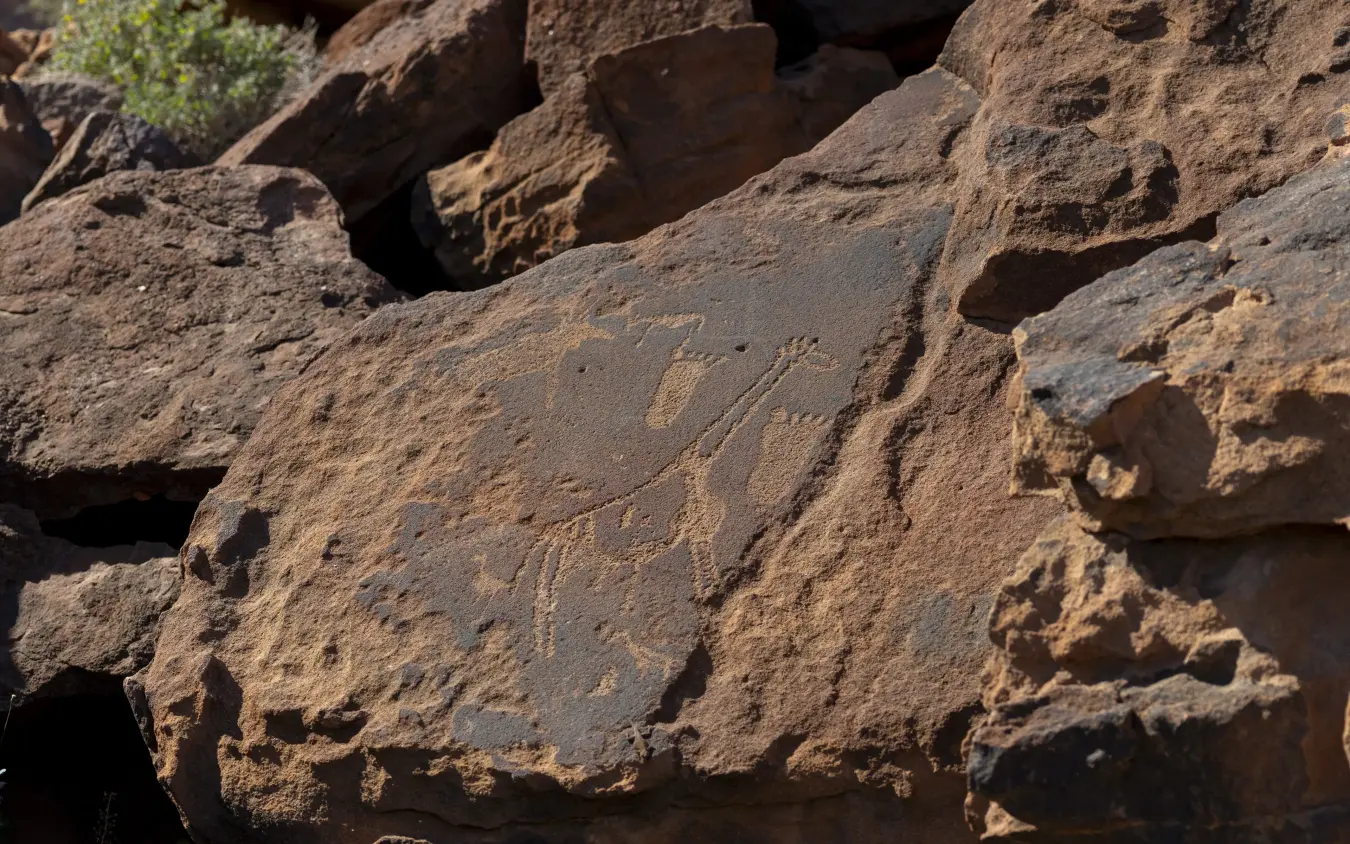
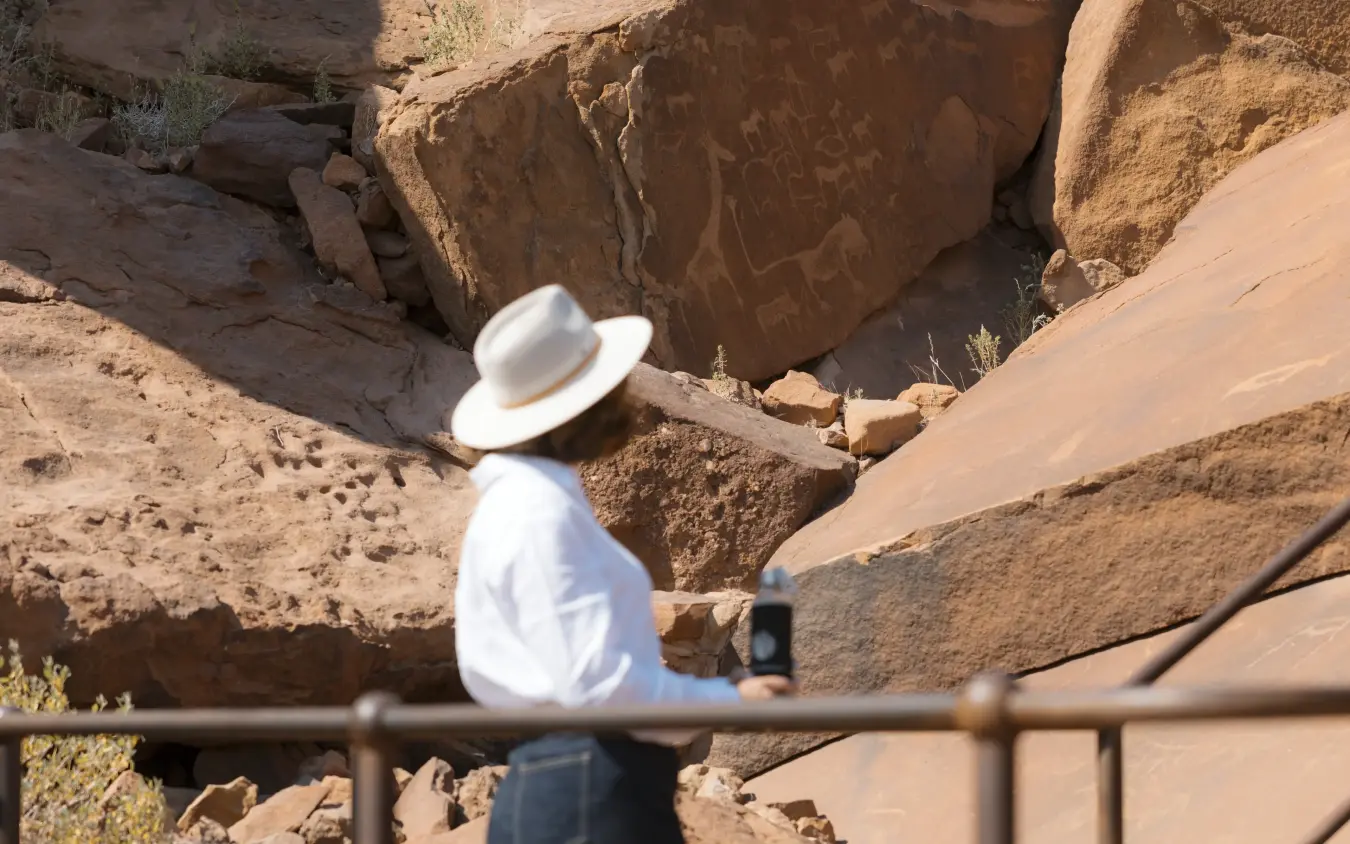
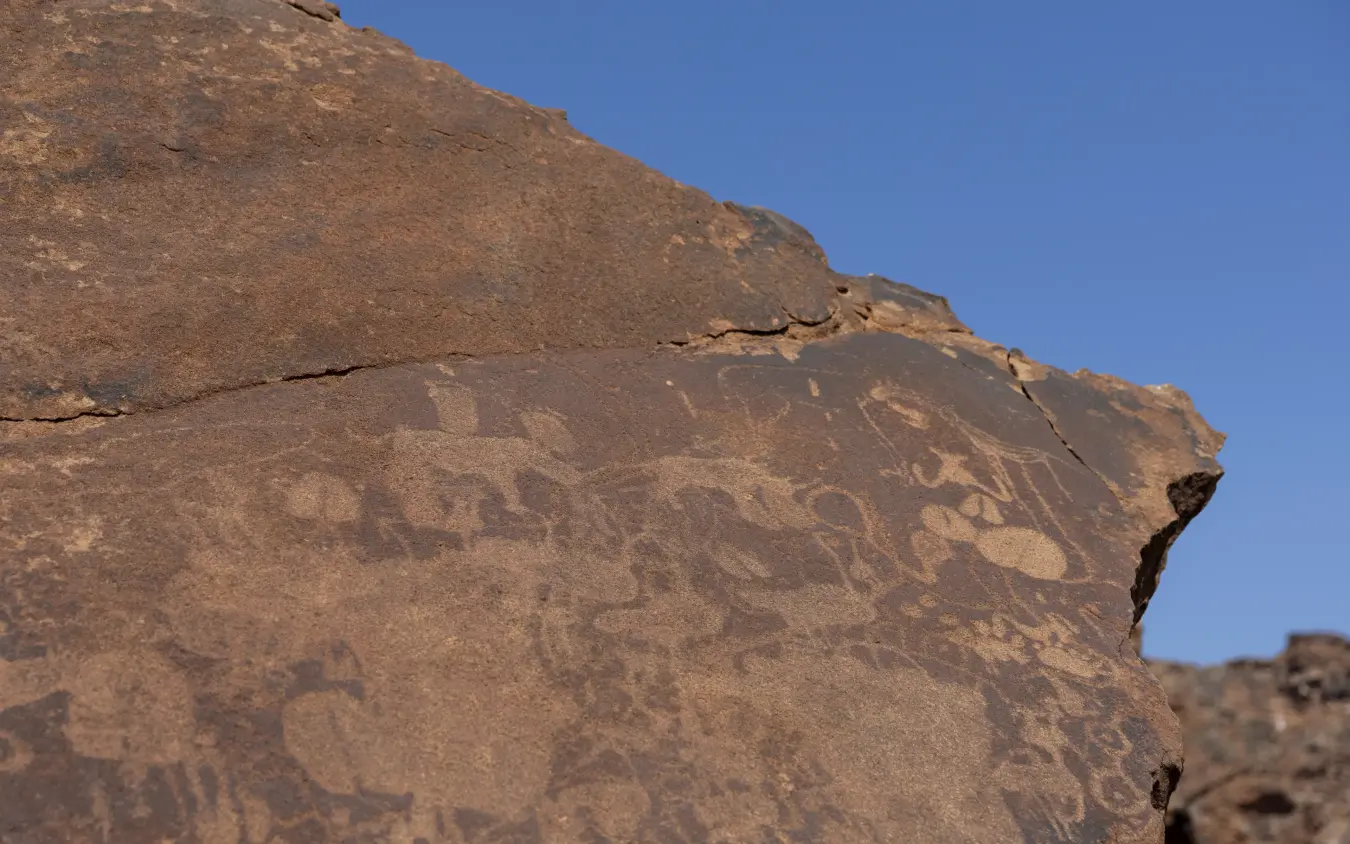
The camp lies within reach of Twyfelfontein, the UNESCO-listed rock engraving site, along with the Petrified Forest, Burnt Mountain and the basalt columns of the Organ Pipes. Because this is conservancy land rather than a national park, guides can run night drives, the very thing that daytime-only park rules elsewhere in the country do not allow.

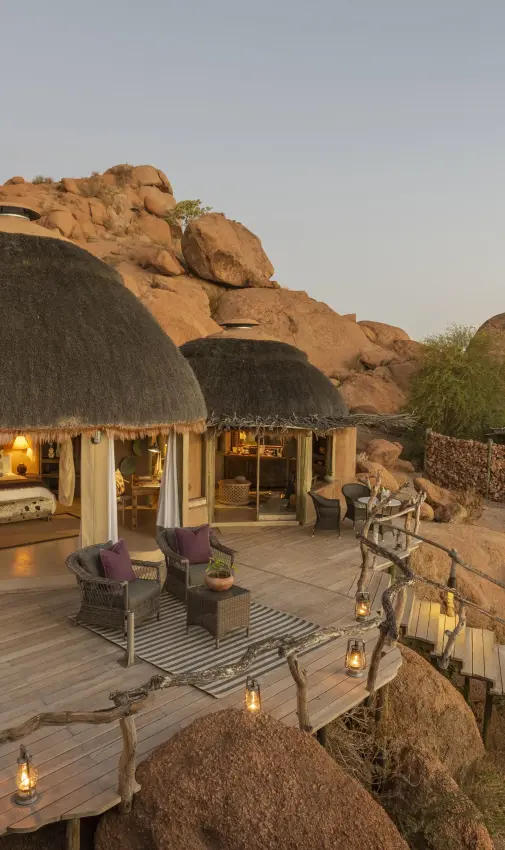
Outdoor bed with thatched-roof accommodation at dusk, Doro Nawas Camp, Damaraland, Namibia 01

accommodation

Sixteen Stone Chalets With Desert Decks

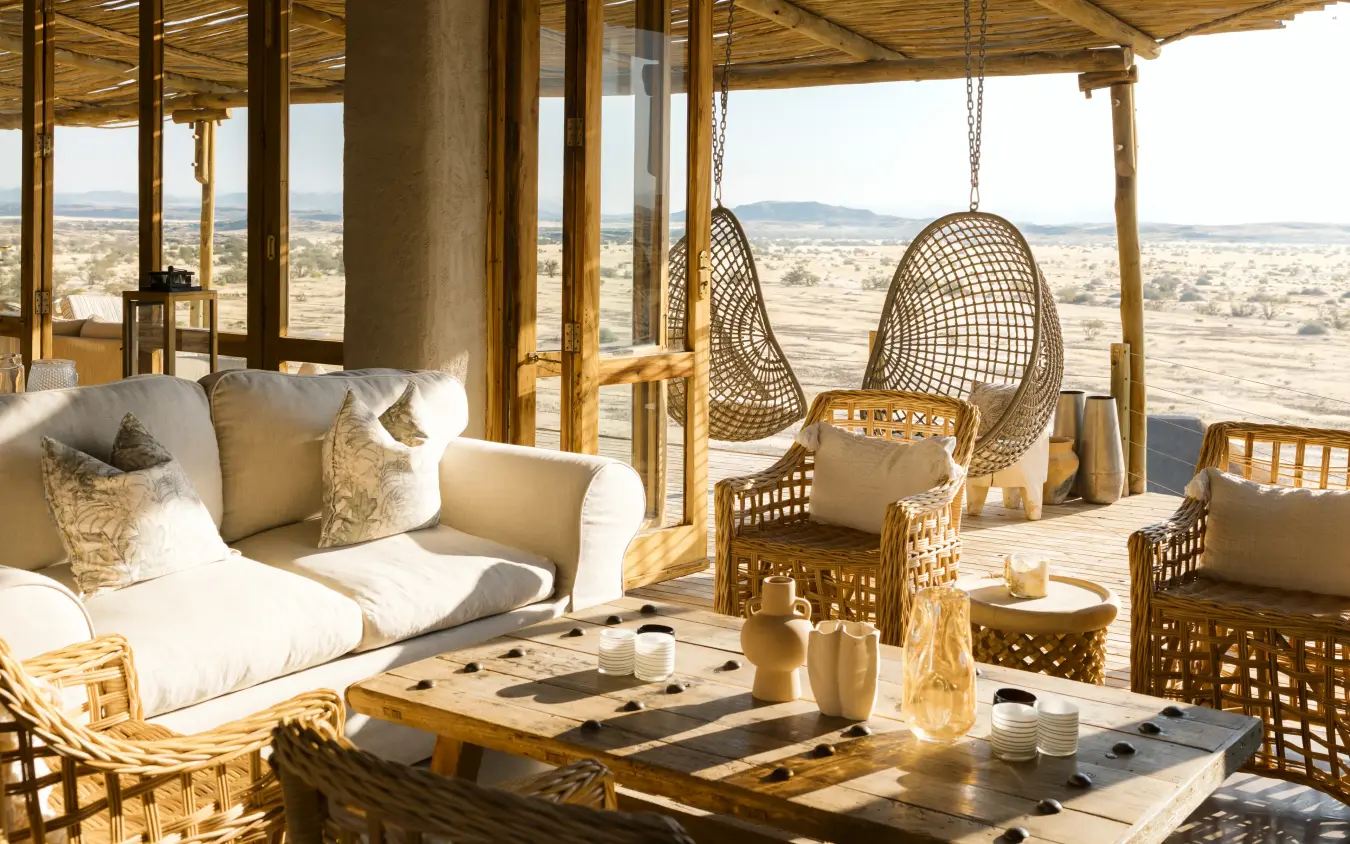
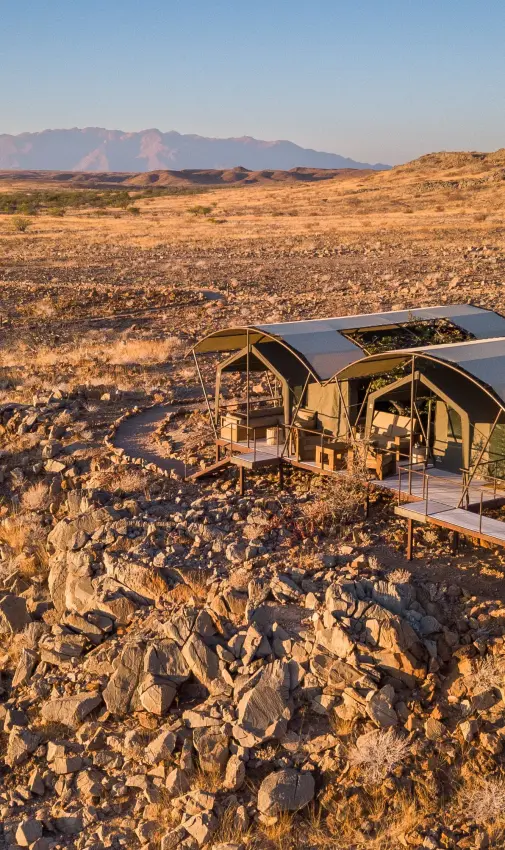
Sixteen stone-and-thatch chalets stand on raised decks, fifteen of them twin or double rooms and one a two-bedroom family unit. Each has an en-suite bathroom with indoor and private outdoor showers, double vanities, and a broad veranda. The double beds sit on wheels, so they can be rolled onto the deck for sleeping under the open desert sky.

Hikers exploring natural rock arch formation in arid desert landscape, Doro Nawas Camp, Damaraland, Namibia 02

activities

Desert Elephants Along Aba-Huab Riverbed

Guided 4x4 drives track desert-adapted elephants along the Aba-Huab riverbed, with night drives permitted on conservancy land. Guided walks, birdwatching, stargazing and scorpion night walks fill the days, alongside excursions to Twyfelfontein rock art, the Petrified Forest, Burnt Mountain and the Organ Pipes.

Scorpion glowing under ultraviolet light on dark sand, Doro Nawas Camp, Damaraland, Namibia 03

conservation

Equity Partnership With Doro !Nawas Conservancy

Doro Nawas Camp operates as an equity joint venture with the Doro !Nawas Conservancy. It partners with Pack for a Purpose to supply the Jacob Basson Combined School in Bergsig. Showers are solar-heated, wastewater is treated on-site, and most staff are hired locally.

ready to get started?

Get in touch and let’s start the conversation. An initial consultation helps us understand what you’re looking for, whether that’s specific experiences, luxury touches, or marking a special occasion, and from there we’ll guide you through what’s possible so you can decide if we’re the right fit.

Alternative accommodation in damaraland

frequently asked questions

Most guests fly in. Light aircraft leave Windhoek's Eros airport for the camp's own airstrip, around one and a half to two hours in the air, and the road transfer at the far end takes about ten minutes. We can also arrange a private charter, typically a Cessna Caravan or Pilatus PC-12, so the flying runs to your dates rather than the circuit's. The light aircraft carry soft bags only, twenty kilograms per person including hand luggage, so pack a duffel.

The camp is also one of Damaraland's easier self-drive stops, reached on gravel roads via Khorixas, though the drive up from Windhoek takes six hours or more. We usually build the flight in and leave the road to travellers doing a full self-drive loop.

Damaraland carries a seasonal malaria risk, and the calendar matters more than the map. This is Namibia's Kunene region, where the UK's official travel health advice recommends antimalarial tablets for travel between December and April, then drops the area to low risk from May to November, when bite avoidance is the standard advice. The CDC names Kunene among Namibia's malaria regions as well, while noting malaria is rare across the rest of the country.

Most stays fall in the dry, low-risk months, but the right precautions depend on your dates and your own health, so have a travel clinic or your doctor confirm what applies before you travel, and keep arms and ankles covered after sunset.

Two seasons, both dry to the eye. From May to October the days are sunny and warm with cold, clear nights, and mornings from June to August can touch freezing. From November to April the heat builds, often well past thirty degrees, broken by the odd short, hard thunderstorm.

Pack light neutrals and a hat for the day, then real warmth for the dark hours: a fleece, a windproof layer and warm sleepwear, which earns its place if a night in the open air appeals. Closed shoes for the walks, sun cream and a buff or scarf for dust round it out.

Yes, and there is no minimum age to stay, which is not a given in Damaraland. The two-bedroom family unit keeps children close without sharing one room, and the guided walks carry a minimum age of thirteen, so younger children stay with the drives and the camp itself.

Days here are built around long drives in open country, which rewards children old enough to enjoy the search. Tell us the ages when we plan and we will shape the mix, and where it helps we can arrange a private vehicle so the family sets its own pace.

As a guided half-day outing, morning or afternoon, with the camp's guides driving you over and walking you through the site. Twyfelfontein is Namibia's first World Heritage Site and a managed one, seen on foot along set paths, and the excursion usually pairs it with the Organ Pipes and Burnt Mountain close by, while the Petrified Forest makes a good alternative half day.
The walk over the sandstone is hot and exposed in the middle of the day, so closed shoes, a hat and water matter. If the engravings are a priority, say so early and we will make the stay long enough to fit them without giving up the elephant drives.

For wildlife, the dry season from May to October, when the game concentrates along the riverbeds and the days stay mild. Those winter months also bring the clearest night skies of the year, worth knowing at a camp built around sleeping under them; June and July are the coldest, so the open-air nights come with a proper chill.

November to April is hotter and greener, with storm light that photographers love and wildlife spread thin across the plains. It is also the period when malaria precautions increase, so tell us your dates and we will talk through the trade honestly.

rated five stars by our clients

other areas in namibia

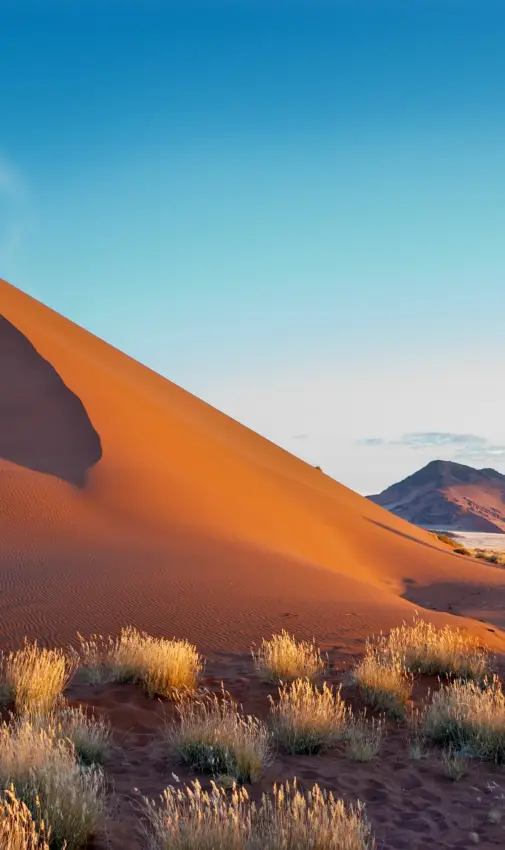
Golden sand dune at sunset with sparse desert vegetation 01

Sossusvlei

Elephant with zebras and antelopes at waterhole 02

Etosha National Park

Aerial view of desert dunes meeting coastal waves 03

Skeleton Coast

Portrait of a person wearing traditional African beaded jewelry 05

Kunene River

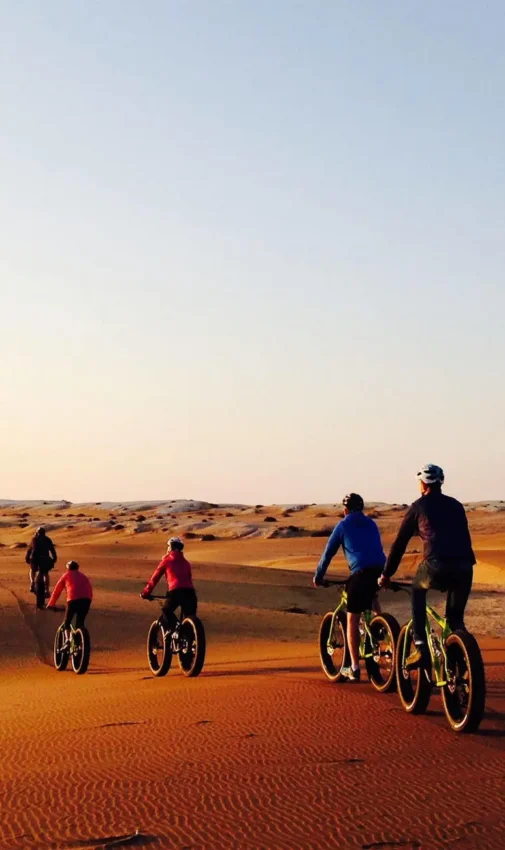
Cyclists riding across red sand dunes at sunset, Swakopmund, Namibia 06

Swakopmund

Elephant herd walking through dusty grassland with scattered trees, Zambezi Region, Namibia 07

Zambezi Region

Aerial view of church and city at sunset 08

Windhoek

Planning a journey together

our approach

remote, exclusive
& personal

Every journey starts with a conversation. We take the time to understand your vision before we start planning.

Whether by phone or in person, we work with you directly to shape something that is considered, personal, and expertly delivered.

get in touch
destinations ideas & inspiration our process about us contact us