
Himba country, Angola on the far bank
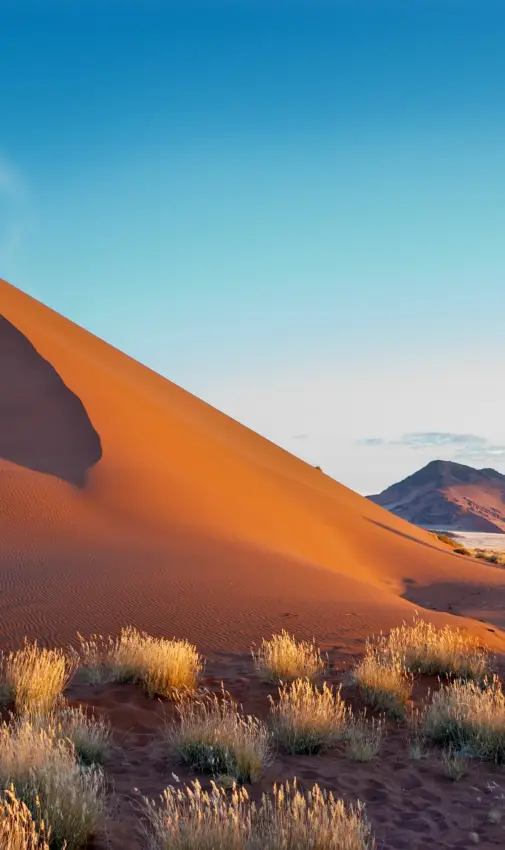
Namibia’s border with Angola runs along the Kunene River, the only permanent water in this stretch of the Namib. Rain falling on the Angolan highlands feeds a narrow line of reeds, wild figs and Ana trees that cuts through the gravel plains. Dunes run down to the water and stop at the reeds. At the Atlantic, the Kunene forms a permanent river mouth on this desert coast.
Dunes run down to the water and stop at the reeds.
Two valleys frame this stretch of the Kaokoveld, and both drain the same way, towards the river. Hartmann Valley falls as dune and gravel desert to the water’s edge; Marienfluss, to its north-east, opens into a broader corridor of grass and gravel. Himba homesteads sit scattered across both, moving with the grazing as the seasons turn.

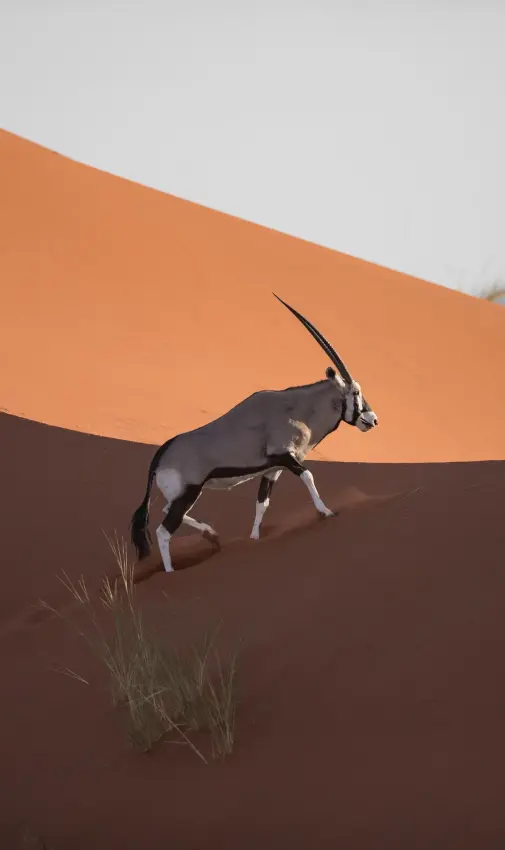
From May to October the surrounding desert dries out and the animals come to the water: oryx and springbok, Hartmann’s mountain zebra, ostrich and Angolan giraffe, drawn in to the river and the springs along it. Nile crocodiles hold the deeper channels of the Kunene. Desert-adapted elephants and lions range far more widely than any of them, tracking rain and grazing across the inland riverbeds.
Nile crocodiles hold the deeper channels of the Kunene.
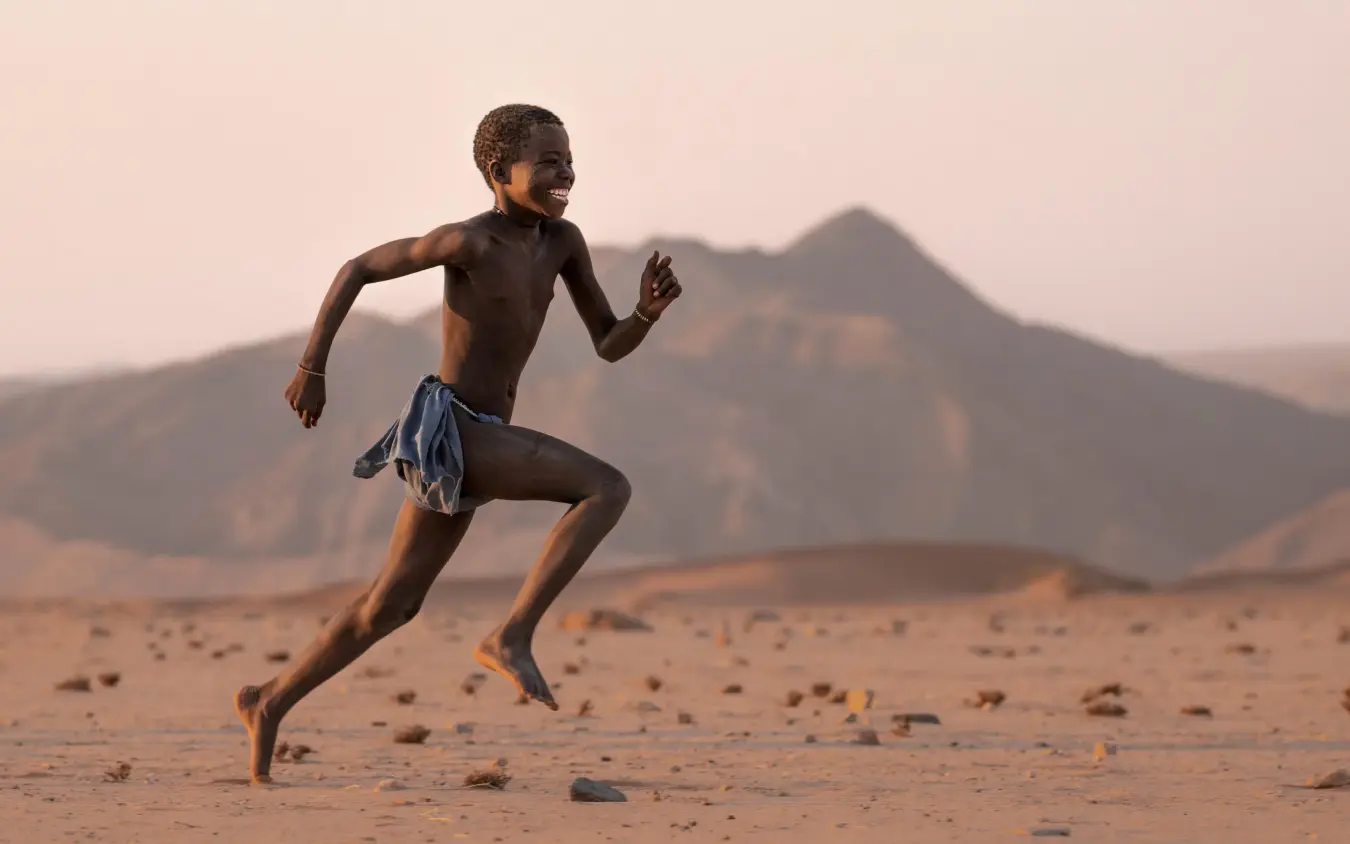
The Himba of the Kaokoveld keep cattle and goats across this country, and at the centre of every homestead burns the okuruwo, the sacred fire. Visits are best arranged well in advance, through camps with standing relationships, and led by an interpreter who knows the family. Kept to a size the homestead can comfortably host, they feel like a welcome rather than a stop on an itinerary.
Light aircraft come in from Windhoek’s Eros airport, or on shorter legs from Damaraland, landing on bush strips including Hartmann’s Valley. From there a 4×4 transfer of an hour or so crosses empty desert to the river. Helicopter charters run for anyone who wants the Baynes Mountains, Epupa Falls and the Skeleton Coast beneath them on the way in, compressing what would be a multi-day overland approach into a single flight.
The overland alternative is a multi-day 4×4 expedition, low-range gears and high clearance both needed on rocky, unmaintained tracks. It is the reason almost nobody arrives this way, and the reason the fly-in from Windhoek or Damaraland is the standard route into a region with almost no other infrastructure. At the river mouth the coastal strip falls inside Skeleton Coast National Park, where off-road driving is prohibited, protecting lichen fields and crusted soils that take decades to recover.
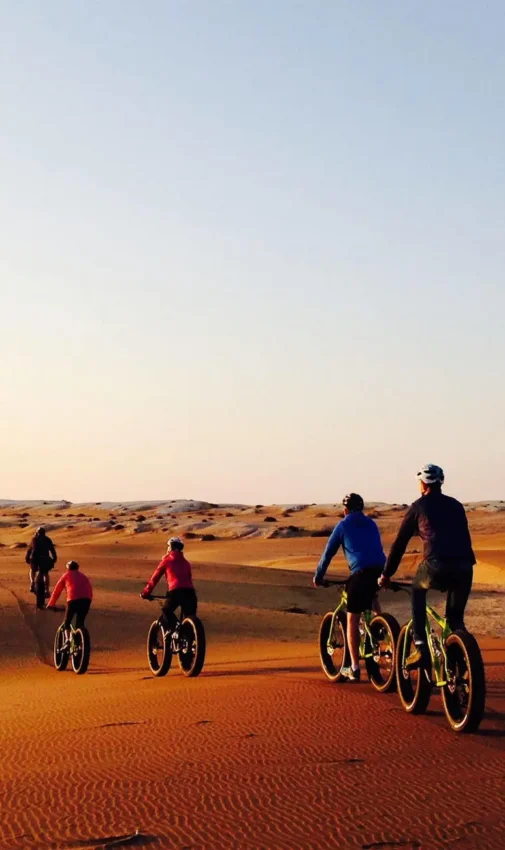
Licensed guides lead quad biking on dune routes where the wind erases the tracks.
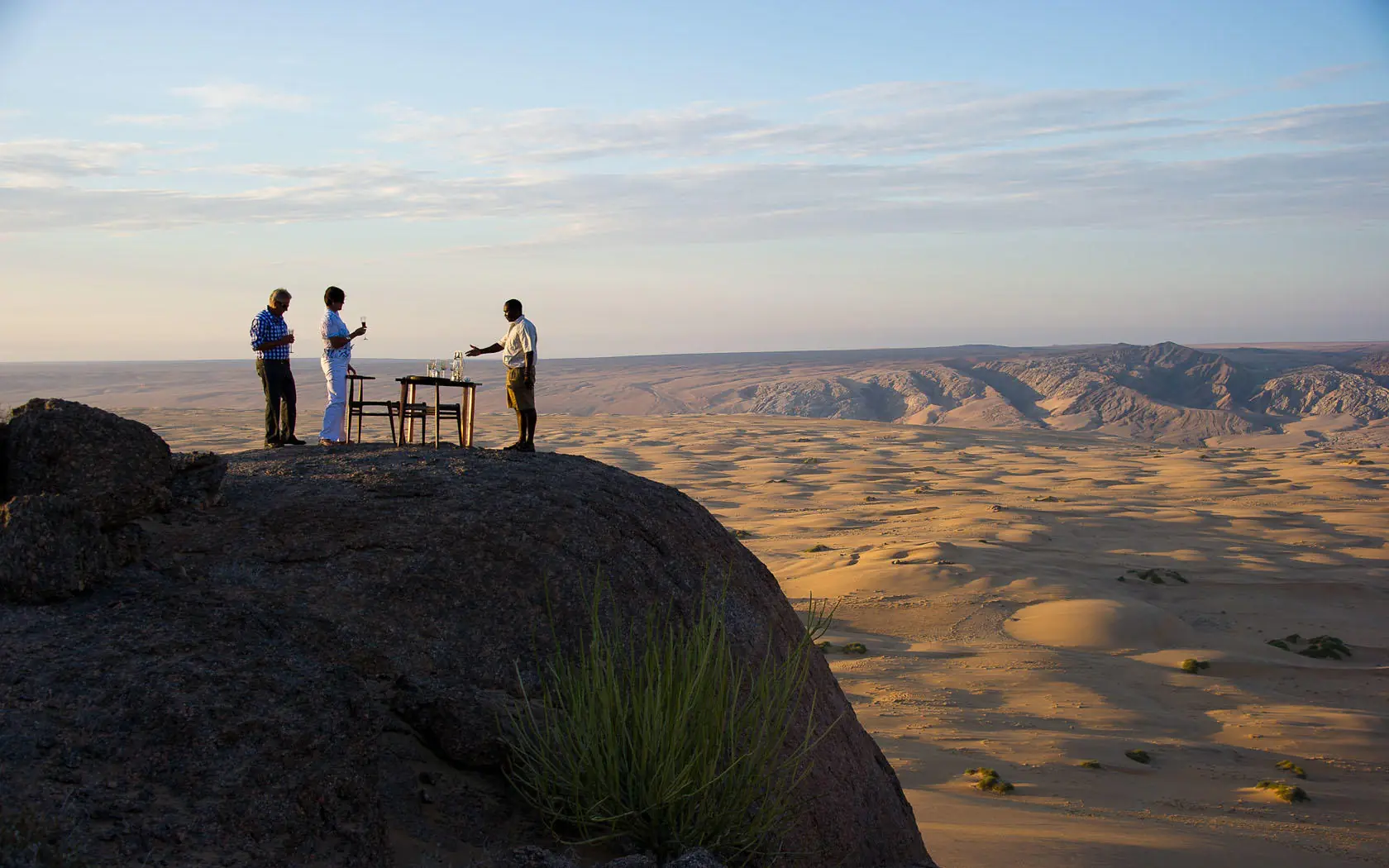
Inland, the Hartmann and Marienfluss valleys sit within communal conservancy land, and the rules loosen a little. Licensed guides lead quad biking on dune routes where the wind erases the tracks. Boat trips run on the calmer channels of the Kunene, bringing crocodiles, monitor lizards and waterbirds close, and there are gorges to walk between them. Fully staffed mobile camps, with a private guide, cook and camp crew, work well for anyone crossing both valleys at once.
The region’s isolation kept the Himba clear of the upheavals that broke Herero communities further south. Both women and men dress their skin and hair with otjize, a paste of butterfat, ash and red ochre that marks the colour of the earth and turns back the sun. Upstream, the river changes character entirely, dropping 37 metres at Epupa Falls, at its fullest in March and April when the highland rain comes down.

The best time to visit Kunene River
Jan
Feb
Mar
Apr
May
Jun
Jul
Aug
Sep
Oct
Nov
Dec
Recommended
Transitional
Challenging conditions
Come May to October, the dry months, when desert-adapted elephants, lions and zebras concentrate along the river and permanent springs under clear skies. The peak of it runs cool and comfortable by day, colder by night. From November to April it turns extremely hot, rains can trap dirt tracks in mud, and game disperses widely.
accommodation in kunene river
Camps along this stretch of the Kunene River are small, remote and reached almost entirely by air. Elevated canvas and timber suites stand under Ana trees on the riverbank, while stone and thatch chalets look over the rapids further upstream near Epupa Falls. Private cottages within the larger camps suit families, or couples wanting more separation, and fully staffed mobile camps, with a private guide, cook and camp crew, work well for anyone crossing Hartmann and Marienfluss.


activities
Activities
Boating on the calm channels of the Kunene River, run from the riverside camps, brings crocodiles, monitor lizards and waterbirds close. Guided quad biking is permitted on set dune routes inside the Marienfluss and Hartmann conservancies, never within the national park. Nature drives, gorge walks and Himba visits fill the rest.

conservation
Conservation Projects
Researchers with the Desert Lion Conservation Trust have tracked and collared the region's desert lions since 1998. The Lion Rangers programme, started in 2017, trains conservancy members to monitor prides and reduce livestock losses, and the Giraffe Conservation Foundation has followed Angolan giraffes across the north-west since 2009.

getting around
Connectivity and Logistics
Access is by light aircraft. Private charters reach smaller camp strips directly. Flights from Windhoek's Eros airport are followed by a short 4x4 transfer.
other areas in namibia
Damaraland, directly south, pairs naturally with the Kunene River: ochre mountains, the rock engravings at Twyfelfontein, and tracking of desert-adapted black rhinos and elephants along dry riverbeds. The Skeleton Coast concessions below the river mouth add shipwrecks, fog and seal colonies. Sossusvlei sets red dunes and the white clay of Deadvlei against the northern desert, and Etosha, around its salt pan, delivers concentrated big game. Swakopmund makes an easy coastal break between the two.
 01
01
 02
02
 03
03
 04
04
 05
05
 06
06
 07
07
 08
08
frequently asked questions
By light aircraft, and it is a long way from anywhere.
The Kunene forms Namibia's northern border with Angola, and the camps up there have their own airstrips. The flight from Windhoek is several hours, usually broken by another stop, and the scenic legs over the Skeleton Coast and the Hartmann Valley are part of the point.
Driving is possible for a properly equipped expedition and takes days.
We book the flights with the rest of the route and are honest about what the journey costs in time.
A private charter is the alternative to the scheduled seats, a Cessna Caravan or a Pilatus PC-12, which is worth pricing for a party travelling together or a tight connection.
A river running through the driest country in Namibia, and the Himba who live along it.
The contrast is the thing: green reeds and palms on the bank, and nothing but rock and dune in every other direction. Epupa Falls is the best known stretch, and the Hartmann Valley is the emptiest.
Visits to Himba settlements are arranged through the camps and on their terms.
This is landscape and culture rather than wildlife, and we will describe it that way.
Yes, and it is one of the higher-risk parts of Namibia.
Both TravelHealthPro, the UK's official travel health service, and the CDC name the northern regions and the river areas as the country's malaria zones, and the Kunene is both.
We do not make medical recommendations. That is a conversation between you and your own doctor or a travel clinic.
On the practical side, cover up at dusk and keep repellent to hand by the water.
More than the remoteness suggests.
- Boat trips on the river, between rapids and crocodiles
- Quad biking and drives out into the Hartmann Valley dunes
- Walks along the riverbank and into the mountains behind it
- Time with Himba families, arranged through the camps
White-water rafting runs on some stretches at the right water level.
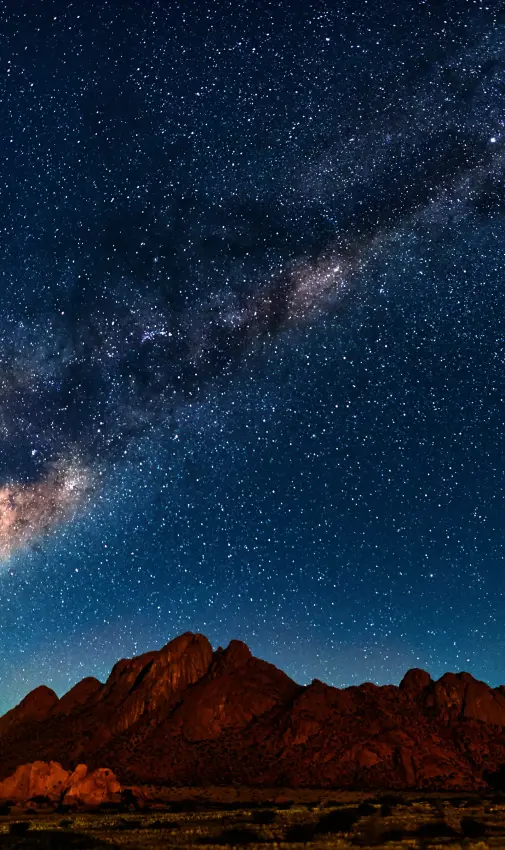
The nights are the other reason: there is no light anywhere, so the sky is extraordinary.
Extremely, for much of the year.
This is one of the hottest inhabited corners of Namibia, with summer days well into the forties and even the winter running hot by mid-morning. Nights are warm.
The camps are built for shade, airflow and plunge pools, and the days are planned around the sun.
Pack light, loose, covering clothes, a proper hat and more water than feels sensible.
Three, because of what it takes to get there.
Three nights makes the flying worth it: a river day, a desert day and time with the Himba. Two nights and most of the stay is spent arriving and leaving.
It pairs with the Skeleton Coast and Damaraland on a northern Namibian route.
Tell us how long the trip is and we will be honest about whether the Kunene fits or waits.
rated five stars by our clients

our approach
remote, exclusive
& personal
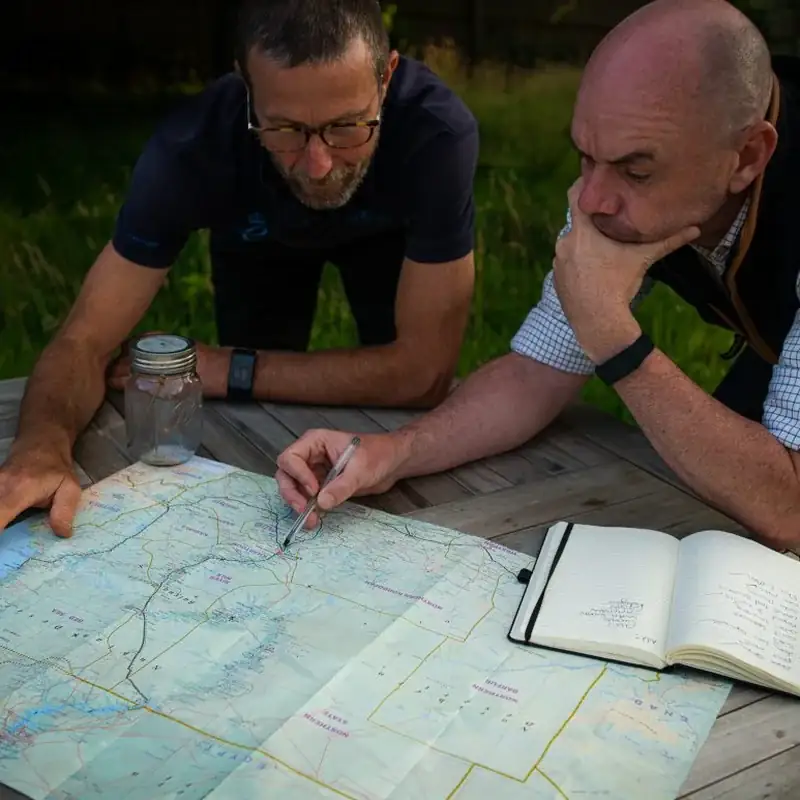
Every journey starts with a conversation. We take the time to understand your vision before we start planning.
Whether by phone or in person, we work with you directly to shape something that is considered, personal, and expertly delivered.
Every journey starts with a conversation. We favour a direct, personal approach: understanding your vision before anything else.
Whether by phone or in person, we work with you directly to shape a journey that is both thoughtfully considered and expertly delivered.
Get in touch to start planning yours.