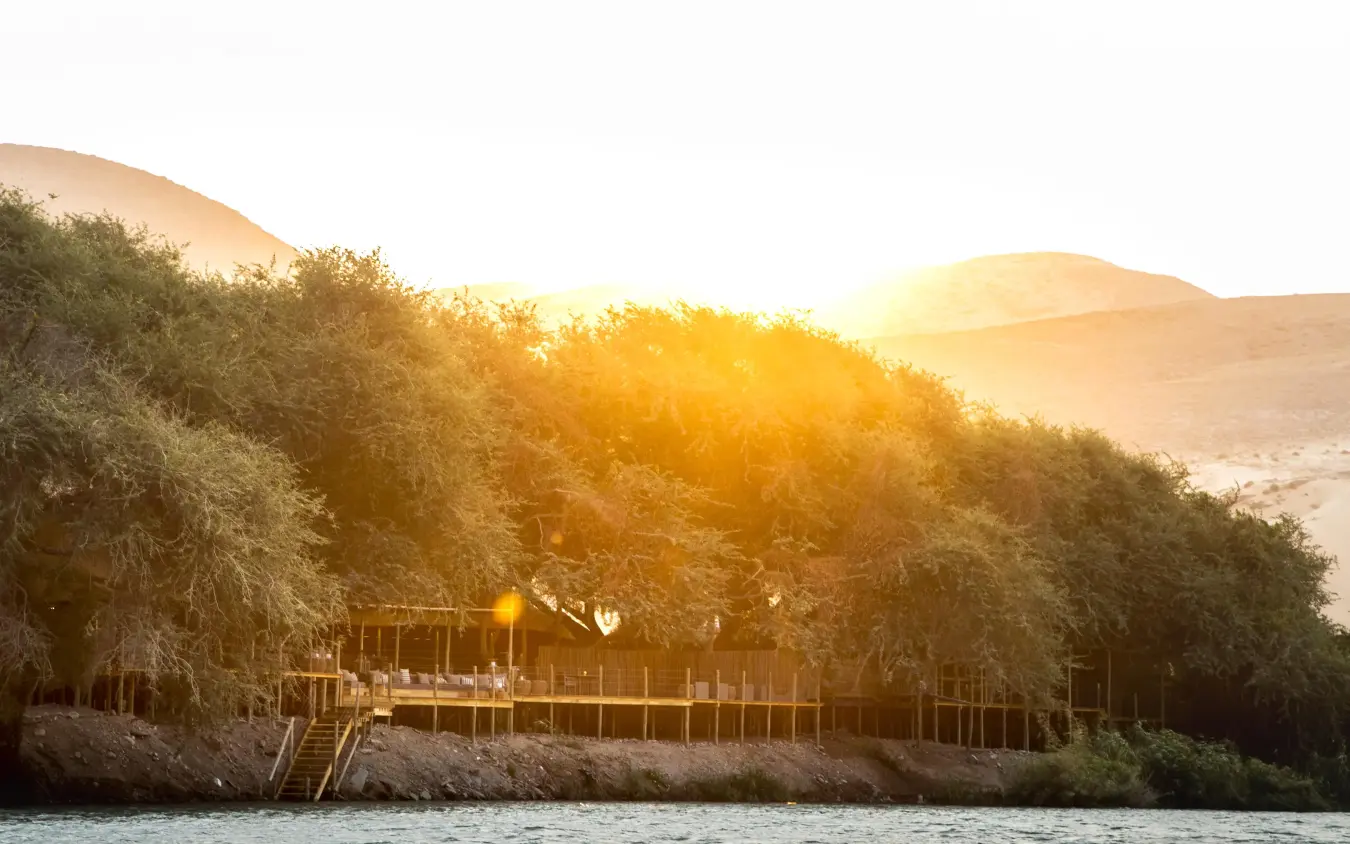
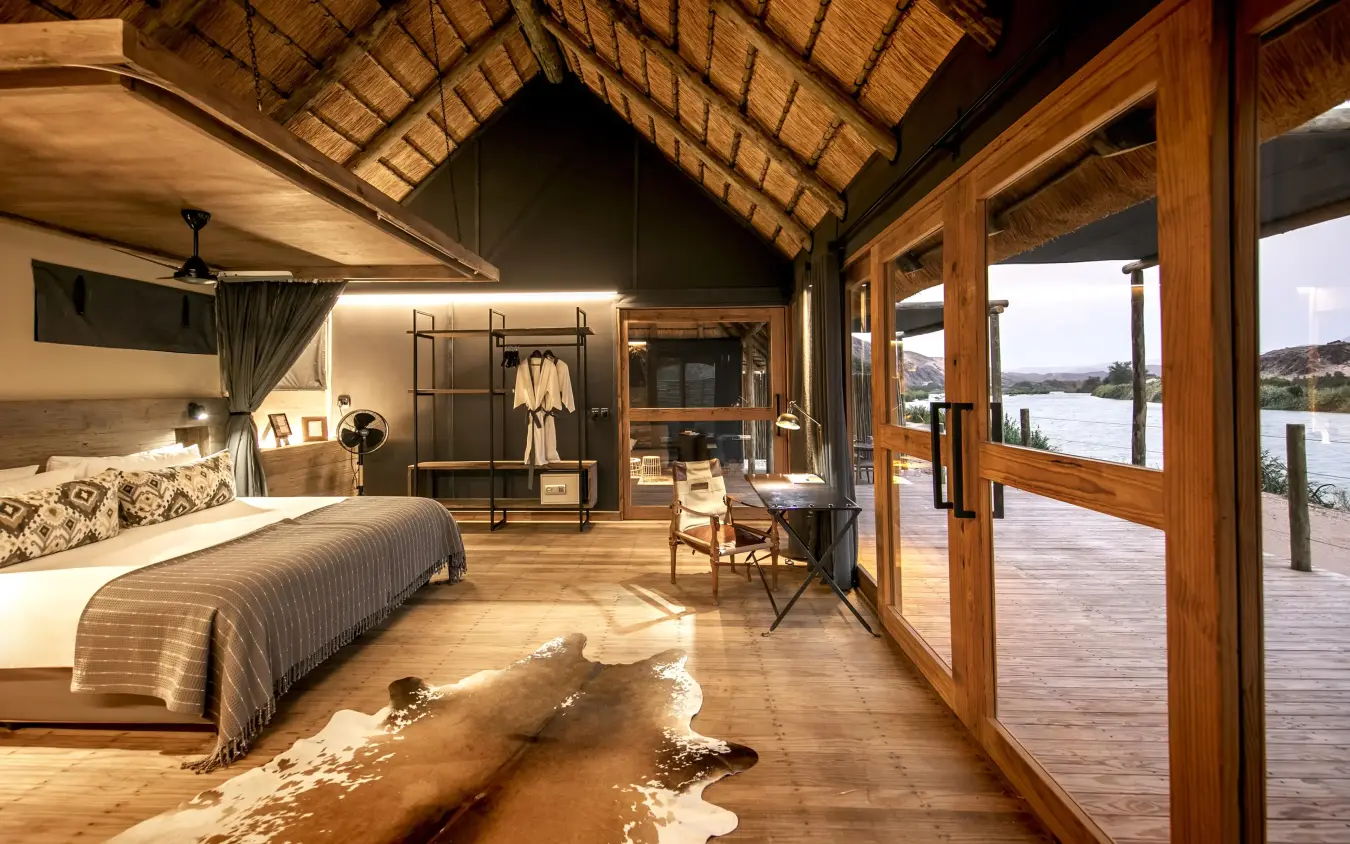
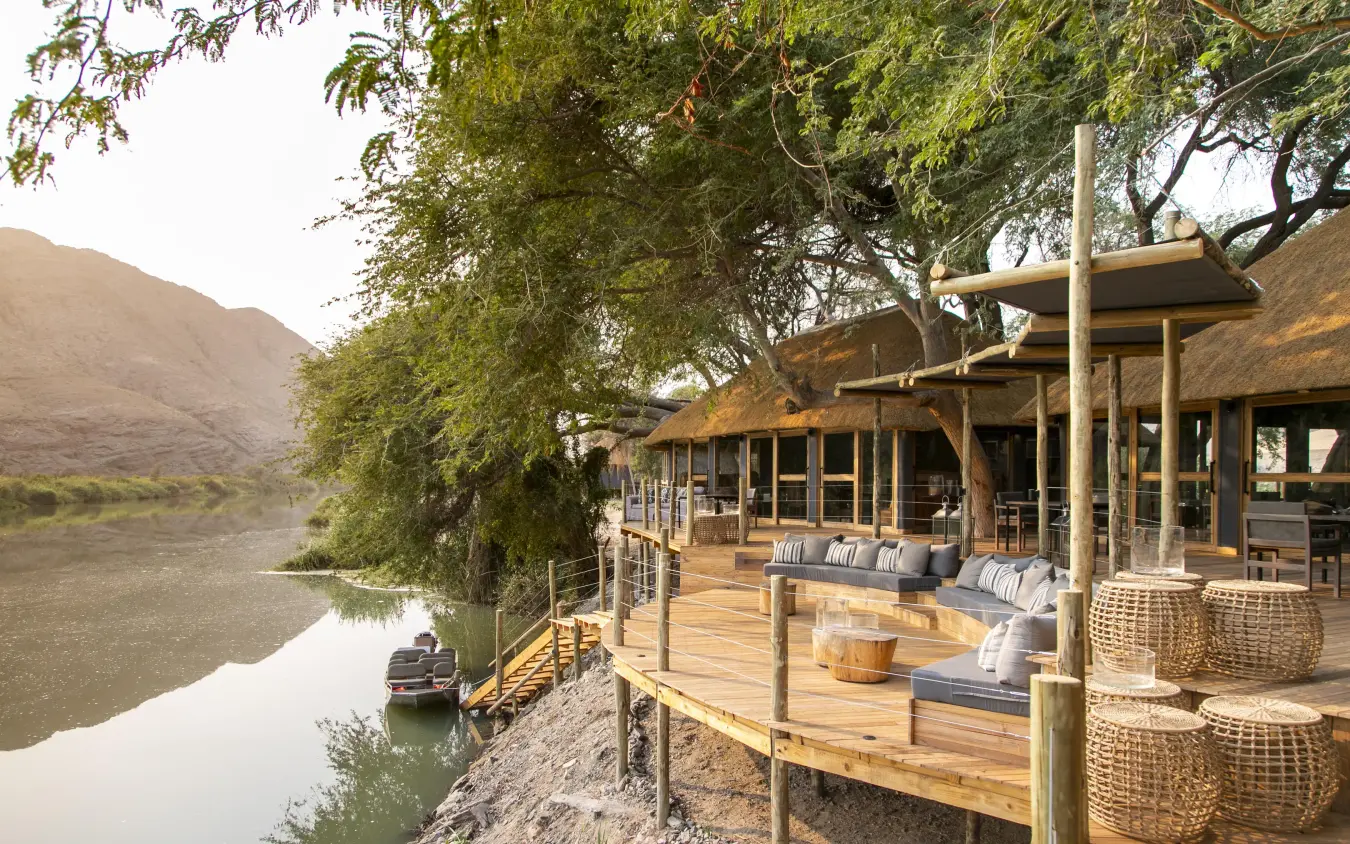
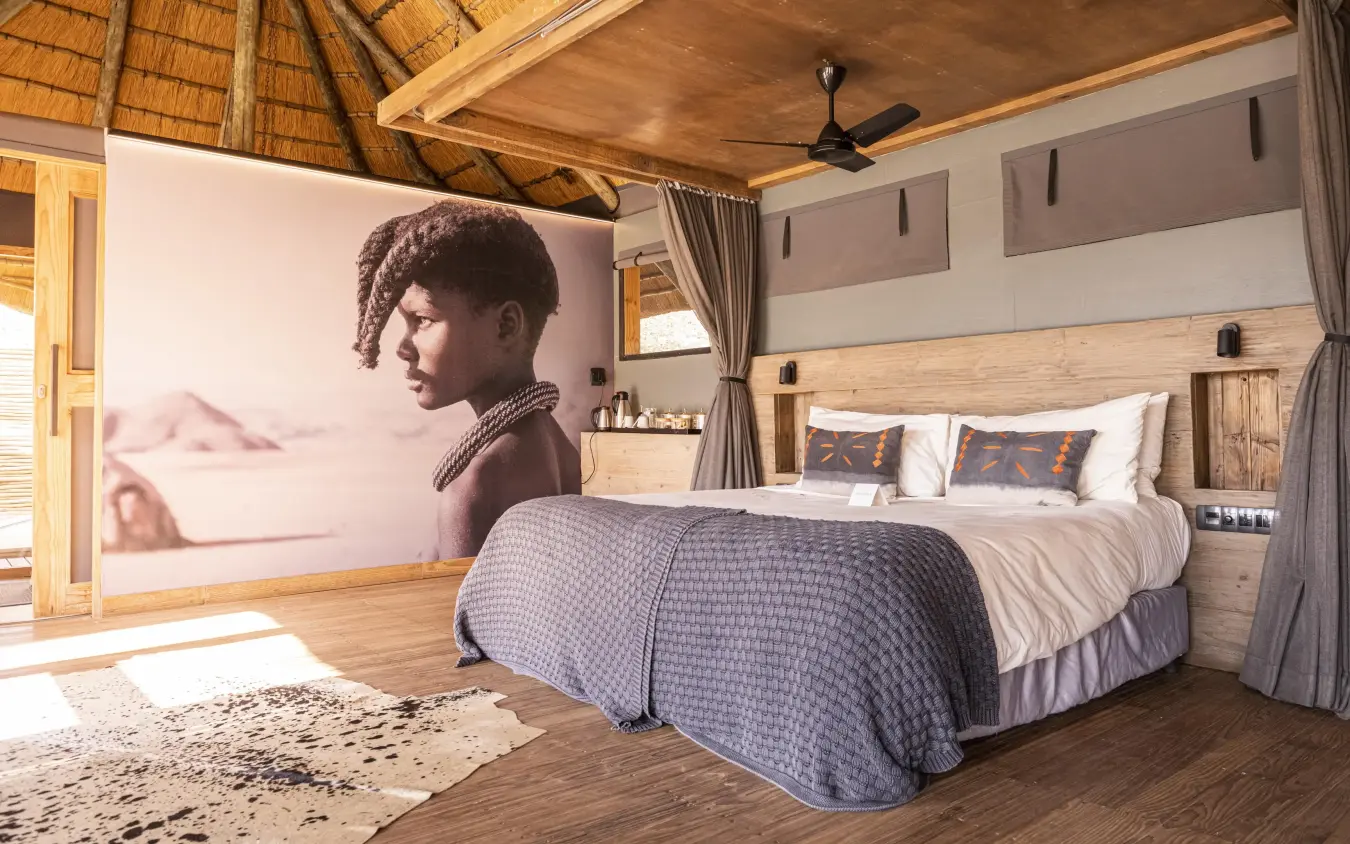
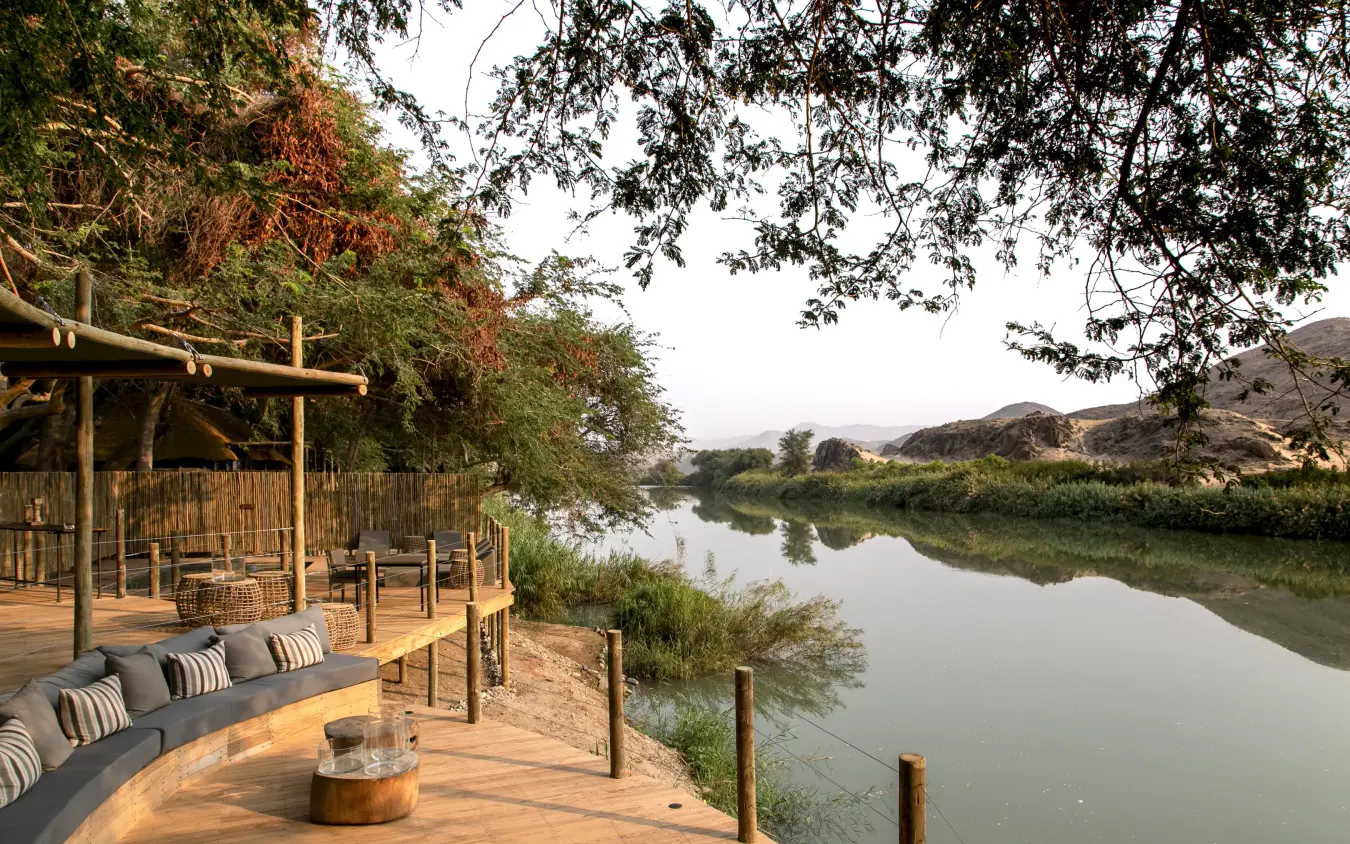
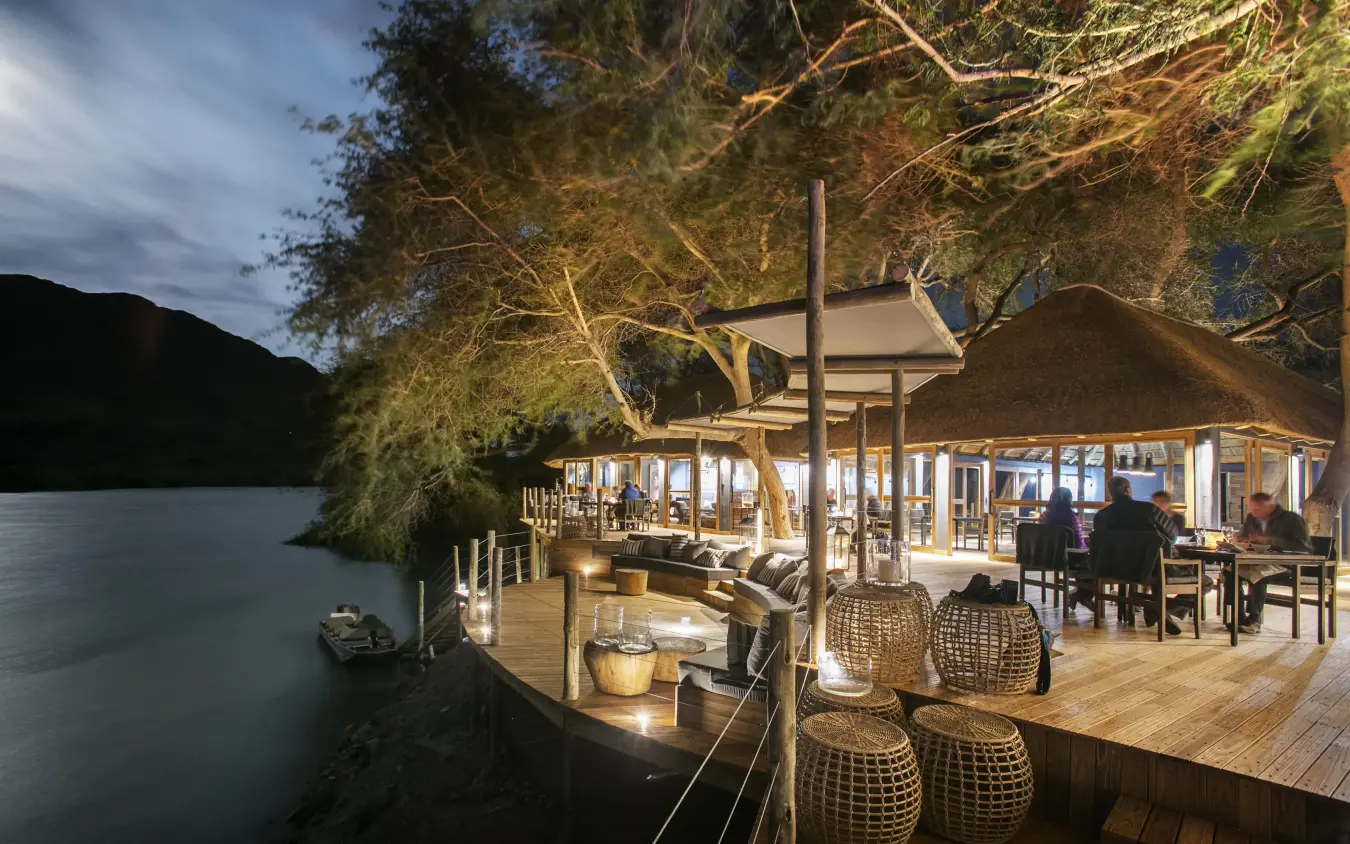
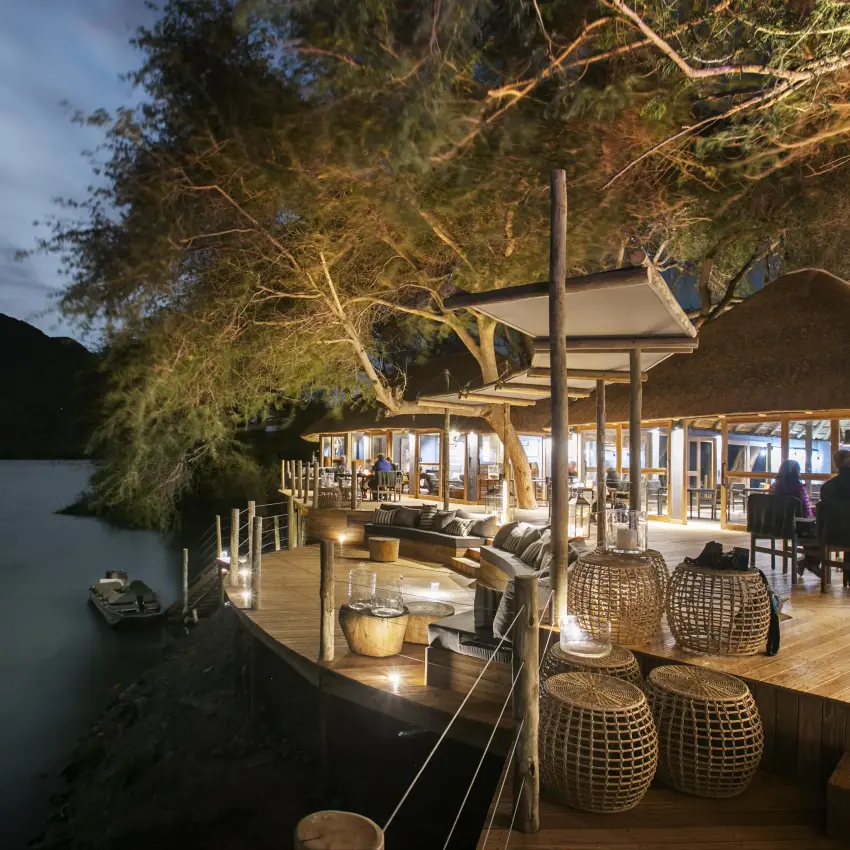
Eight villas run along the elevated bank, built from wood, canvas and thatch and linked by timber walkways that thread between the Ana trees. The camp was rebuilt after flood damage and reopened in 2018, and the design kept every existing tree, working the structures around them for shade. The public spaces are separate pockets instead of one building: a sunken lounge, a library, a bar and a pool set above the rapids, joined by open decks in a layout modelled loosely on a Himba homestead, so guests move outdoors between one and the next.
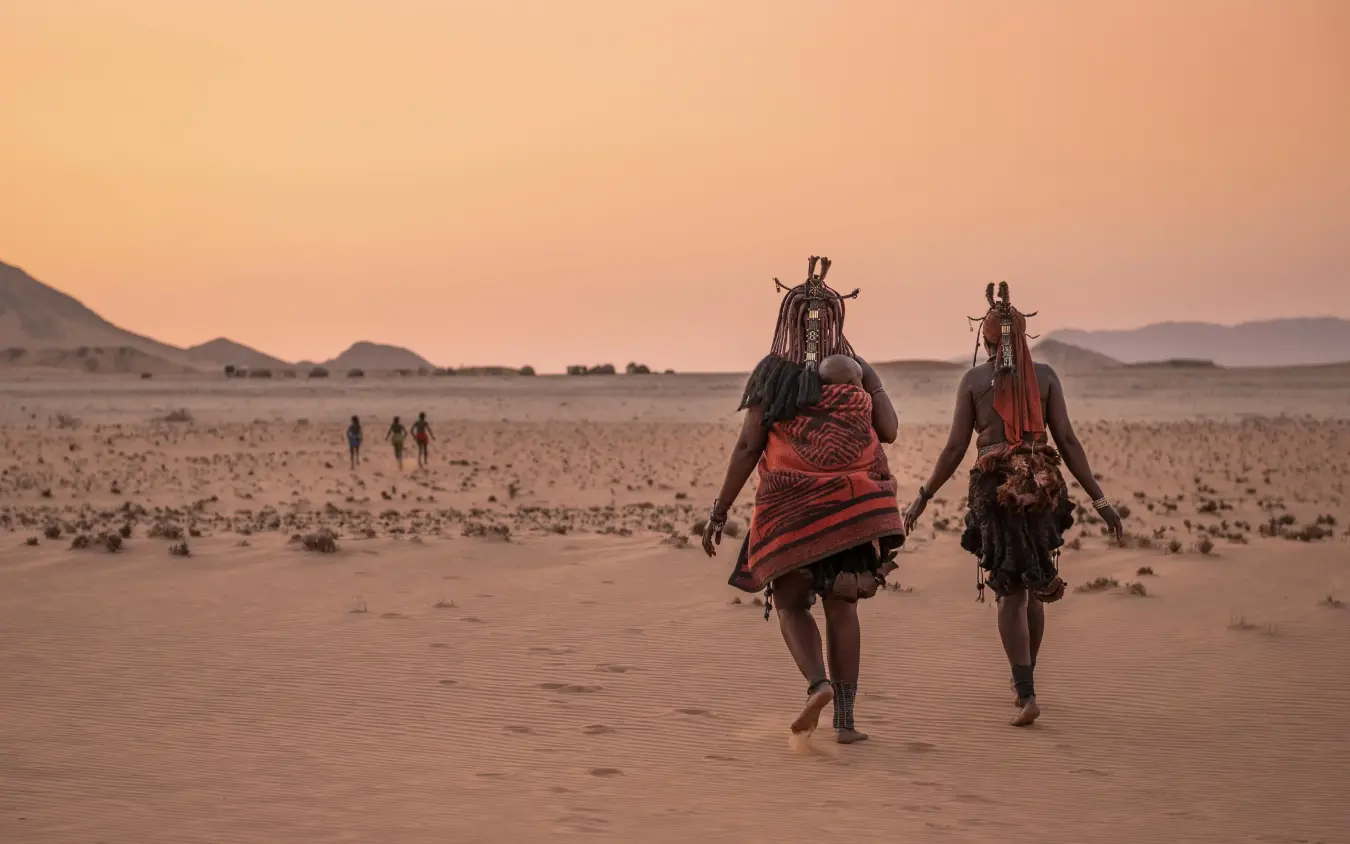
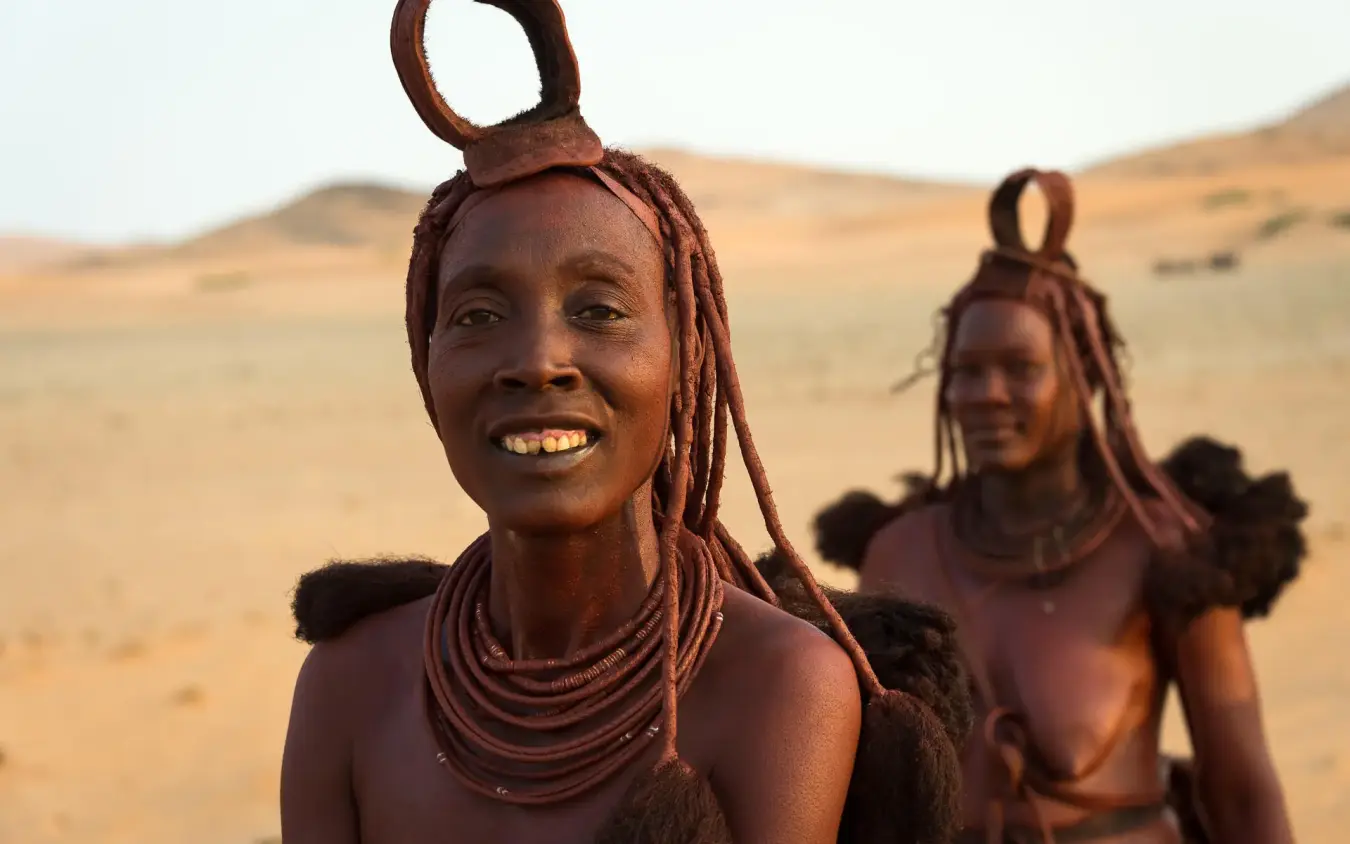
Serra Cafema was developed as a joint venture with the Marienfluss Conservancy, owned by the Himba community, under an agreement signed in 2003 and renewed in 2017. Lease fees and bed-night levies go to a collective fund, not to individuals, and have paid for a primary school for children from the conservancy. Visits to Himba settlements are arranged through guides who know the families personally and translate as the conversation happens. People are herding livestock and tending the okuruwo, the sacred fire, going about a semi-nomadic pastoral life rather than performing one.
Cut the motor mid-stream and the Angolan bank is close enough to see clearly.
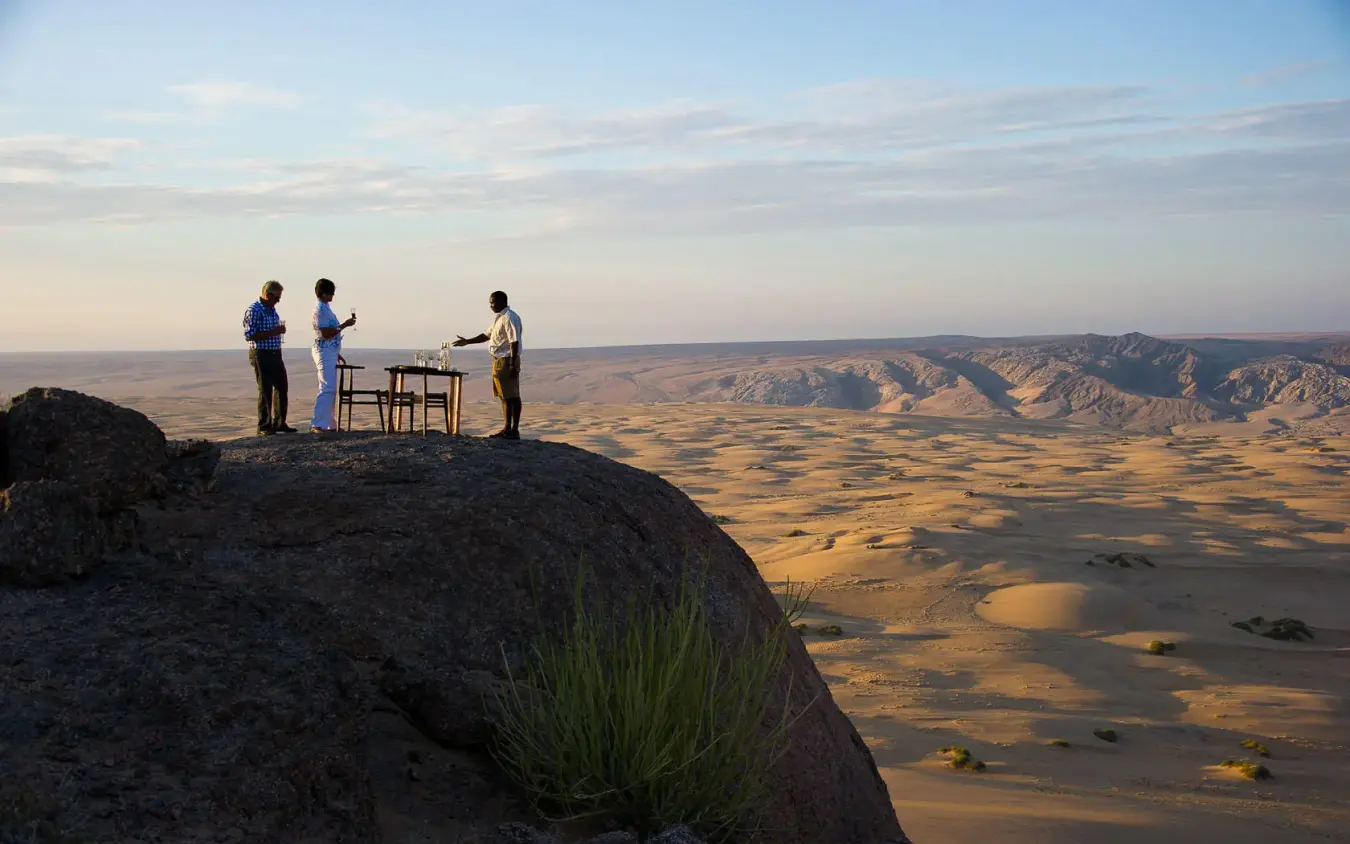
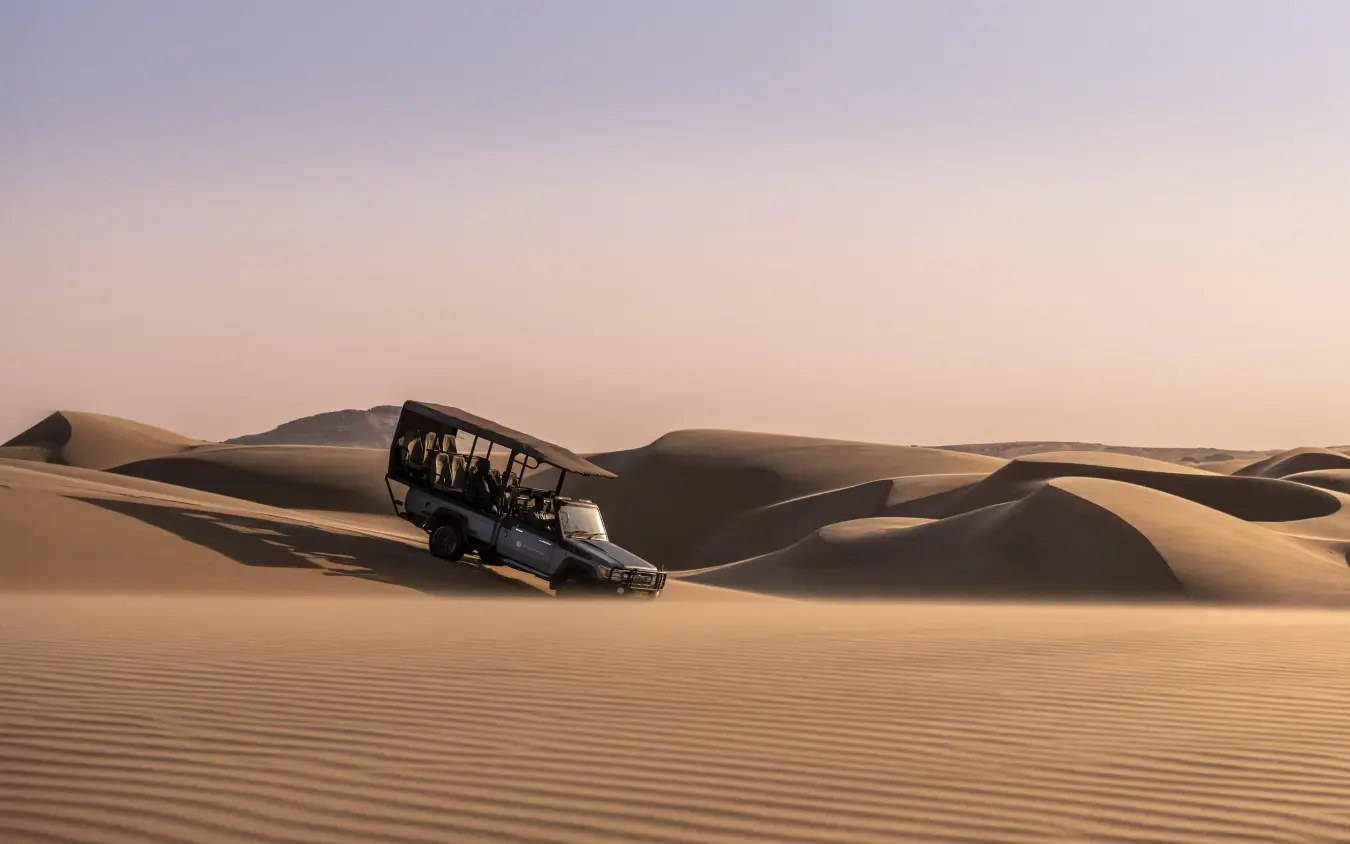
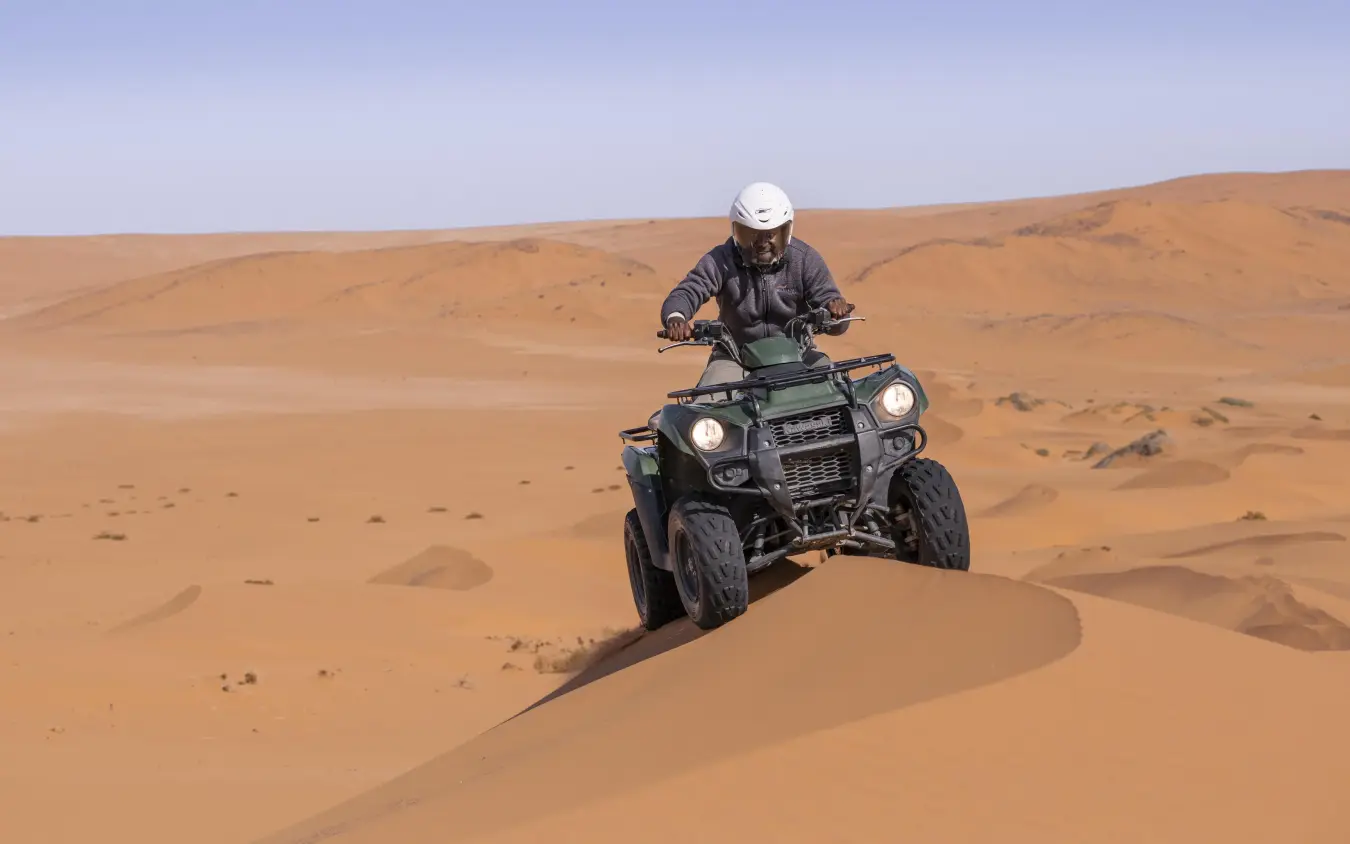
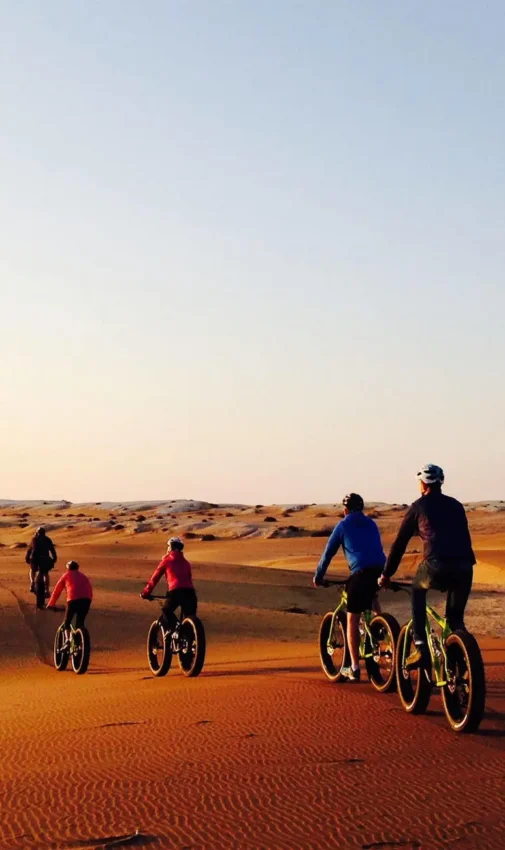
Breakfast comes on the deck over the rapids, lunch is laid under the trees, and dinner is served indoors or outside on the river sand around a fire. Guests choose in advance from two main courses, a system that limits waste this far from any supply chain, and the kitchen works with regional staples such as beetroot, pumpkin, local meats and malva pudding. Steaks are grilled over open coals on full-day dune excursions. The rapids keep running after dark, and with no competing light the stars reach the ridgelines.
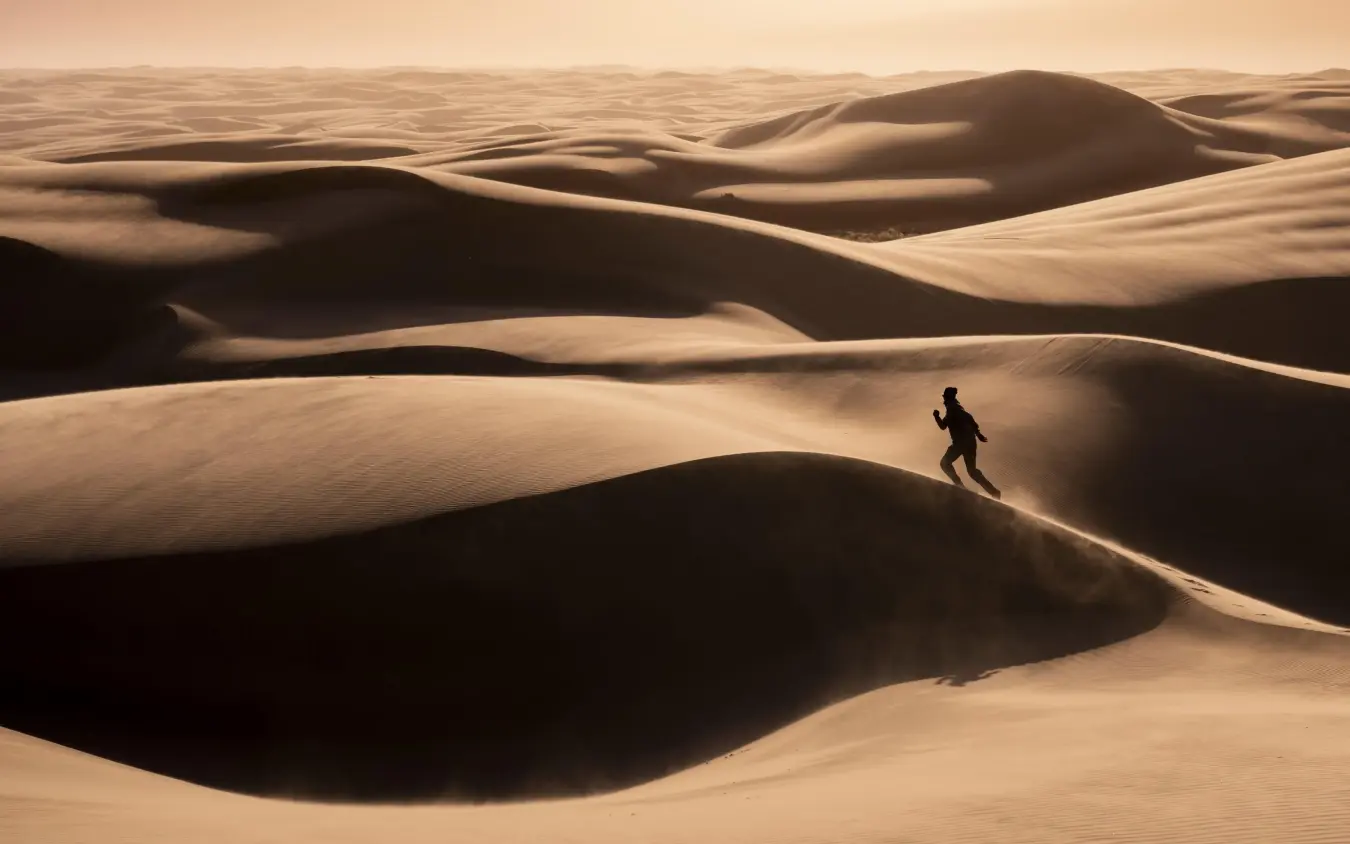
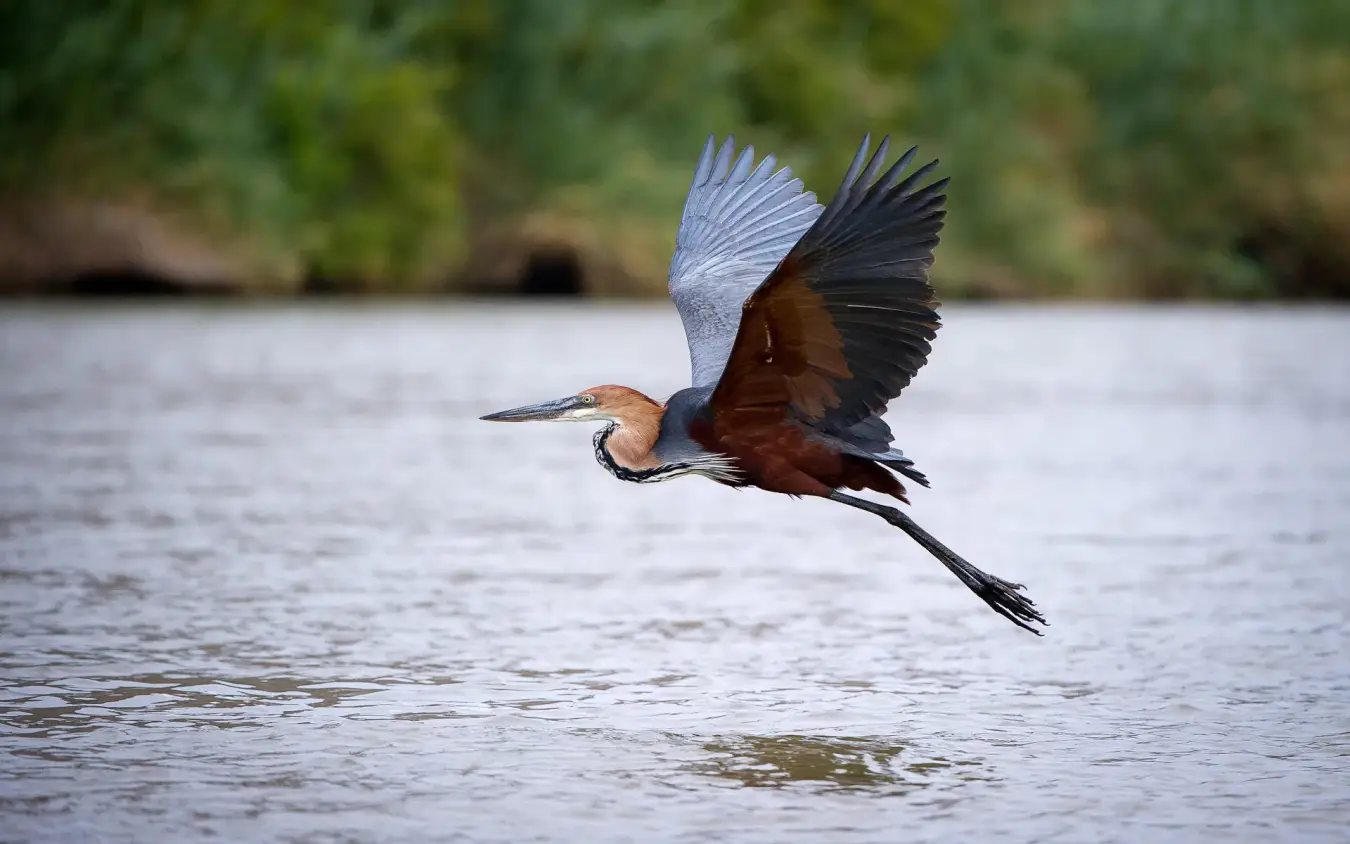
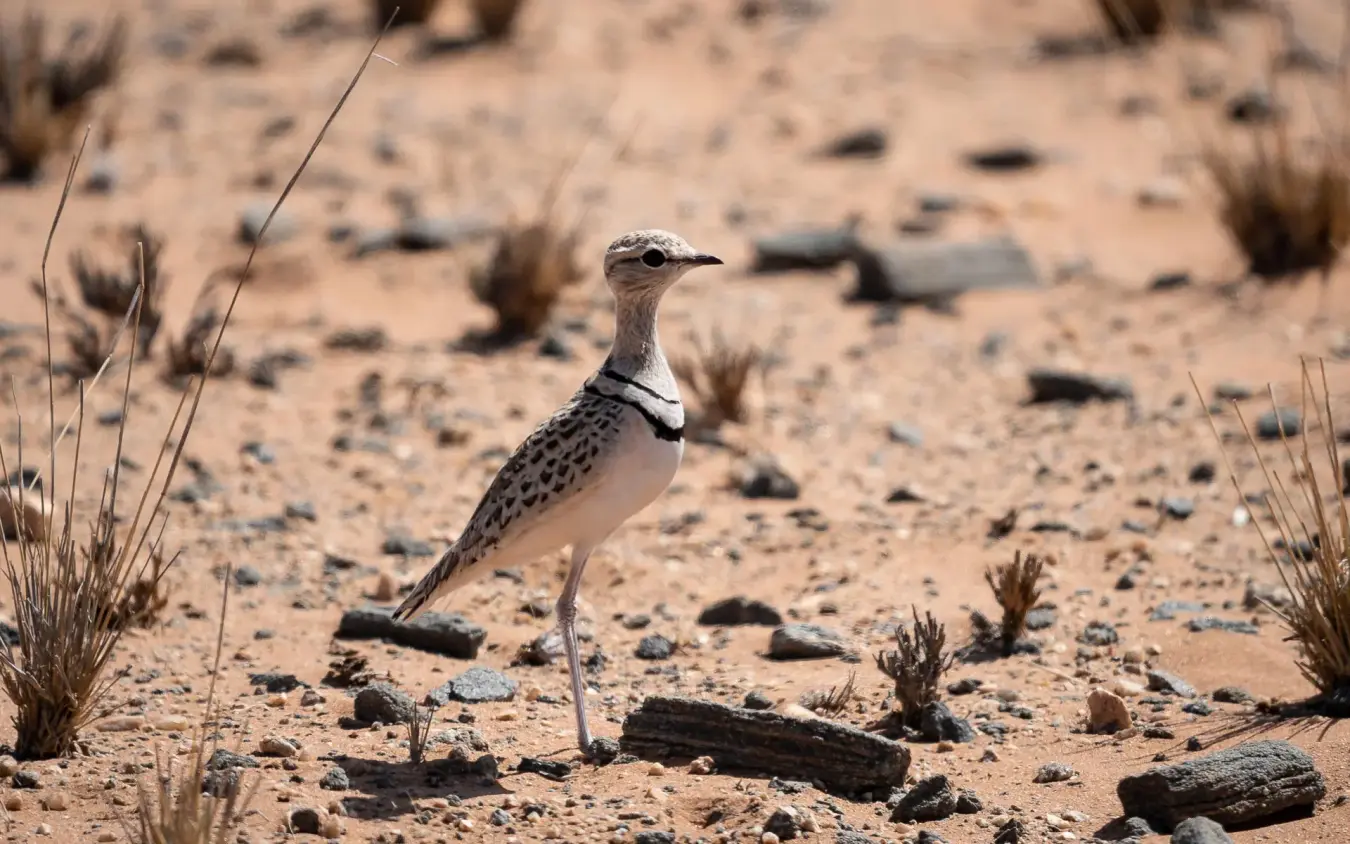
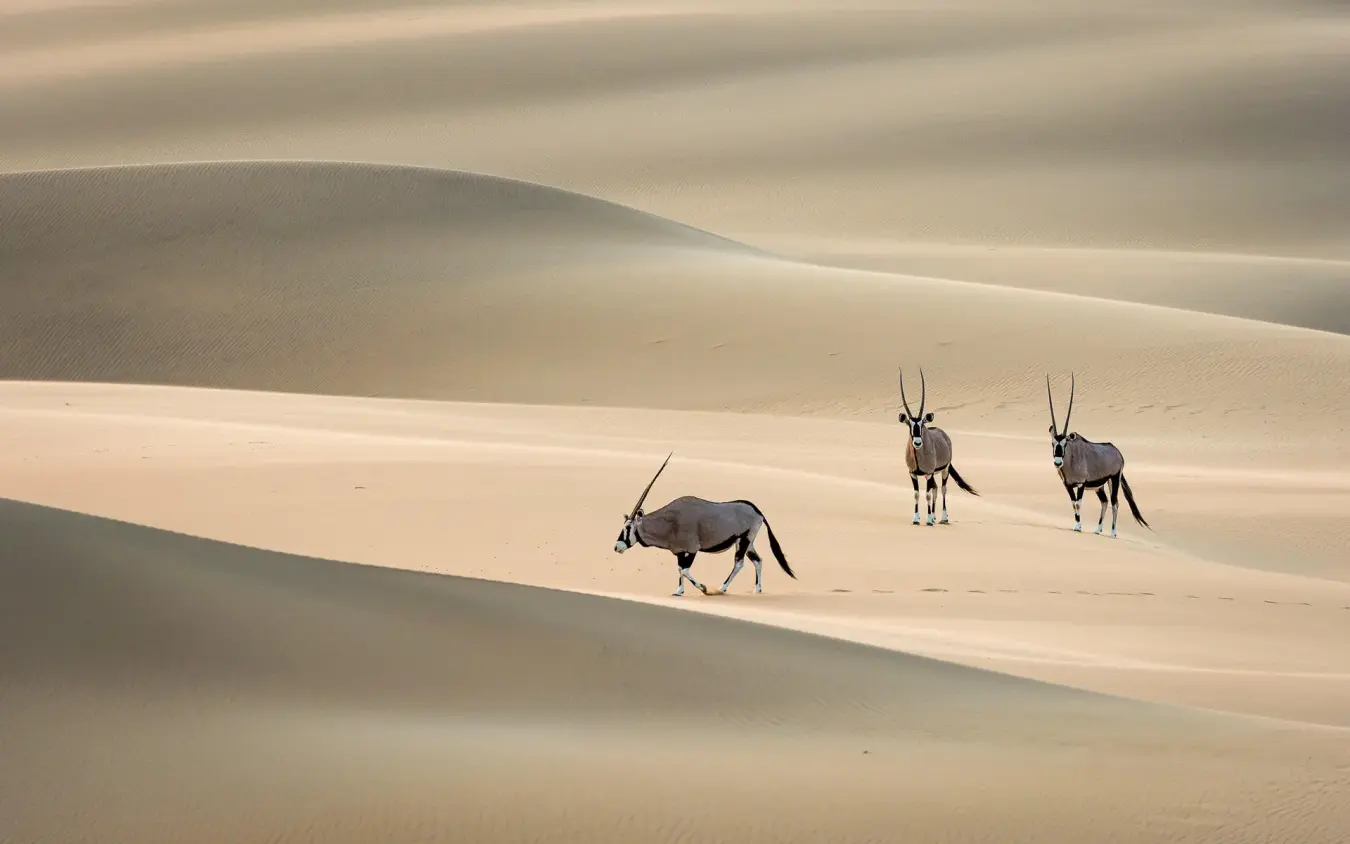
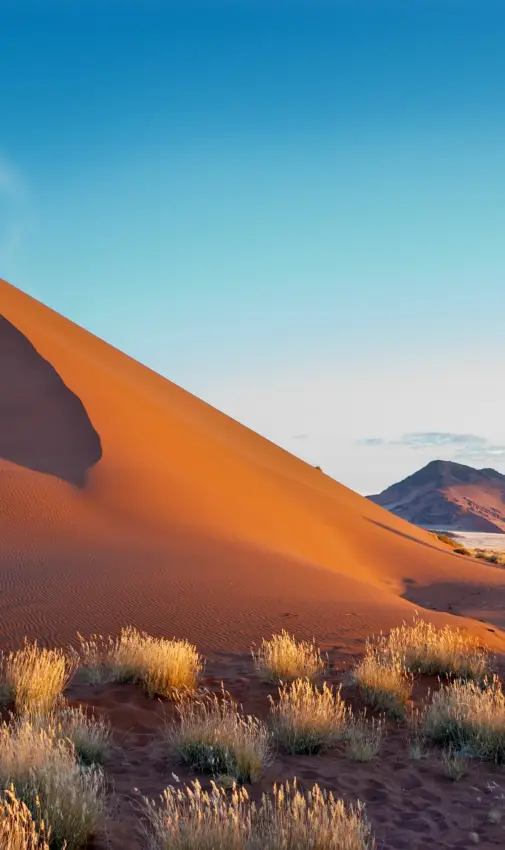
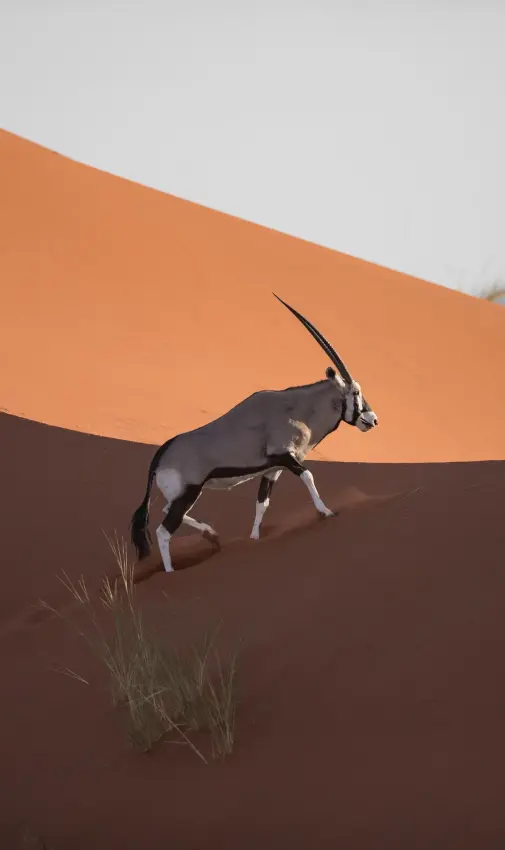
Wildlife is sparse by savannah standards, and the interest lies in what has adapted to survive. Gemsbok and springbok move across the gravel plains, and Hartmann’s mountain zebra work the rockier ground. The birdlife runs from fish eagles and herons along the river to the Benguela long-billed lark out on the plains. Boat trips depend on river levels. Cut the motor mid-stream and the Angolan bank is close enough to see clearly. Crocodiles slide off the rocks into the current. Guided walks turn to smaller detail, to desert-adapted plants and the fairy circles on the plains.