
 01
01
German streets, mile-high air
Windhoek is Namibia’s capital, set on the Khomas Highland plateau at roughly 1,700 metres, near the country’s geographical centre. For most safari guests it plays one clear role: a comfortable night’s rest between an international arrival and the light-aircraft flight onward to the desert or the north.
For most safari guests it plays one clear role
Jonker Afrikaner, a captain of the Orlam peoples, settled here in 1840, at a permanent hot spring the indigenous population knew as Aigams. Germany claimed the site in the colonial era, and buildings from that time still line the streets today. They stand alongside Damara, Herero and Owambo traditions and the rhythms of a modern working city.
A walkable centre holds the Christuskirche, the Tintenpalast parliament buildings and the Alte Feste, the oldest building in the city. Nearby, the Independence Memorial Museum traces Namibia’s route to statehood in 1990, with views over the rooftops from its upper floors. It rewards an hour or two rather than a full day.
It rewards an hour or two rather than a full day
Joe’s Beerhouse is the institution most guests are pointed toward for dinner. Opened in 1991 by the German chef Joachim Gross, it is an eclectic room hung with collected artefacts, serving Namibian game and German-influenced cooking. An afternoon fills well at the Namibia Craft Centre, which gathers work from women-owned businesses across the country, and on a short walk through the historic streets.
Windhoek sits between the Namib Desert to the west and the Kalahari to the east, on a semi-arid plateau of sparse savanna and rugged ranges. The valley setting restricts how far the city can spread, and the result is a place that feels contained and easy to cross on foot or by short taxi ride, between hotel, restaurant and museum. Rain falls mostly in a short window from January to March. Water is scarce here, and the city has become known for recycling its wastewater to drinking standard, a practical response to the surrounding aridity rather than anything a visitor comes to see.
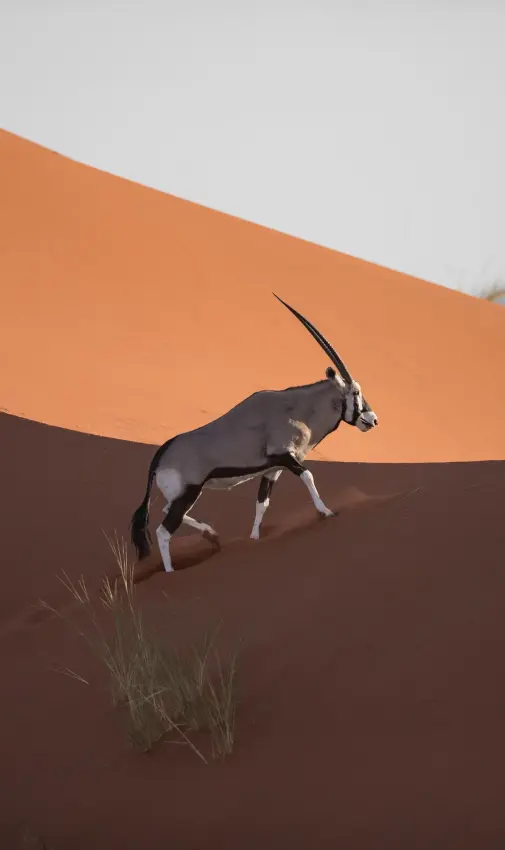
The immediate surroundings are farming and highland country rather than open wilderness, though wildlife is not entirely absent from the story. Guest farms and reserves in the Khomas Highlands hold kudu, gemsbok, springbok, Hartmann’s mountain zebra, giraffe and leopard, and the state-run Daan Viljoen Game Park lies about 25 kilometres west of the centre. These are pleasant additions to a stopover, not the reason to visit Namibia. Most itineraries treat them exactly that way, saving the serious wildlife viewing for Etosha or Damaraland.
These are pleasant additions to a stopover, not the reason to visit Namibia.
International flights arrive at Hosea Kutako International Airport, 45 kilometres east of the city, with direct European services from Frankfurt and Munich and regional connections through Johannesburg and Cape Town. From here guests transfer to a Windhoek guesthouse for the night. The onward light-aircraft flights leave from Eros Airport, the smaller field just outside the centre, where charter operators run bespoke transfers to Sossusvlei, Damaraland, the Skeleton Coast and the far north. Scenic helicopter flights over the surrounding highlands can also be arranged from here.
Timing matters less in Windhoek than in the safari regions, since most stays run to a single night. The dry winter, May to October, brings clear, sunny days good for walking the city, though nights from June to August can drop close to freezing at this altitude. October brings jacaranda blossom to the streets. The wet summer is hotter, with afternoon thunderstorms that green the surrounding hills, while dry-season conditions simply make the airport-to-hotel-to-airport sequence more predictable.
The best time to visit Windhoek
Jan
Feb
Mar
Apr
May
Jun
Jul
Aug
Sep
Oct
Nov
Dec
Recommended
Transitional
Challenging conditions
Come between May and October for warm, clear days, low humidity and almost no rain. Winter nights from June to August turn very cold, and this is peak safari season for onward travel. The wet season from November to March is hotter and scenically green, but dispersed wildlife makes viewing harder.
accommodation in windhoek
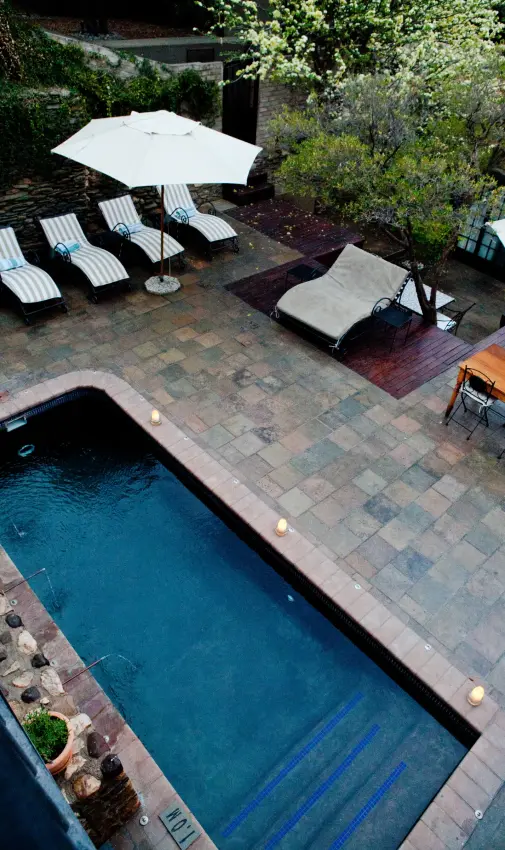
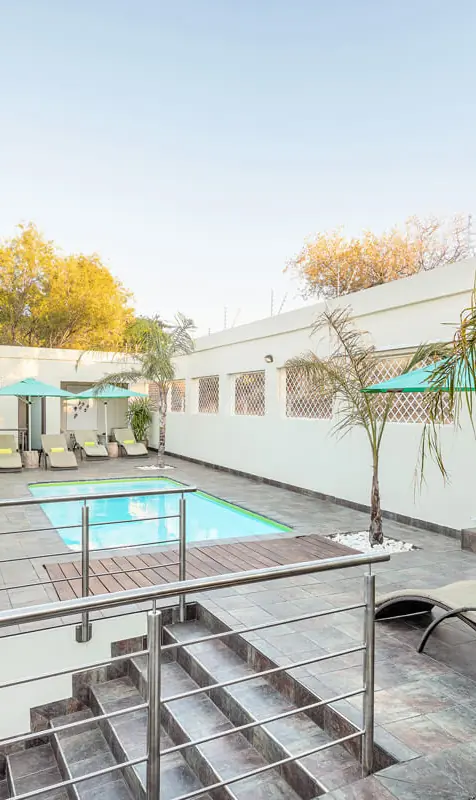
Windhoek offers a genuine range for a one-night stay. Exclusive all-suite hotels sit in the city itself, some in historic buildings with mountain views and rooms styled around different Namibian regions. Boutique guesthouses and contemporary urban suites suit travellers prioritising proximity to Eros Airport. A short drive out, lodges on private reserves in the Khomas Highlands offer a bush-edged first or last night, with game viewing and quiet highland surroundings before the onward flight.


activities
Museums, Markets and a Meal
The compact centre suits an afternoon on foot: the Independence Memorial Museum for Namibia's history and rooftop views, the Christuskirche, and the Namibia Craft Centre for work from women-owned businesses countrywide. Evenings tend toward dinner at an institution such as Joe's Beerhouse. Game drives are available at nearby Khomas Highland reserves.

conservation
Sanctuaries and Wildlife Research
Several organisations operate in and around Windhoek. The Naankuse Foundation runs a sanctuary for injured, orphaned and conflict animals, with rehabilitation work and community programmes alongside the San community. The Giraffe Conservation Foundation is headquartered in the city. Human-wildlife conflict on the surrounding commercial farmland remains the primary challenge these groups address.

getting around
Two Airports, One Easy Night
International flights land at Hosea Kutako International Airport, 45 kilometres east, with direct services from Frankfurt and Munich and regional links via Johannesburg and Cape Town. Onward light-aircraft transfers to the desert and the north depart Eros Airport just outside the centre. Charter and scenic helicopter flights can be arranged from Eros.
other areas in namibia
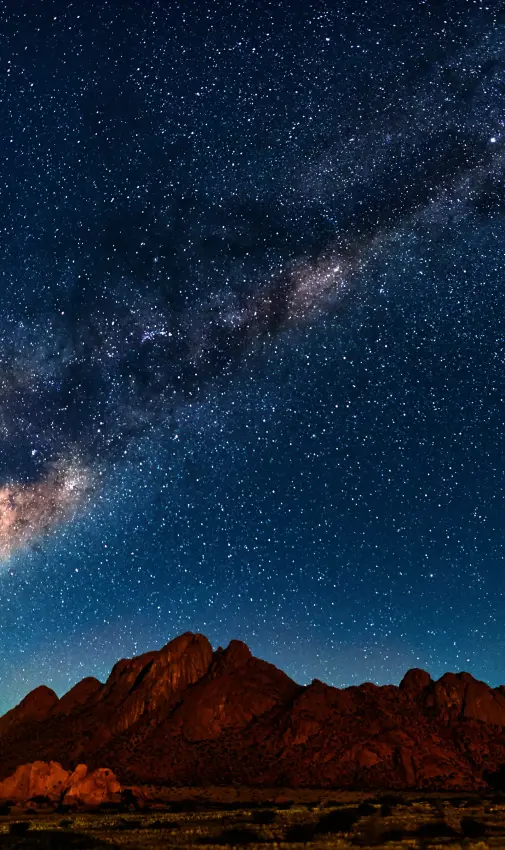
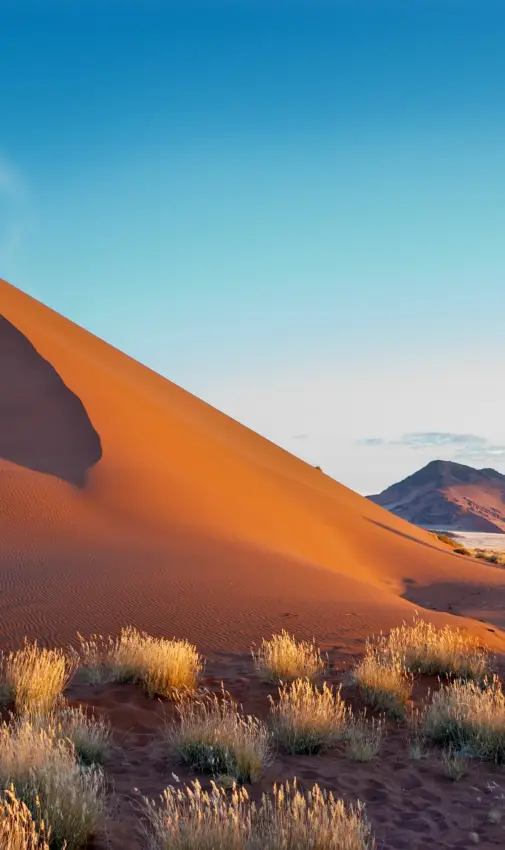
Windhoek is the launch point for Namibia's defining regions. Sossusvlei and the Namib-Naukluft, with its red dunes and the dead camel thorns of Deadvlei, sit a short flight southwest. Etosha, in the north, draws elephant, rhino and lion to its pan and waterholes. Damaraland offers ancient rock art at Twyfelfontein and desert-adapted elephant and black rhino. The Skeleton Coast pairs shipwrecks and seal colonies with stark Atlantic shoreline, while Swakopmund gives a cooler coastal contrast to the interior.
 01
01
 02
02
 03
03
 04
04
 05
05
 06
06
 07
07
 08
08
frequently asked questions
Hosea Kutako International Airport takes the long-haul flights, and it is about forty-five minutes east of the city.
Eros, the smaller airport inside Windhoek itself, is where the light aircraft leave from for Sossusvlei, the Skeleton Coast and Etosha, so a Namibian route usually starts there the morning after you land.
We arrange the transfer between the two, or straight to your hotel.
If you are self-driving, the hire cars are collected at the international airport and the road into town is easy.
Usually one, and it is worth it rather than an inconvenience.
Most long-haul flights land in the morning or early afternoon, and the light aircraft north and south leave in the morning, so a night in the city makes the connection work without a rush.
It is also where a self-drive trip gets organised: the car, the supplies, the first briefing.
One night at the start and often one at the end is the shape of nearly every Namibian route we book.
Enough for an afternoon, and it is a pleasant city rather than a sight in itself.
- The craft centre and the Namibia Craft Market, for the best buying in the country
- The colonial-era buildings and the Independence Memorial Museum
- The Katutura township tour with a local guide
- The restaurants, which are genuinely good and famously meat-heavy
The city sits at around 1,700 metres, so the air is dry and the evenings cool.
We would not build a Namibian trip around Windhoek, but we would not skip the night either.
Windhoek sits high on the central plateau, outside the regions that TravelHealthPro, the UK's official travel health service, and the CDC name as Namibia's malaria areas, which are in the north and along the rivers.
That does not make the trip a malaria-free one: most Namibian routes head north to Etosha or the Kunene, where the seasonal risk is real.
We do not make medical recommendations. That is a conversation between you and your own doctor or a travel clinic.
On the practical side, cover up at dusk once you are north.
It is the only sensible place, and Namibia is the best self-drive country in Africa.
The roads are good, the distances are long but the driving is easy, and the hire companies are used to visitors taking a vehicle for two weeks.
What matters is the briefing: tyre pressures, spare wheels, fuel stops and the gravel-road speed that catches people out.
We book the vehicle, plan the route with realistic driving days, and put the lodges where the distances actually work.
One at the start, and one at the end if your flight home leaves in the evening.
That is genuinely all it needs. The city is the hinge of a Namibian trip rather than a destination, and the country's best days are elsewhere.
The exception is a first night after a long flight, where a second morning to sleep in is sometimes the kindest thing.
Tell us your flight times and we will say whether one night or two is right.
rated five stars by our clients

our approach
remote, exclusive
& personal
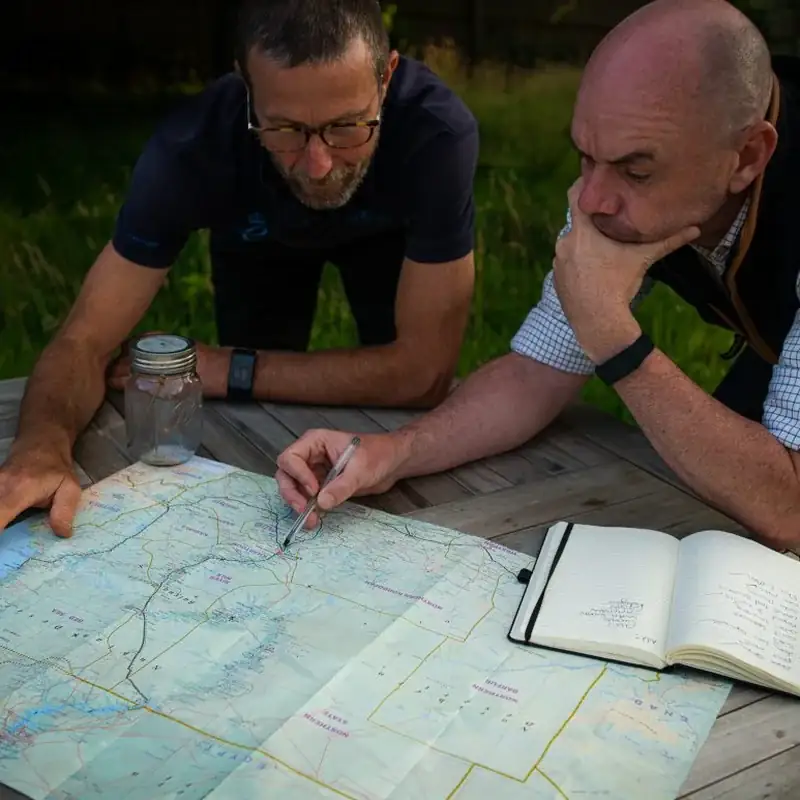
Every journey starts with a conversation. We take the time to understand your vision before we start planning.
Whether by phone or in person, we work with you directly to shape something that is considered, personal, and expertly delivered.
Every journey starts with a conversation. We favour a direct, personal approach: understanding your vision before anything else.
Whether by phone or in person, we work with you directly to shape a journey that is both thoughtfully considered and expertly delivered.
Get in touch to start planning yours.