Vitor Azevedo, an Angolan-Namibian developer, built the lodge and opened it in 2015 through his outfit Namibia Exclusive Safaris. It was a joint venture with the Sorris Sorris Conservancy, the community-run conservation area registered in 2001, with financial backing coming in part from the Mineworkers’ Union of Namibia through its investment arm. For years the structures stood underused, hampered by operational delays and sporadic bookings, while the community waited for the promised returns to arrive.
That changed in mid-2024, when the Namibian Competition Commission approved the acquisition of Namibia Exclusive Safaris by Namibia Expeditions Spain, a Spanish hospitality-owned firm. They closed the lodge, reduced its capacity from nine suites to six, and rebuilt it around a smaller footprint. The arrangement keeps Damara residents of the conservancy in jobs and training, and gives them a direct share of the tourism revenue.
For years the structures stood underused, hampered by operational delays and sporadic bookings
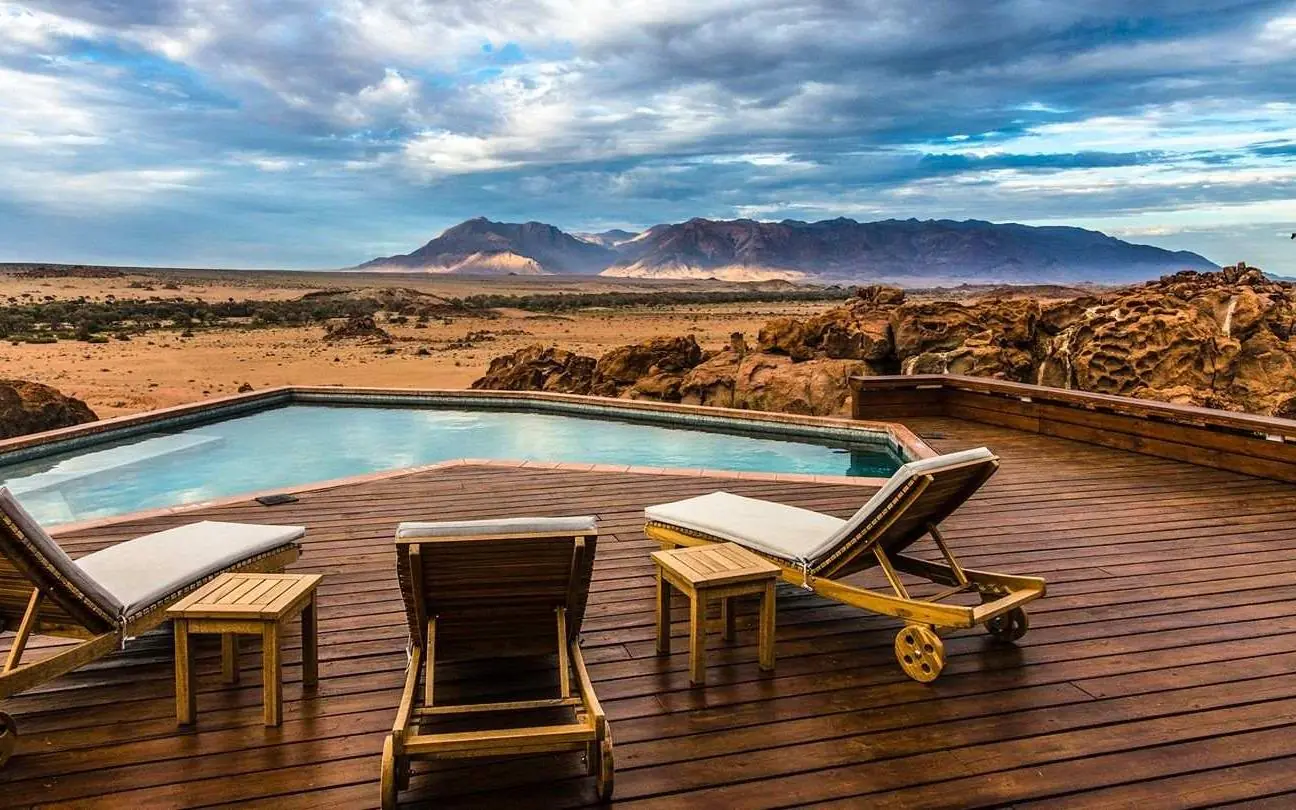
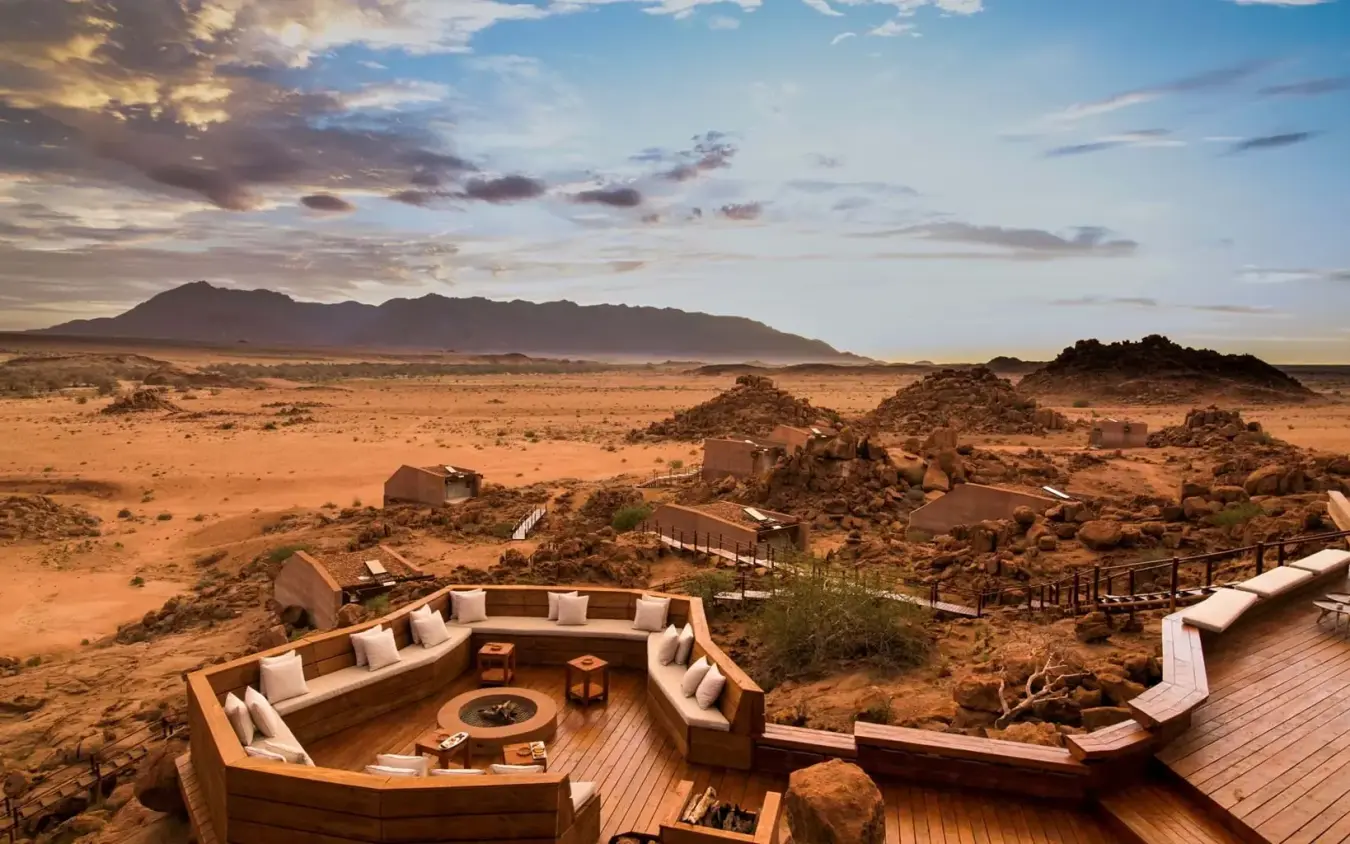
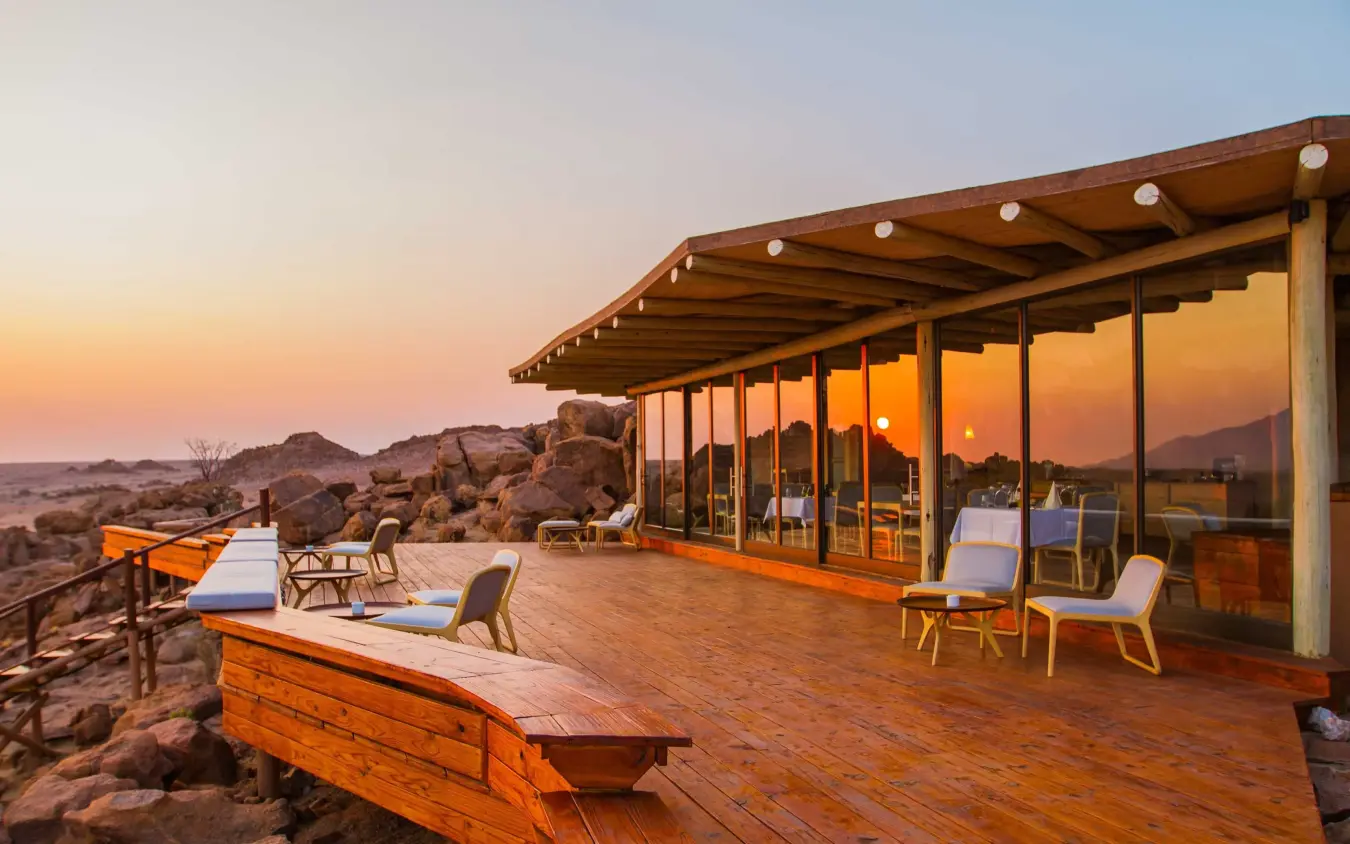
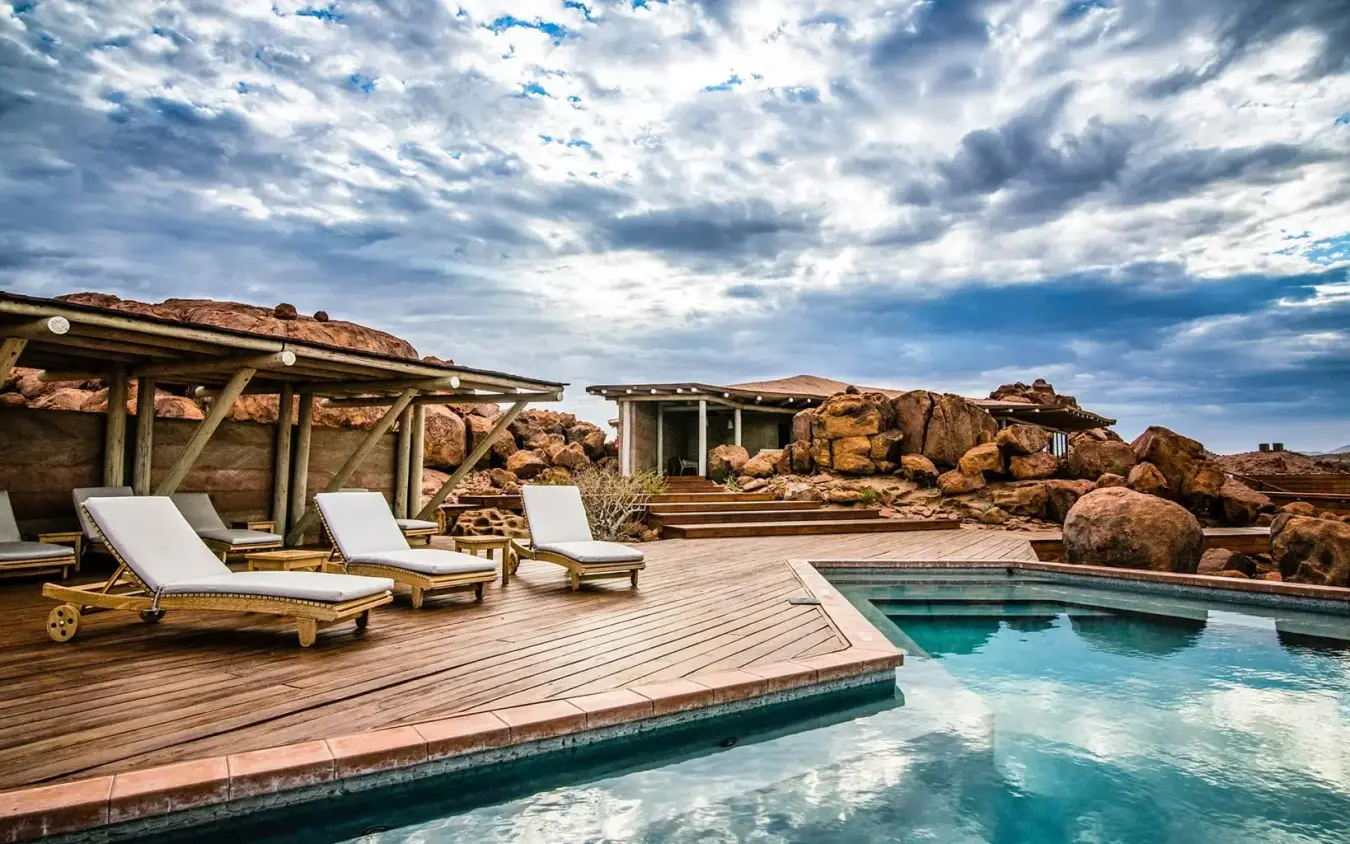
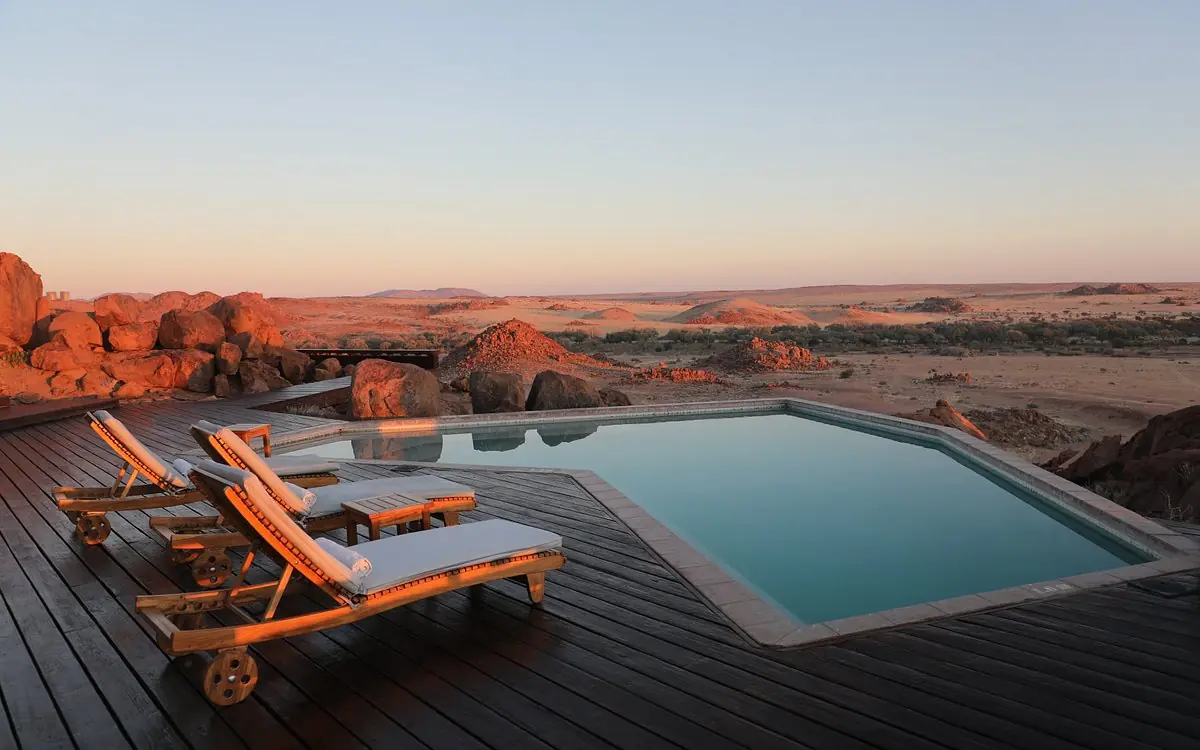
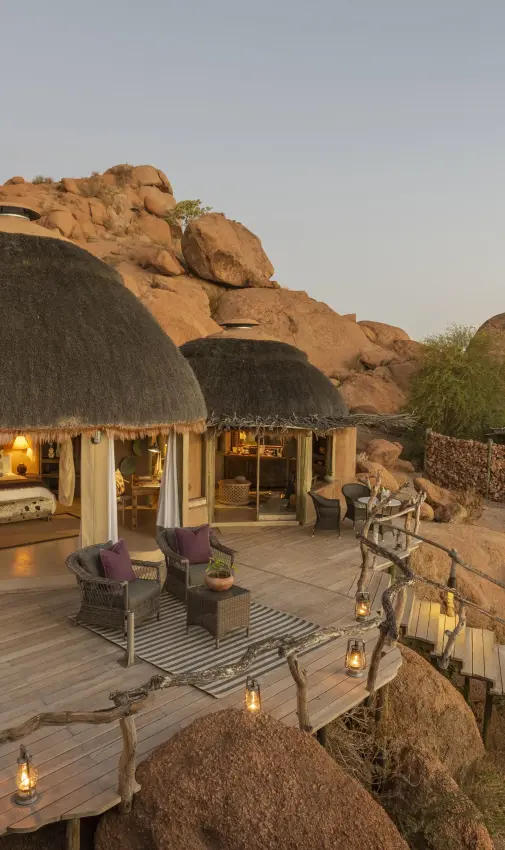
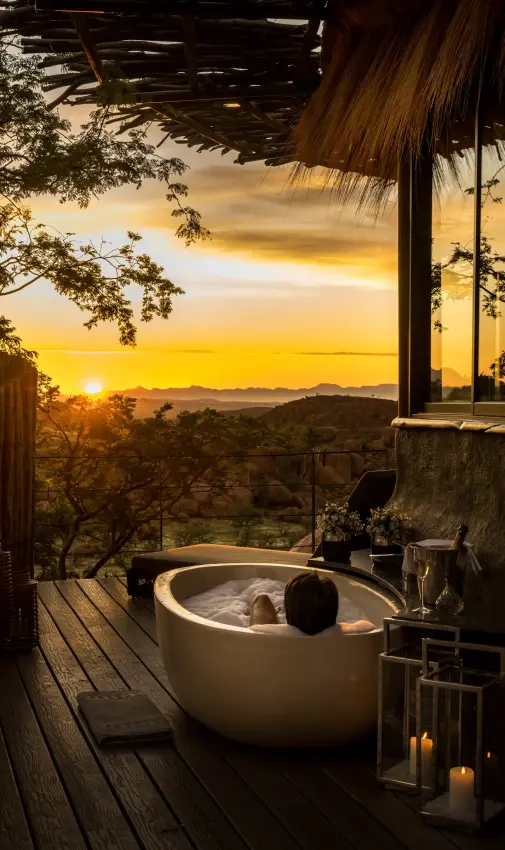
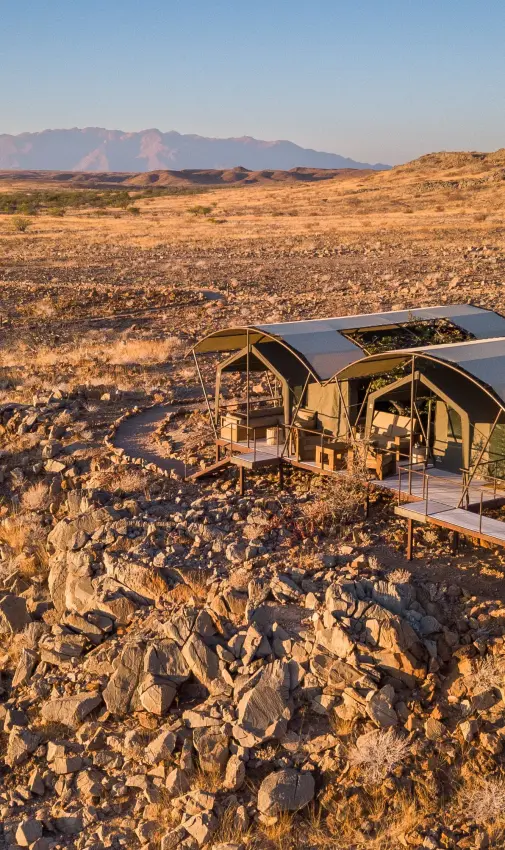
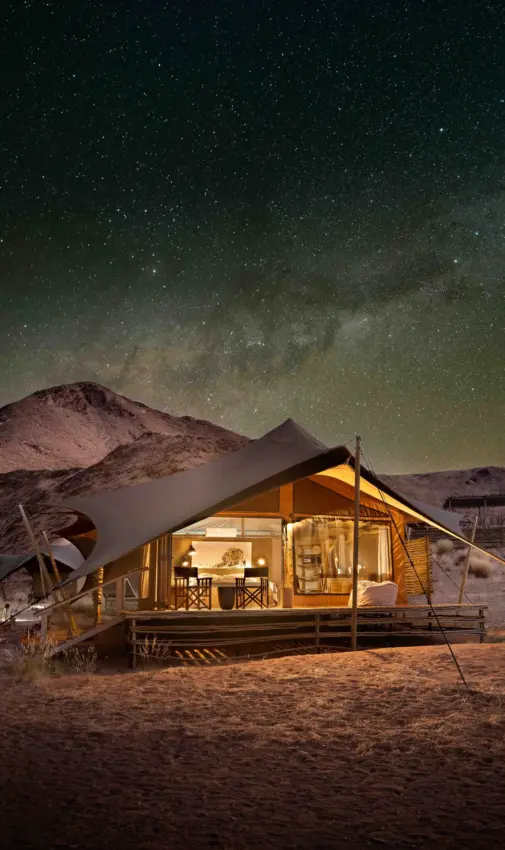
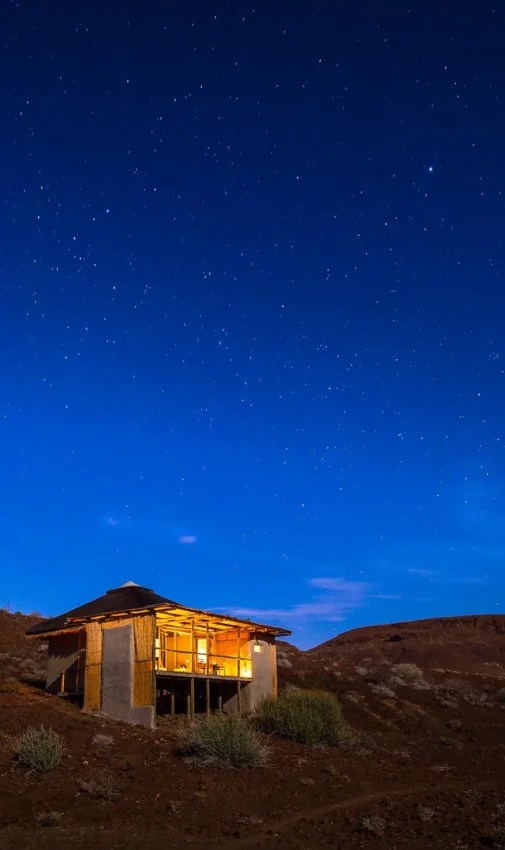
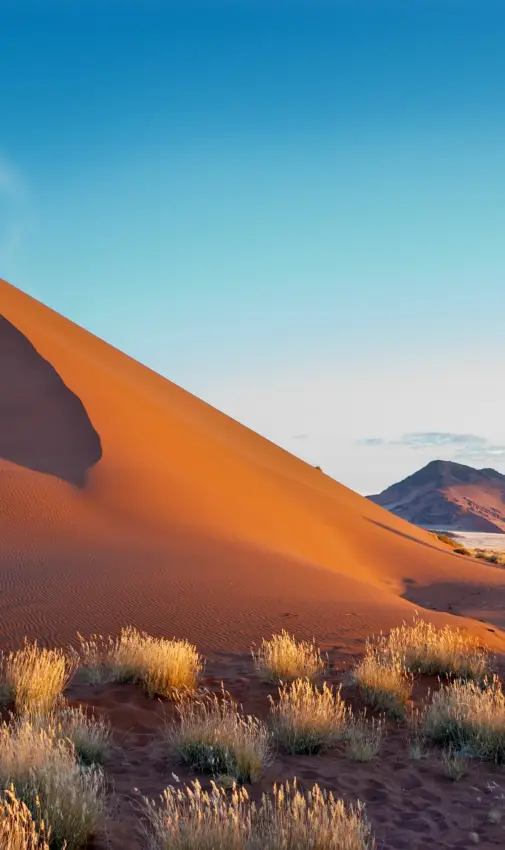
The architecture answers the site rather than dominating it. Box-like suites are staggered down the slope among the boulders, linked to the central building by raised timber walkways and steps, some of them steep. Rammed-earth walls temper the heat, and floor-to-ceiling glass frames the Brandberg from the bed and the bath alike. The interiors run to pale timber, cream linen and grey upholstery, a palette pulled from the rock and sand outside, so all the attention is pushed toward the mountain and the sky.
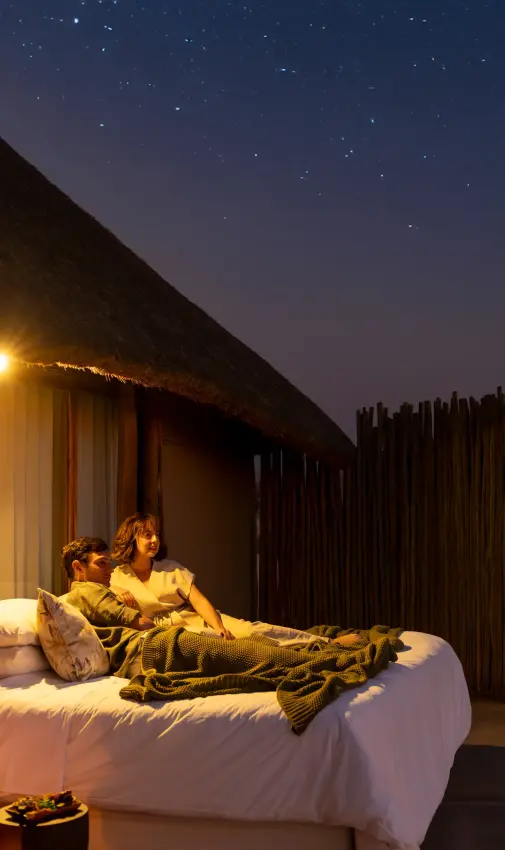
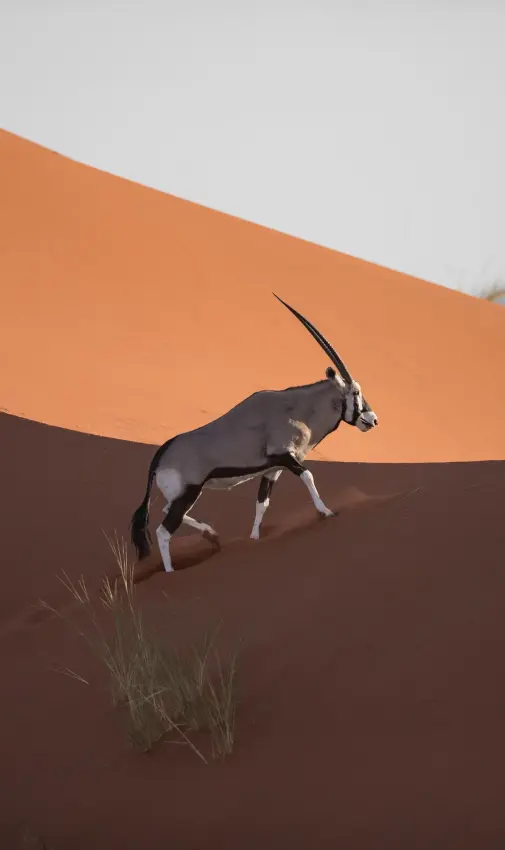
Guides here interpret geology and desert ecology as much as animals, and full-day trips reach the Brandberg to see San rock paintings, among them the White Lady. Back at the lodge, the cooking leans on Namibian game such as springbok and oryx alongside international technique, served across long, unhurried dinners. For many, the strongest memory is not a single sighting but the accumulation: warm rock underfoot, the mineral smell of dust and stone, and a density of stars over the Ugab valley.