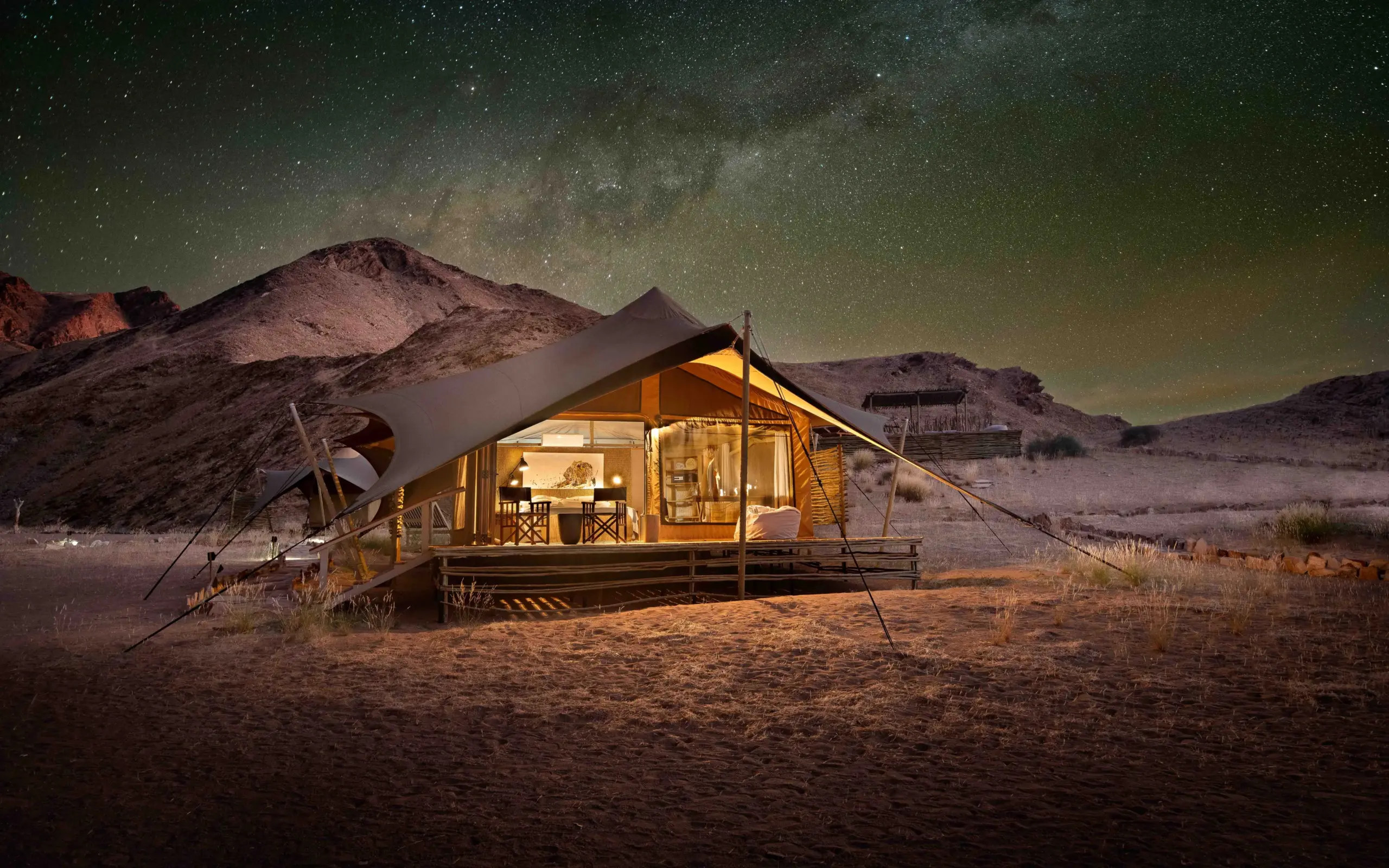
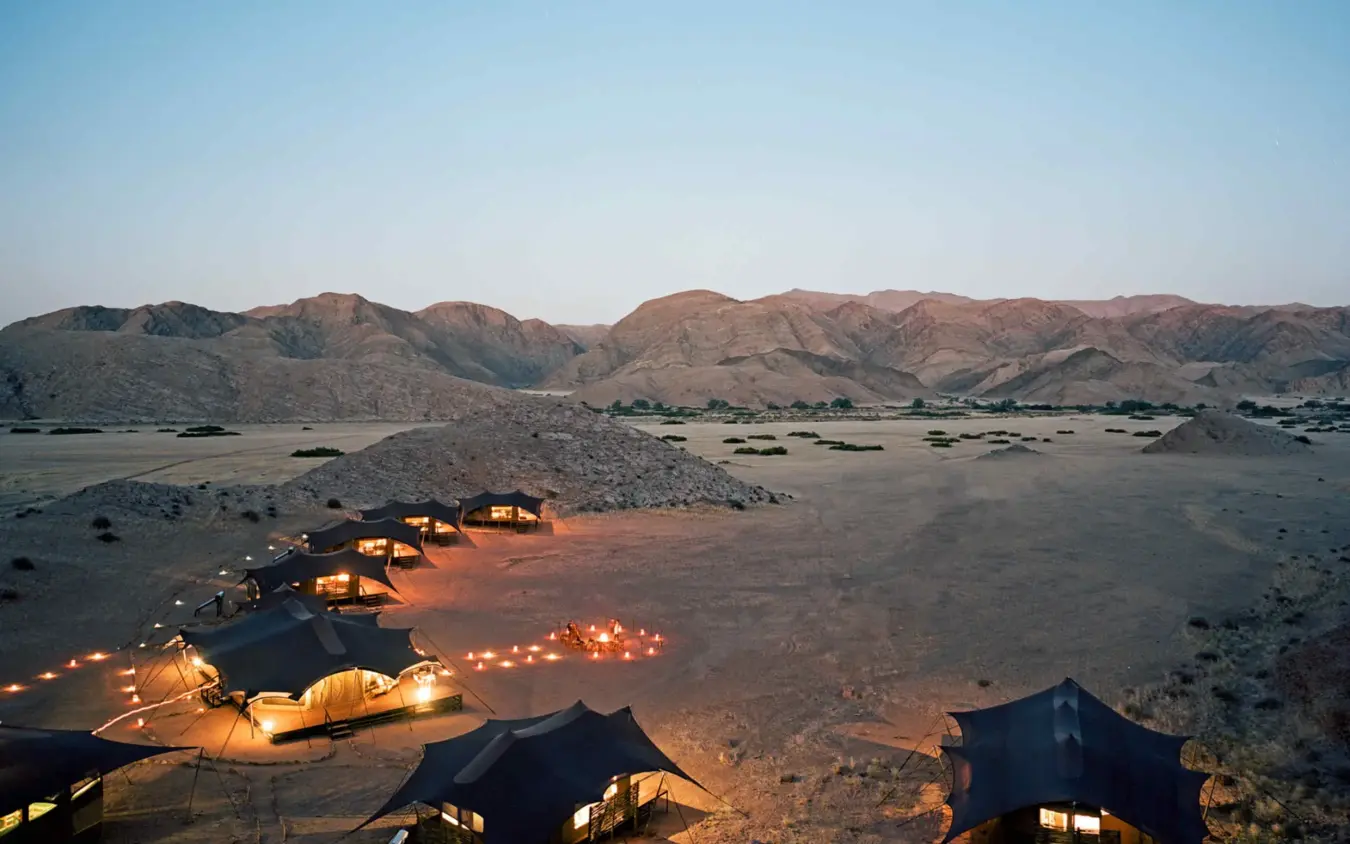
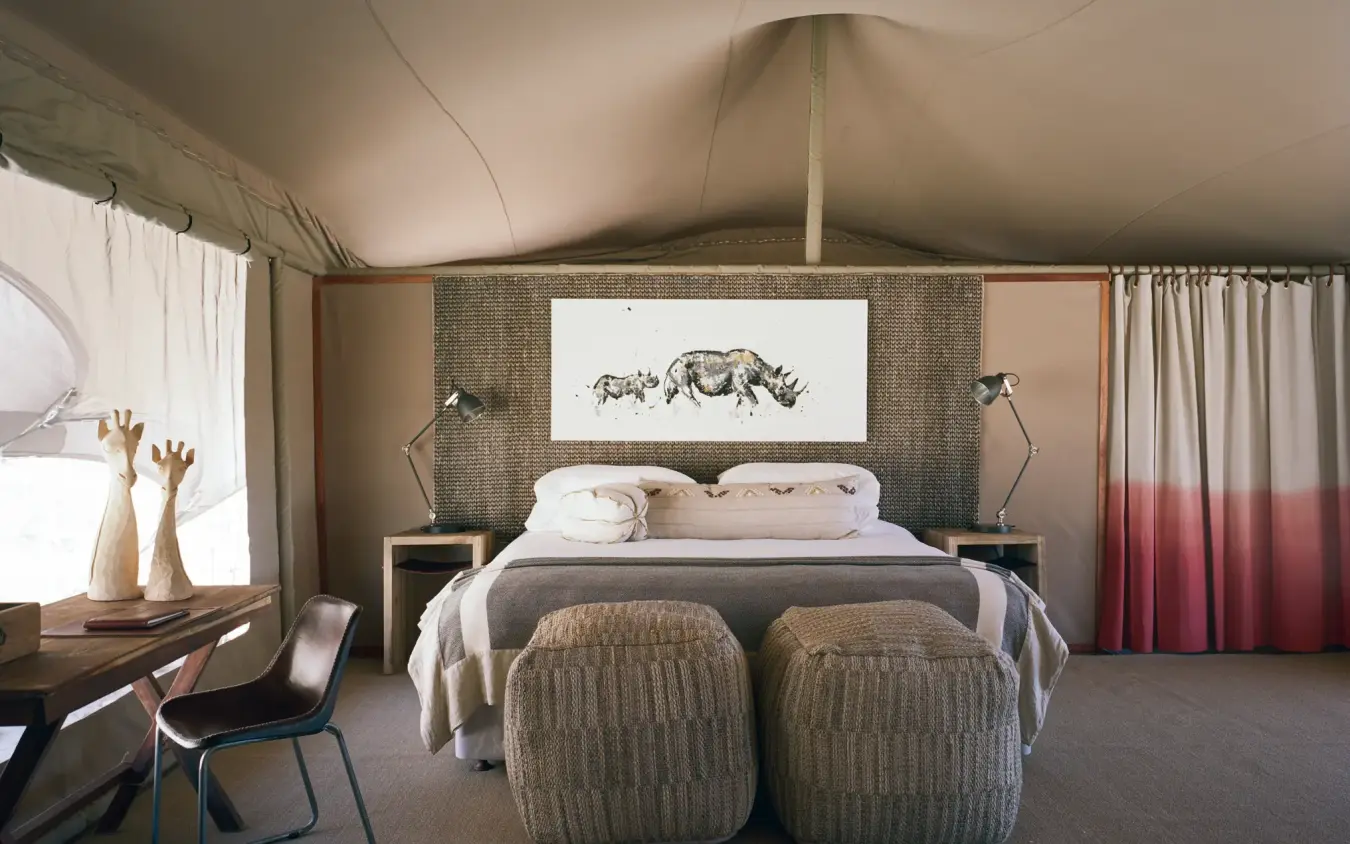
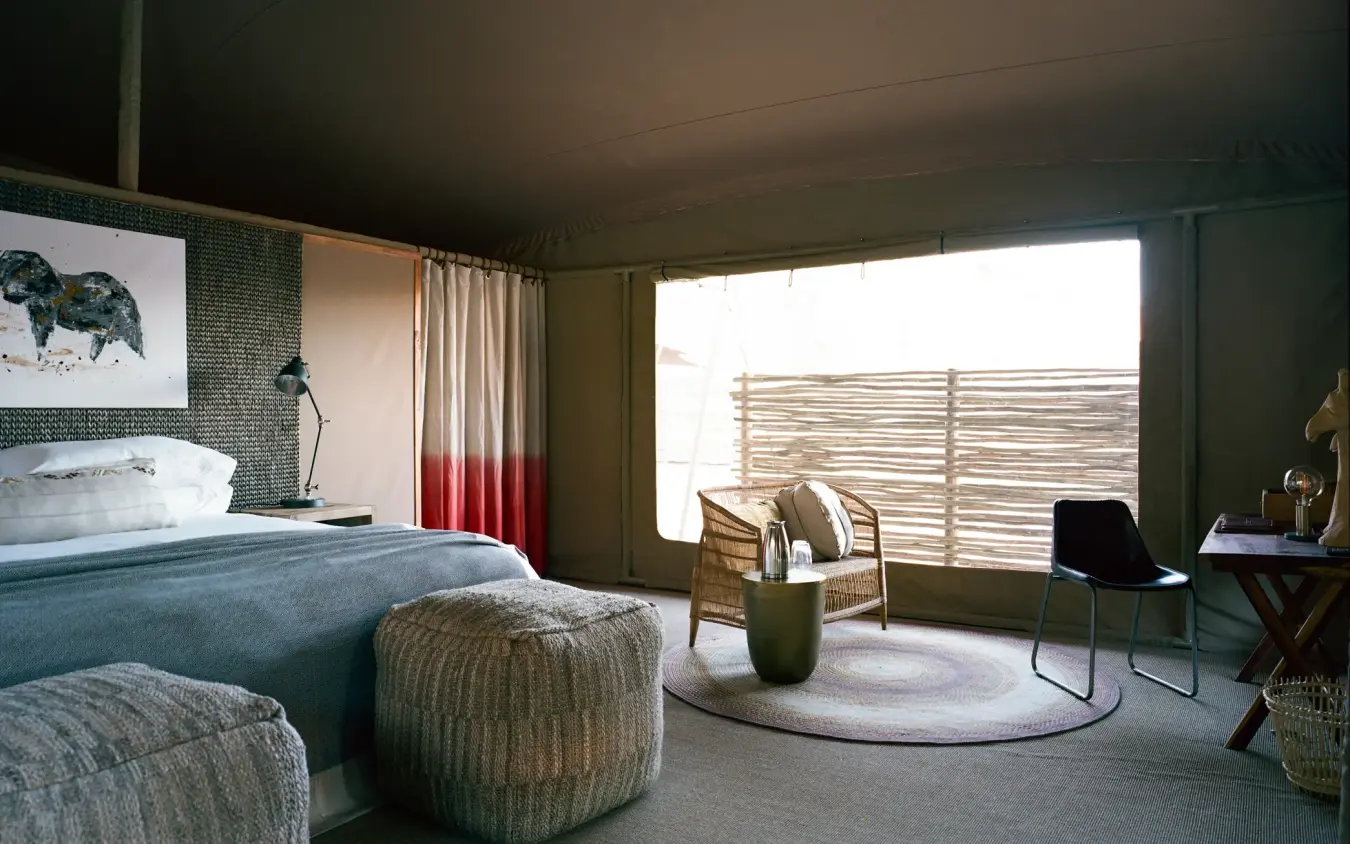
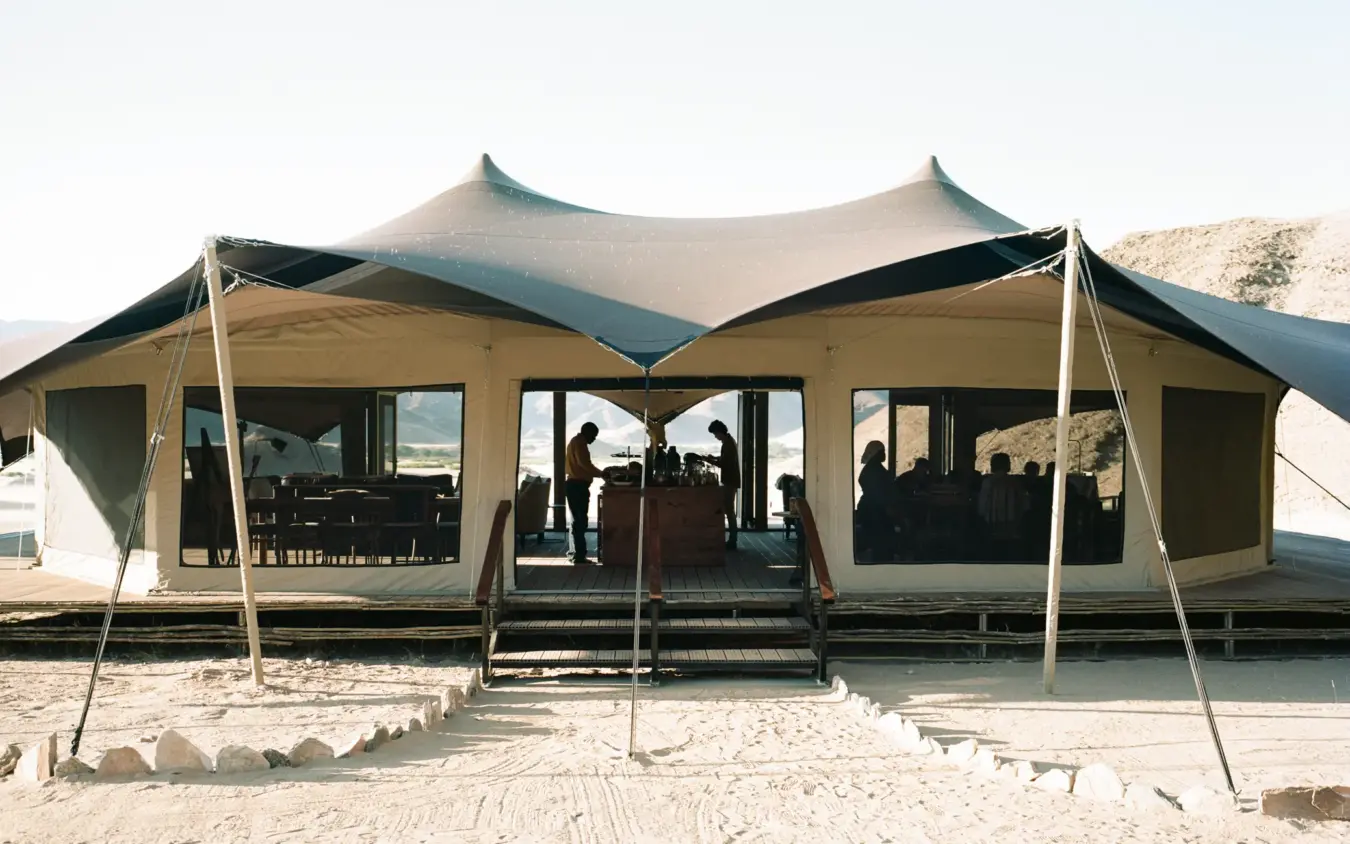
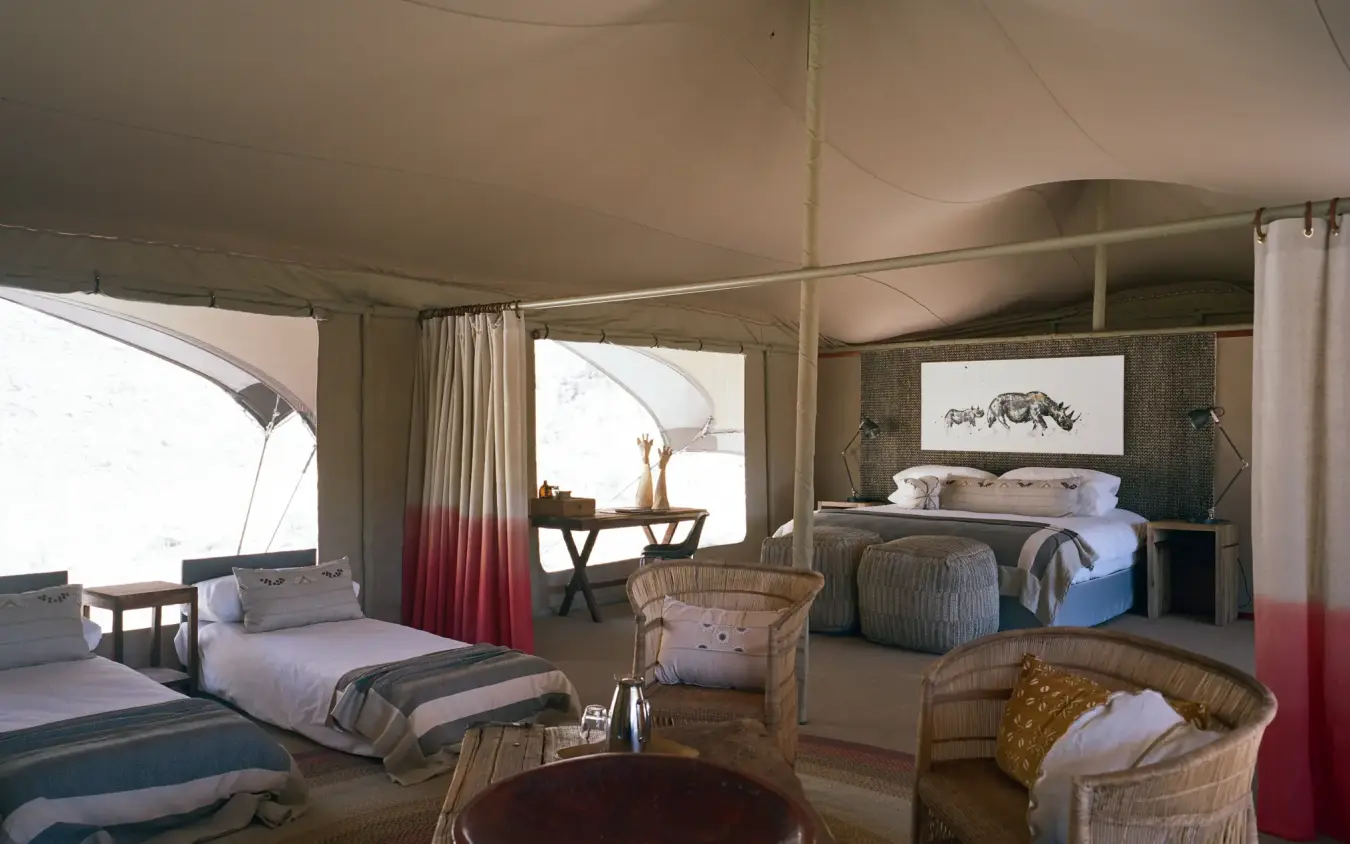
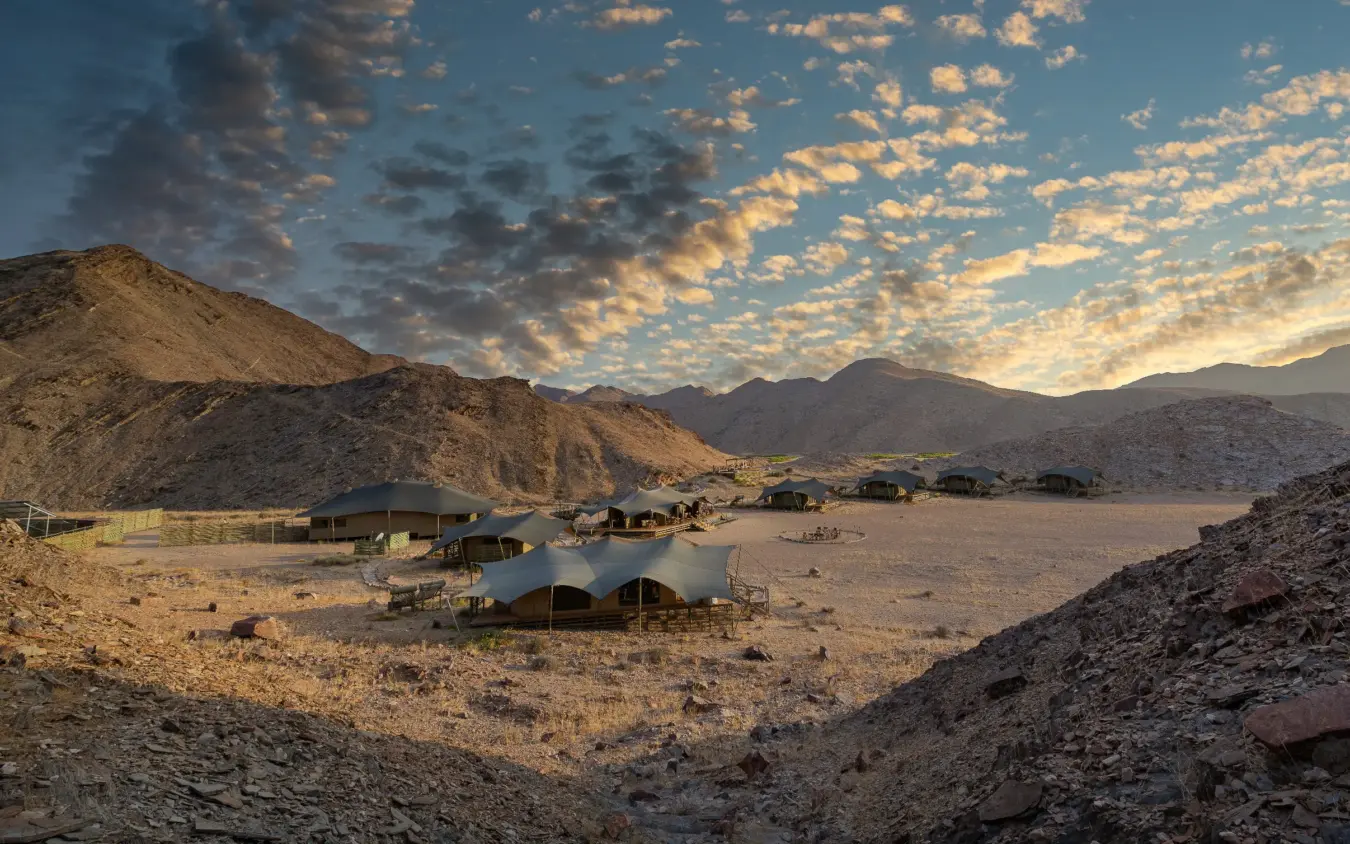
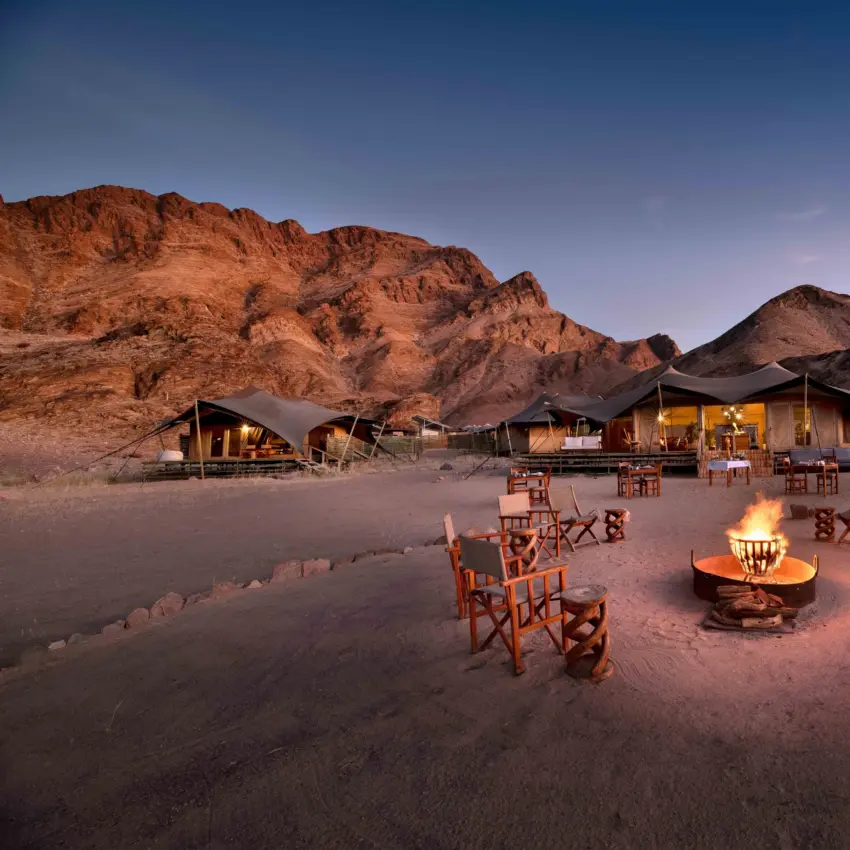
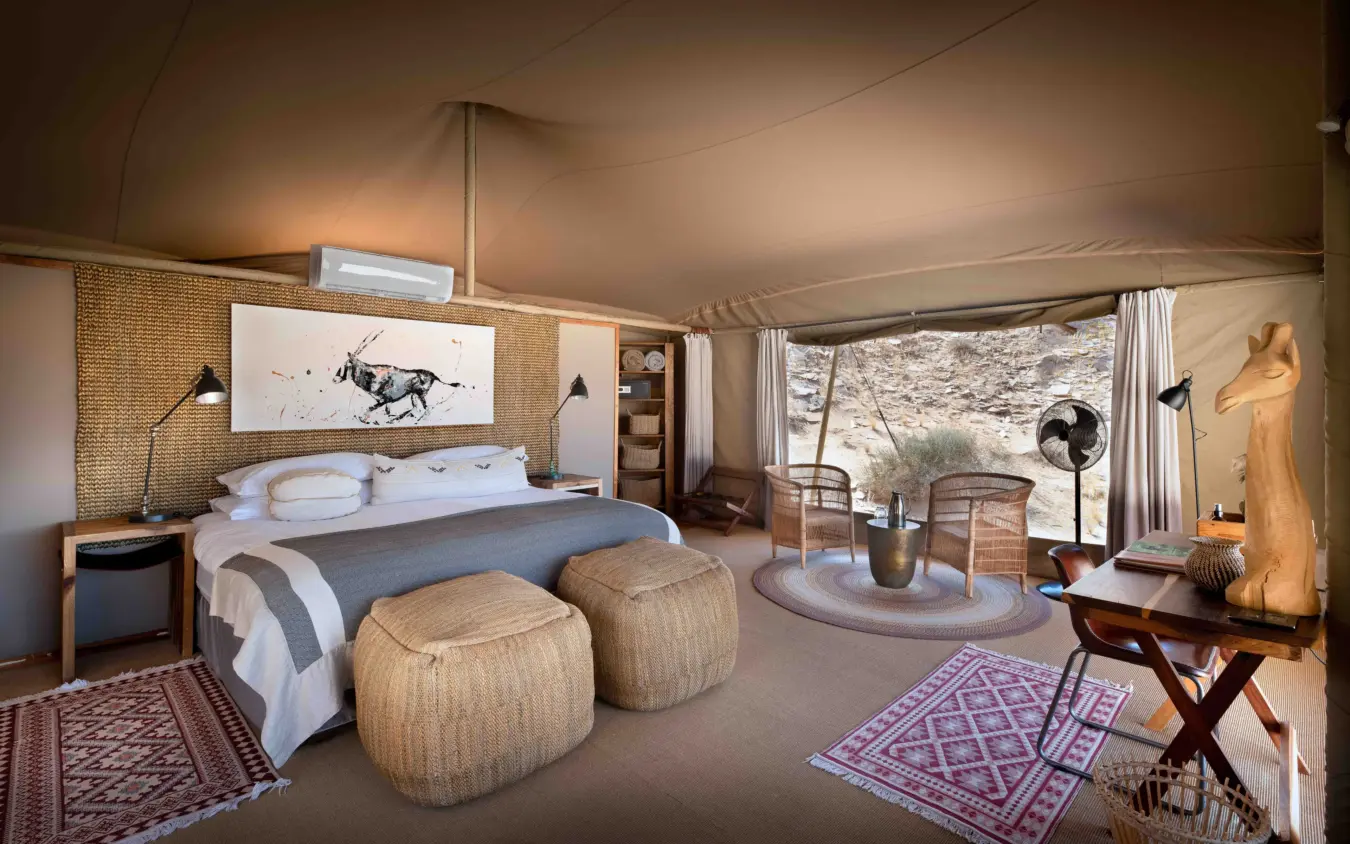
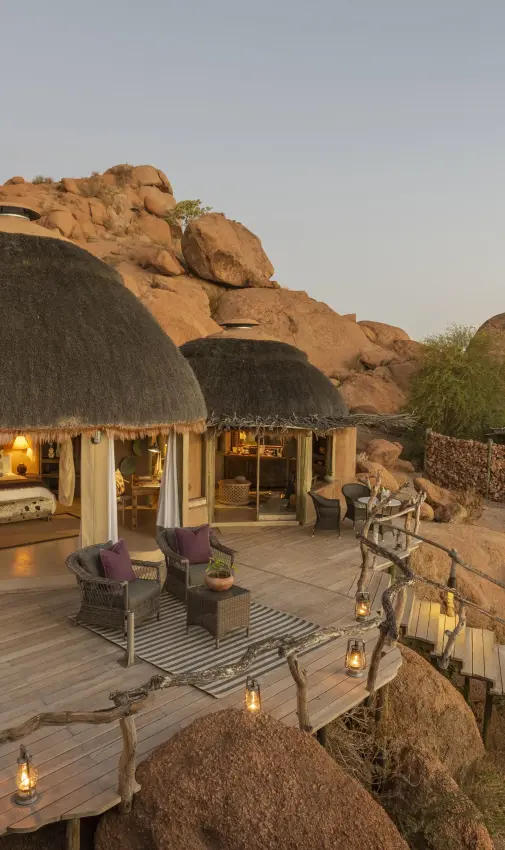
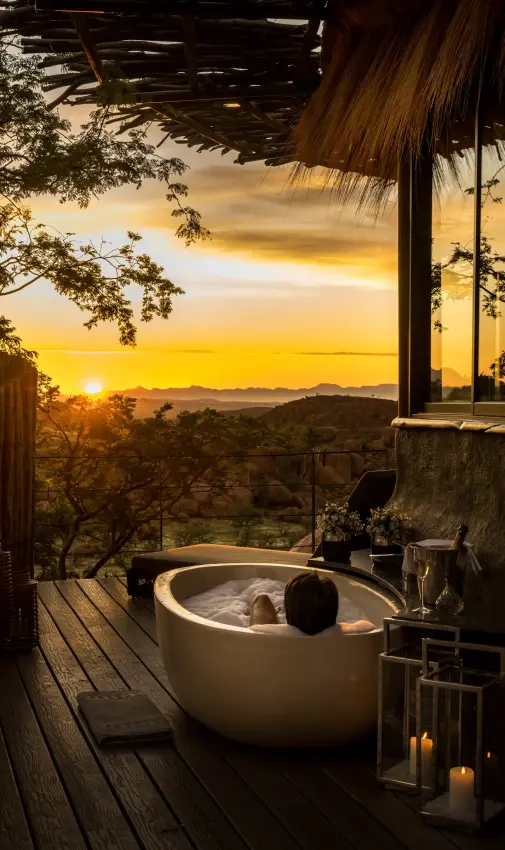
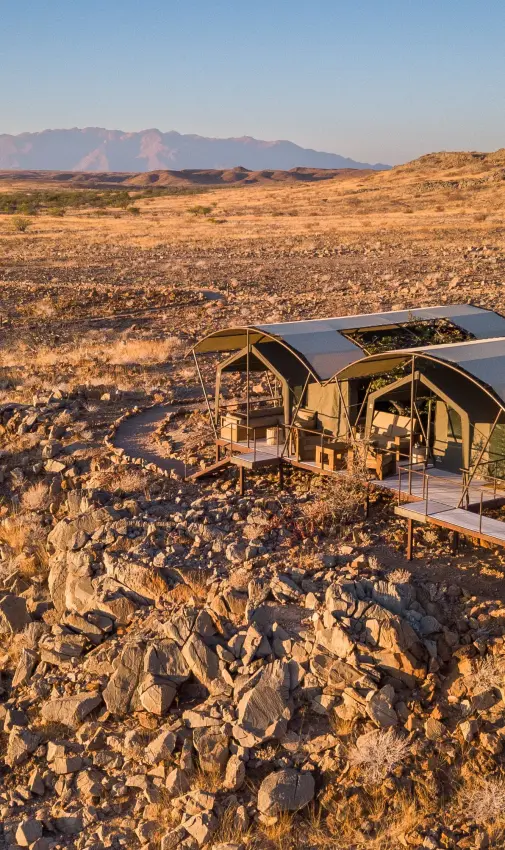
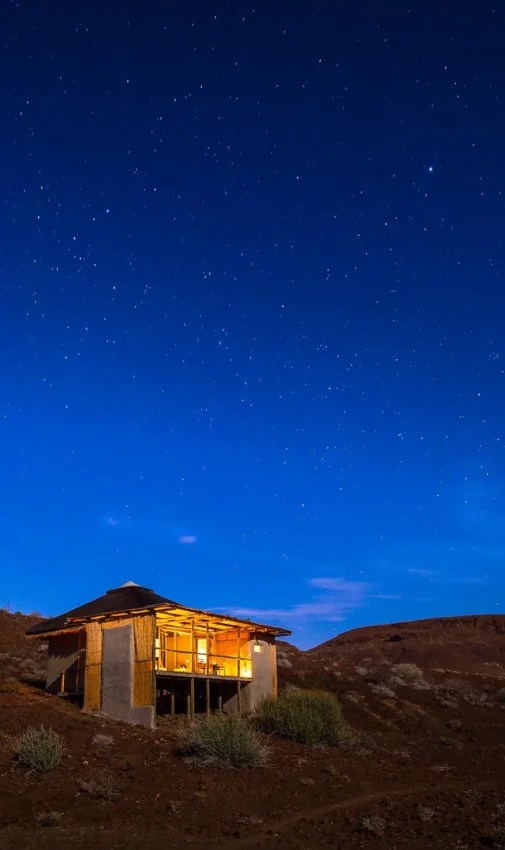
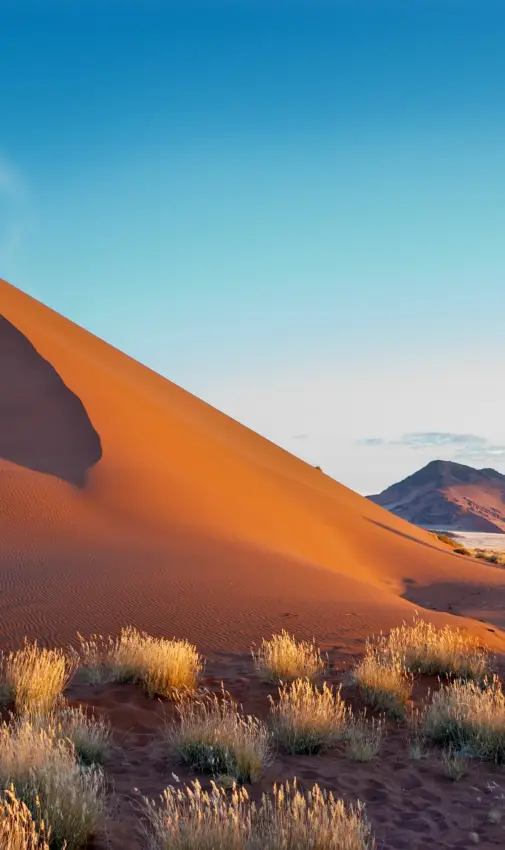
Six tents stand spaced along the valley, five twins or doubles and a single family tent, each raised on a deck built from a composite of wood, bamboo and recycled materials. Every one is ensuite, with an indoor shower, proper beds, a seating area and a private veranda facing the riverbed. The interiors take their colours from the ochre of the dunes and the geometric patterns of Himba design. The whole camp runs on solar power, and it was built to be lifted from the site one day with little trace left behind.
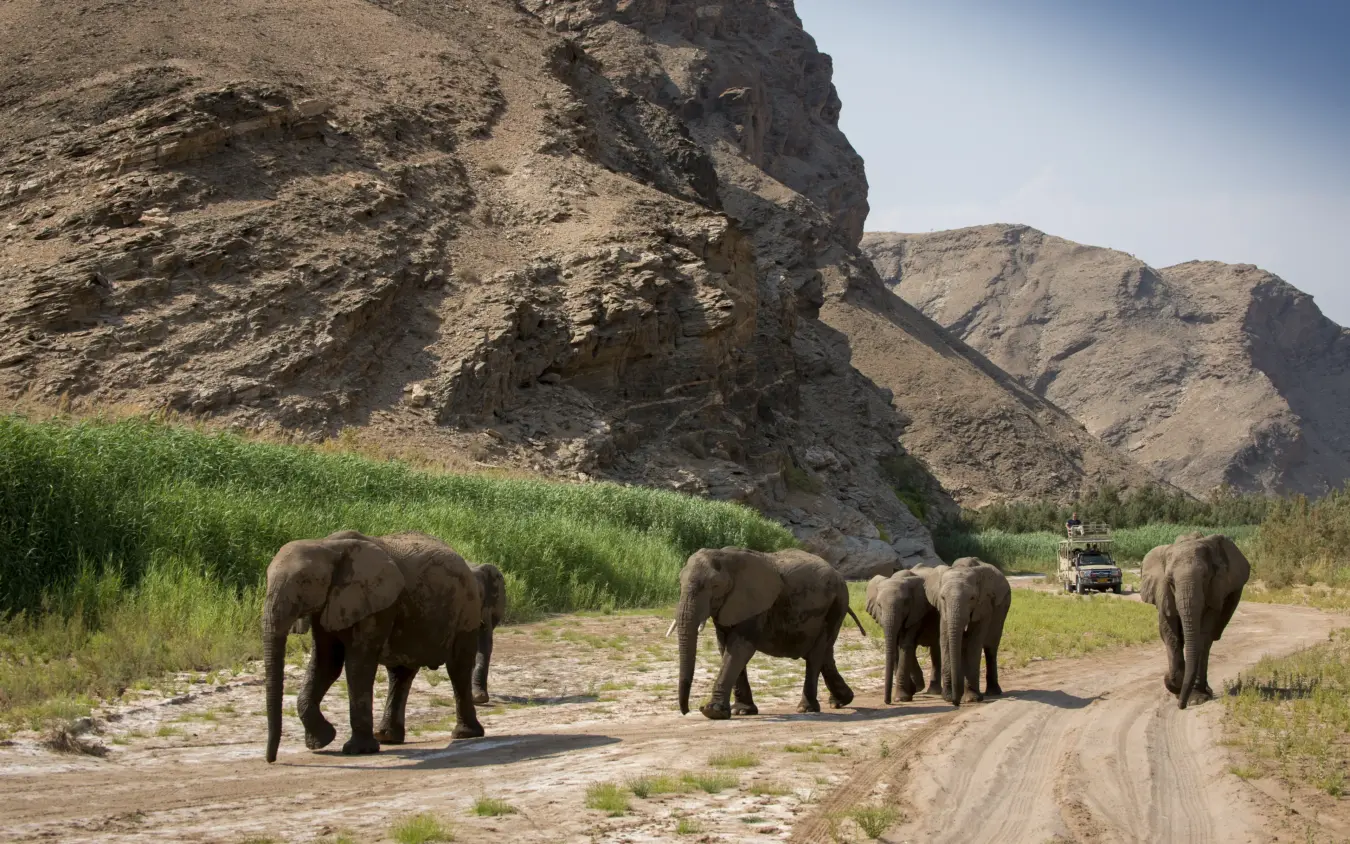
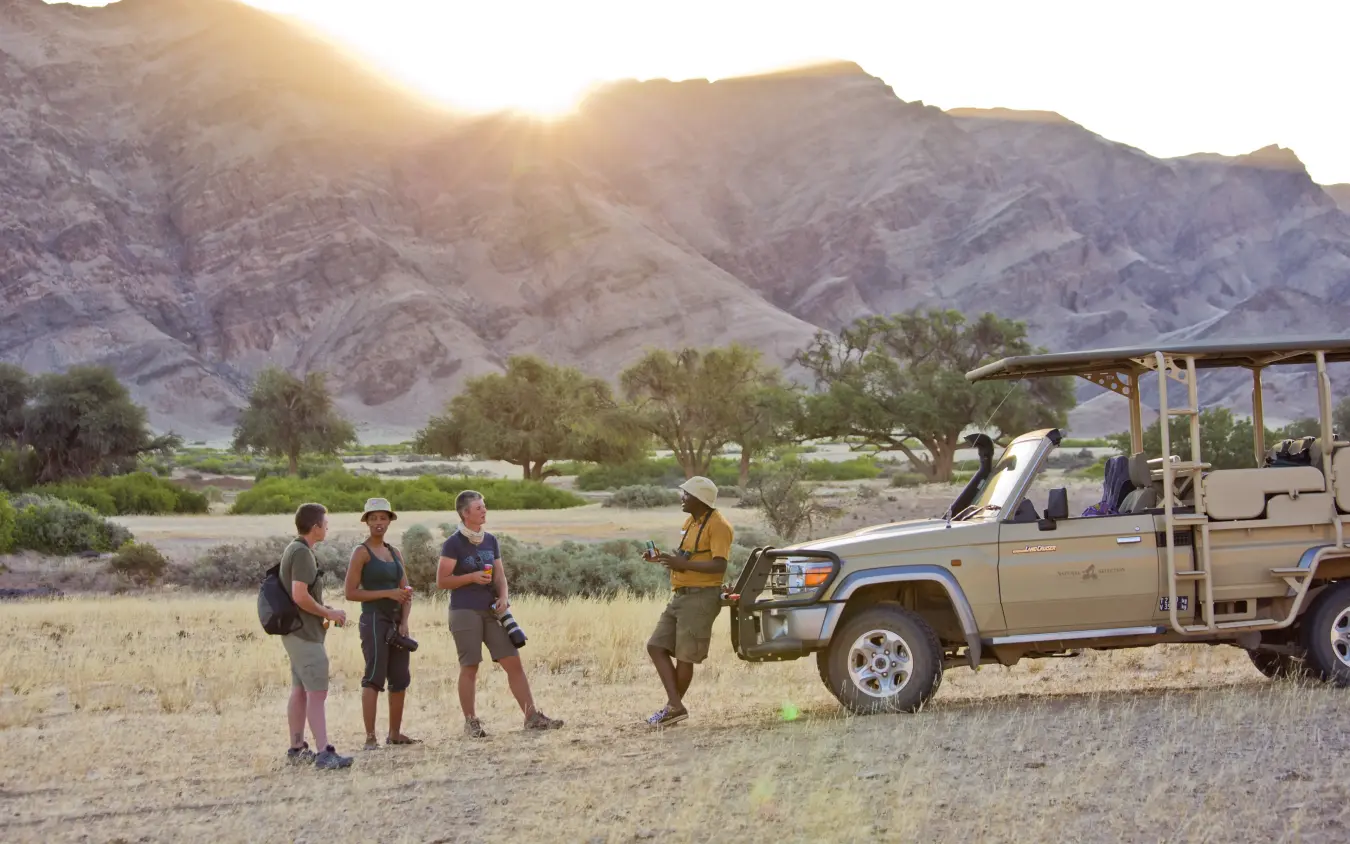
Days begin with game drives that follow the dry river systems, reading fresh tracks in the sand for desert elephant, giraffe and lion across the plains and rocky hills. Black rhino tracking is done on foot with experienced rangers, as are the longer walking safaris. The shorter guided walks turn to the smaller detail of desert ecology, the plants and insects, the tracks left overnight, and the ways animals endure out here. It is a landscape best read slowly, on foot, close to the ground.
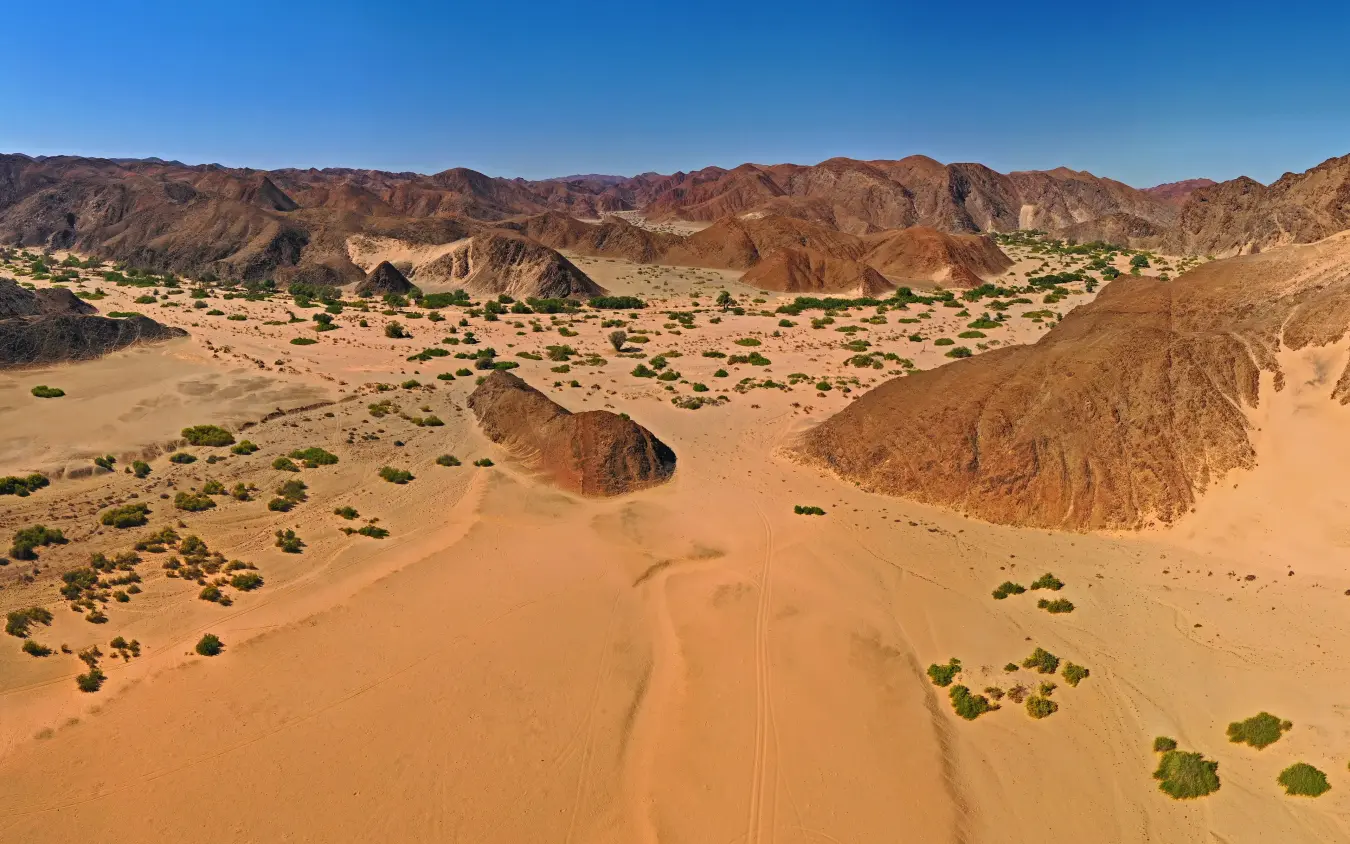
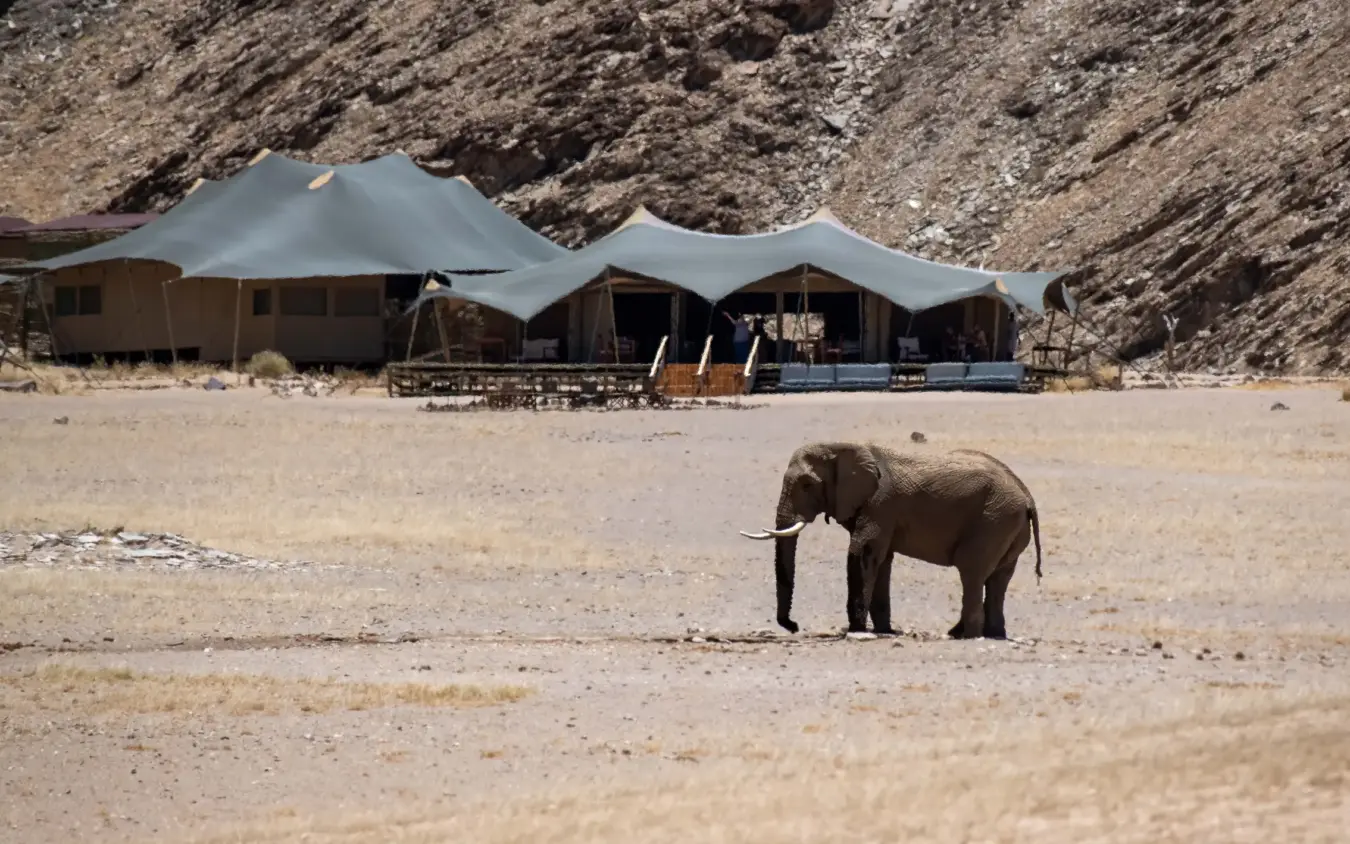
Wildlife moves along the ephemeral riverbed as though it were a linear oasis
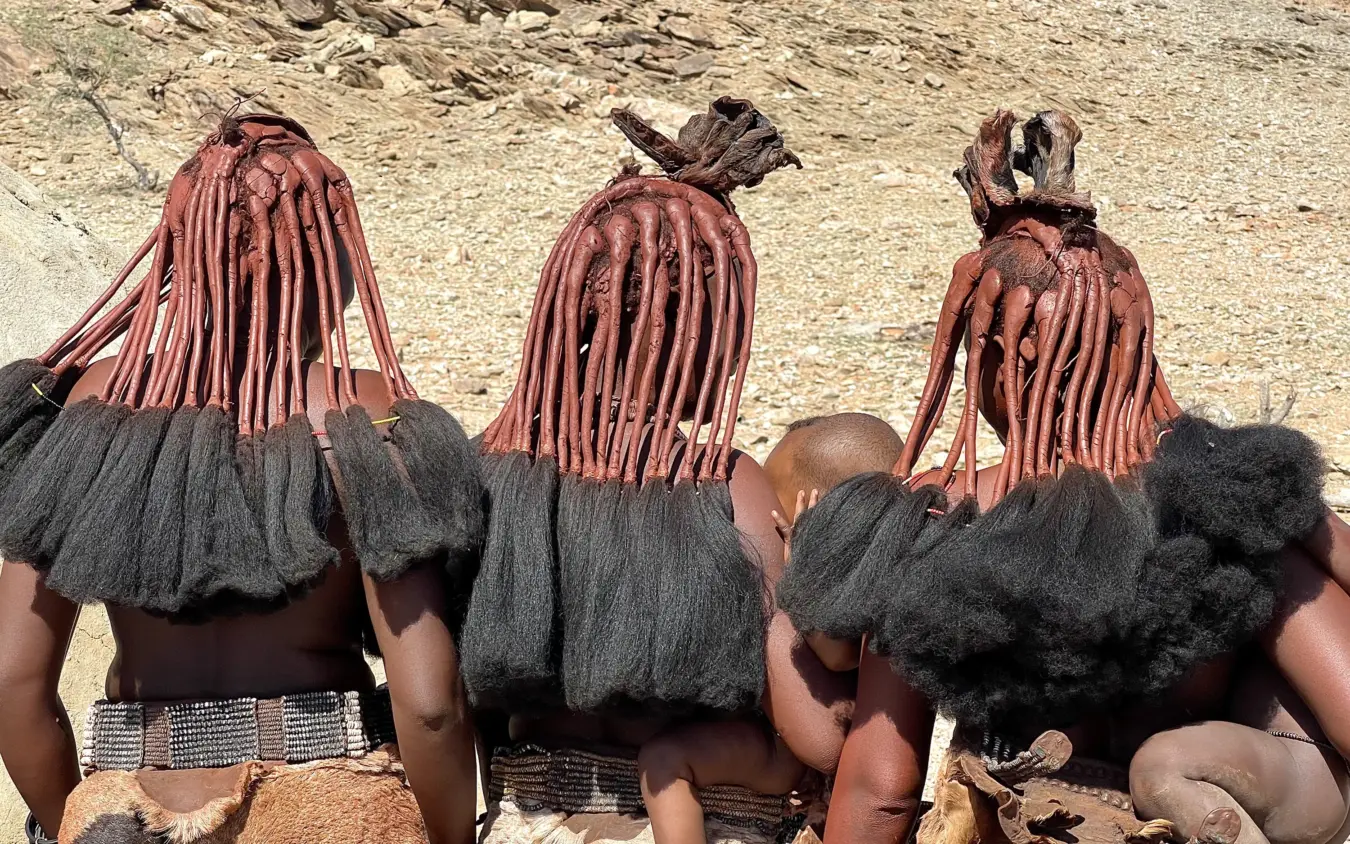
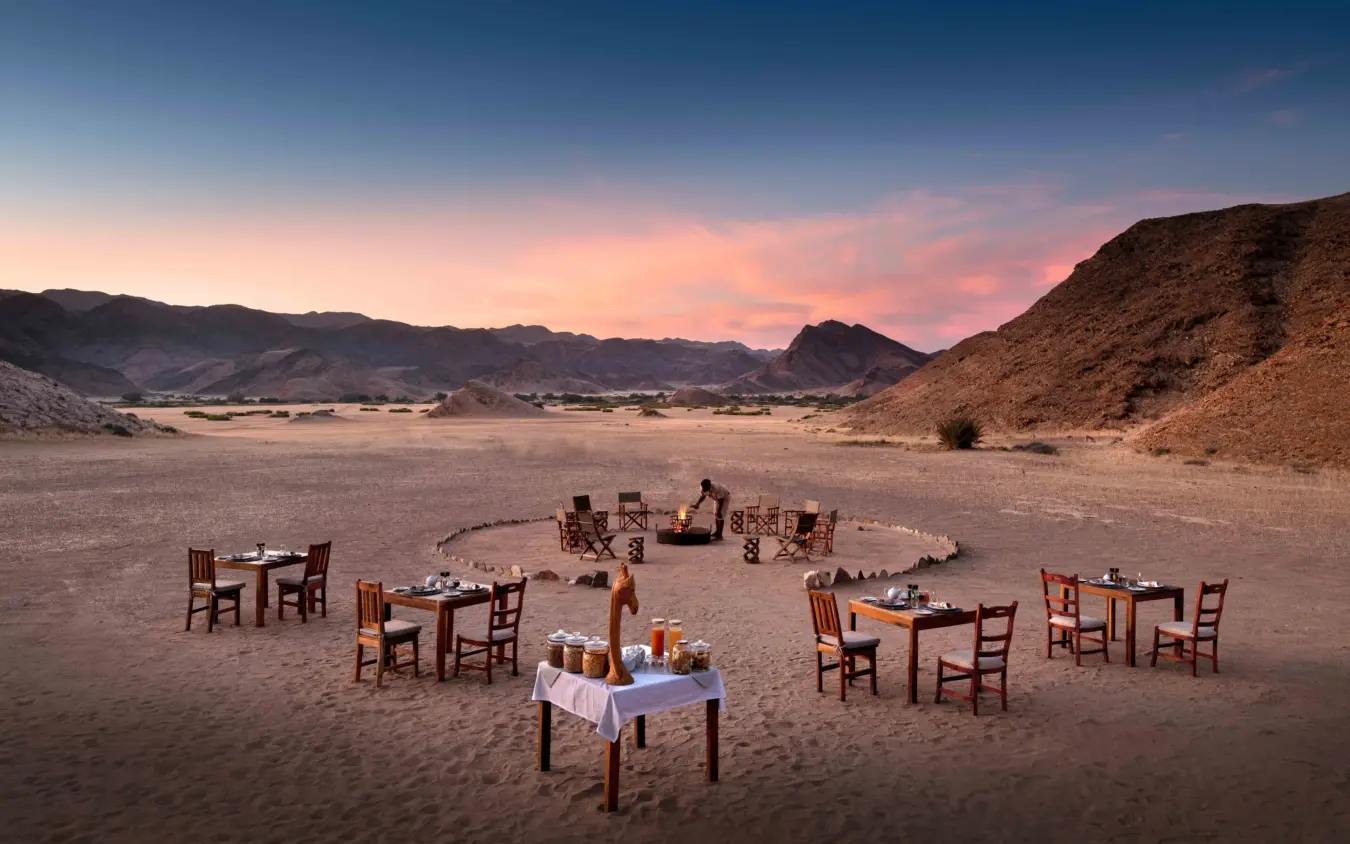
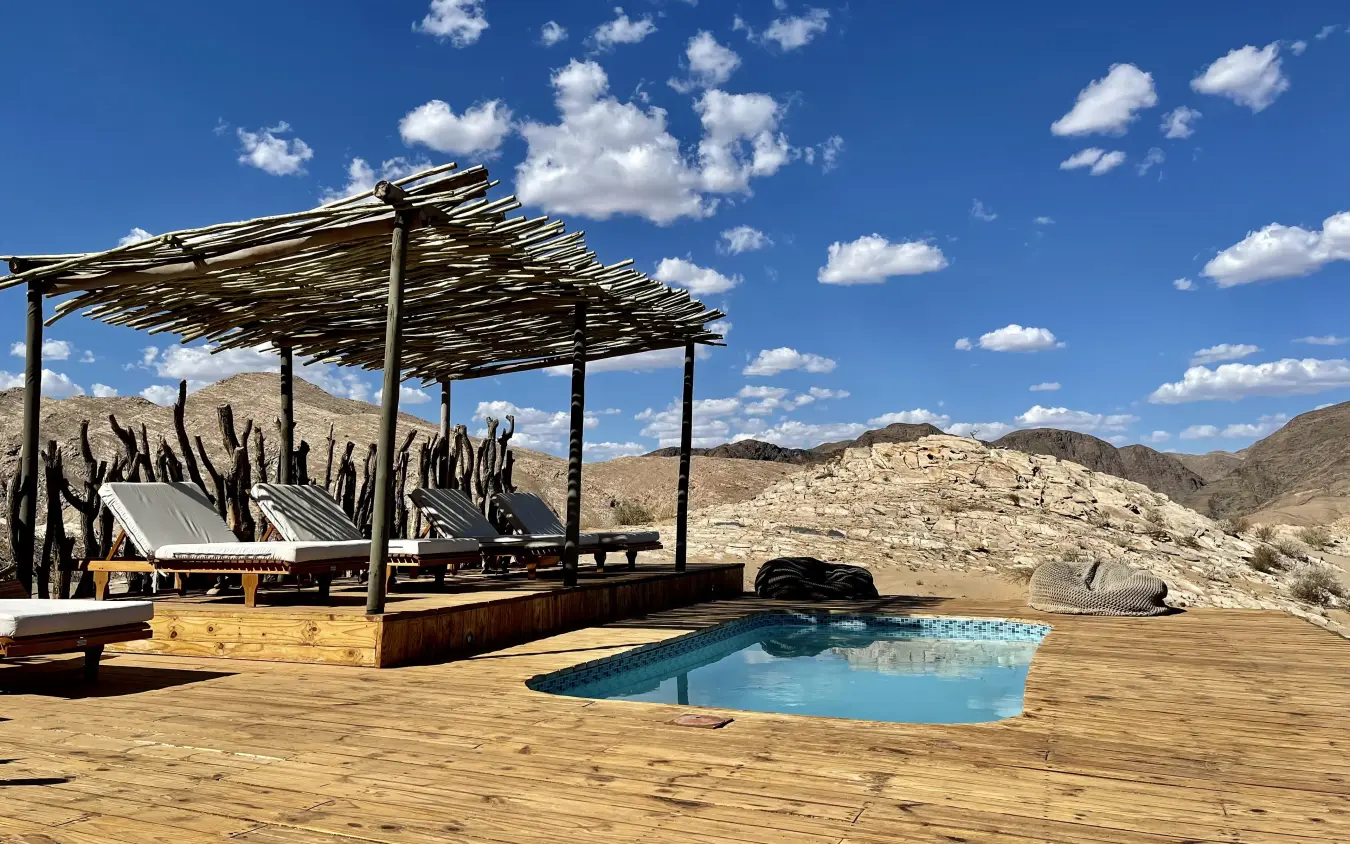
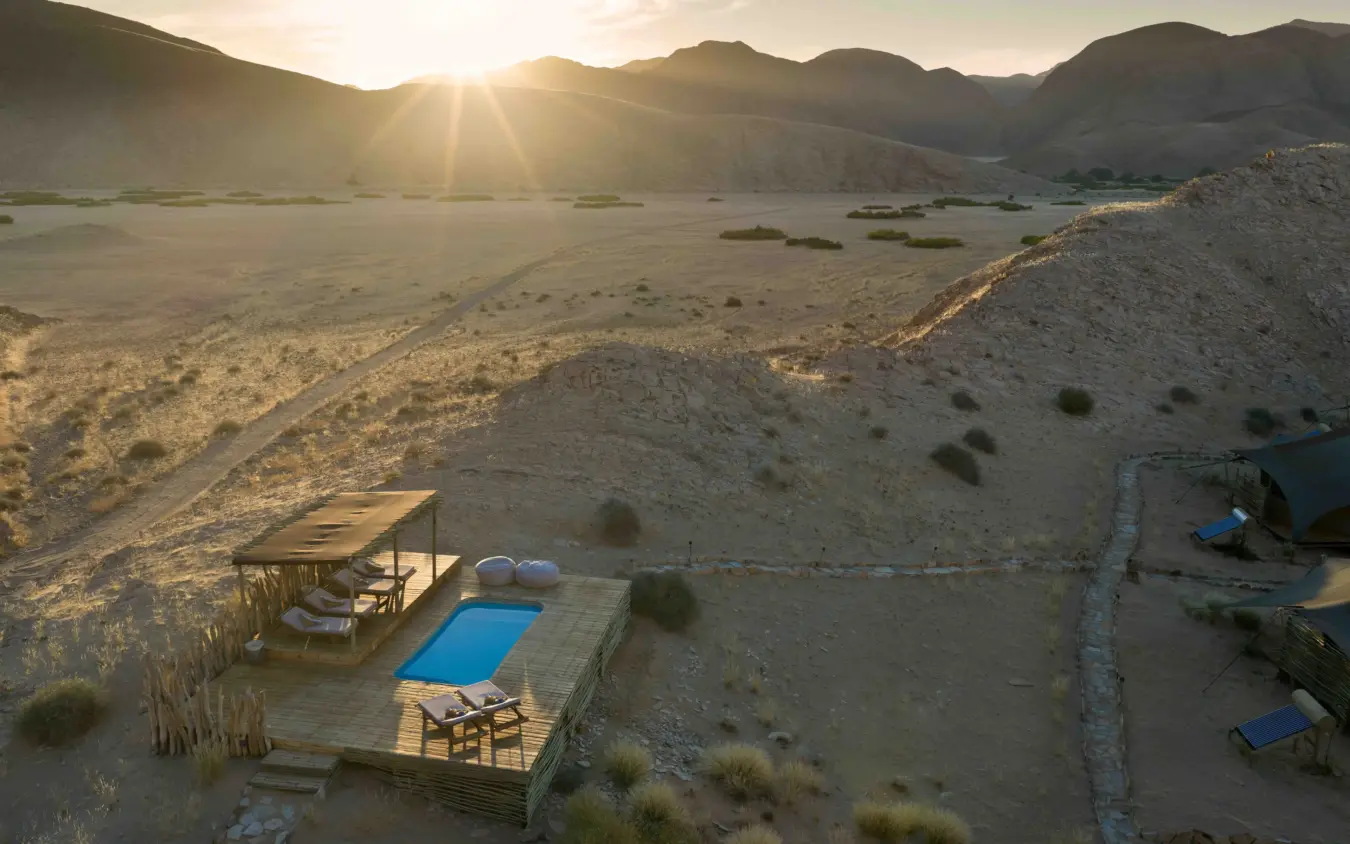
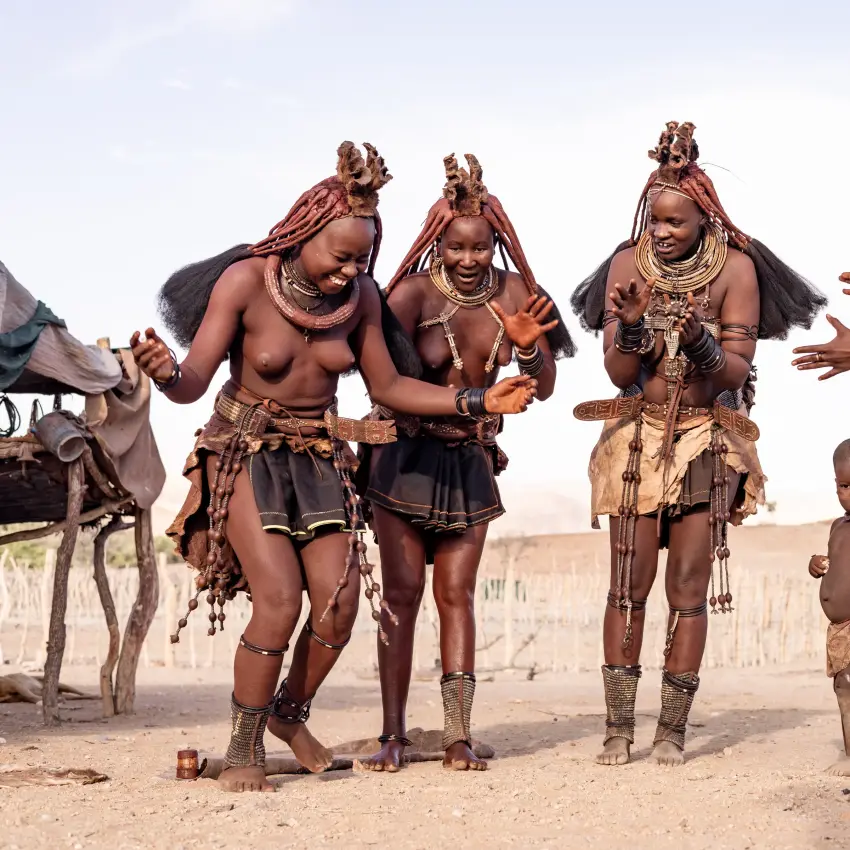
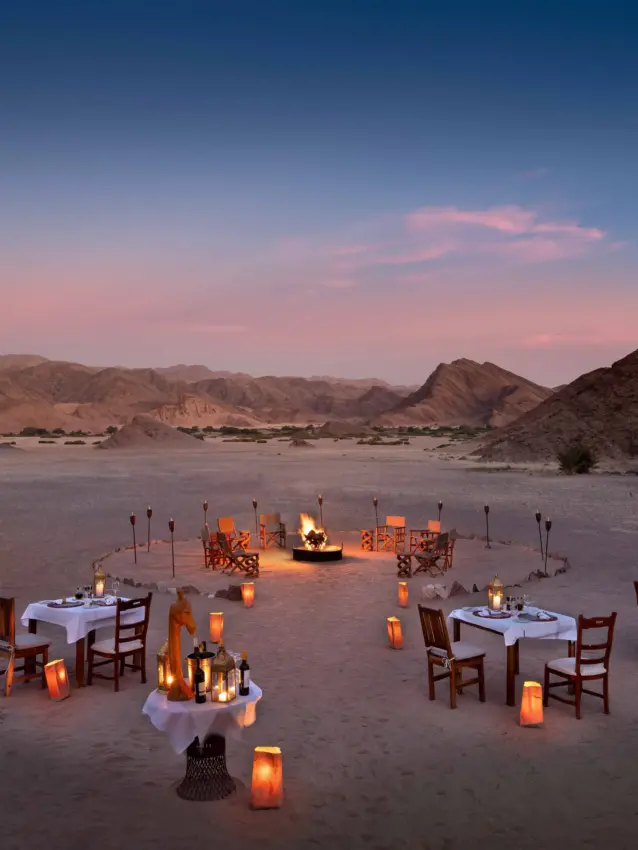
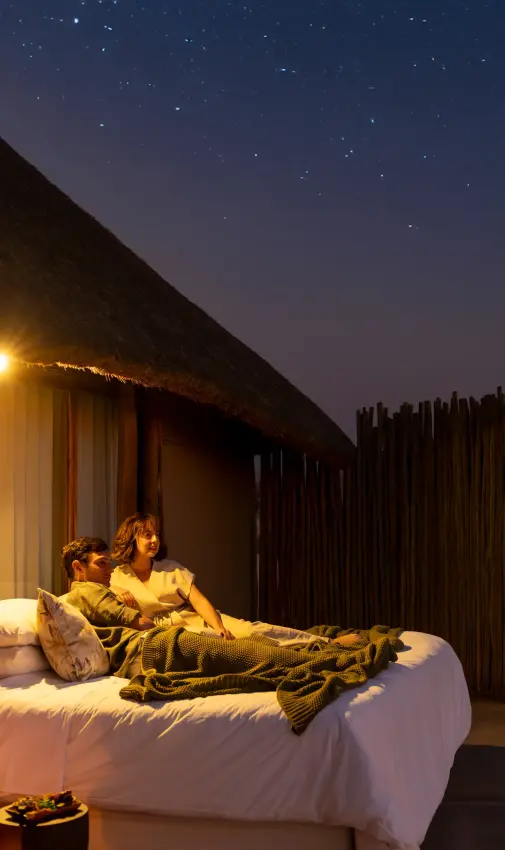
Afternoons run at their own pace. Visits to Himba and Herero communities give a sense of semi-nomadic pastoralist life in this landscape, and between activities a small plunge pool and the shaded decks catch the shifting desert light as it moves across the valley through the heat of the day. Evenings settle around the fire pit, with dinner served under a stretch-canvas roof or outdoors beneath the stars, and the silence turns close to total, broken only by the wind and the occasional call of a nocturnal animal.
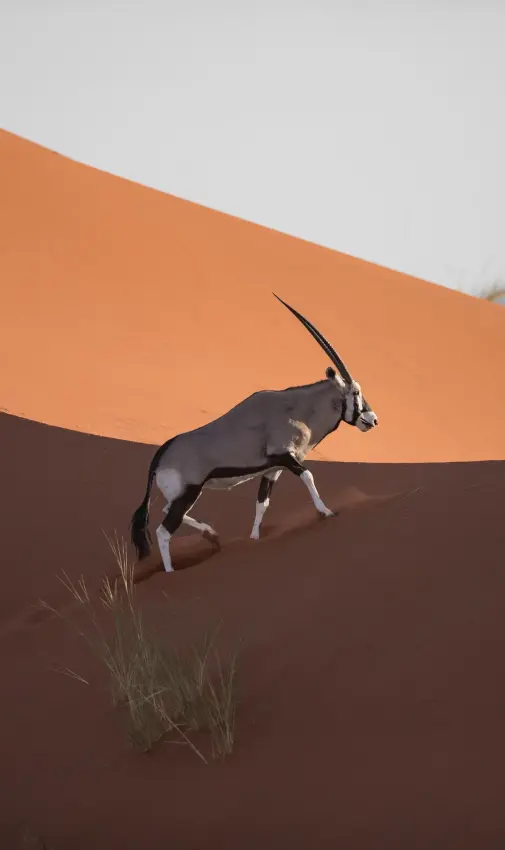
Game densities here run lower than on a savannah reserve, and that is the point. Wildlife moves along the ephemeral riverbed as though it were a linear oasis, drawn to spring-fed water and riverine vegetation in an otherwise arid land. Oryx, springbok, mountain zebra and kudu share the ground with elephant and rhino, while ostrich and Monteiro’s hornbill work the plains. The valley trades a high tally of sightings for space, quiet, and a slower reading of a fragile ecosystem.