Camp

Damaraland Camp

Damaraland Camp sits above the Huab River in northwest Namibia, where desert-adapted elephant roam a community-owned conservancy.

Country: Namibia
Location: Huab River Valley, Torra Conservancy
Number of rooms: 10

A Pioneering Community Partnership

Damaraland Camp opened in 1996 as the first joint venture between a Namibian community and the private sector, pairing the people of the Torra Conservancy with Wilderness. It was also the company’s first camp in Namibia, and the model it created went on to shape the country’s communal conservancy movement.
The arrangement was deliberate. Over fifteen years the community built towards full ownership, eventually holding the lodge outright before Wilderness repurchased a 60 percent stake. Today the community retains a 40 percent share, alongside land rent and a 10 percent bed levy, and the camp is run almost entirely by people who have worked their way up through the ranks.

Twenty-three full-time jobs now flow into the conservancy, clear proof that living alongside wildlife can pay.

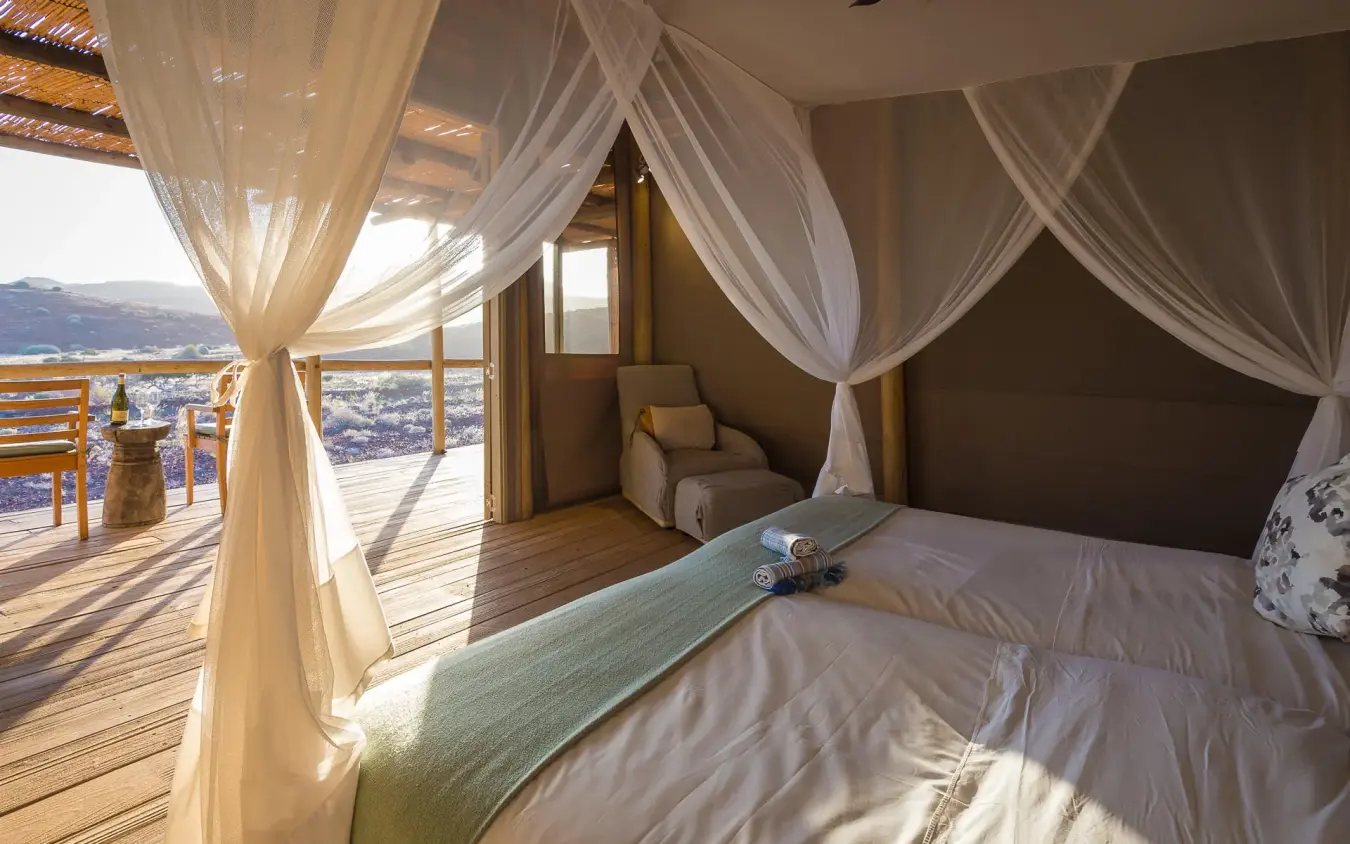
Spacious bedroom with four-poster canopy bed and lounge area, Damaraland Camp, Damaraland, Namibia
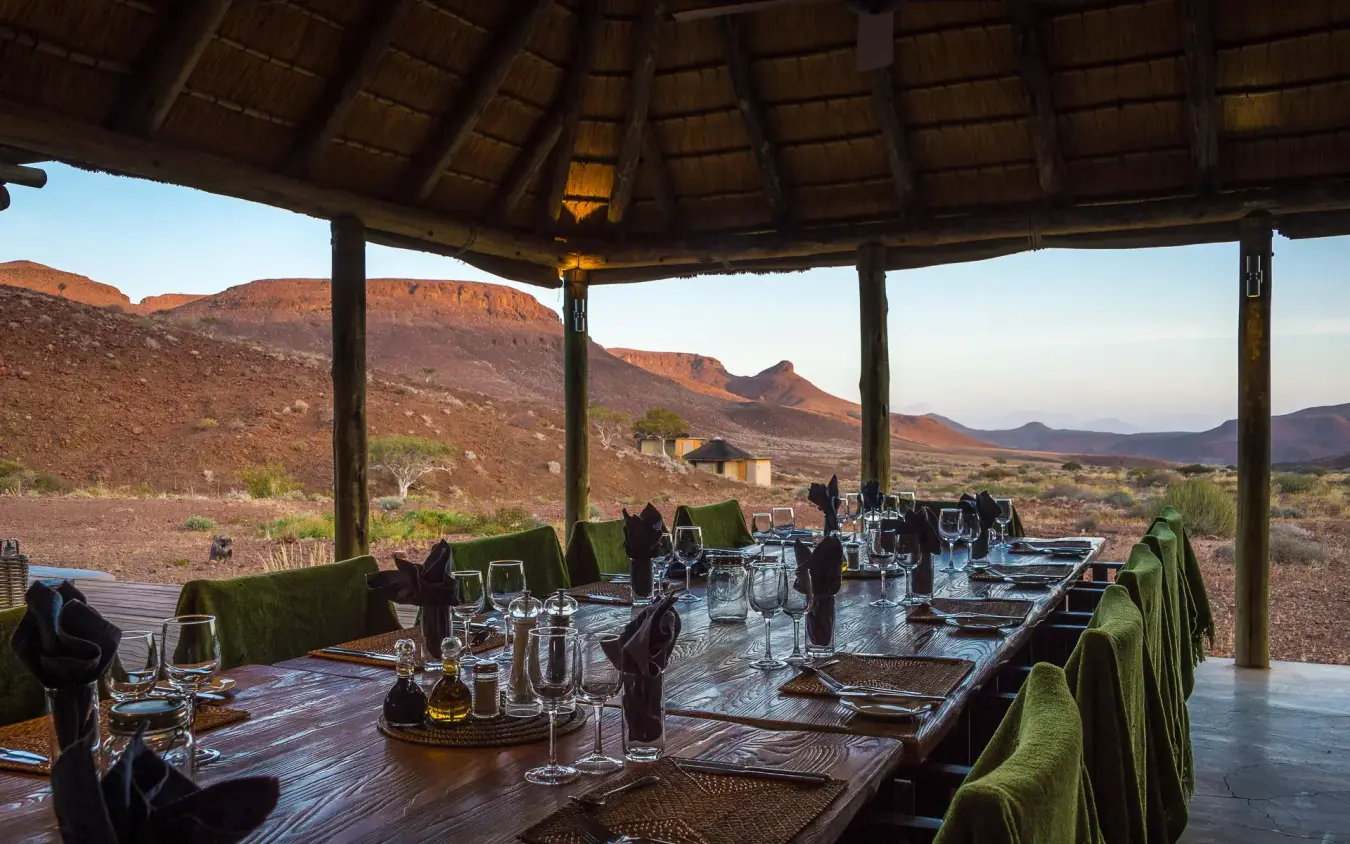
Long outdoor dinner table set in desert landscape at dusk, Damaraland Camp, Damaraland, Namibia

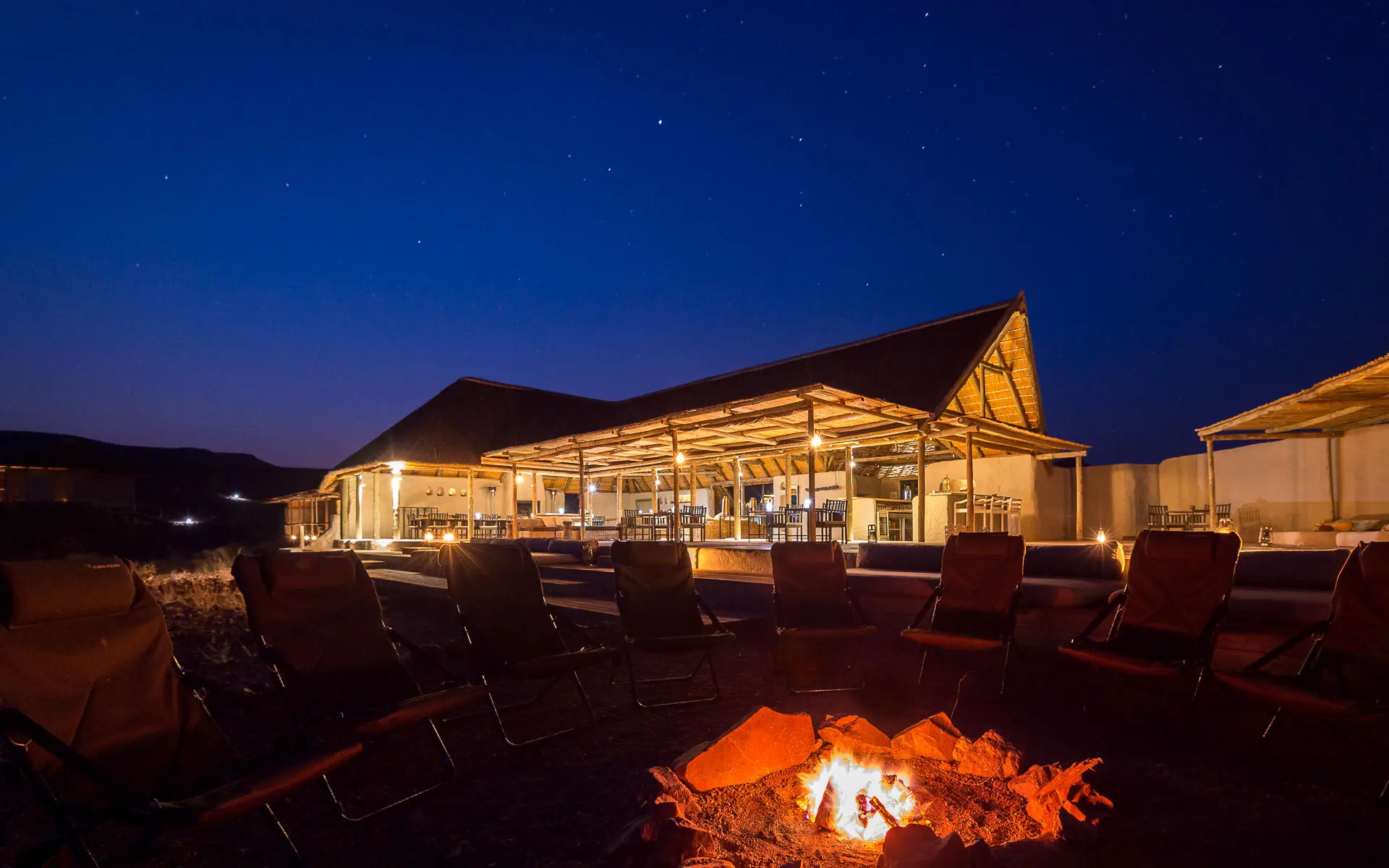
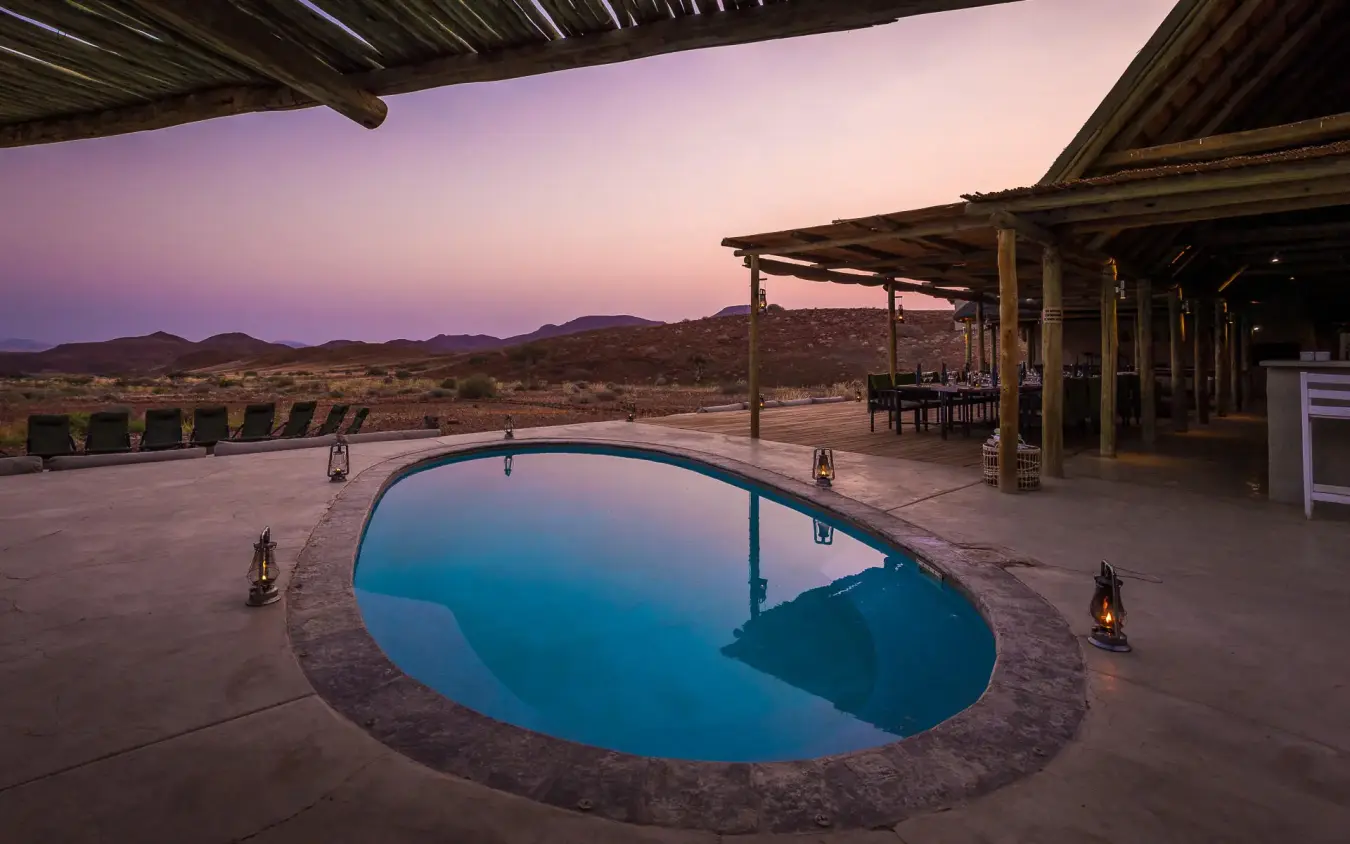
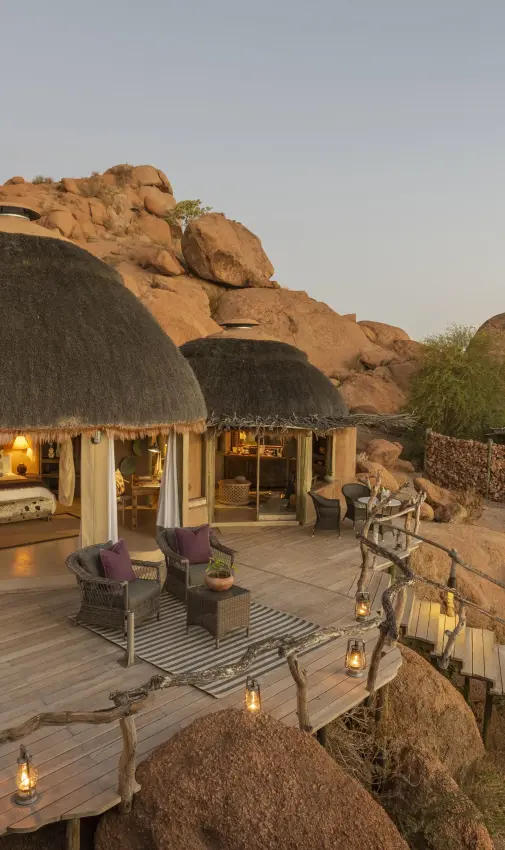
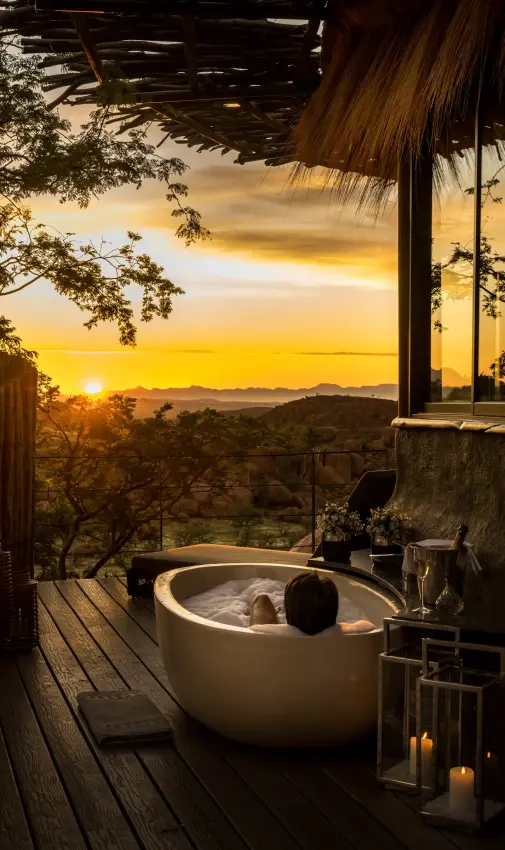
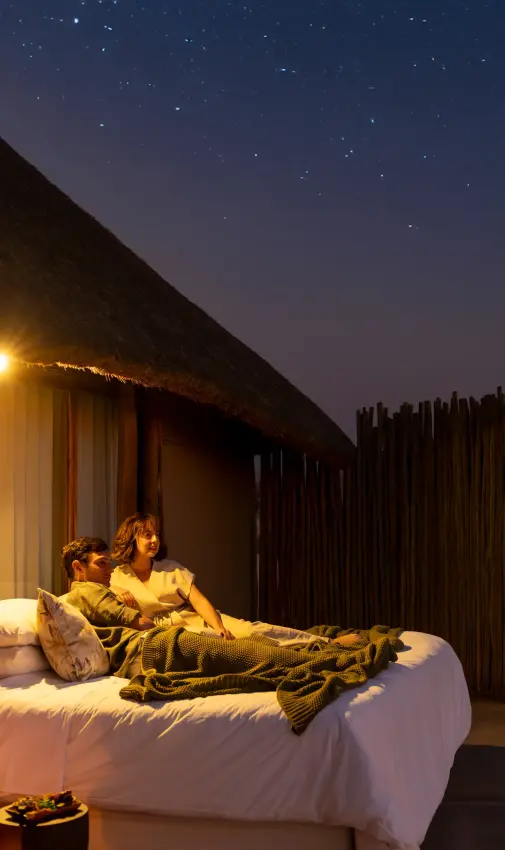
The setting is the Huab River valley, a dry landscape of ancient volcanic rock, petrified forests and open plains framed by the Brandberg Mountains to the south. Ten adobe-style thatched units stand raised on wooden decks, each with a walk-in dressing area and a large viewing platform looking out over the desert.

Come for the desert-adapted elephant, but stay for the conversations with the people who run the place.

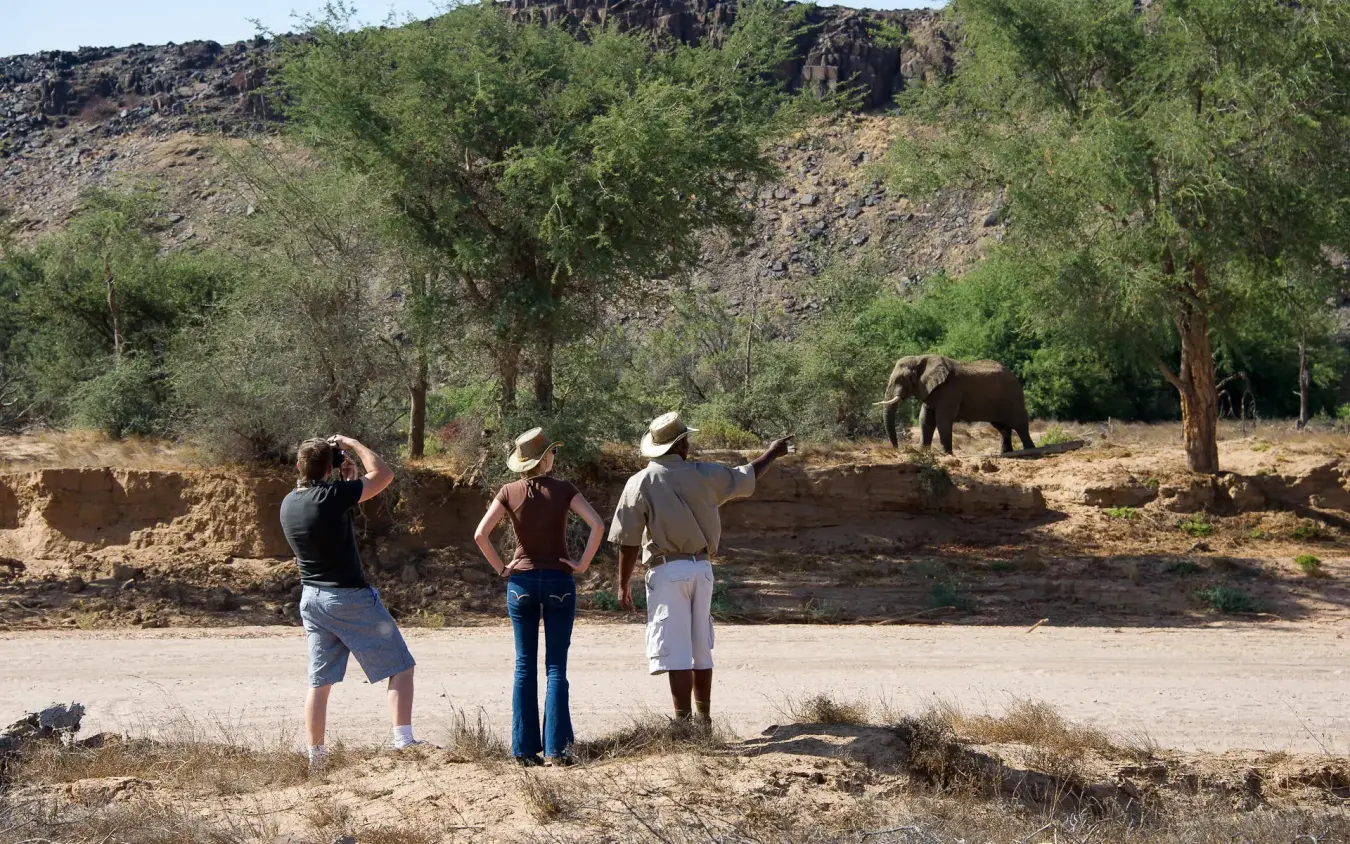
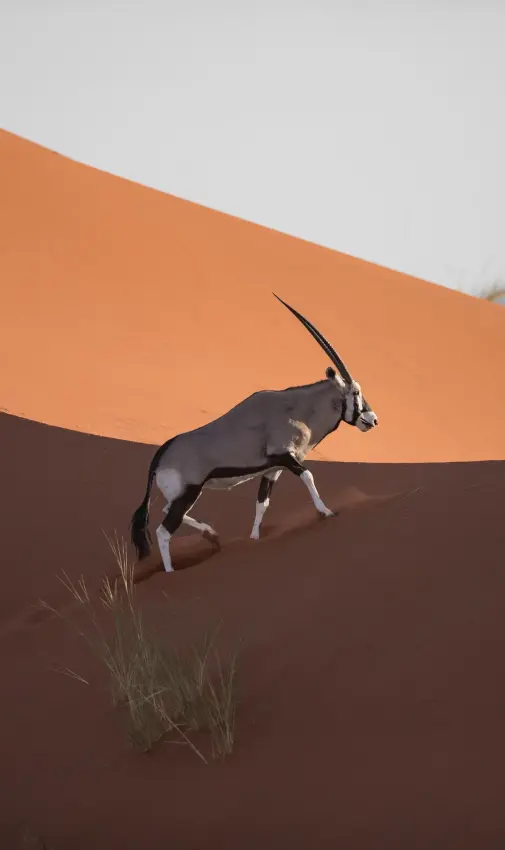
Game drives follow the riverbed in search of elephant, oryx, springbok and ostrich, with lion and black rhino sometimes crossing the route. Because this is a conservancy rather than a national park, guided walking, night drives and off-road tracking are all permitted, opening up the valley in ways a park rarely allows.

Bedroom with sheer curtains overlooking desert landscape, Damaraland Camp, Damaraland, Namibia 01

accommodation

Ten Adobe and Thatch Tents

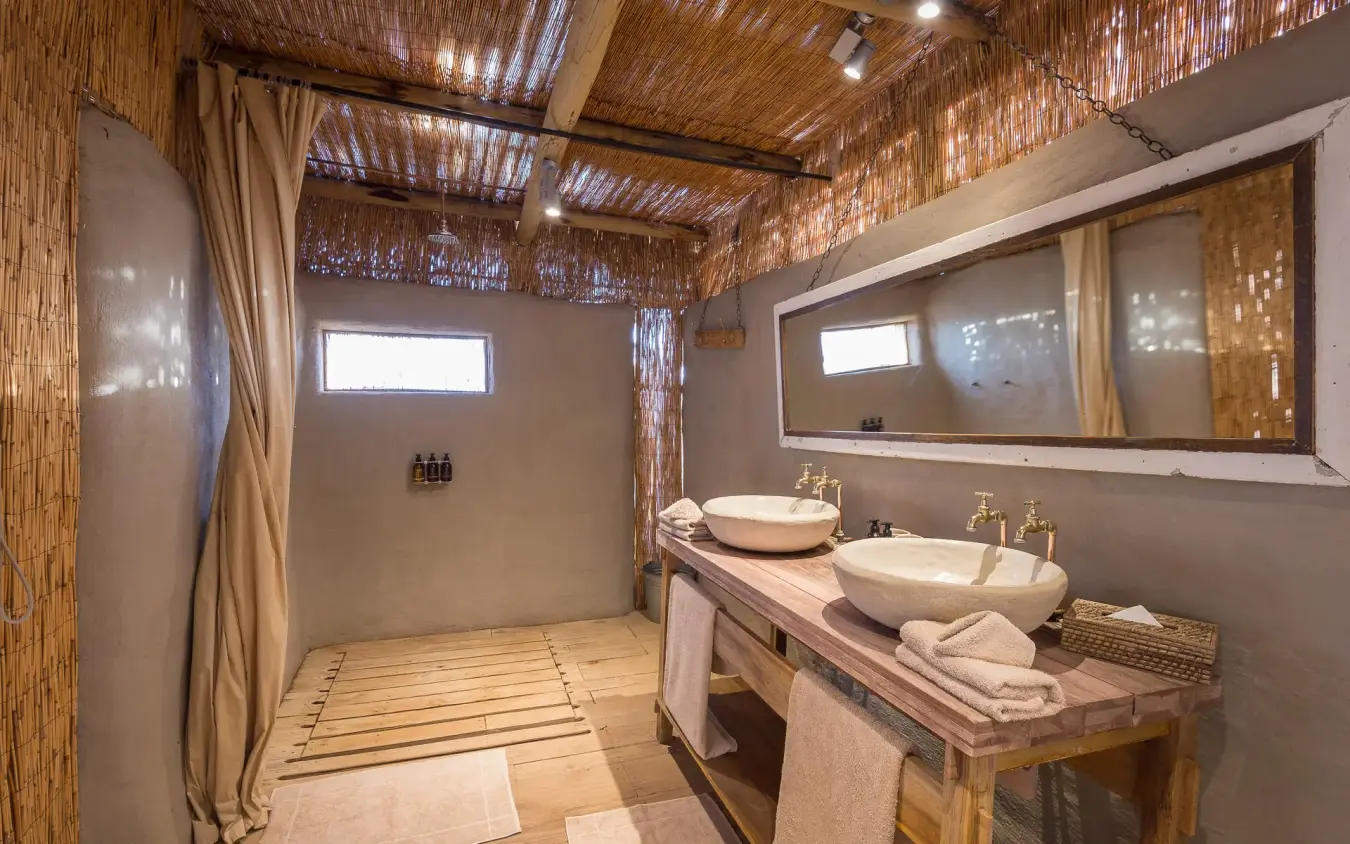
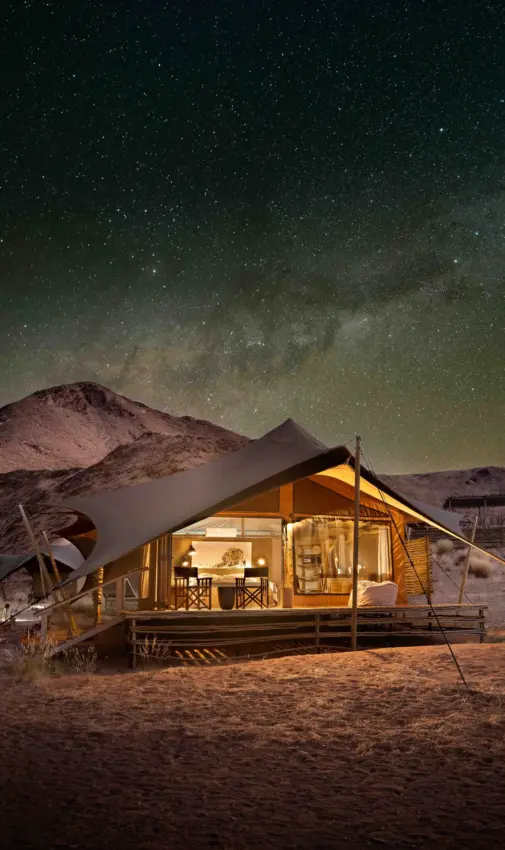
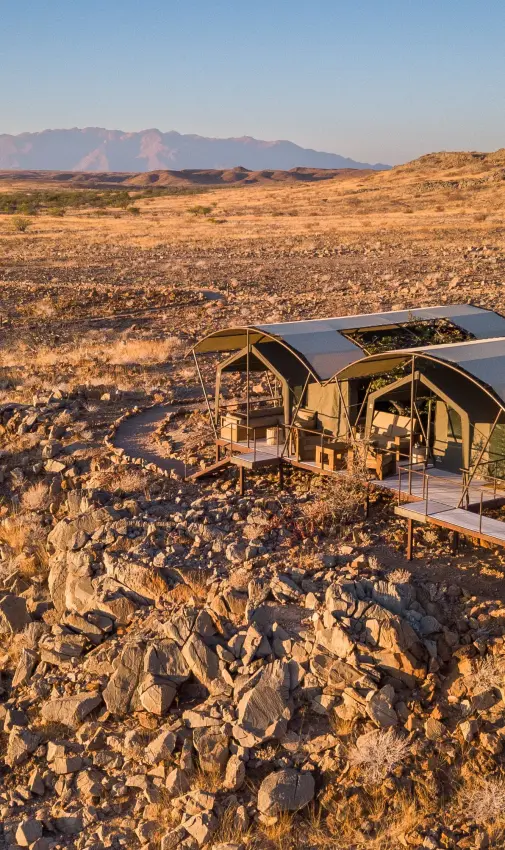
Ten adobe-style thatched units, including a family unit, are raised on individual wooden decks, each with a walk-in dressing area and a large viewing platform facing the desert. Every tent has en-suite facilities with a shower, flush toilet and wash basins, plus a built-in fan and a solar-powered geyser.

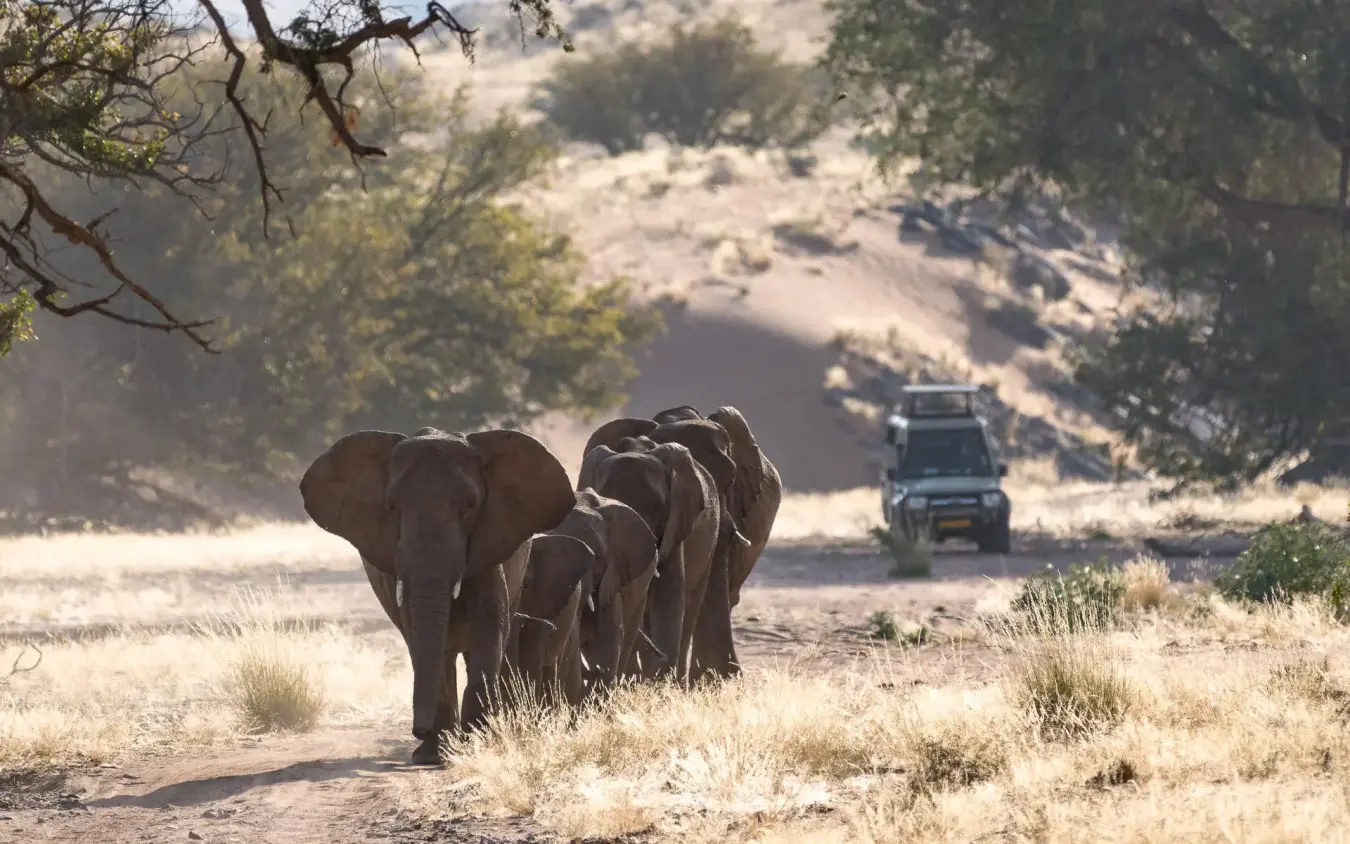
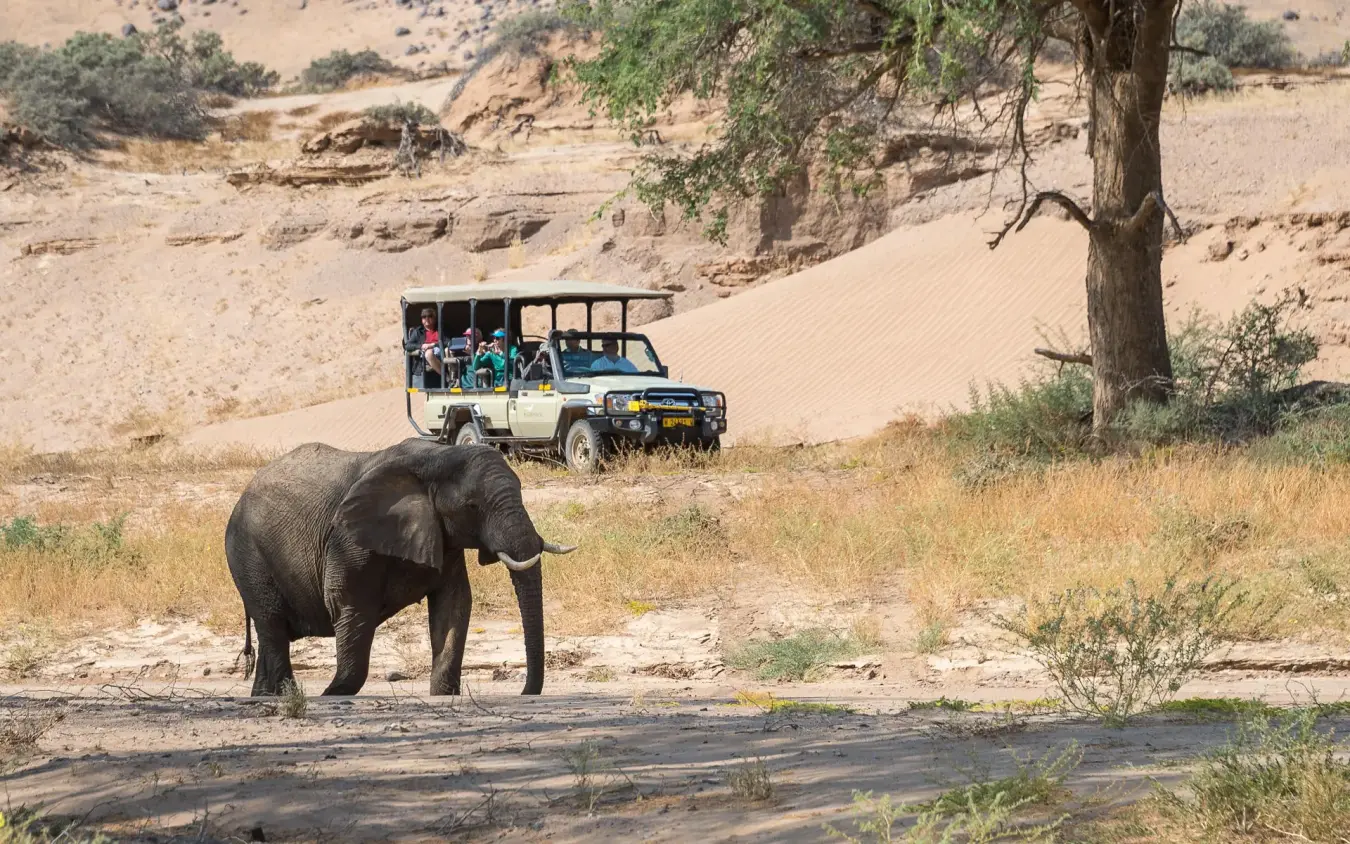
Safari vehicle with guests observing elephants at waterhole, Damaraland Camp, Damaraland, Namibia 02

activities

Tracking Elephant Along the Huab

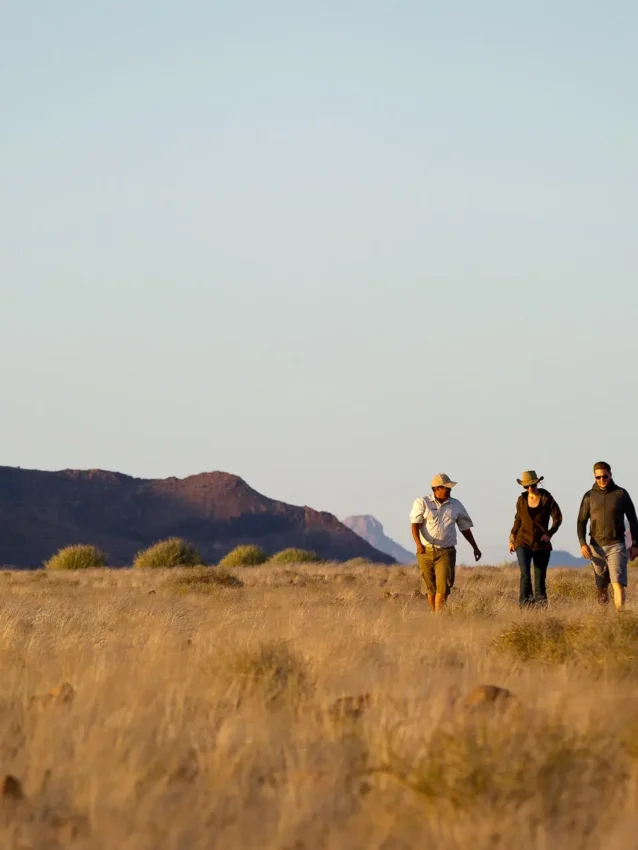
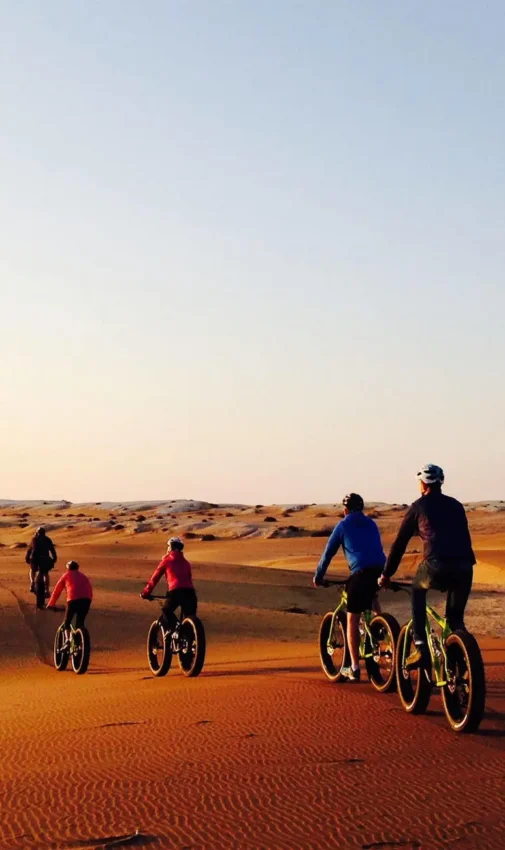
Activities centre on the Huab River system, with day and night drives in search of desert-adapted elephant, oryx, springbok and ostrich. Guests can walk with a qualified guide, ride a mountain bike, explore by 4x4 or, on longer stays, track black rhino with Save the Rhino Trust experts.

Desert elephant walking among sparse vegetation and rocky terrain, Damaraland Camp, Damaraland, Namibia 03

conservation

A Community-Owned Success Story

The 352,000-hectare Torra Conservancy was registered in 1998 and won the 2005 WTTC Tourism for Tomorrow Conservation Award. The community holds a 40 percent share plus a bed levy and land rent, while Children in the Wilderness and Pack for a Purpose support local schools.

ready to get started?

Get in touch and let’s start the conversation. An initial consultation helps us understand what you’re looking for, whether that’s specific experiences, luxury touches, or marking a special occasion, and from there we’ll guide you through what’s possible so you can decide if we’re the right fit.

Alternative accommodation in damaraland

frequently asked questions

Most guests fly in. You arrive into Windhoek at Hosea Kutako International, and the light aircraft safari charters lift off from Eros, the smaller airport in town, for the roughly one and a half to two hour hop onto a Damaraland airstrip and a short transfer to camp. We can also arrange a private charter, typically a Cessna Caravan or Pilatus PC-12, timed to your international arrival so the connection works around you.

You can drive it instead, but it is a long day of around six to seven hours, much of it on gravel once you leave the main roads. We usually build the flight in to save you a travel day and the corrugations, and we will confirm the exact airstrip and transfer when we plan your route.

Damaraland is a low-risk malaria area, and the risk is seasonal. This dry desert country holds little standing water for mosquitoes, so risk is at its lowest in the cool, dry winter from about June to October, which is the main time to come, and rises a little in the green summer months after the rains.

Health guidance can shift from year to year, so we always suggest confirming the current position with a travel clinic or your doctor before you travel, and taking the usual precautions against bites after dark.

Pack for a big daily temperature swing. Days in Damaraland are warm to hot, often into the thirties, while nights and dawns turn cold, and in the winter months of June to August the temperature can drop close to freezing after dark.

Layers are the answer: light, breathable clothes and a hat for the heat and dust, then a warm fleece or jacket for early game drives and cold evenings, along with something warm to sleep in. Bring sun cream, sunglasses and a scarf or buff for the dust.

Damaraland Camp takes children from six years old, and there is a dedicated family unit that sleeps four. Younger children may be asked to use a private vehicle on the game drives, which we can arrange.

The rhythm here is long tracking drives in open country, so it rewards children who enjoy being out in the vehicle. Tell us their ages and we will set the family unit and activities up accordingly.

Days follow the Huab riverbed by vehicle in search of desert-adapted elephant, with oryx, springbok and ostrich along the way and the chance of lion or black rhino crossing the route. Because this is a community conservancy rather than a national park, your guide can walk you out on foot, drive after dark and leave the track to reach an animal, none of which the parks allow.

Nothing is guaranteed in country this wild, which is part of why finding the wildlife here means so much.

Black rhino tracking on foot, with the Save the Rhino Trust teams, is offered on longer stays, so plan three nights or more if that is a priority for you. It is demanding, on foot across rough desert ground, and best suited to fit adults.

Shorter stays still give you the elephant drives and the walks, but the rhino tracking needs the extra time. Tell us how important it is and we will build the stay around it.

rated five stars by our clients

other areas in namibia

Golden sand dune at sunset with sparse desert vegetation 01

Sossusvlei

Elephant with zebras and antelopes at waterhole 02

Etosha National Park

Aerial view of desert dunes meeting coastal waves 03

Skeleton Coast

Portrait of a person wearing traditional African beaded jewelry 05

Kunene River

Cyclists riding across red sand dunes at sunset, Swakopmund, Namibia 06

Swakopmund

Elephant herd walking through dusty grassland with scattered trees, Zambezi Region, Namibia 07

Zambezi Region

Aerial view of church and city at sunset 08

Windhoek

Planning a journey together

our approach

remote, exclusive
& personal

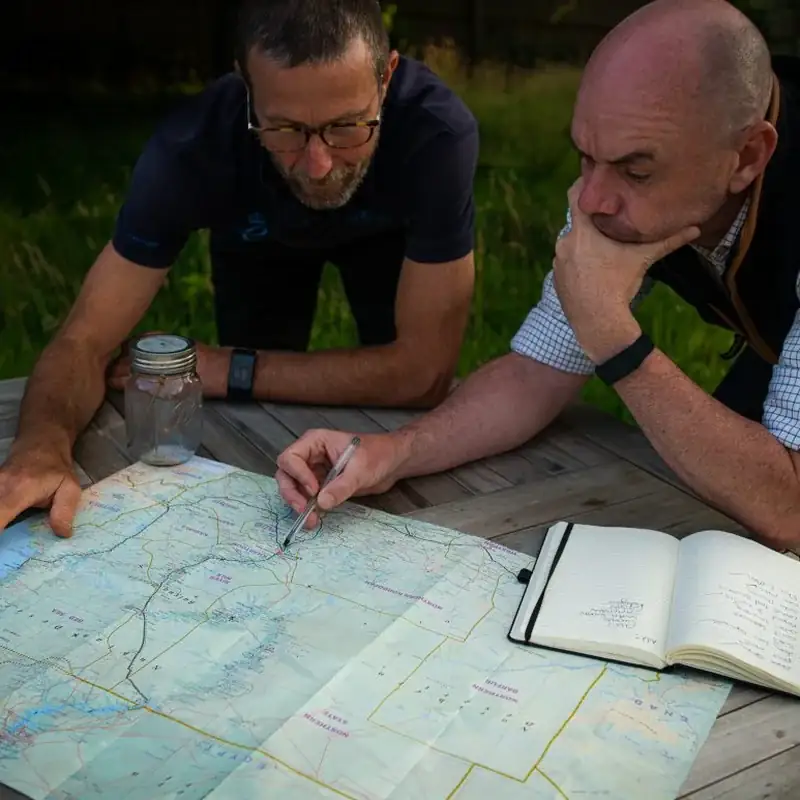
Every journey starts with a conversation. We take the time to understand your vision before we start planning.

Whether by phone or in person, we work with you directly to shape something that is considered, personal, and expertly delivered.

get in touch
destinations ideas & inspiration our process about us contact us