Lodge

Kulala Desert Lodge

Kulala Desert Lodge offers rooftop stargazing and private-gate access to the dunes of Sossusvlei, Namibia.

Country: Namibia
Location: Tsauchab riverbed, Sossusvlei
Number of rooms: 23

A private gate to the dunes

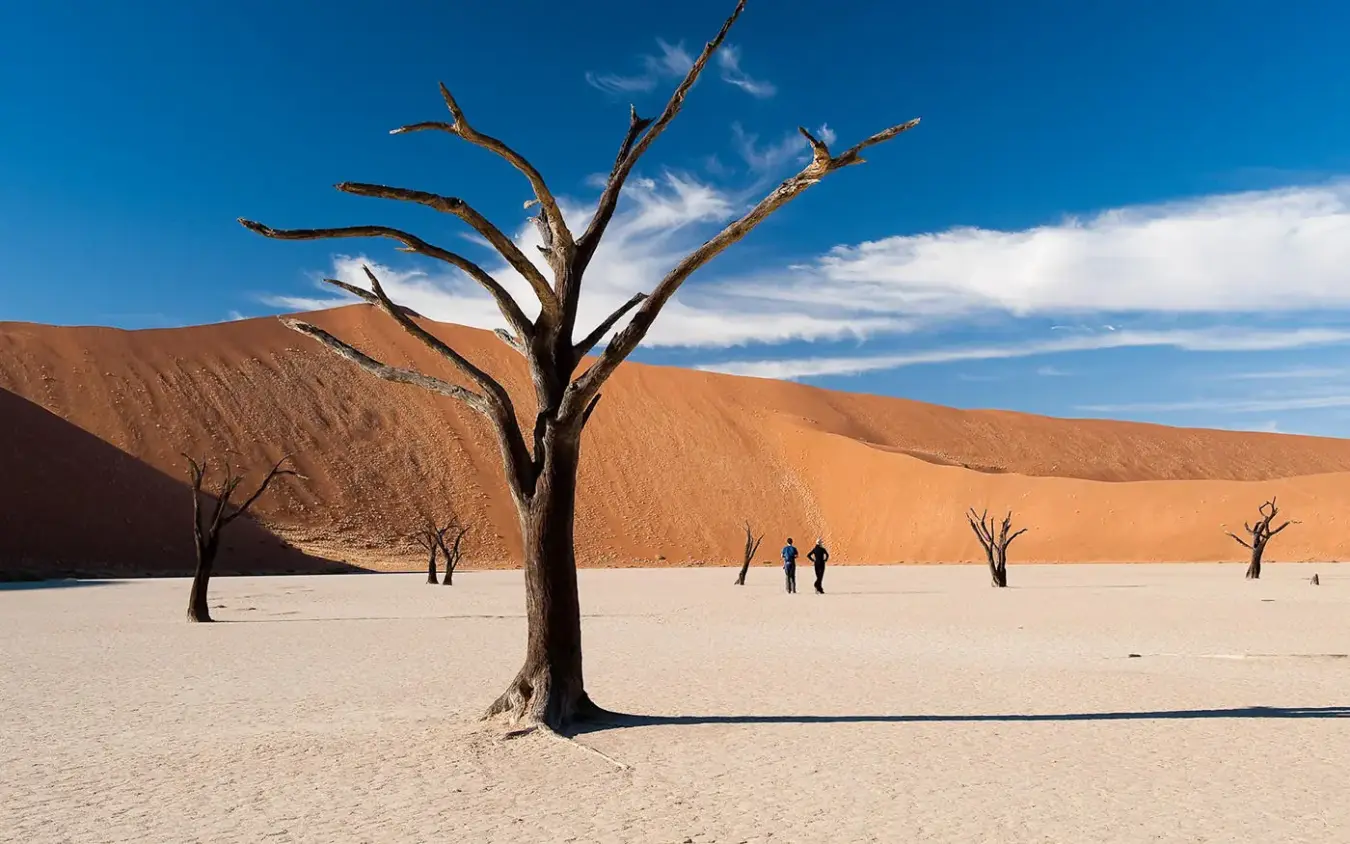
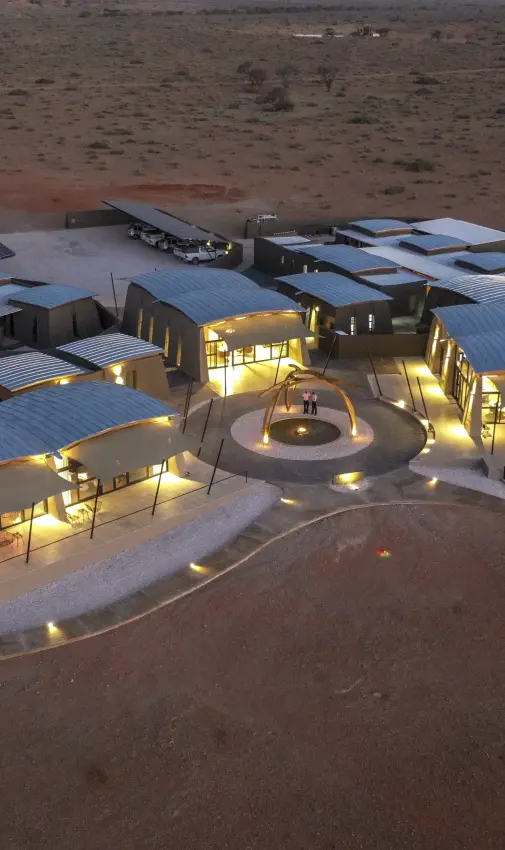
A private entry point on the dry Tsauchab River is the reason Kulala Desert Lodge sits where it does. From here guides can drive into Namib-Naukluft National Park at first light, reaching the red dunes and the white clay pan of Deadvlei while the sand is still cool. The public Sesriem gate, meanwhile, has yet to open its queues. The lodge stands within the Kulala Wilderness Reserve, a private tract bordering the park south of Sesriem.
The public Sesriem gate, meanwhile, has yet to open its queues

Big Daddy, the great dune above Deadvlei, is climbed in the cold early hours. The run back down into the pan lands guests among skeletal camelthorn trees before the light turns harsh. It is the kind of head start the park rarely allows. Most visitors are still waiting at Sesriem when Kulala’s guests are already out on the sand, alone with the dunes.

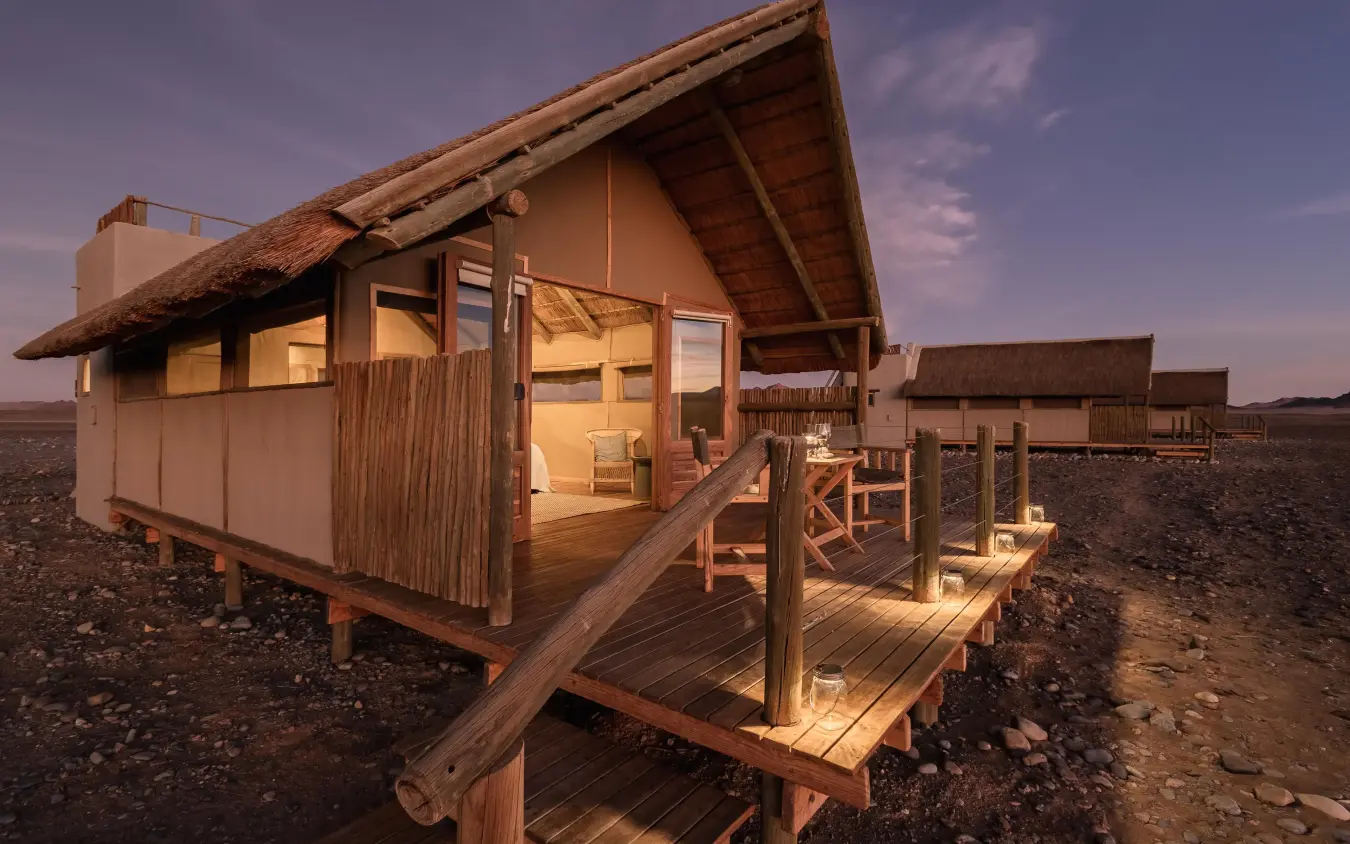
Thatched roof cabin with wooden deck at dusk, Kulala Desert Lodge, Sossusvlei, Namibia
Spacious bedroom with thatched roof and desert views, Kulala Desert Lodge, Sossusvlei, Namibia

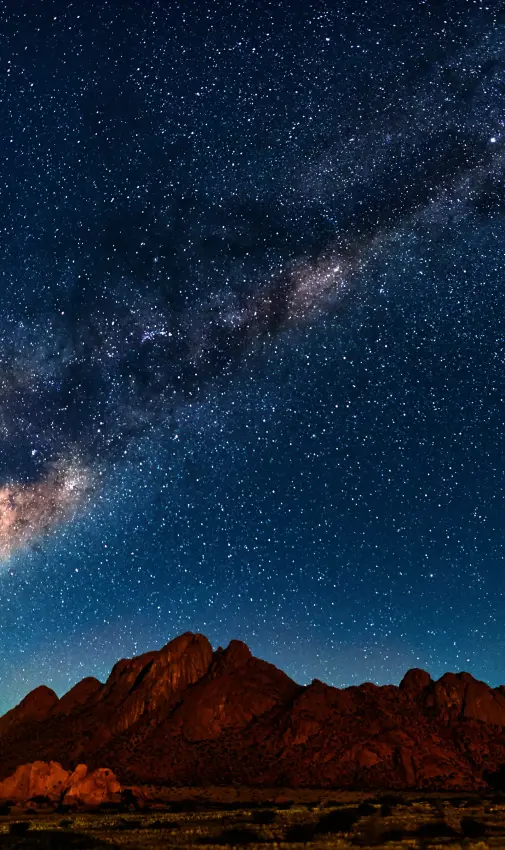
Sleep is part of the draw here, and it happens on the roof. Each of the lodge’s 23 thatched-and-canvas chalets carries a flat rooftop platform, where staff set out bedrolls for open-air nights under the desert sky. There is little light pollution across the reserve, and the Milky Way and the Southern Cross sit close and bright above the plains. The night feels like the main event.

Clay-brick walls and roll-up canvas windows draw the breeze through

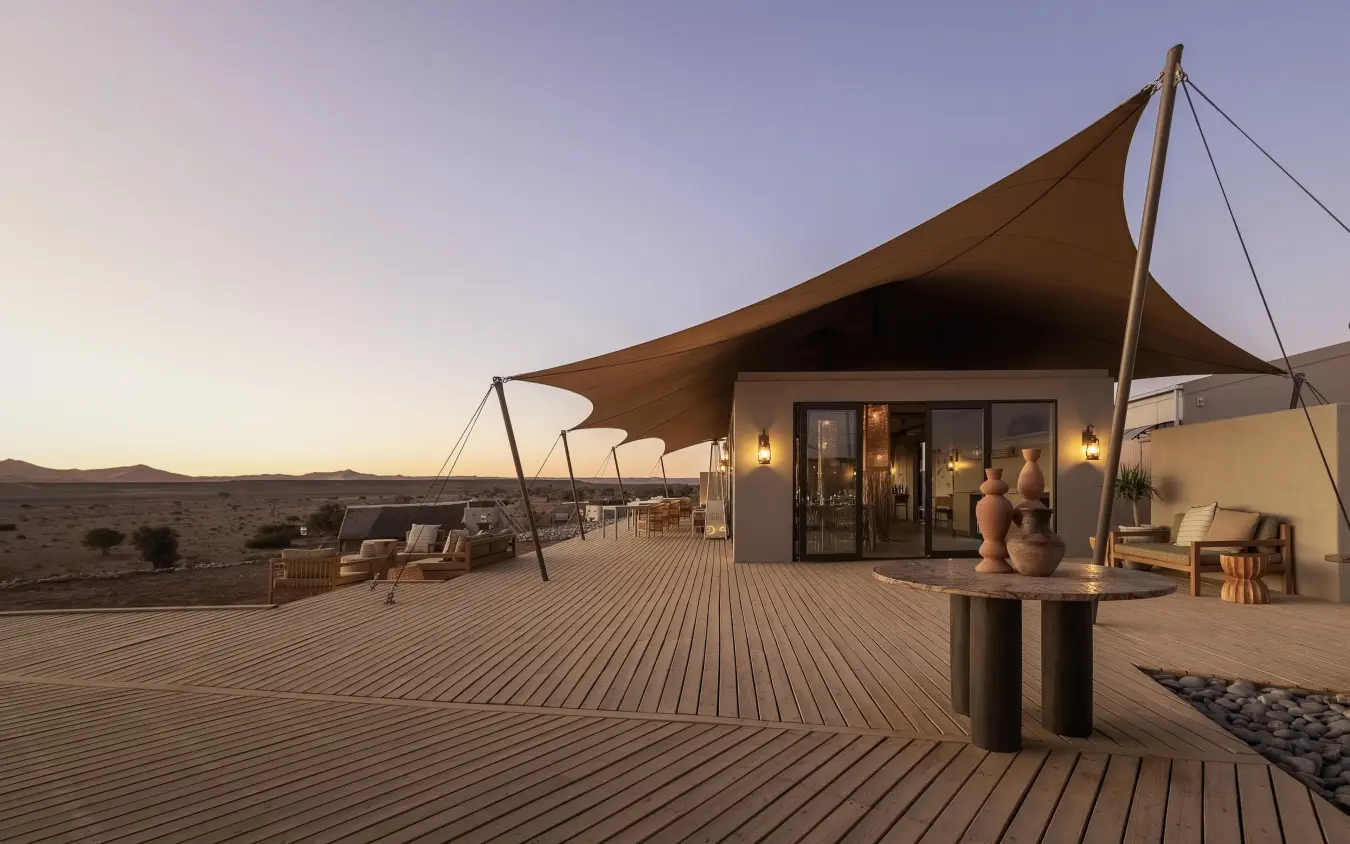
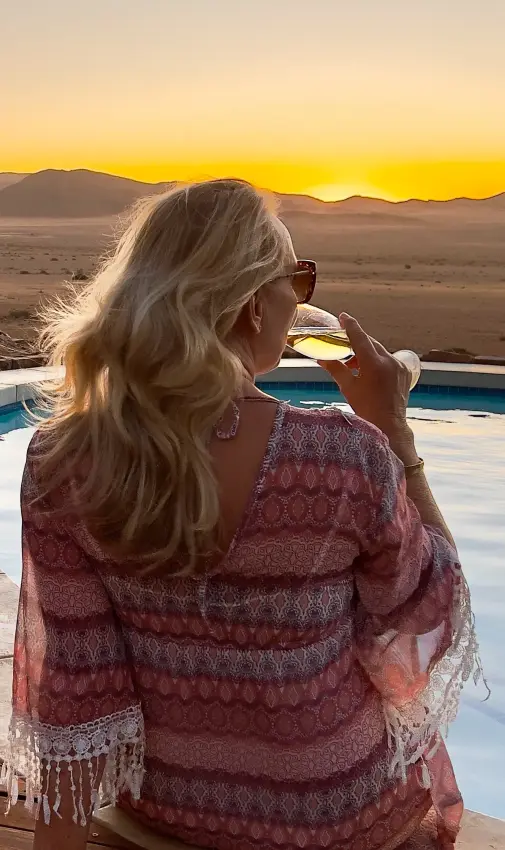
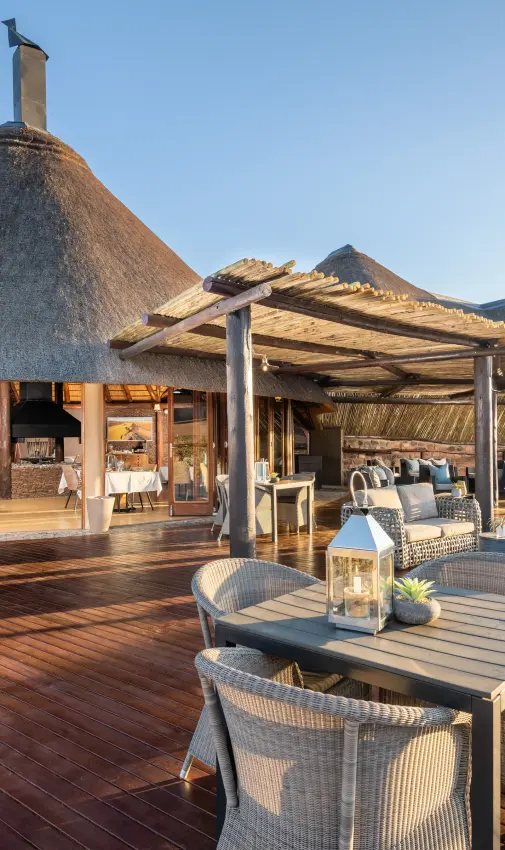
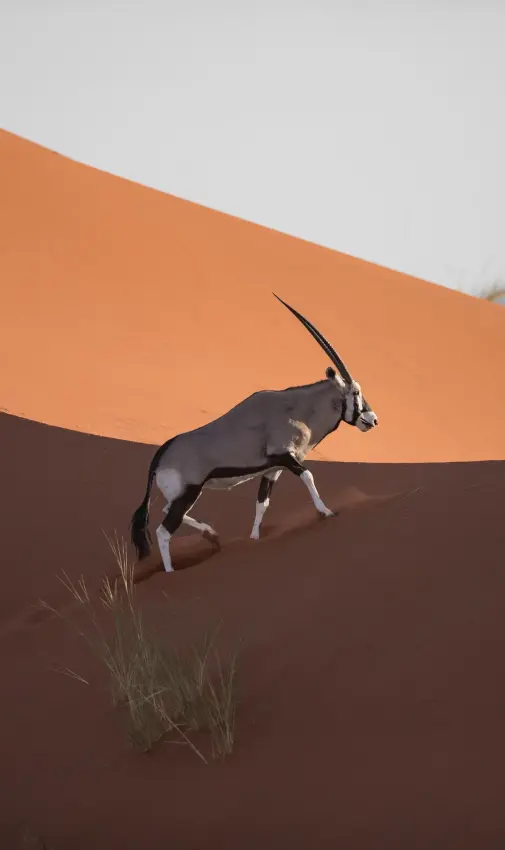
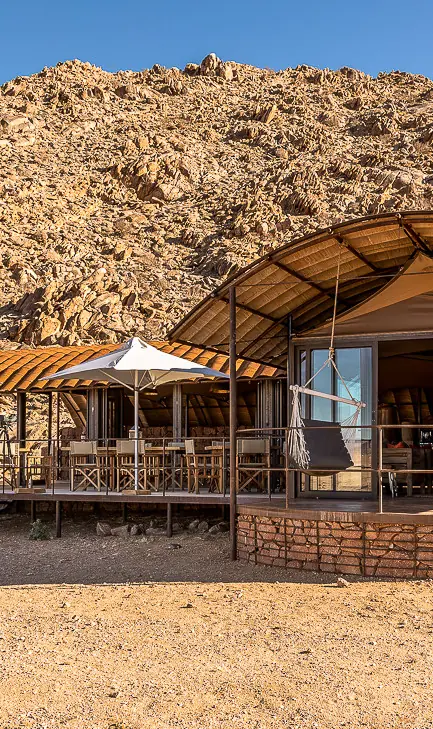
The chalets are built for the desert rather than against it. Clay-brick walls and roll-up canvas windows draw the breeze through, and a private veranda faces the plains and a waterhole where gemsbok and ostrich come and go. A pool cuts the heat of the afternoon. The wraparound deck of the main area looks out across the same open ground toward distant mountains.

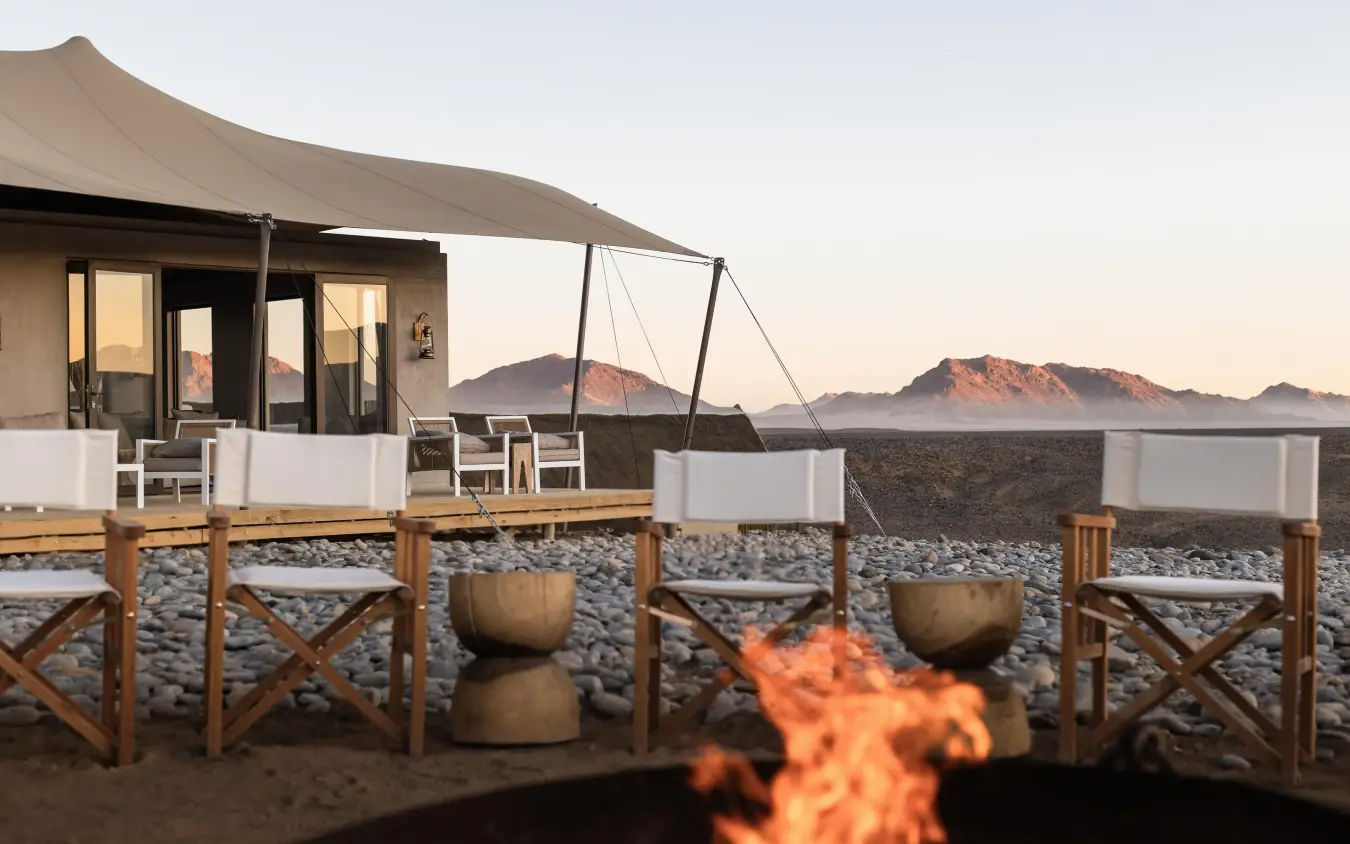
Desert lodge with wooden deck and draped sail canopy at dusk, Kulala Desert Lodge, Sossusvlei, Namibia 01

accommodation

Twenty-Three Thatched Chalets With Rooftop Starbeds

Twenty-three thatched-and-canvas chalets in twin, double and family configurations, including three family units. Each stands on a raised platform with clay-brick walls, roll-up canvas windows and an en-suite bathroom. A private veranda faces the plains, and a flat rooftop platform is set with bedrolls for sleeping under the stars.

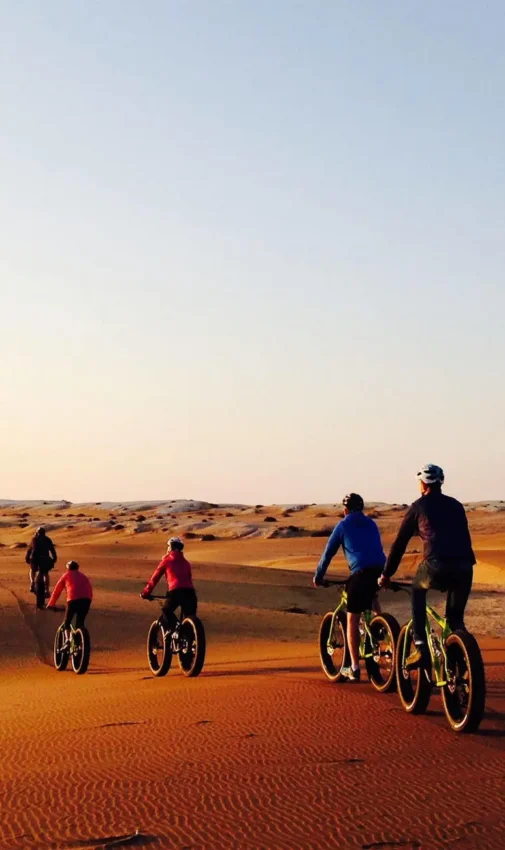
Two cyclists riding bikes on desert terrain at sunset, Kulala Desert Lodge, Sossusvlei, Namibia 02

activities

Sossusvlei Drives And Spotlight Night Walks

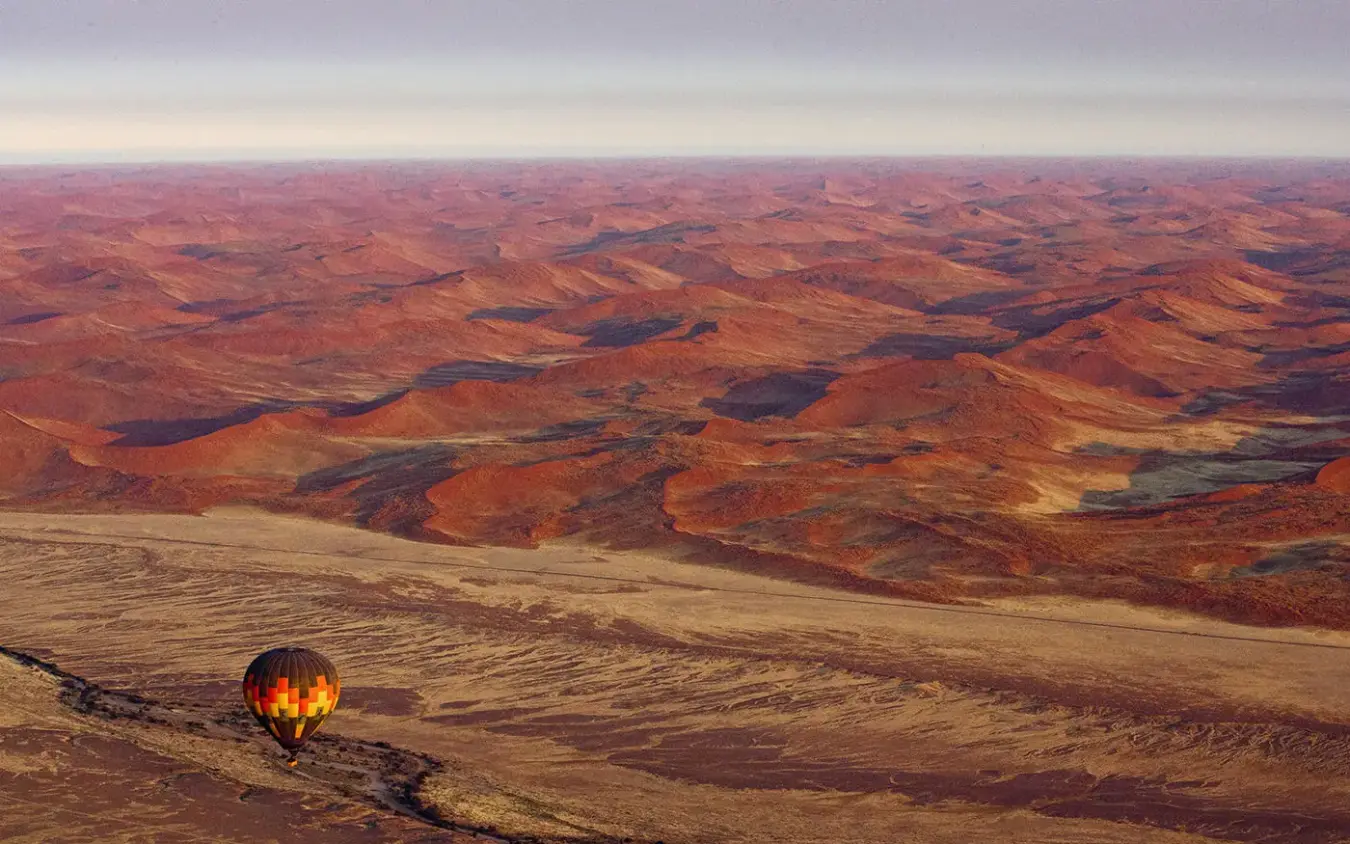
Sunrise drives through the private Tsauchab gate to Sossusvlei and Deadvlei, and walks in Sesriem Canyon. On the reserve: nature drives, spotlight night drives, guided walks including UV scorpion walks, and electric fat-biking. Hot-air ballooning over the dune sea can be arranged. Night drives are restricted to the private reserve, not the national park.

Two guests walking together across vast desert dune landscape, Kulala Desert Lodge, Sossusvlei, Namibia 03

conservation

Rewilded Farmland Since The Mid-1990s

Since the mid-1990s, overgrazed farmland here has been rewilded: livestock removed, fences dropped, and native game returned. A small-carnivore project has monitored foxes, aardwolves and wildcats since 2000. Nearby, the lodge funds an Eco-Club gardening project at P.A. Schmidt Primary School in Maltahöhe.

ready to get started?

Get in touch and let’s start the conversation. An initial consultation helps us understand what you’re looking for, whether that’s specific experiences, luxury touches, or marking a special occasion, and from there we’ll guide you through what’s possible so you can decide if we’re the right fit.

Alternative accommodation in sossusvlei

frequently asked questions

Most guests fly in. Light aircraft leave Windhoek's Eros airport for the Kulala Wilderness Reserve's own airstrip, about an hour in the air, and the lodge collects you there for the drive across the plains. We can also arrange a private charter, typically a Cessna Caravan or Pilatus PC-12, timed to your own itinerary rather than the scheduled circuit. The light aircraft take soft bags only, twenty kilograms per person including hand luggage, so a duffel beats a hard case.

Driving from Windhoek takes around five hours, a good part of it on gravel, and suits a wider self-drive loop. Self-drivers should know that private vehicles cannot use the reserve's tracks, so once you arrive, time in the dunes and on the reserve is with the lodge's guides.

No meaningful risk applies to this southern desert. The UK's official travel health advice puts the whole of Namibia outside the northern regions at very low risk, advising awareness and bite avoidance rather than antimalarial tablets, and the CDC's transmission map points the same way, listing only the country's northern and eastern regions and calling malaria rare everywhere else.

The picture changes if your route continues north to Etosha or the Zambezi region, especially in the December to April rains, so tell us your full itinerary. Guidance moves from year to year, and a travel clinic or your doctor should confirm the current position before you fly.

This is a landscape of extremes in both directions. From November to March the days can push beyond forty degrees, while the winter months of May to September bring clear, mild days and nights that fall towards freezing. Rain is rare in any month, and the sun is unforgiving all year.

The dune excursions leave before sunrise, when an open vehicle is genuinely cold, so pack layers you can shed as the morning warms. Closed shoes with grip make the dune climbs far easier than sandals, neutral colours suit the drives, and sun protection matters here more than almost anywhere else we send people. If a night on your rooftop platform appeals, warm sleepwear belongs in the bag even in midsummer, because the desert loses its heat the moment the sun goes.

For most people, the winter months from May to September, when the air is at its clearest and the dune climbs are comfortable rather than punishing. The cold nights are the trade-off. The calmer weeks around May and September also give a balloon flight its best chance, since the flights only launch in still conditions.

Summer asks more of you, with real heat in the middle of the day, but it hands back emptier dunes, dramatic light as heat haze and the occasional storm build over the sand, and the desert at its most theatrical. We will be straight with you about which end of that trade suits the trip you have in mind.

The lodge sells two ways, and the difference matters. The fully inclusive basis covers all meals, local drinks apart from premium imports and champagne, the twice-daily guided activities, park fees and laundry. The dinner, bed and breakfast basis covers exactly what it says, with lunches, drinks and every activity priced separately, a pattern that tends to suit self-drivers building their own days.

Hot-air ballooning sits outside the rate on either basis, so tell us early if a flight belongs in your trip. There is wifi in camp, and we will price the whole stay both ways before you commit so nothing arrives as a surprise.

Yes, children of any age can stay, which is not a given in this corner of the desert, and the family chalets keep parents and children under one roof. The pool and the rooftop sleep-outs tend to be the things children remember.

A few activities carry their own limits, the balloon flight among them, and the long pre-dawn dune mornings suit some ages better than others, so tell us who is coming and how old they are. We will match the chalet and the days to them, and be honest about what is worth saving for a return trip.

rated five stars by our clients

other areas in namibia

Rocky desert mountains silhouetted under starry night sky 01

Damaraland

Elephant with zebras and antelopes at waterhole 02

Etosha National Park

Aerial view of desert dunes meeting coastal waves 03

Skeleton Coast

Portrait of a person wearing traditional African beaded jewelry 05

Kunene River

Cyclists riding across red sand dunes at sunset, Swakopmund, Namibia 06

Swakopmund

Elephant herd walking through dusty grassland with scattered trees, Zambezi Region, Namibia 07

Zambezi Region

Aerial view of church and city at sunset 08

Windhoek

Planning a journey together

our approach

remote, exclusive
& personal

Every journey starts with a conversation. We take the time to understand your vision before we start planning.

Whether by phone or in person, we work with you directly to shape something that is considered, personal, and expertly delivered.

get in touch
destinations ideas & inspiration our process about us contact us