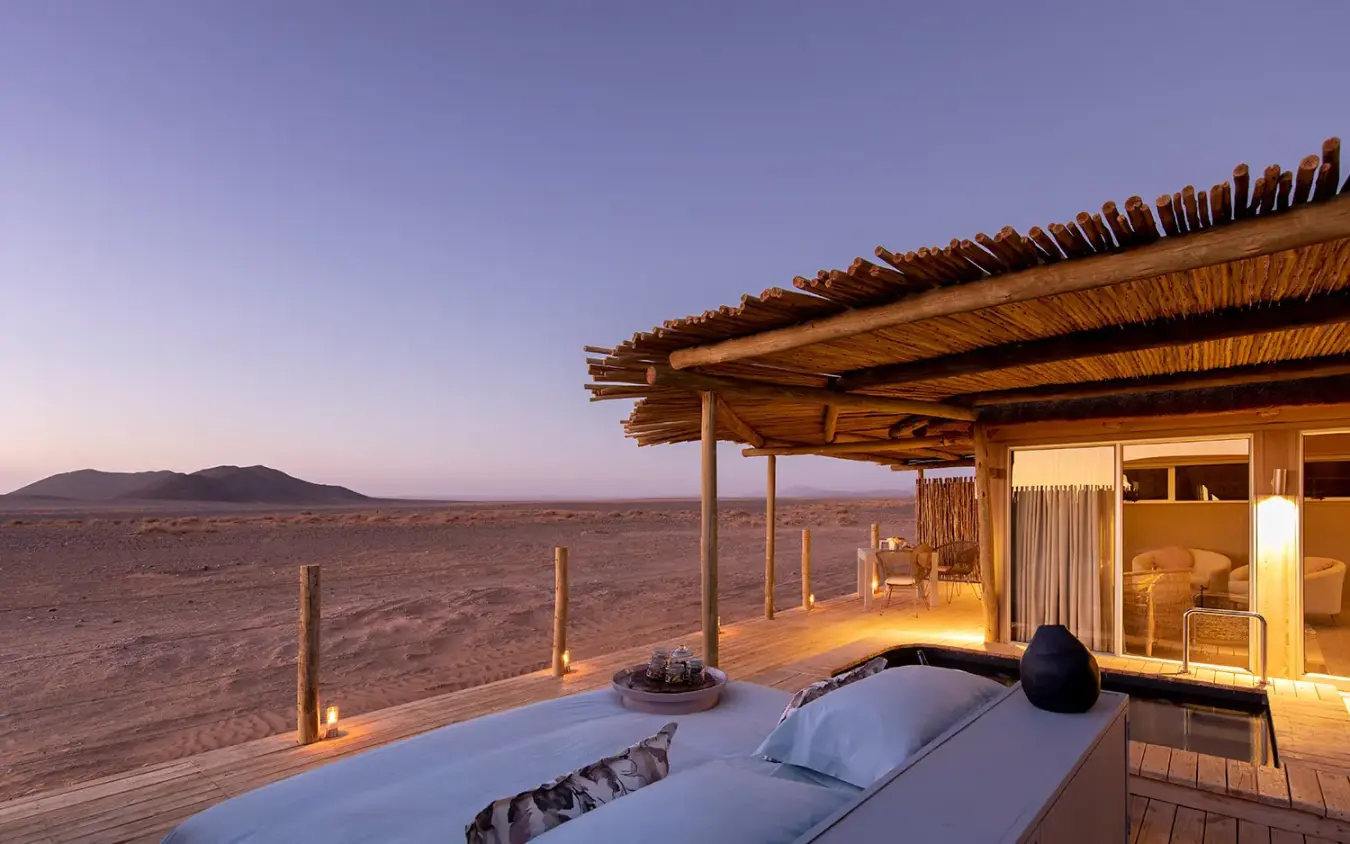
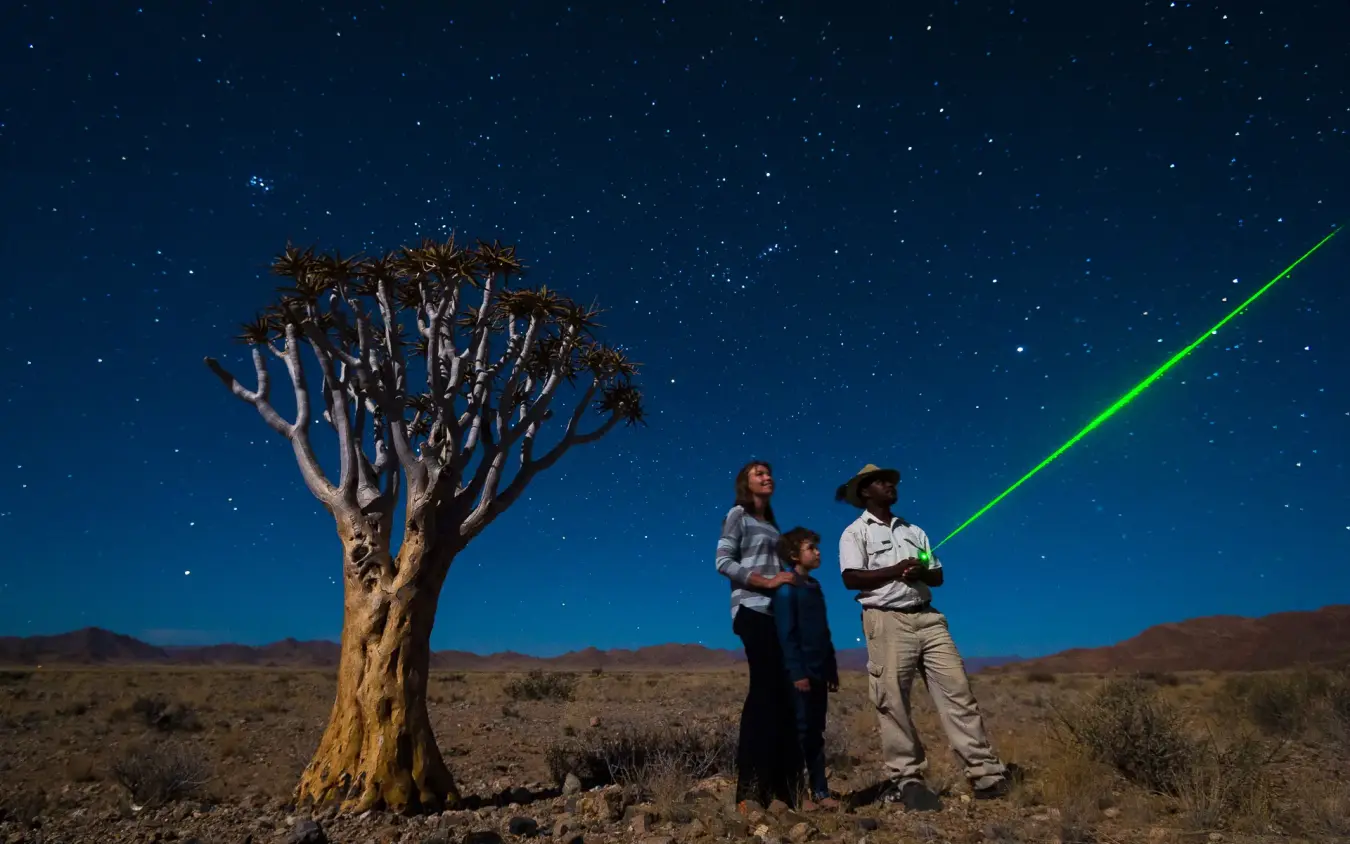
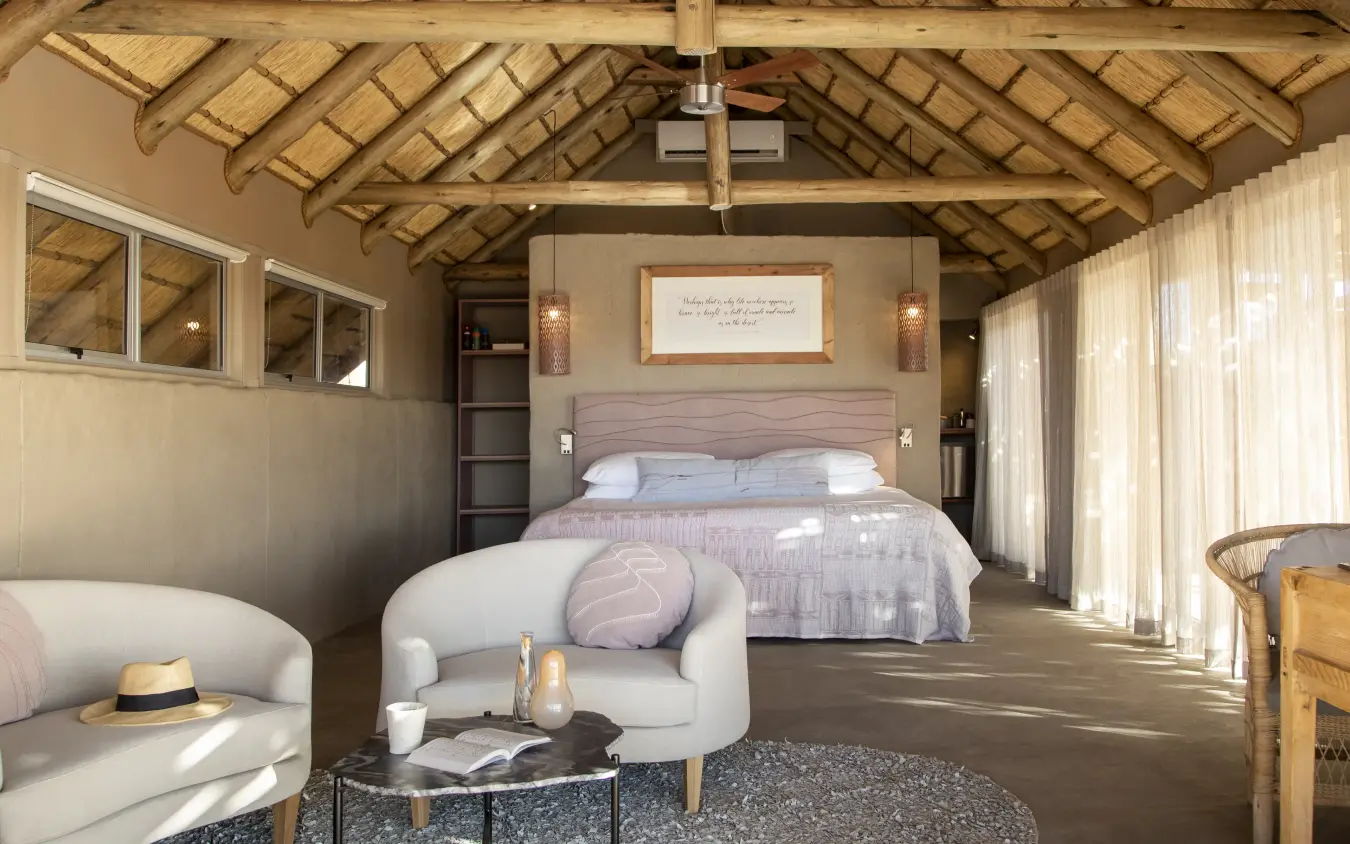
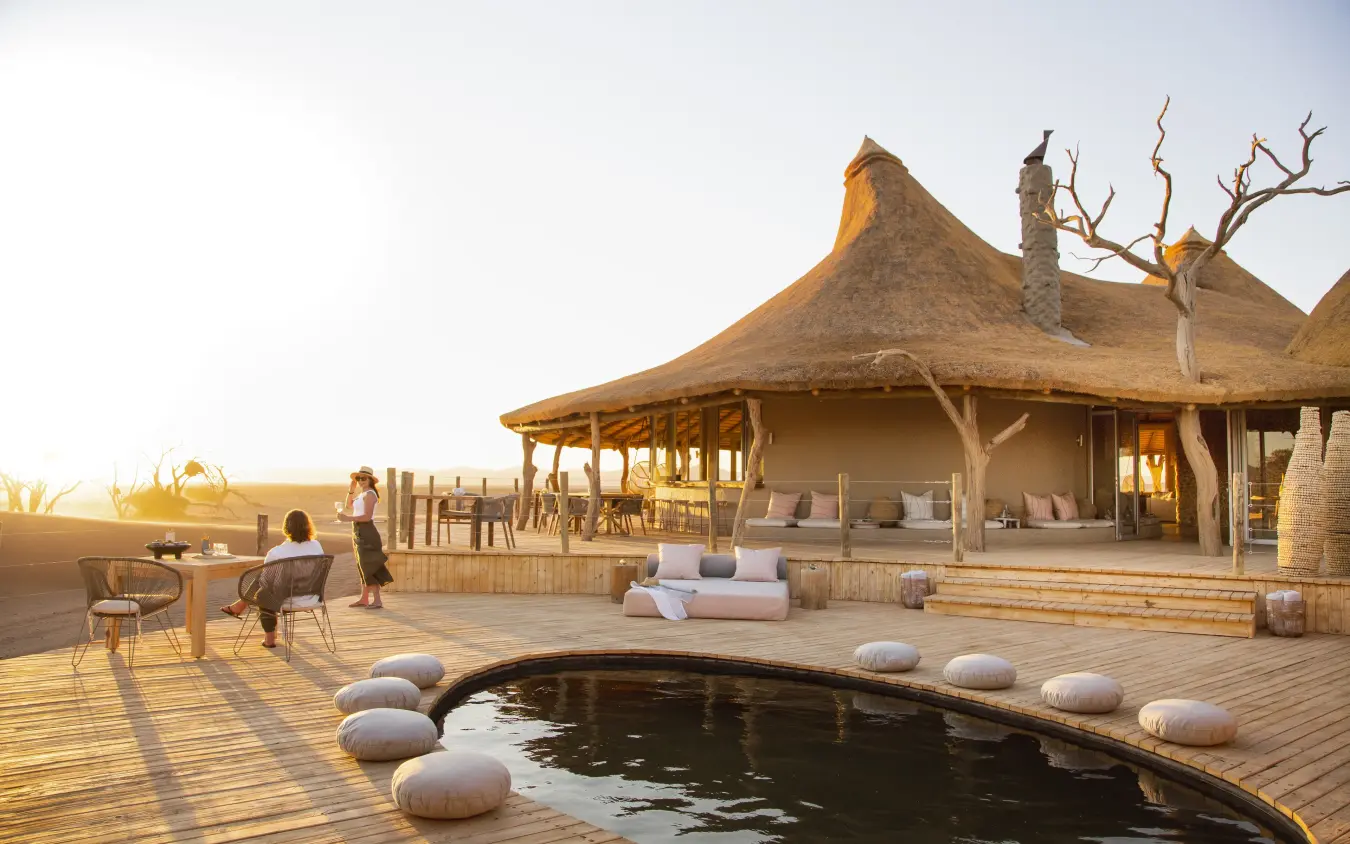
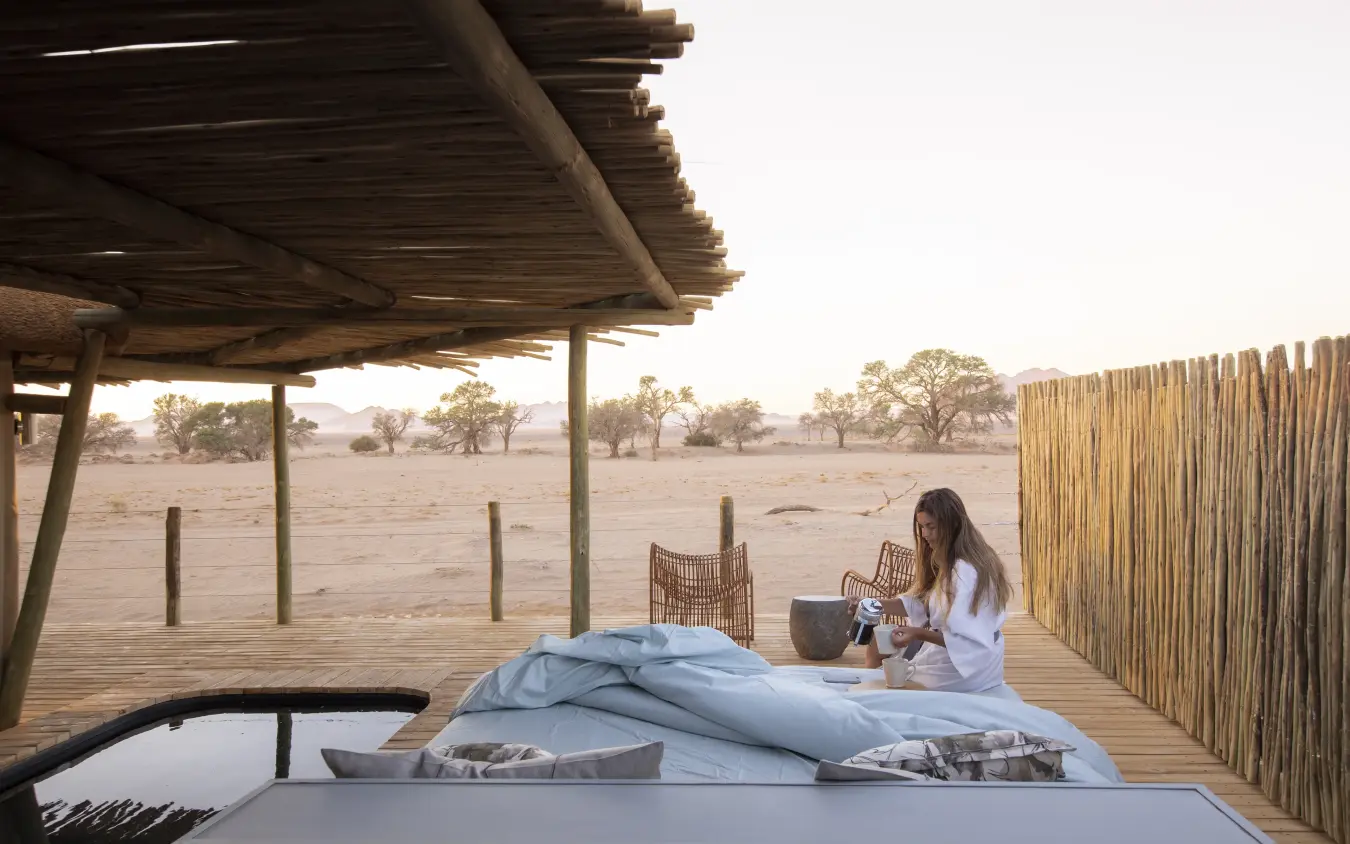
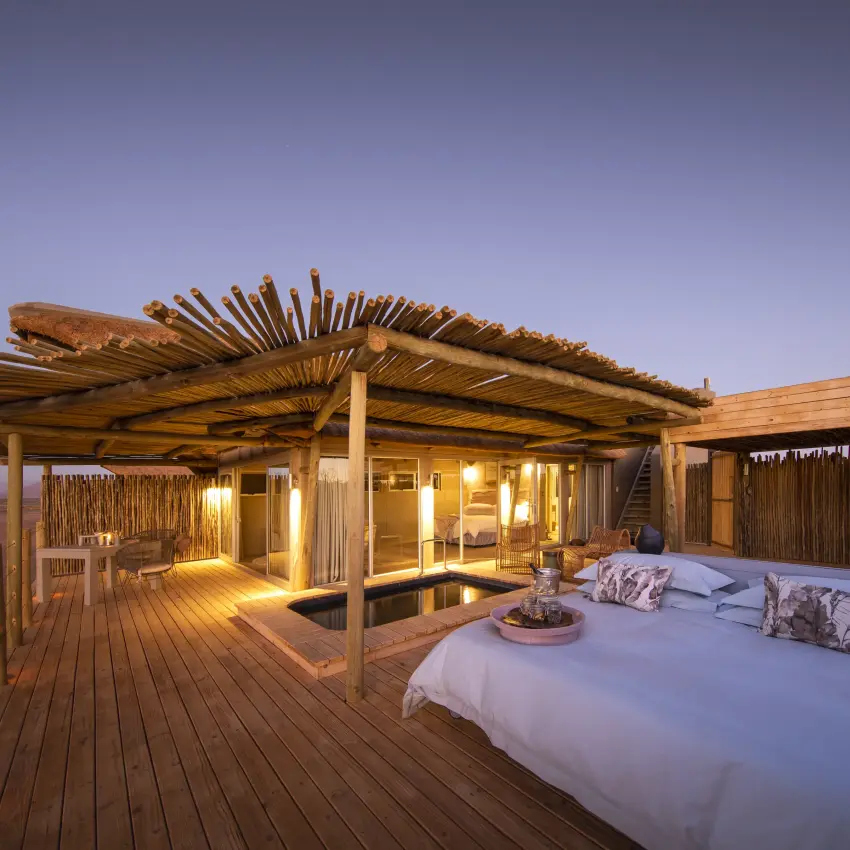
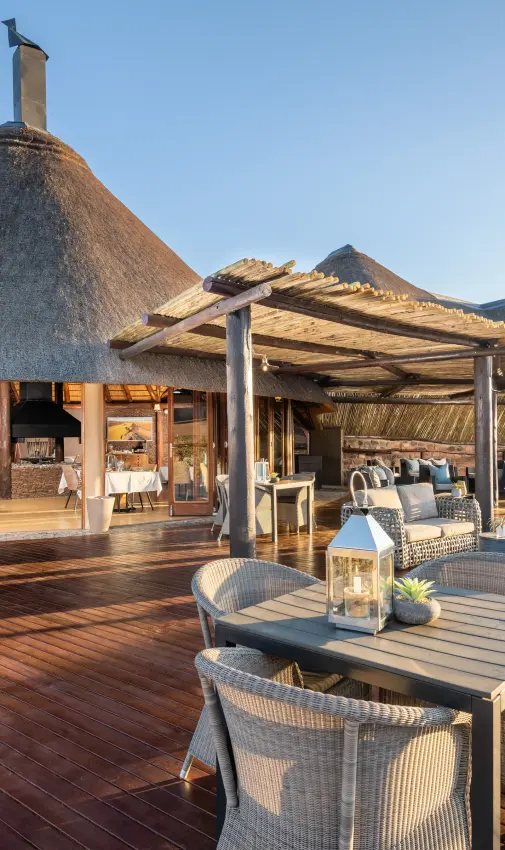
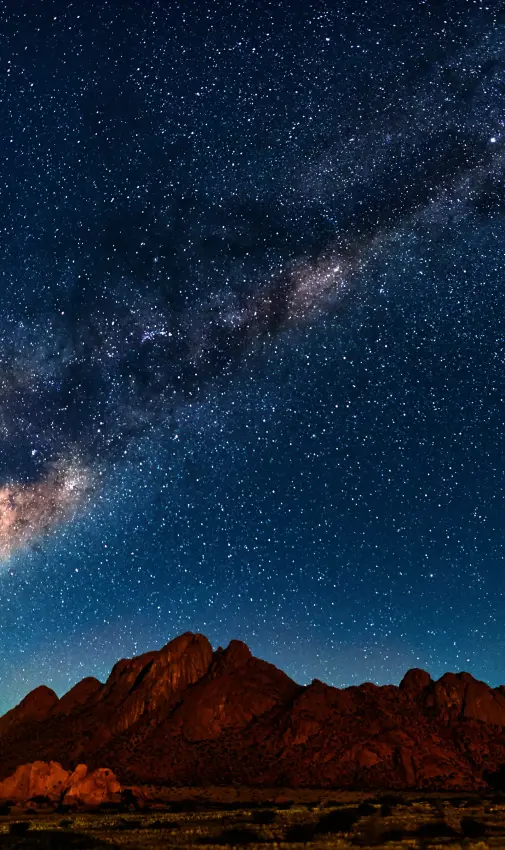
Each of the eleven thatched suites, called kulalas, stands alone on a raised wooden deck. Floor-to-ceiling glass opens onto the plains, a private plunge pool cools the afternoon, and an internal staircase climbs to a rooftop skybed. Sleeping there under skies dark enough to show the Milky Way from horizon to horizon, a hot-water bottle tucked into the bedroll against the desert chill, is the night guests describe most vividly afterward.
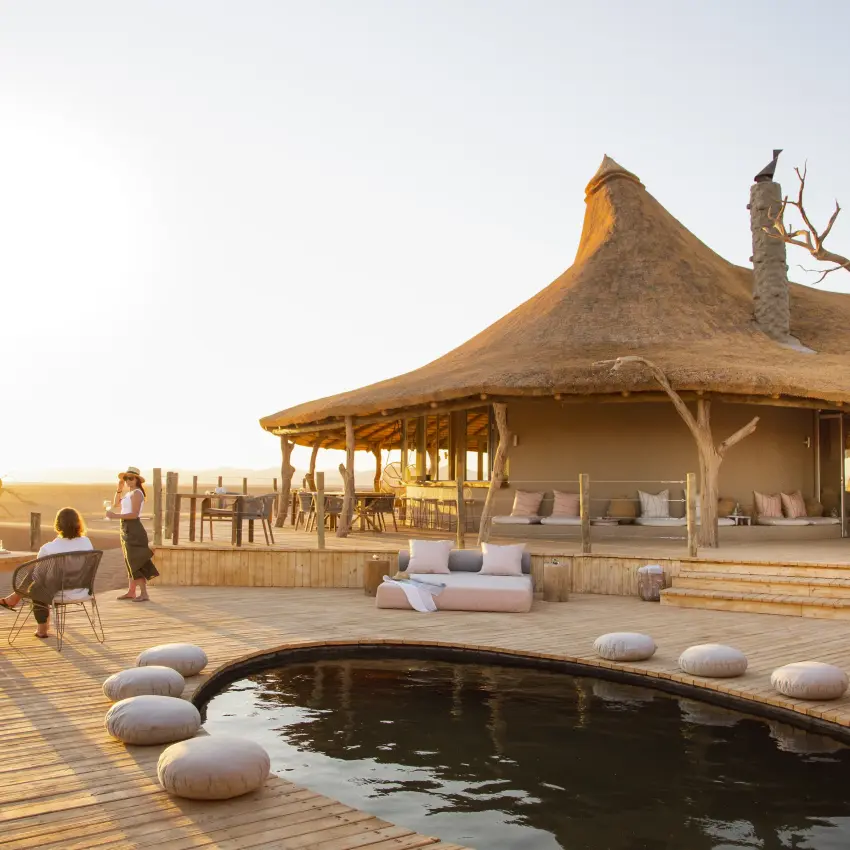
The 2020 rebuild, led by designer Cate Simpson, worked in bleached bone, dried mud and pale green, so the reds of the dunes stay the focus. Full-size bleached tree trunks rise through the thatched roofs as structural pillars, echoing the dead camelthorns of Deadvlei. Elevated walkways added in the same rebuild carry guests over soft sand between the suites and the main lodge, where cold towels and fresh fruit drinks wait after the heat outside.
Full-size bleached tree trunks rise through the thatched roofs as structural pillars
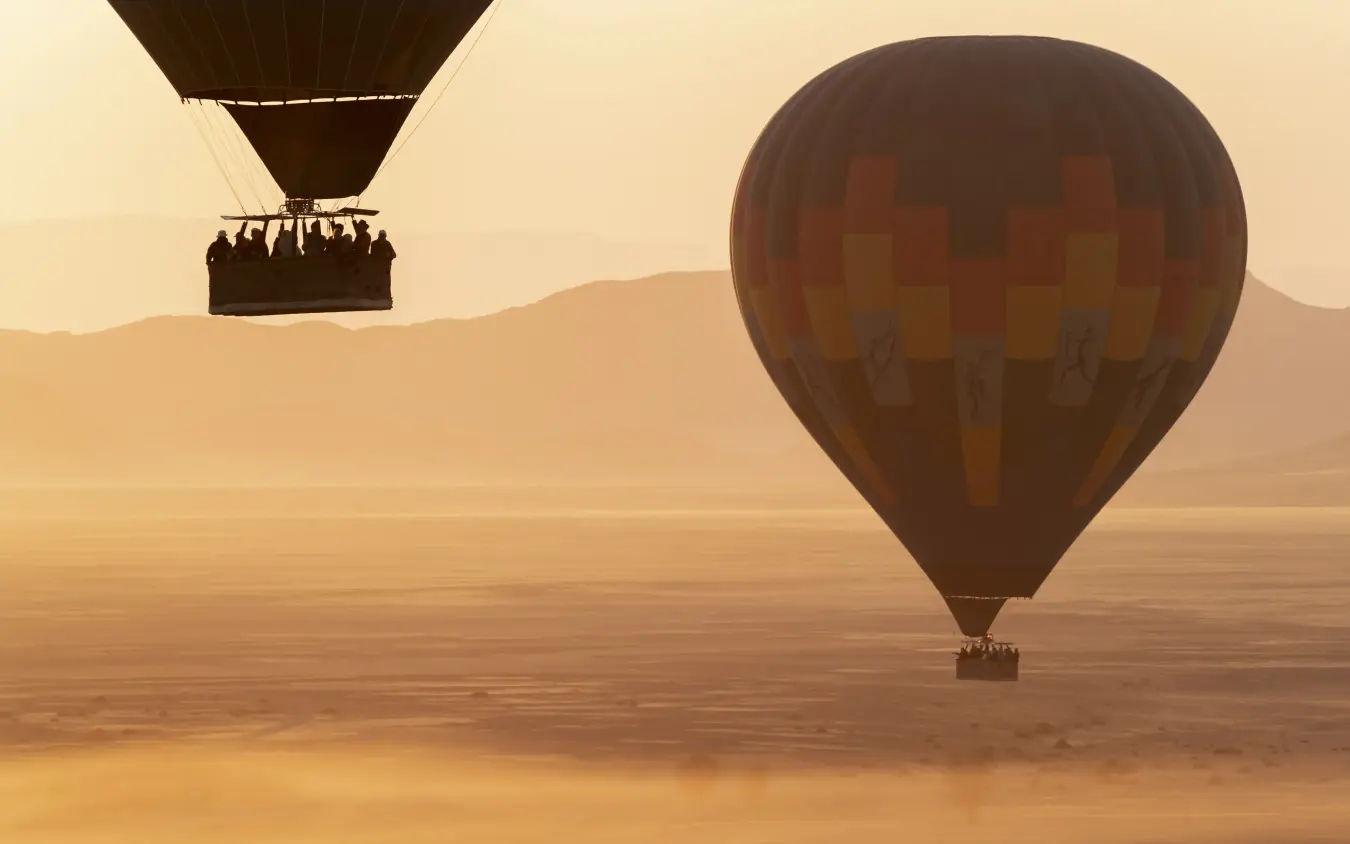
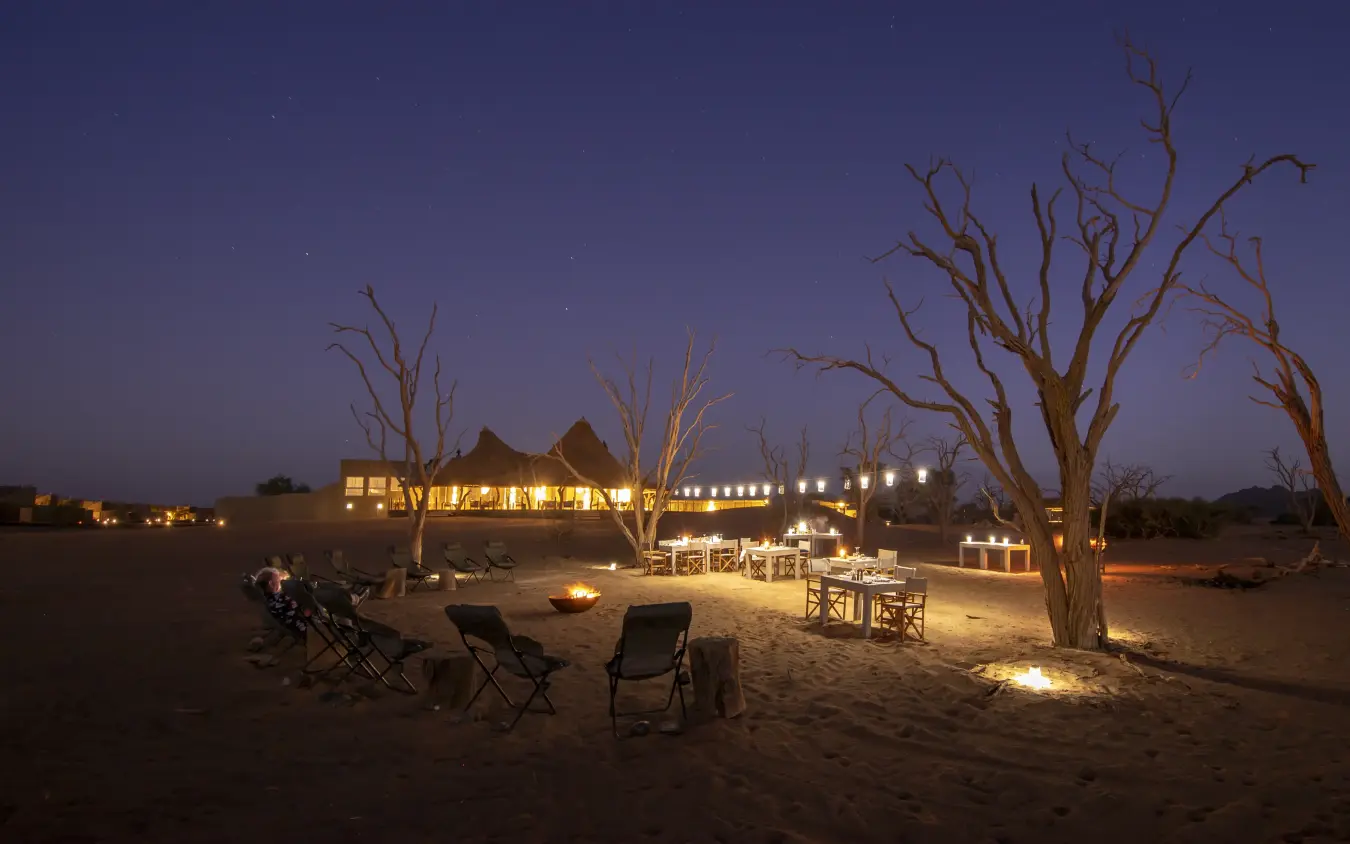
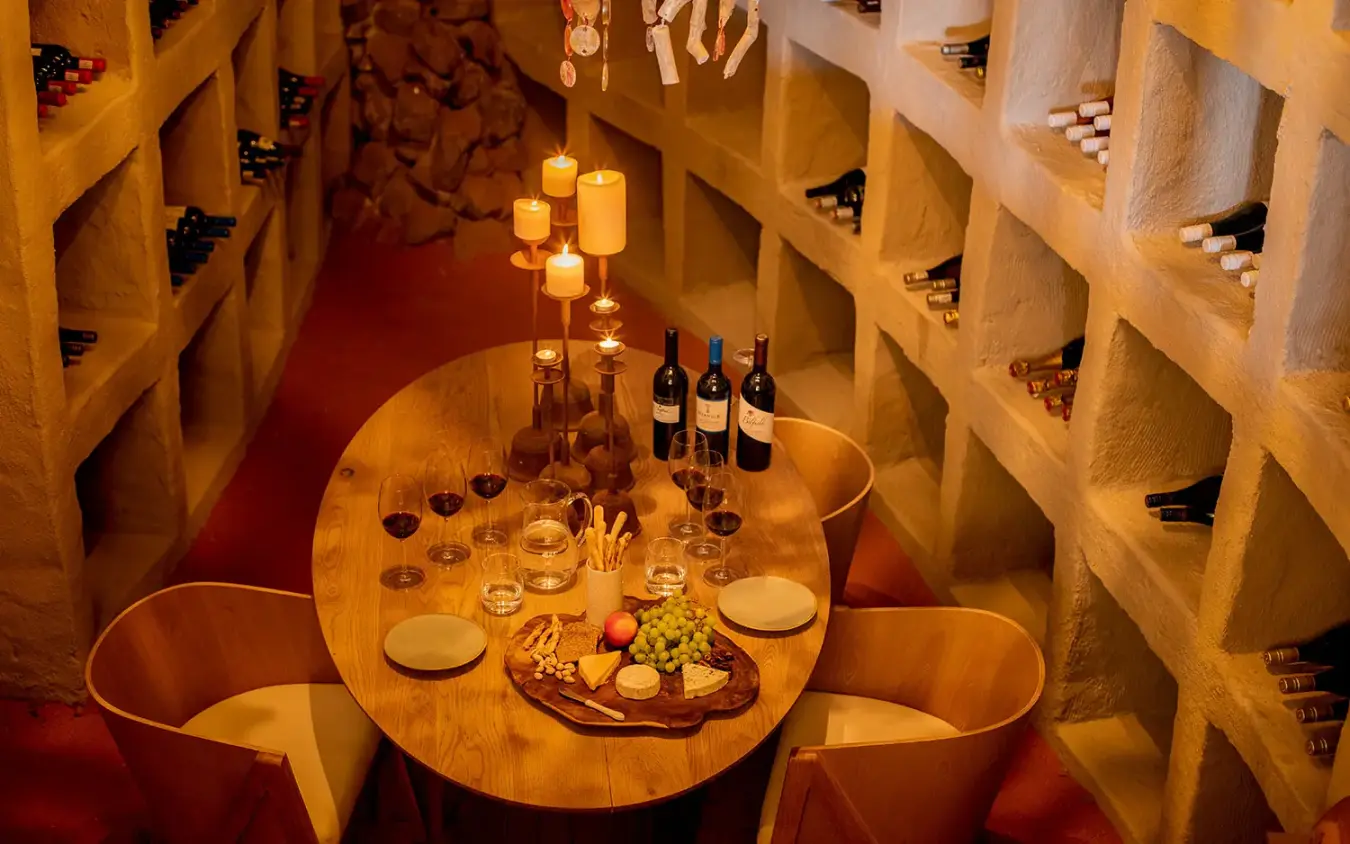
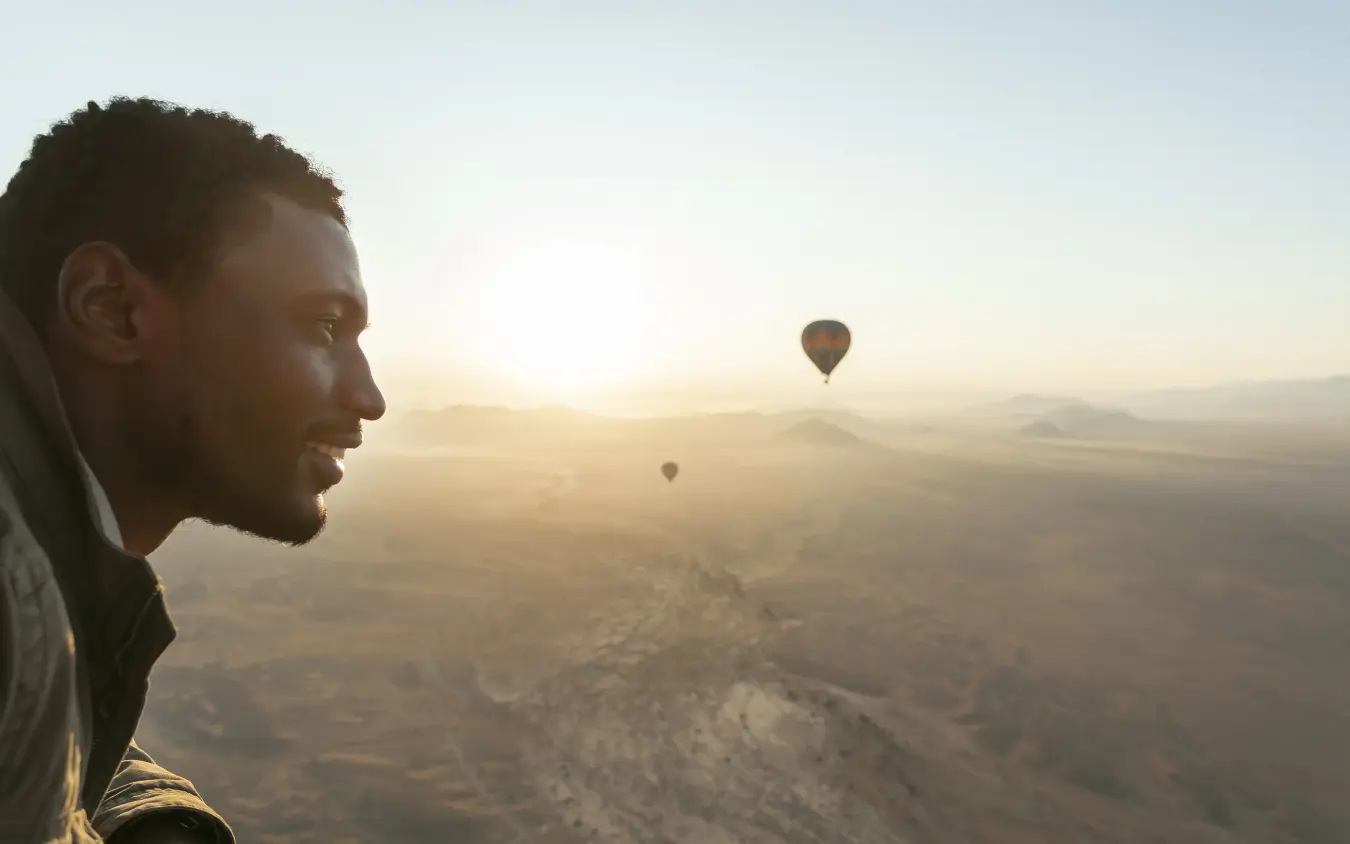
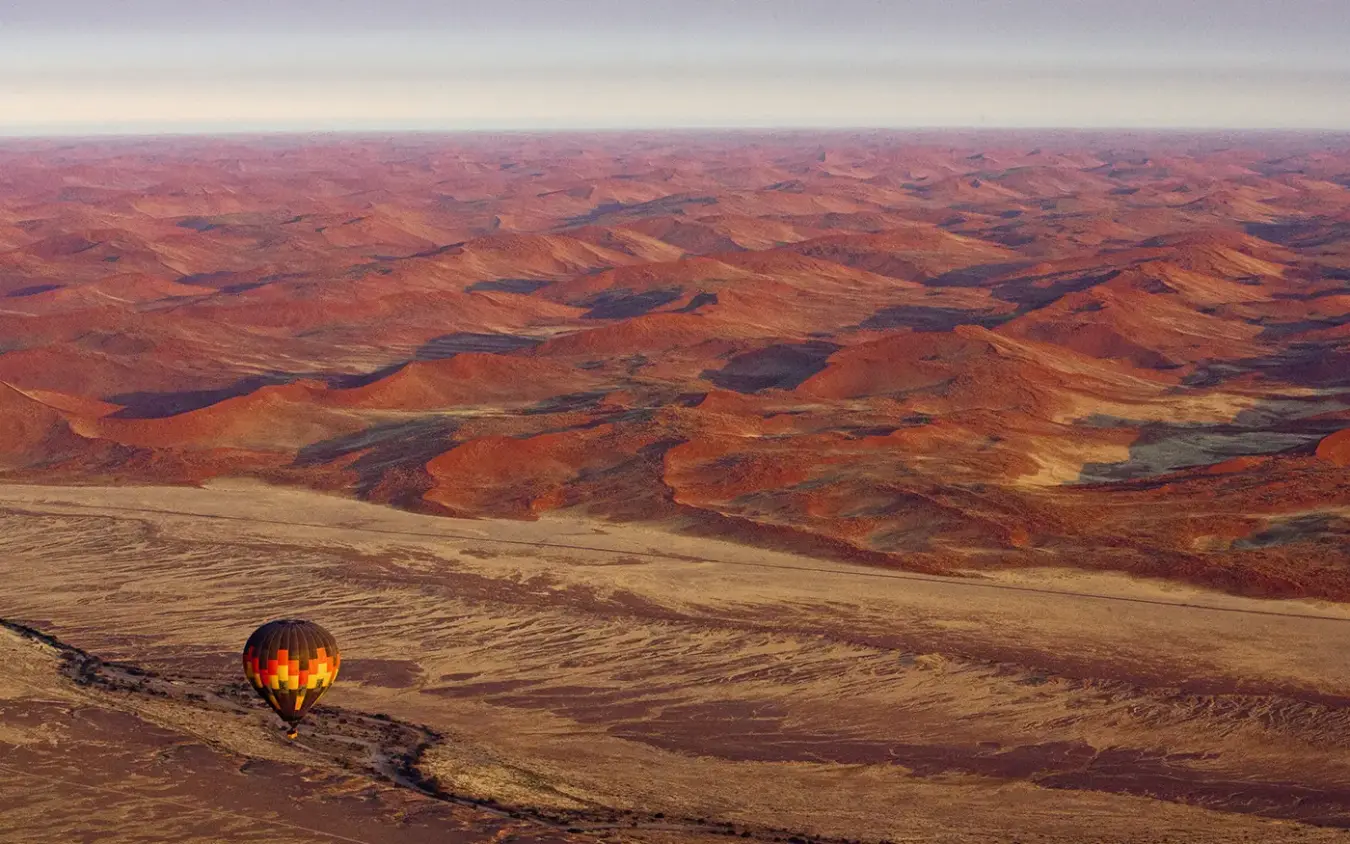
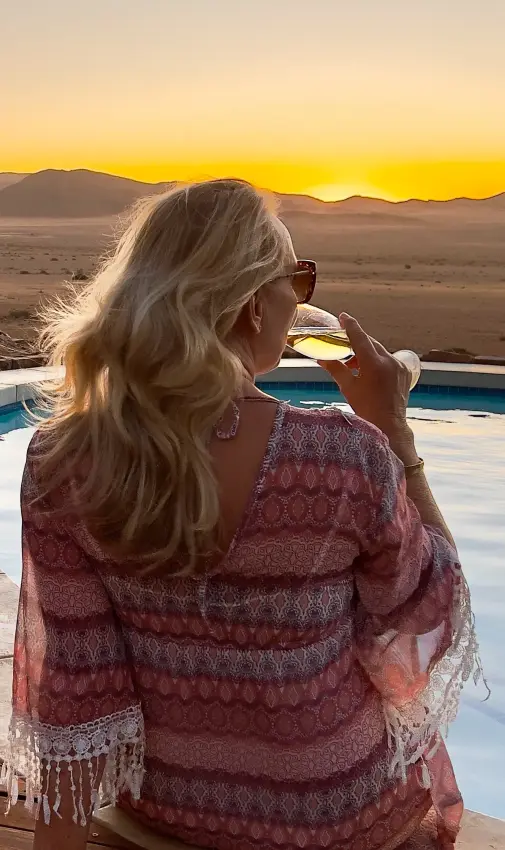
Dining ranges from lunches on a camelthorn-shaded terrace to lantern-lit dinners along the pool deck, with an underground cellar of Southern African wines beneath the main lodge for private tastings. The kitchen draws on Mediterranean, North African and Namibian cooking, working with game such as springbok and kudu alongside vegetables from the lodge’s own greenhouse. Guests who take the hot-air balloon flight over the Namib Sand Sea come back to a champagne breakfast laid out on the desert floor.
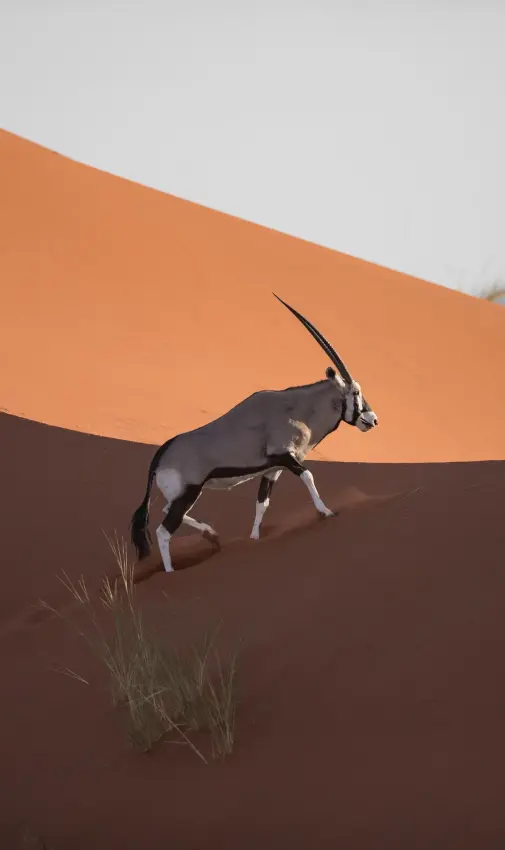
A floodlit waterhole below the main deck gives the reserve a rare source of open water in this hyper-arid country. Evenings there might bring a lone gemsbok drinking while a dust devil spins across the gravel beyond it, one animal at the water while the wind moves everything else. Families travelling together have a dedicated two-bedroom suite, and children from six are welcome. After dinner, lodge staff often gather to sing traditional Namibian songs, clapping in tight, improvised harmony under the stars.