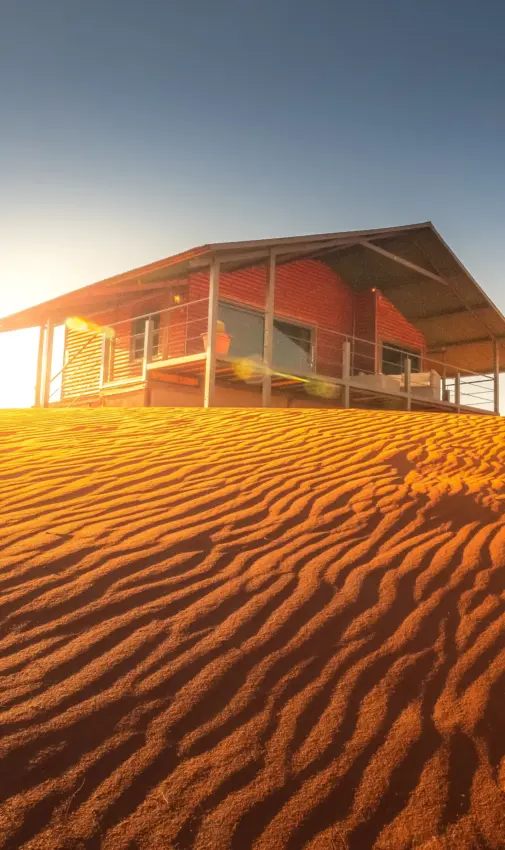
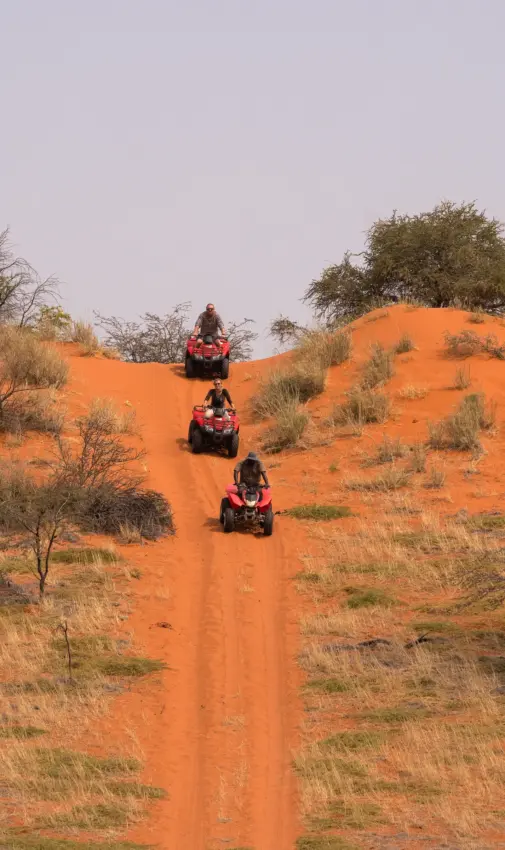
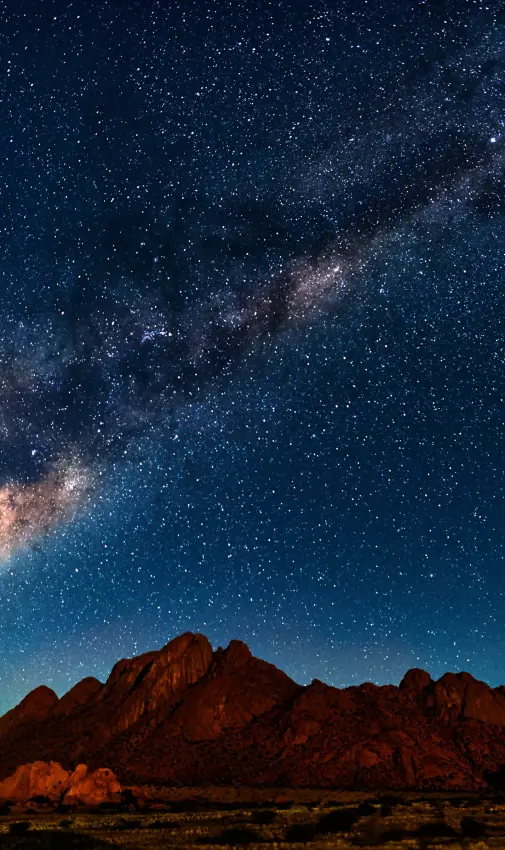
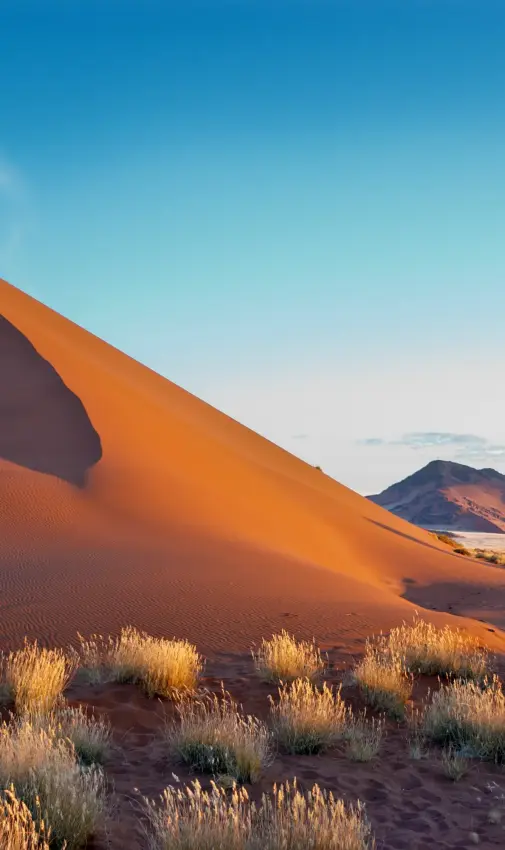
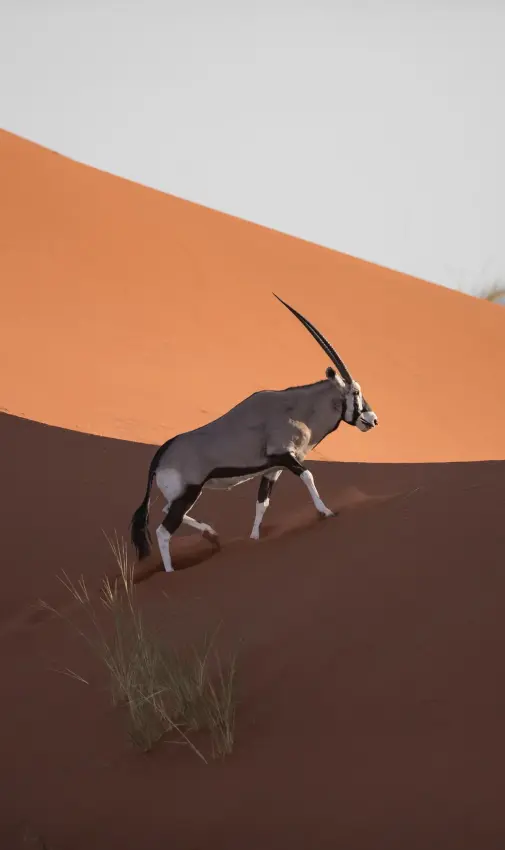
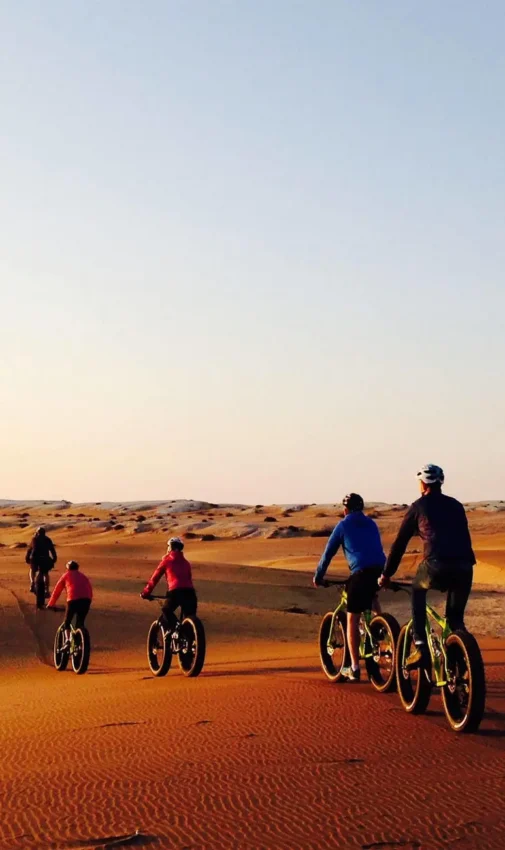
This part of the Namibian Kalahari is a country of long red dunes with grassland in the valleys between them and camel thorn along the low ground, opening into pans where the land flattens. From the top of the dune, the ridges run off towards the horizon with the pans pale against them, and game crossing the flats shows up from a long way off. After dark the same view turns upward, to a sky crowded with stars down to the dune line. Beneath it, the tents are spaced along the crest on either side of the main lodge.
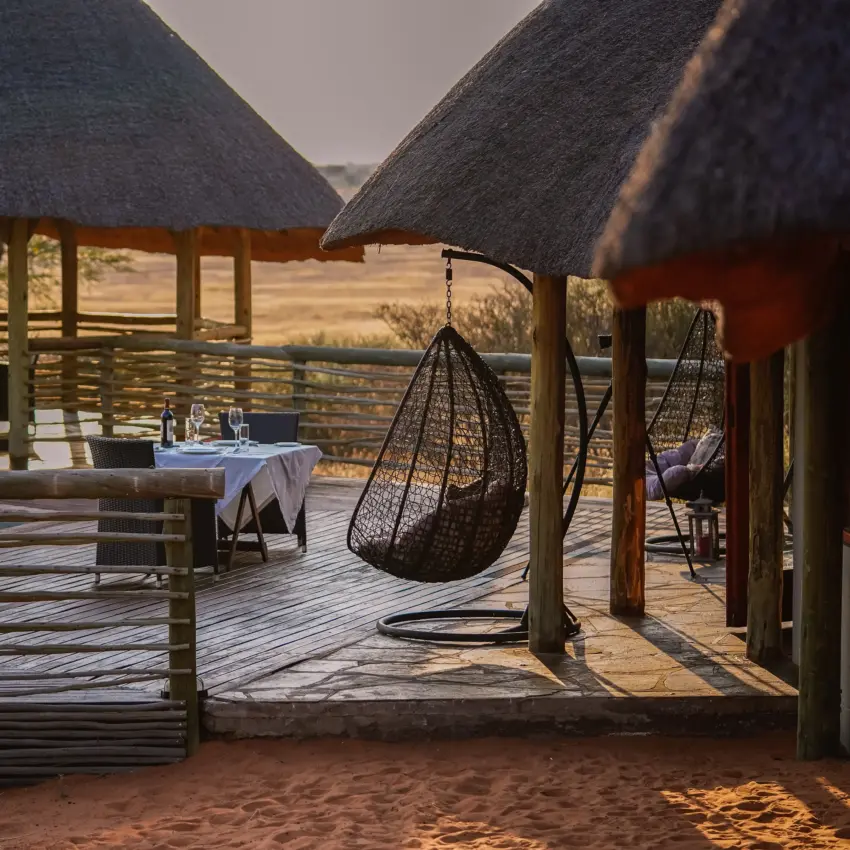
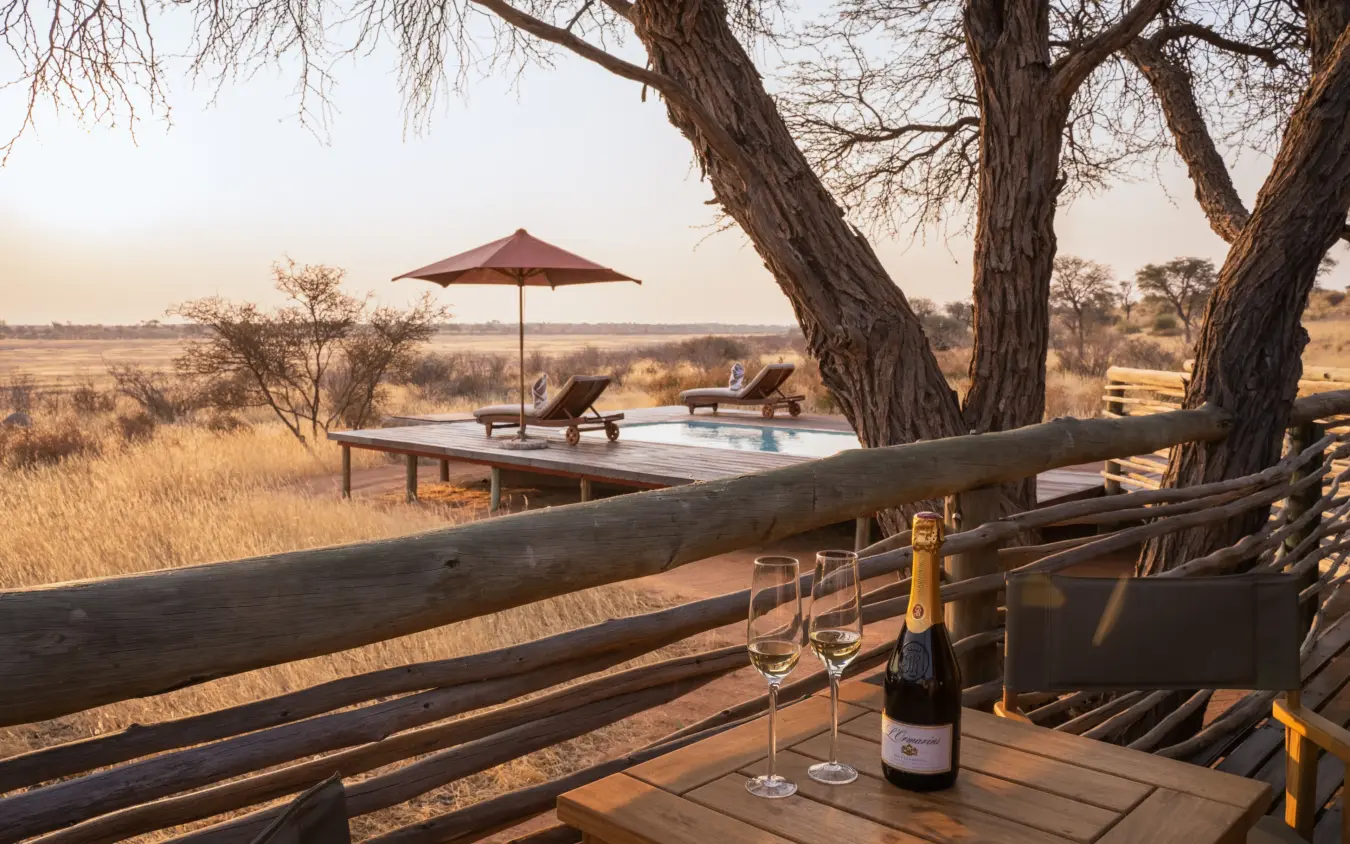
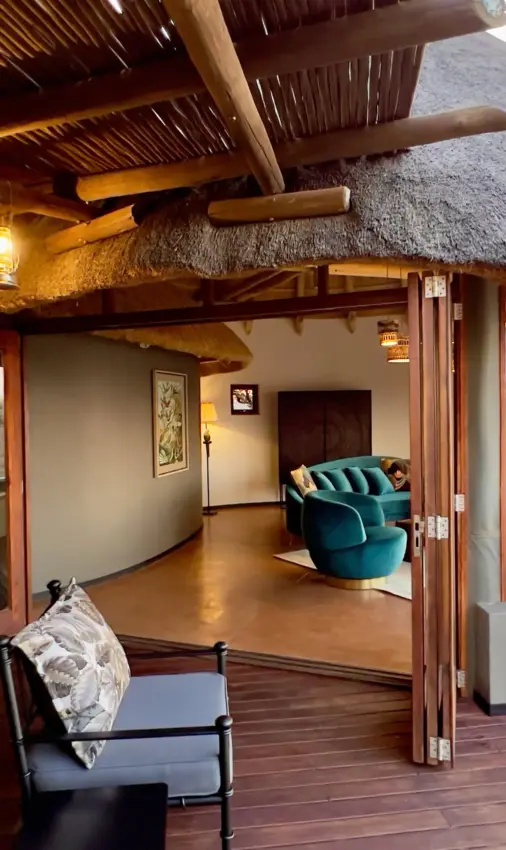
The walk to breakfast follows the spine of the dune to an open-plan main building, its dining room, bar and lounge giving onto wide wooden decks. An infinity pool in front of them looks out over the same ground as the waterhole and the game it draws in. Canvas and timber rest lightly on the sand. Each tent has a private wooden deck facing the pans, and the showers inside are open to the sky, which in the Kalahari means washing under hard blue at midday and in crisp air after dark.
After dark the same view turns upward, to a sky crowded with stars down to the dune line.
The quieter hours between the morning walk and the afternoon drive go slowly, to the pool or the shade of a tent deck, or to a massage booked at the lodge. Evenings bring dinner in the main lodge or out on the decks, under the same stars. In season there is a second option, a barbecue laid out on a dune well away from camp, with the food cooked over coals as the light fades from the sand.
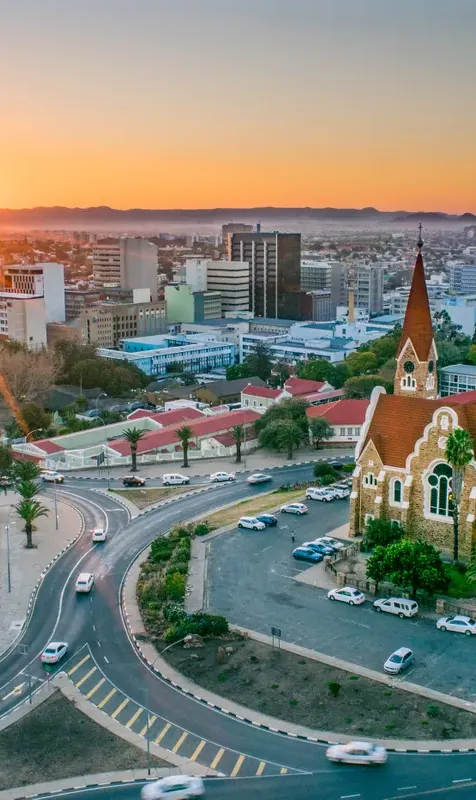
A light aircraft reaches the reserve’s pan airstrip from Windhoek in a short hop, with a road transfer as the alternative for those who prefer to arrive overland. That makes the lodge a natural bookend to a journey through Namibia, either a first taste of the desert after the long-haul flight or a last night of open space before it. For couples, the honeymoon tent is set apart from the others along the dune, far enough for its deck to feel like a camp of its own. That deck holds a private plunge pool facing the pans. Nobody overlooks it.