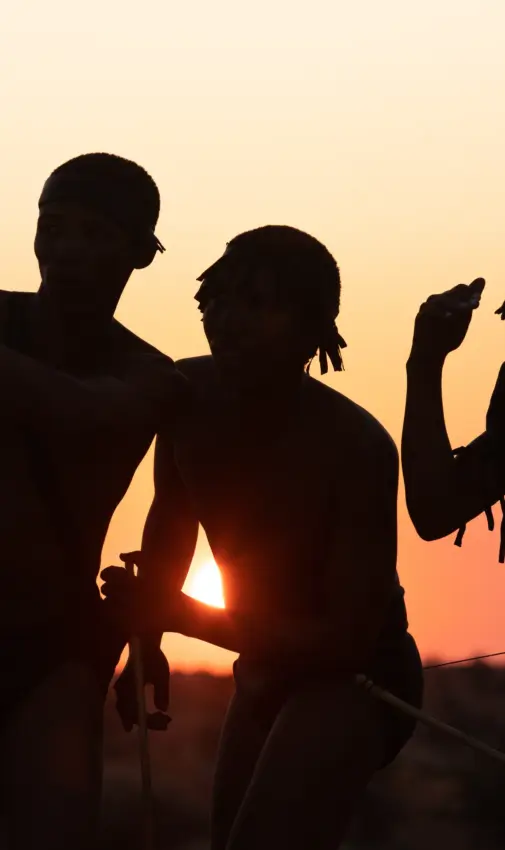
The San trackers who lead the walks keep old skills in daily use. Tracks pressed into the red sand overnight are still legible at breakfast. To the trackers a scuff becomes a springbok that passed at dawn, and a low shrub becomes a medicine. Every explanation comes in a language punctuated by clicks.
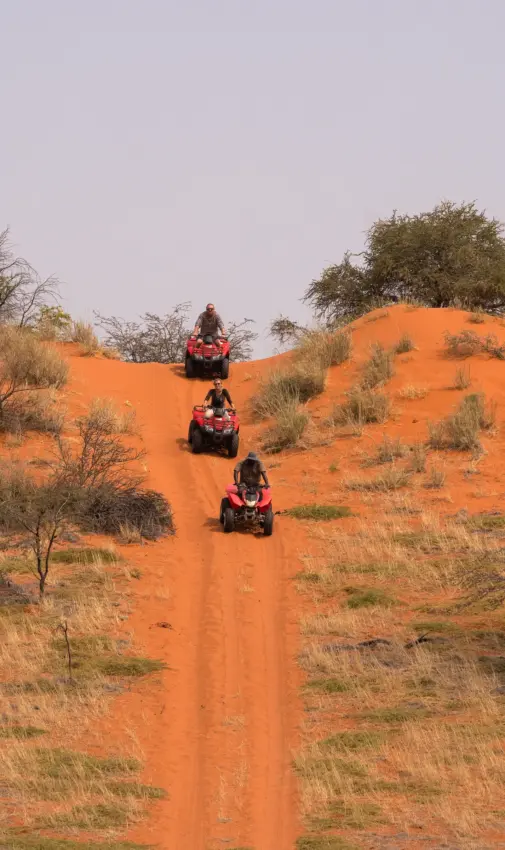
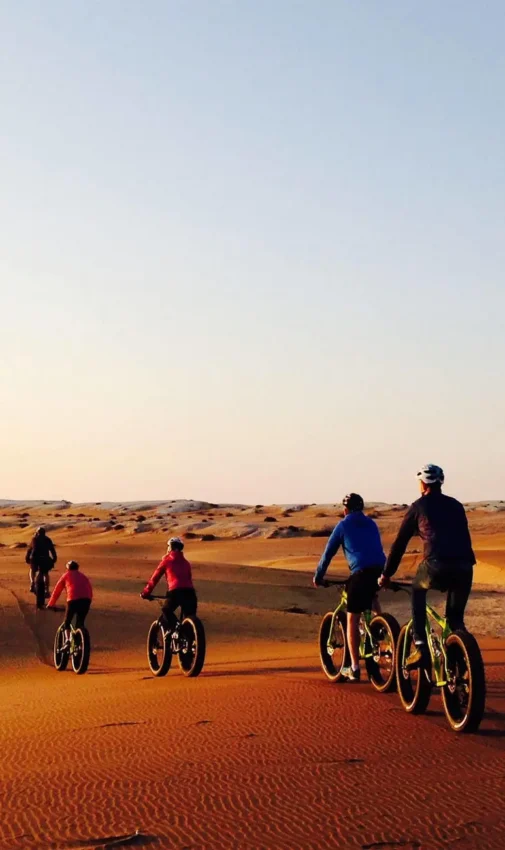
Because the reserve is private, there are no national park rules to work around, and the walks share their ground with the game drives. One walk with the San is included on every two-night stay, timed for the cool of the morning. The drives range further from the lodge. Sundowners are poured on the crests, and quad bikes go out with a guide across the same red ridges, faster and a good deal noisier.
Tracks pressed into the red sand overnight are still legible at breakfast.
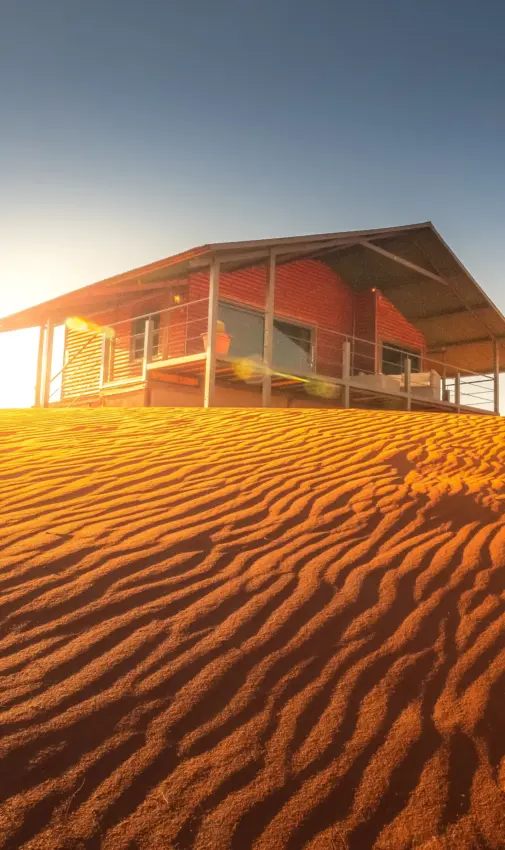
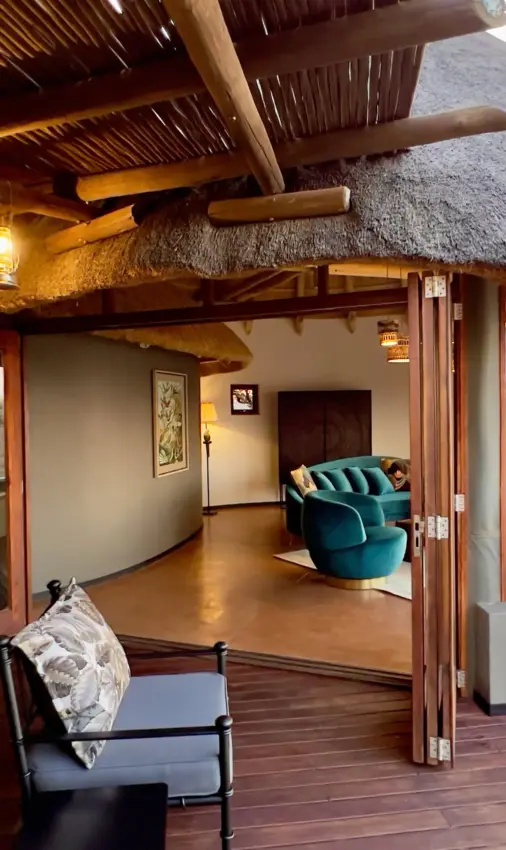
Camelthorn Kalahari Lodge spreads its twelve chalets sparsely against the dunes, each one a thatched rondavel. The thatch helps keep the interiors cool through Kalahari summers, and air conditioning takes over on the afternoons when that is not enough. Inside, San-inspired décor sets off crisp white linen, with tea and coffee to hand and an en-suite shower. Outside, a small stone patio looks onto the dunes, the obvious place to sit as the light changes. Extra beds can be added for families, and stays are on a dinner, bed and breakfast basis.
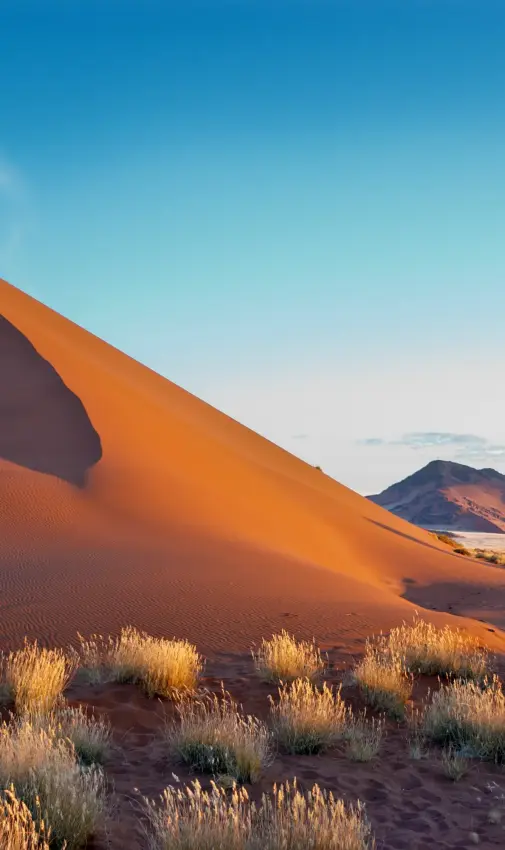
Windhoek is about 250 km away, so the lodge falls naturally at the start or end of a journey through southern Namibia, the first night out of the capital or the last before returning to it. For those who fly, light aircraft land on the reserve’s own pan airstrip. Beyond the strip, the reserve covers some 10,000 hectares of red dune and valley. For one or two nights between long stretches of travel, that empty space, and the quiet that comes with it, is much of the point.