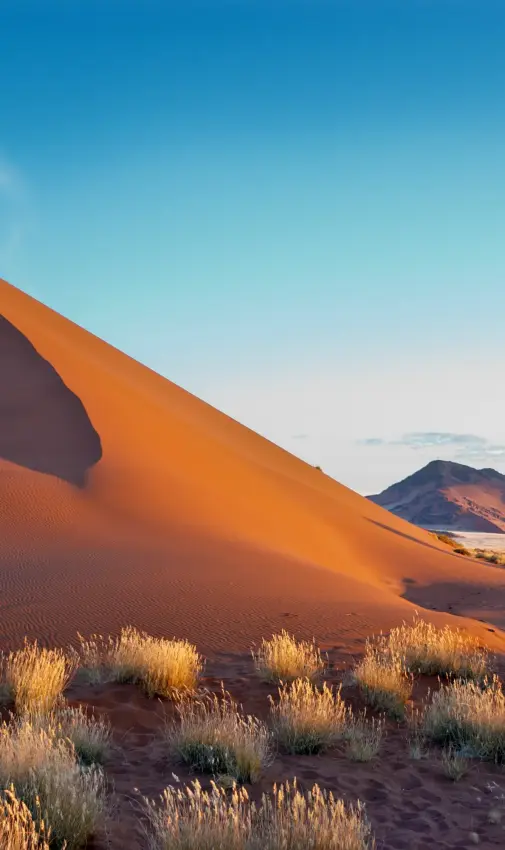
Quarter horses wait at the stables for rides through the dunes, each matched to its rider: quiet mounts for children and first-time riders, livelier ones for those with years in the saddle. Out in the valleys the horses pass grazing eland and wildebeest, and sociable weavers have hung huge communal nests in the camelthorns. The only sounds are hooves in soft sand and the weavers’ chatter.
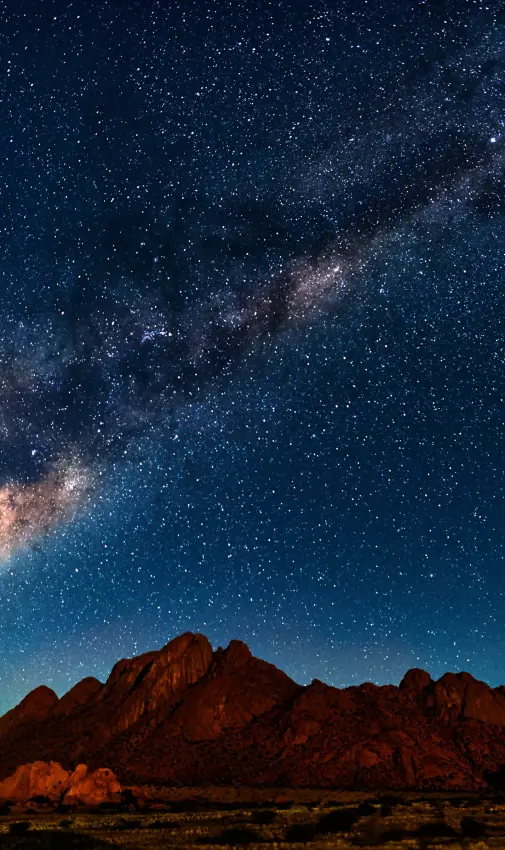
Winter nights on the dunes turn sharply cold, and the sky is worth every layer. With dry desert air and no light pollution, the Milky Way runs from one horizon to the other. The ranch built its own observatory to make the most of it, where a computer-controlled telescope swings between targets while a local astronomer explains what is in view, though some galaxies and nebulae need no lens at all. Afterwards, the fireplaces in the old farmhouse lounge and the straw-bale walls of the valley chalets earn their keep.
With dry desert air and no light pollution, the Milky Way runs from one horizon to the other.
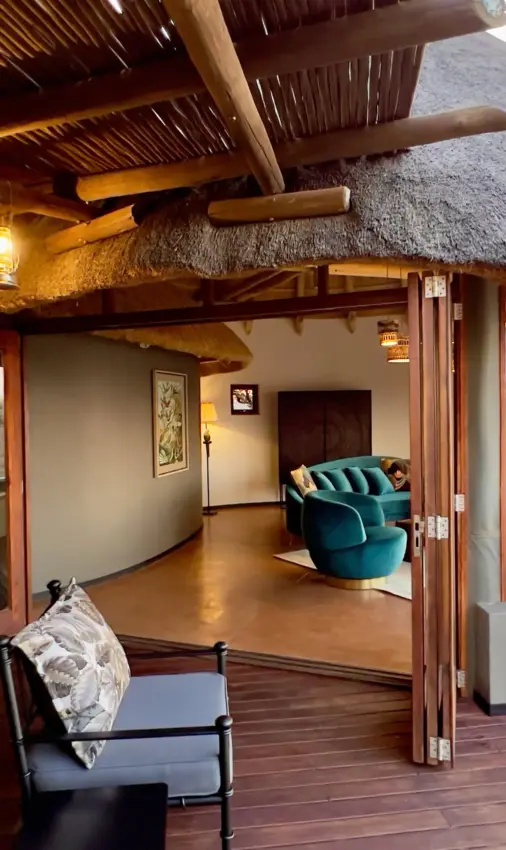
The old farmhouse has been rebuilt under thatch and finished in warm red-brown tones. The dining room opens onto a patio, and under the same roof are a reading lounge, a curio shop and a wine cellar. Afternoon tea is served around the pool, and on warm evenings dinner moves outside. Across a pan, the separate eight-room farmhouse has its own dining room and a terrace that runs out to an infinity pool.
On a journey through southern Namibia, the ranch makes a natural pause between Windhoek and the Fish River Canyon to the south. Families are welcome. Wi-Fi reaches the main lodge only, which leaves the hours to the horses and the stars. After the summer rains, flowers spread across this corner of the Namibian Kalahari.