Camp

Nkasa Linyanti

Six raised tents on Nkasa Island in Namibia’s Zambezi Region, on a private concession inside a national park.

Country: Namibia
Location: Zambezi Region
Number of rooms: 6

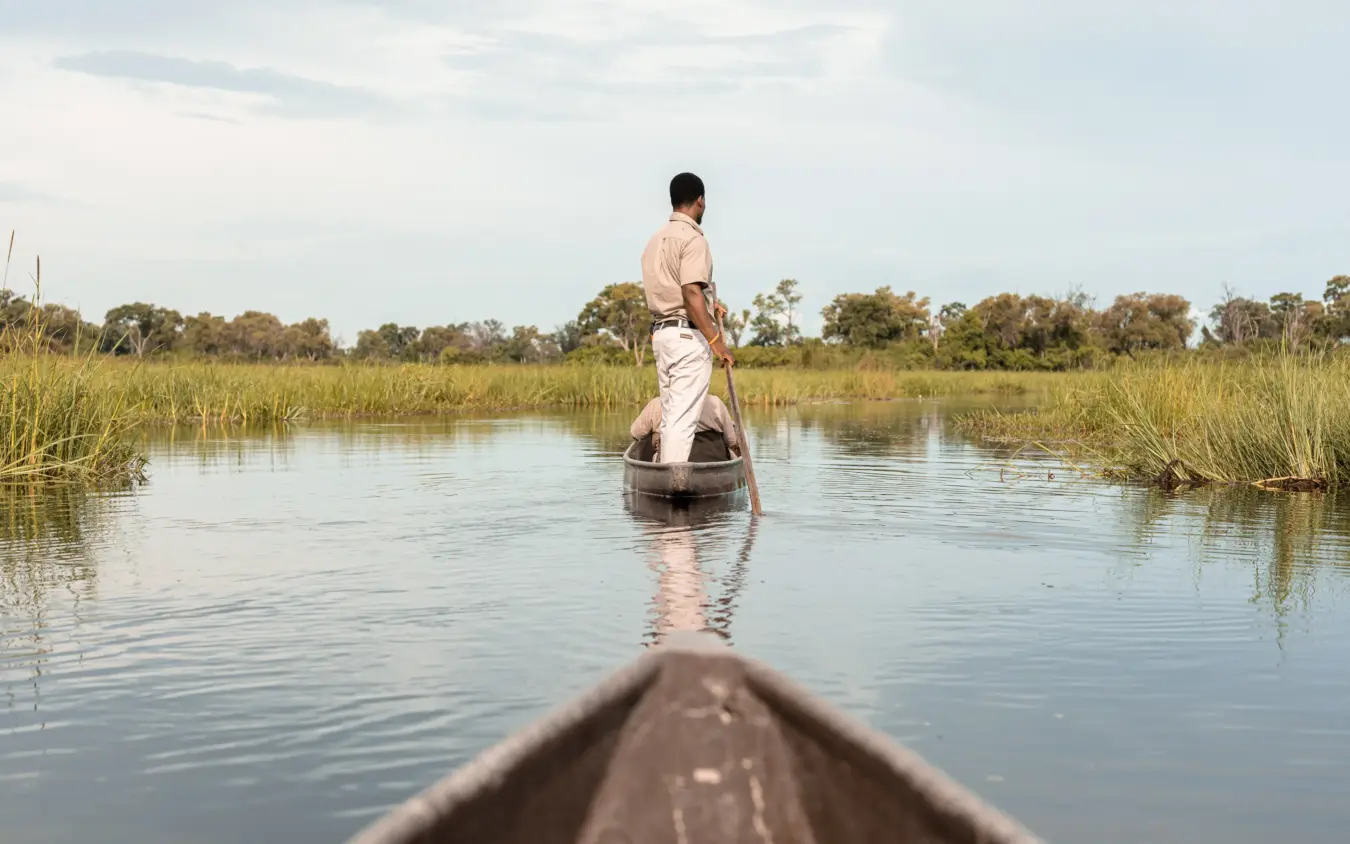
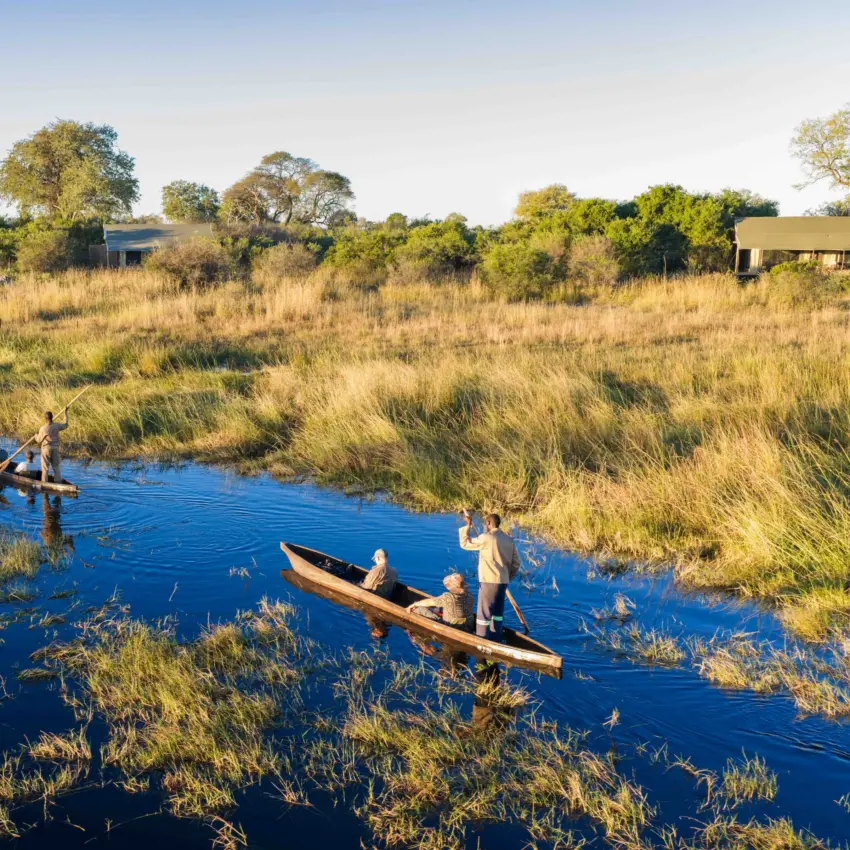
Linyanti's floodplains by mokoro

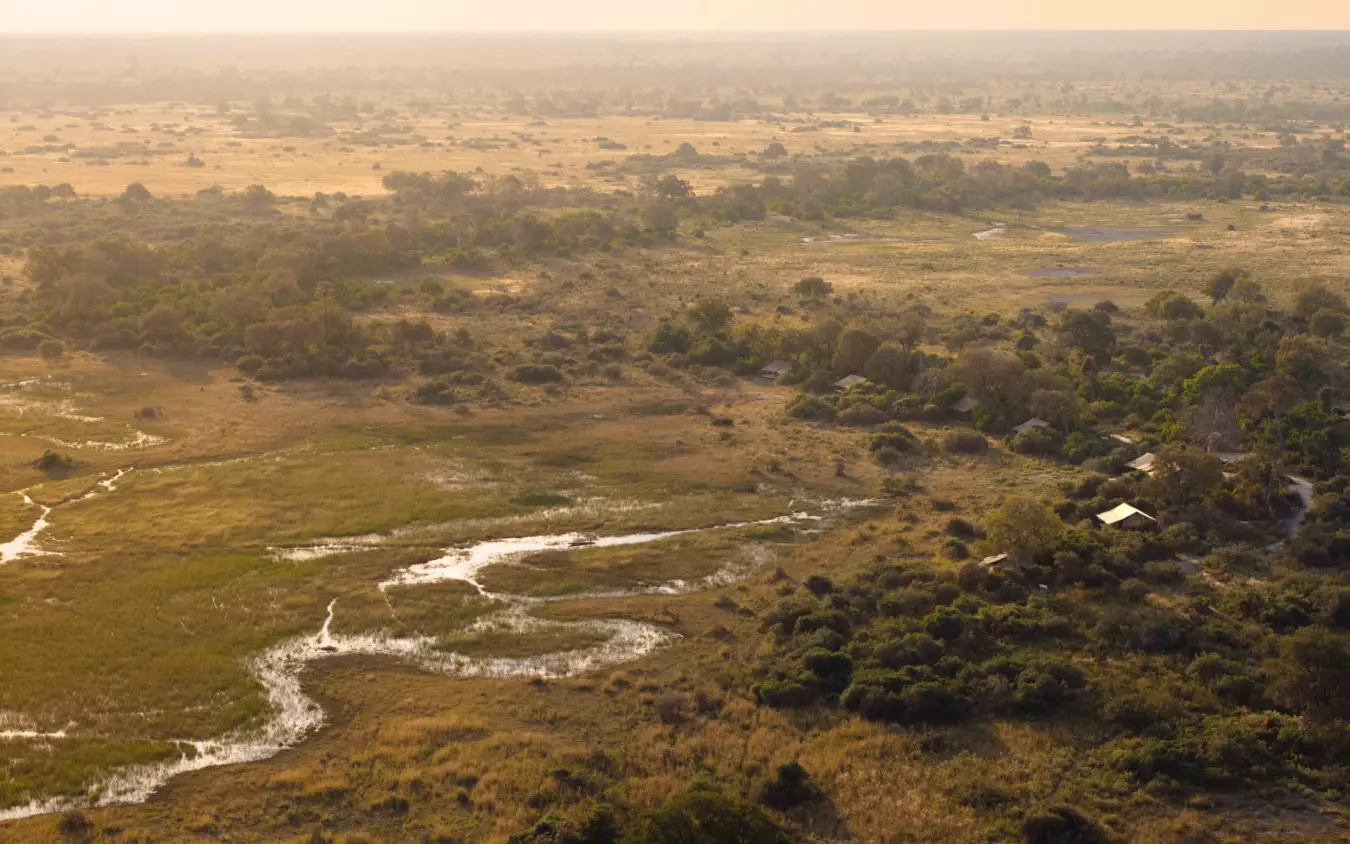
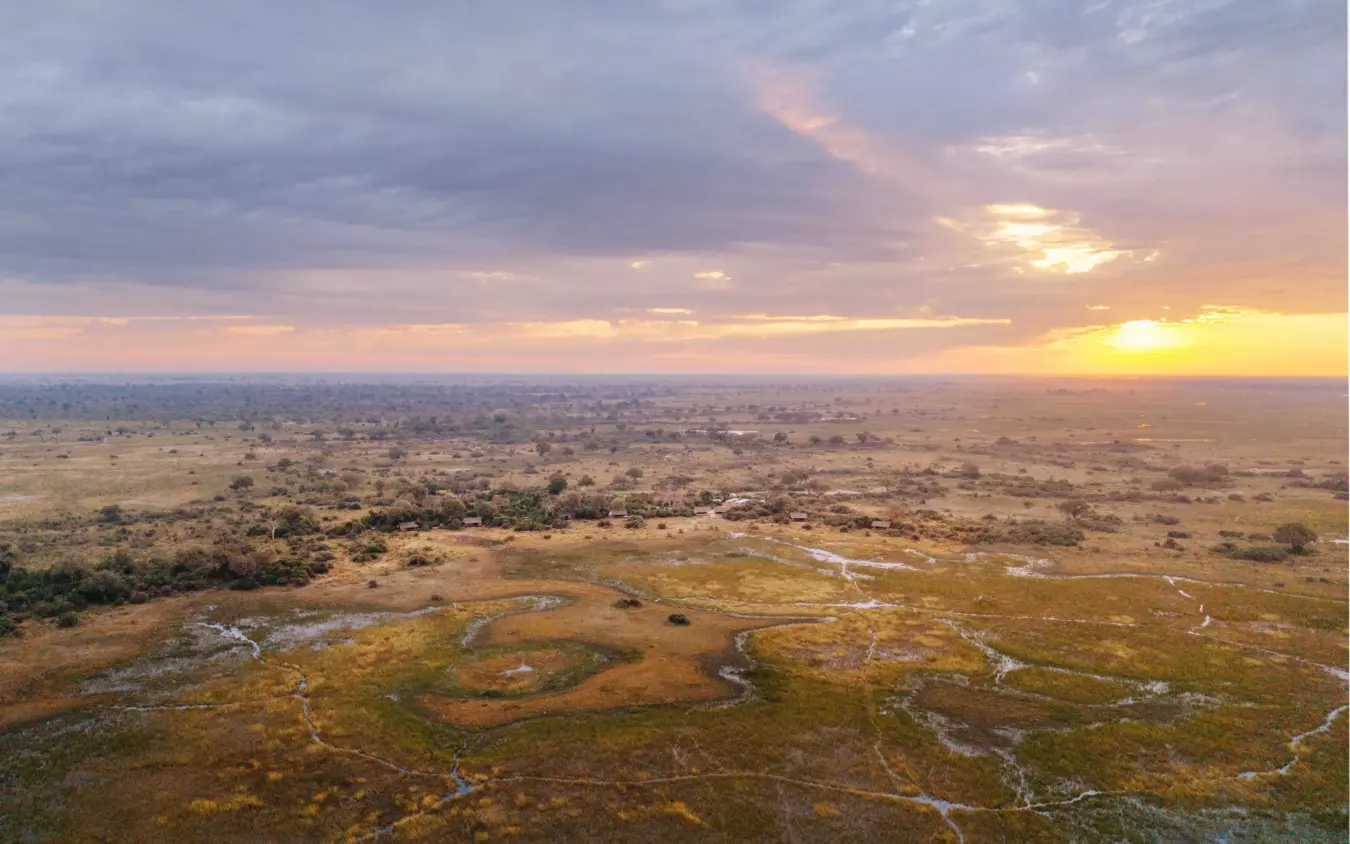
Nkasa Island lies inside Nkasa Rupara National Park in Namibia’s Zambezi Region, and no other camp shares it. Elephants wade the channels; buffalo herds spread across the grass. Nkasa Linyanti opened here in May 2026, six raised tents on a private concession, looking out over floodplains fed by the Kwando and the Linyanti rivers.

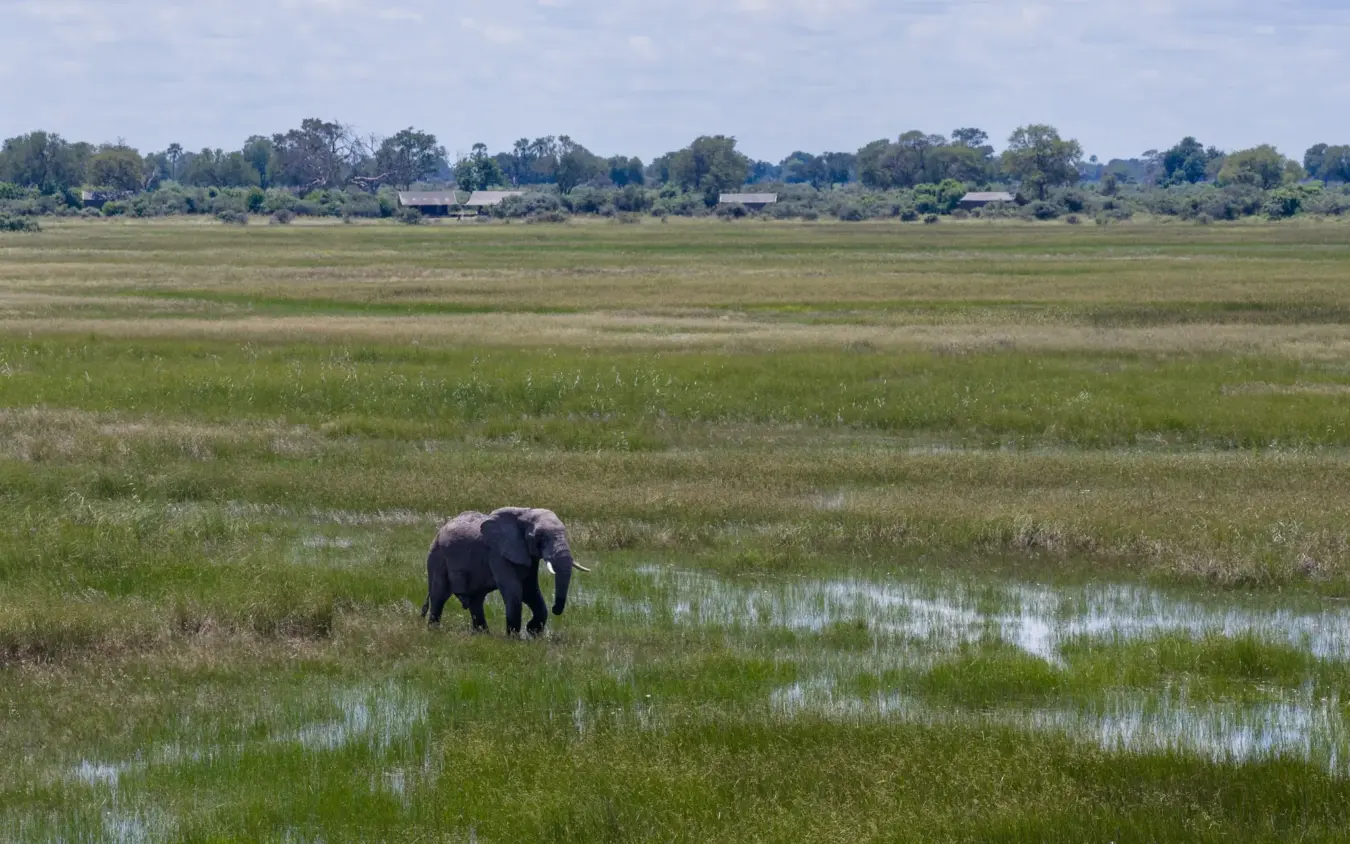
Elephants wade the channels; buffalo herds spread across the grass.

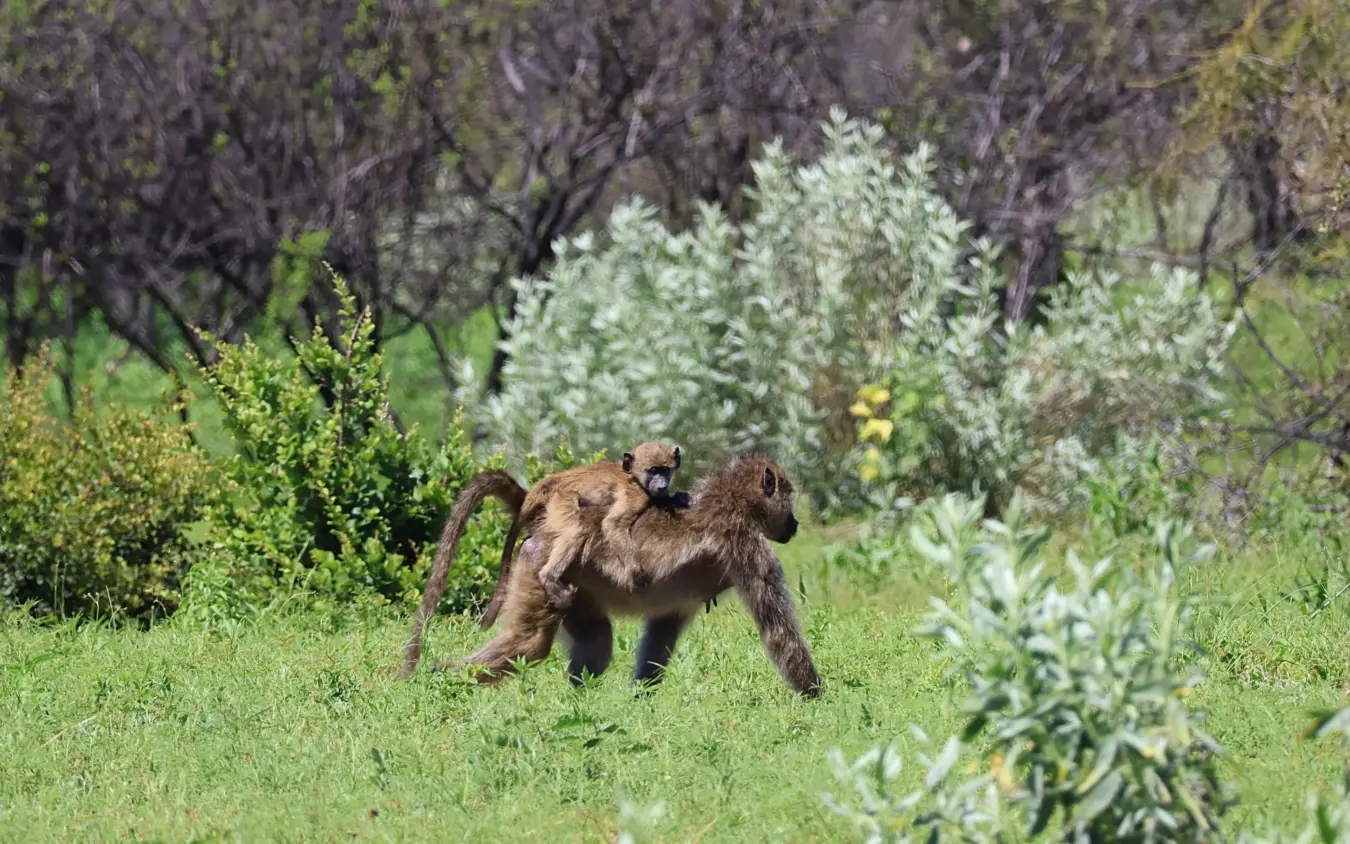
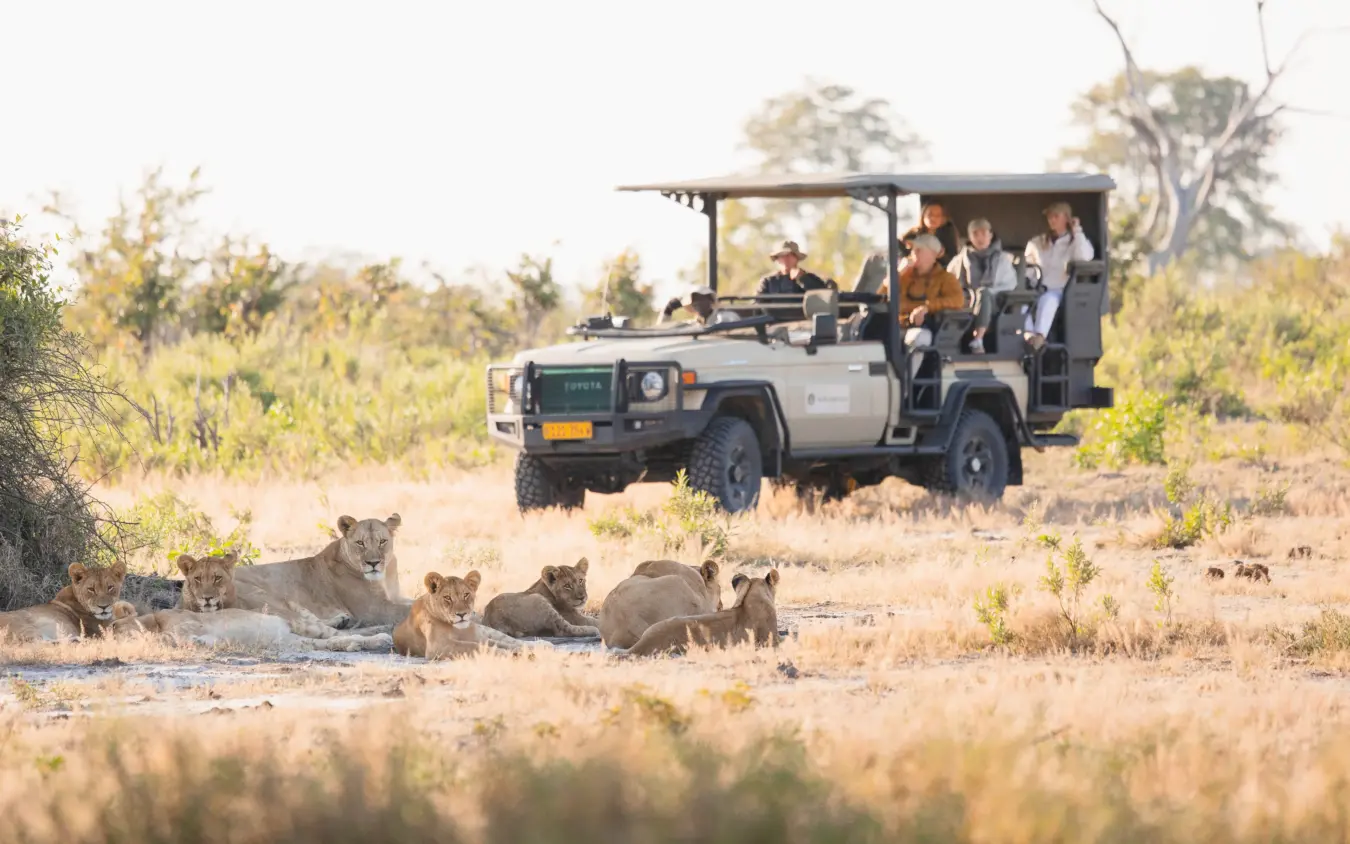
Brent and Chantelle Cook first came to the island in 2019 and found its wildlife under heavy poaching pressure. What they built is a conservation project that also takes guests, and by 2025 elephant bull numbers had recovered and breeding herds had settled back into the area. Lion, leopard and spotted hyena hold the ground between the two rivers, and their calls carry over the water after dark.

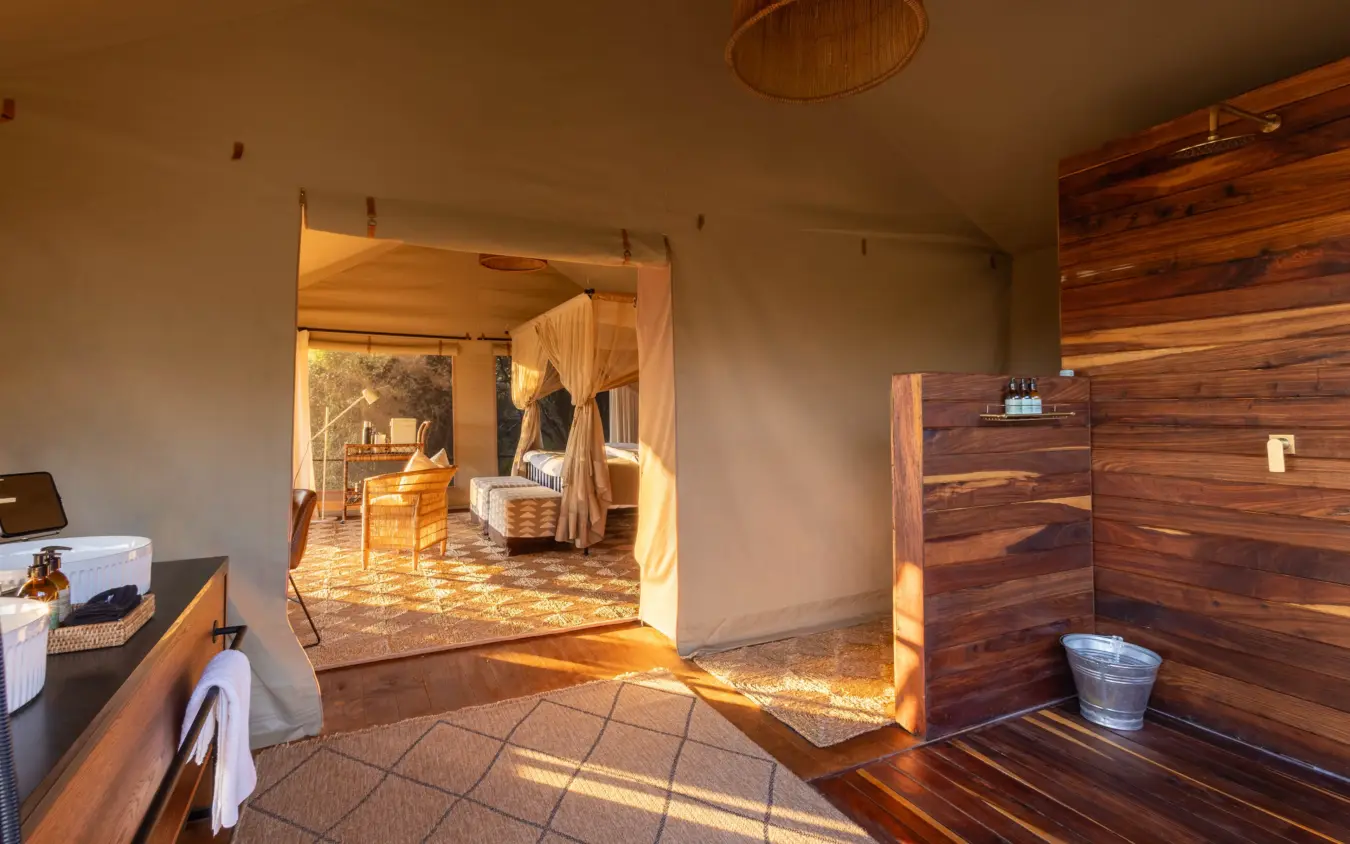
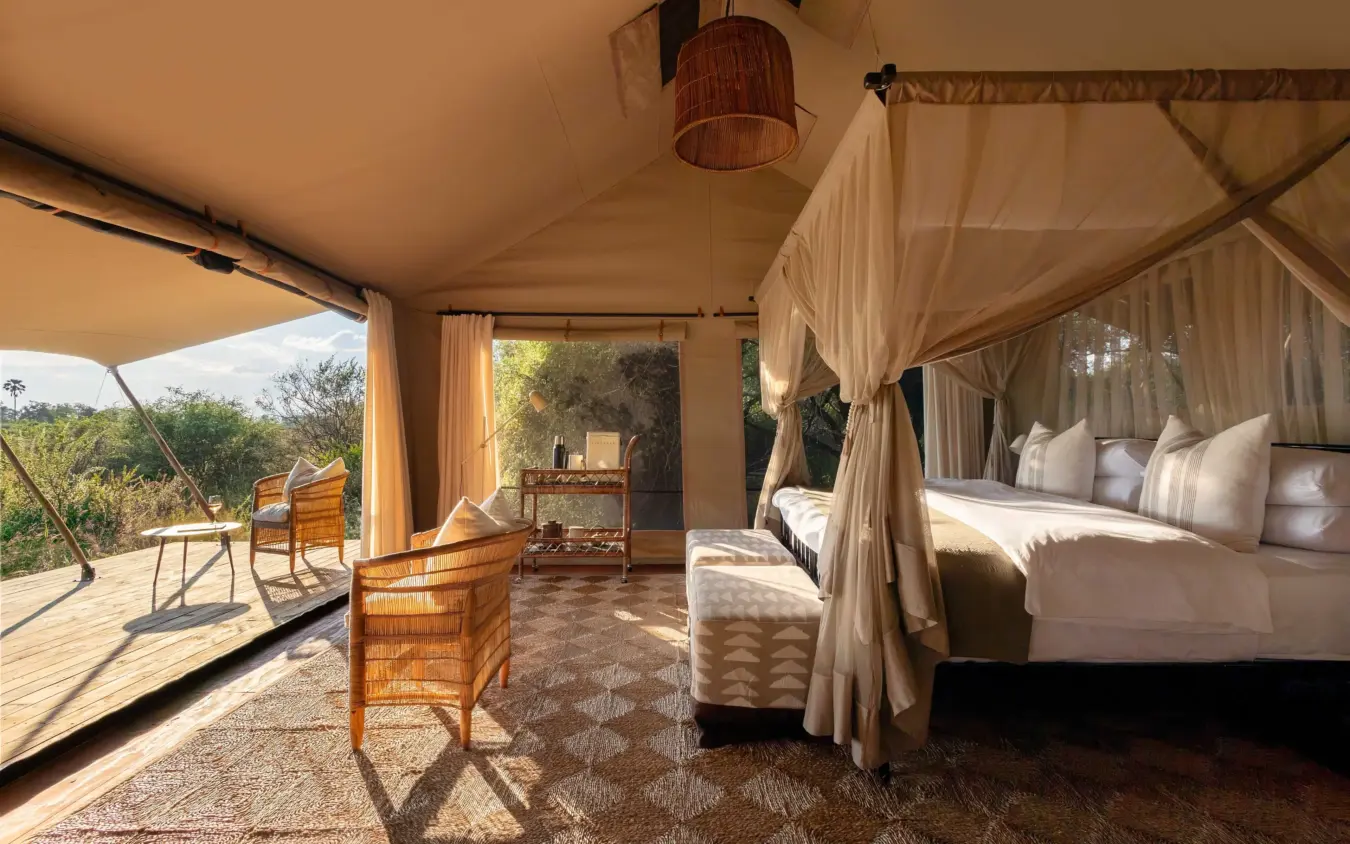
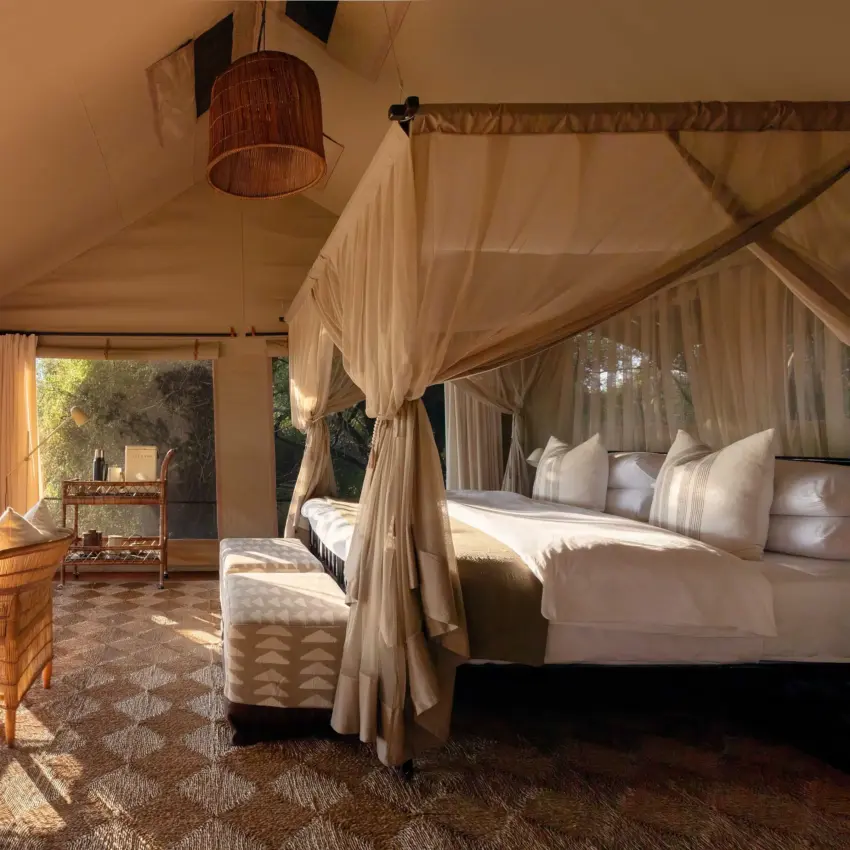
Luxury safari tent interior with four-poster bed and open-air deck overlooking landscape, Nkasa Linyanti, Zambezi Region, Namibia
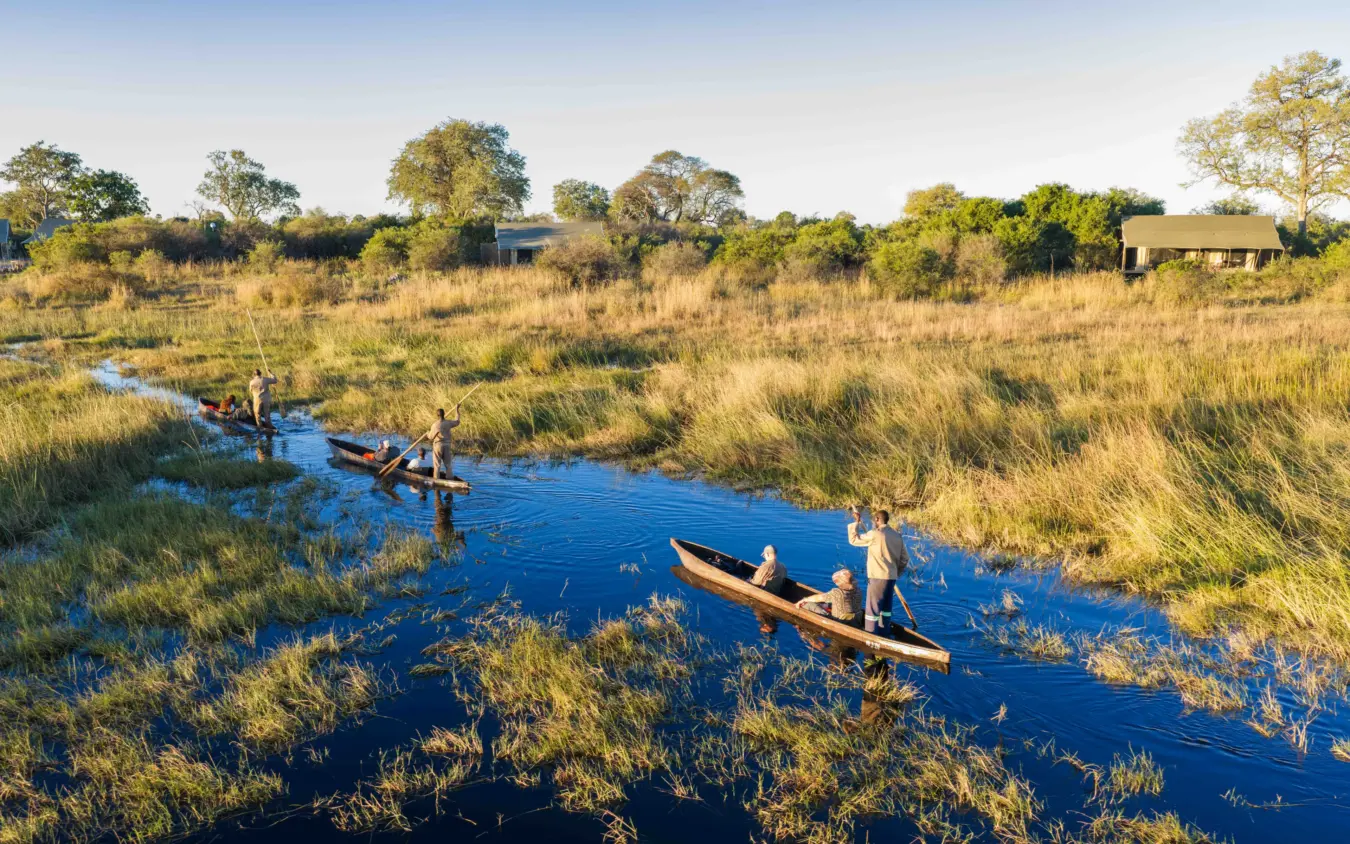
Traditional dugout canoes with guides on waterway through golden grassland, Nkasa Linyanti, Zambezi Region, Namibia

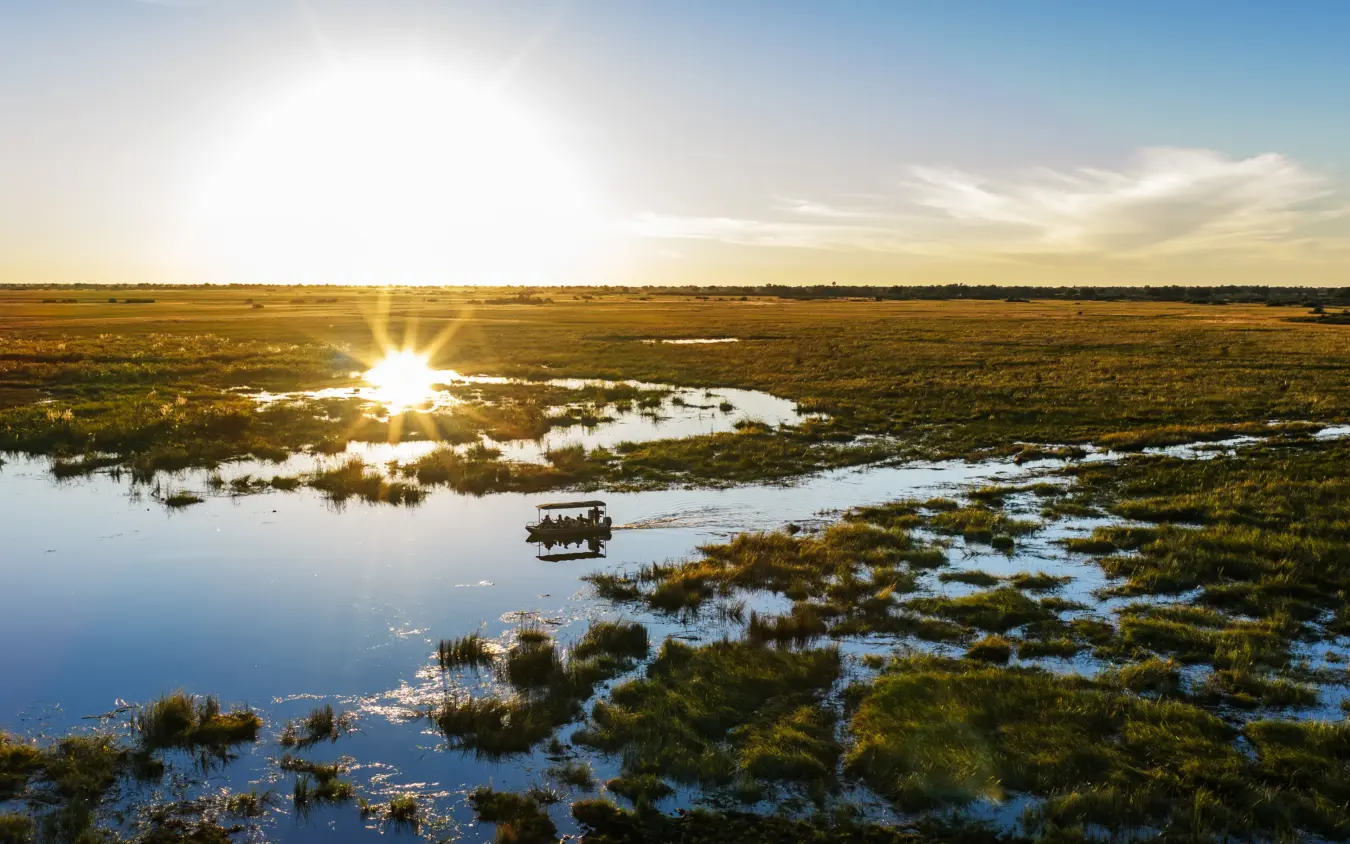
Rain falling in Angola pushes water down the Kwando and the Linyanti through the middle of the year. The mokoro trails follow the papyrus channels while the water is high. As it falls back, vehicles reach islands submerged months earlier, and the game gathers on what remains dry. Mokoro, walking and driving safaris run from opening; motorboat trips join from September 2026.

The mokoro trails follow the papyrus channels while the water is high.

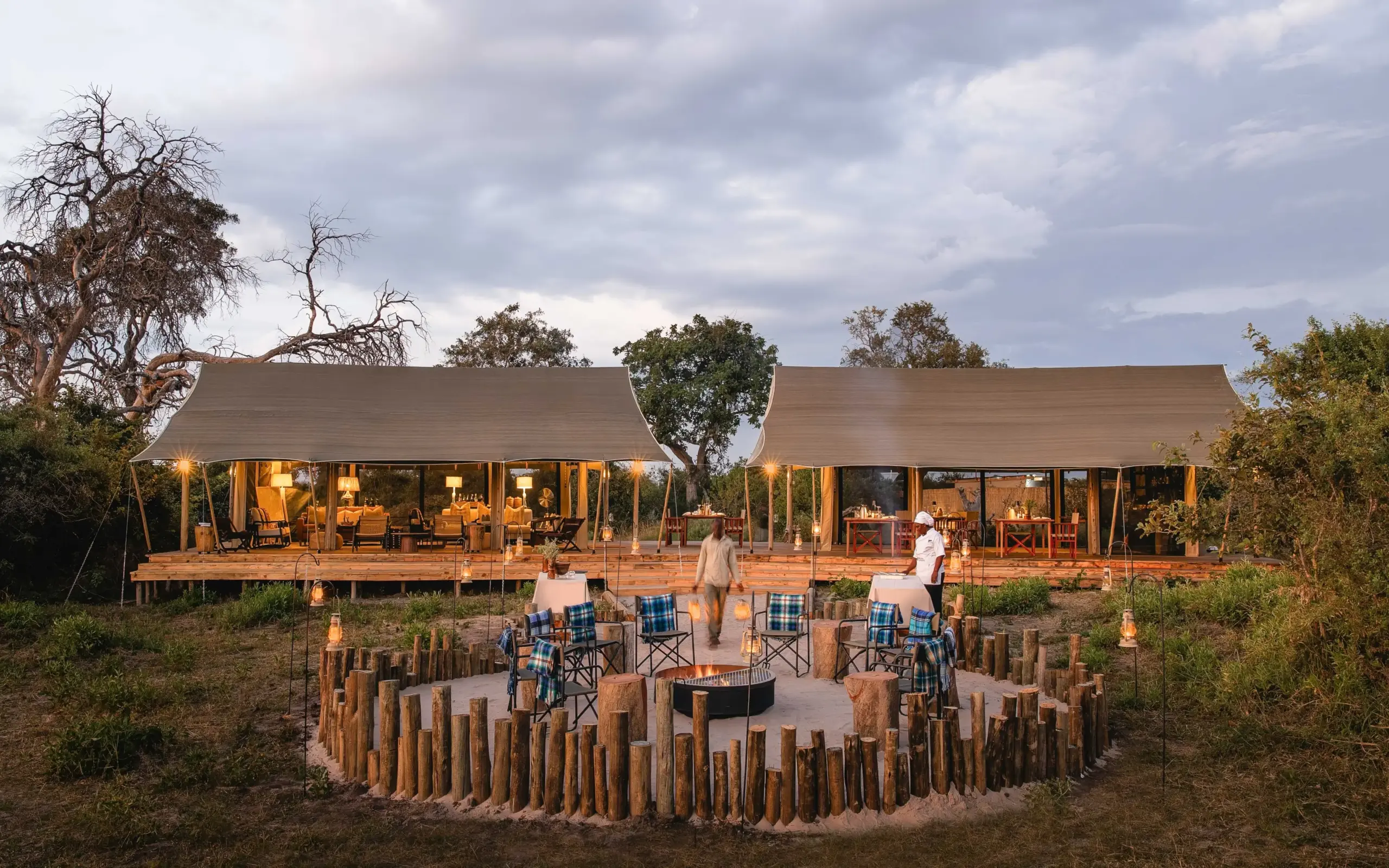
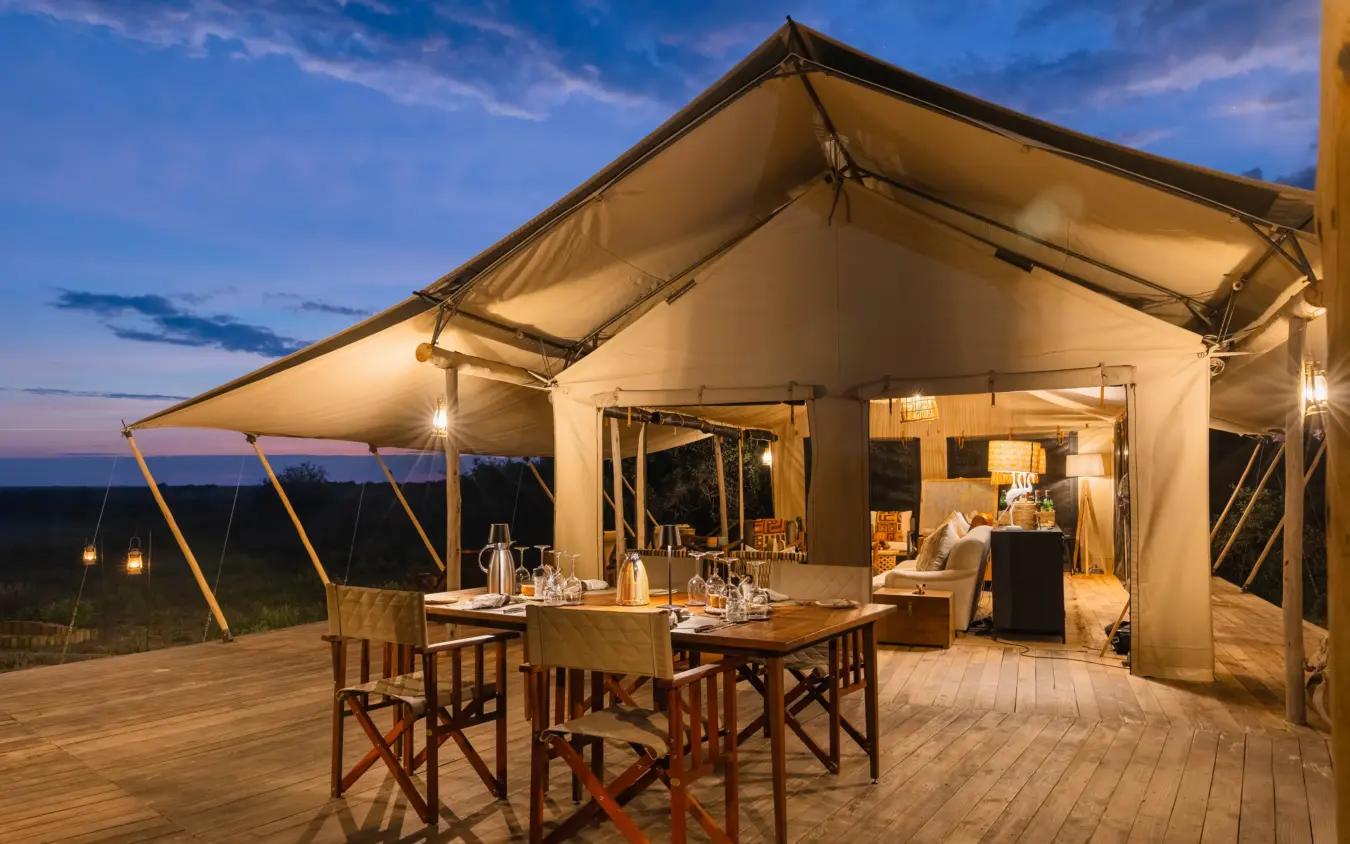
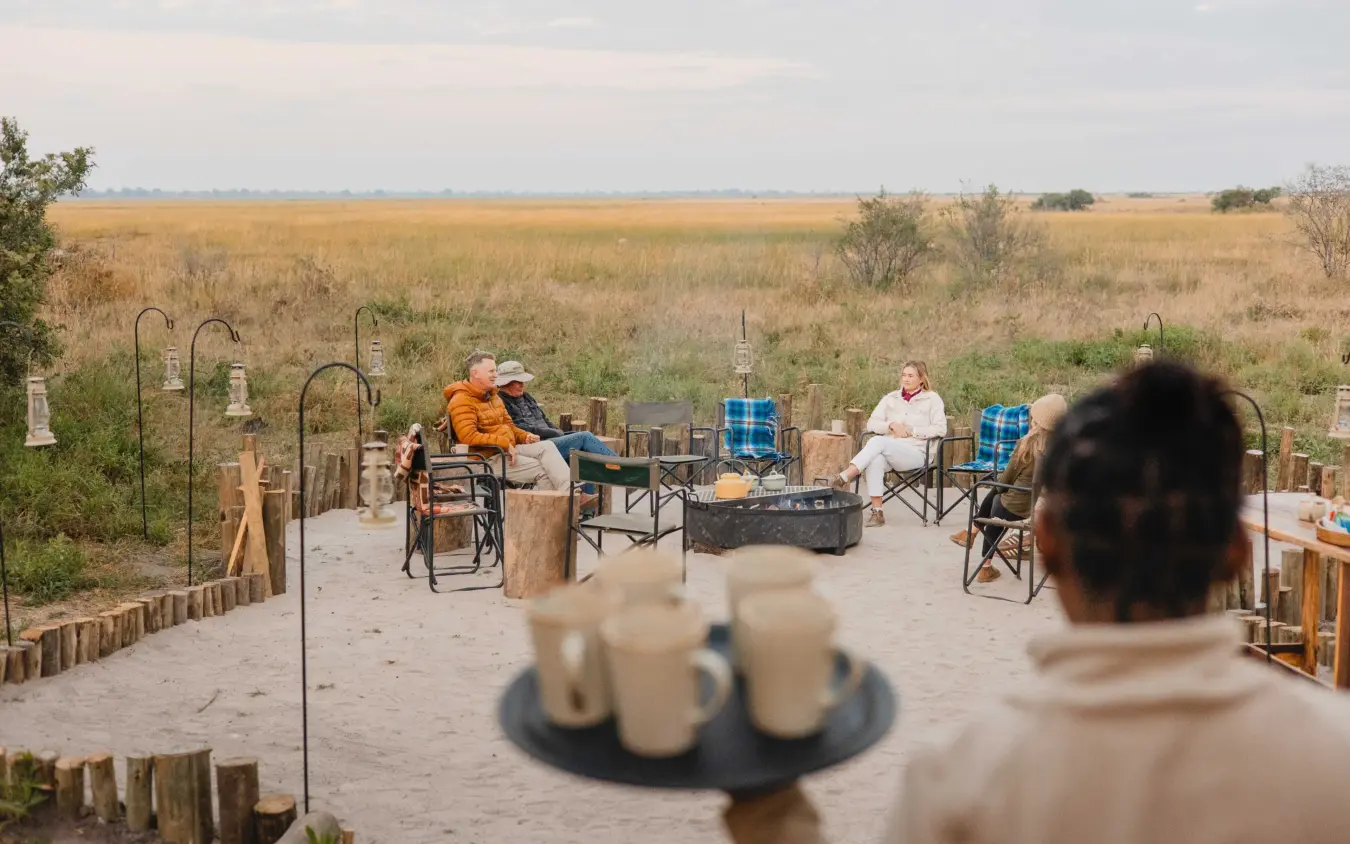
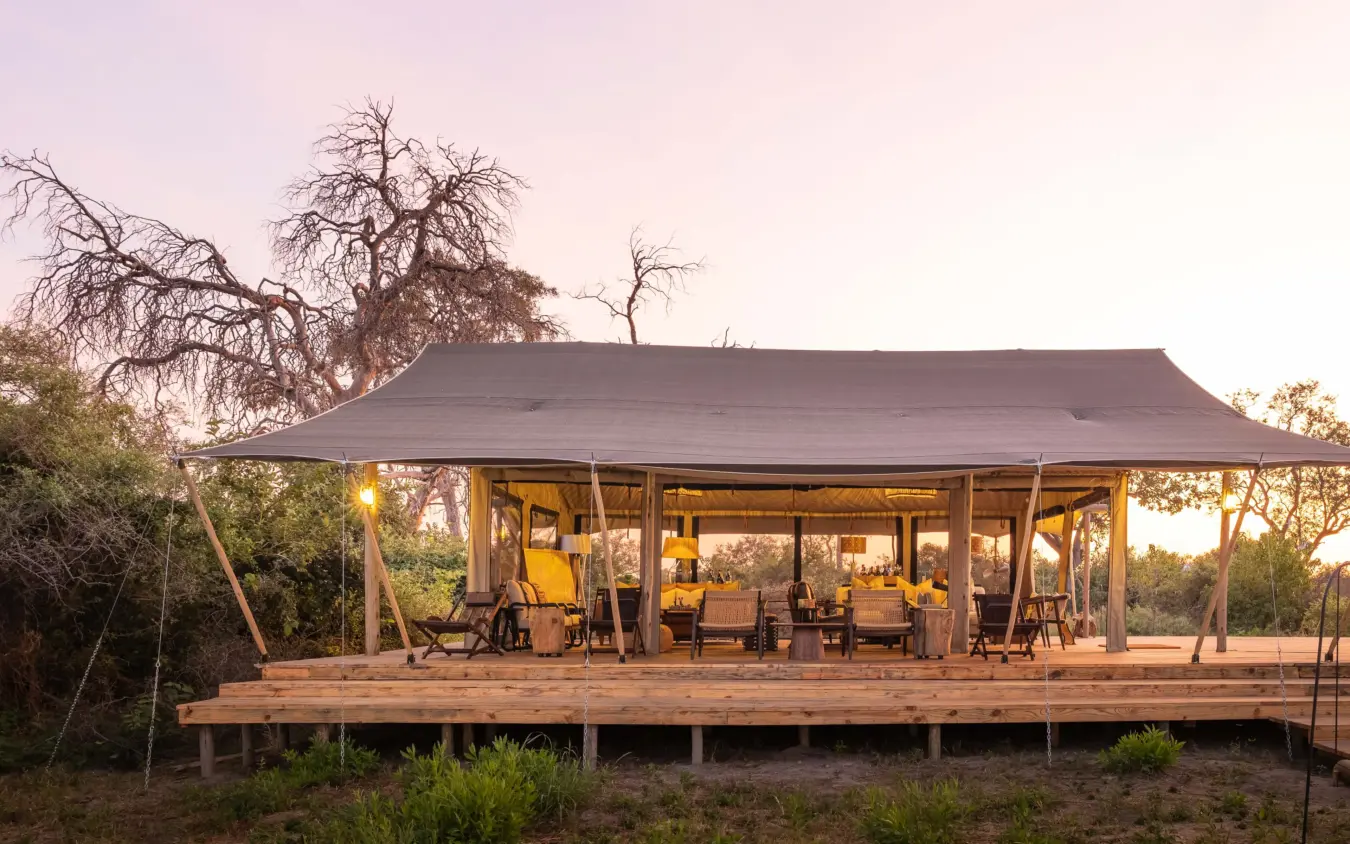
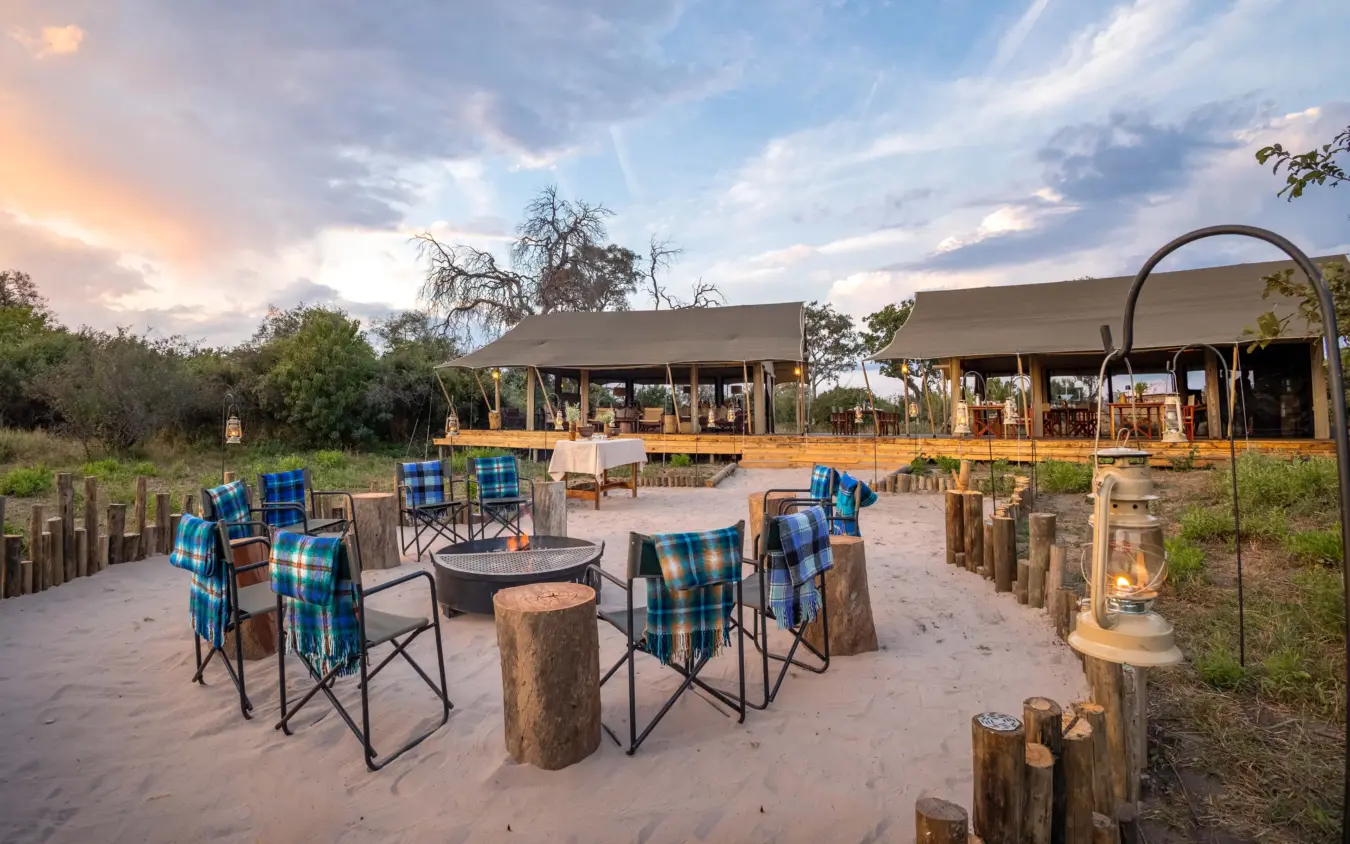
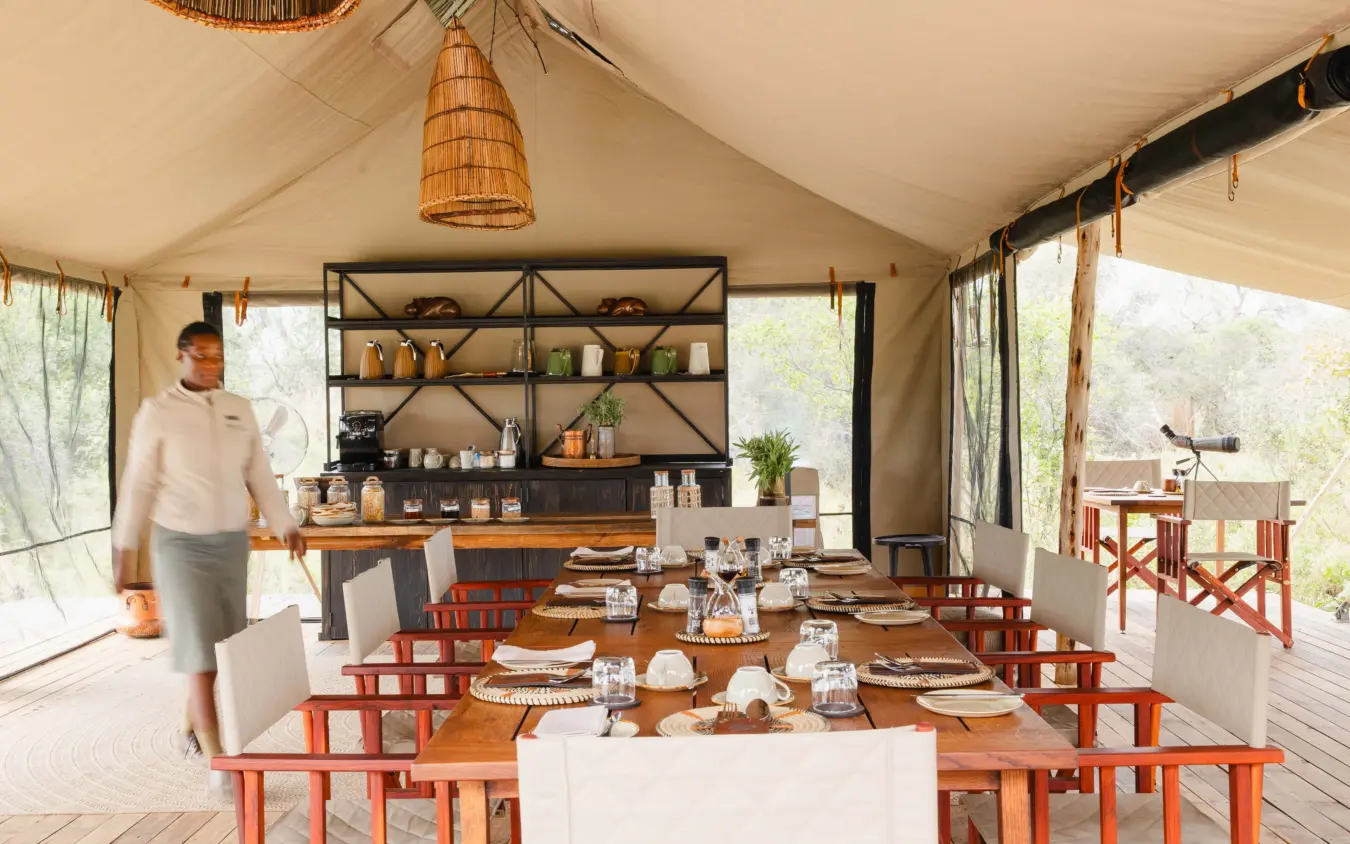
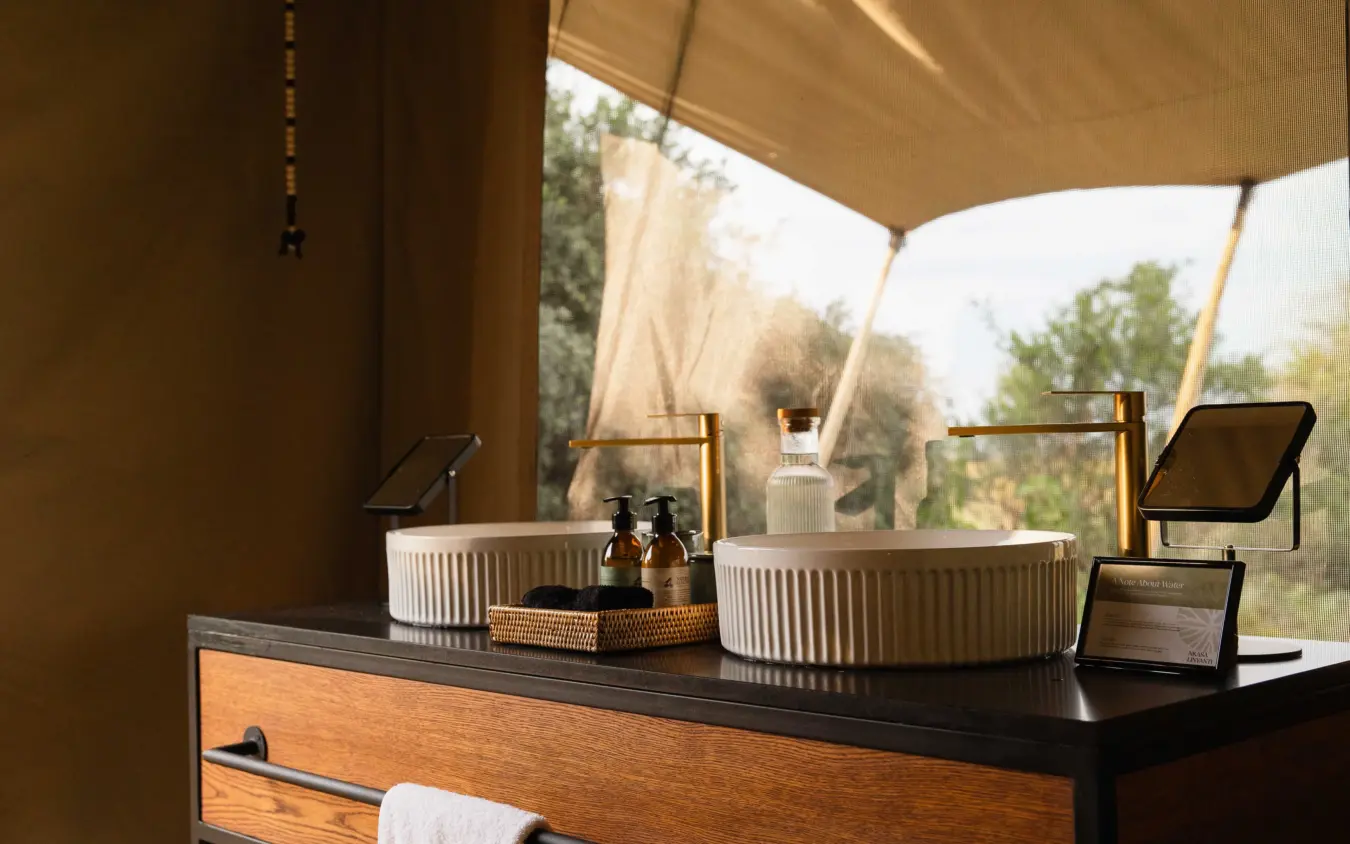
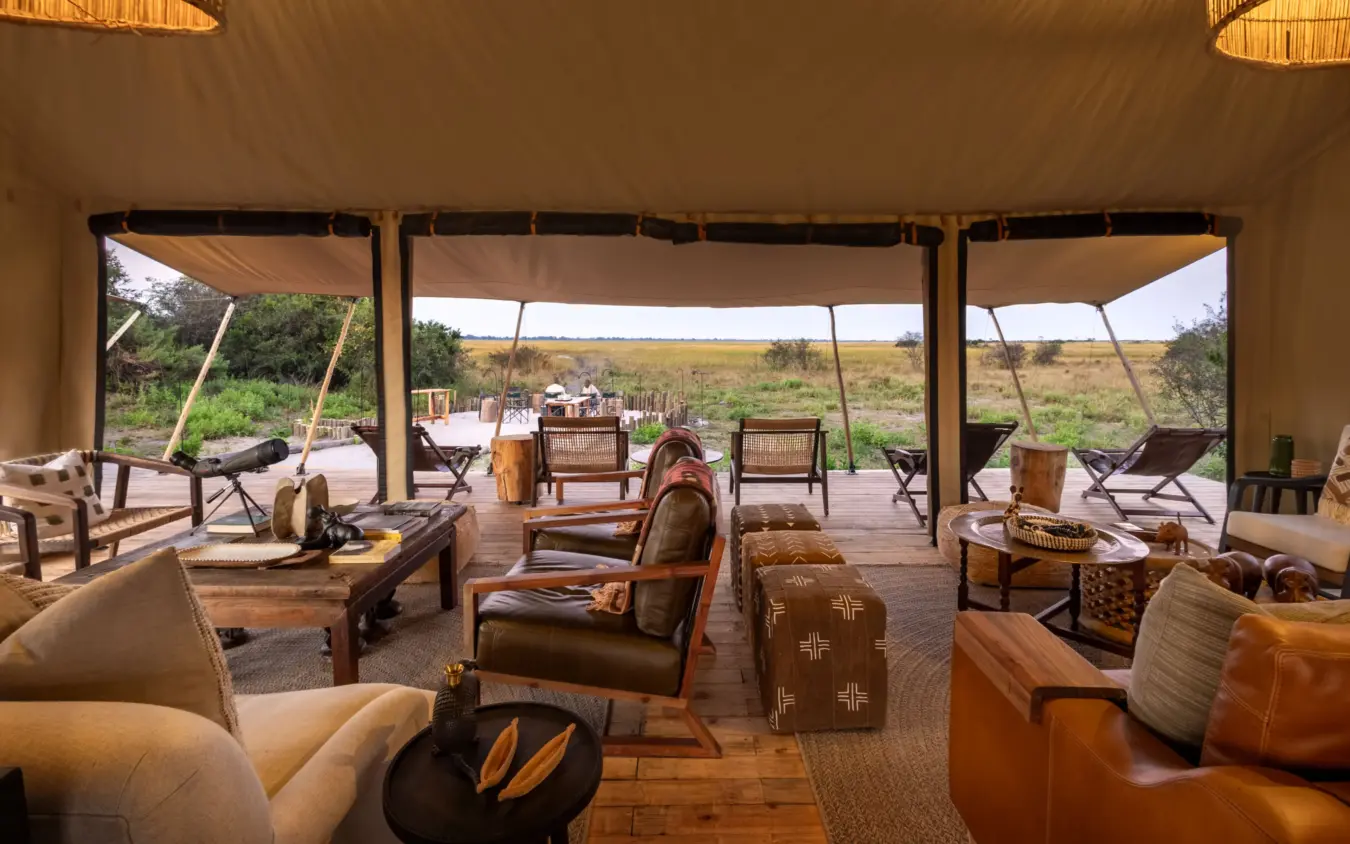
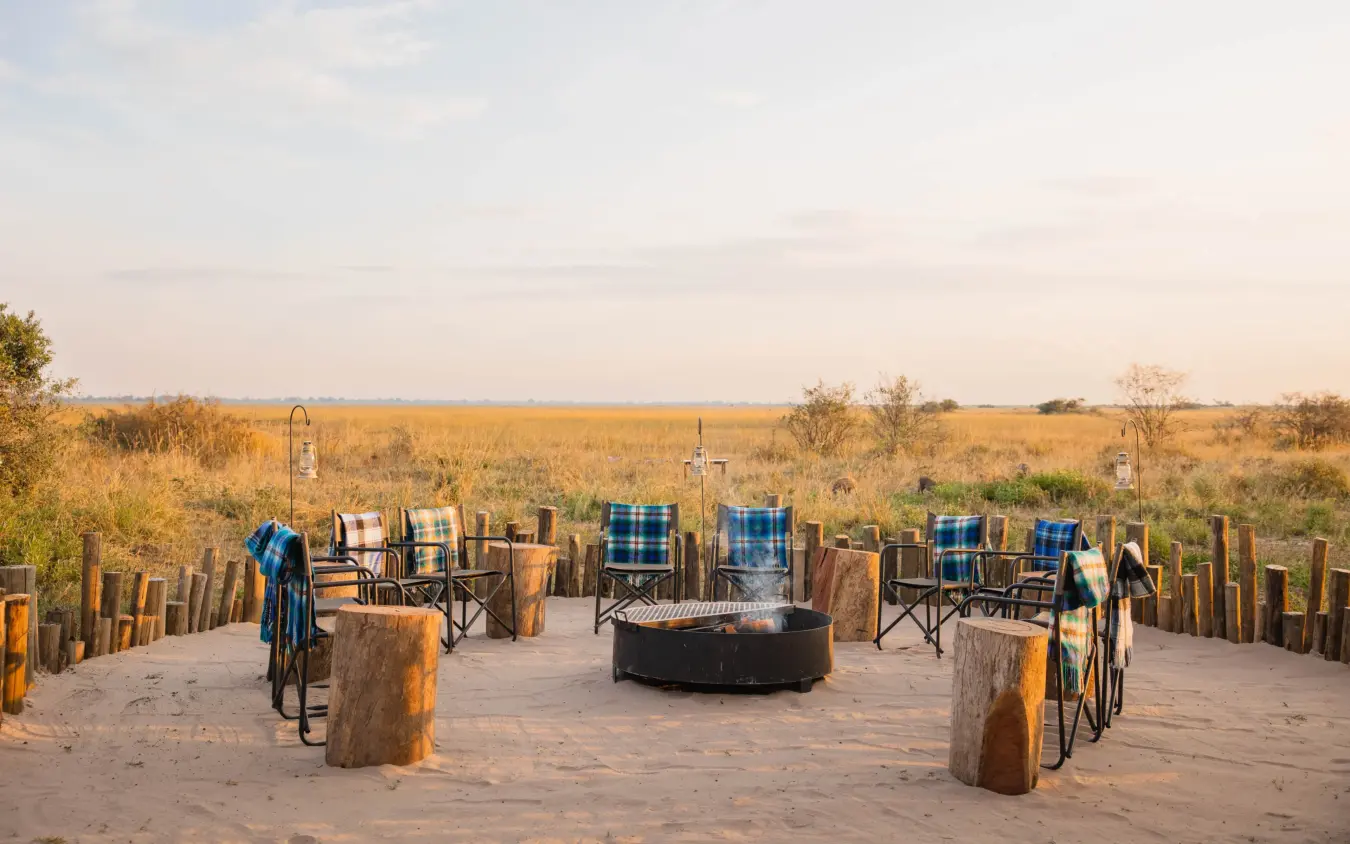
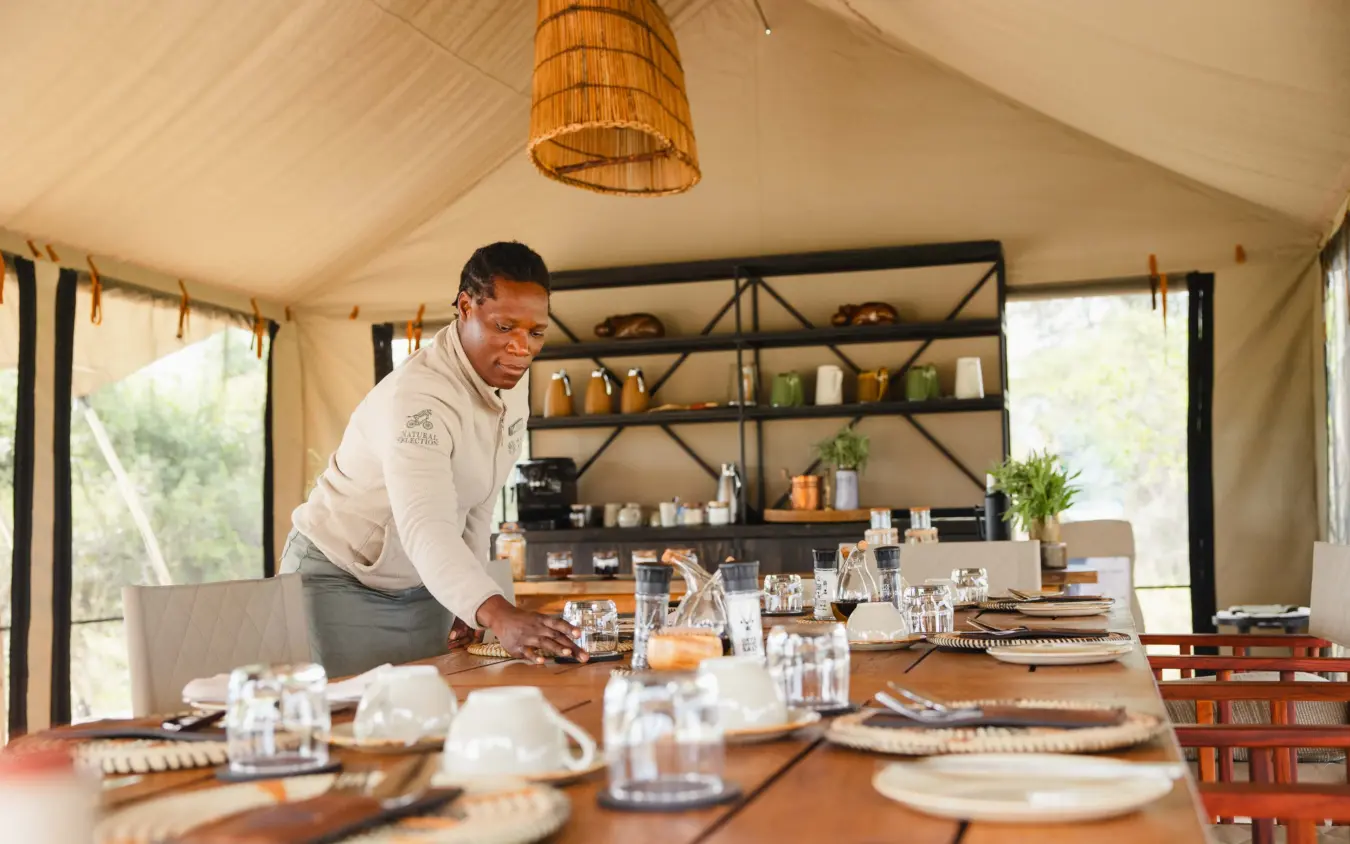
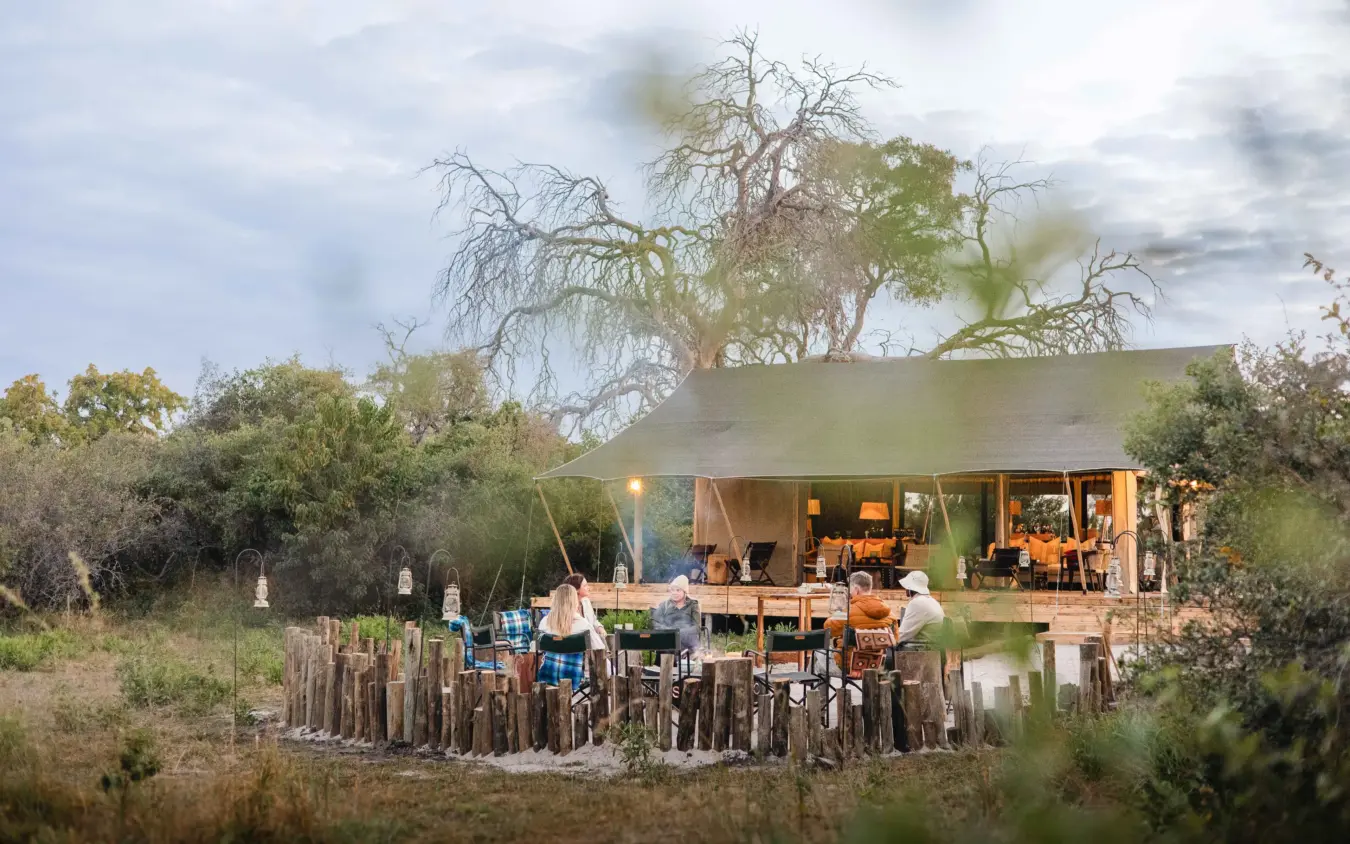
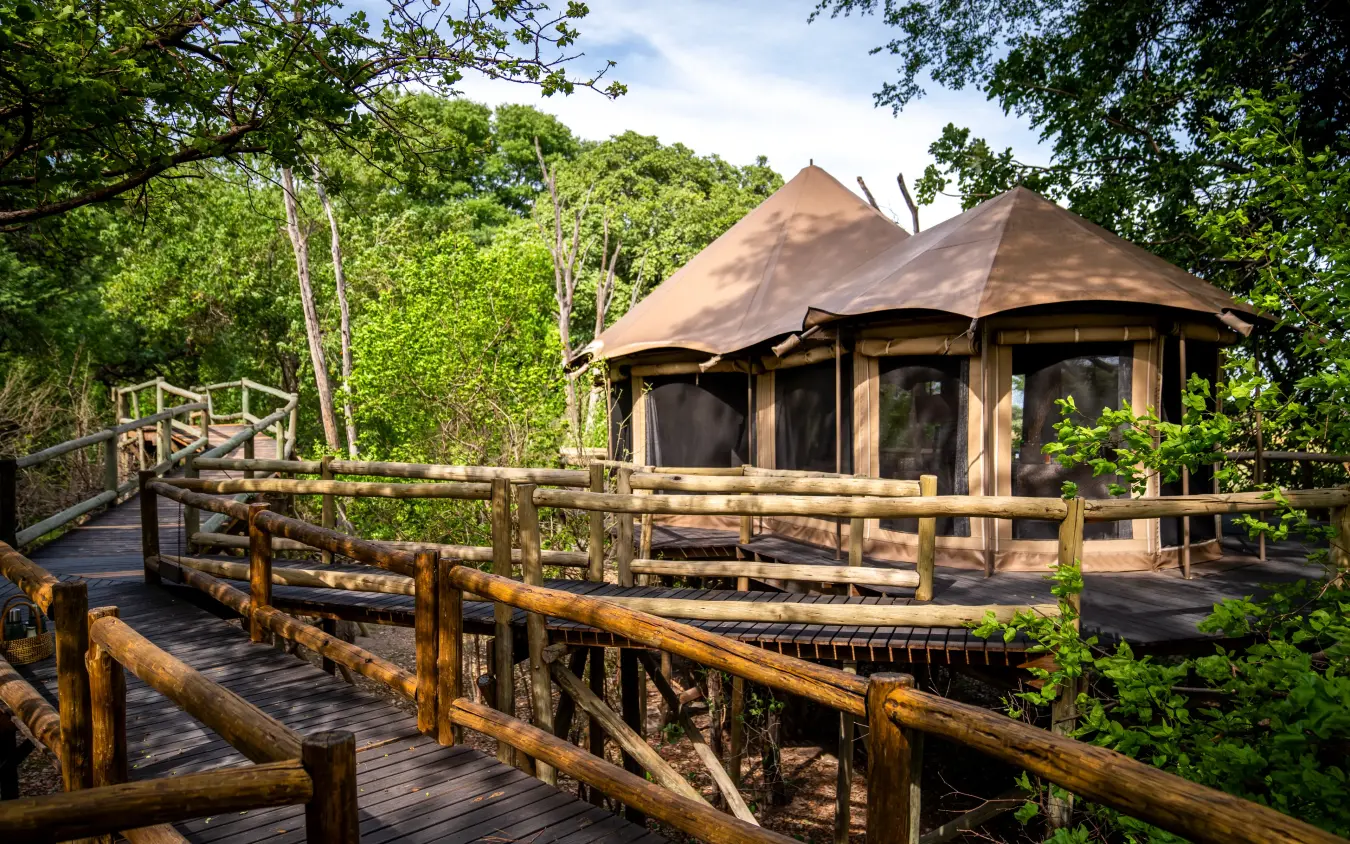
The six tents stand on wooden stilts under leadwood and sausage trees, canvas rolled up so the floodplain runs into the room. Woven baskets and cane chairs furnish them. A lounge, bar and dining terrace shelter beneath sweeps of canvas, with a pool over the grass and a firepit for after dark. Meals move outdoors under the trees or the stars. Solar power runs the camp, water treated on site.

Luxury safari tent bedroom with sheer drapes and forest views through large windows, Nkasa Linyanti, Zambezi Region, Namibia 01

accommodation

Six Tents on Wooden Stilts

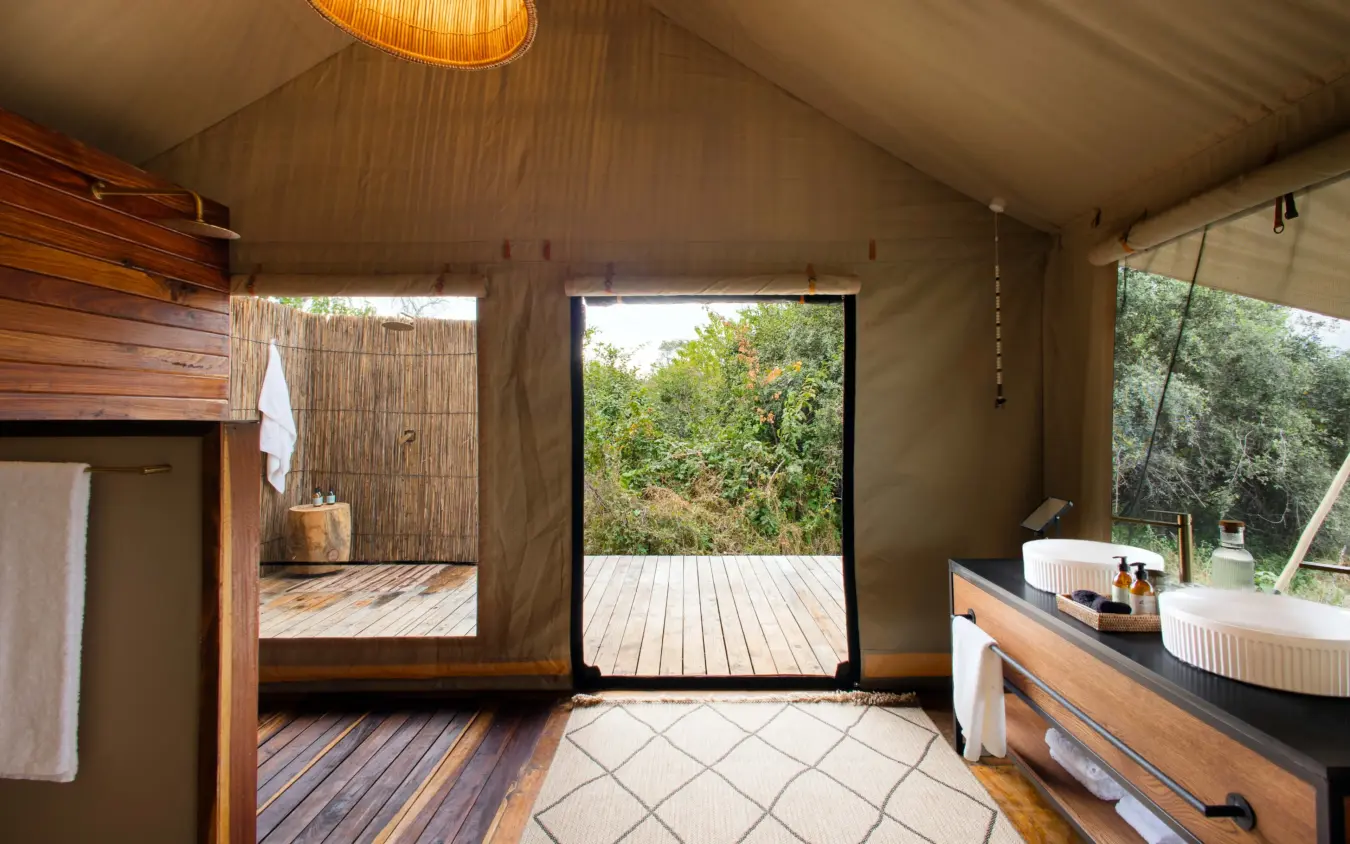
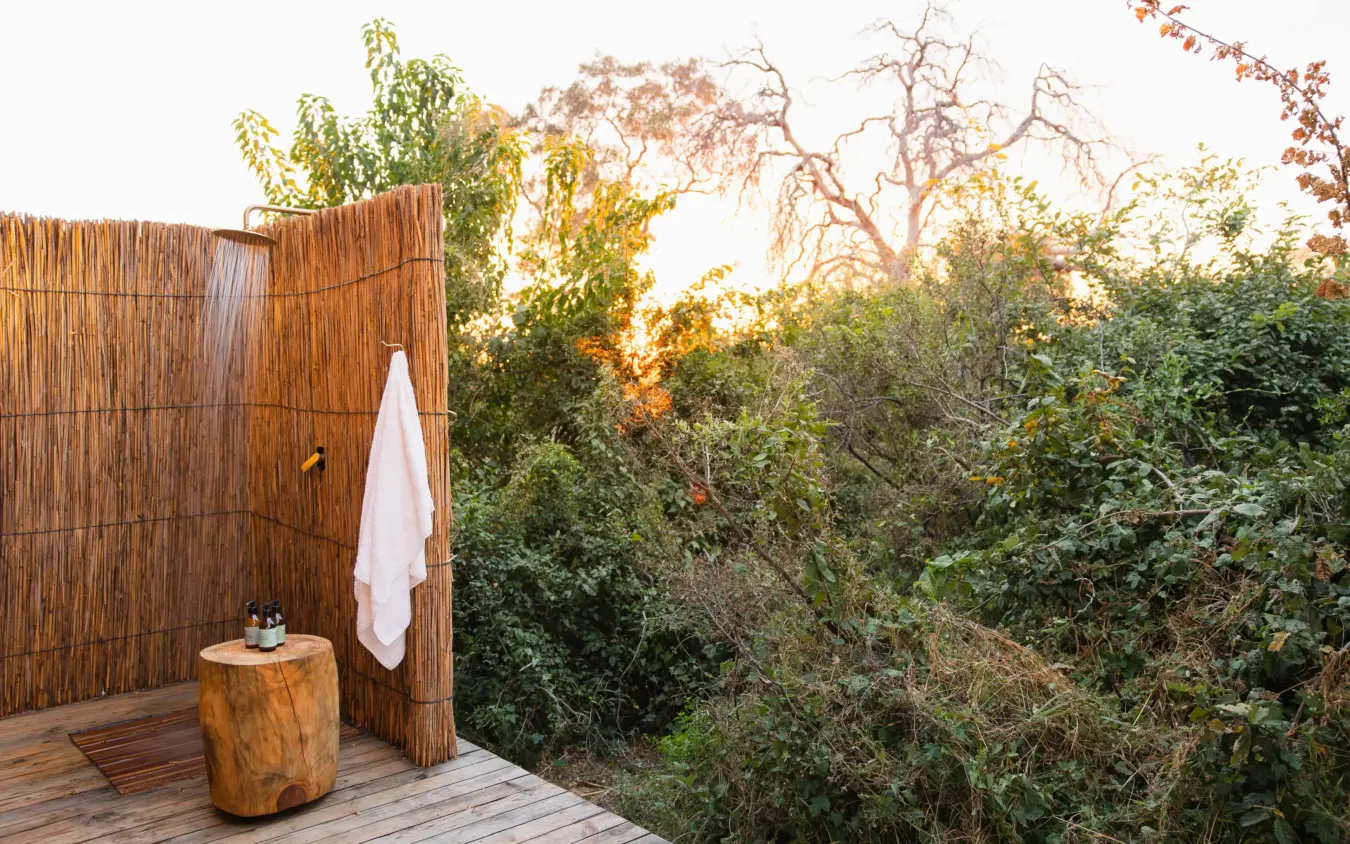
Six tents at Nkasa Linyanti are raised on wooden stilts among leadwood and sausage trees, canvas walls opening wide to the floodplain beyond. Beds are draped in mosquito netting and each tent has its own timber deck. The bathrooms have a shower inside and a second one out in the open air under the trees.

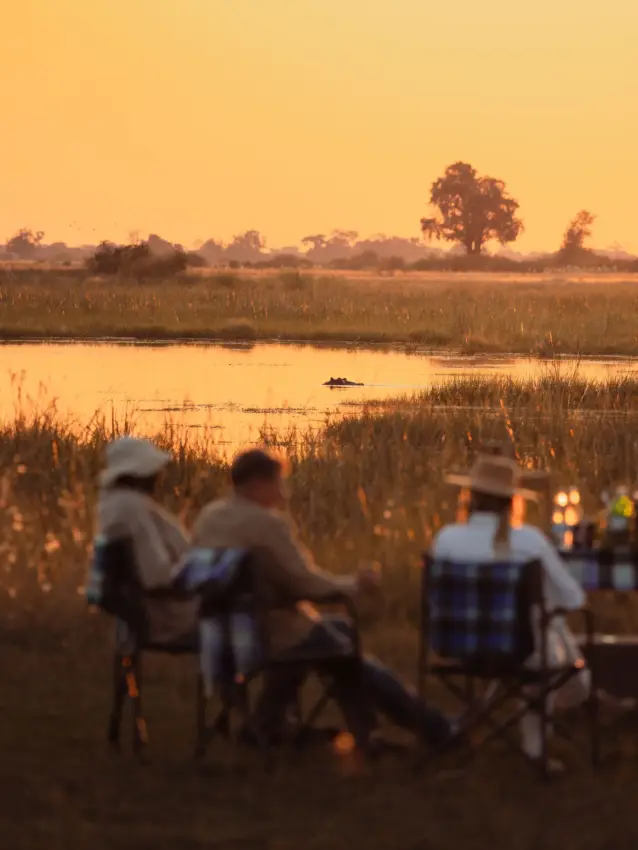
Motorboat with guests on water safari through wetland at sunset, Nkasa Linyanti, Zambezi Region, Namibia 02

activities

Game Drives and Mokoro Trails

Game drives run day and night across the private concession and out into the wider national park. Mokoro excursions push into the reed channels while the flood is high, and motorboat trips join from September 2026. Walking safaris go out with armed guides, sixteen and over. Birding and visits to nearby communities fill the rest.

Male lion with full mane resting in grassland savanna, Nkasa Linyanti, Zambezi Region, Namibia 03

conservation

BioBoundary Project and Anti-Poaching Teams

The BioBoundary Project tests plant-based airborne repellents that keep elephants off crops and away from village infrastructure. Wild Shots Outreach puts cameras in the hands of young adults from disadvantaged areas. Anti-poaching and monitoring teams work alongside the neighbouring communal conservancies whose land shares this wildlife corridor.

ready to get started?

Get in touch and let’s start the conversation. An initial consultation helps us understand what you’re looking for, whether that’s specific experiences, luxury touches, or marking a special occasion, and from there we’ll guide you through what’s possible so you can decide if we’re the right fit.
alternative accommodation in zambezi region

frequently asked questions

There is no airstrip inside Nkasa Rupara, so the route is a flight to Katima Mulilo and then a drive of roughly 130 kilometres south west, on gravel that needs a proper four wheel drive. The camp arranges the road transfer, and we would always have you met rather than driving yourself in on the last leg.

Most people reach this corner of Namibia as part of a longer run east, from the Okavango or Victoria Falls, rather than out and back from Windhoek. It is a long way from the rest of the country, which is exactly why so few people are here.

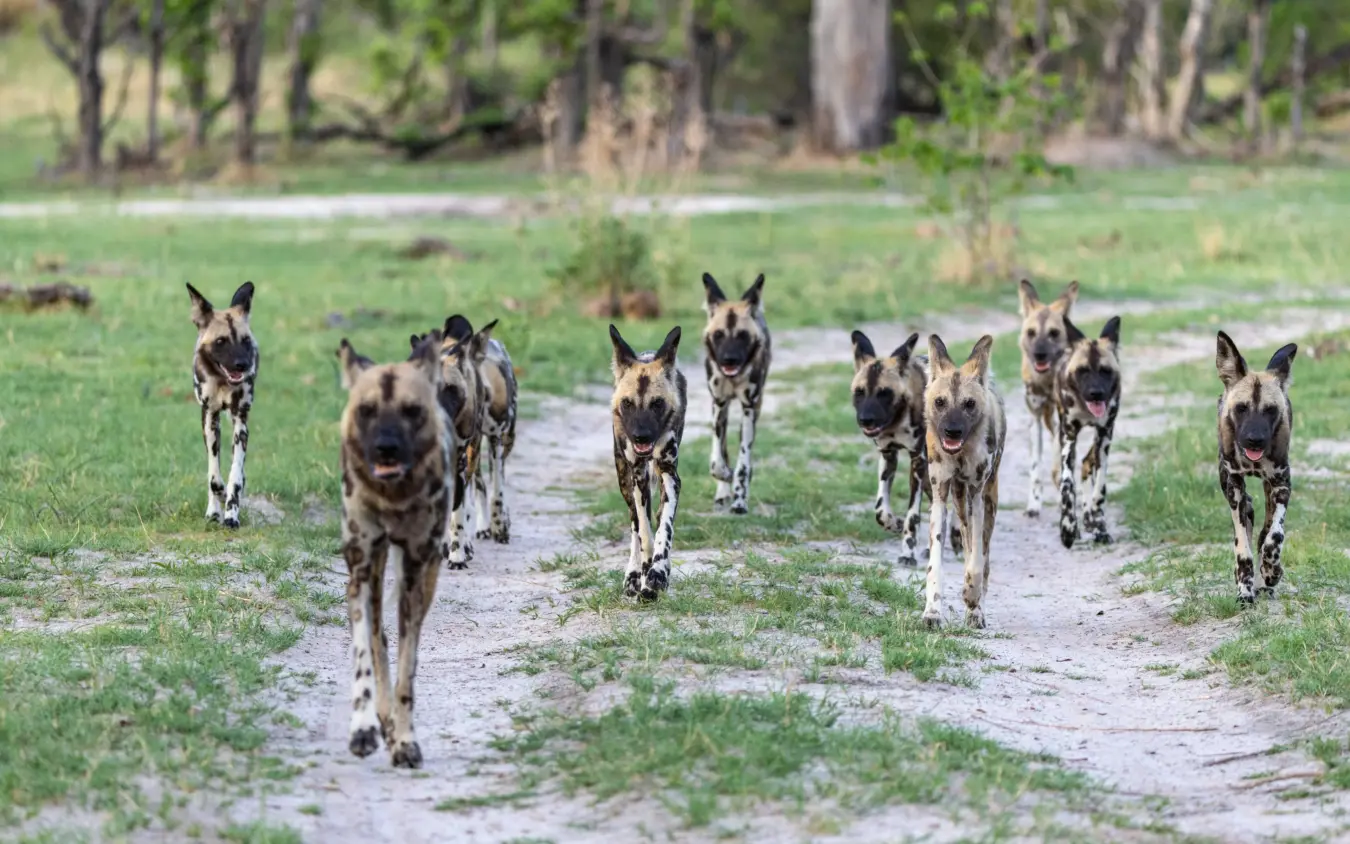
Water, and everything that follows water. Nkasa Rupara is Namibia's largest protected wetland, and it holds what is reported to be the country's largest buffalo population, around a thousand animals, along with elephant, hippo, crocodile, lion, leopard and wild dog. Red lechwe and sitatunga, both antelope you will not see in the desert half of Namibia, are here because the floodplain suits them.

It is also one of the best bird places in the country, with around 430 species recorded. If the rest of your trip is Sossusvlei and Damaraland, this is the counterweight: green, wet and noisy, in a country most people picture as sand.

The local rains fall from about November to April, but the flood that shapes this place comes later and from somewhere else: rain in the Angolan highlands feeds the Kwando, and the water usually reaches the park between June and August.

At full flood a large part of Nkasa Rupara sits under water and much of it cannot be reached by vehicle, which is how the islands the camp stands on get their name.

That is not a reason to avoid those months, but it is a reason to ask what a stay will actually look like. Tell us your dates and we will tell you honestly what will be drivable, what will be by boat, and whether another month would serve you better.

Yes, and this is the highest rated part of Namibia. The UK's official travel health service rates the Zambezi region, along with Kavango East and West, as HIGH risk all year round, not seasonally, and recommends antimalarial tablets for it.

That is a different rating from Etosha or the desert, where risk is seasonal or very low. The American CDC also records transmission across northern Namibia. This is wetland, and the water is the reason.

We do not make medical recommendations, and we would not want to. We arrange travel; we are not doctors. Which tablets suit you, how they sit with anything else you take, and what is right for a child are questions for your own doctor or a travel clinic.

On the practical part, dusk is the hour that matters, so long sleeves, long trousers and repellent are worth the packing space.

rated five stars by our clients

other areas in namibia

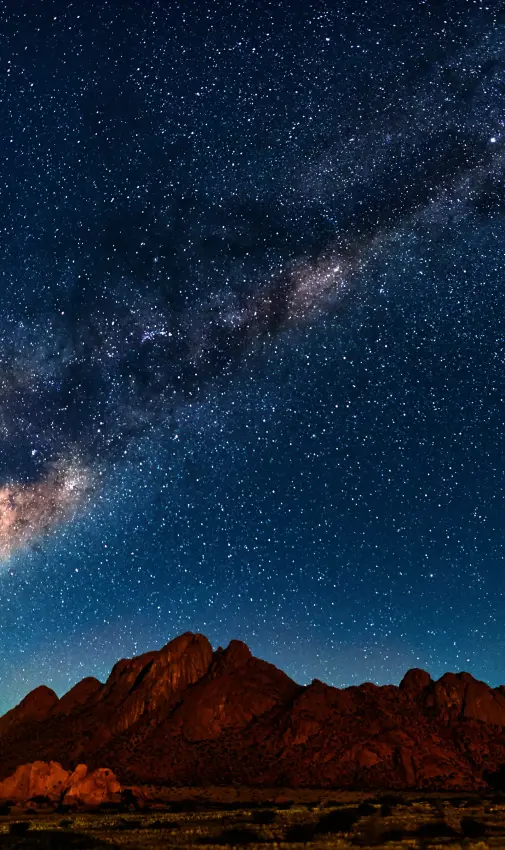
Rocky desert mountains silhouetted under starry night sky 01

Damaraland

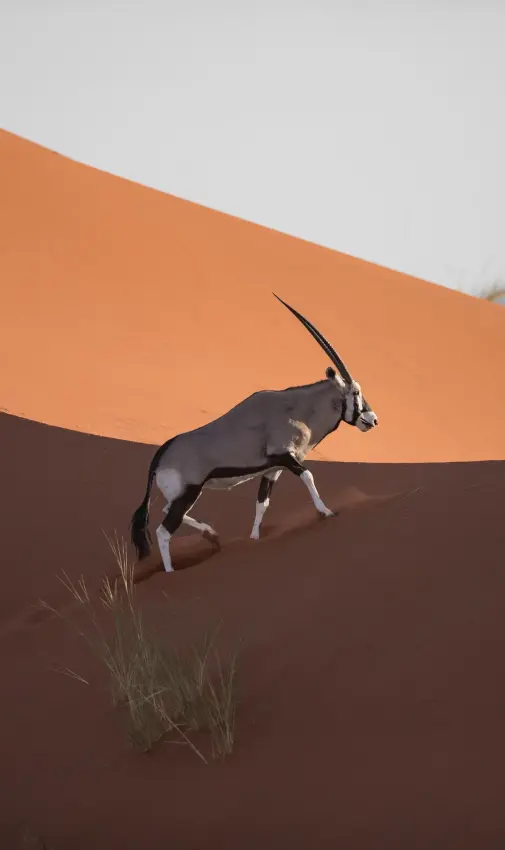
Golden sand dune at sunset with sparse desert vegetation 02

Sossusvlei

Elephant with zebras and antelopes at waterhole 03

Etosha National Park

Aerial view of desert dunes meeting coastal waves 04

Skeleton Coast

Portrait of a person wearing traditional African beaded jewelry 06

Kunene River

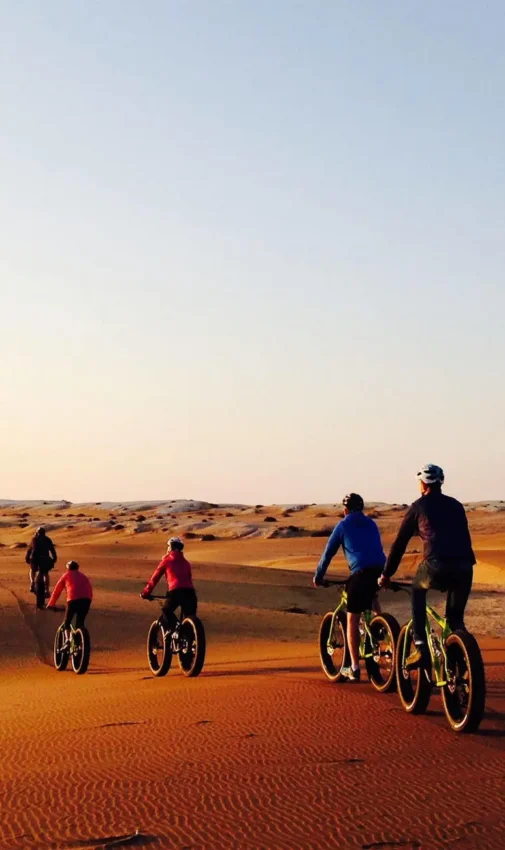
Cyclists riding across red sand dunes at sunset, Swakopmund, Namibia 07

Swakopmund

Aerial view of church and city at sunset 08

Windhoek

Planning a journey together

our approach

remote, exclusive
& personal

Every journey starts with a conversation. We take the time to understand your vision before we start planning.

Whether by phone or in person, we work with you directly to shape something that is considered, personal, and expertly delivered.

get in touch
destinations ideas & inspiration our process about us contact us