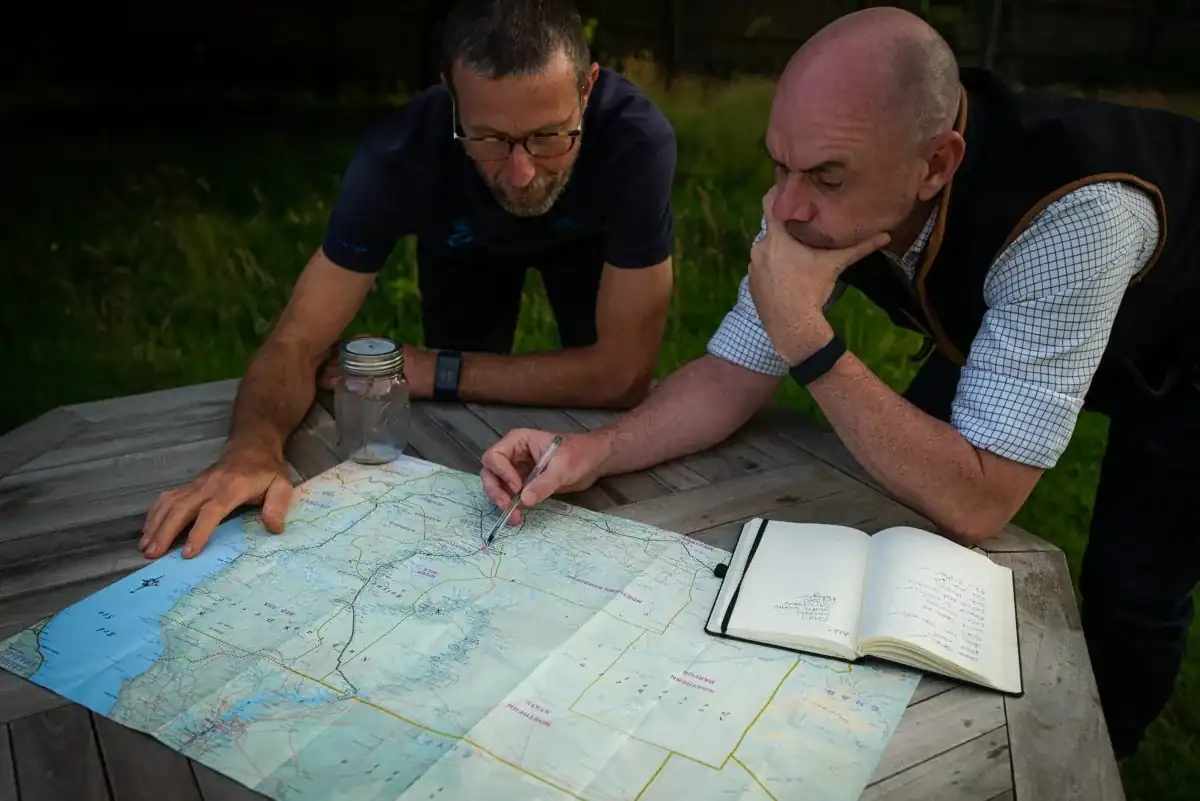
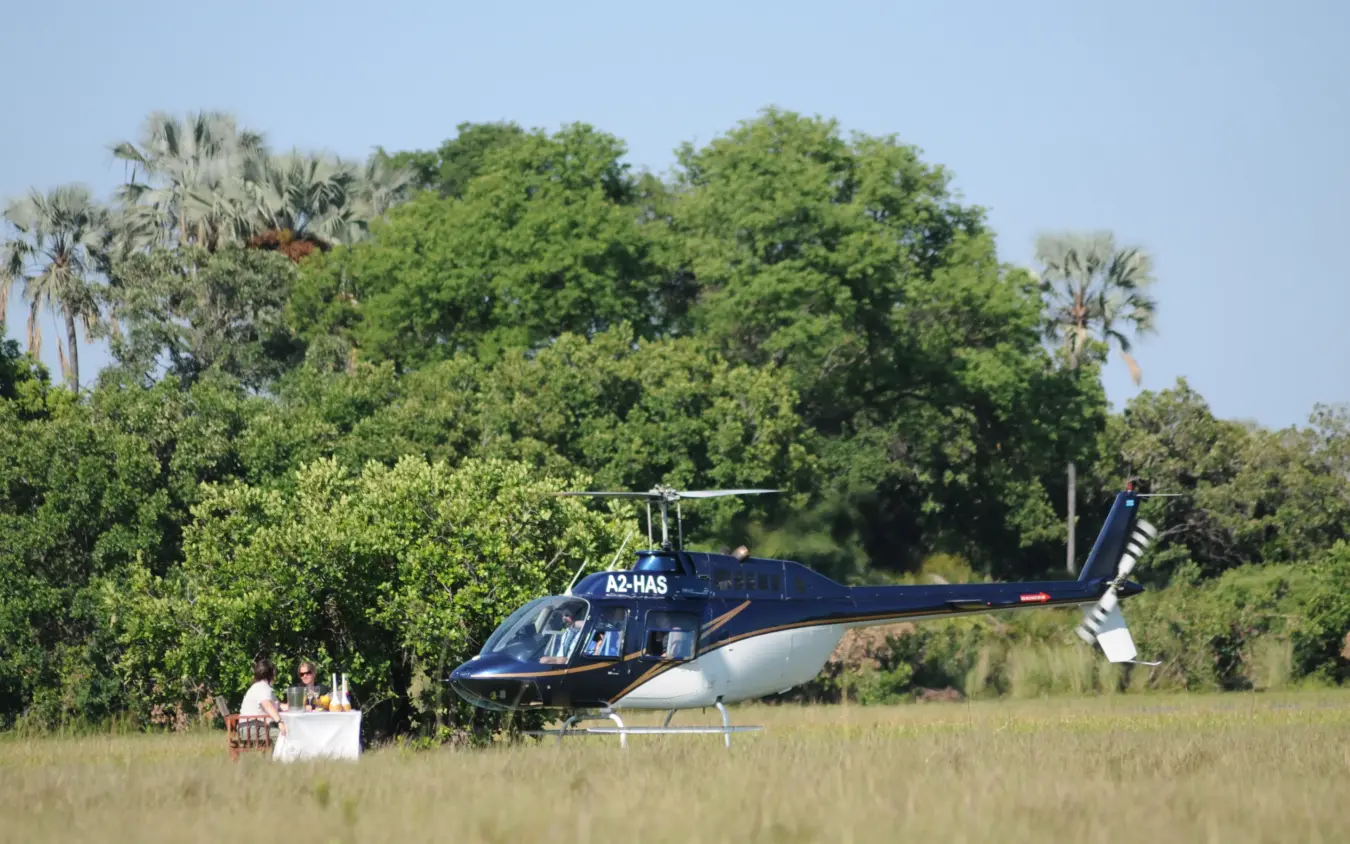
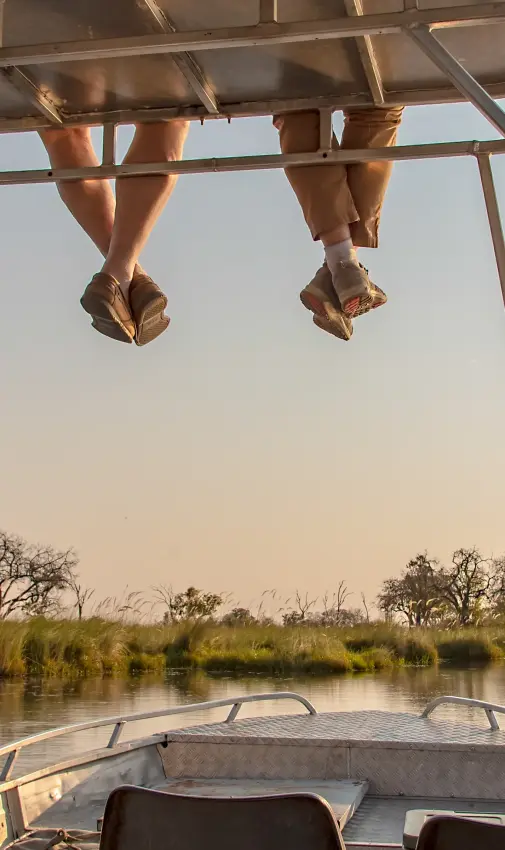
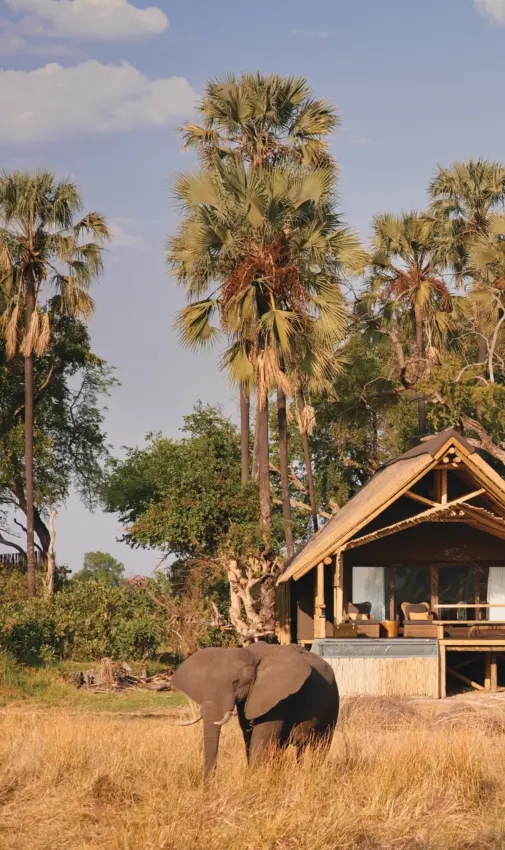
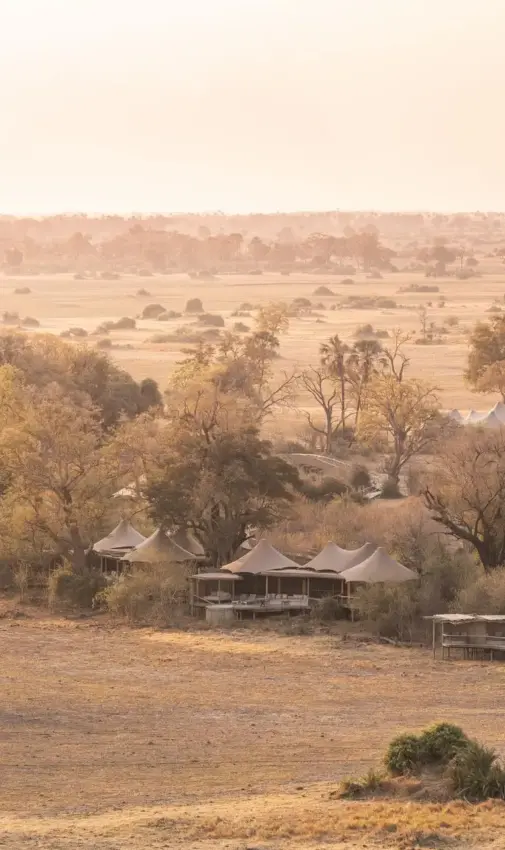
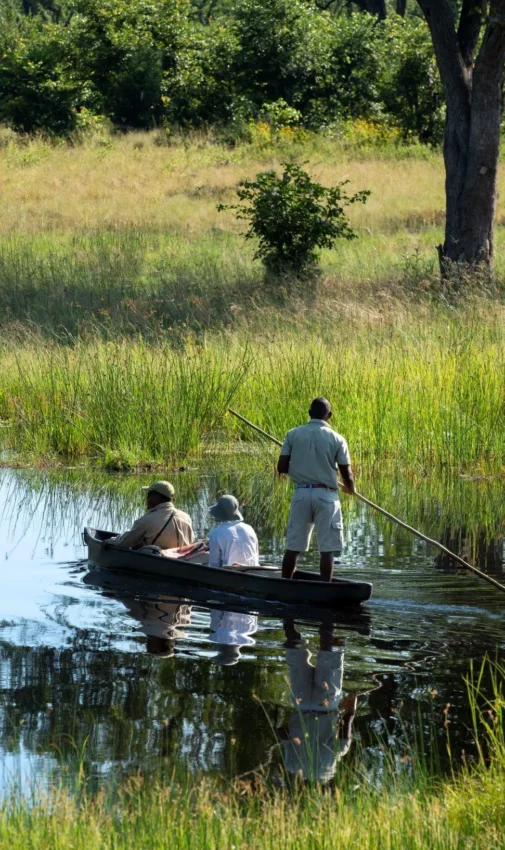
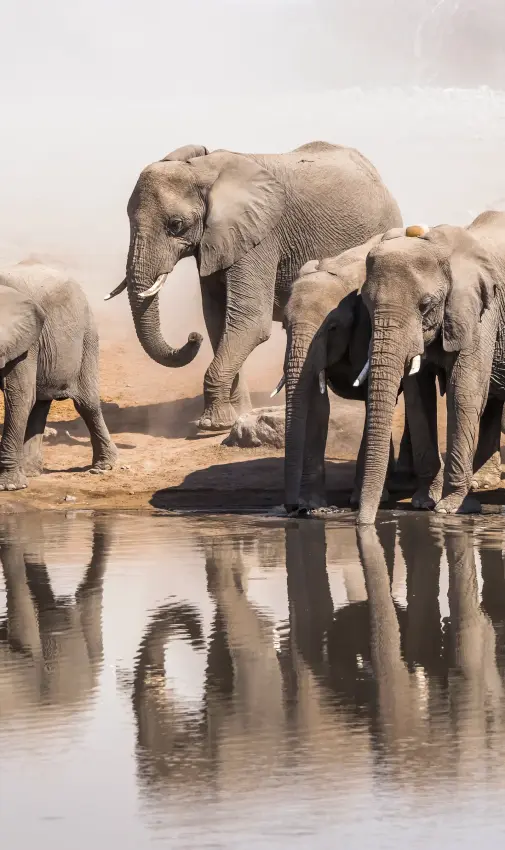
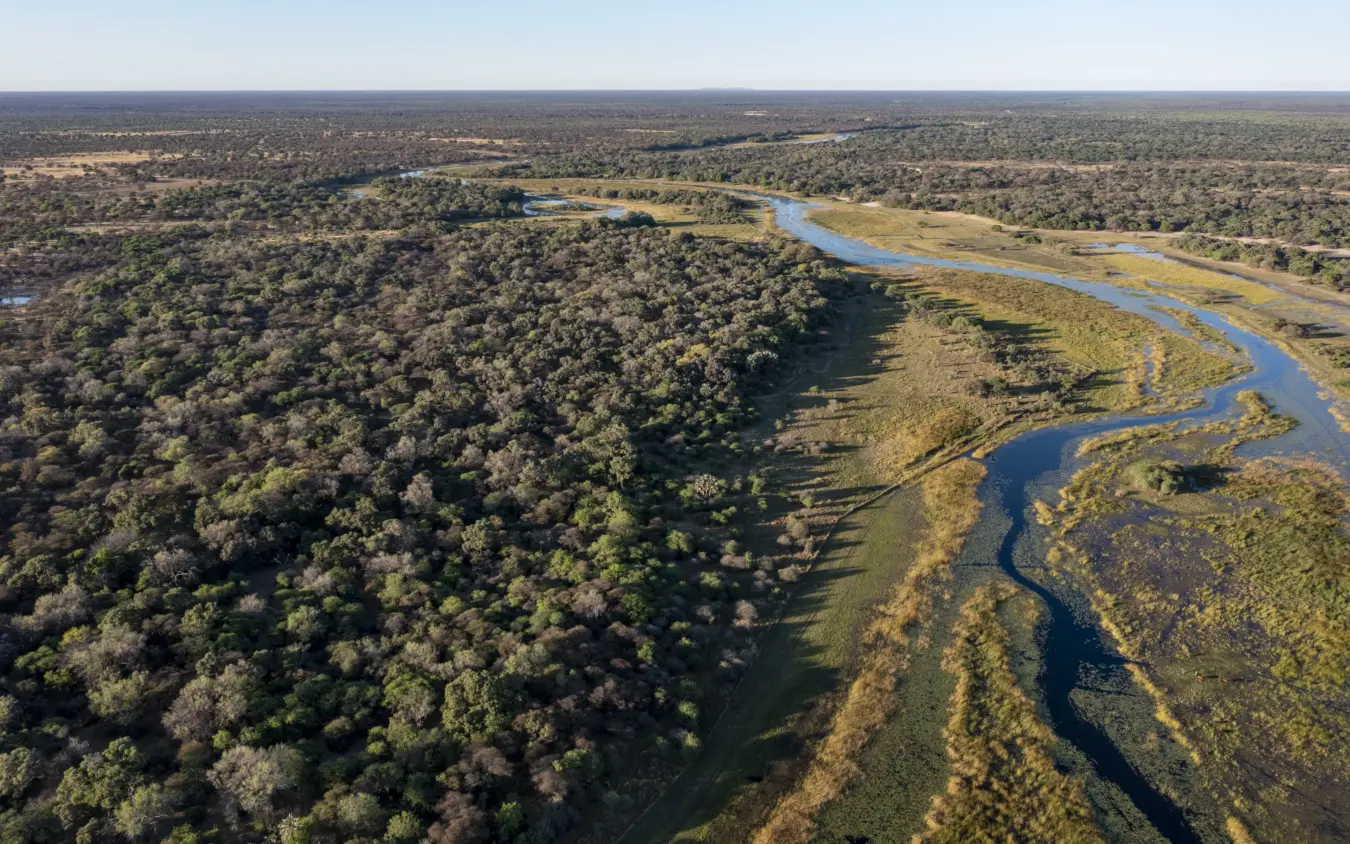
Guests fly in from Maun to the camp’s own airstrip, and the short flight explains the Okavango better than any map. Below the aircraft, Moremi’s old mopane woodland breaks into lagoons and islands, open grassland and seasonal floodplain, the Delta dividing into land and water. Chief’s Island is the largest of those islands, and its edges are never fixed. In flood, the plain the elephants cross to reach the waterhole turns to lagoon. Birdlife is rich in the trees around camp and out on the floodplain.
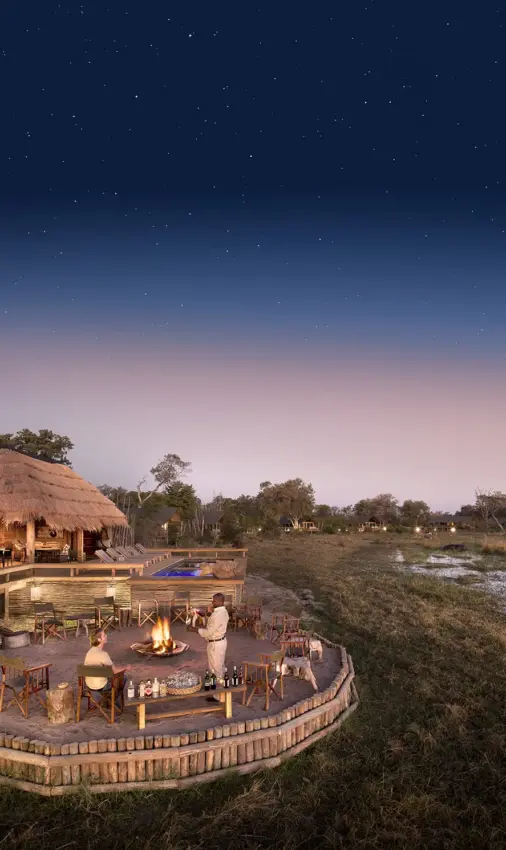
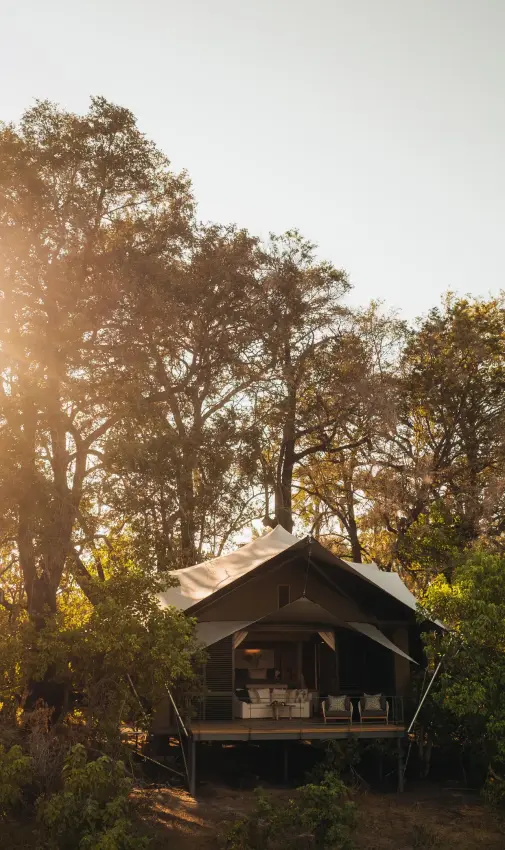
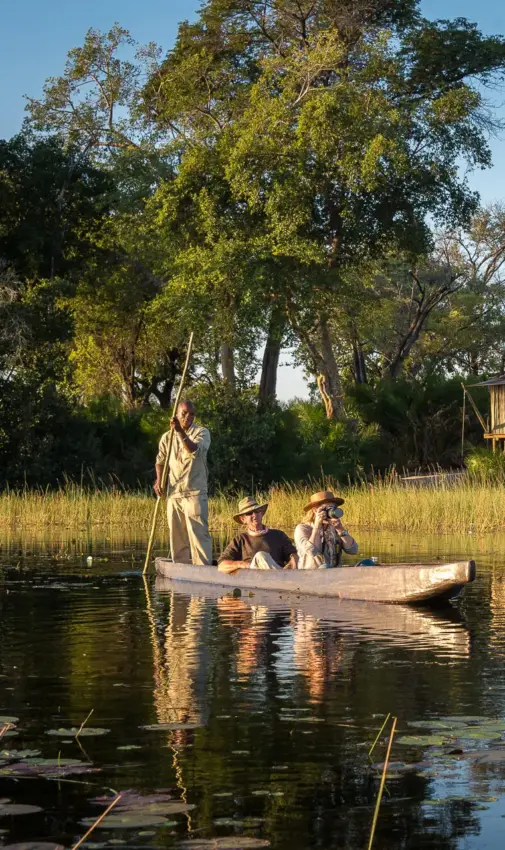
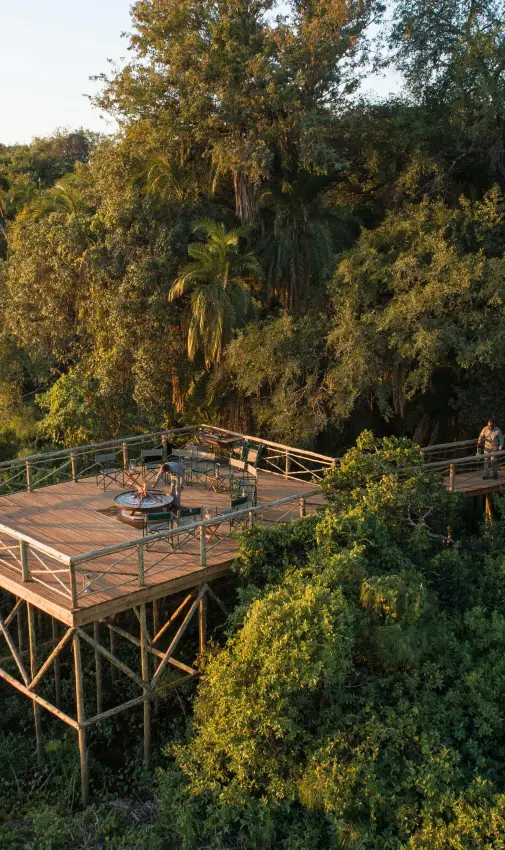
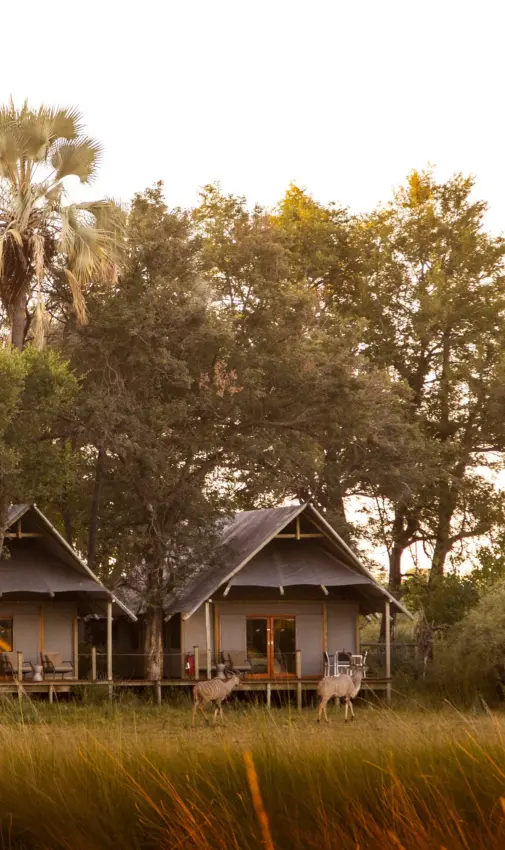
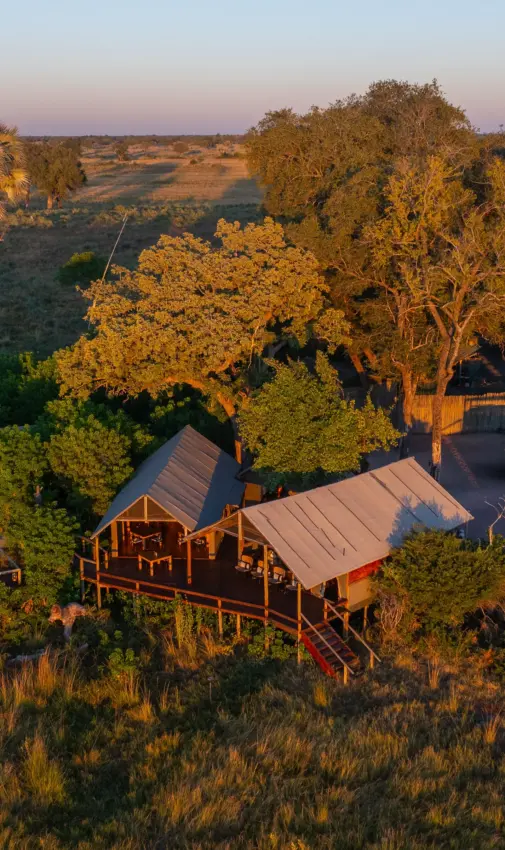
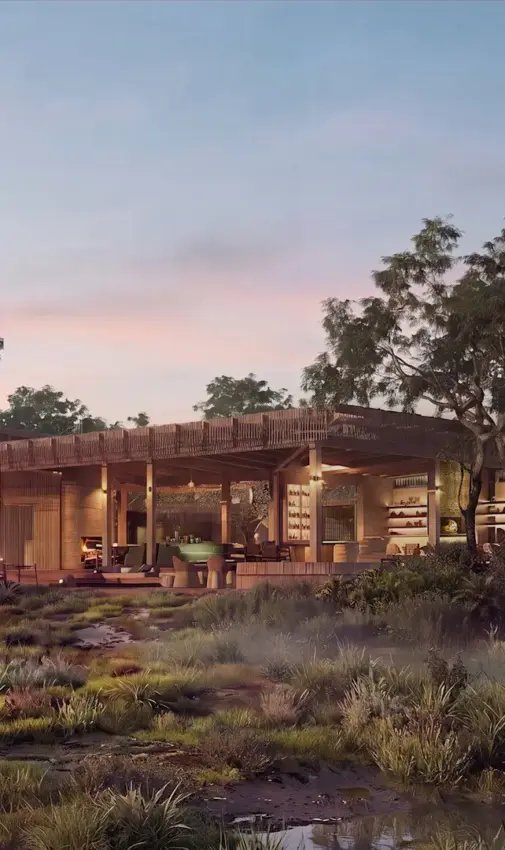
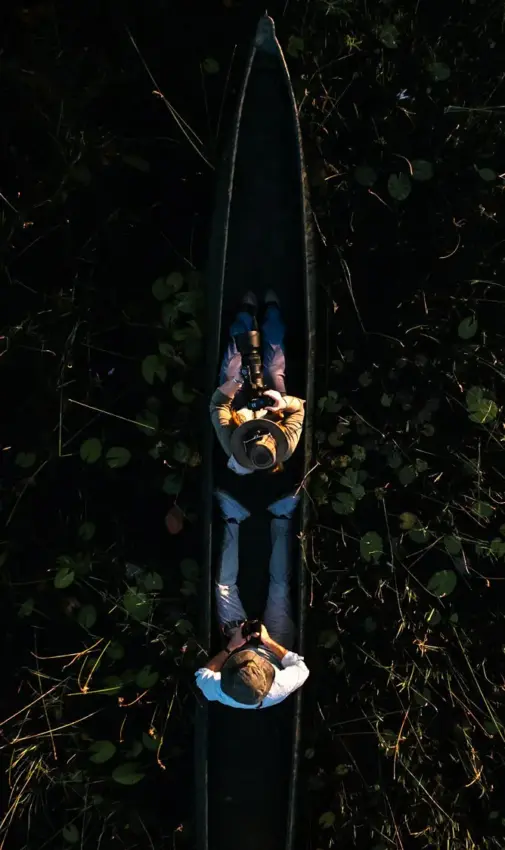
Jackalberry trees shade the main area, and their wood carries indoors. It is the timber traditionally hollowed out for mokoros, and here it is used alongside the whitewood of the main bar, under thatch that rises high over exposed beams. The furnishings run to jute and leather, linen and timber, with woven rugs and beaded chandeliers, and the wall hangings draw on local craft. The pool is set into the main deck beside an open-plan bar, with a library, a gym and a safari shop alongside. A separate deck is built around the oven for the camp’s home-made pizza.
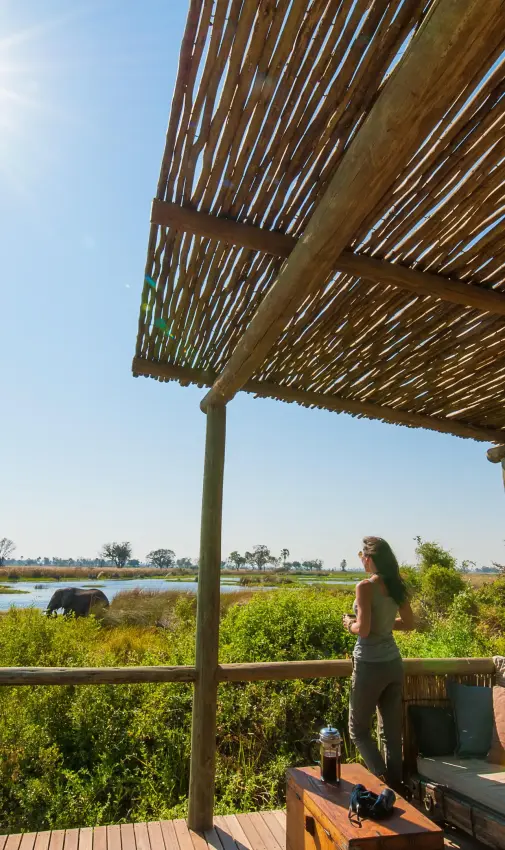
In flood, the plain the elephants cross to reach the waterhole turns to lagoon.
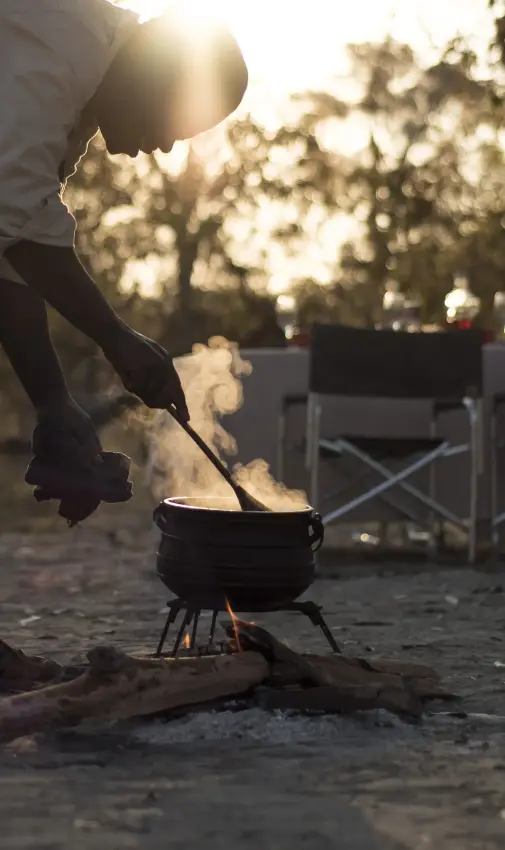
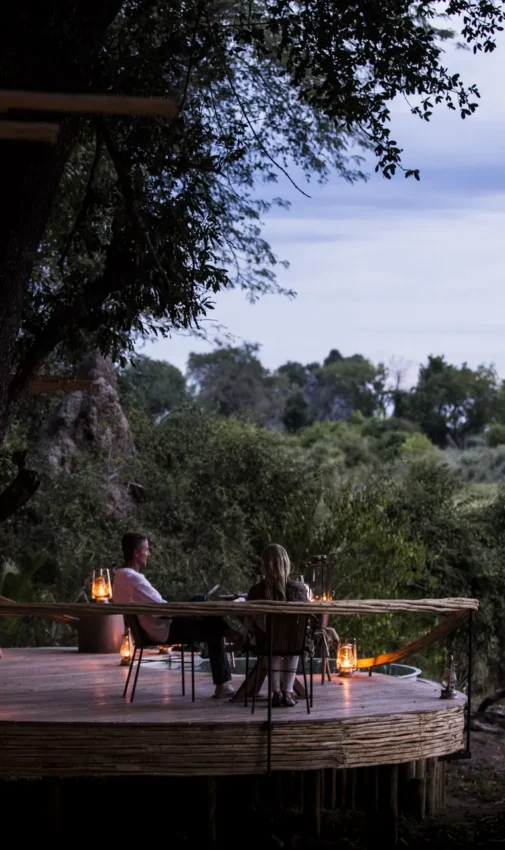
Staff greet new arrivals with a song, and on some evenings the whole team sings again. Anyone wanting privacy can eat on their own deck, and on other nights drinks are served around the boma fire before dinner. The hours between drives are left loose, for the pool, the gym or the spa.
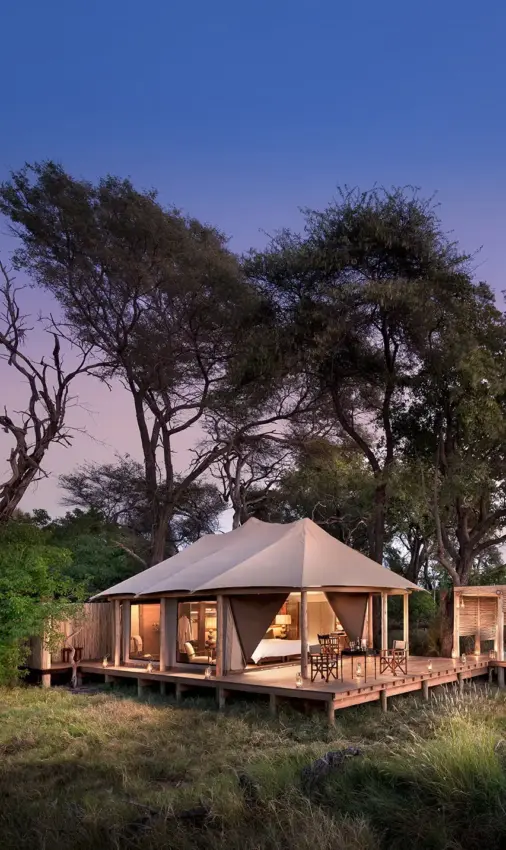
Children are welcome from six, and a children’s retreat runs its own activities for them. Families, or any group of up to six, can take the two-bedroom private suite, a self-contained camp within the camp. It has its own kitchen and indoor lounge, secluded decks and a private boma for dinners by the fire. A guide and vehicle come with it, along with a chef, a waiter and a housekeeper. That vehicle changes the pace of a safari with children, since the guide can head back when attention runs out, or stay with a sighting for an hour when it does not.