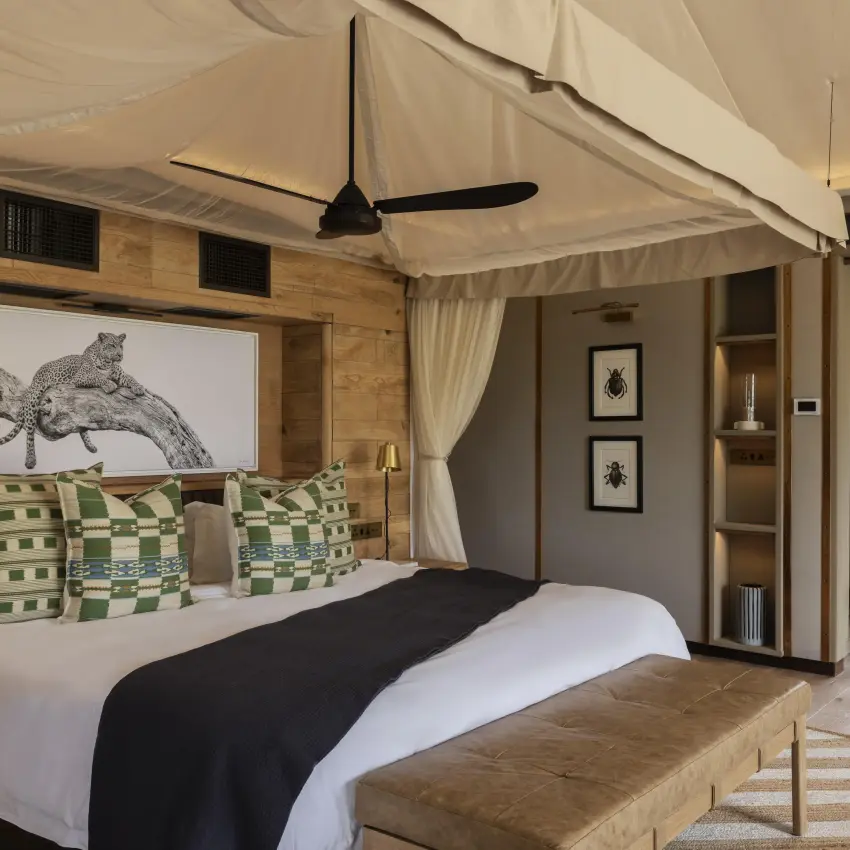
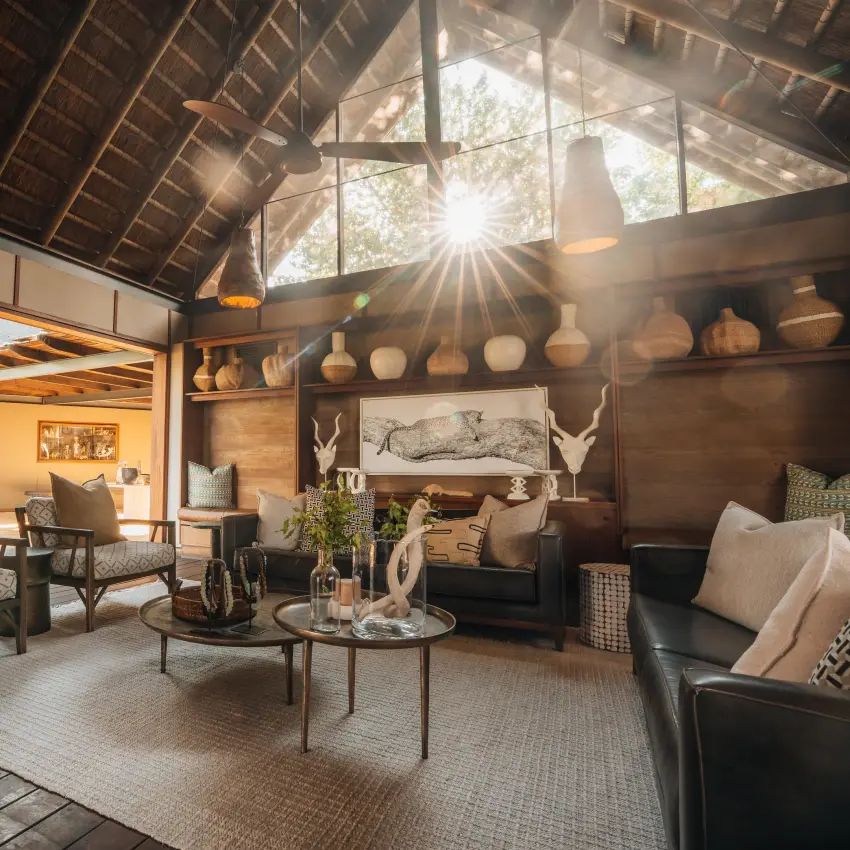
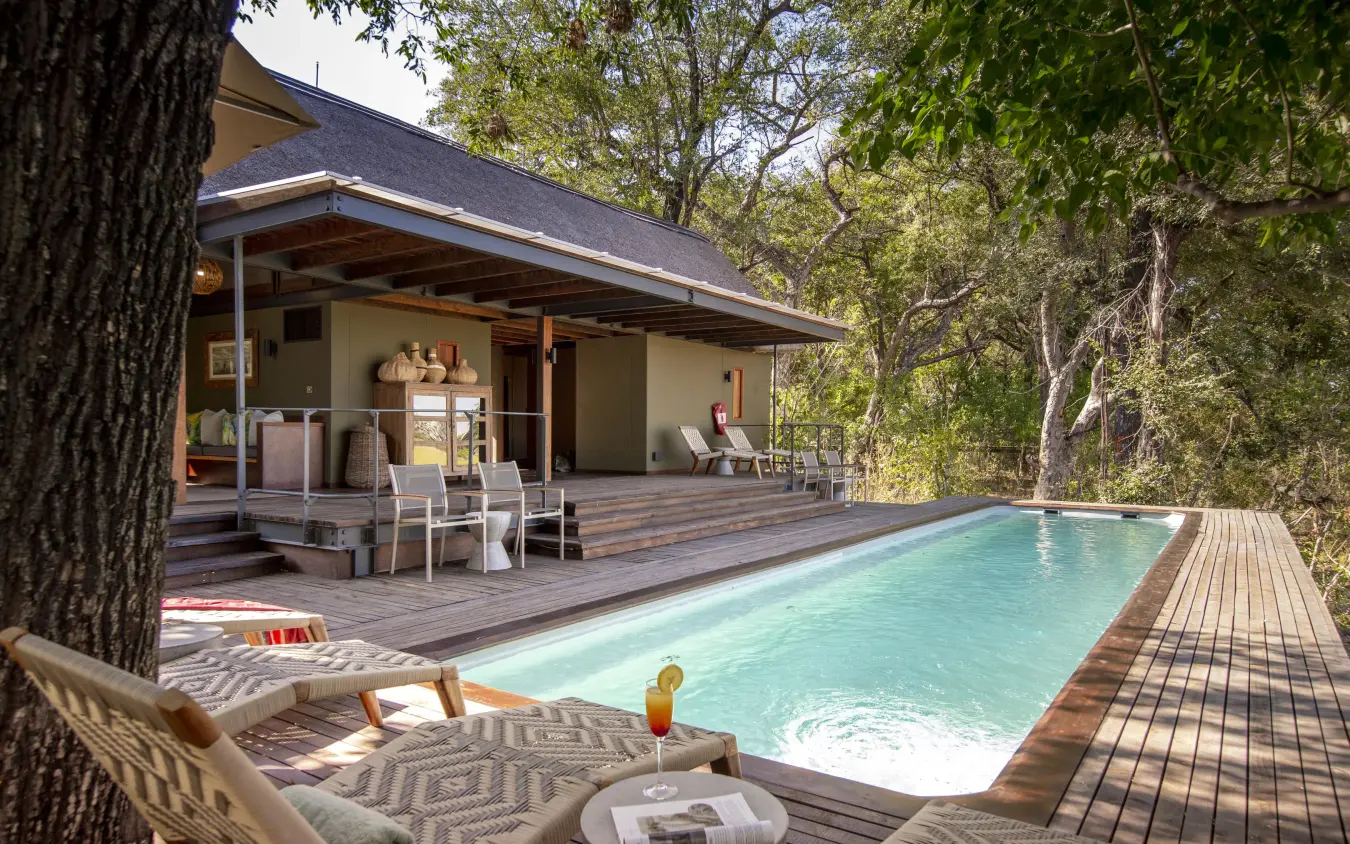
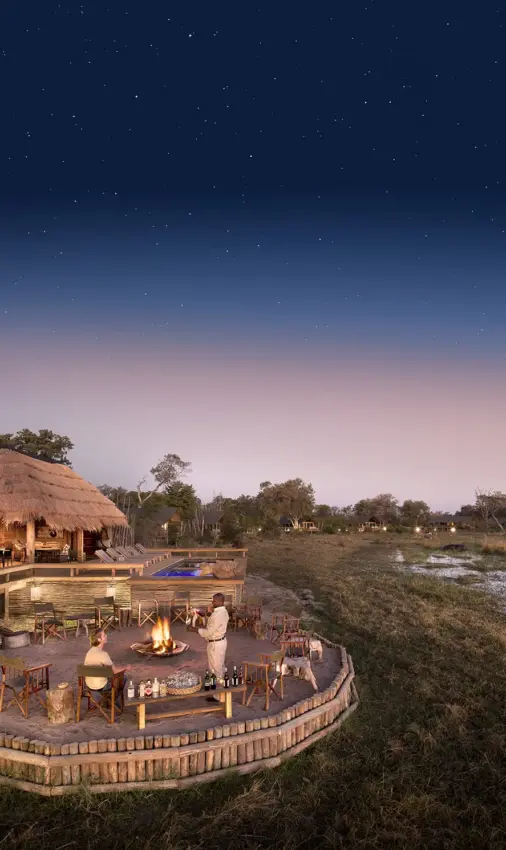
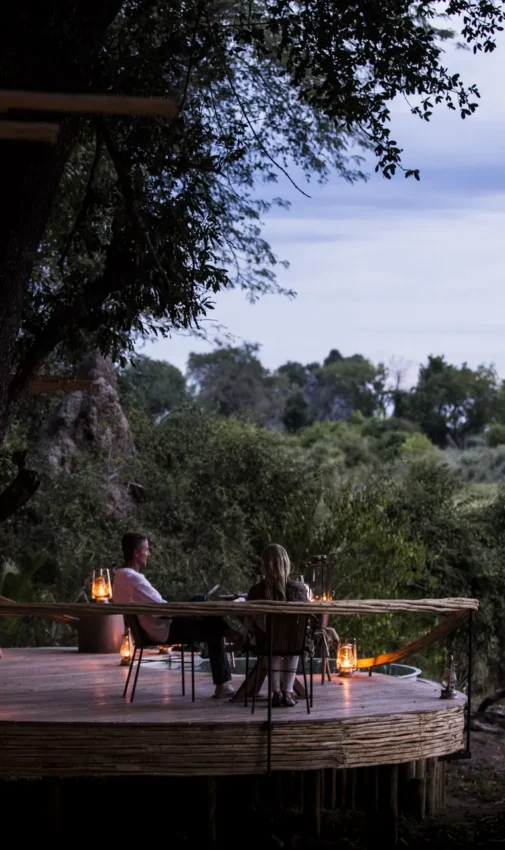
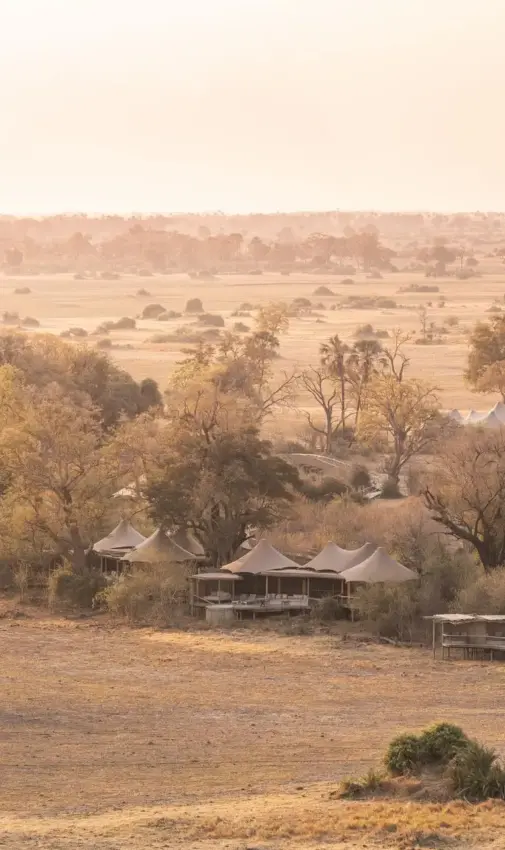
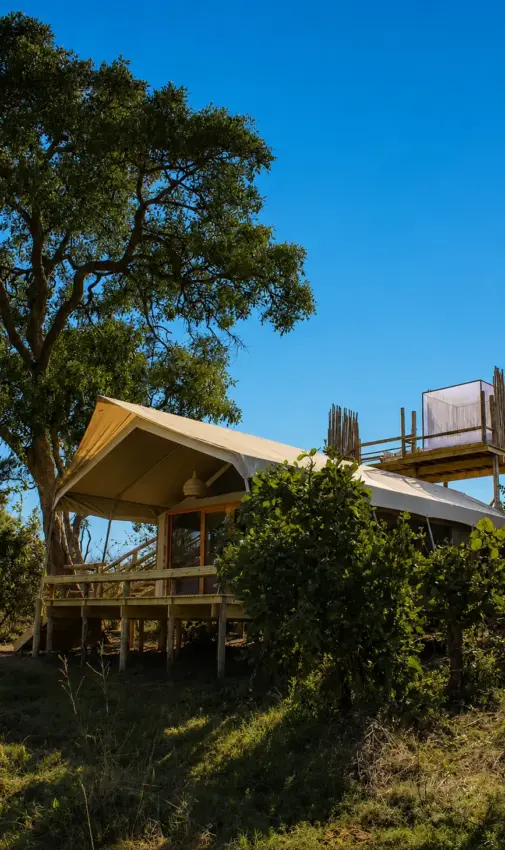
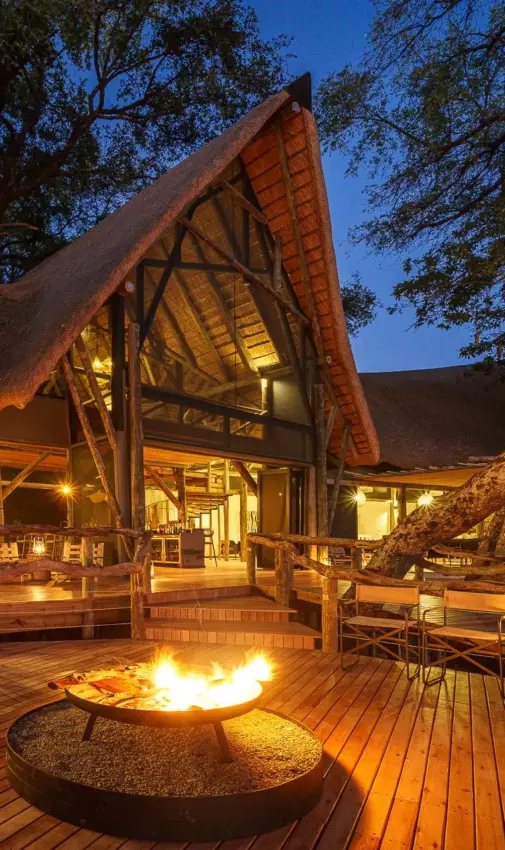
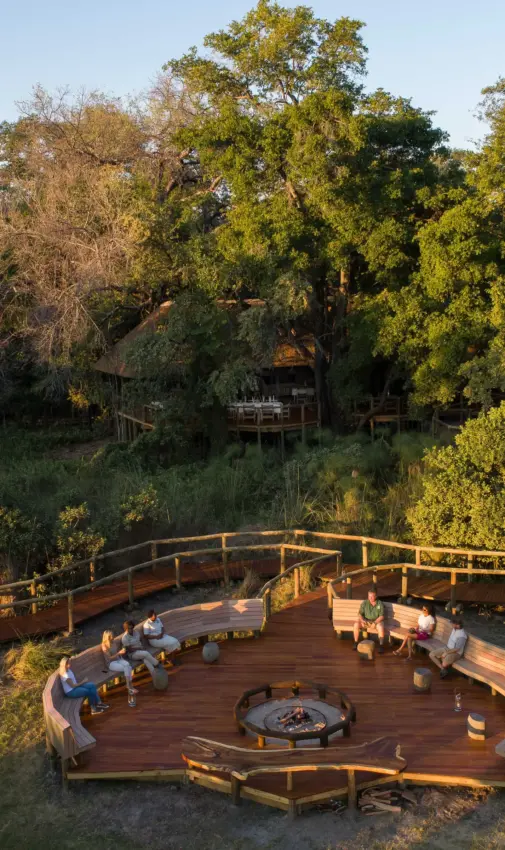
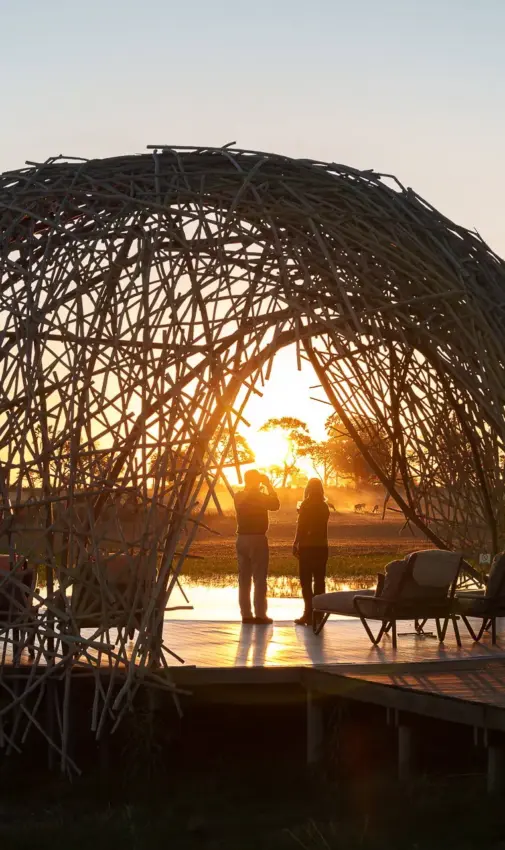
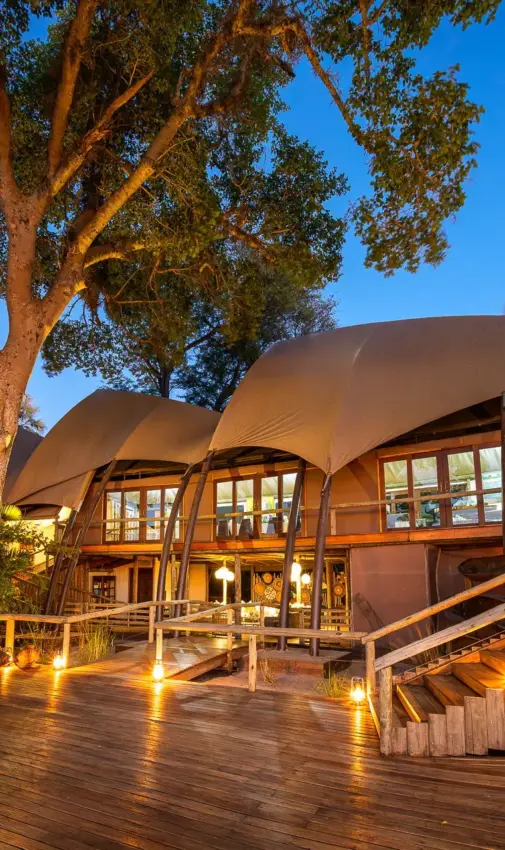
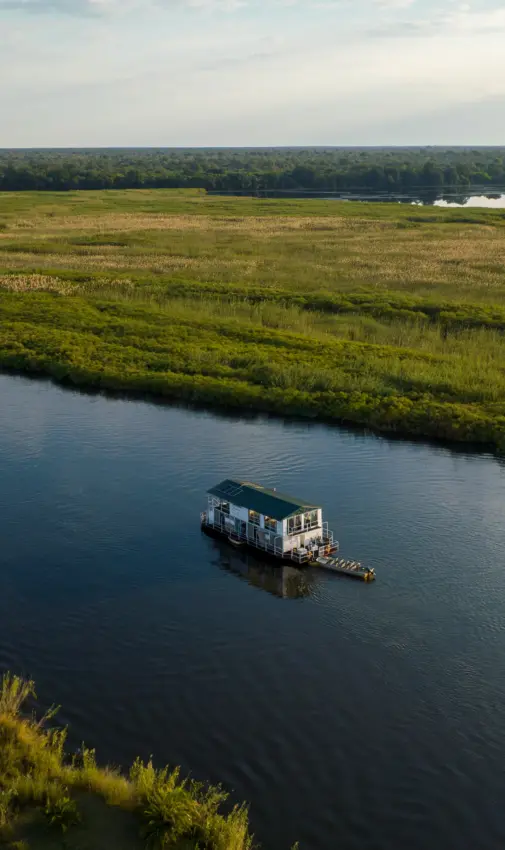
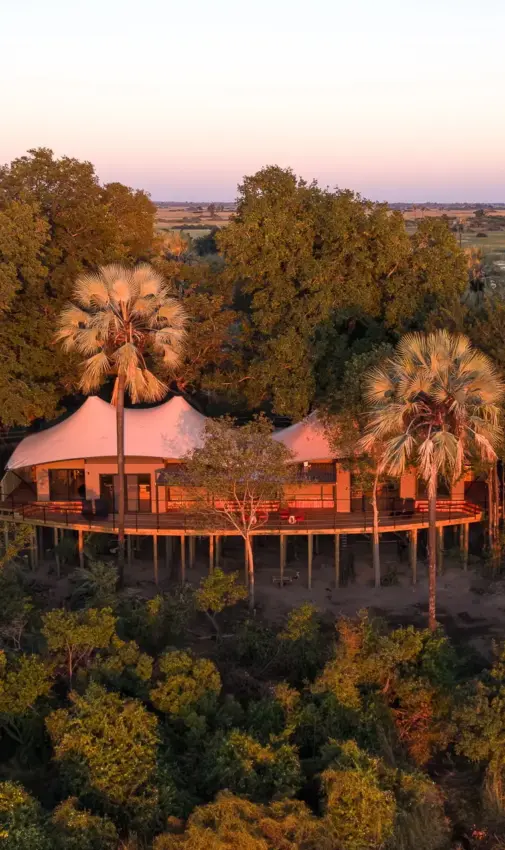
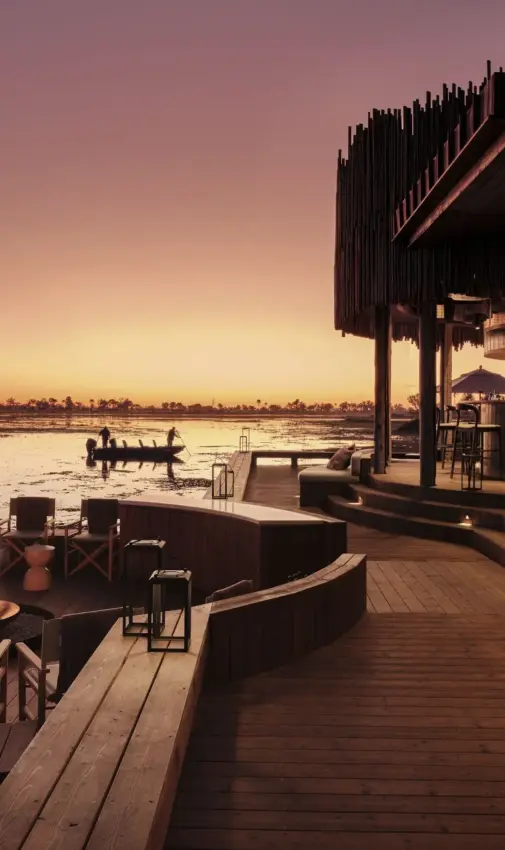
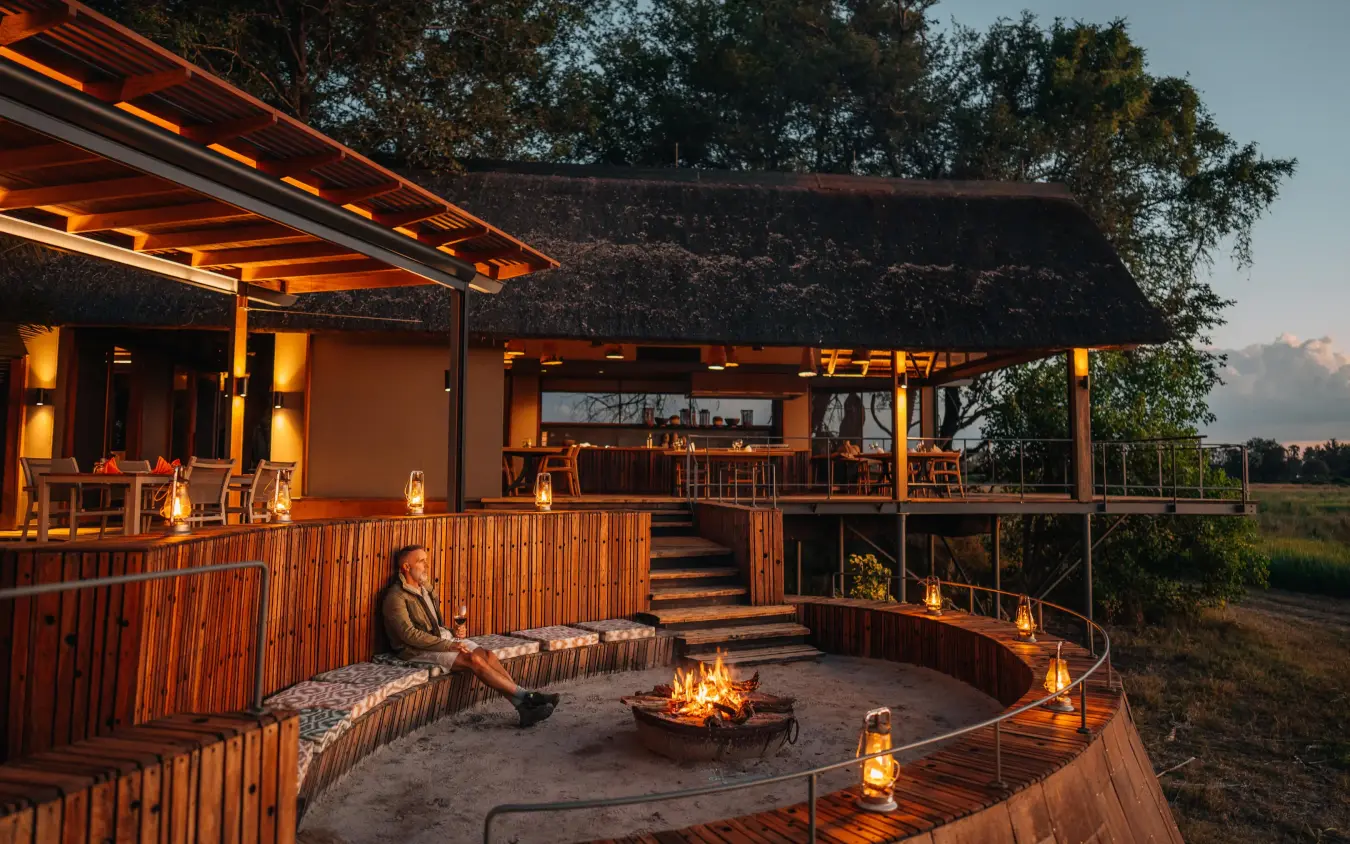
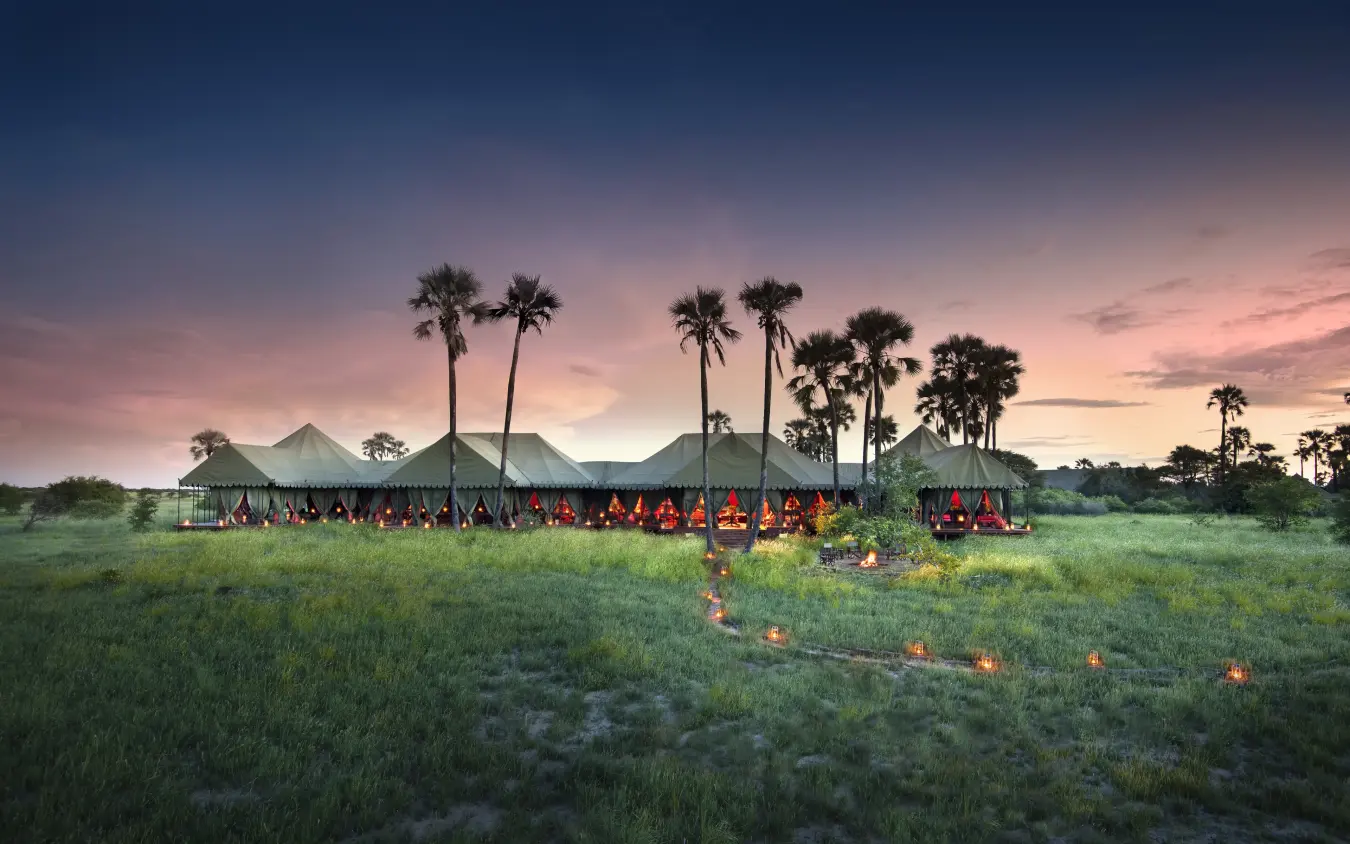
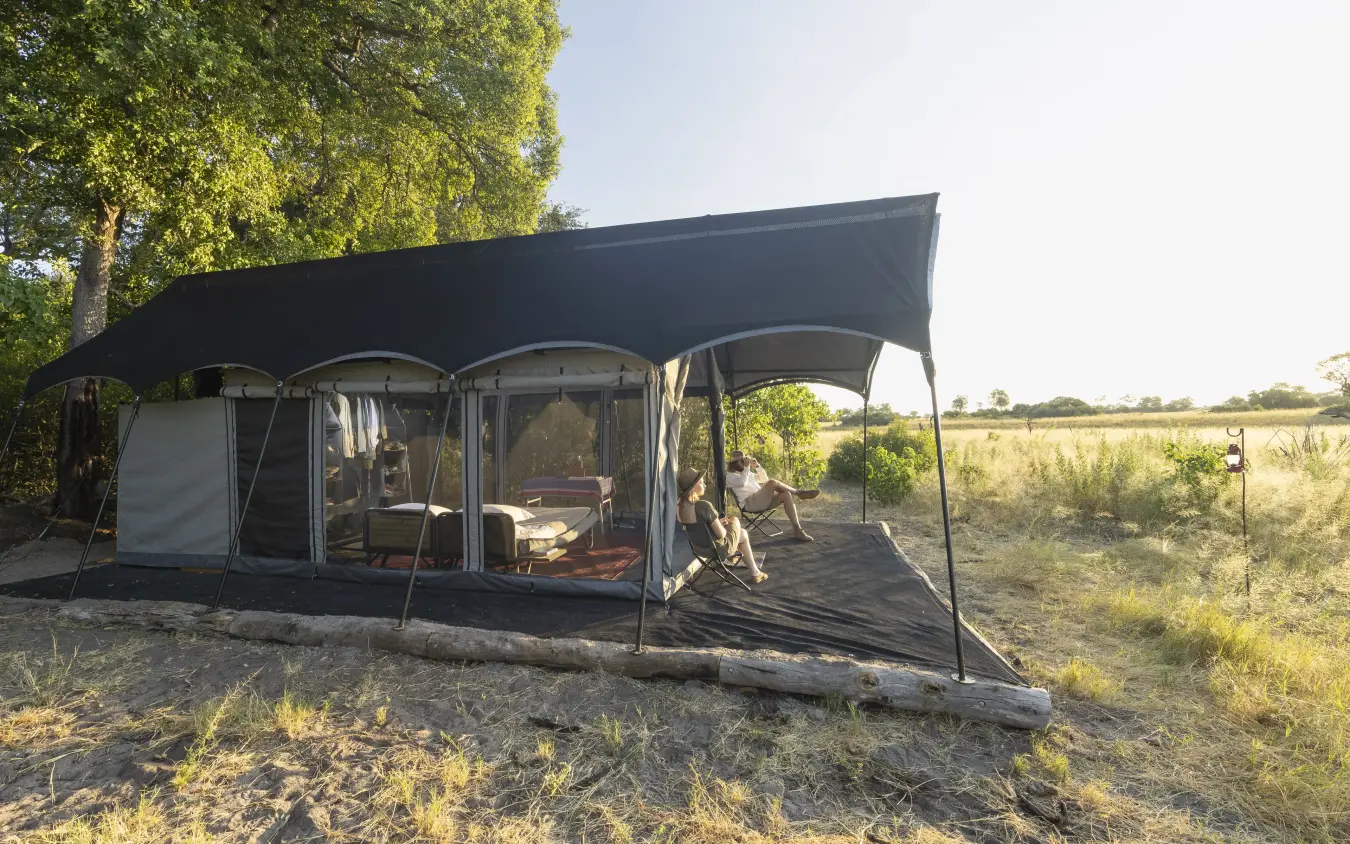
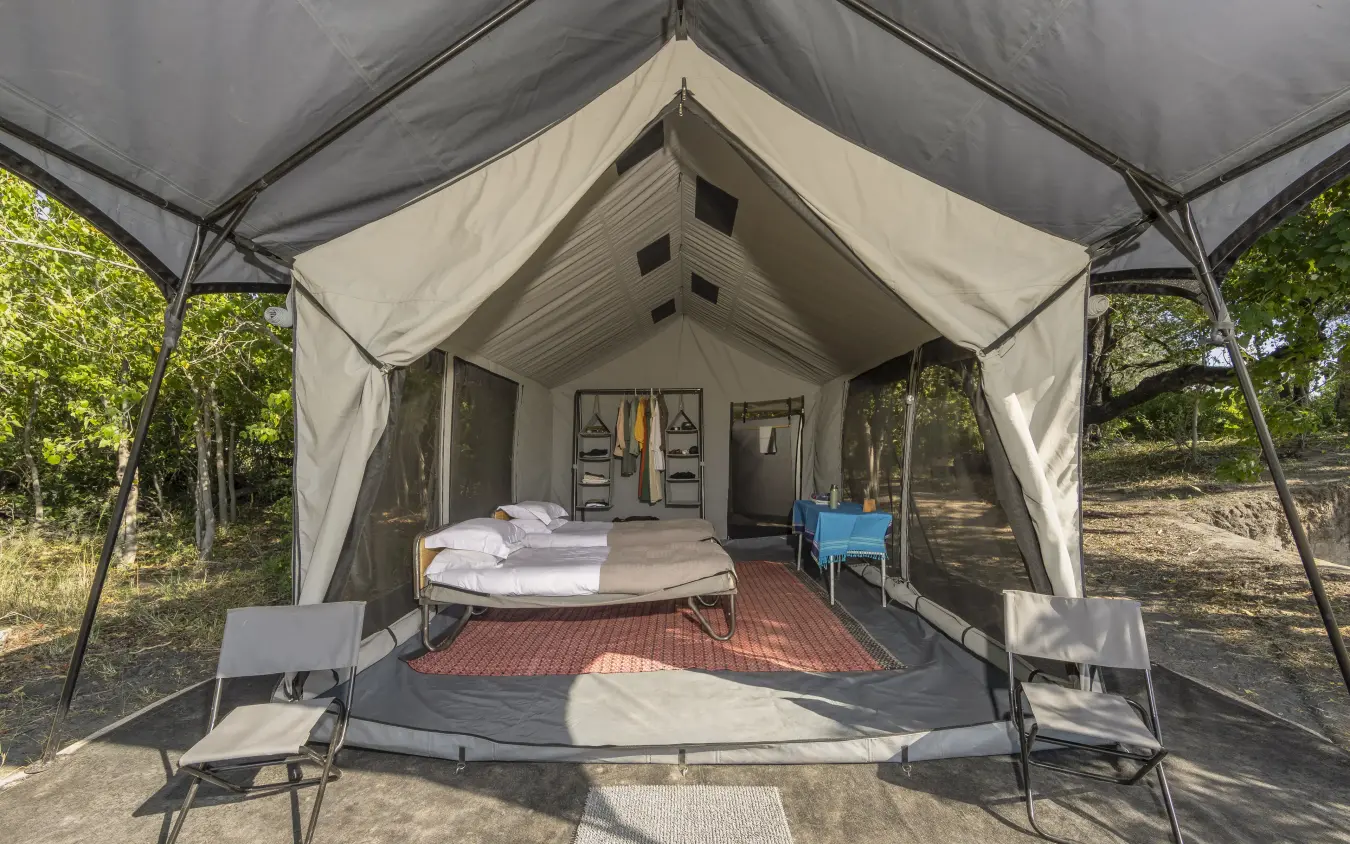
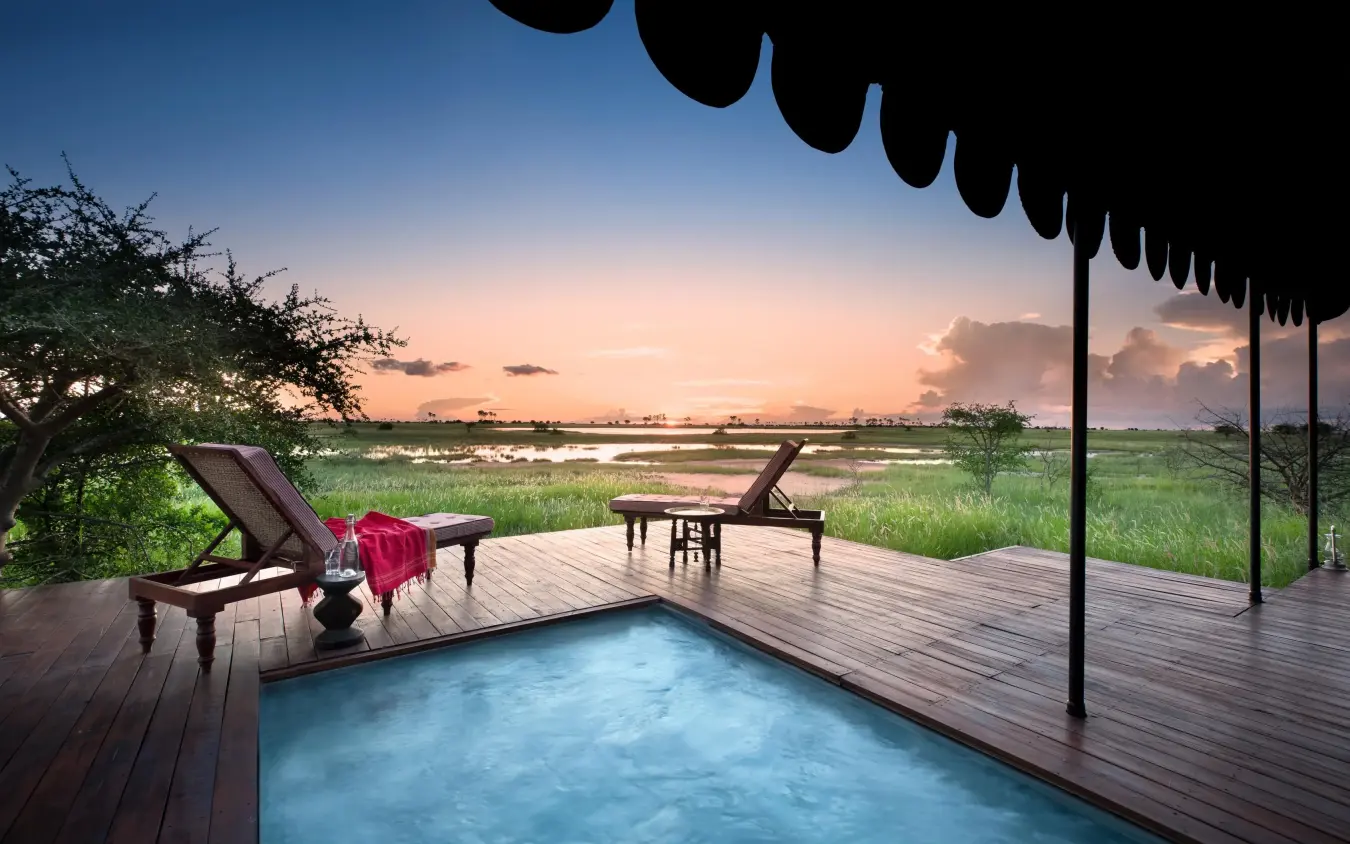
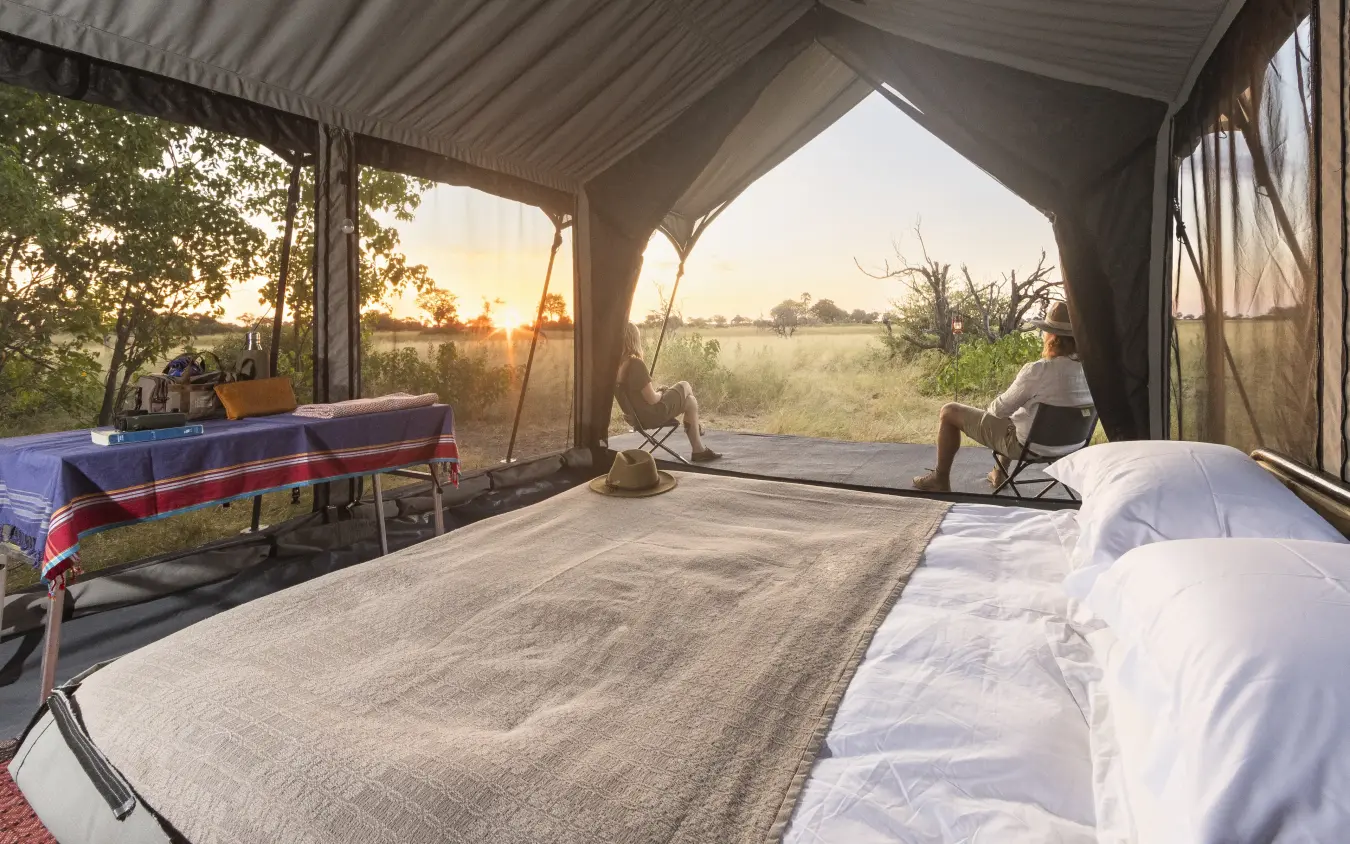
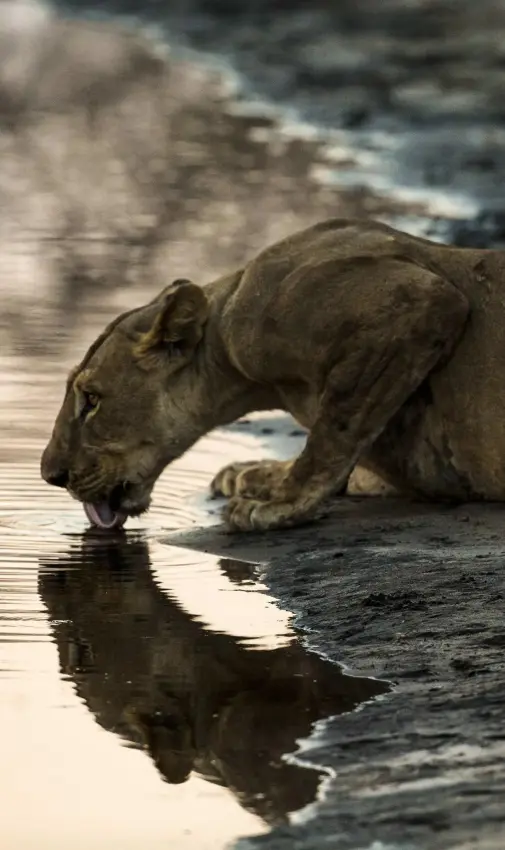
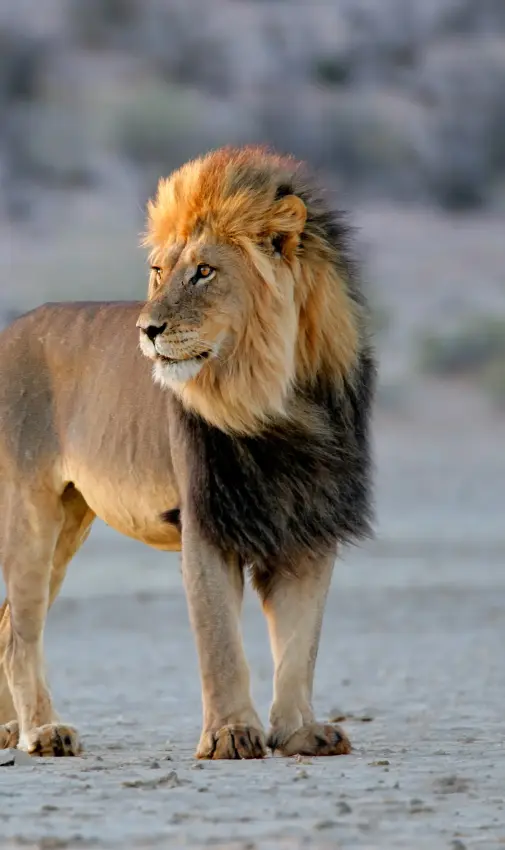
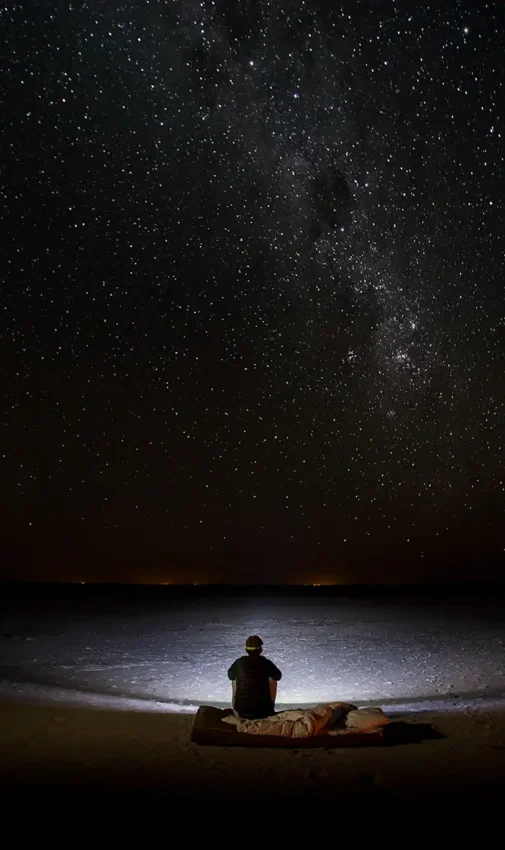
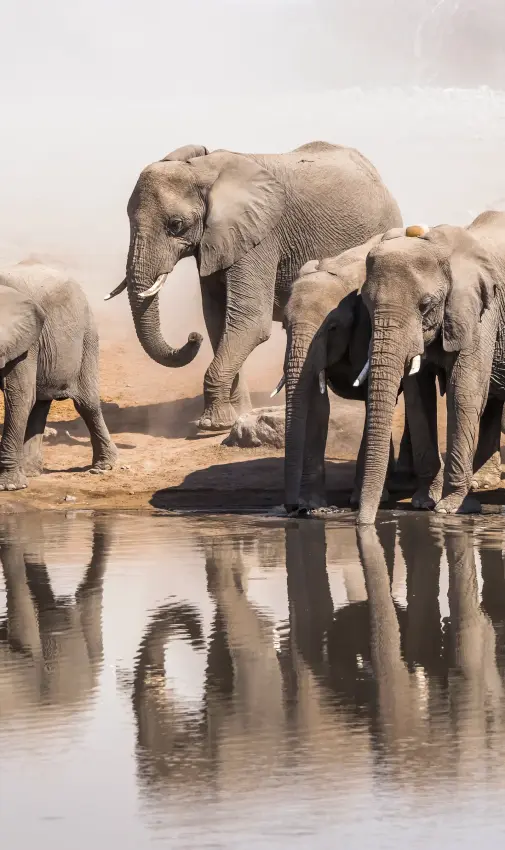
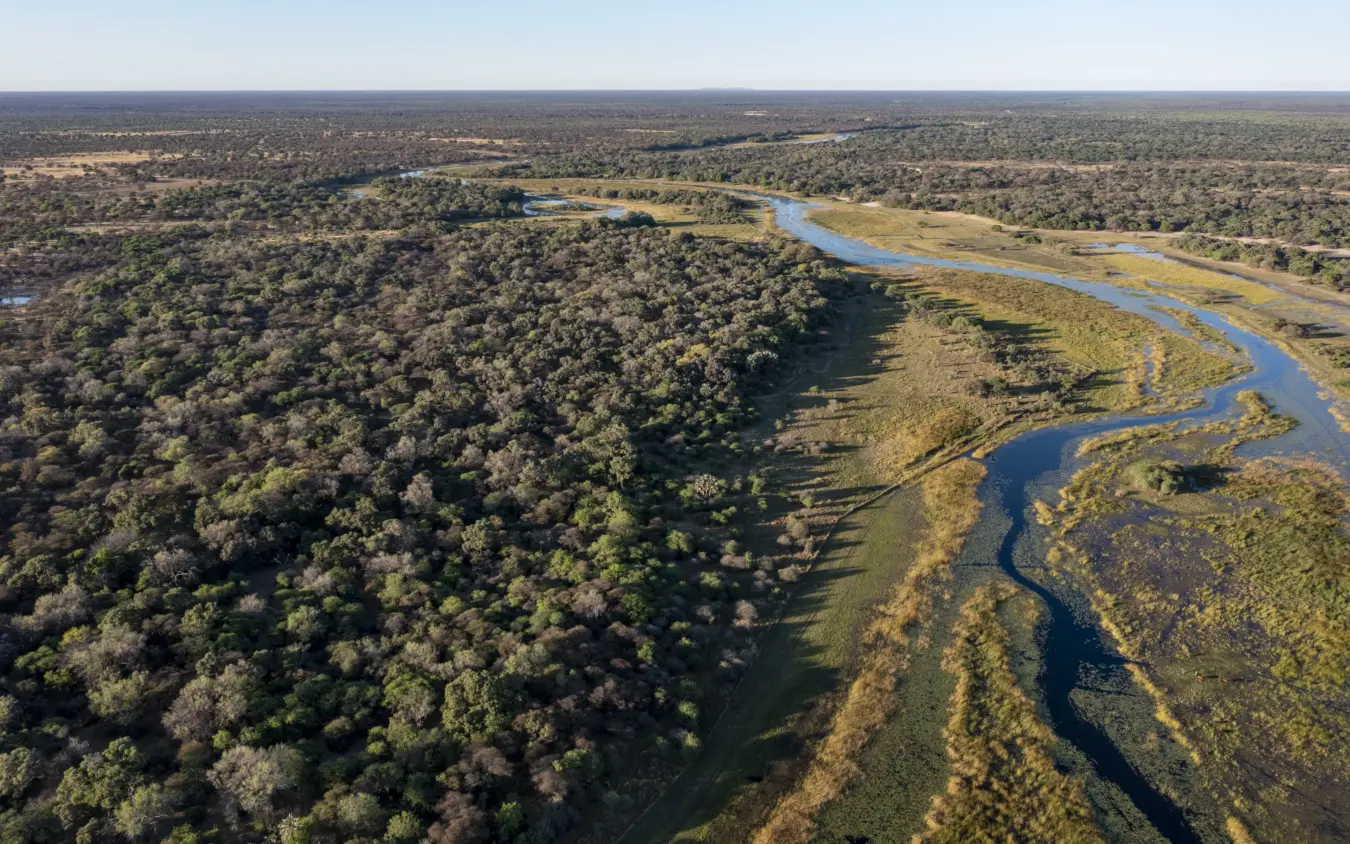
The island is dry ground in the Okavango Delta, ringed by plains, acacia and mopane woodland, and floodplains that fill and drain with the seasons. The main lodge follows the same raised, open-fronted plan as the suites, with a thatched dining room, lounge and bar set on decks facing the floodplain. Elephants, zebras, giraffes, buffaloes and baboons drift past the pool deck through the day. In the dry months the view runs tawny and dusty, dotted with game. Then the water arrives in winter and the same ground turns green and glinting.
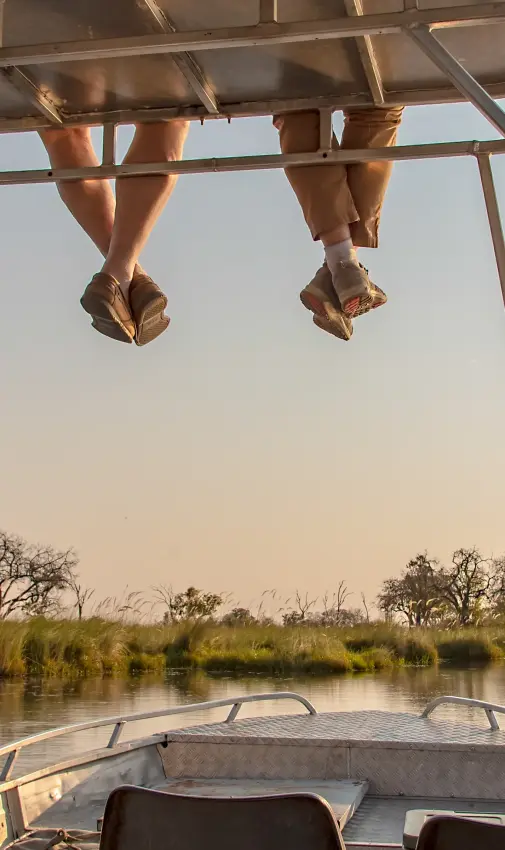
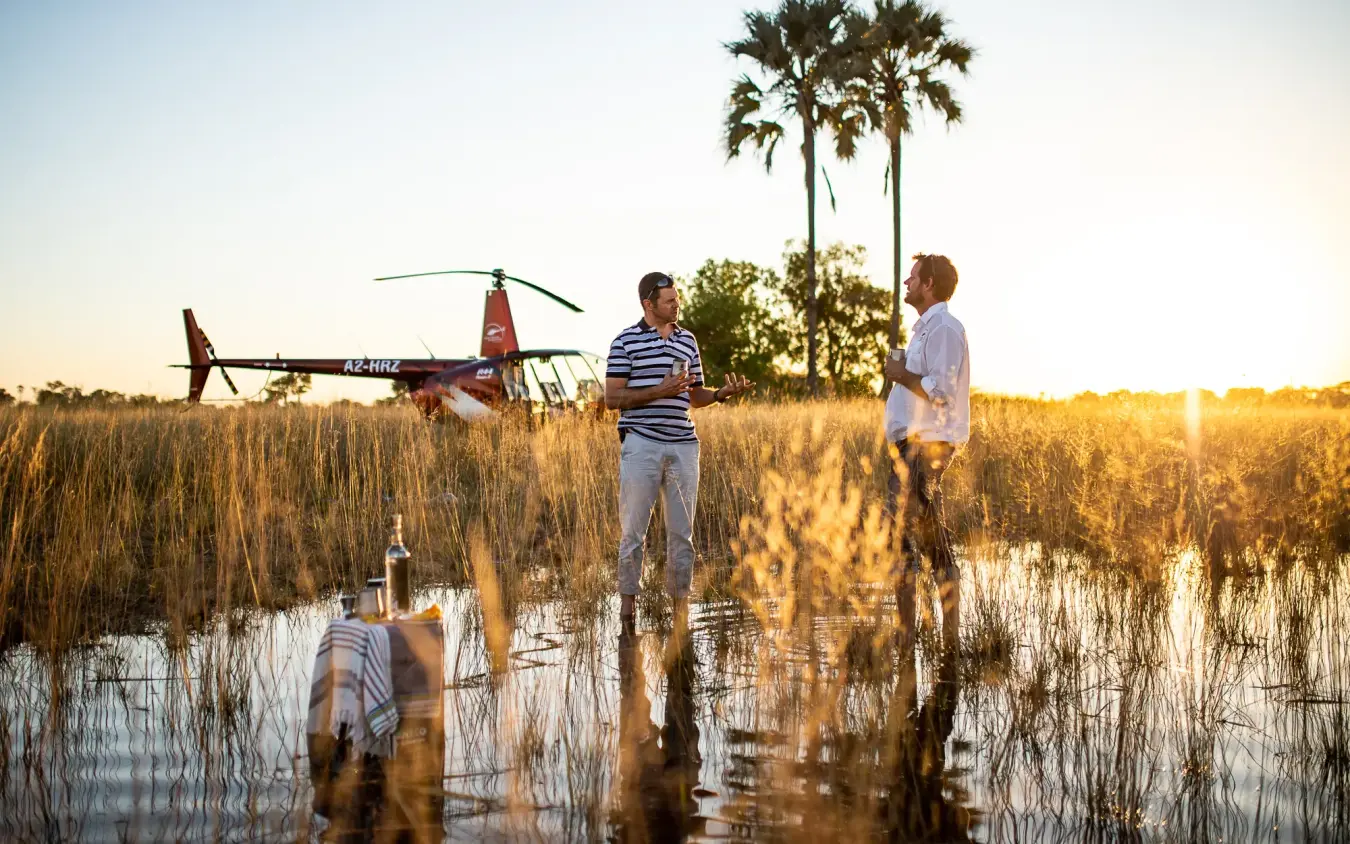
The drives go out morning and afternoon in open 4x4s fitted with bean bags and camera mounts, a nod to the camp’s photographic bent. They carry on into the night, when the spotlight picks out civets, genets, porcupines and aardwolves. Guided walks operate seasonally for guests aged thirteen and over, and birders will find the concession recognised as an Important Bird Area. For a wider view still, scenic helicopter flights can be arranged from camp, covering the channels and plains in a fraction of the time a drive would take.
Elephants, zebras, giraffes, buffaloes and baboons drift past the pool deck through the day.
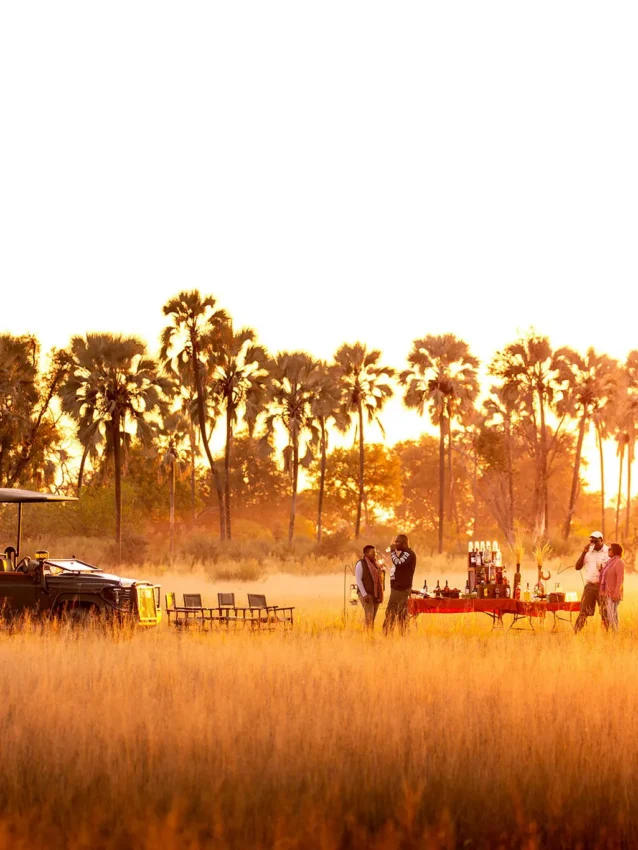
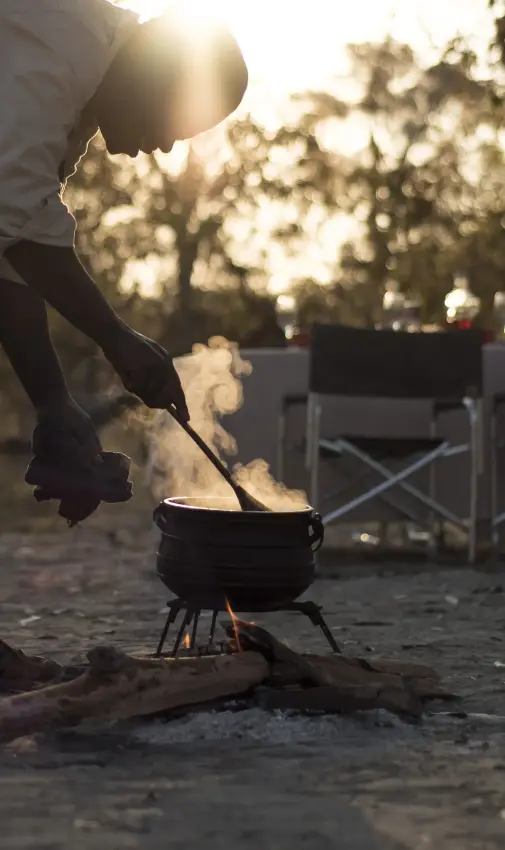
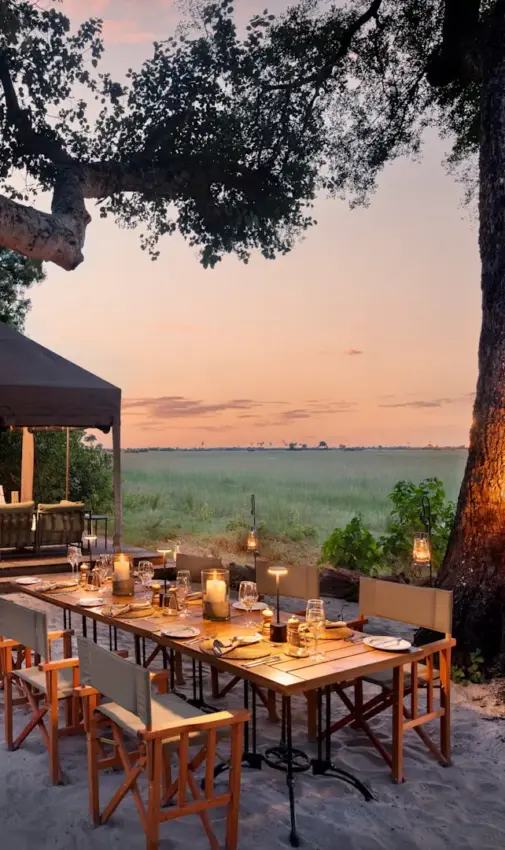
The day begins with a light breakfast, served by the fire before the morning drive or packed into a basket for an earlier start, and a fuller brunch waits on return. Afternoon tea precedes the evening drive, which pauses for sundowners in the bush. Head chef Olesego Legae cooks with regional ingredients and seasonal crops, and the boma hosts barbecues of Botswana’s national dishes cooked over open flame. Dinner is often shared at one table in the open-sided dining room, and the evening ends where the morning began, around the fire.
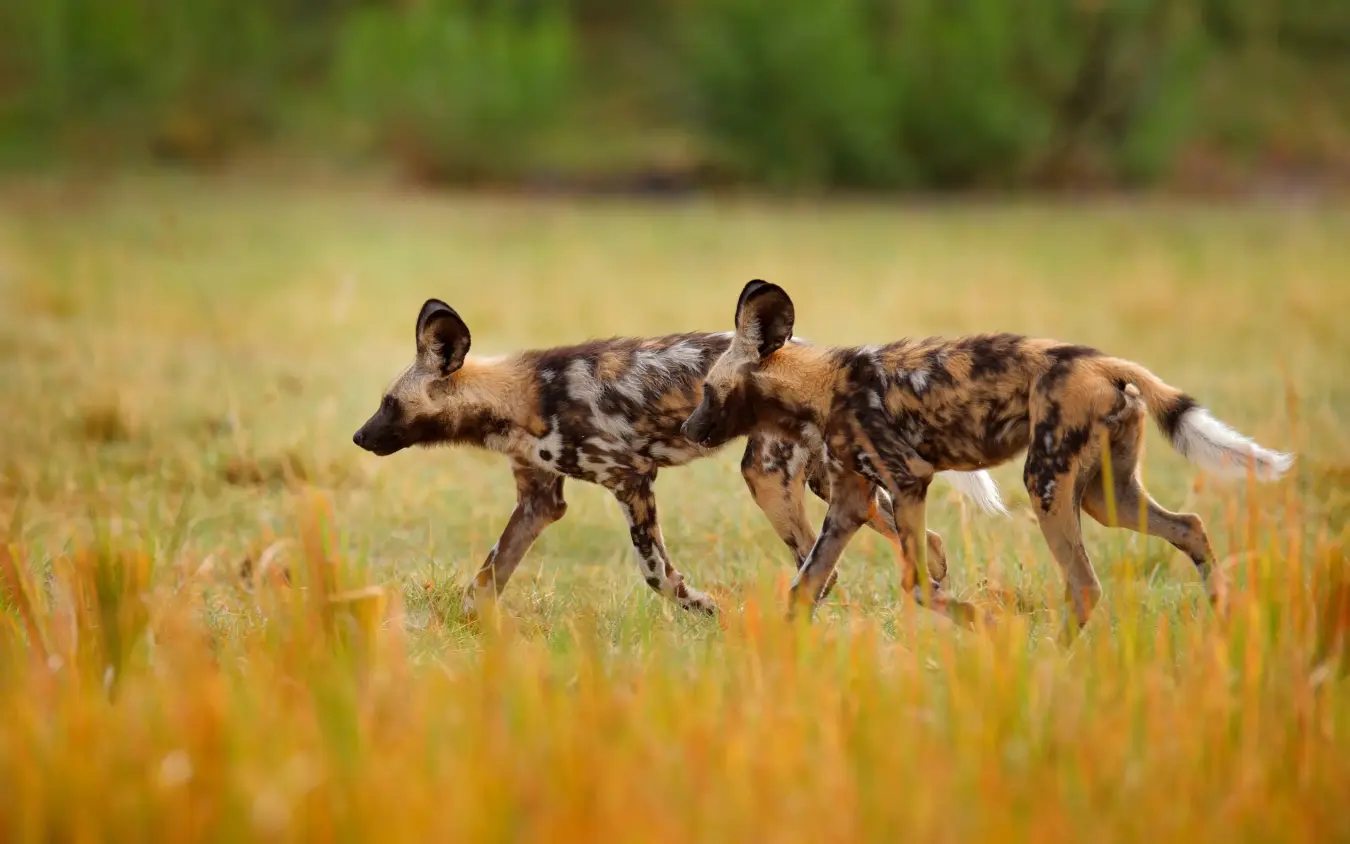
The Hammans were helping wild dog researchers before they built the camp, and the work has carried on ever since. Chitabe still supplies the Botswana Predator Conservation Trust with data and logistical support for its wild dog research, and funds aerial wildlife surveys. Through its operator the camp also supports the Children in the Wilderness education programme. Power comes entirely from the sun. The team are Batswana and long-serving, some of them second-generation, which gives the place a settled, familiar warmth.