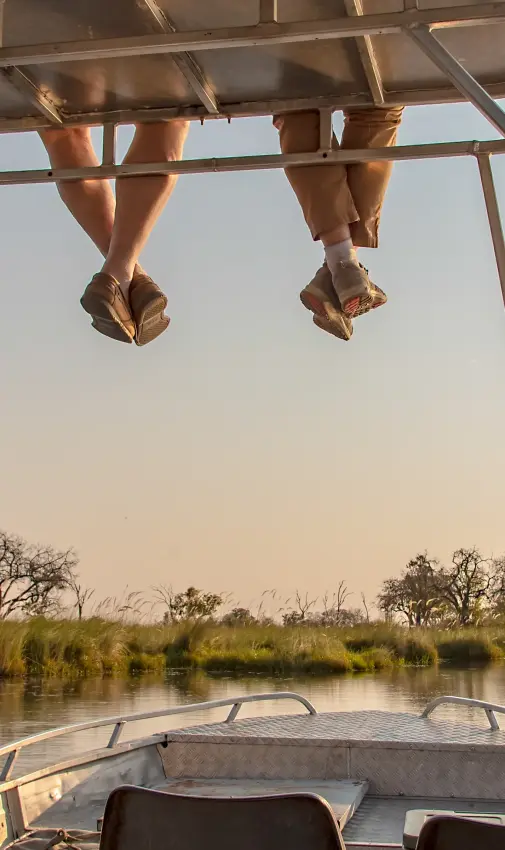
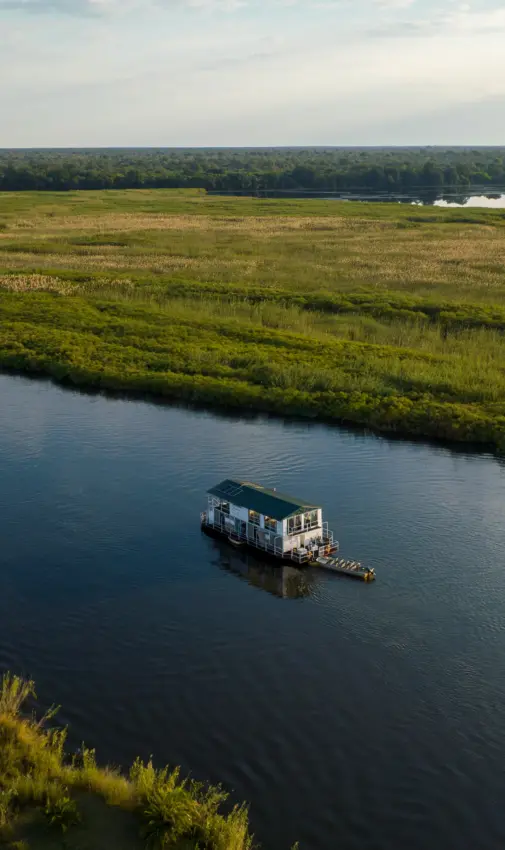
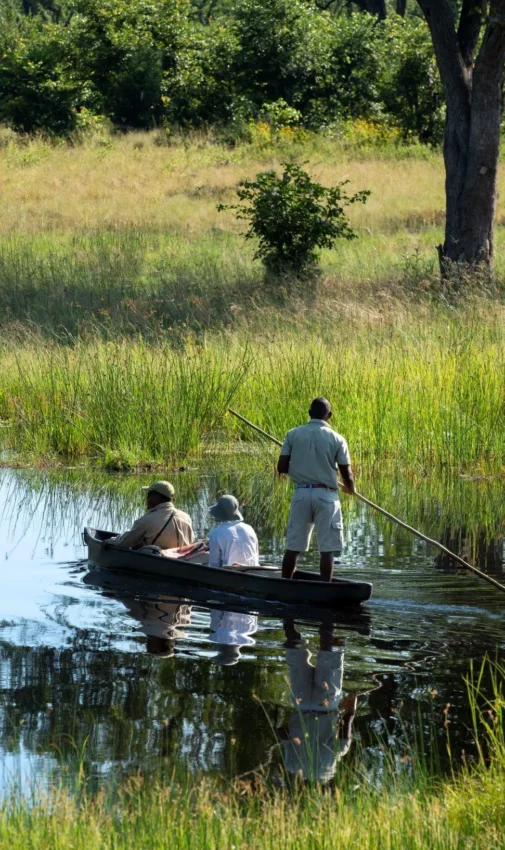
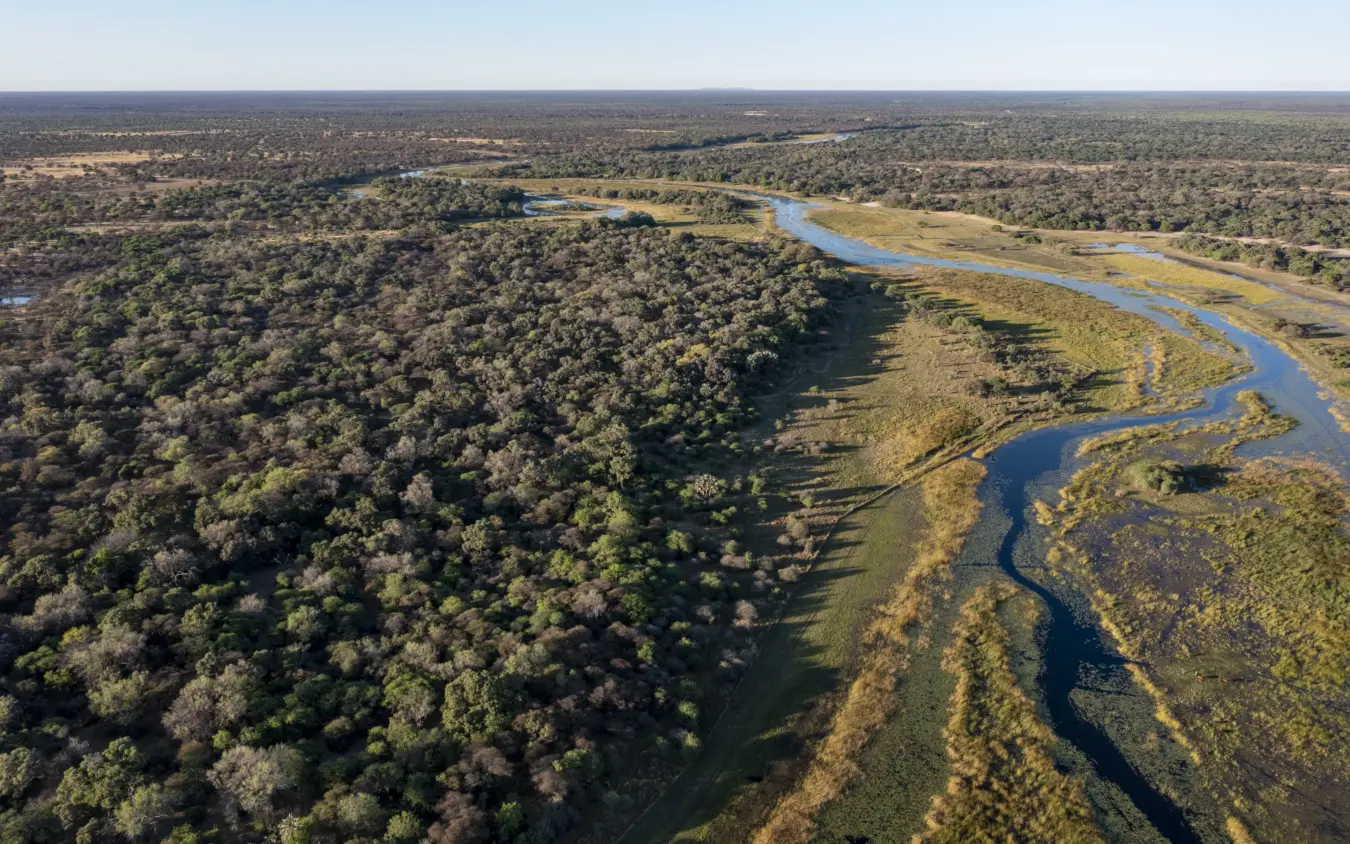
From about May, once the flood has filled the reed channels, the mokoro comes out. It is a dugout canoe, poled slowly through papyrus and water lilies, and the same channels hold tigerfish for catch-and-release fishing while the levels allow. On foot, guides read tracks and dung, and the plants too, across the palm islands and the drier woodland.
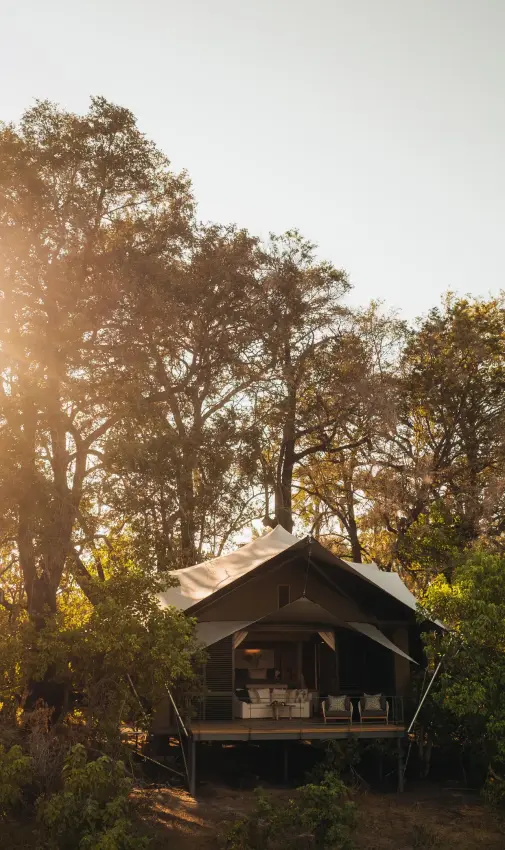
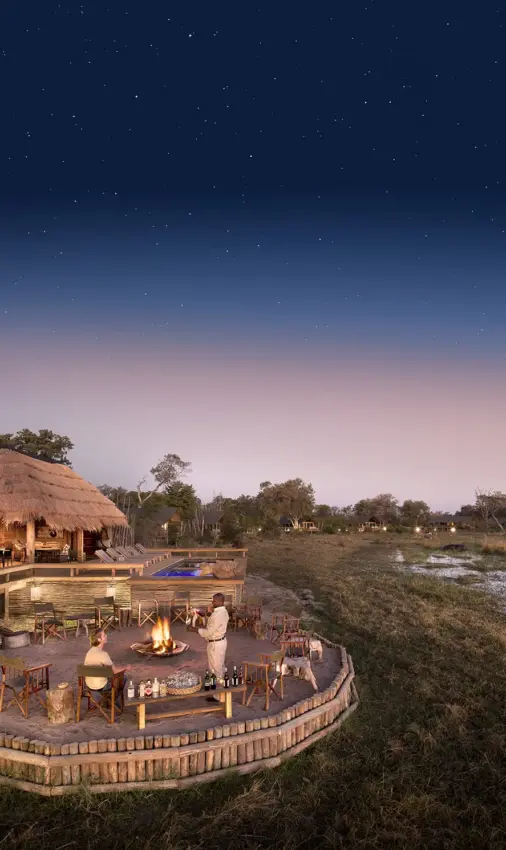
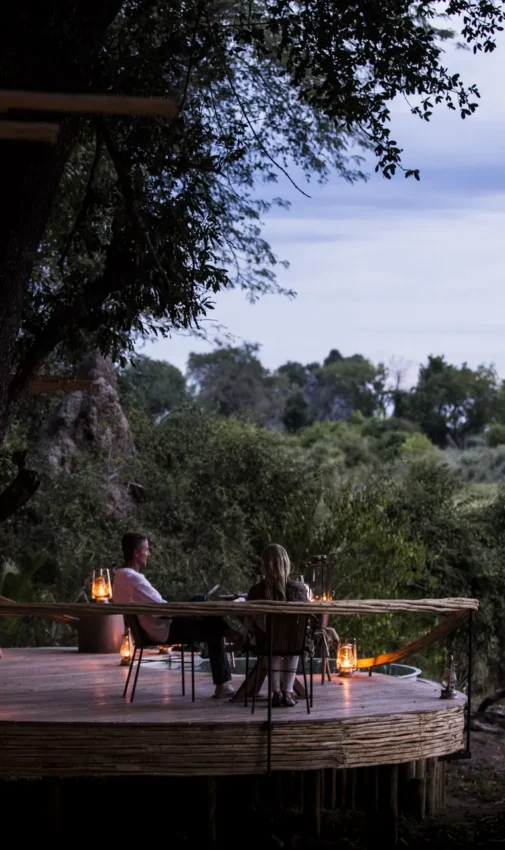
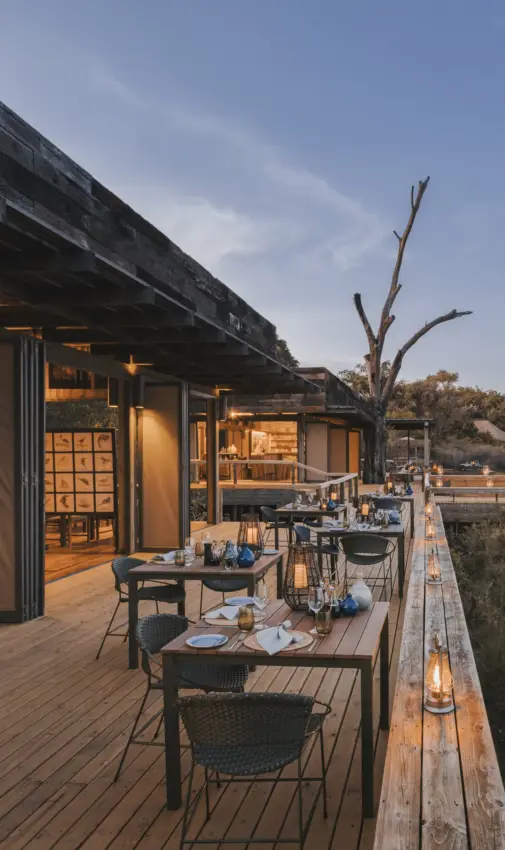
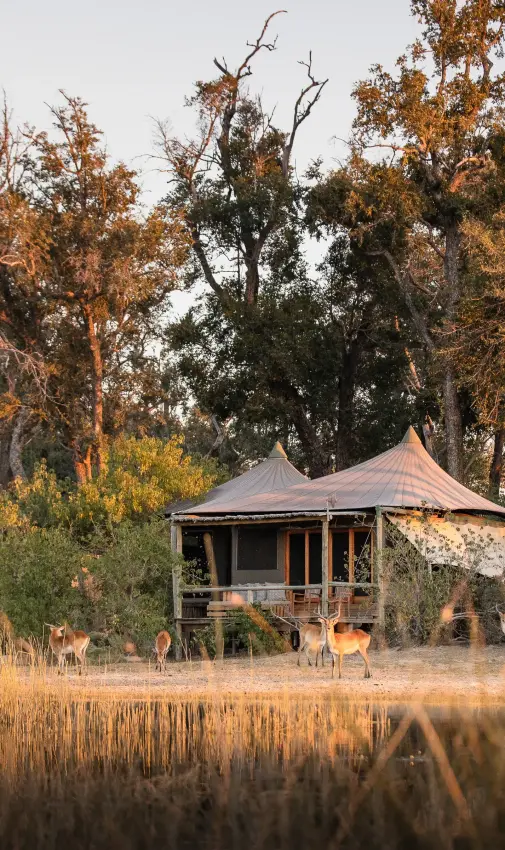
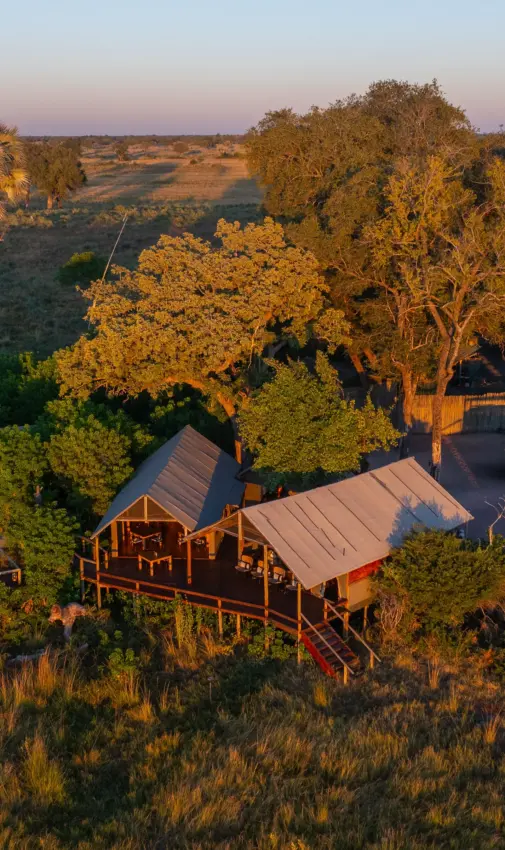
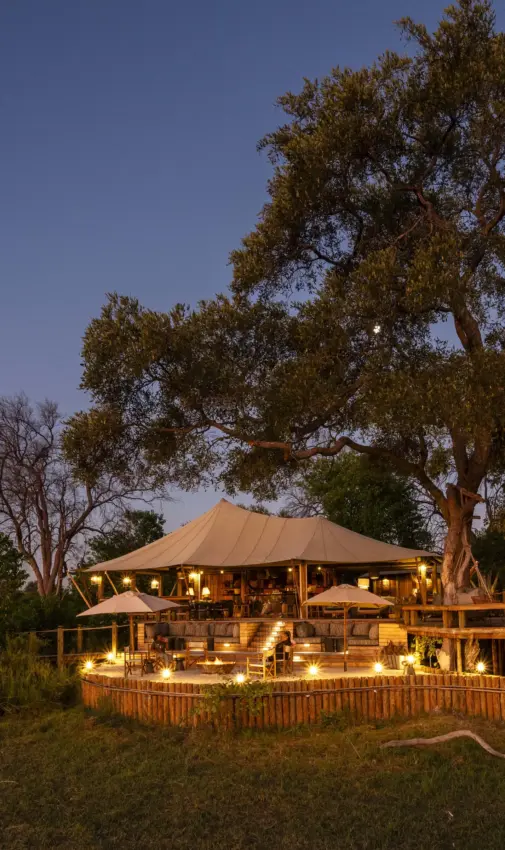
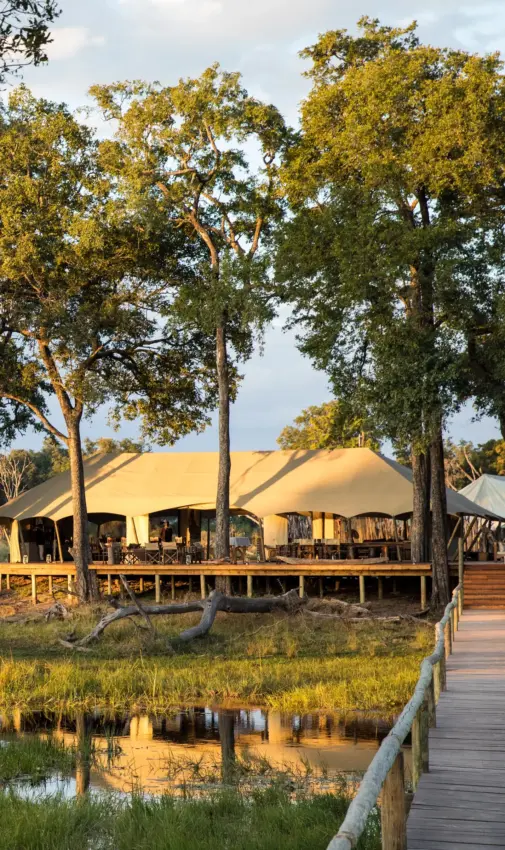
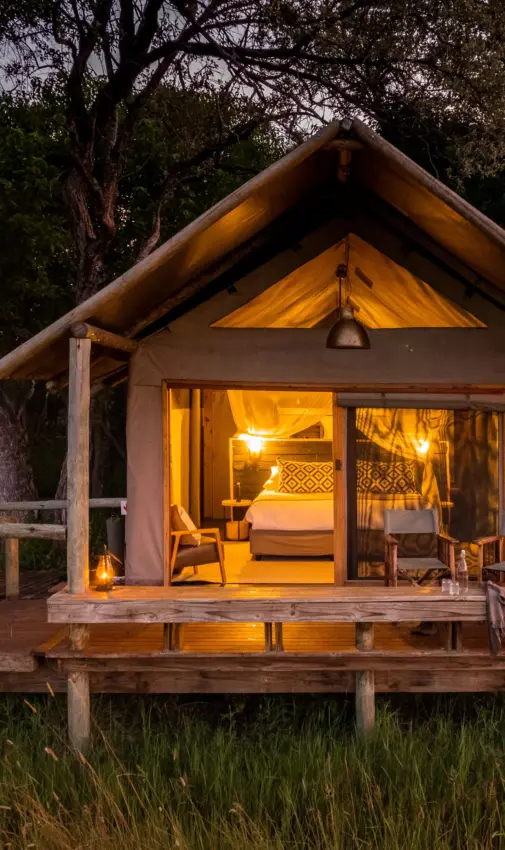
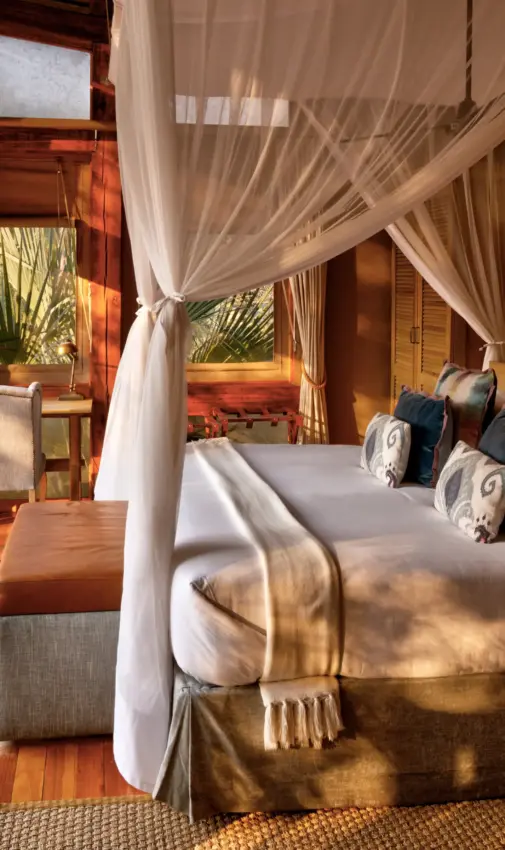
A butler brings a morning drink with the wake-up call at first light, and the shower runs hot. Between outings, life gathers in a shaded, open-sided living and dining area with a wooden floor and a well-stocked bar. The camp is unfenced, and animals walk through it freely. After dark every guest is walked back to the tent by a guide.
The camp is unfenced, and animals walk through it freely.
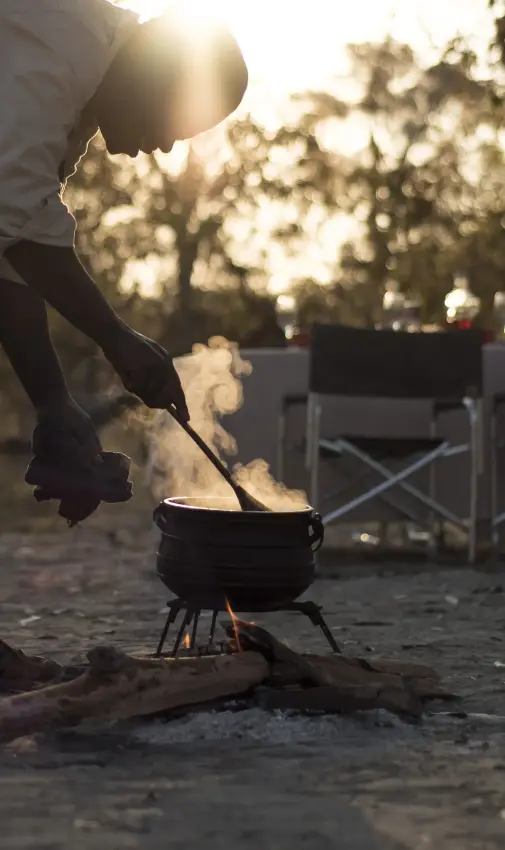
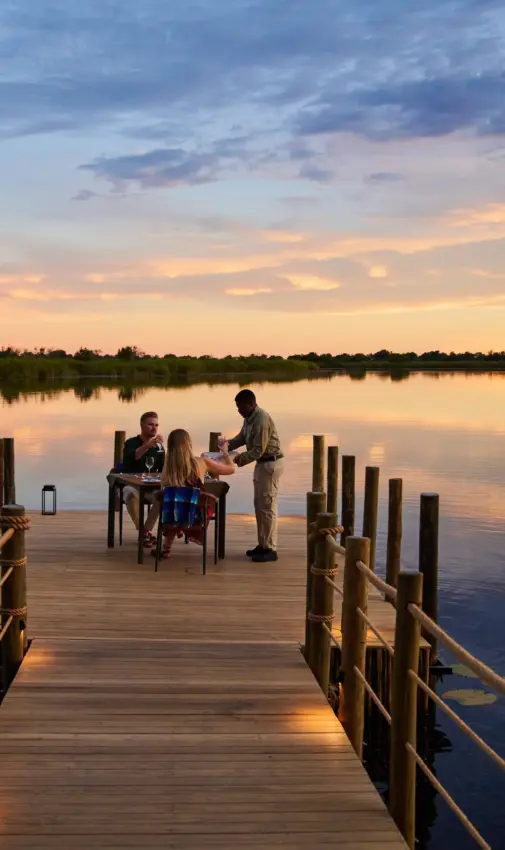
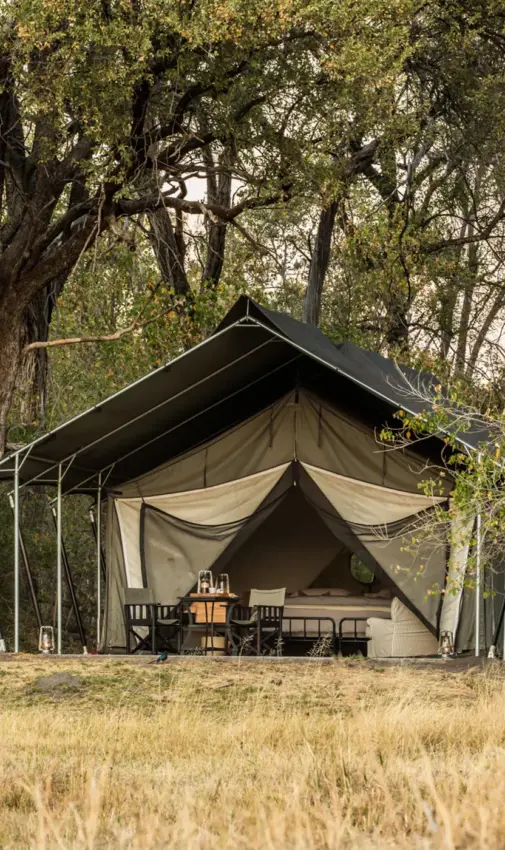
With sand underfoot and food coming off the fire, meals have the easy feel of a family camping trip. The chef cooks breakfast over the open fire, and meals come as sharing platters, perhaps fire-cooked paprika chicken with roast vegetables, hummus and tabbouleh. In the evening a drink comes round before dinner, and all six eat together, round the fire or at one table.
A short light-aircraft flight out of Maun lands at the concession airstrip, and a brief drive brings guests into camp. The camp is informal by design, canvas-walled and solar-lit around its fire, though Wi-Fi keeps a line open to the outside world, and guests after polished suites should look elsewhere in Botswana. Here the effort goes into the hours outside, with a guide who has only six guests to look after. That small scale suits families as well: children aged twelve and over are welcome, and a family can book all three tents for exclusive use.