Camp

Shinde Footsteps

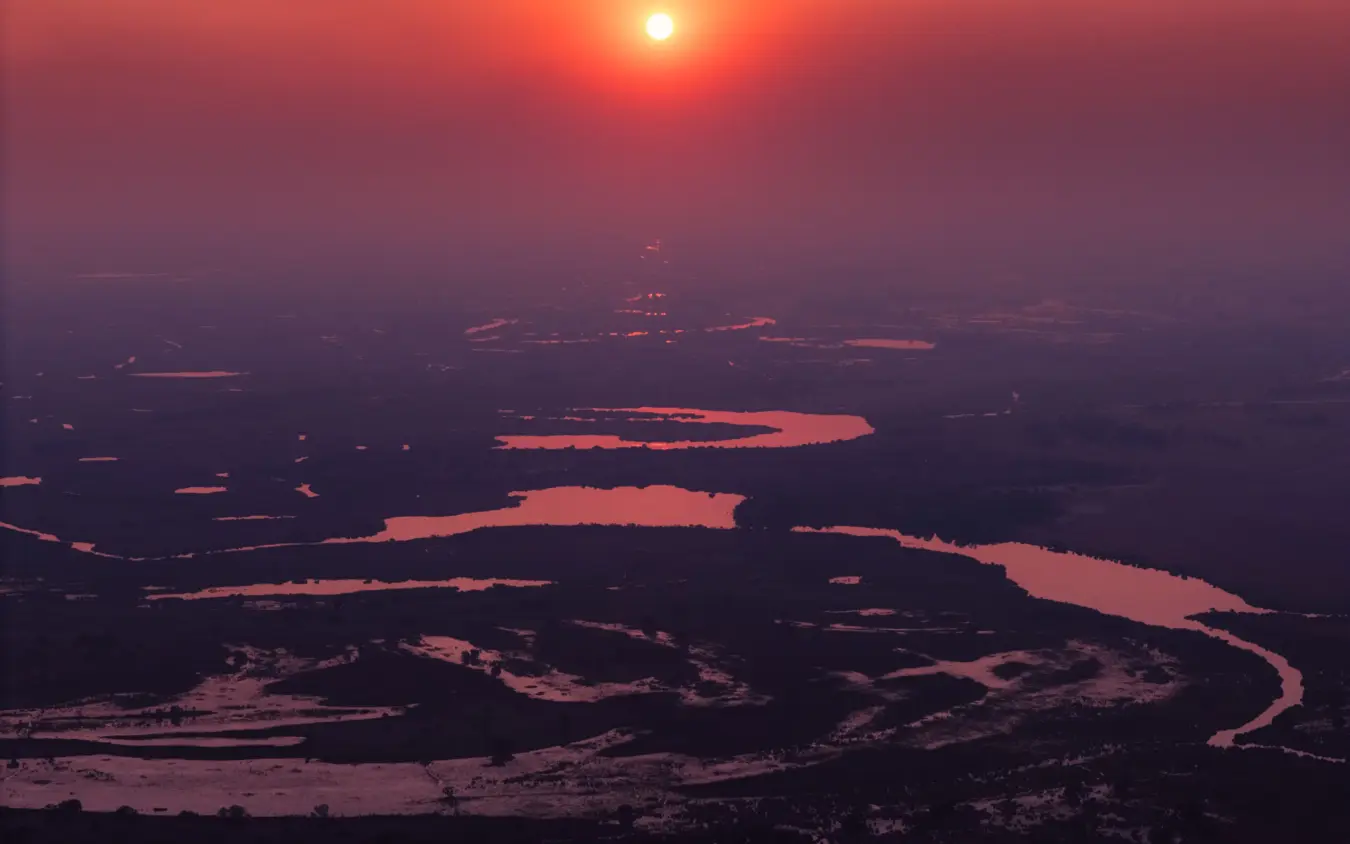
Four tents for six guests on a hippo lagoon in the private Shinde concession, on the northern edge of the Okavango Delta.

Country: Botswana
Location: Concession NG21, northern Okavango Delta
Number of rooms: 4

Six guests beside a hippo lagoon

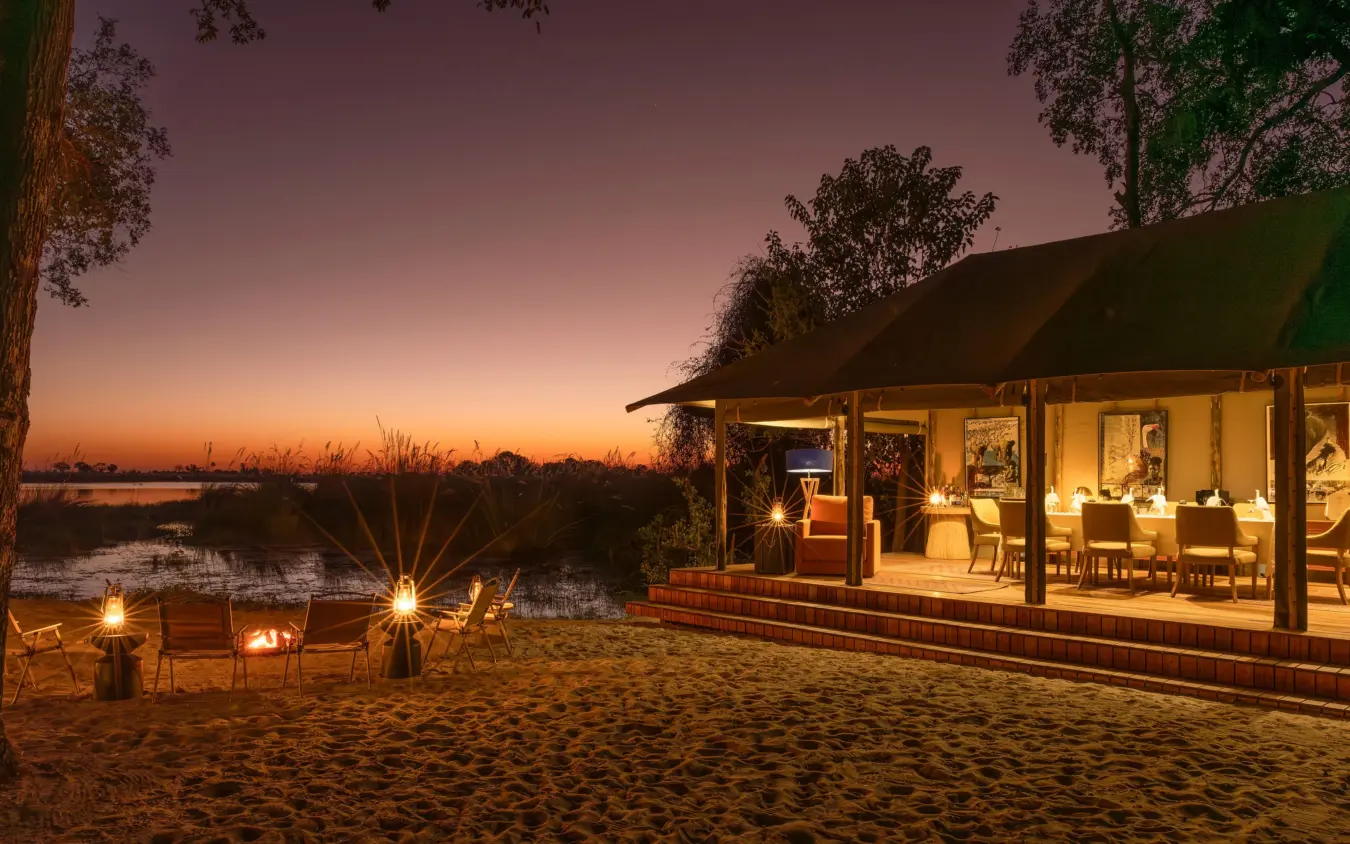
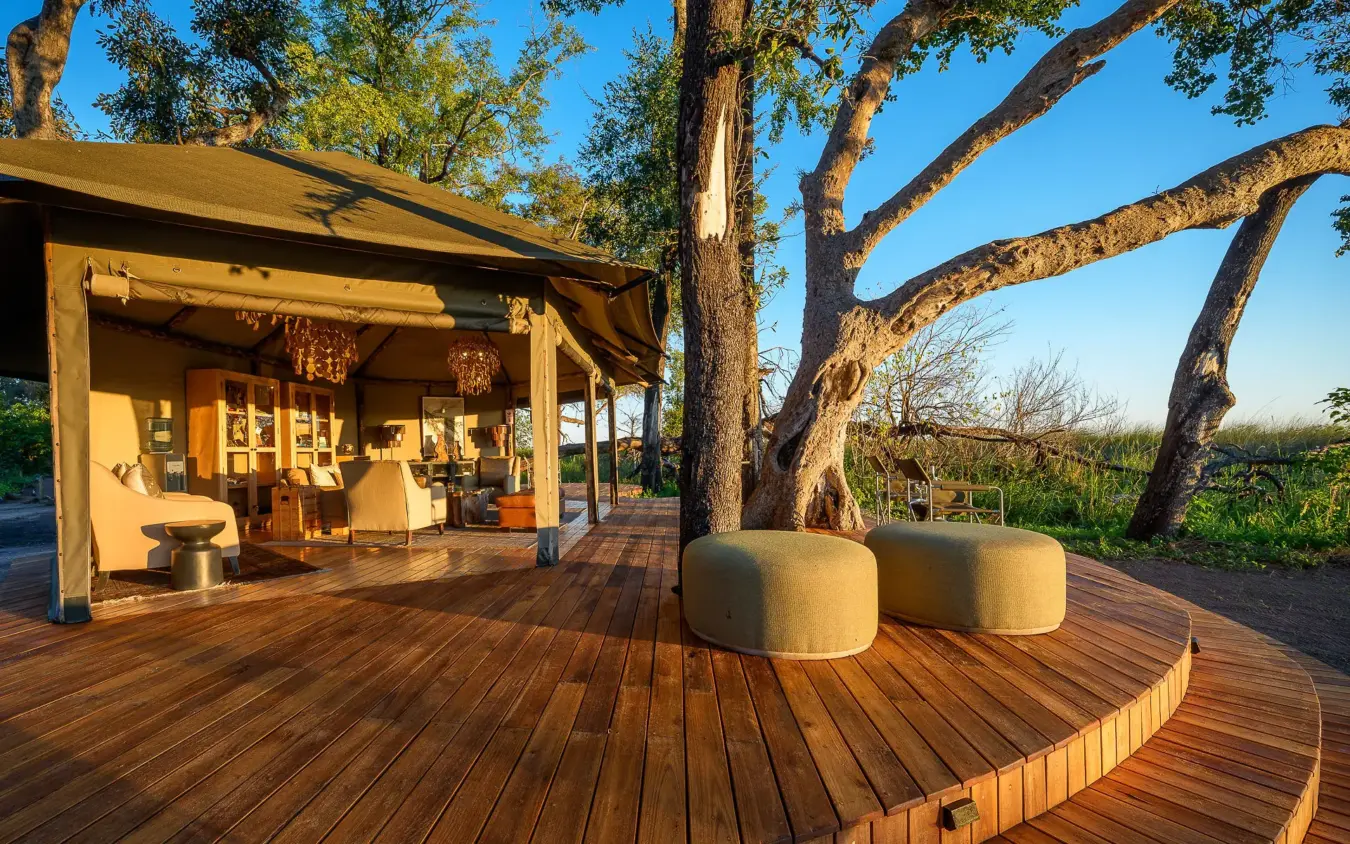
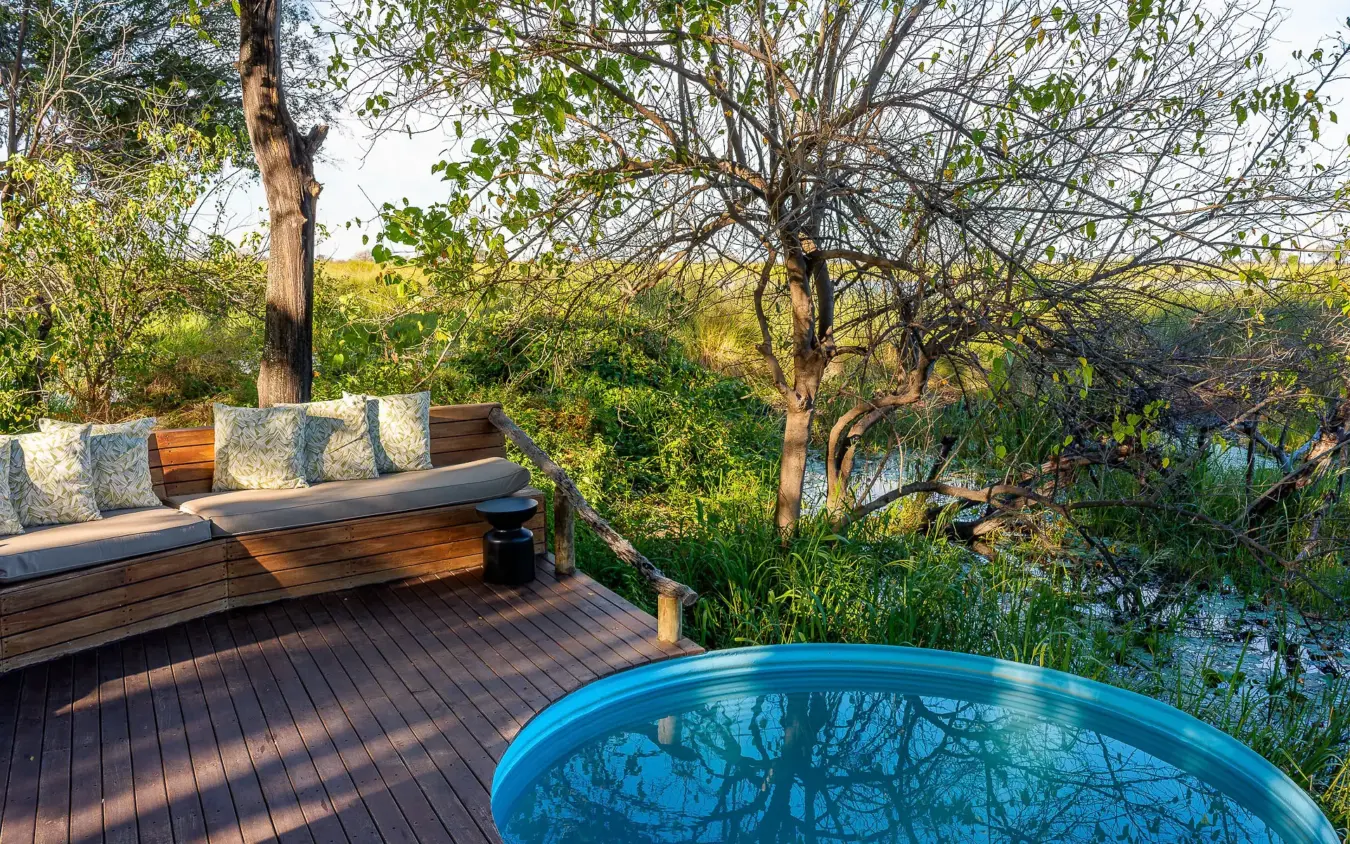
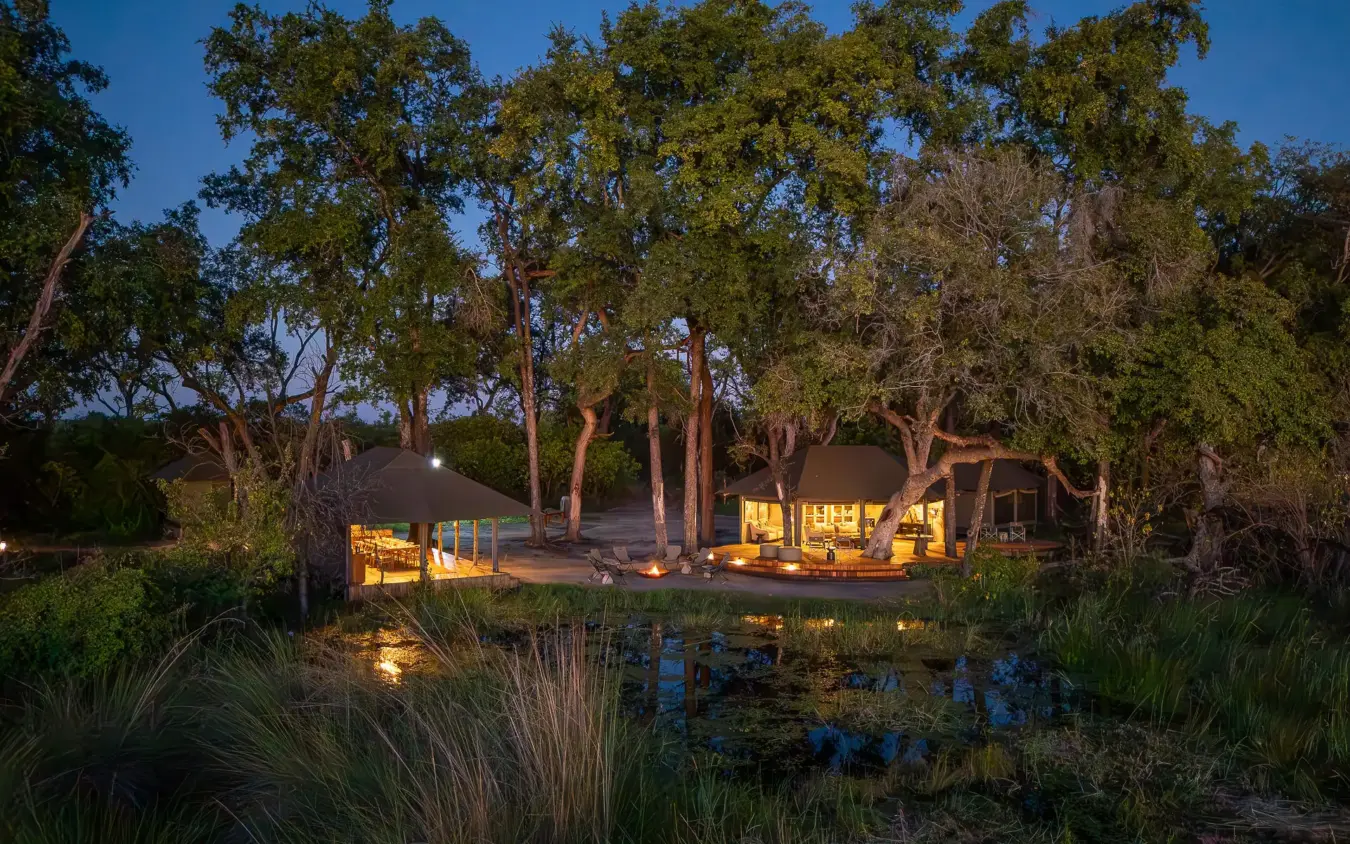
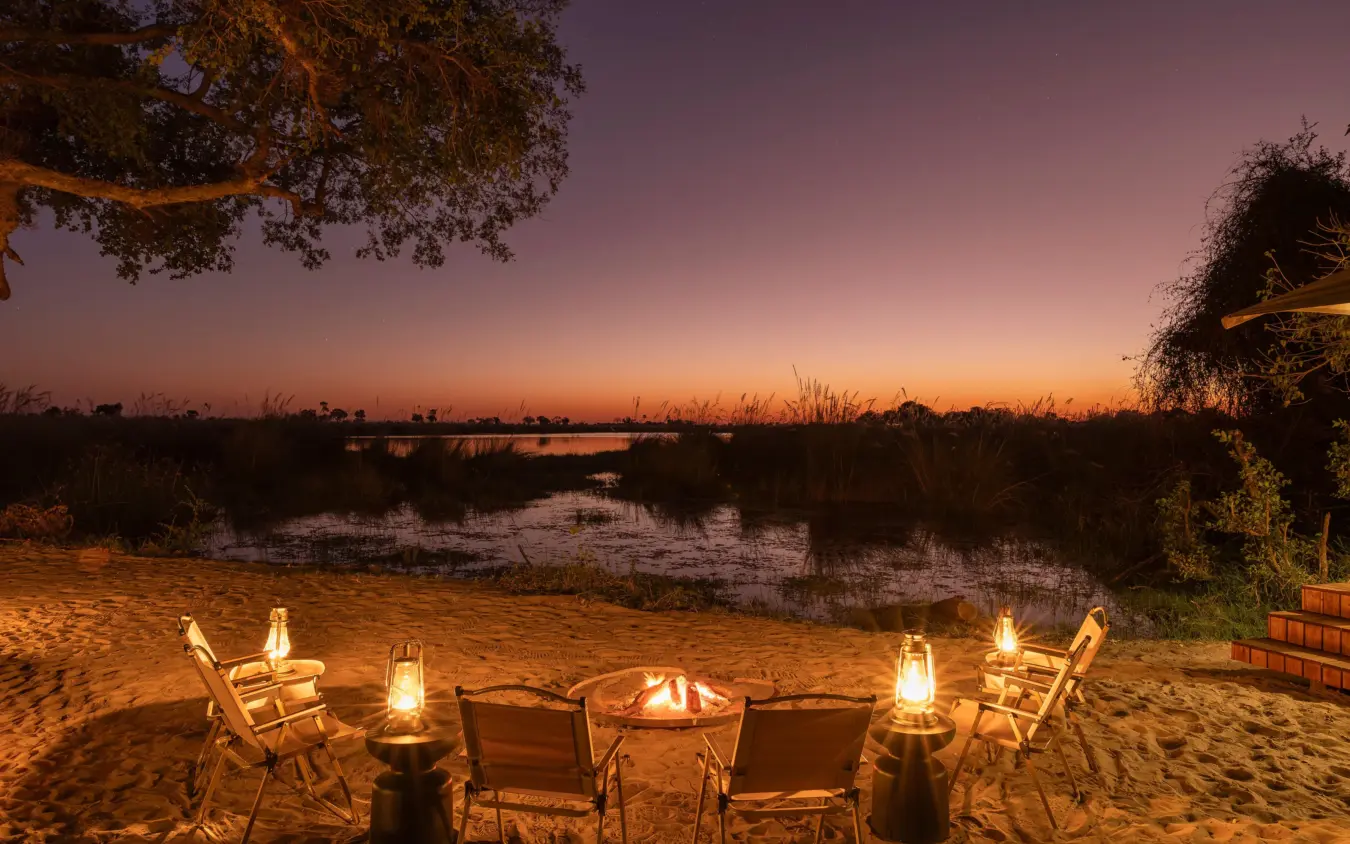
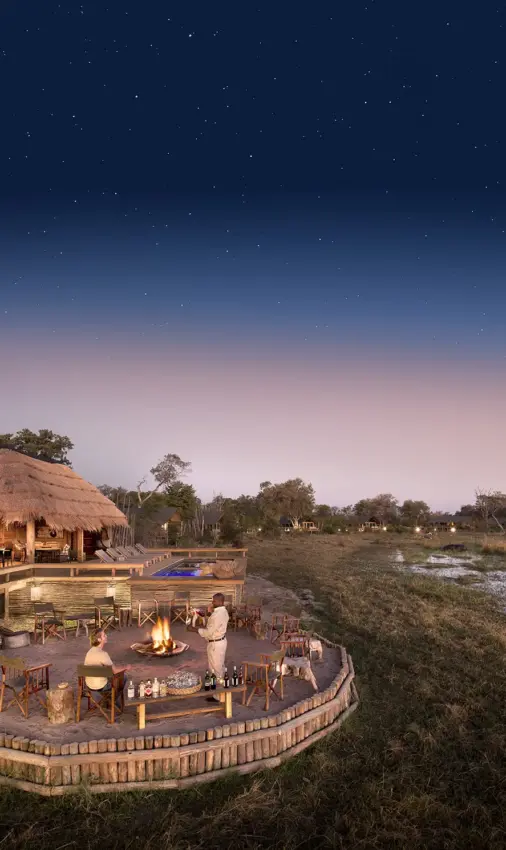
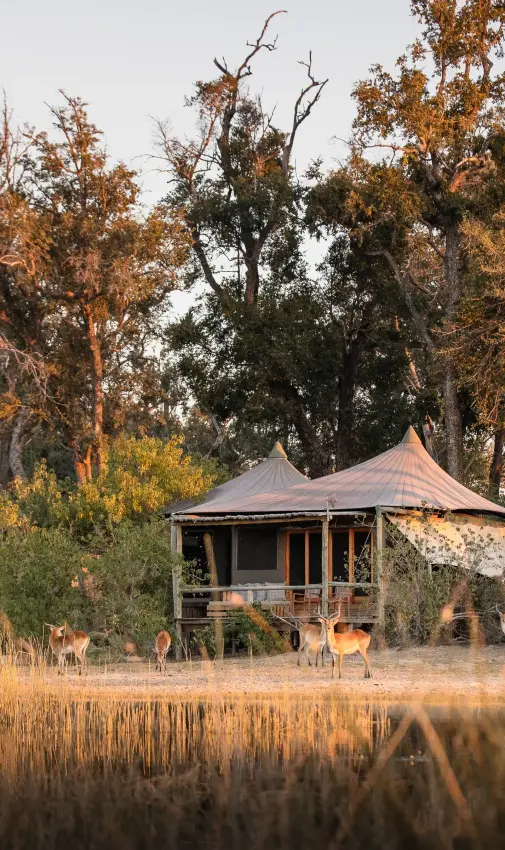
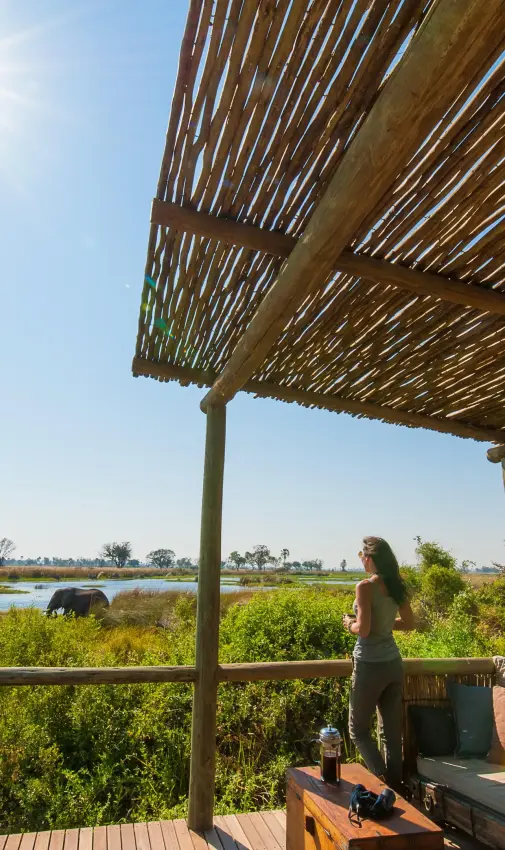
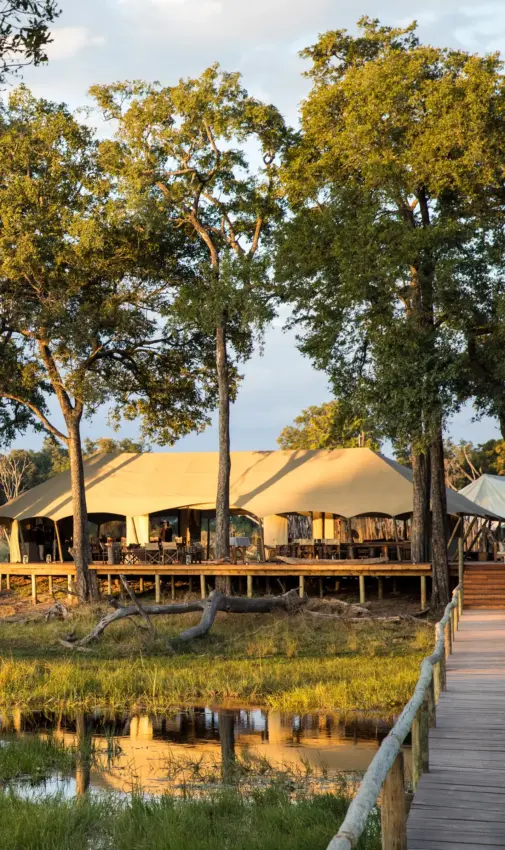
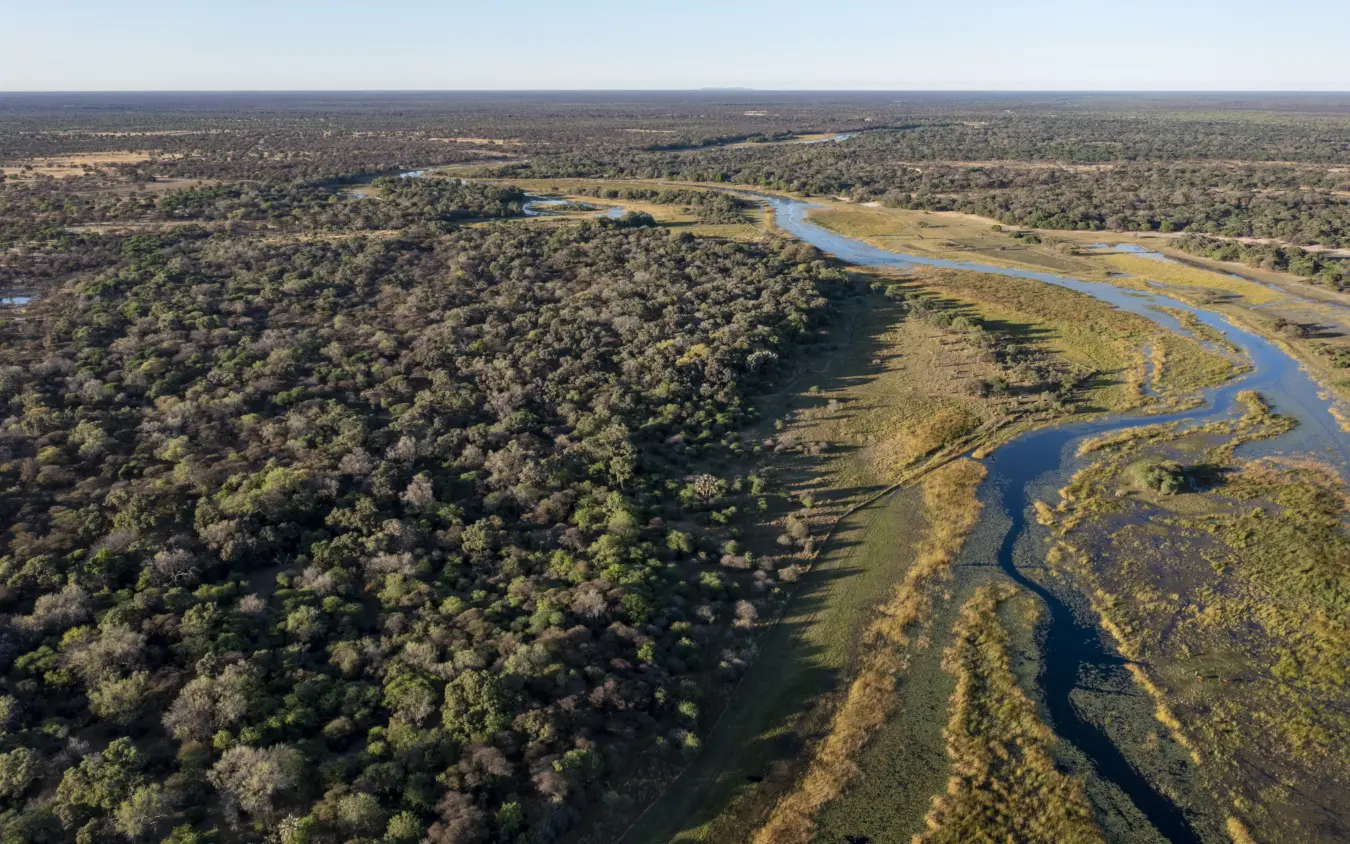
It began in 1998 as a walking-only camp, and walking with armed guides is still the reason to come. Four tents hold six guests on a permanent hippo lagoon in the private Shinde concession, on the northern edge of the Okavango Delta. The camp was rebuilt and reopened in 2023, and one party can take it at a time on request. Hippos grunt in the water below the lounge all night.

The Delta is read from the ground here, at walking pace.

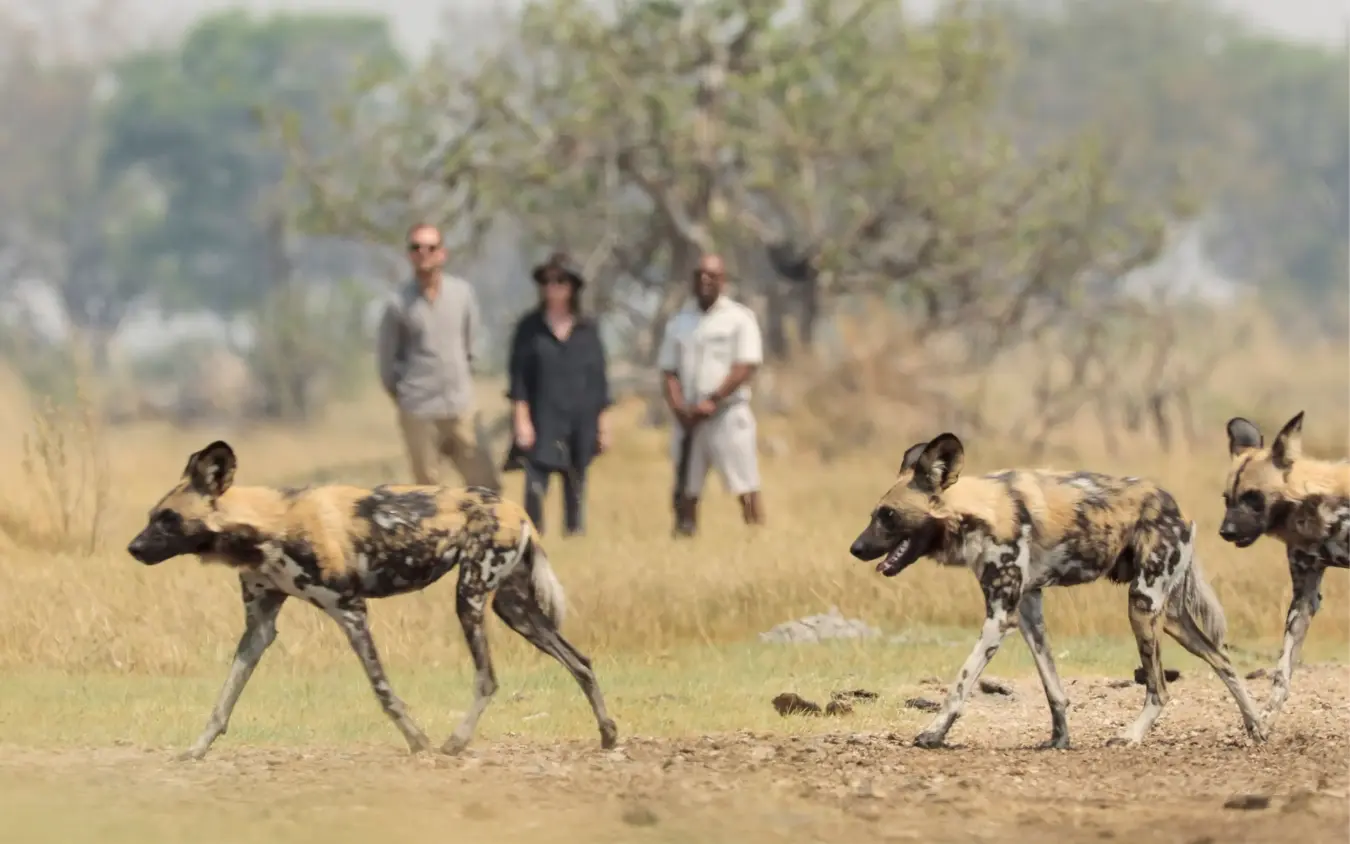
Guides trained to carry a rifle take small groups out through palm savanna and floodplain, reading spoor, insects and dung with the same attention others give to lions. The Delta is read from the ground here, at walking pace. Walks run three to four hours when the grass is short, and less when it stands high. No experience is needed, and the group and its guide decide each morning how far to go.
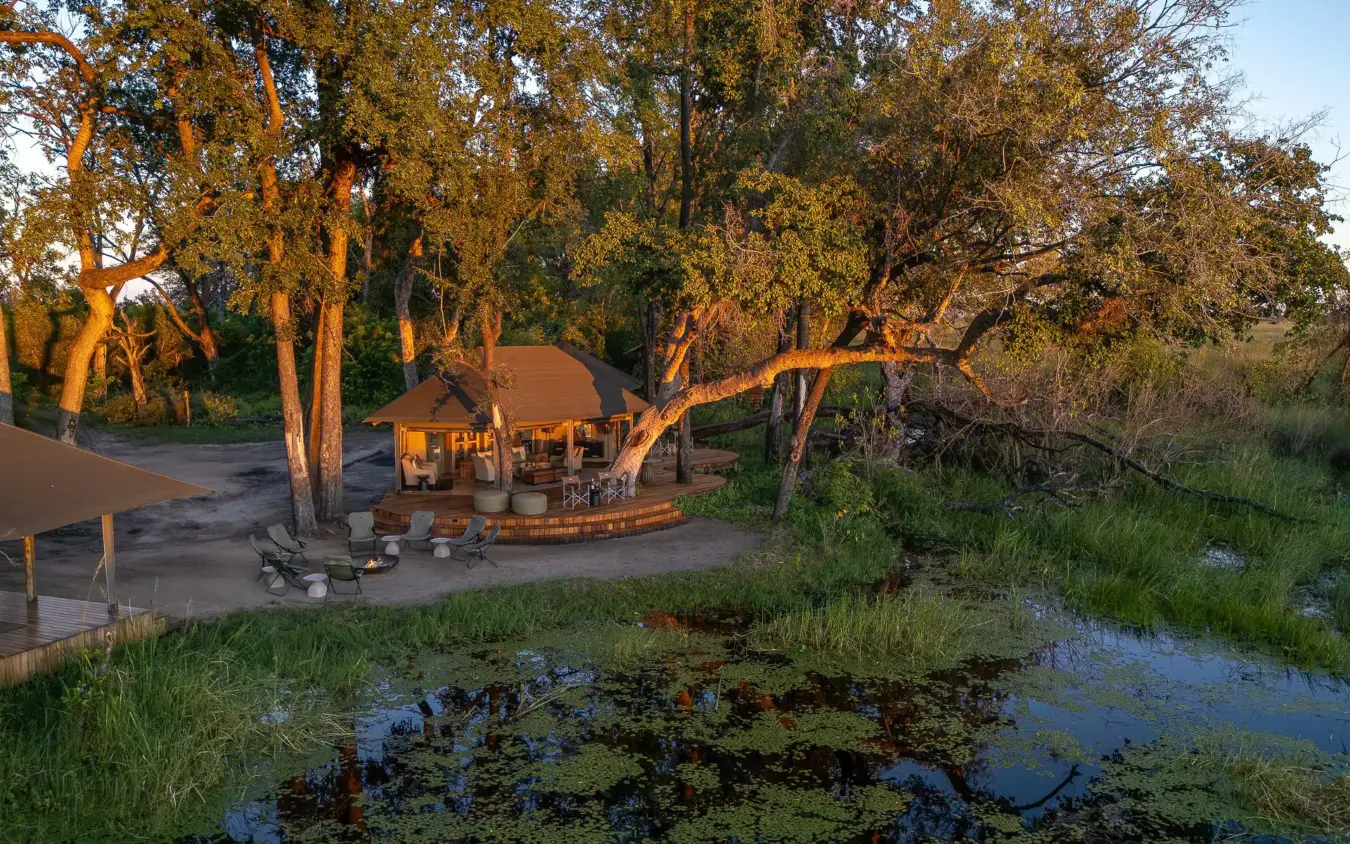
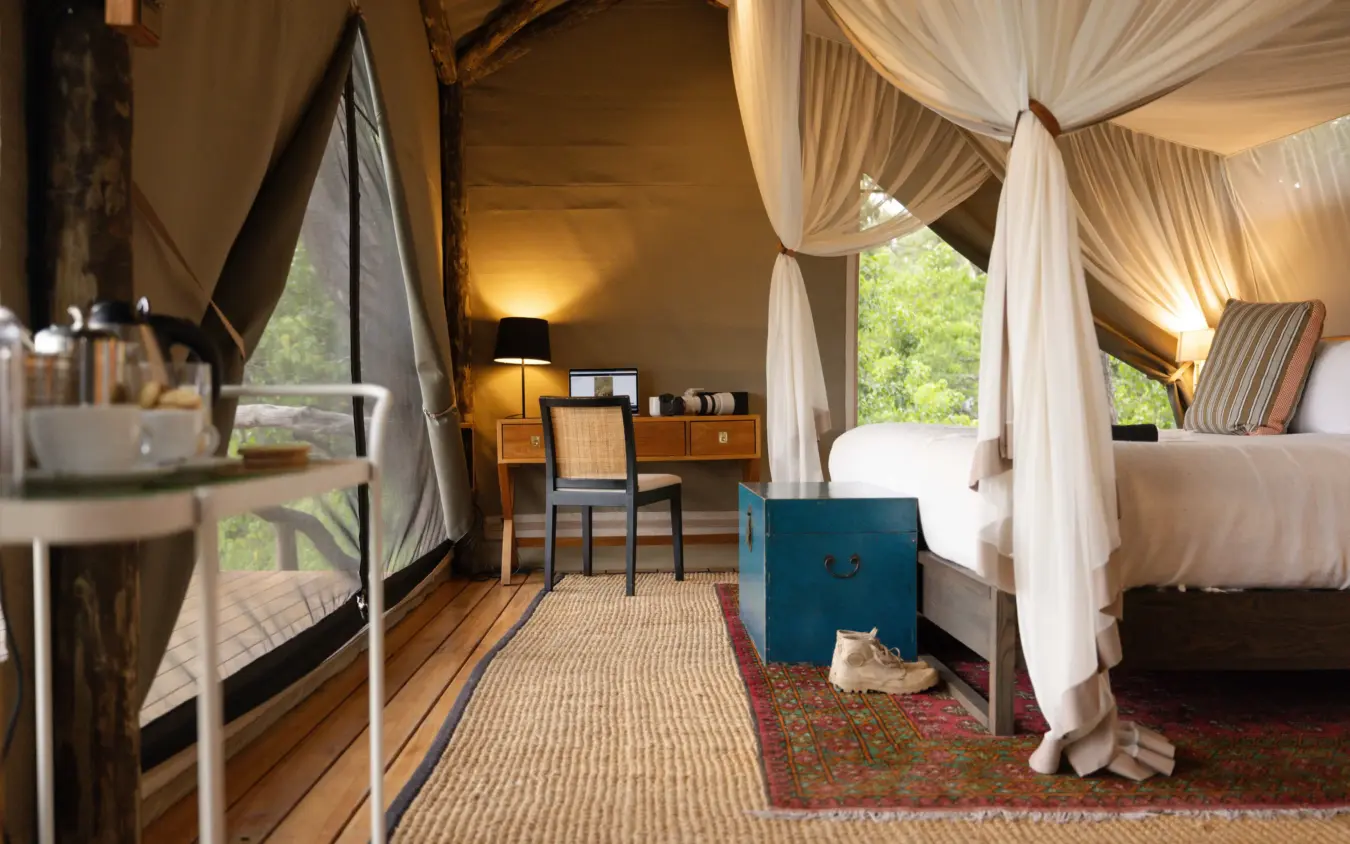
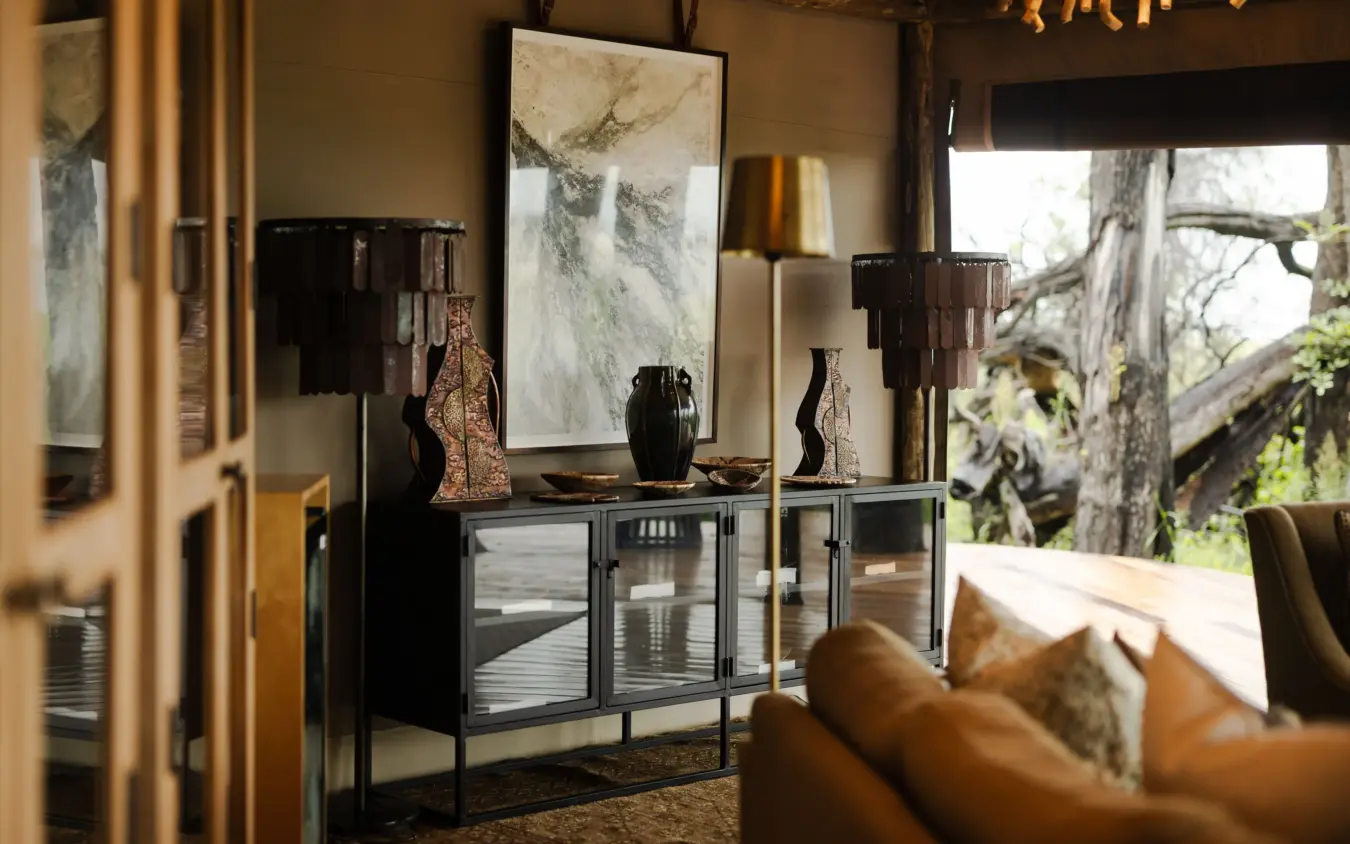
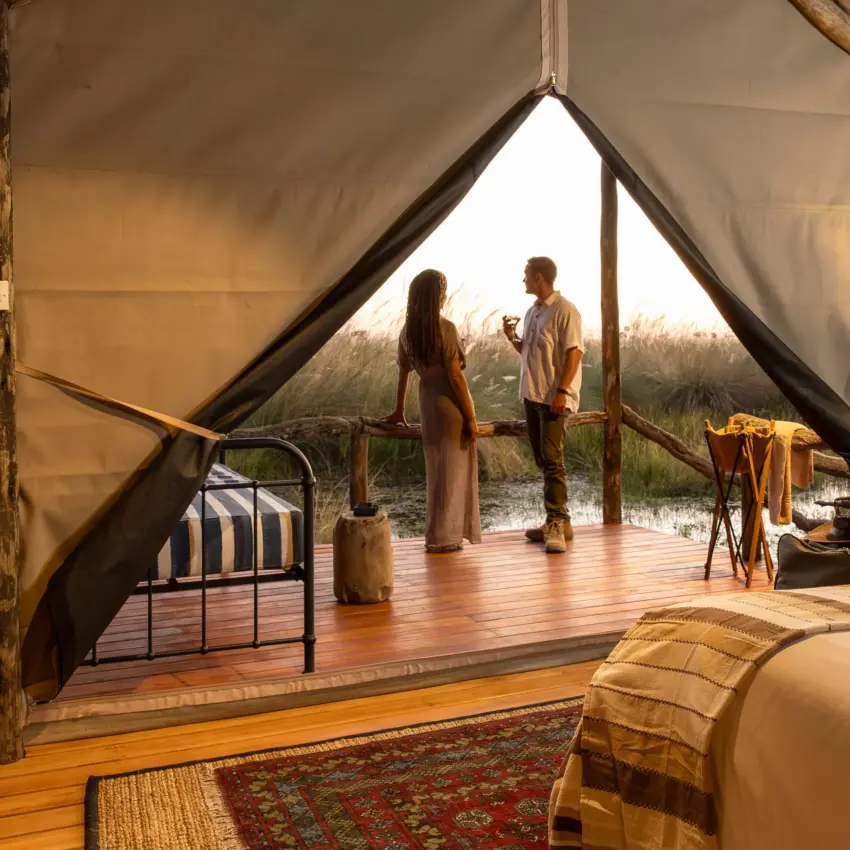
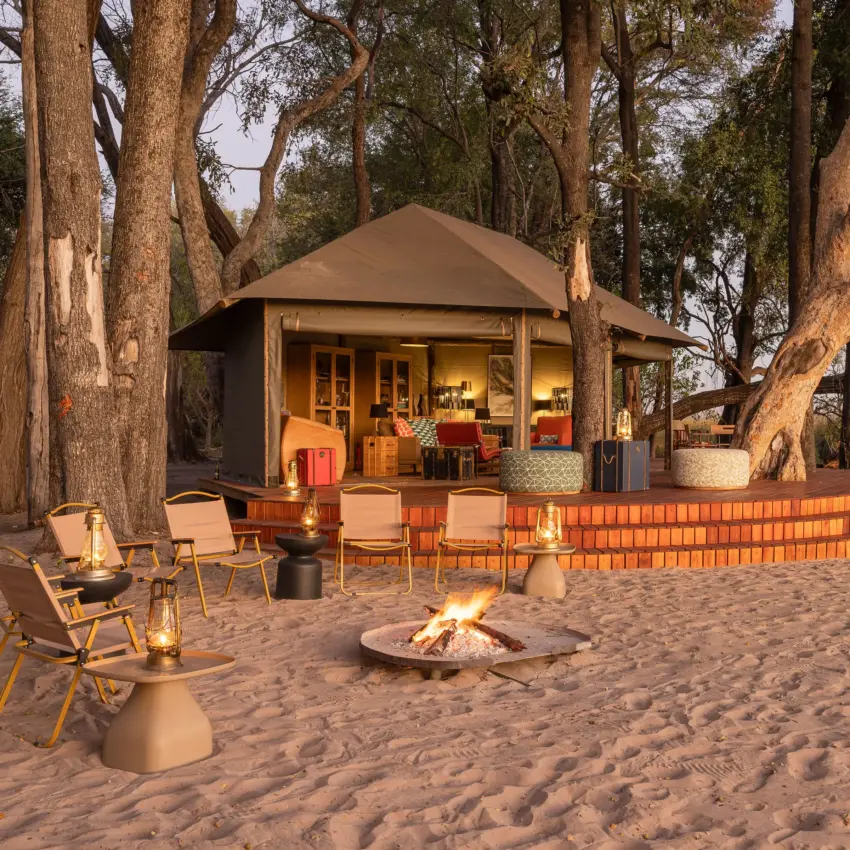
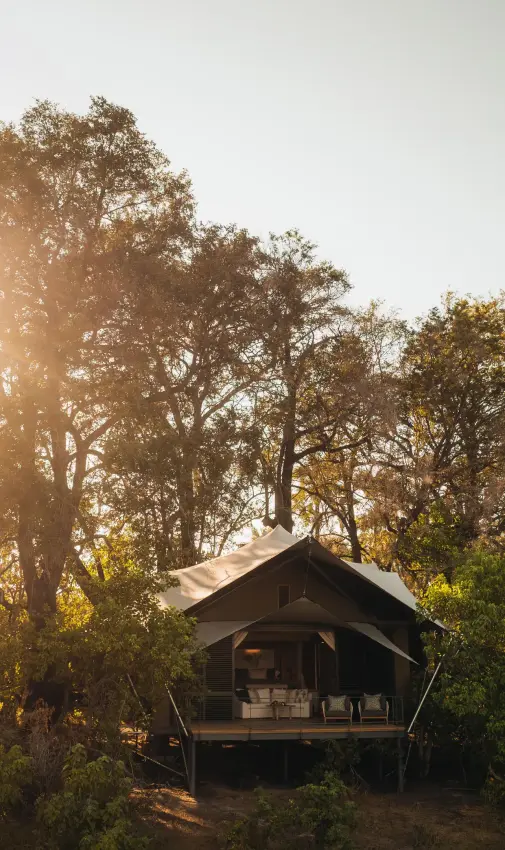
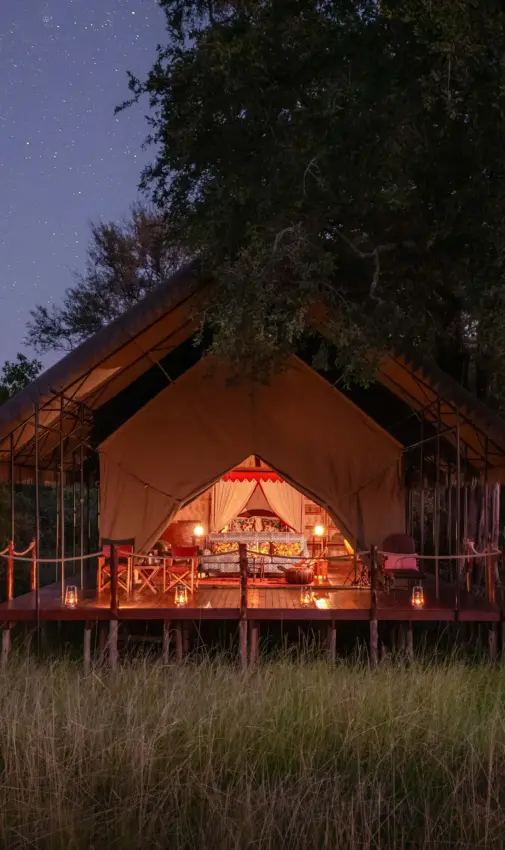
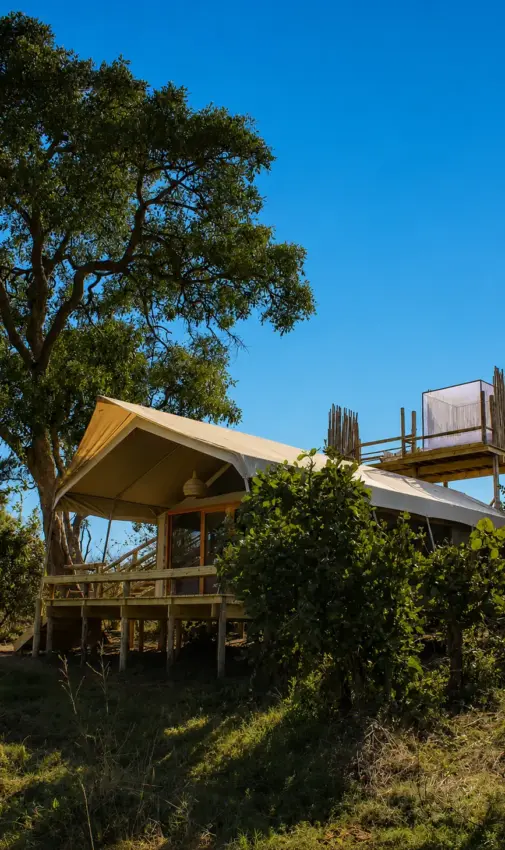
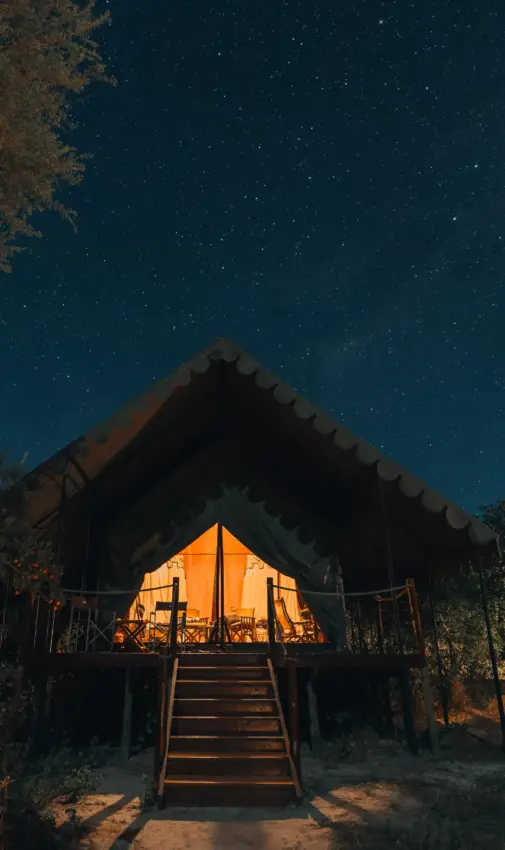
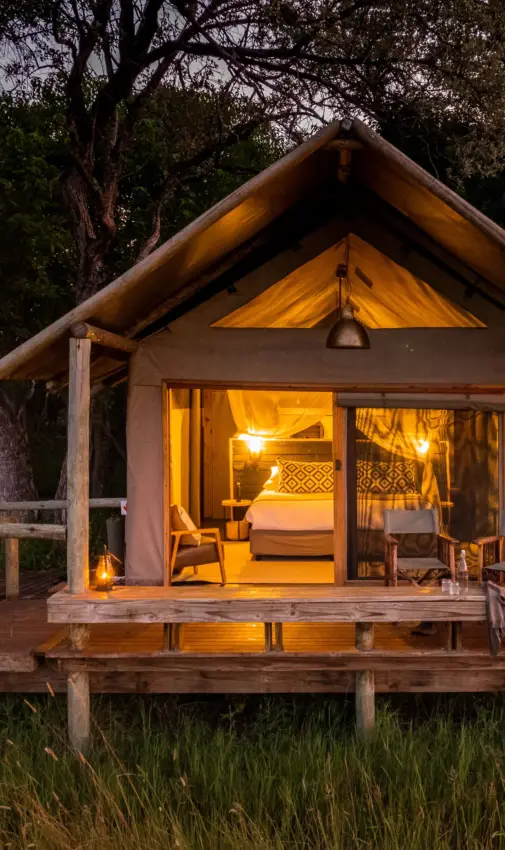
Four tents stand on low timber decks beneath ebony and mangosteen trees, canvas walls and mesh windows open to the lagoon. Three take a twin or double; the fourth holds two bedrooms sharing a bathroom, which suits a family travelling together. Inside are wooden floors and kilims, a shower indoors and a second one under the trees, a writing desk, a fan and charging points. Nothing is fussy.
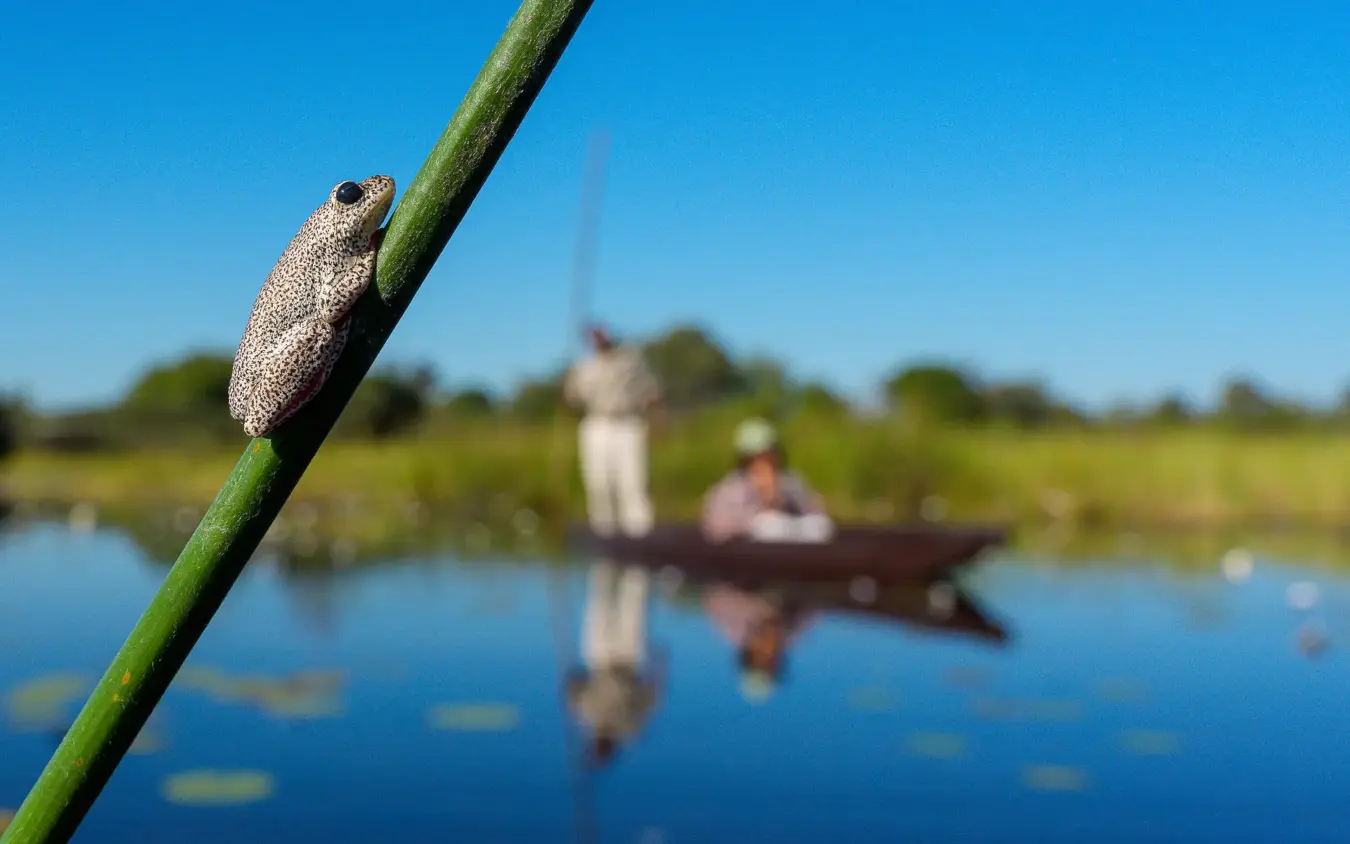
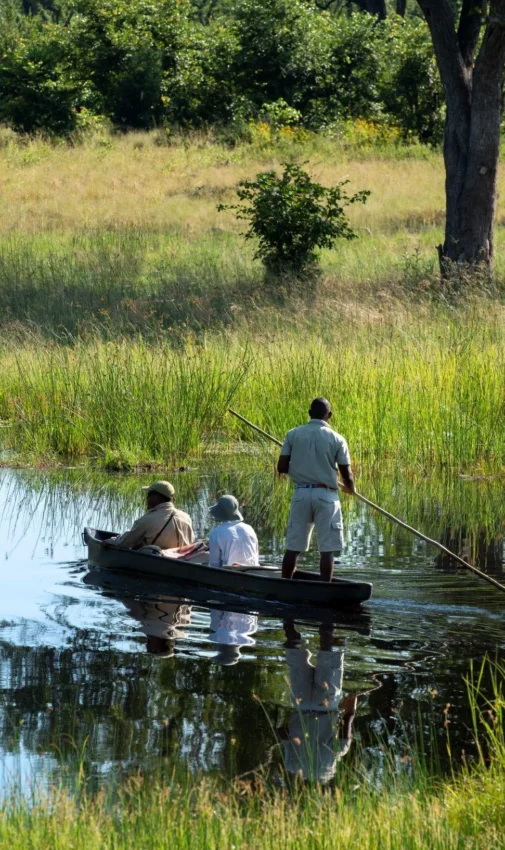
A mokoro glides through lily channels when the flood allows.

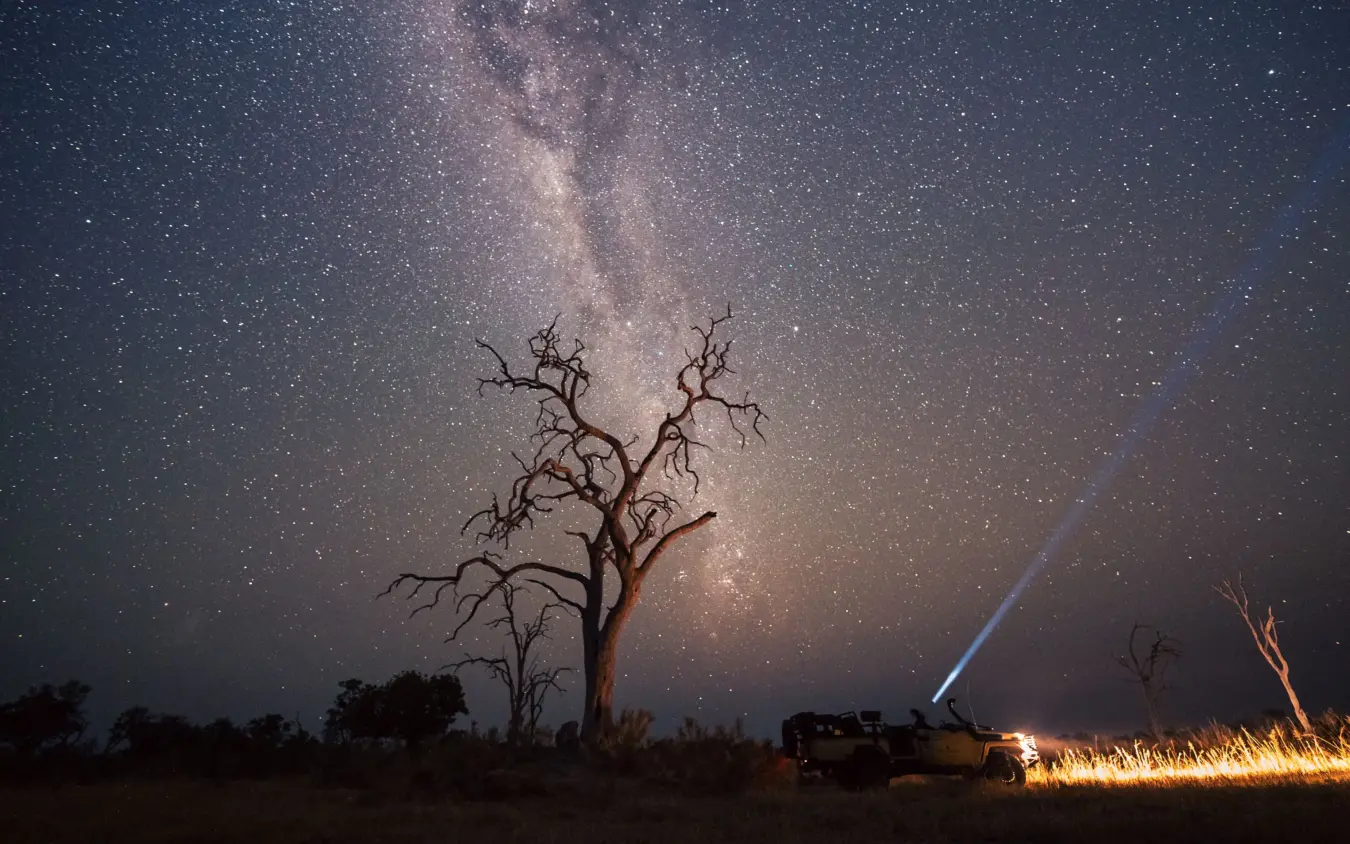
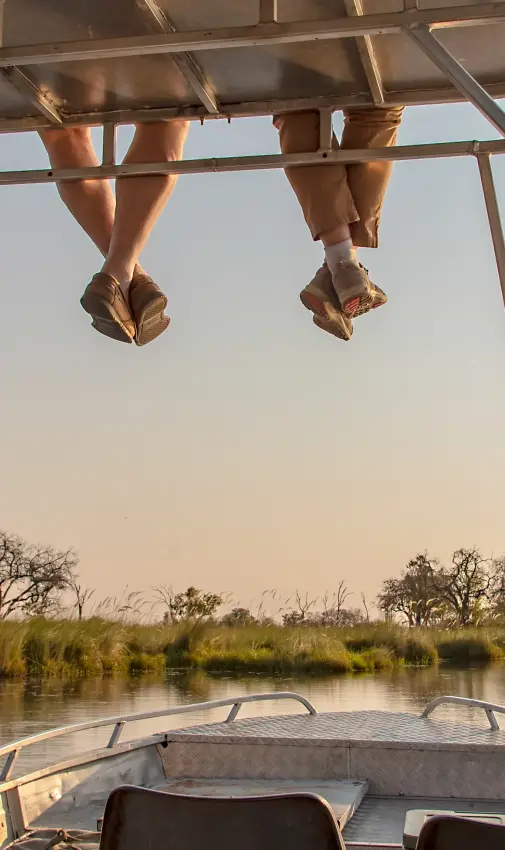
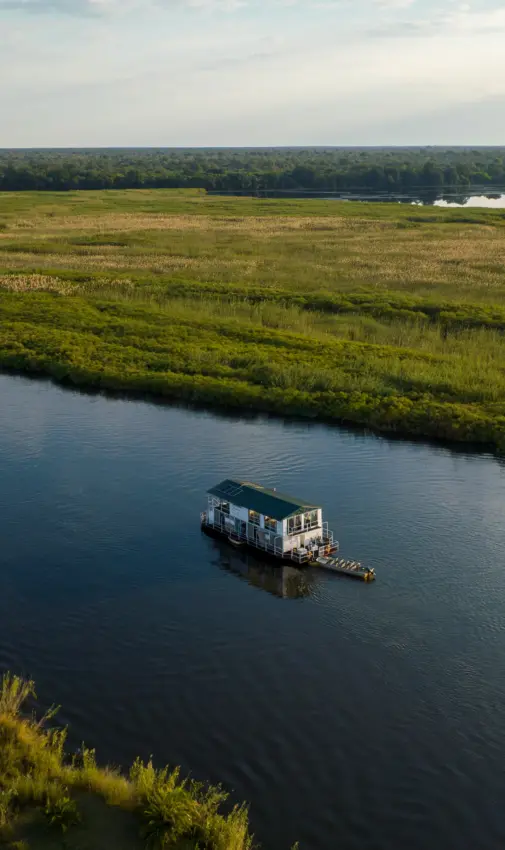
Because the Shinde concession is private rather than parkland, night drives with a spotlight, off-road tracking and walking are all permitted. A mokoro glides through lily channels when the flood allows, and motorboats run on the deeper channels from the larger sister camp, a few kilometres west in the same concession. Fishing runs from March to December.

01

accommodation

Four Tents on Timber Decks

Four tents hold six guests. Three have a twin or double bed and an en-suite bathroom with a wooden vanity, a shower indoors and a second one outside. The fourth has two bedrooms sharing one bathroom. All sit on raised decking, with a covered veranda, mosquito nets, fans, charging points and hanging space.

02

activities

Night Drives and Walking in Private Concession

Walking safaris with armed guides, day and night game drives with a spotlight, off-road tracking, mokoro trips when water levels allow, motorboat outings on the deeper channels and catch-and-release fishing between March and December. Private concession rules make the night drives, walking and off-road work possible.

03

conservation

BBL Wildlife Club for Maun Orphans

Guides run the BBL Wildlife Club for children from Bana Ba Letsatsi, a Maun day centre for vulnerable and orphaned children, and host groups at camp each year. The centre also receives monthly support for food and medical costs, and a Pack for a Purpose partnership brings guest-donated school and sports supplies.

ready to get started?

Get in touch and let’s start the conversation. An initial consultation helps us understand what you’re looking for, whether that’s specific experiences, luxury touches, or marking a special occasion, and from there we’ll guide you through what’s possible so you can decide if we’re the right fit.

Alternative accommodation in the okavango delta

Illuminated safari lodge dining area under ancient trees at dusk, Duba Plains, The Okavango Delta, Botswana 01

Duba Plains

The Okavango Delta

02

Sable Alley

The Okavango Delta

Illuminated safari lodge deck with fire pit at dusk, Khwai Leadwood, The Okavango Delta, Botswana 03

Khwai Leadwood

The Okavango Delta

Safari tent accommodation nestled among tall trees at golden hour, Chitabe Camp, The Okavango Delta, Botswana 04

Chitabe Camp

The Okavango Delta

Wooden deck dining area beneath ancient tree overlooking savanna landscape at dusk, Mombo Camp, The Okavango Delta, Botswana 05

Mombo Camp

The Okavango Delta

Person tending campfire at sunset during outdoor gathering, Kweene Trails, The Okavango Delta, Botswana 06

Kweene Trails

The Okavango Delta

Boat with dangling feet on waterway at sunset, Kwando Splash Camp, The Okavango Delta, Botswana 07

Kwando Splash Camp

The Okavango Delta

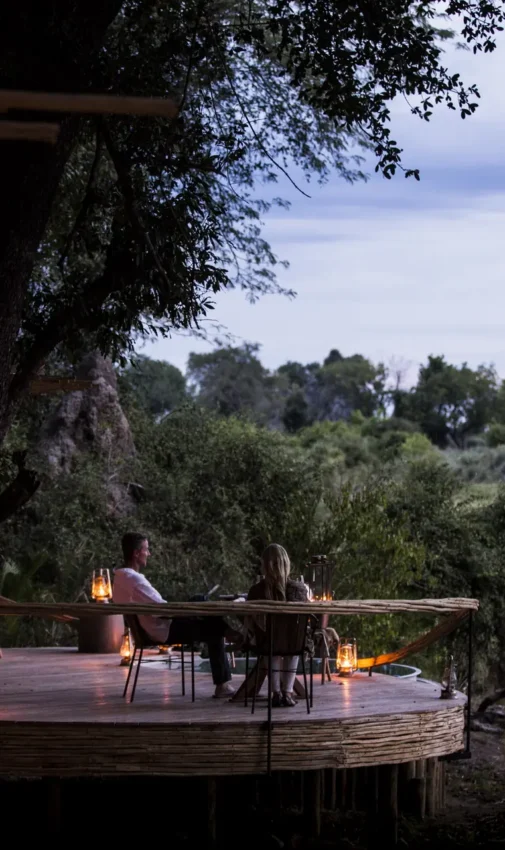
Guests on wooden deck overlooking savanna at sunset, Shinde, The Okavango Delta, Botswana 08

Shinde

The Okavango Delta

09

Expeditions Camp

The Okavango Delta

10

Mokolwane

The Okavango Delta

11

Tawana

The Okavango Delta

12

Sitatunga Private Island

The Okavango Delta

13

Tumani Tented Camp

The Okavango Delta

14

Kanana Nyana

The Okavango Delta

15

Little Sable

The Okavango Delta

16

Duke’s East

The Okavango Delta

17

Tuludi

The Okavango Delta

Safari tent accommodation with warm interior lighting at dusk, Gomoti Plains, The Okavango Delta, Botswana 18

Gomoti Plains

The Okavango Delta

19

Mbamba

The Okavango Delta

Luxury safari tent bedroom with four-poster bed and canvas interior, Kanana, The Okavango Delta, Botswana 20

Kanana

The Okavango Delta

frequently asked questions

The flight from Maun lands at Shinde airstrip, which the camp shares with its larger sister camp a few kilometres away, and the scheduled service is a seat-in-plane flight in a Cessna Caravan or similar bush aircraft that may land at up to three other airstrips on the way, with your departure time confirmed the evening before. We can arrange a private charter instead, typically a Cessna Caravan or a Pilatus PC-12, which fixes the time and cuts the stops, and from Kasane the flight takes about an hour and a half. The drive in from the airstrip is longest, and most likely to end with the short mokoro crossing, in the high-water months from May to July.

Twenty kilograms a person including hand luggage, in a soft bag with no wheels or frame, is the limit on the light aircraft, and larger cases can be stored free of charge in Maun for the length of the safari. You are met at Maun airport and walked to the aircraft, and the departure tax on flights leaving Maun and Kasane is built into our quote.

Yes. The concession lies in the northern half of Botswana, which TravelHealthPro, the UK's official travel health service, classes as high risk for malaria from October to May, listing antimalarial tablets among its recommendations for those months, and as low risk from June to September, when it advises awareness and bite avoidance. The CDC names the Okavango and Ngamiland districts among the parts of the country for which it recommends prescription medicine to prevent malaria, and the camp's own guidance says the same.

We are travel planners rather than medical people, so the decision sits with you and your doctor or a travel clinic, and it is worth checking close to departure because the advice moves. Walking country works in your favour on this one: long trousers and long sleeves are what you wear on foot anyway, and the same clothes, with repellent on any skin left showing, see you through the fire and the lagoon-side dinners after dark.

Yes, from six under the camp's current terms, and the way to think about it is that the camp suits a family that takes it whole. With six beds in four tents a family of four or five fills it, the family tent's two bedrooms keep children within earshot, the kitchen runs a children's menu, and a child sharing with parents is charged at a child rate rather than an adult one. The walks with the armed guides carry a higher minimum age of their own, and the figures published for it have varied, so we confirm it in writing for your children's exact ages before anything is booked; younger children stay on the drives and the water while the adults walk.

The camp is unfenced, with hippo in the lagoon below the lounge and elephant in the palms behind the tents, and every guest is walked to their tent after dark, so children need a parent's eye on them at all times. Tell us the ages when you enquire and we will say plainly whether it fits, and whether your party needs a private vehicle.

There is wifi in the tents, which the camp itself describes as limited, so count on it for messages and email rather than video calls, and do not count on a mobile signal at all this far into the Delta. If someone in your party needs to be reachable at set times, tell us before you book and we will check the current arrangements with the camp rather than guess; the tents have charging points for phones and cameras, and the editing suite in the main area has more.

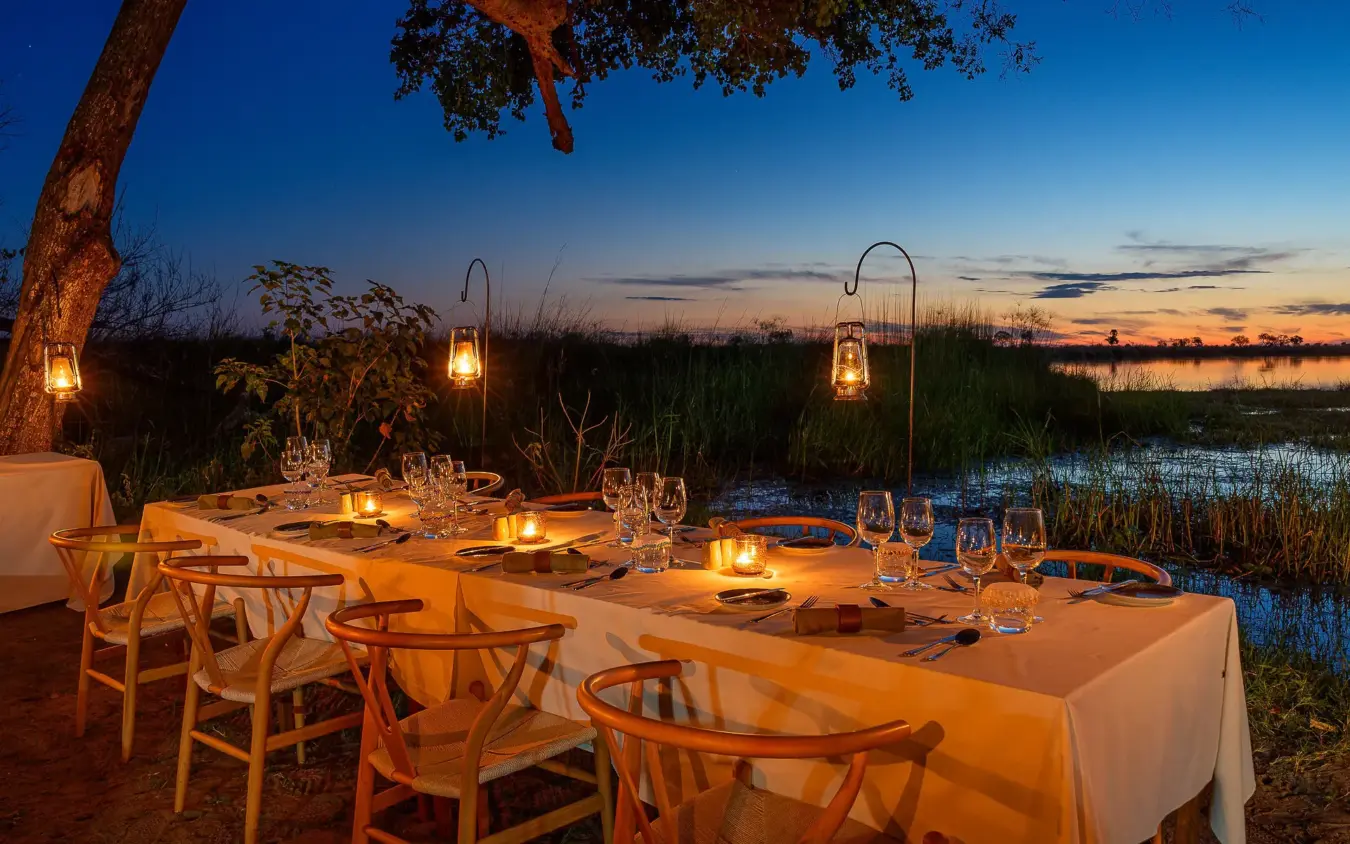
Walking country changes with the season more than driving country does. The dry winter from May to September is the walkers' time: mornings that can start close to six degrees in June, July and August, clear skies, and grass short enough to see over. September and October are hot and dry, up to forty in the afternoon, so the walks go out early and the afternoons belong to the water. The rains from November to March, heaviest in January and February, arrive as short afternoon storms; the floodplain greens, the grass stands high and the walks shorten to suit it. The mokoro runs when the flood is up, typically June to October and at its best in July and August, while the motorboats on the deeper channels run all year.

For the walking: neutral colours, long trousers and long sleeves in a light fabric, closed shoes with grip that are already worn in, a hat, strong sun cream and binoculars; for the winter mornings, a warm, windproof jacket, gloves and a scarf; for November to April, a light rain jacket. Everything goes in one soft bag of twenty kilograms, hand luggage included, and the camp launders daily, so you need far less than you think.

Yes, on request rather than by default: the camp normally sells its six beds to whoever books them, so two couples can find themselves sharing the fire, and a family or group that wants the whole place asks for exclusive use when booking, which we arrange and which also waives the private-vehicle charge, since the vehicles are yours anyway. If walking is the point of the trip we can add a dedicated specialist walking guide who travels with your party for the whole safari, six guests to a guide at most, with the guide's own flights and accommodation part of that cost.

Three nights is the right minimum, four to add a long walk, a night drive and a day on the water. The rate is fully inclusive: the tent, all meals and snacks, house wines, local beers and spirits and soft drinks, the walks, drives and water activities with the camp's guides, daily laundry, park fees and taxes, and emergency evacuation cover to the nearest medical facility. Outside it sit the flights, imported wines and champagne, the specialist guide, a single supplement if you travel alone in the shoulder and high seasons, the helicopter flights, and a small nightly donation to the owners' community fund, matched by the owners; five nights or more across this camp and its sister camps brings a long-stay discount when the flights between them are booked together, which is how we book them.

rated five stars by our clients

other areas in botswana

Guests poling traditional boat through wetland waterway, Linyanti Wildlife Reserve, Botswana 01

Linyanti Wildlife Reserve

Lion drinking from water's edge at sunset, Selinda Reserve, Botswana 02

Selinda Reserve

Male lion standing on sandy ground in natural habitat 03

Central Kalahari

Person sitting alone under starry night sky, Makgadikgadi Pans, Botswana 04

Makgadikgadi Pans

Herd of elephants drinking at waterhole with reflections 05

Chobe

06

Maun

Planning a journey together

our approach

remote, exclusive
& personal

Every journey starts with a conversation. We take the time to understand your vision before we start planning.

Whether by phone or in person, we work with you directly to shape something that is considered, personal, and expertly delivered.

get in touch
destinations ideas & inspiration our process about us contact us