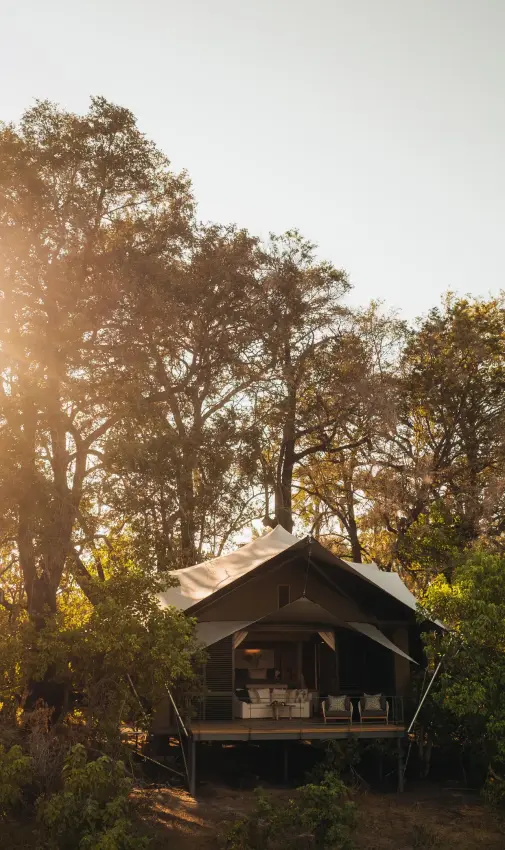
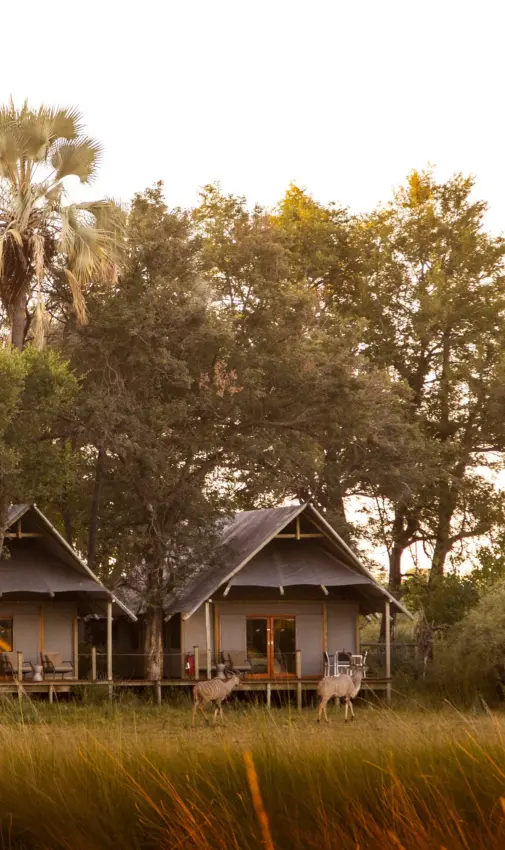
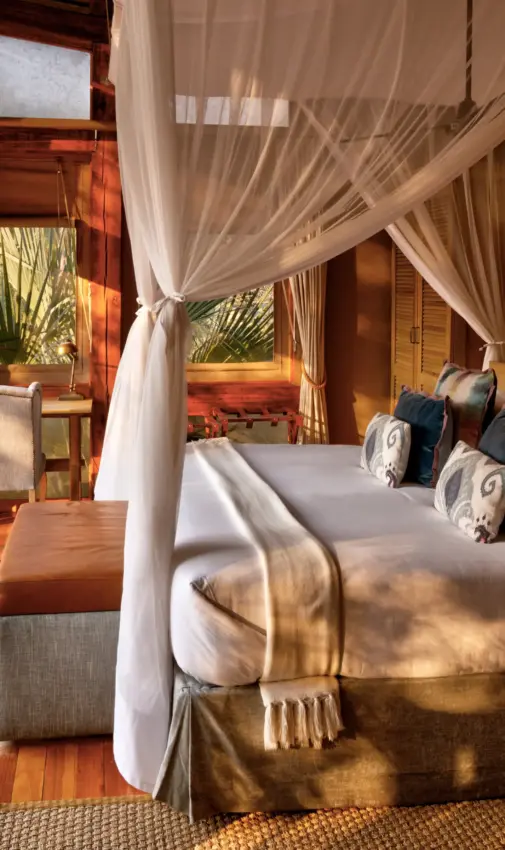
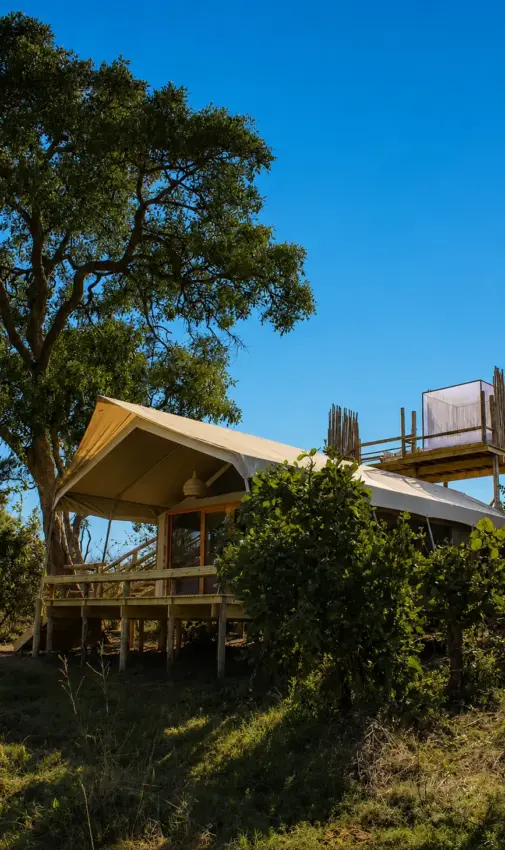
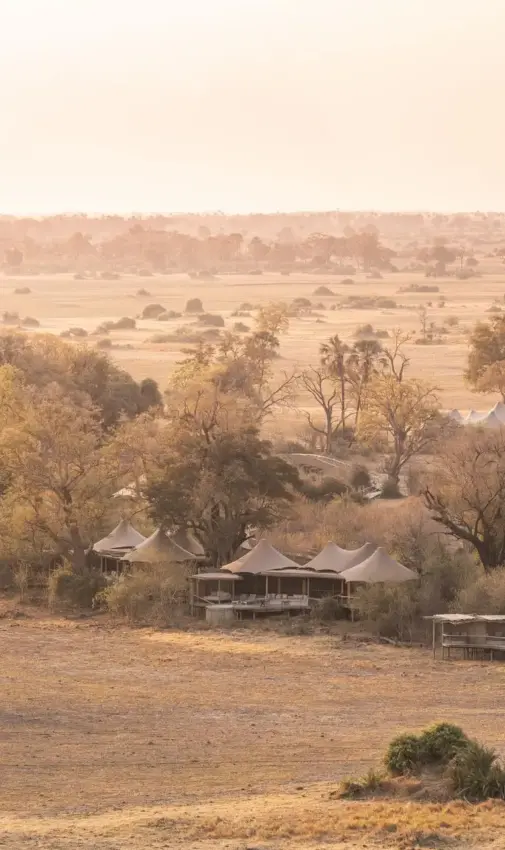
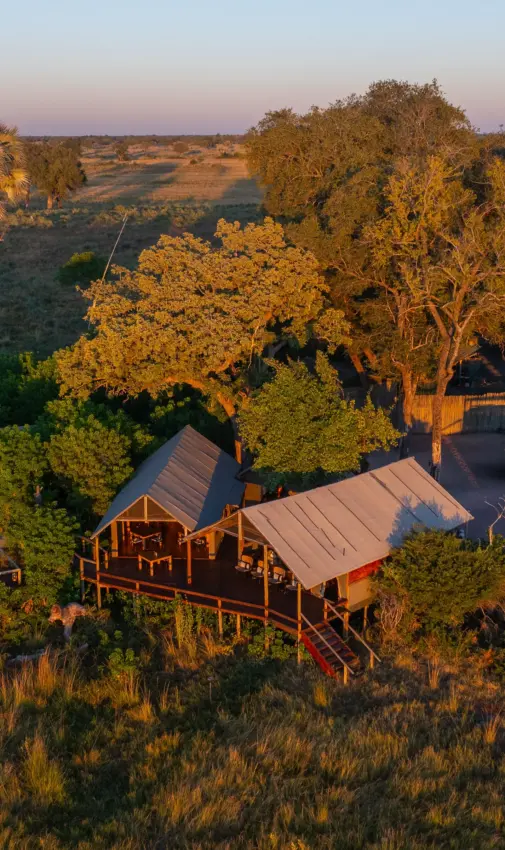
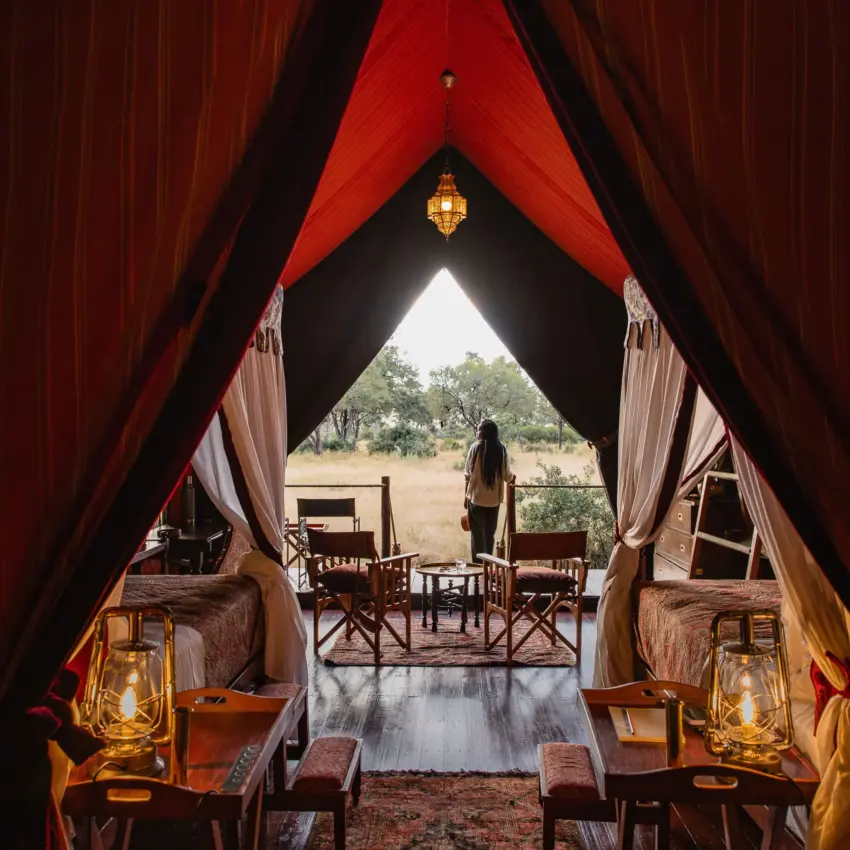
Twelve tents make Mbamba one of the larger camps in this sector of the northern Delta. Six are twins, four are doubles, and two are family tents that each sleep up to four. Twins rarely outnumber doubles on safari, which makes the camp useful for friends travelling together, and with the family tents and a minimum age of six it works for children too. The tents are raised on low wooden decks laid out around the leadwoods, each with a private veranda, an en-suite bathroom with a hot shower and an over-bed cooling system for the hot months.
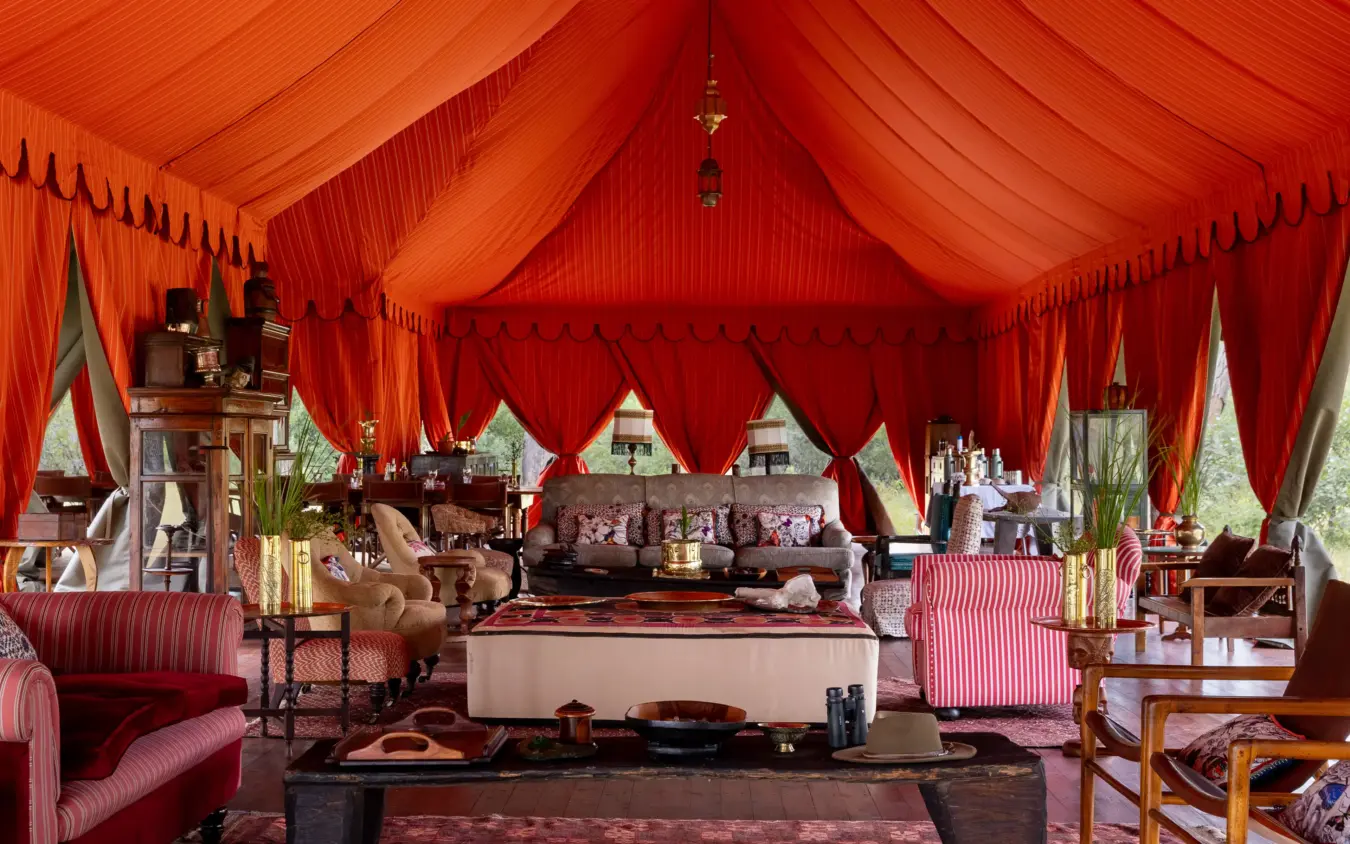
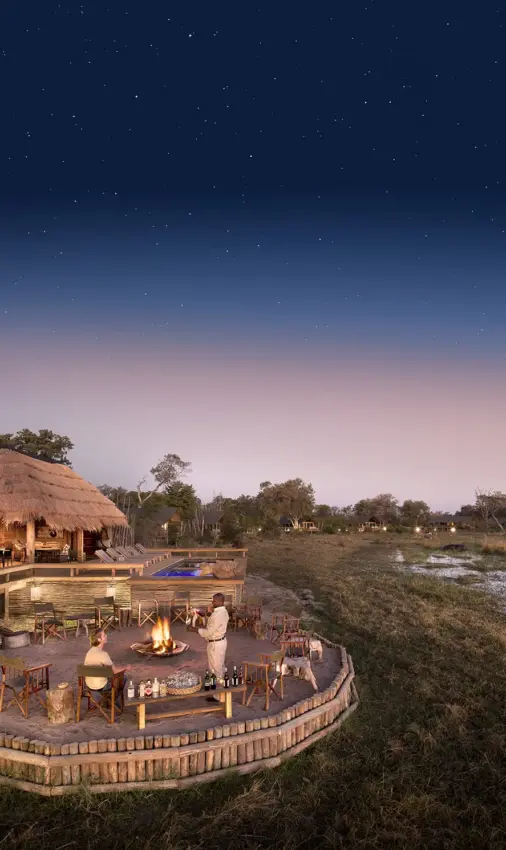
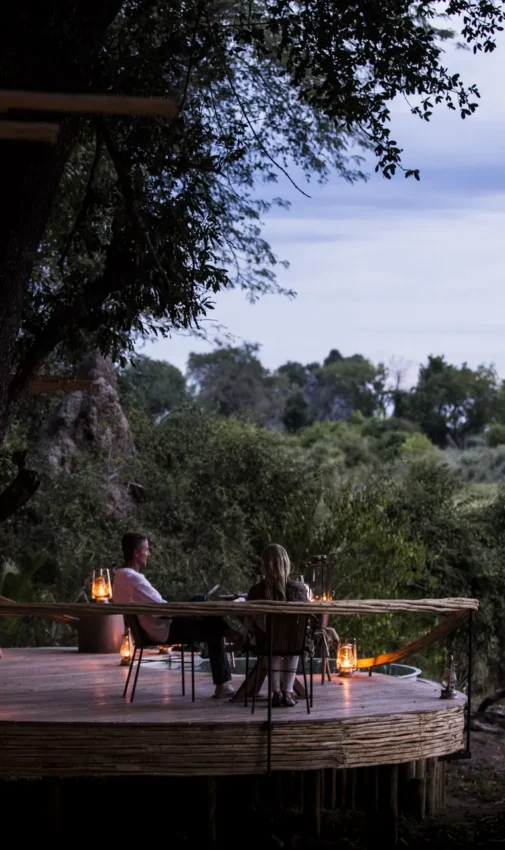
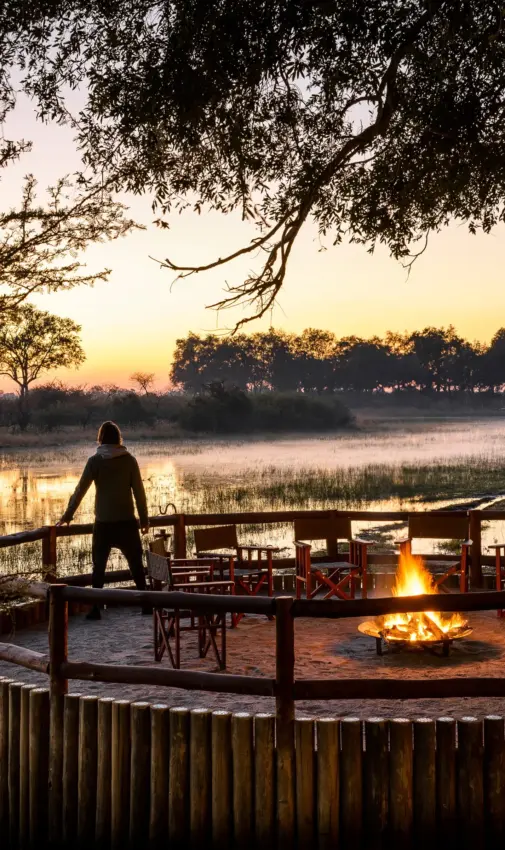
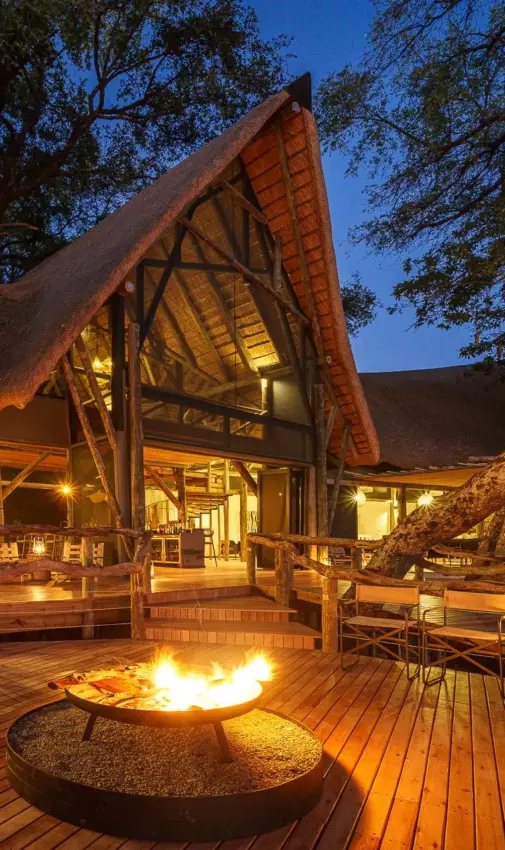
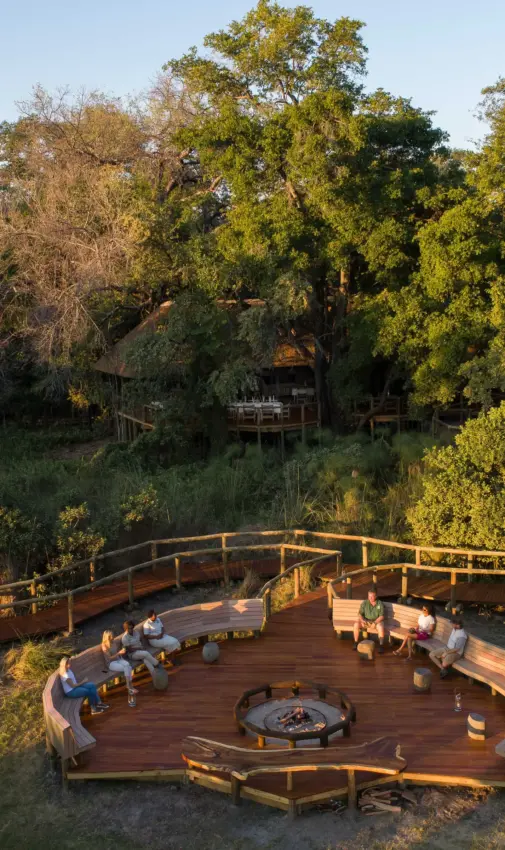
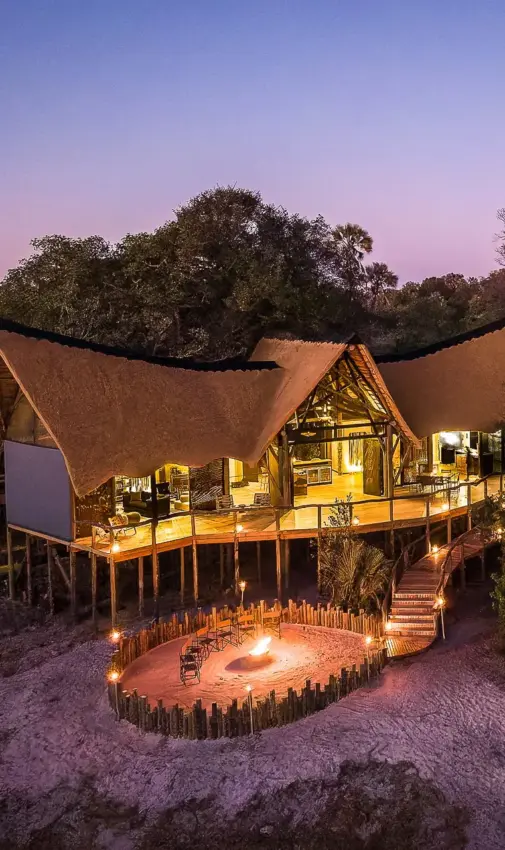
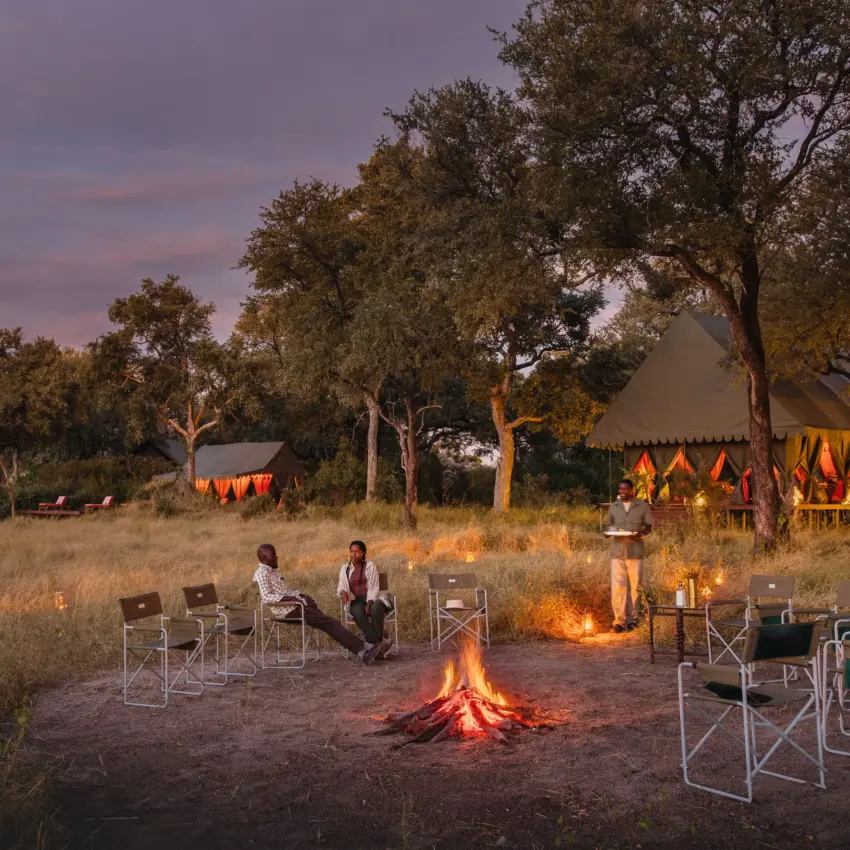
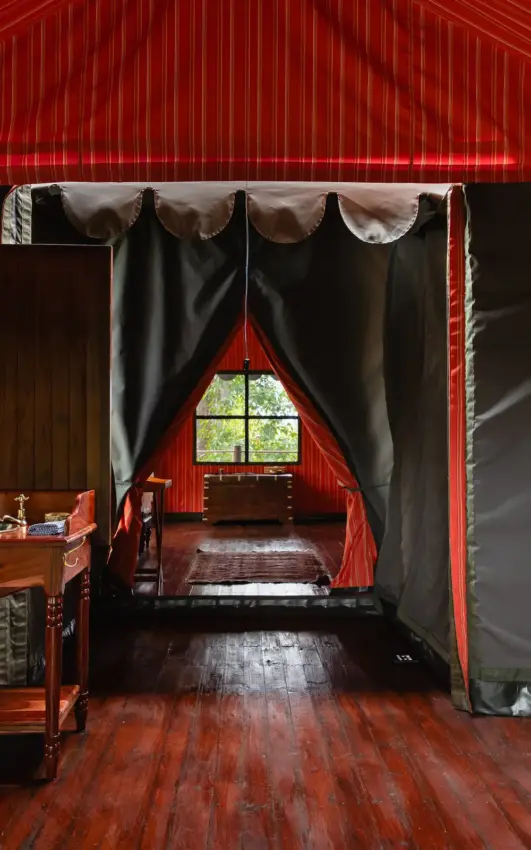
Much of the newer building in the Okavango Delta runs to pale timber, glass and restraint. Mbamba goes the other way, towards campaign chests and curio cabinets, storm lanterns and worn rugs under heavy draped canvas. The mess tent holds a small library and a well-stocked bar, and artefacts are laid out across two lounges. Around the firepit at night, hyenas whoop across the plains and wild dogs hunt in the dark. The camp suits guests who want theatre and patina, and who like company.
Around the firepit at night, hyenas whoop across the plains and wild dogs hunt in the dark.
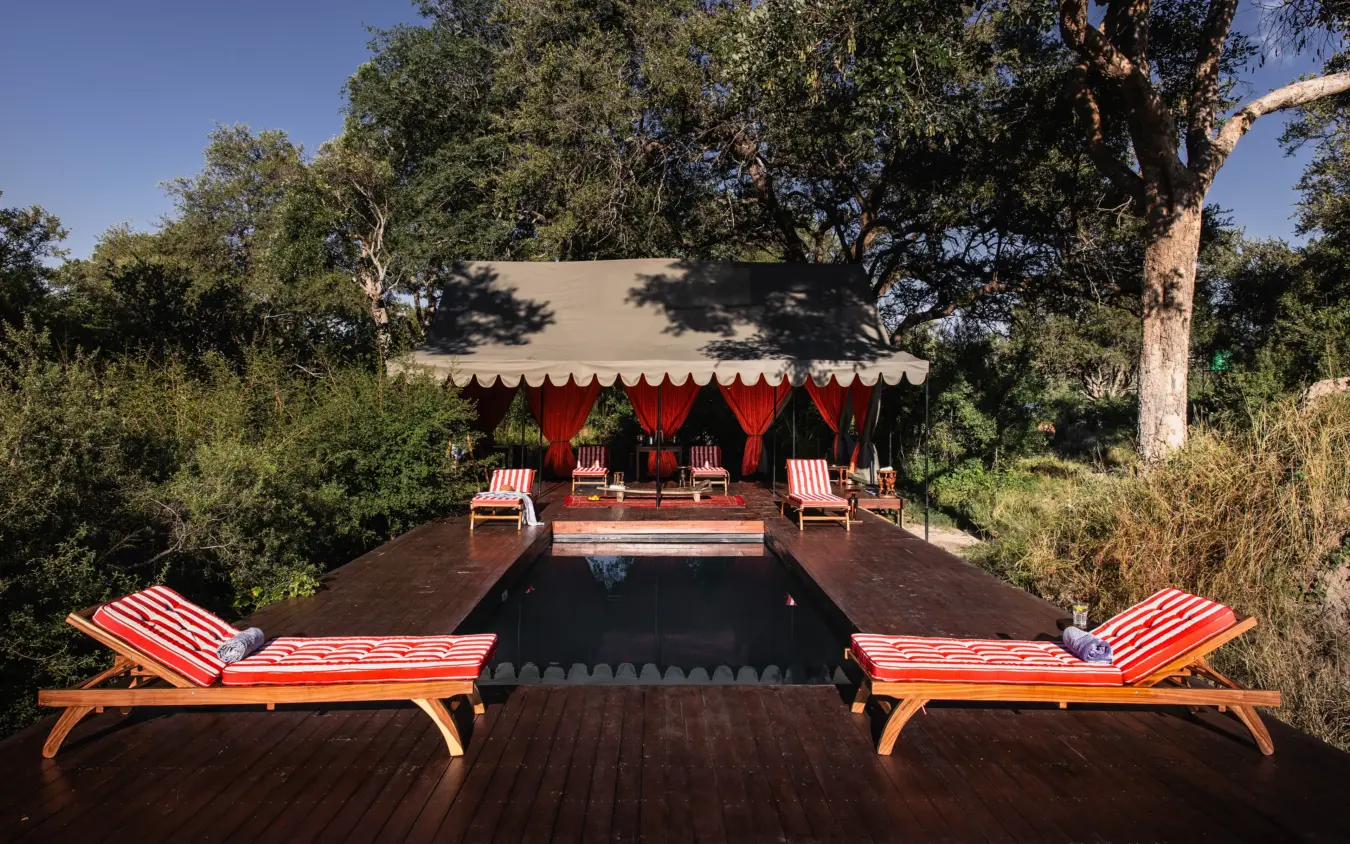
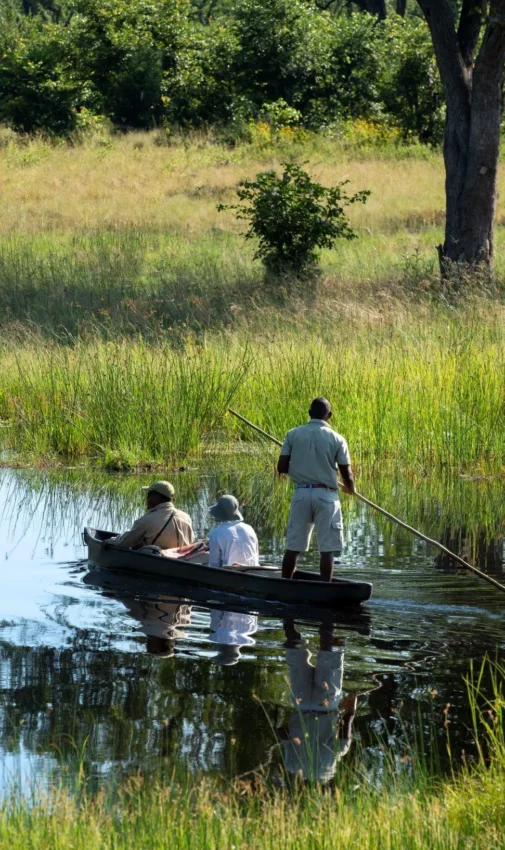
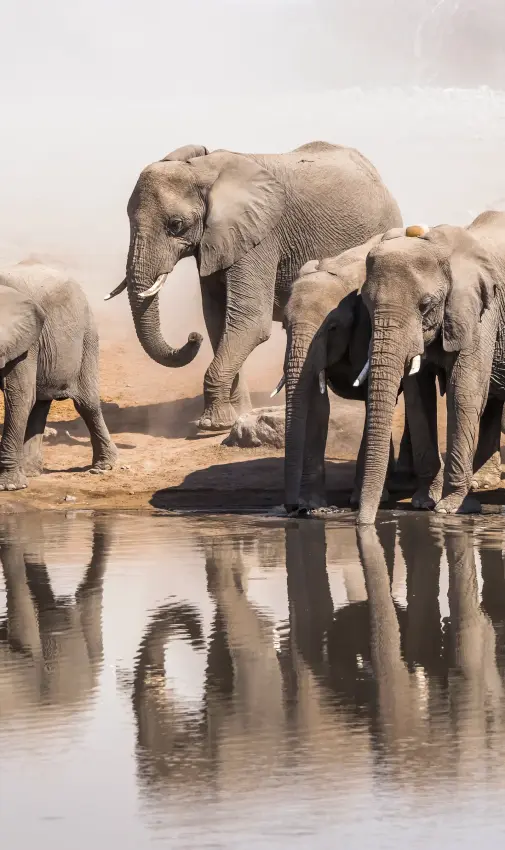
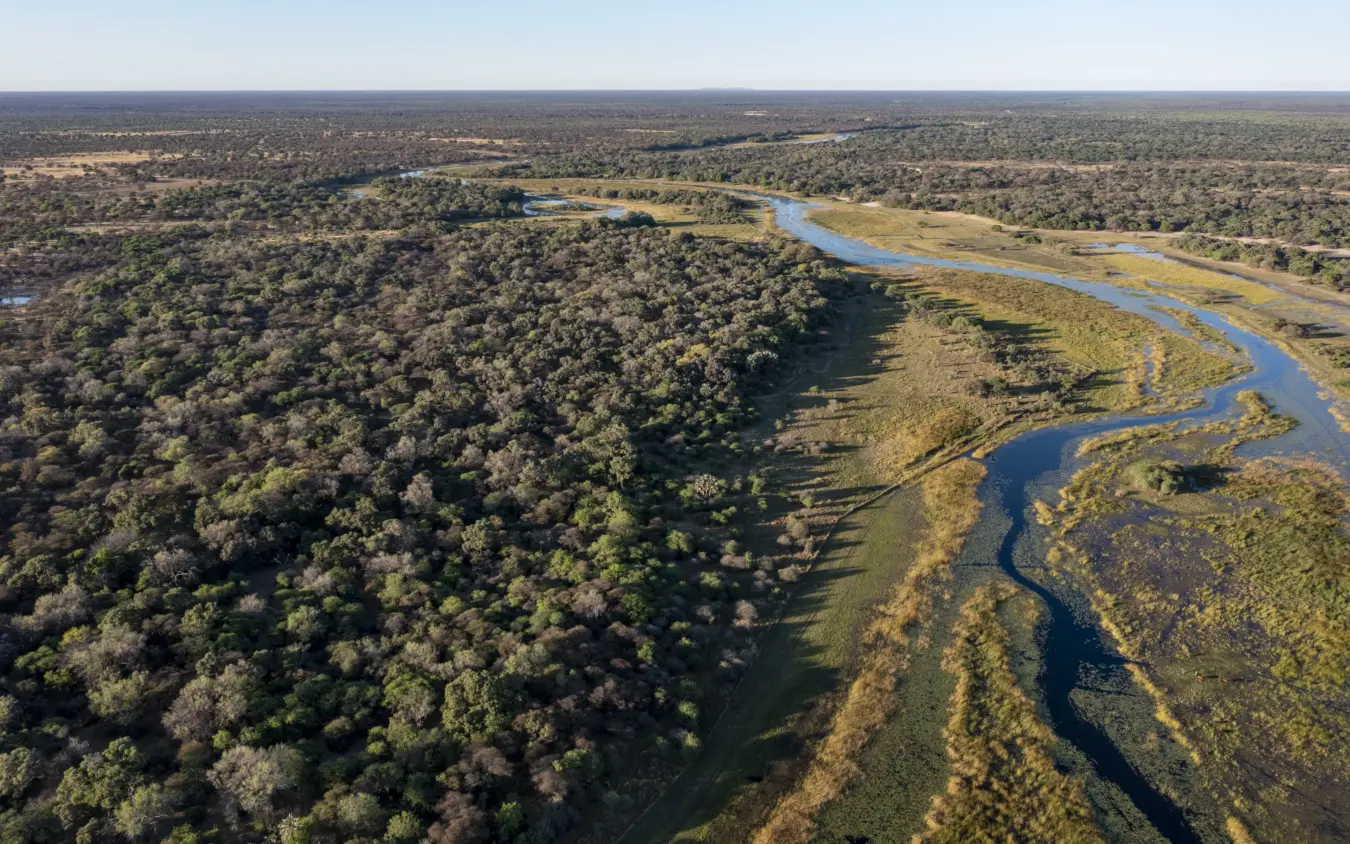
Sable antelope move through the concession in numbers, alongside roan, tsessebe, giraffes, zebras, red lechwe and large buffalo herds. More than 350 bird species have been recorded, among them wattled crane, Pel’s fishing owl, slaty egret and carmine bee-eater. From November the channels pull back and storm skies build over the ilala palms. Elephant and buffalo herds shift with the new grass, and the grazing herds move out onto the open plains. The swimming pool has its own tented pavilion, with loungers and a view worth keeping binoculars for.
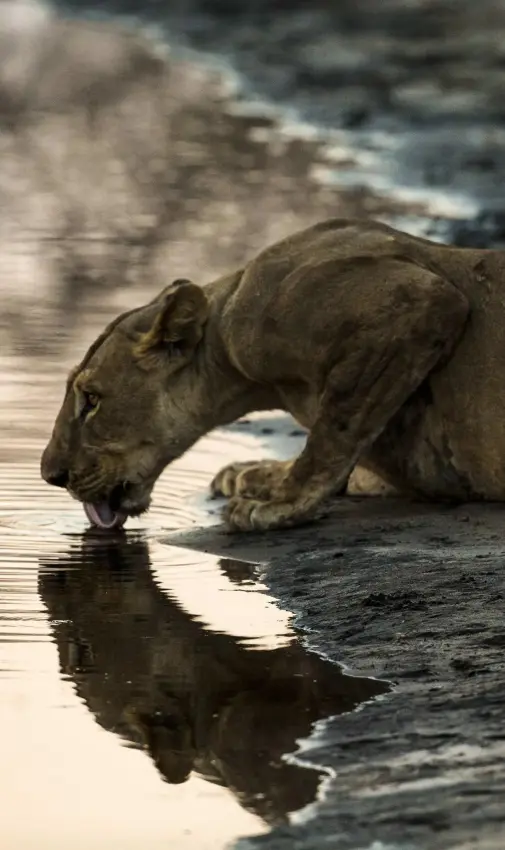
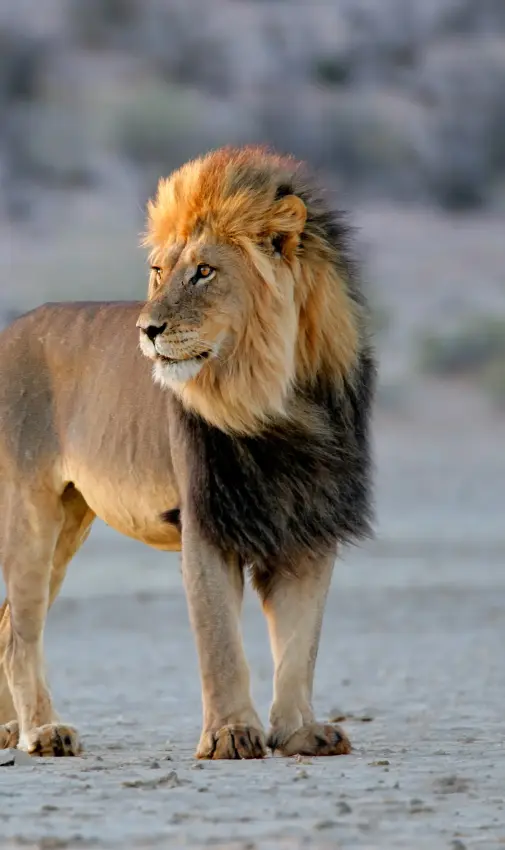
Guests fly in from Maun by light aircraft, around forty-five minutes in the air, then transfer to camp by road. Scenic helicopter flights over the Delta can be arranged, as can catch-and-release fishing and an excursion to the rock paintings at Tsodilo Hills. Along the concession boundary, CLAWS collars and tracks lions and supports communal herding, which reduces livestock losses and the retaliatory killing that follows. The Elephant Express carries schoolchildren and health workers safely through an elephant corridor, and the camp itself runs entirely on solar power.



 01