Camp

Camp Okavango

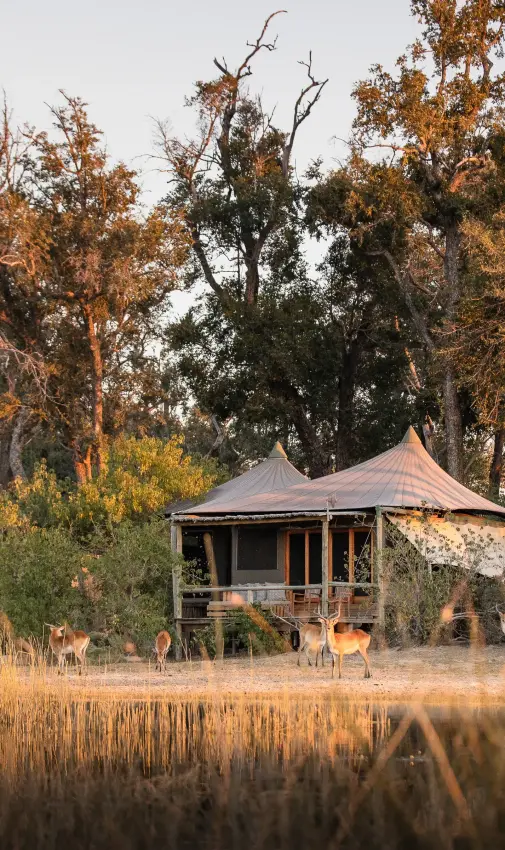
A vehicle-free island camp in Botswana’s permanent Okavango Delta, first built in the early 1980s and rebuilt in 2016.

Country: Botswana
Location: The Okavango Delta
Number of rooms: 12

Nxaragha Island, by boat and mokoro

Camp Okavango has no safari vehicles, and was not built for them. The days are spent among the channels and reeds, never on a road. Motorboats run the deeper lagoons, mokoros are poled through the shallows, and walks cross the neighbouring islands on foot. Nxaragha Island is held in the Delta’s permanent water, which never drains away, so the boats go out in every month.

The days are spent among the channels and reeds, never on a road.

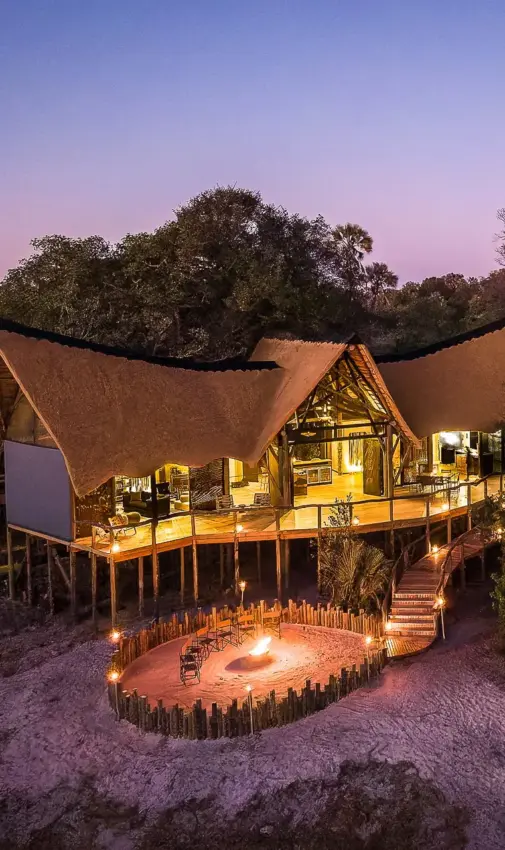
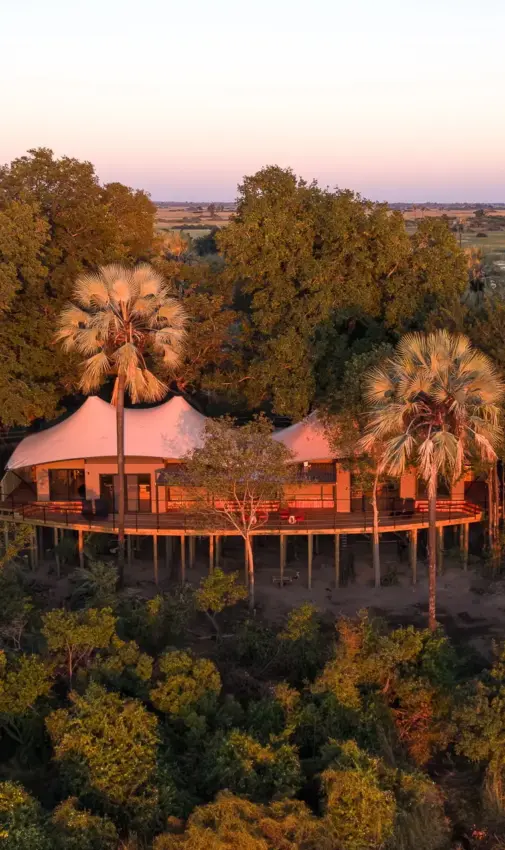
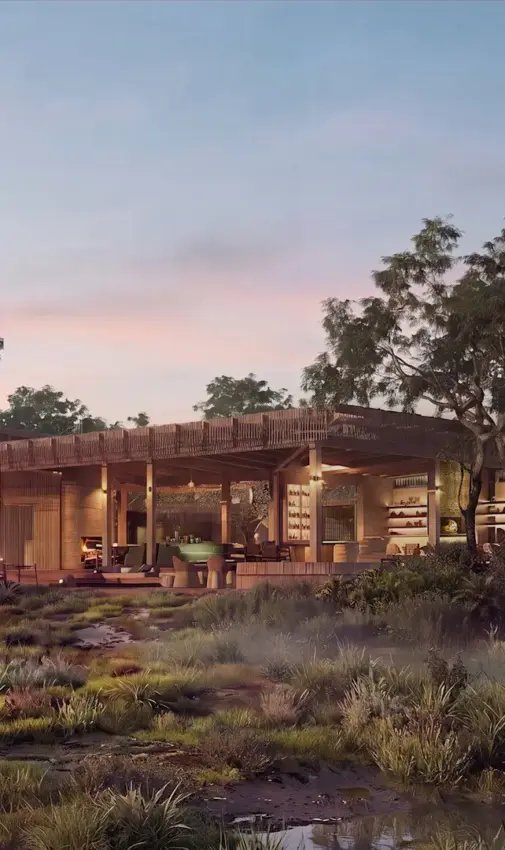
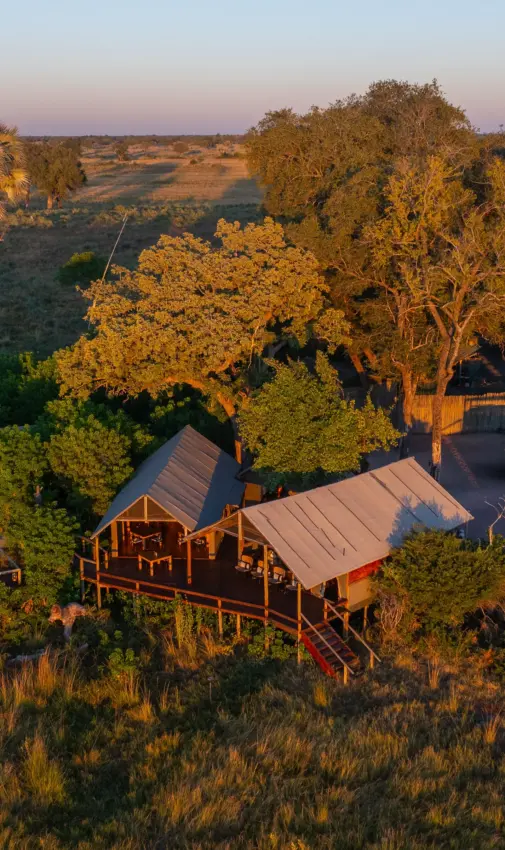
Jessie Neil was a Californian who had spent six or seven years visiting Botswana. In the early 1980s she built the first camp on this island, then Camp Moremi on Xakanaxa Lagoon. In 2016 her camp was rebuilt from the ground up. Its suites and decks, and the walkways between them, were lifted onto timber platforms beneath the island’s trees, and the whole camp now runs on solar power.

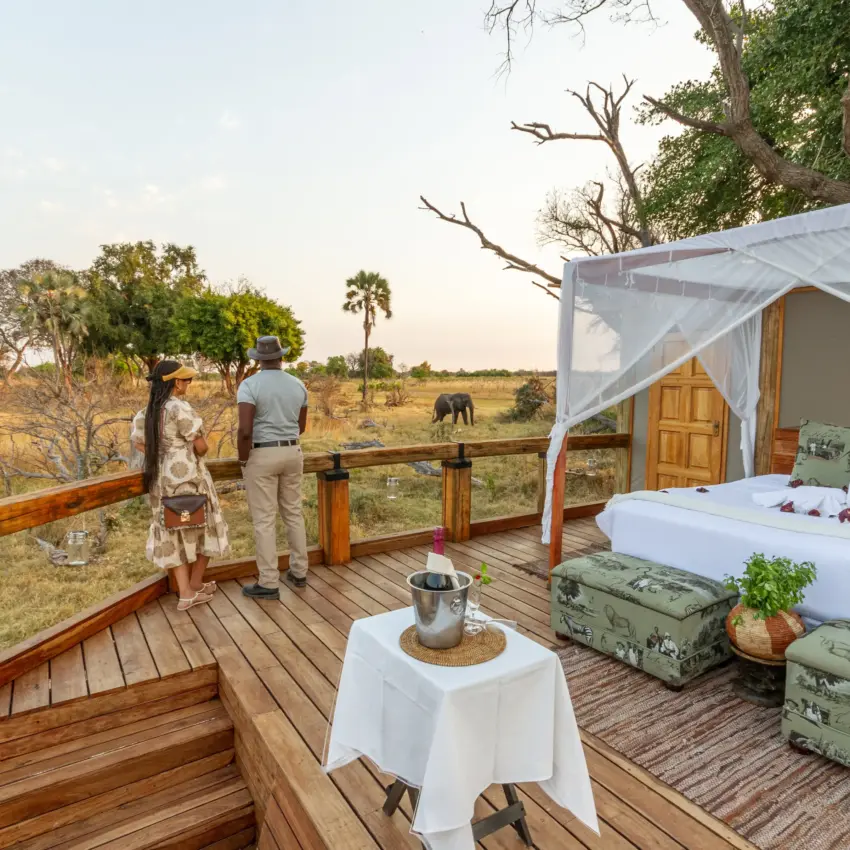
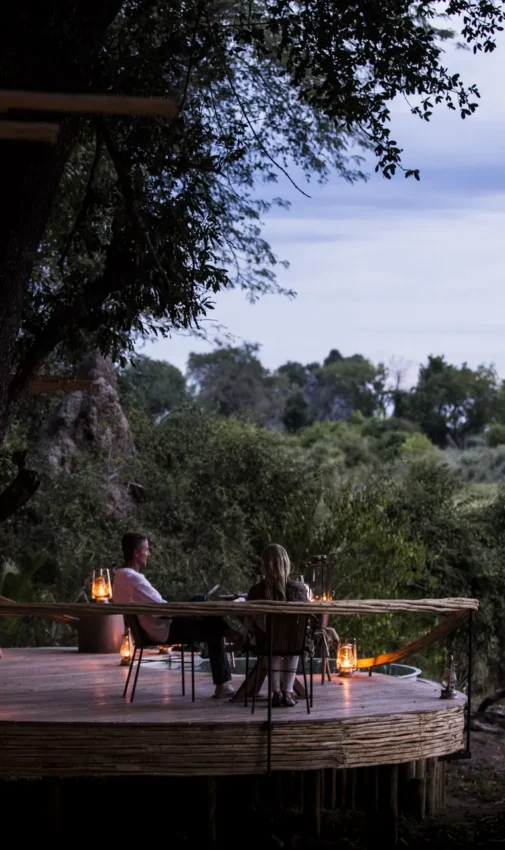
Guests on safari deck watching elephant at sunset beside canopy bed, Camp Okavango, The Okavango Delta, Botswana
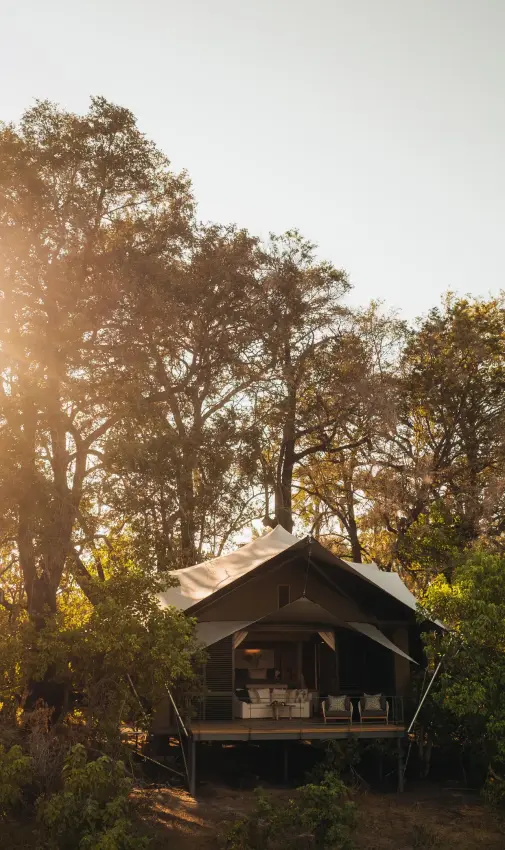
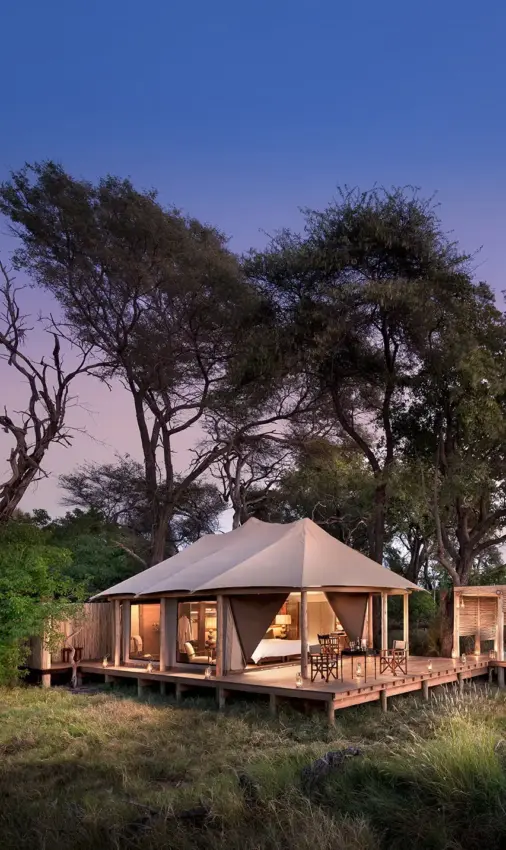
Elevated tree house bedroom with mosquito net on wooden stilts in grassland, Camp Okavango, The Okavango Delta, Botswana

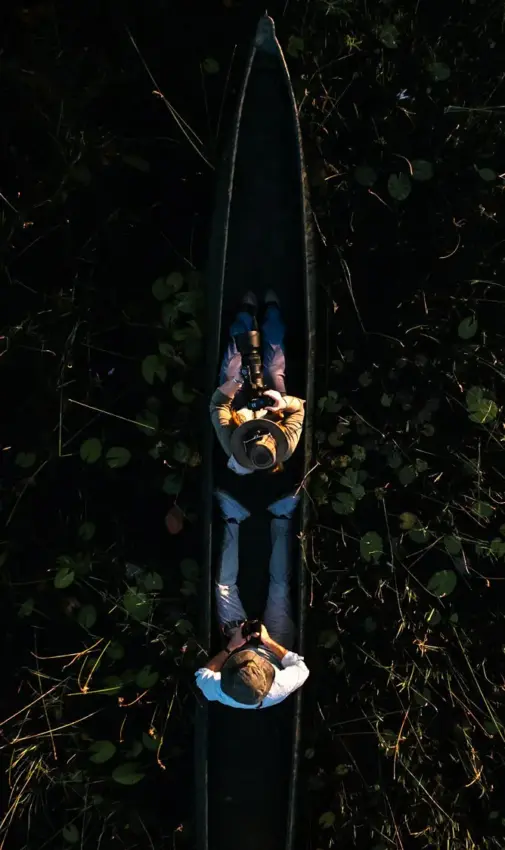
Motorboats with fold-away canvas roofs cover distance quickly, running the deeper channels and out across the lagoons. The mokoro moves at water level through the reed-lined shallows. It is slower and quieter, and the day slows with it. On the neighbouring islands, small groups set out on foot with two guides, reading the tracks of the larger land animals that share this wetland.
The mokoro moves at water level through the reed-lined shallows.

Birds fill the gaps between everything else on the water, and the wetland specialists of the reed beds and lagoons are watched from a drifting mokoro rather than from a road. The whole camp takes no more than 24 guests. Camp Okavango gives the water half of a Delta safari. A few nights at its sister, Camp Moremi, where the big game is followed by vehicle, give the other half.

Canopy bed with sheer mosquito netting in a wood-paneled room, Camp Okavango, The Okavango Delta, Botswana 01

accommodation

Eleven Suites and One Family Suite

Eleven safari suites and one two-bedroom family suite, each raised on its own wooden platform and linked by walkways. Stacked glass doors slide back onto a private deck over the water. Bathrooms have twin basins, a double shower and a separate toilet with a view. Fans stand in for air-conditioning; each suite has a safe and kettle.

Man standing in shallow water beside helicopter and picnic table with drinks, Camp Okavango, The Okavango Delta, Botswana 02

activities

Motorboats, Mokoro, and Island Walks

The days are spent on the water, by motorboat along the deep channels and lagoons or by mokoro through the reed-lined shallows. On the neighbouring islands, walks set out with two guides. Birding runs through all of it, and seasonal fishing for bream and tigerfish uses tackle kept in camp. Everything happens on water or on foot, in every month of the year.

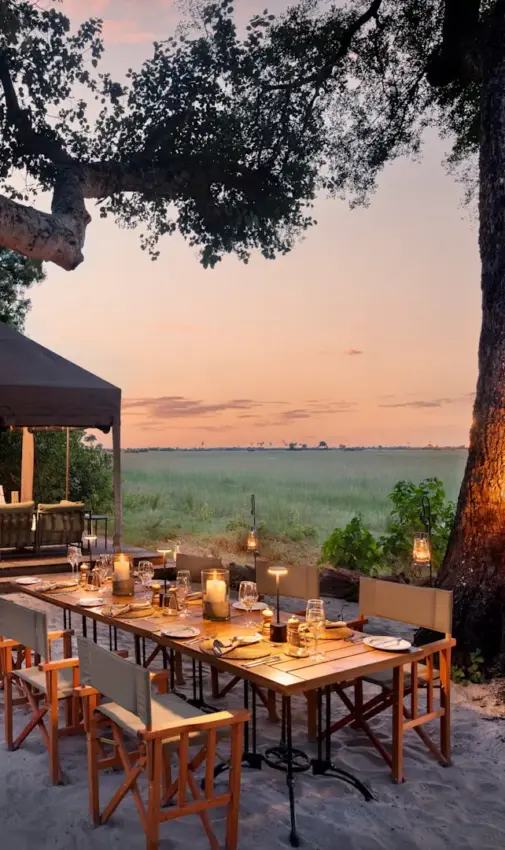
Outdoor dining table set with candles and lanterns on wooden deck at sunset, Camp Okavango, The Okavango Delta, Botswana 03

dining

All Meals, Local Drinks and a Bar Guests Pour Themselves

Every meal is part of the stay at Camp Okavango, brunch, lunch and dinner, with sundowners in between, and so are local-brand drinks; premium labels are charged separately. The bar in the main area is fully stocked and self-service, so guests pour their own between outings on the water. Each suite has a kettle with tea and coffee, and drinking water comes from the camp's own treatment plant, with bottled water on request.

ready to get started?

Get in touch and let’s start the conversation. An initial consultation helps us understand what you’re looking for, whether that’s specific experiences, luxury touches, or marking a special occasion, and from there we’ll guide you through what’s possible so you can decide if we’re the right fit.

Alternative accommodation in the okavango delta

Illuminated safari lodge dining area under ancient trees at dusk, Duba Plains, The Okavango Delta, Botswana 01

Duba Plains

The Okavango Delta

Thatched lodge with circular fire pit at dusk, Sable Alley, The Okavango Delta, Botswana 02

Sable Alley

The Okavango Delta

Illuminated safari lodge deck with fire pit at dusk, Khwai Leadwood, The Okavango Delta, Botswana 03

Khwai Leadwood

The Okavango Delta

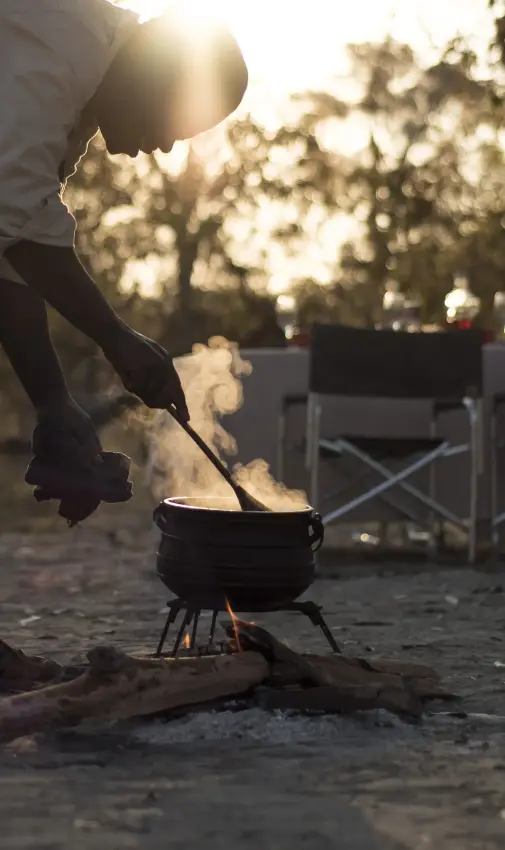
Person tending campfire at sunset during outdoor gathering, Kweene Trails, The Okavango Delta, Botswana 04

Kweene Trails

The Okavango Delta

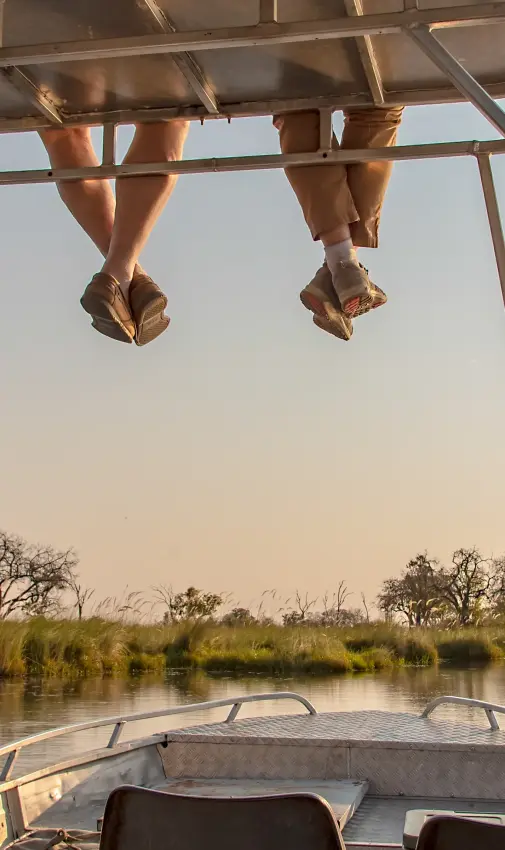
Boat with dangling feet on waterway at sunset, Kwando Splash Camp, The Okavango Delta, Botswana 05

Kwando Splash Camp

The Okavango Delta

Safari tent accommodation nestled among tall trees at golden hour, Chitabe Camp, The Okavango Delta, Botswana 06

Chitabe Camp

The Okavango Delta

Wooden deck dining area beneath ancient tree overlooking savanna landscape at dusk, Mombo Camp, The Okavango Delta, Botswana 07

Mombo Camp

The Okavango Delta

Illuminated safari lodge with thatched roof beside water pond at dusk, Shinde Footsteps, The Okavango Delta, Botswana 08

Shinde Footsteps

The Okavango Delta

Elevated wooden deck overlooking dense riverine forest canopy, Setari, The Okavango Delta, Botswana 09

Setari

The Okavango Delta

Nxabega Under Canvas, The Okavango Delta, Botswana 10

Nxabega Under Canvas

The Okavango Delta

Little Tubu Camp, The Okavango Delta, Botswana 11

Little Tubu Camp

The Okavango Delta

Nxabega Okavango Tented Camp, The Okavango Delta, Botswana 12

Nxabega Okavango Tented Camp

The Okavango Delta

Person watching sunrise over misty waterway beside a fire pit on wooden deck, Chief’s Camp, The Okavango Delta, Botswana 13

Chief’s Camp

The Okavango Delta

Elevated treehouse-style lodge on stilts beside palm trees at sunset, Kwetsani Camp, The Okavango Delta, Botswana 14

Kwetsani Camp

The Okavango Delta

Elevated safari lodge with thatched roof overlooking waterhole at dusk, Little Vumbura, The Okavango Delta, Botswana 15

Little Vumbura

The Okavango Delta

Sandibe Okavango Safari Lodge, The Okavango Delta, Botswana 16

Sandibe Okavango Safari Lodge

The Okavango Delta

Luxury safari tent with wooden deck at dusk in grassland setting, North Island Okavango, The Okavango Delta, Botswana 17

North Island Okavango

The Okavango Delta

Xaranna Okavango Delta Lodge, The Okavango Delta, Botswana 18

Xaranna Okavango Delta Lodge

The Okavango Delta

Elevated wooden lodge with red walls among trees overlooking savanna landscape at sunset, Mokolwane, The Okavango Delta, Botswana 19

Mokolwane

The Okavango Delta

Canoe gliding through narrow waterway lined with dense vegetation, Maxa, The Okavango Delta, Botswana 20

Maxa

The Okavango Delta

frequently asked questions

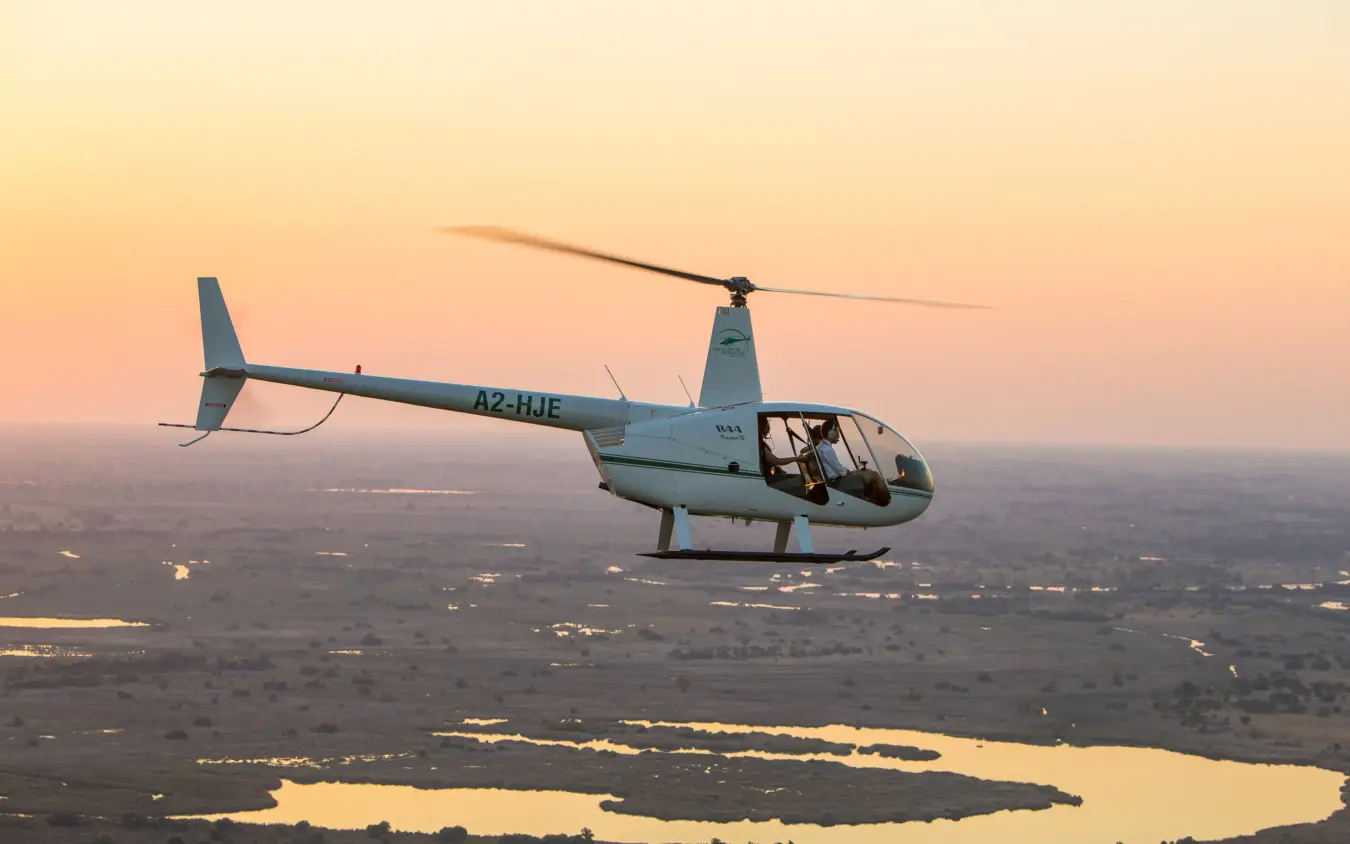
By light aircraft to the camp's own grass airstrip on Nxaragha Island, a few minutes' walk from the suites. Most guests fly in from Maun or Kasane on a shared seat-in-plane service that may call at other camps on the way, with the time confirmed the afternoon before. Arriving from another Delta camp works the same way, so Maun is not the only starting point.

For your own timings, or for a family or a small group, we can arrange a private charter in a single-engine light aircraft such as a GippsAero Airvan, landing on the same island strip. On the shared flights luggage is limited to 20 kilograms a person, hand luggage and cameras included, in soft bags with no frame, because the bags ride in a pod under the aircraft.

Yes. TravelHealthPro, the UK's official travel health service, places the northern half of Botswana, the Okavango Delta within it, at high risk of malaria from October to May, when it recommends antimalarial tablets, and at low risk for the rest of the year, when it advises awareness and bite avoidance. The CDC includes the Okavango and Ngamiland districts among the areas where it recommends preventive medicine.

We are travel planners, not medical professionals, so the choice of tablets sits with you and your doctor or a travel clinic. Low risk is not no risk, and an island ringed by water in every month has mosquitoes in the dry season too, so long sleeves after dark and repellent by the fire deck are sensible all year.

No. Camp Okavango is a water camp with no safari vehicles on the island, and the days are spent on the water and on foot instead. There are motorboat trips in hard-bottomed aluminium boats along the deeper channels and lagoons, mokoro outings poled through the shallow reed beds and floodplains, and walks on the neighbouring islands in small groups with two guides, so you never walk alone.

Birding is the strong suit, and fishing for bream and tigerfish can be added in season. For lion, leopard and big herds seen from a vehicle, we pair the island with a land camp, and the natural partner is its sister camp, Camp Moremi, on Xakanaxa Lagoon inside Moremi Game Reserve. Two or three nights on the water and then a land camp shows the delta both ways.

Yes, from the age of six. There is one family suite: two bedrooms, each with its own bathroom, joined by an inside door, with twin beds and a roll-out bed in the second room, so two adults and three children can stay together. A children's corner has games and books, and the pool on its own deck fills the middle of the day.

Every outing here is by boat, by mokoro or on foot, so it suits children who are happy on the water and can sit quietly for a while. For a family we usually build in a private boat and guide, so the outings run at the children's pace and come home when they have had enough. Tell us their ages at enquiry and we will plan the days around them.

June to October, with July to September the strongest stretch. The flood from Angola reaches the delta in Botswana's dry winter and stands high around July and August, so the channels are full, the mokoro routes are at their widest and game gathers along the water as the land around dries out. October is the hottest month, often above 40C, which suits some people less well.

Nxaragha Island sits in water that never dries up, so boat and mokoro trips run in every month, though the shallow routes shrink when the channels are at their lowest in the rains. November to March is green, hot and quiet, with afternoon storms, the best birding of the year as migrants arrive, and big skies that photographers love. April and May are shoulder months as the water rises again.

Jessie Neil, an American who fell for the delta, took a lease on Nxaragha Island in 1980 and built the first camp there, then built Camp Moremi on Xakanaxa Lagoon soon after. She sold her camps in the early 1990s, so the founding story is pedigree rather than a sign of who runs it today.

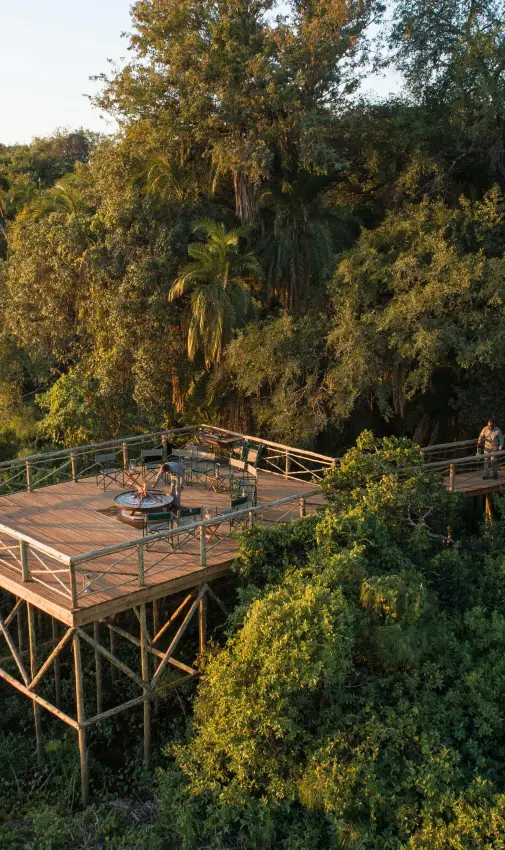
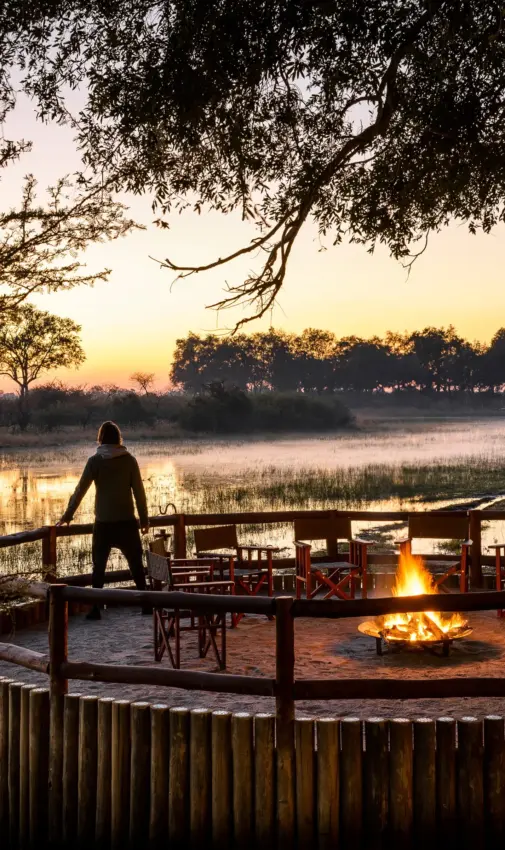
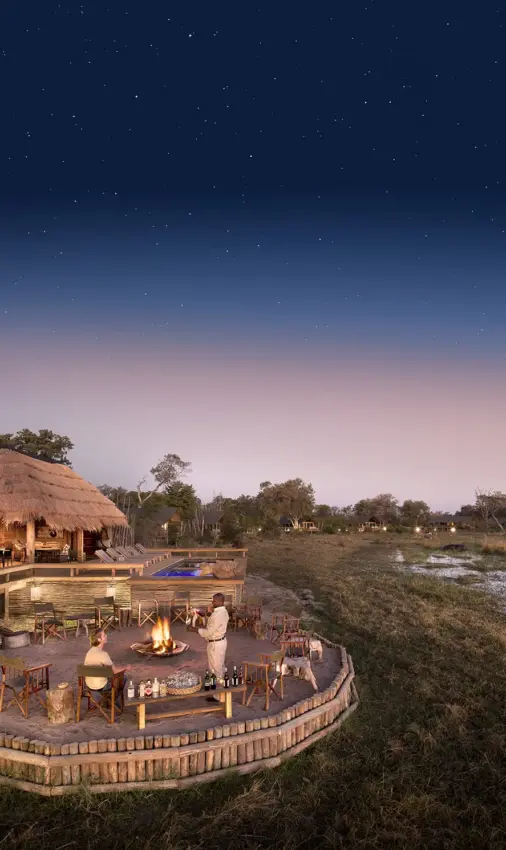
In 2016 the camp was rebuilt from the ground up. The eleven suites and the family suite stand on raised wooden platforms under the trees, each with a private open-air deck, a double shower and fans rather than air conditioning. The camp runs on solar power, with a generator kept as back-up, and the main deck carries a rim-flow pool and two fire decks over the water.

rated five stars by our clients

other areas in botswana

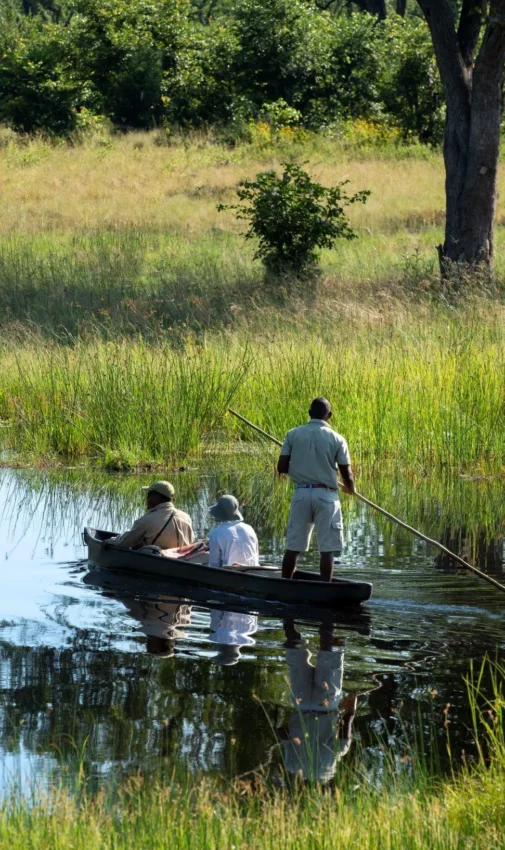
Guests poling traditional boat through wetland waterway, Linyanti Wildlife Reserve, Botswana 01

Linyanti Wildlife Reserve

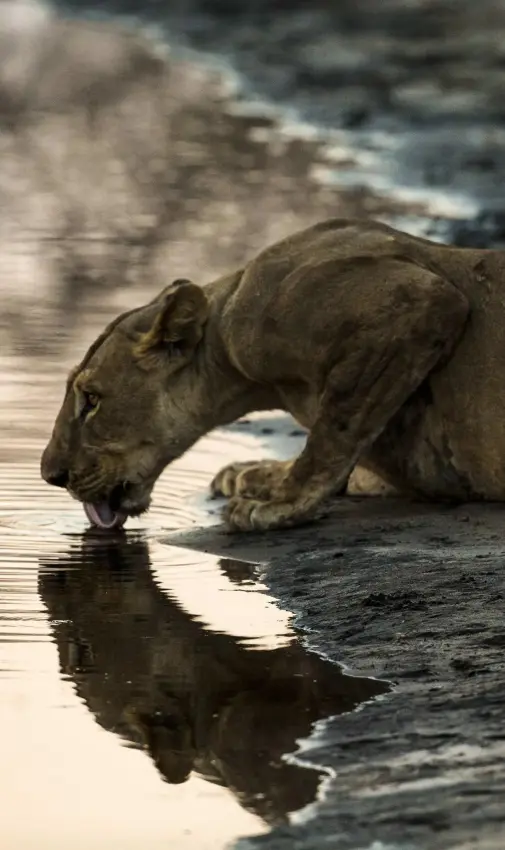
Lion drinking from water's edge at sunset, Selinda Reserve, Botswana 02

Selinda Reserve

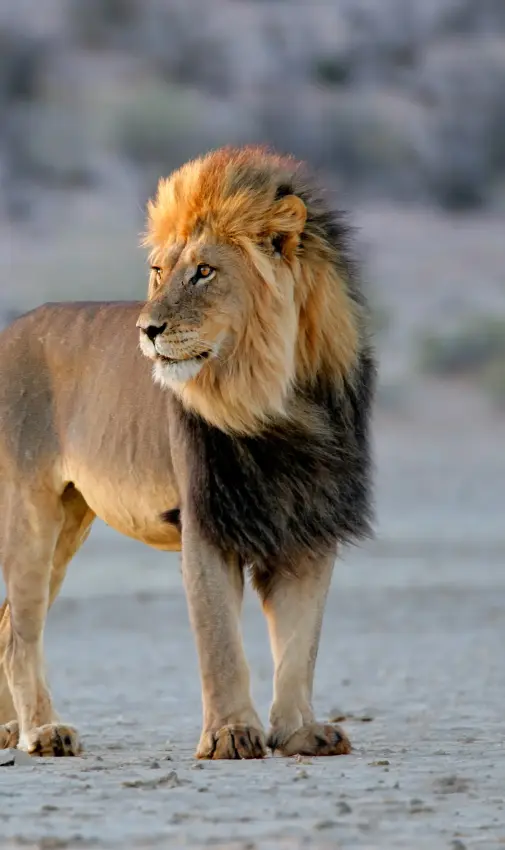
Male lion standing on sandy ground in natural habitat 03

Central Kalahari

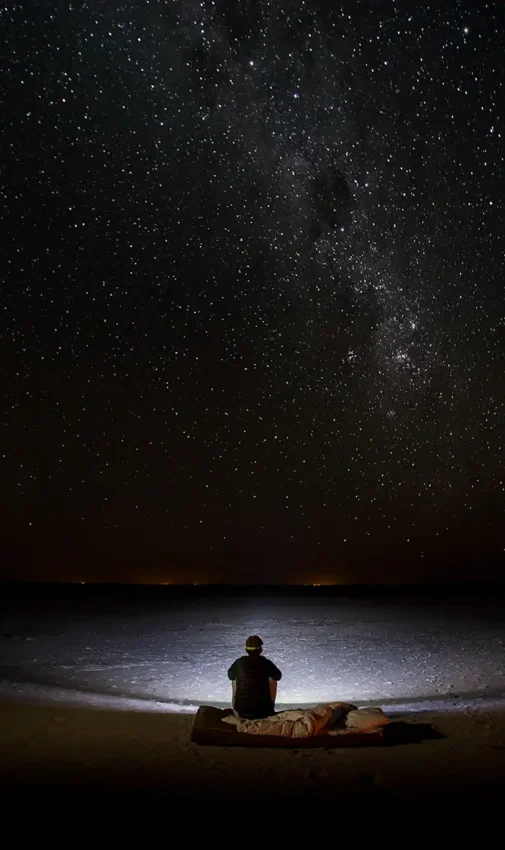
Person sitting alone under starry night sky, Makgadikgadi Pans, Botswana 04

Makgadikgadi Pans

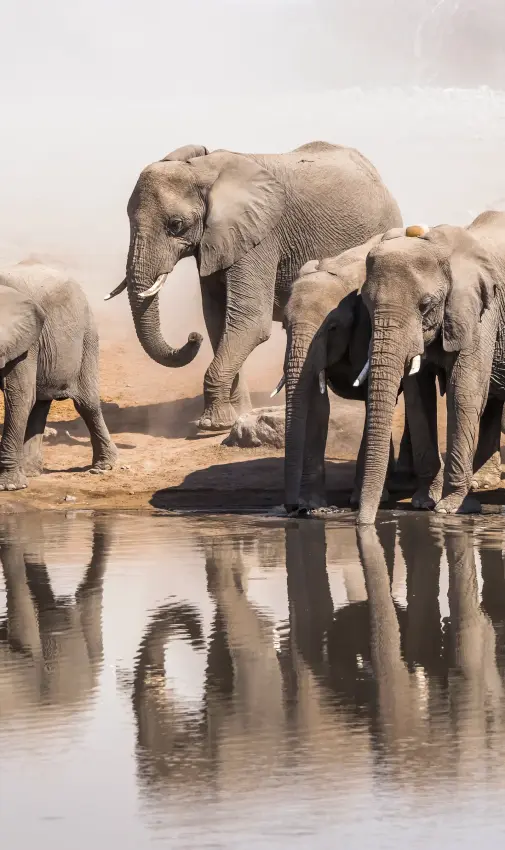
Herd of elephants drinking at waterhole with reflections 05

Chobe

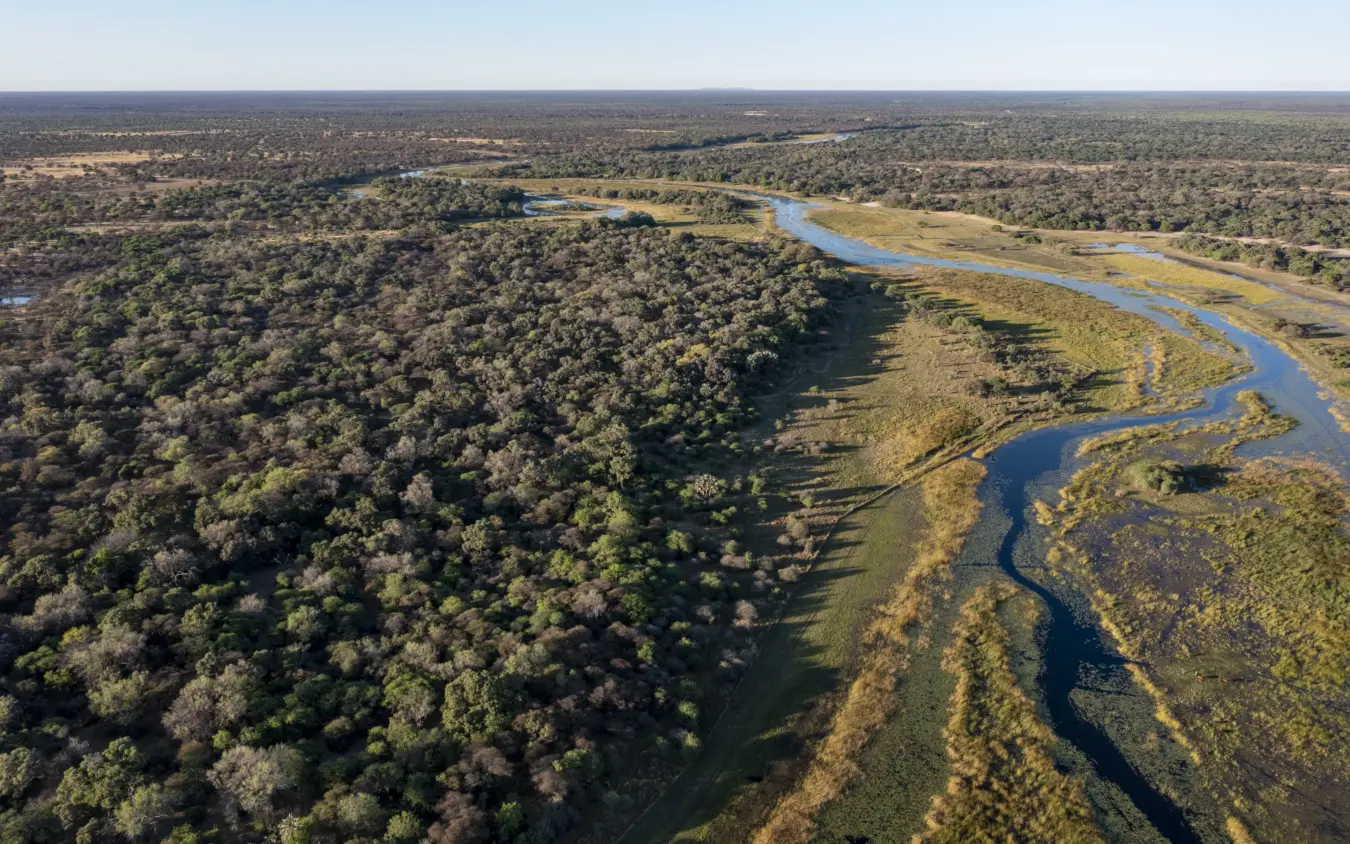
Aerial view of winding river through dense woodland and wetland savanna, Thamo Telele, Maun, Botswana 06

Maun

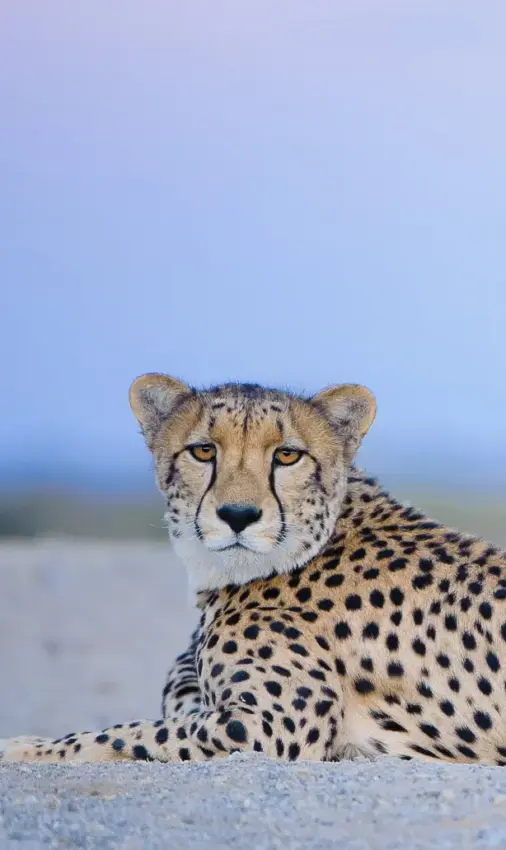
Cheetah lying on gravel ground with blue dusk sky behind, Tuli Block, Botswana 07

Tuli Block

Planning a journey together

our approach

remote, exclusive
& personal

Every journey starts with a conversation. We take the time to understand your vision before we start planning.

Whether by phone or in person, we work with you directly to shape something that is considered, personal, and expertly delivered.

get in touch
destinations ideas & inspiration our process about us contact us