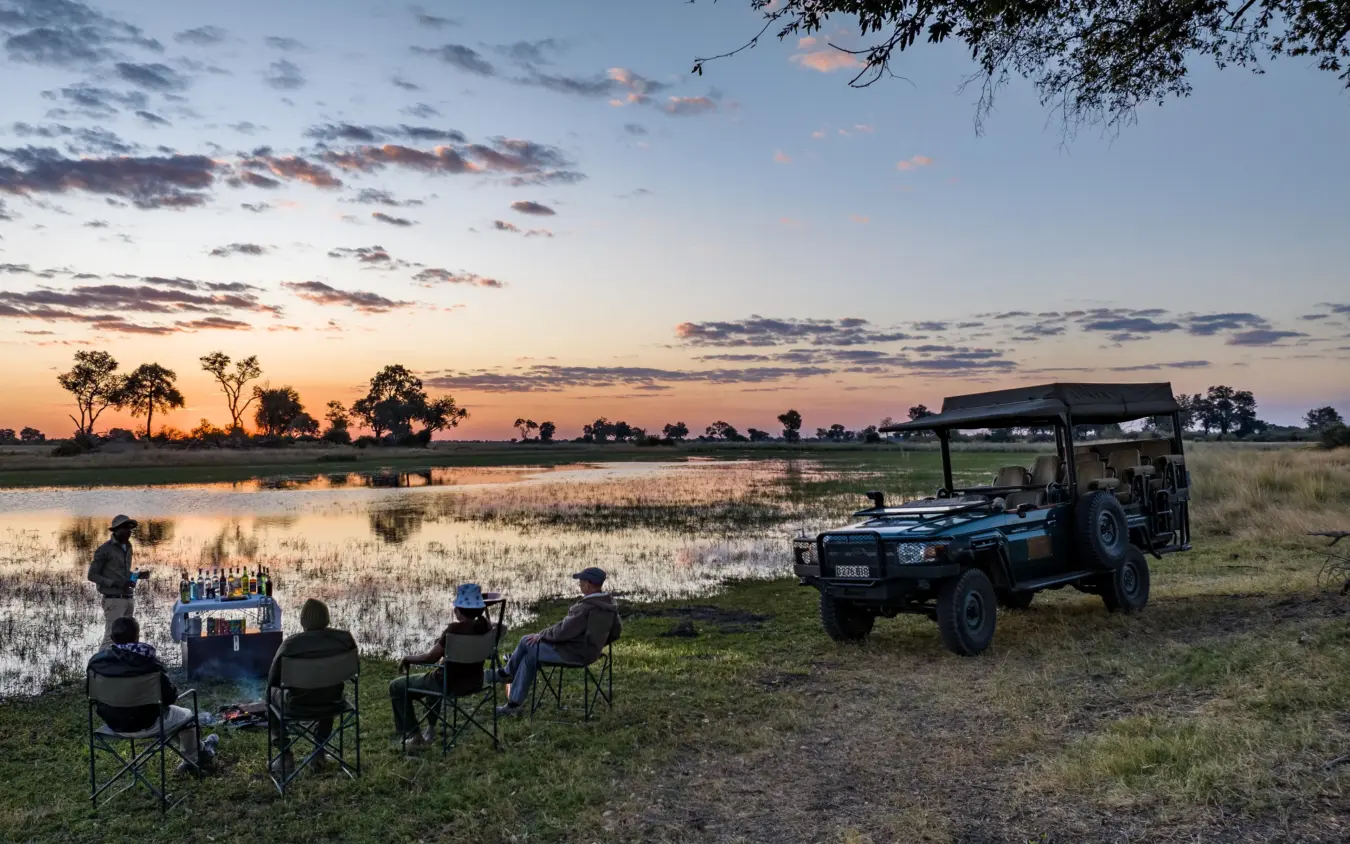
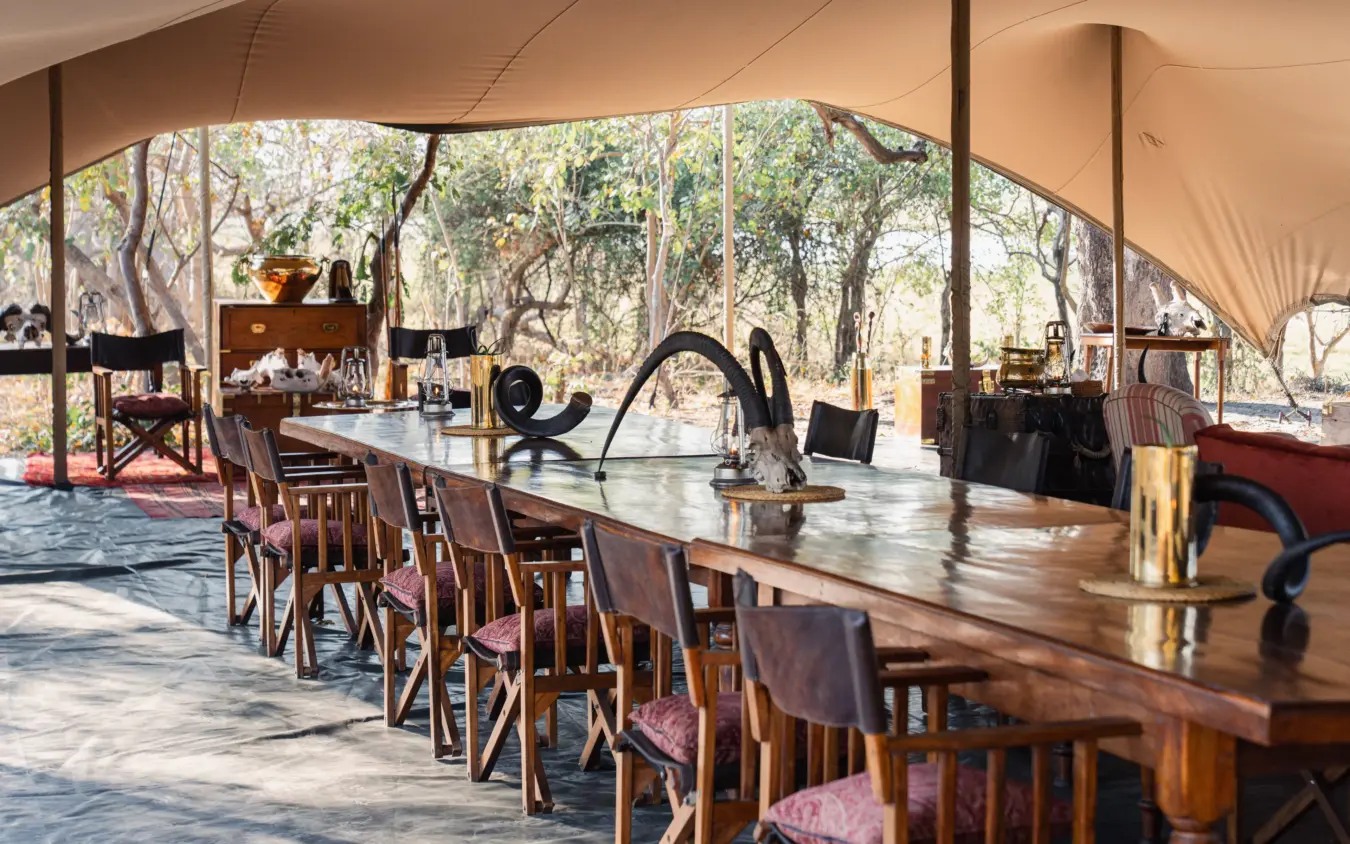
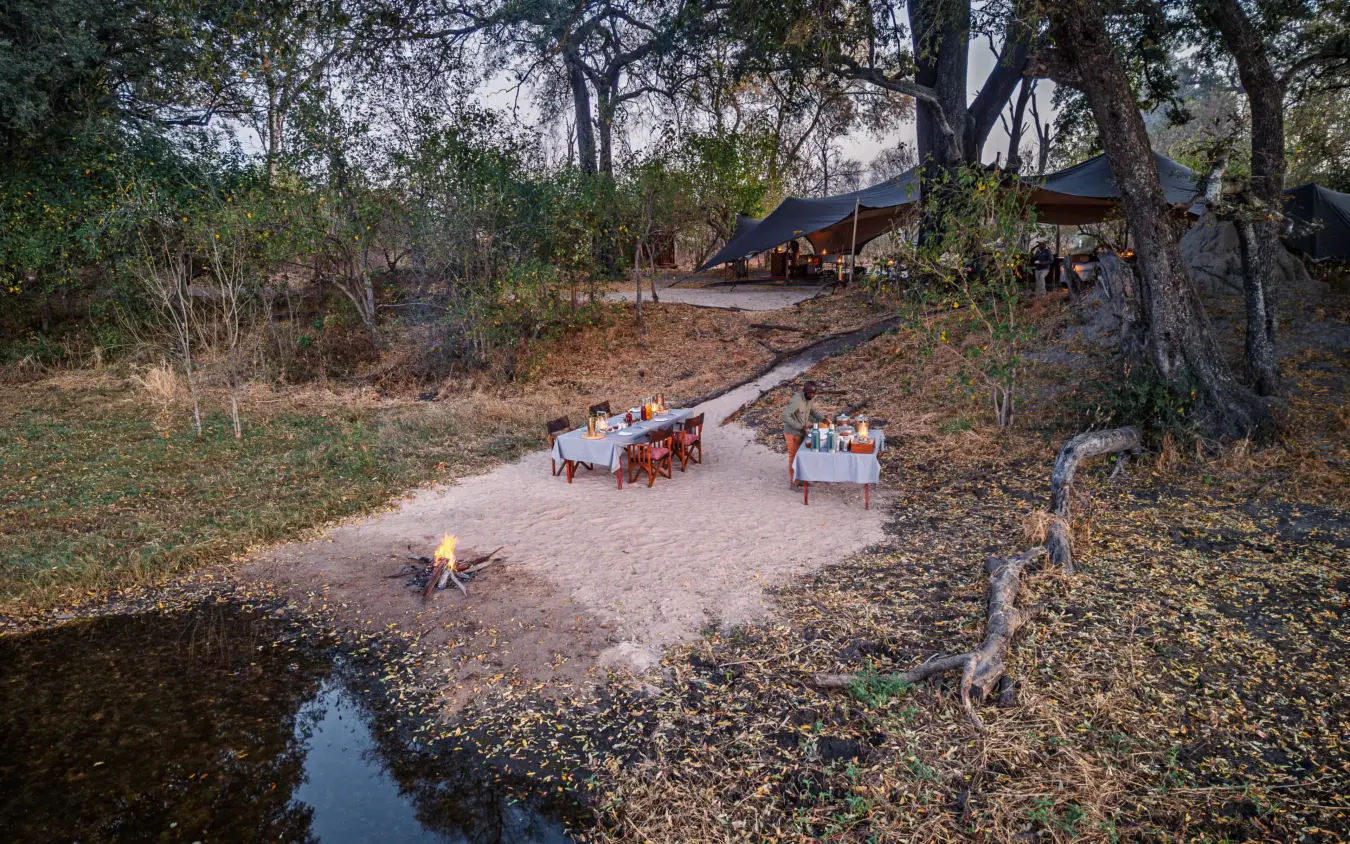
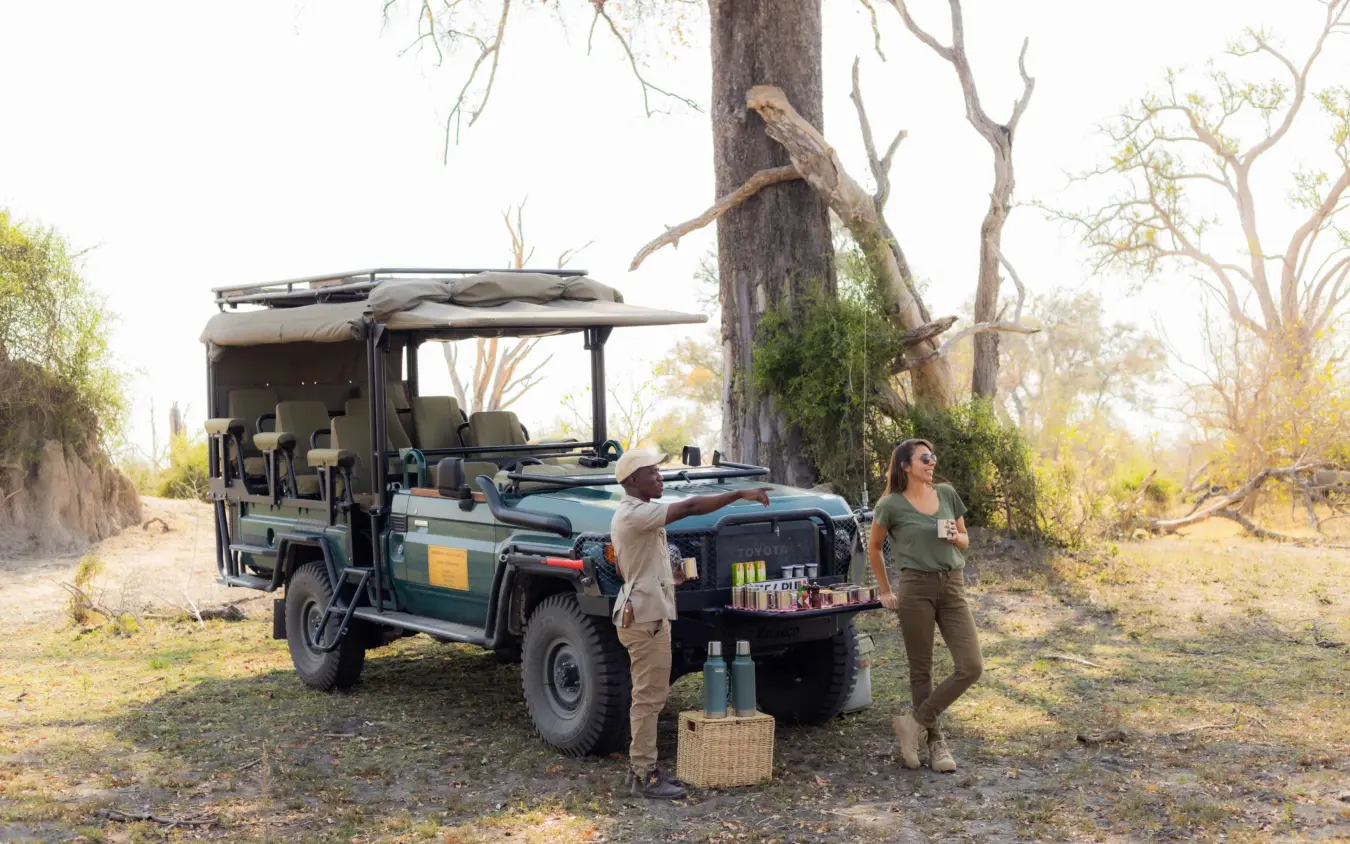
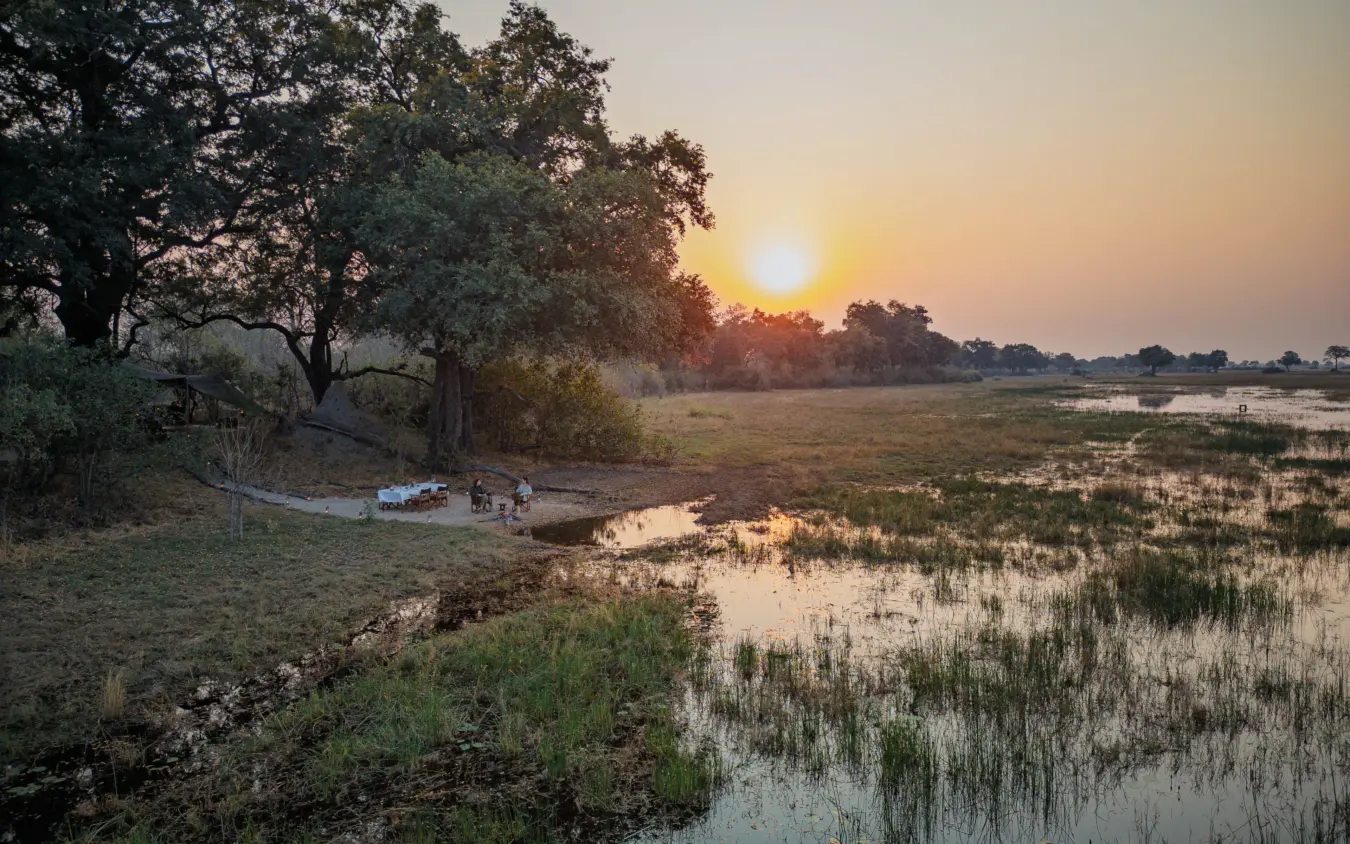
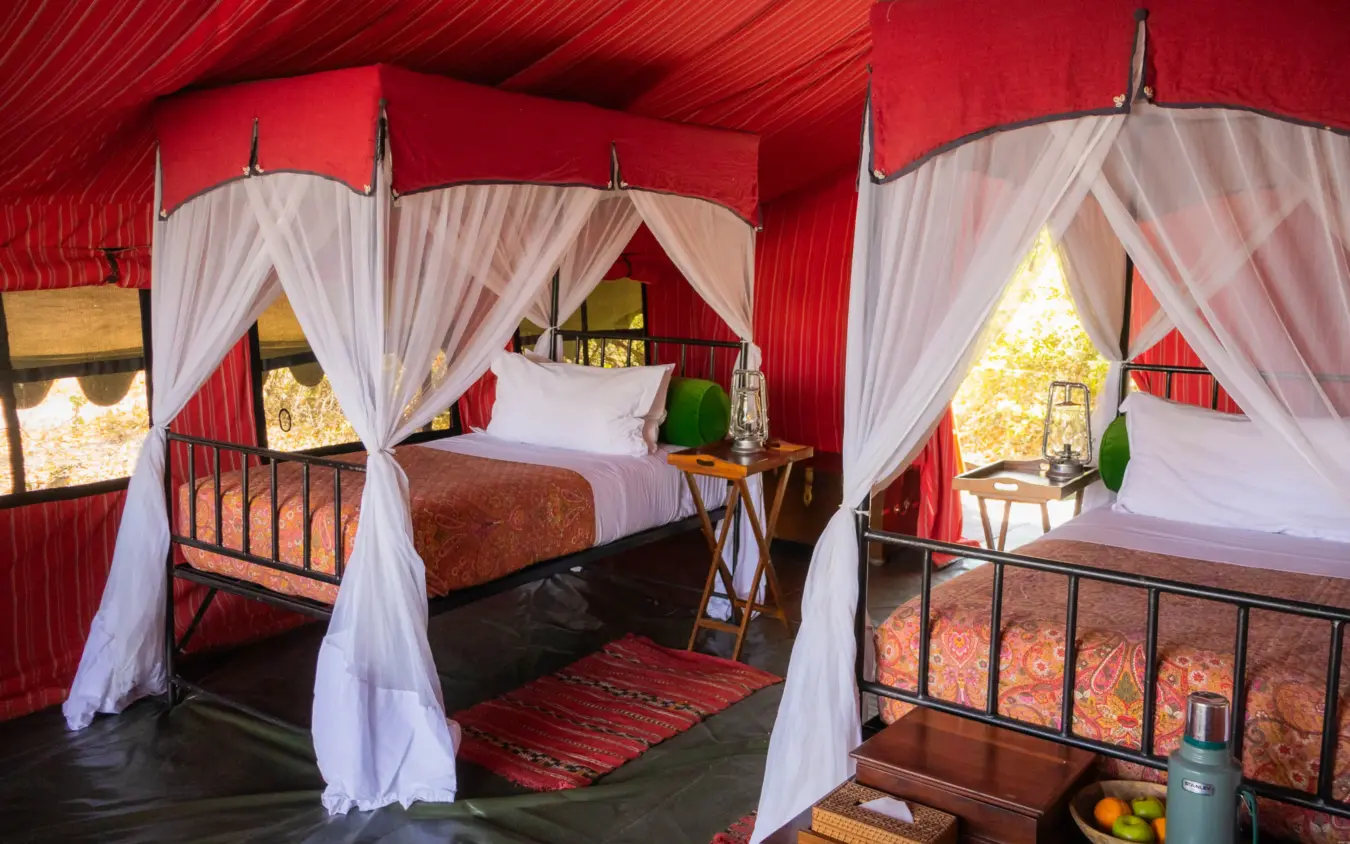
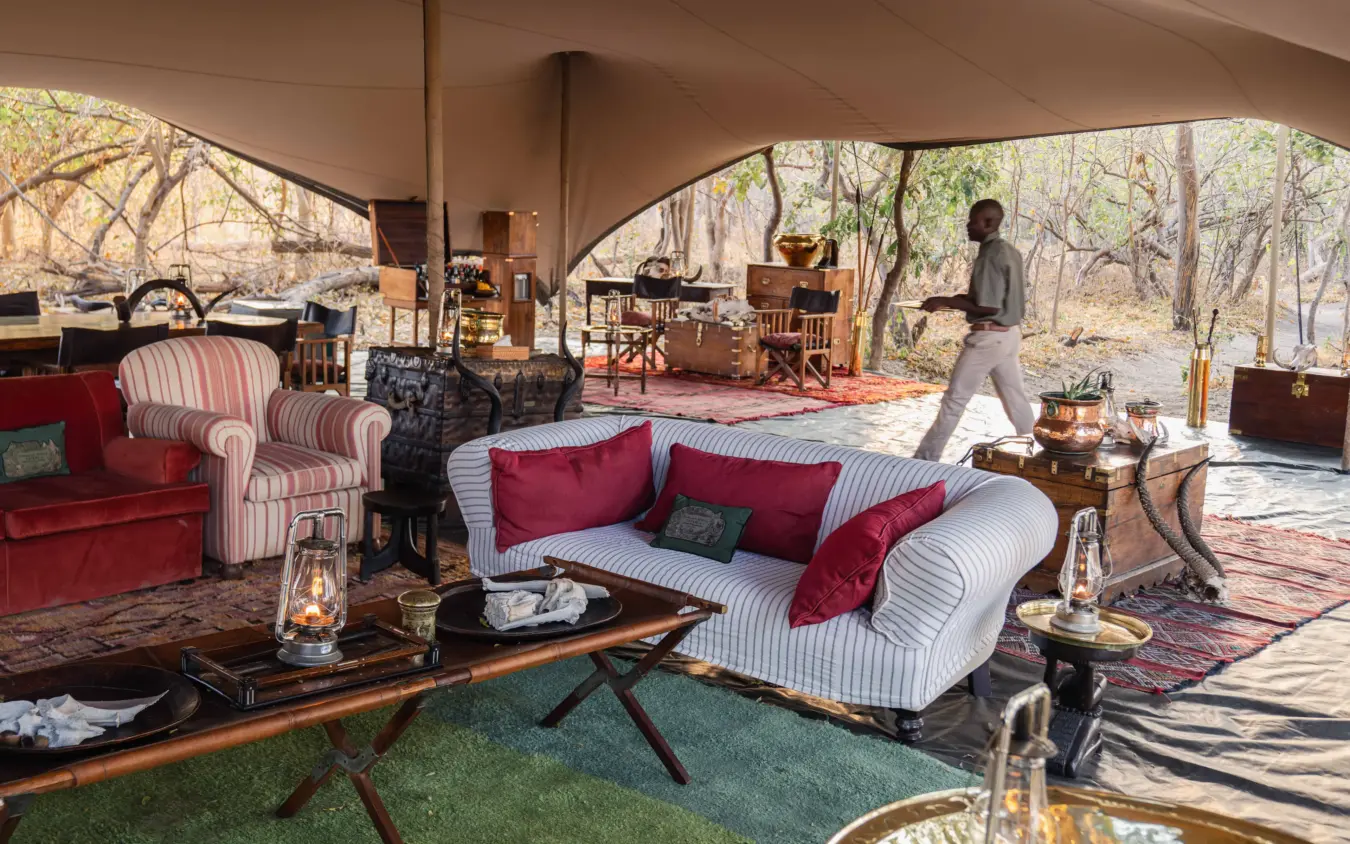
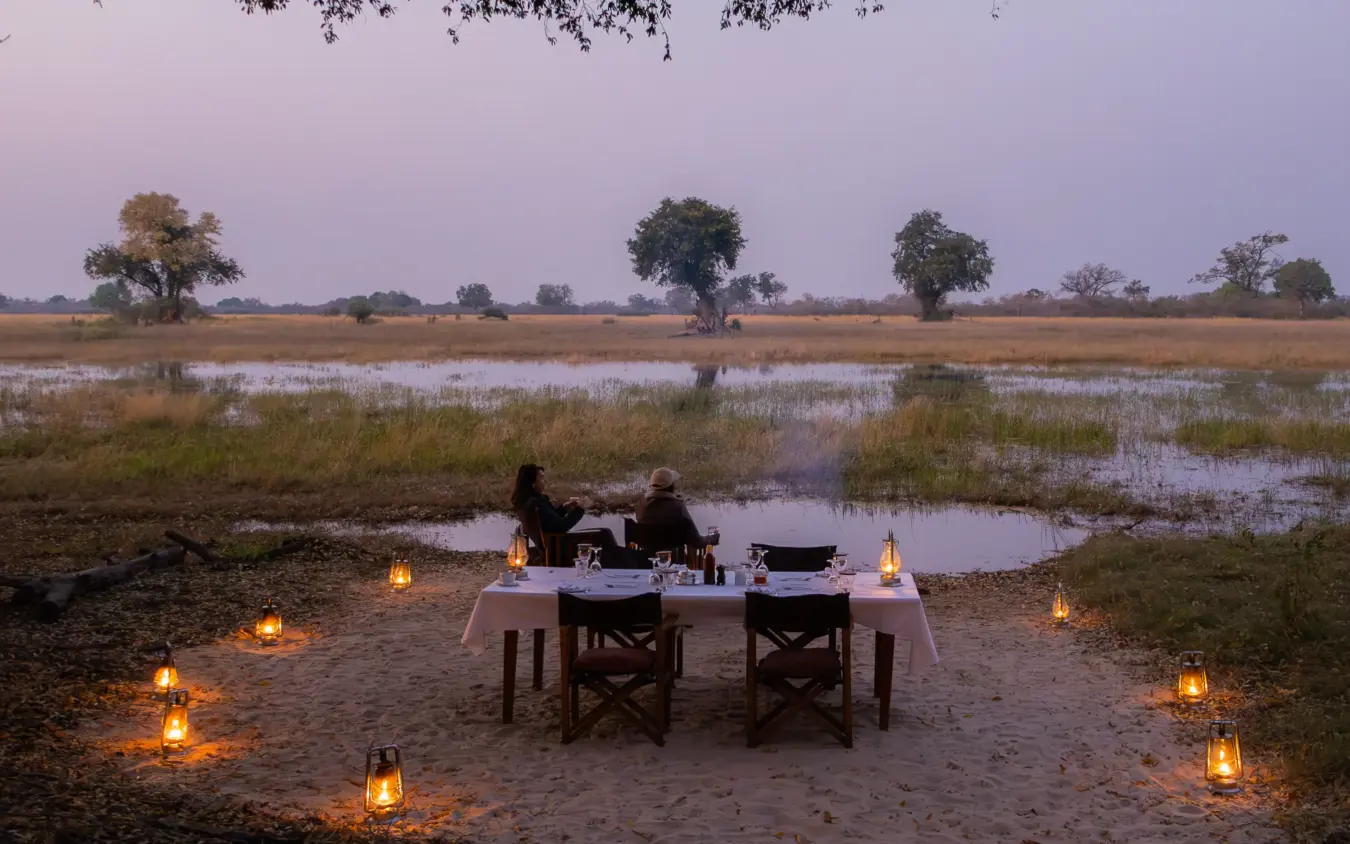
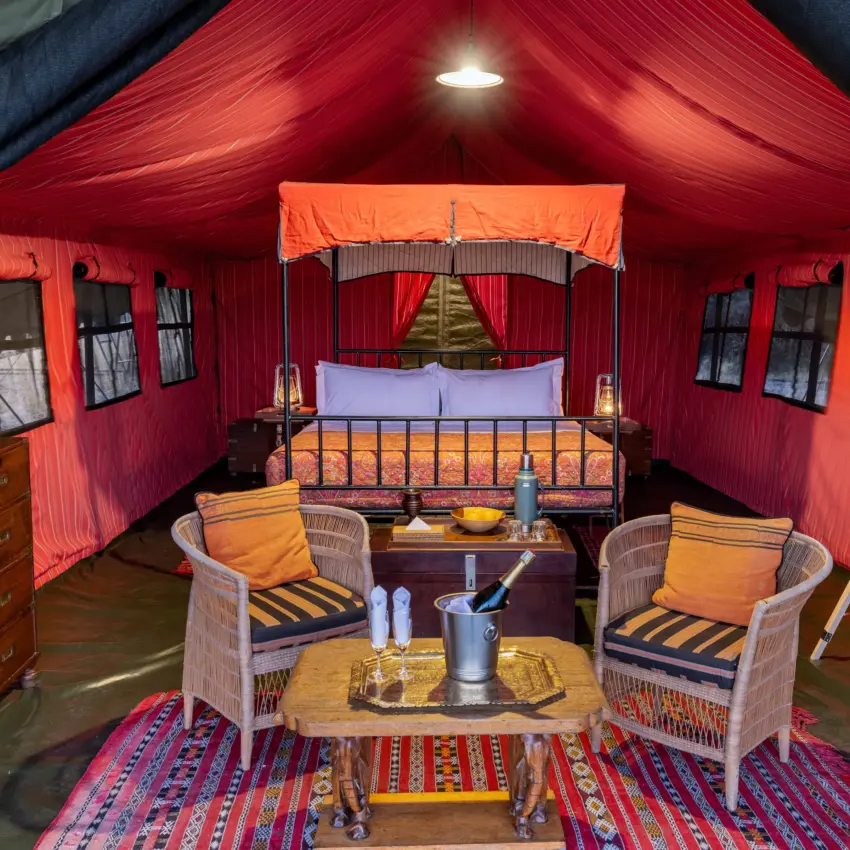
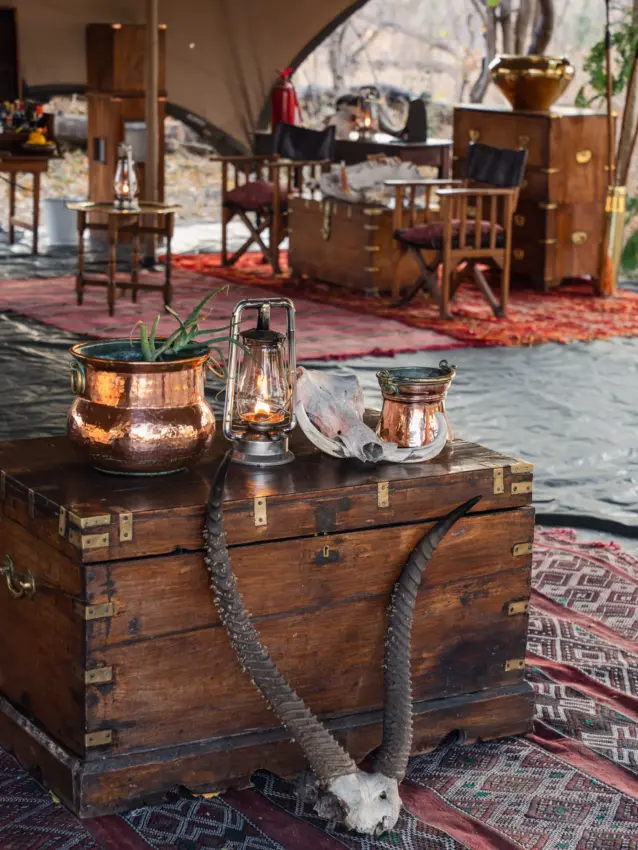
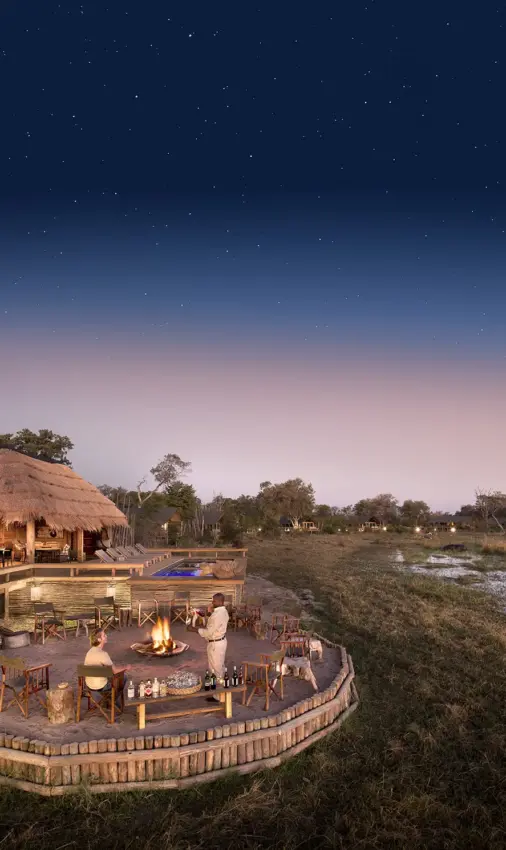
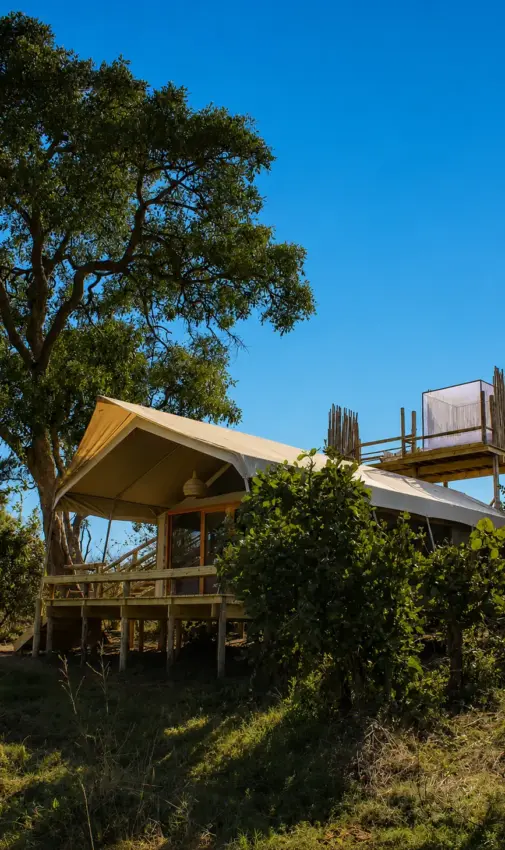
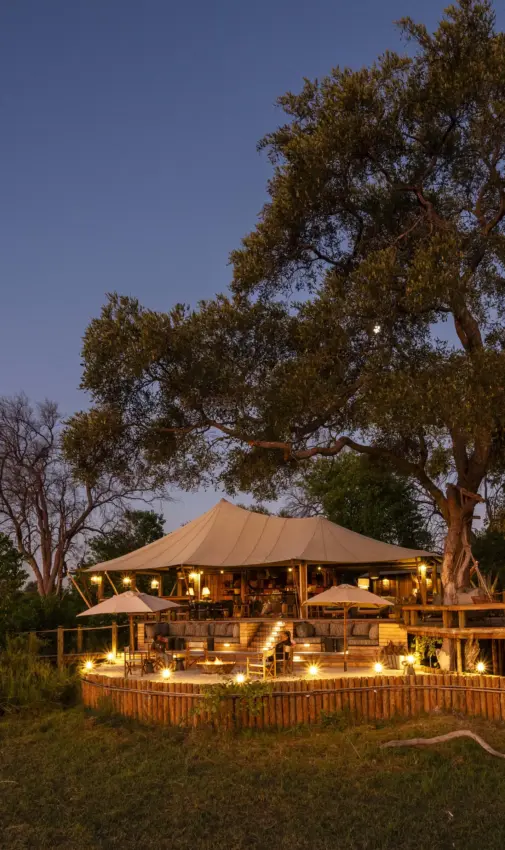
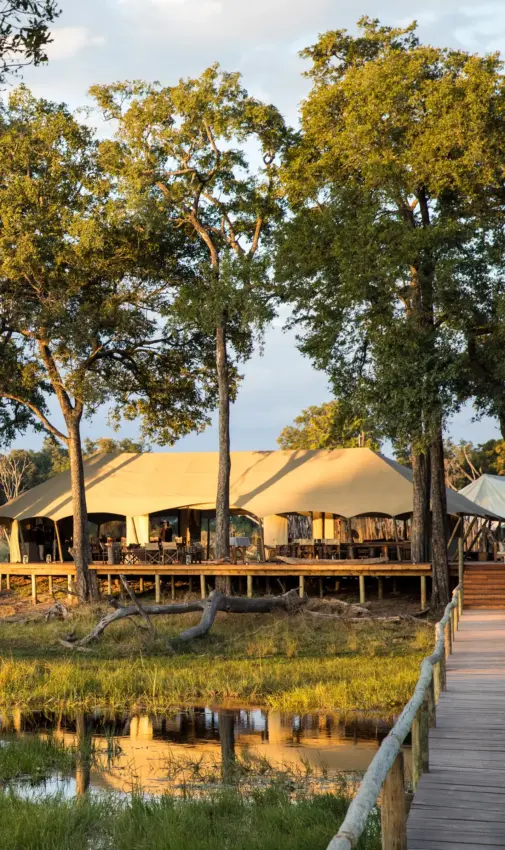
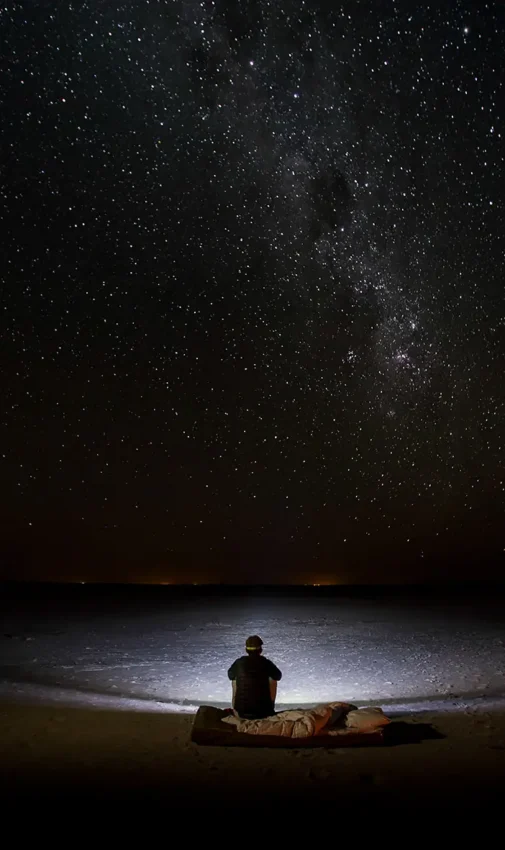
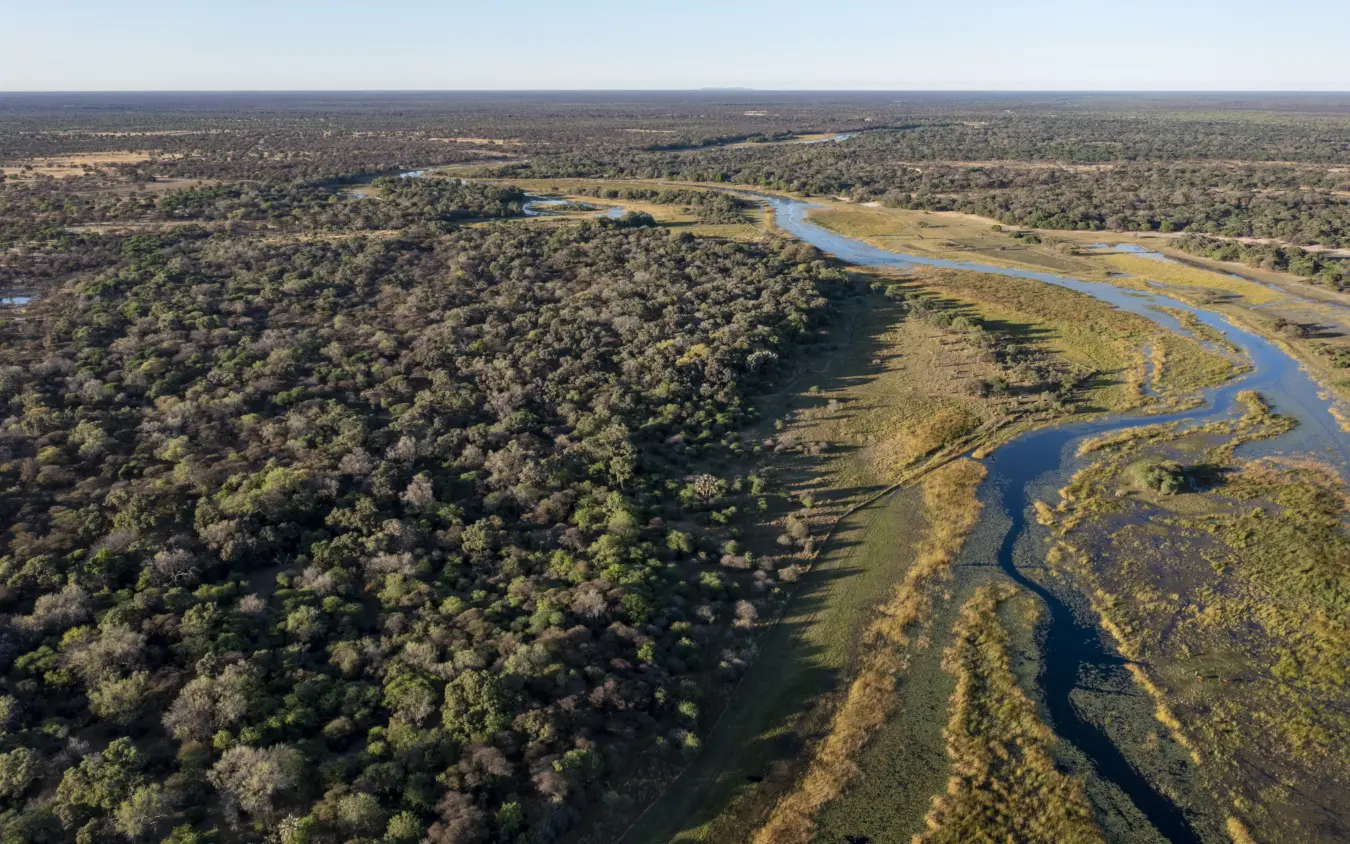
The NG12 concession covers 90,000 hectares of the northern Okavango Delta, north of the Vumbura and Duba Plains areas, a country of palm islands, winding channels and floodplains that fill and empty with the year. Eight tents in that much space is the whole point of the place: a day’s drive can pass without meeting another vehicle. Because this is a private concession rather than a national park, guides can drive after dark and leave the track to follow a leopard. Guests fly in by light aircraft and finish the journey by game drive, the first of the trip.
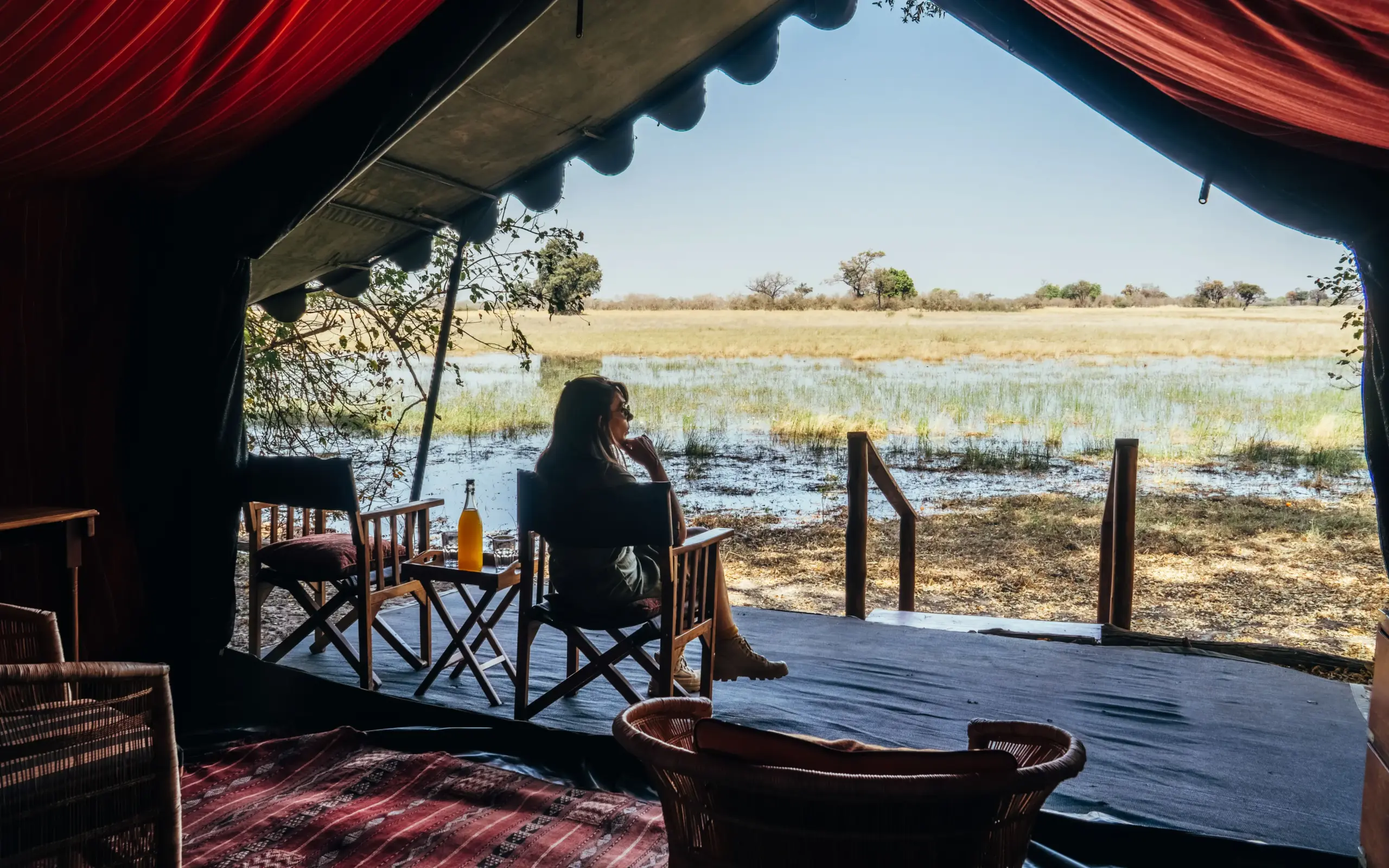
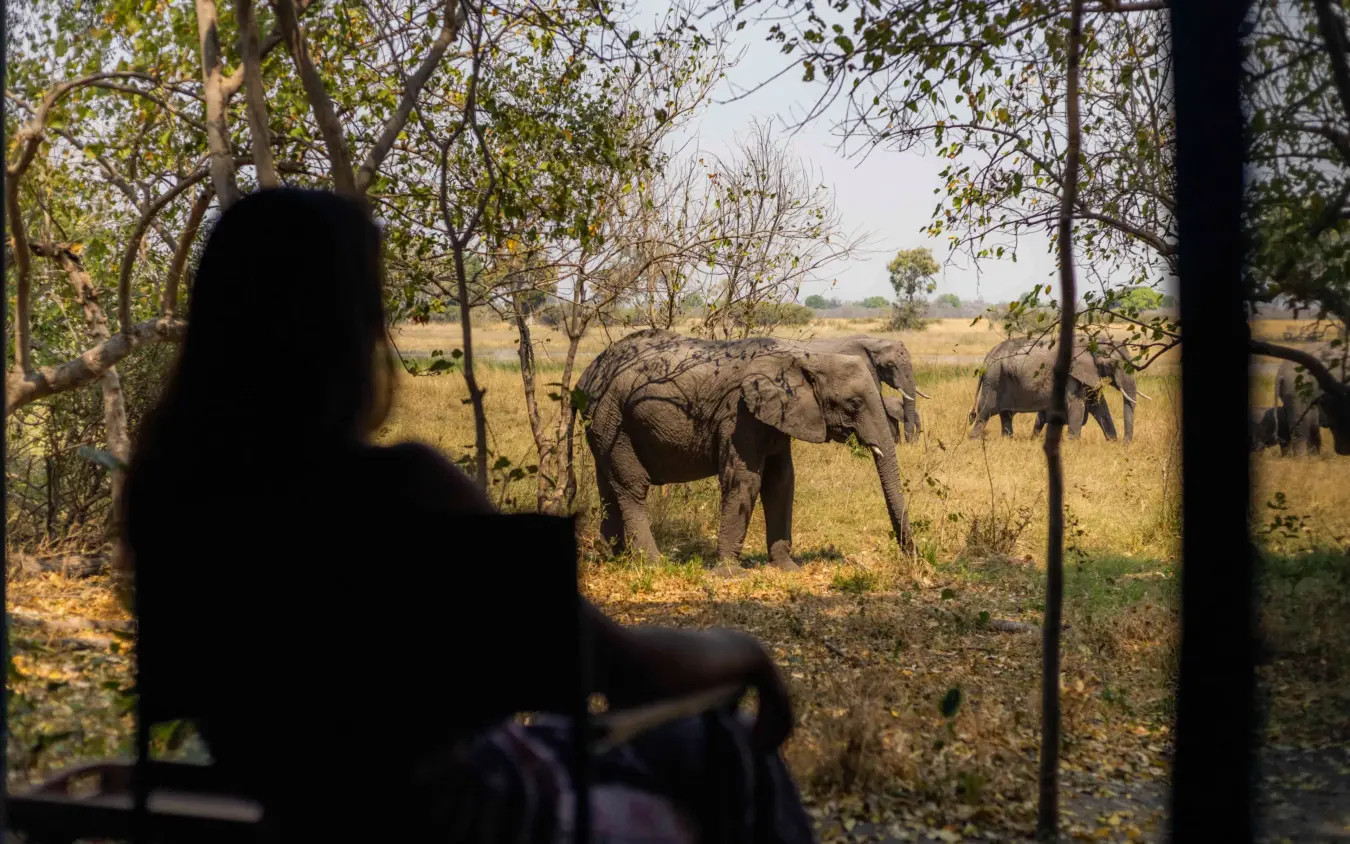
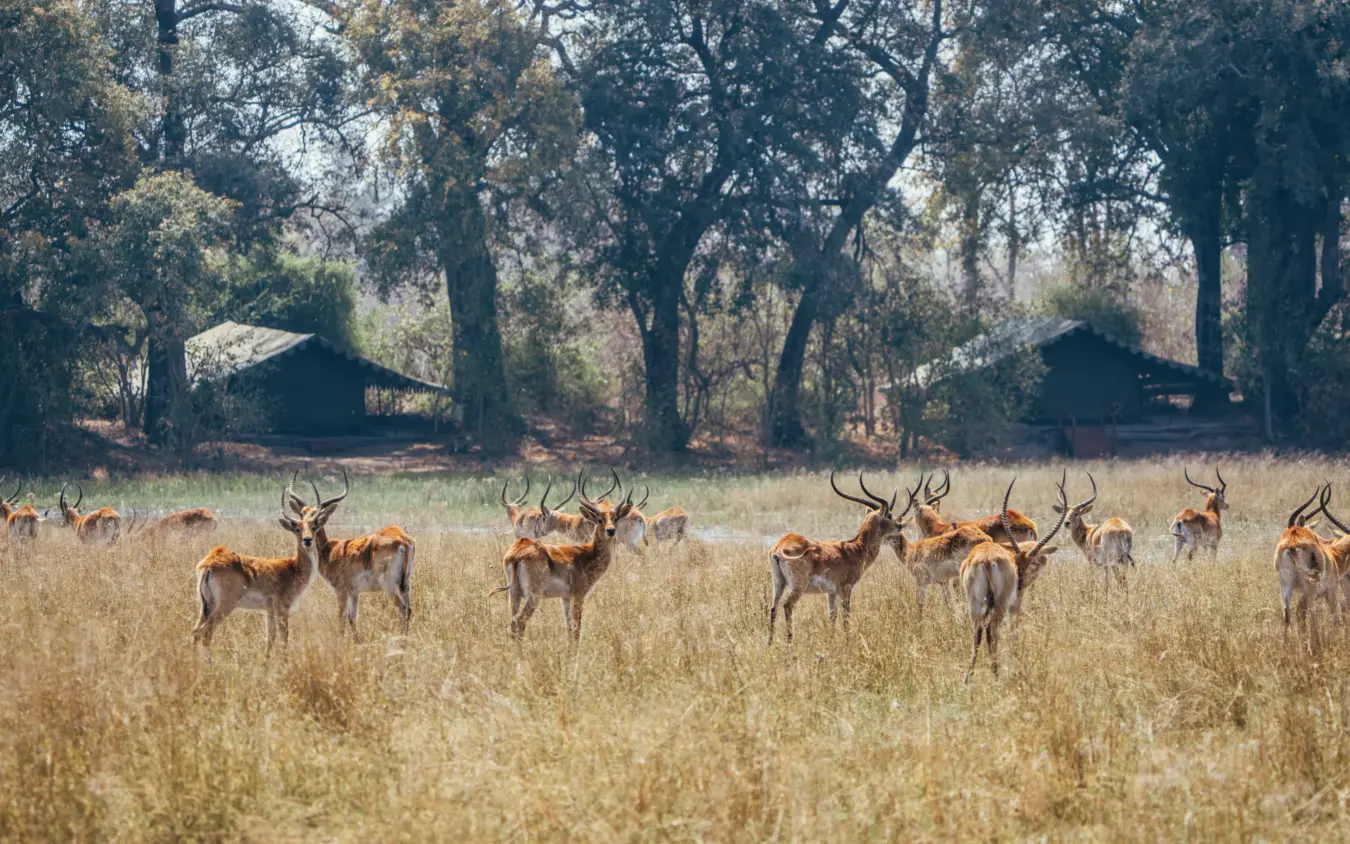
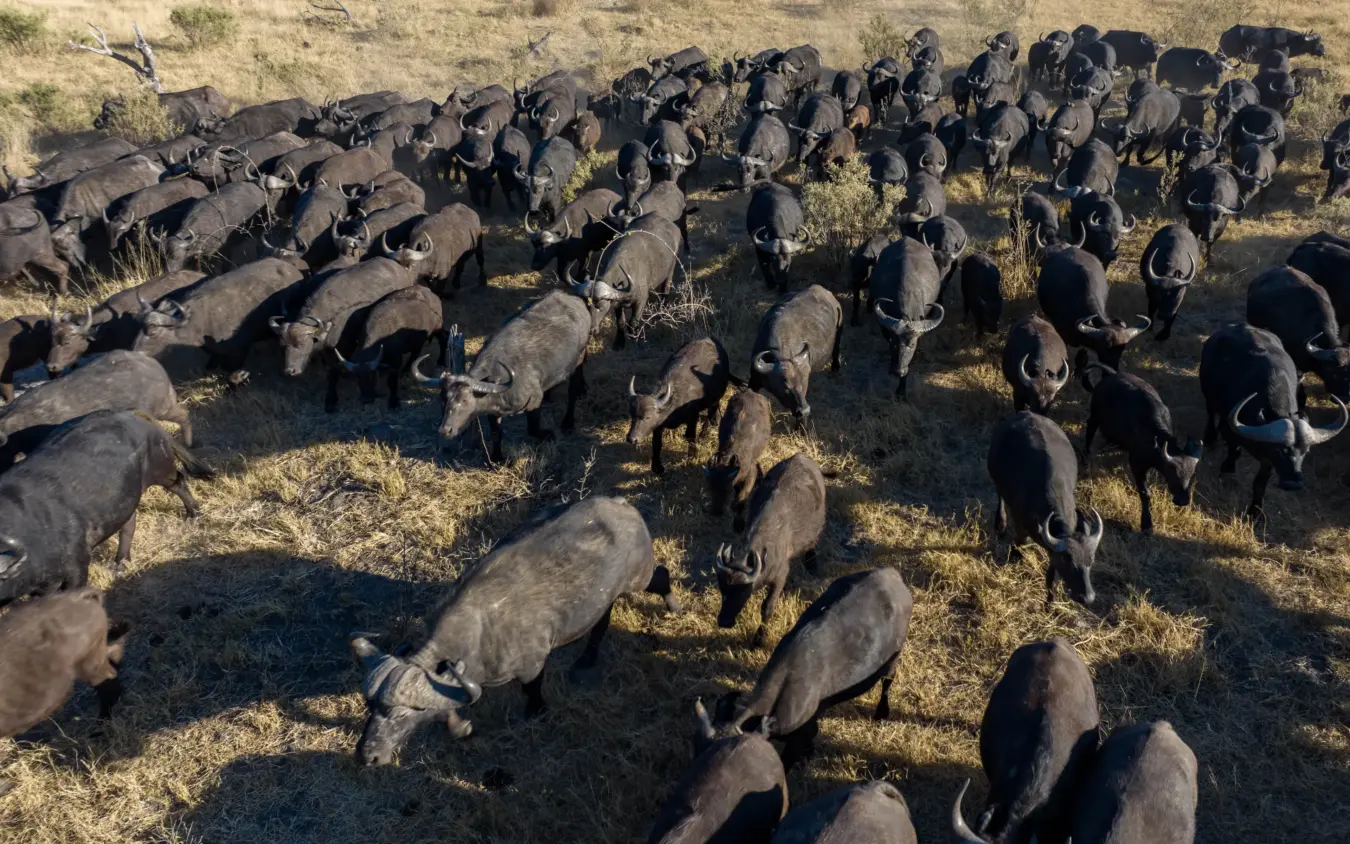
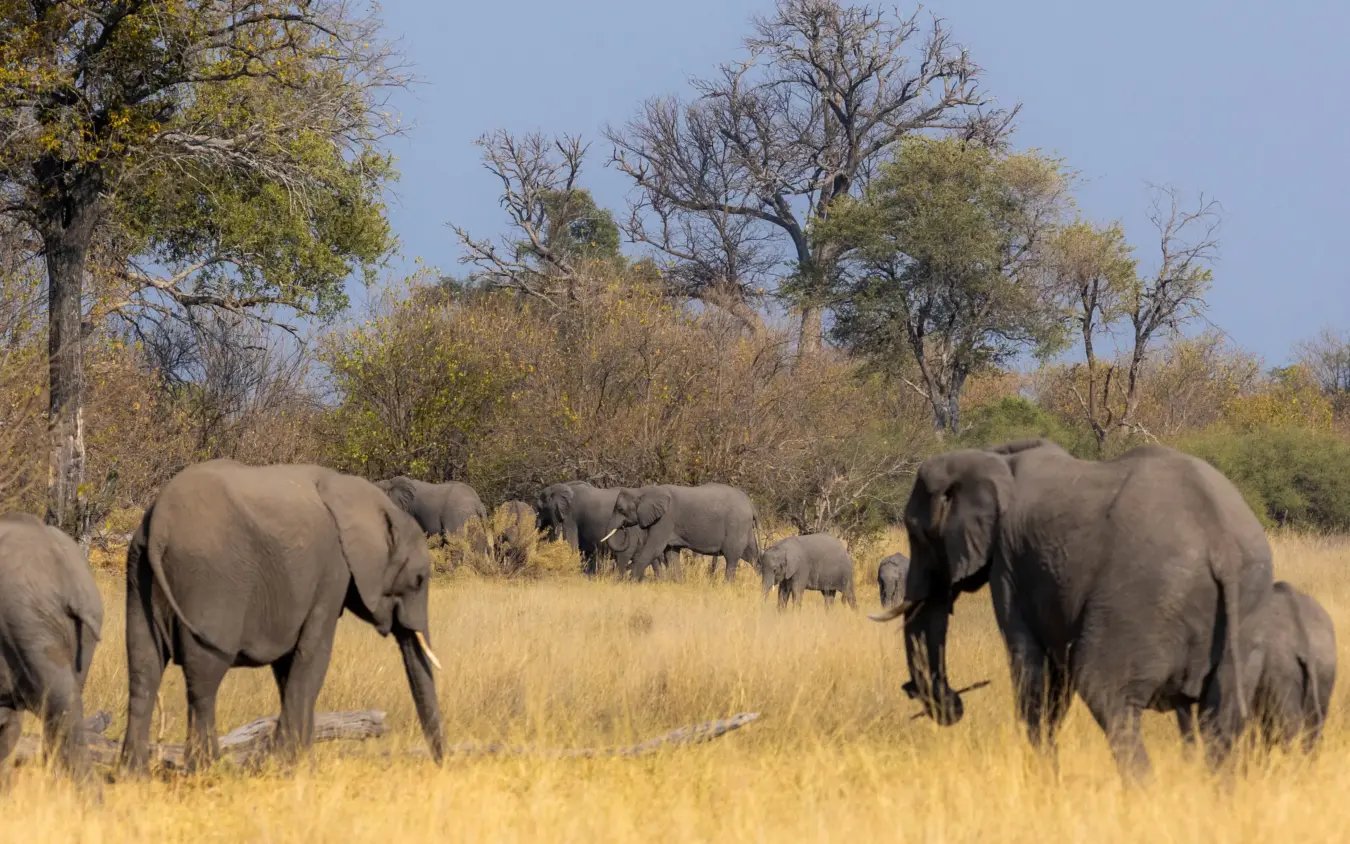
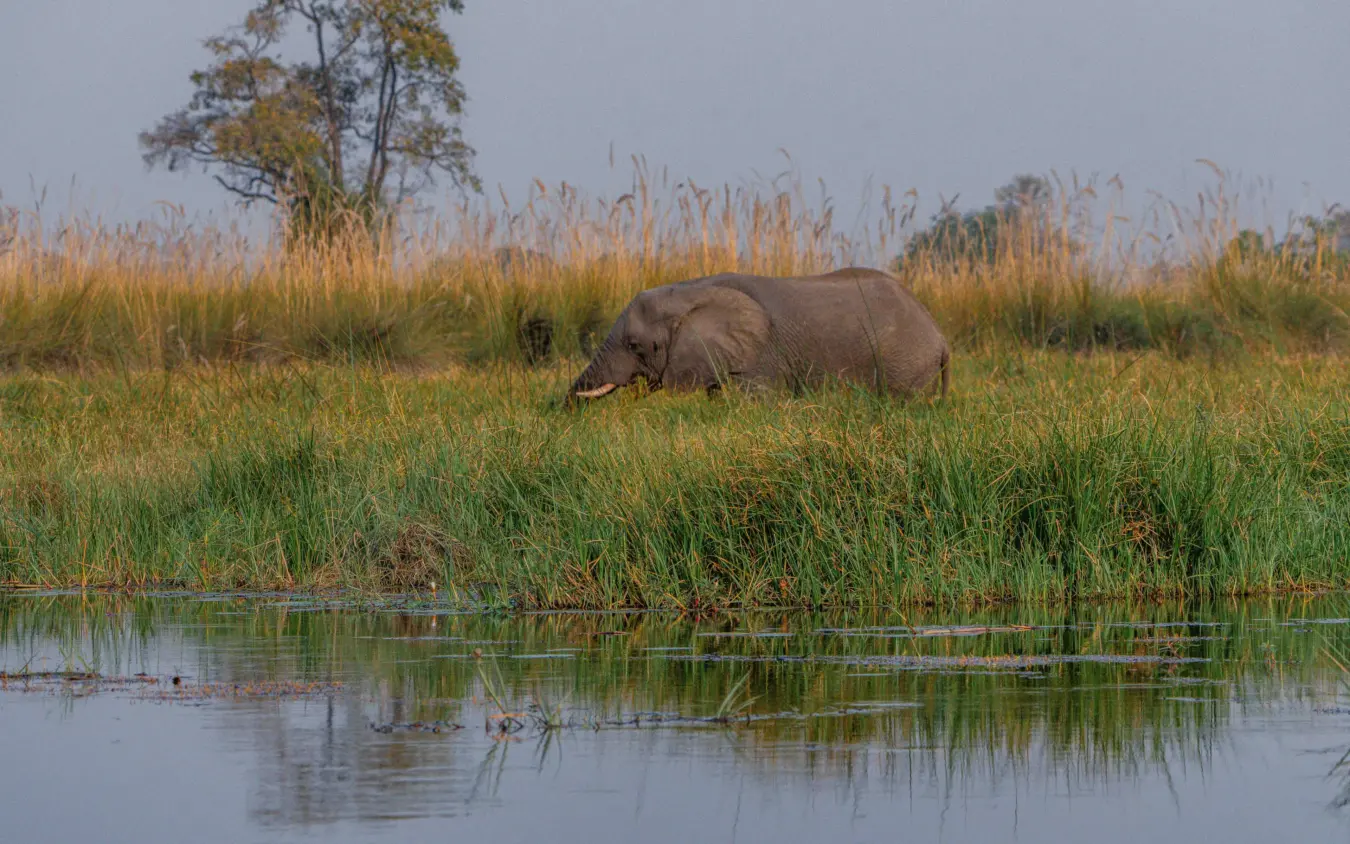
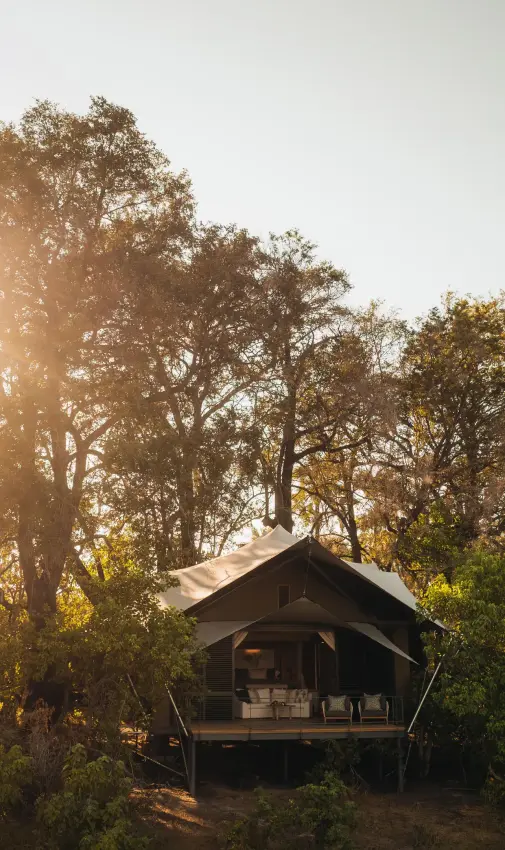
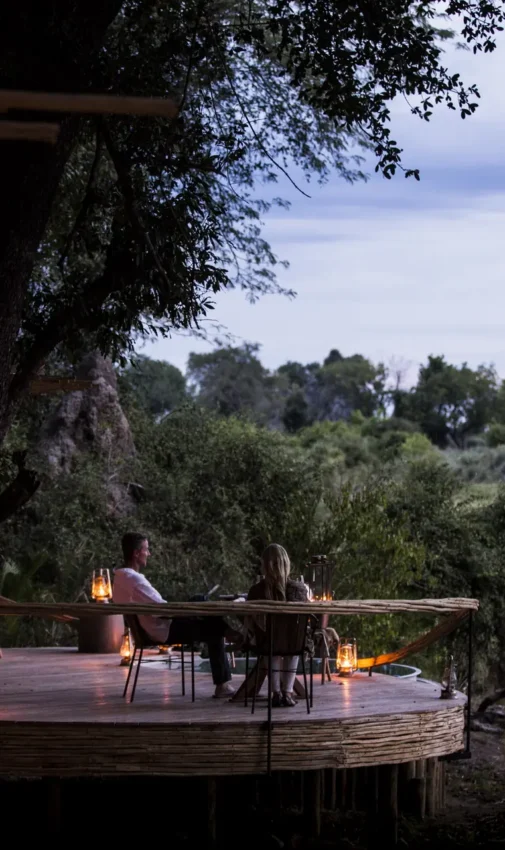
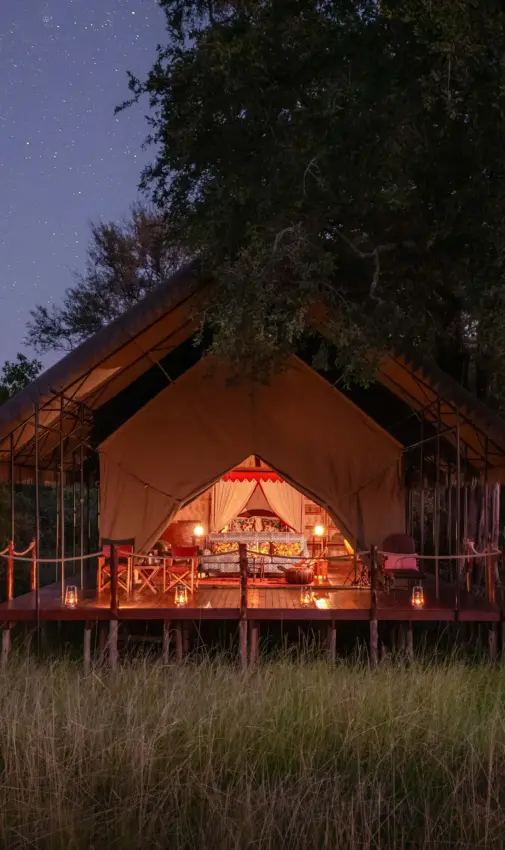
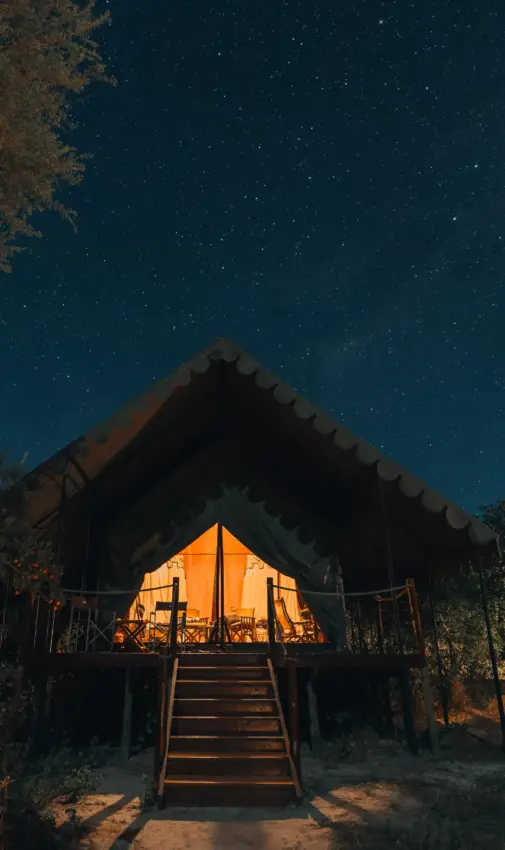
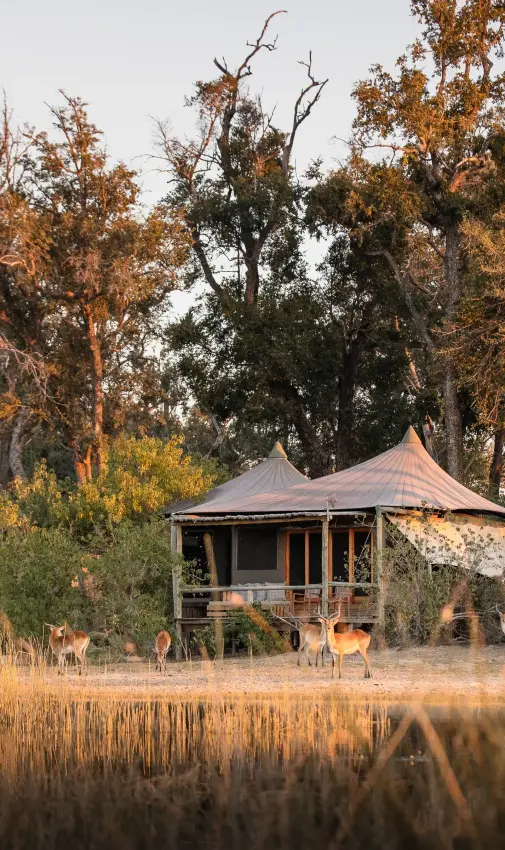
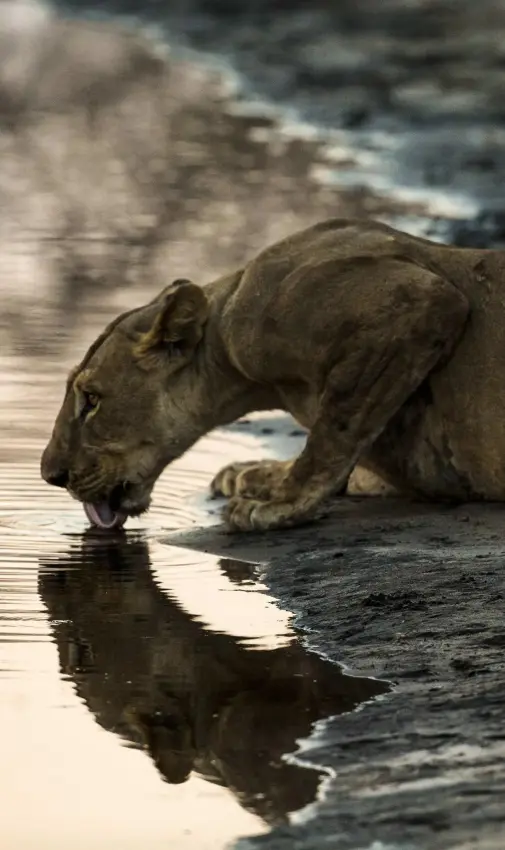
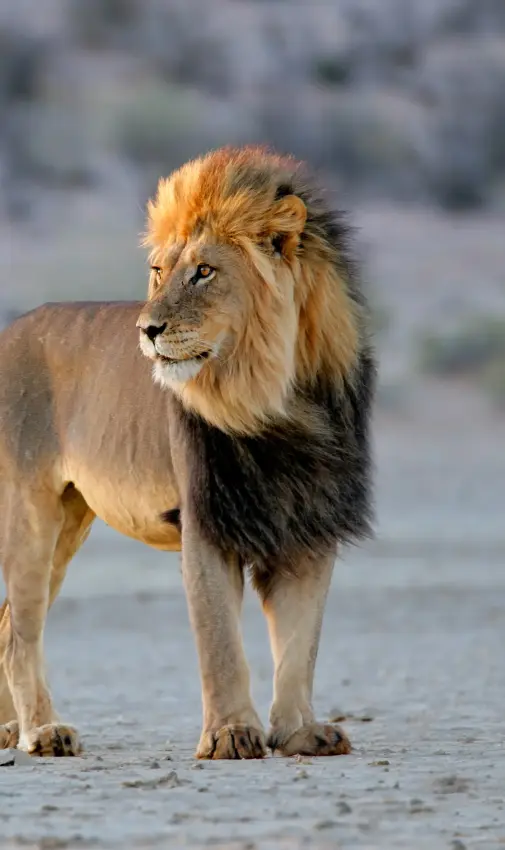
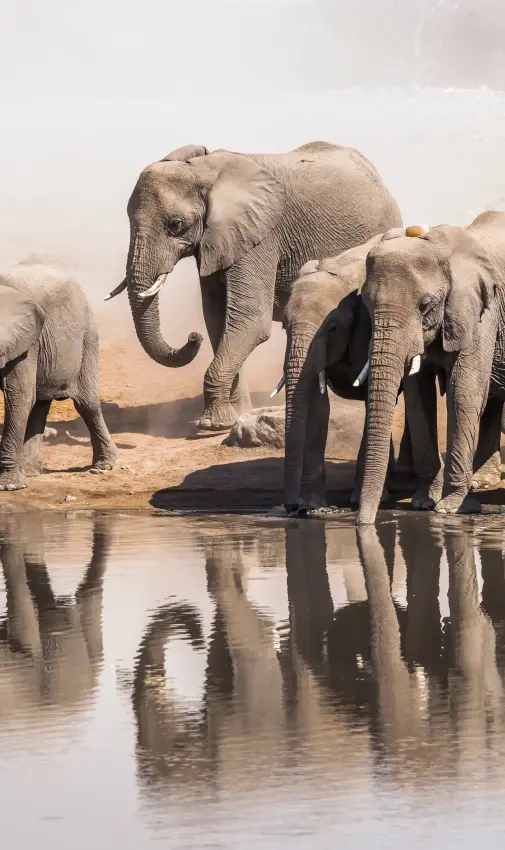
Giraffe browse the island edges, and lion, leopard, cheetah and African wild dog all hunt the same ground, with hyena, serval and mongoose filling in the margins. Elephant and buffalo work the floodplains, and red lechwe hold the wet ground. Much of it passes within sight of camp, where each tent has its own deck facing the seasonal floodplain and the light on it changes through the day. More than 350 bird species have been recorded here, among them wattled crane, Pel’s fishing owl, malachite kingfisher and carmine bee-eater.
Elephant and buffalo work the floodplains, and red lechwe hold the wet ground.
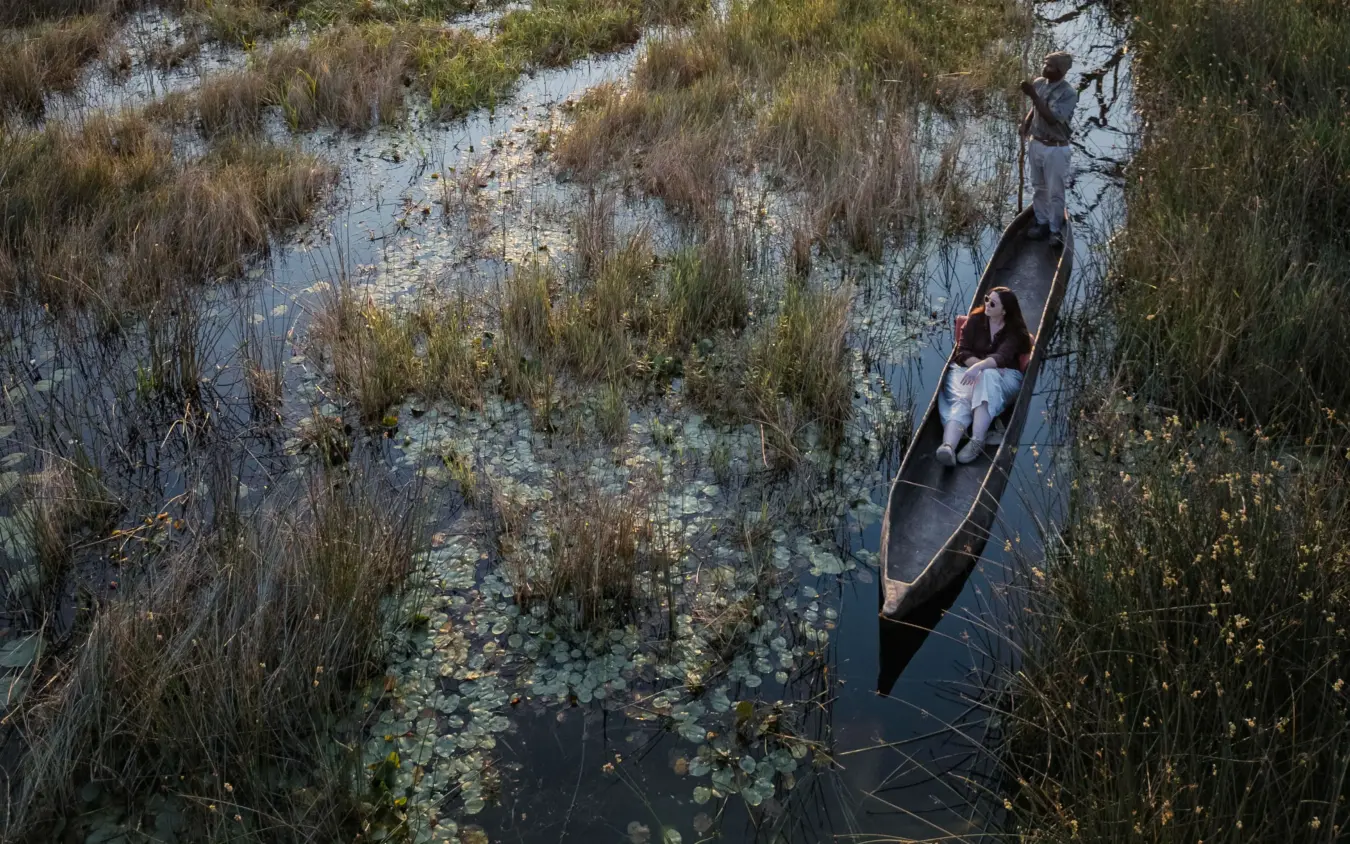
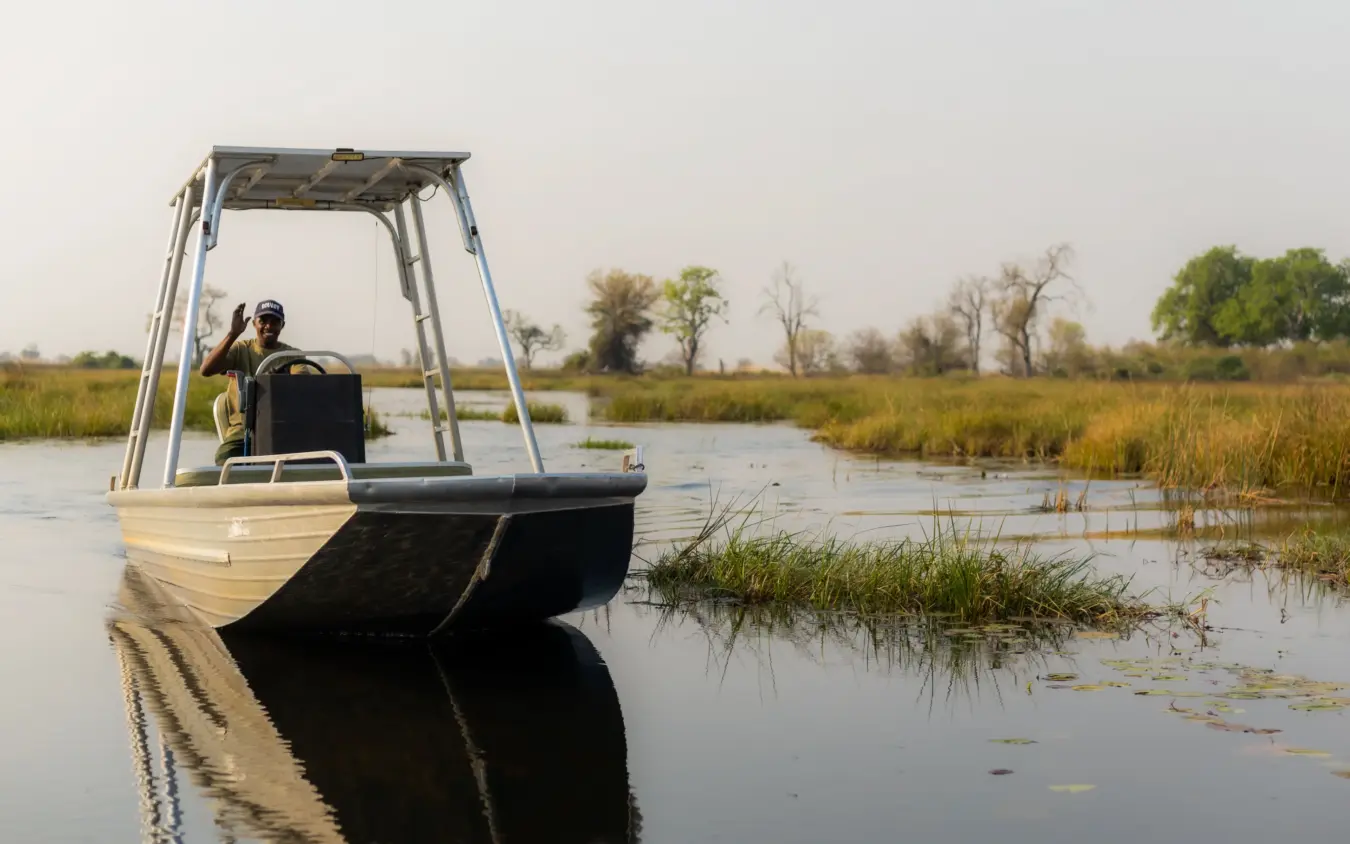
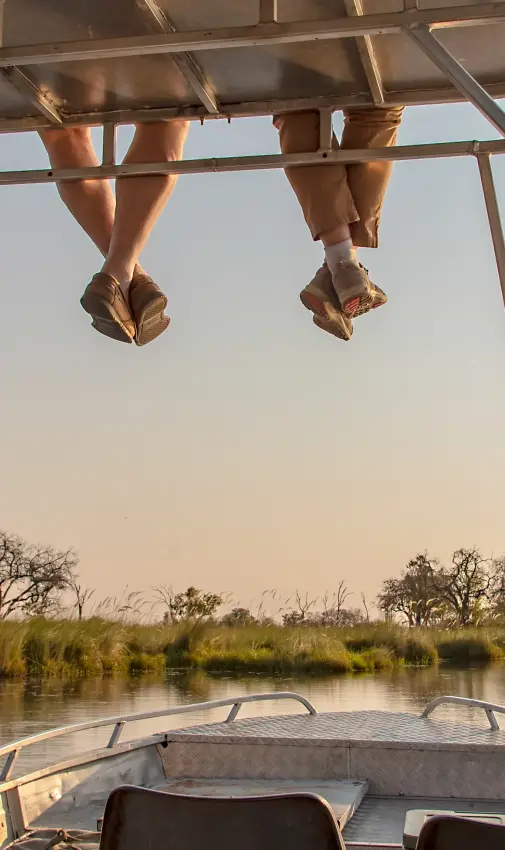
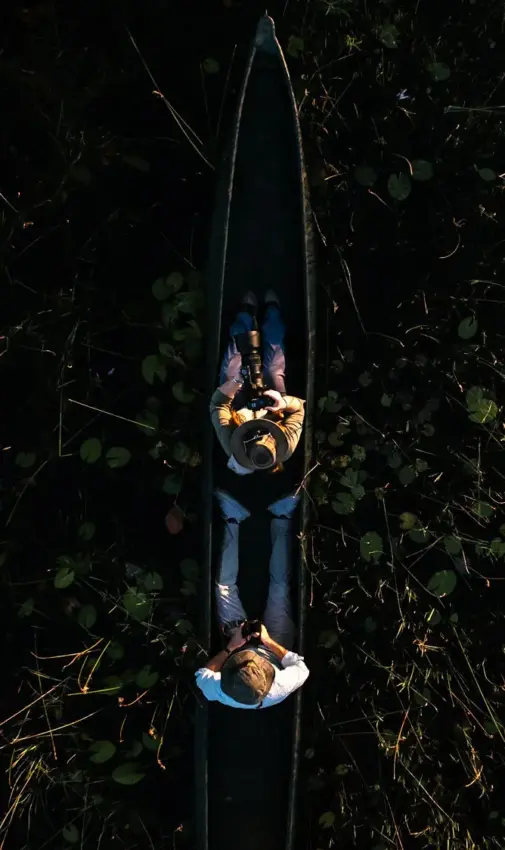
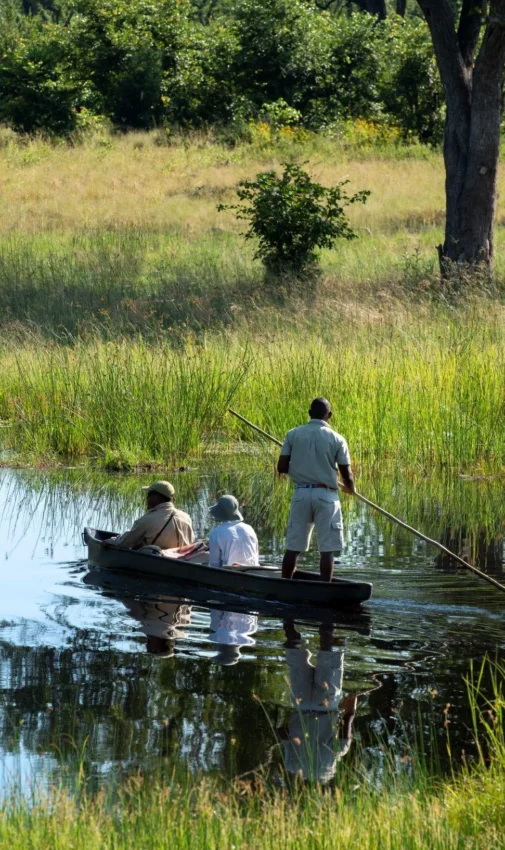
Helicopters lift off from camp for a pass over the channels, and the same aircraft reaches the Tsodilo Hills to the northwest, a UNESCO World Heritage site holding over 4,500 San rock paintings, with few other visitors around. Closer to camp, mokoro trips depend on water levels, boating opens up the deeper channels, and walking brings tracks and plants into focus. Children from six are welcome, and the camp can be taken on an exclusive-use basis, which suits a family or a group travelling together.
Expeditions Camp runs from 1 April to 9 January and closes for February and March. April and May bring green country and rising water. June to August, the flood pushed down from Angola is at its fullest, and mokoro and boating are at their best in dry, mild weather. September and October see the water drop and the game gather along what remains. From November the skies build with storms, migrant birds arrive and the first newborn animals appear.