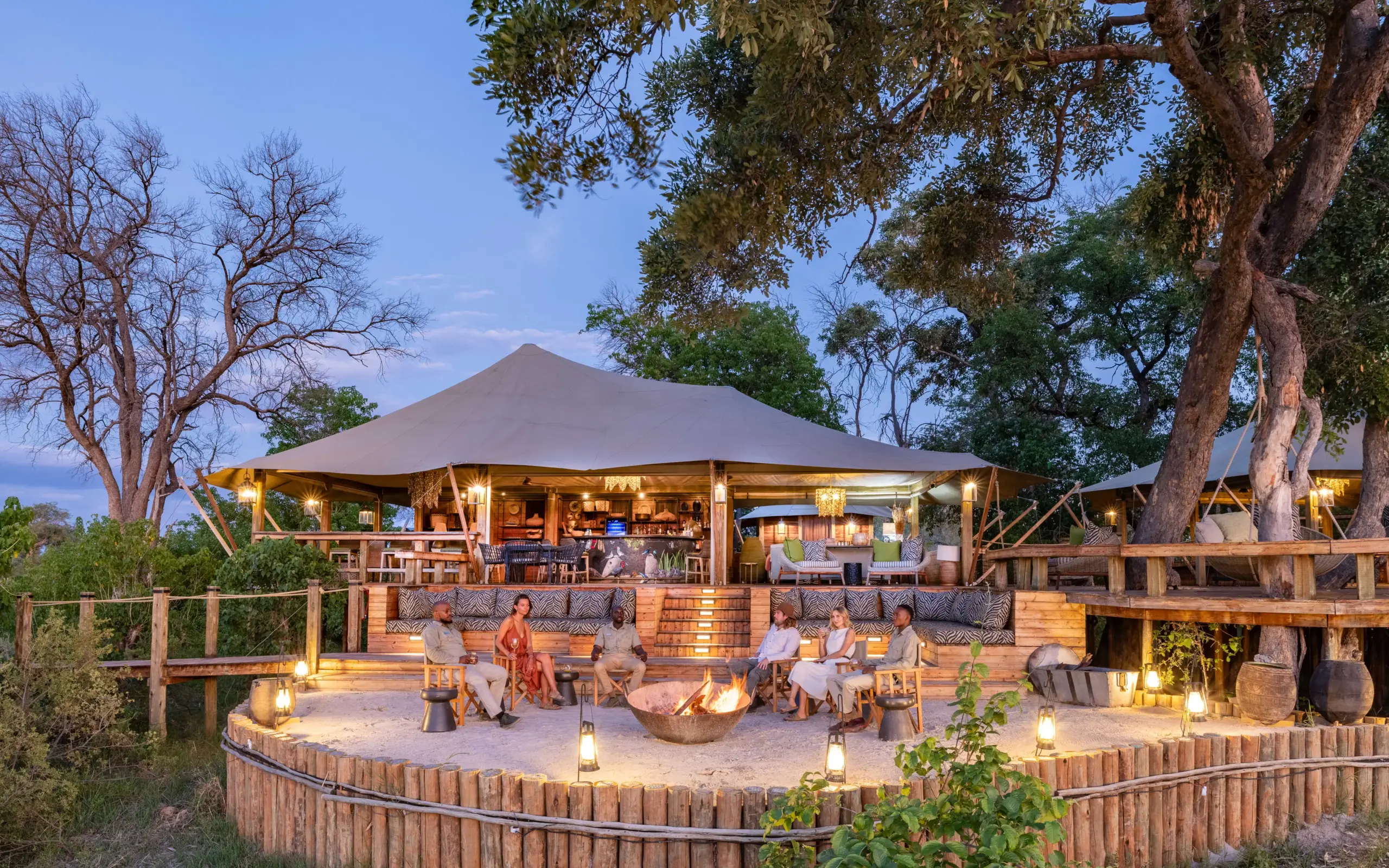
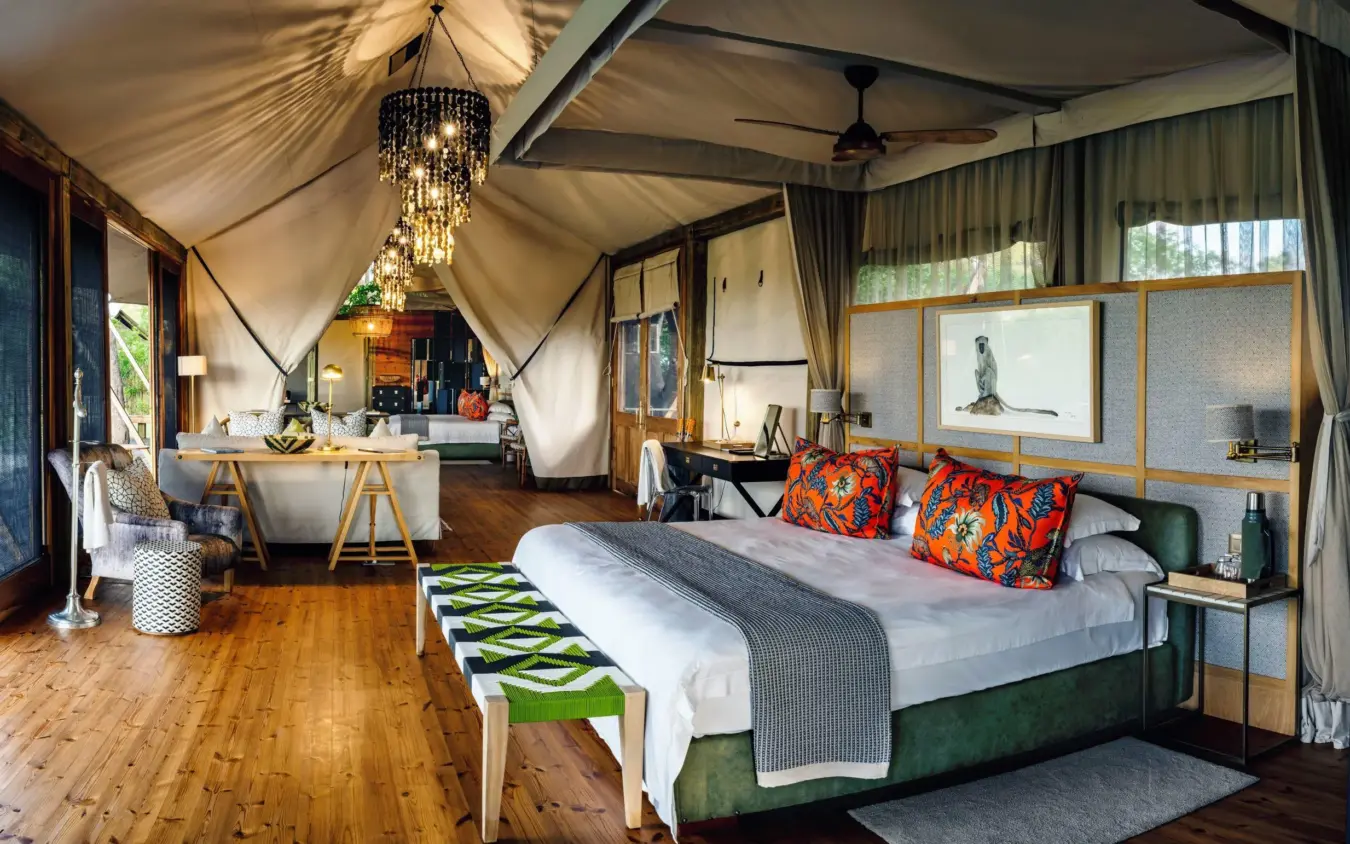
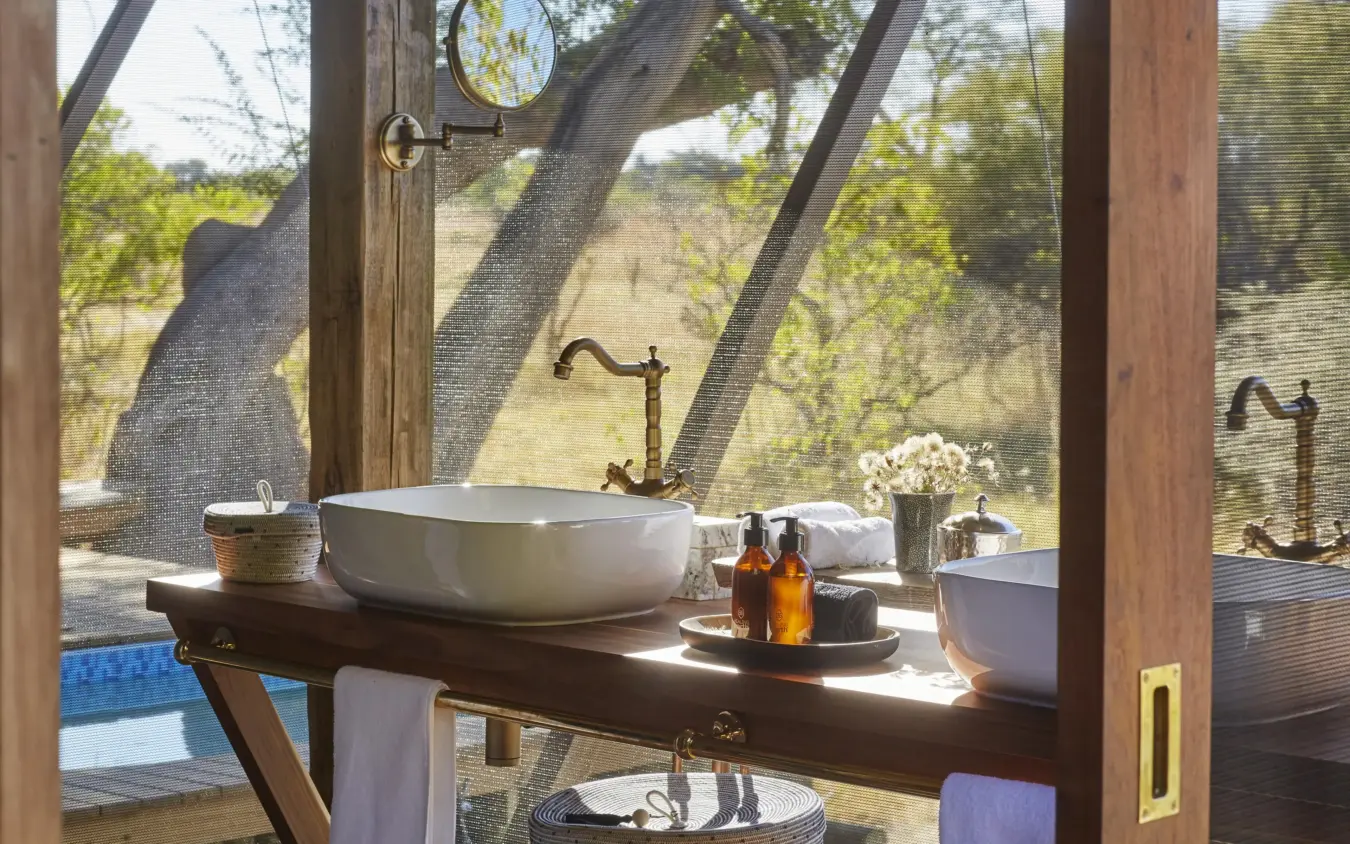
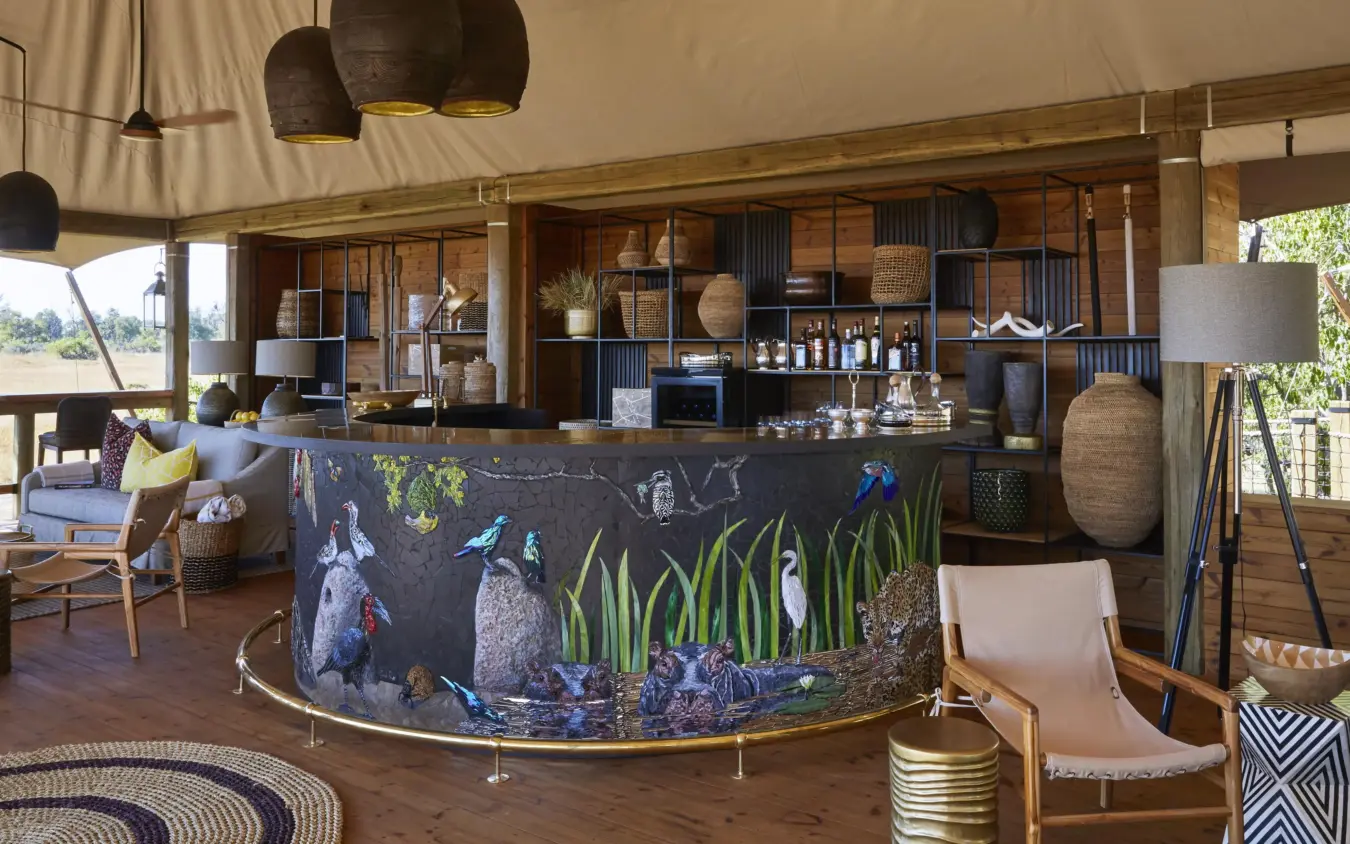
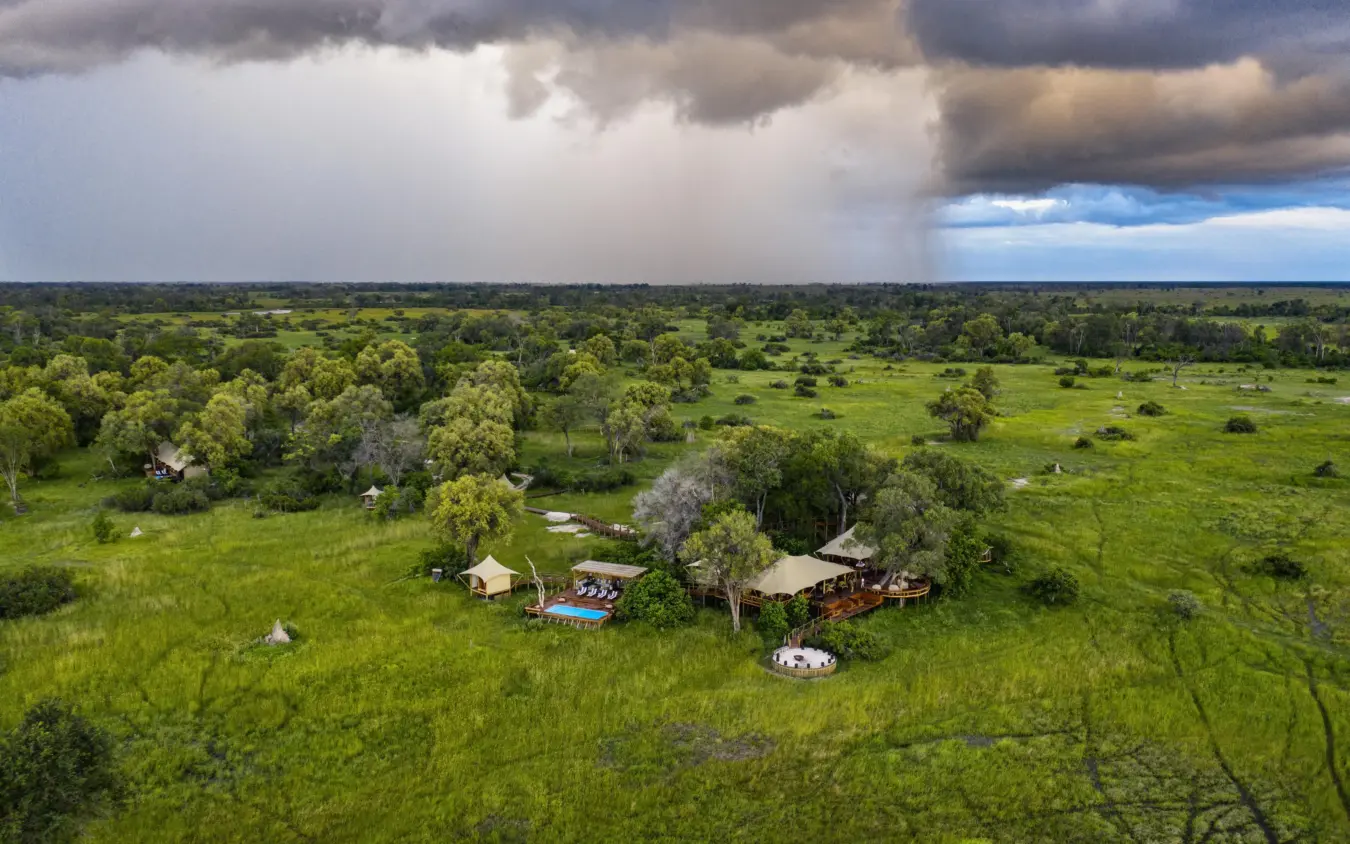
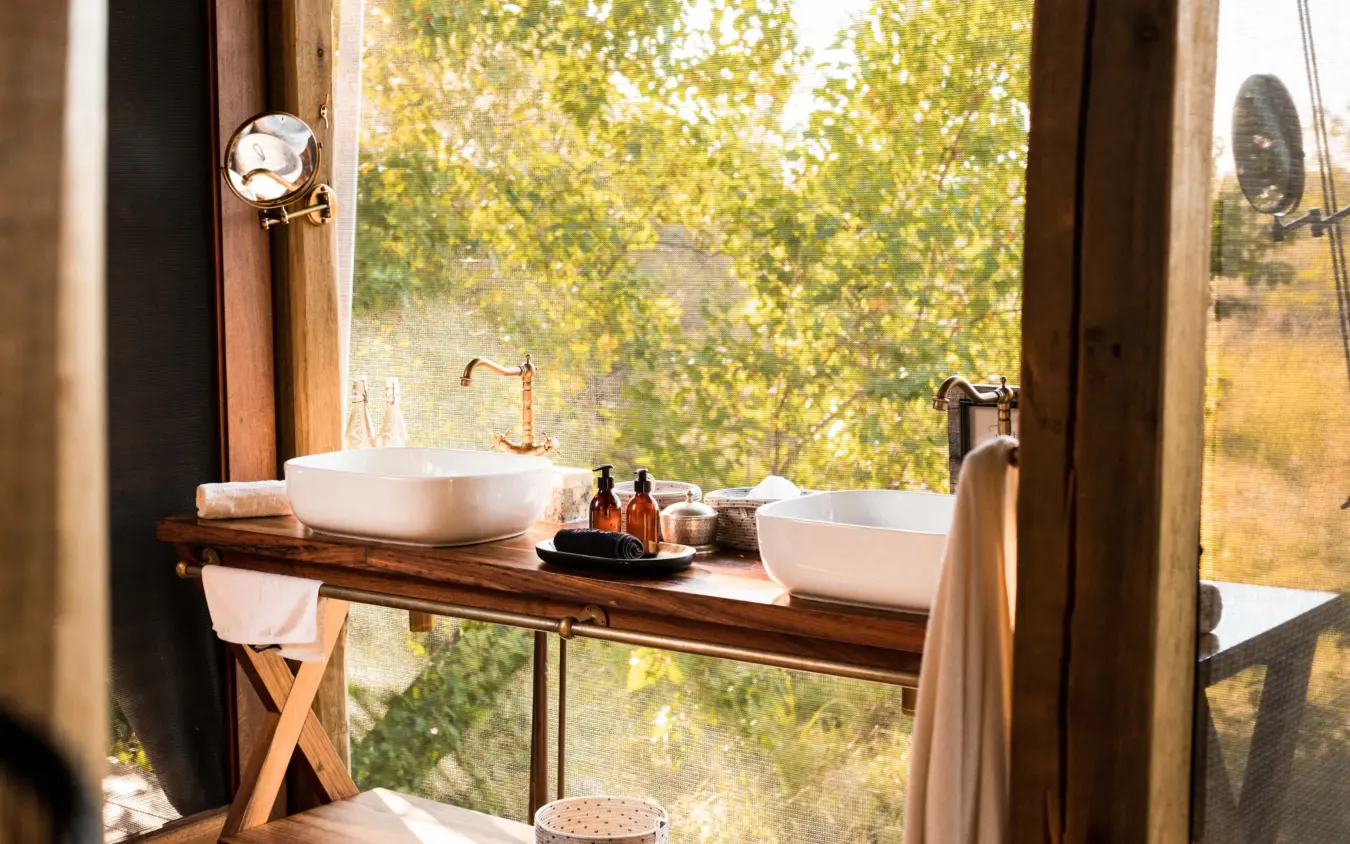
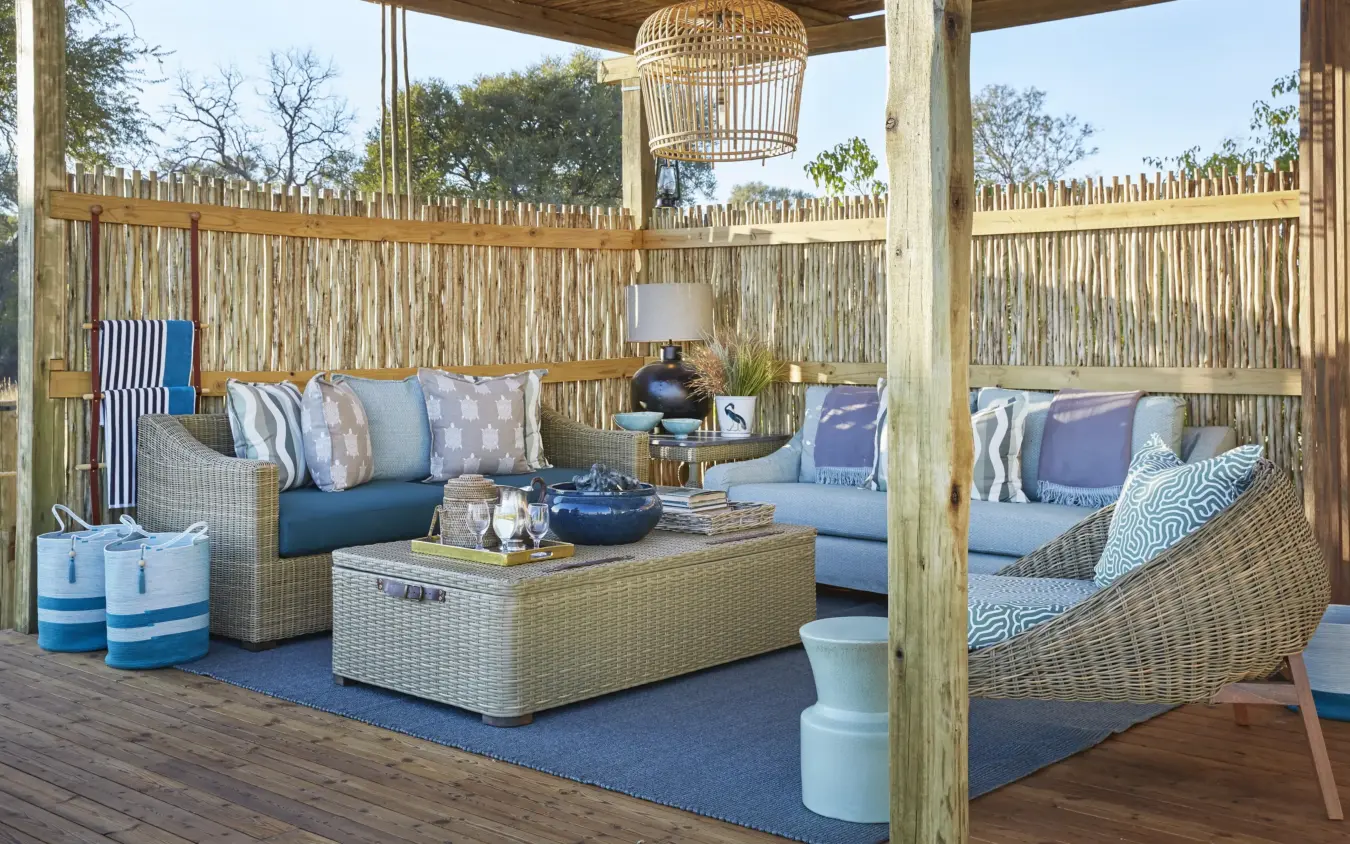
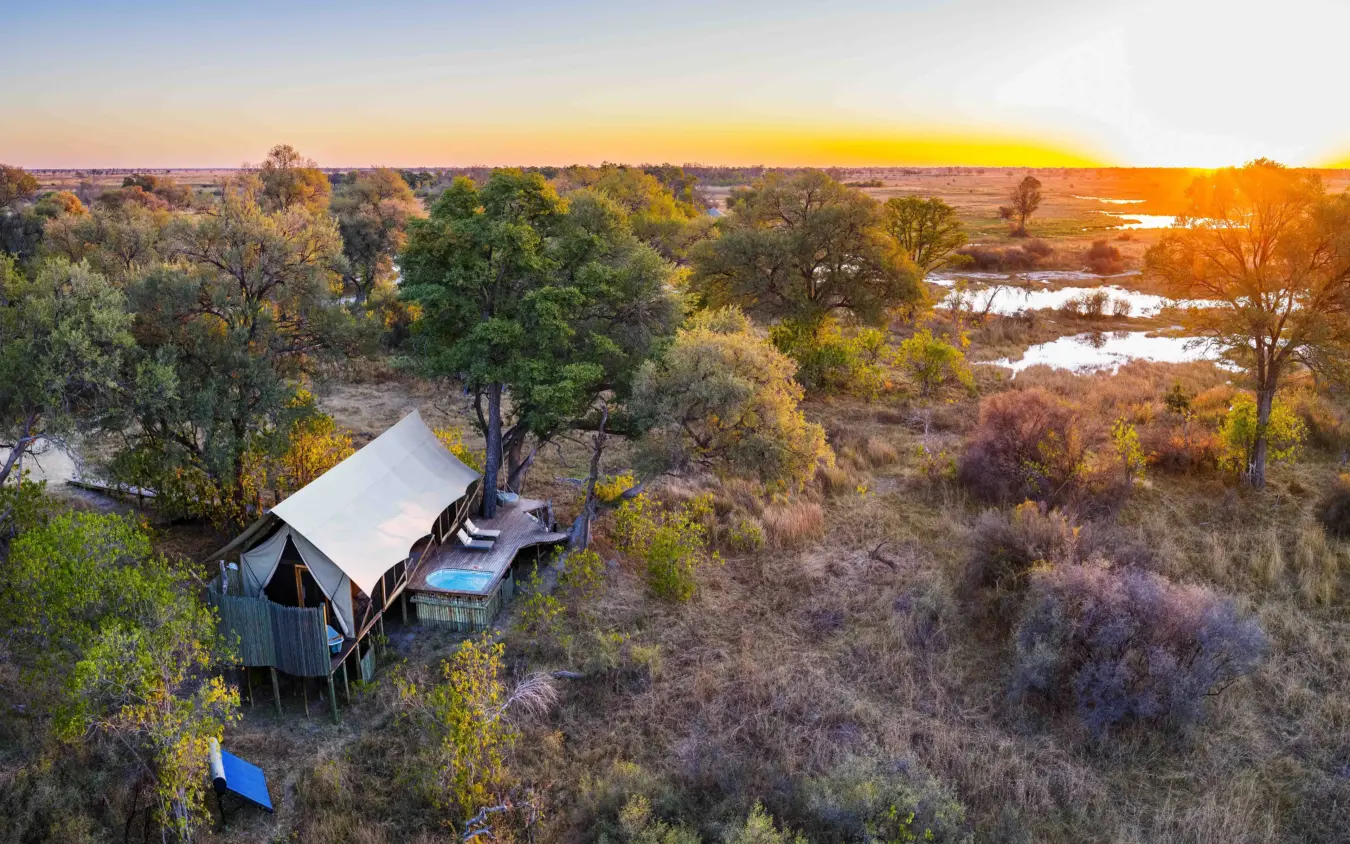
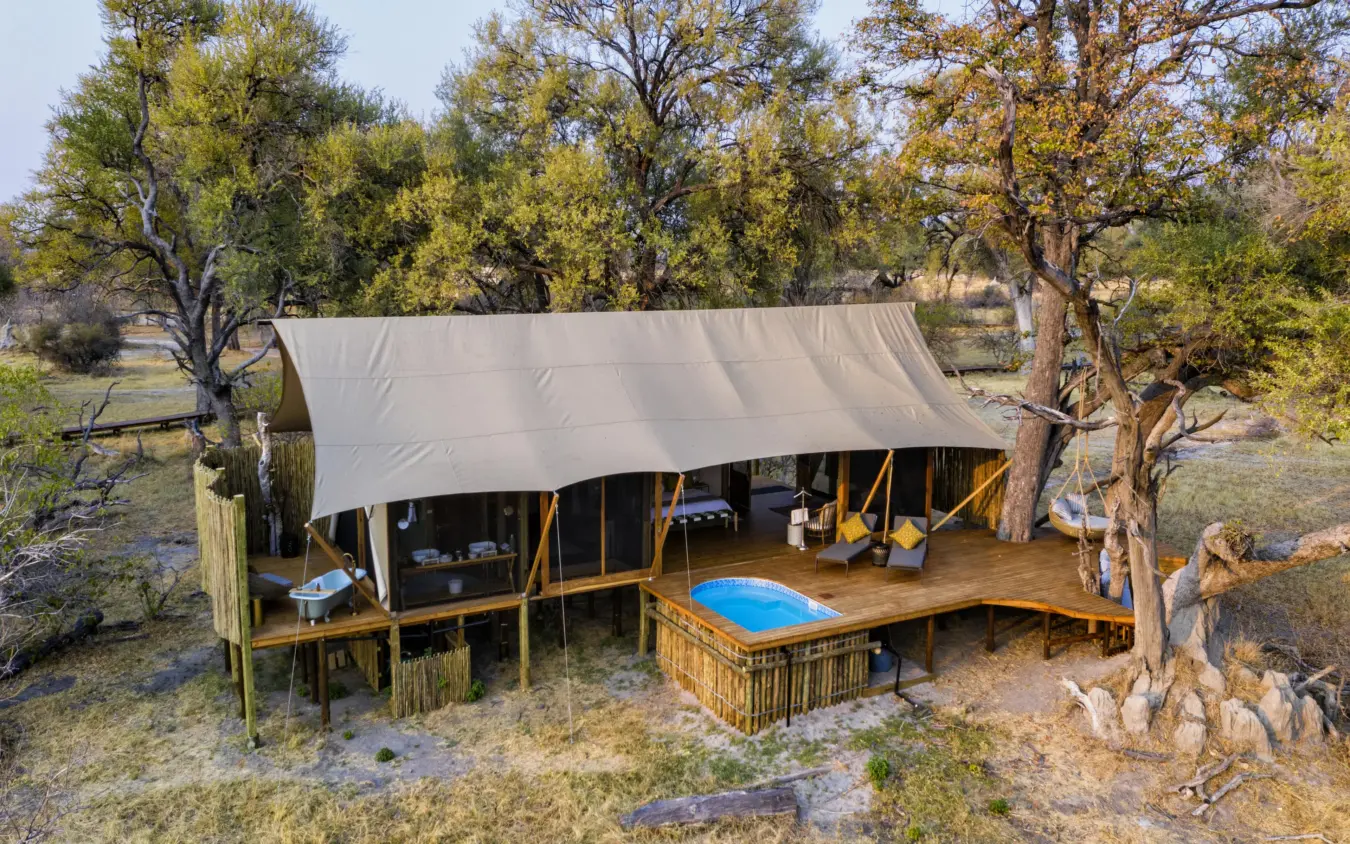
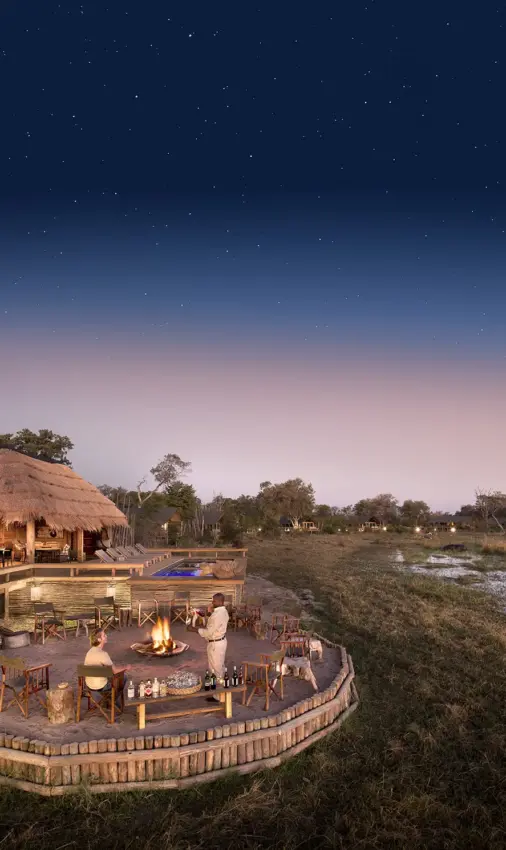
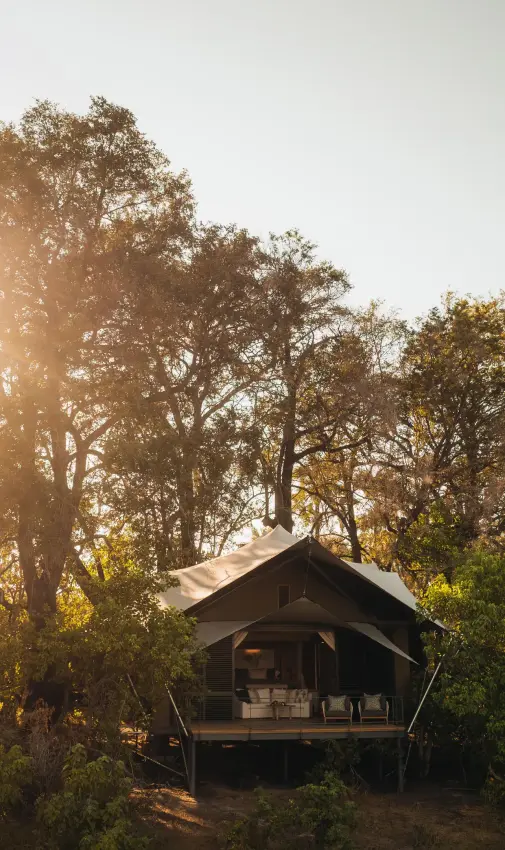
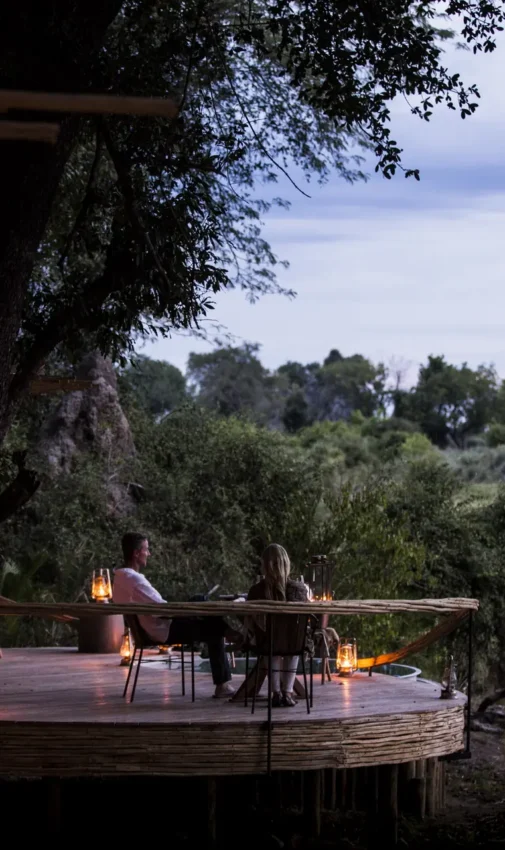
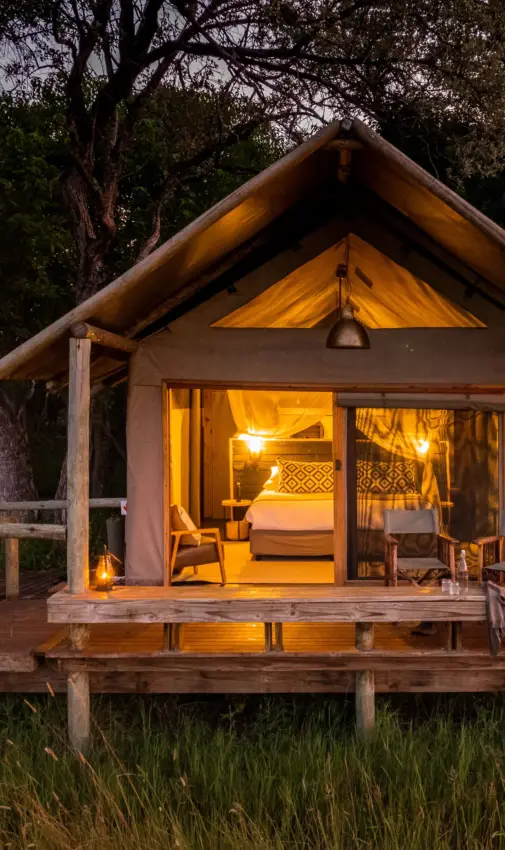
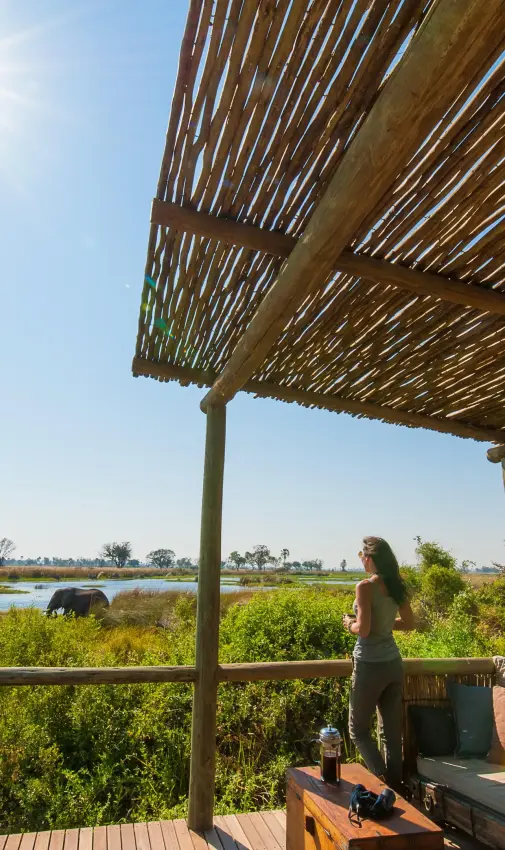
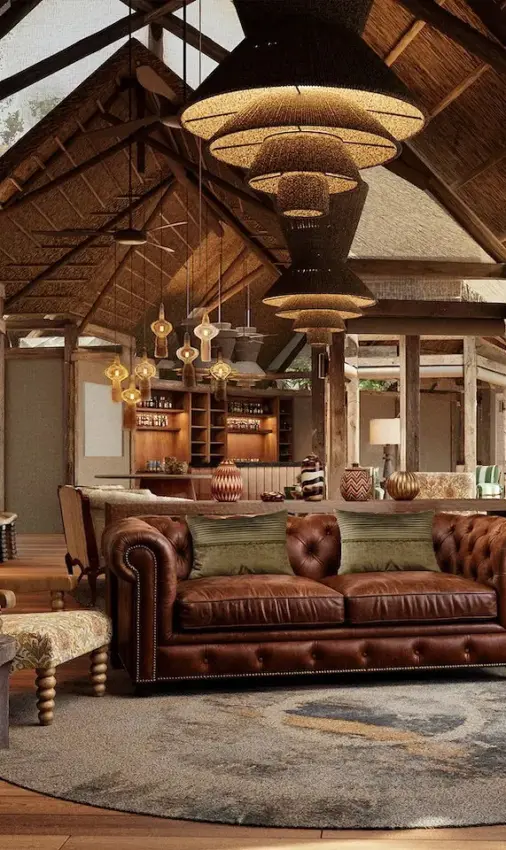
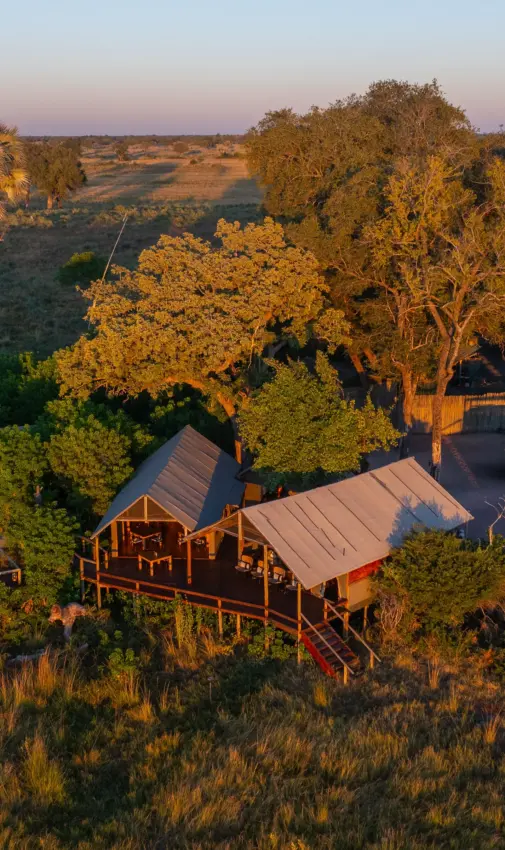
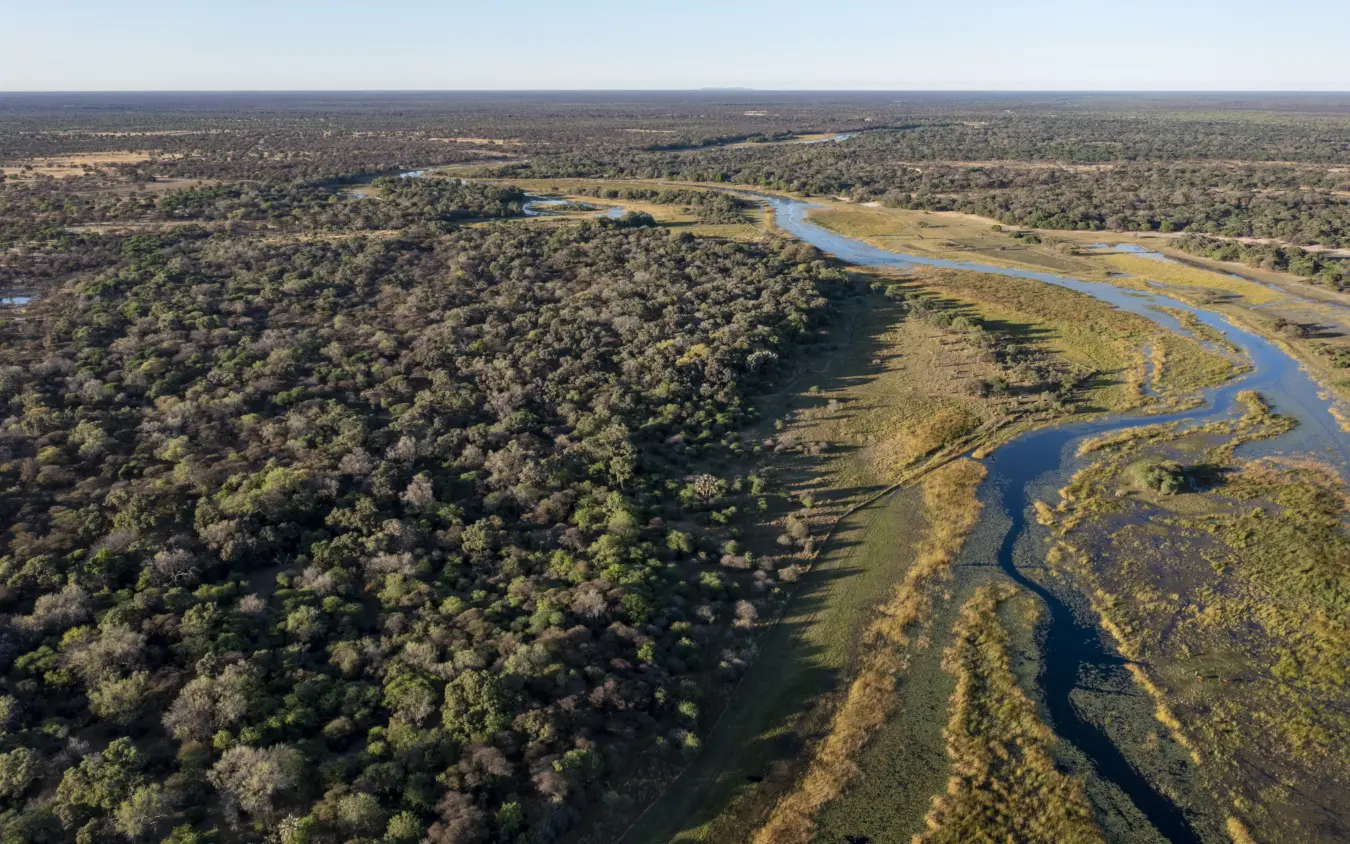
Six of the seven tents take twins or doubles, and the seventh is a family tent whose drop-down partition turns one space into two, sleeping two adults and two children. Canvas roofs pitch high over a separate dressing area, twin basins, a freestanding tub with a view across the water, and showers indoor and out. A sunken seating area and a hanging basket chair face the floodplain, and each deck has a plunge pool cut into the hardwood. Air conditioning runs overhead, and the interiors are warm and earthy, with artisan furniture and wildlife artwork commissioned for the rooms.
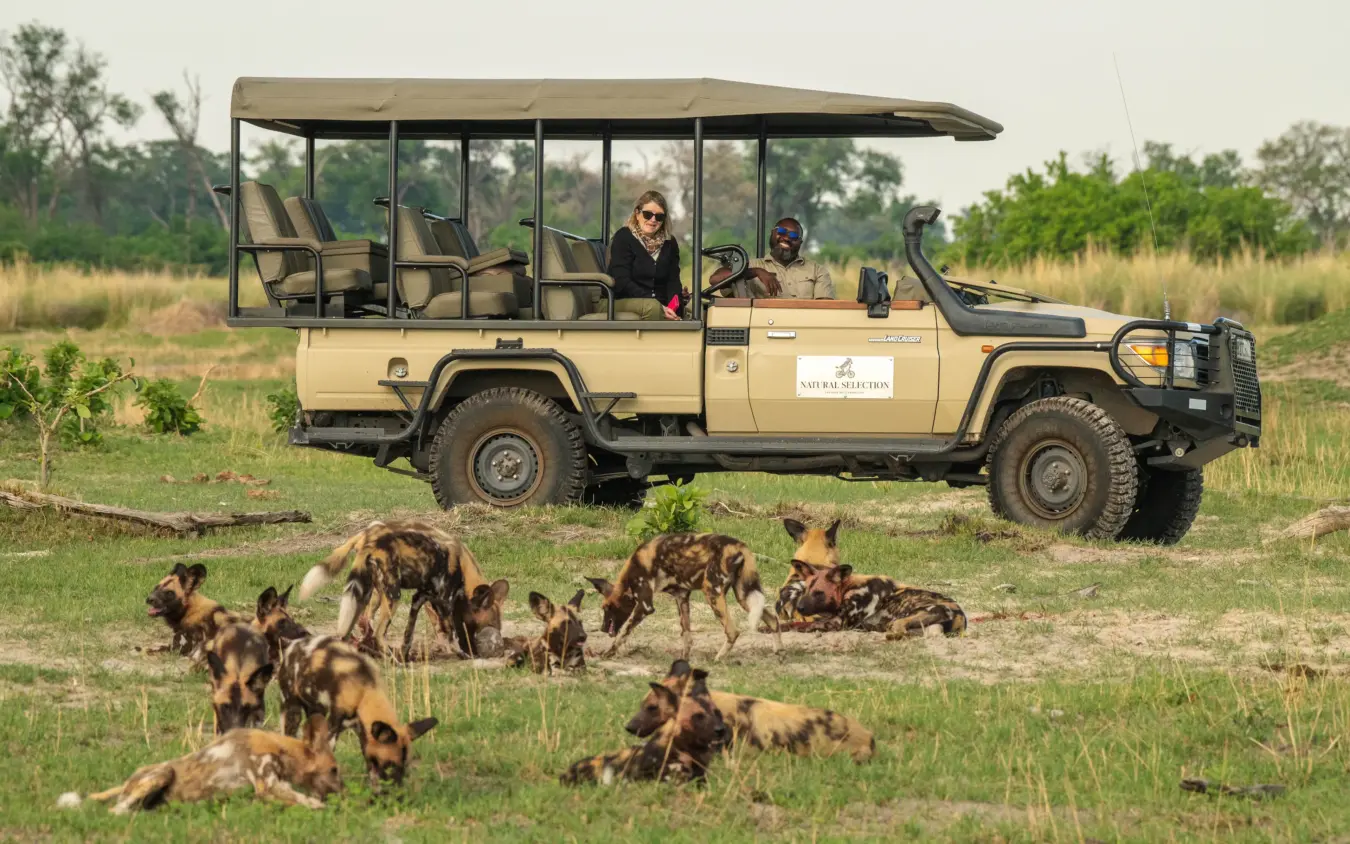
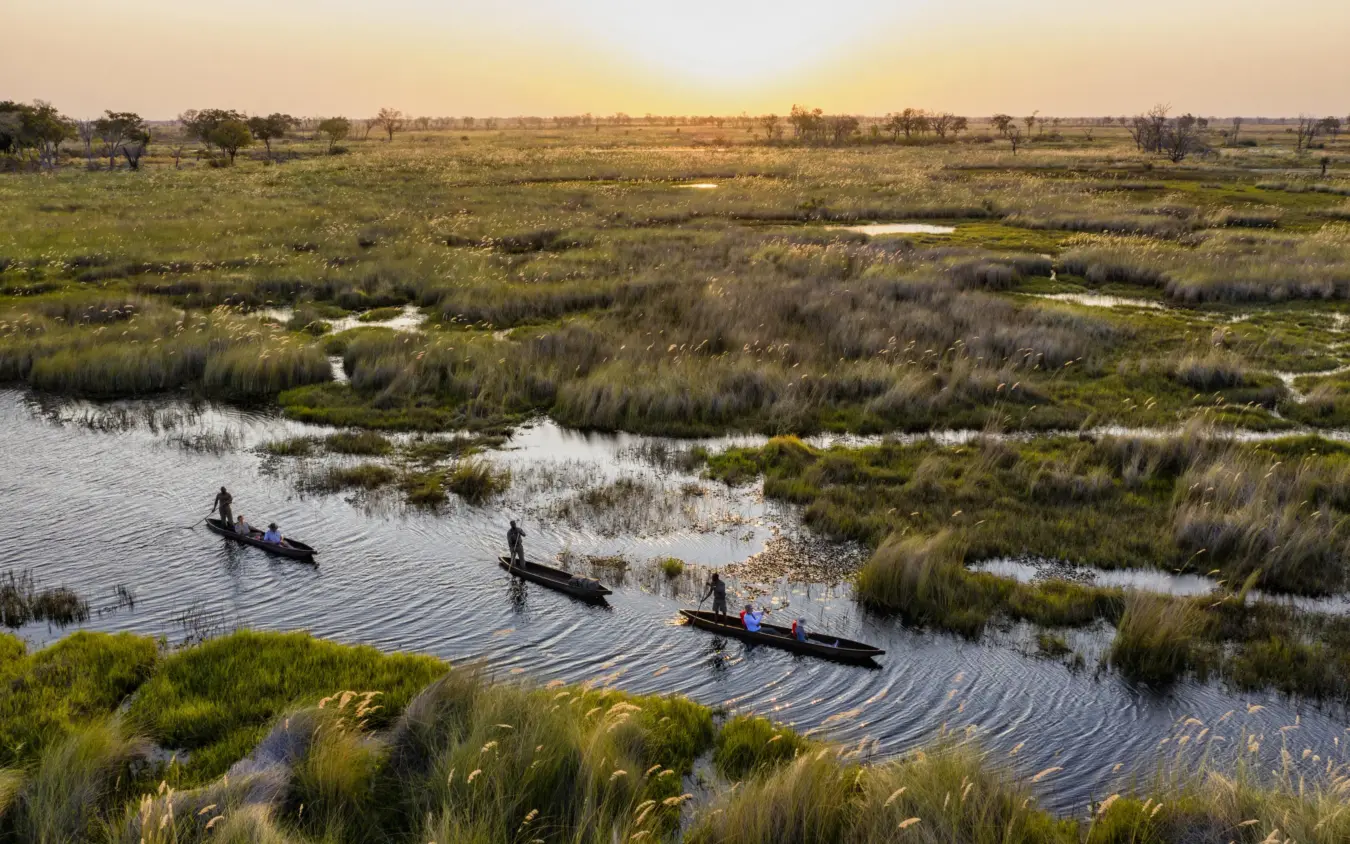
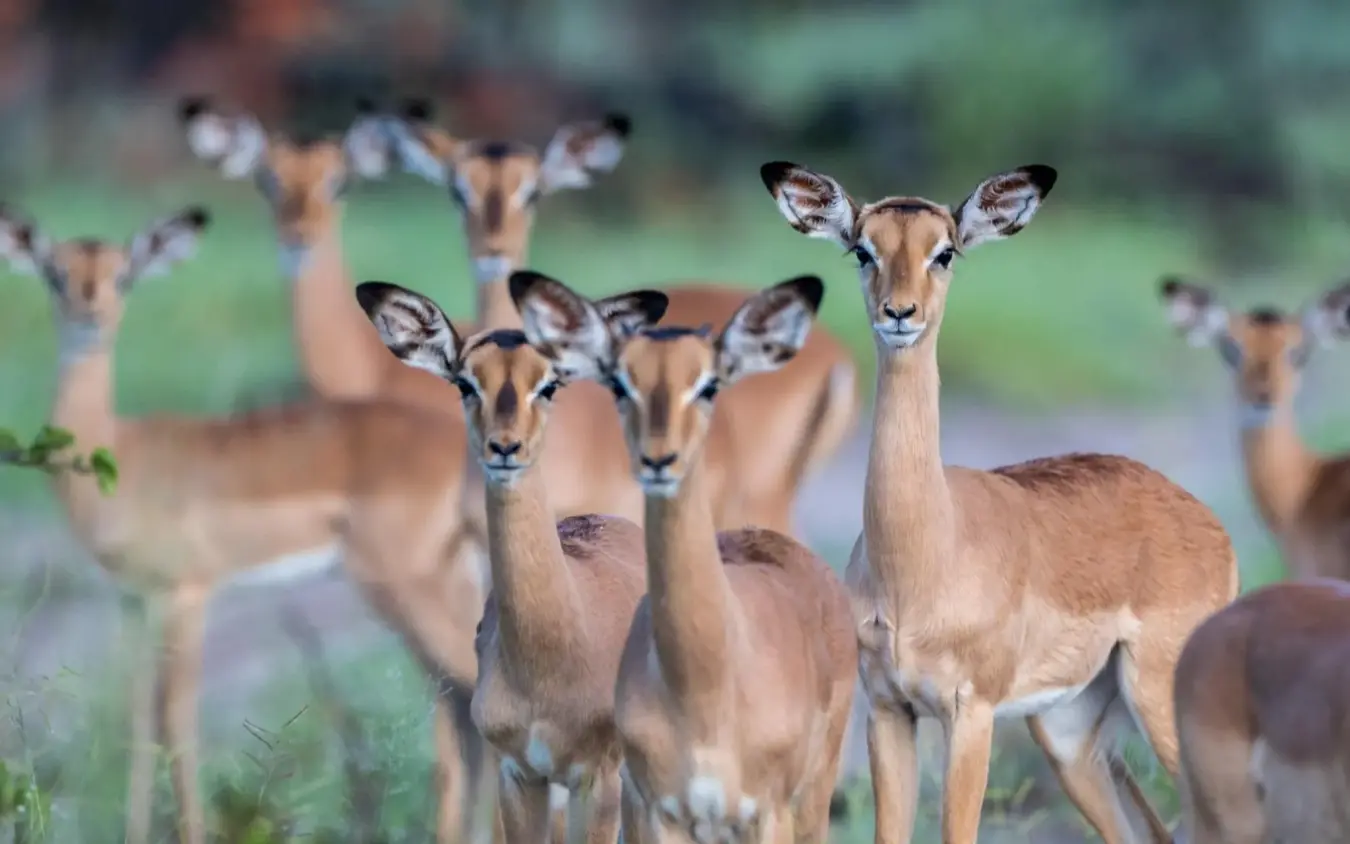
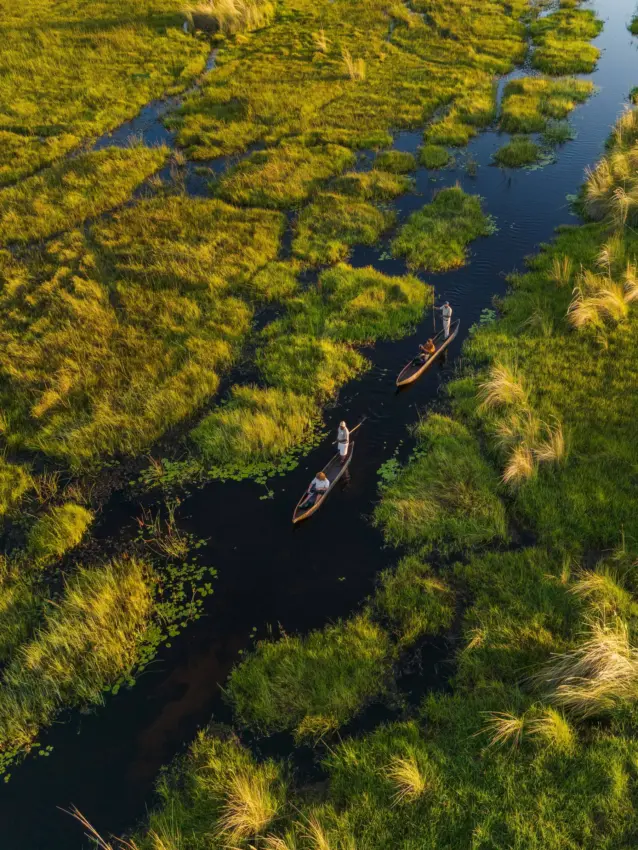
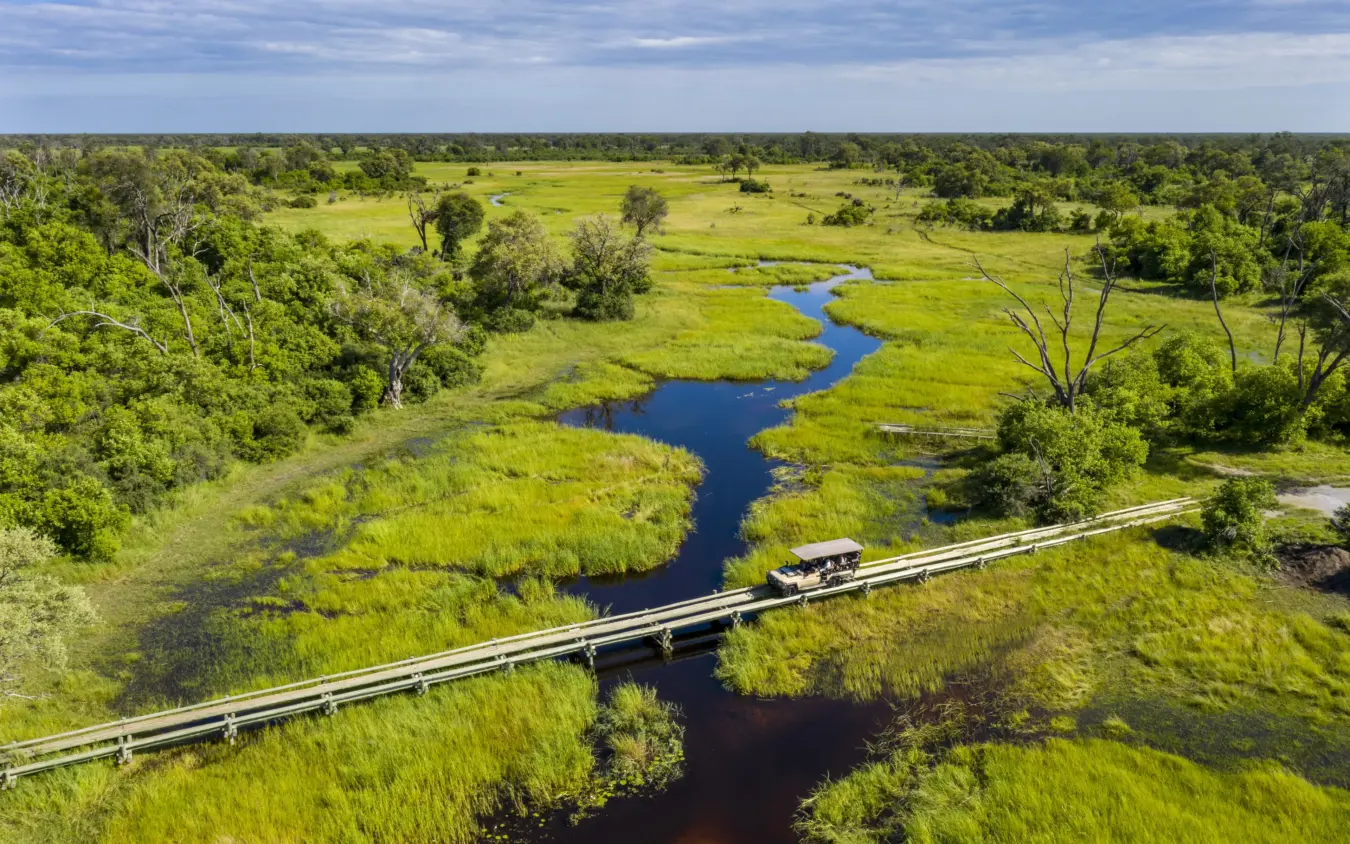
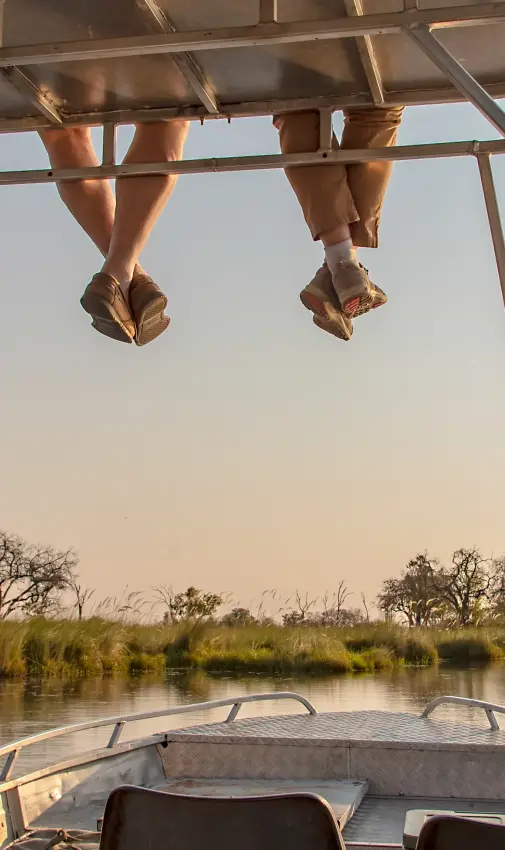
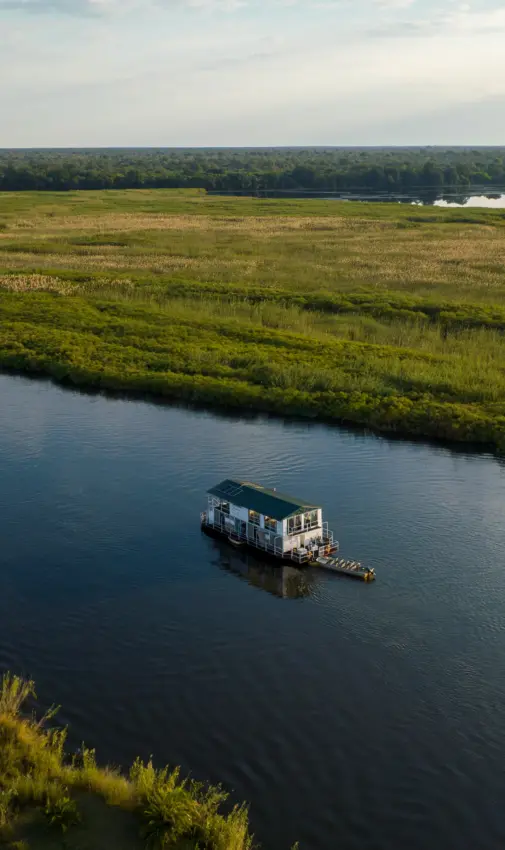
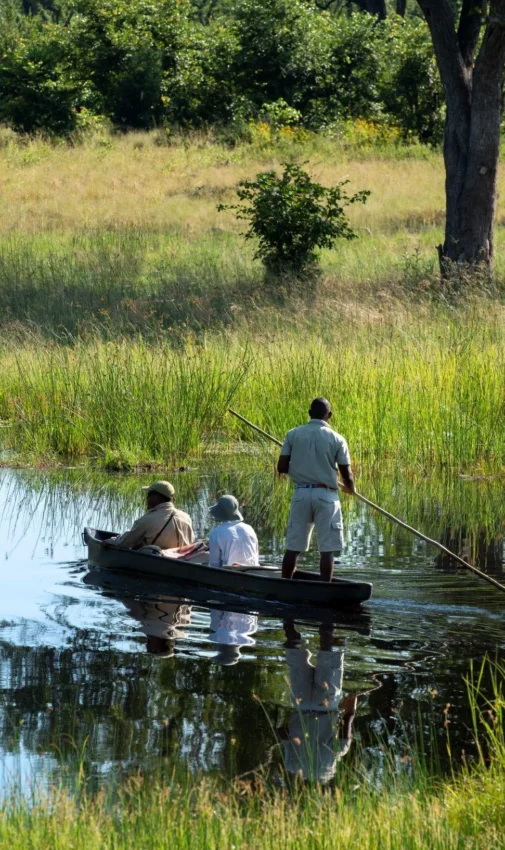
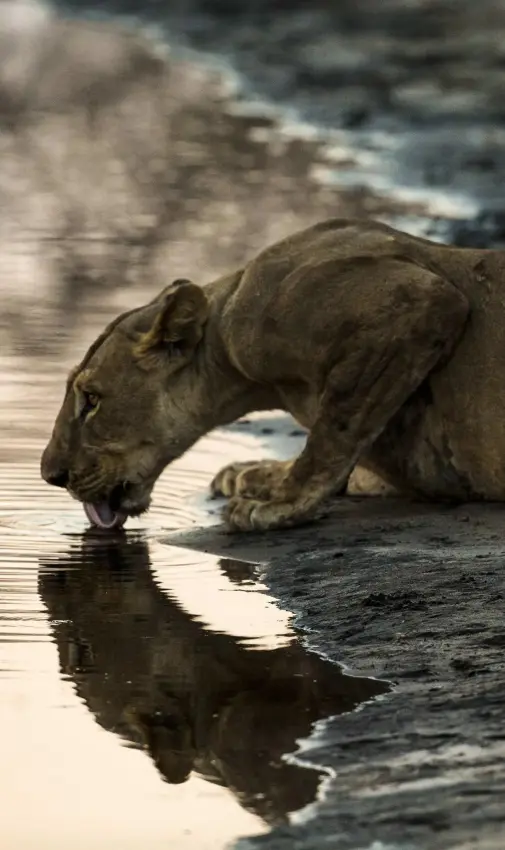
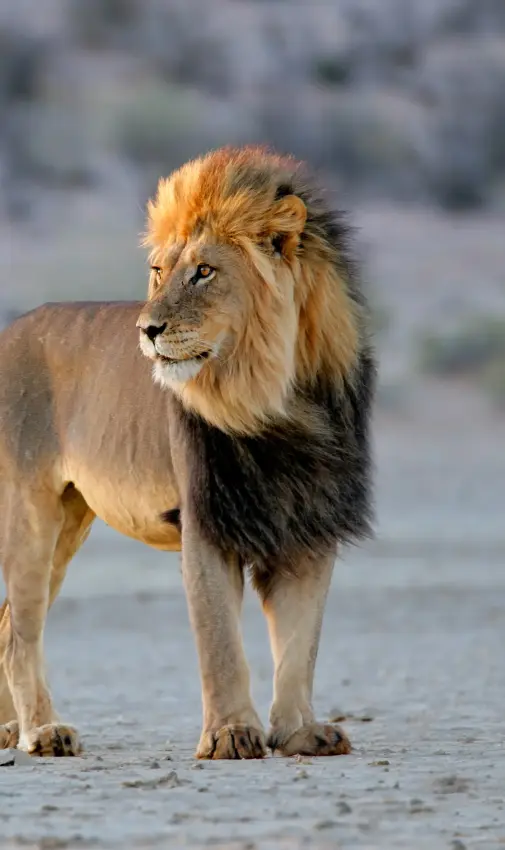
The guides work off the road here, following leopard tracks or a wild dog hunt across open ground, and carrying spotlights after sunset for hyenas, servals and genets. Walks go out with an armed guide. Rangers leave before dawn to track predators, and guests can go with them. Data collection on the reserve’s wildlife is part of that morning’s work. Mokoro and boat trips run with the water levels, fishing is catch-and-release, and helicopters take in the Delta from above. More than 350 bird species have been recorded here, among them slaty egret, wattled crane and long-toed lapwing.
Rangers leave before dawn to track predators, and guests can go with them.
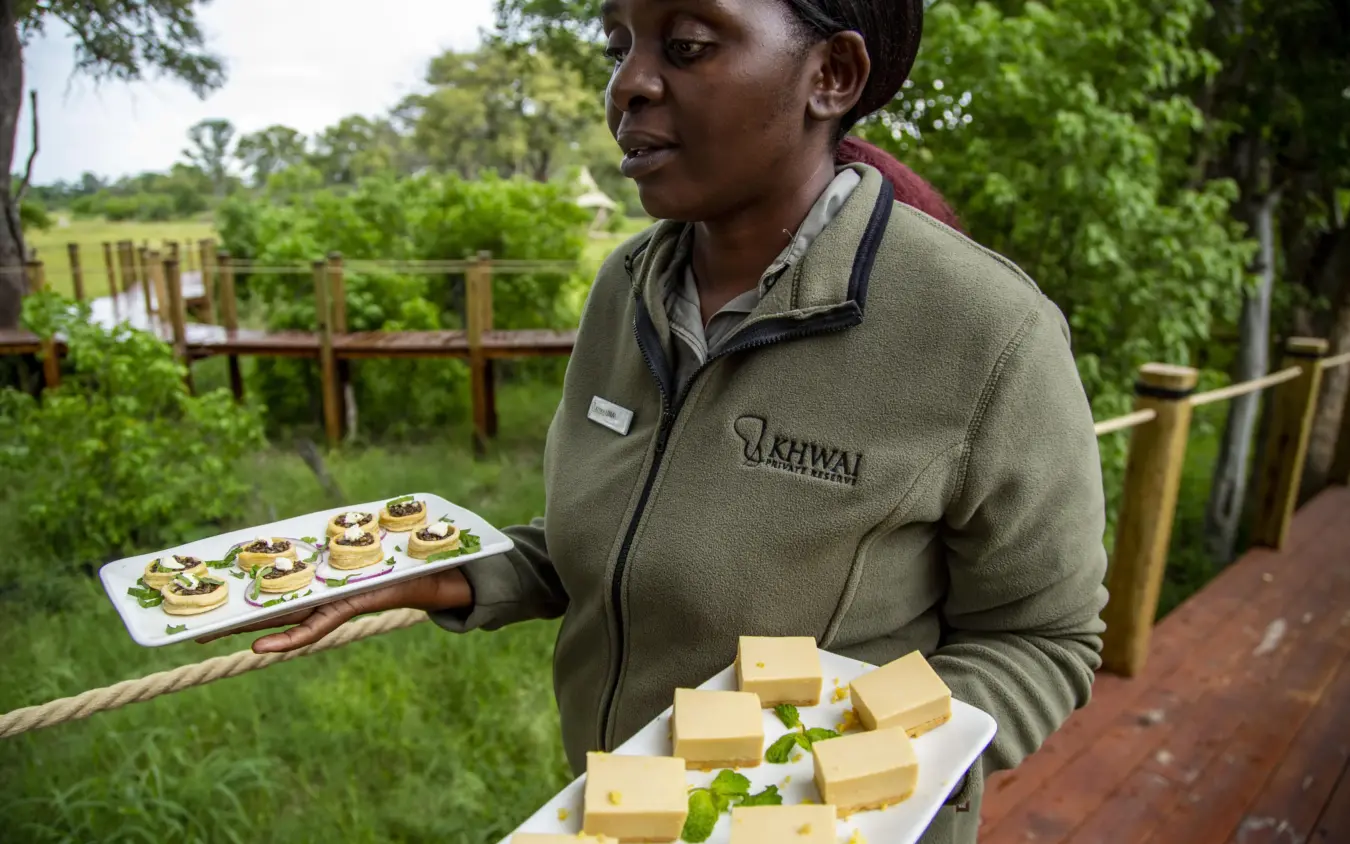
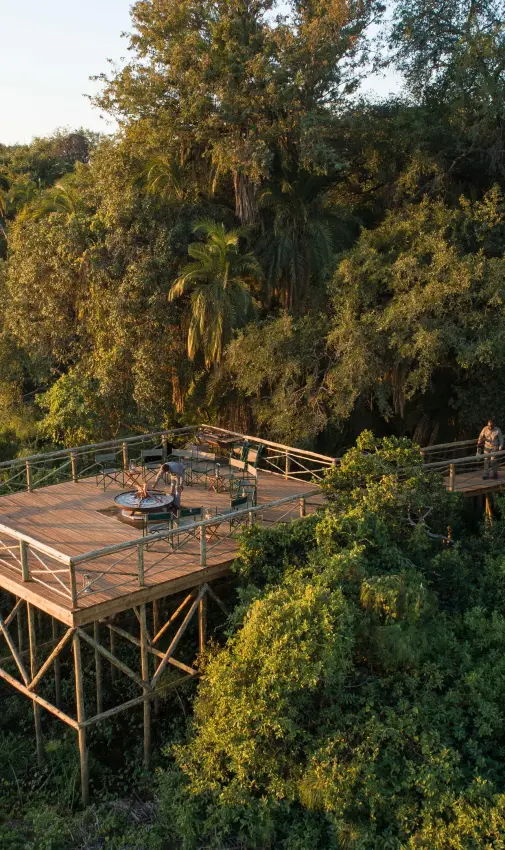
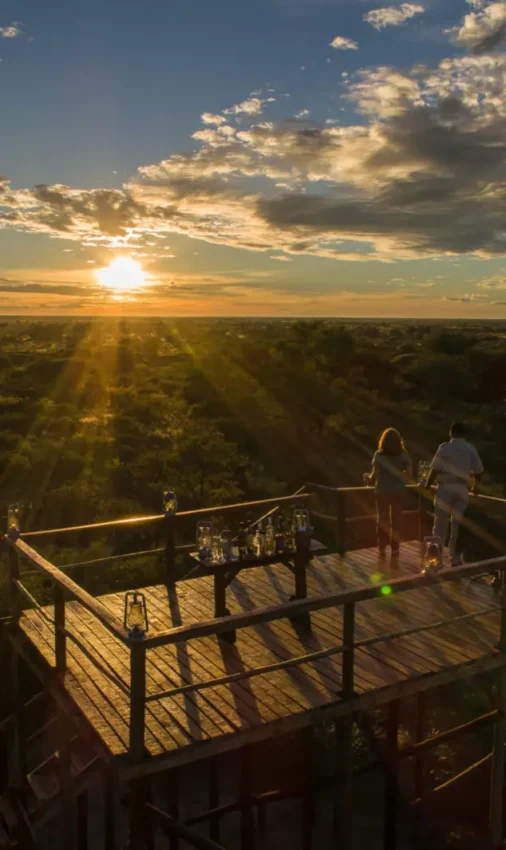
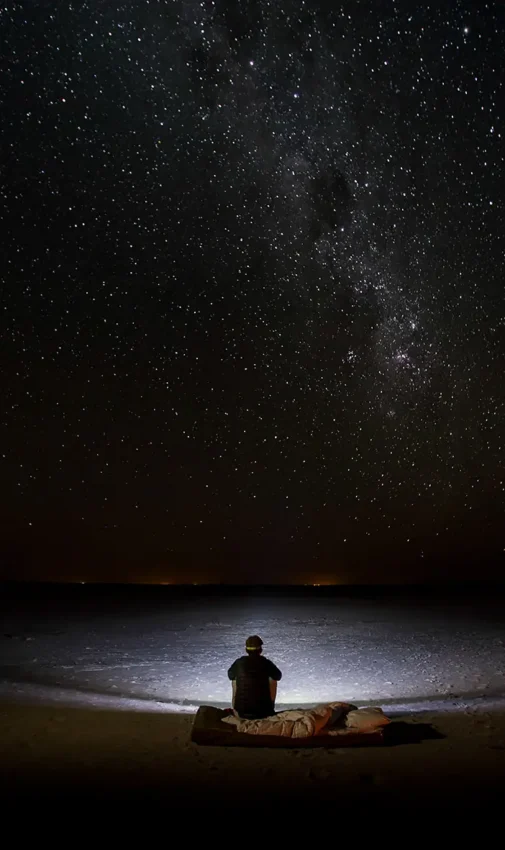
The Khwai Private Reserve is held in a joint venture between the Khwai Village community, through its development trust, and the camp’s operators, a structure that turned land once used for trophy hunting into photographic country. A morning can be spent in the village itself, learning its history from the people who live there. Skybeds, a short helicopter ride away, puts guests on open timber platforms above a busy waterhole between April and October, booked in advance. High tea and spa treatments fill the flat hours of the afternoon, and the camp runs entirely on solar power.
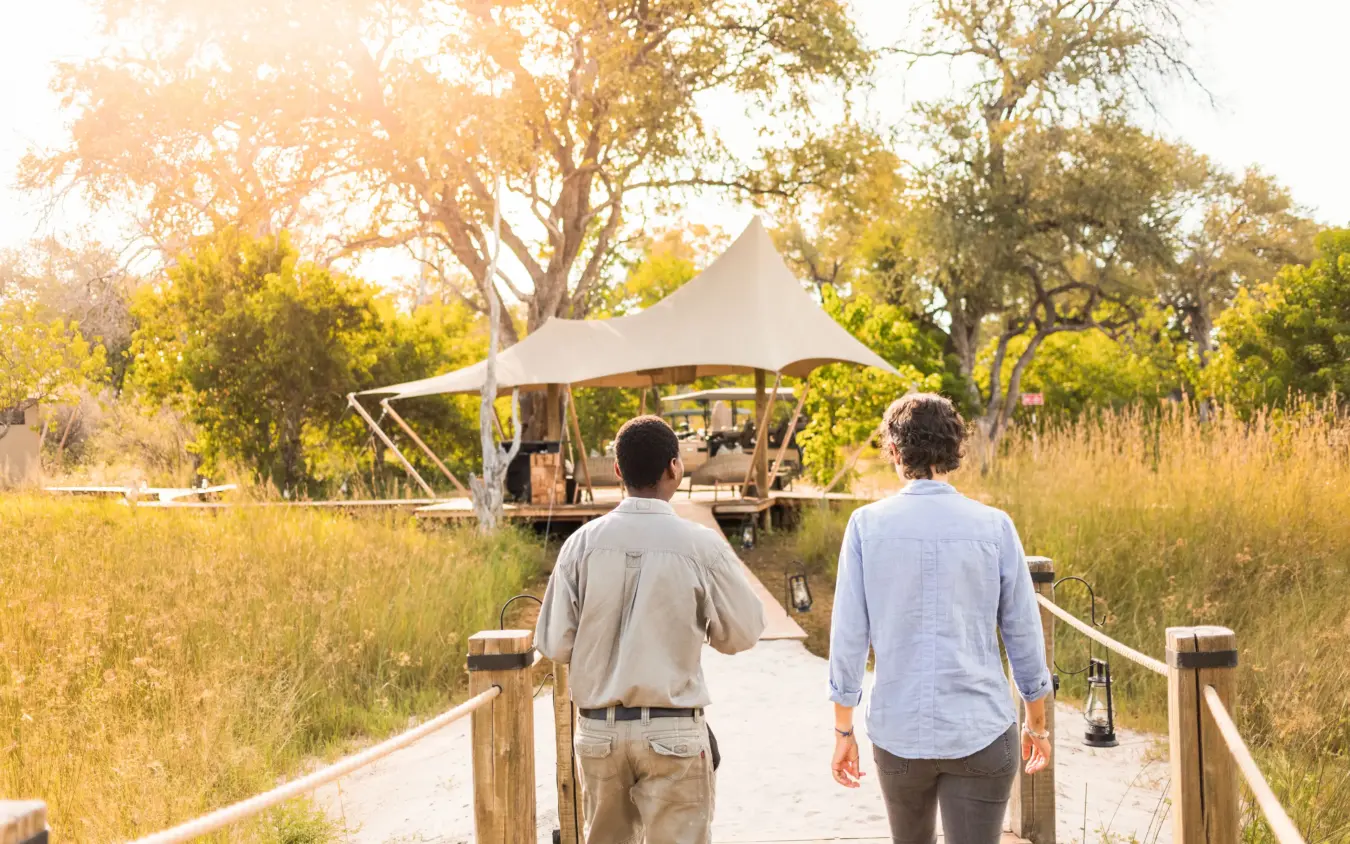
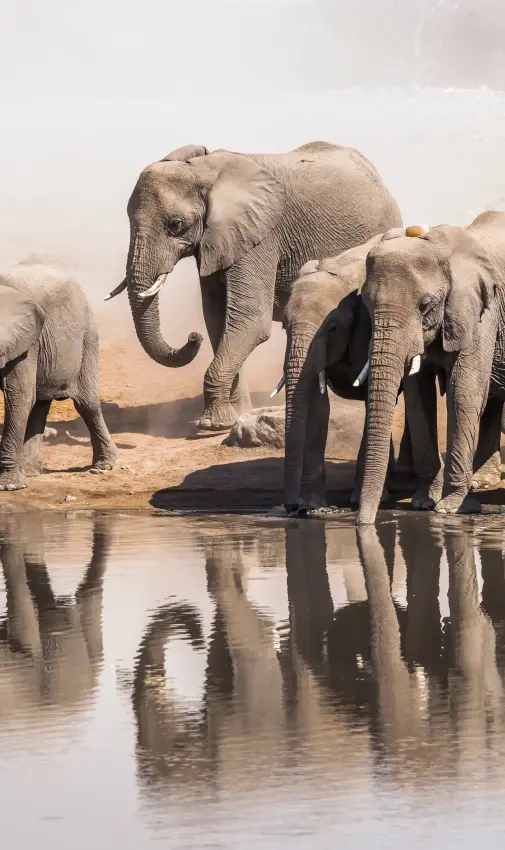
Children are welcome from six years old, with age restrictions on mokoro trips and walking safaris. Families with children between six and twelve take a private vehicle on game drives, so the day follows the children and not the group. Getting here means a light aircraft into Banoka airstrip and a short drive on the far side, or a helicopter transfer direct to camp. Elephants pass through the leadwoods after dark, and the resident hippo pod in the lagoon carries on regardless.