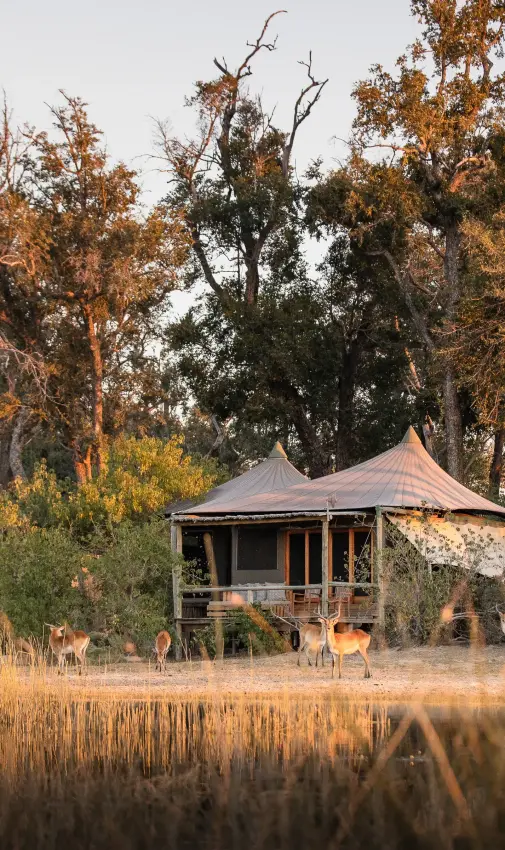
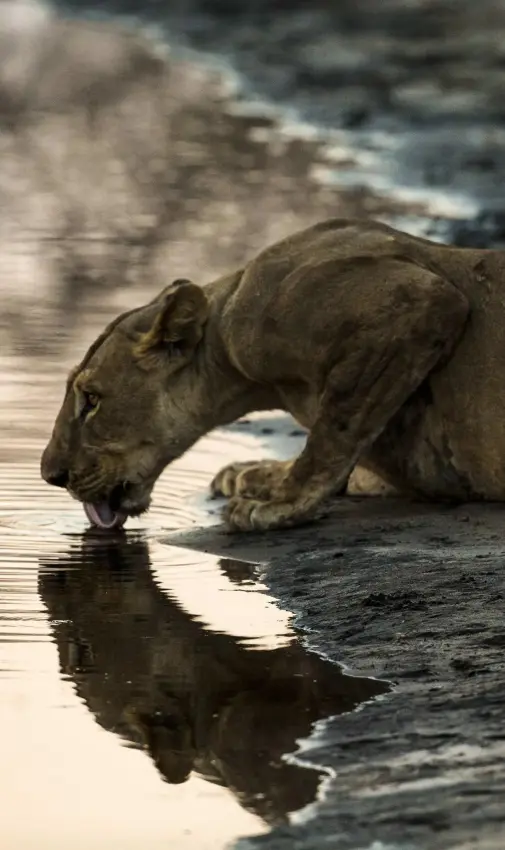
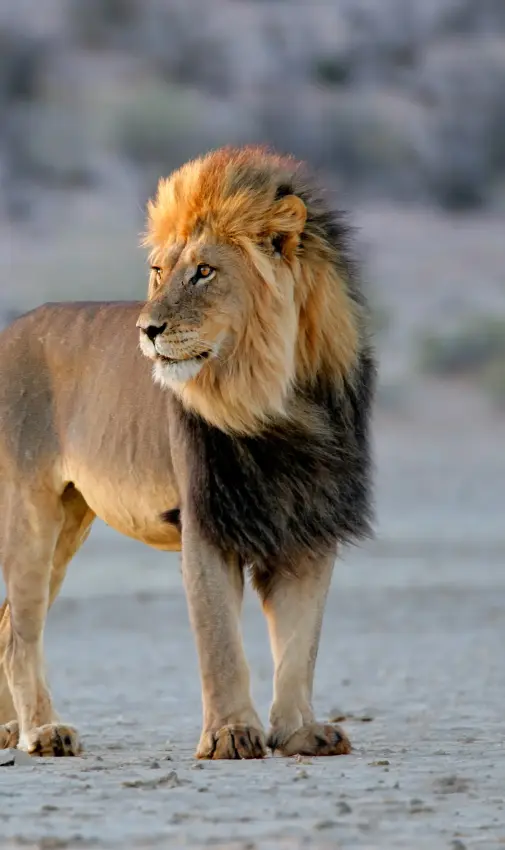
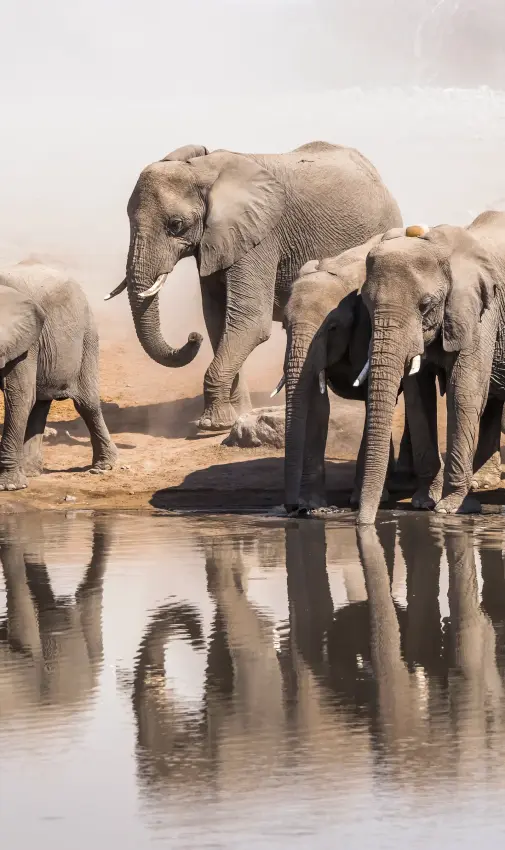
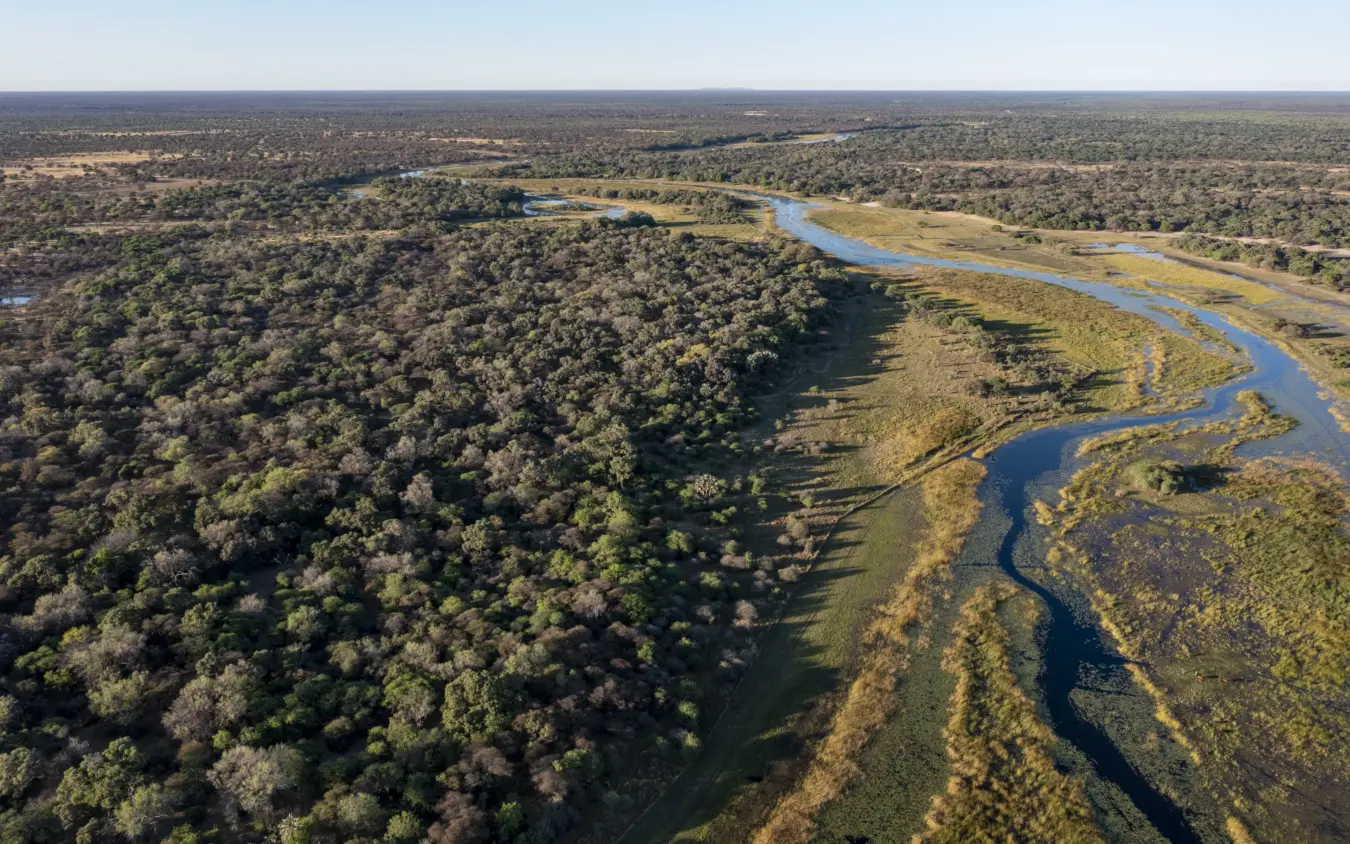
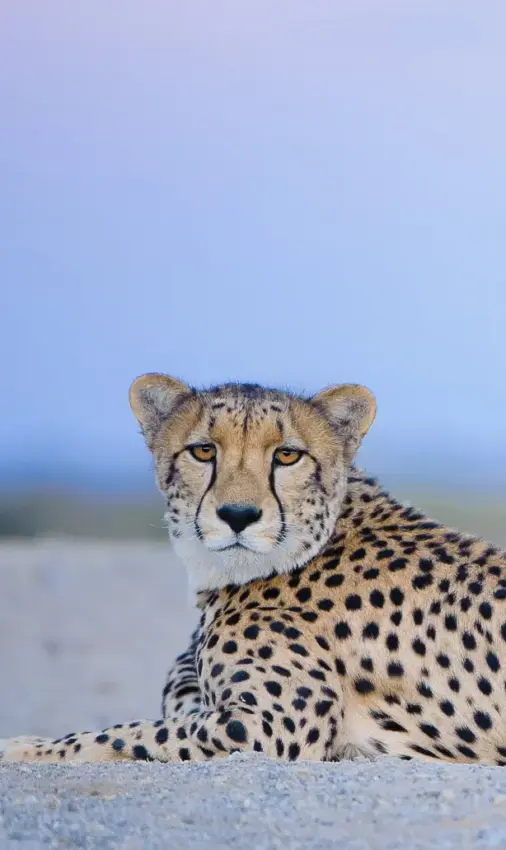
Small open plains scattered with ilala palms break up the mopane and acacia woodland here, a dry-land corner of the Okavango Delta where grazing and cover are rarely far apart. Red lechwe and tsessebe feed on the open ground with impala and kudu, and spotted hyenas work the same country as the four big predators. June to September is the classic dry season. Between October and December, if the first rains fall on ground burnt earlier in the year, the fresh grass can draw larger herds of grazers.
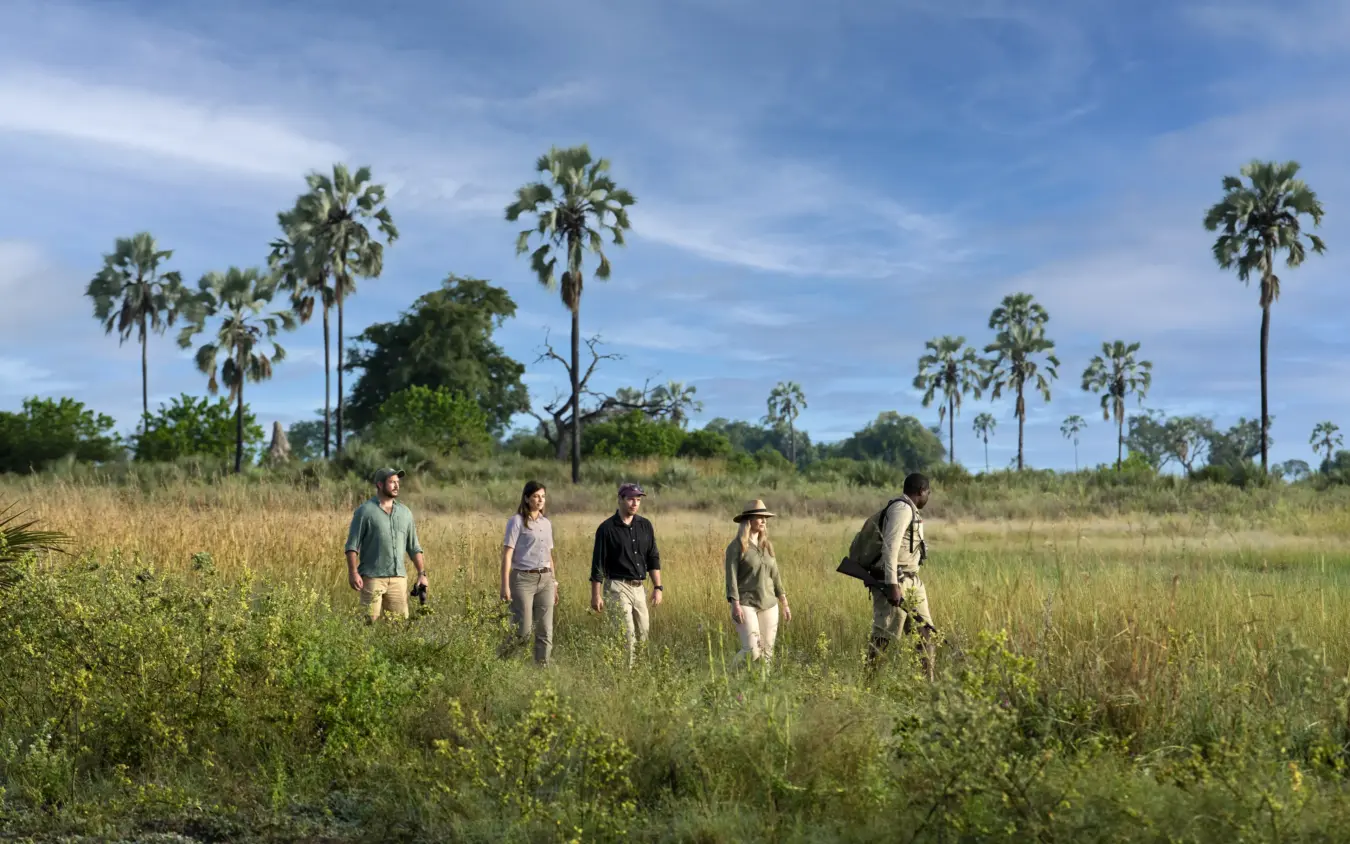
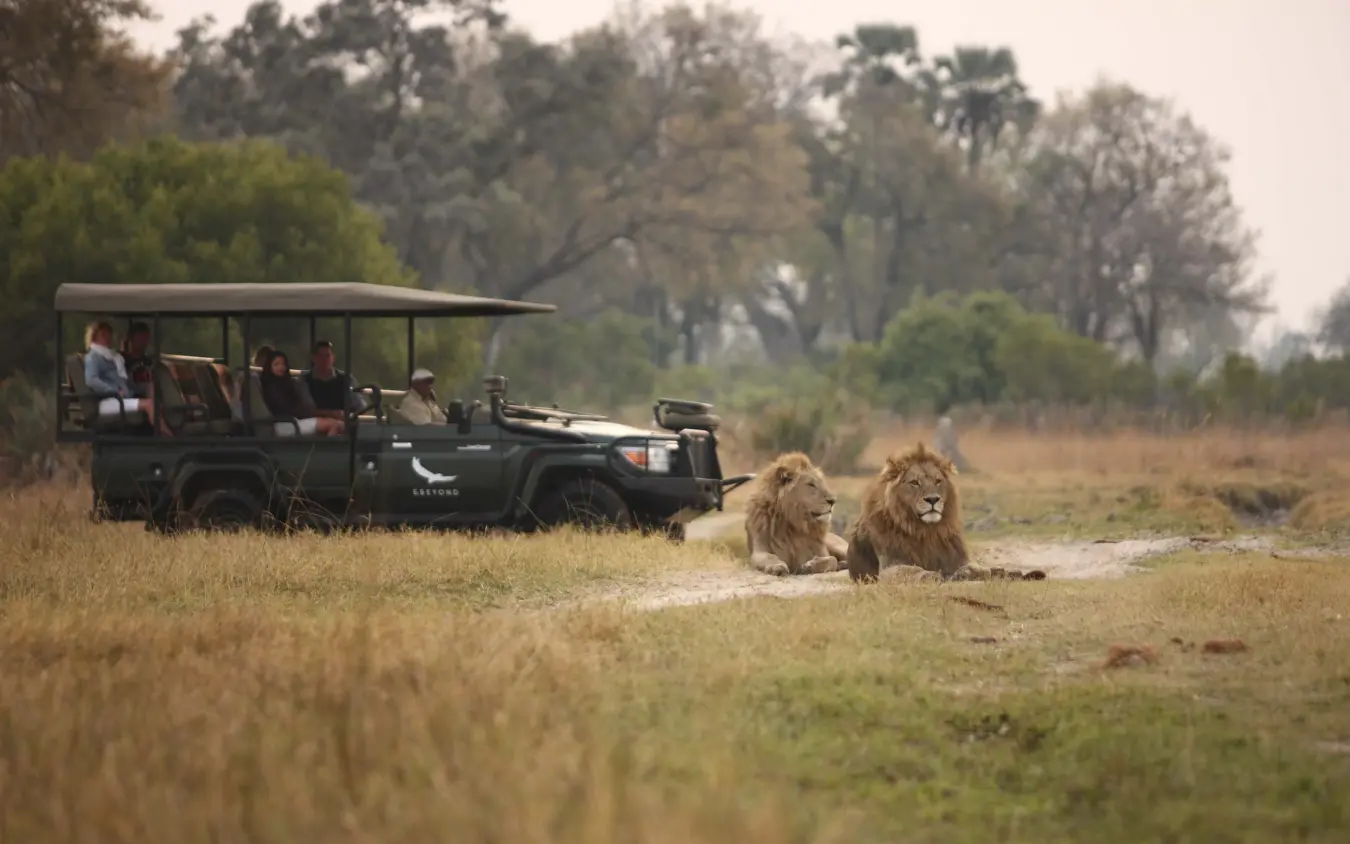
No vehicle carries more than six guests, and each goes out with its own guide. On a private concession the guide can leave the track, with care, to stay with a leopard or a hunting pack of wild dog. When conditions allow and the guide judges the group ready, the same ground is covered on foot. Dry grass gives underfoot and a grey go-away-bird calls its alarm from the mopane. Tracks that a vehicle would roll straight over become the subject of the walk, read print by print in the sand.
Dry grass gives underfoot and a grey go-away-bird calls its alarm from the mopane.
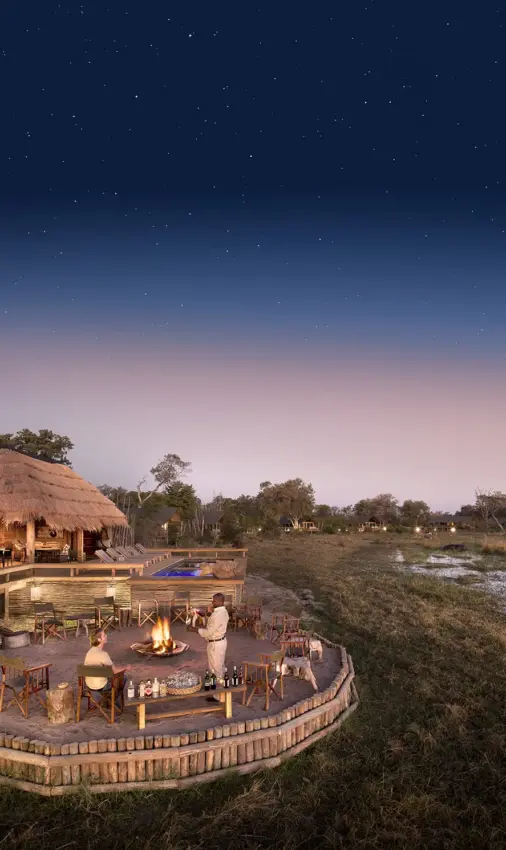
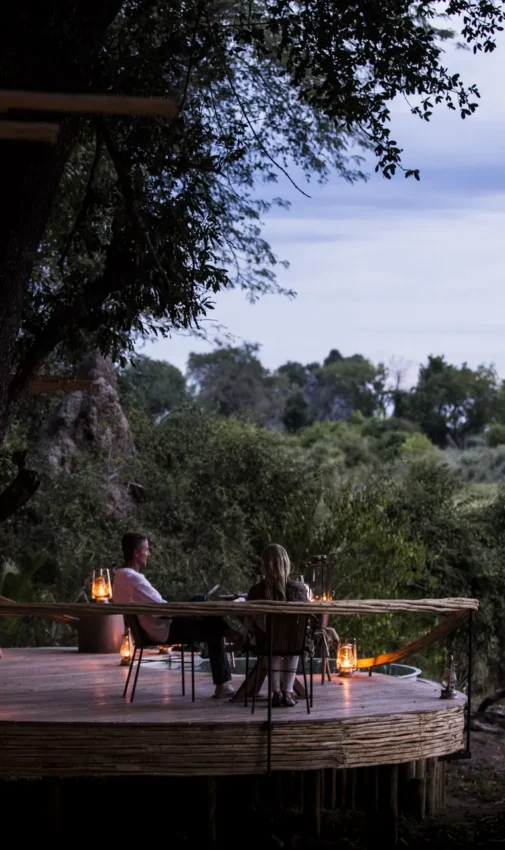
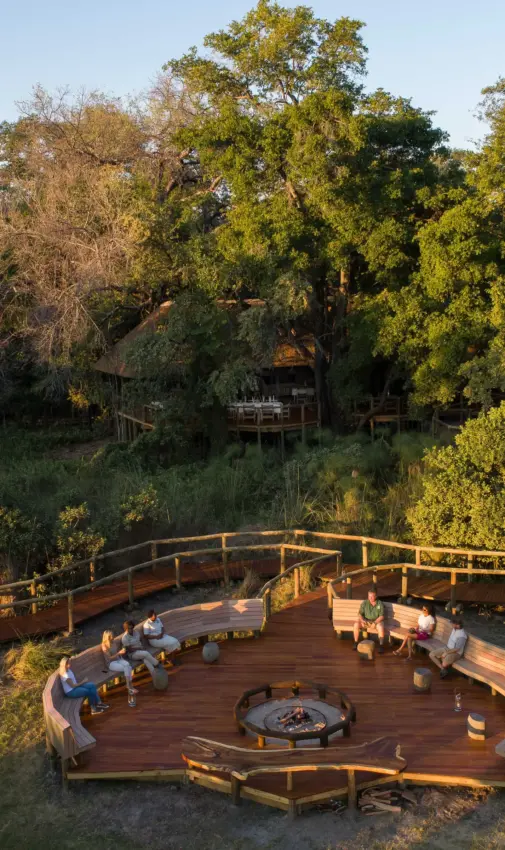
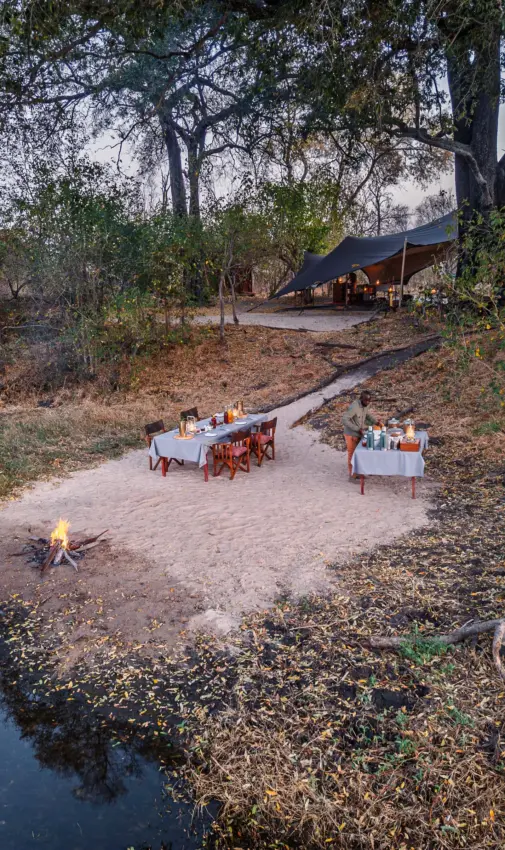
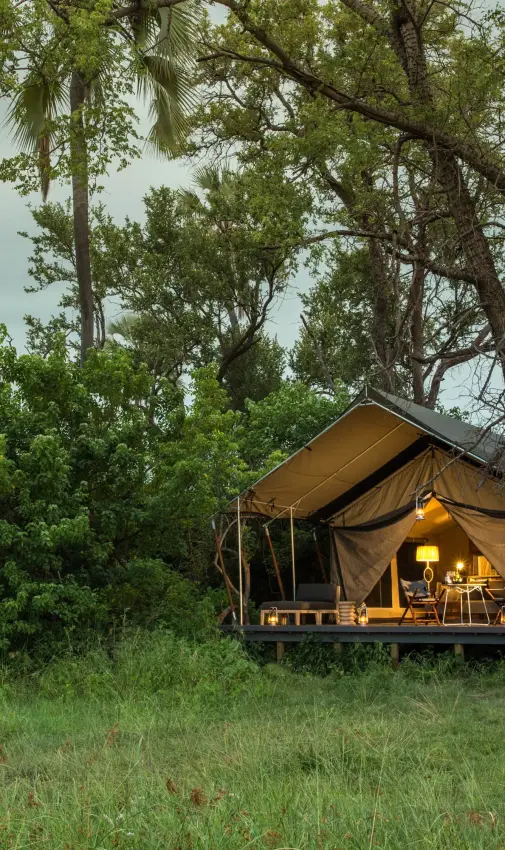
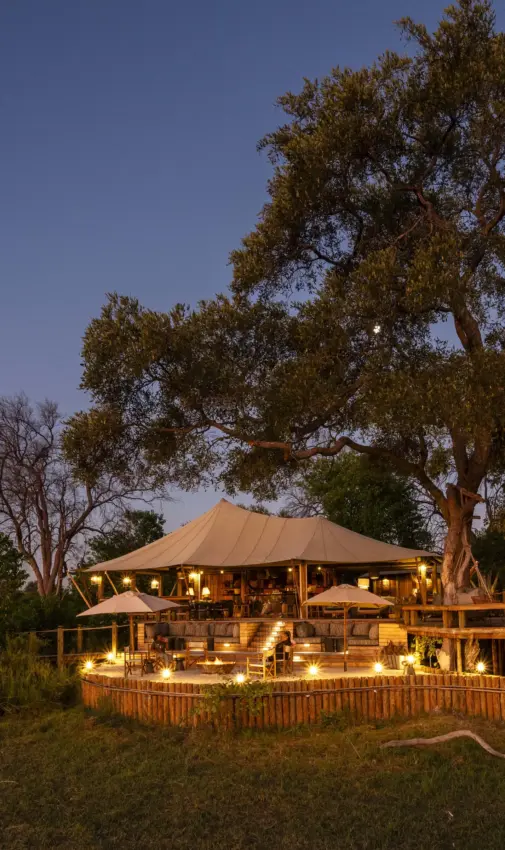
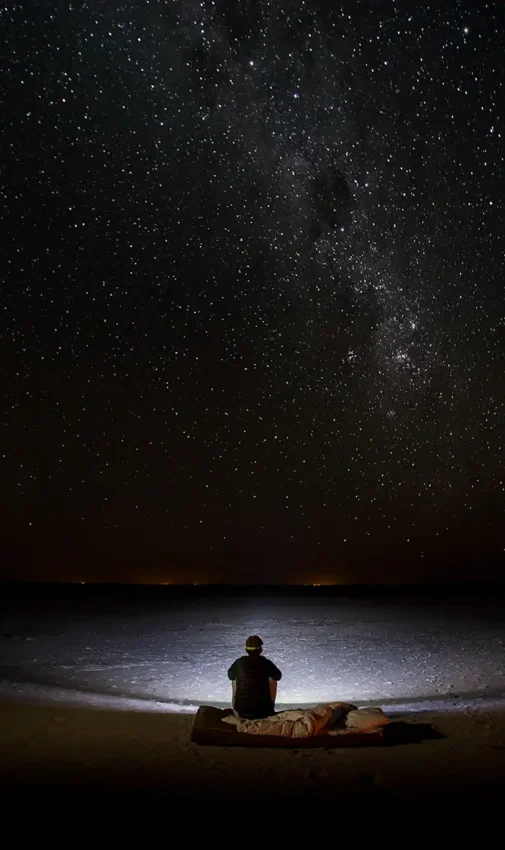
Birding runs through every drive and walk, with variety all year round. No town light reaches this part of the Delta, so after dinner the stars are read from a chair beside the fire, with a guide naming the southern constellations. Hyenas whoop out on the plain, and somewhere beyond the tents an elephant tears at branches.
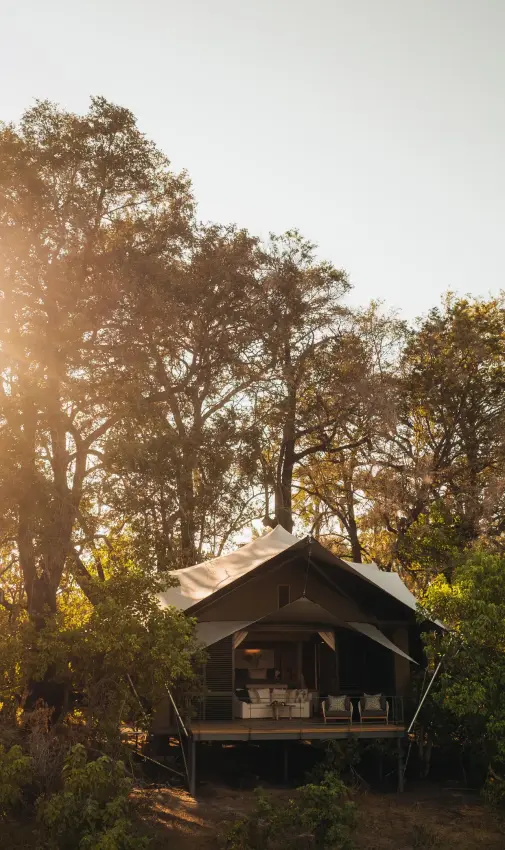
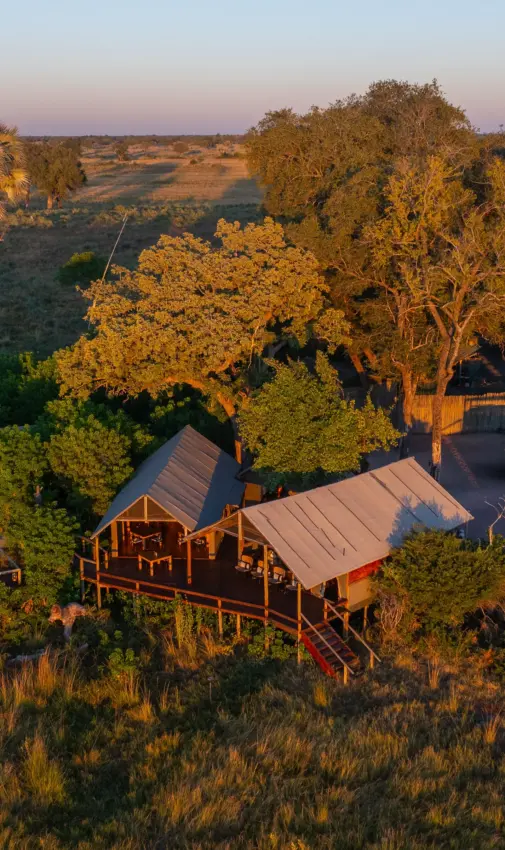
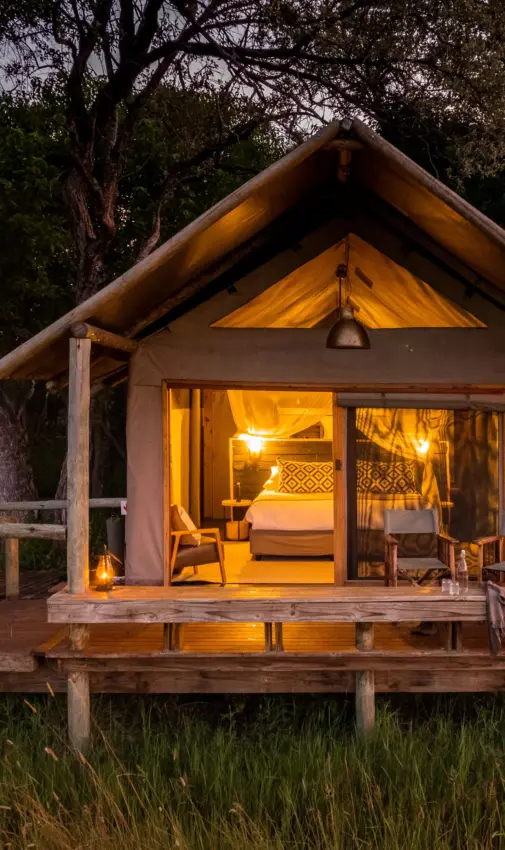
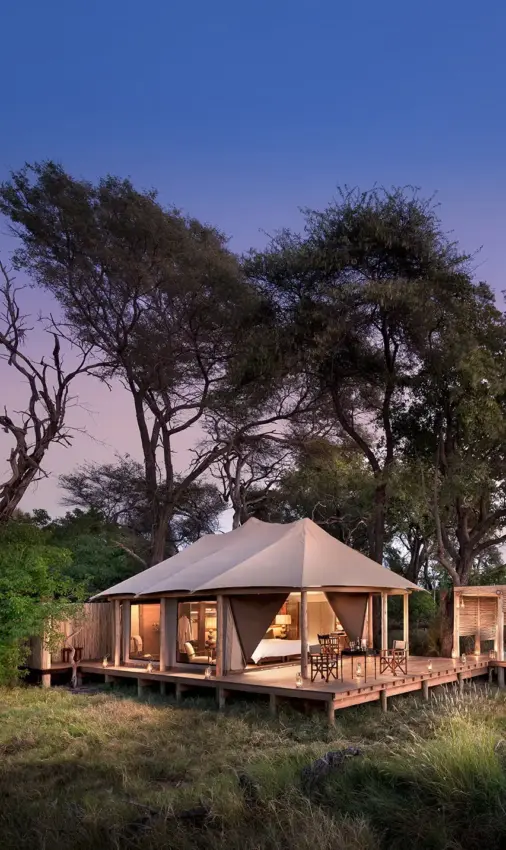
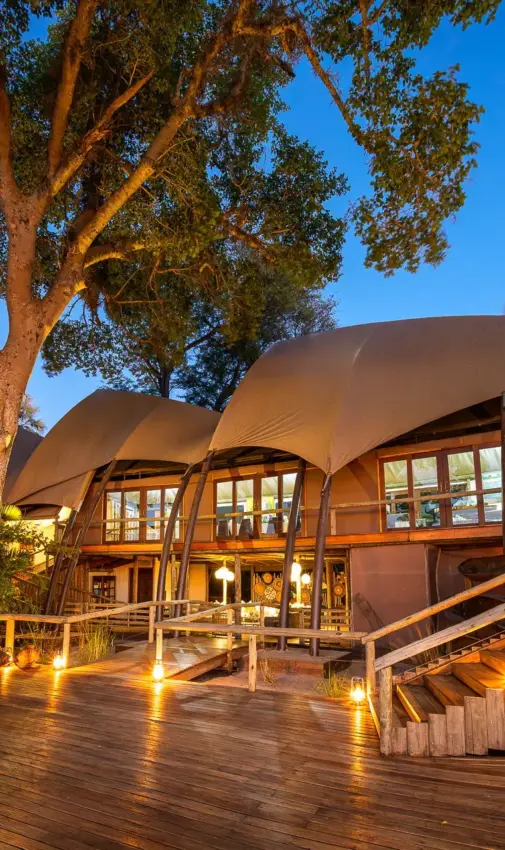
Light aircraft connect Maun with the Chitabe airstrip, and a vehicle covers the final stretch across the concession to camp. Guests must be twelve or older. There are no family or triple tents, so a family with teenagers can book all three and have Sandibe Under Canvas to itself. Leaving through Maun, when flight times allow, guests can stop at Sexaxa just outside the town to see Wild Impact’s work with the community there.