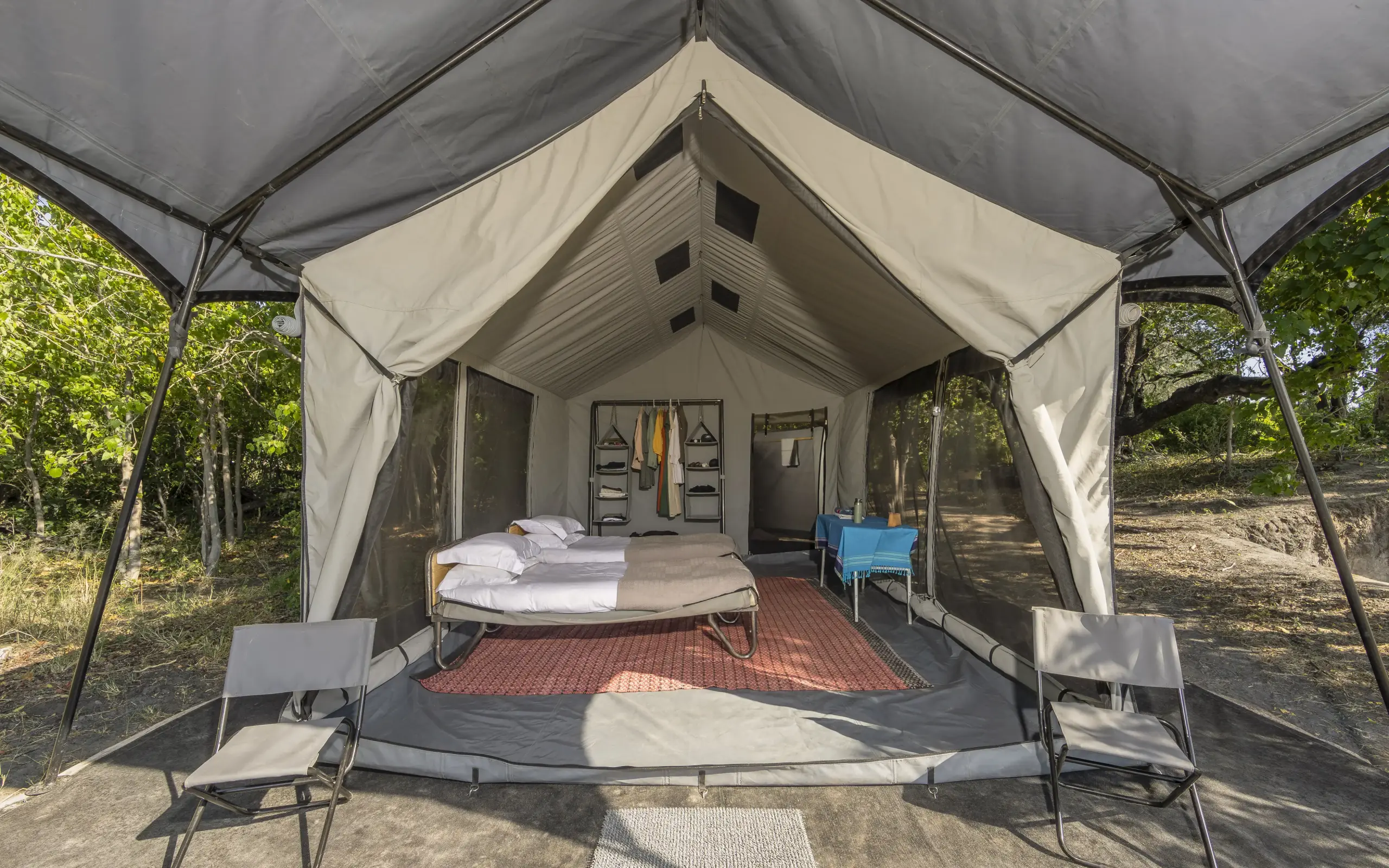
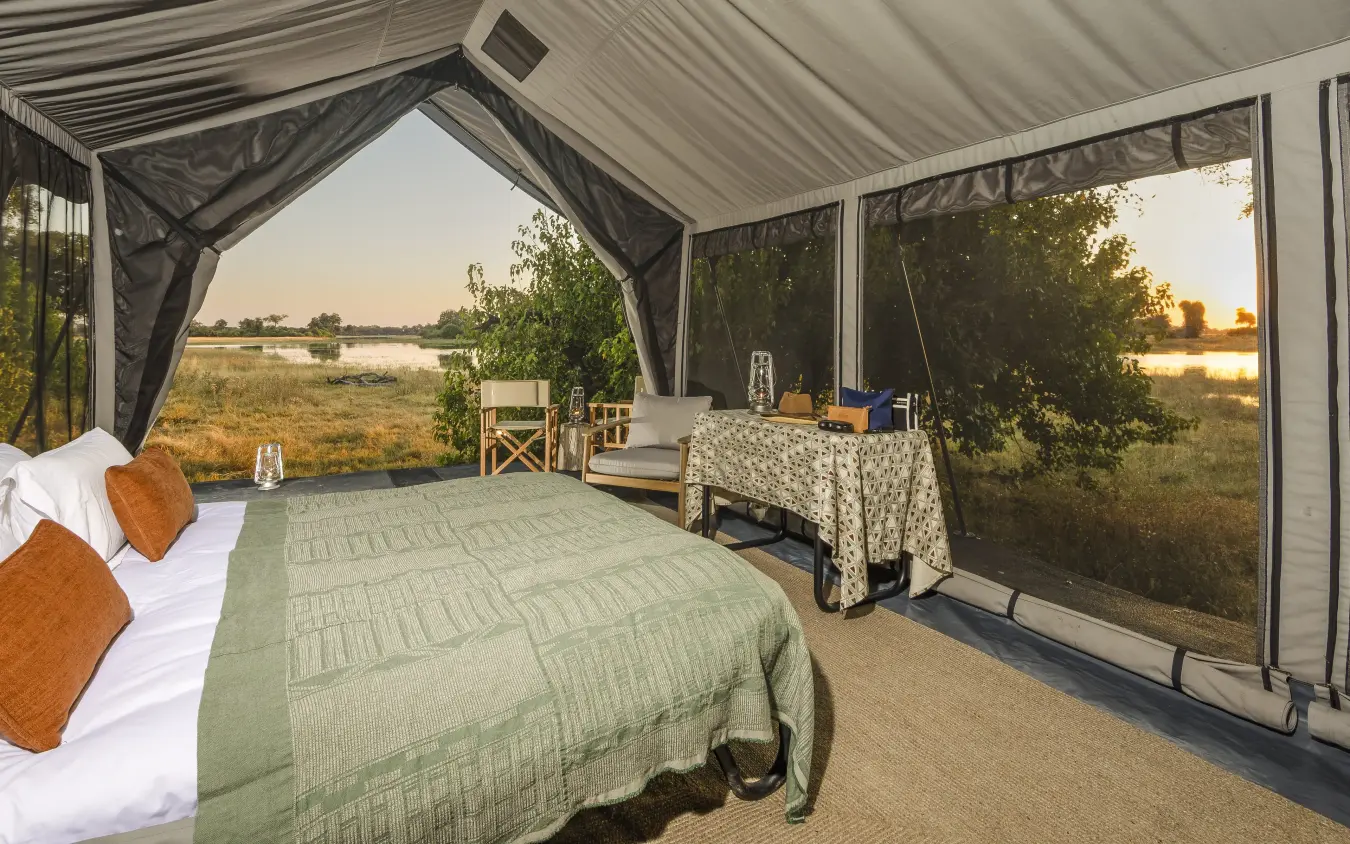
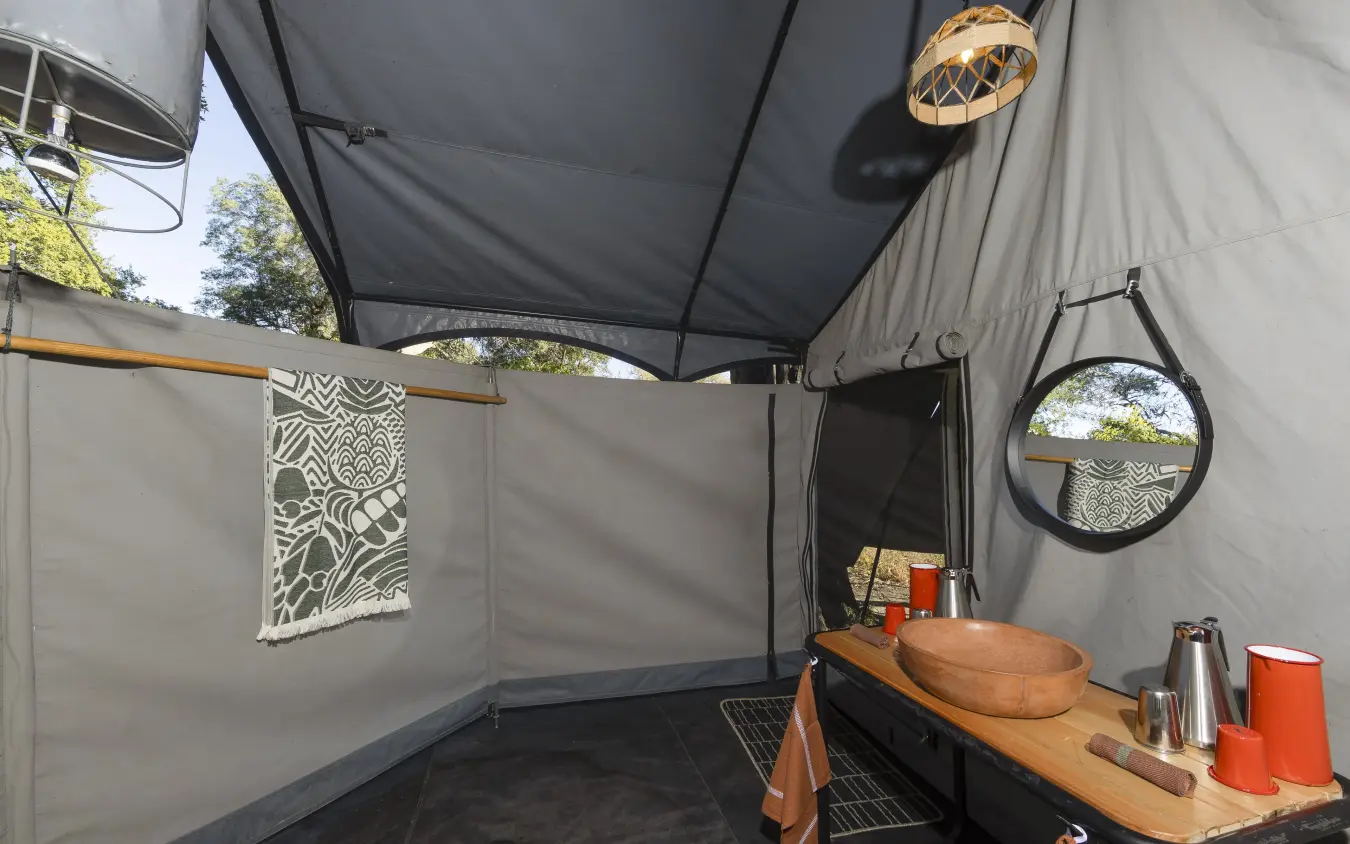
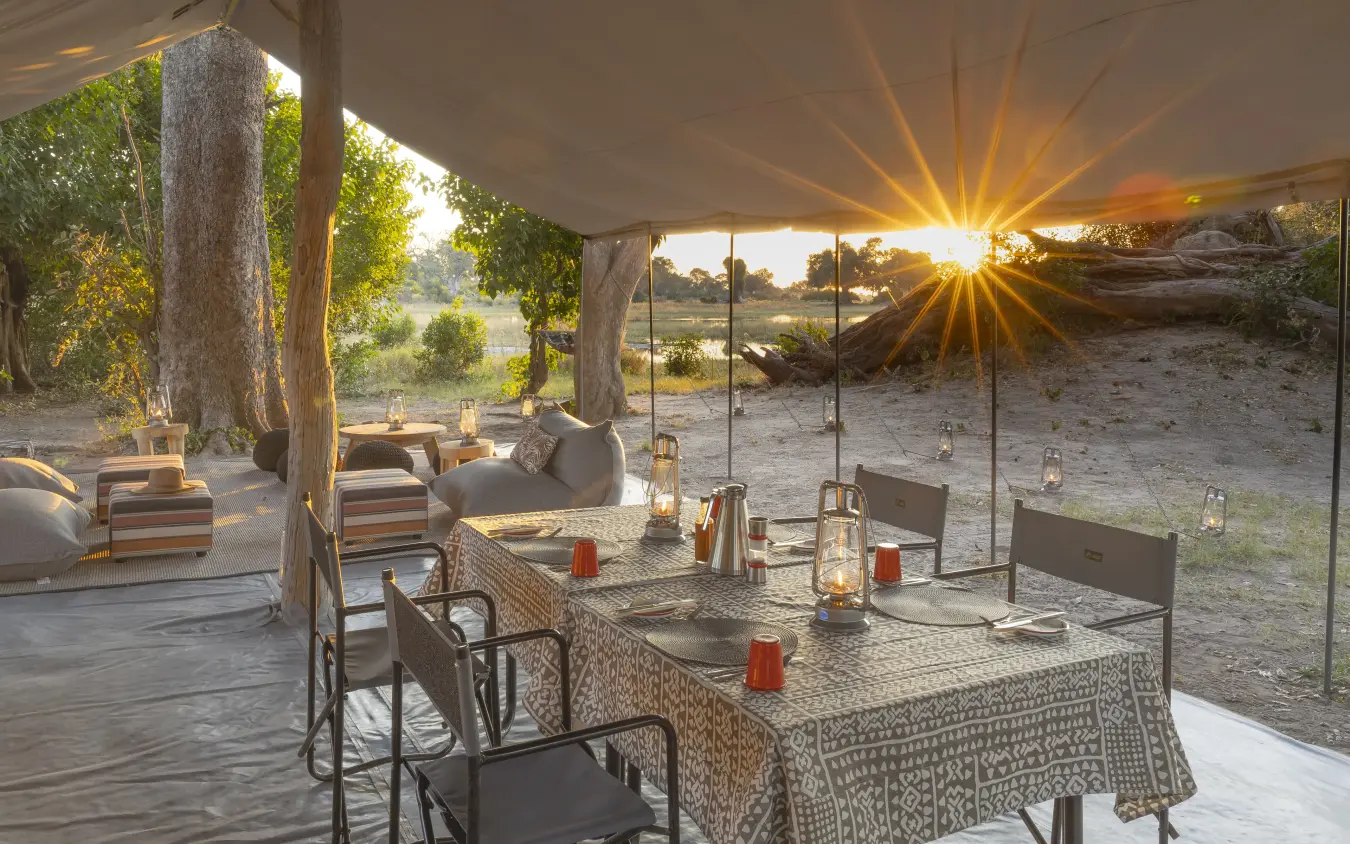
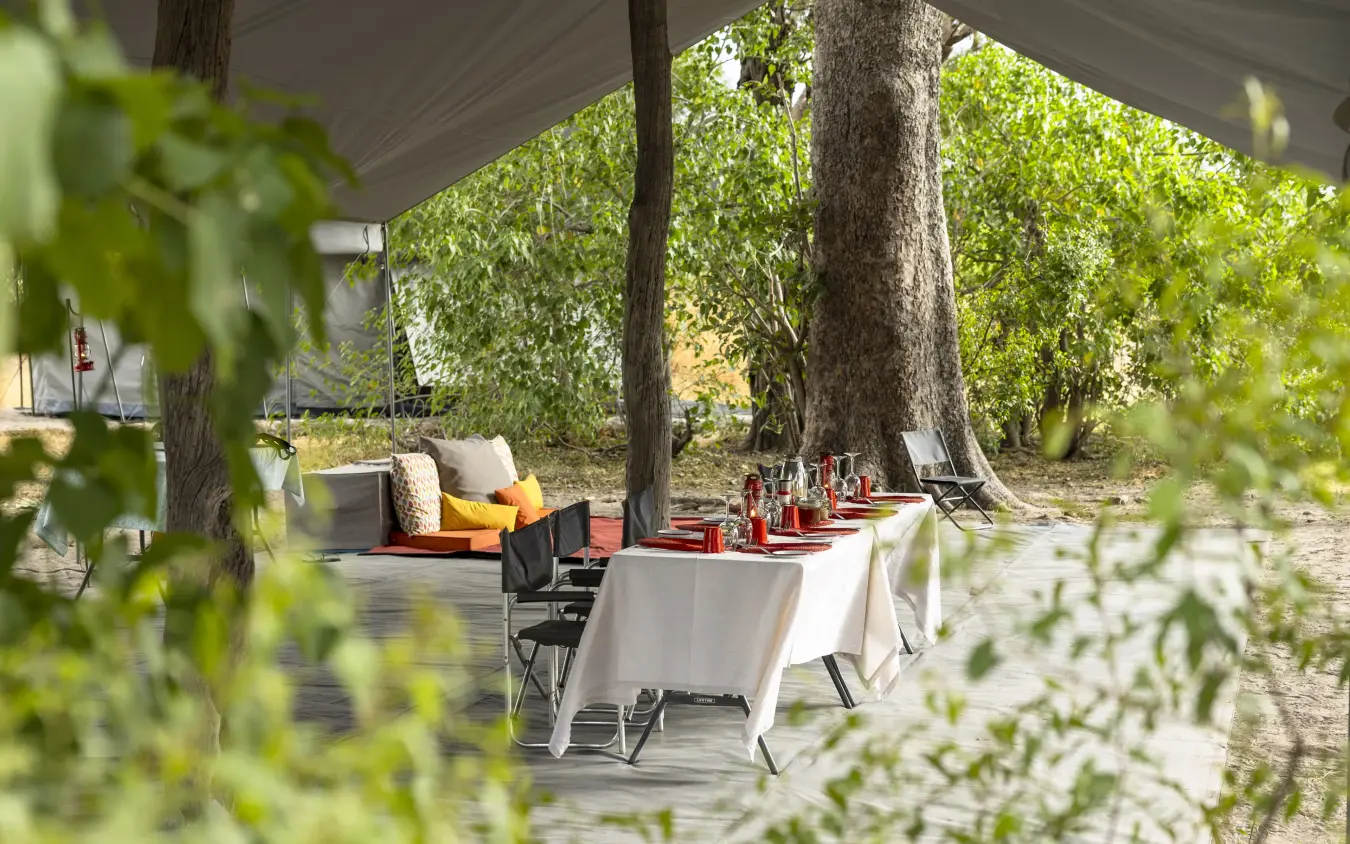
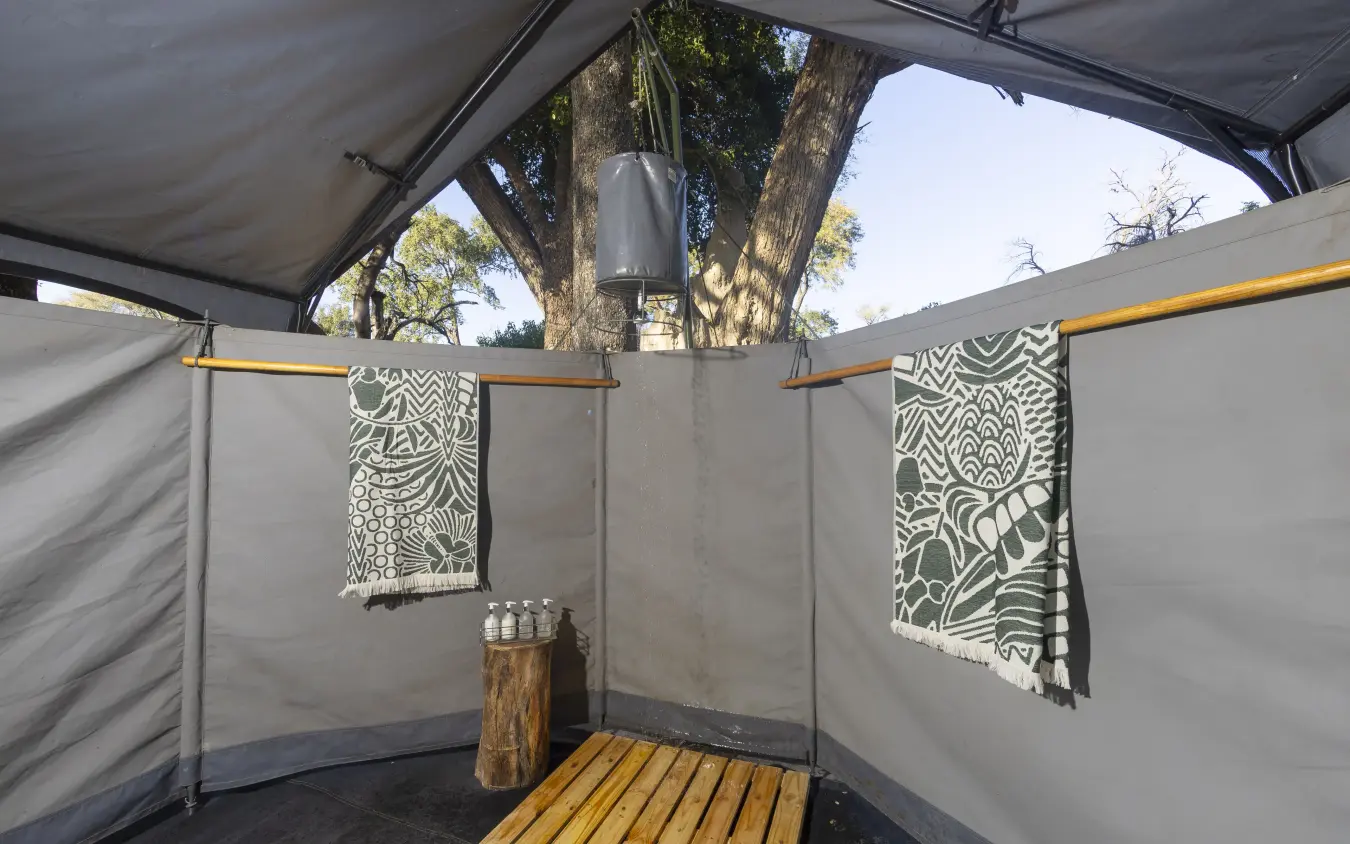
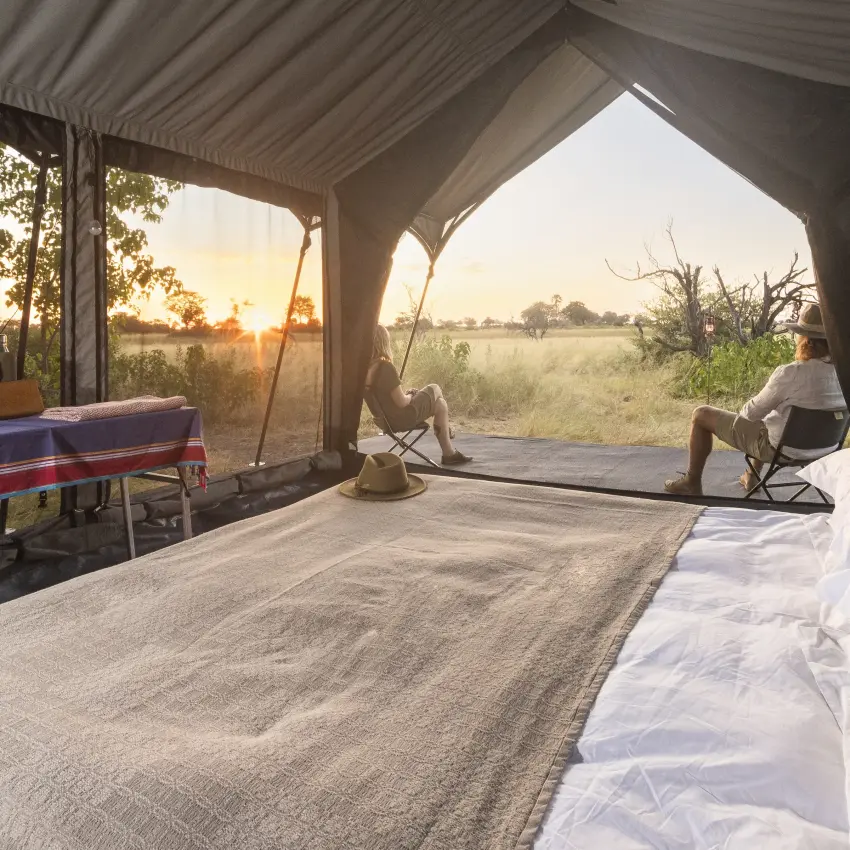
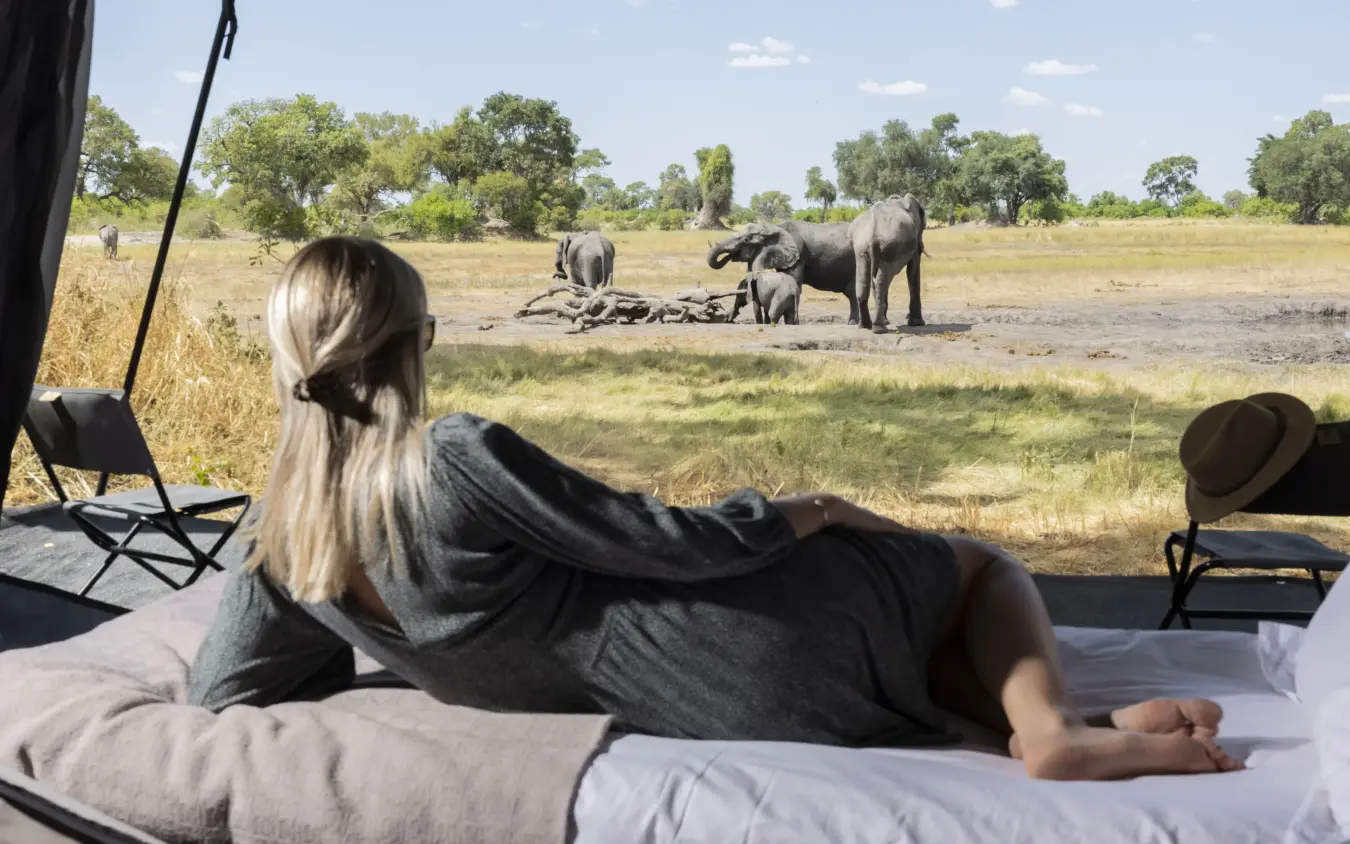
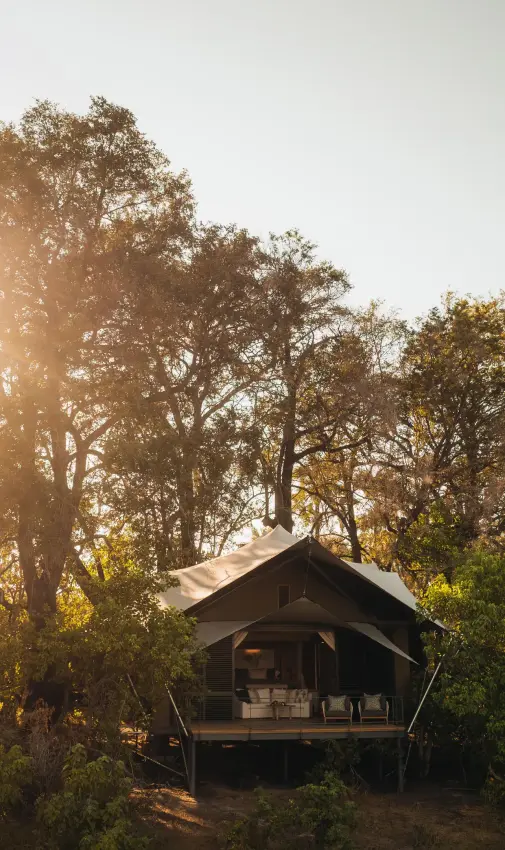
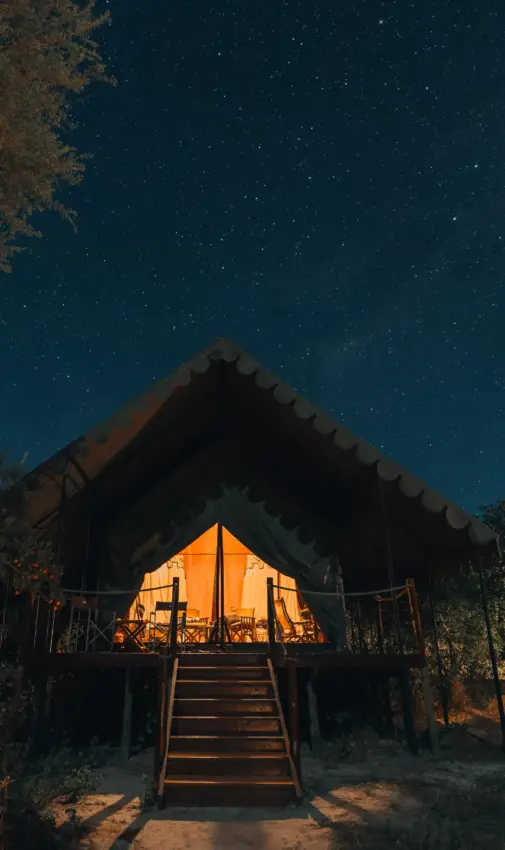
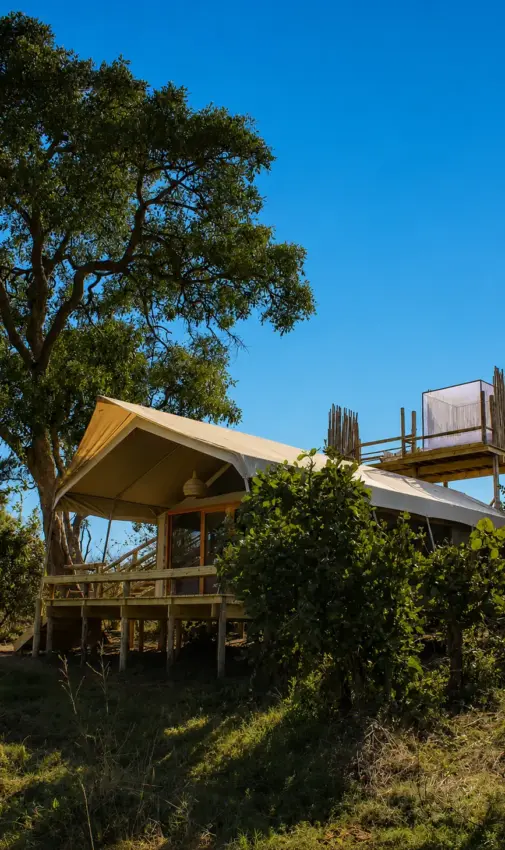
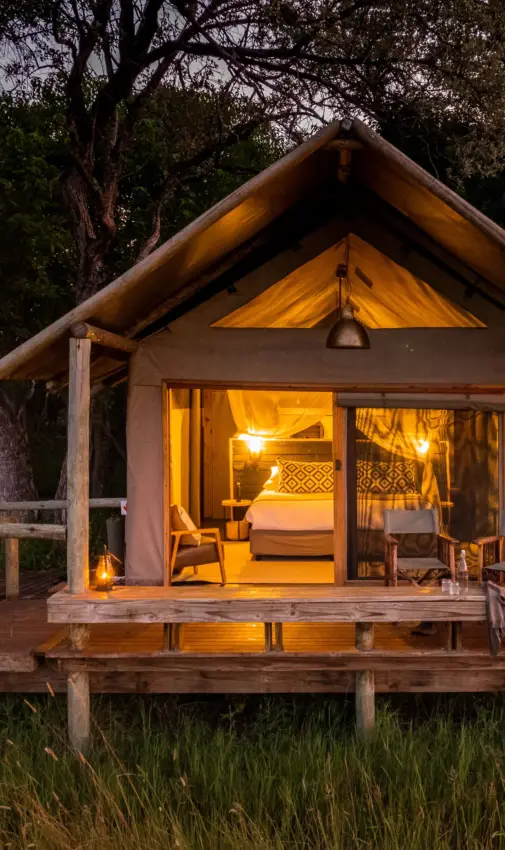
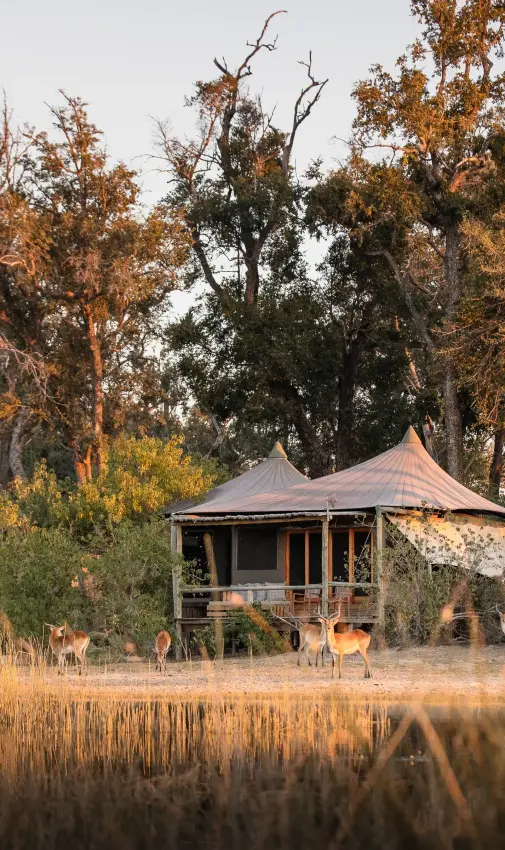
Guest tents at both camps are spacious canvas, Meru or dome style, with firm beds, Egyptian cotton linen and down pillows, and an attached en-suite with a hot bucket shower and a bush loo. There are no plunge pools, no permanent structures, little in the way of built hardware at all. The luxury sits in the space, the silence, the guiding and the food and wine rather than in construction. It makes for a genuinely exceptional under-canvas experience at a time when many Okavango properties are chasing built-form luxury instead, and Kweene Trails counts among the great classic safari experiences still to be had in Africa.
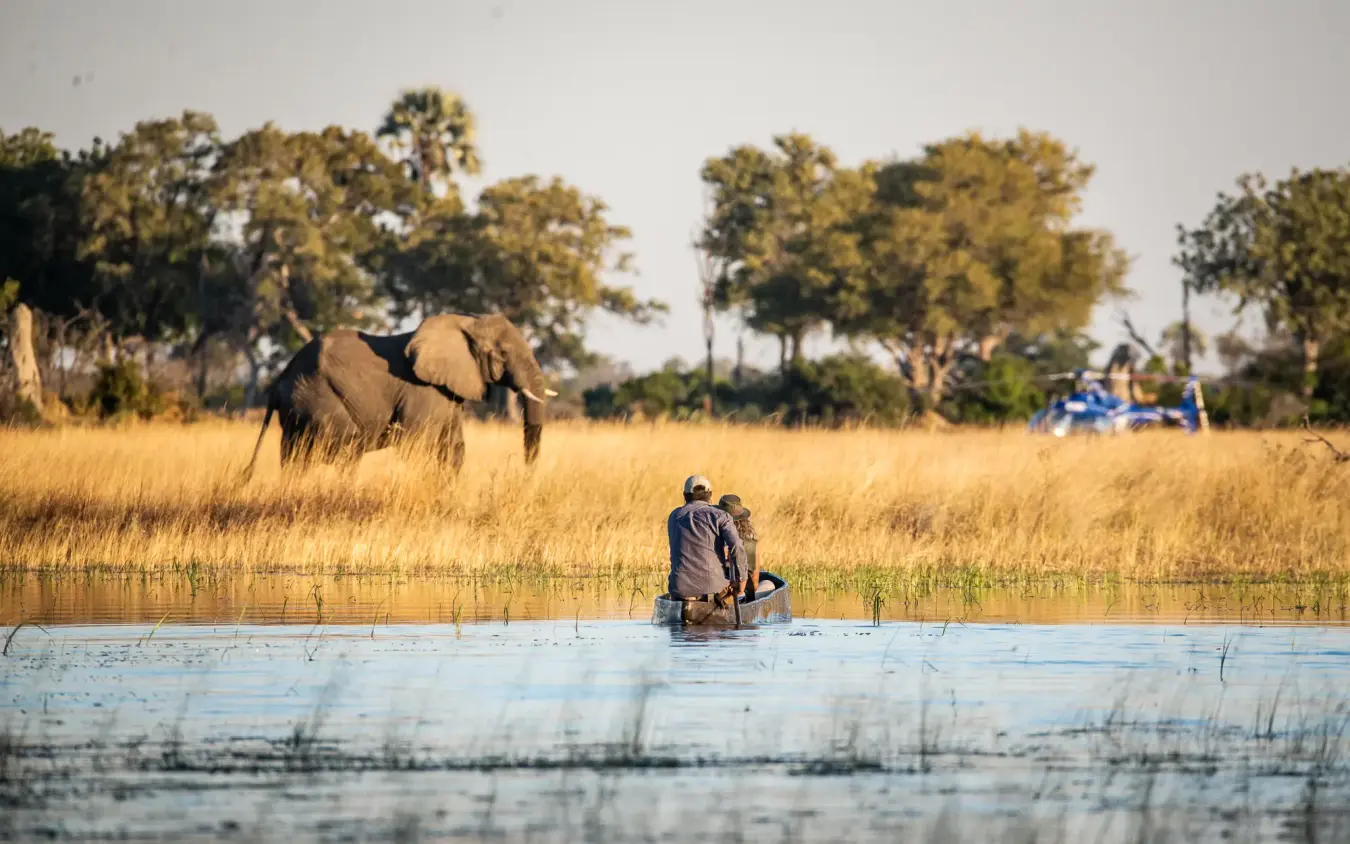
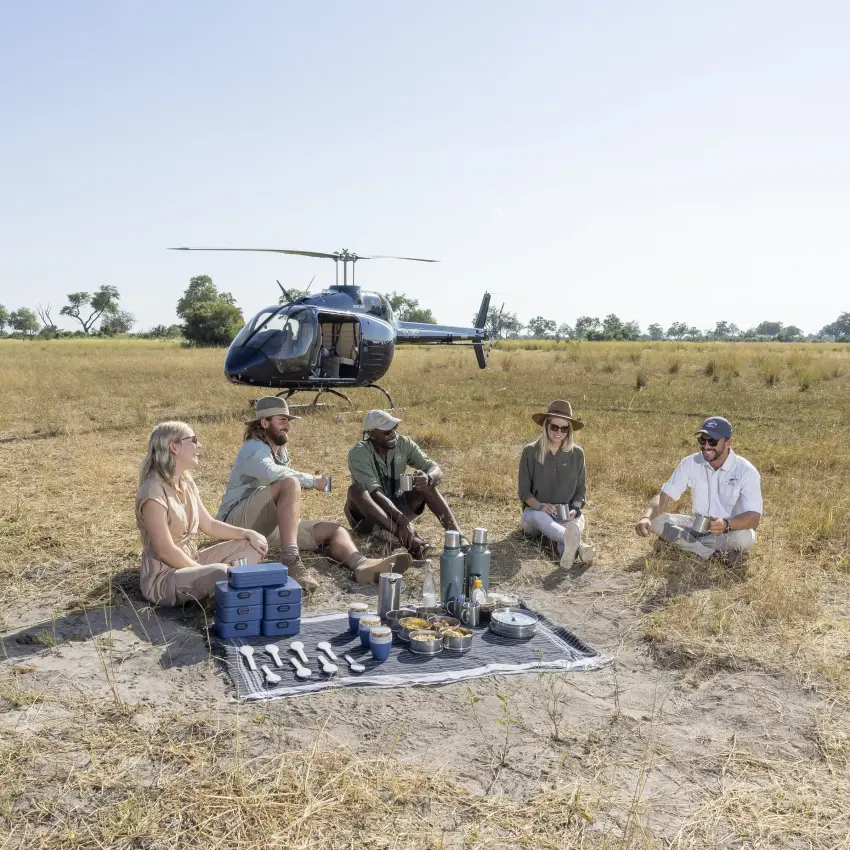
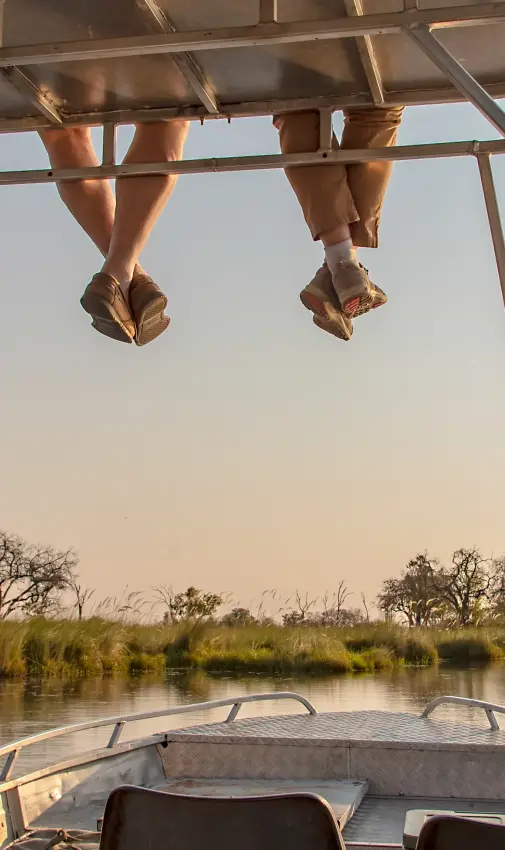
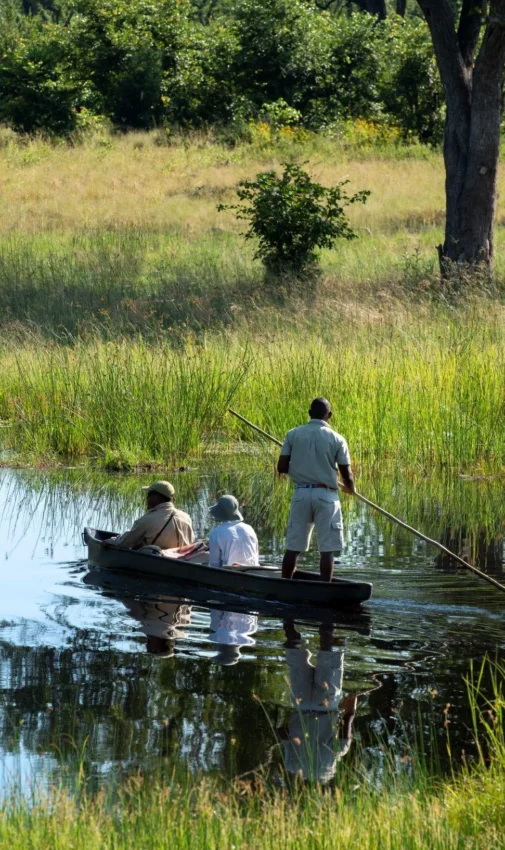
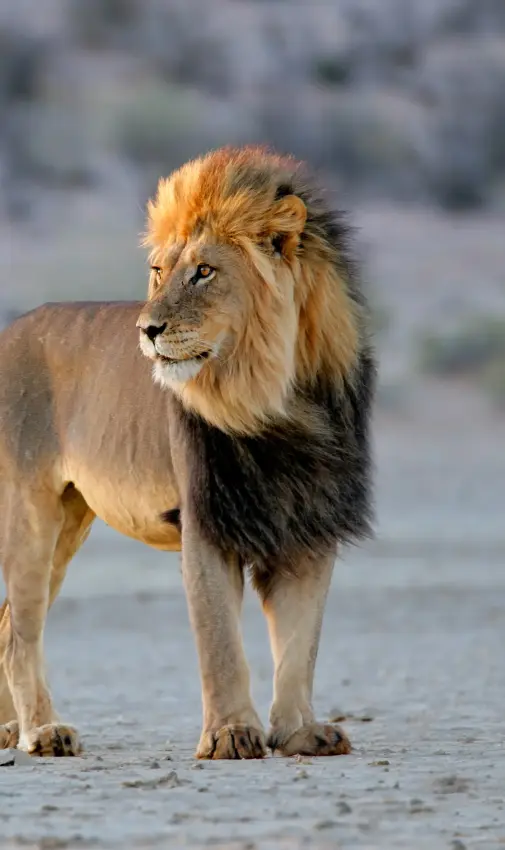
The days follow no fixed timetable. Walks range from a gentle stroll to treks beyond twenty kilometres, tailored to fitness and interest, reading tracks, birds, botany and big game with equal attention. The private concession permits what national parks cannot. There is off-road driving, night drives after genet, serval and caracal, and mokoro when the floodwaters allow, typically June to August. The move between camps on the third day becomes a full day on foot, by vehicle or by mokoro, with a picnic served along the way while the camp is quietly relocated behind the group.
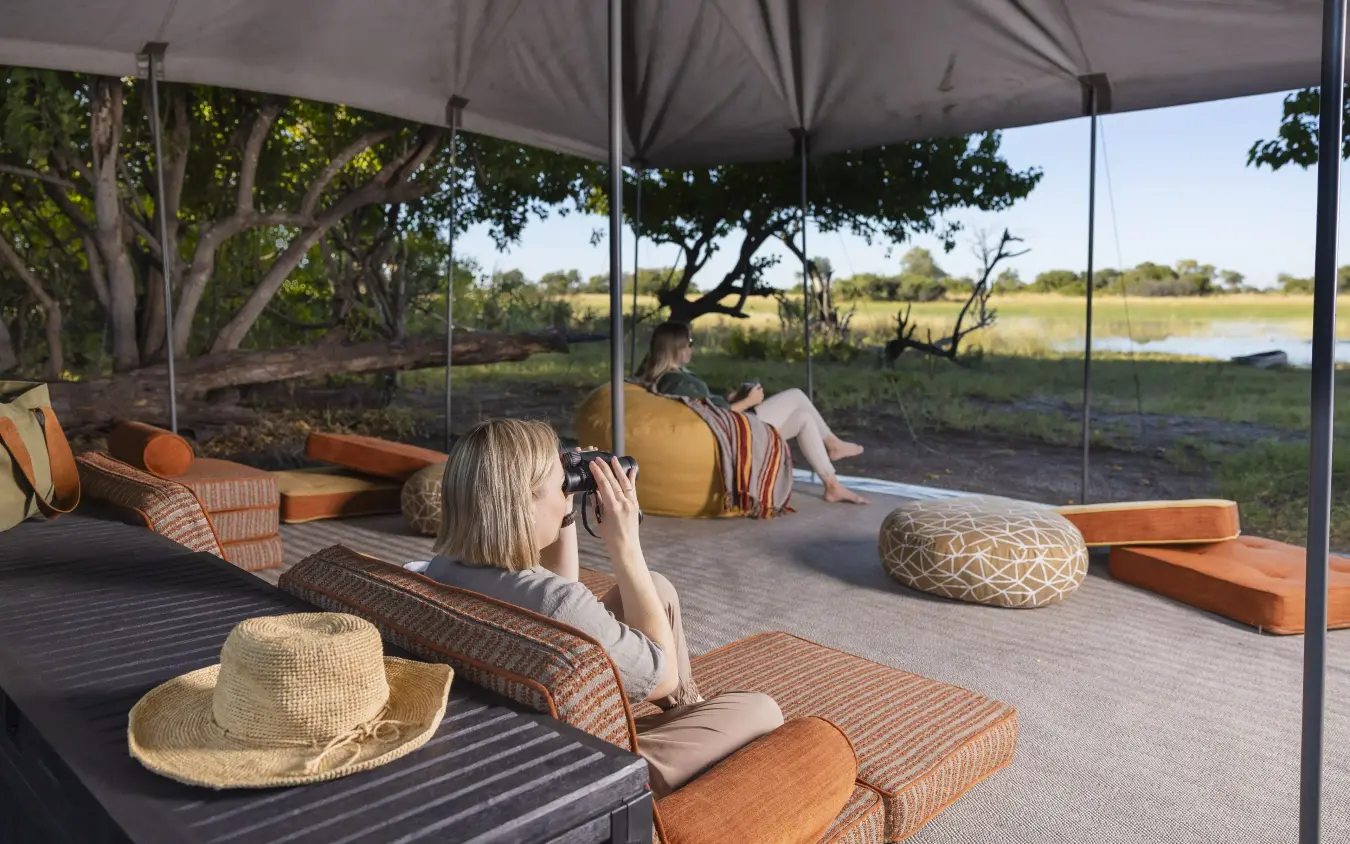
The luxury sits in the space, the silence, the guiding and the food and wine.
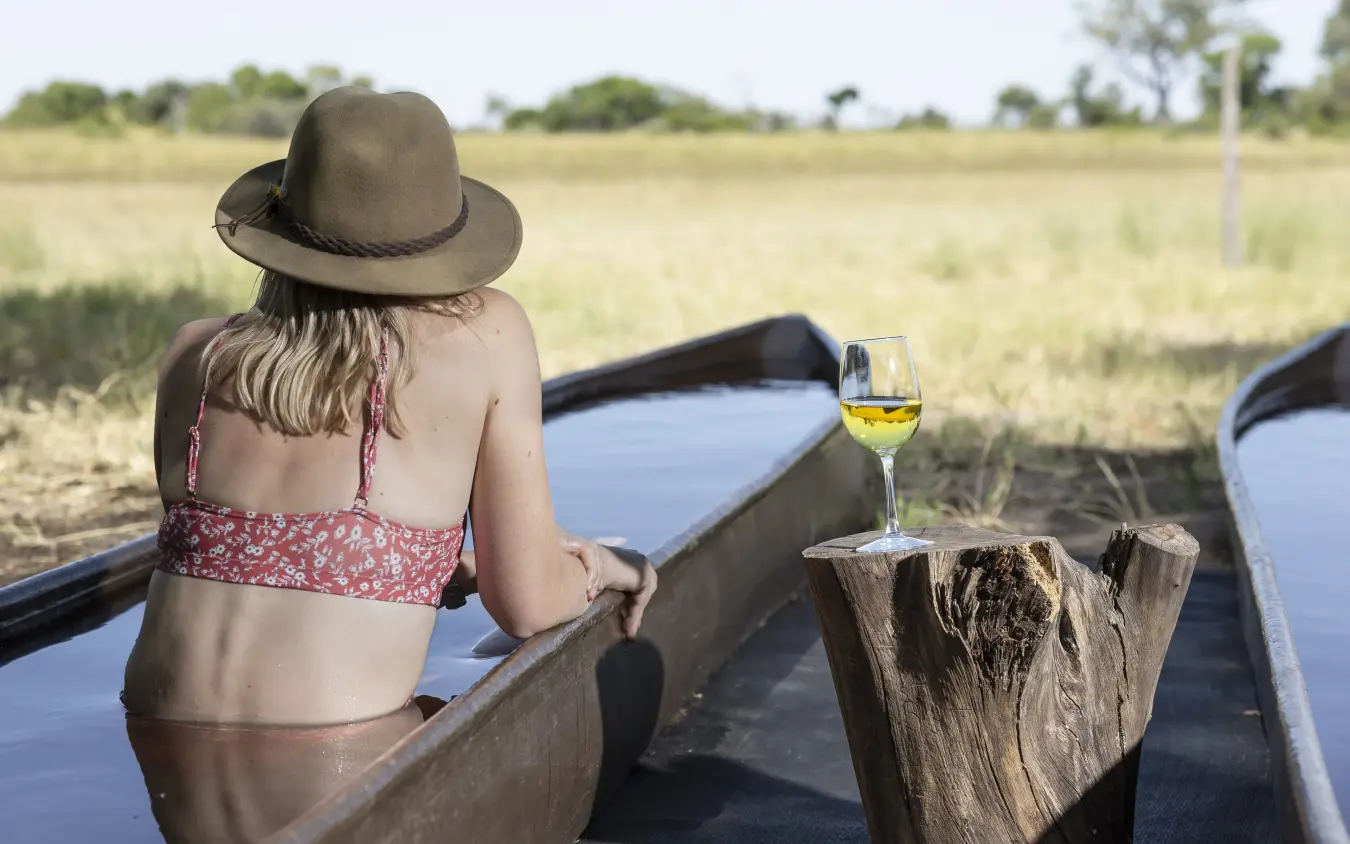
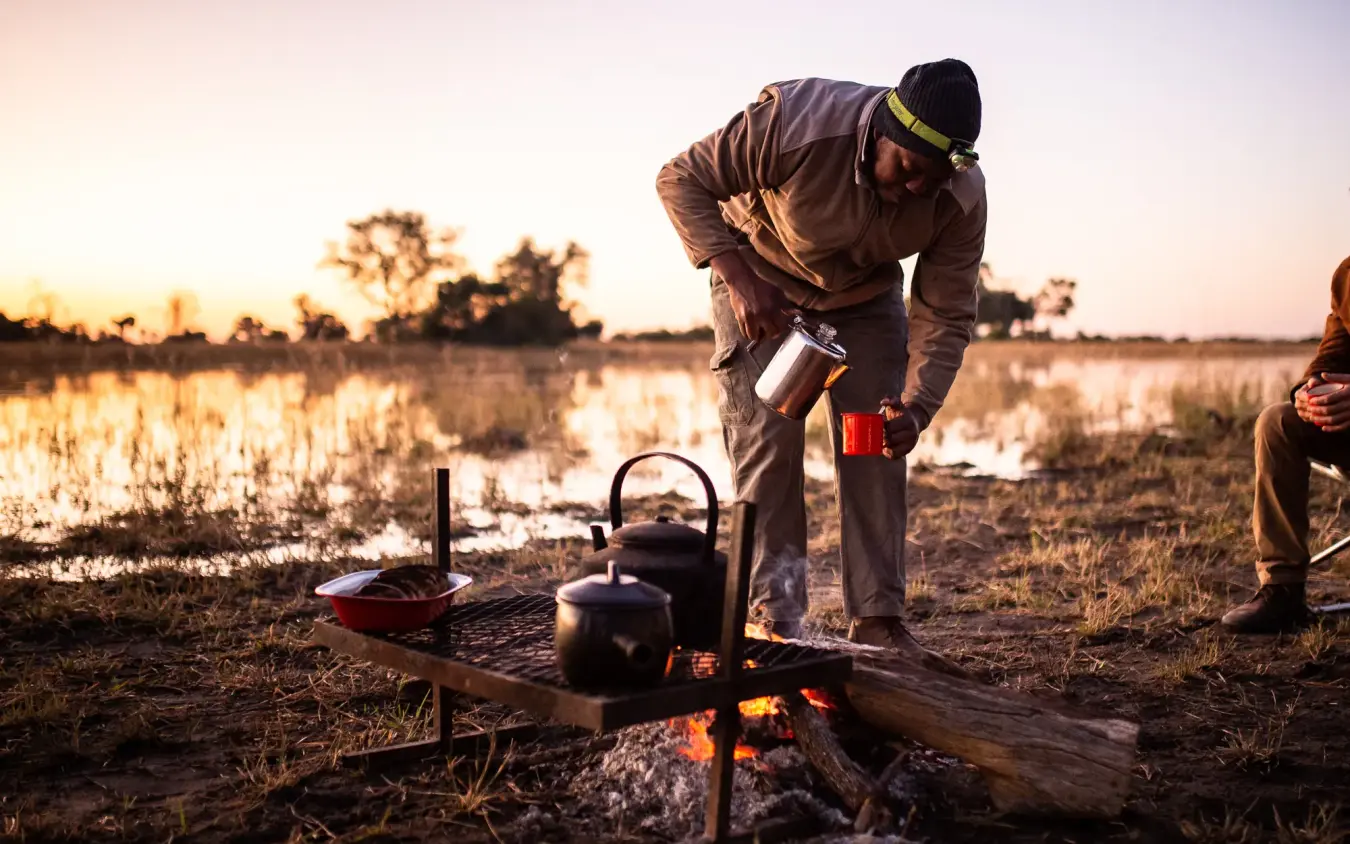
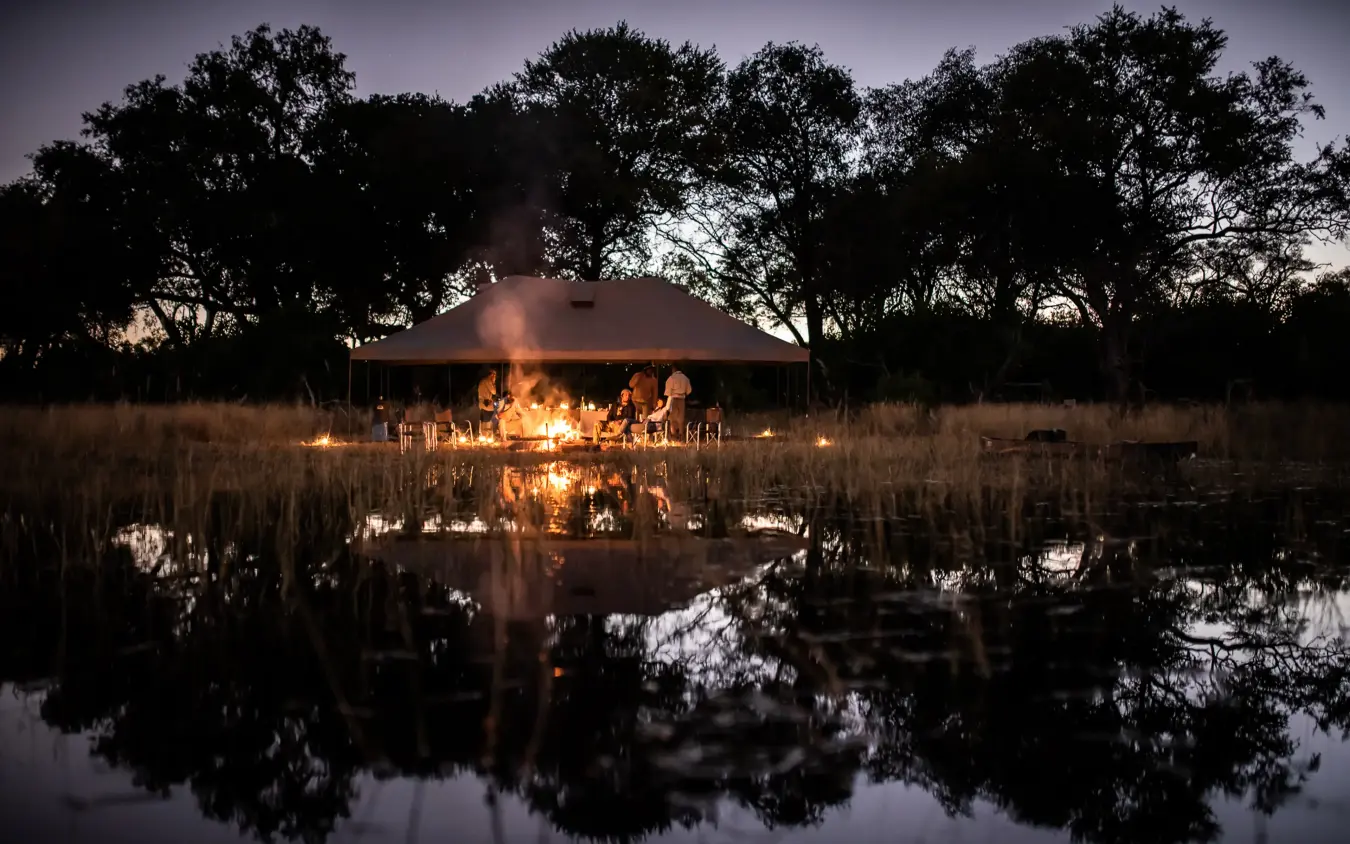
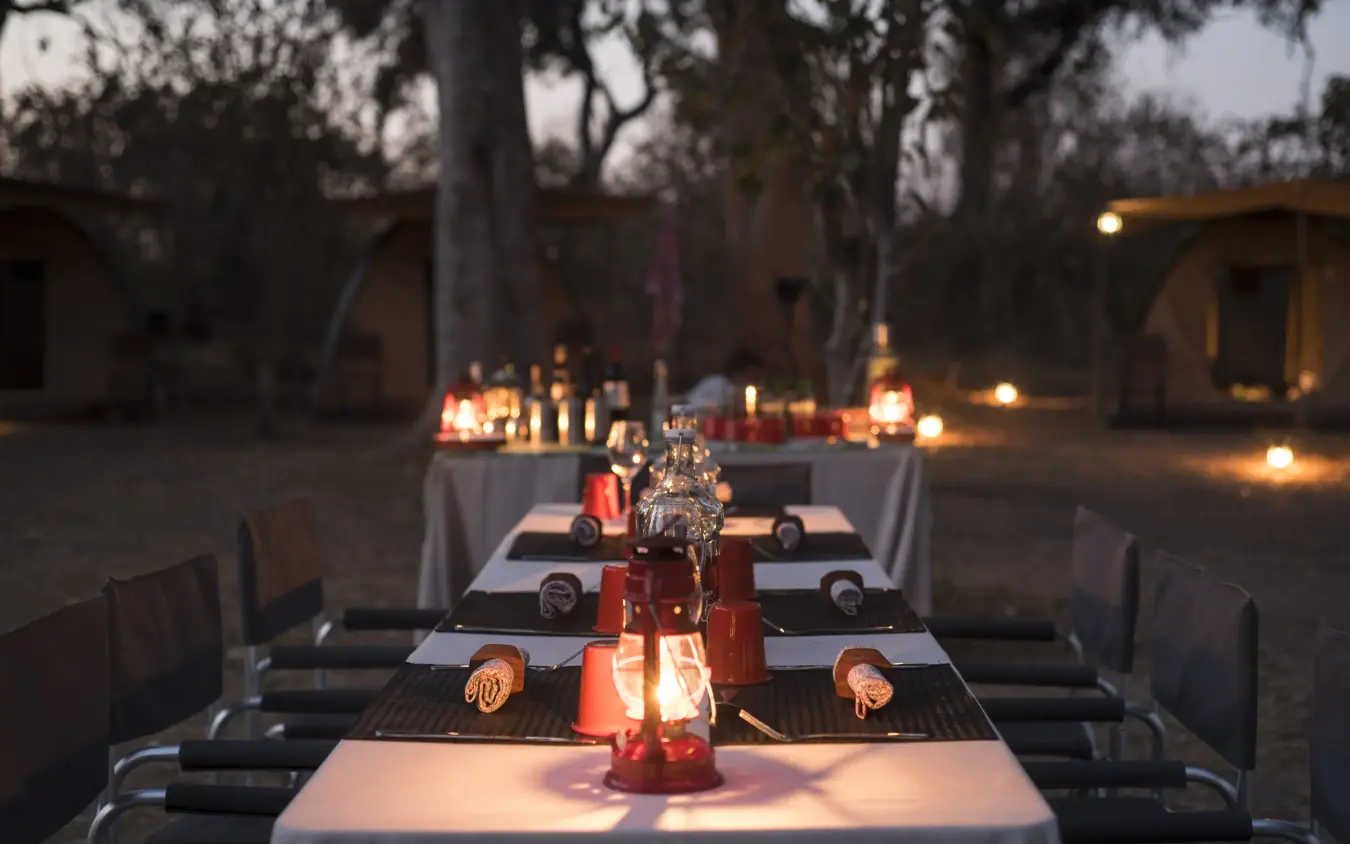
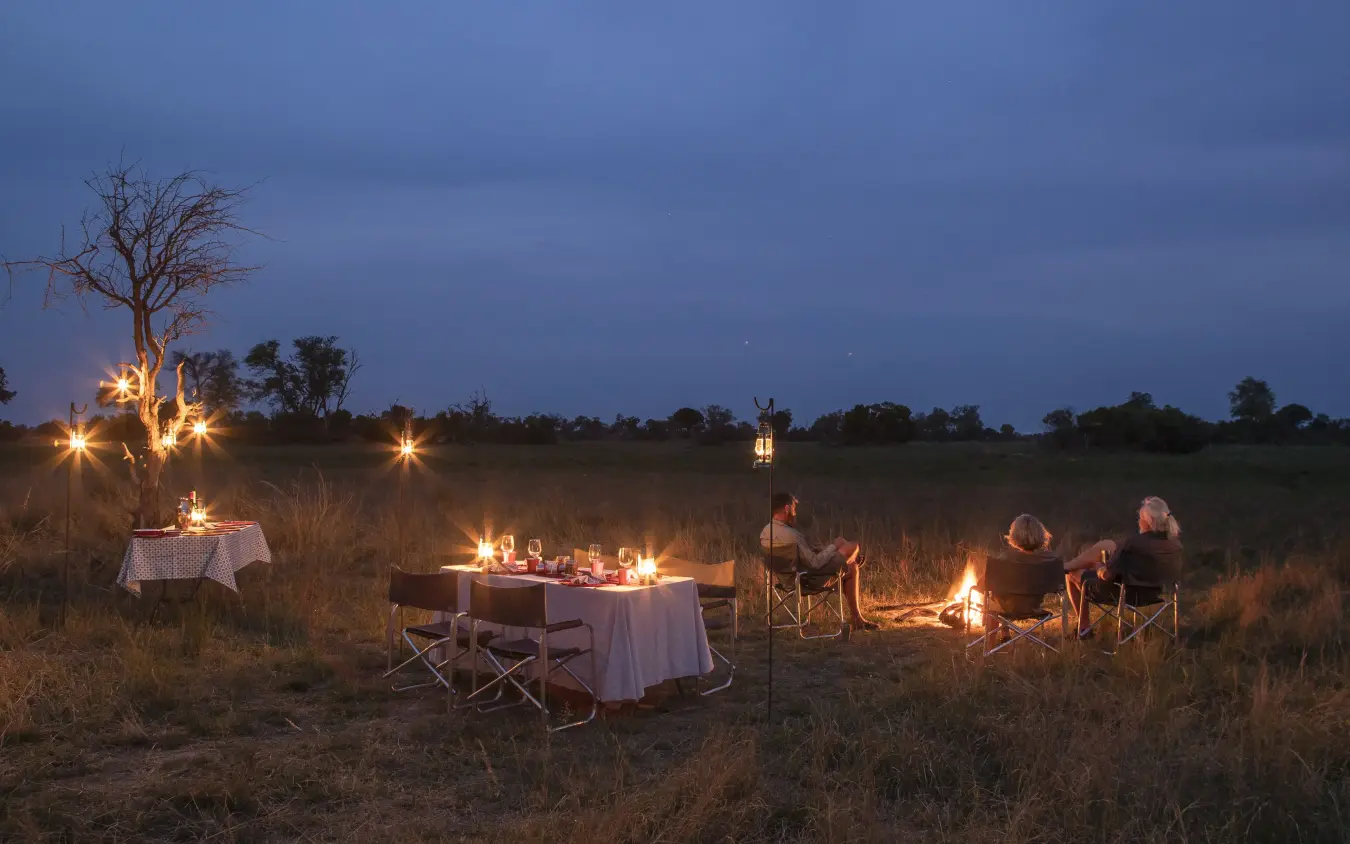
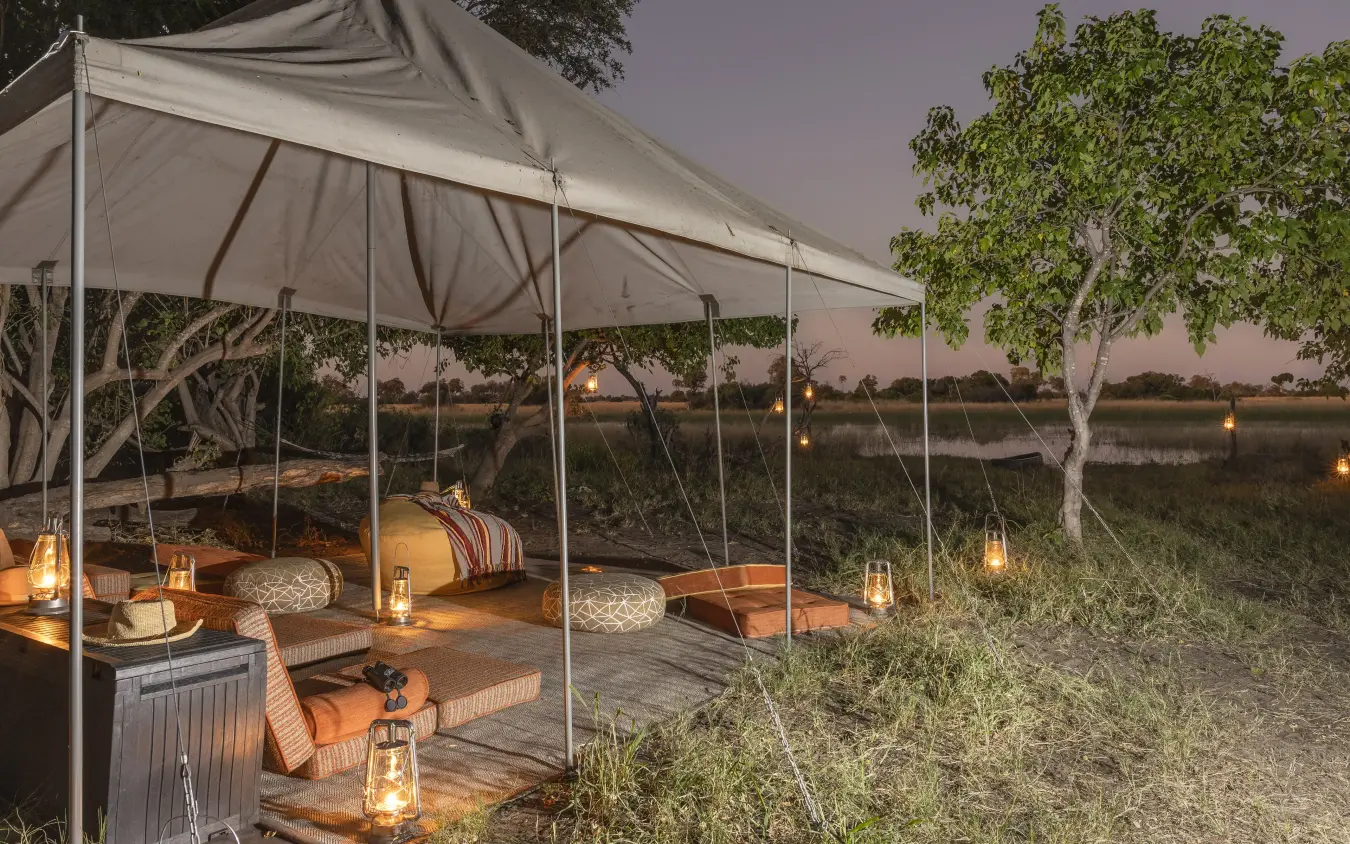
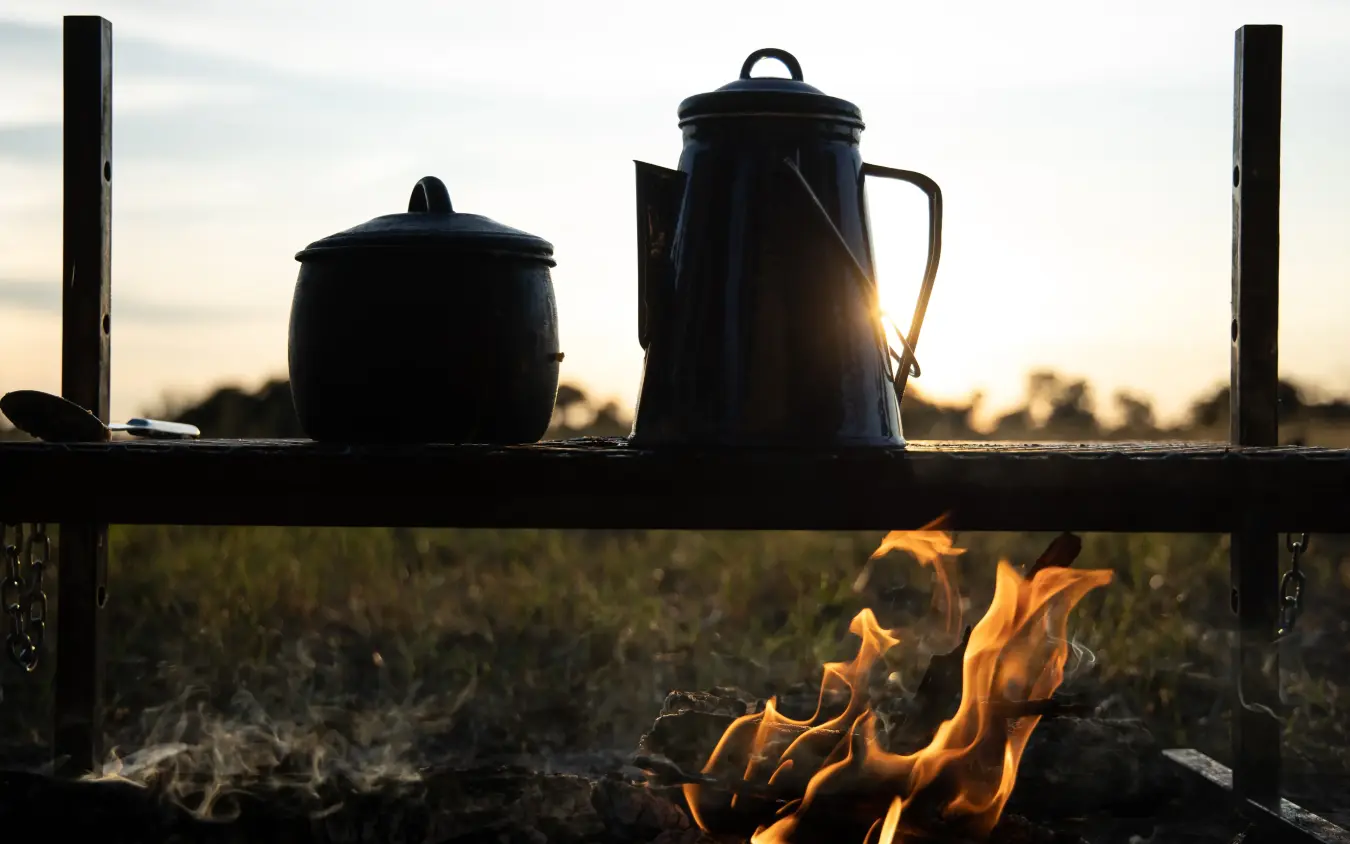
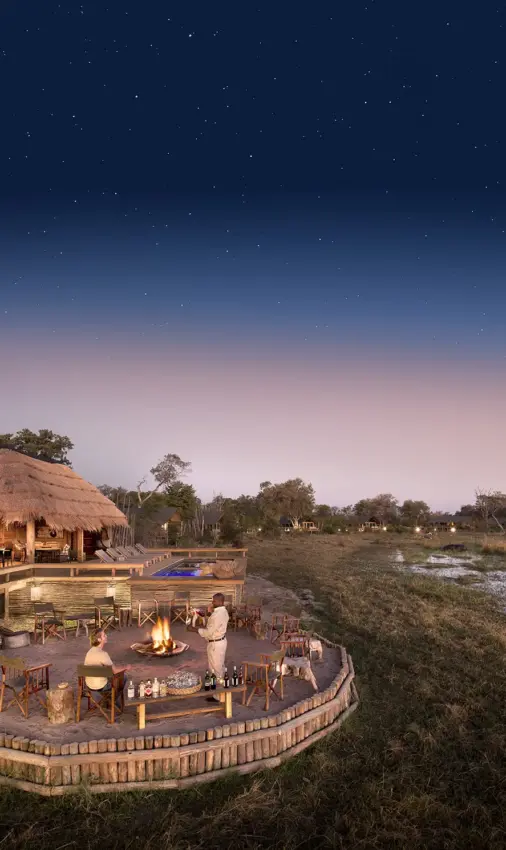
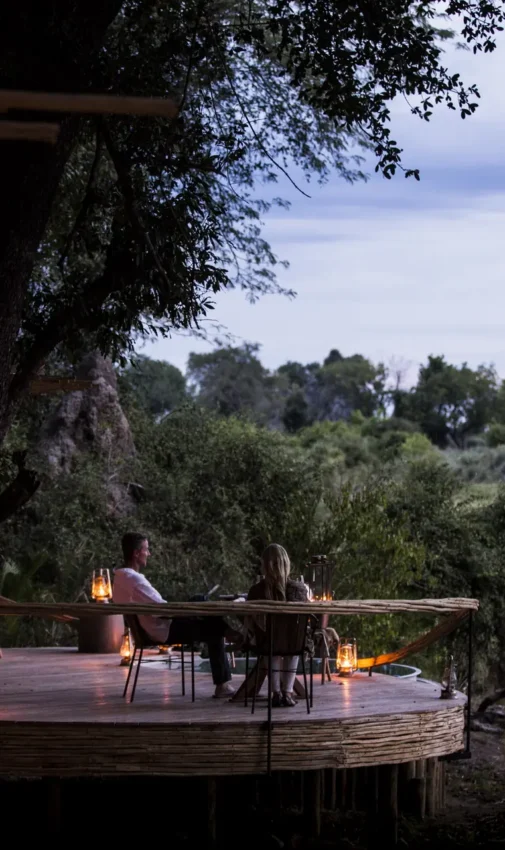
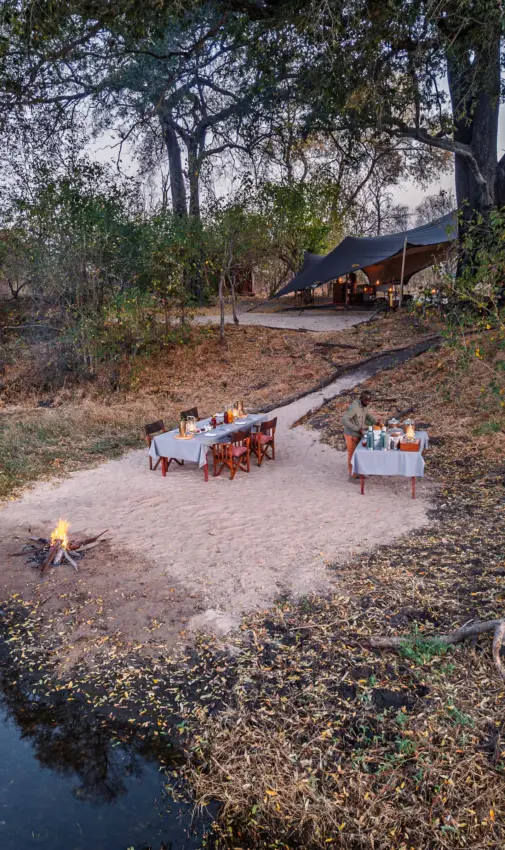
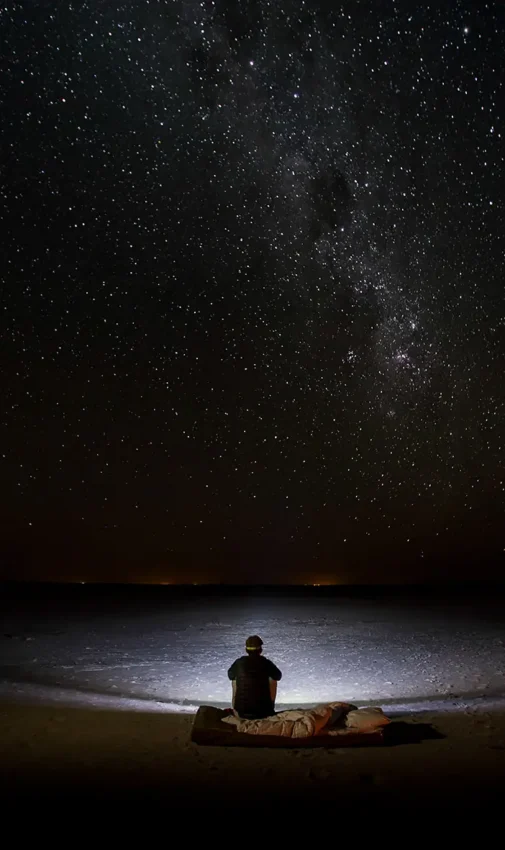
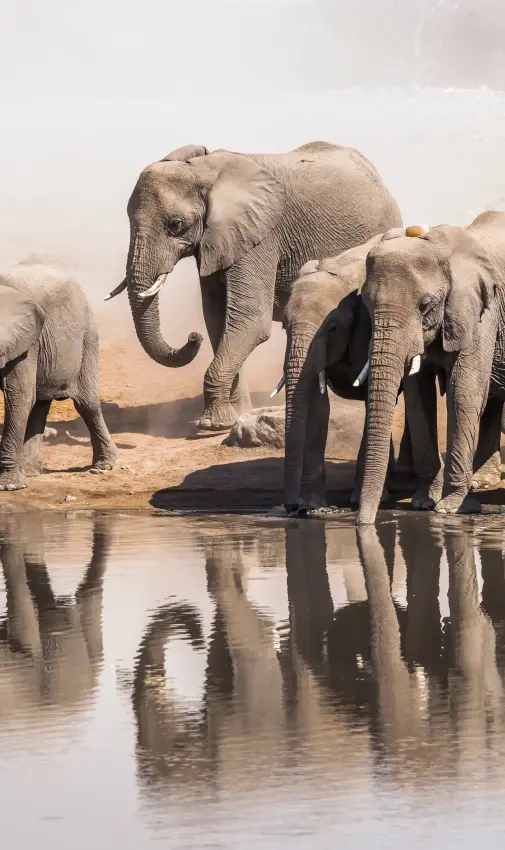
All the food is cooked over open fire by bush chefs working with fresh, seasonal ingredients, and eaten communally under the stars or in the open-sided mess tent. South African wines are chosen to match each menu, the one deliberate concession to indulgence in an otherwise pared-back camp. Evenings settle around the fire for sundowners and storytelling before dinner, elephants sometimes drinking loudly at the channel nearby.
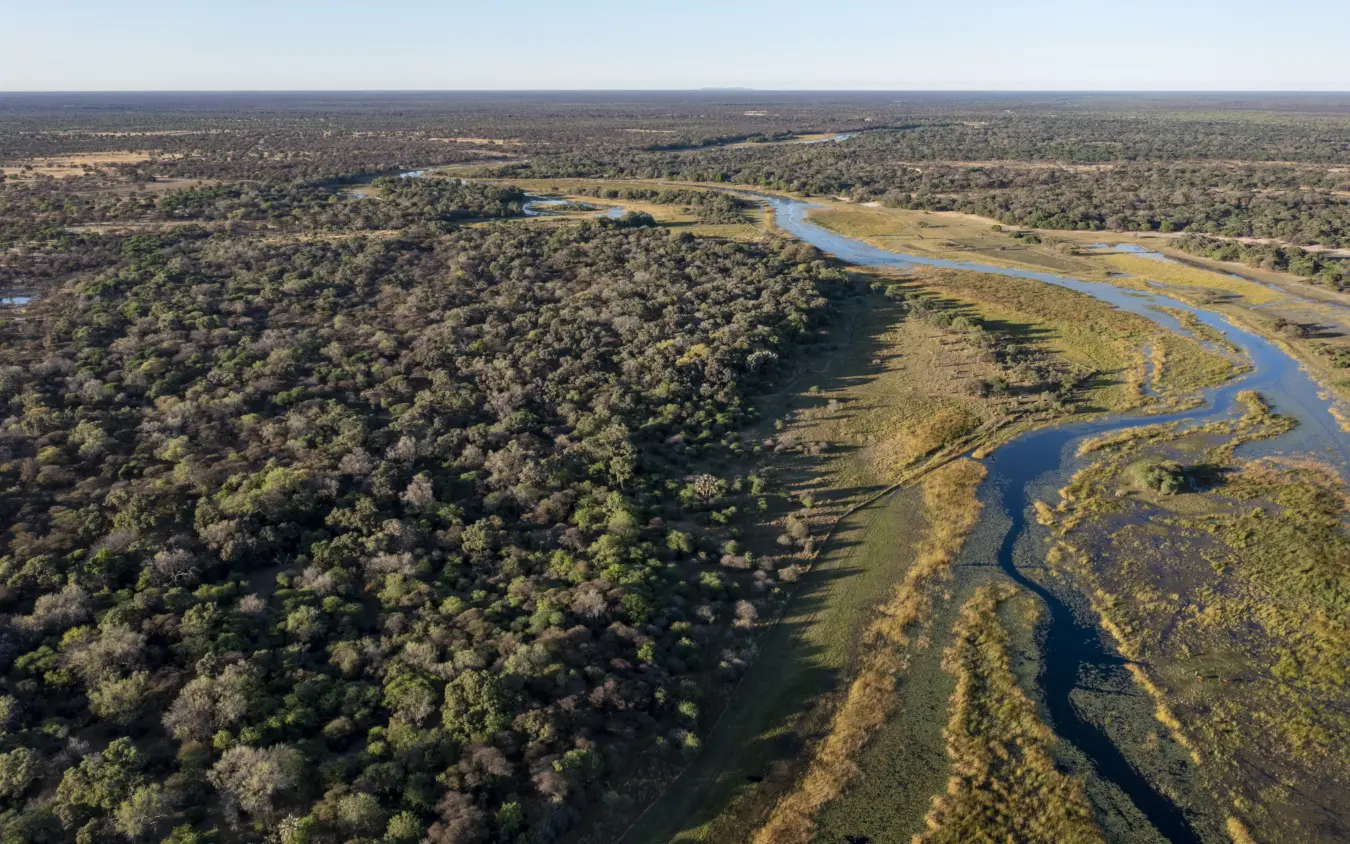
Access is by helicopter, roughly thirty minutes from Maun, the flight itself a slow read of the water-laced Delta from above. Scenic flights beyond the transfer can be arranged on request. The camps run on solar power and move with the season, packing down between trips to leave the concession as it was found.