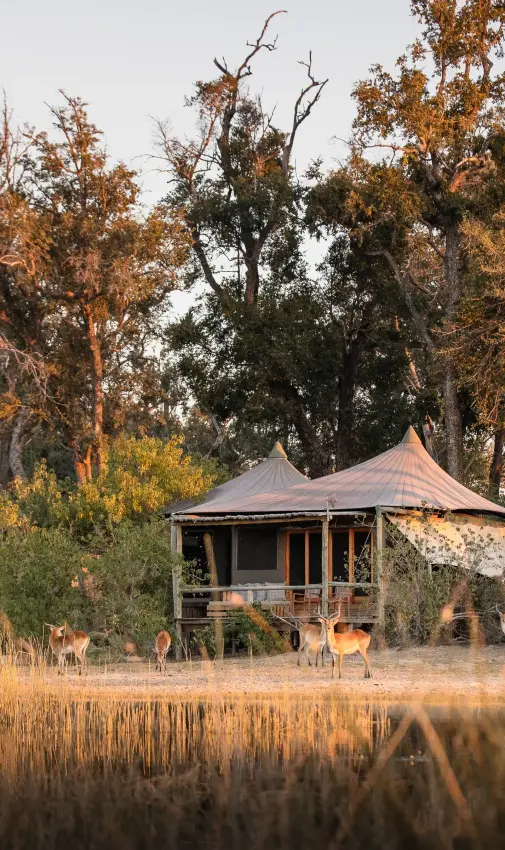
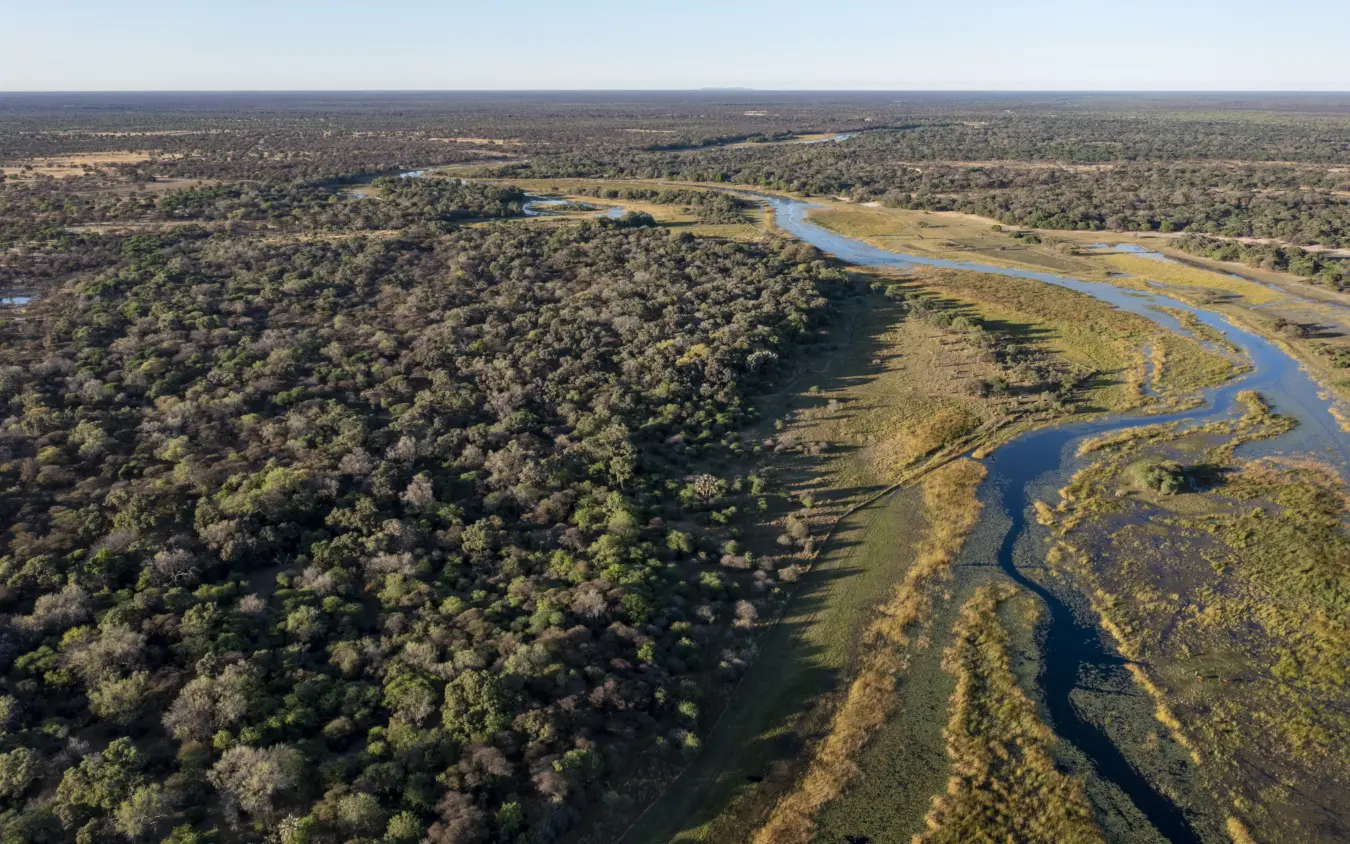
Nyana means small in Setswana, and the arithmetic of the place follows the name. Two vehicles work the concession, each seating six but carrying four, so everyone has a clear line to the sighting and room for a long lens. With eight guests at capacity, the camp runs like a private house on the floodplain, and the traversing area itself is shared only with Kanana, the older camp a short drive away. Taking the whole place is straightforward, for a family or for a group of friends travelling together.
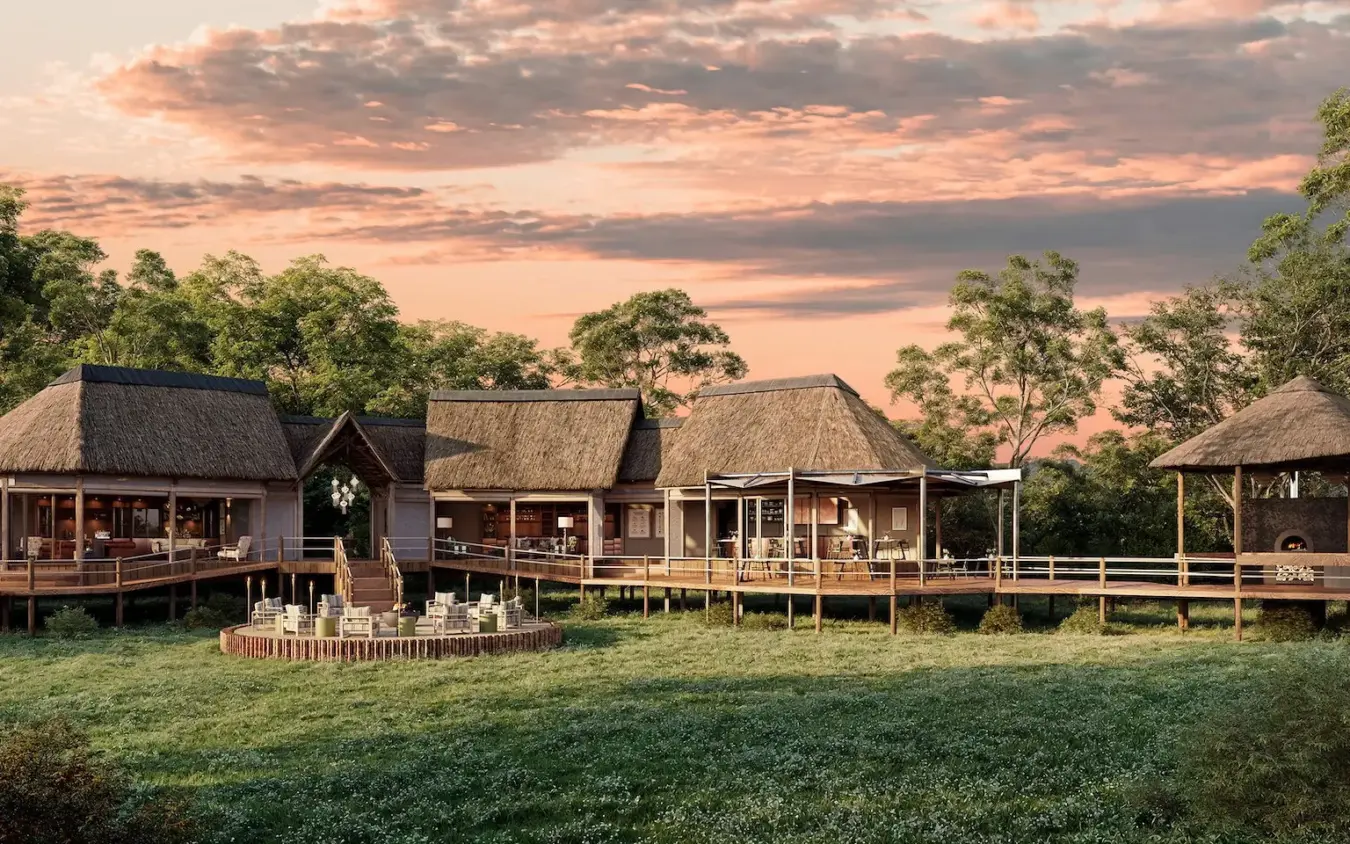
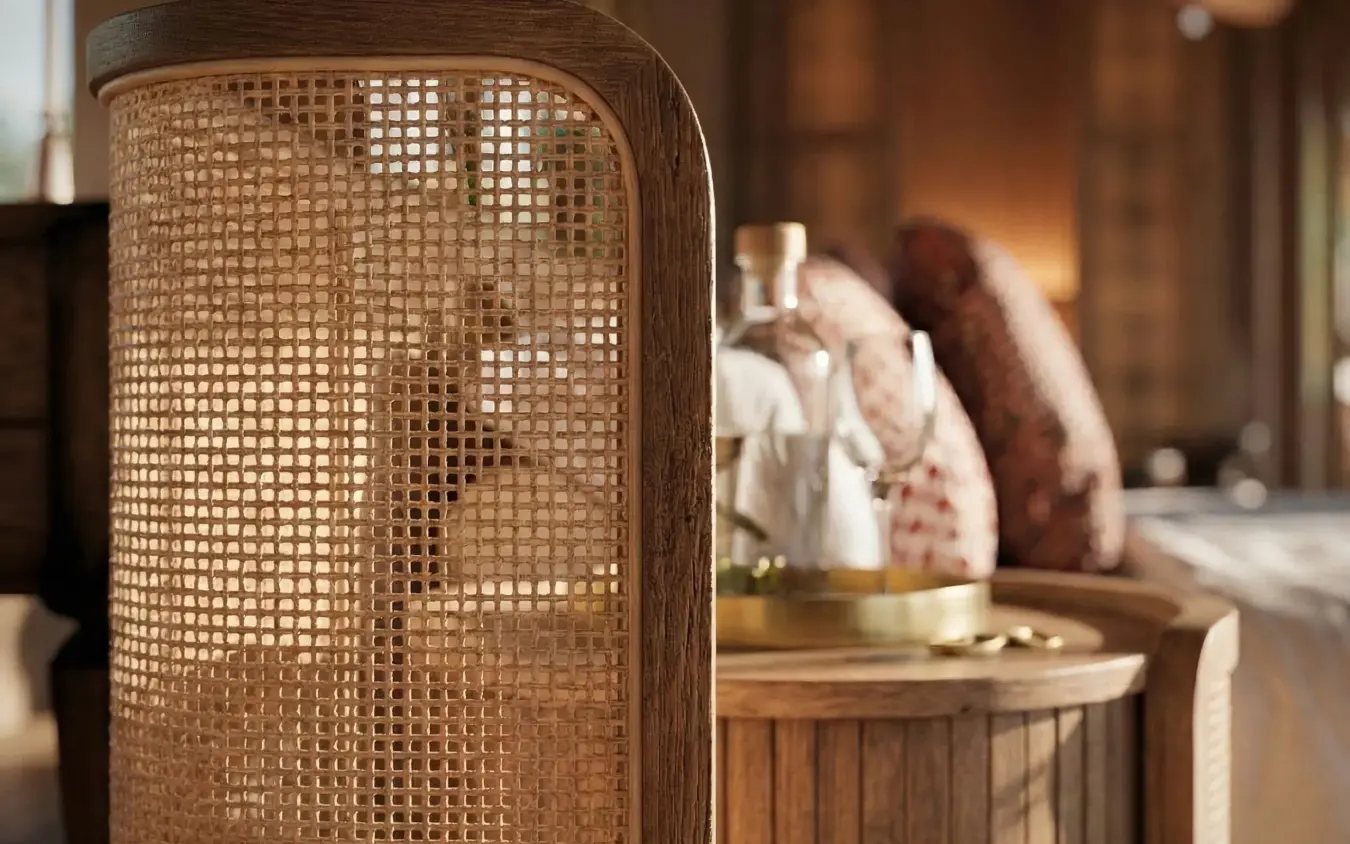
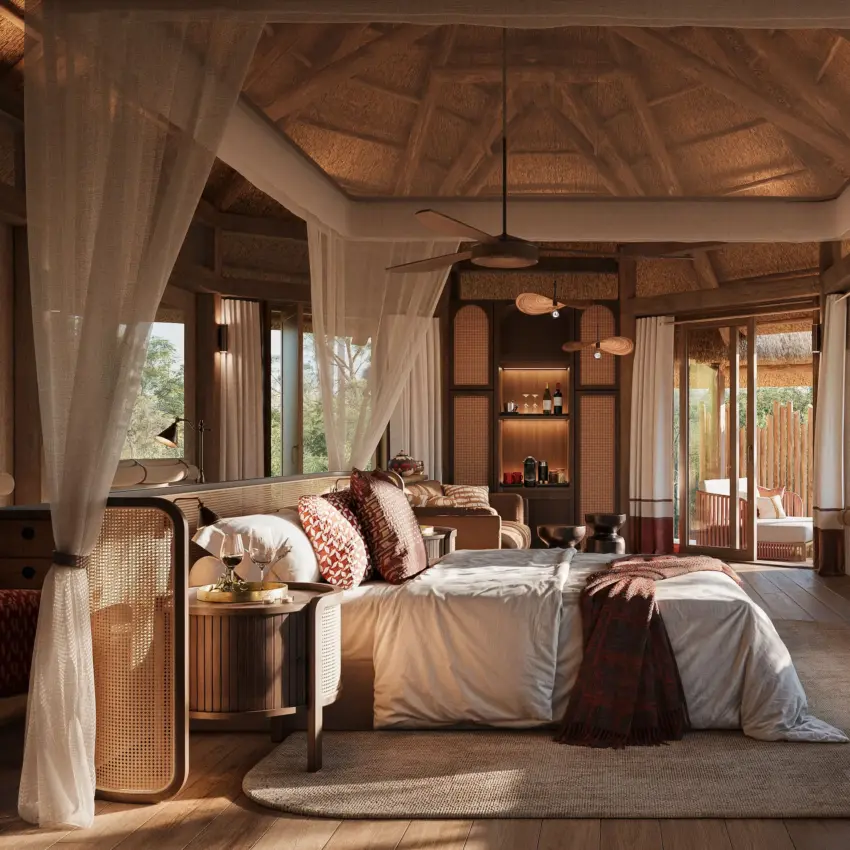
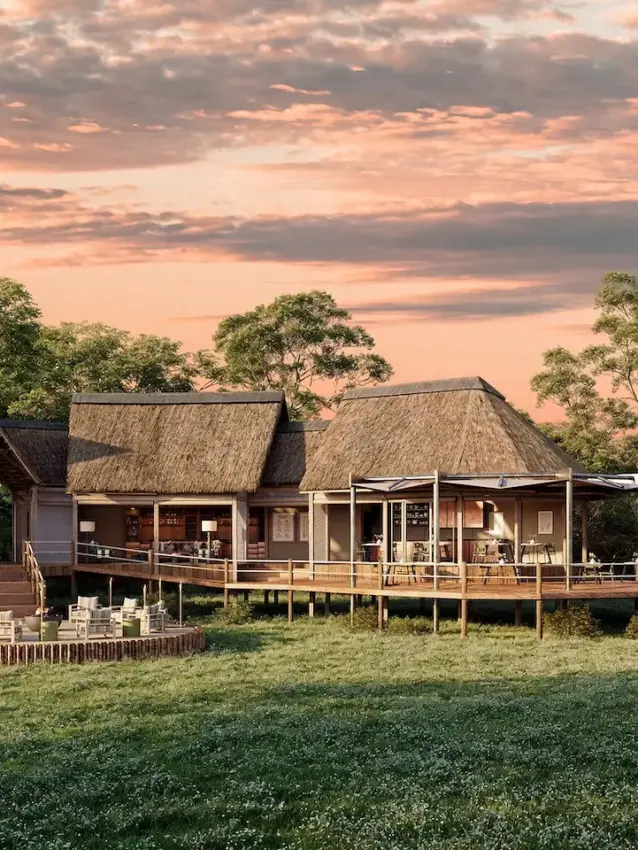
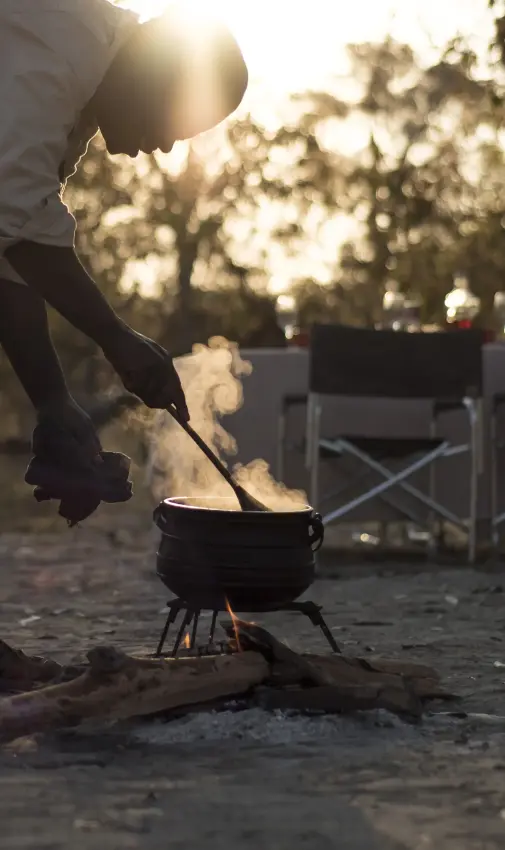
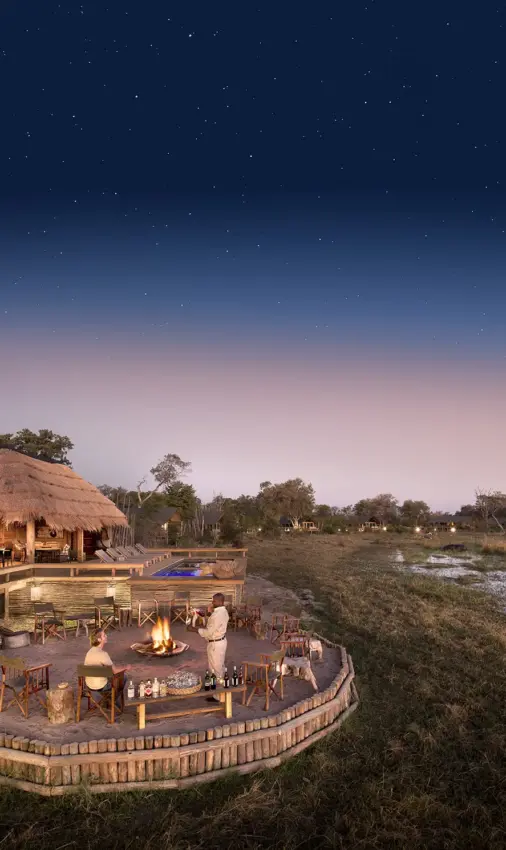
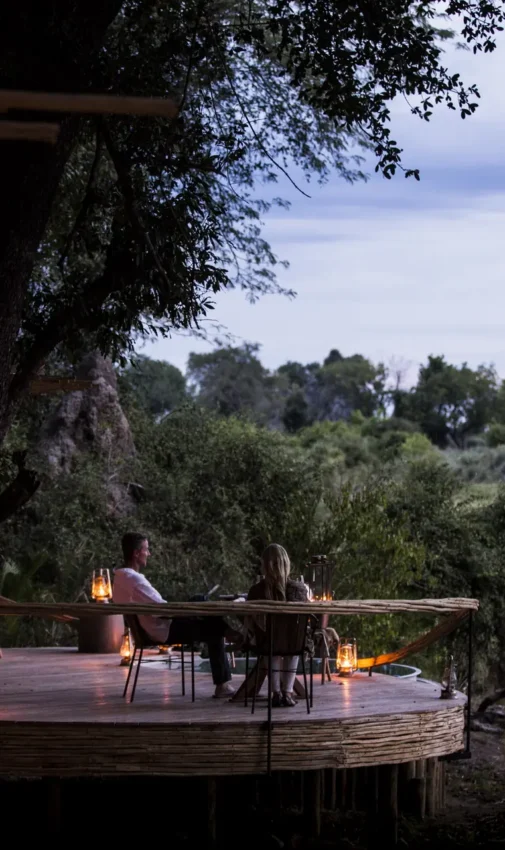
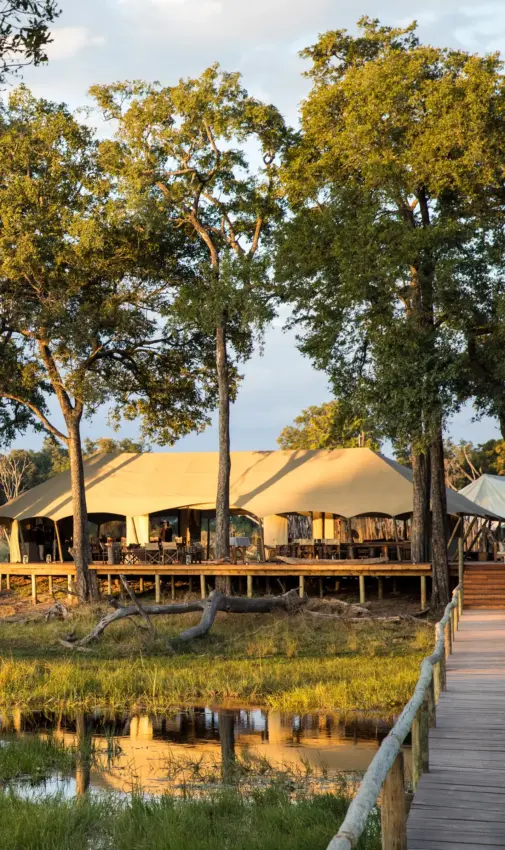
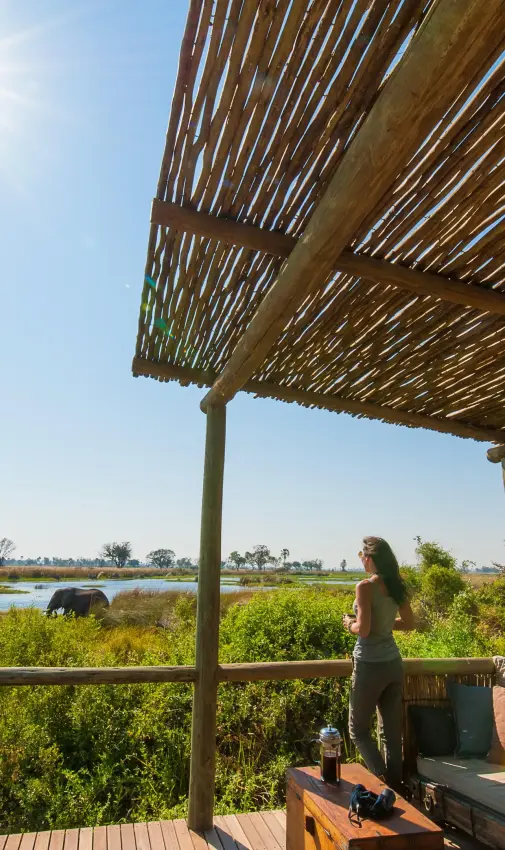
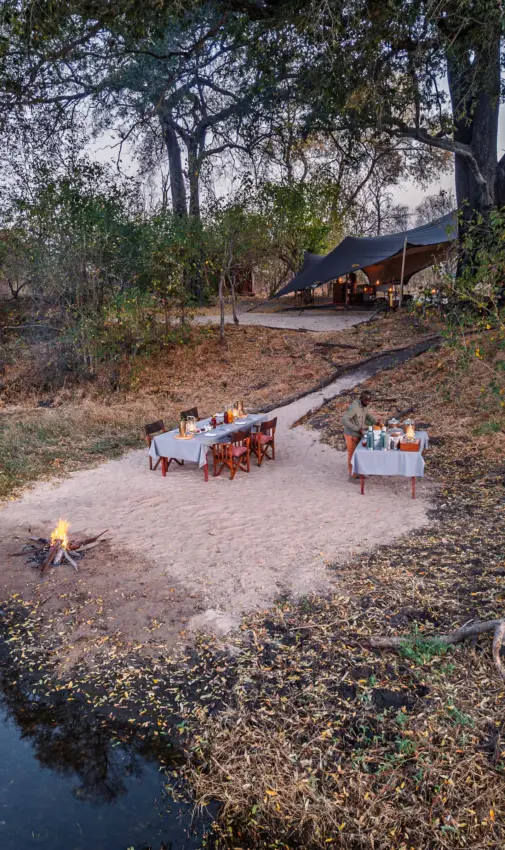
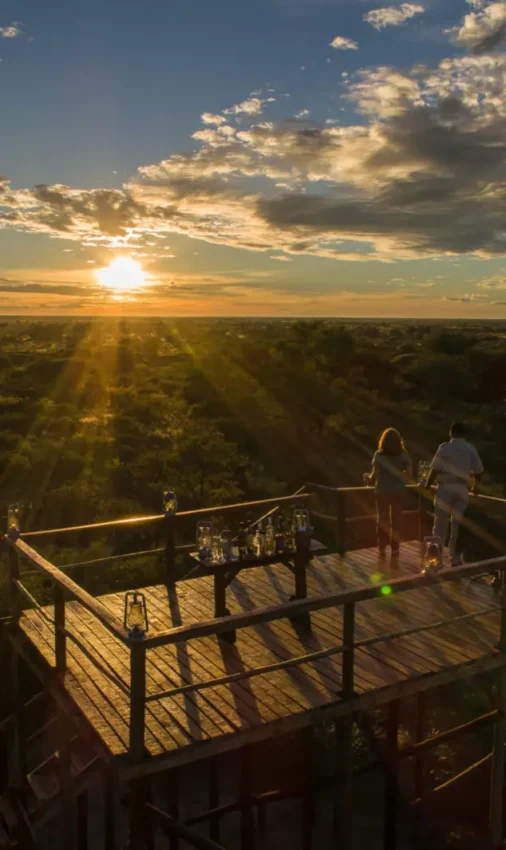
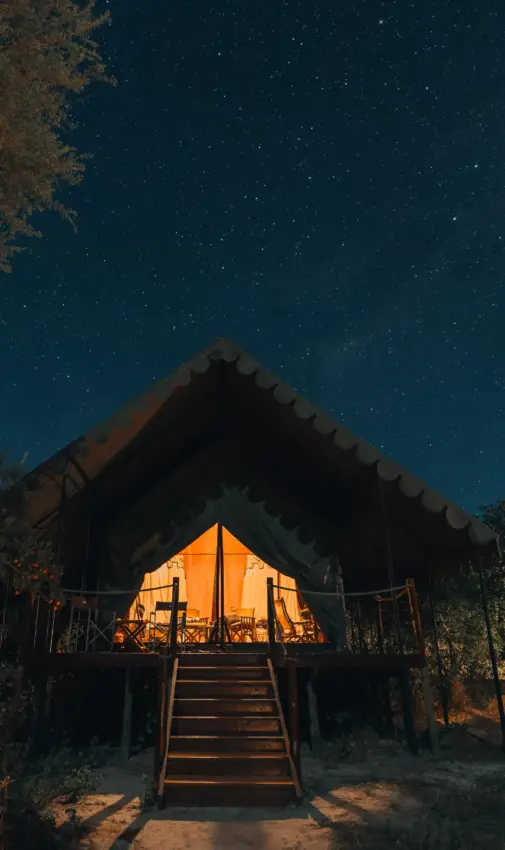
The main area opens to the floodplain, with lounge and dining as separate zones under thatch and the bar apart from both. Behind it, a gym holds cardio and resistance equipment, and treatments are given in the suites. The kitchen leans on local, seasonal produce and Botswana cooking, with themed dinners built around traditional dishes such as seswaa, pap and morogo. Suites are configured for two adults, and children from six years are welcome. Wifi reaches every suite, though the floodplain in front of them is the better distraction.
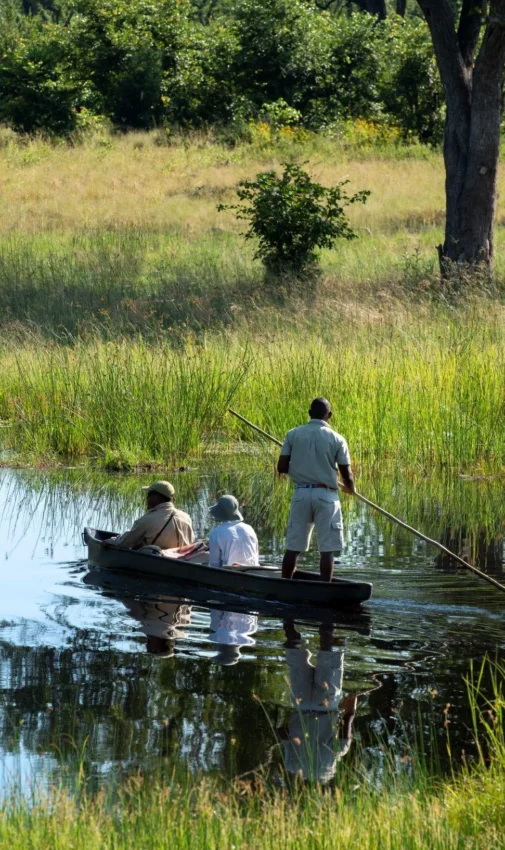
Poling out in a mokoro is quieter still, the pole knocking against the hull.
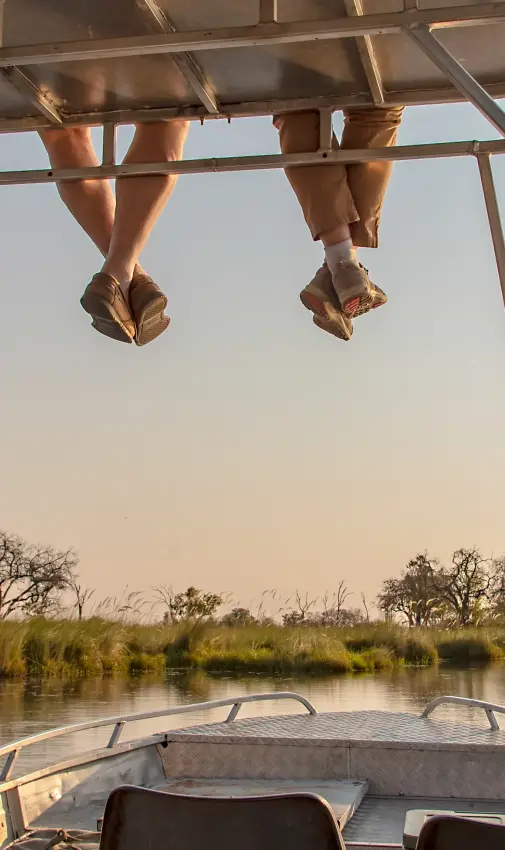
Walking safaris start early, before the floodplain heats up and the light goes flat. On foot the scale changes: tracks in the dust, a fig tree’s fallen fruit, the reason a lechwe chose one channel over another. Poling out in a mokoro is quieter still, the pole knocking against the hull. Reed heads come to eye level, and hippos grunt somewhere out of sight. Night drives with a spotlight pick up what daylight hides, hyenas working the tree line among them. Catch-and-release fishing for tigerfish and bream fills the middle of the day when the water allows.
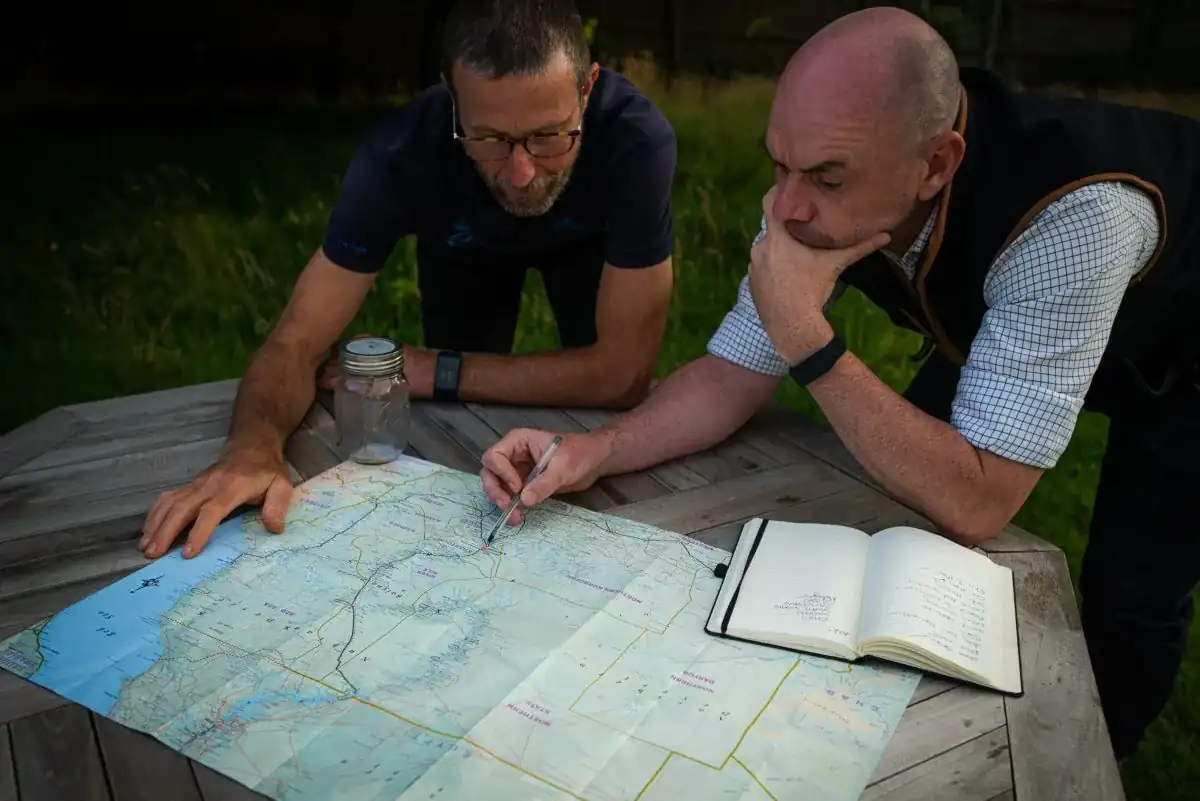
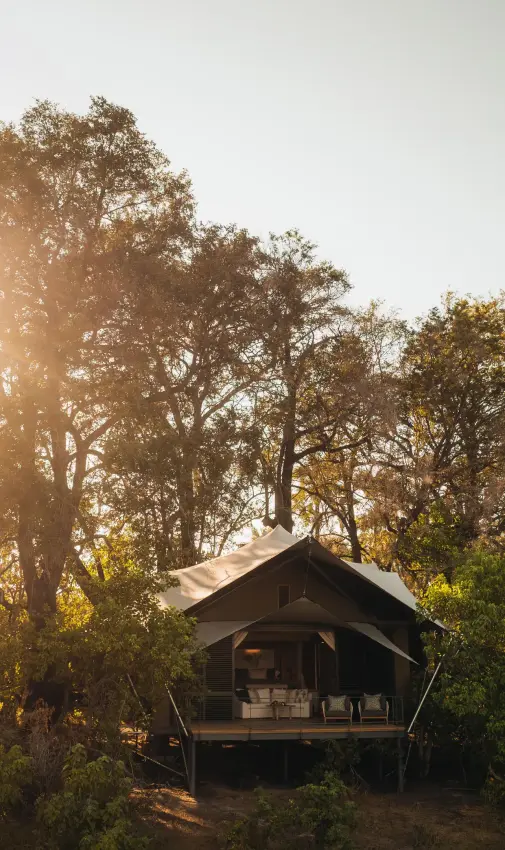
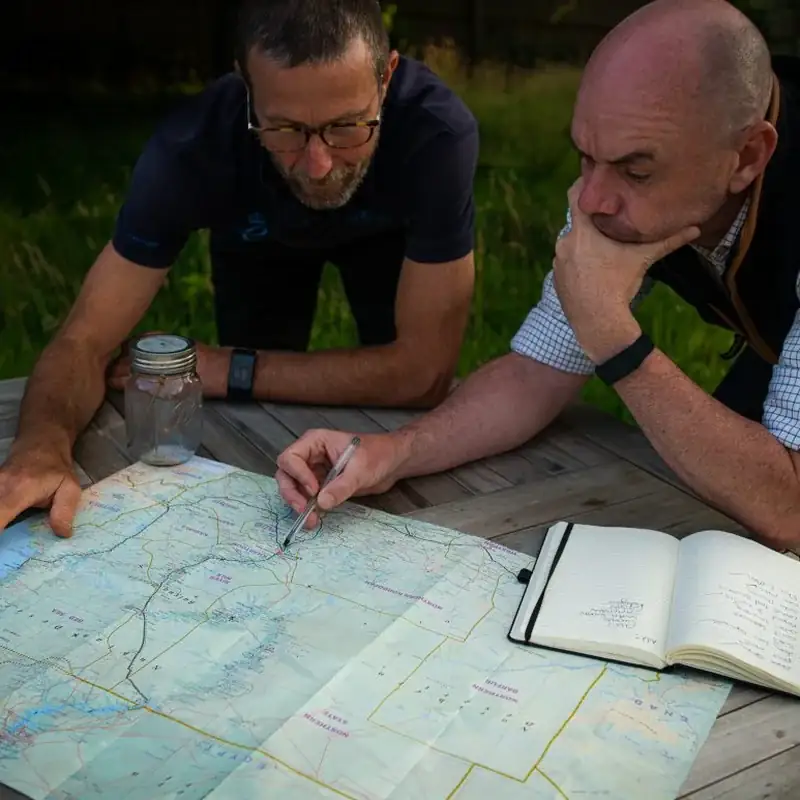
The guiding line behind the camp reaches back to 1945, when Donald Ker and Syd Downey set up in Kenya. Harry Selby joined them as a director in 1962, and the safaris moved south into Botswana in the decades that followed. Kanana, the sister camp on the same stretch of the Xudum, opened in 2000. What that history amounts to on the ground is four suites in an old ebony forest with a concession largely to themselves. Support in the Ngamiland district goes to Bana Ba Letsatsi in Maun, which works with orphaned and at-risk young people, and to the Travel for Impact trust.