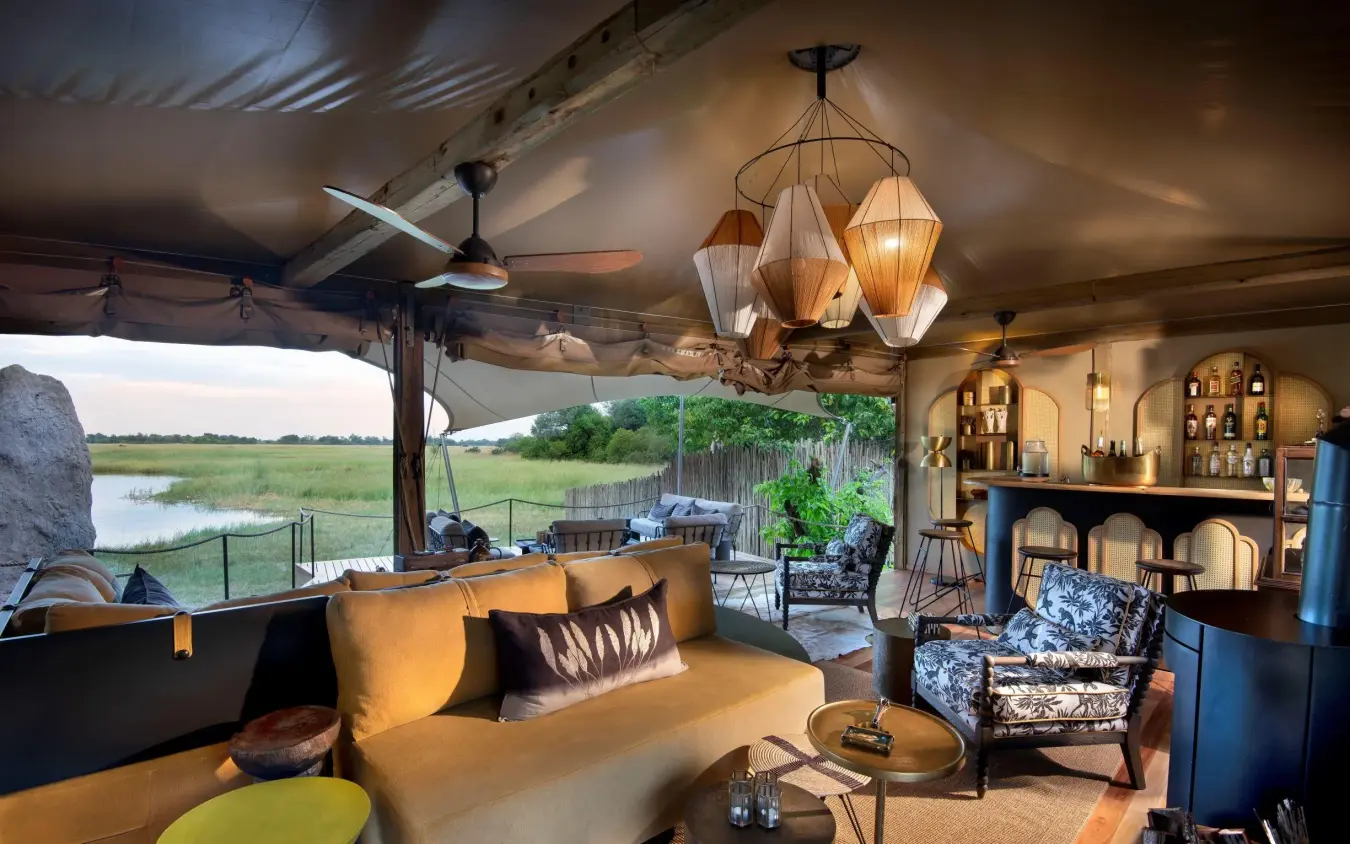
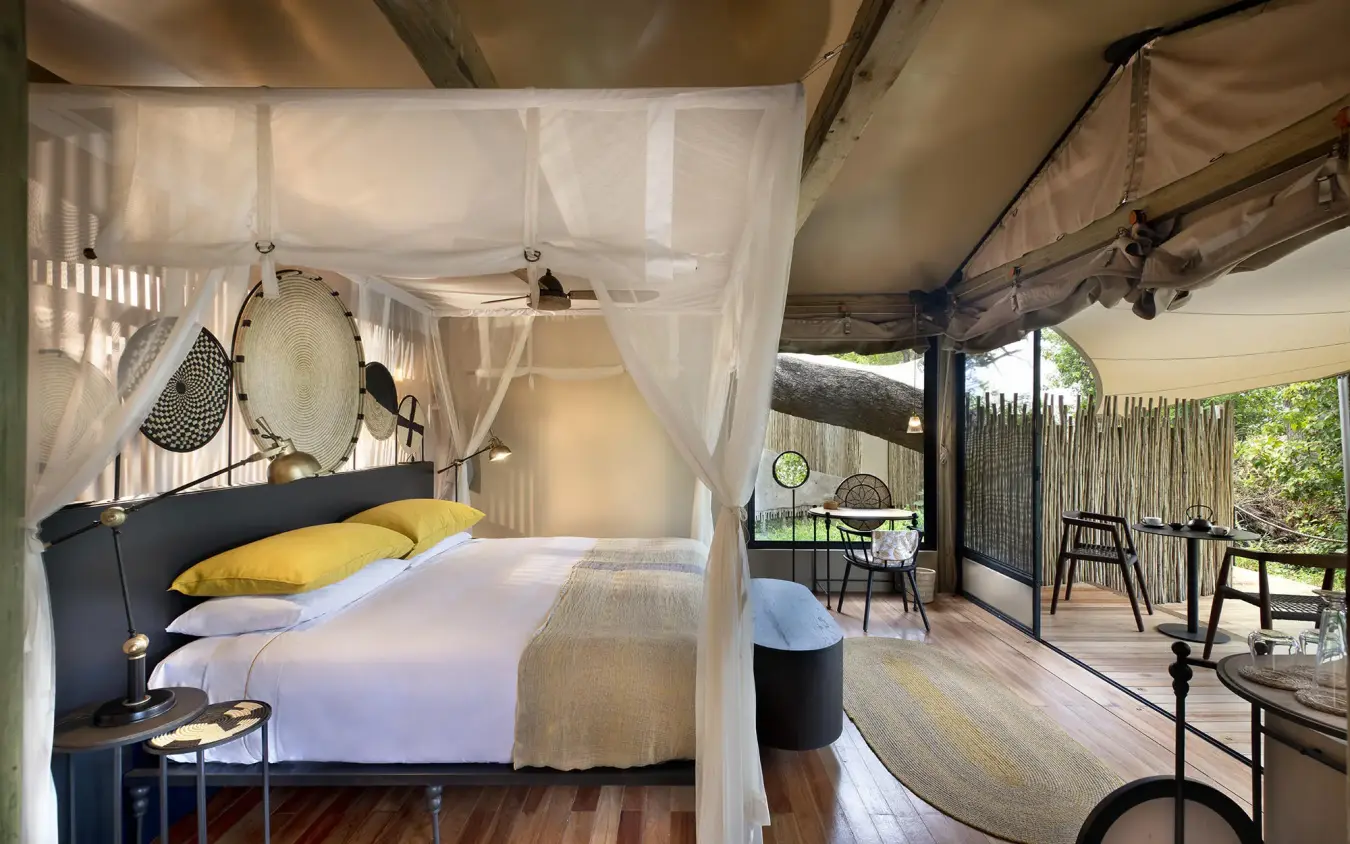
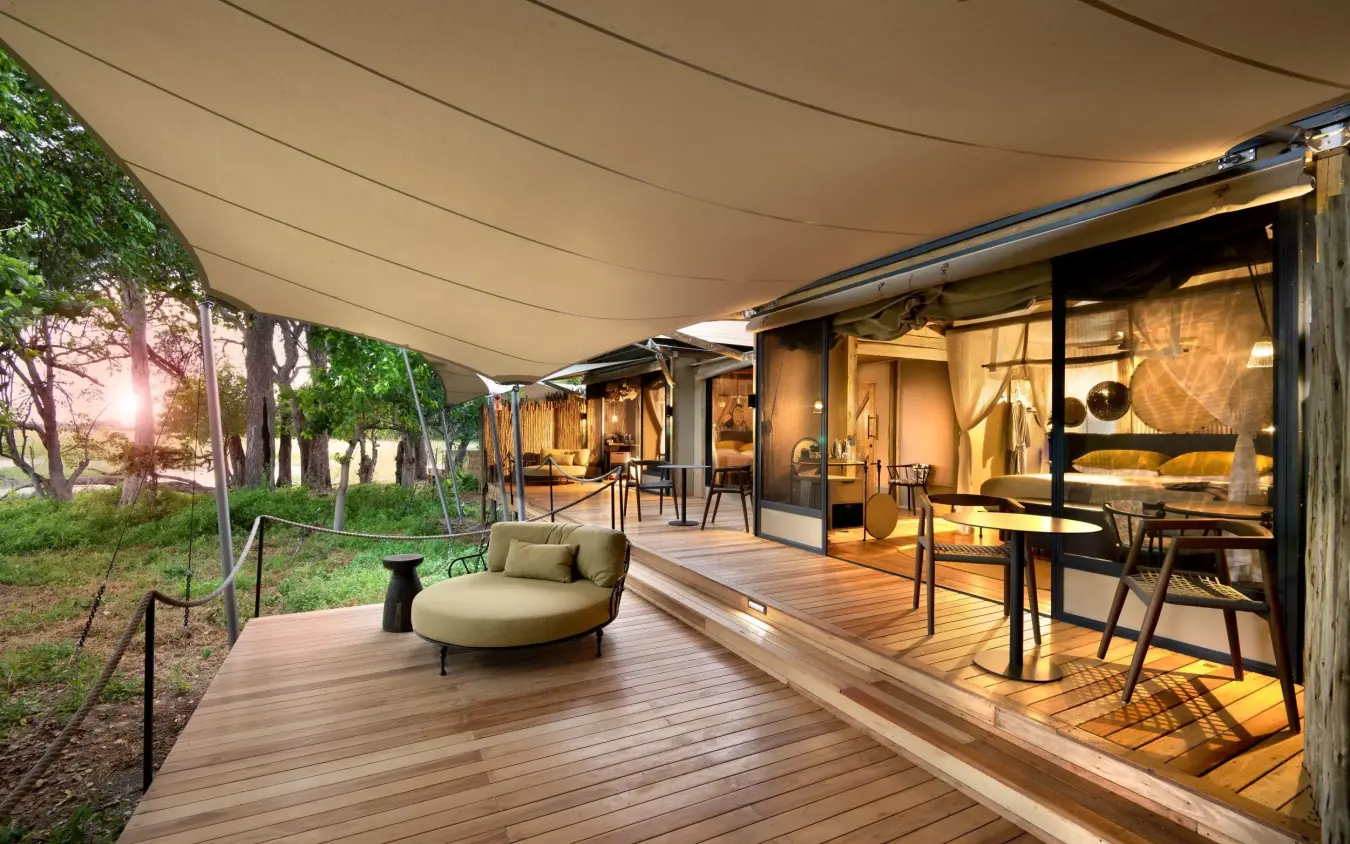
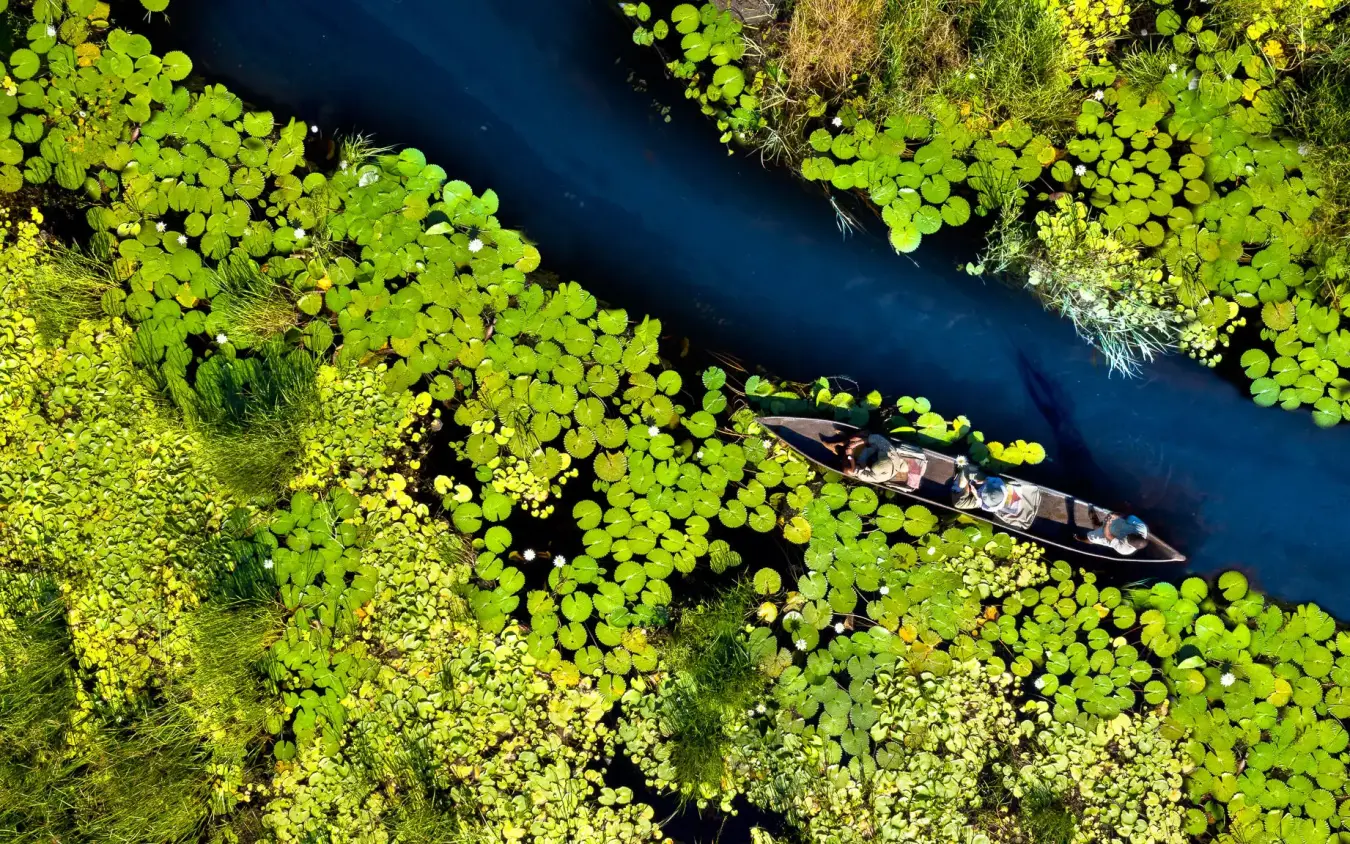
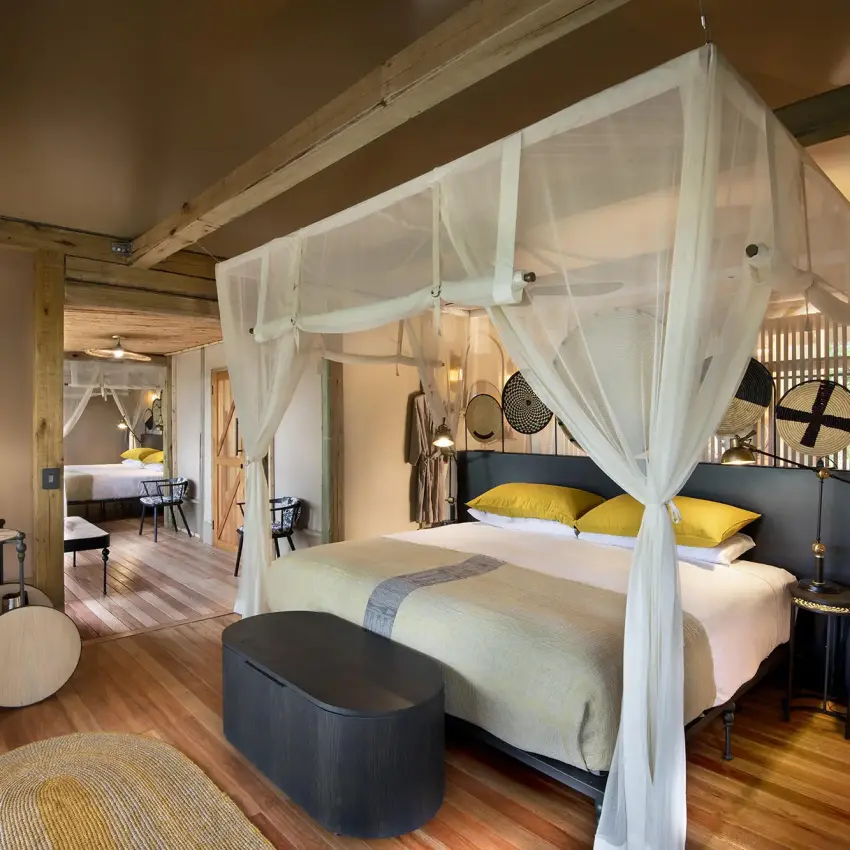
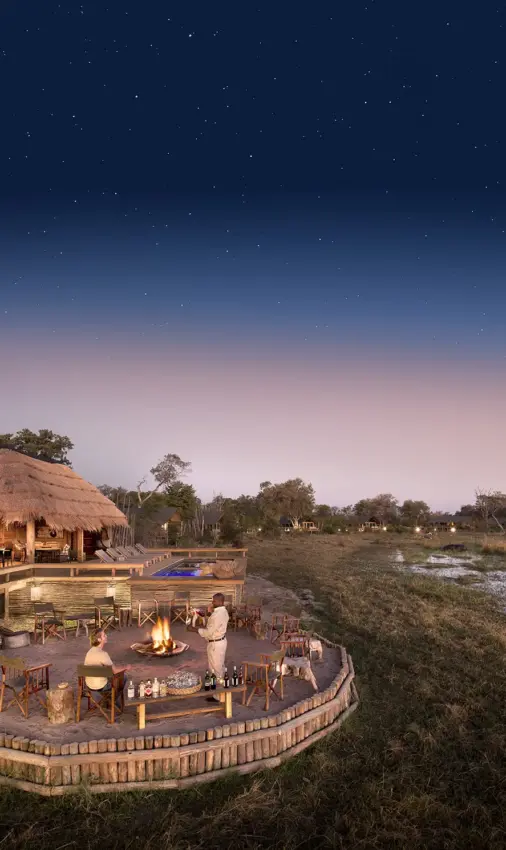
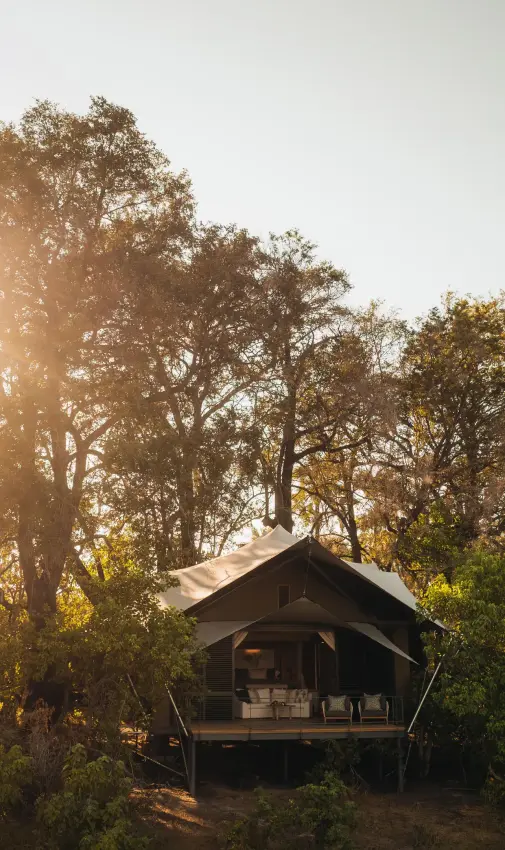
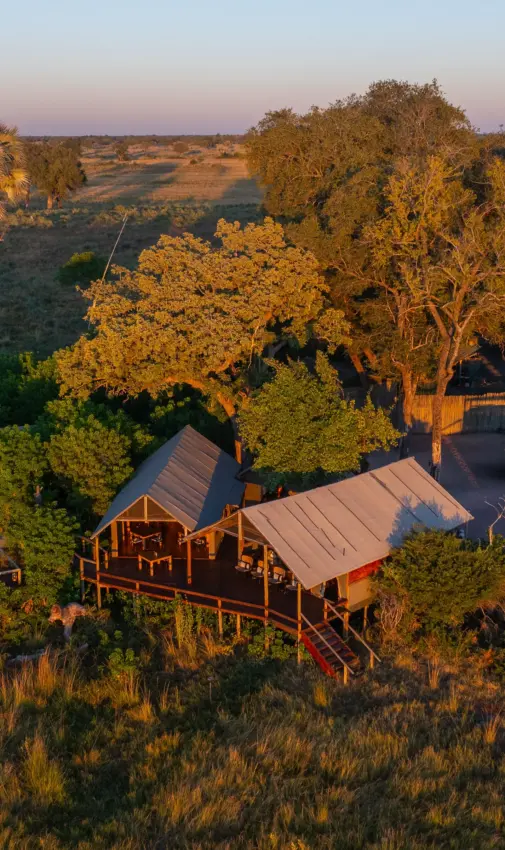
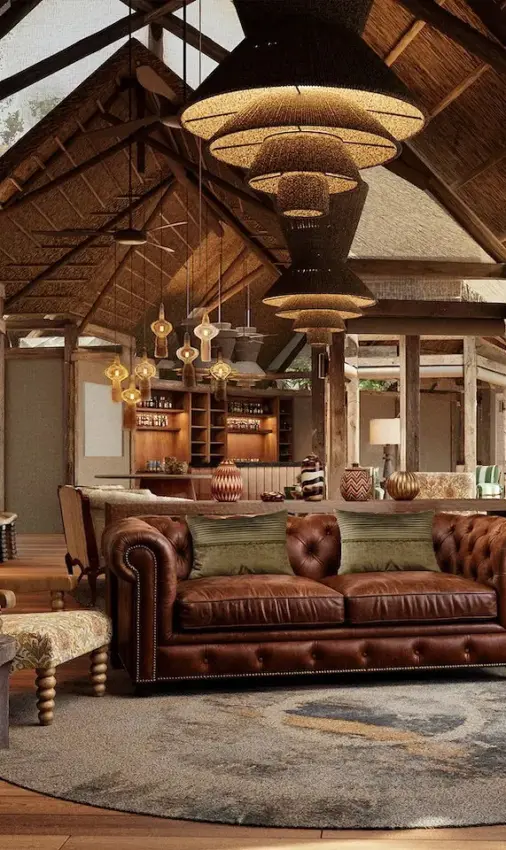
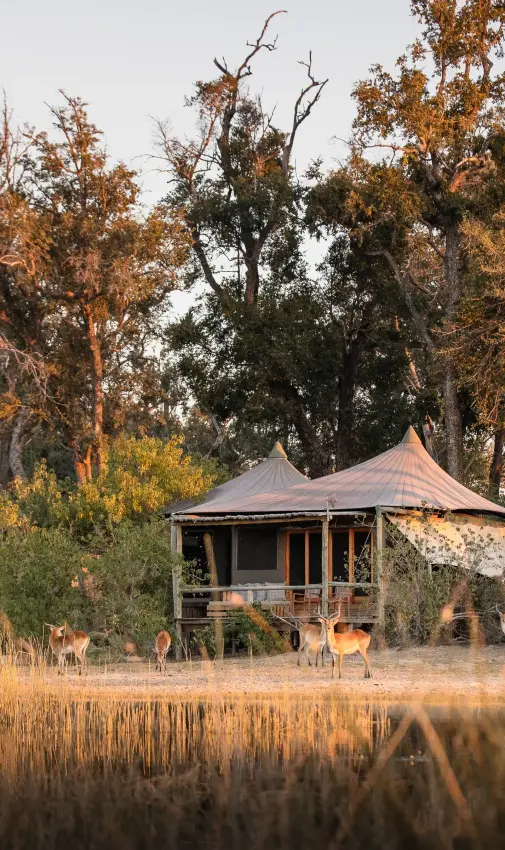
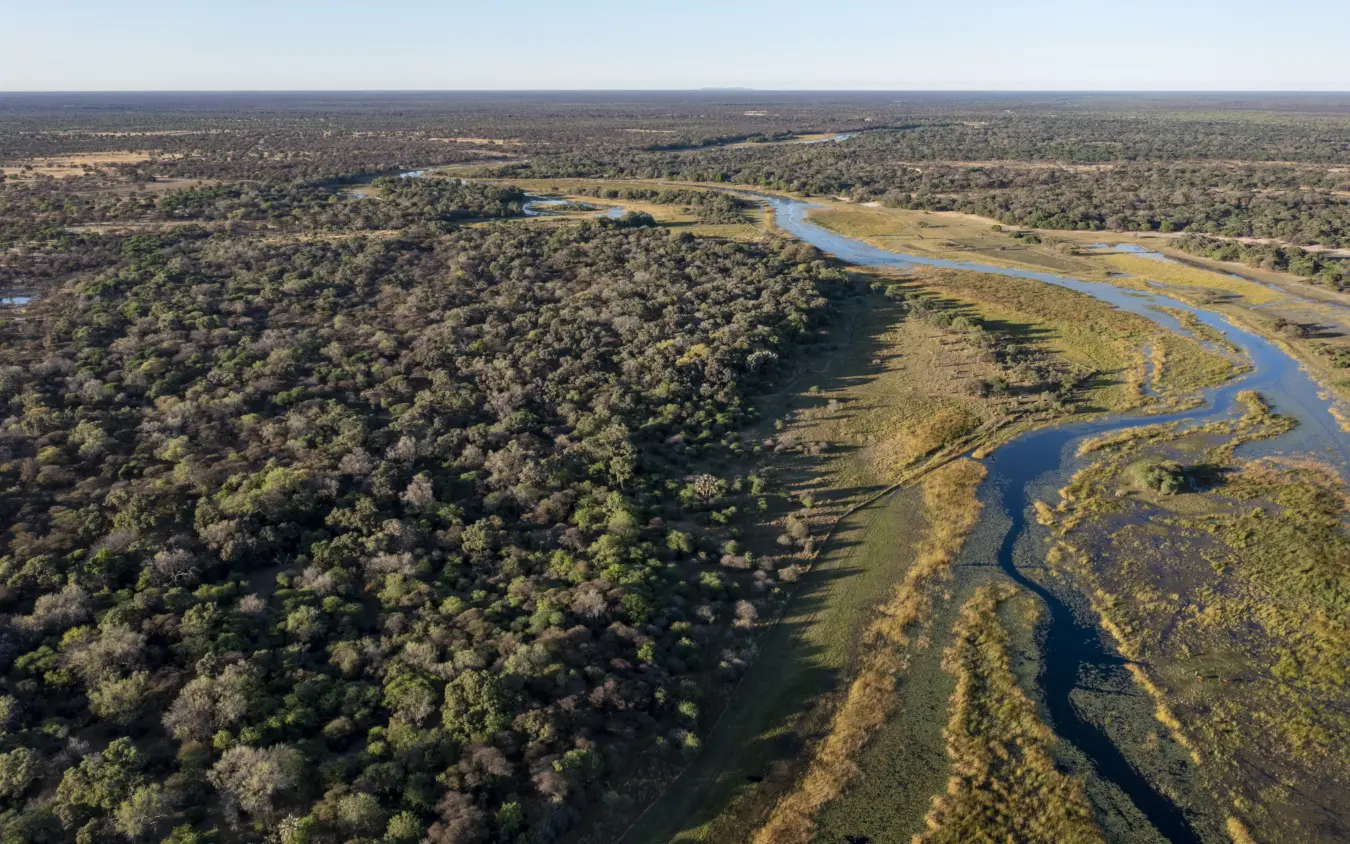
The look of the camp, the work of the South African firm Fox Browne Creative, is a contemporary take on classic safari canvas with no brick and mortar in sight. Honey tones run through the palette, lifted by mustard accents drawn from the Delta’s own water lilies, and local craft threads through the spaces, woven baskets appearing overhead in the chandeliers and behind you as headboards, set alongside beaded detail, natural timber and stone. The tents rest on raised wooden decks, each with a broad view over lagoon and river. Evenings settle around the fire pit, with a gin and tonic and the sound of hippos in the channel.
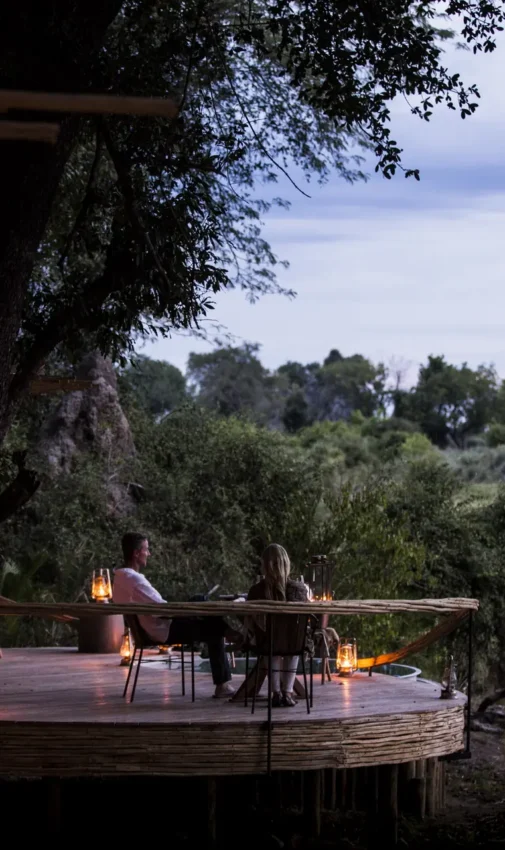
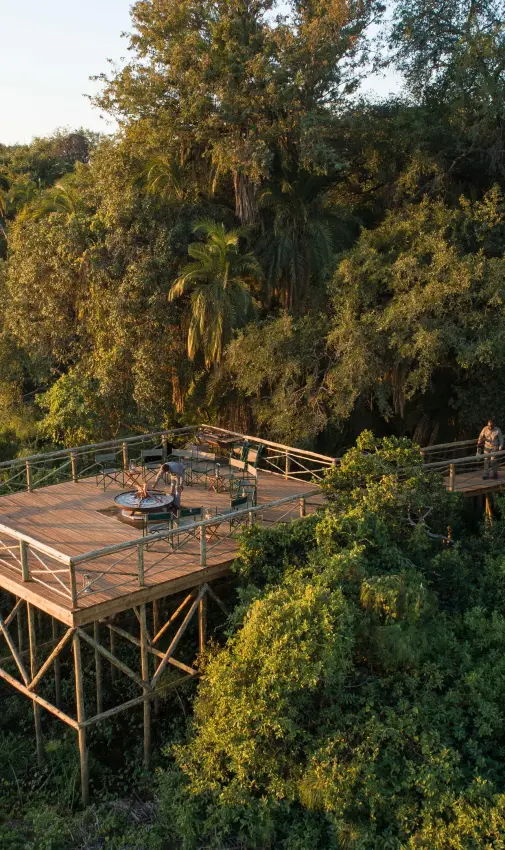
At the heart of it all, an open-plan lounge, bar and dining space face the water, set beside a swimming pool and a viewing deck built out over the river. Meals move indoors or onto the deck beneath the leadwood and sycamore canopy, a continental breakfast before the morning drive, a fuller brunch on return, and dinner served with a wine presentation as the light goes. Families are made especially welcome, the two-bedroom family tent giving interconnecting rooms and space to spread out.
The tents rest on raised wooden decks, each with a broad view over lagoon and river.
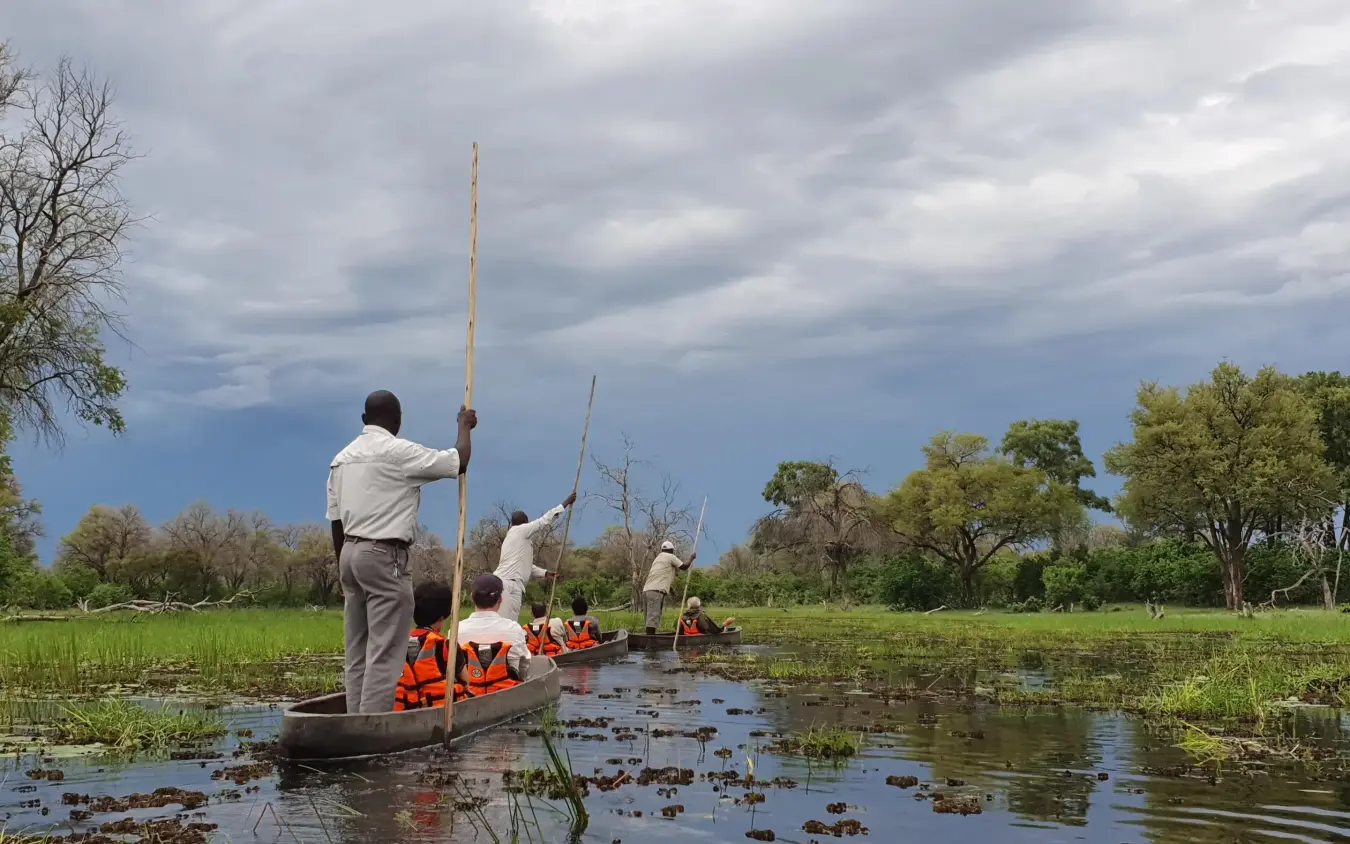
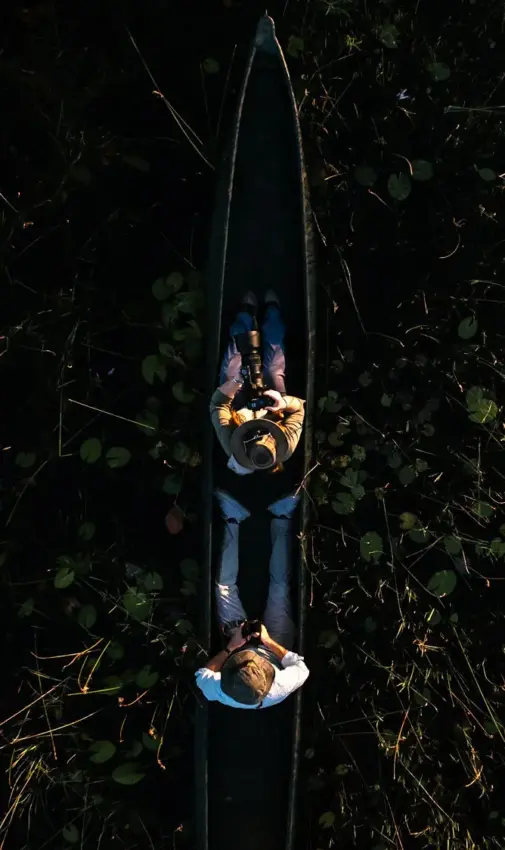
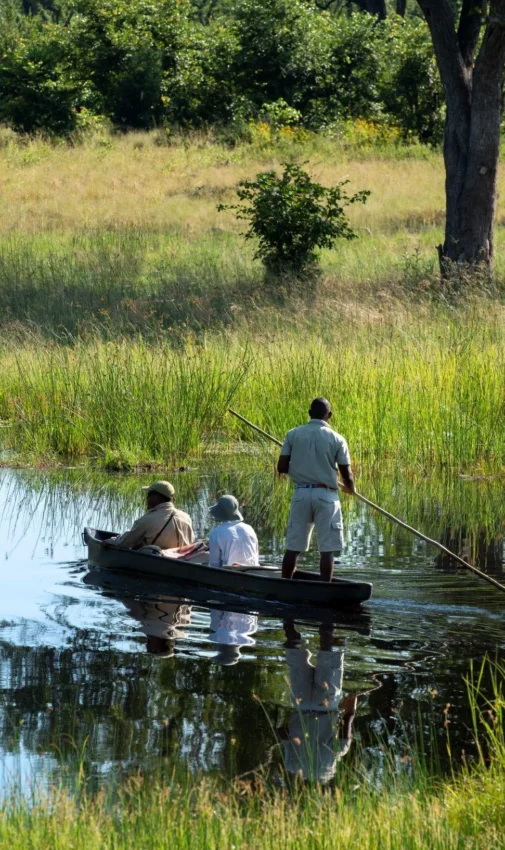
Younger guests have the Ngwana Club, where nature-based activities run from cooking lessons and arts and crafts to short walks around camp, and children of all ages are welcome. Walking safaris and mokoro excursions, though, are kept to guests aged sixteen and over, a limit set by the water and the walking rather than the camp. Seven tents make up the whole: five luxury tented suites, one honeymoon suite with a free-standing bath on its private deck, and the family suite, each with an en-suite bathroom, indoor and outdoor showers, and a private veranda.
Behind all this stands Khwai village, whose Khwai Development Trust manages the concession on its behalf and takes a share of the tourism revenue from camps like this one straight back home. That money funds housing for the elderly, stipends for pensioners and support for local entrepreneurs. Members of the community work in the camp directly, and its wider foundation has backed the local kindergarten with a new kitchen, a renovated classroom and solar power, the same source that in turn supplies most of the camp’s own energy.