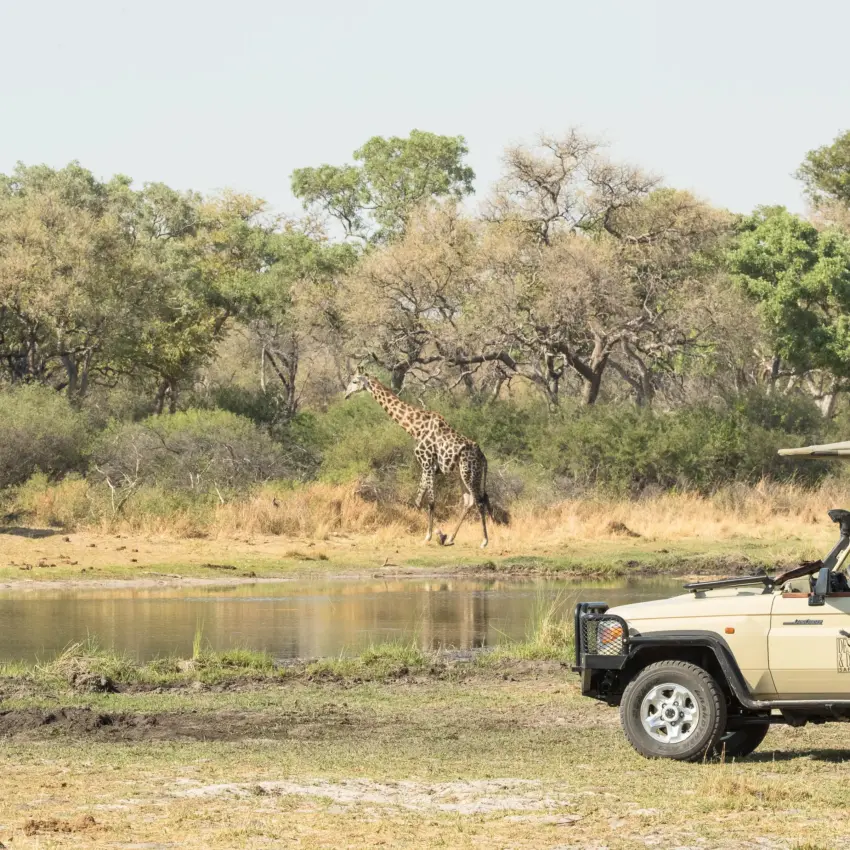
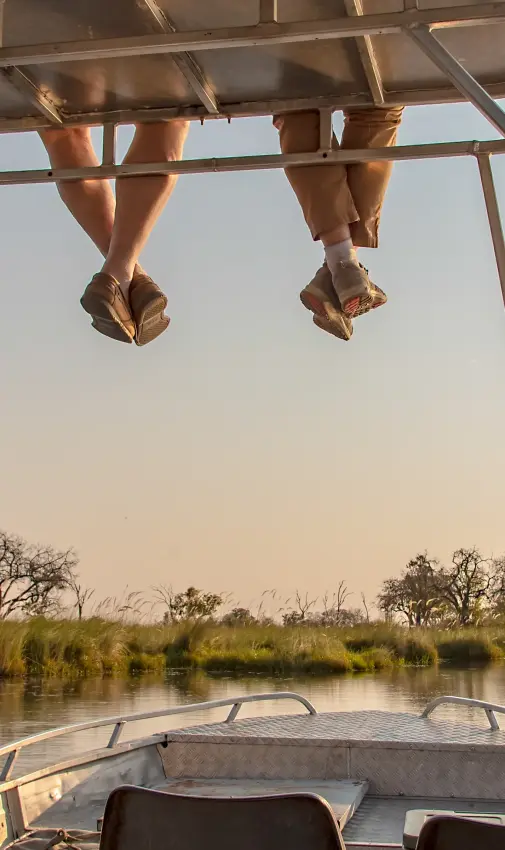
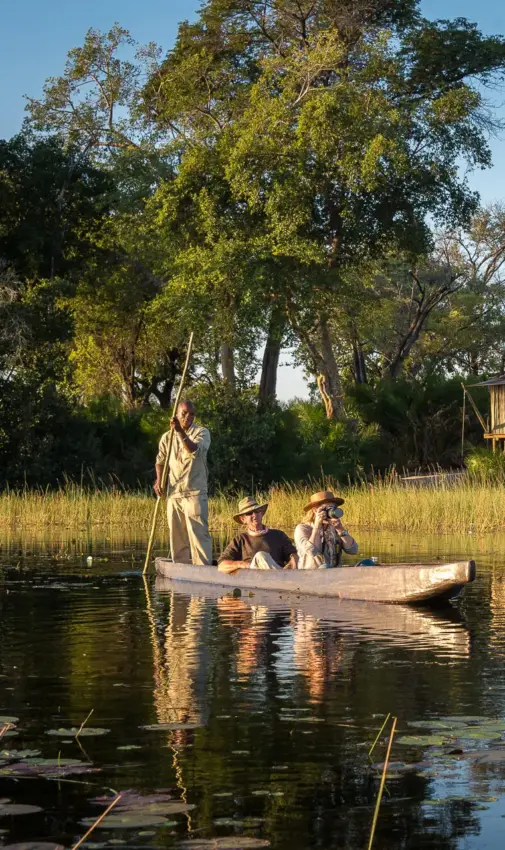
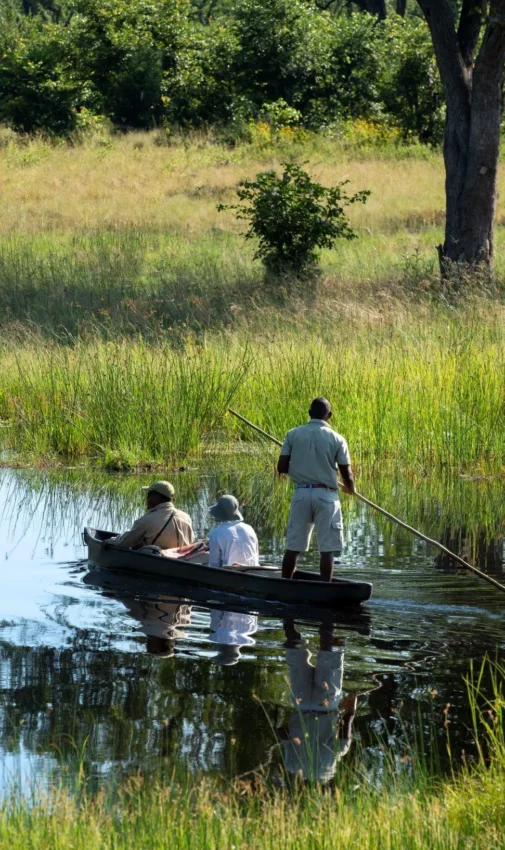
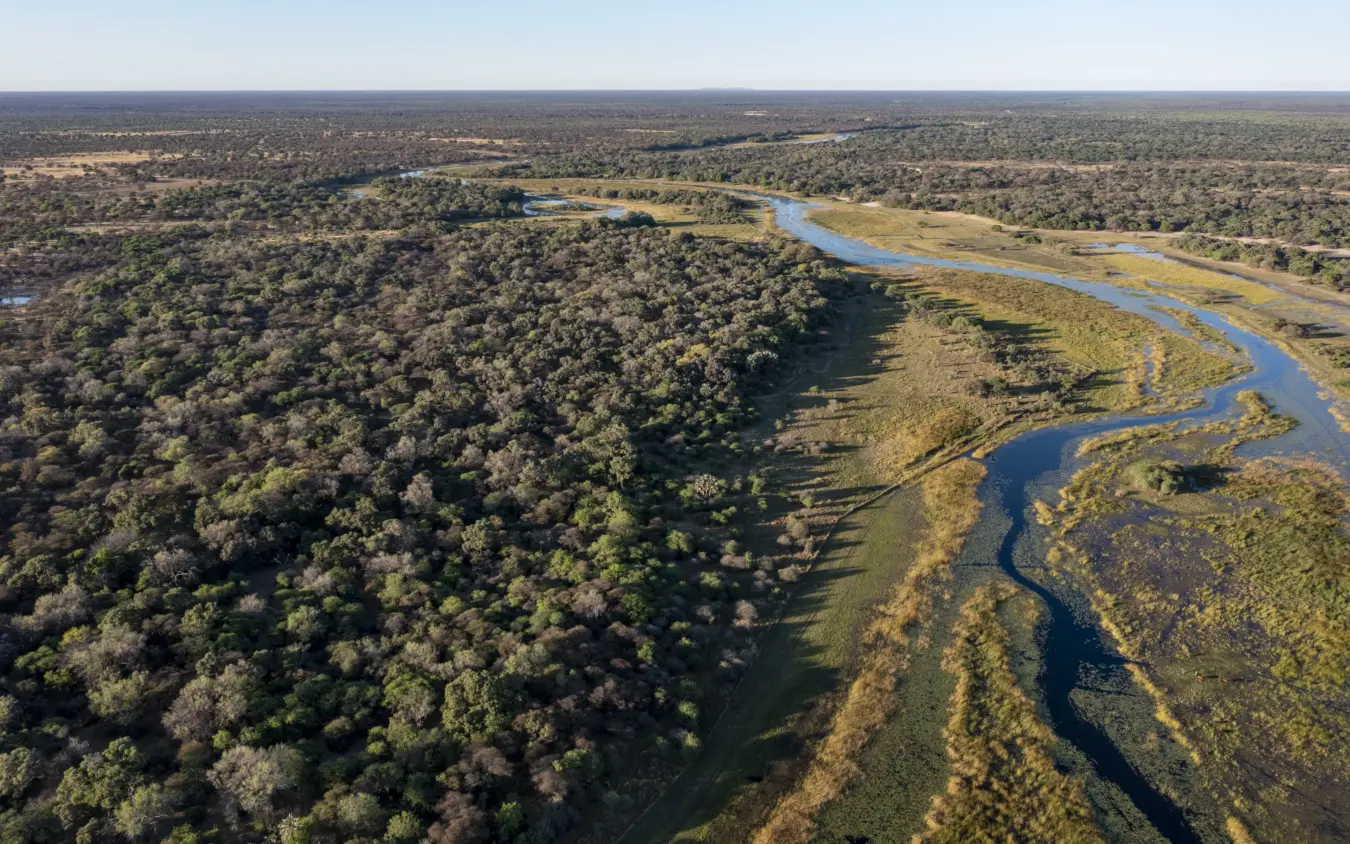
Moremi Game Reserve was proclaimed in 1963 and takes its name from Chief Moremi III of the Batawana. Under its rules the drives run in daylight and keep to the tracks, and there are no night drives or guided walks. What the reserve gives back is variety, and all of it within easy reach of camp. Around Xakanaxa, mopane woodland, open grassland, seasonal floodplain and riverine channels lie close together, so a single morning can move from leopards in the mopane to the reed margins of the lagoon.
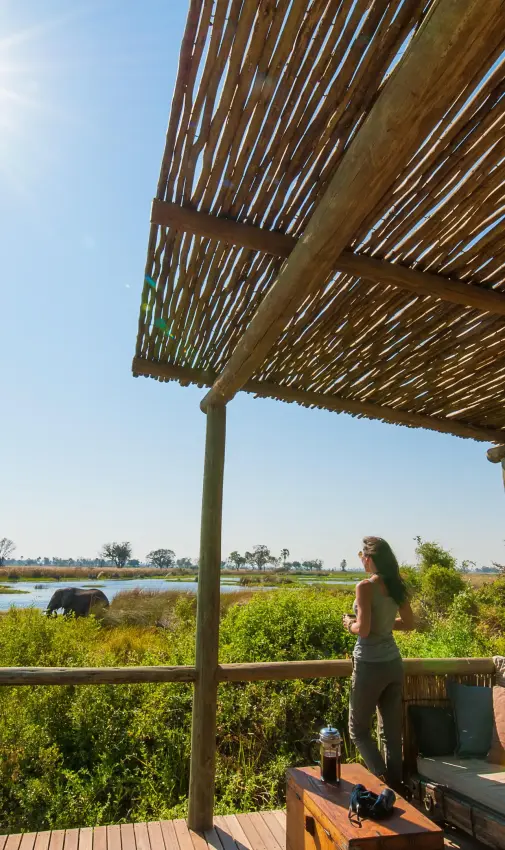
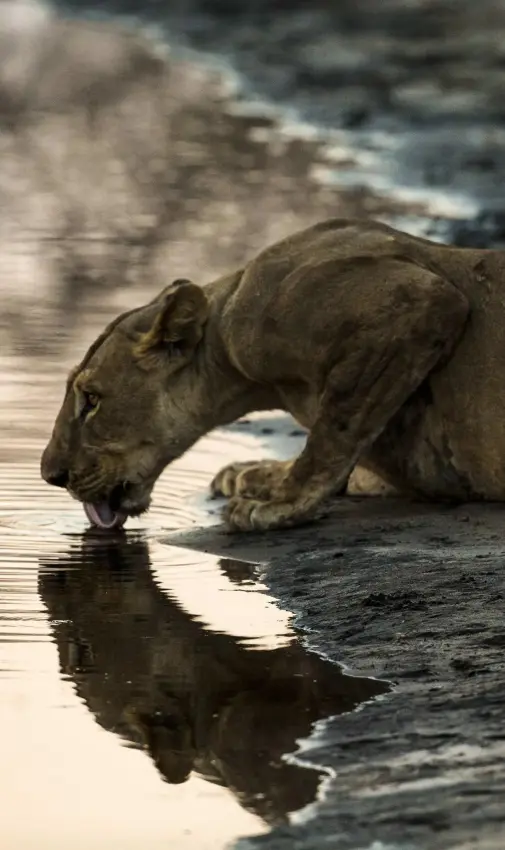
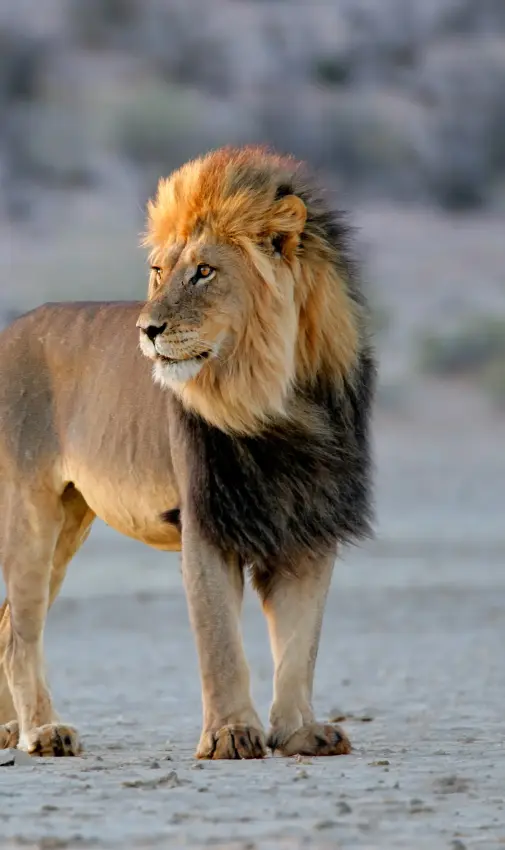
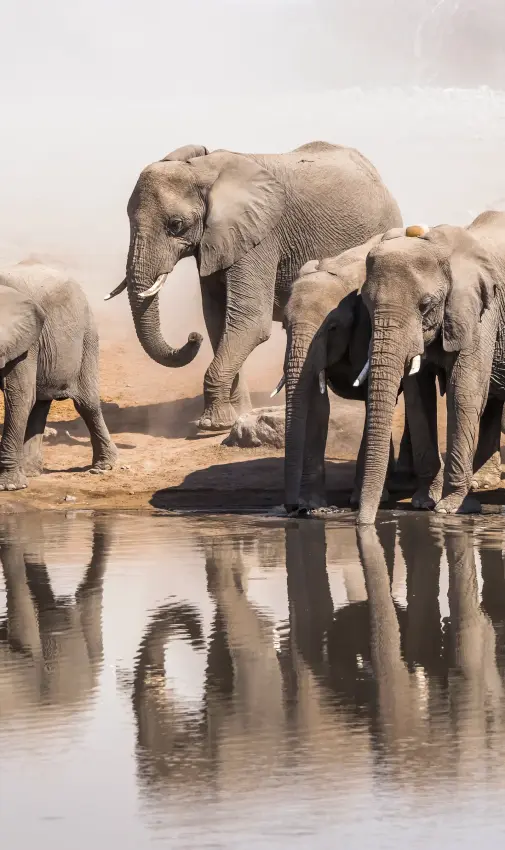
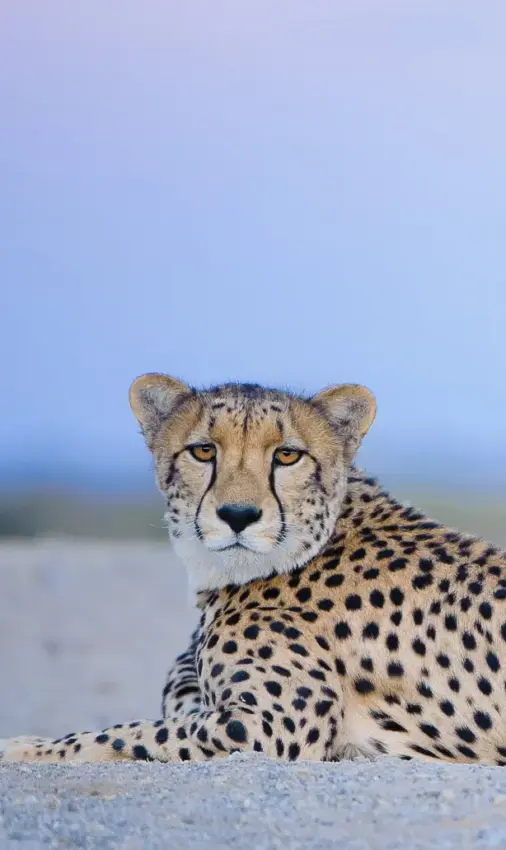
Wild dogs are reported regularly around Xakanaxa, and cheetahs work the open grassland where the mopane gives way. Lions lie flat in the long grass, so still they are hard to pick out until they move. Impala and kudu feed along the woodland edges, and waterbuck down by the water. In the dry season, between May and October, elephants and buffalo come in to the permanent water of the lagoon and its channels, zebra with them, and the drives follow them there. Out on the deeper channels, sitatunga and lechwe keep to the papyrus beds.
Lions lie flat in the long grass, so still they are hard to pick out until they move.
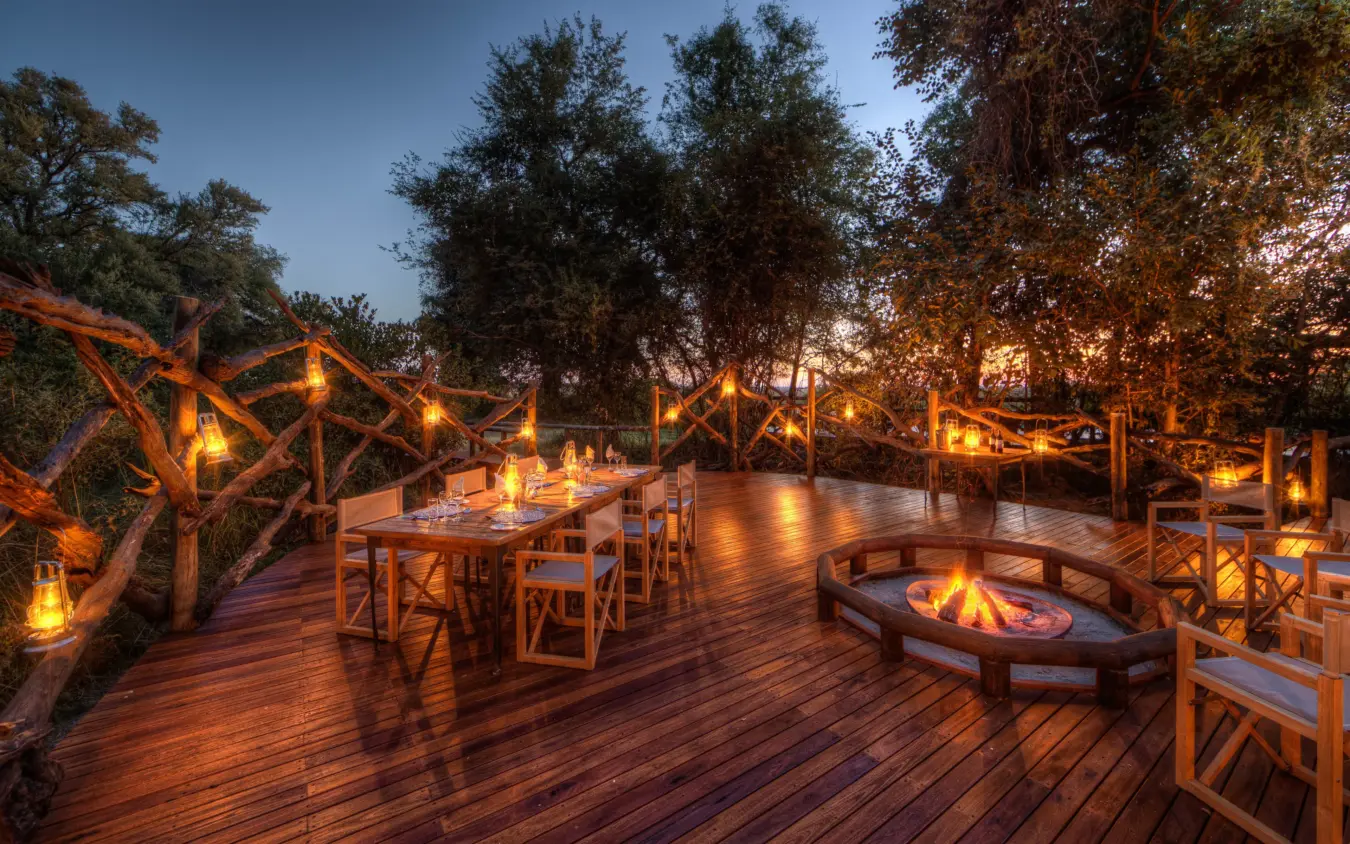
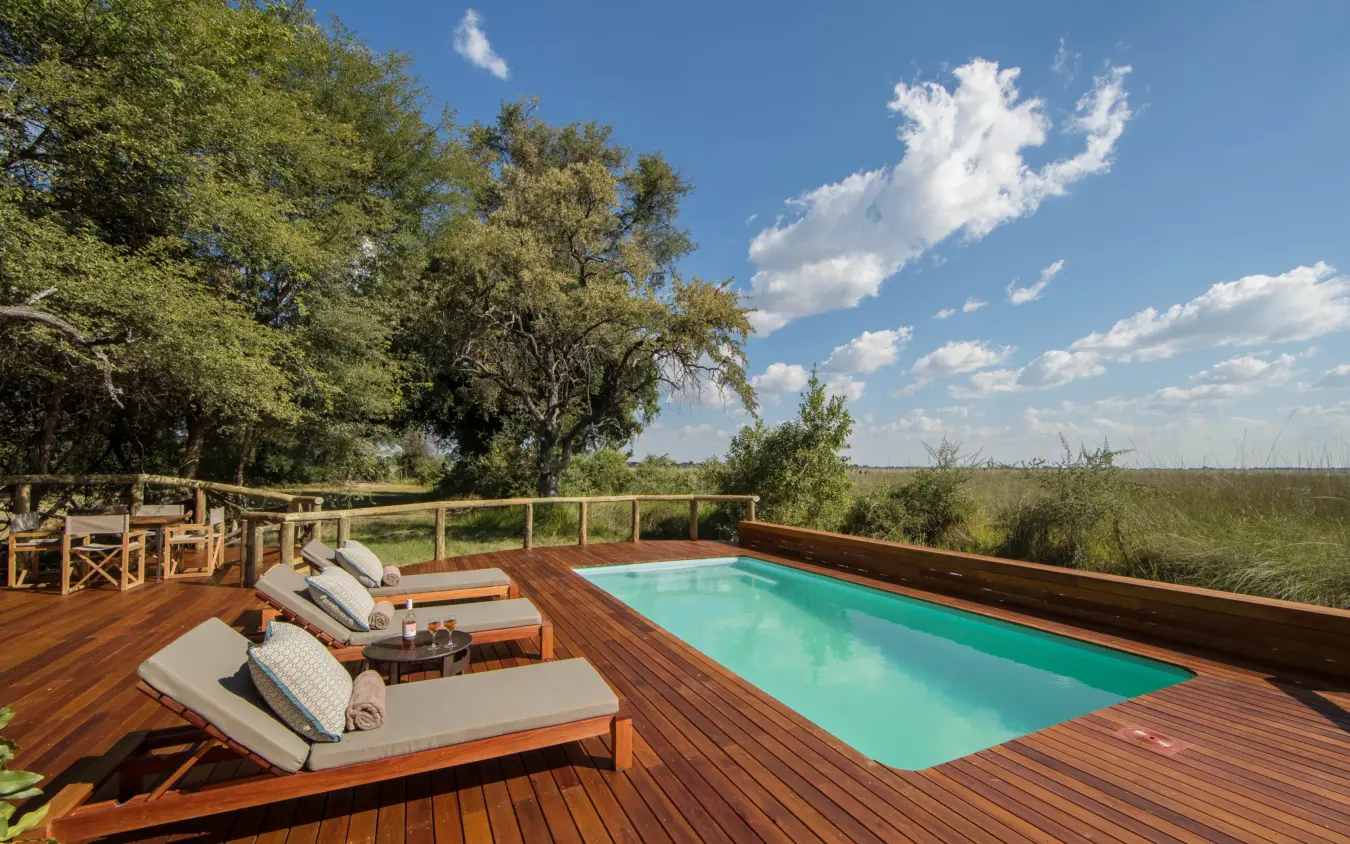
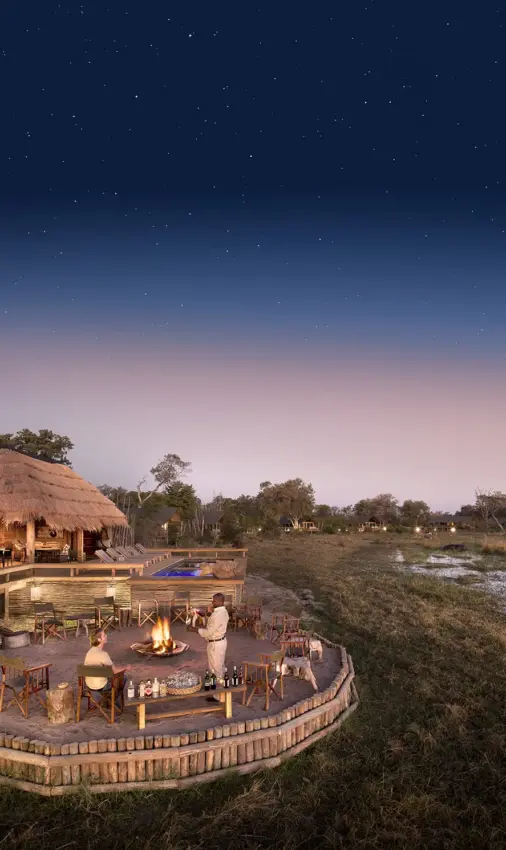
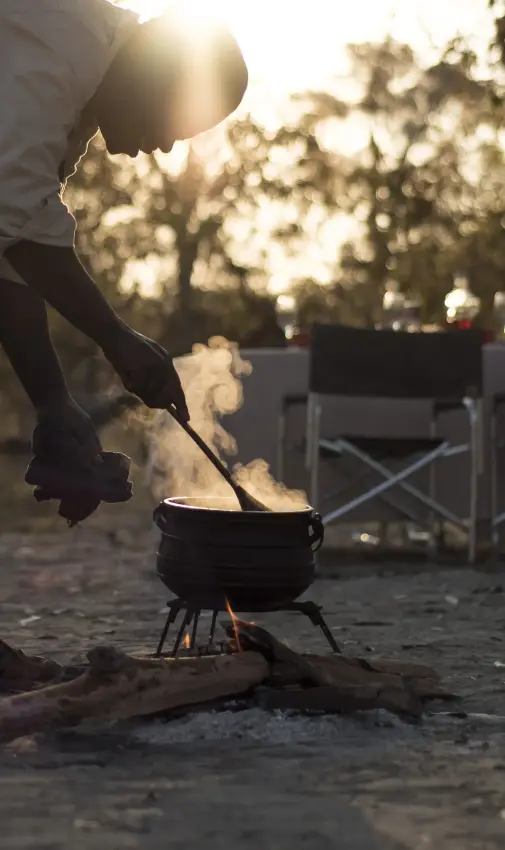
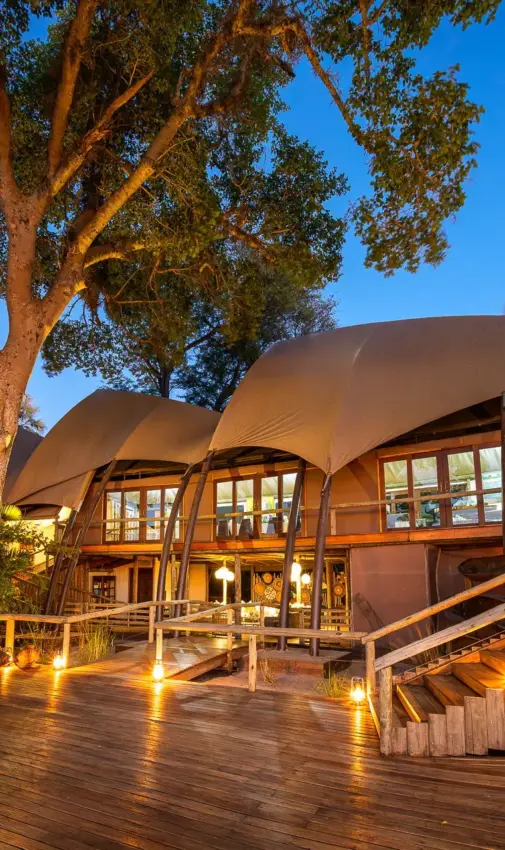
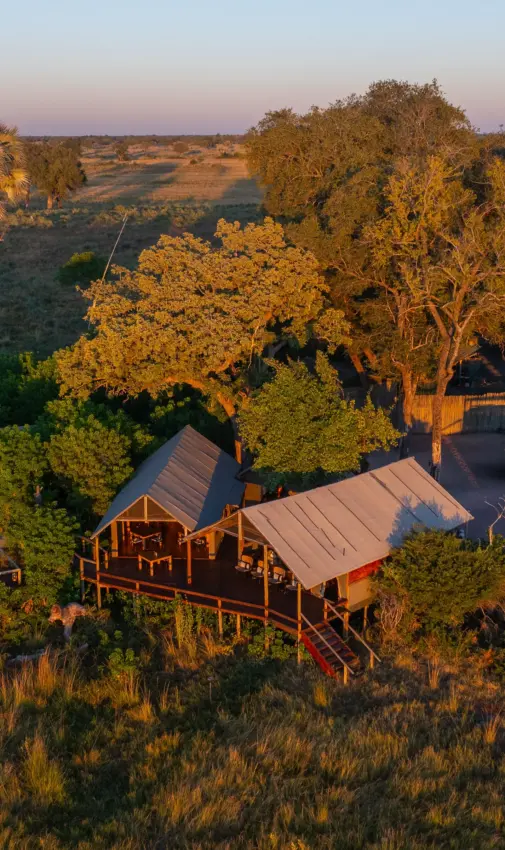
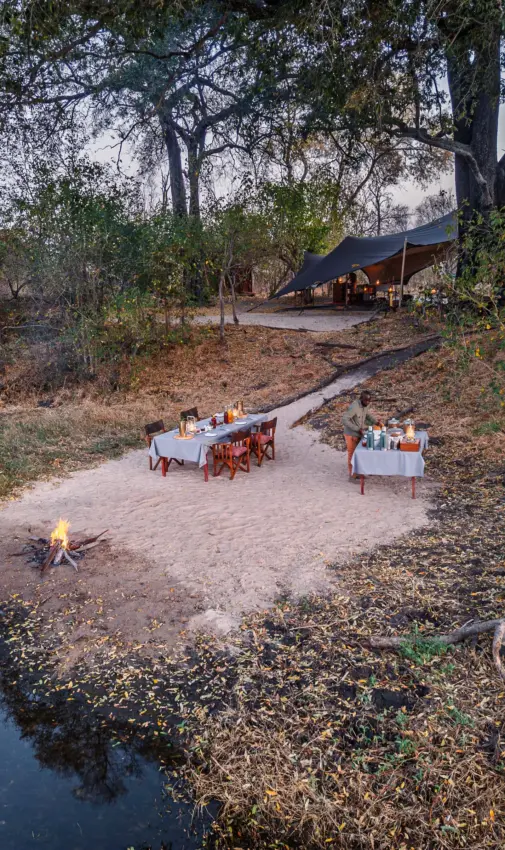
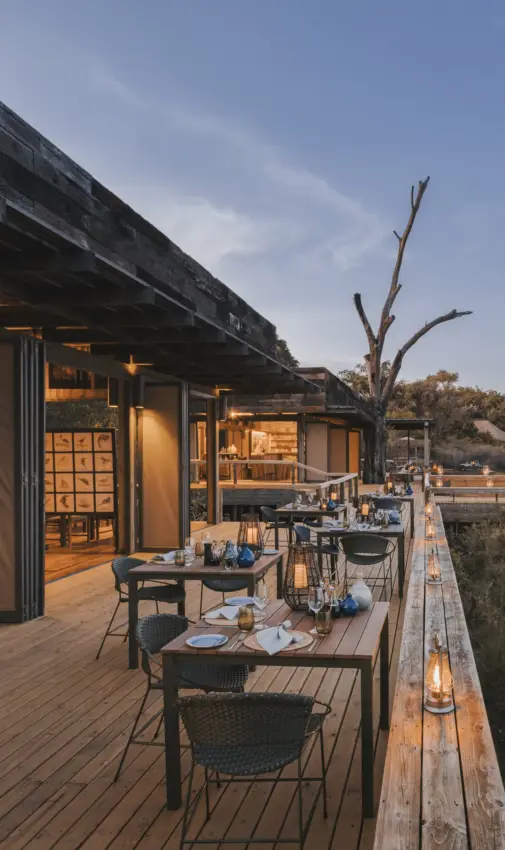
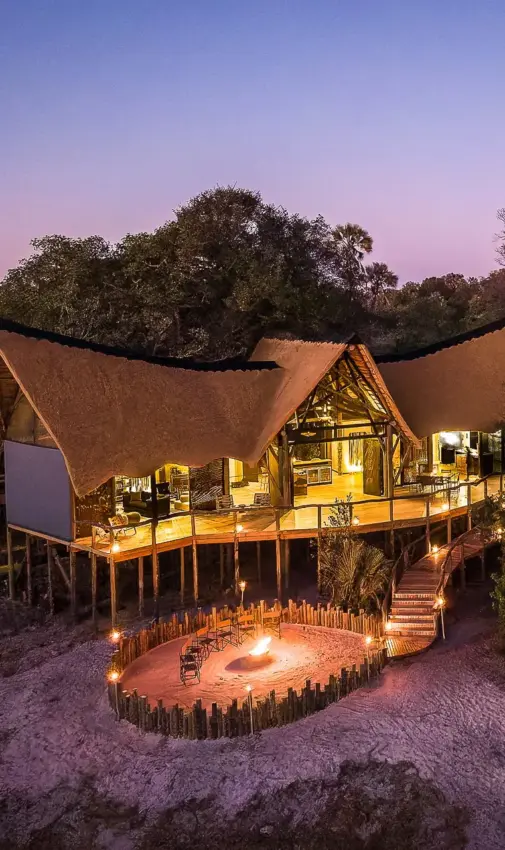
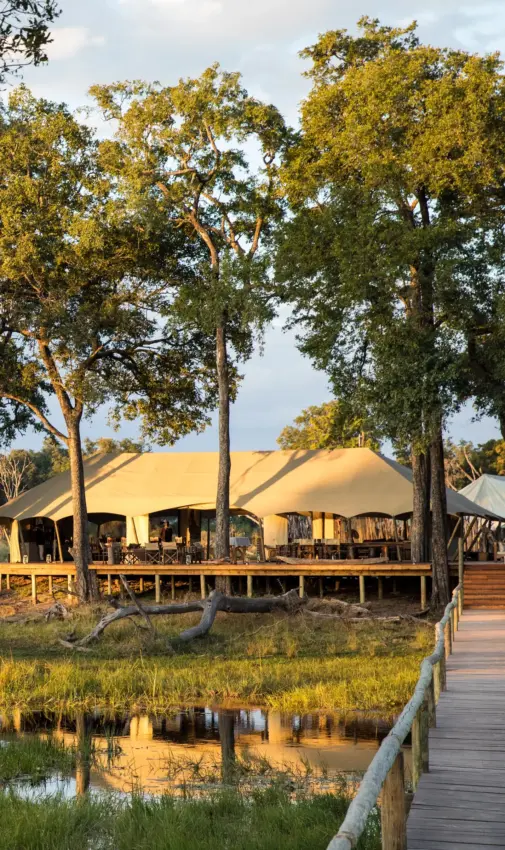
Meals are served in the open-air boma or the elevated dining area, and afternoon tea comes before the boats or 4x4s go out again. In the hours between, raised boardwalks link the bar to the lounge and library and out to the pool. The bar is self-service and fully stocked. After dinner the evening gathers on the open fire deck at the front of camp. Once the generator goes off at night, the tents run on 12-volt lighting, soft enough that the boardwalks fade into the dark beneath the ebonies.
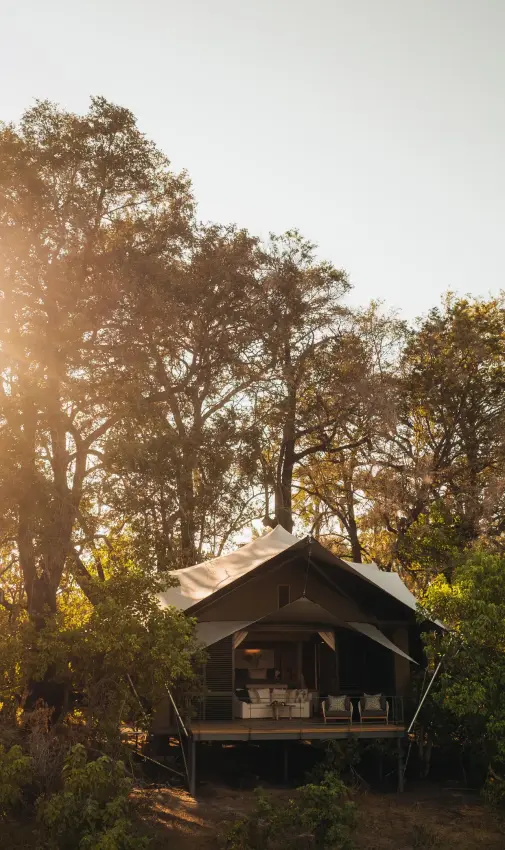
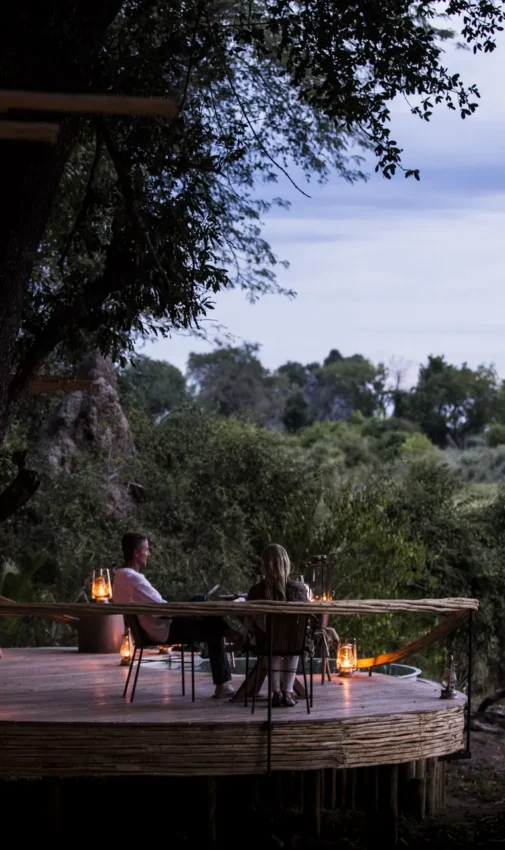
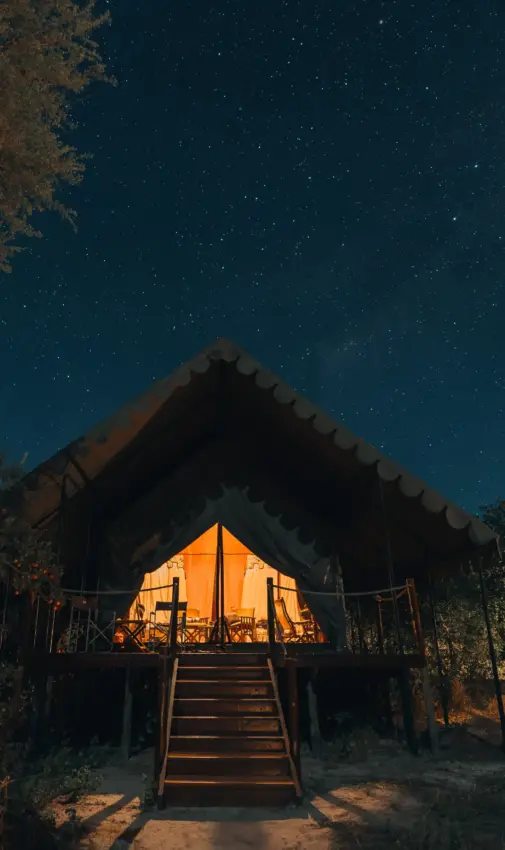
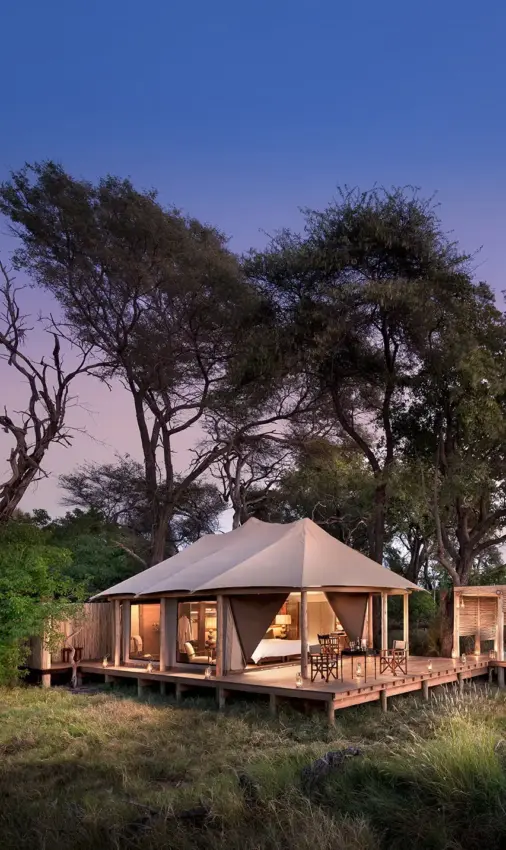
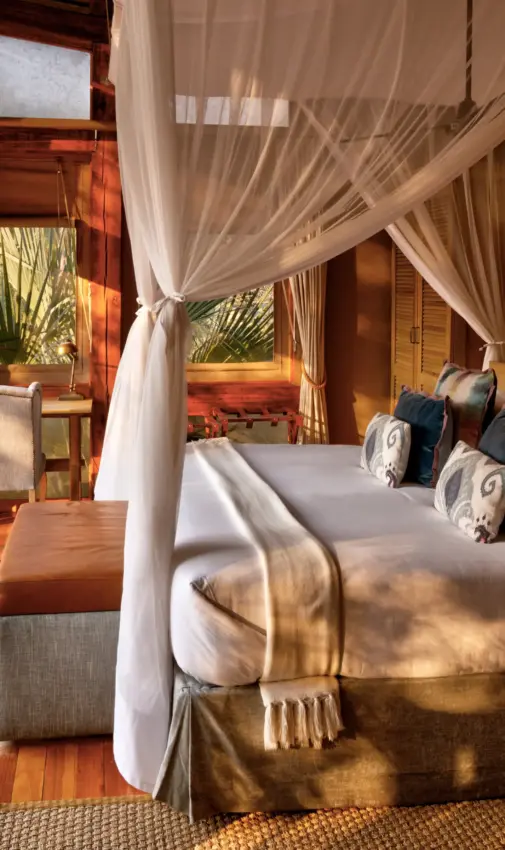
Neil’s first camp was Camp Okavango. It went up on Nxaragha Island in 1980, and when she built Camp Moremi two years later, she ran the two as a pair. They still fit together, with Camp Okavango’s days built around the water and Camp Moremi adding big game on land to its own lagoon trips. Children aged six and over are welcome here. The family tent has two en-suite bedrooms joined by interleading doors, keeping parents and children under one roof. Like every tent, it is raised on a timber platform, with a private deck over the reserve.