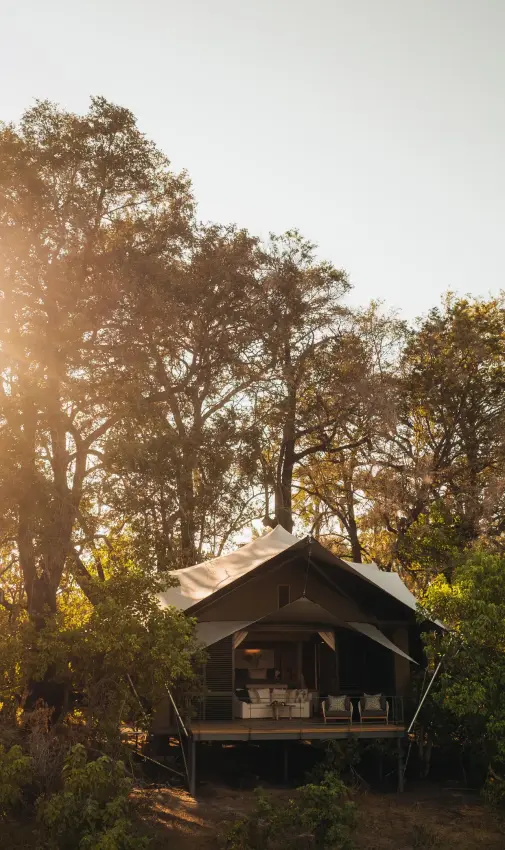
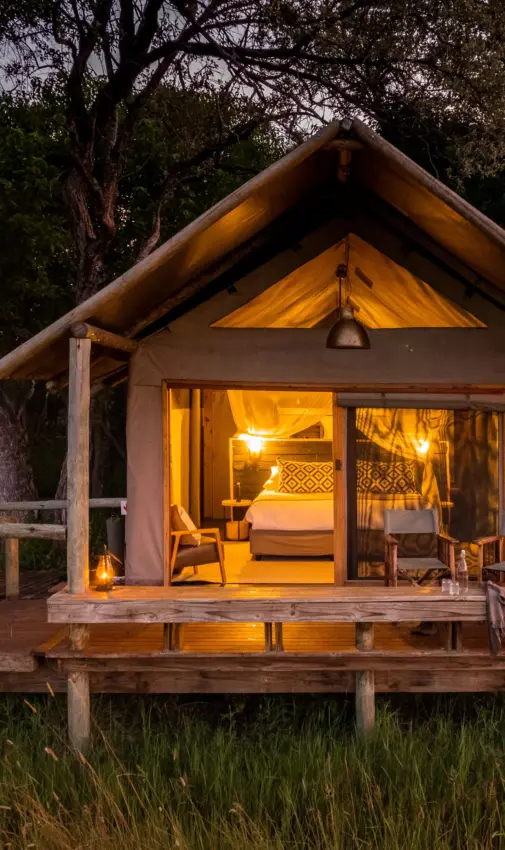
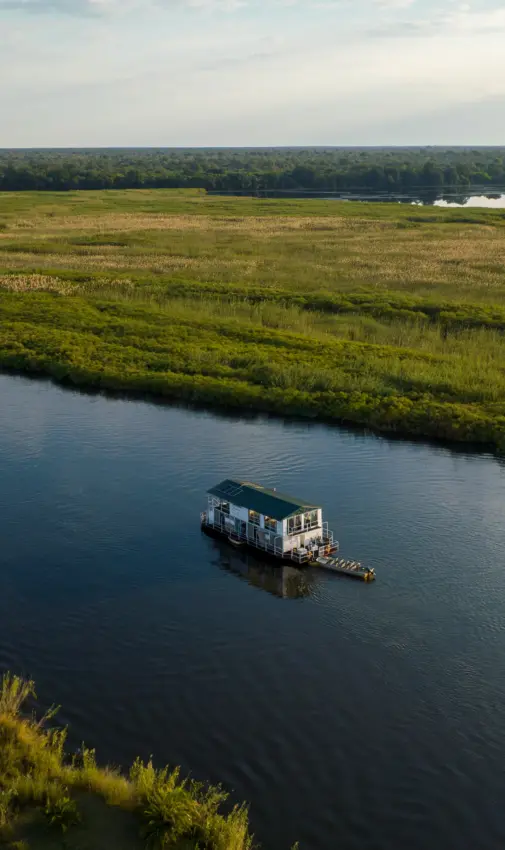
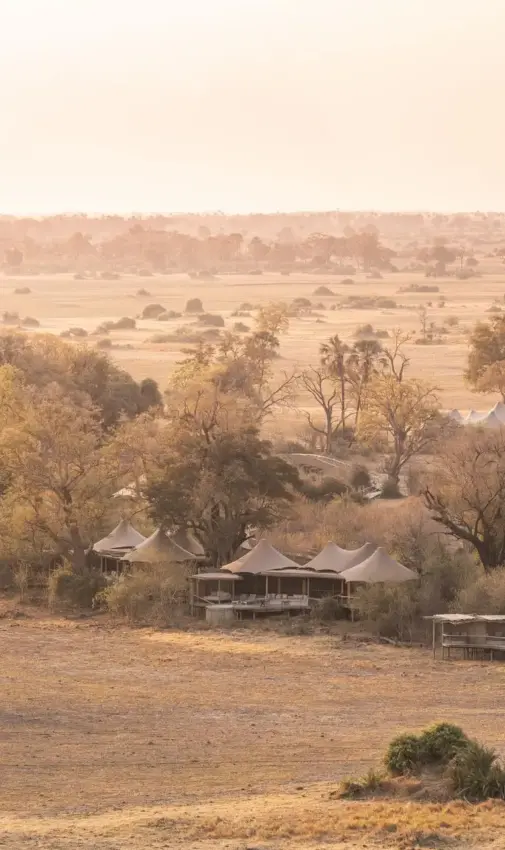
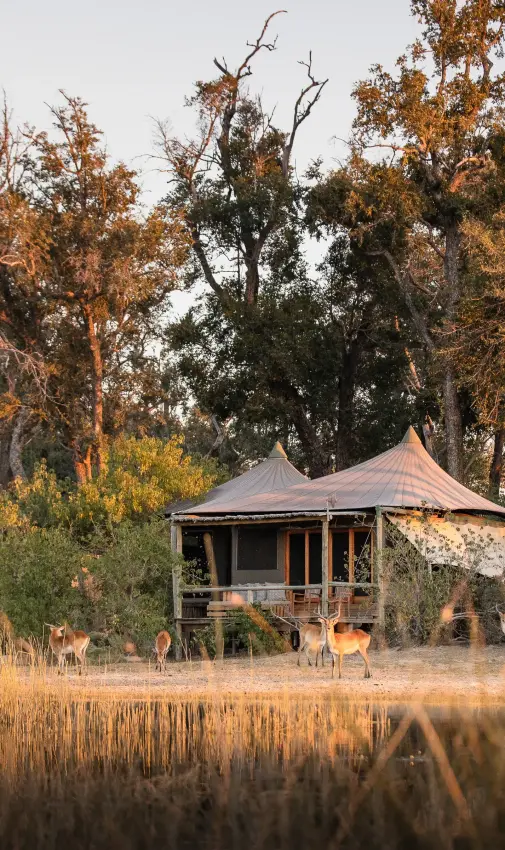
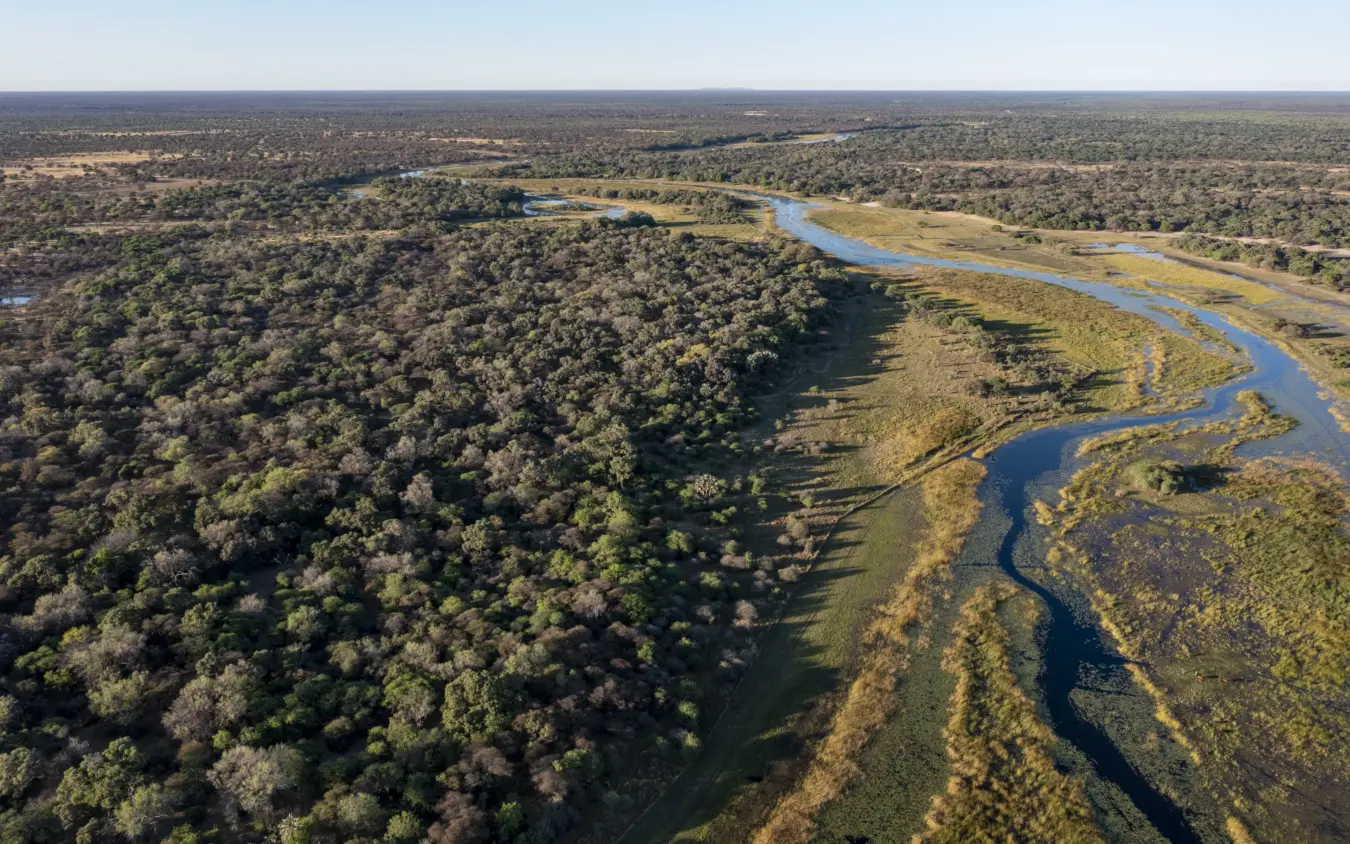
A light aircraft carries guests from Maun to the Jao airstrip, in a concession that runs along the western side of Moremi Game Reserve, and a boat takes over for the last stretch through the channels. The camp at the end of it was built to leave little trace on the island. Its tents are canvas on low timber platforms, and nothing here is permanent. Solar power runs every lamp and fan. Wild date palms, jackalberry and Natal mahogany shade the island, rooted in fine white sand. Inside the tents the materials stay just as plain, with canvas walls and wooden floors.
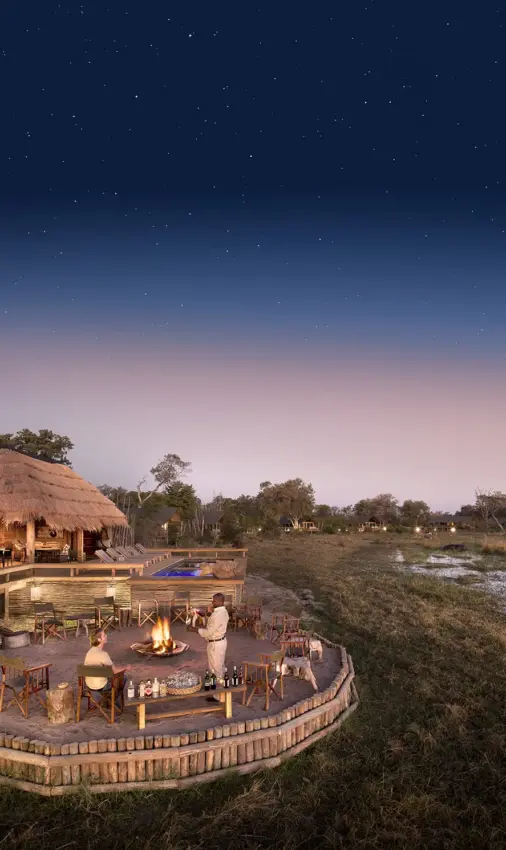
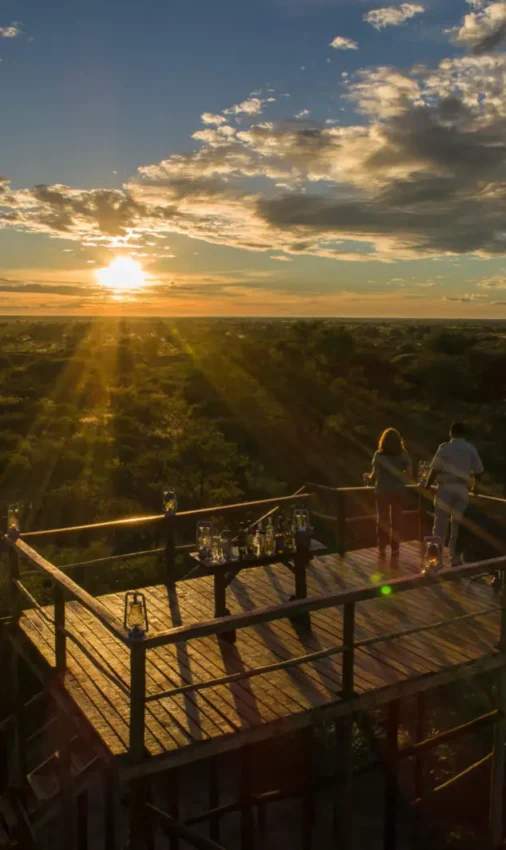
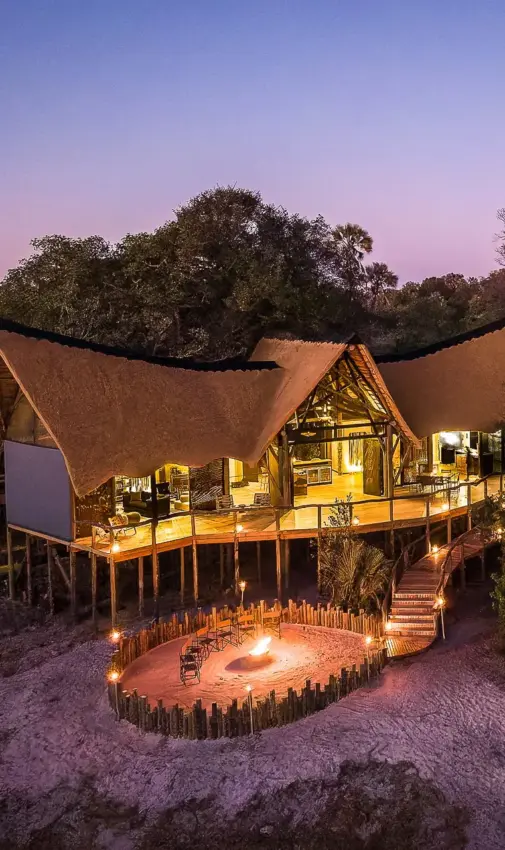
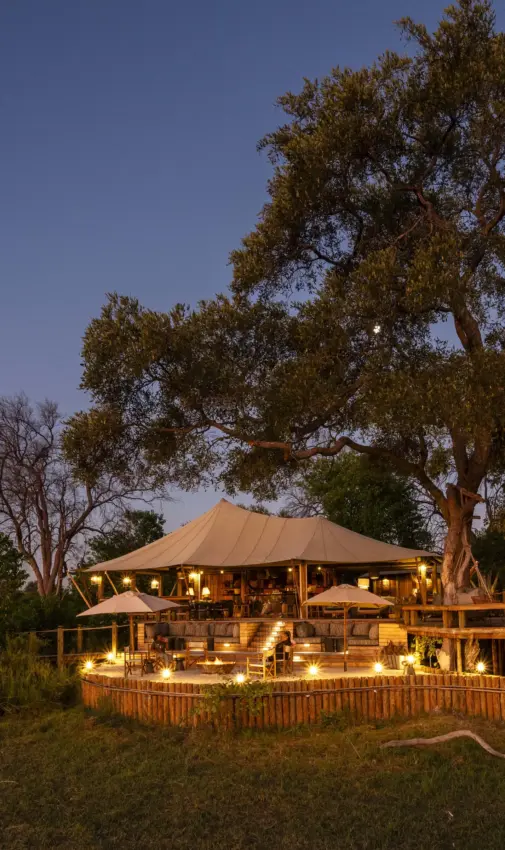
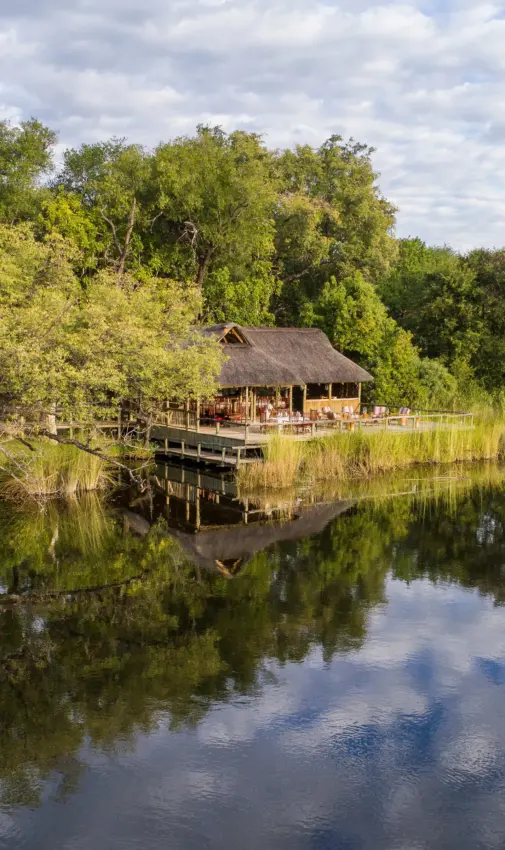
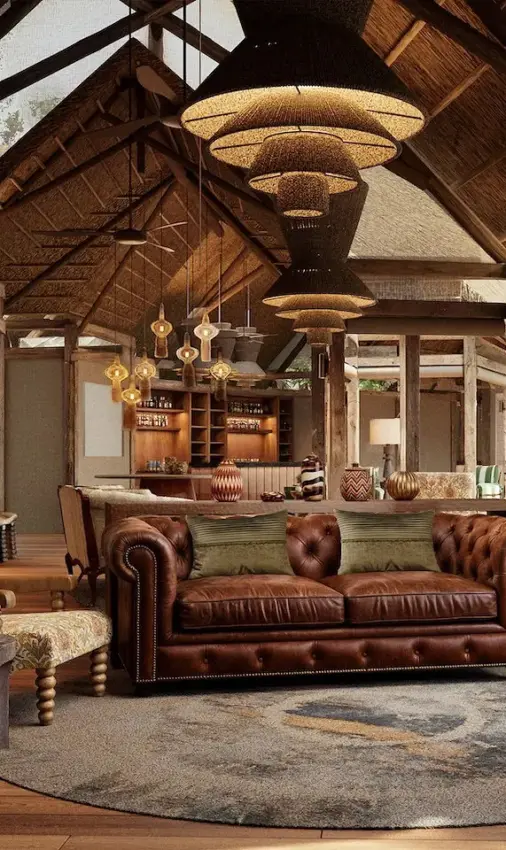
The main deck joins the dining and lounge tents and looks out over the floodplain. At drinks time, the sun goes down over the water in front of the deck. The rest of the camp is built around what was already here. A raised viewing platform sits on an old termite mound, and a plunge pool waits at the water’s edge.
With no engine, the loudest sounds on an outing are the pole and the birds.
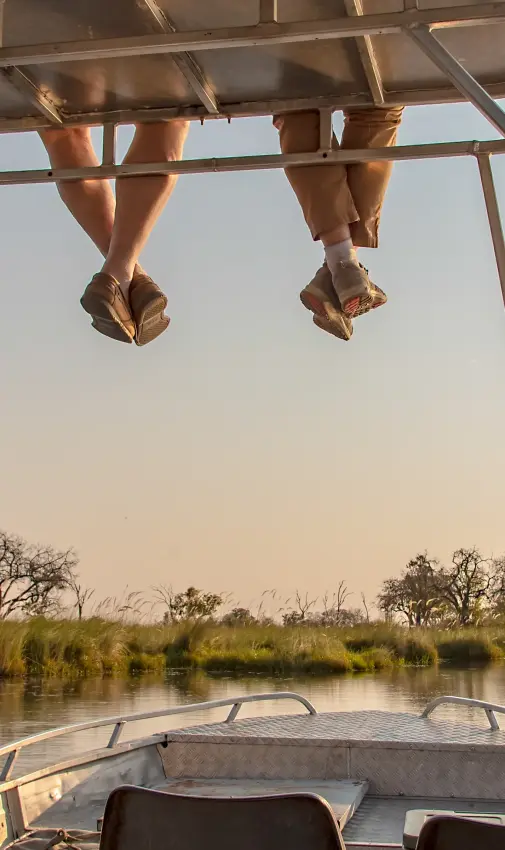
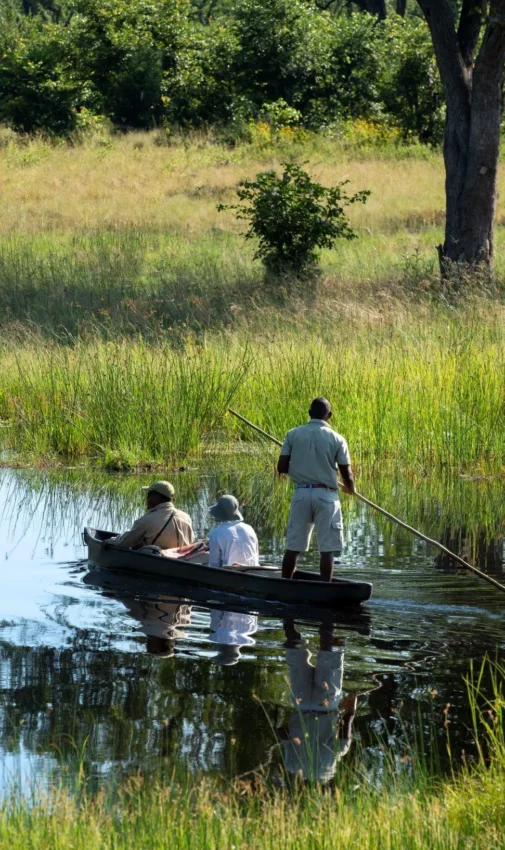
Each mokoro carries one or two passengers, with the poler standing at the stern and driving the boat forward with a long ngashi pole. Passengers sit close to the waterline in a fibreglass hull, low among the lilies. With no engine, the loudest sounds on an outing are the pole and the birds. Outings are spread across different channels, and the motorboat takes over for deeper water and longer distances. Back on the islands, walks led by a walking guide, when one is available, follow spoor and teach bush skills such as lighting a fire with sticks.
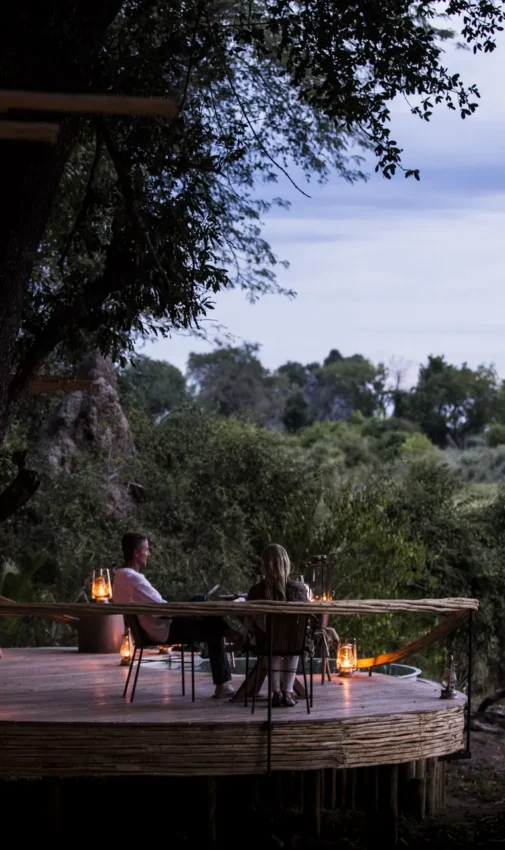
The day starts early, with coffee and muffins before the morning outing, and comes back to a plated brunch with salads. Afternoon tea brings something freshly baked before the second trip, and everyone is back by sunset. Dinner is served by lantern light while reed frogs call from the floodplain. On cold winter nights there are hot water bottles in the beds. After a nightcap at the boma, a guide walks each guest back to their tent along sandy paths lit by lanterns.