Camp

Vumbura Plains

Fourteen suites raised over seasonally flooded grassland, on a concession held by five villages in Botswana’s Okavango Delta.

Country: Botswana
Location: The Okavango Delta
Number of rooms: 14

Two camps of seven over the floodplain

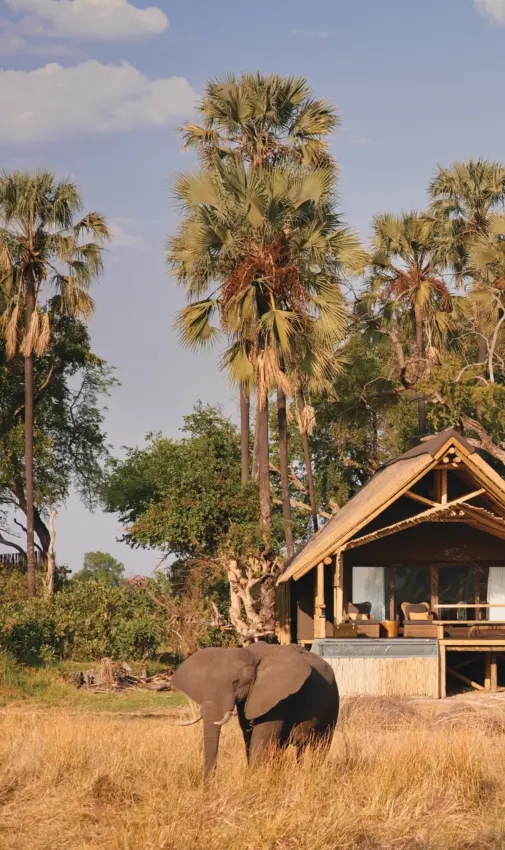
A day at Vumbura Plains can begin in an open 4×4 and end in a mokoro. The camp is raised on timber decks above grassland that floods each year, in the far north-east of the Okavango Delta. Elephants wade the channels in front of the suites. Around it runs a 60,000-hectare private concession bordering Moremi Game Reserve, and every outing, on land or water, leaves straight from camp.

Elephants wade the channels in front of the suites.

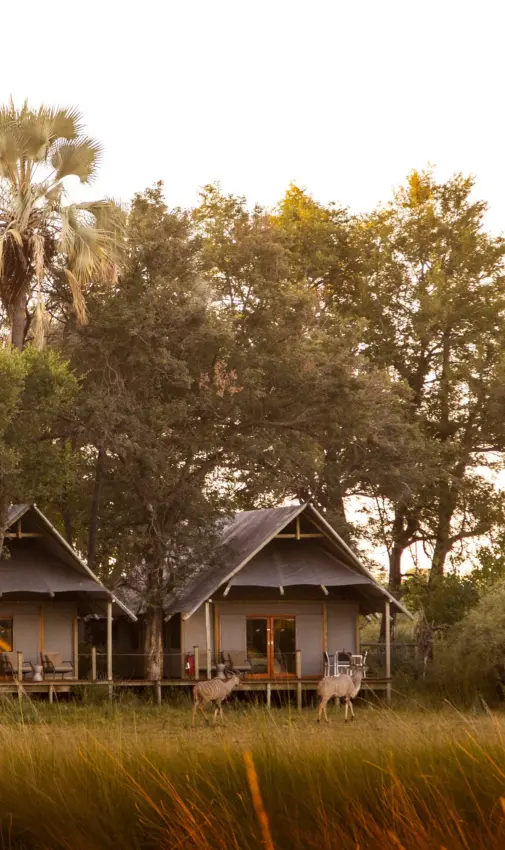
The fourteen suites are divided into two camps of seven, North and South, joined by a raised timber walkway across the floodplain. Each camp keeps its own lounge and bar, with a dining area and a team of its own. Nearly everyone who guides, poles, cooks and pours here comes from the five villages on whose behalf the Okavango Community Trust leases out this concession.

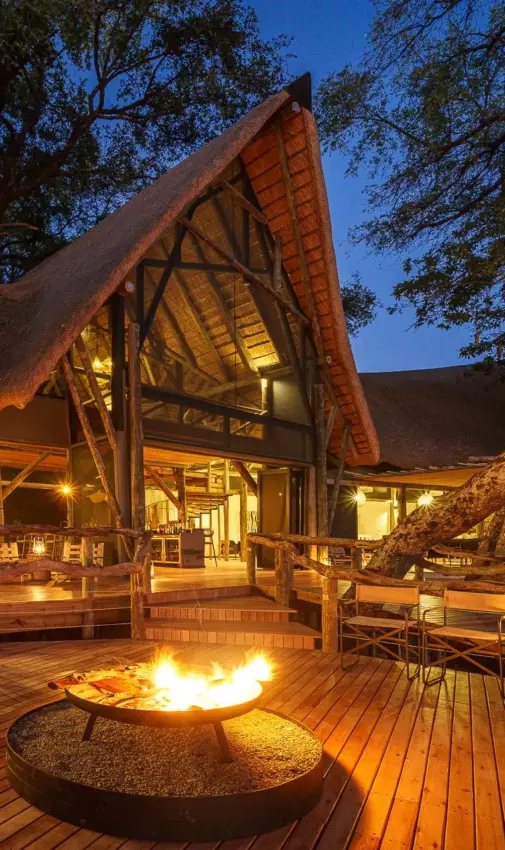
Bedroom with four-poster bed and thatched ceiling overlooking savanna woodland, Vumbura Plains, The Okavango Delta, Botswana
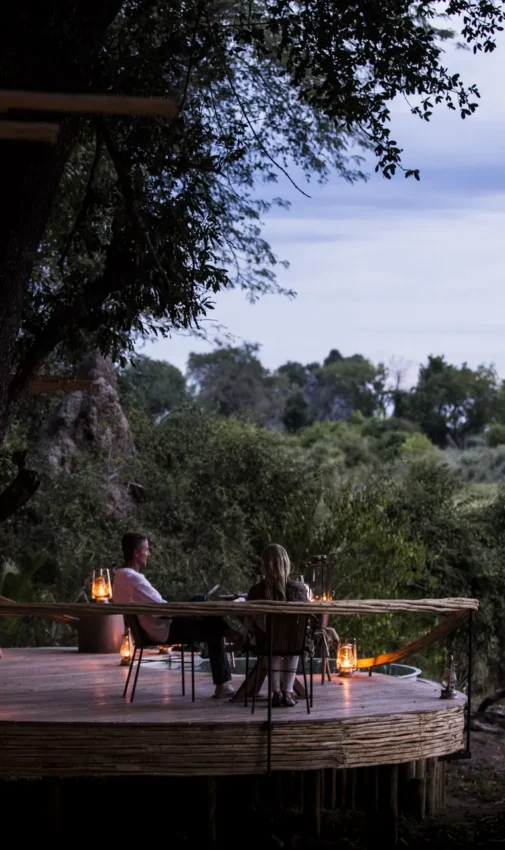
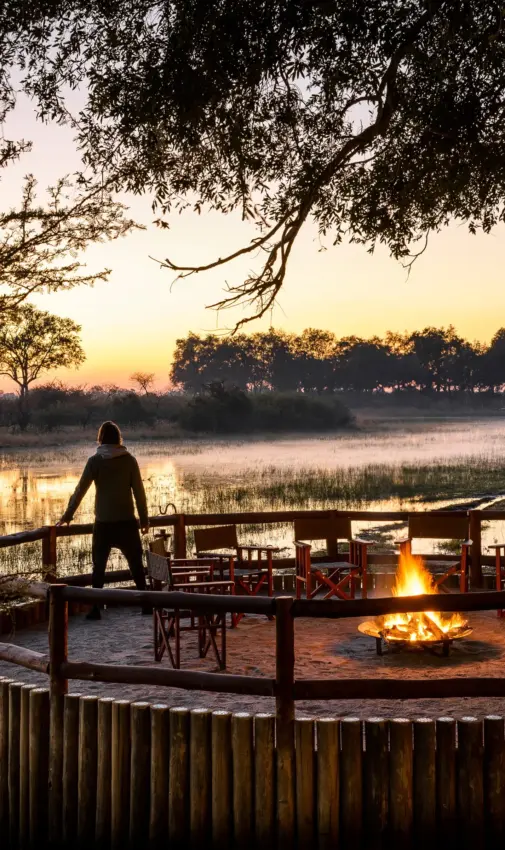
Woman in dark top shading eyes looking over misty grassland and bare trees, Vumbura Plains, The Okavango Delta, Botswana

Open floodplain and island woodland lie side by side with permanent channels on this concession, and African wild dogs are seen regularly. Lion and leopard hunt across the plains, and buffalo move through in large herds. Vehicles drive through water once the flood arrives. Sable, tsessebe and red lechwe share the open grassland, while shy sitatunga keep to the papyrus, seldom seen.
Vehicles drive through water once the flood arrives.

Out on the channels by mokoro or motorboat, the cast changes. Hippos and crocodiles hold the deeper water, with fish eagles overhead and malachite kingfishers in the reeds. Pel’s fishing owl and the slaty egret occur along these waterways. A slower afternoon might go to catch-and-release fishing for tilapia and catfish. Motorboat trips can end with a sundowner on the water.

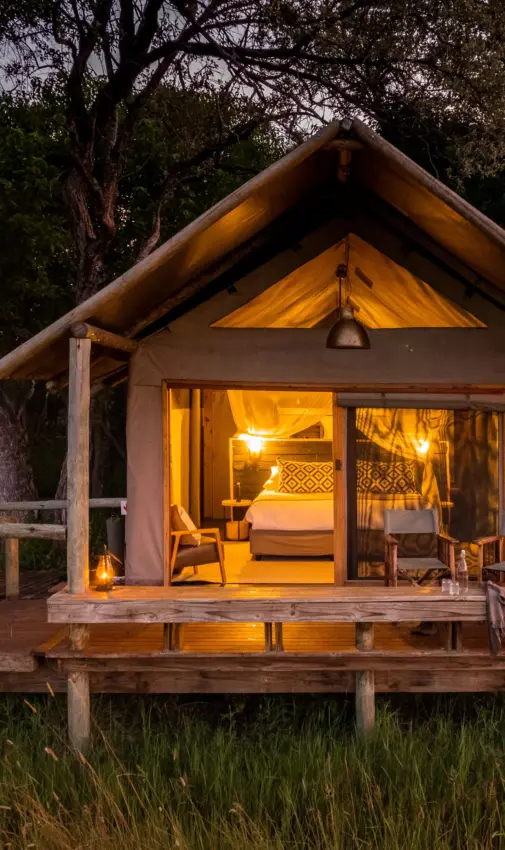
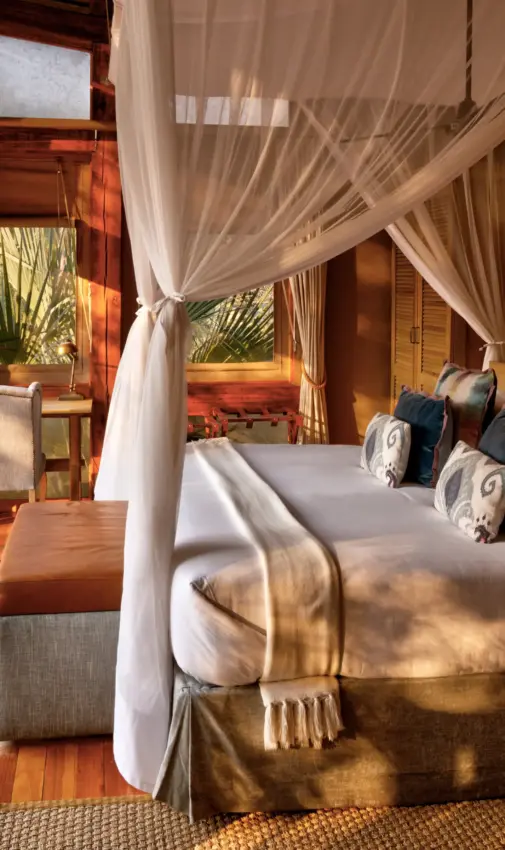
Canopy bed with sheer grey mosquito netting in a wooden tent room, Vumbura Plains, The Okavango Delta, Botswana 01

accommodation

Fourteen Suites Raised on Timber Decks

Vumbura Plains has fourteen suites in two camps of seven, each raised on timber decks above the floodplain. Every suite has a private viewing deck, plunge pool, sun loungers and covered sala. Inside are a king-size bed, sunken lounge, double vanity, and indoor and outdoor showers. Two are large family suites with two bedrooms.

Two people poling mokoros through shallow water with lily pads, Vumbura Plains, The Okavango Delta, Botswana 02

activities

Twice-Daily Game Drives and Mokoro Channels

Twice-daily game drives head out in open 4x4s, and guided walks cover the same ground on foot. Mokoro trips slip through the channels when water levels allow, motorboat outings can end with a sundowner, and there is catch-and-release fishing for tilapia and catfish. All of it takes place on a private community concession bordering Moremi Game Reserve, not inside it.

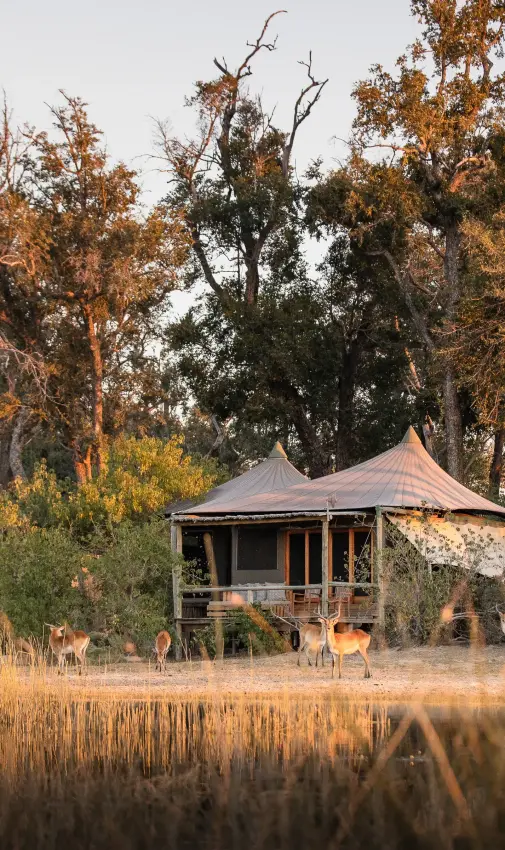
Herd of lechwe wading through shallow water at sunset, Vumbura Plains, The Okavango Delta, Botswana 03

conservation

Community Land Held by Five Okavango Villages

The concession is leased from the Okavango Community Trust, which represents five villages: Seronga, Gunotsoga, Eretsha, Beetsha and Gudigwa. Lease income goes to community projects in those villages, and nearly all the camp's team come from them.

ready to get started?

Get in touch and let’s start the conversation. An initial consultation helps us understand what you’re looking for, whether that’s specific experiences, luxury touches, or marking a special occasion, and from there we’ll guide you through what’s possible so you can decide if we’re the right fit.

Alternative accommodation in the okavango delta

Thatched lodge with circular fire pit at dusk, Sable Alley, The Okavango Delta, Botswana 01

Sable Alley

The Okavango Delta

Illuminated safari lodge dining area under ancient trees at dusk, Duba Plains, The Okavango Delta, Botswana 02

Duba Plains

The Okavango Delta

Illuminated safari lodge deck with fire pit at dusk, Khwai Leadwood, The Okavango Delta, Botswana 03

Khwai Leadwood

The Okavango Delta

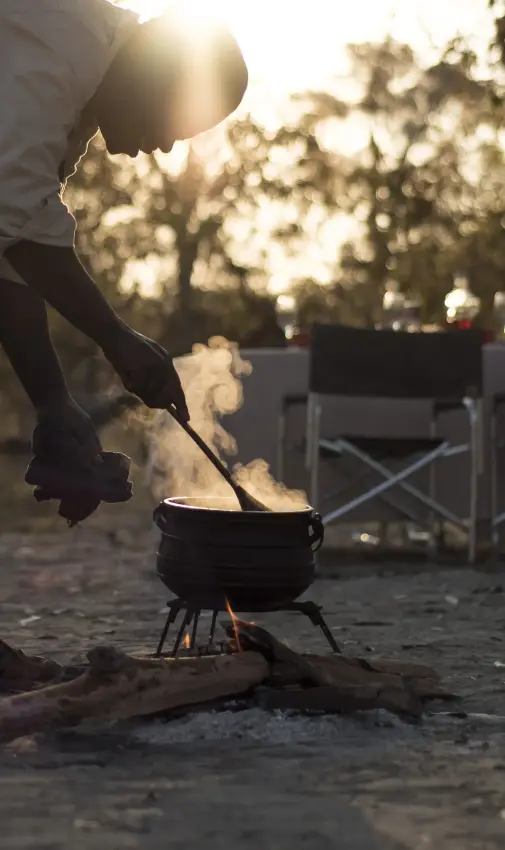
Person tending campfire at sunset during outdoor gathering, Kweene Trails, The Okavango Delta, Botswana 04

Kweene Trails

The Okavango Delta

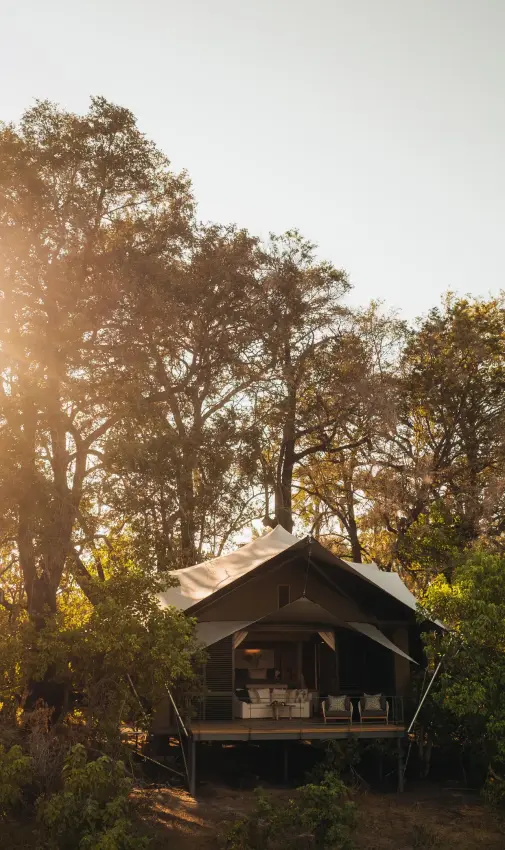
Safari tent accommodation nestled among tall trees at golden hour, Chitabe Camp, The Okavango Delta, Botswana 05

Chitabe Camp

The Okavango Delta

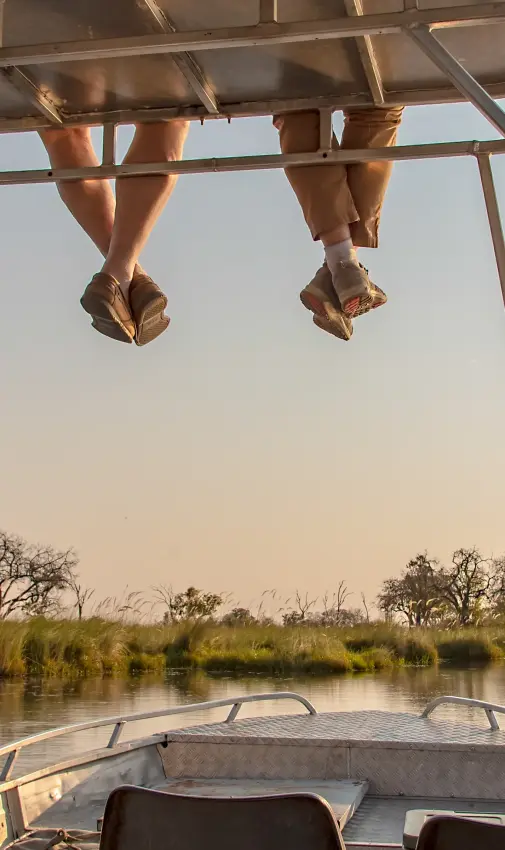
Boat with dangling feet on waterway at sunset, Kwando Splash Camp, The Okavango Delta, Botswana 06

Kwando Splash Camp

The Okavango Delta

Wooden deck dining area beneath ancient tree overlooking savanna landscape at dusk, Mombo Camp, The Okavango Delta, Botswana 07

Mombo Camp

The Okavango Delta

Luxury safari lodge with illuminated tent and circular pool under ancient tree at dusk, Karangoma, The Okavango Delta, Botswana 08

Karangoma

The Okavango Delta

Riverside lodge buildings nestled among green vegetation and trees 09

Xigera Lodge

The Okavango Delta

Thatched lodge deck with lit fire pit at dusk, Tubu Tree Camp, The Okavango Delta, Botswana 10

Tubu Tree Camp

The Okavango Delta

Elevated safari lodge with thatched roof overlooking waterhole at dusk, Little Vumbura, The Okavango Delta, Botswana 11

Little Vumbura

The Okavango Delta

Curved wooden glamping pods reflected in still water beside reed beds, Okuti, The Okavango Delta, Botswana 12

Okuti

The Okavango Delta

Illuminated canvas safari tent on wooden deck at dusk surrounded by trees, Little Sable, The Okavango Delta, Botswana 13

Little Sable

The Okavango Delta

Elephant walking past a thatched safari tent in dry grassland, Eagle Island Lodge, The Okavango Delta, Botswana 14

Eagle Island Lodge

The Okavango Delta

Person watching sunrise over misty waterway beside a fire pit on wooden deck, Chief’s Camp, The Okavango Delta, Botswana 15

Chief’s Camp

The Okavango Delta

Two canvas safari tents on raised decks with greater kudu grazing in tall grass, Chitabe Lediba, The Okavango Delta, Botswana 16

Chitabe Lediba

The Okavango Delta

Sandibe Okavango Safari Lodge, The Okavango Delta, Botswana 17

Sandibe Okavango Safari Lodge

The Okavango Delta

Luxury safari tent bedroom with four-poster bed and canvas interior, Kanana, The Okavango Delta, Botswana 18

Kanana

The Okavango Delta

Four-poster bed with mosquito net beside open timber deck overlooking water, Camp Okavango, The Okavango Delta, Botswana 19

Camp Okavango

The Okavango Delta

Glamping tent interior with lounge area overlooking pastoral landscape, Duke’s East, The Okavango Delta, Botswana 20

Duke’s East

The Okavango Delta

frequently asked questions

By light aircraft from Maun to the Vumbura airstrip in the north of the Okavango Delta, then a short drive across the concession to the camp. The scheduled flights are shared bush planes that may call at other airstrips on the way, and they fly daily between the Delta camps too, so you can arrive straight from another camp rather than going back through Maun.

If you would rather fix your own timings, we can arrange a private charter in a Cessna Caravan or a Pilatus PC-12 into the Vumbura airstrip. Either way, pack light and in soft bags, because the small aircraft carry strict limits on space and weight.

Yes. TravelHealthPro, the UK's official travel health service, rates the northern half of Botswana, the Okavango Delta included, as high risk for malaria from October to May, recommending antimalarial tablets for those months, and as low risk from June to September. Low risk is not no risk. The CDC lists the Okavango and Ngamiland districts among the areas where it recommends medicine to prevent malaria.

We are travel planners, not medical professionals, so we do not make medical recommendations. Whether to take tablets, and which ones, is a decision for you and your own doctor or a travel clinic. The practical part is simple: cover arms and legs from late afternoon and keep repellent to hand.

A good deal, because the camp works on land and on water. Alongside the twice-daily drives there are guided walks, mokoro trips through the channels in a traditional dugout, motorboat outings and catch-and-release fishing for tilapia and catfish, all within the rate. The birding is a reason to come in itself: Pel's fishing owl, slaty egret, African fish eagle and malachite kingfisher all live along these waterways.

How much water there is depends on the flood, which rises through the dry winter months, so we check the channels for your dates before promising a mokoro. With two separate camps, a family or group can also split up, some on a drive and some on the water, and meet again for lunch.

The wildlife is the same, because the two share one private concession leased from the Okavango Community Trust; what differs is the camp. This one is the larger, with fourteen suites split into two camps of seven, North and South, each with its own lounge, dining area and bar, every suite with a plunge pool on its deck, and it is reached by a short drive from the airstrip.

Little Vumbura is six tents on a wooded island, reached by boat, and smaller and quieter for it. We would point families and groups, and anyone who wants the widest choice of activities from one base, towards the two camps here, and couples after something more private towards the island.

Yes, and it is set up for them. Two of the fourteen suites are large family units, so parents and children stay together under one roof, and each has the same raised deck and plunge pool as the rest, which with small children needs a parent's eye at all times.

Families with younger children take a private vehicle and guide for their activities, and in practice it means the day runs at the children's pace rather than a shared vehicle's. Tell us the ages when you enquire and we will plan which activities suit each child.

June to October, when the dry season draws the game in to permanent water and the flood from Angola fills the channels, so drives and water trips are both at their best. July to September is the standout, and October is the hottest month, often over forty degrees. April, May and November sit in between.

December to March is the green season: wet, lush and quieter, with the game more scattered and the channels at their lowest. It has its own case, though: the birding is at its peak with the summer migrants in, young antelope are on the ground, and the storm skies and green floodplains make it a photographer's time of year. The camp is open all year.

rated five stars by our clients

other areas in botswana

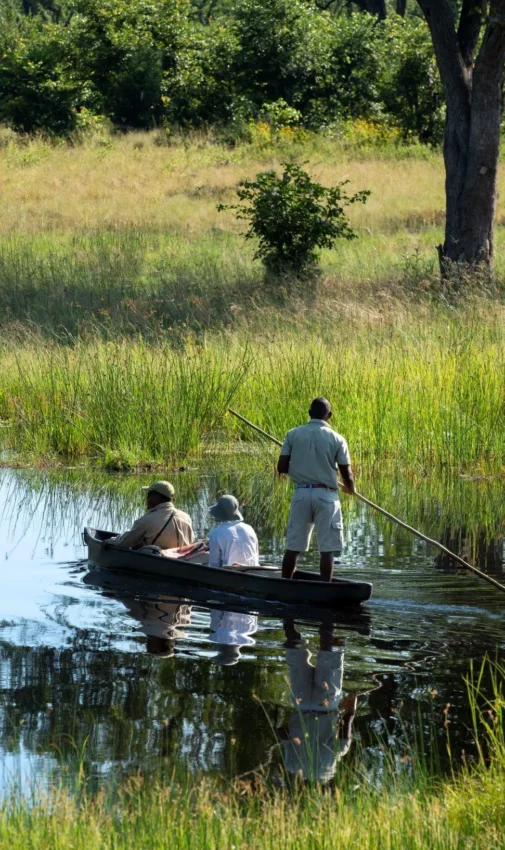
Guests poling traditional boat through wetland waterway, Linyanti Wildlife Reserve, Botswana 01

Linyanti Wildlife Reserve

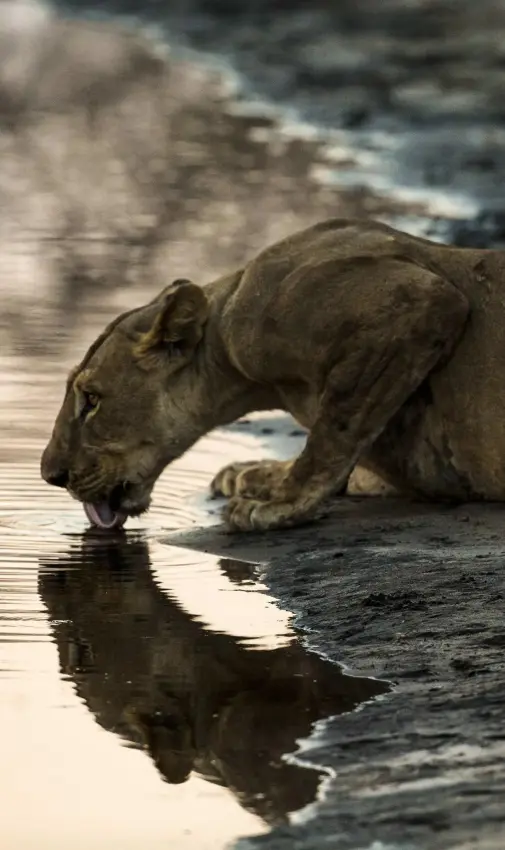
Lion drinking from water's edge at sunset, Selinda Reserve, Botswana 02

Selinda Reserve

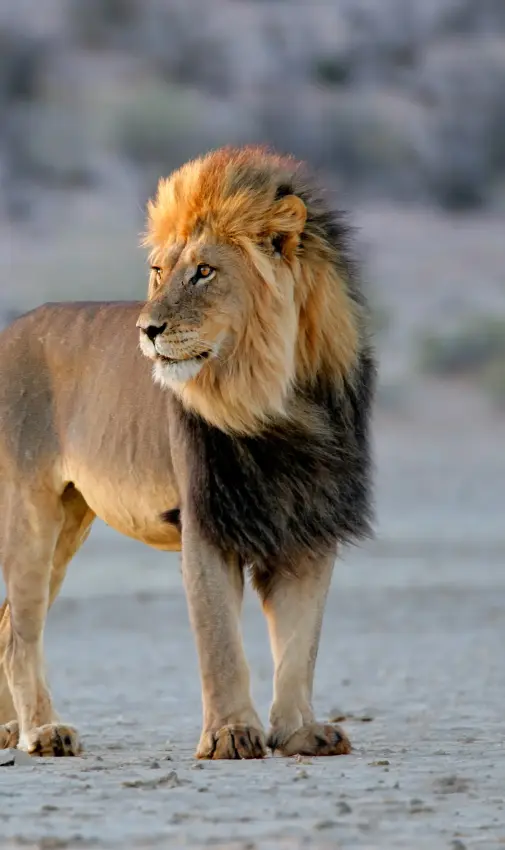
Male lion standing on sandy ground in natural habitat 03

Central Kalahari

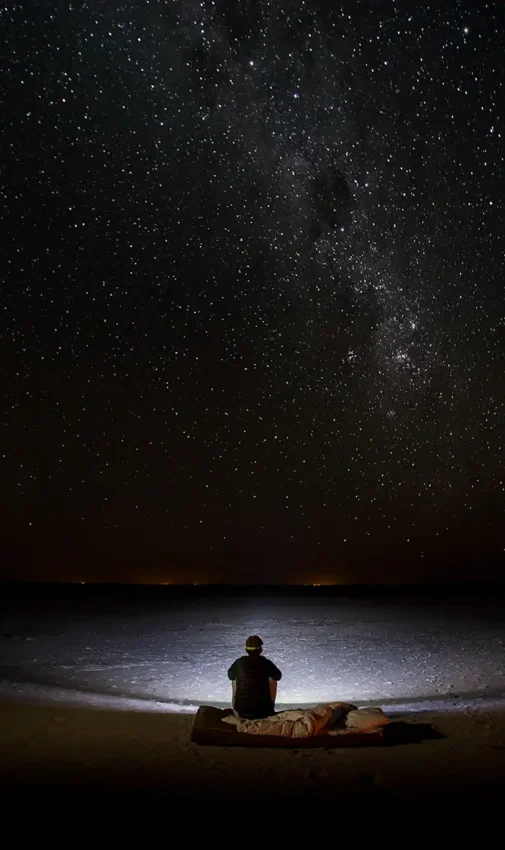
Person sitting alone under starry night sky, Makgadikgadi Pans, Botswana 04

Makgadikgadi Pans

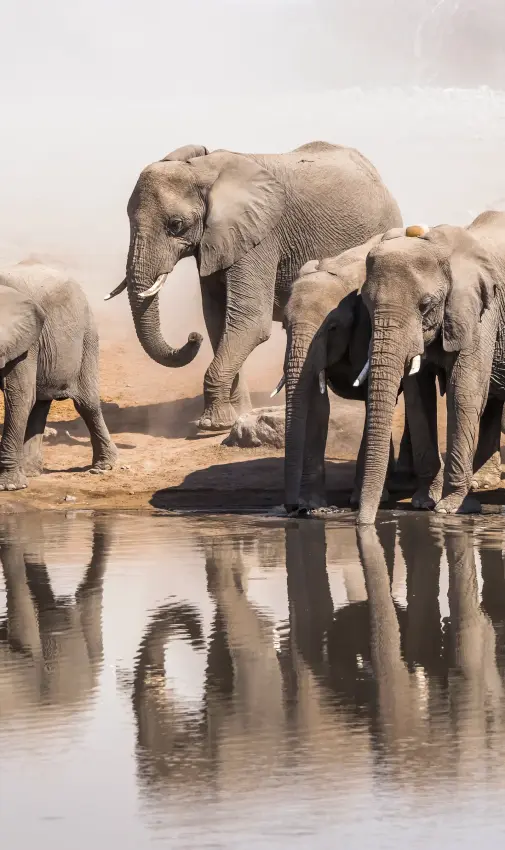
Herd of elephants drinking at waterhole with reflections 05

Chobe

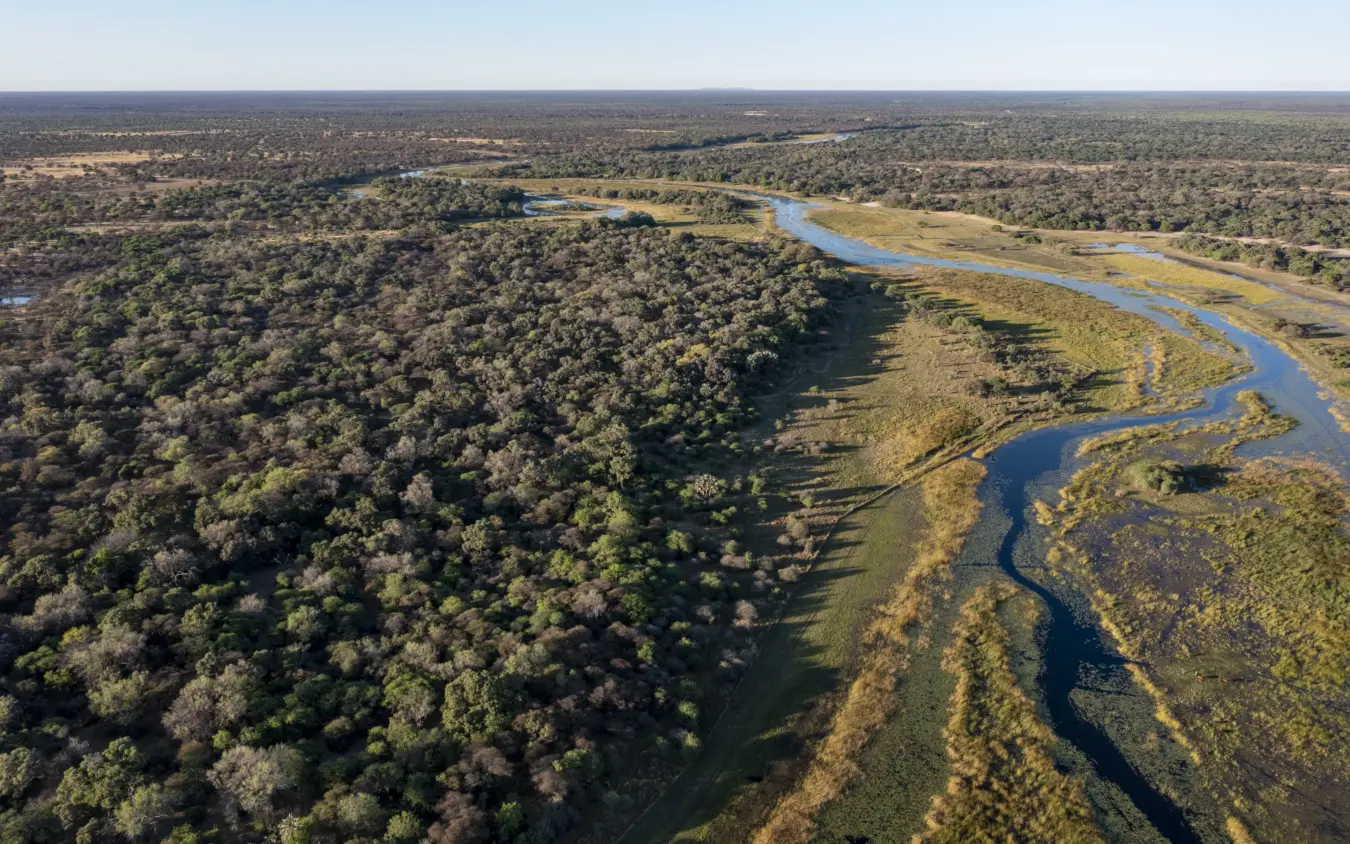
Aerial view of winding river through dense woodland and wetland savanna, Thamo Telele, Maun, Botswana 06

Maun

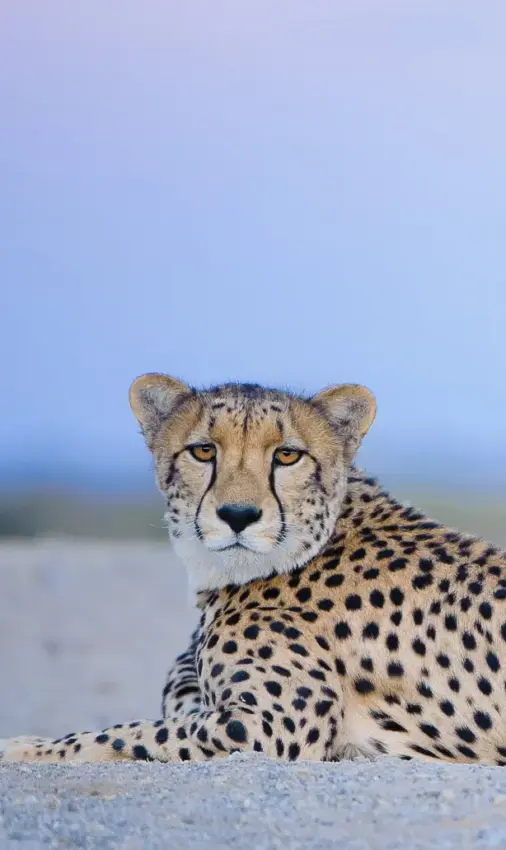
Cheetah lying on gravel ground with blue dusk sky behind, Tuli Block, Botswana 07

Tuli Block

Planning a journey together

our approach

remote, exclusive
& personal

Every journey starts with a conversation. We take the time to understand your vision before we start planning.

Whether by phone or in person, we work with you directly to shape something that is considered, personal, and expertly delivered.

get in touch
destinations ideas & inspiration our process about us contact us