Camp

Delta Camp

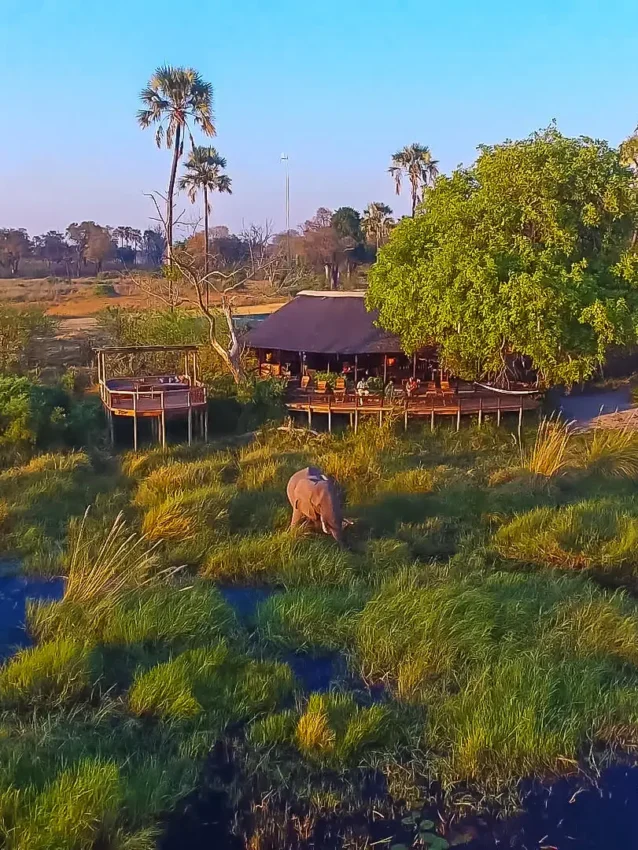
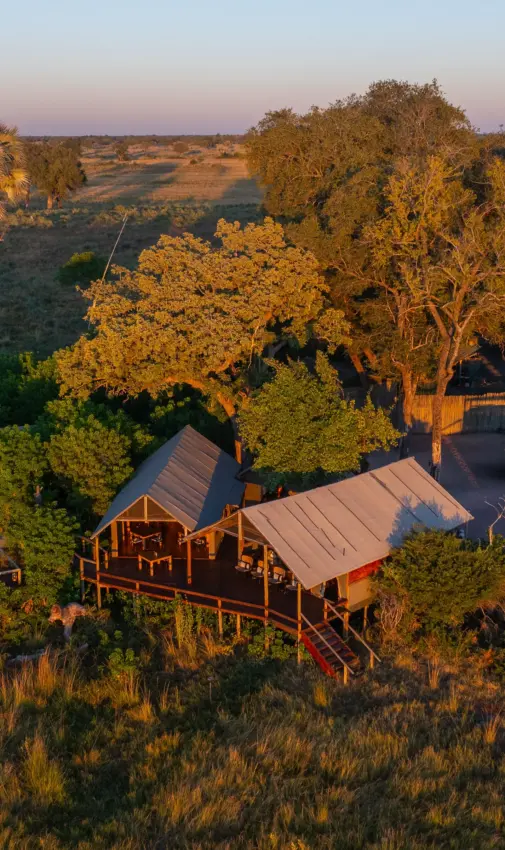
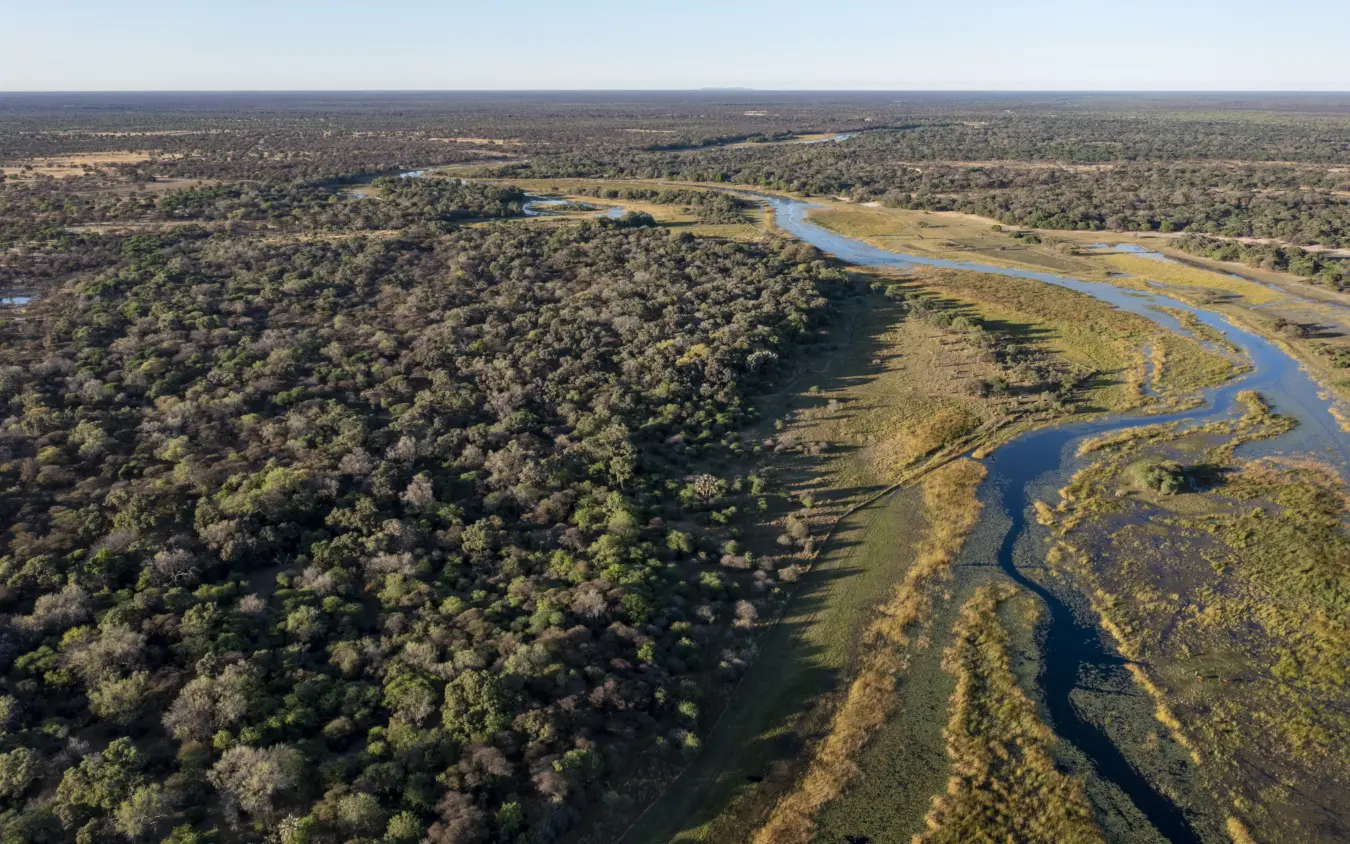
A reed-and-thatch camp on a palm island off the south-western edge of Chief’s Island, in Botswana’s Okavango Delta.

Country: Botswana
Location: Edge of Chief's Island, Okavango Delta
Number of rooms: 7

Poled in by mokoro, explored on foot

Nothing at Delta Camp runs on an engine. The camp occupies a palm-forested island off the south-western edge of Chief’s Island, in the Okavango Delta, and guests explore on foot or by hand-carved wooden mokoro, poled by a private guide who stays with them for the whole stay. Arrival is by light aircraft, then a ride in or a walk in, depending on how high the water sits.

At night the hippos grunt in the reeds below the deck.

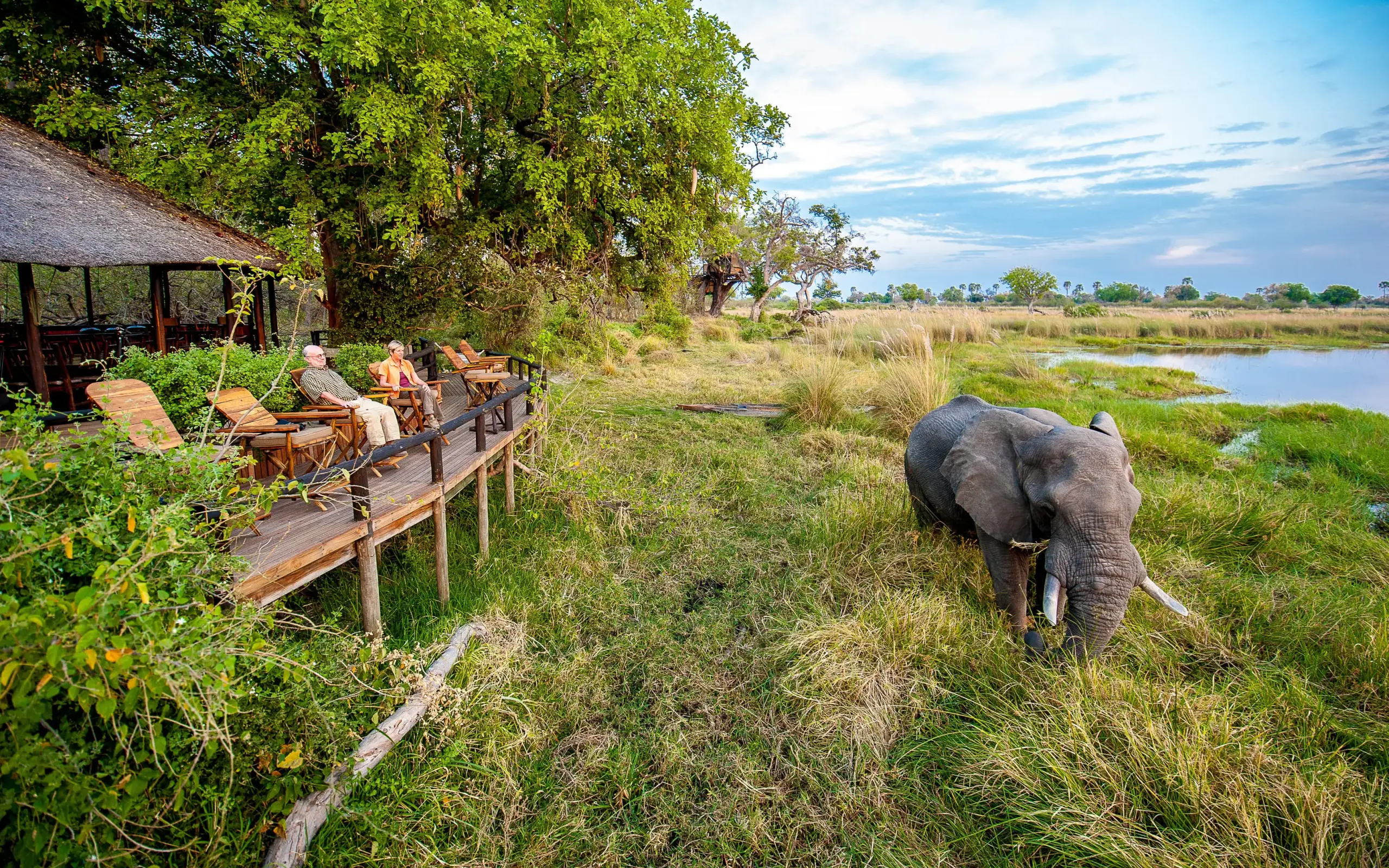
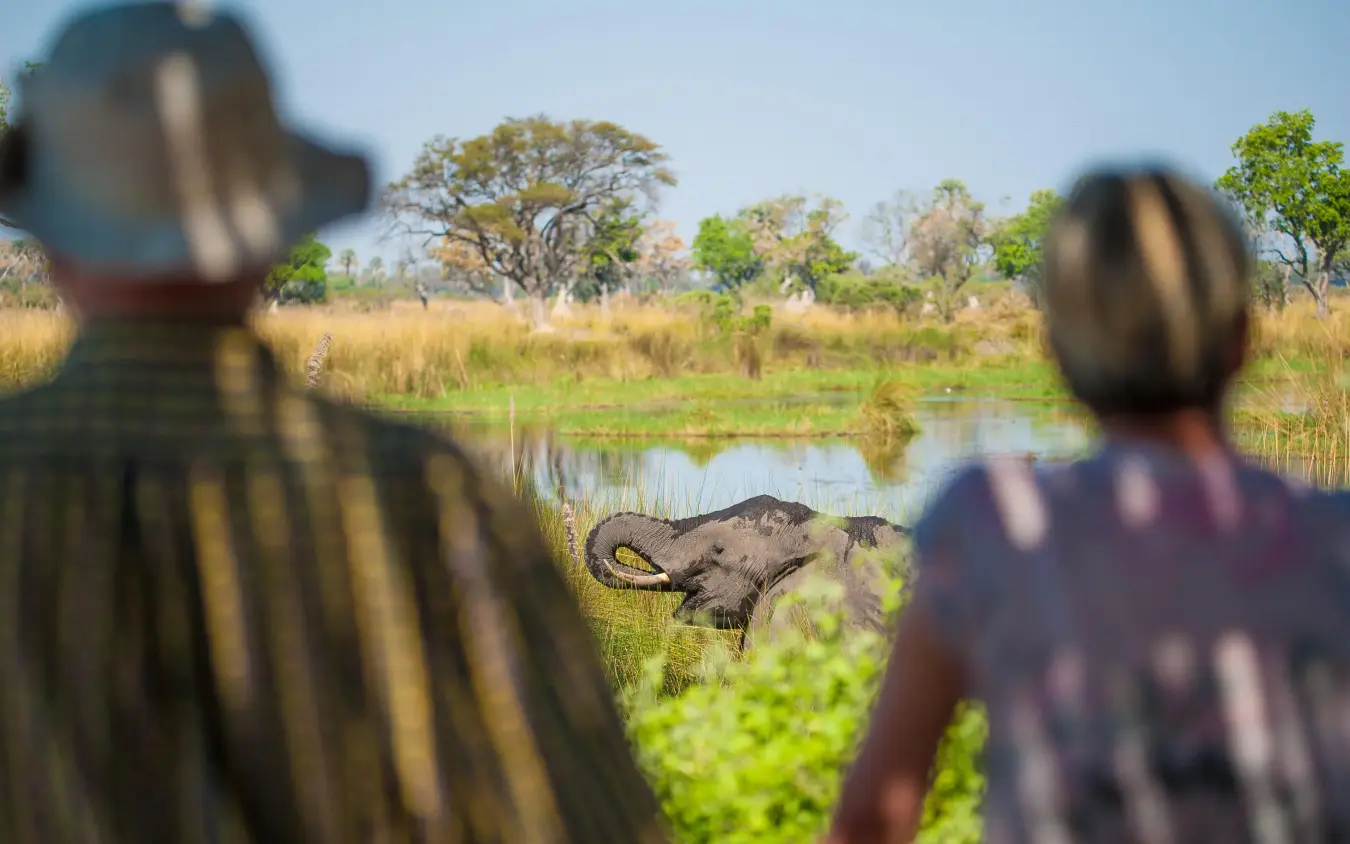
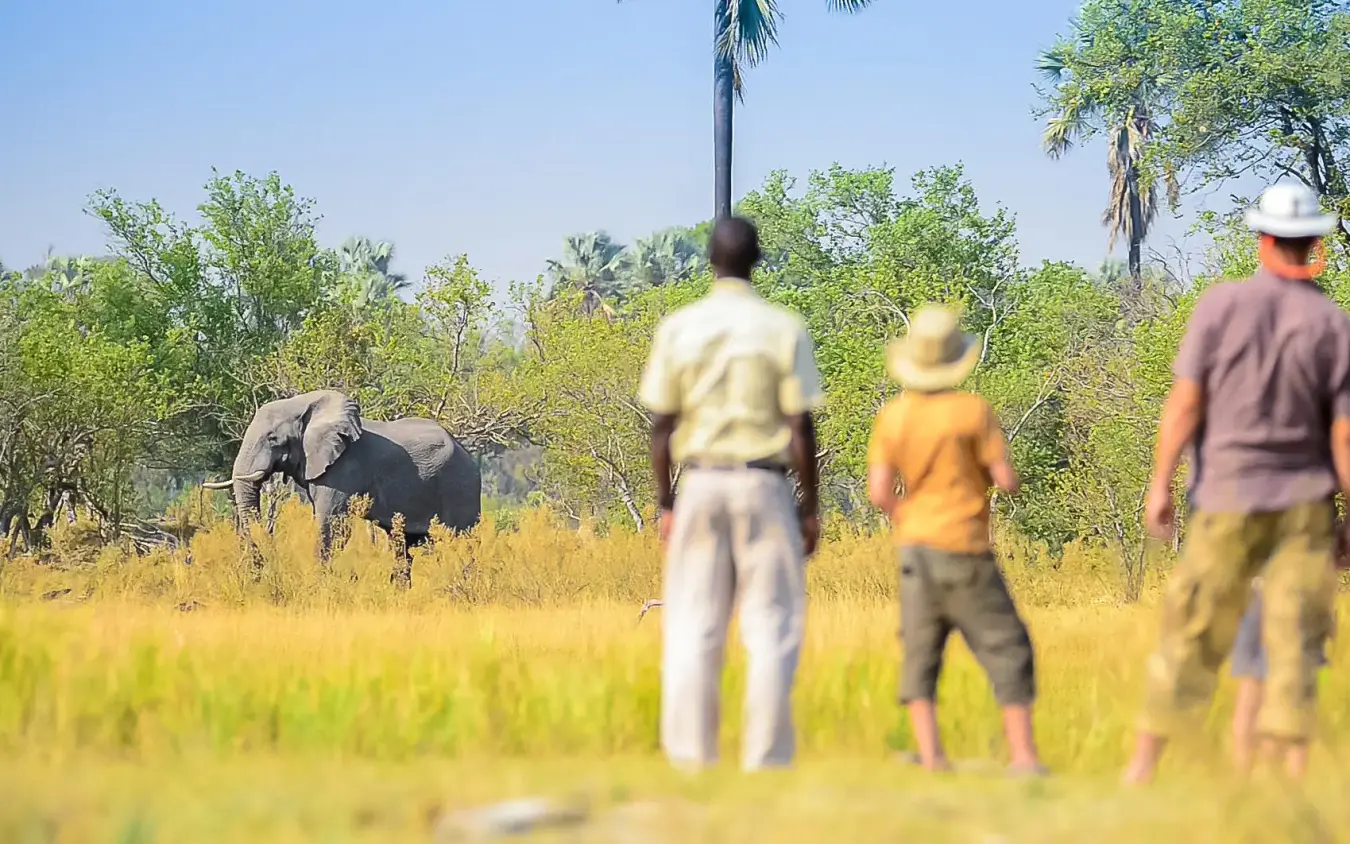
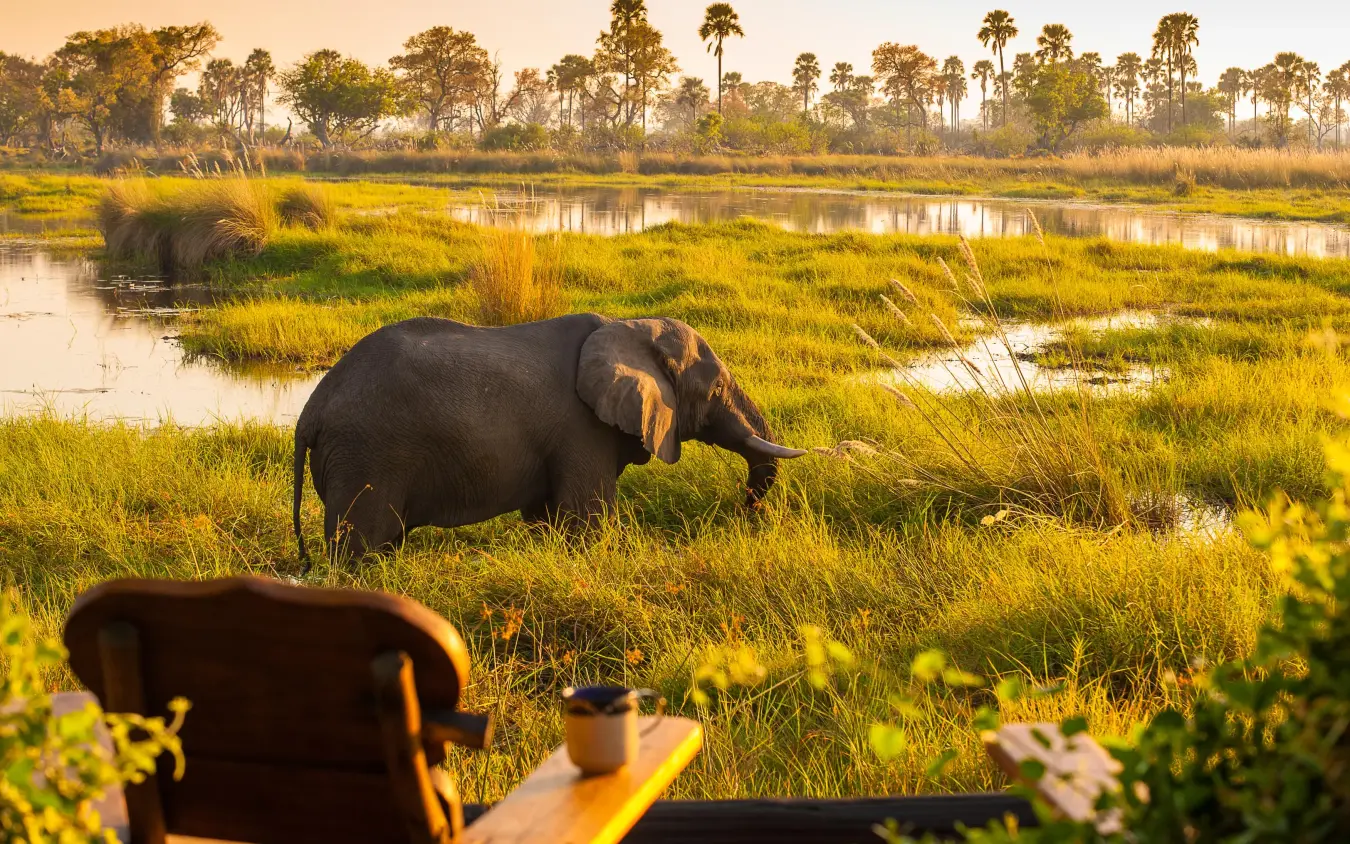
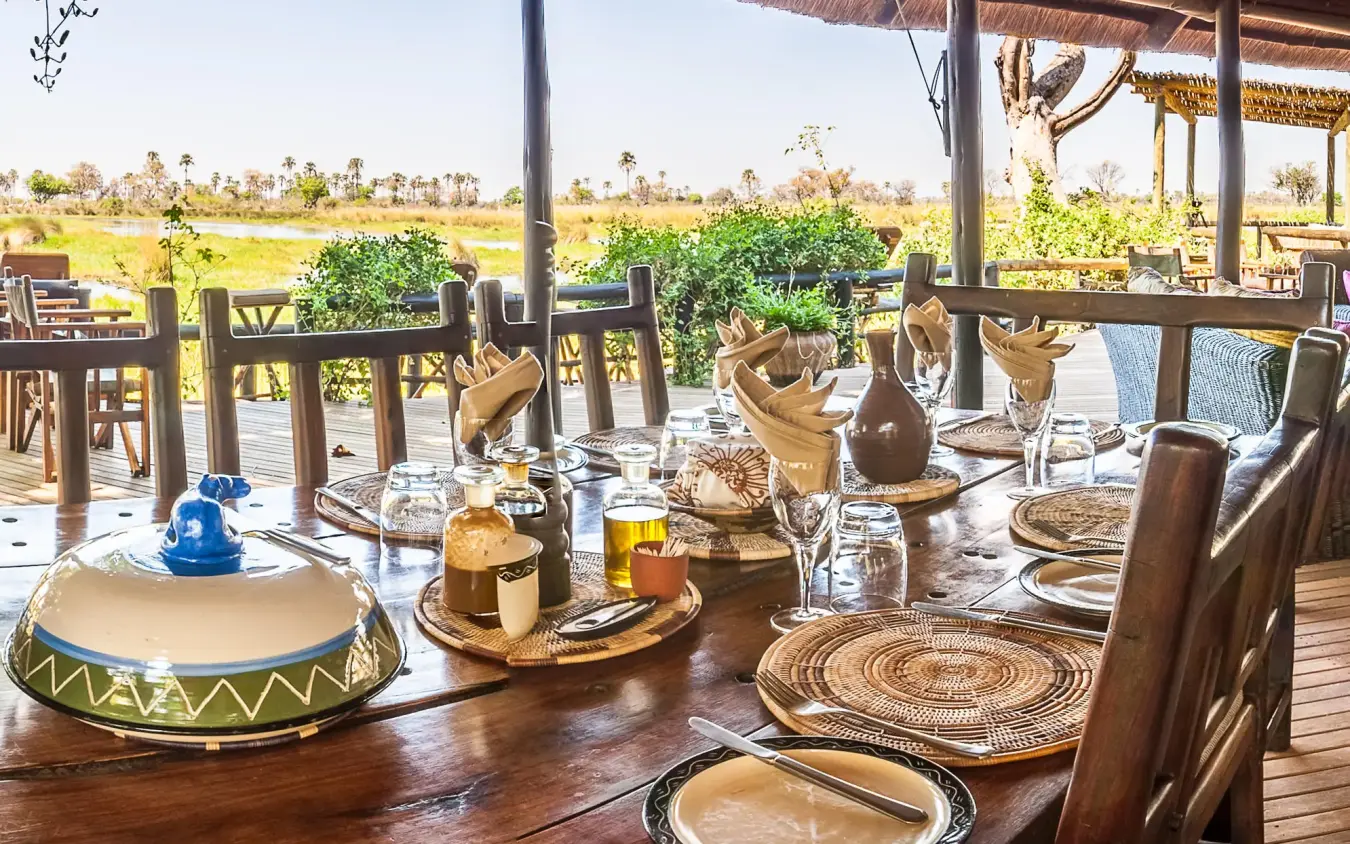
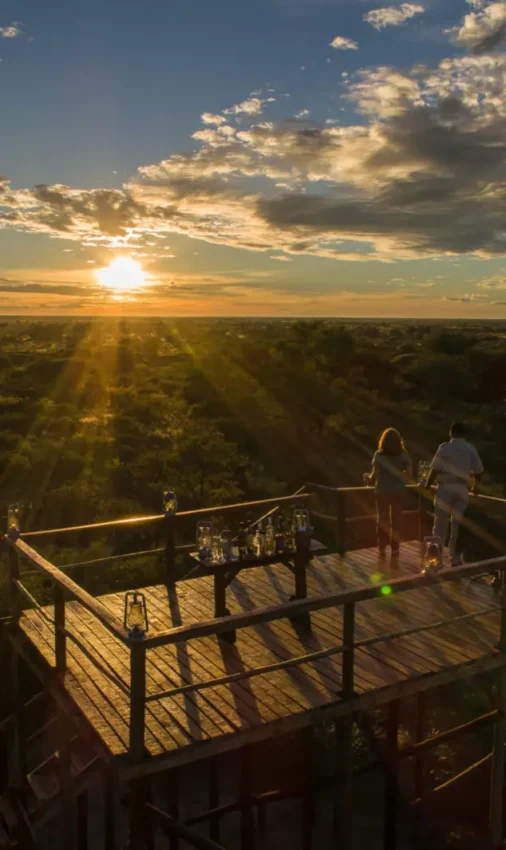
Chief’s Island is reached by mokoro and crossed on foot, walks going out morning and afternoon along lechwe paths and elephant tracks. The guides carry no rifle, reading the wind and the tracks instead. At night the hippos grunt in the reeds below the deck. Through the day they hold the channels with the crocodiles in front of the raised dining deck, and elephants feed among the palms.

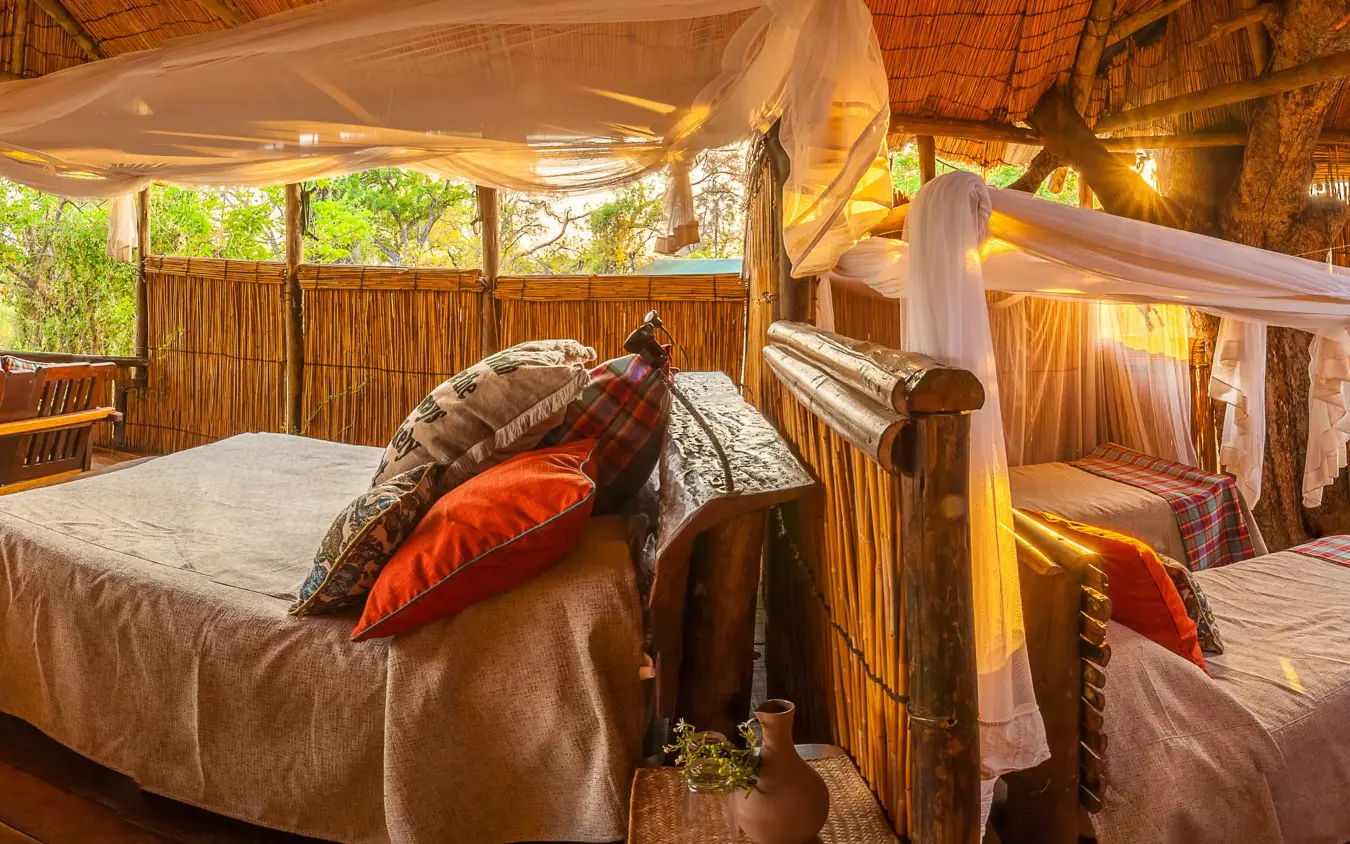
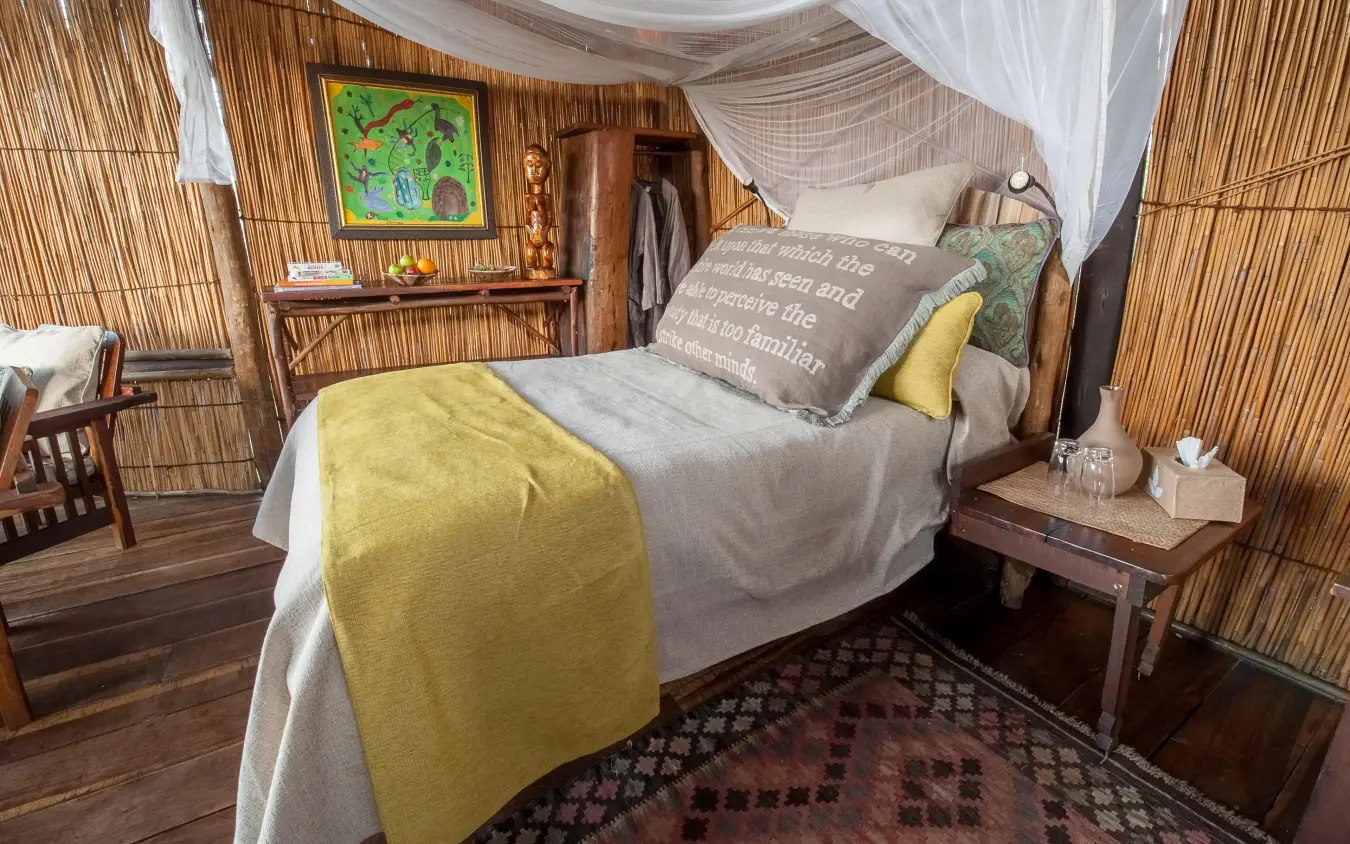
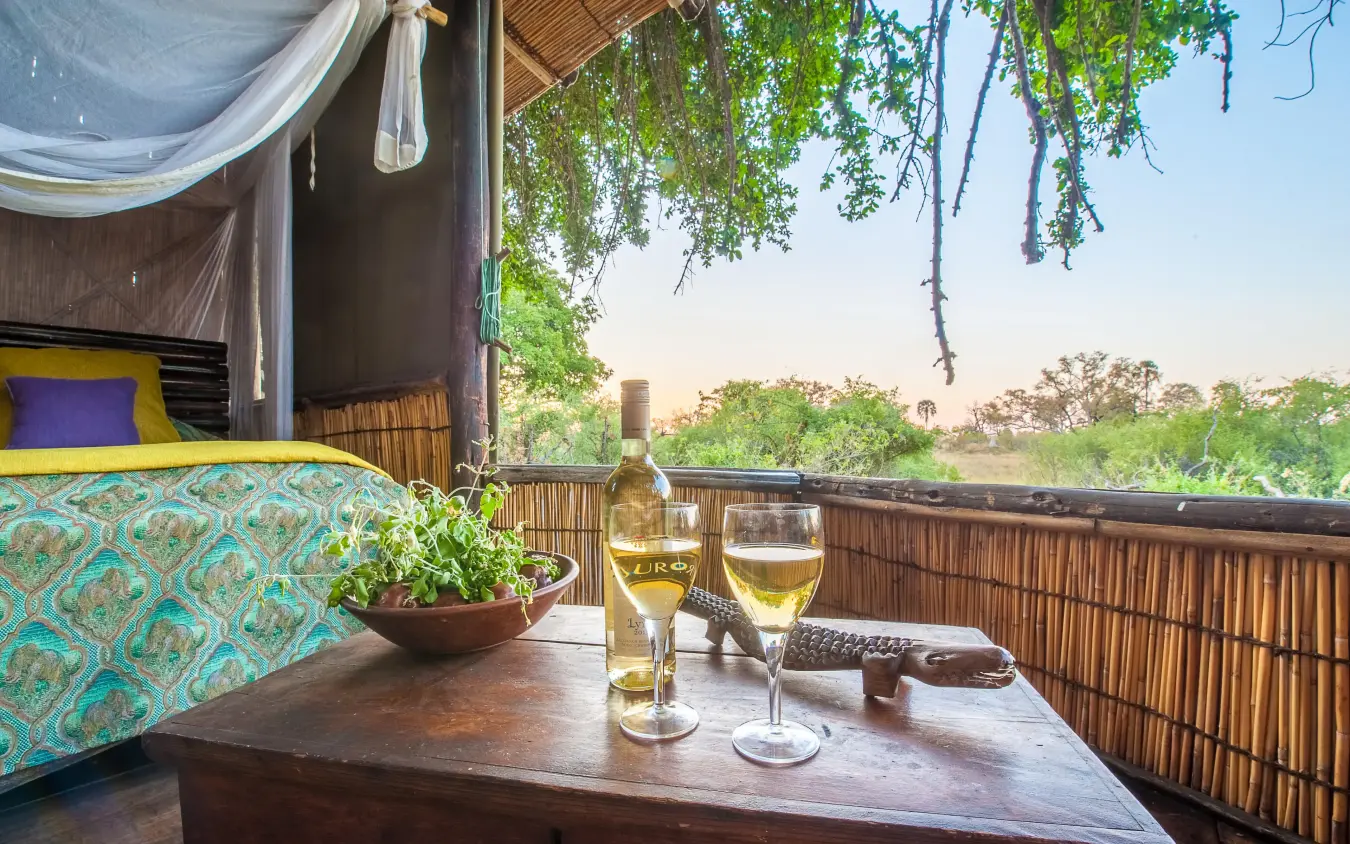
Bedroom with wooden frame bed and mosquito netting, Delta Camp, The Okavango Delta, Botswana
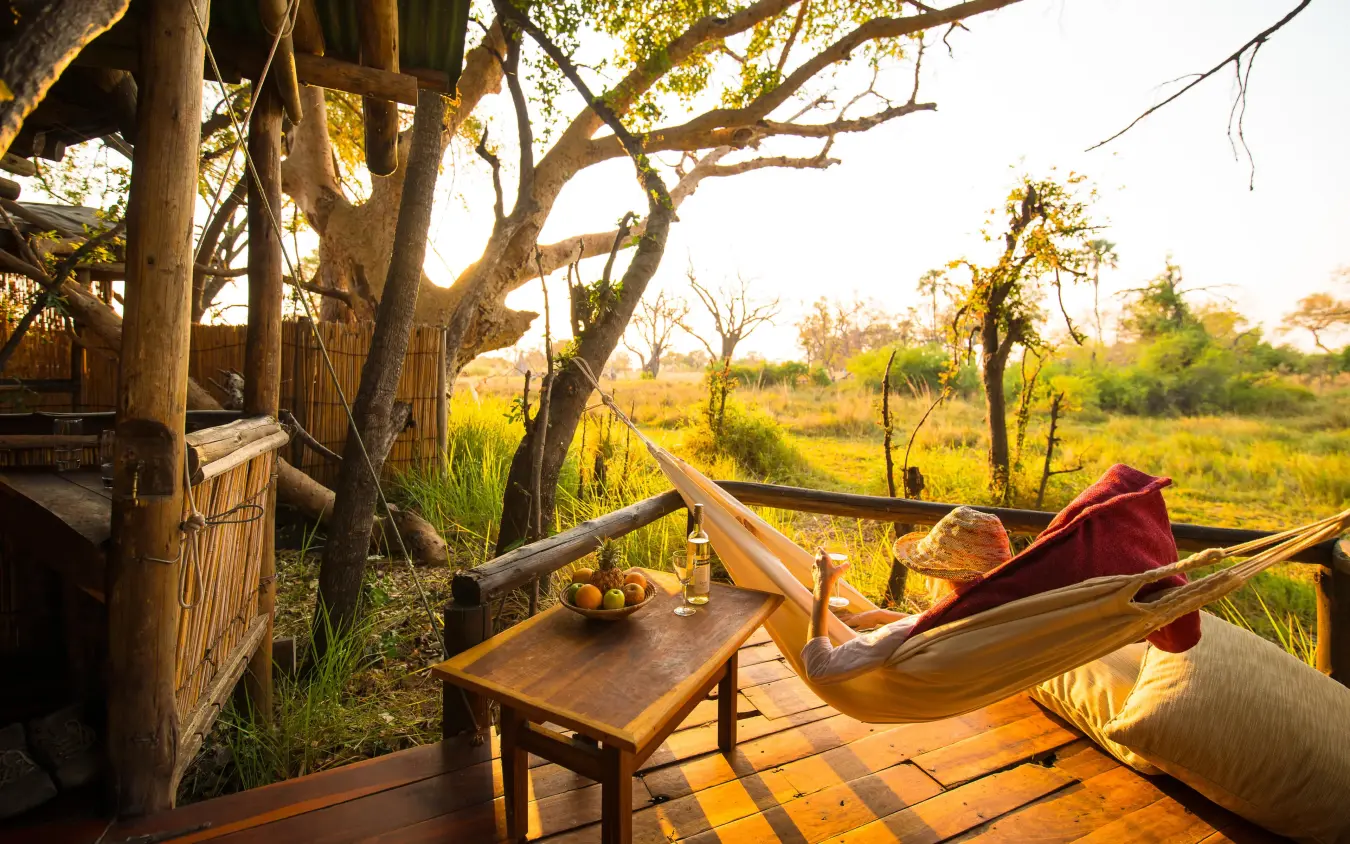
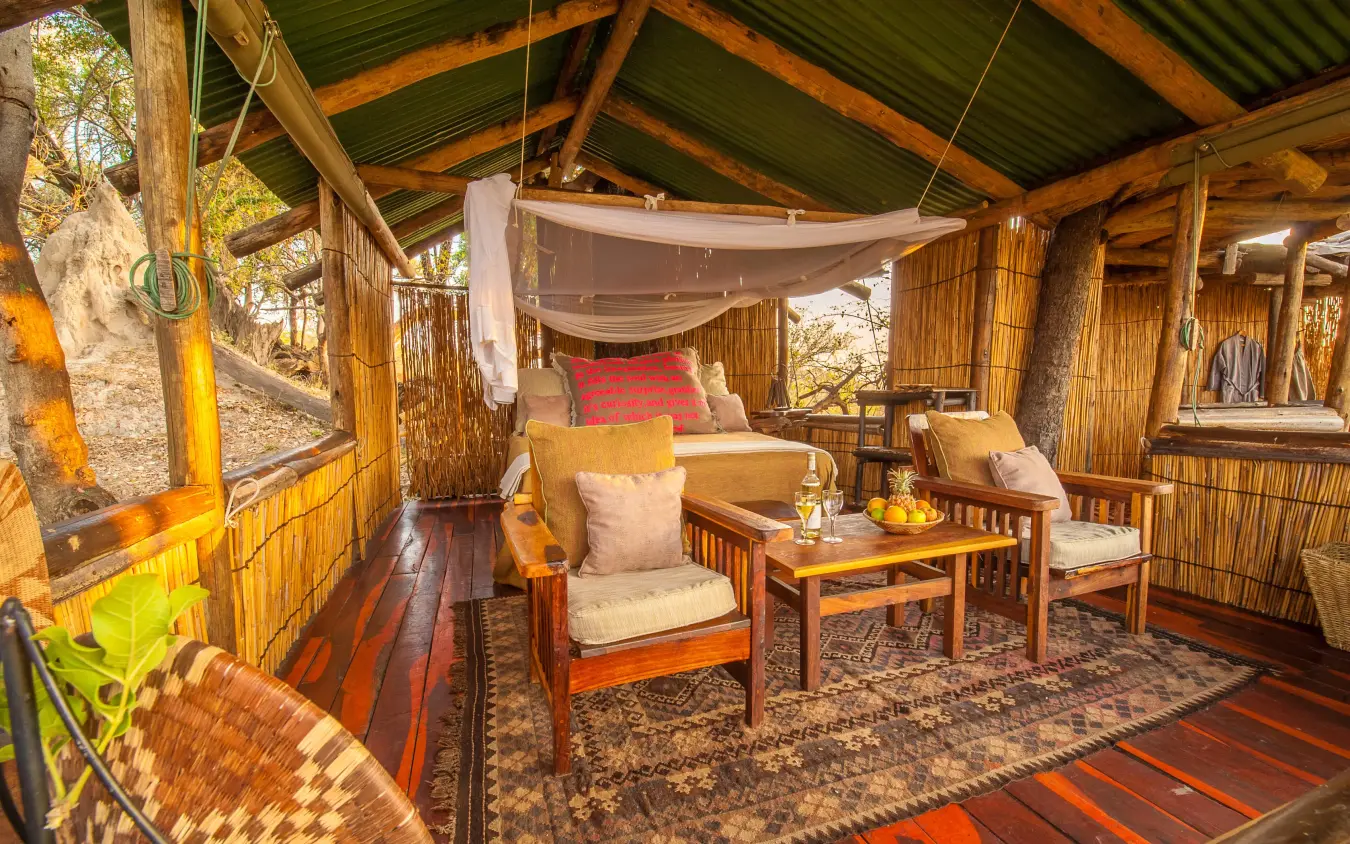
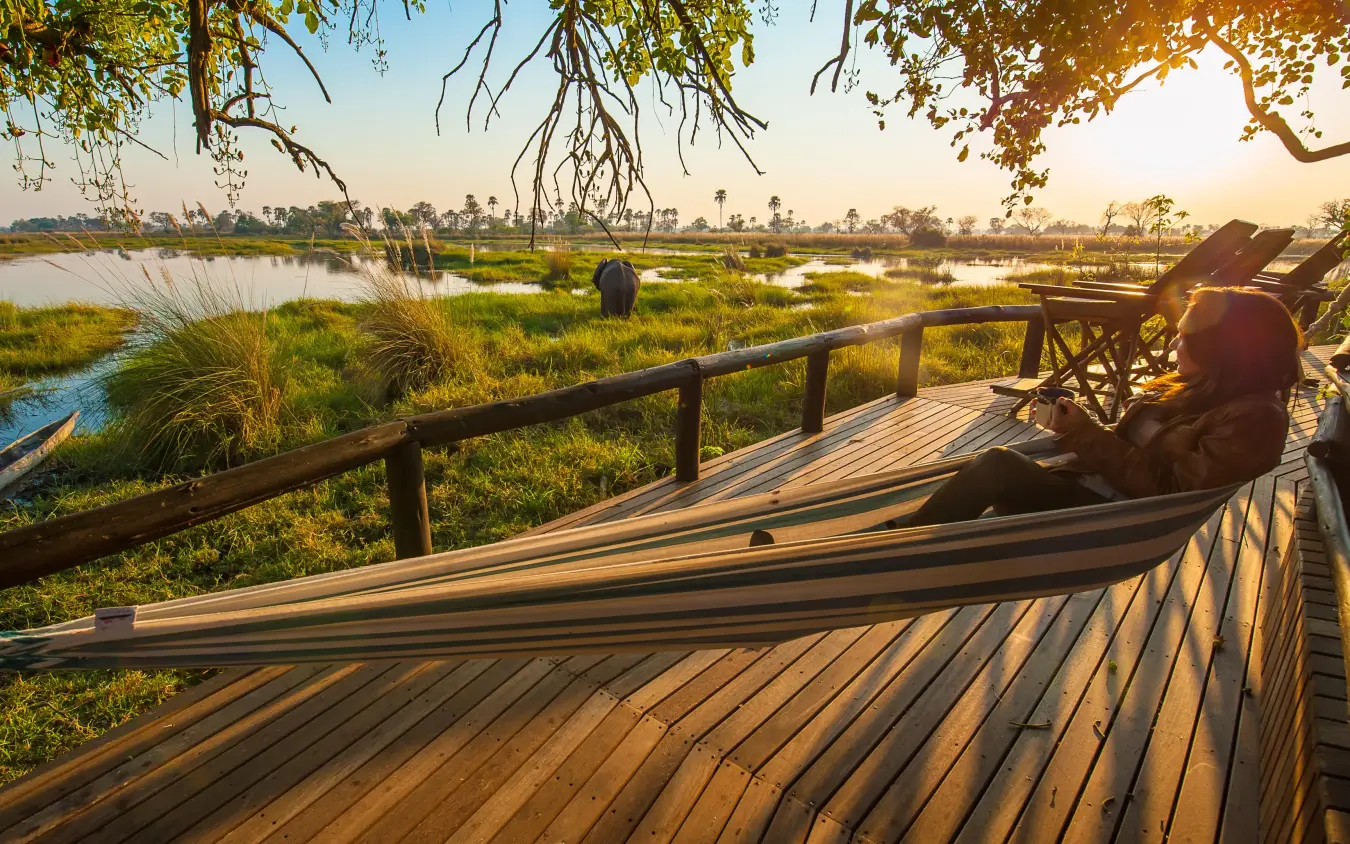
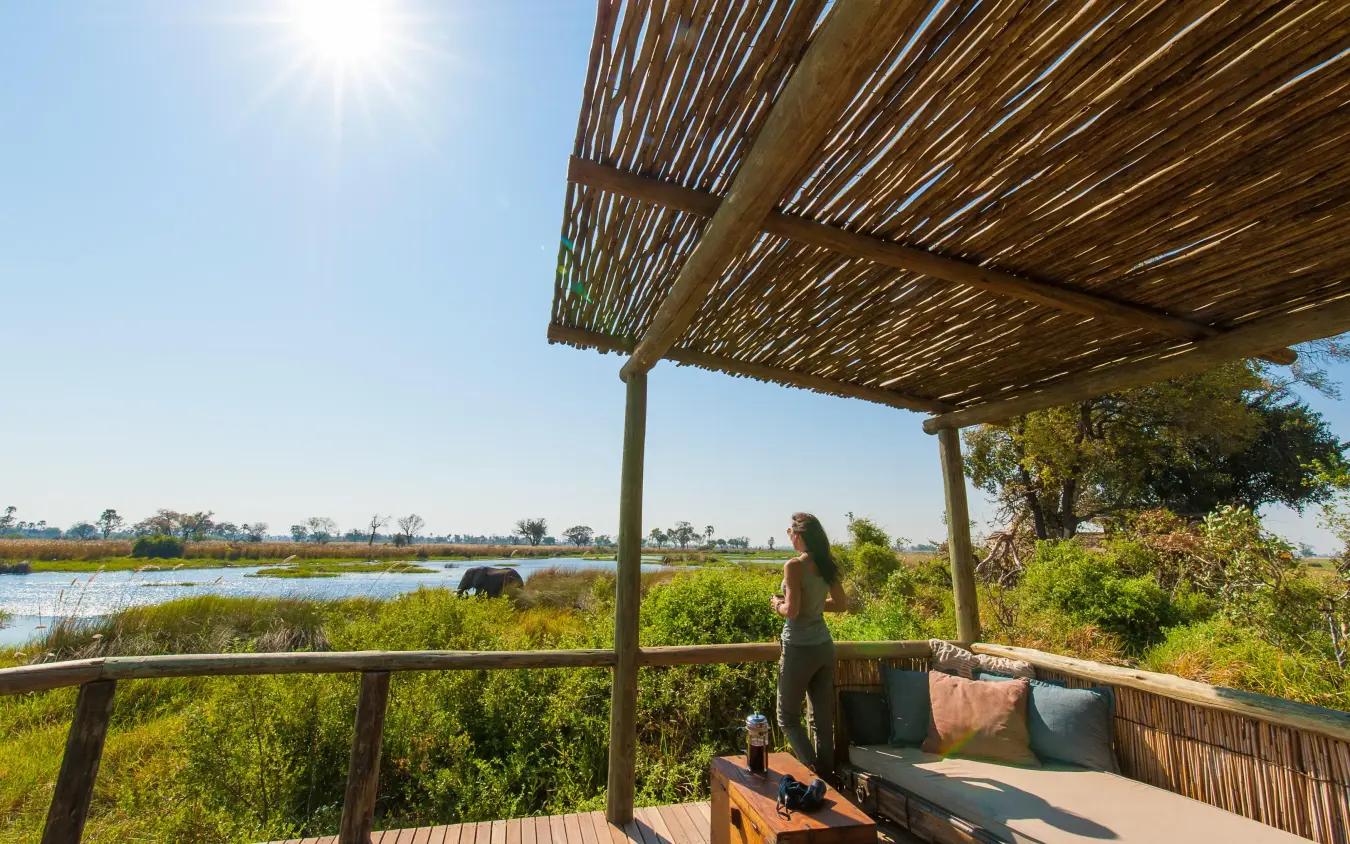
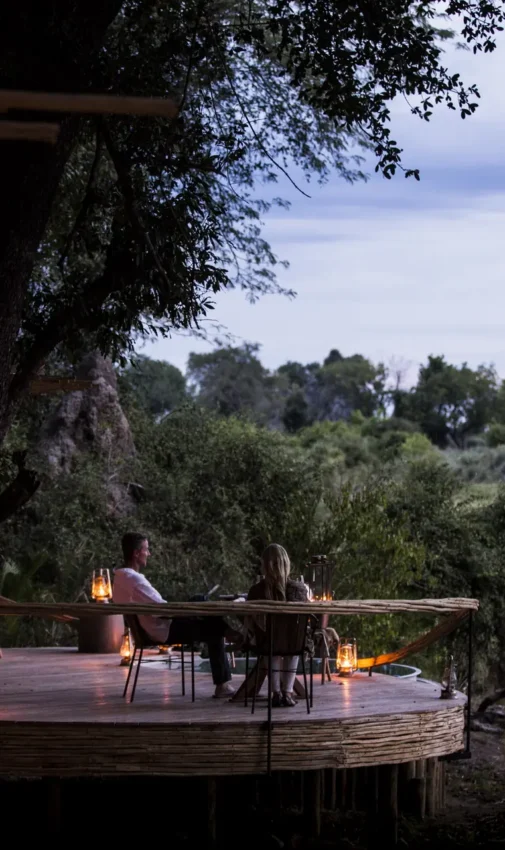
Person relaxing on wooden deck overlooking wetland landscape, Delta Camp, The Okavango Delta, Botswana

Peter Sandenbergh bought Delta Camp in 1984. He gave three decades to building low-impact tourism in the Okavango Delta, and when he died in 2016 the camp passed to his wife and children, who run it today. They are joined by staff whose families have worked here across generations, and the knowledge of these channels has been passed down among them.

The sound of hippos grazing below arrives unfiltered.

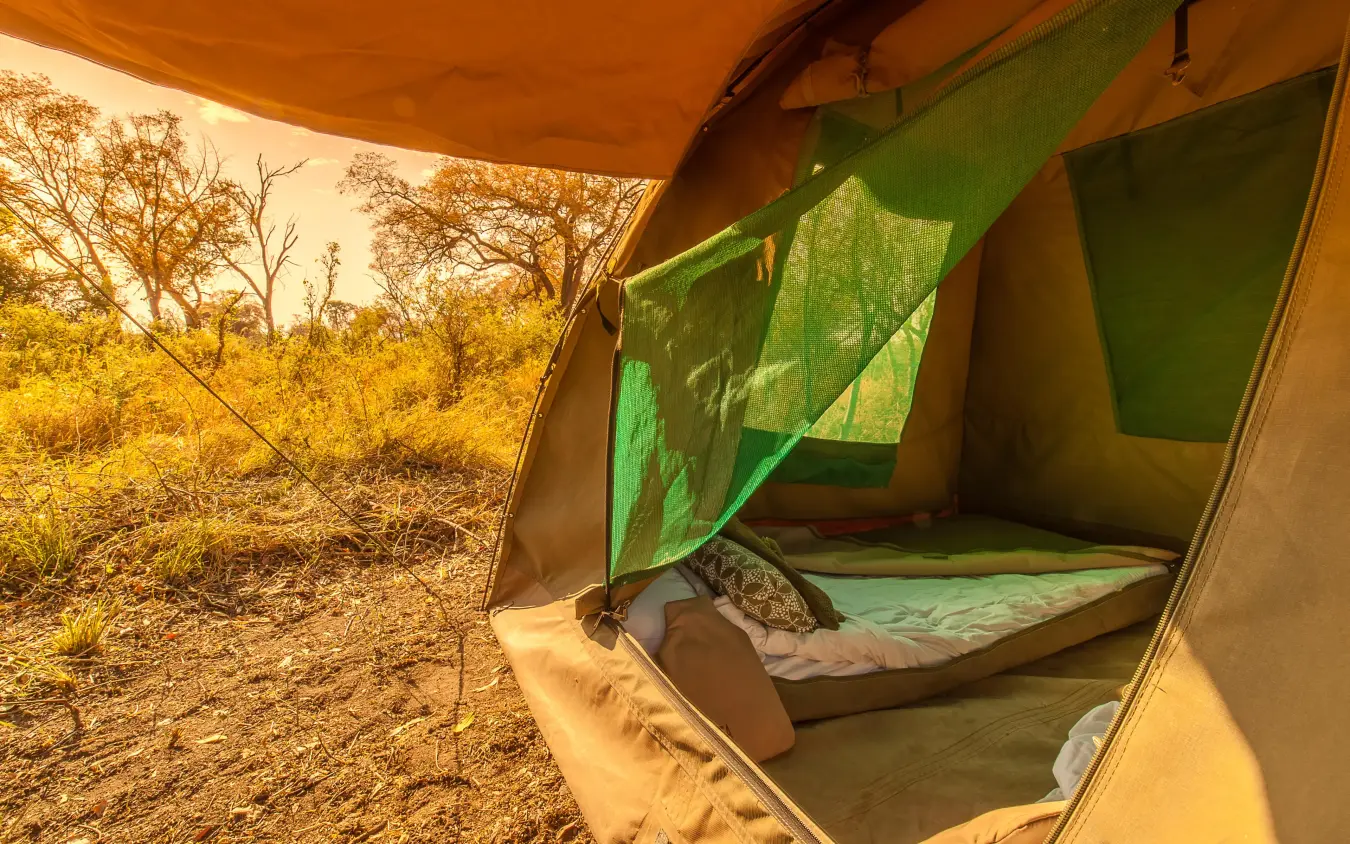
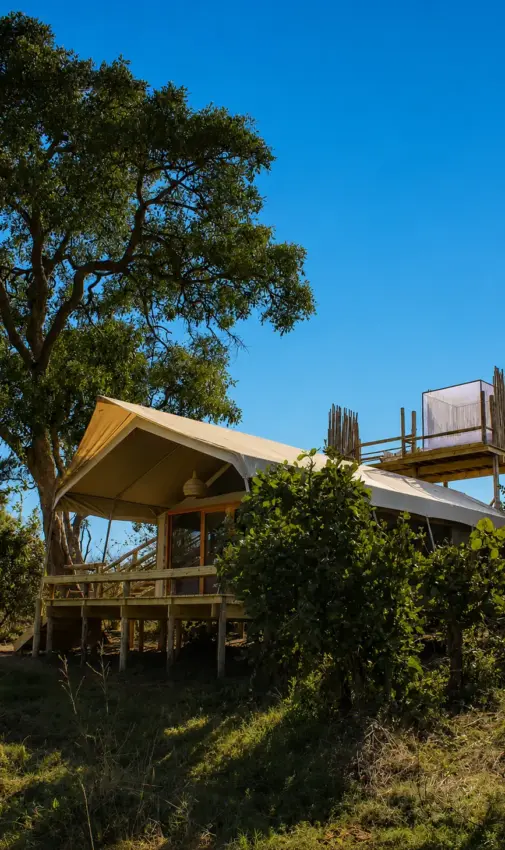
The chalets are built of lethaka reed, local timber and grass thatch, raised on piles so that no concrete touches the island floor. No glass separates the beds from the floodplain, only mesh screens and canvas rolls. The sound of hippos grazing below arrives unfiltered. Some are built around the trees that share their platform, roots and trunks passing through floor and roof.

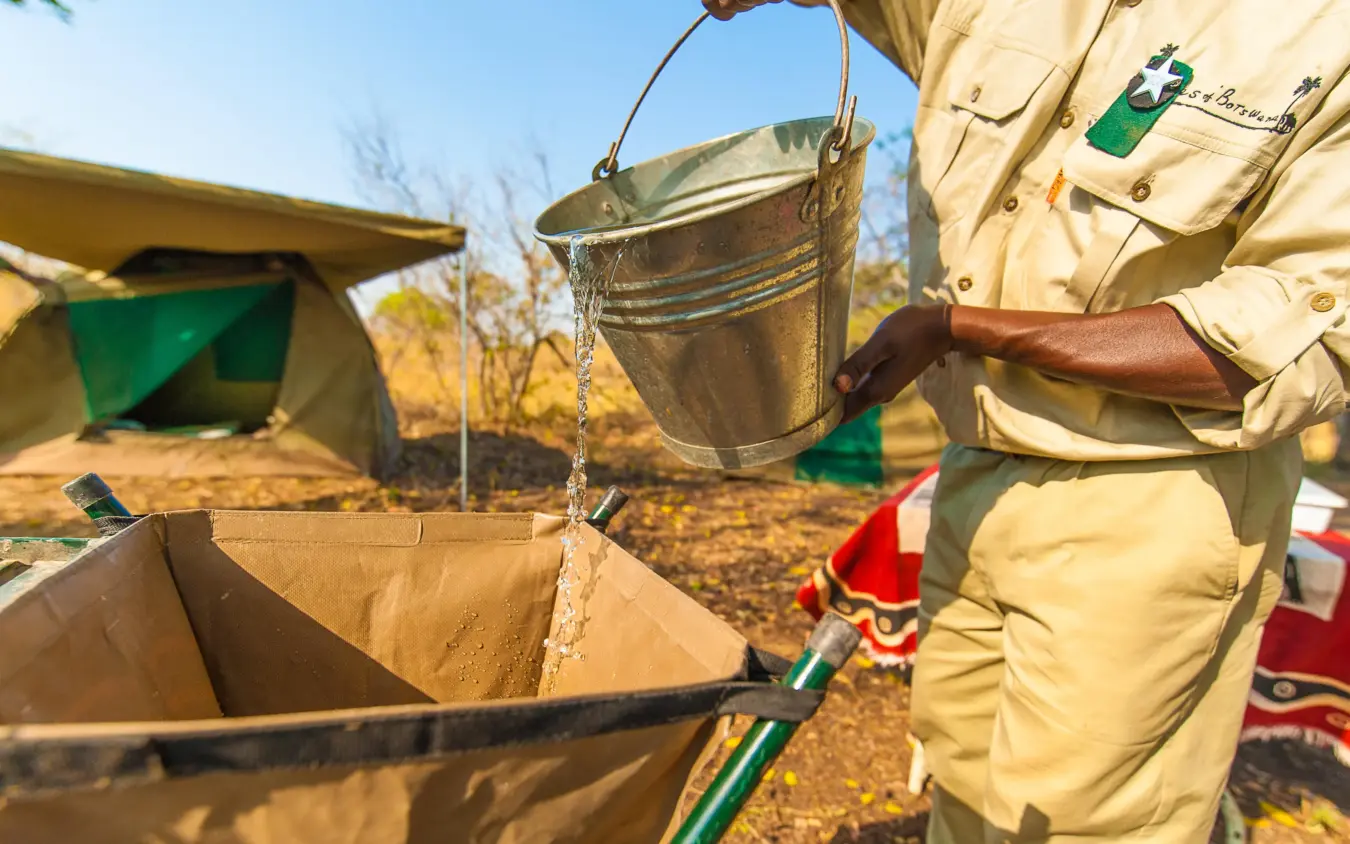
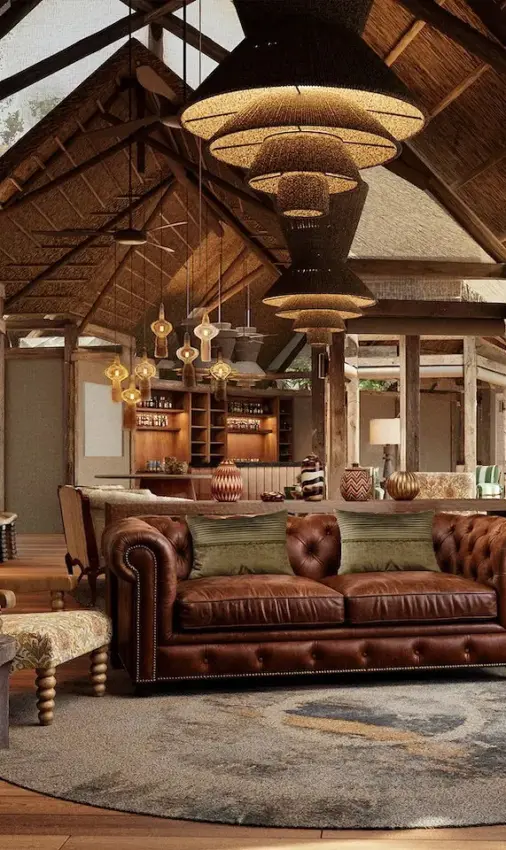
Interior view of safari tent with green mosquito netting, Delta Camp, The Okavango Delta, Botswana 01

accommodation

Seven Chalets Among Palms and Mangosteen

Seven chalets of lethaka reed, timber and thatch stand on piles among palms and mangosteen, among them family units and one built up into the tree canopy. There is no glass in the frames, only open fronts, mesh screens and canvas rolls, with wrap-around decks over the floodplain, semi-open bathrooms and solar-heated water.

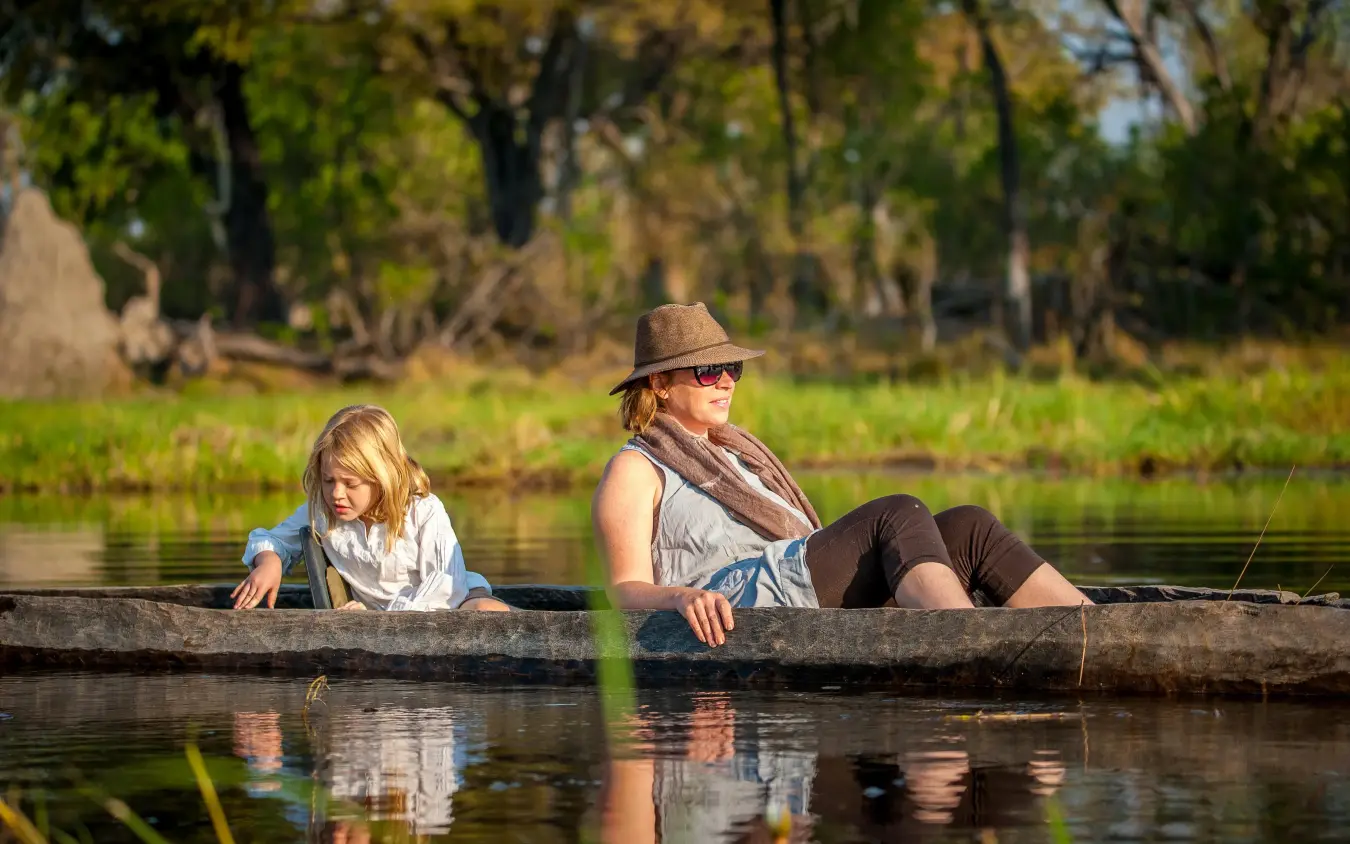
Adult and child in traditional dugout canoe on waterway, Delta Camp, The Okavango Delta, Botswana 02

activities

Walking Safaris and Mokoro Around Chief's Island

Twice-daily walking safaris and mokoro outings around Chief's Island and the Moremi Game Reserve, each led by a private guide. Full-day walks with a picnic, multi-night fly-camping trails onto Chief's Island, guided visits to a Delta village, and birding for species including Pel's fishing owl. No game drives, night drives or motorboats.

Guests walking through tall grass on guided safari walk, Delta Camp, The Okavango Delta, Botswana 03

conservation

Batswana Guides Direct Tourism Income to Village Schools

Every guide and staff member is Batswana, drawn from villages near the camp, several from families who have worked here since 1984. Tourism income is directed with village elders toward schooling, medical access and local infrastructure. Hand-carved wooden mekoro, bought from village woodcarvers, keep that craft in work; the camp runs on solar power.

ready to get started?

Get in touch and let’s start the conversation. An initial consultation helps us understand what you’re looking for, whether that’s specific experiences, luxury touches, or marking a special occasion, and from there we’ll guide you through what’s possible so you can decide if we’re the right fit.

Alternative accommodation in the okavango delta

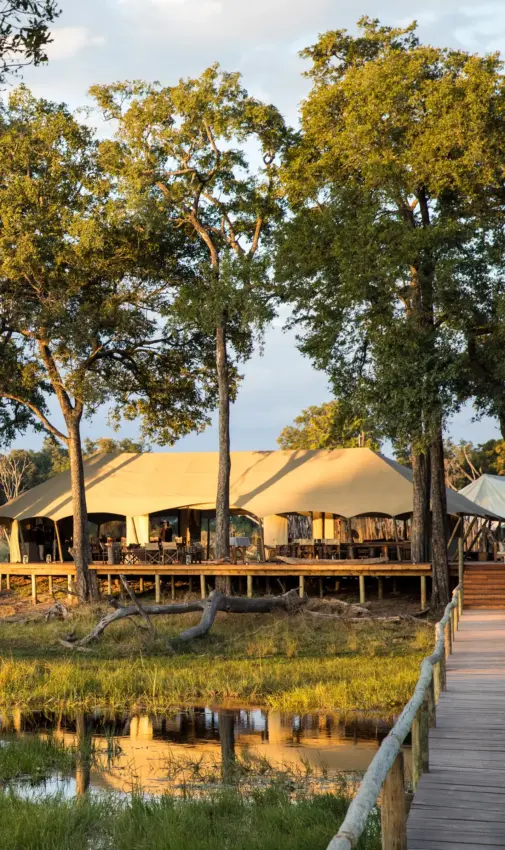
Illuminated safari lodge dining area under ancient trees at dusk, Duba Plains, The Okavango Delta, Botswana 01

Duba Plains

The Okavango Delta

Person tending campfire at sunset during outdoor gathering, Kweene Trails, The Okavango Delta, Botswana 02

Kweene Trails

The Okavango Delta

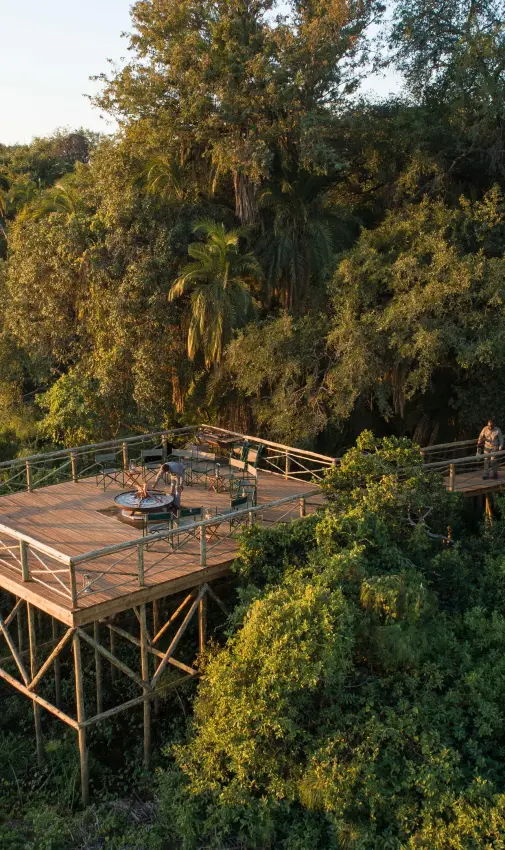
Illuminated safari lodge deck with fire pit at dusk, Khwai Leadwood, The Okavango Delta, Botswana 03

Khwai Leadwood

The Okavango Delta

04

Sable Alley

The Okavango Delta

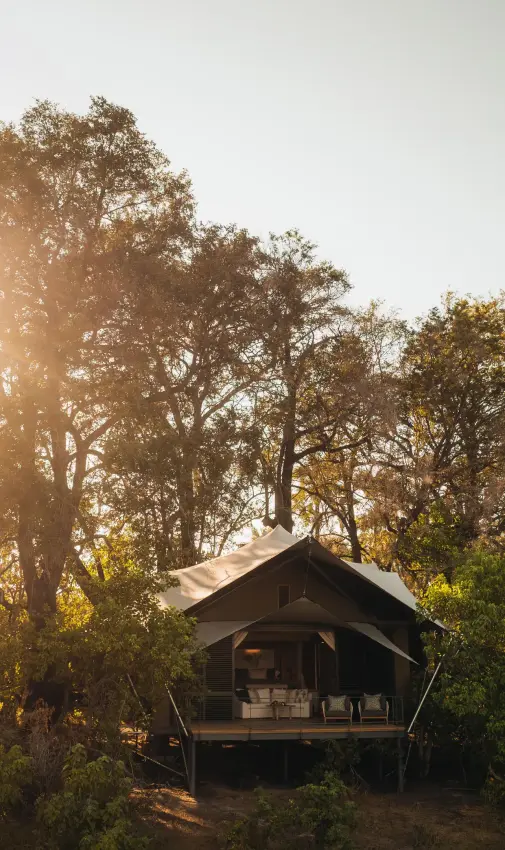
Safari tent accommodation nestled among tall trees at golden hour, Chitabe Camp, The Okavango Delta, Botswana 05

Chitabe Camp

The Okavango Delta

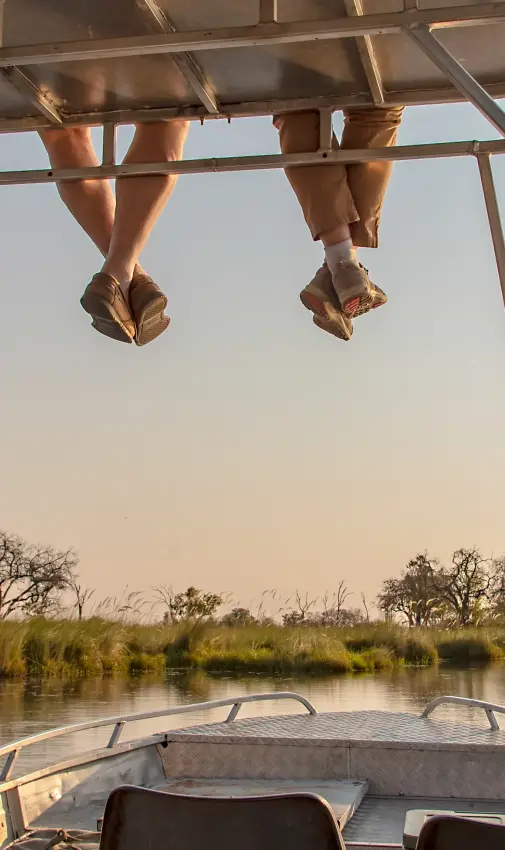
Boat with dangling feet on waterway at sunset, Kwando Splash Camp, The Okavango Delta, Botswana 06

Kwando Splash Camp

The Okavango Delta

Wooden deck dining area beneath ancient tree overlooking savanna landscape at dusk, Mombo Camp, The Okavango Delta, Botswana 07

Mombo Camp

The Okavango Delta

08

Little Sable

The Okavango Delta

09

Tumani Tented Camp

The Okavango Delta

10

Mbamba

The Okavango Delta

11

Okuti

The Okavango Delta

12

Shinde Footsteps

The Okavango Delta

Safari tent accommodation with warm interior lighting at dusk, Gomoti Plains, The Okavango Delta, Botswana 13

Gomoti Plains

The Okavango Delta

14

Karangoma

The Okavango Delta

15

Expeditions Camp

The Okavango Delta

16

Duke’s East

The Okavango Delta

17

North Island Okavango

The Okavango Delta

18

Kanana Nyana

The Okavango Delta

19

Duke’s Camp

The Okavango Delta

20

Tawana

The Okavango Delta

frequently asked questions

By light aircraft to the camp's own airstrip, about twenty minutes from Maun or fifty from Kasane, and then the last stretch by mokoro, roughly five minutes when the water is up, or twenty to thirty minutes on foot when it is not.

That final leg tells you what kind of camp this is. Soft bags only on the flights, twenty kilograms a person including hand luggage.

Yes. Both TravelHealthPro, the UK's official travel health service, and the CDC place northern Botswana among the regions where antimalarial tablets are usually recommended. The risk runs highest from October to May through the summer rains and falls away in the dry winter without ever disappearing.

Speak to a travel clinic or your doctor before you go, since guidance changes and the right tablets vary from person to person. Take the usual care against bites once the sun drops over the floodplain.

Yes, all ages are taken, family rooms can be arranged and child-minding is available. Activities are run privately for the family rather than in a group.

The thing to weigh is that this is a walking and mokoro camp rather than a vehicle one. There are no game drives here at all, so a child who would be happiest bouncing around in a 4x4 is better served elsewhere. Children who take to water and to walking love it.
No, and that is a deliberate policy rather than a technical limitation. There is no internet at the camp.

It is a reed and thatch camp on a palm island reached by mokoro, and the absence of a signal is part of what people come for. If somebody genuinely has to stay reachable, tell us before you book and we will suggest an alternative in the Delta.

The dry winter from May to October brings clear days and cold starts, and the annual flood is usually at its highest between June and August, which is when the mokoro routes are at their best. Summer, from November to March, is hot and humid with afternoon storms.

For a camp built around water and walking, the flood matters more than the calendar. June to September is the pick. Neutral colours, a warm jacket for early mornings, closed shoes for the walking, and everything in a soft bag under twenty kilograms.

rated five stars by our clients

other areas in botswana

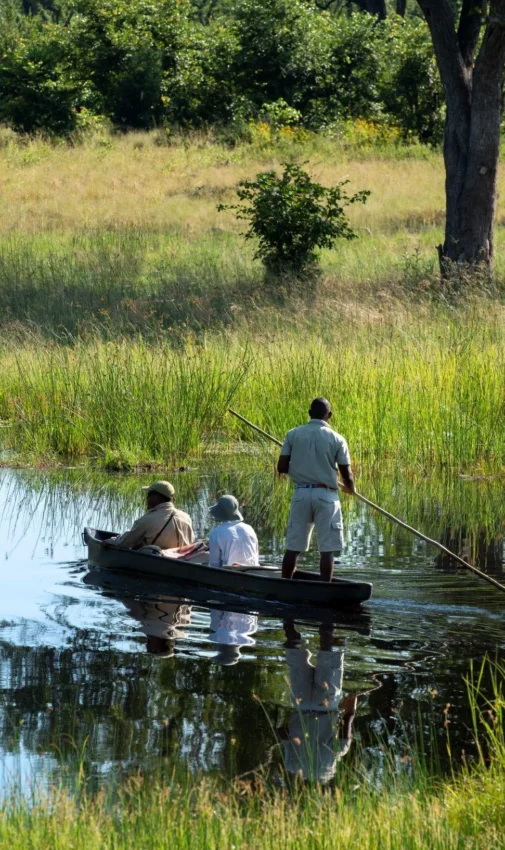
Guests poling traditional boat through wetland waterway, Linyanti Wildlife Reserve, Botswana 01

Linyanti Wildlife Reserve

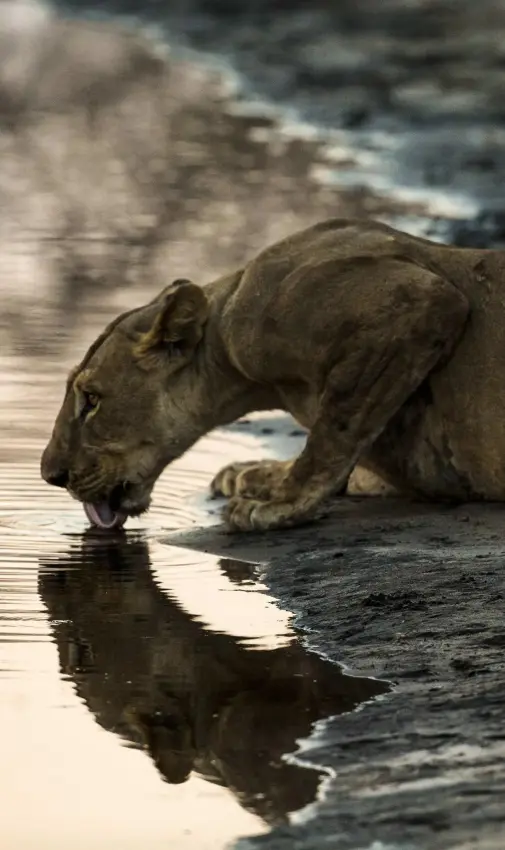
Lion drinking from water's edge at sunset, Selinda Reserve, Botswana 02

Selinda Reserve

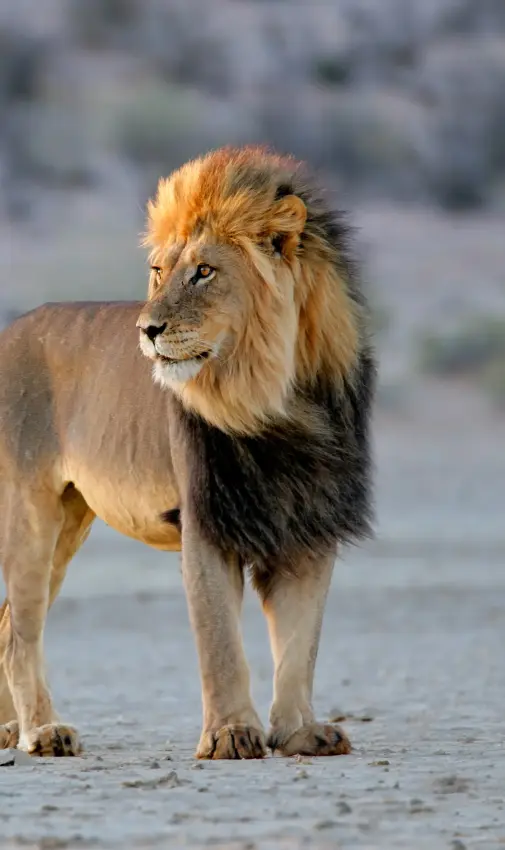
Male lion standing on sandy ground in natural habitat 03

Central Kalahari

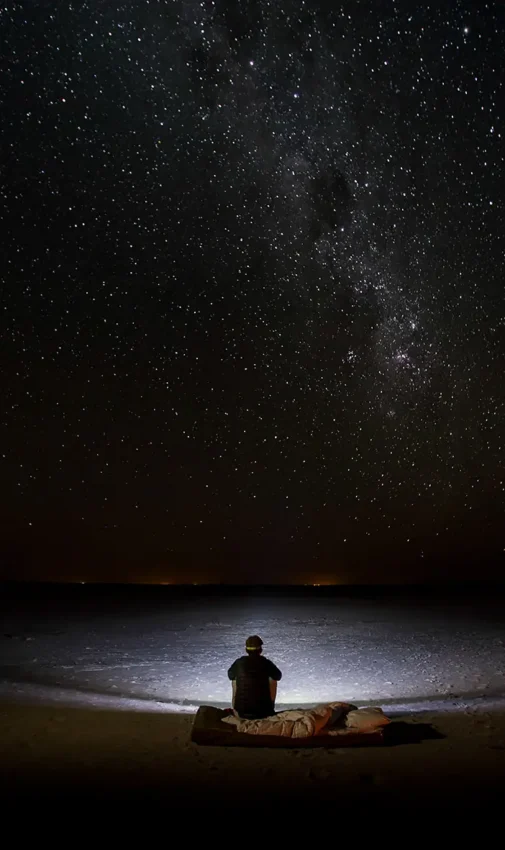
Person sitting alone under starry night sky, Makgadikgadi Pans, Botswana 04

Makgadikgadi Pans

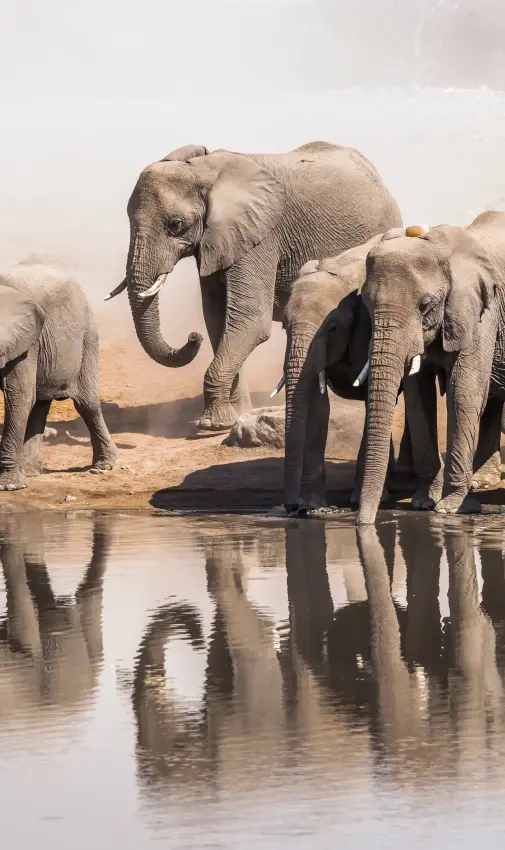
Herd of elephants drinking at waterhole with reflections 05

Chobe

06

Maun

Planning a journey together

our approach

remote, exclusive
& personal

Every journey starts with a conversation. We take the time to understand your vision before we start planning.

Whether by phone or in person, we work with you directly to shape something that is considered, personal, and expertly delivered.

get in touch
destinations ideas & inspiration our process about us contact us