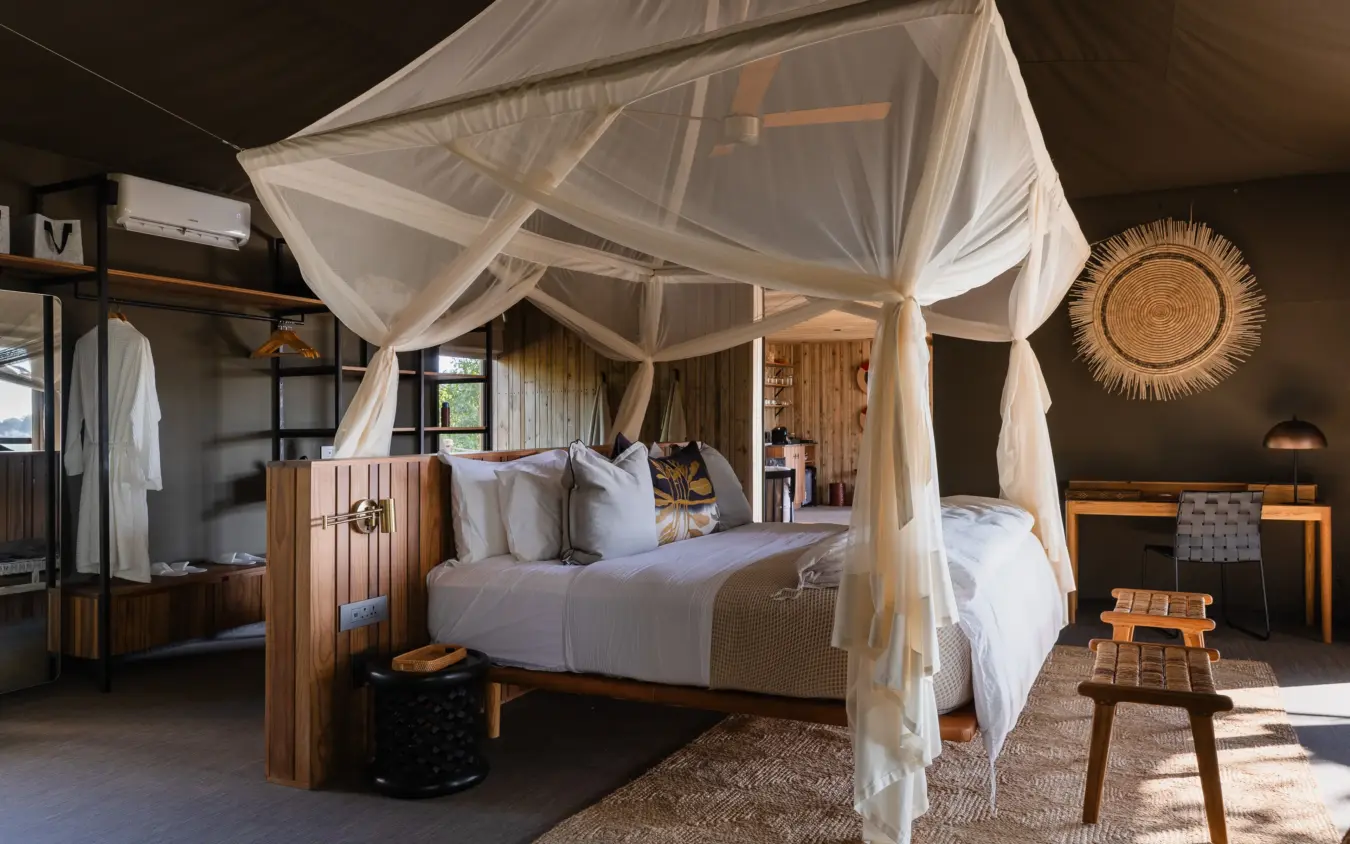
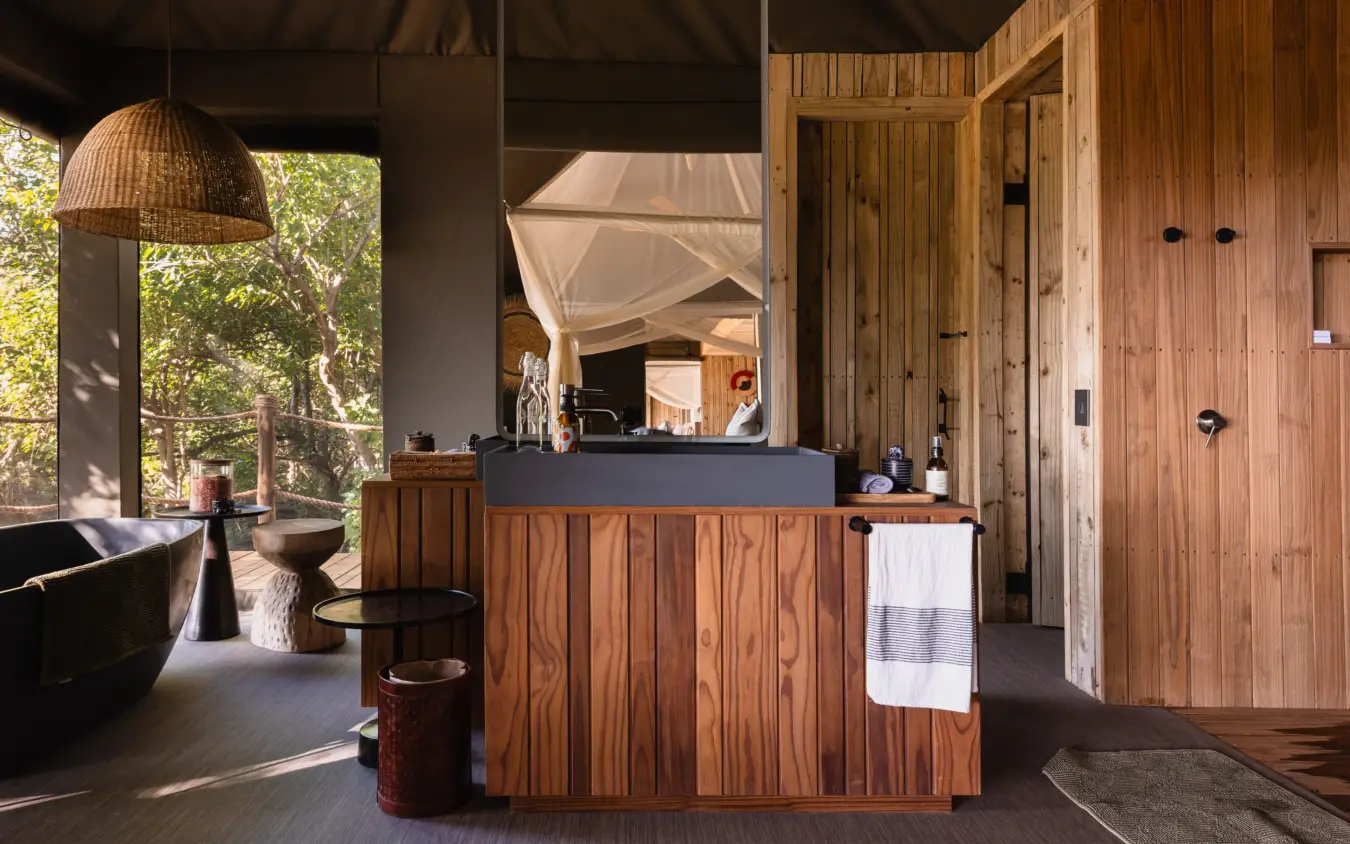
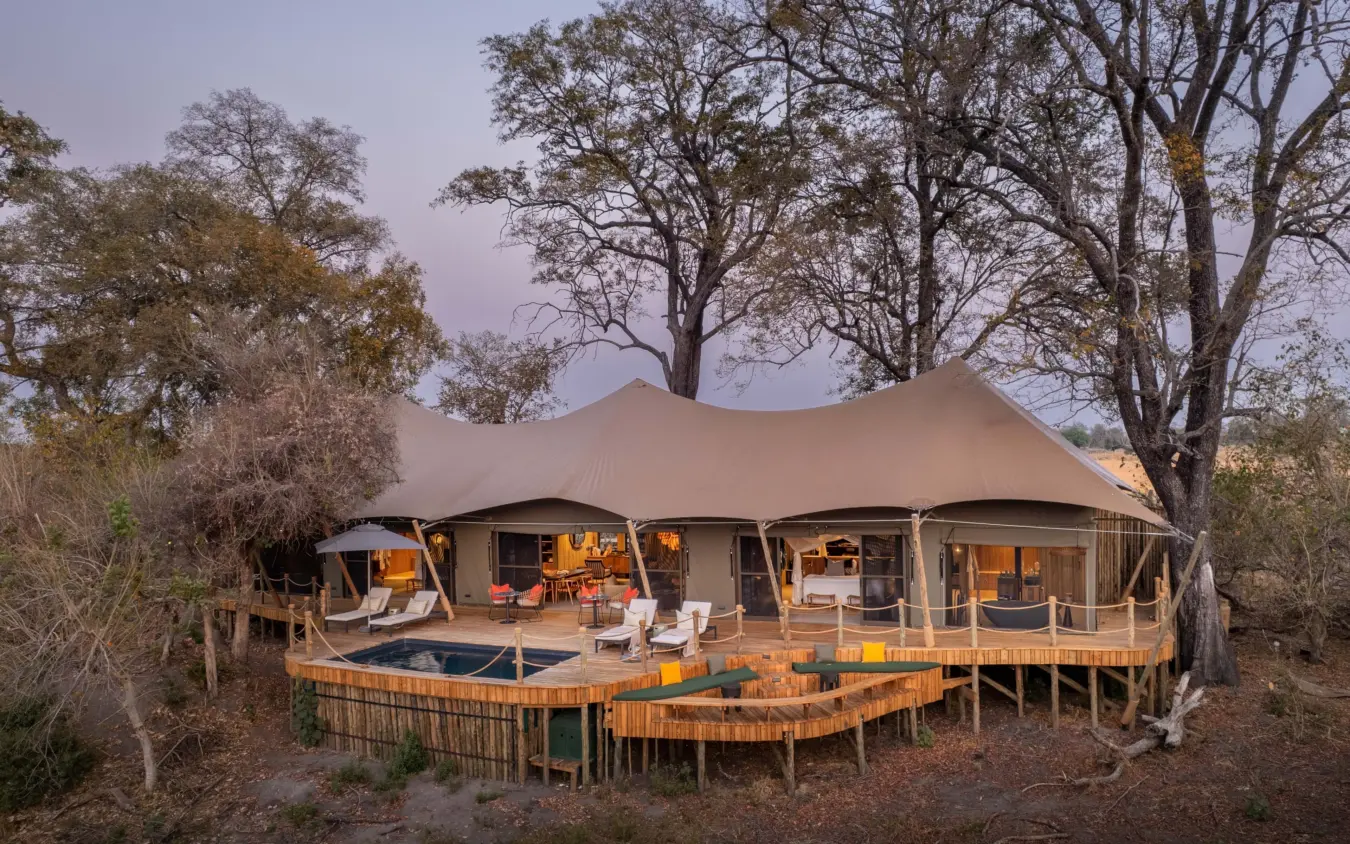
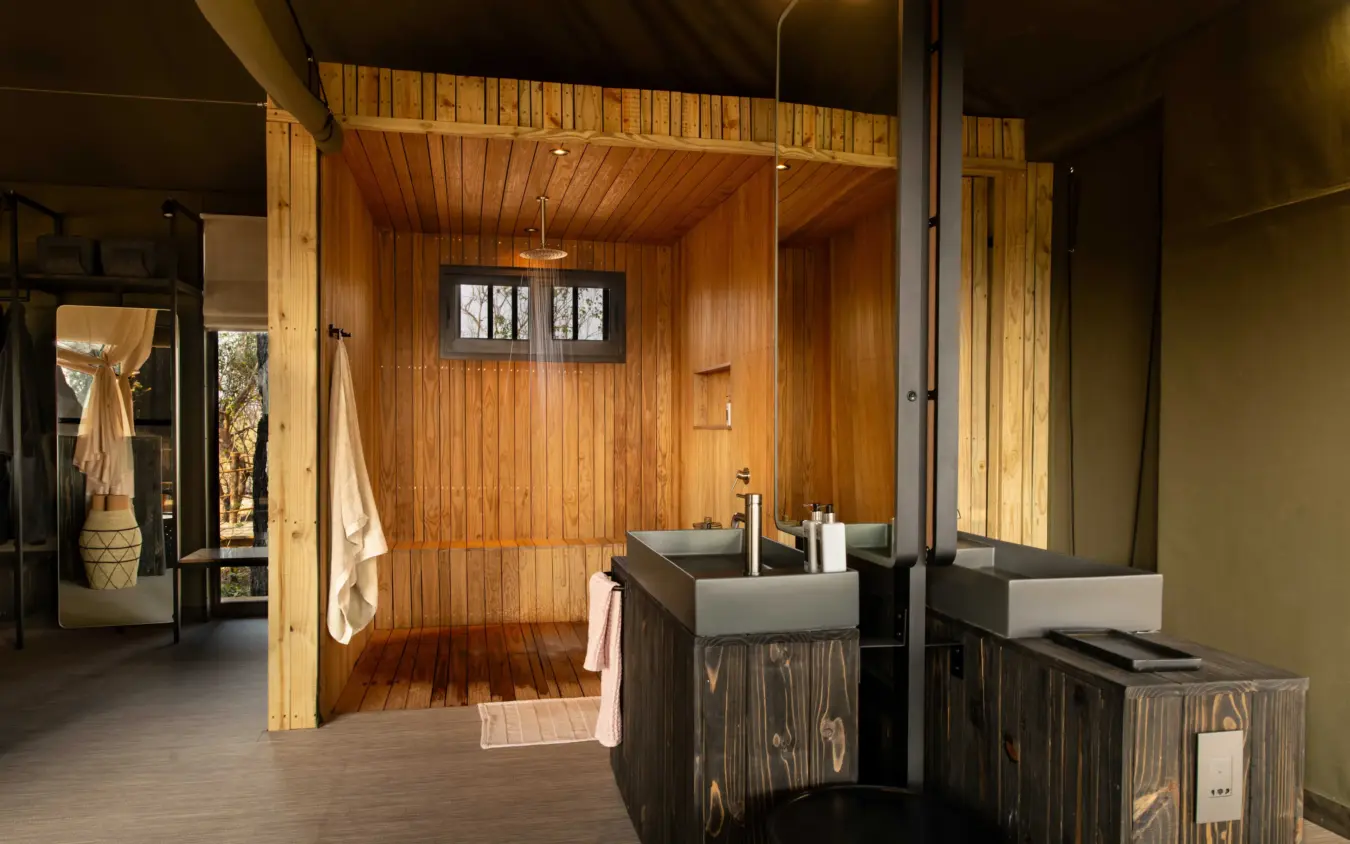
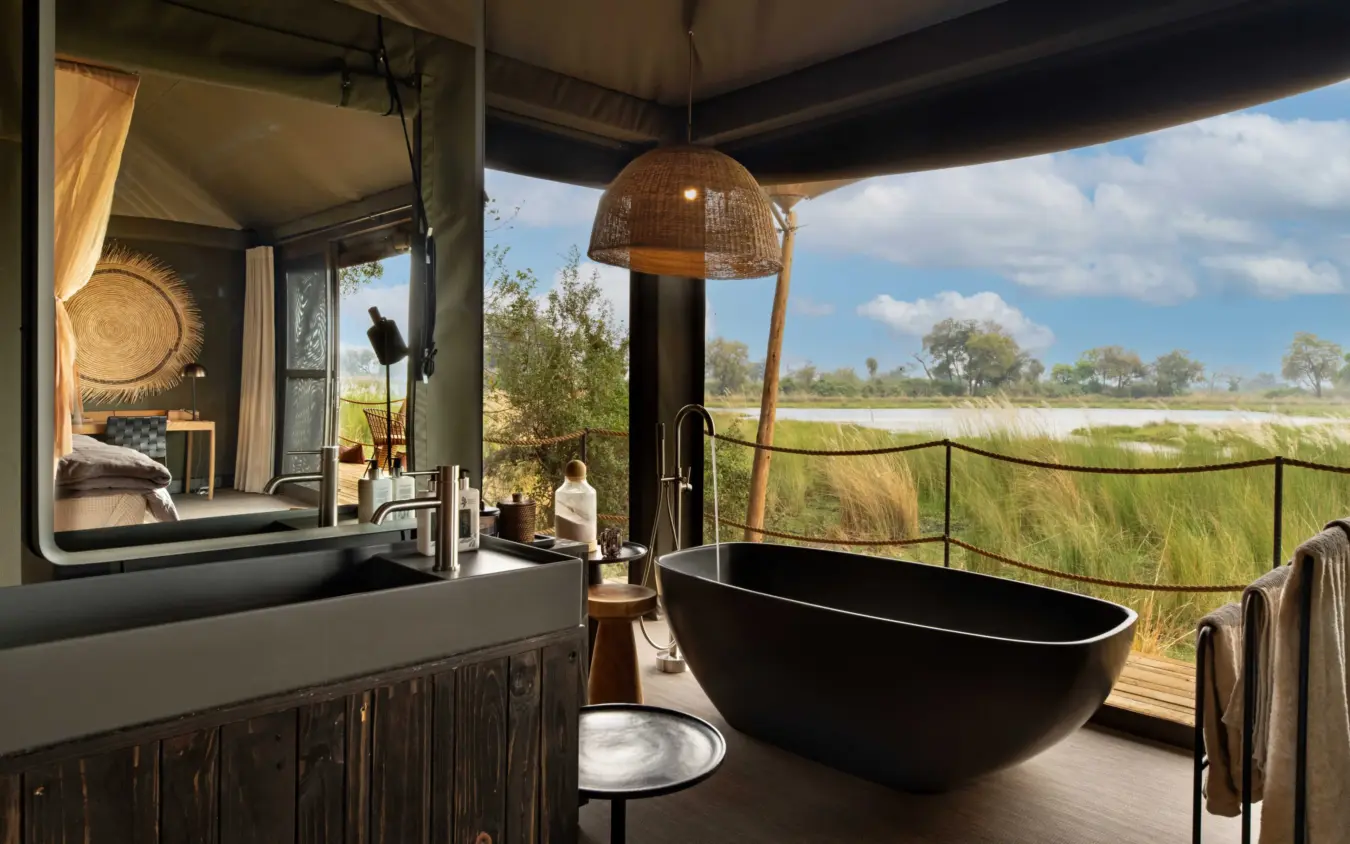
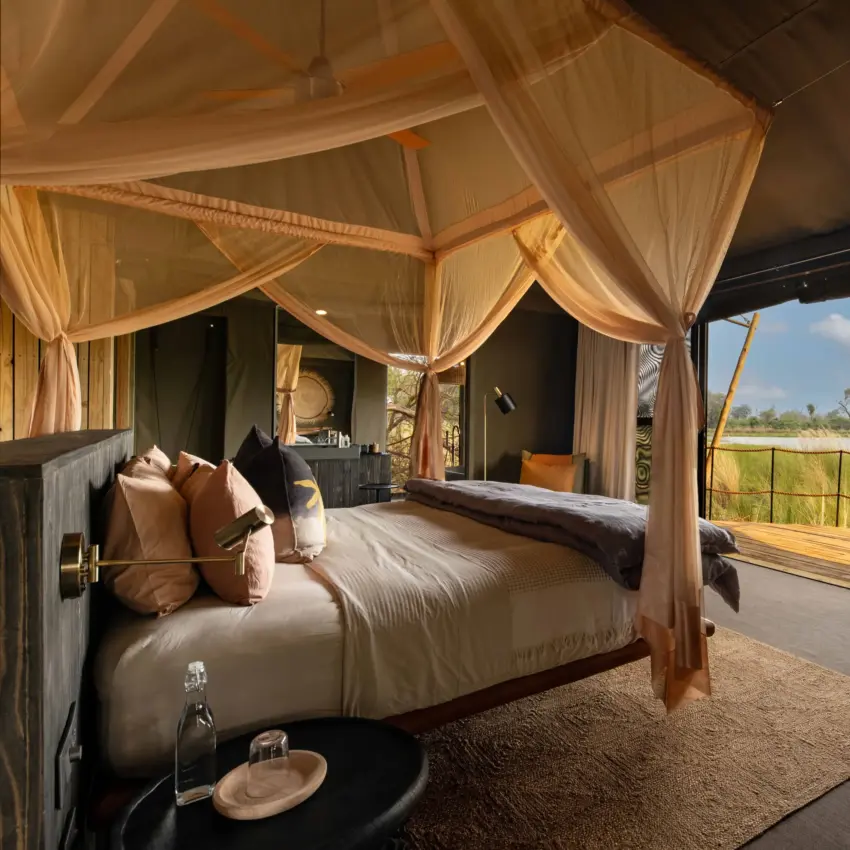
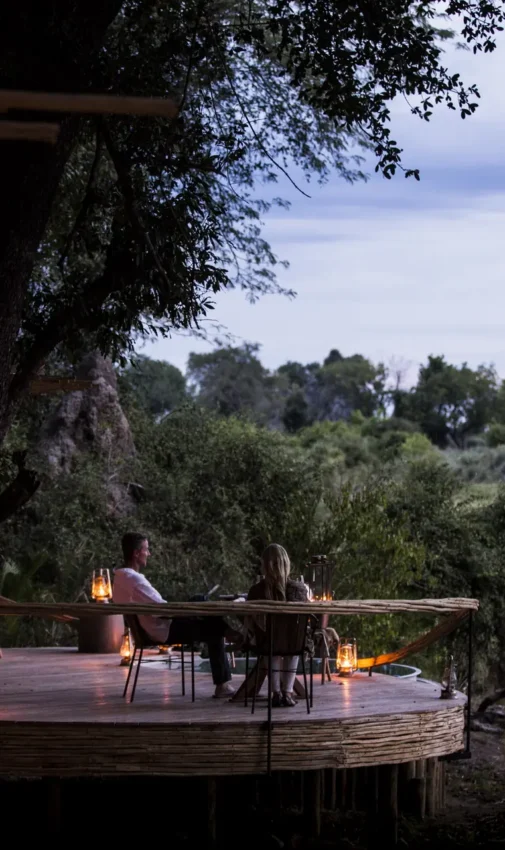
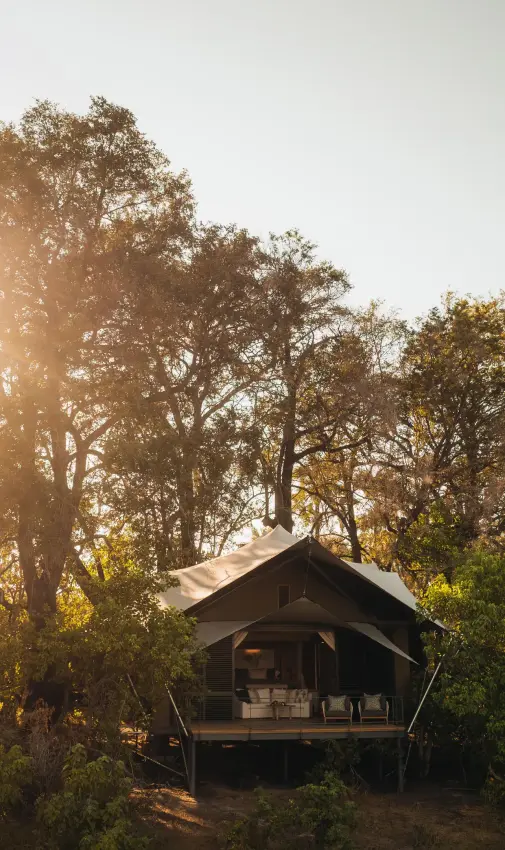
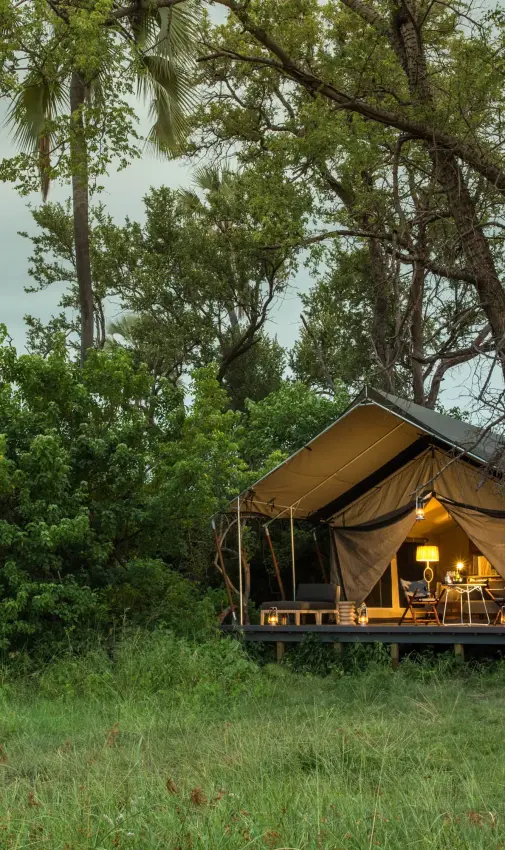
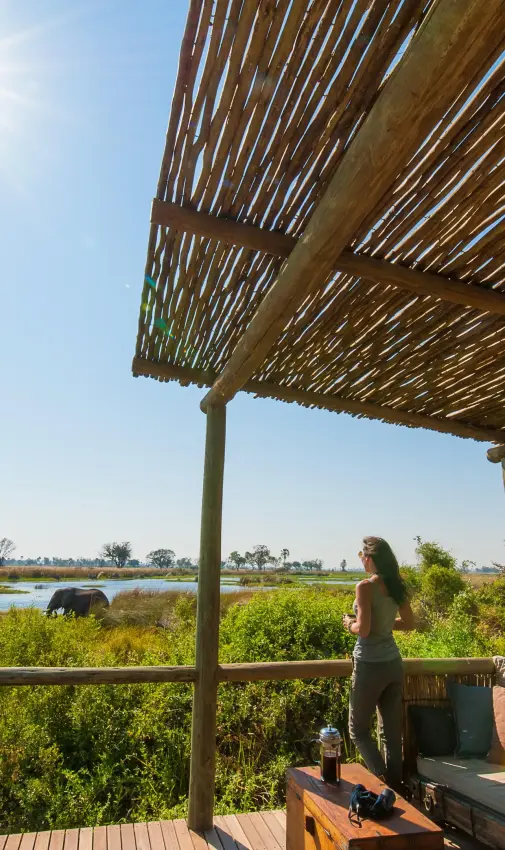
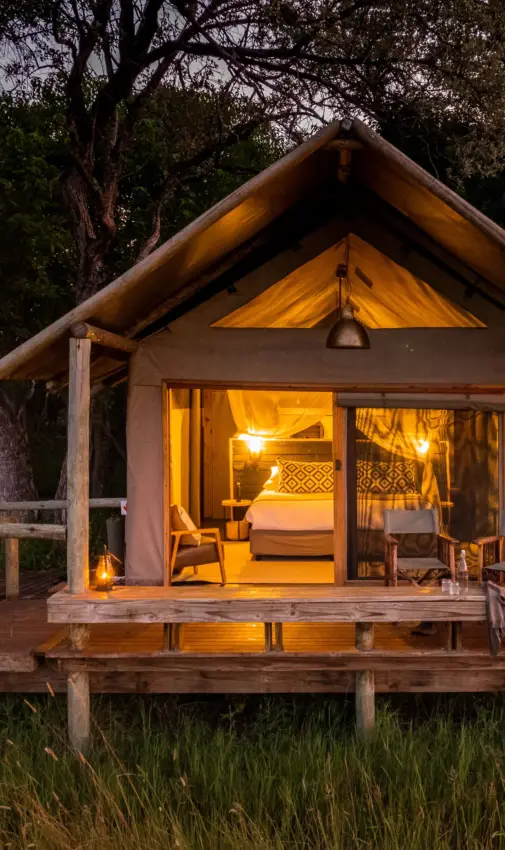
Each suite stands on raised timber decking under ebony, mangosteen and leadwood trees, set well apart along the island’s tree line and turned outward to the water. Solid timber panelling, canvas and mesh give way to a lounge, a small kitchenette and a king bed under a walk-in mosquito net, with a cooling unit above it for summer and a fireplace for winter. The bathrooms hold twin basins, a freestanding tub and showers indoors and out. Each deck carries its own plunge pool and a sunken sundeck.
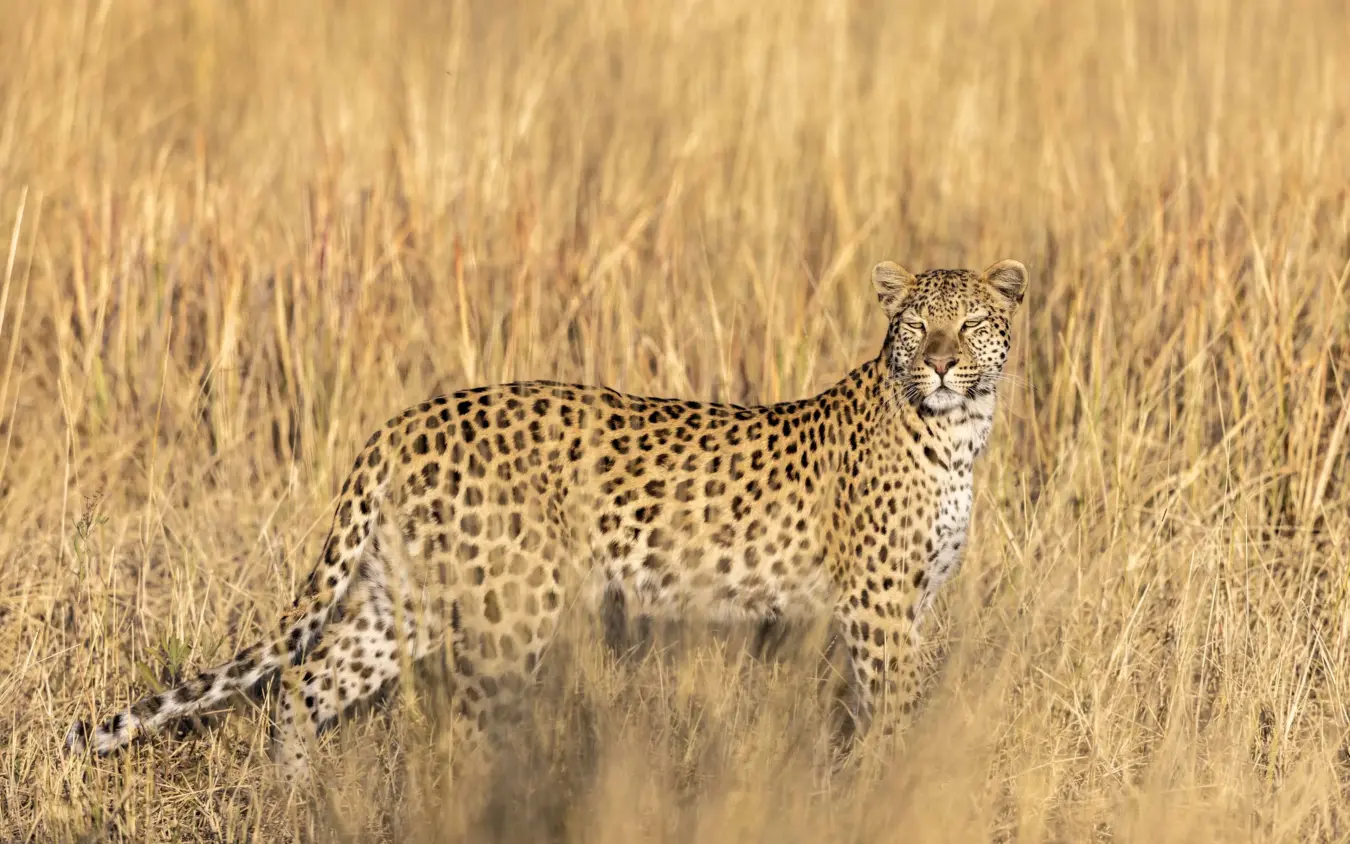
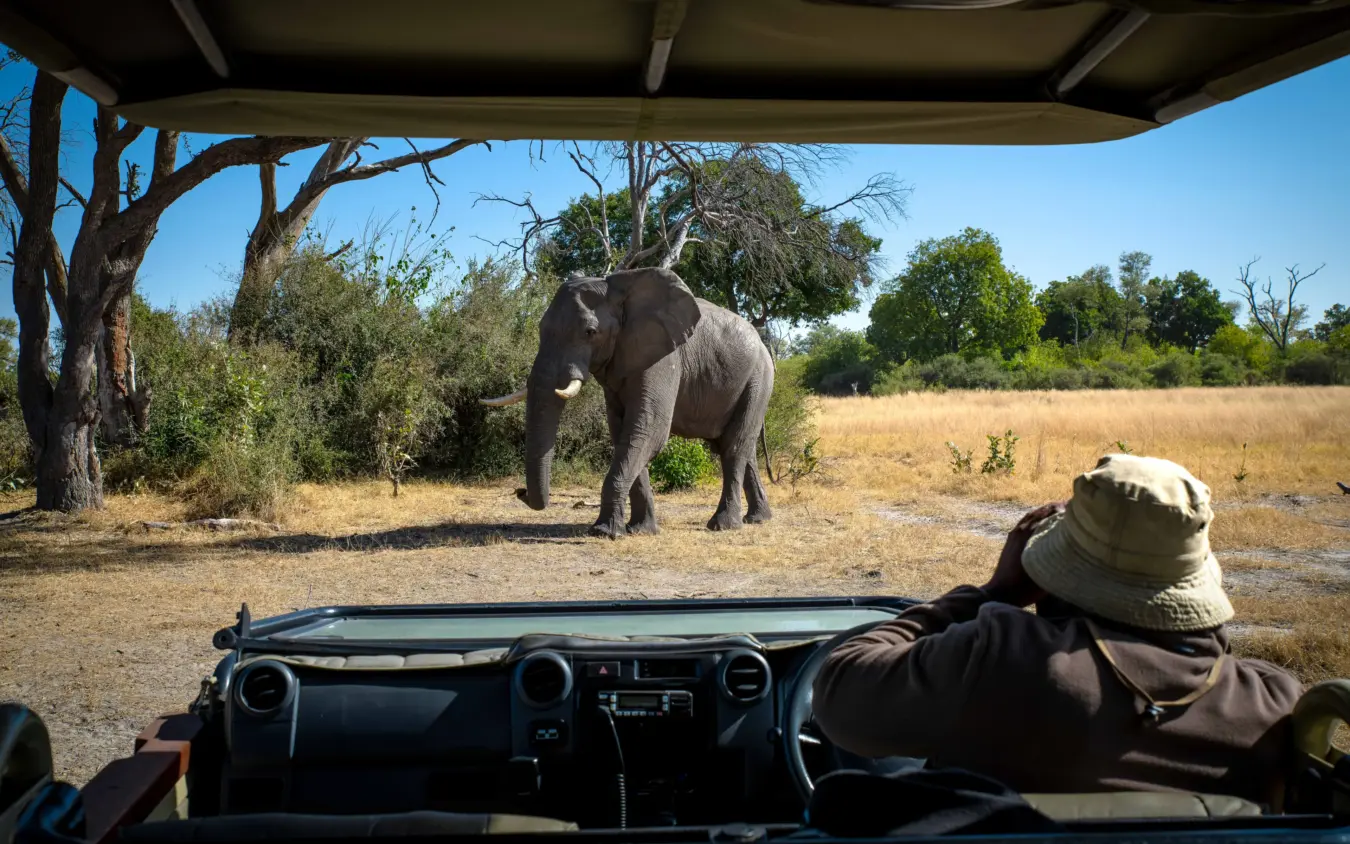
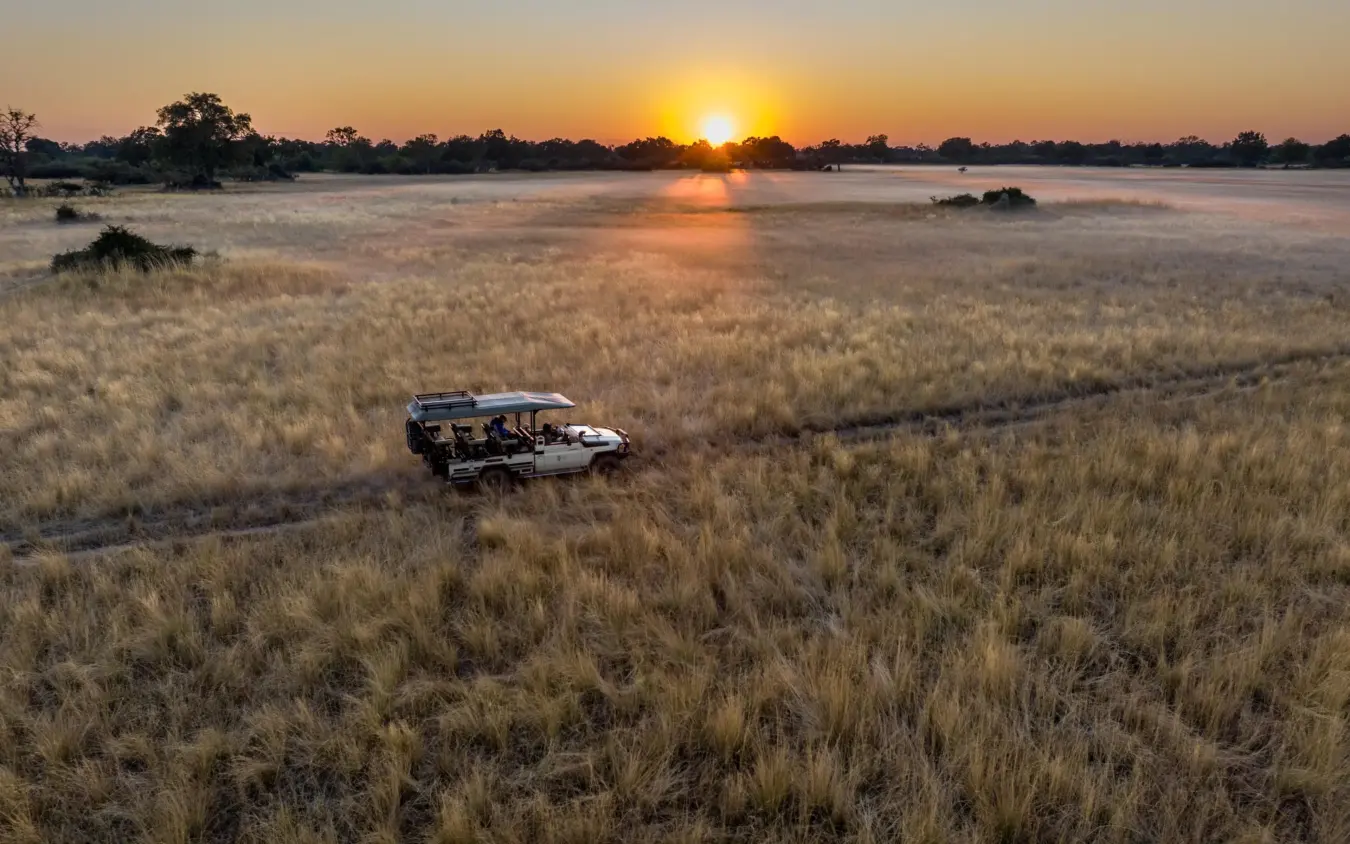
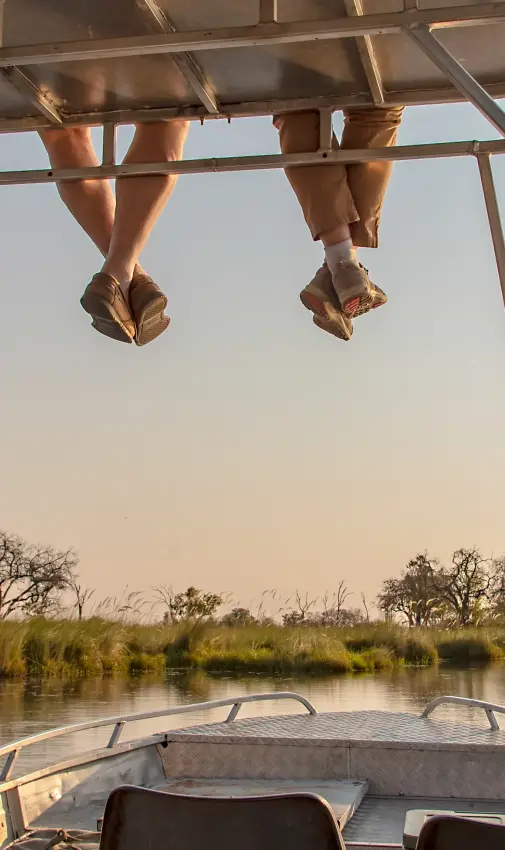
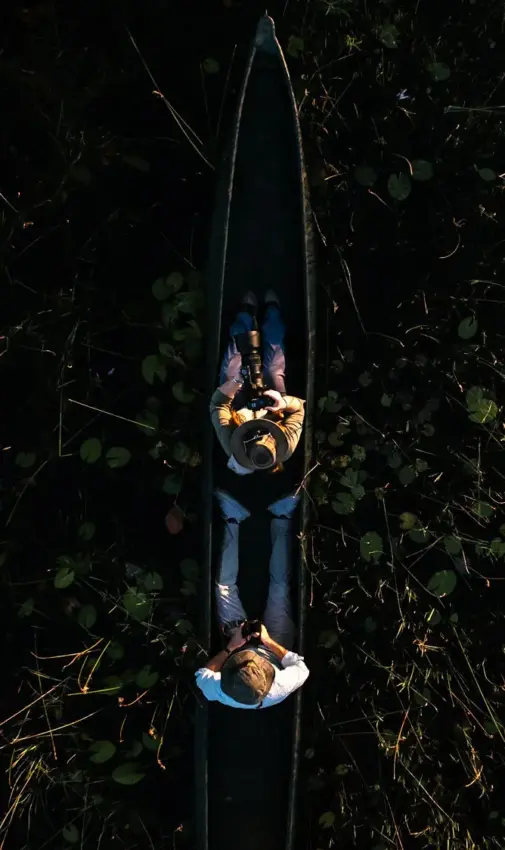
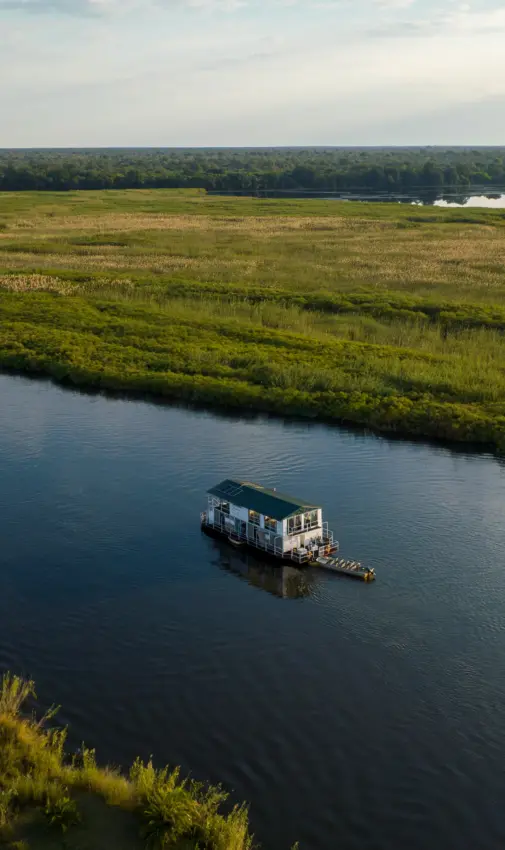
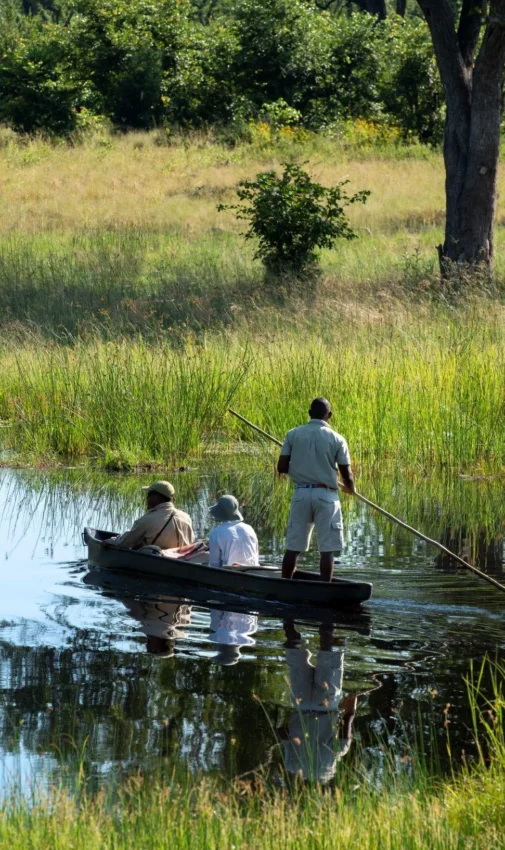
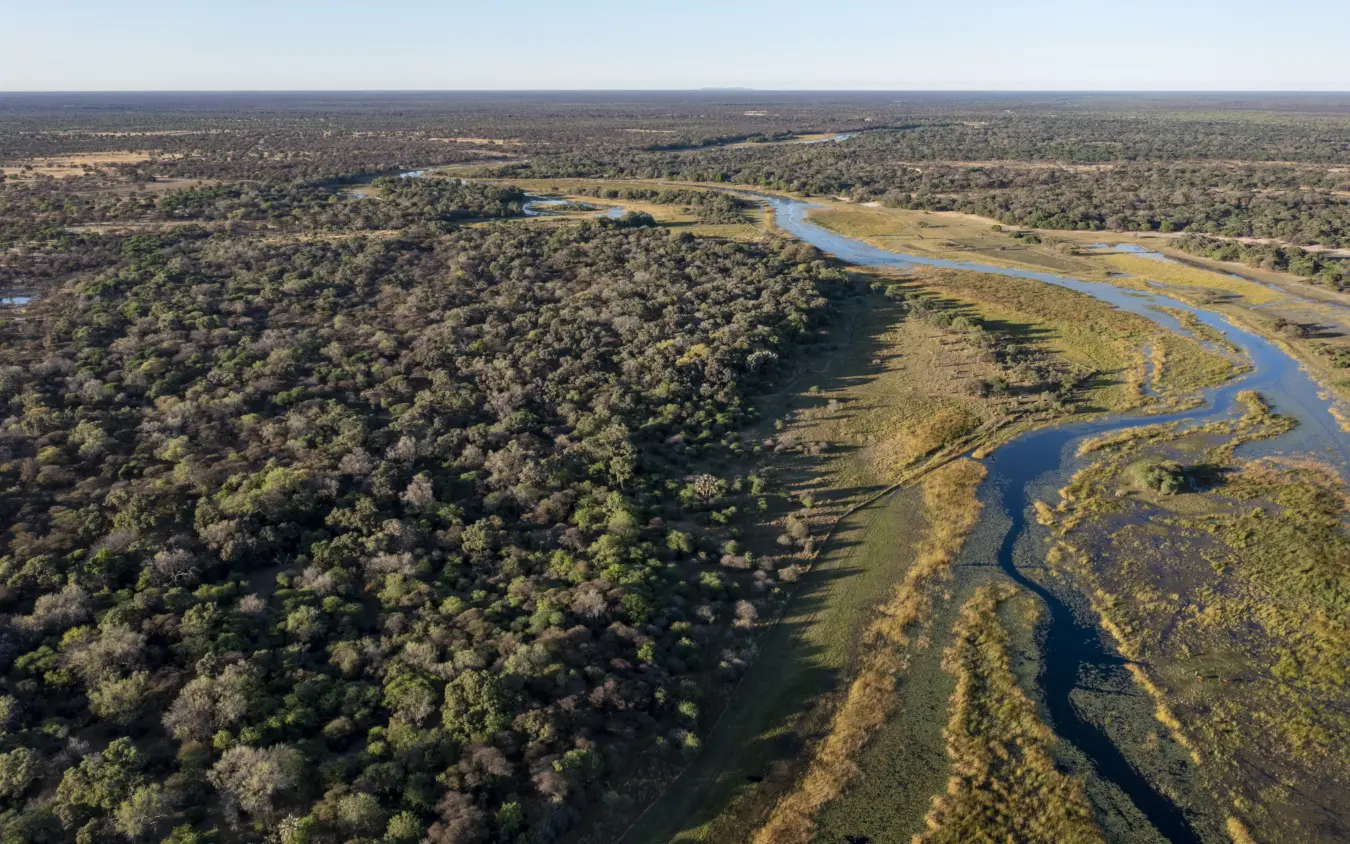
Mornings begin around half past five with tea brought to the suite, then a drive across the floodplains or a boat run down the channels. Poled mokoro trips move through lily beds close enough to hear reed frogs calling. Motorboats reach the lagoons further out, and guided walks take in spoor, trees and birds on the island itself. After dark, spotlights pick up serval, caracal and hunting hyena. Catch-and-release fishing, village visits and scenic helicopter flights fill the hours in between.
Poled mokoro trips move through lily beds close enough to hear reed frogs calling.
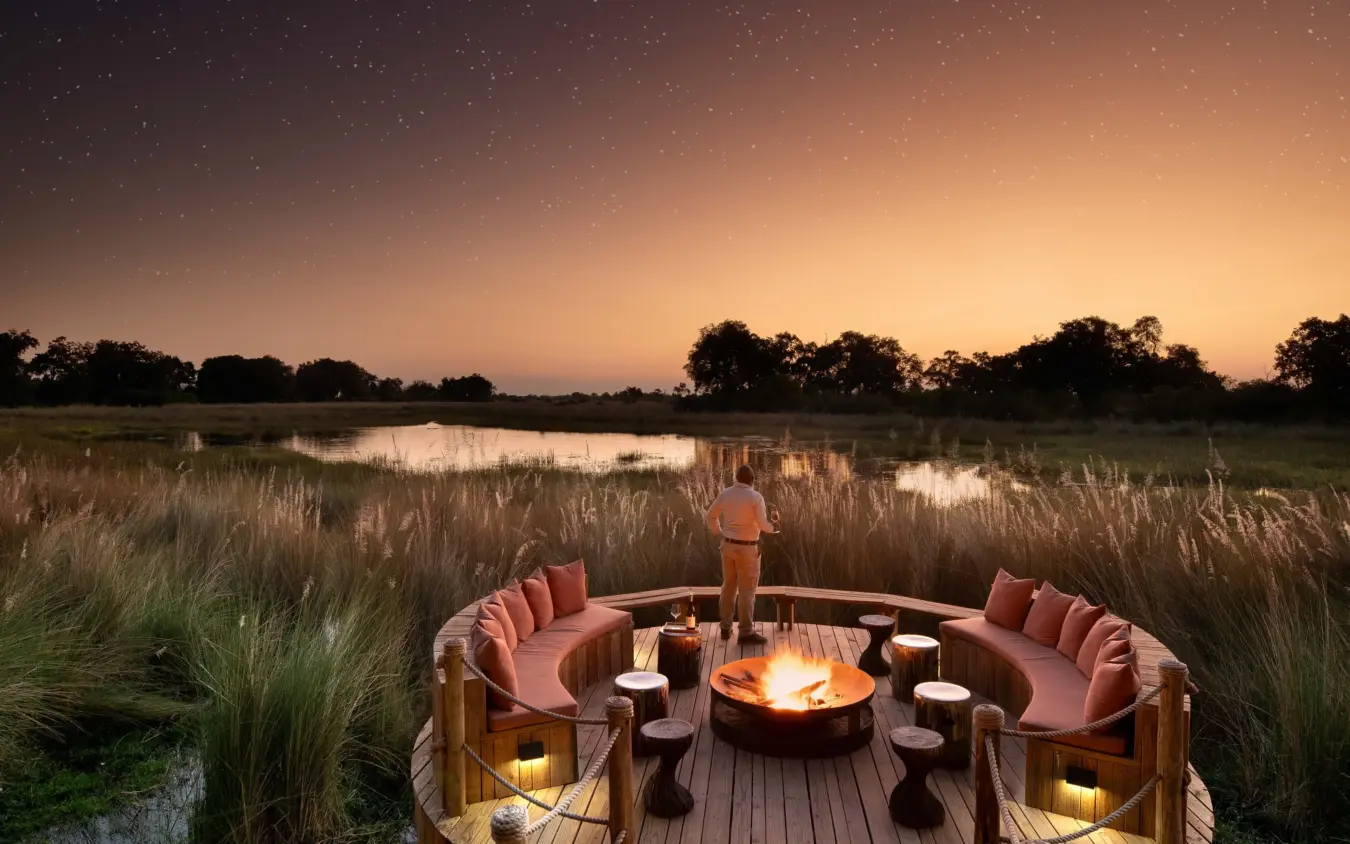
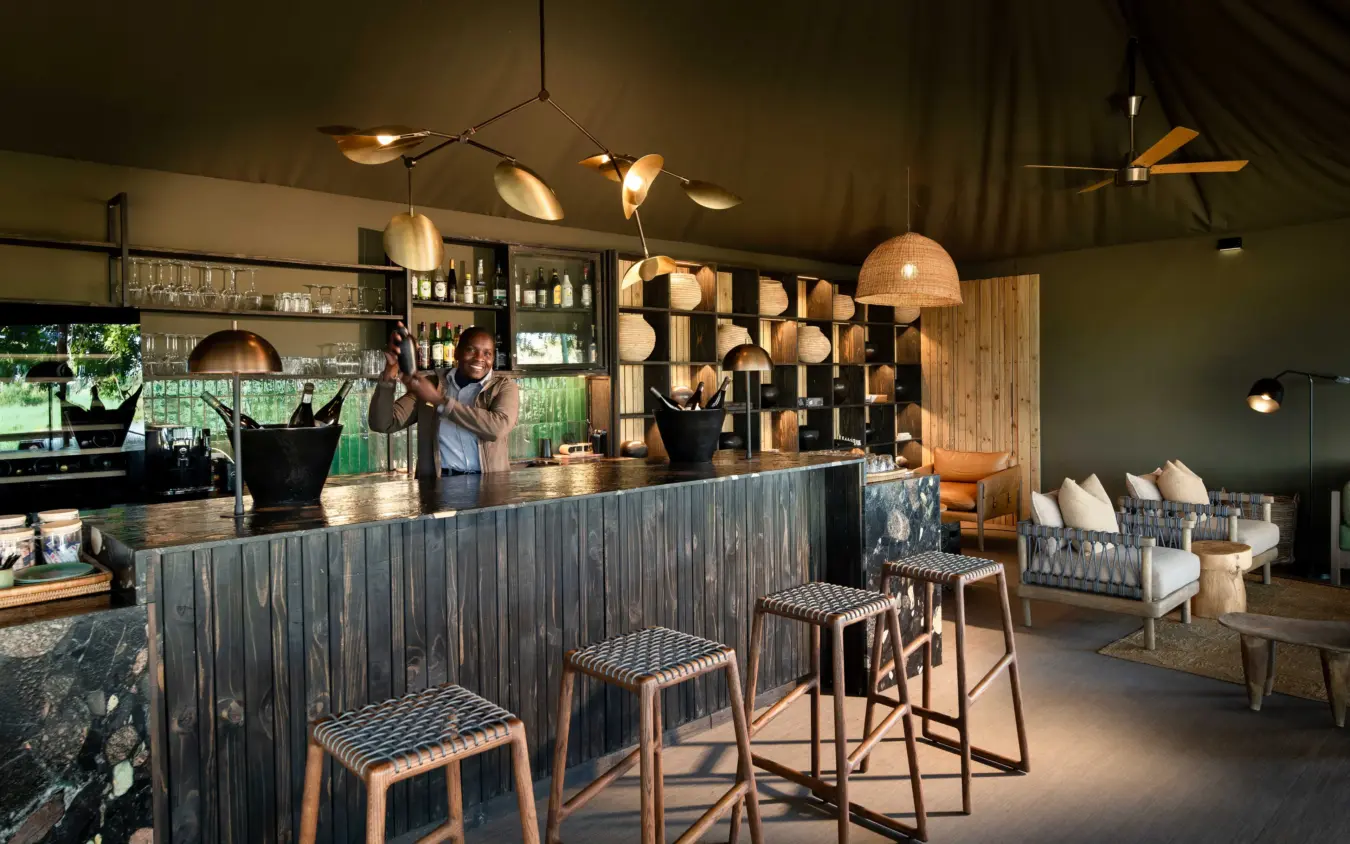
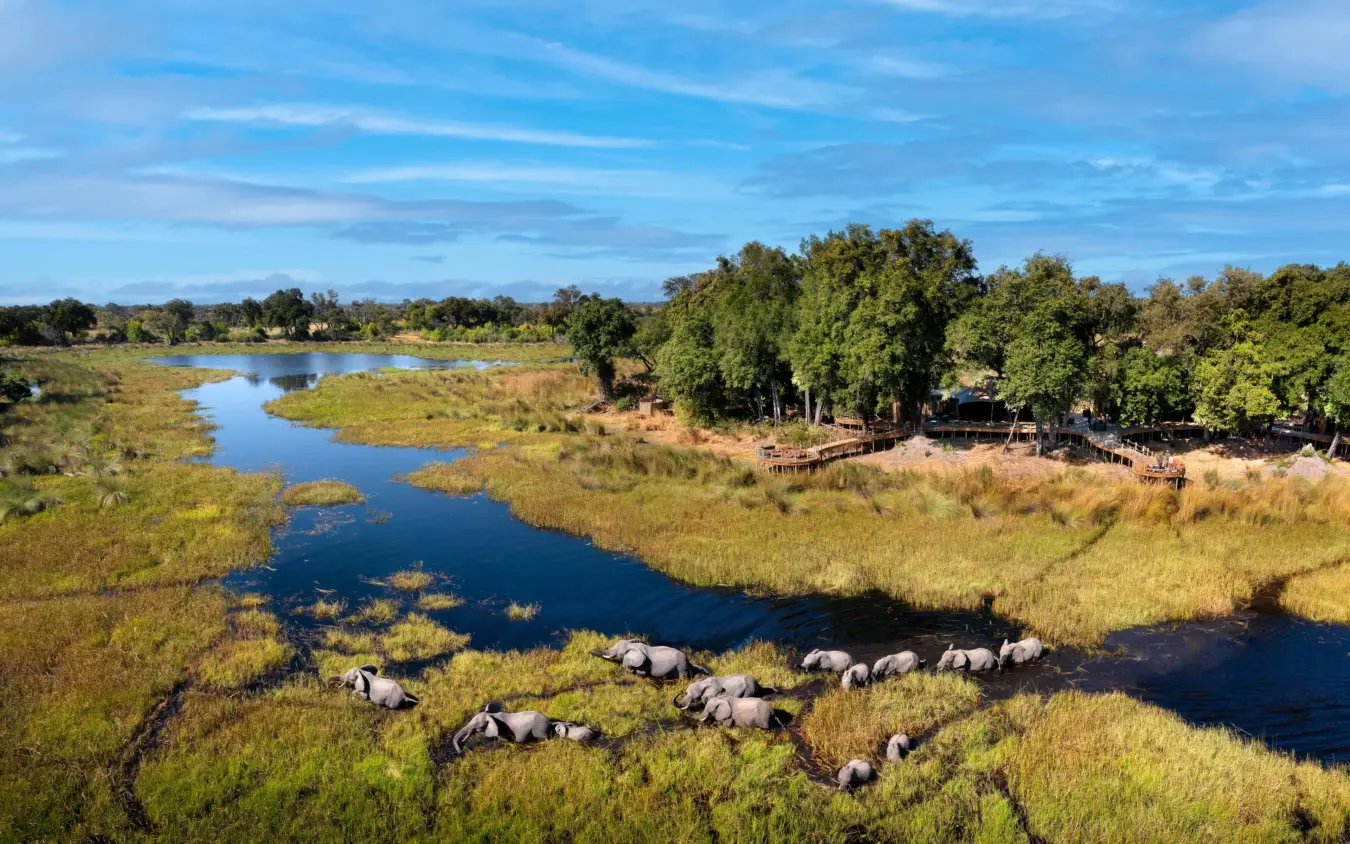
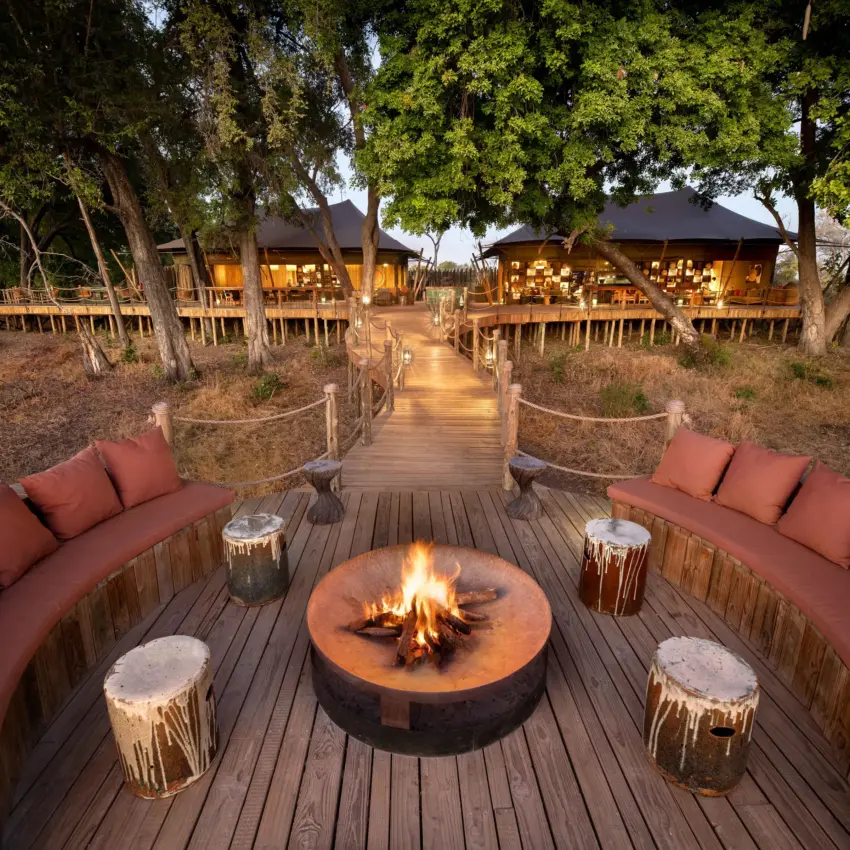
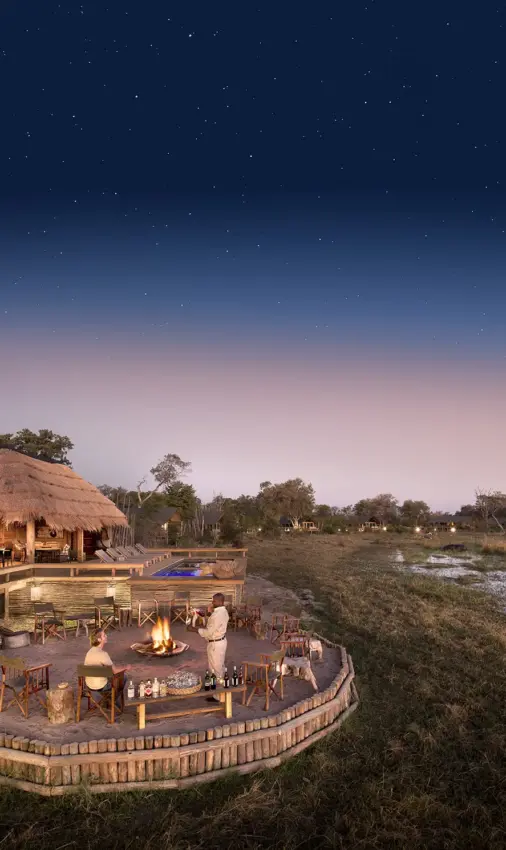
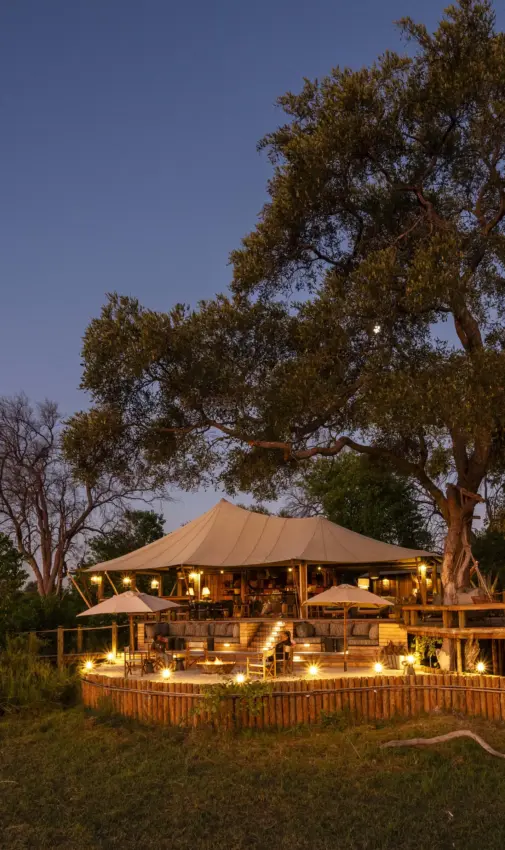
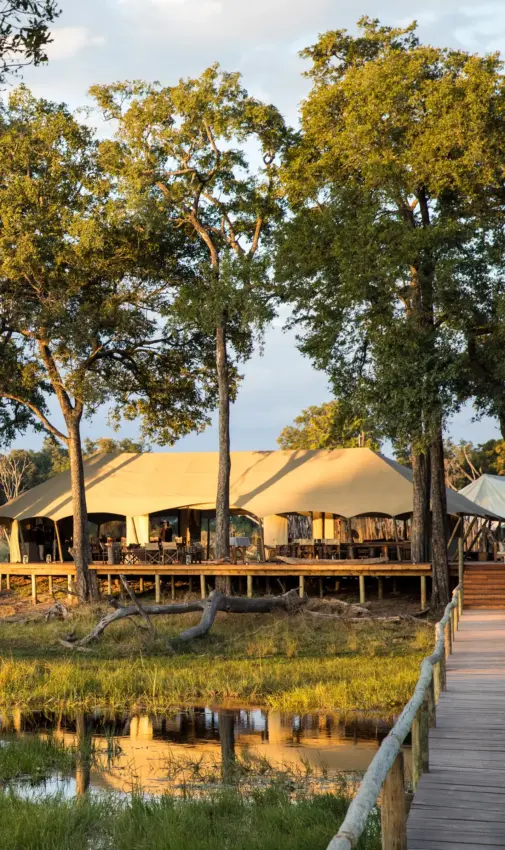
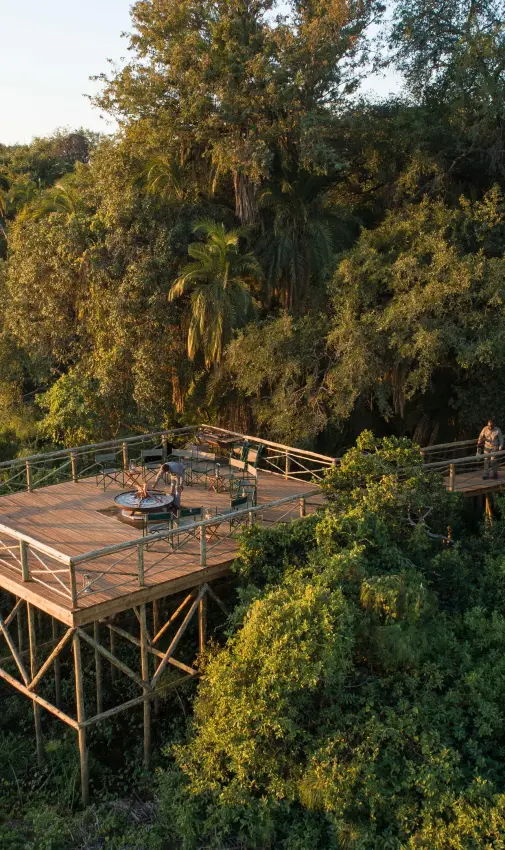
Lounge and dining sit under pointed canvas roofs, joined to the suites by boardwalks, with a small library, an outdoor gym and a single-bed spa alongside. The firepit deck runs out over the lagoon, and it is where most evenings start: hippos grunting below the timber, bell frogs chiming from the far bank, fireflies over the water. Much of the team comes from villages on the northern fringe of the Delta. With seven suites in total, the island takes an exclusive-use booking as easily as individual rooms, and it works well across generations; children from six are welcome.
The concession is run in partnership with the local operator Nakwa and the Magobagoba Youth Trust, which puts camp revenue into early childhood education and youth employment in villages along the Delta’s northern fringe. Nearby, CLAWS herds cattle communally with their owners, protecting livestock and resting overgrazed ground while retaliatory lion killings fall, and Elephant Express carries schoolchildren safely through an elephant corridor. The camp runs entirely on solar power, with waste carefully managed on the island. Longer stays can set mokoro trips and hippo lagoons against the open pans of the Makgadikgadi or the plains of the Kalahari.