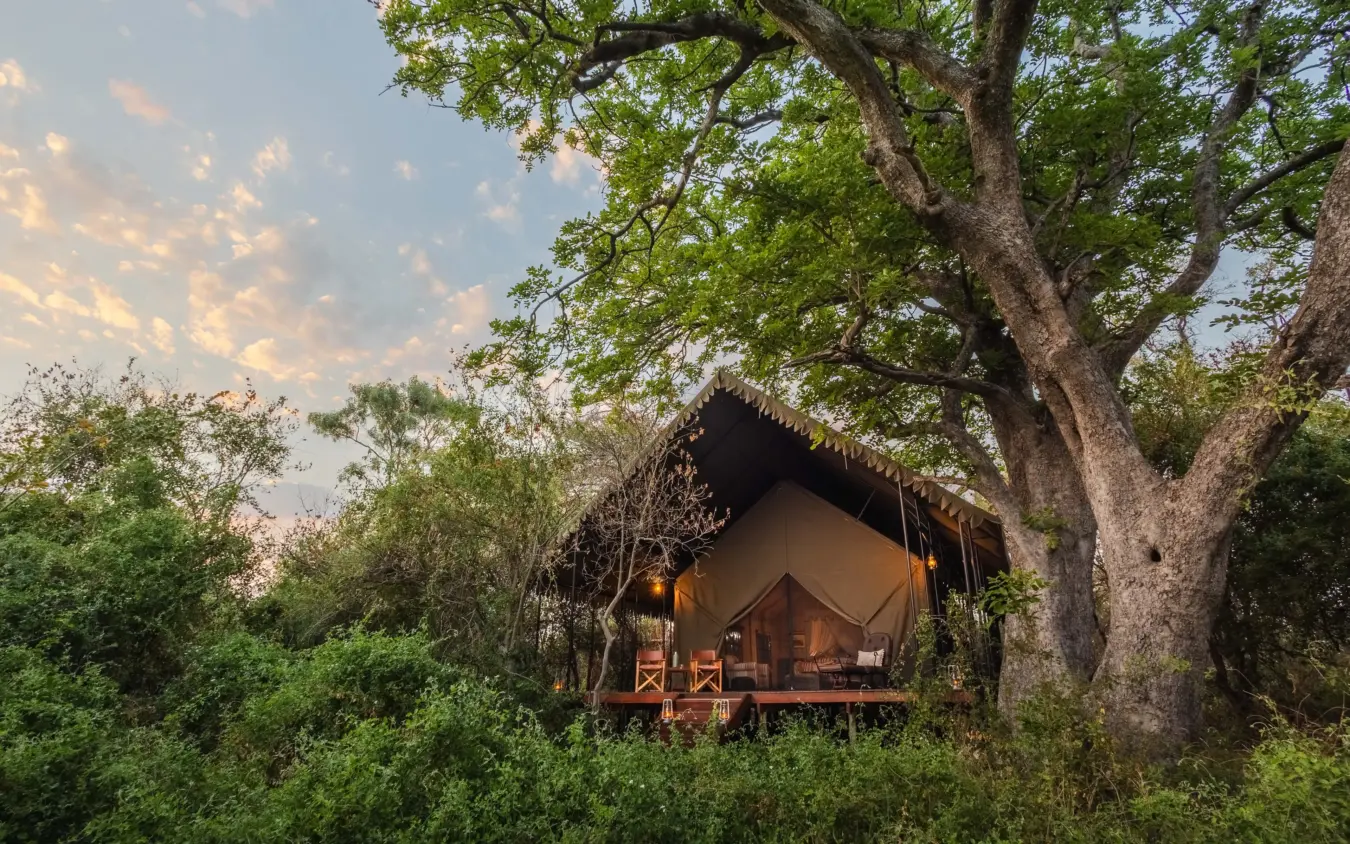
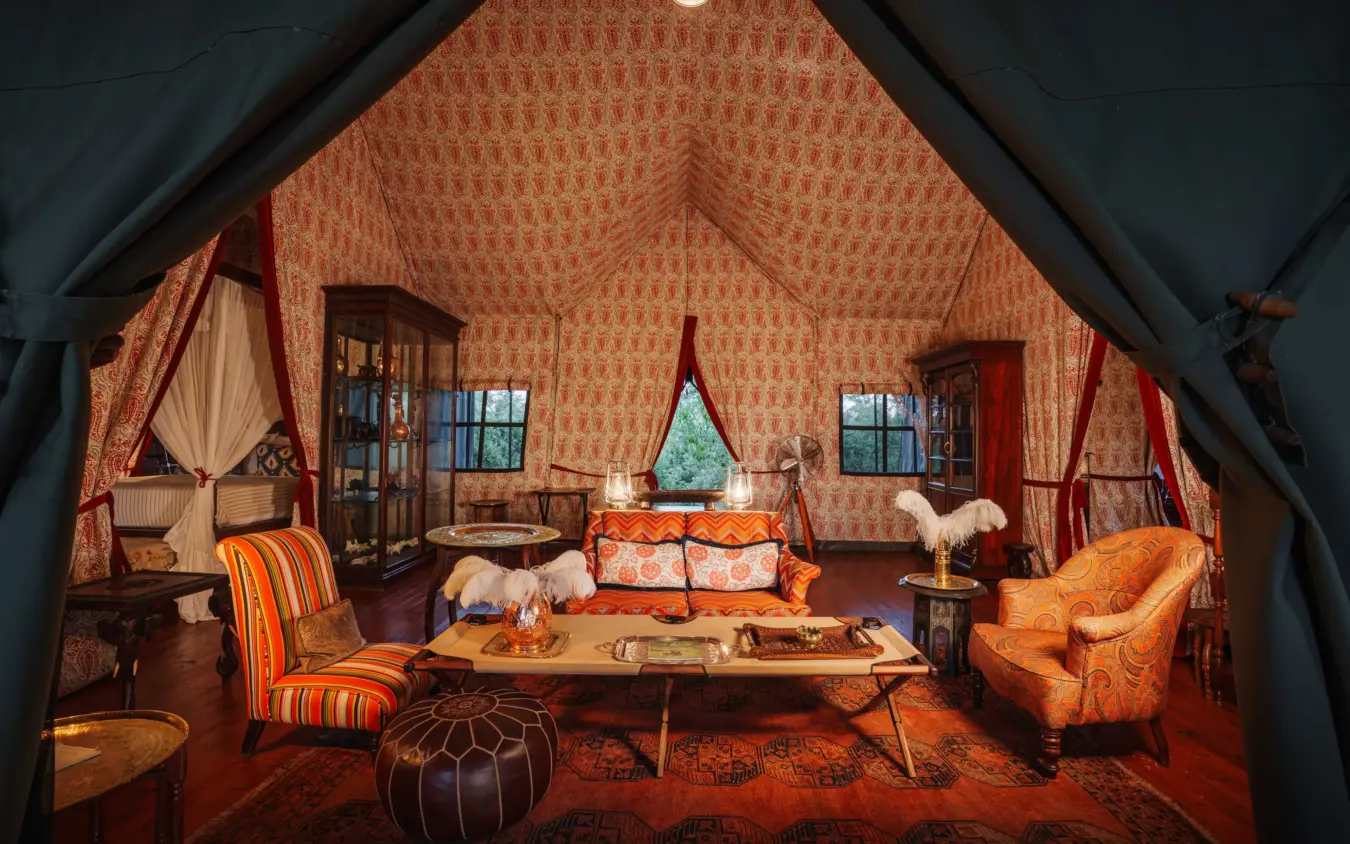
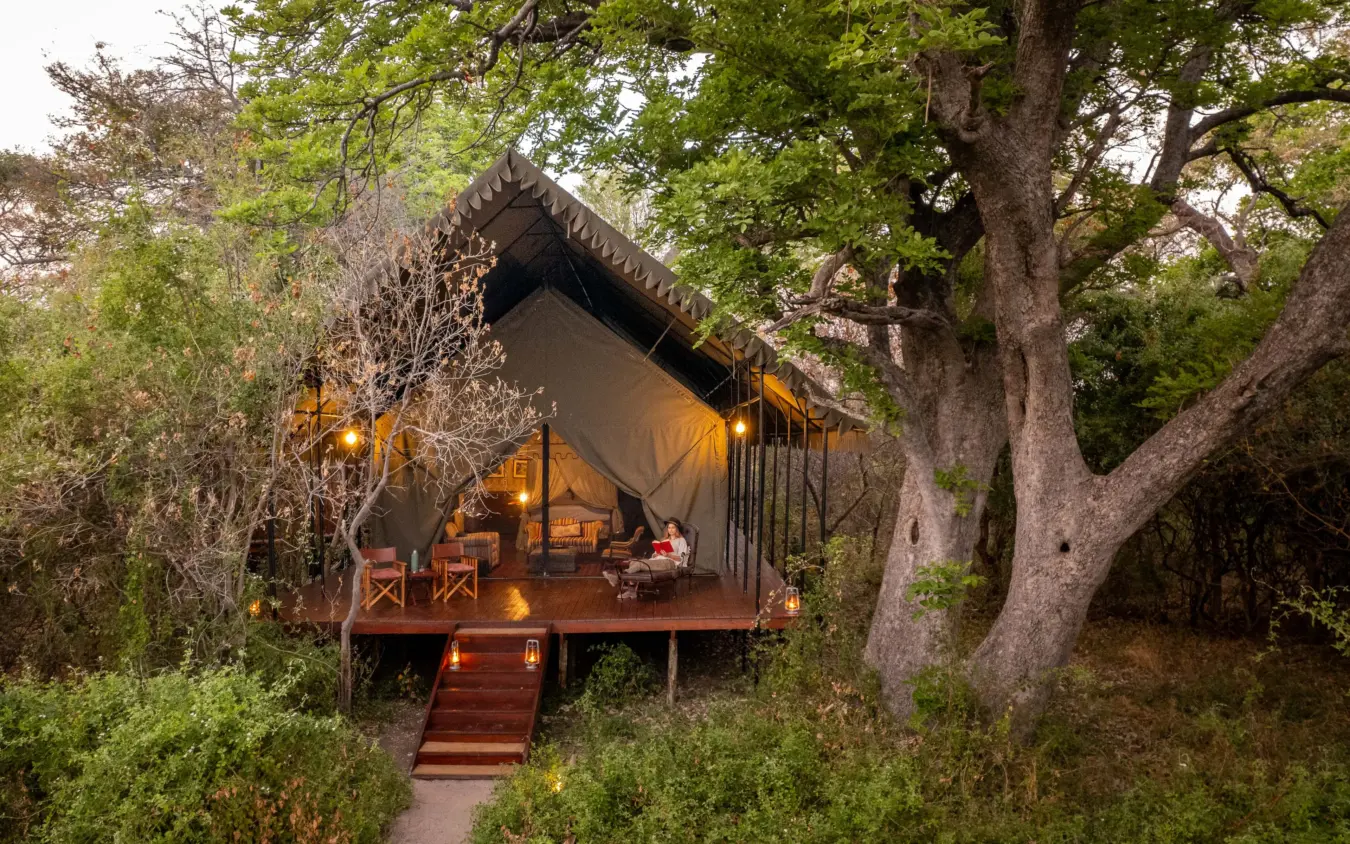
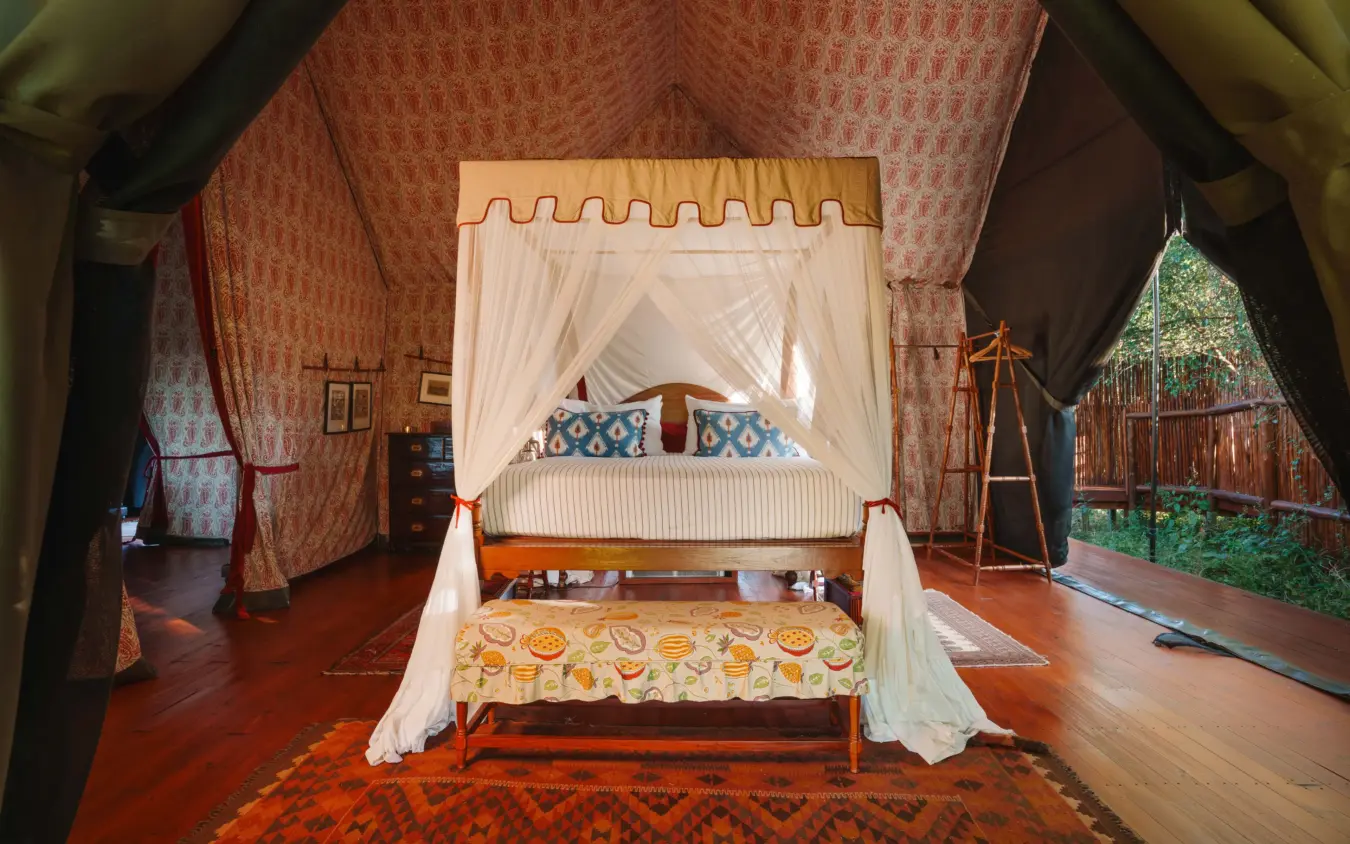
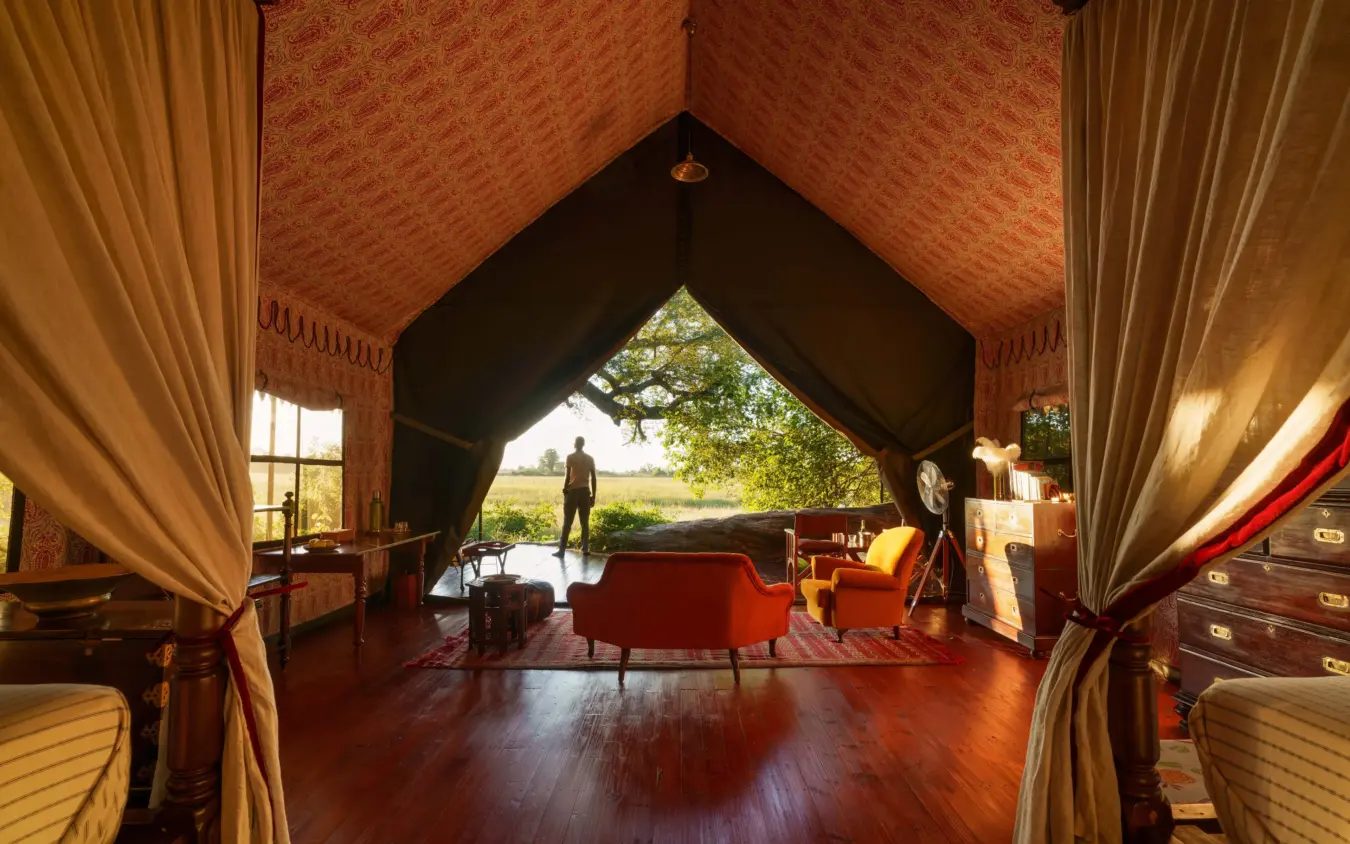
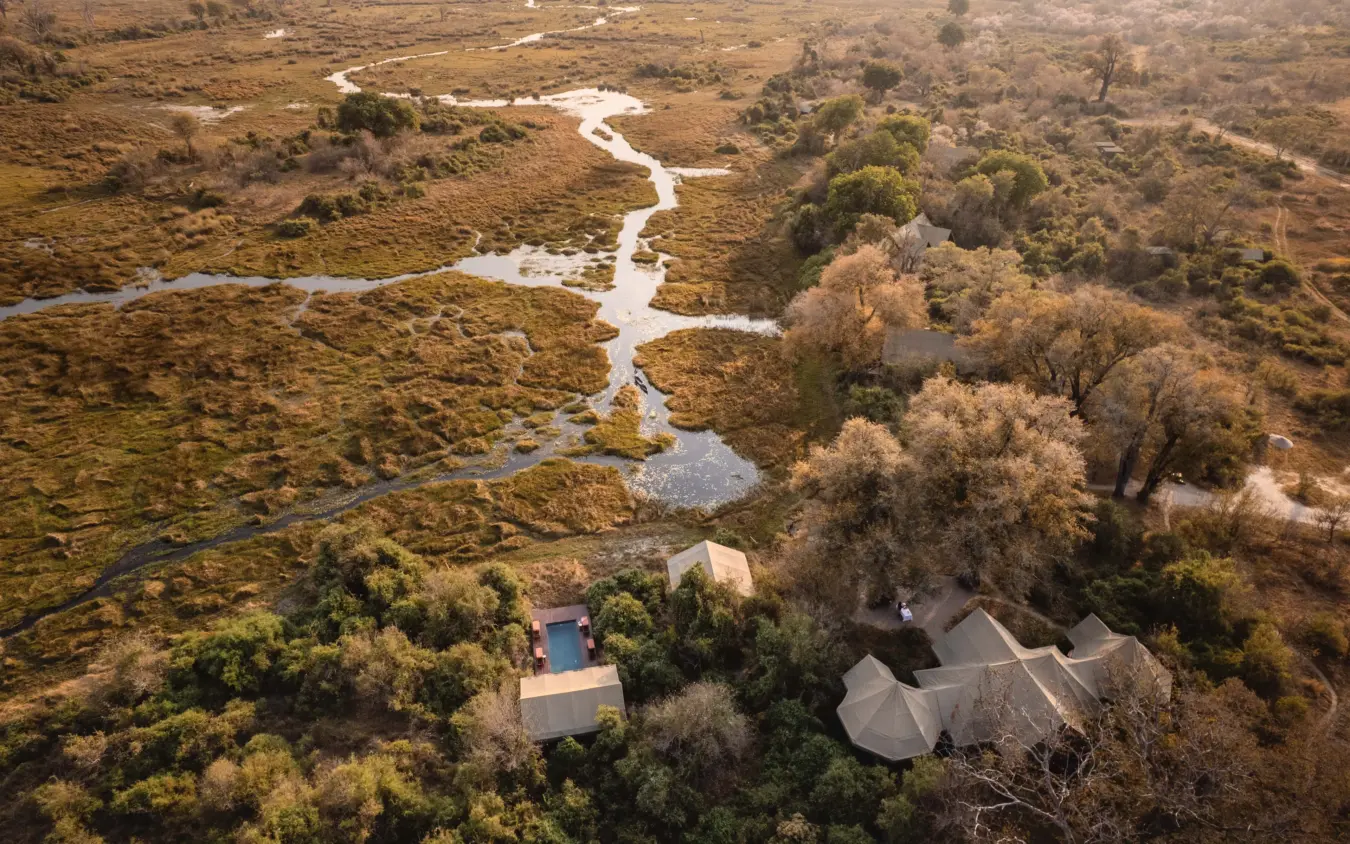
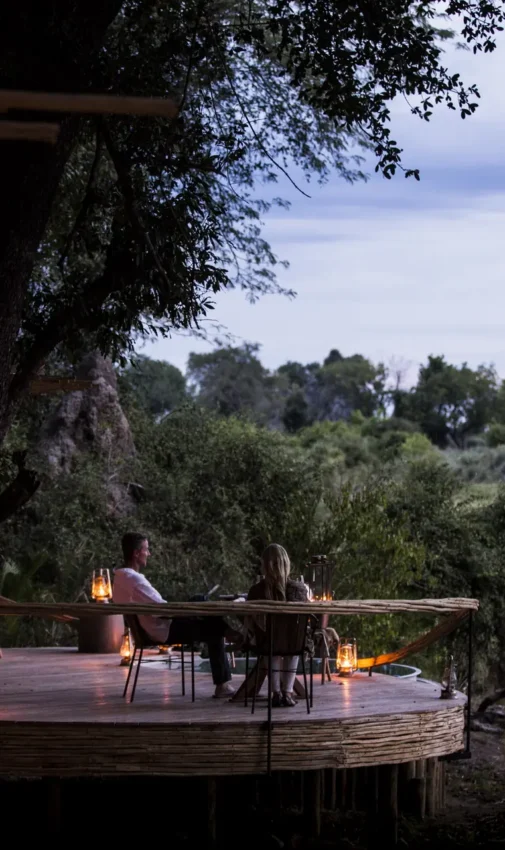
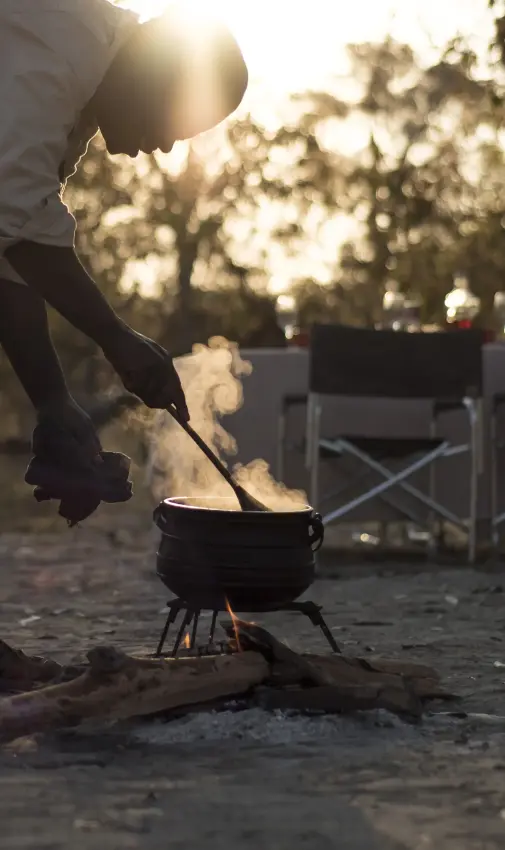
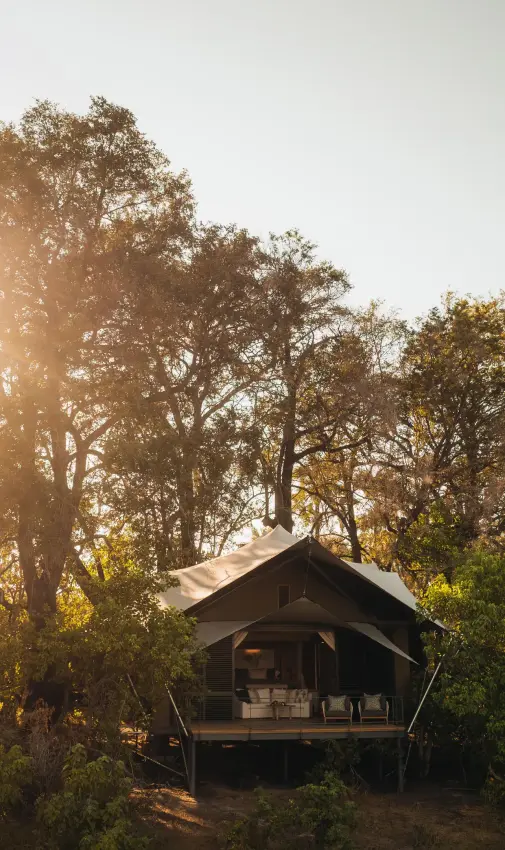
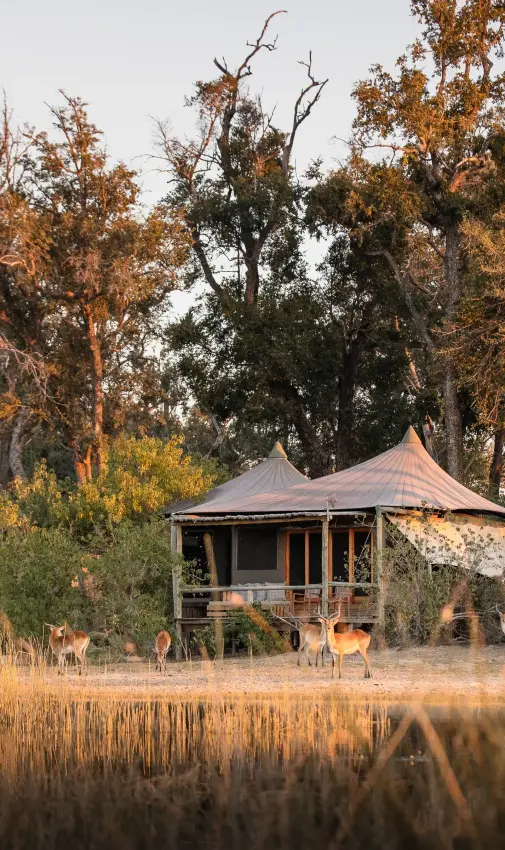
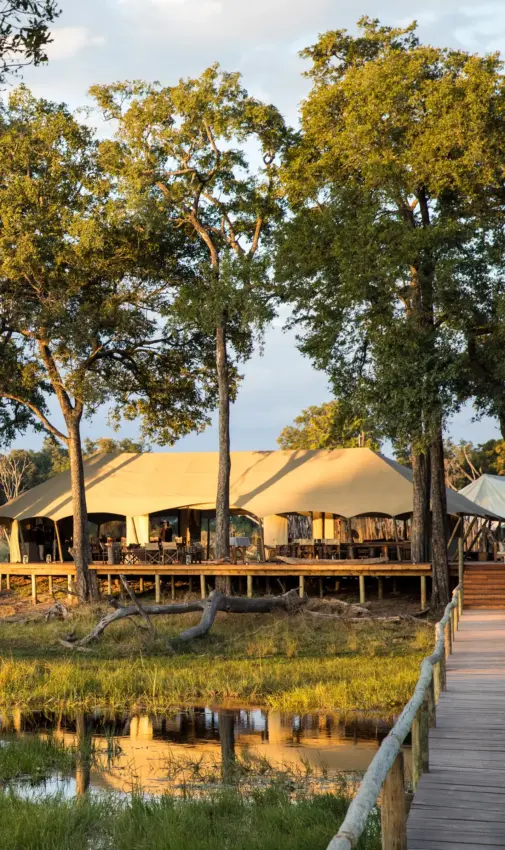
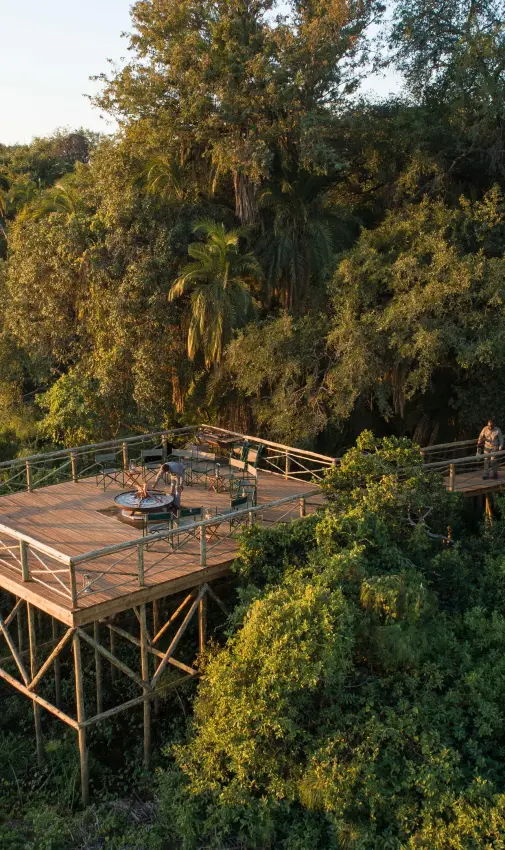
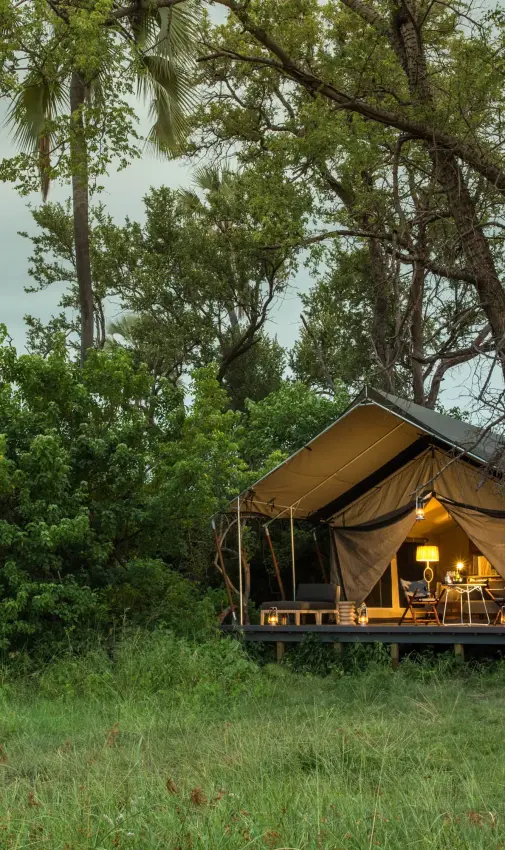
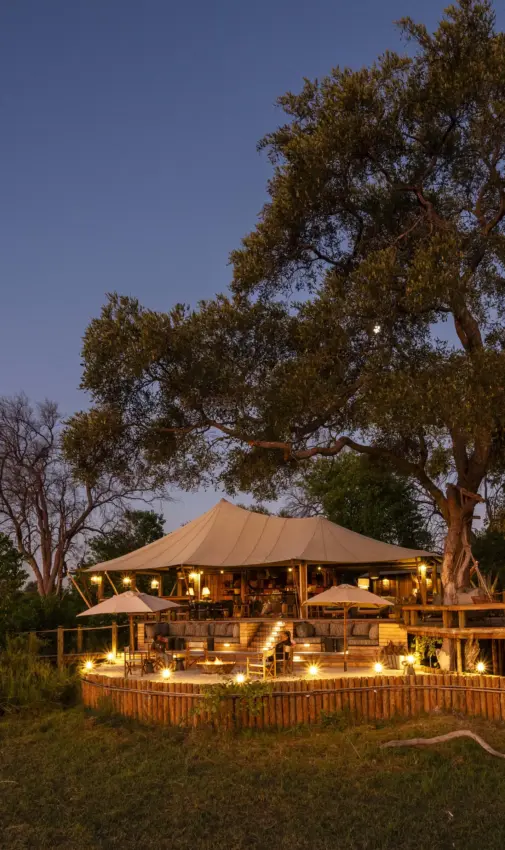
Duke’s East and its larger sister camp are about five minutes’ drive apart on the same concession, which opens two ways of using them. A larger group can split between the two and meet for drives and dinners, while a single family can take Duke’s East outright, four tents that add up to a whole camp instead of a wing of a bigger one. The two run their own kitchens and guiding, though the teams trade sightings by radio, so a leopard found at first light does not stay with one vehicle. Light aircraft from Maun take around forty minutes, then a short drive in.
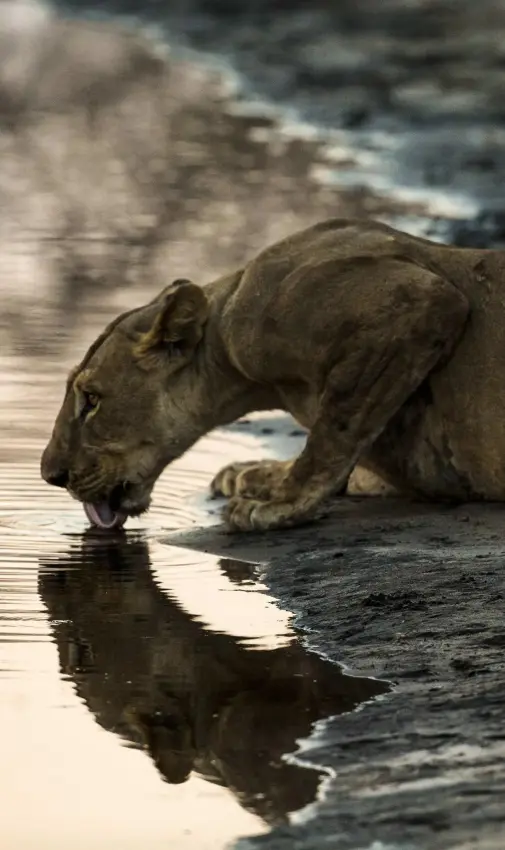
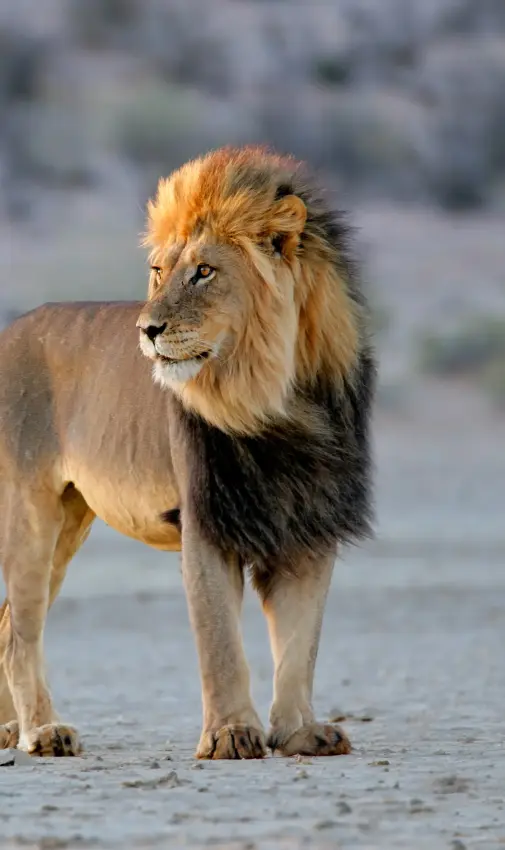
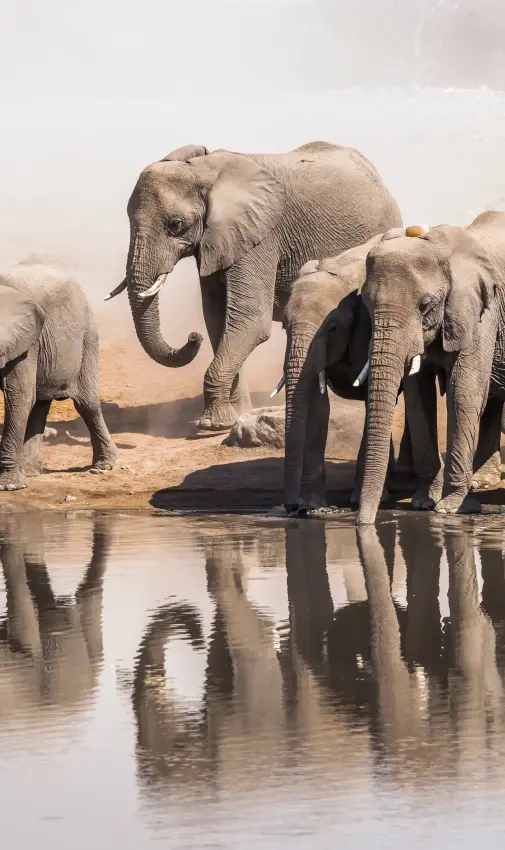
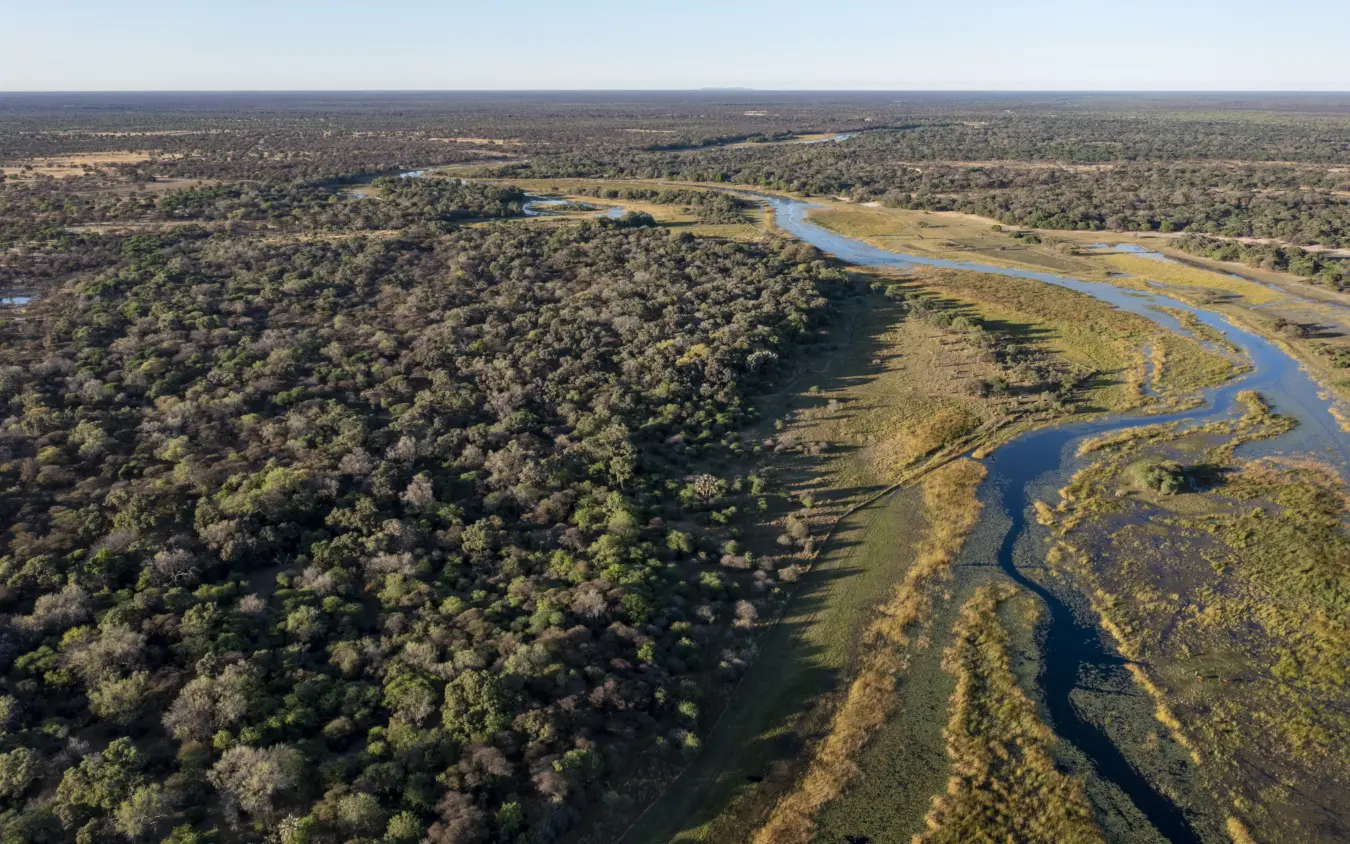
The concession is private and adjoins Moremi Game Reserve, which is what allows drives to carry on after dark with a spotlight, and a vehicle to leave the track and follow a hunting pack of wild dogs. Neither is permitted inside Moremi itself, whose wildlife moves freely across the boundary. Lions are seen consistently through the concession, and leopard, wild dog, serval and caracal all use the same ground. Buffalo, giraffe, zebra and kudu are out on the floodplains, and the sitatunga keep to the papyrus.
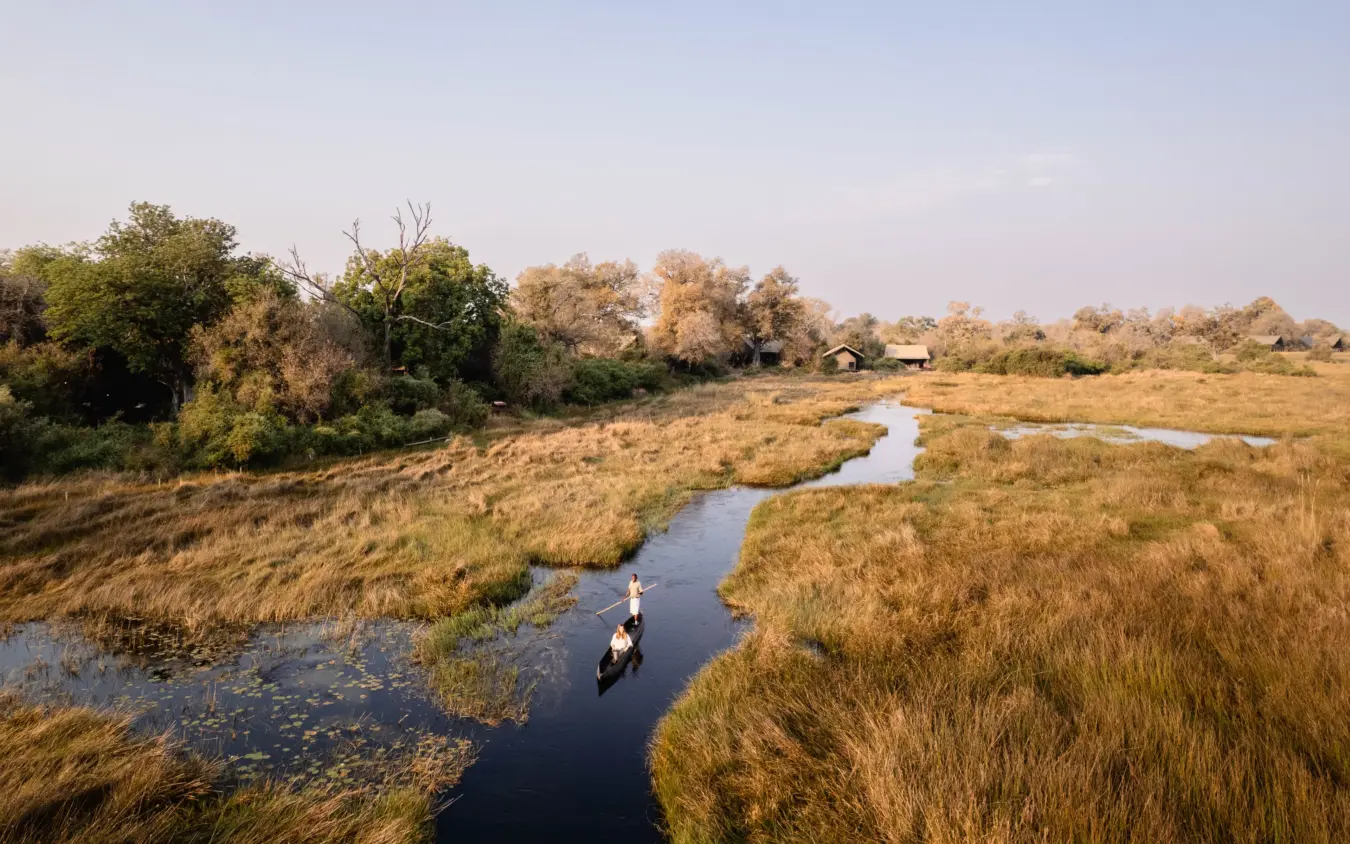
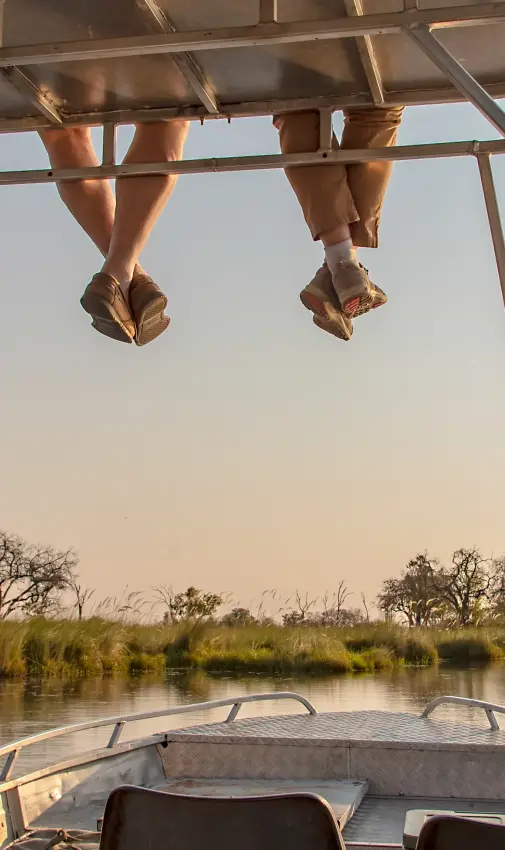
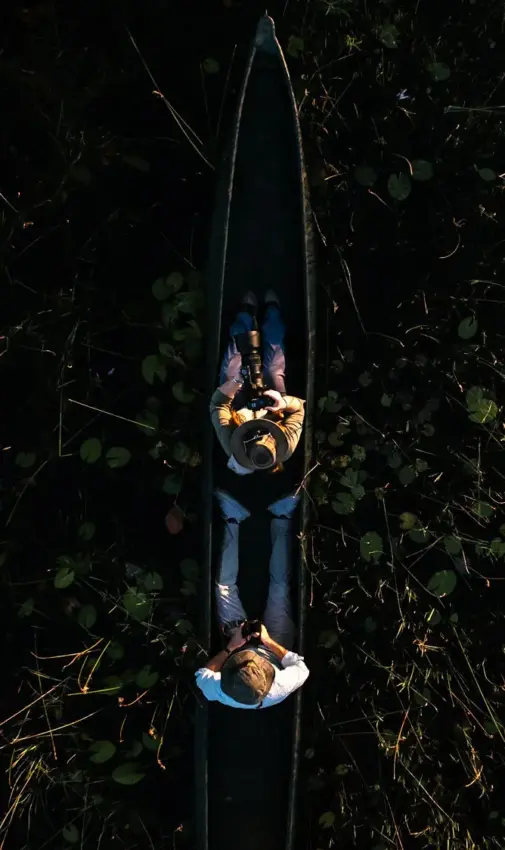
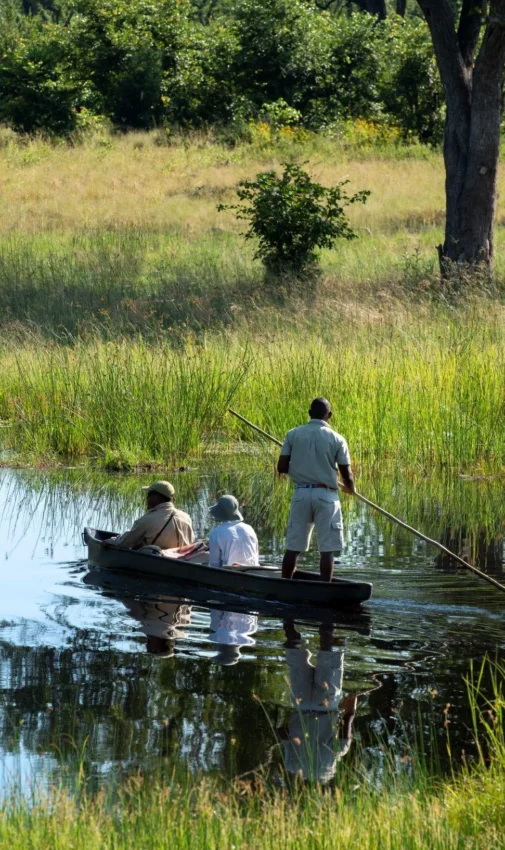
Mokoro polers push through channels choked with water lilies, motorboats the deeper ones.
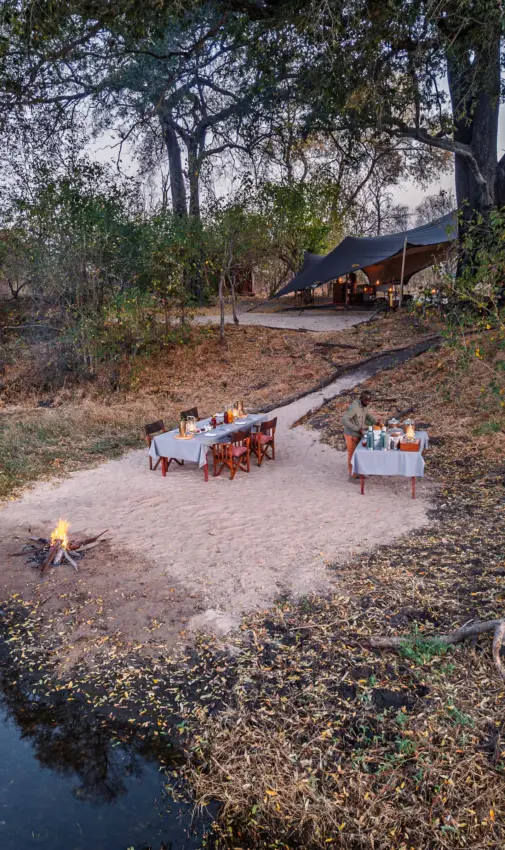
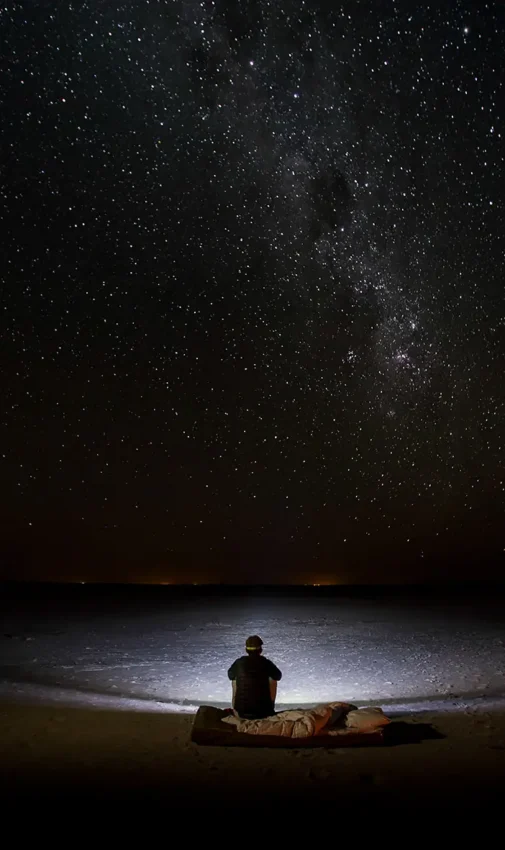
Between June and September a night can be spent out on a lantern-lit island. Mokoro polers push through channels choked with water lilies, motorboats the deeper ones. The birding is kingfishers and wattled cranes, and Pel’s fishing owl, which roosts in the ebony canopy. As the water falls the islands dry and open up for walking with an armed guide, tracking on foot across ground that was under water months earlier. Catch-and-release fishing for African pike, nembwe and tilapia pauses during the breeding months.
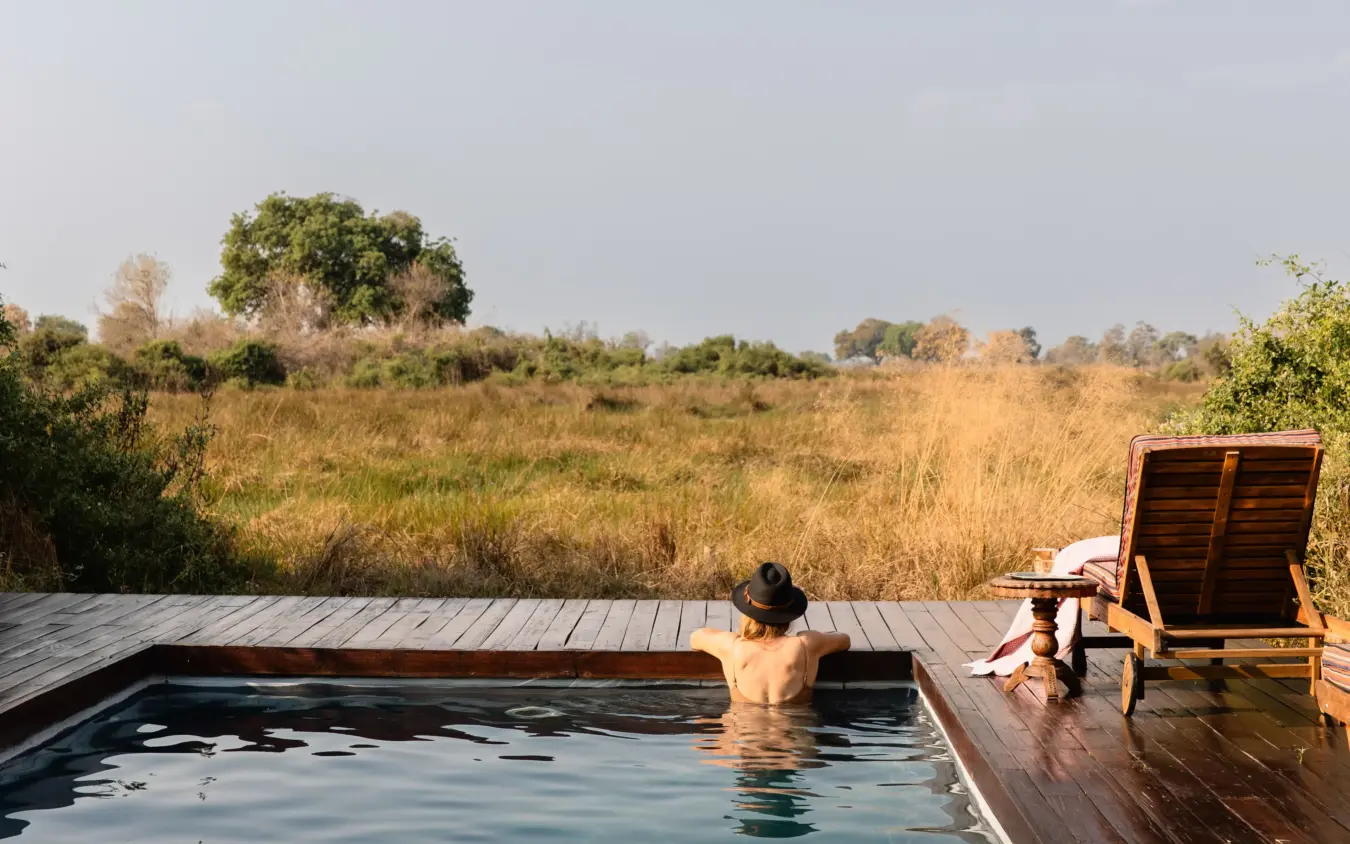
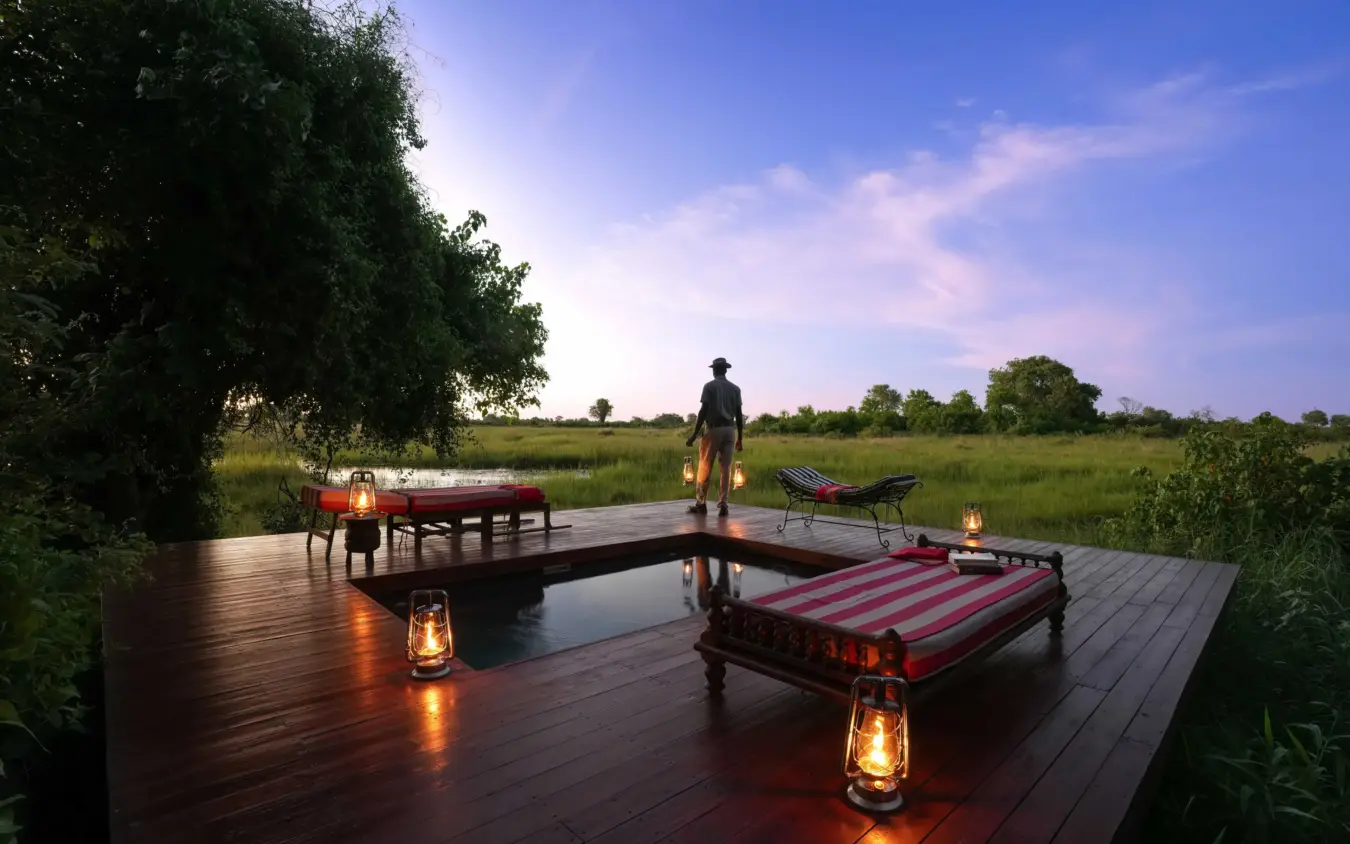
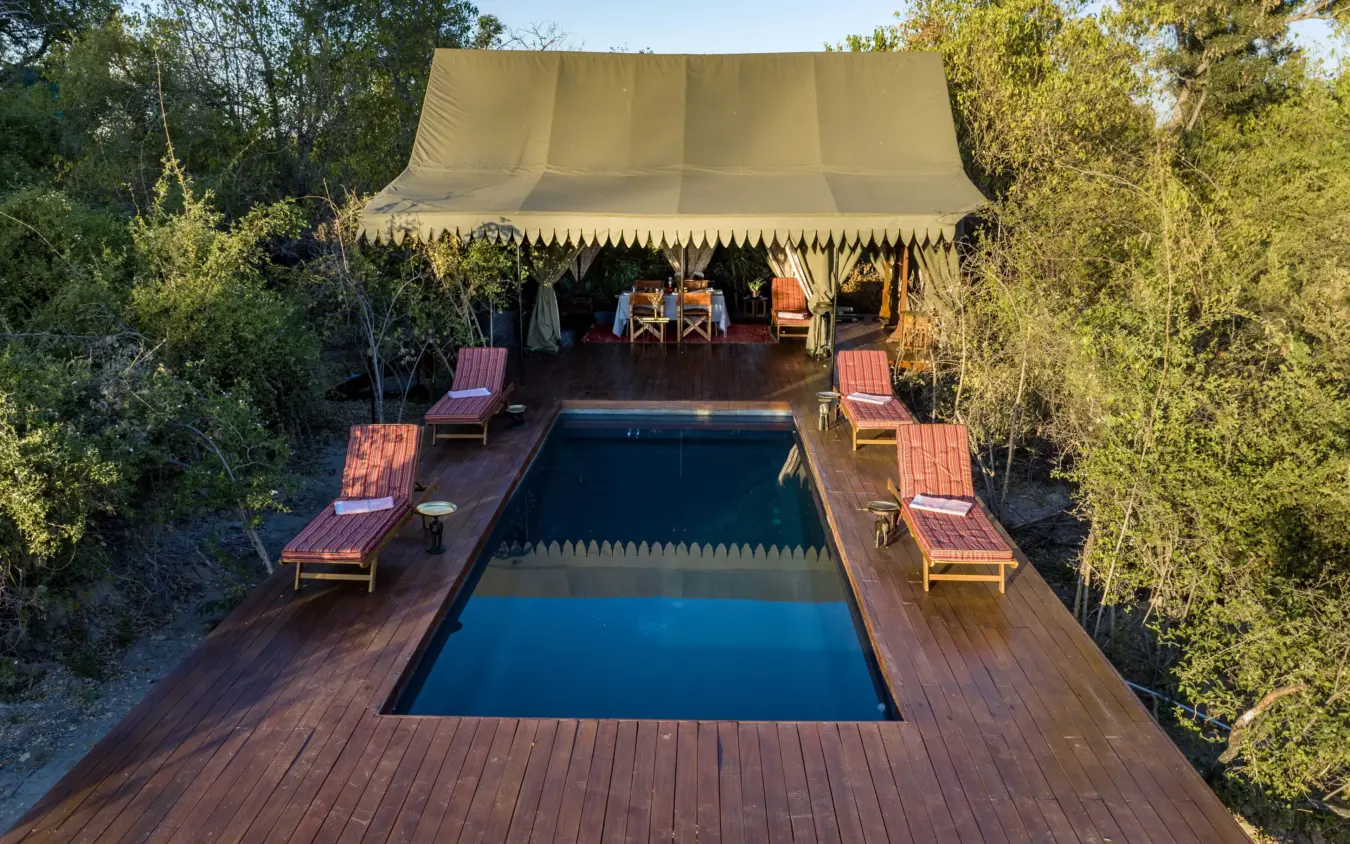
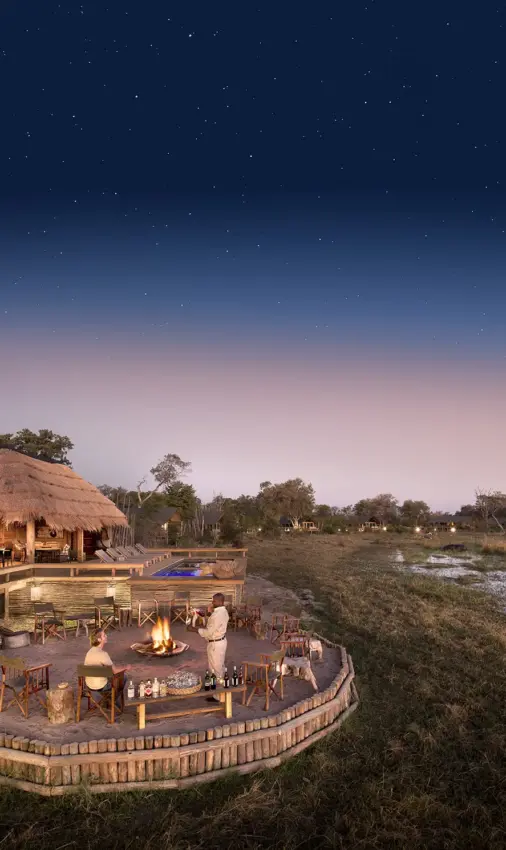
The family tent holds two en-suite bedrooms and a plunge pool on its own deck, which makes one booking work for grandparents, parents and children together. The minimum age is six, though the camp’s adult feel, and the wildlife moving through it, suit children of about ten and up. A separate pool pavilion serves the rest of the camp, its loungers facing the floodplain. Helicopters fly low over the Delta from here, or out for a half-day at the Tsodilo Hills, where thousands of rock paintings are held in the sandstone.