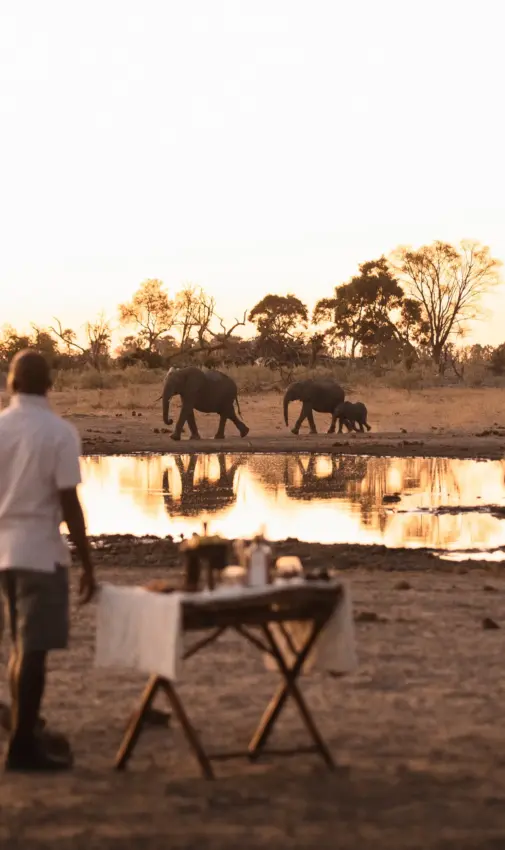
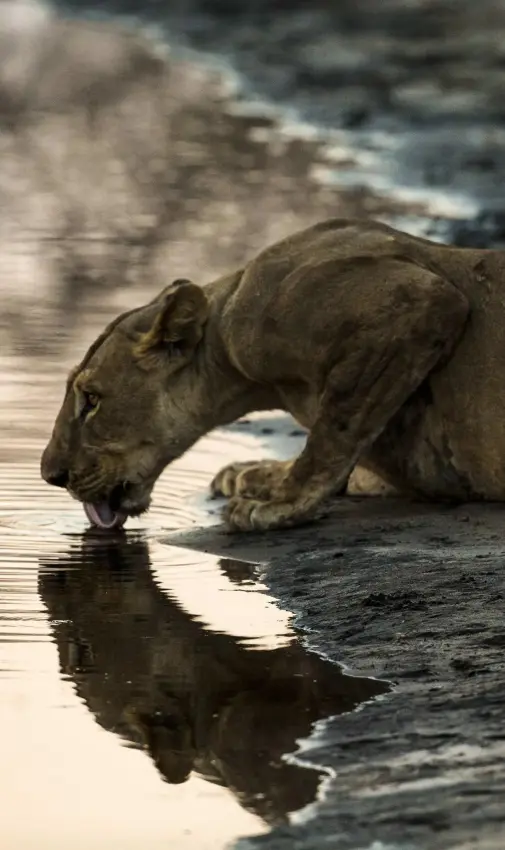
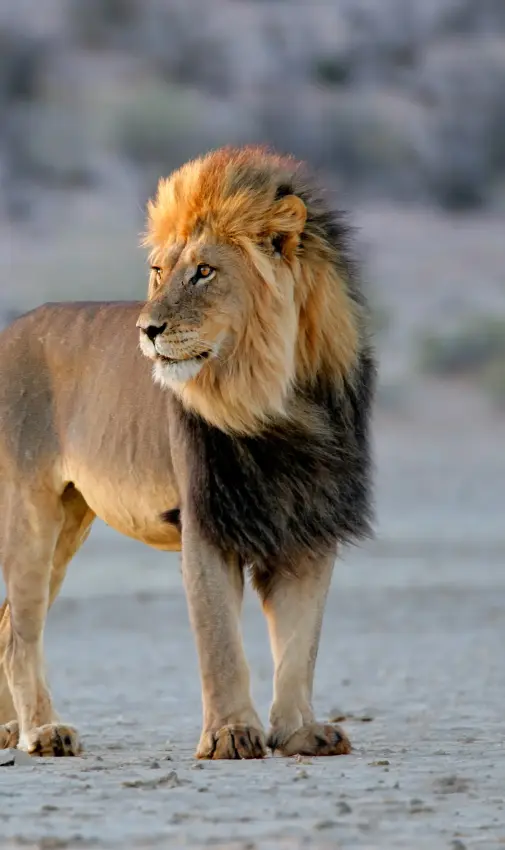
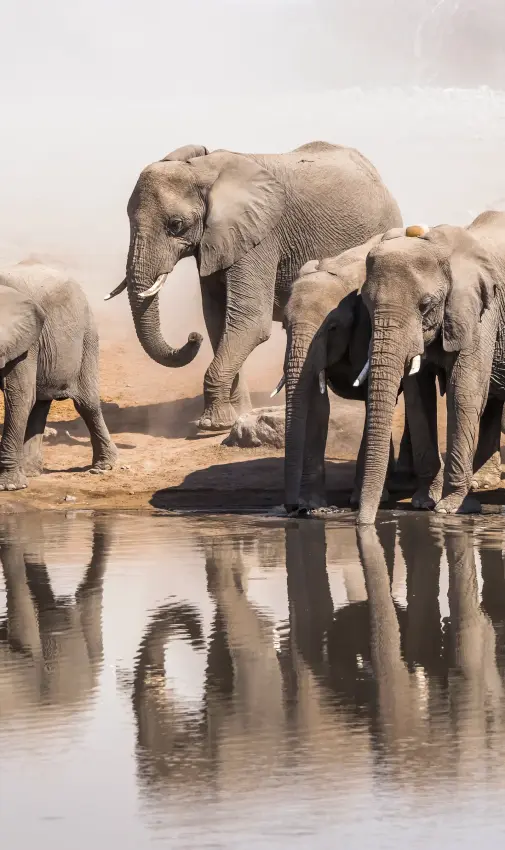
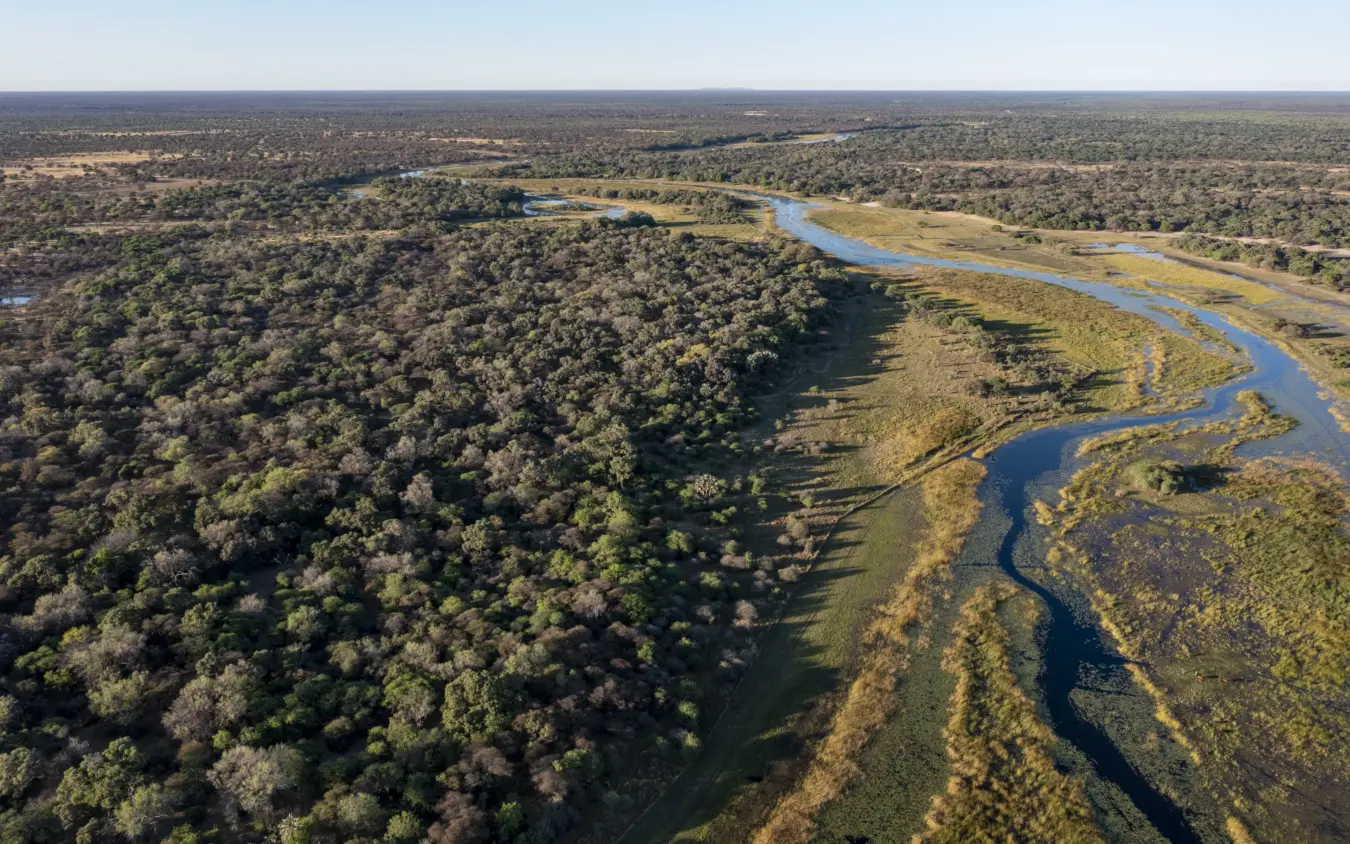
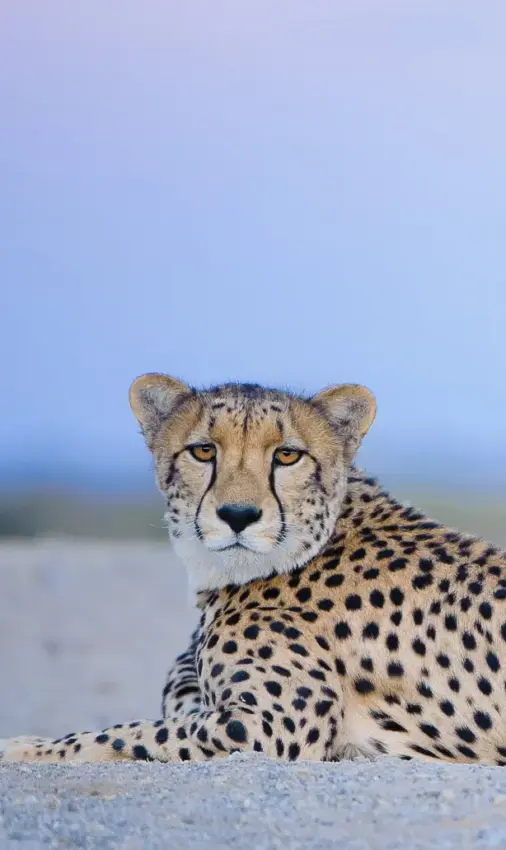
Moremi Game Reserve was proclaimed in 1963 and named after Chief Moremi III of the Batawana, the people who set it aside on their own land. Vehicles keep to the reserve’s own network of tracks, and the open 4x4s go out early in the morning and again in the late afternoon, crossing riverine forest, mopane woodland and seasonal floodplain within a single outing. Leopards turn up often, sometimes within a few metres of the open vehicle. Lion and buffalo are part of the picture, as are elephant and wild dog, with cheetah and spotted hyena besides.
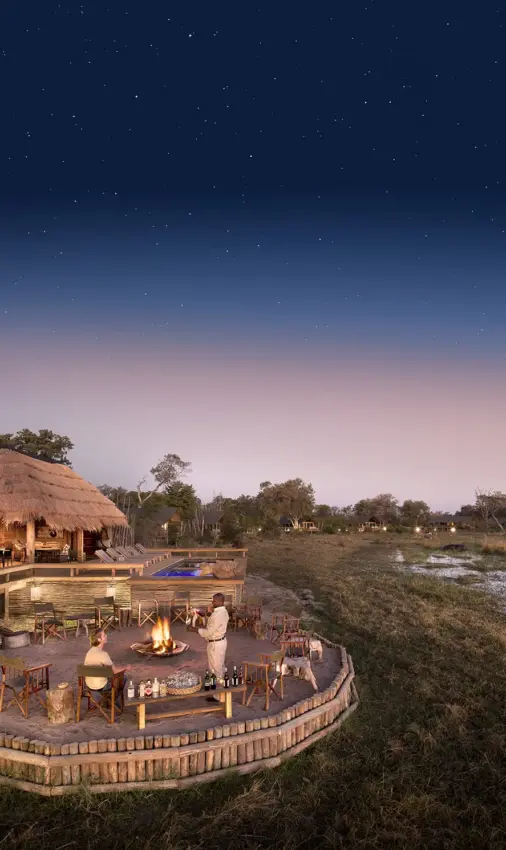
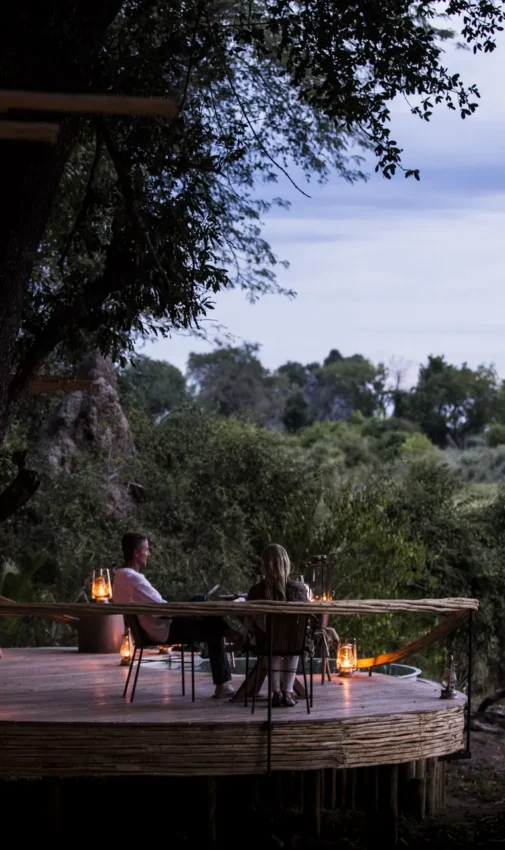
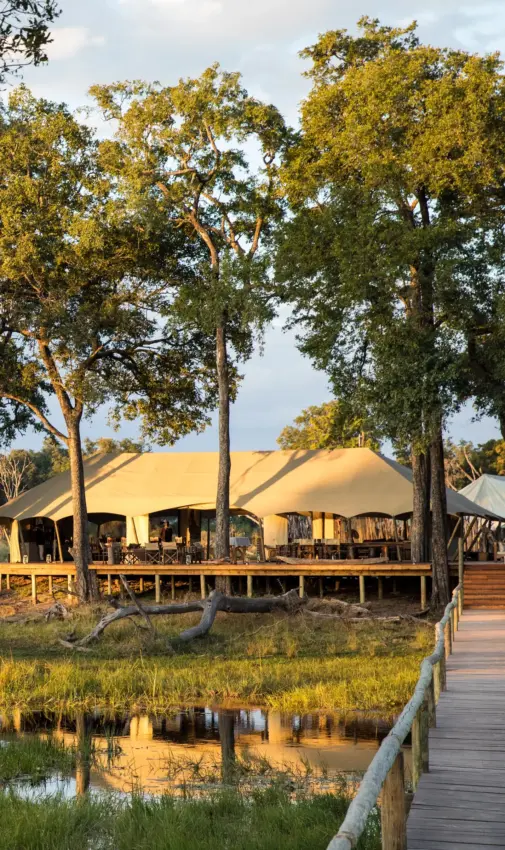
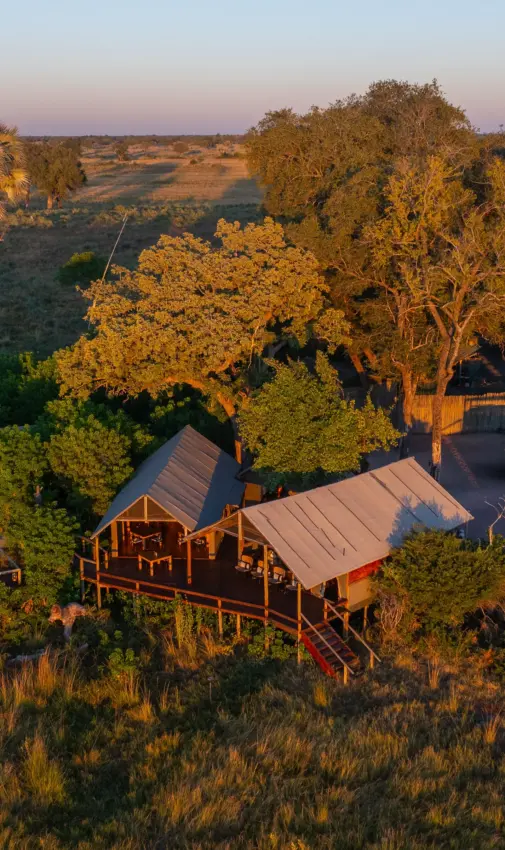
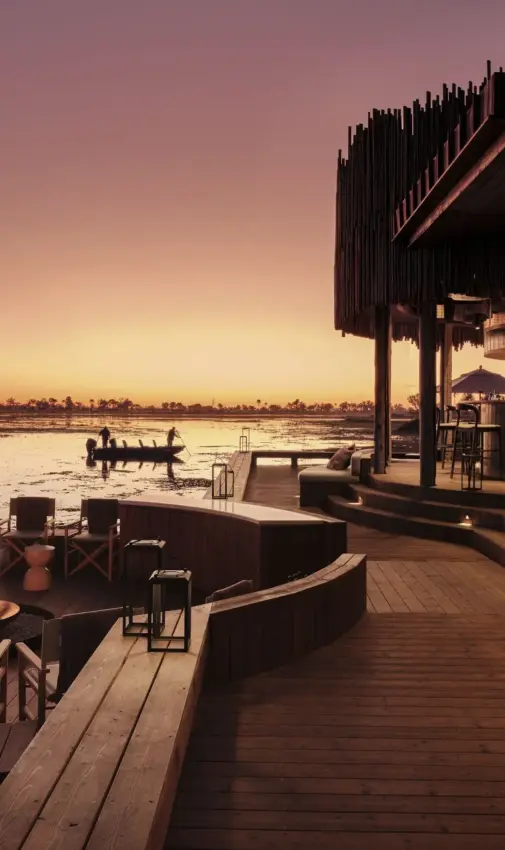
The shared buildings are timber and reed under thatch, raised over the river on stilts. Inside are a lounge furnished with pieces collected from around Africa and a small library, and at the bar guests pour their own drinks. Two fire decks reach out over the Khwai, one beneath a huge jackalberry, and the evening gin and tonic is taken there while hyenas whoop somewhere across the floodplain. Then drums call the camp to dinner in the open-sided dining room, usually at one long table, with bread baked in camp and the table lit by candles.
Leopards turn up often, sometimes within a few metres of the open vehicle.
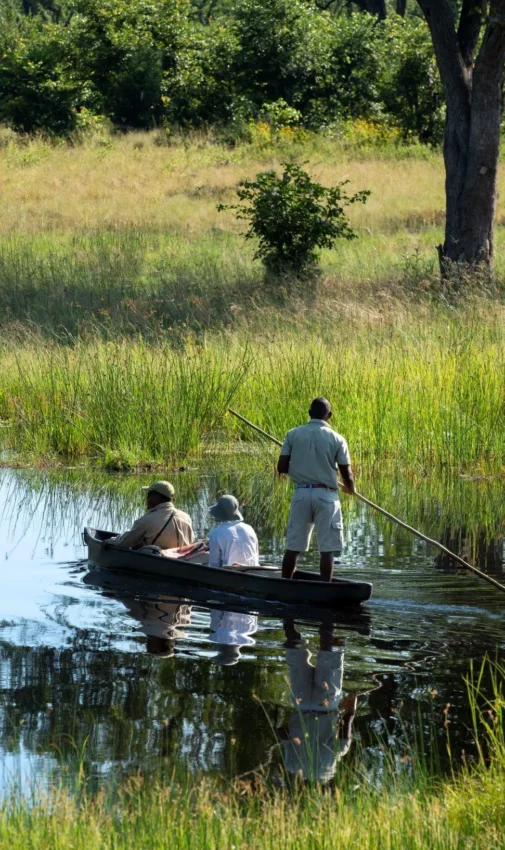
The guides know this stretch of the Khwai channel by channel. The day begins before sunrise with a cheerful call at each tent, then coffee before the morning drive and brunch on the return. The hours between belong to the swimming pool on its elevated deck, or to the smaller plunge pool with a shaded sala and daybed, until high tea comes round before the afternoon outing.
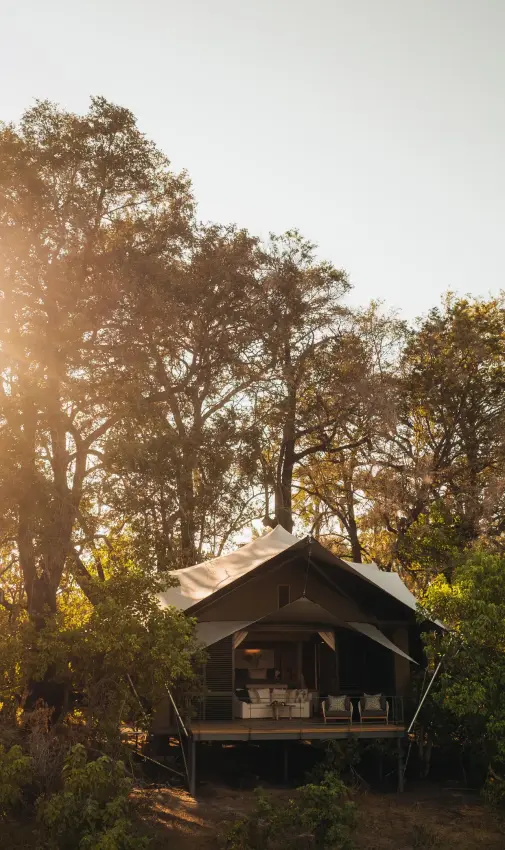
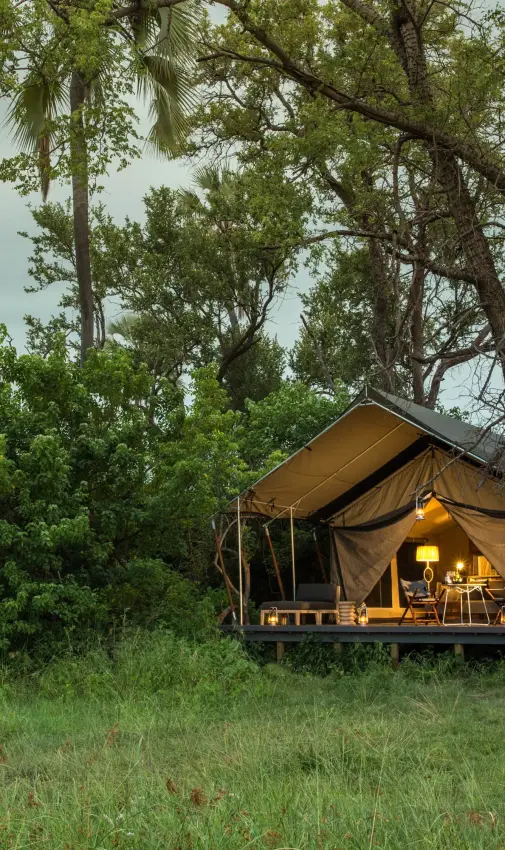
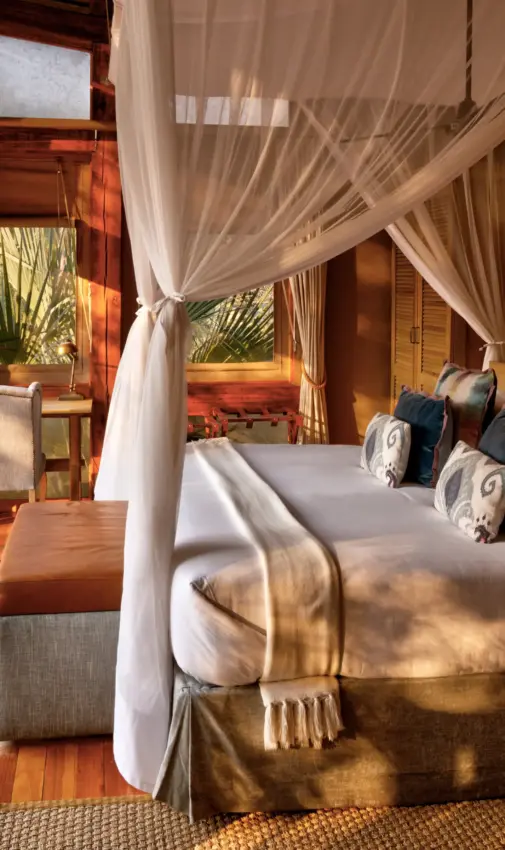
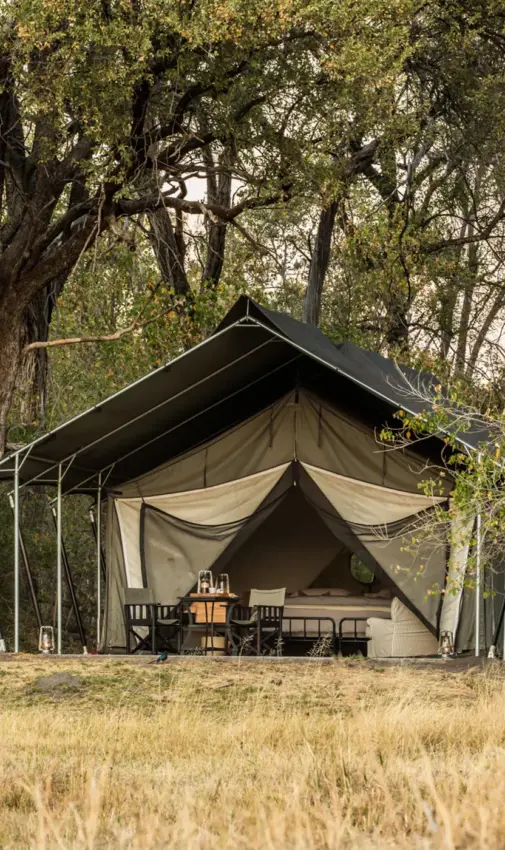
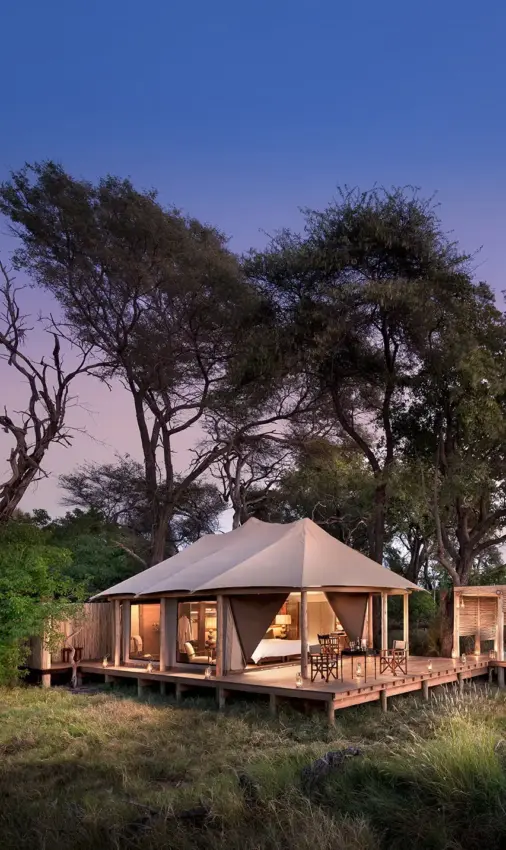
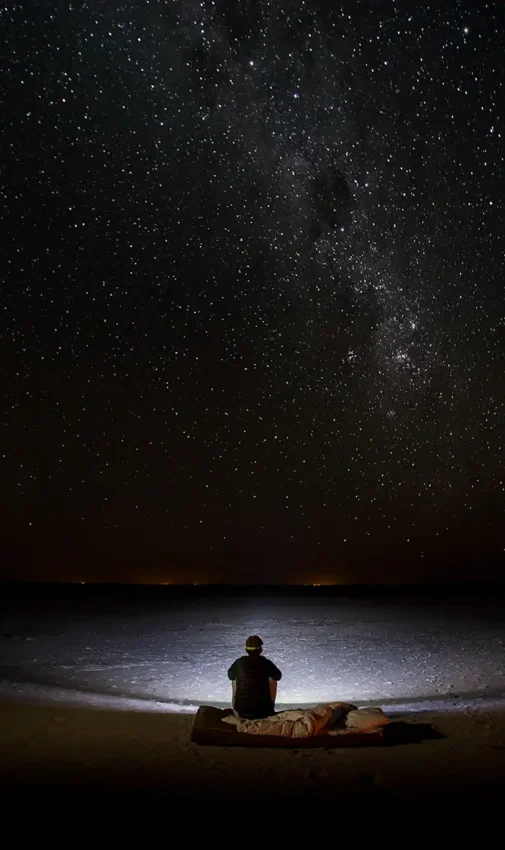
Light aircraft land at the Xakanaxa airstrip, and the short drive into camp often turns into the first game drive. Comfort is the canvas kind, whether in a standard tent or in the two-bedroom tent that families can take for themselves, with children welcome from the age of six. A fan stirs the air, and the mesh windows stay open to the lagoon breeze. The walls are thin enough for the night to come straight through, and once the camp falls quiet, the Okavango Delta does the talking.