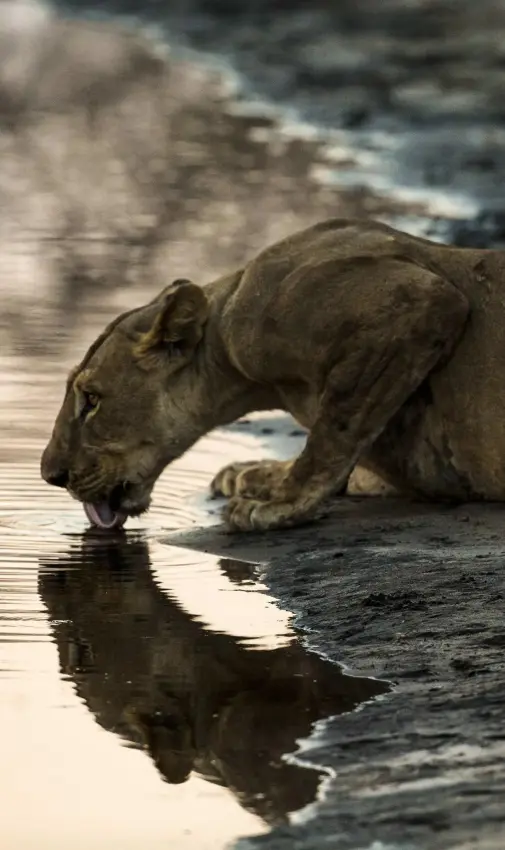
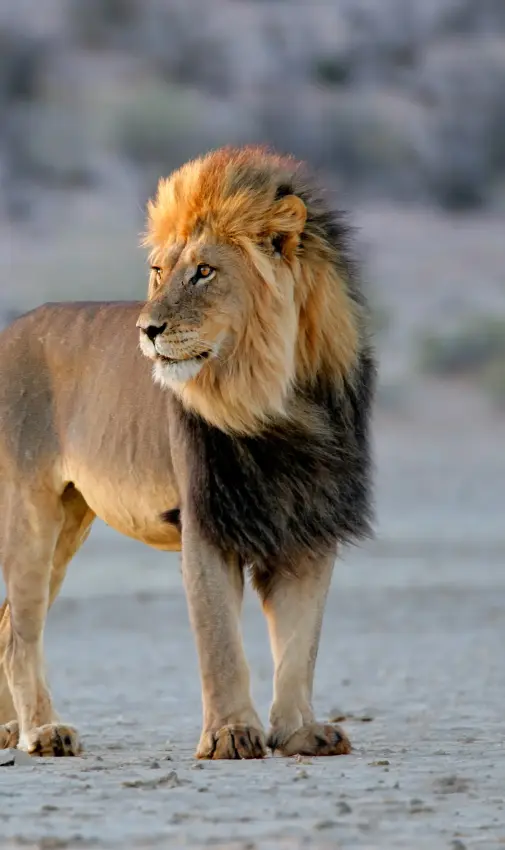
For most of its history the camp drove only by day, as Moremi Game Reserve’s rules required, and morning and afternoon drives still fill most days. A recent change to those rules added night drives, the first in the camp’s history, and guides can now follow the floodplain after dark. With the camp to itself, a family or group can ask for a private guide and vehicle and set its own pace. When they find a lion pride, they can stay with it for as long as the scene holds, and the same goes for a leopard or a pack of wild dogs.
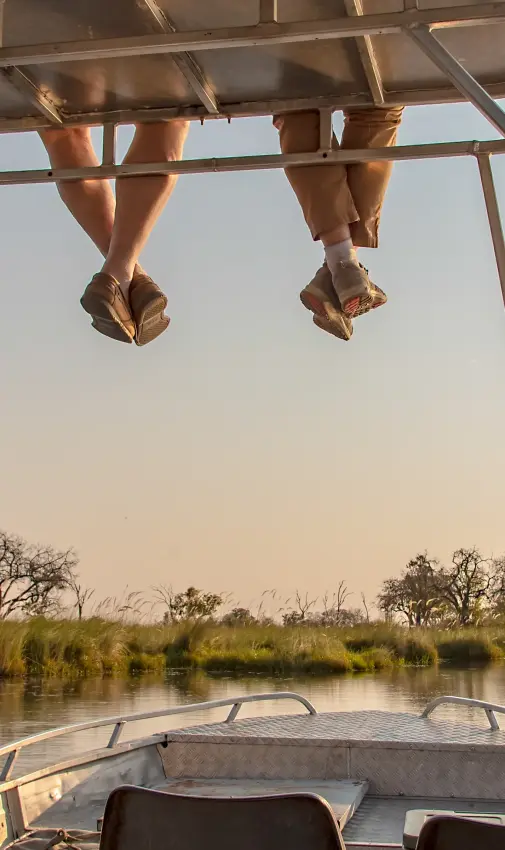
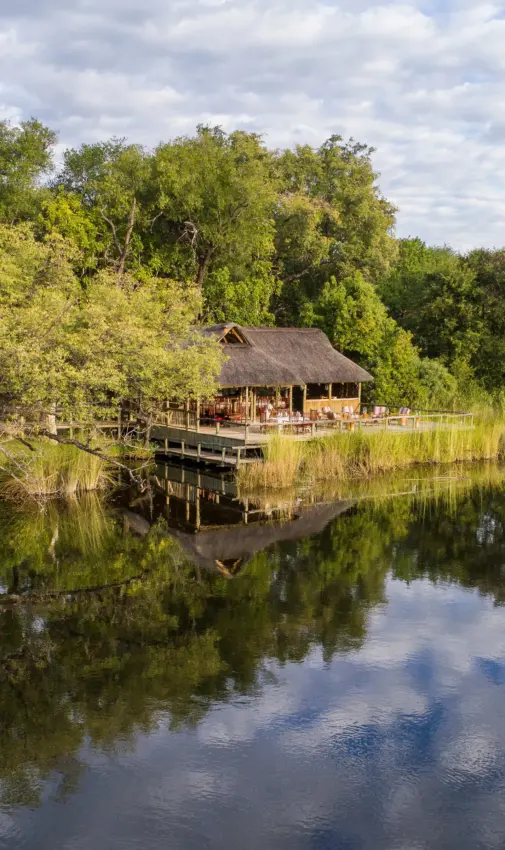
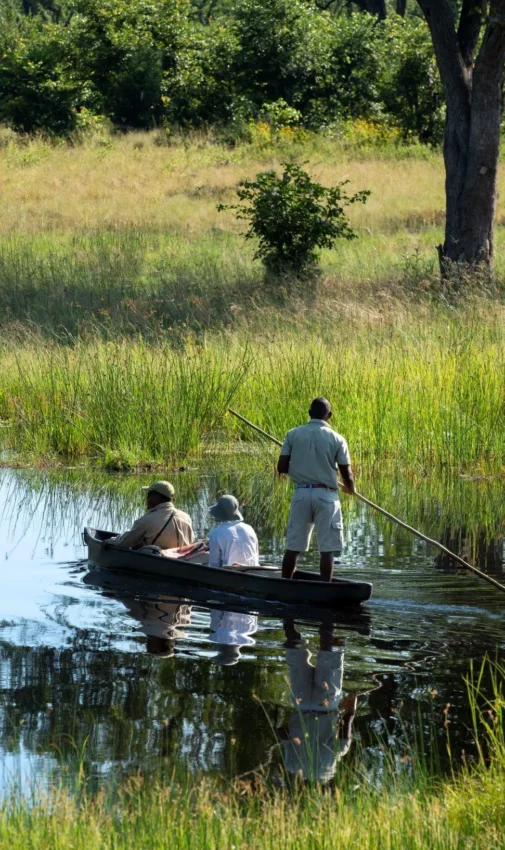
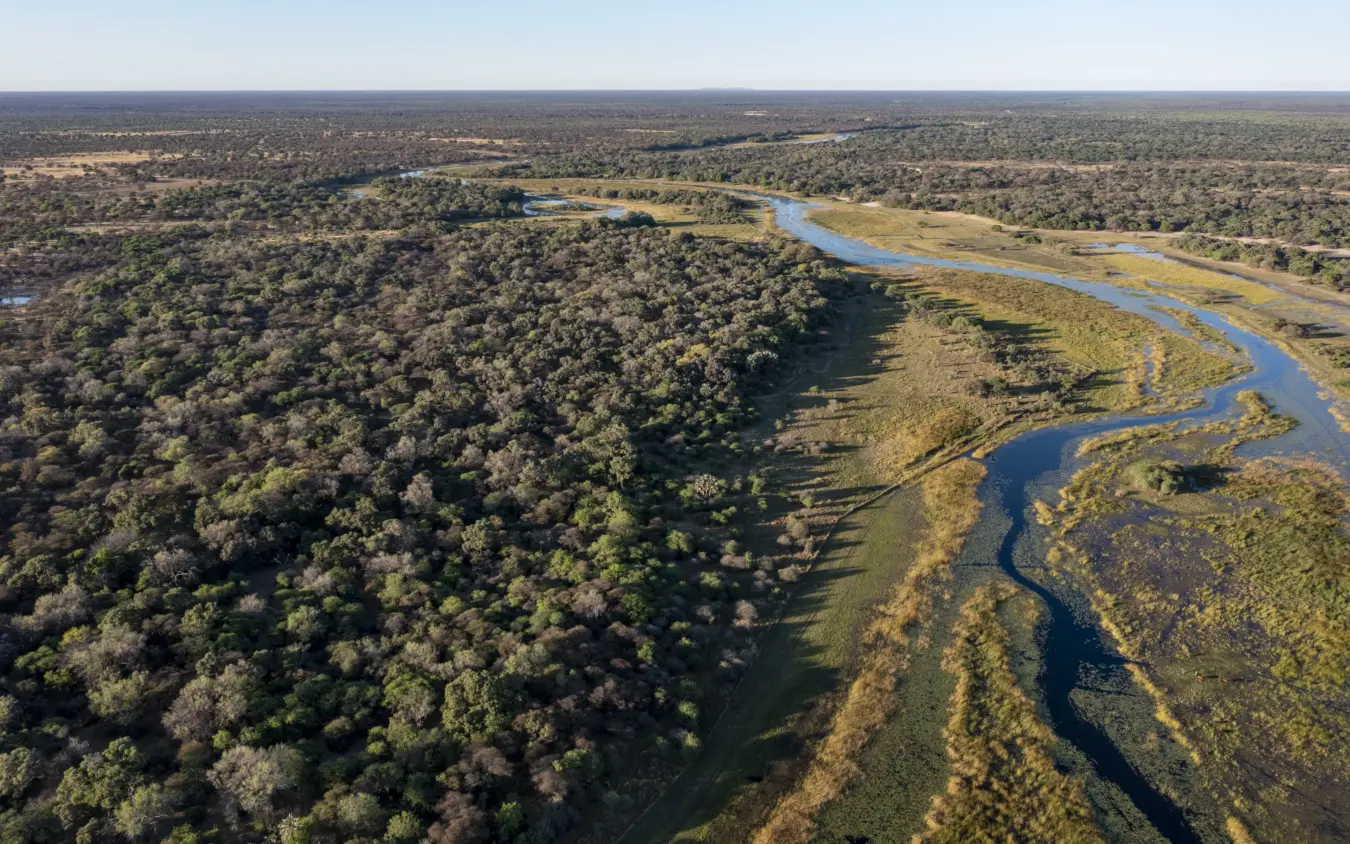
Boat trips leave from Kubu Jetty when the channels hold enough water. Mokoro outings, in poled dugout canoes, run only when the flood is deep enough to float them through the shallows. In lower water the days turn back to the vehicles and to a hide about twenty minutes from camp, built for long, quiet sessions of watching. Helicopter flights can also be arranged. Lifting off over the Okavango Delta, they show how its channels split around Chief’s Island and spread out into floodplain and tree islands.
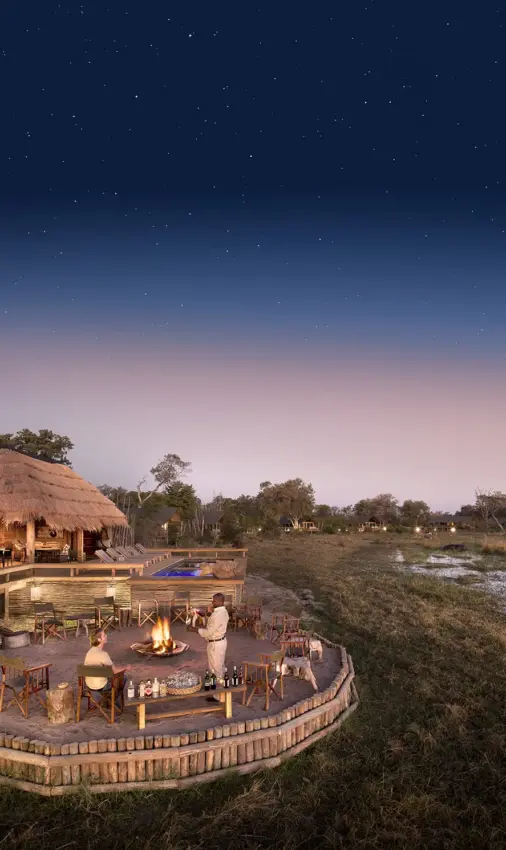
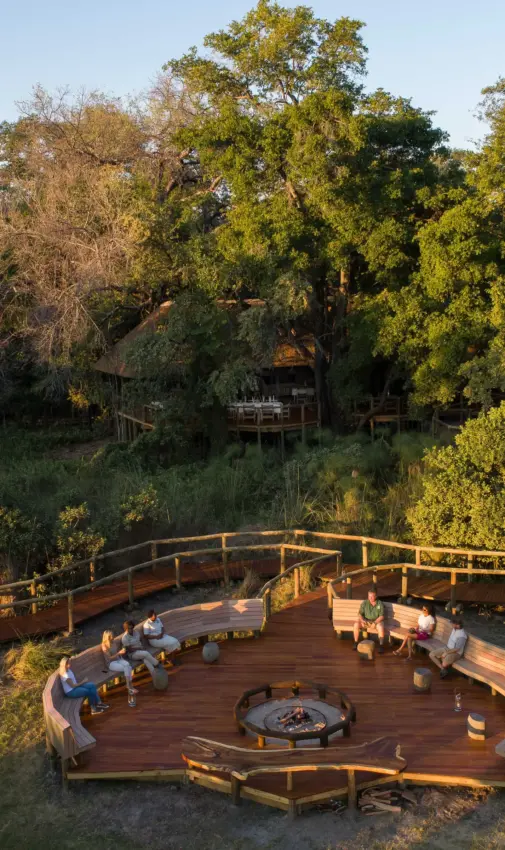
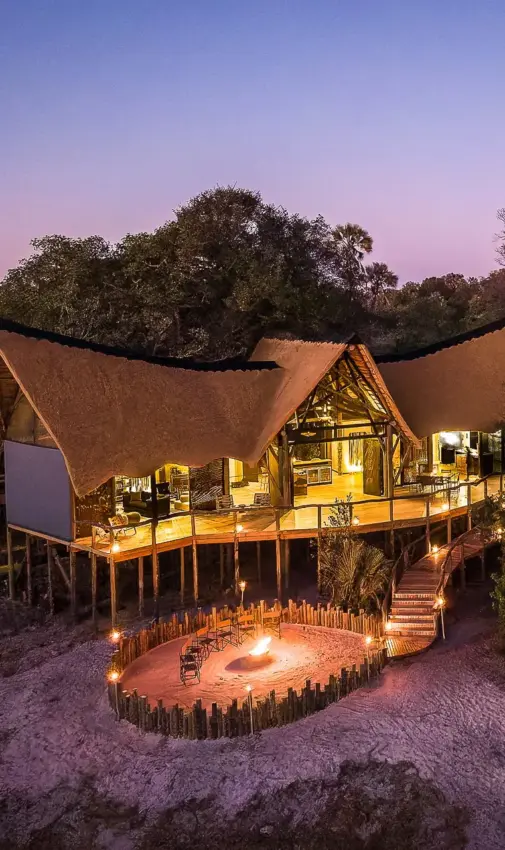
As the channels go dark, talk on the deck stops whenever lions roar from the tree islands.
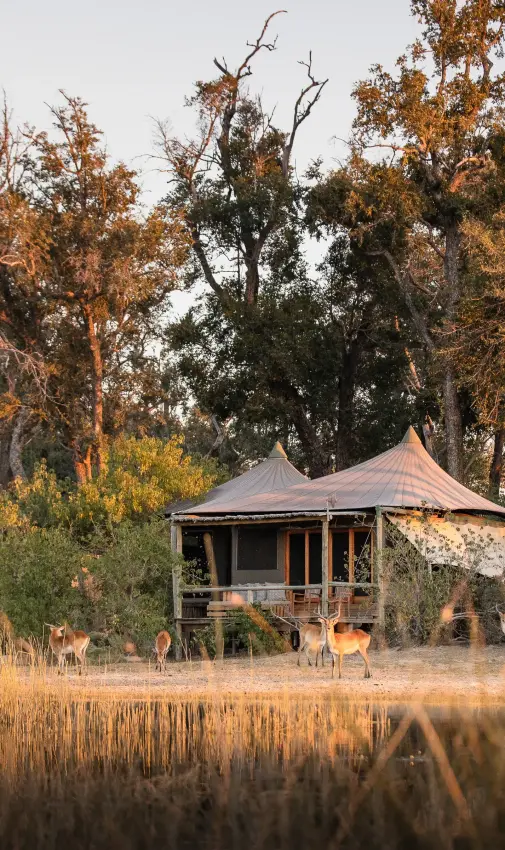
Chief’s Island was once a chief’s hunting ground. From the early 2000s white and black rhinos were returned to the Mombo area in a programme with the Botswana Government, and more black rhinos followed in 2014 and 2015. Where they range is now a matter of security, so no drive is built around finding one. Birding fills the gaps between the big sightings. Wattled cranes stalk the wet grassland and Pel’s fishing-owls keep to the channels, while vultures drop in wherever the predators have fed.
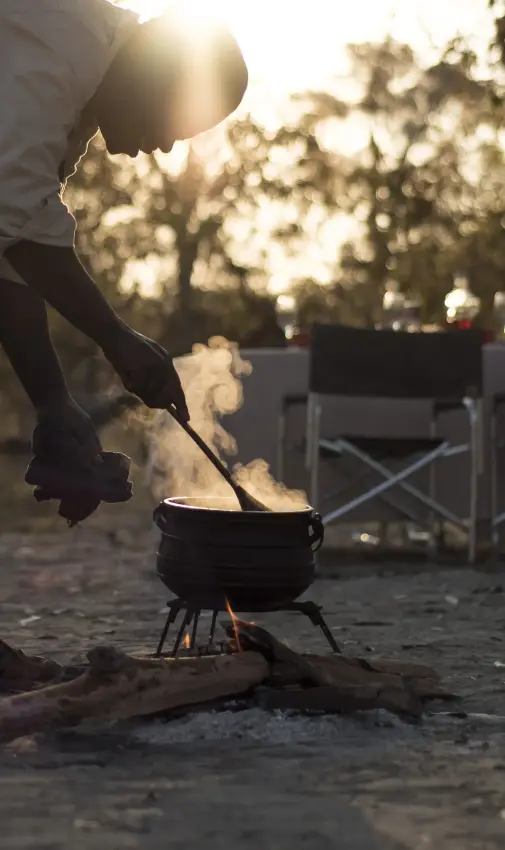
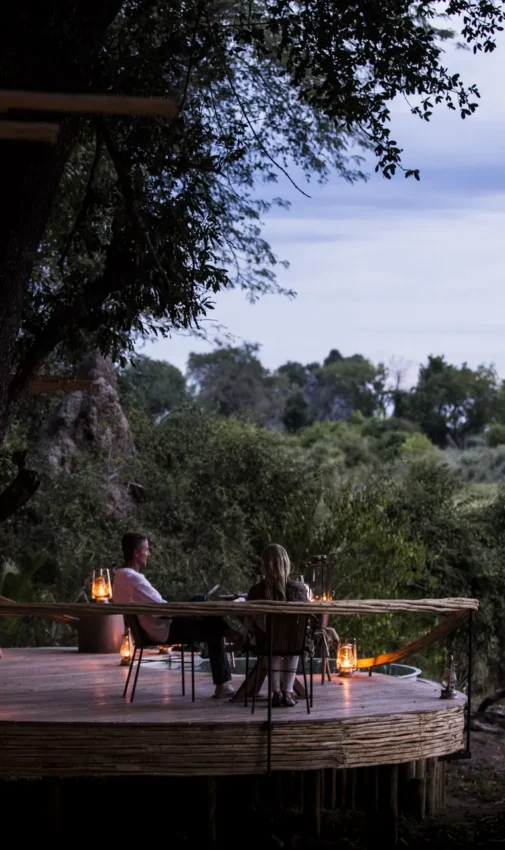
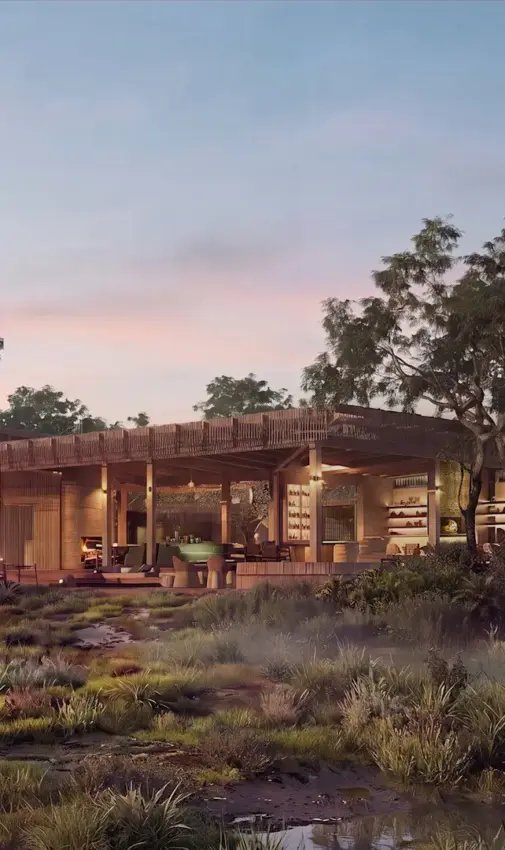
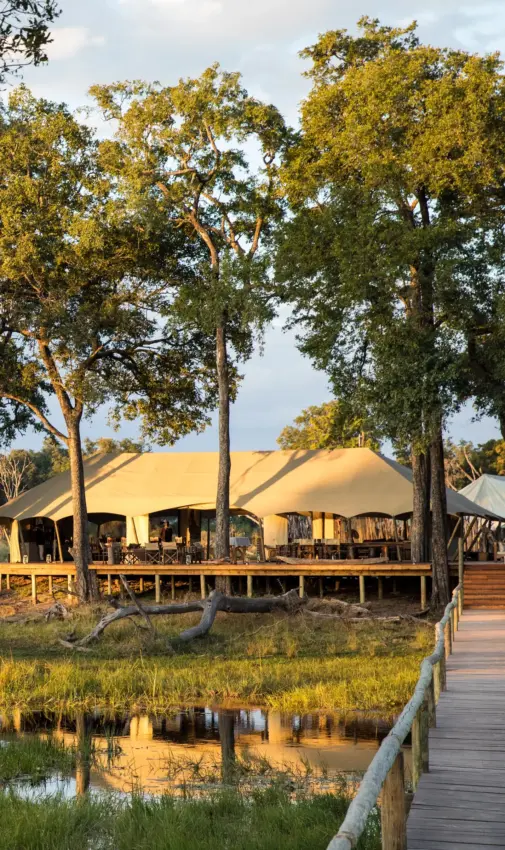
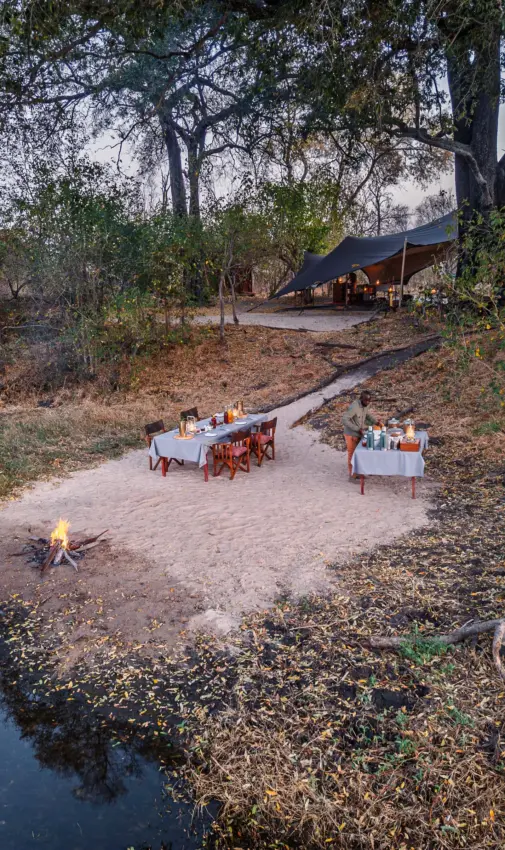
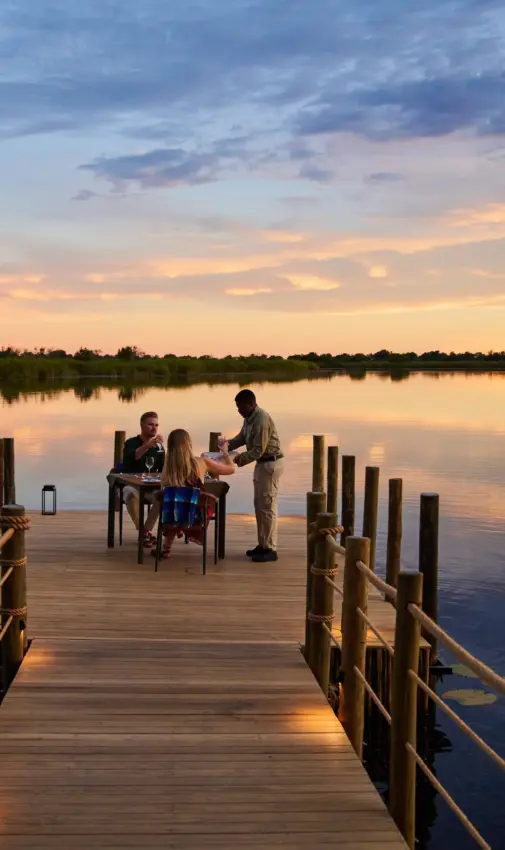
Wood-fired pizza is served looking over the floodplain, and out on drive there is a bush lunch. The camp’s signature is the Mombo jaffle, a toasted sandwich. A sommelier looks after the wine, and private dinners can be laid in the walk-in cellar. As the channels go dark, talk on the deck stops whenever lions roar from the tree islands.